These days it’s a challenge to find safe and interesting destinations for short excursions. It’s critical the location be uncrowded and enforces social/physical distancing. And, of course, it needs to be open and accessible. This week I found the perfect destination for a “safe” excursion at Butterflies and Blooms in the Briar Patch in Eatonton, Georgia. This charming pollinator habitat is, just as the name promises, overflowing with native butterflies and flowering plants. I was the only visitor on a quiet weekday morning.
While it is new to me, Butterflies and Blooms is a well-established community treasure. The area is planted with specially selected native plants to support and encourage native butterfly reproduction. A little online research reveals this site was established in 2017 by a group of enthusiastic volunteers.
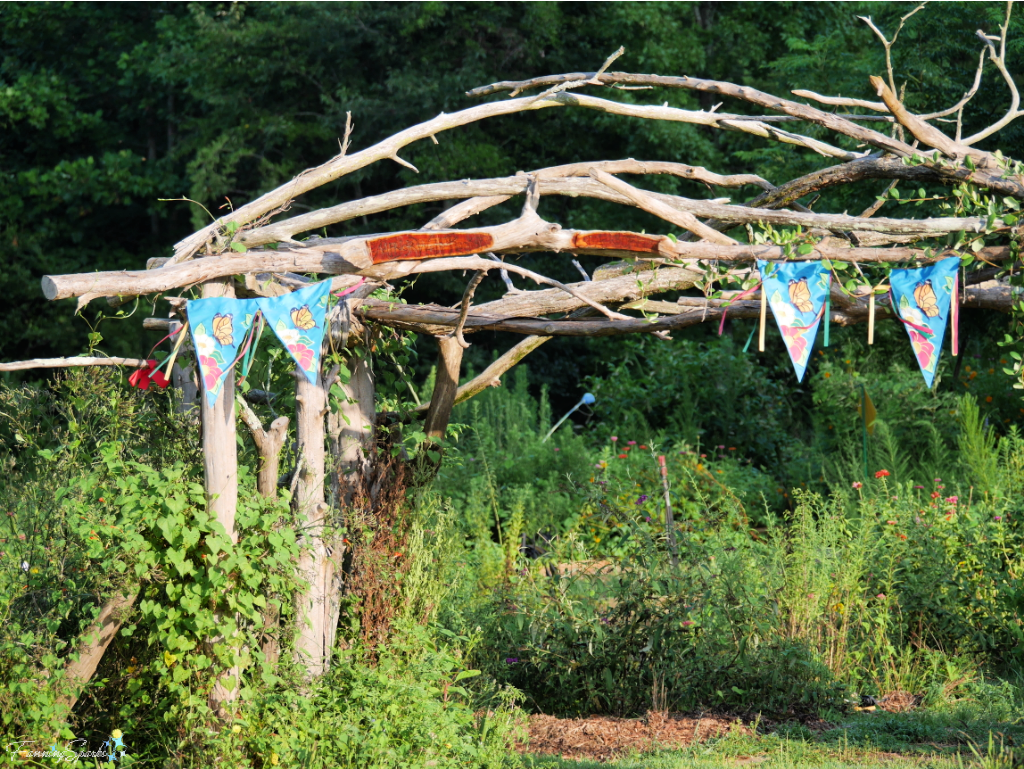
Butterflies and Blooms is part of the Briar Patch Trail Park which is a small park with a ¼ mile walking trail, a picnic area, an outdoor classroom, a working honey beehive, an observation platform and a small pond. The park is casual and inviting with lots of natural elements, twig structures and quirky garden art. This rustic arch frames the main entrance and welcomes visitors to the habitat.
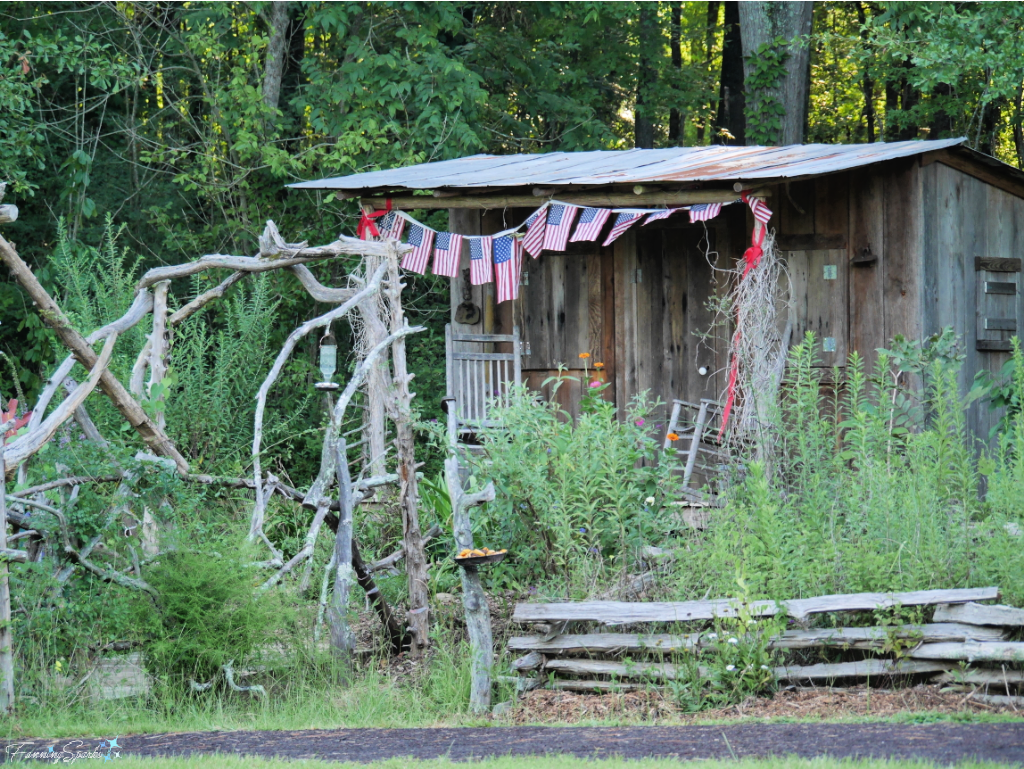
There’s a small cabin with old-timey rockers on the front porch.
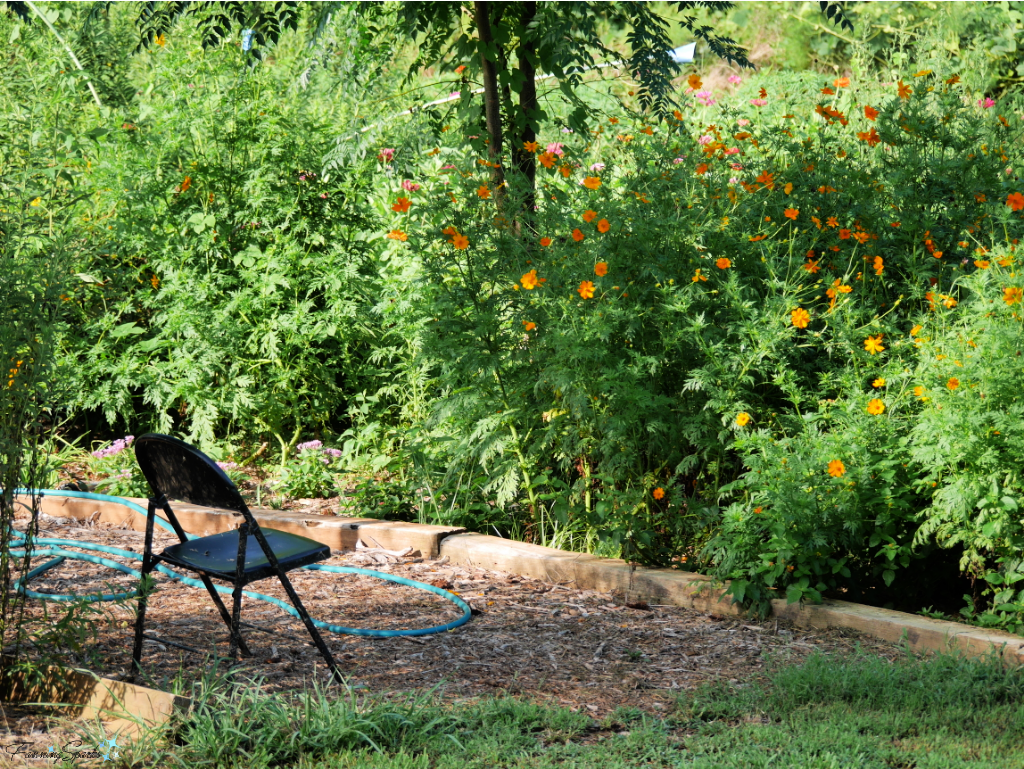
Comfortable benches and seats are conveniently located throughout the park. I noticed a few single chairs tucked in here and there. I don’t know if it was intentional but this chair provided a front row seat for watching the butterflies around this patch of flowers.
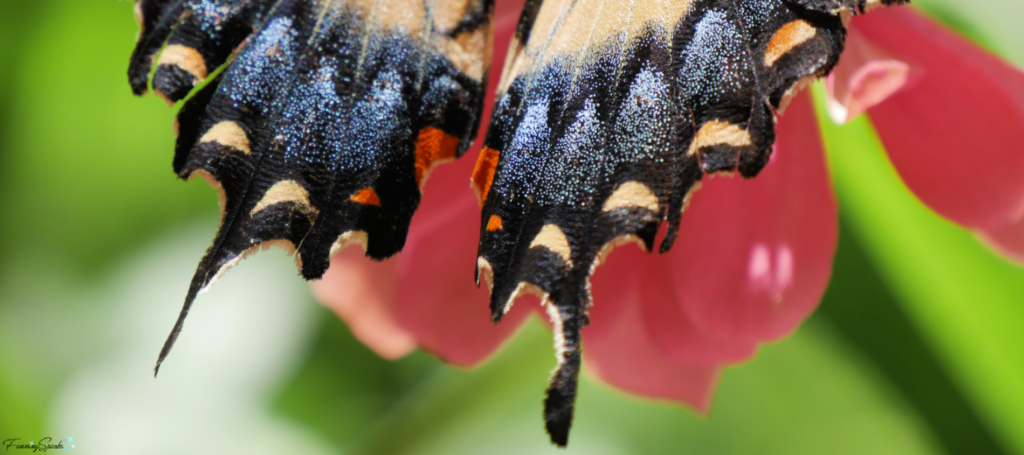
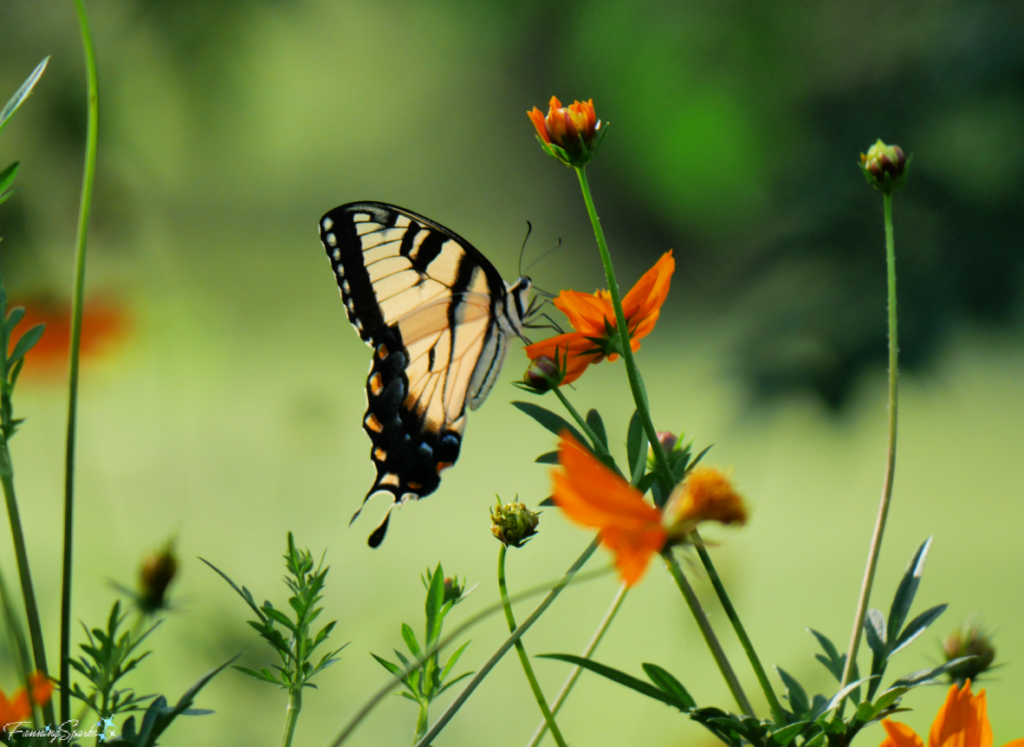
It was such a pleasure watching the butterflies flit around the brightly colored blooms. I managed to get a shot of the gorgeous Eastern Tiger Swallowtail (Papilio glaucus) on a orange coreopsis flower.
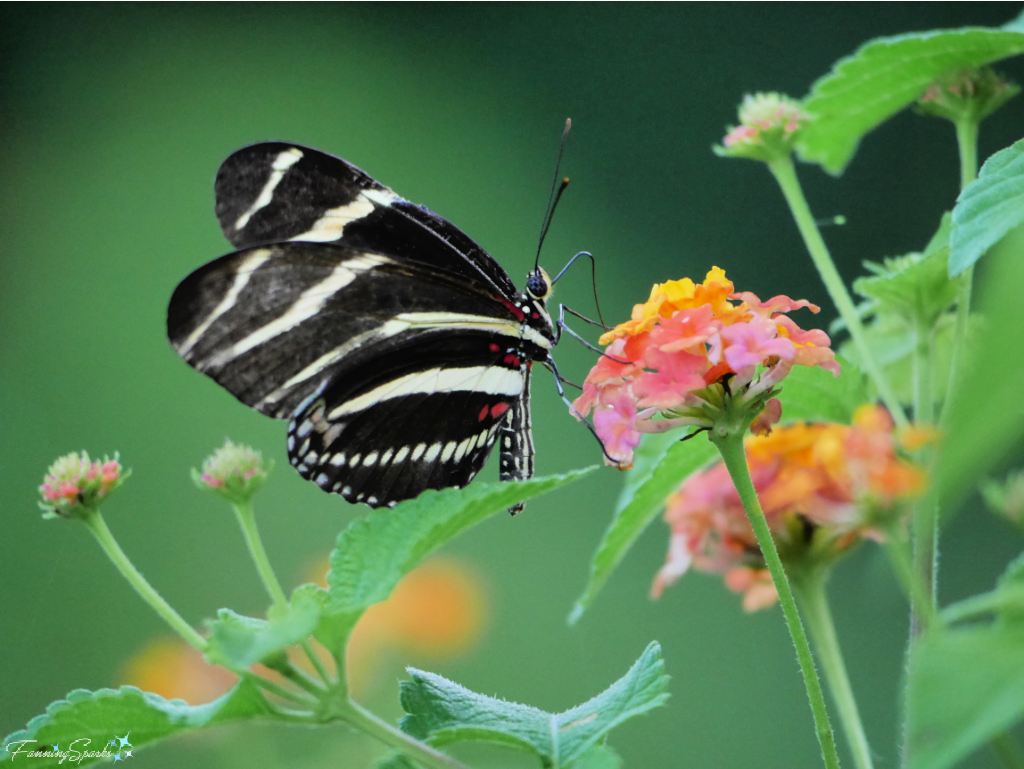
I spotted a flashy Zebra Longwing (Heliconius charithonia) on a lantana bloom.
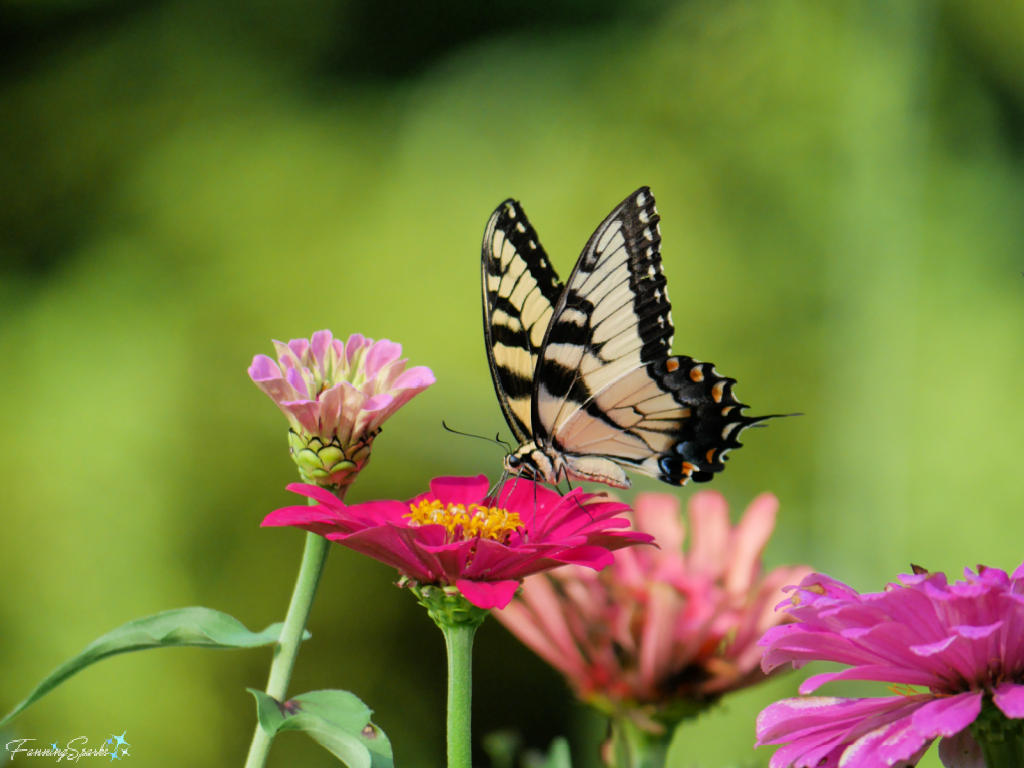
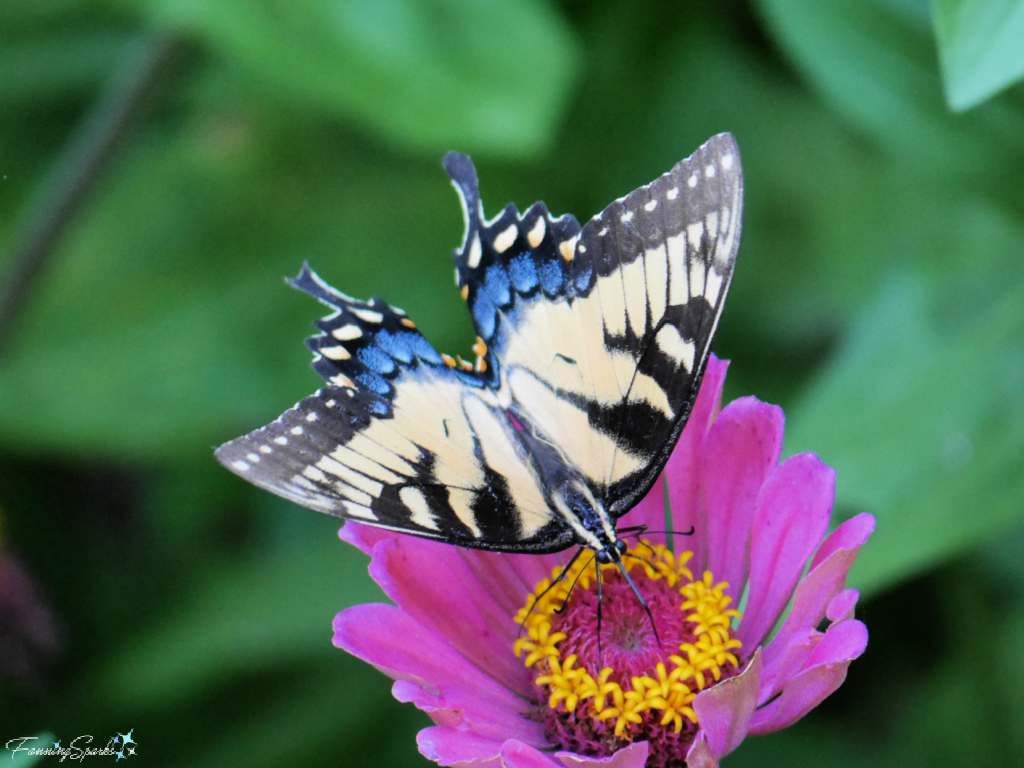
 The park was overflowing with summer flowers. Here’s another magnificent Eastern Tiger Swallowtail perched on a vibrant zinnia.
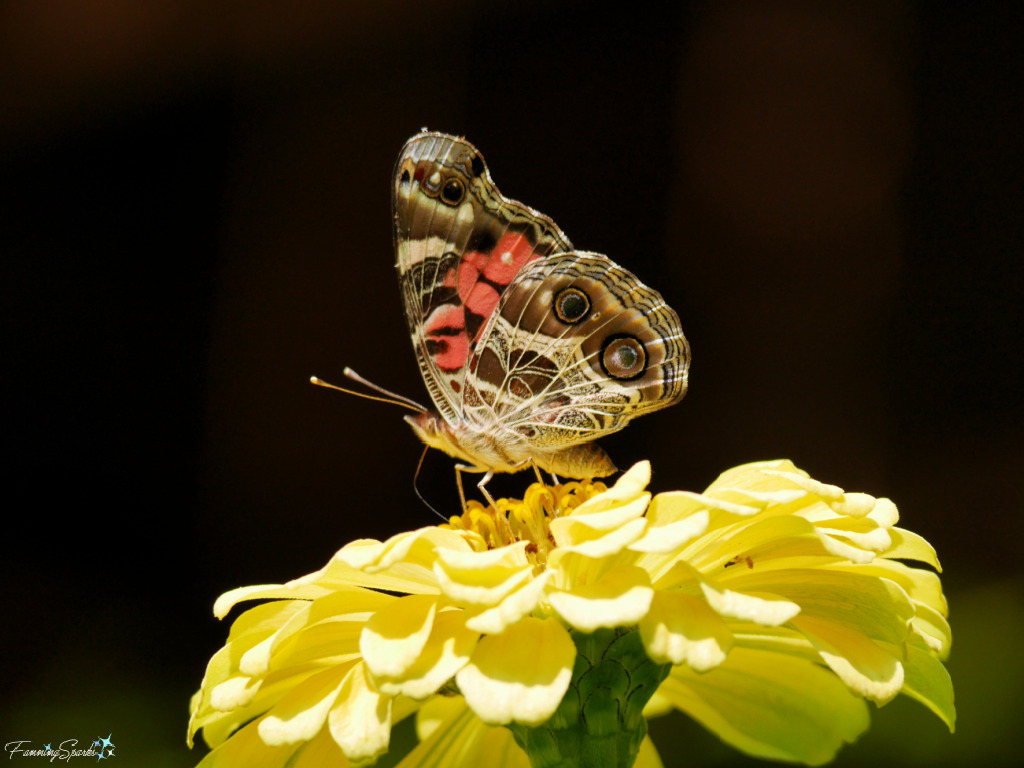
 Speaking of zinnias, I shared my love for these flowers in a previous post called Zinnias Rock! And More Cutting Garden Tips. I planted zinnias in my cutting garden again this year and they did not disappoint. In fact, we’ve noticed a huge increase in the number of butterflies and other pollinators visiting our garden. I suspect it’s because I’ve been leaving more blooms on the plants and cutting less to take indoors. Also, the butterflies seem particularly attracted to one of the types of zinnias I planted this year. It is a collection from Renee’s Garden called Cool Crayon Colors Cutting Zinnias. This stunning American Lady (Vanessa virginiensis) has been a regular visitor.
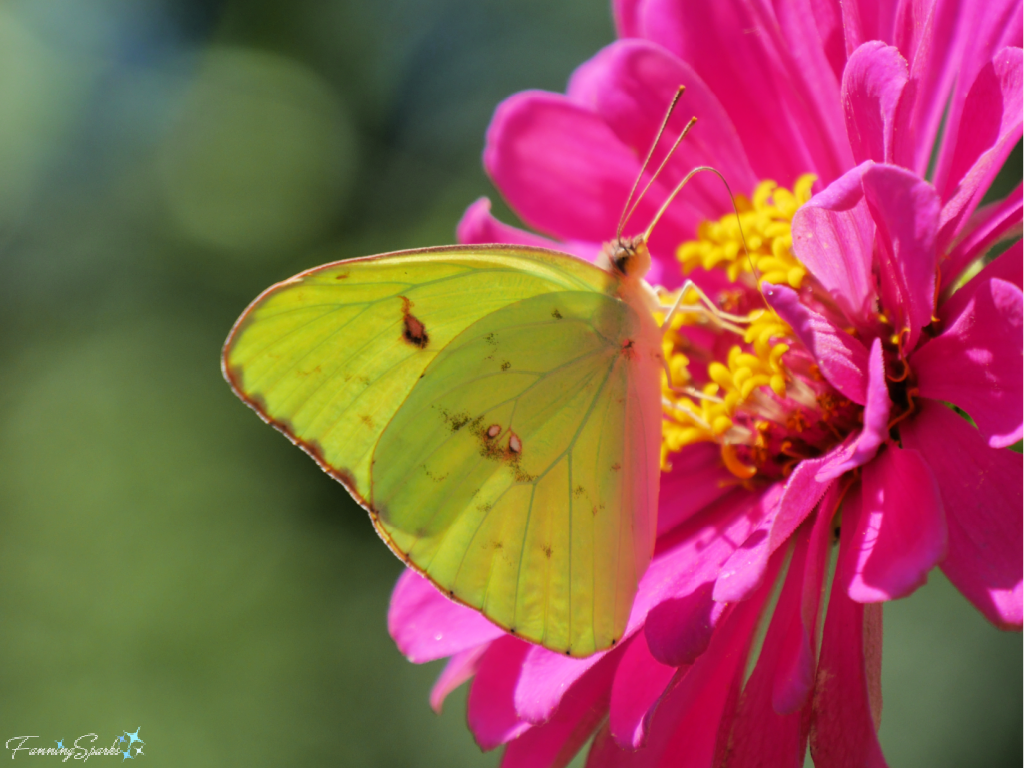
This gossamery Cloudless Sulphur (Phoebis sennae) is enjoying the nectar from a vibrant zinnia.
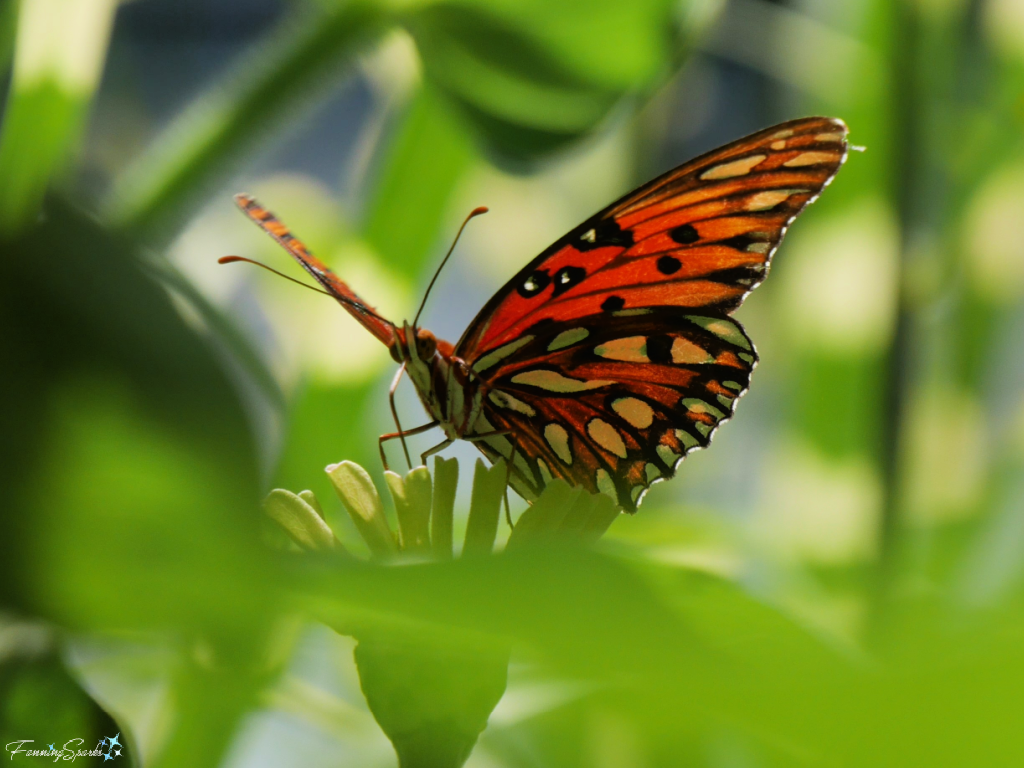
 Here’s another species—it’s the striking Gulf Fritillary (Agraulis vanilla) with its orange-patterned wings.
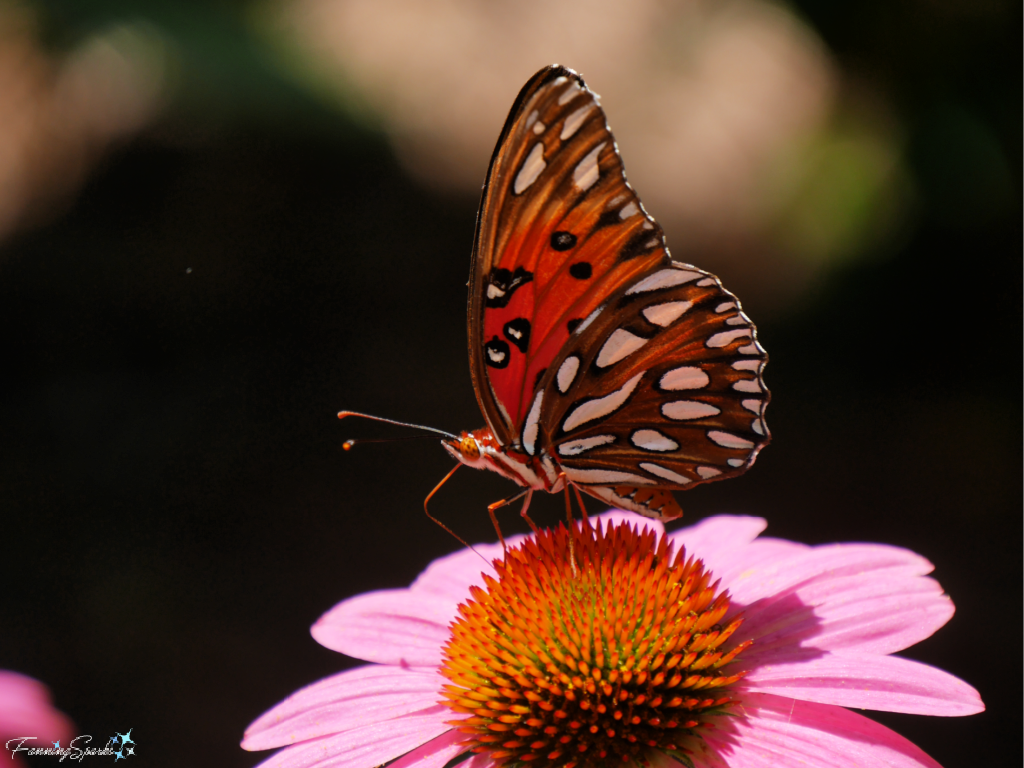
 Here’s another shot of the Gulf Fritillary. It’s moved on to the ever popular purple coneflower.
Amazingly, it doesn’t take much effort to attract butterflies to the garden. Here are some tips for attracting butterflies:
. Ensure plenty of sunlight
. Provide moist or damp areas for puddling
. Choose different plants to attract a wider variety of species
. Try to provide flowers right through the butterfly season
. DO NOT use insecticides or pesticides
. Select both nectar plants and larval host plants (aka caterpillar food plants).
Butterflies need two types of plants to survive. Nectar plants provide nourishment while host plants provide a place to lay eggs and host larvae. For instance, the Eastern Tiger Swallowtail can feed on nectar from a variety of plants including zinnia (as evidenced in the photo below) but they rely on a different set of native plants such as Wild Cherry, Sweetbay and Tulip Trees to host their eggs/larvae.
More Info
Aug 13, 2021 Update: Check out the post, A Flutter of Butterflies in the Closet, for a new way to incorporate your favorite butterfly photos into your home décor.
You may enjoy my previous post, Zinnias Rock! And More Cutting Garden Tips.
You can learn more about Butterflies and Blooms in the Briar Patch in Eatonton, Georgia, USA on their Facebook page or Instagram account. The 2019 article, In the Garden: Butterflies & Blooms, in the Lake Oconee Living Magazine provided additional background and perspective on this butterfly habitat.
Aug 5, 2020 Update: Many thanks to Virigina Linch for this additional information about Butterflies and Blooms: “We originally began this pollinator project in 2013 on a city property that was sold. We were asked to move to this location as the walking trail was installed but not many people were using it as it was barren of anything of interest. The trail is 1/4 mile and we are planting inside and outside the loop. We moved to our current location in 2017. It is maintained by volunteers, is a master gardener approved site, listed on the Rosalyn Carter Butterfly Trail, certified Monarch Way Station 9045 (we tag migrating monarchs each fall), certified by the Xerces Society, the North American Butterfly Association, among other designations. We have the larval host plants for 40 species of butterflies and skippers established in the habitat. Our motto is “Plant the larval host plants and the wings WILL come.” as well as “Help spread the wings”.”
Check out Renee’s Garden website to learn more about the Cool Crayon Colors Cutting Zinnias seeds I mentioned above.
To learn how you can help to bring back pollinators, check out the Xerces organization. I also referenced Xerces resources for my previous posts Insect Hotels for Bees and Other Pollinators and AirBee-n-Bee House DIY Tutorial.
The North American Butterfly Association website is packed with information about butterflies. The Butterfly Gardens section includes advice on starting a butterfly garden, habitat management and a butterfly garden certification program.
I continue to be impressed by iNaturalist. Their web-based observation and identification tools, along with their mobile app, are excellent for identifying wildlife including butterflies. Check out my previous post Seek to Identify Wildlife with this Fun App. To learn more, access the iNaturalist website or find the “Seek by iNaturalist” app on Google Play or the App Store.
Today’s Takeaways
1. Small, lesser-known, local sites can be ideal for safe and interesting excursions.
2. Look closely to fully appreciate the extensive variety of butterflies.
3. Consider attracting butterflies to your garden by growing the plants they need.

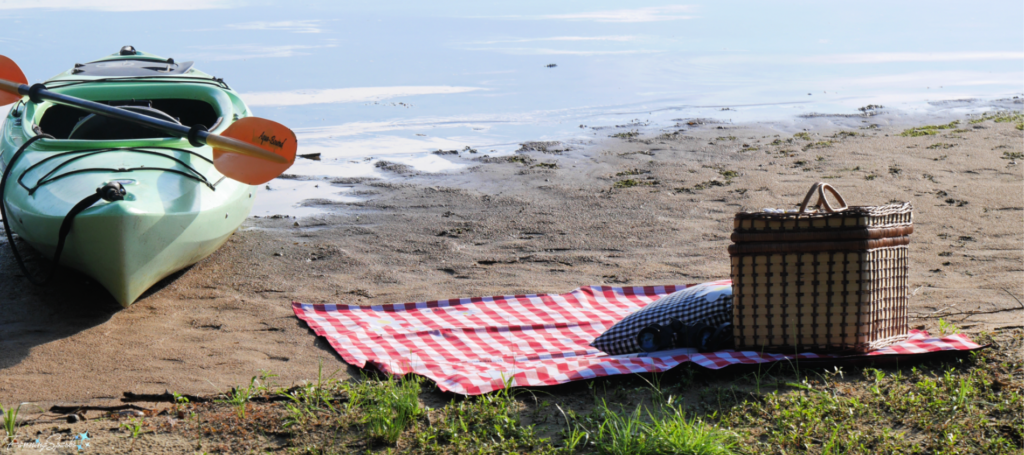
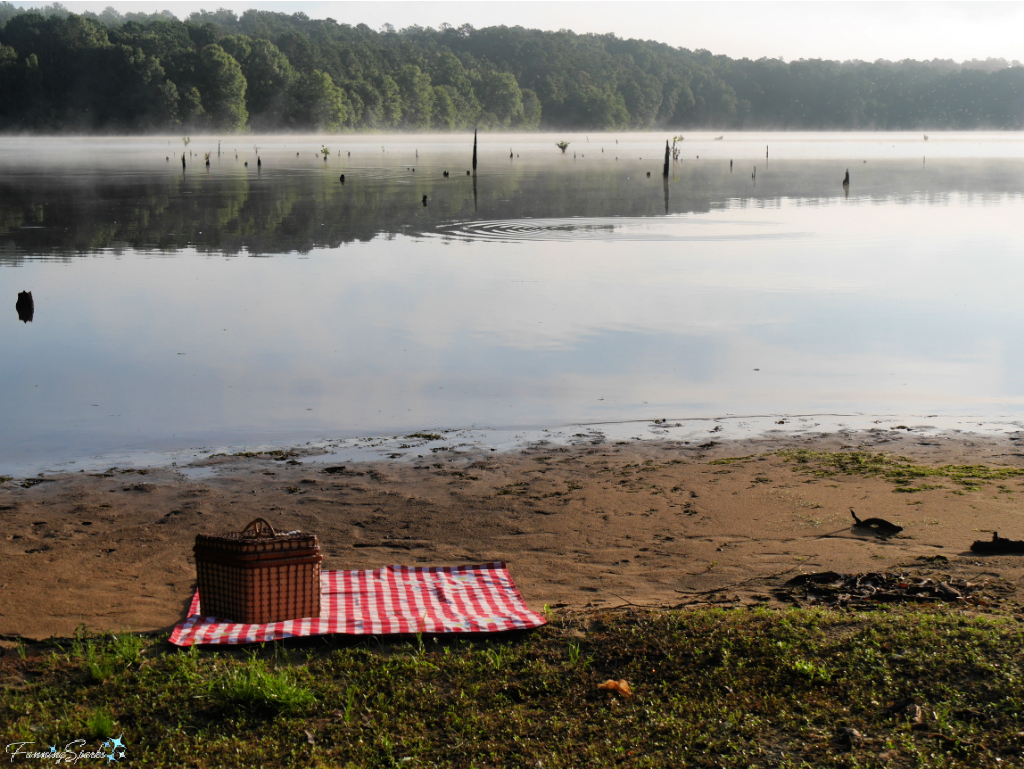
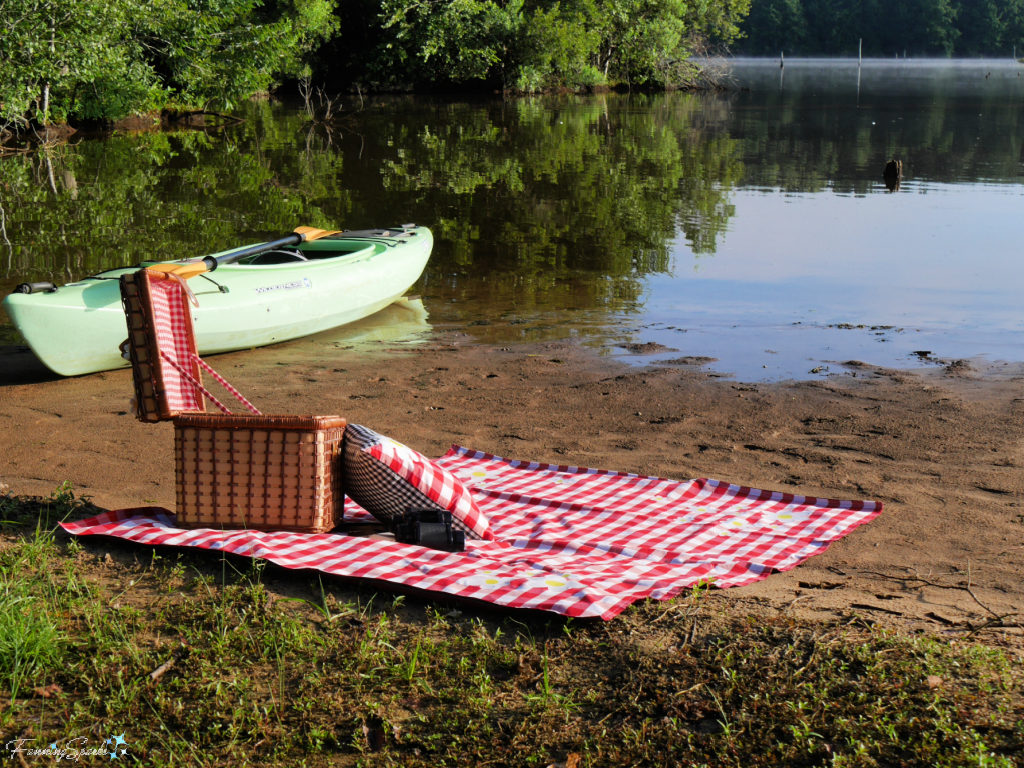
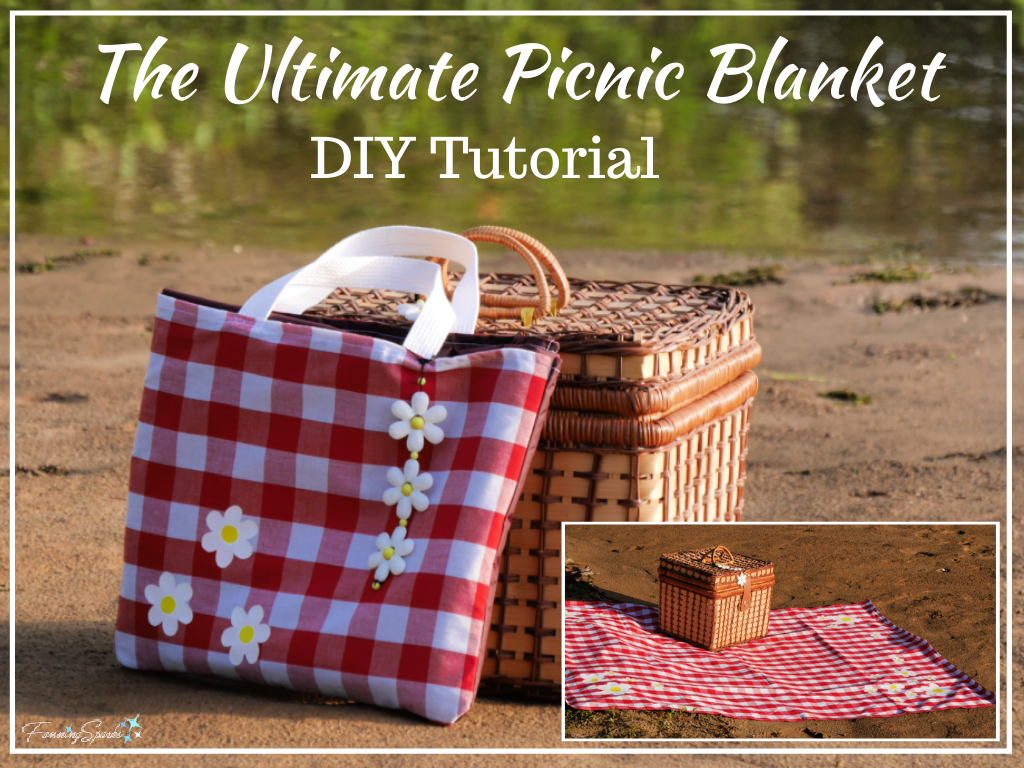
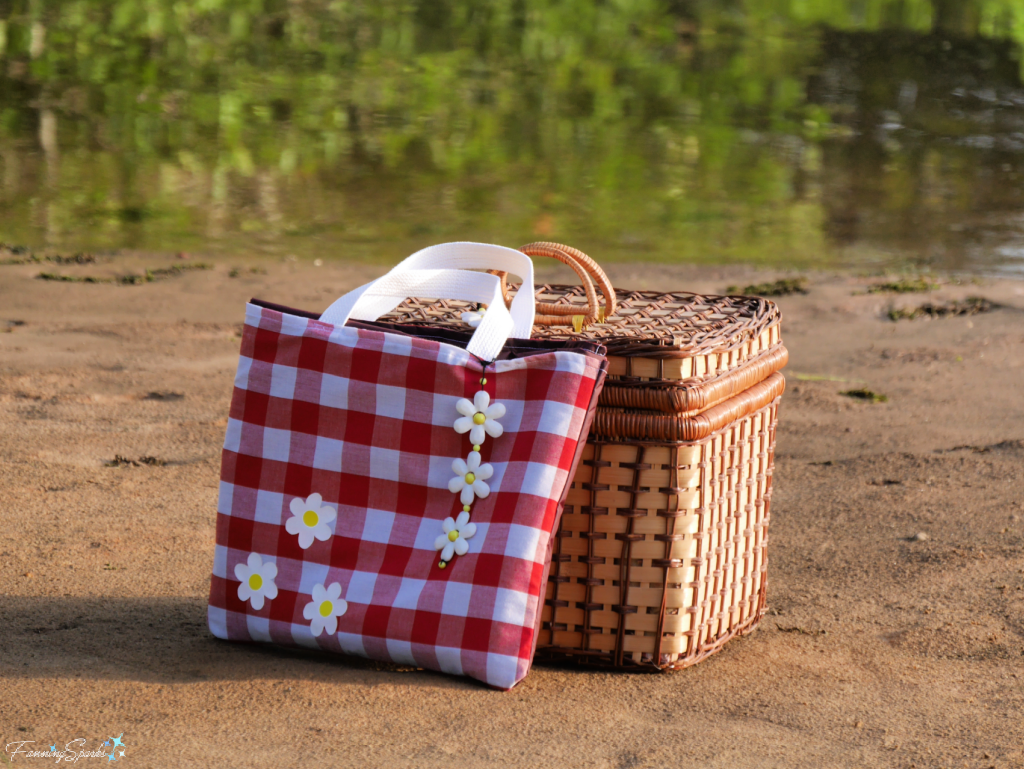 I think the picnic blanket featured in today’s post delivers on all that. Plus it’s easy to make with the step-by-step instructions provided below. Why not give it a try?
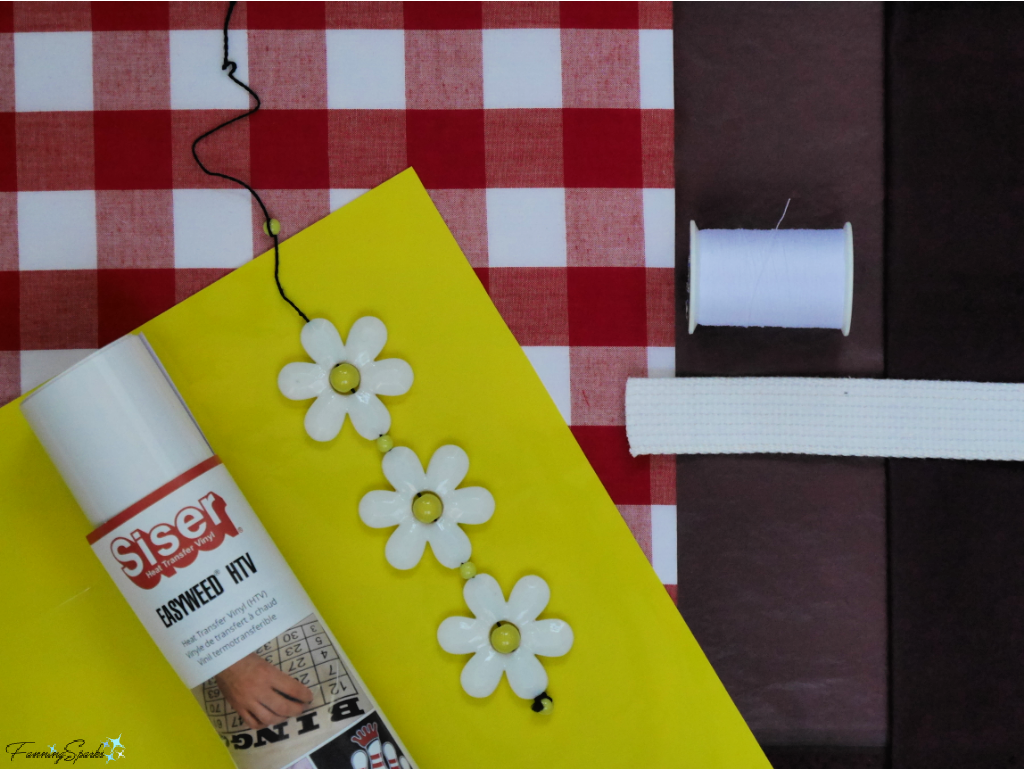 Tools and Equipment Needed
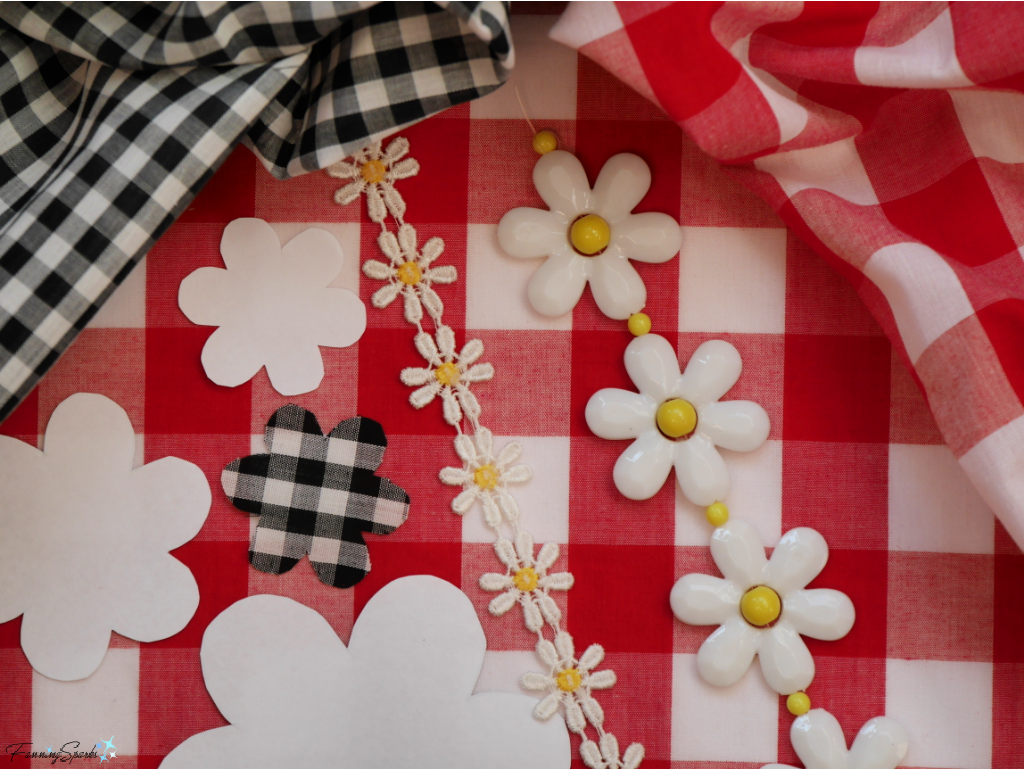 Step 2 Cut Fabric Cut the following 4 rectangles of fabric:
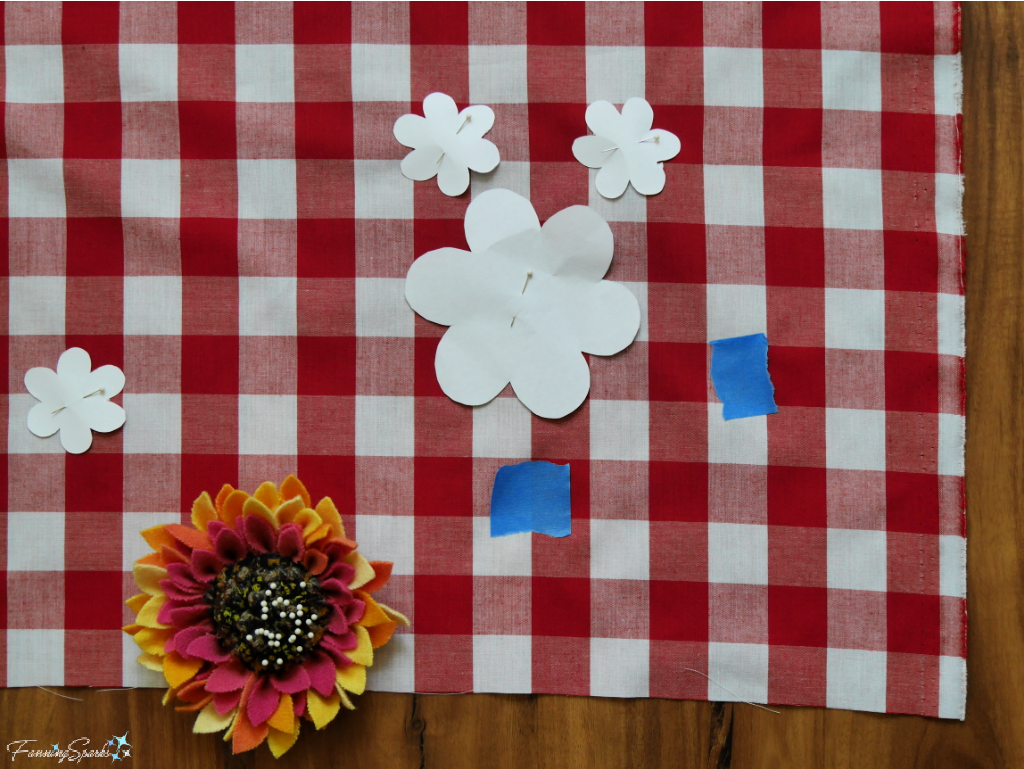 Step 4 Adhere Vinyl Daisies The daisy motif is made from heat transfer vinyl (HTV). HTV can be purchased in sheets or rolls. It can be cut with a cutting machine (such as a Cricut Explorer) or cut with scissors. HTV is an iron-on vinyl, which is available in a variety of brands and colors. Siser Classic Easyweed HTV brand seems to have the best reviews and, after working with it a few times, I would recommend it as well. If you’re not familiar with HTV, here’s a short explanation.
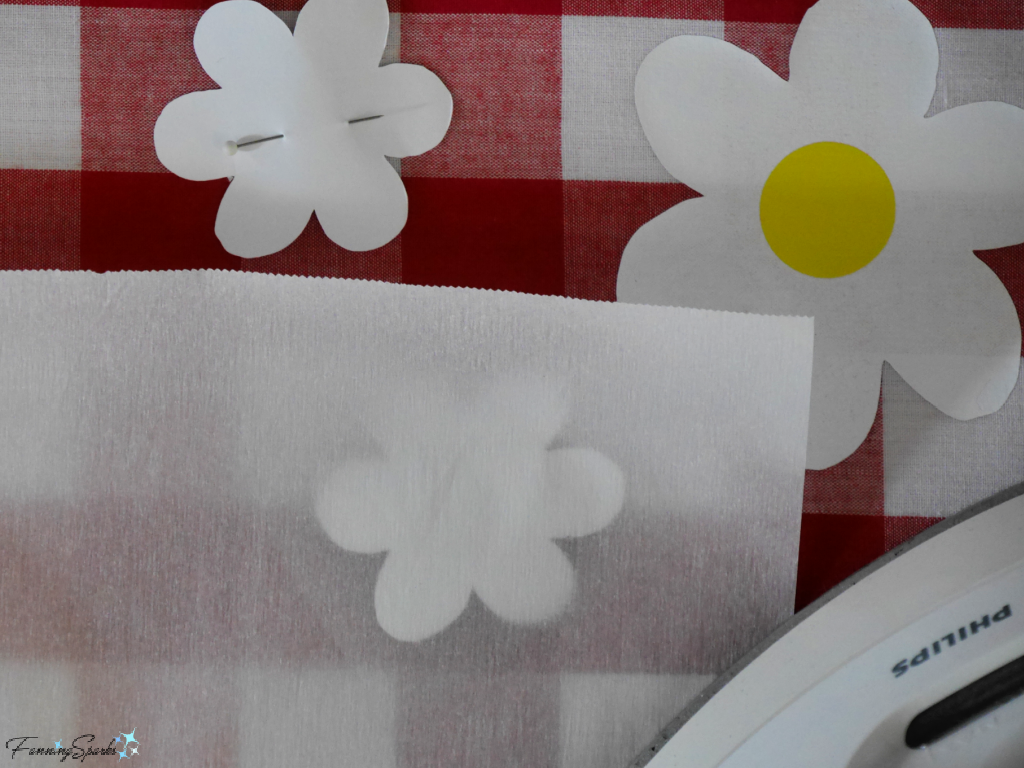 Step 4f) Repeat for all daisies.
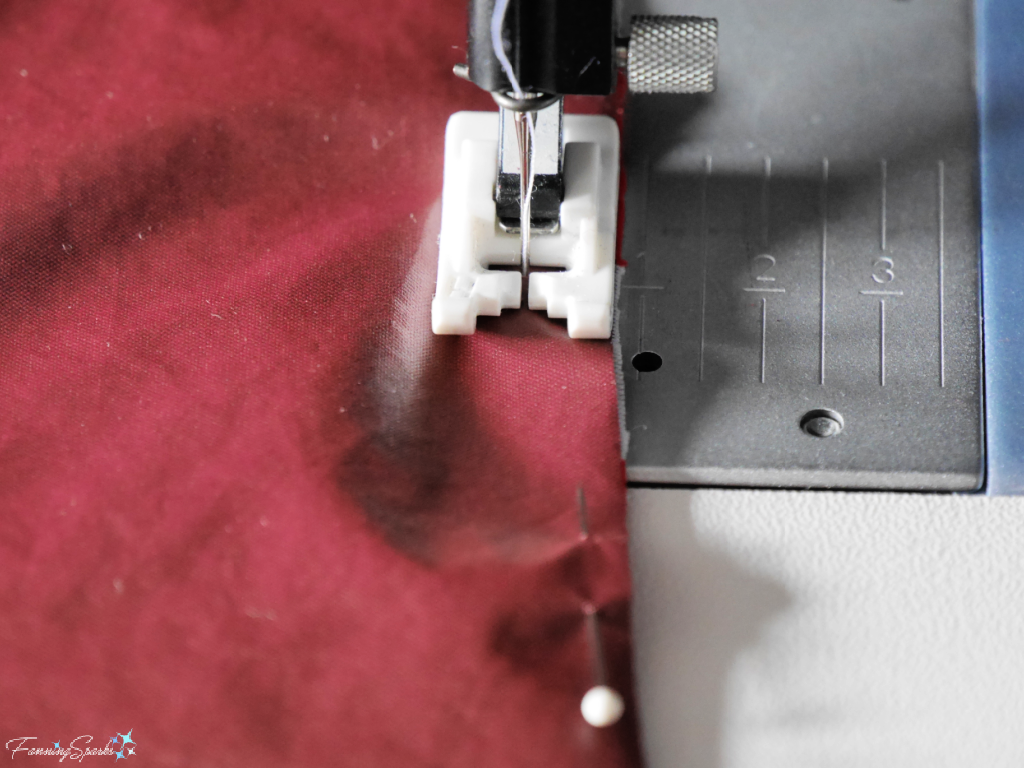 Step 6 Turn Right Side Out Pull the blanket through the opening to turn it right side out. Use seam turner to push out seams and corners. Press for a crisp finished seam taking care not to overheat the coated taffeta on the Blanket Backing. Sew the opening closed. Topstitch close to edge all around the Blanket skipping the two small openings left for the belting (from Step 5). Here’s how a finished corner looks.
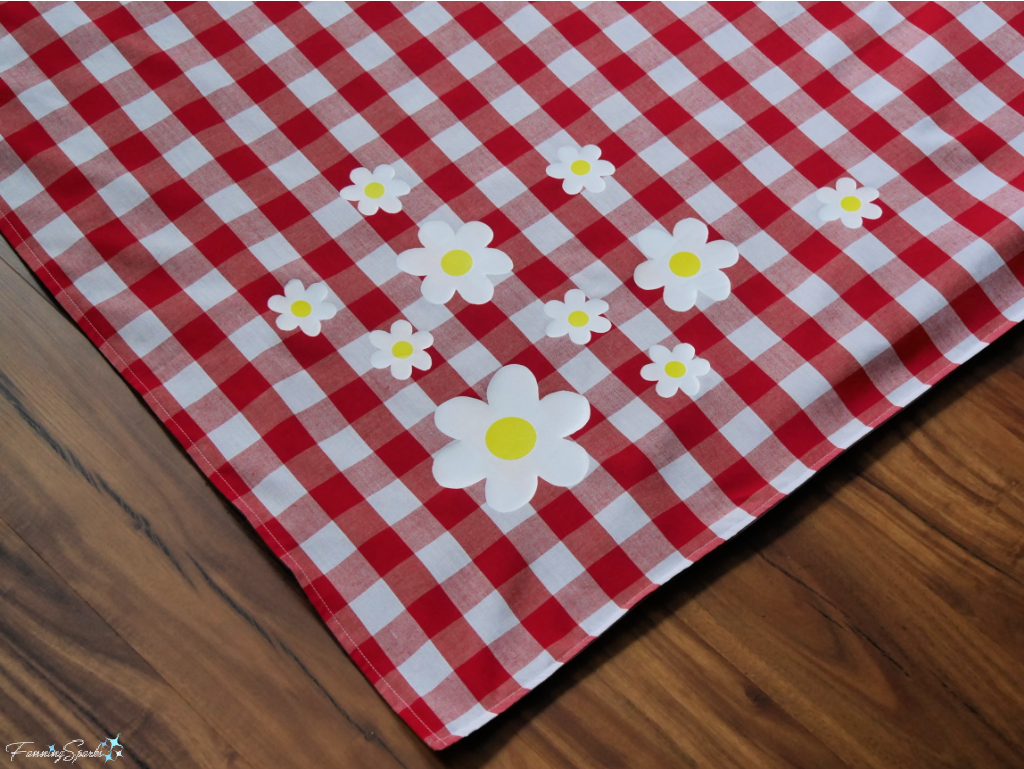 Step 7 Prepare Pocket Gather pieces for the Blanket Pocket including the decorative cotton fabric Pocket Front and the coated taffeta Pocket Backing. Cut 2 pieces of 1” belting each measuring 14”. Adhere HTV daisies to Pocket Front following method outlined above in Step 4. Use the zigzag stitch on the sewing machine to overcast the ends of the belting and prevent fraying.
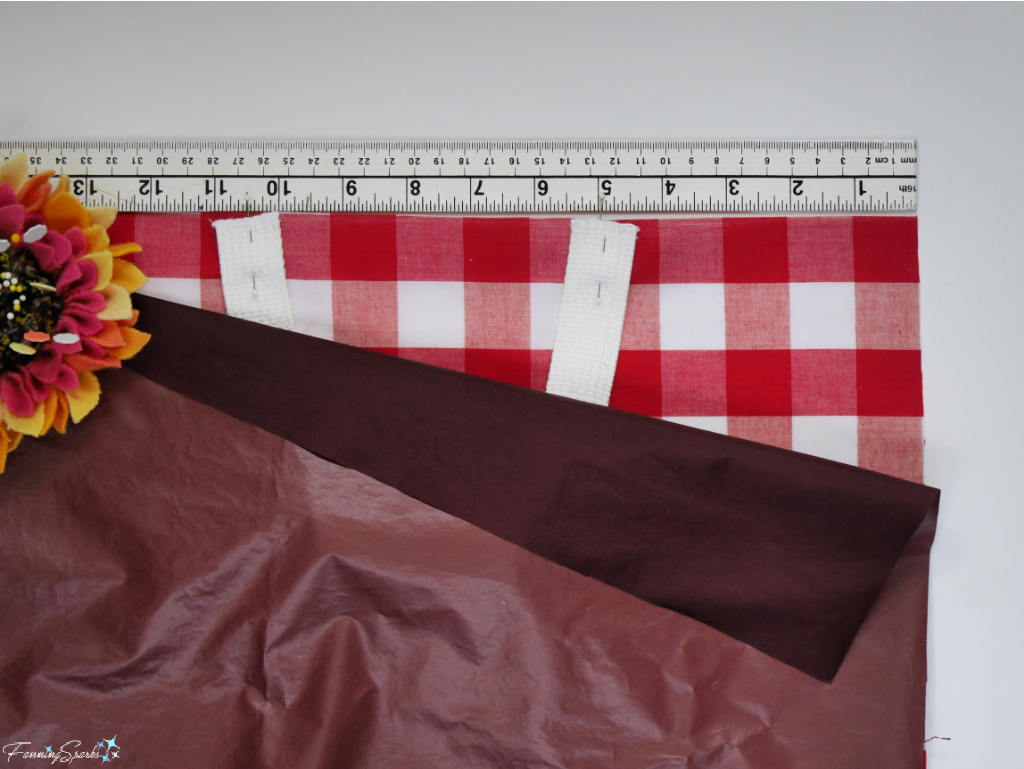 Sew all around the Pocket edges with a ¼“ seam allowance leaving a 4-6” opening along the bottom edge. Turn Pocket right side out. Use seam turner to push out seams and corners. Press for a crisp finished seam taking care not to overheat the coated taffeta on the Blanket Backing. Sew the opening closed. Topstitch close to edge all around the Pocket. Reinforce handle with a second row of stitching.
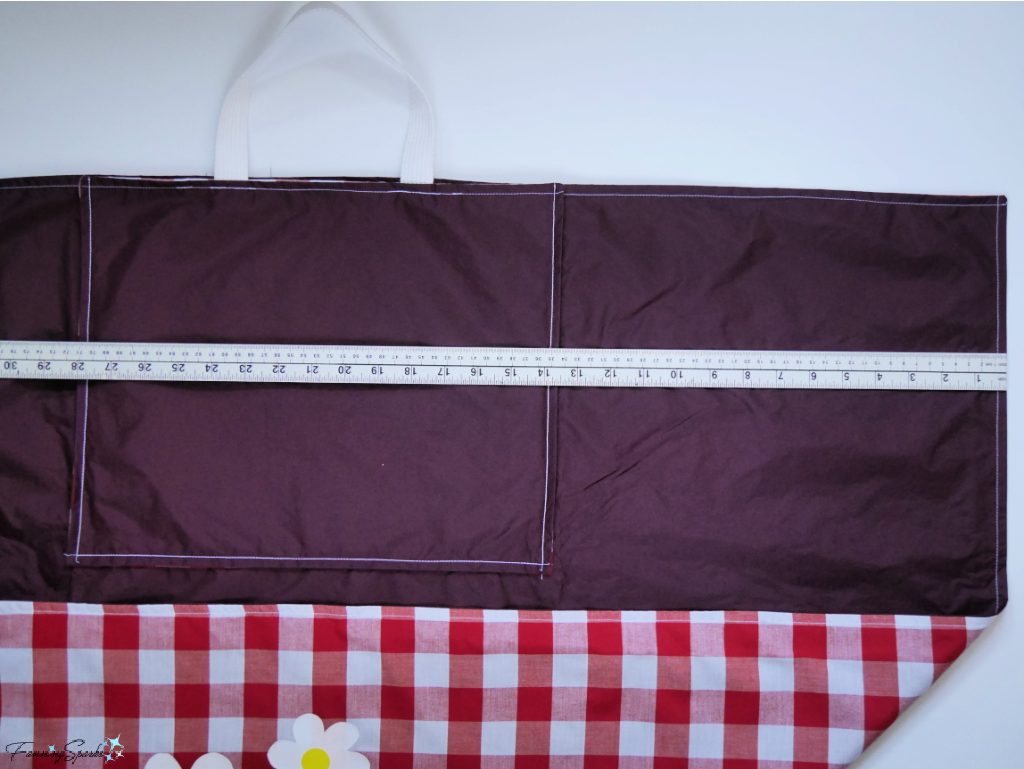 Sew around sides and bottom of Pocket leaving top edges open. Backstitch at top edges to reinforce.
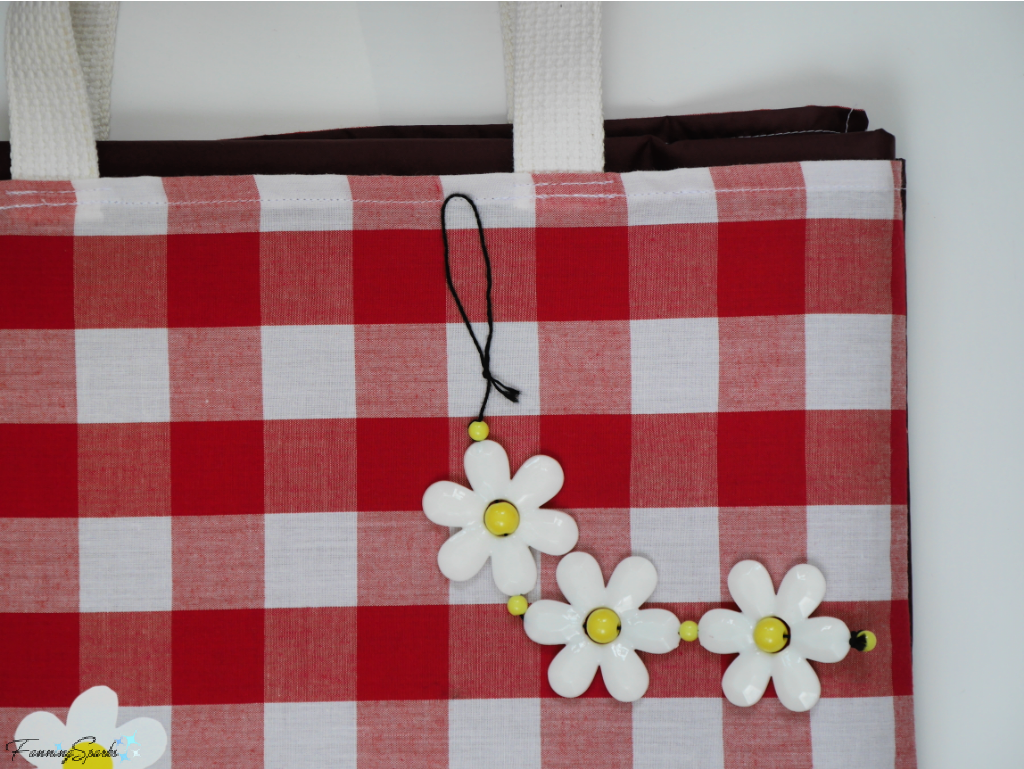
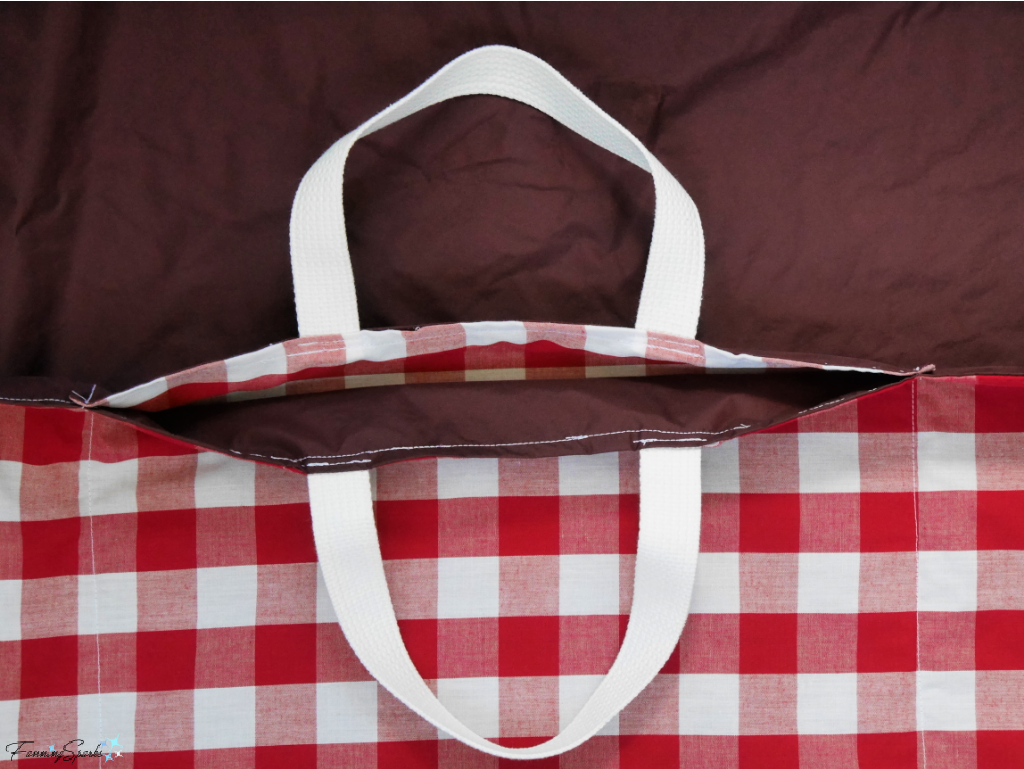 Step 11 Attach Trim Attach your trim of choice, beads, tassels, pompoms, ribbons, etc, with thread or string. It should be easy to remove before washing the Picnic Blanket. Simply tie a loop at the end of the string and then slip the trim through the loop and tighten.
 Your Ultimate Picnic Blanket is ready to use! To fold the Blanket for easy carrying to your next picnic: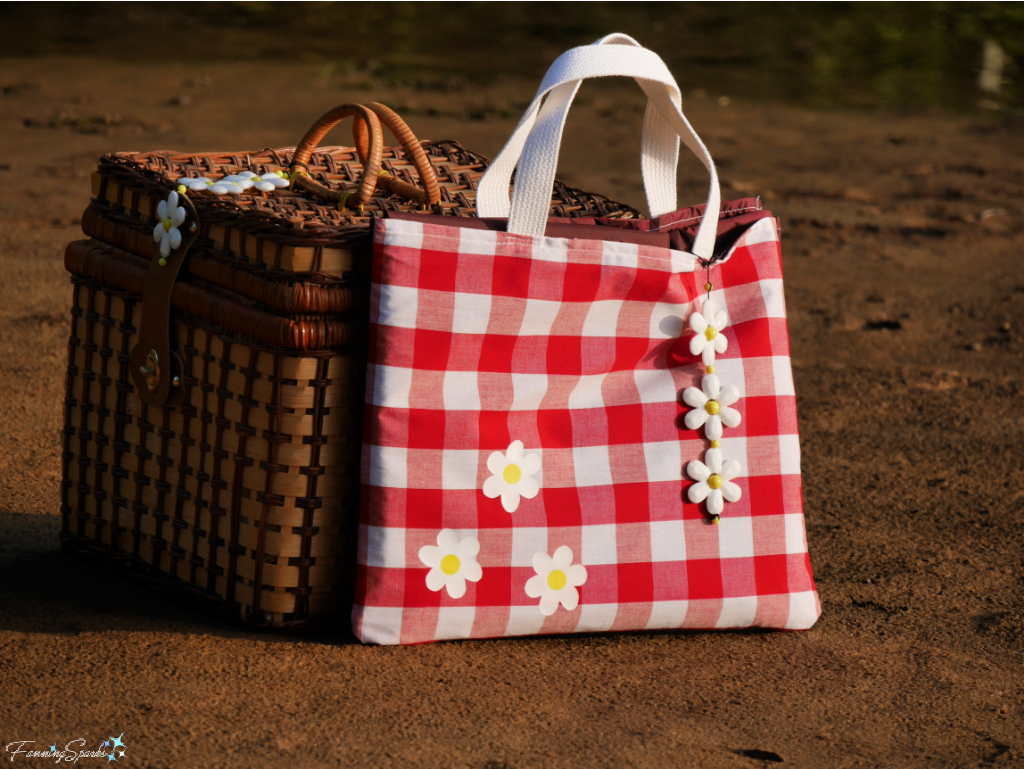
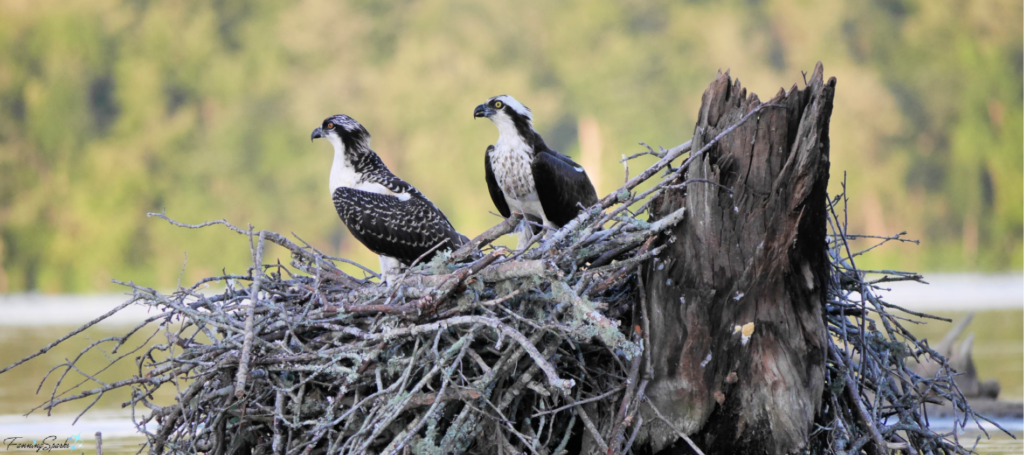
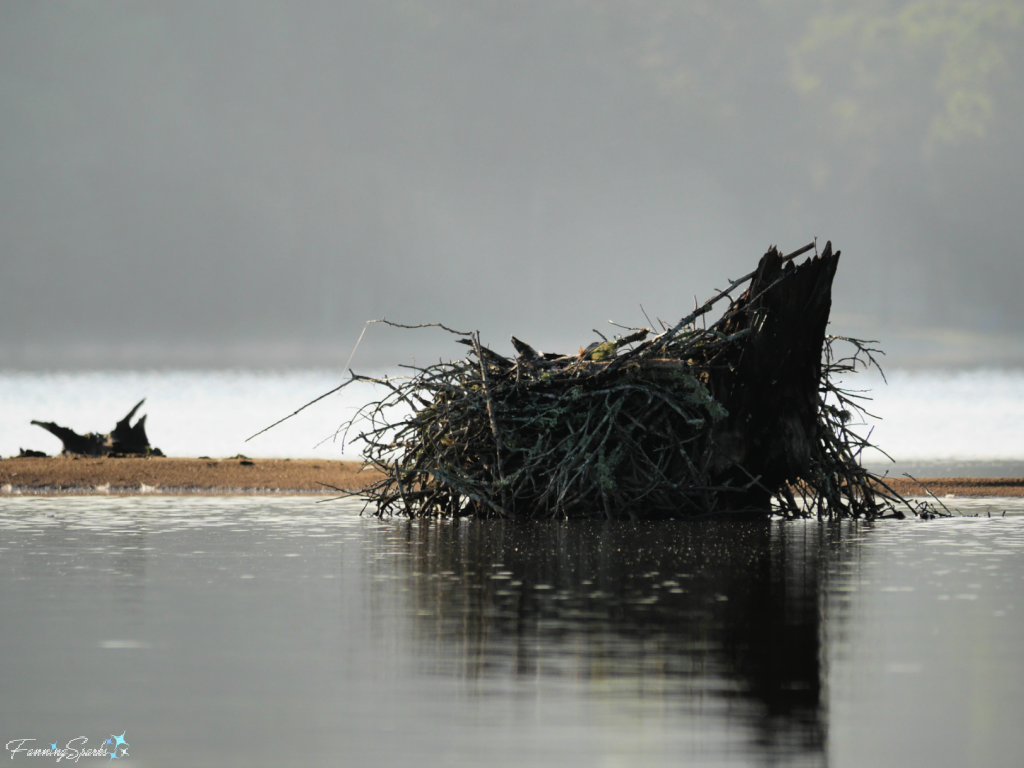
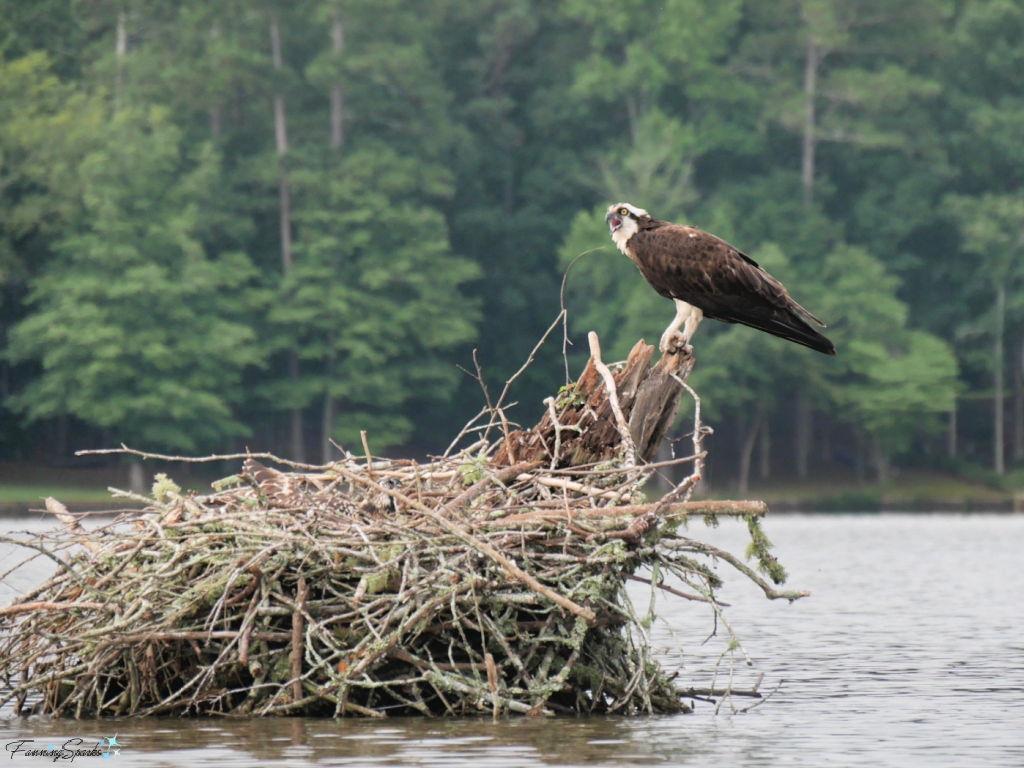 But then I got curious and decided to go back for a closer look the next day. There were two osprey!
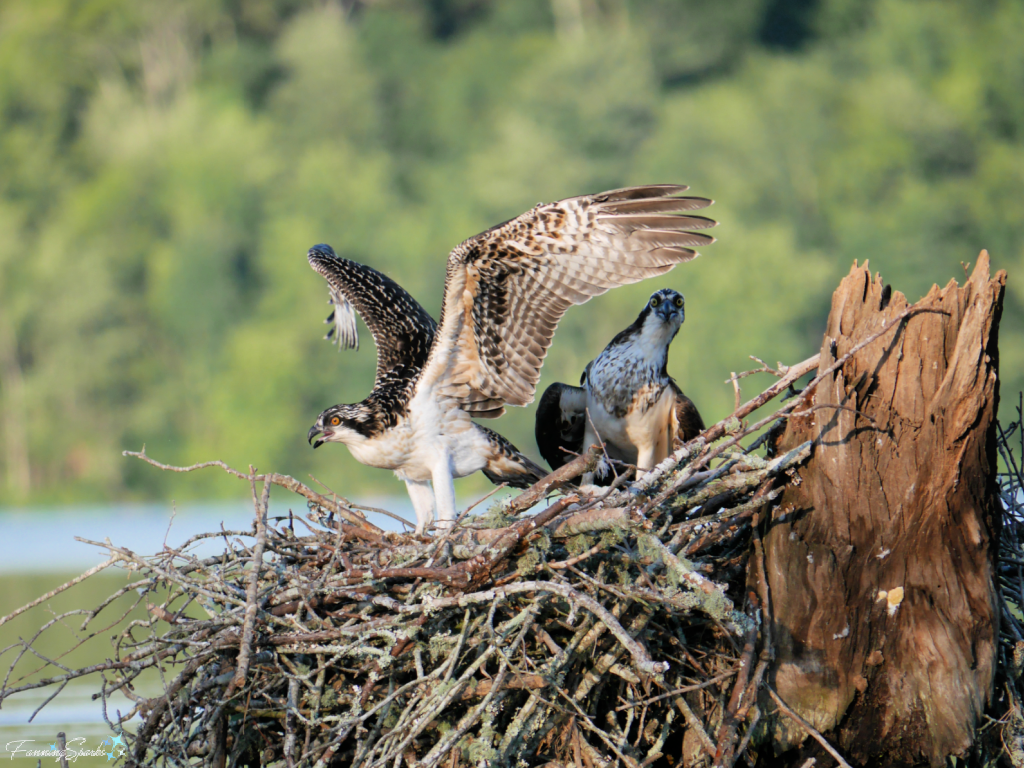
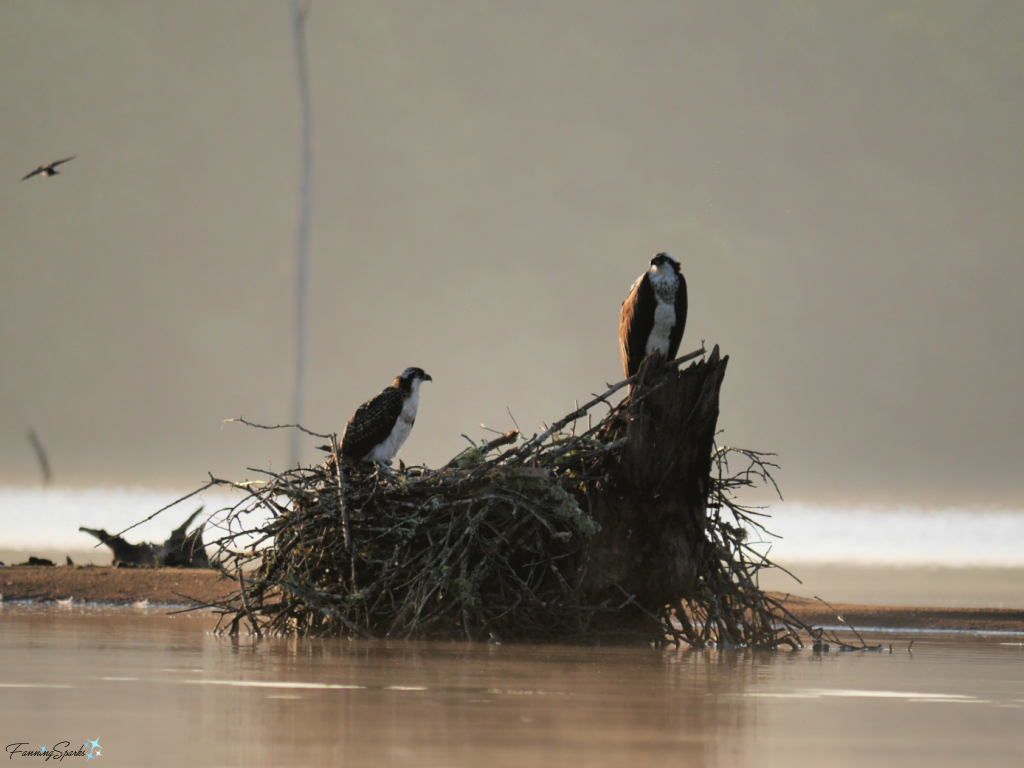 I’ve been back several times and have taken hundreds of photos of these two birds. One is an adult and the other is a juvenile. I assume the adult is female since they typically guard their young during the nestling period. Here’s one of my favorite shots of the mother (on right) and her chick (on left).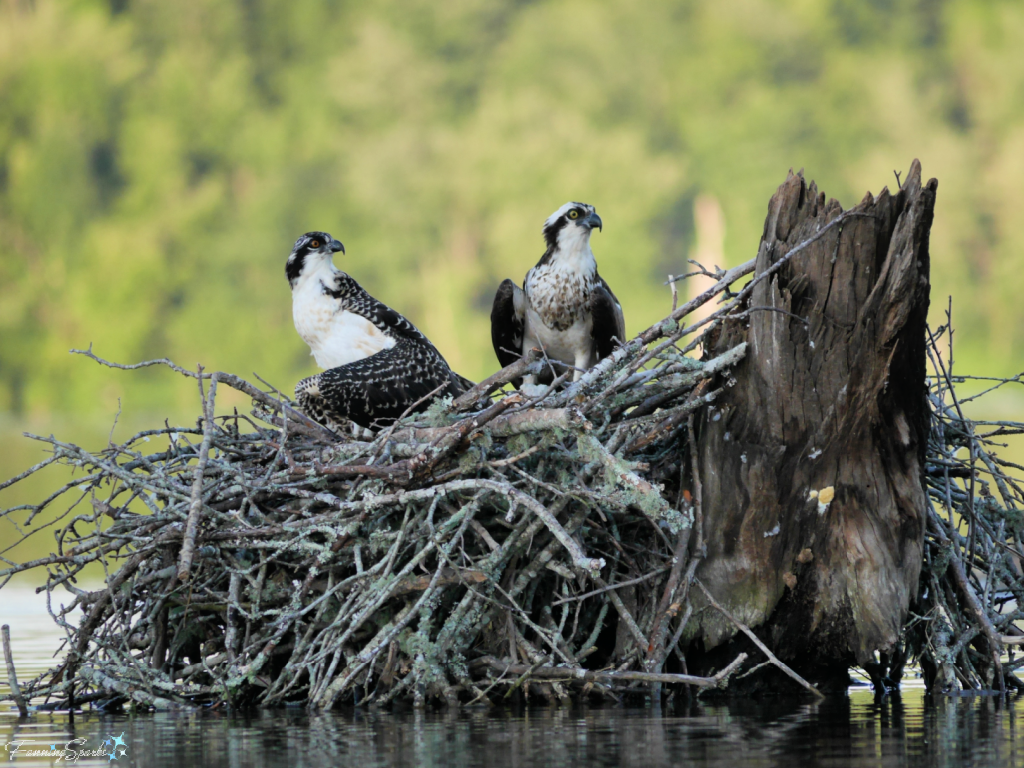
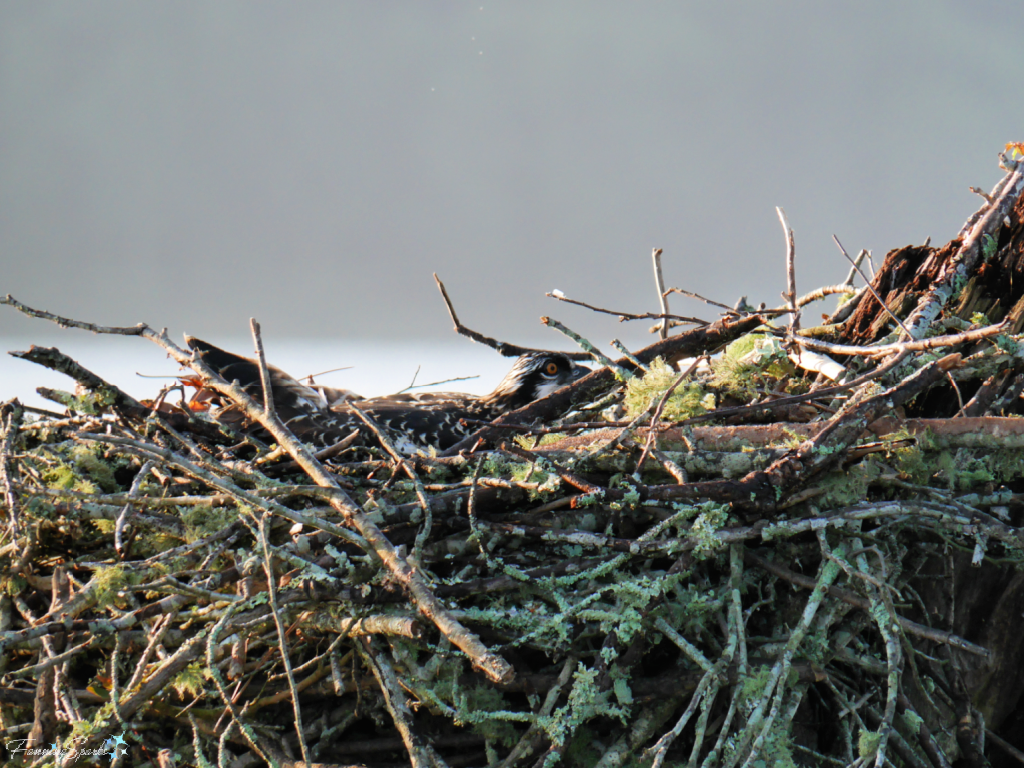
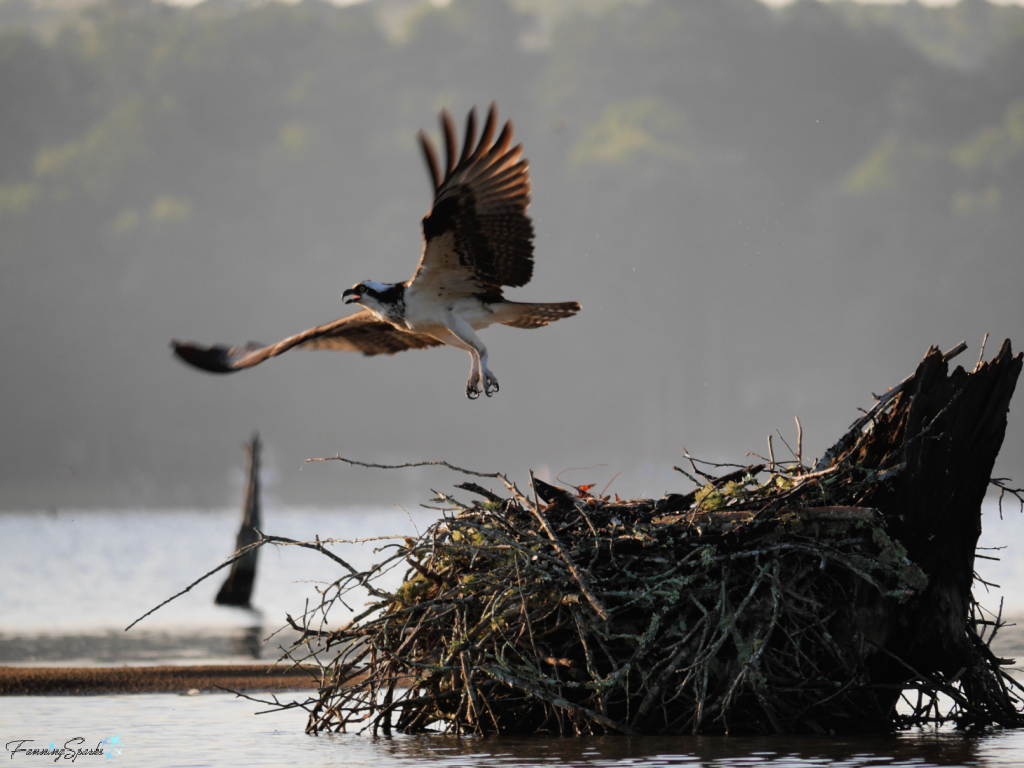 The juvenile osprey can’t fly yet so it hides in the nest. It blends in perfectly but its red eye is just visible (at center).
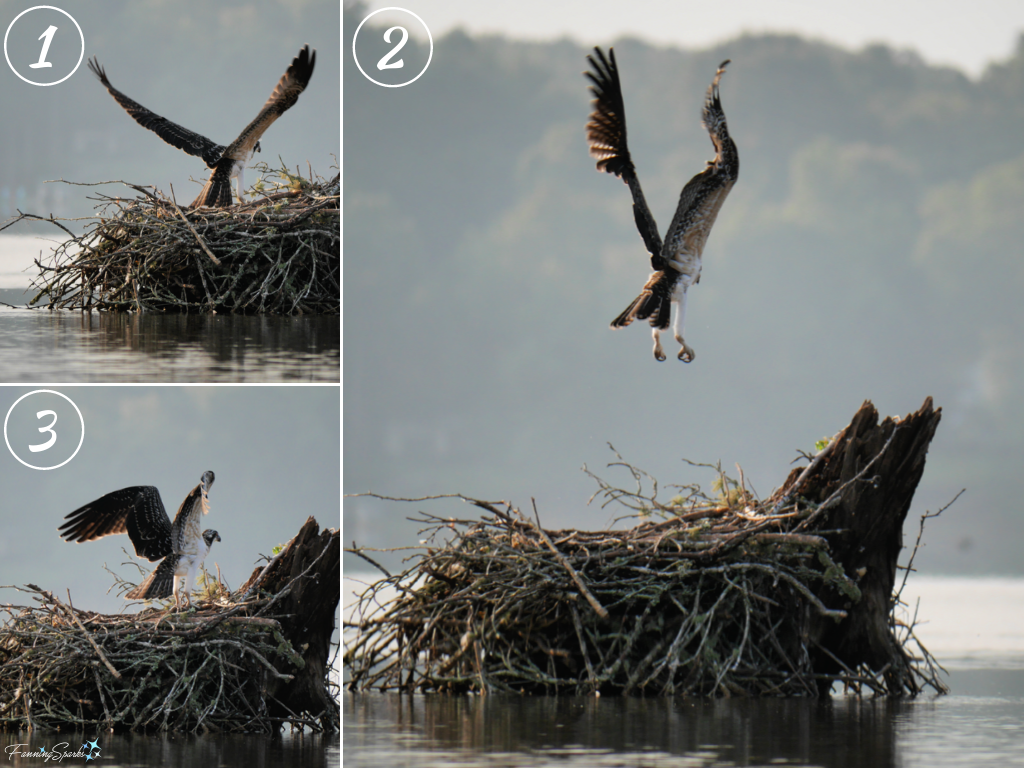
 If I wait long enough, the juvenile osprey will come out of hiding. It seems to be impatient to fly and appears to be practicing. Several times, it has taken a few powerful, hops while frantically flapping its wings. On my most recent visit, it actually achieved liftoff! But it was a very short flight! These 3 photos were taken back-to-back over 10 seconds. It was awesome to watch!
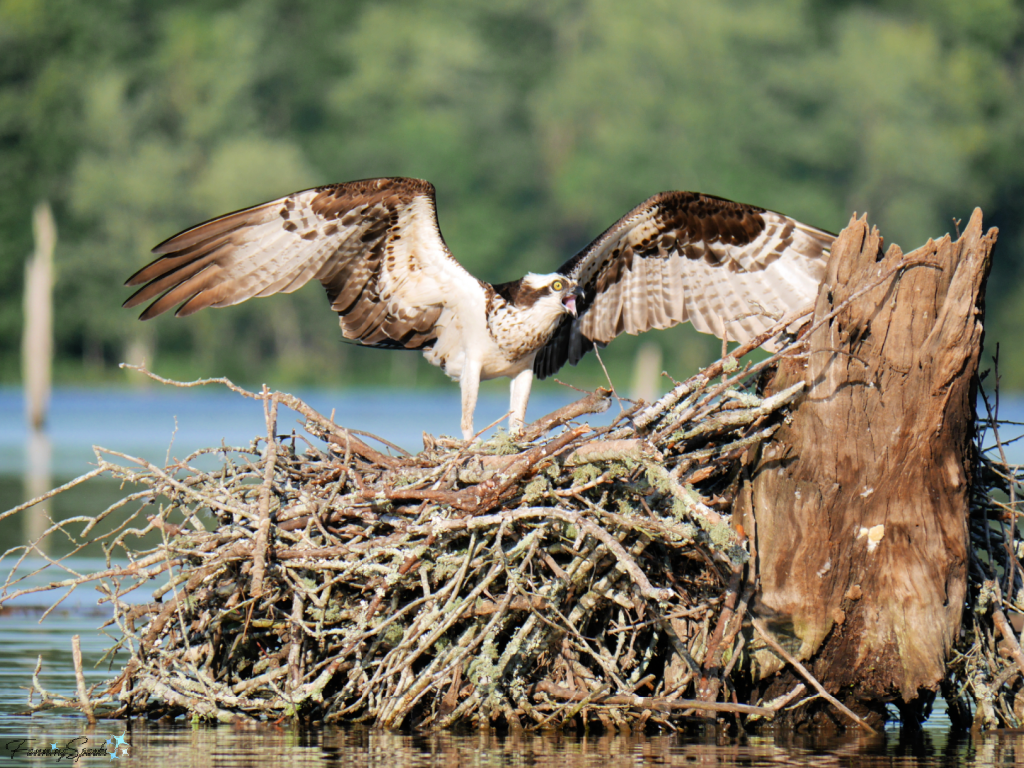
 Osprey (Pandion haliaetus) are fish-eating birds of prey. They are raptors similar to eagles, vultures and other hawks. The osprey has an astonishing ability to high dive into water to catch fish. The Royal Society for the Protection of Birds describes it this way: “The osprey…will fly above the water’s surface to locate fish, sometimes gliding and soaring up to 70 metres [approx. 230 feet or 20 building stories] high. The exact catching technique varies with the type of fish, but they all involve a nearly vertical plunge dive with wings half-folded and feet thrown forward at [the] last moment. The fish are caught in talons after a dive to a maximum depth of 1m [approx. 3 feet]. The fish is held head first, like a torpedo, when carried to a perch or to the nest.” I’ve had the pleasure of watching the osprey’s aerial dive from a distance but it happens in a split-second and actually capturing it on camera seems pretty unlikely. But that doesn’t mean I won’t continue to try.
 3. Be Stealthy. Obviously, avoid scaring away the bird to be photographed. Approach carefully. Be quiet. Set the camera to silent mode. Step lightly. Move slowly. Make no sudden movements. Hide out of sight. Blend in. It’s impossible to hide my bright green, 10-ft kayak from a sharp-eyed osprey. But I’ve found that the osprey will calm down and resume normal activity when I wait patiently snuggled into the shrubs along the shoreline (shown at right below).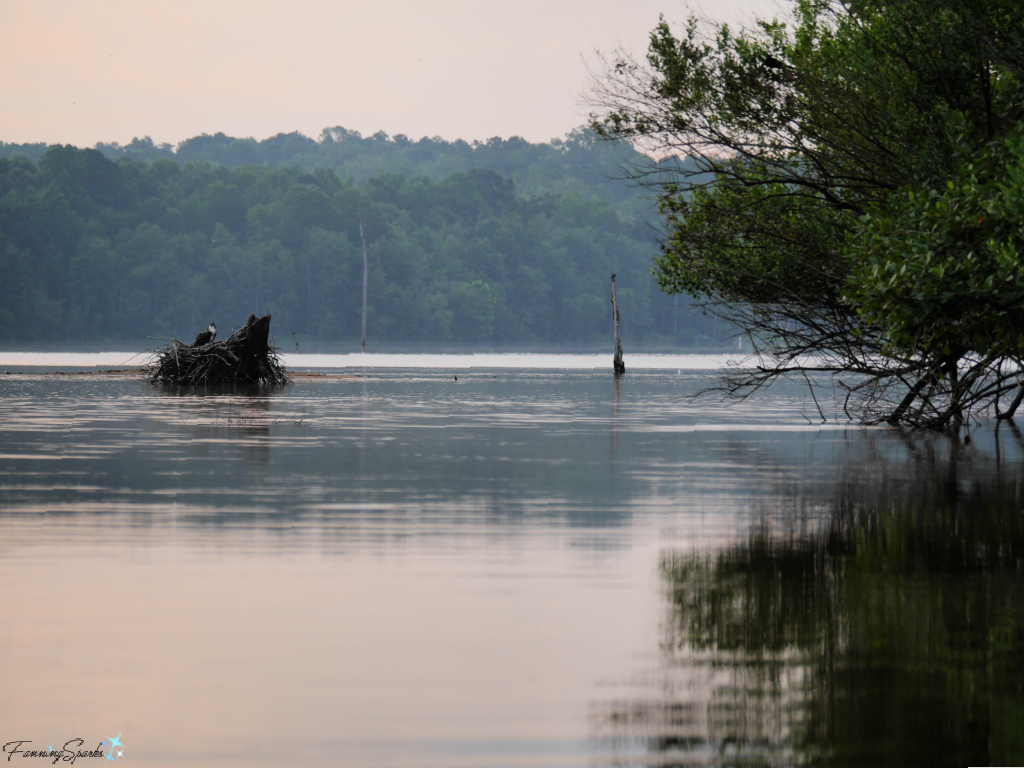
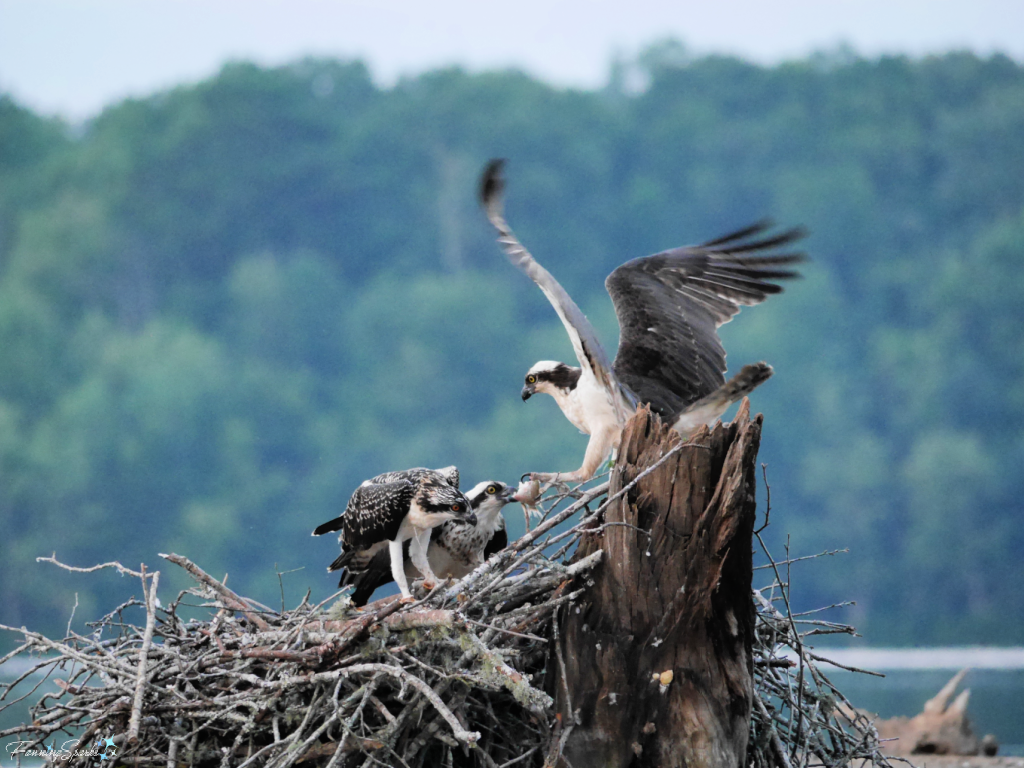
 7. Research. Learn about the grooming, nesting, feeding, parenting and mating habits of the birds to be photographed. I’d visited the osprey nest several times and spotted only one adult and one juvenile osprey. I was completely unprepared when a third bird flew in and out of the scene. Luckily, I was able to wait long enough for the third osprey to come back. Turns out, it was delivering a fish and I caught the below amazing shot. After the fact, I learned that the male osprey is the major provider of fish for the female and young until the chicks are larger.
 8. Be Curious. Visit the target location frequently and observe the birds over time. This practice will prepare you for the stages and special events in the bird’s natural cycles such as courting, nest building and raising young. Study their routines. How do they hunt/gather food? How do they feed it to their young? At what time? From where? What sounds do they make? What are their calls and songs? Osprey, for instance, have high-pitched whistling voices. Their calls, which are like a succession of chirps, will evolve into an intense squeal if they feel threatened. Become familiar with possible sites to identify the best vantage points and lighting conditions.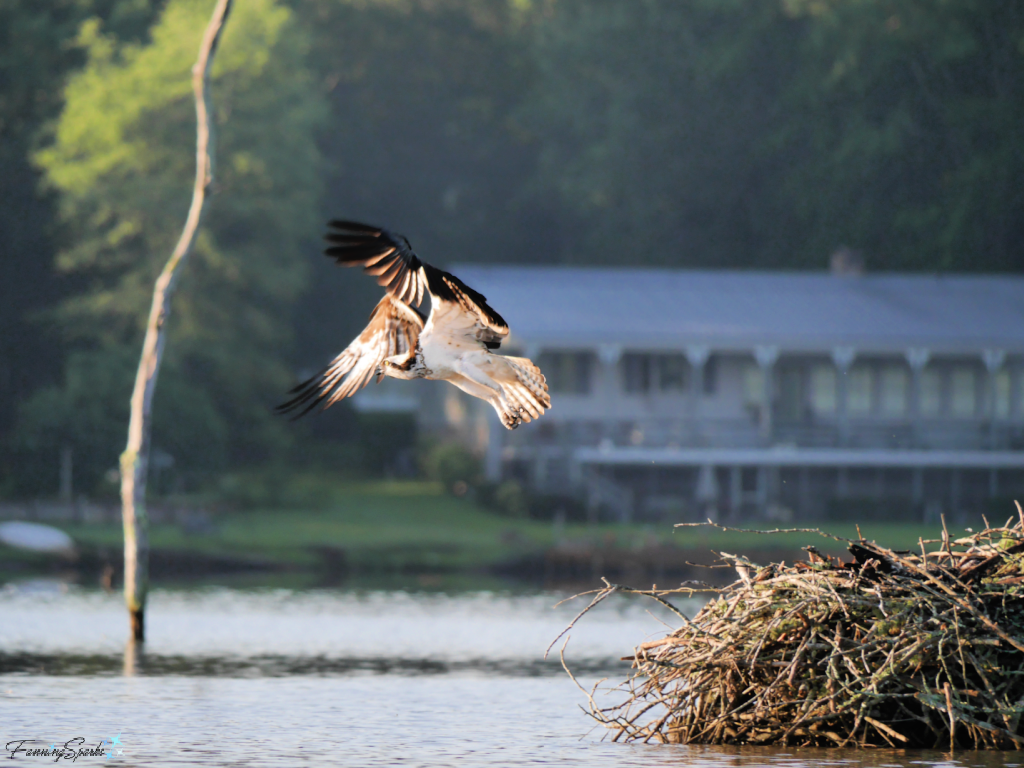
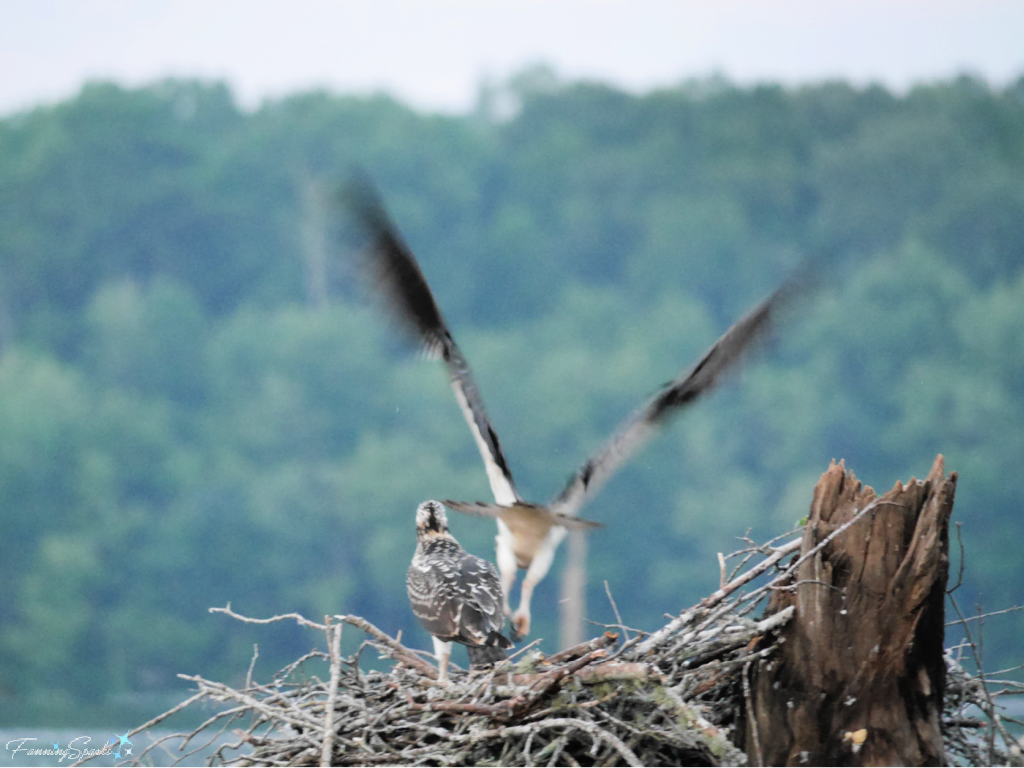
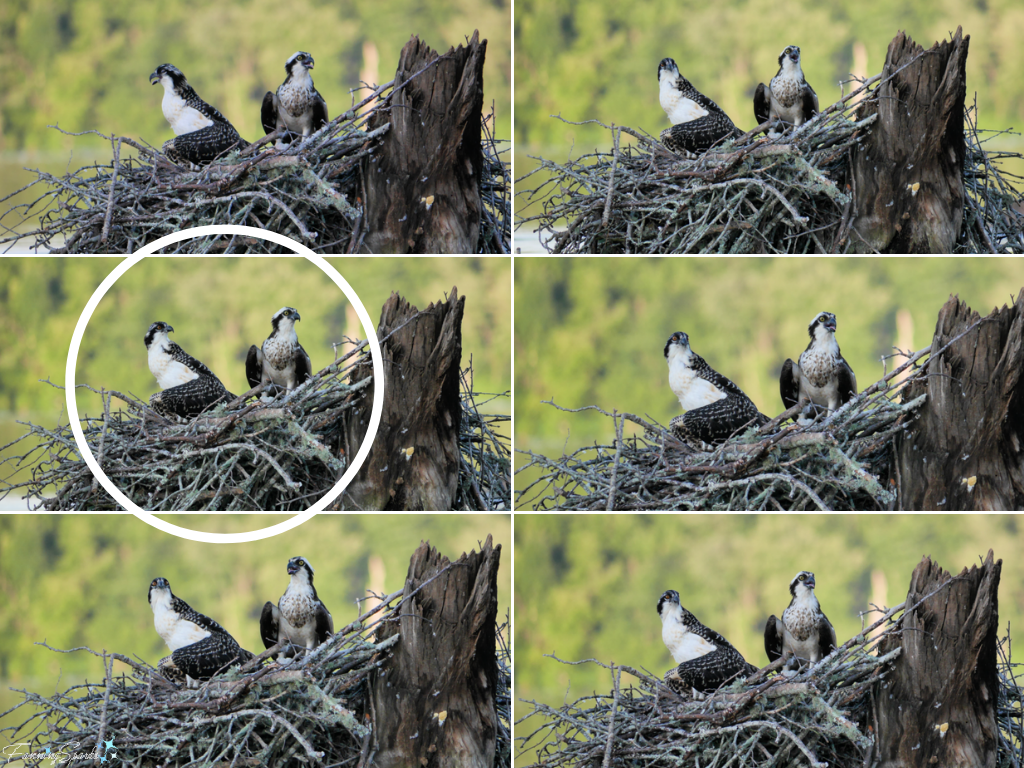 12. Be Ready and Alert. As difficult as it is to hold a camera steady with a finger on the shutter button for long periods of time, it’s necessary to catch the great shots. Of course, a tripod would make it much easier. I’m not geared up to use a tripod on my kayak, so I handhold my camera and lens. Holding it steady for 15 minutes at a time can be challenging! Staying focused and ready to shoot during that entire time can be even more challenging. But it’s worth the effort. It’s probably just a coincidence but it seems that every time I release my hands or look away, the birds change things up and I miss the shot! Here’s an example.
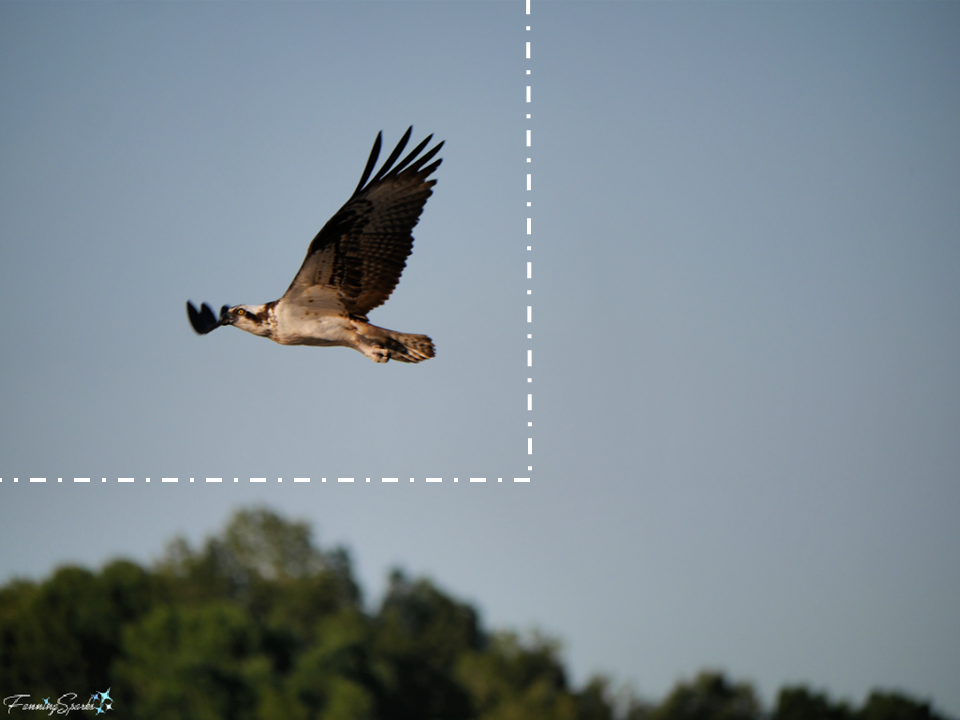
 13. Compose the Shot. It’s easy to forget about good photo composition when scrambling to capture a shot. But all the rules about balance, unity, entrance and exit, lines, framing, breathing space, light, shade and so on still apply. It’s always better to leave room in the frame when a subject is looking off or moving towards to the side of the picture. So if a bird is flying into the frame from the right, compose the image so the bird is slightly to the right of center freeing up the majority of the left side for them to “fly into”. Here’s an example of how not to do it—notice how it looks like the osprey is about to fly off the image. The composition would have been better if it were framed along the white lines.
 14. Be Patient. If there’s one thing I’ve learned about photographing wild birds, it’s patience. I’ve spent hours watching the osprey. Ironically, you often have to wait a long time to get a great shot but when it appears, you need to act in a split-second.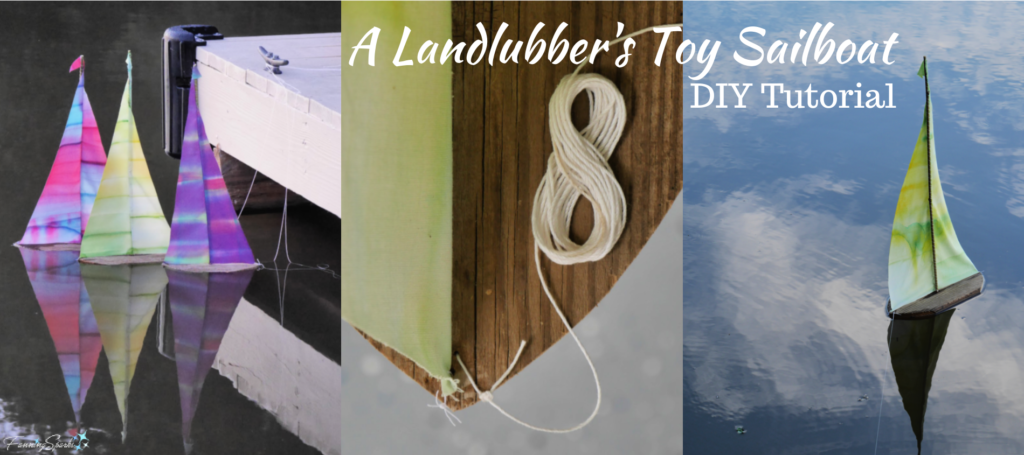
 The below graphic illustrates the parts and measurements for the landlubber’s toy sailboat. Essentially, it’s a piece of flat wood (aka Hull) with a vertical stick (aka Mast) and some pieces of fabric (aka Mainsail and Jib). The trick is to get it to float and stay upright. That’s where determination and perseverance came into play. It took lots of trial and error and several test runs to get to a solution that works. Now that I’ve figured it out, I’m happy to share the details with you!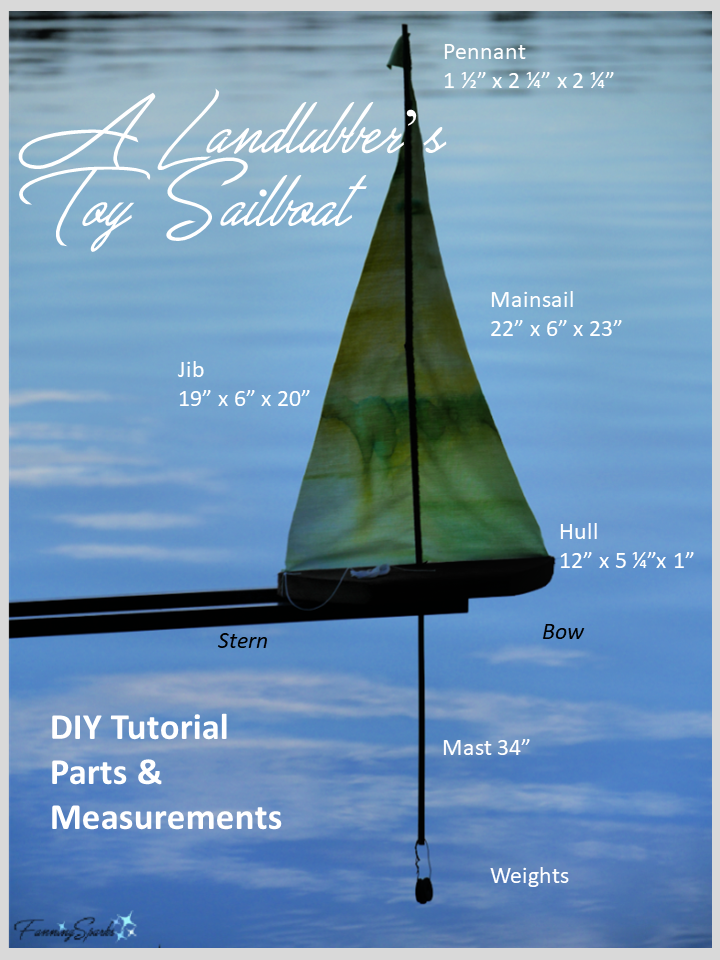
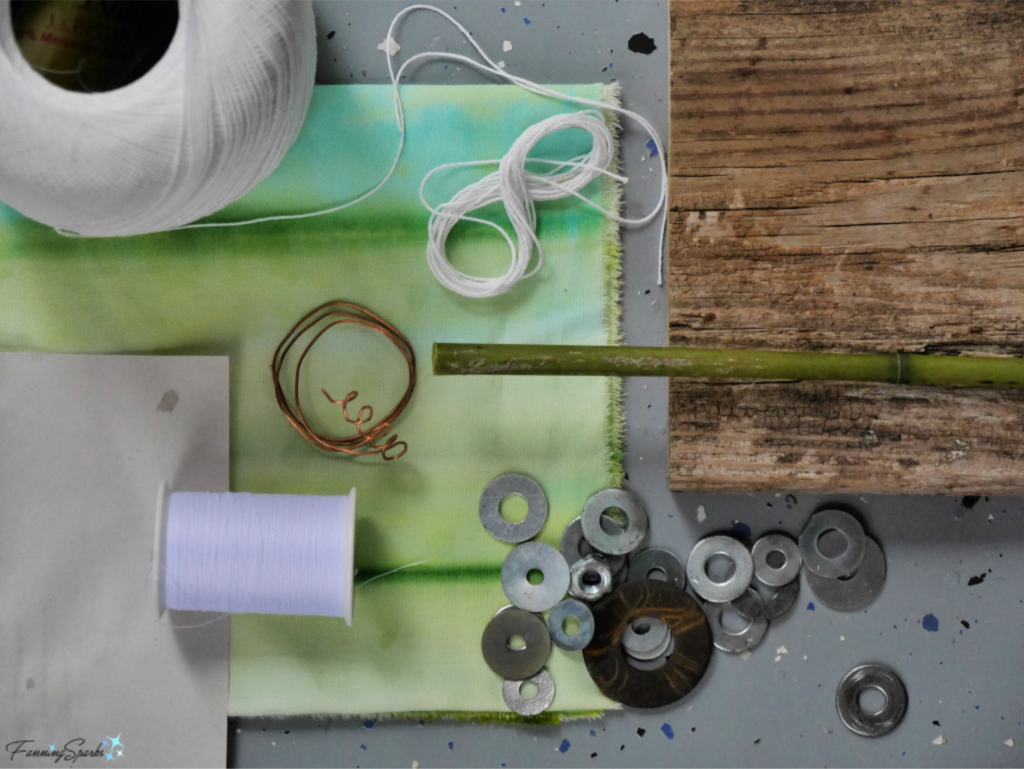 . Weathered Wood 12” x 5 ¼” x 1” (actual dimensions)
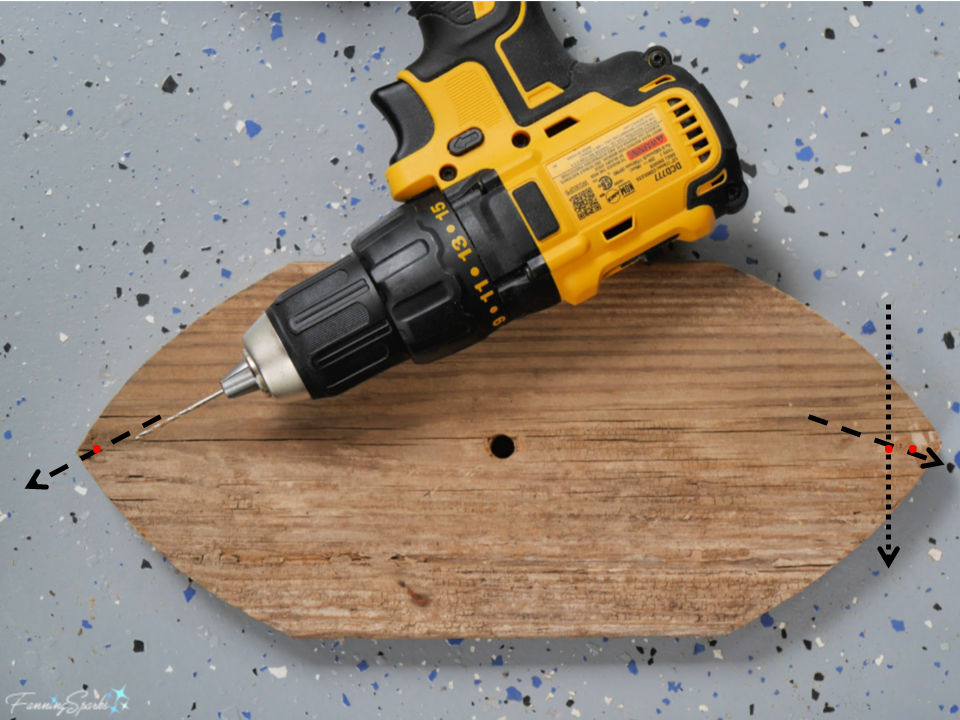
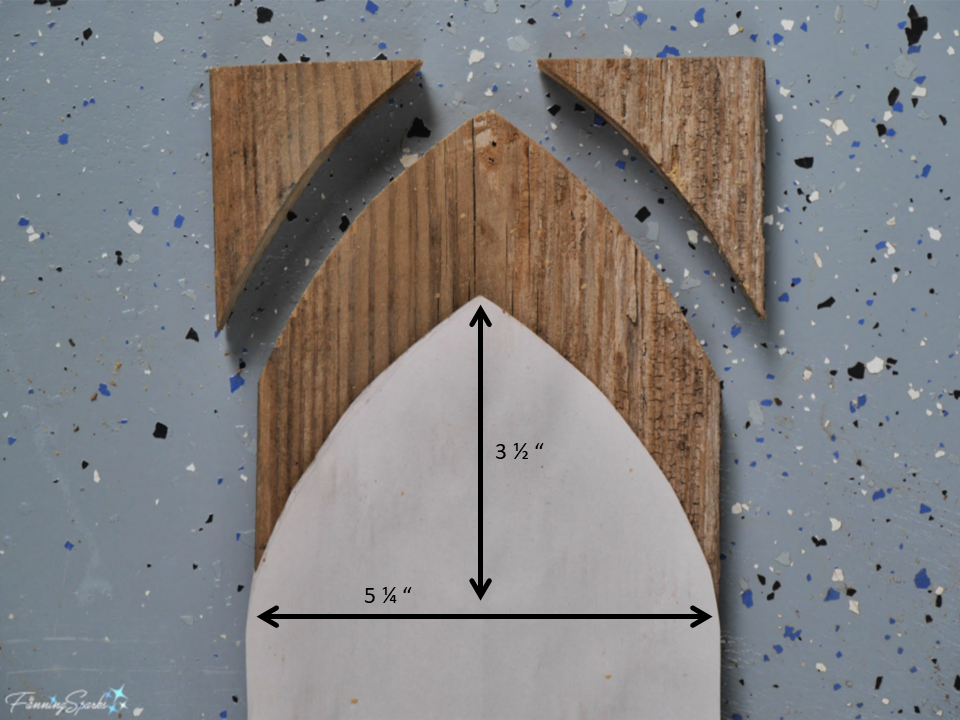 Step 2 – Drill Hull Using the ⅟₁₆” bit, drill 3 holes for thread and string as illustrated with black arrows on the below photo:
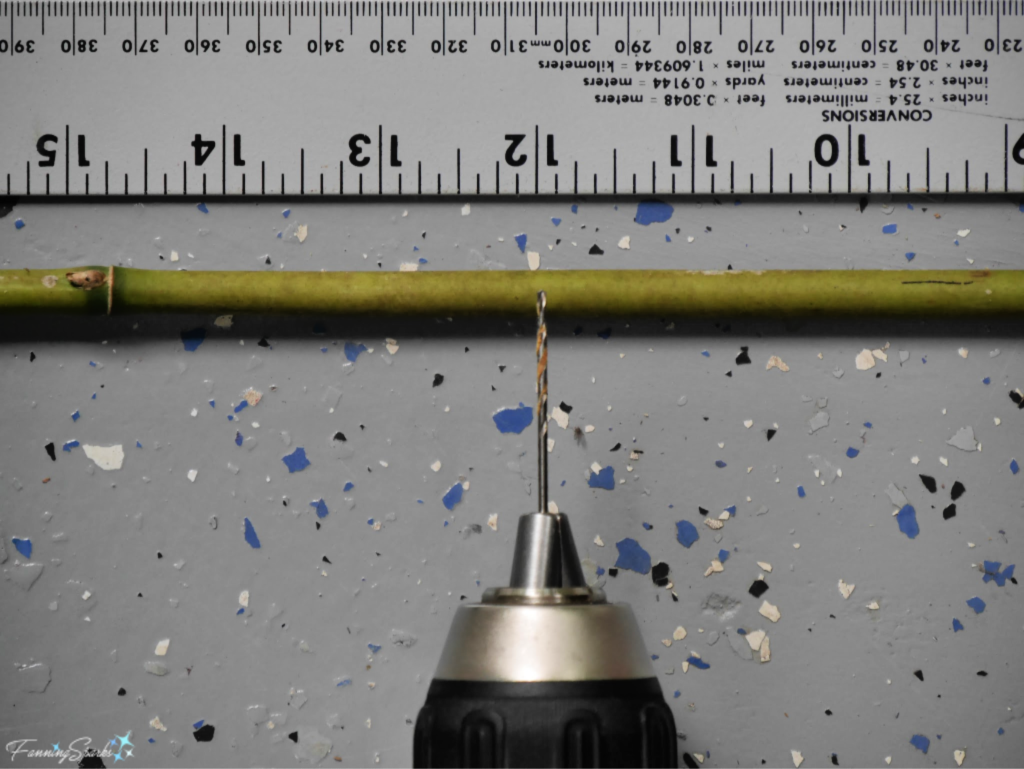
 Step 3 – Cut Mast Cut a 34” section of ⅜” bamboo (or dowel) to make the Mast. Measure up 12” from the bottom of the Mast and drill with the ⅟₁₆” bit through the center of the bamboo rod at this point. Drill through the bamboo rod at each end of the Mast.
 Step 4 – Cut Sails Cut the sails from the fabric. You will need 3 triangles of fabric:
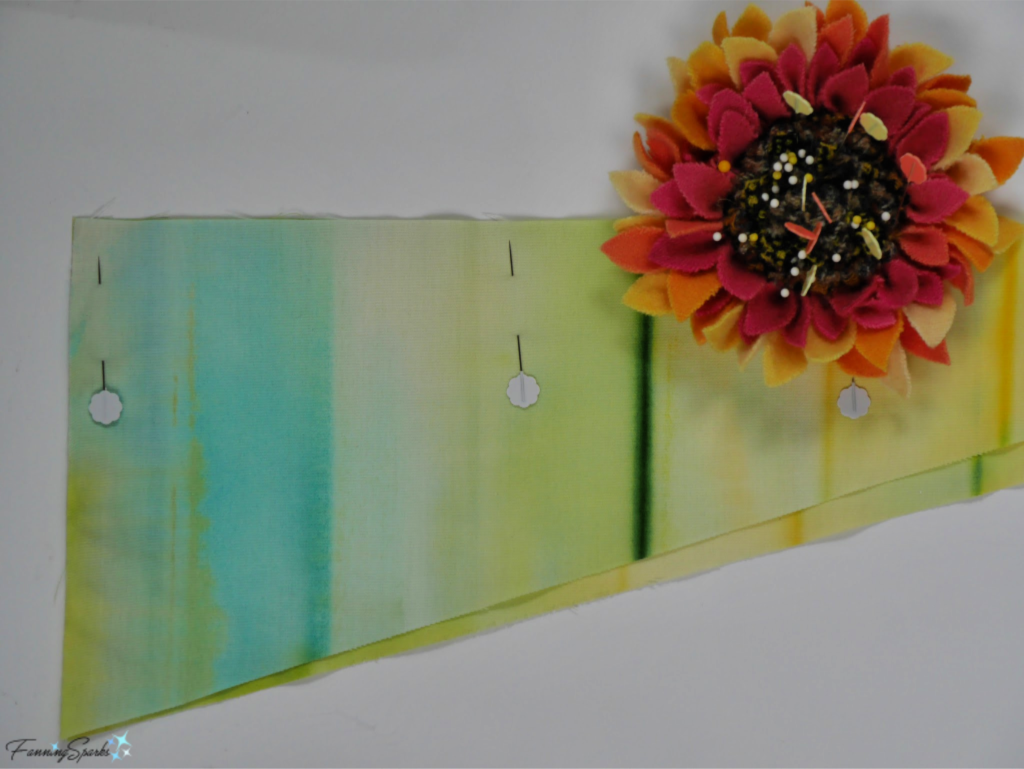
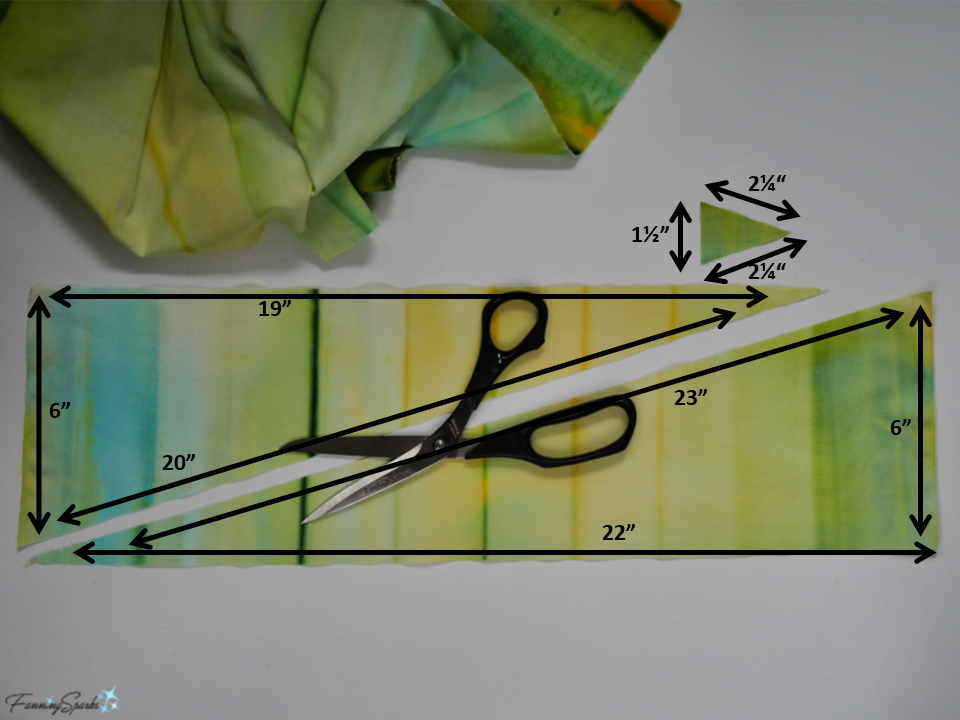 Step 5 – Sew Sails Lay the Jib on the Mainsail aligning the right angle corners and the long straight edges (Mainsail 22” and Jib 19”). Sew a small ¼” seam. Alternatively, you could use waterproof glue.
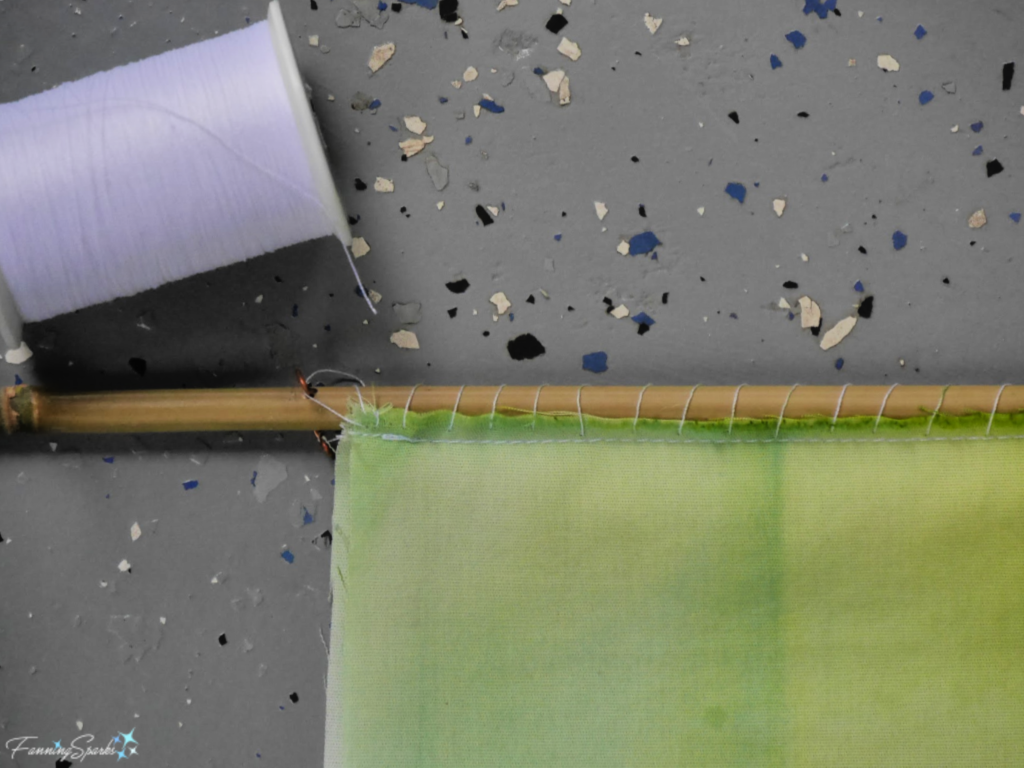
 Step 6 – Attach Sails Cut about 1 ½” of wire. Bend loop into one end. Insert wire through the middle hole in Mast (at 12” mark). Bend loop in other end of wire to keep it snuggly in place. Sew the sails to the mast. Start by stitching thread through the bottom of the sails and the wire. Stitch by looping thread around Mast and through seam on sails. At the top of the Mast, insert needle and thread through hole in Mast to secure top of Mainsail. Take a few last stitches through the fabric to finish securely. Alternatively, you could use waterproof glue to attach the sails to the Mast.
 Step 7 – Attach Pennant Sew Pennant to top of Mast. Start at the top of the Mast, take a few stitches through the fabric to start securely. Insert needle and thread through hole in Mast to secure Pennant. Use running stitch to bring thread down to bottom of the Pennant. Wrap thread around Mast. Take a few last stitches through the fabric to finish securely. Alternatively, you could use waterproof glue to attach the Pennant to the Mast.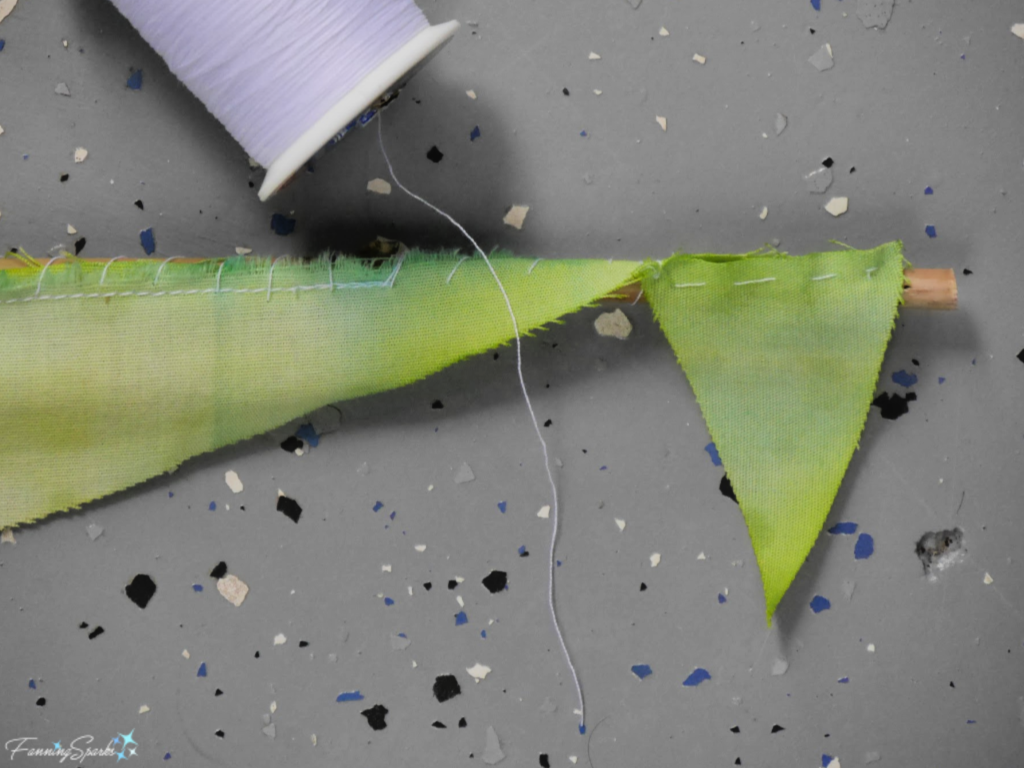
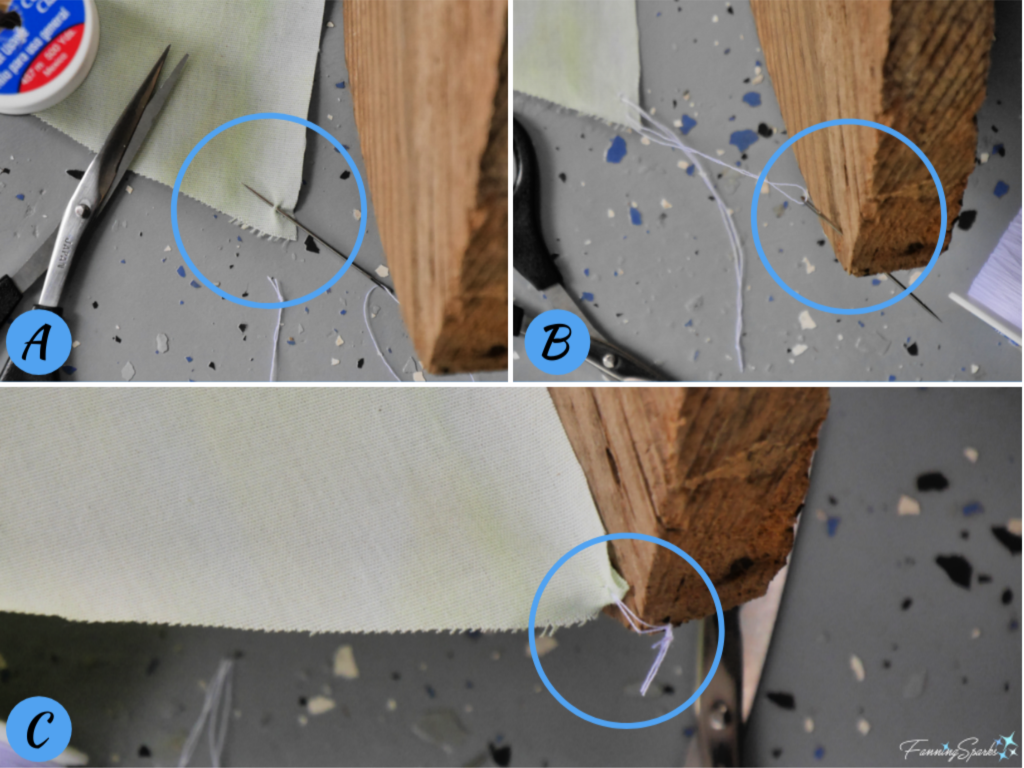
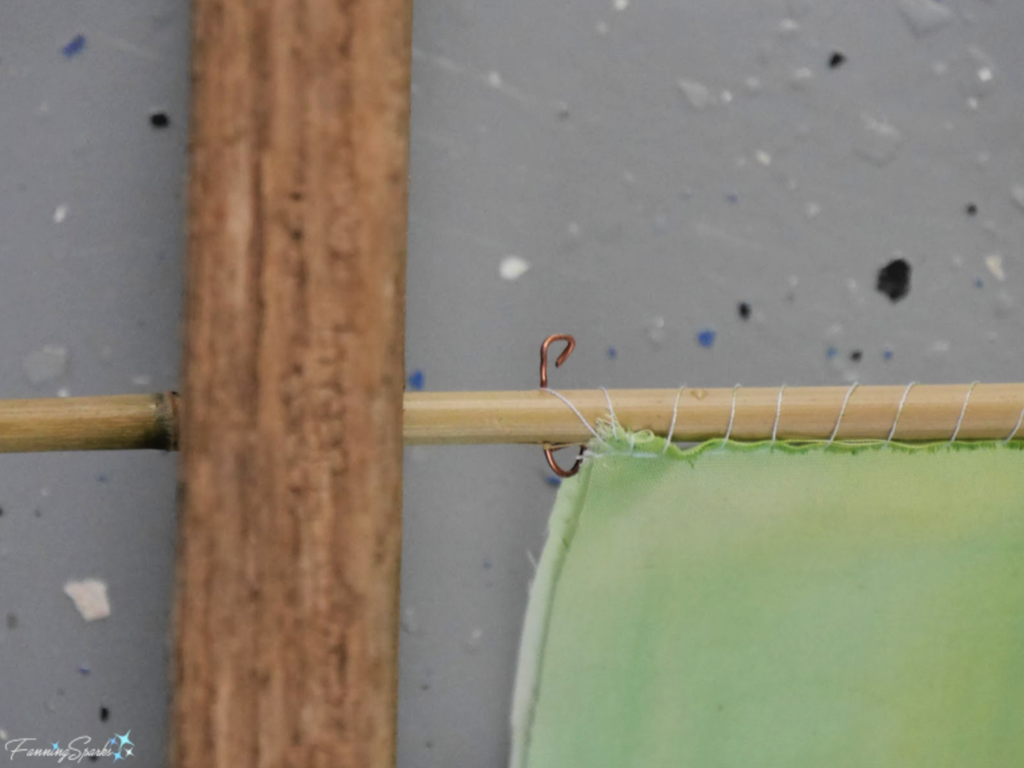 Step 9 – Attach Sails to Hull Attach front and back corners of sails to Hull with thread. Start with the Mainsail and the bow of the Hull.
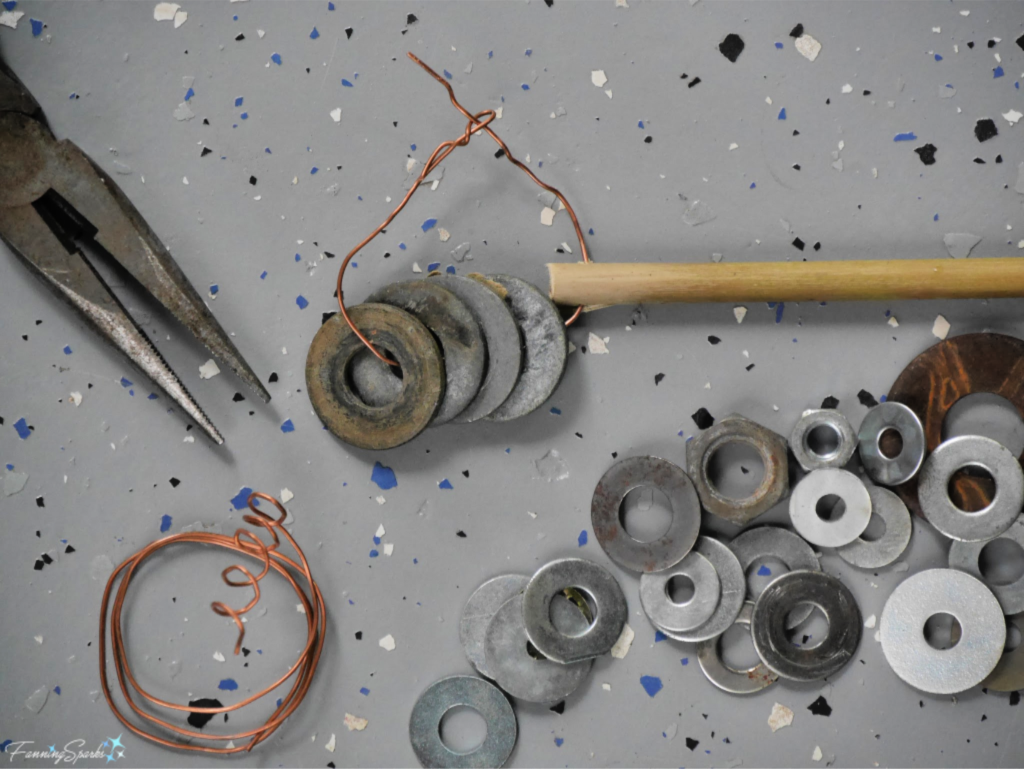
 Step 10 – Attach Weights to Mast Cut about 6” of wire, put 4-6 1”washers (or nuts) on wire, thread wire through bottom hole of the Mast. This weight forms a keel, of sorts, and serves to keep the sailboat upright.
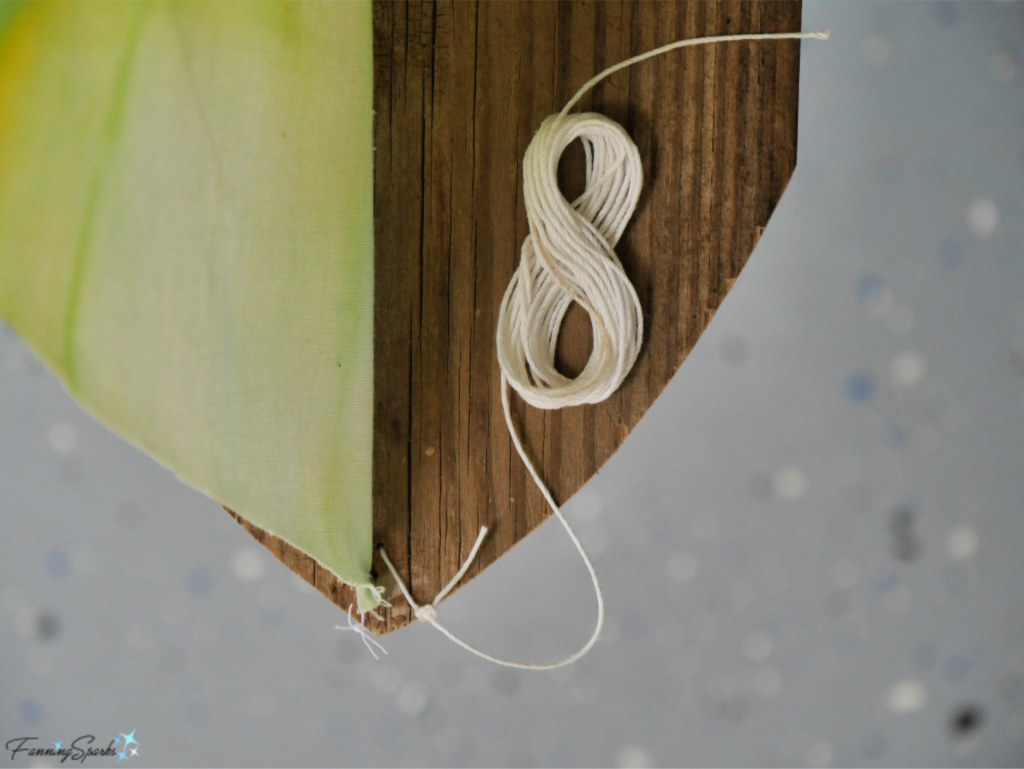
 Step 11 – Attach String Cut a piece of string about 6 feet long. Use needle to thread the string through the hole at the stern of the Hull. Knot to attach securely. You’ll need this string to keep the sailboat from floating off into the sunset!
 Step 12 Test Run It’s time to give your sailboat a try. This sailboat needs about 1 ½ feet of water to stand upright. Gently set it in water to ensure it floats and stays upright. Adjust if necessary; for example by centering or adding washers to the weights.
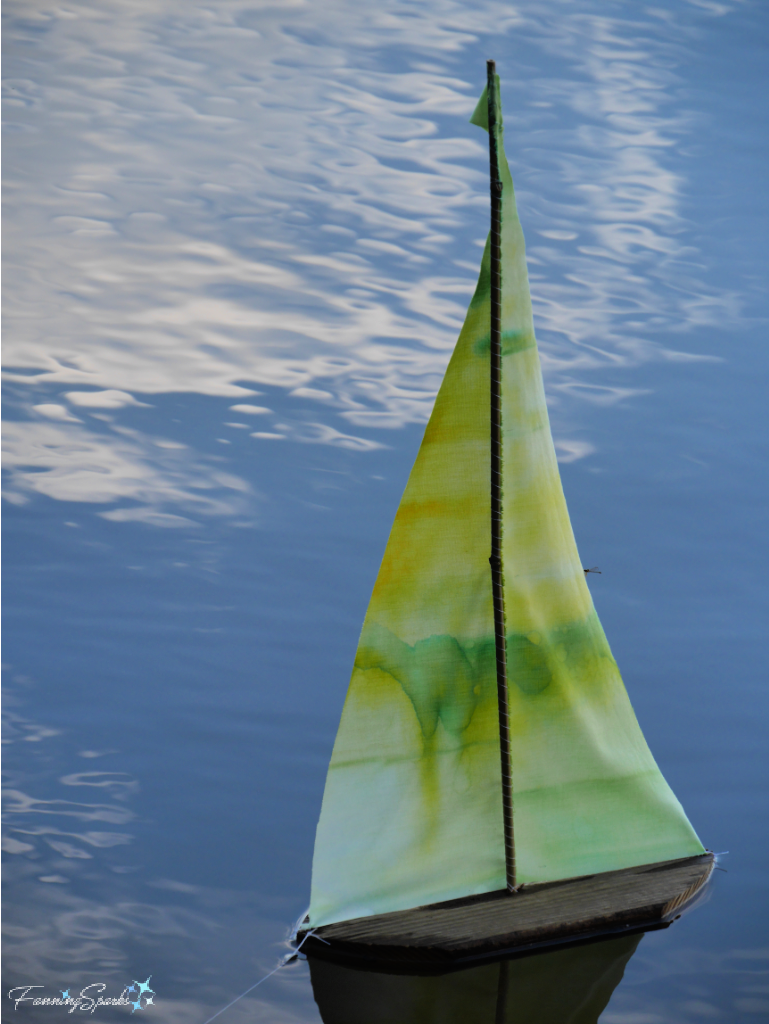 UPDATE July 6, 2021: Shown below is my latest iteration of this sailboat. This time I made the sails with a polypropylene fabric called Oly*Fun™. This fabric repels water so the sails stay dry and the sailboat stays balanced.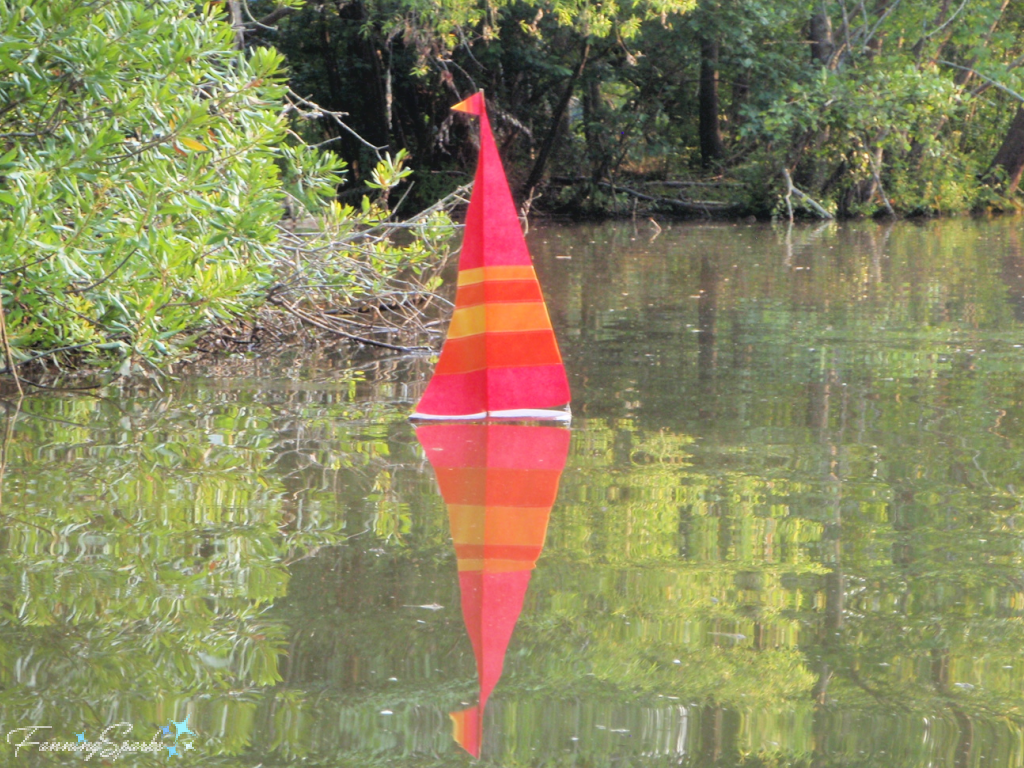
 You can learn to build a tiny toy sailboat with a cork, craft foam and a toothpick in the hands-on science activity in this
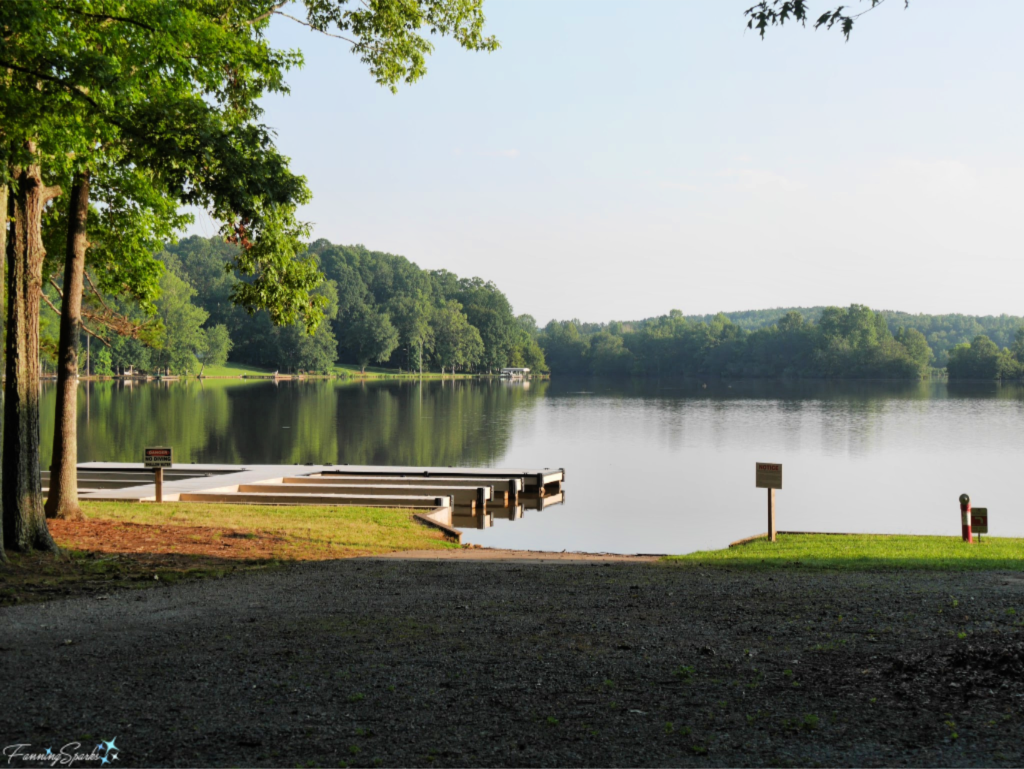
 The end of the dock provided the perfect spot to enjoy the show and await sunrise.
 With such an early start, everything had to be prepared and packed the night before. Luckily, a breakfast picnic doesn’t require much food and the menu was super simple.
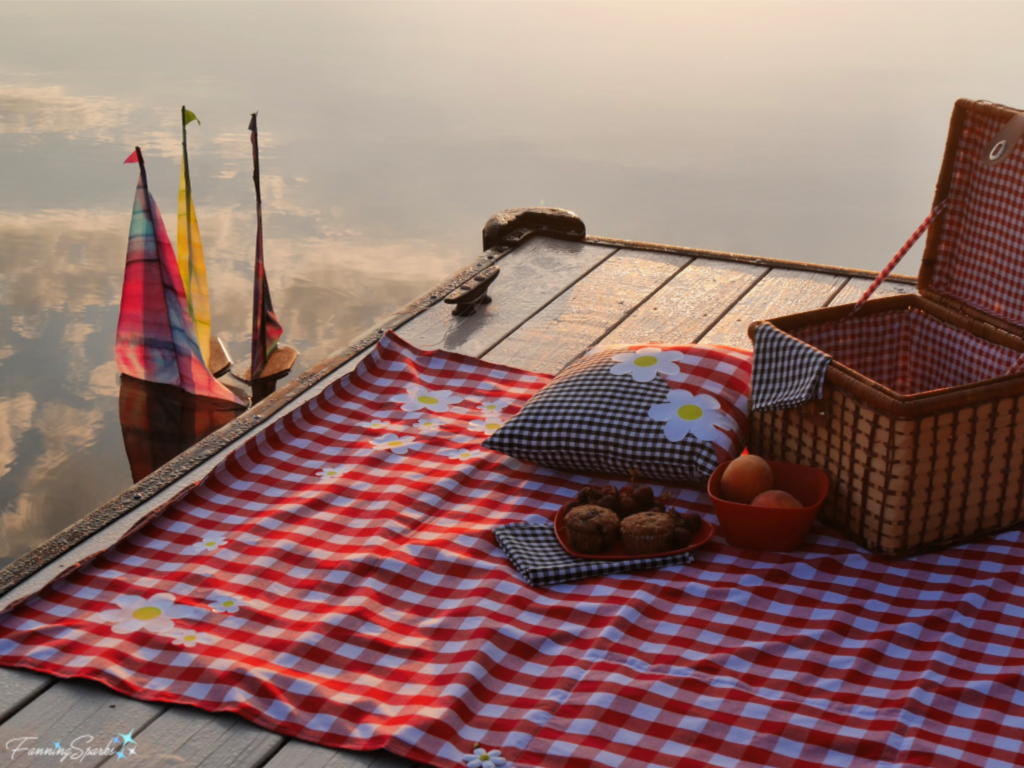 My breakfast picnic consisted of blueberry muffins and fresh fruit. It would have been perfect if I hadn’t forgotten the coffee. My to-go coffee mug was ready but, in the rush to reach the boat launch for first light, I left it sitting on the kitchen counter. With or without coffee, this simple meal was tasty and hassle-free.
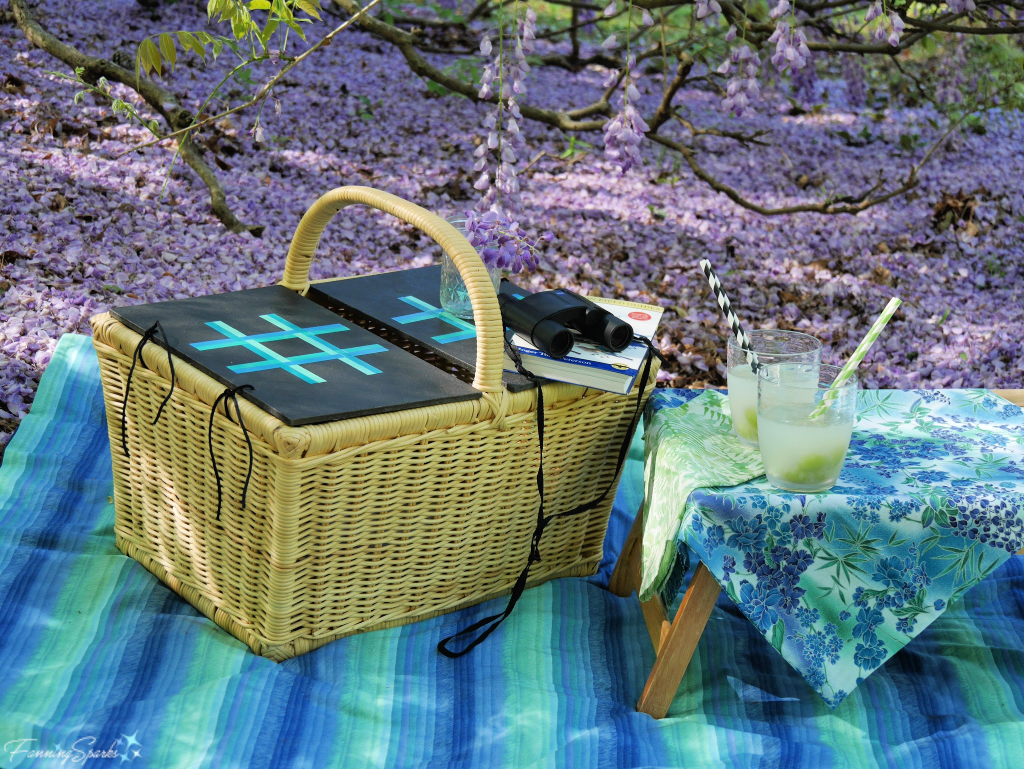
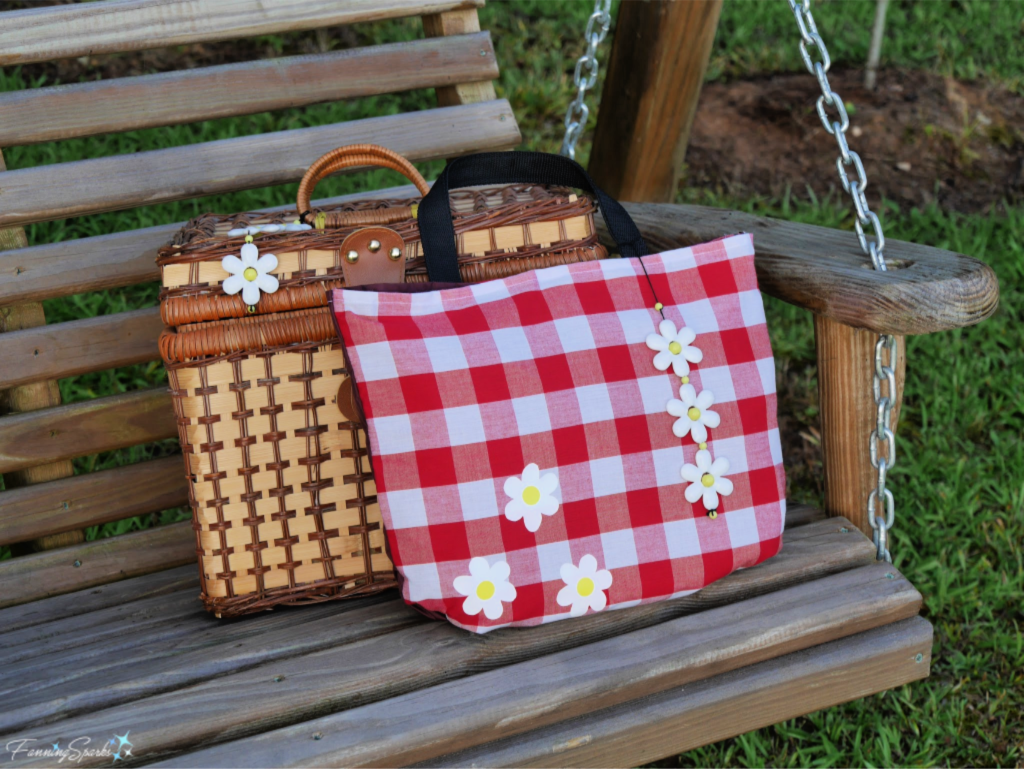
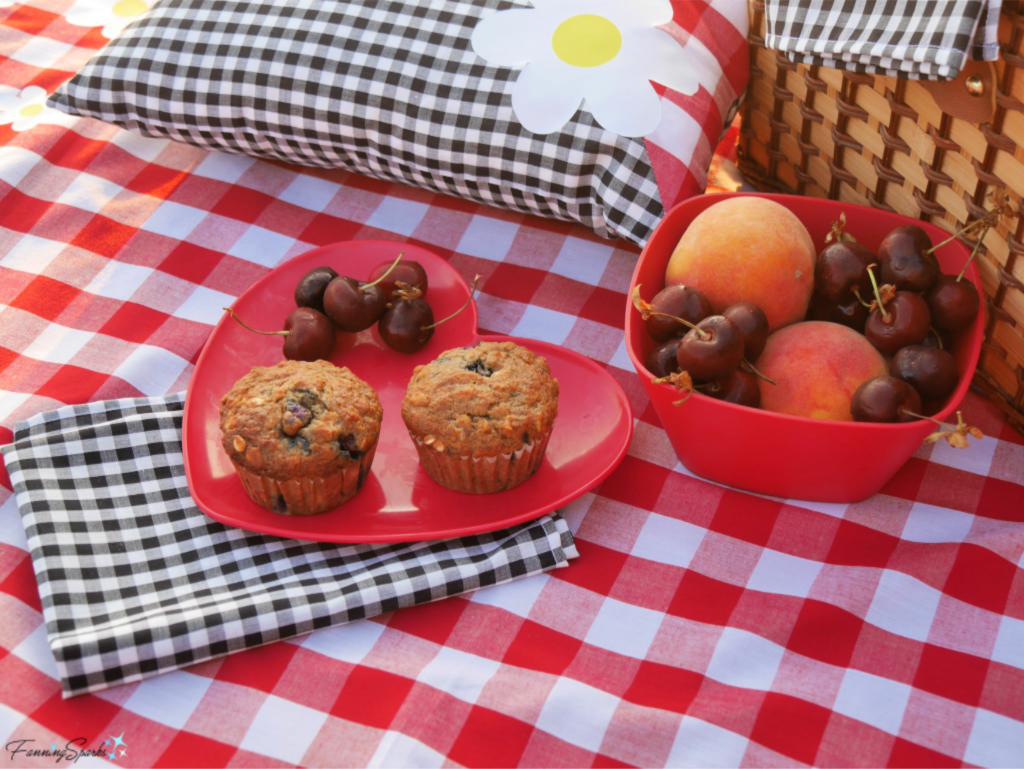 Aside from the picnic blanket, everything fit inside the picnic hamper. This was my first time using this new picnic blanket and I’m really pleased with the results. The waterproof backing kept the blanket dry despite the heavy dew on the dock—just as intended.
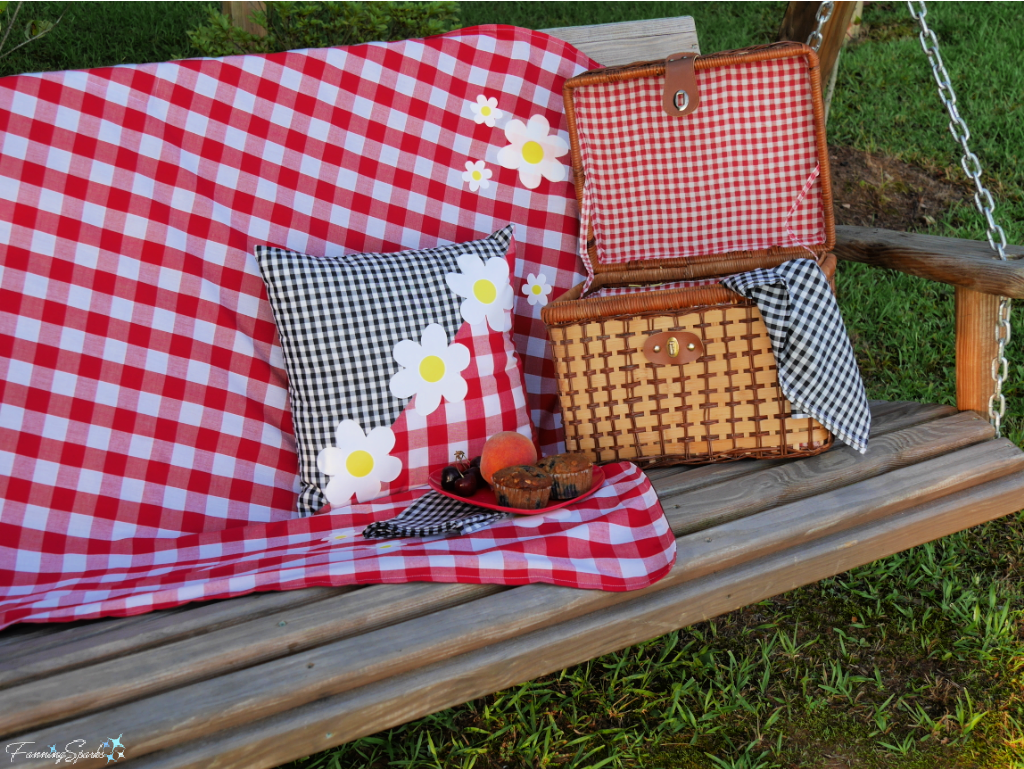
 This picnic blanket is a project from last summer. At the time, my research showed that while there are dozens of online tutorials for making a picnic blanket none had all the features I wanted. So I designed, what I consider to be, the ultimate picnic blanket. It’s a generous size, machine washable, waterproof but not slippery, easy to transport, and has a pretty, eye-catching design. I’ll share the step-by-step instructions in an upcoming post. There’s even a built-in pocket that turns into a compact carrying case.
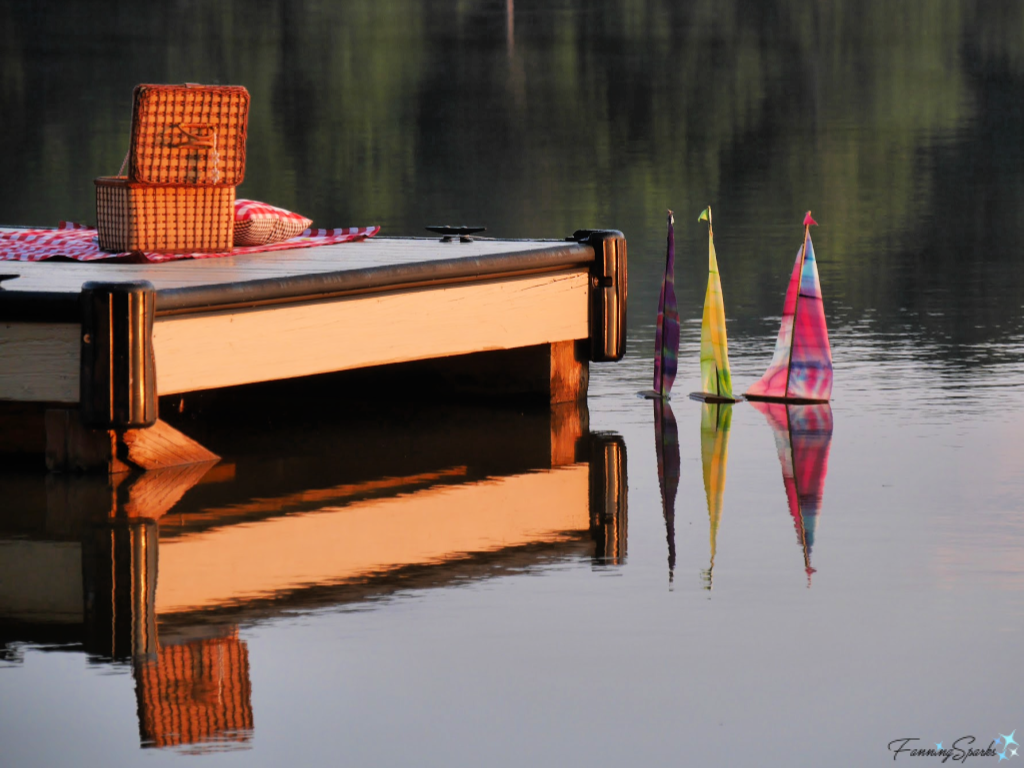
 As I was planning for the breakfast picnic, it occurred to me it might be fun to include a small boat. I readily admit I got a little carried away. Instead of a small boat, a small fleet of sailboats, complete with colorful fabric sails, emerged. Thankfully, the sailboats actually floated! Here’s the photographic evidence—3 pretty sailboats floating in the diffused light of the magic hour.
 By the way, the term “magic hour” is used by photographers to describe the natural light around sunrise and sunset. The morning sequence is magic hour > sunrise > golden hour. It’s the opposite at sunset. Typically, the light during these hours is softly diffused producing the warm, rich colors that photographers love. I also raved about the beauty of this natural light in the post
  Here’s another example of the little fleet caught in the golden hour.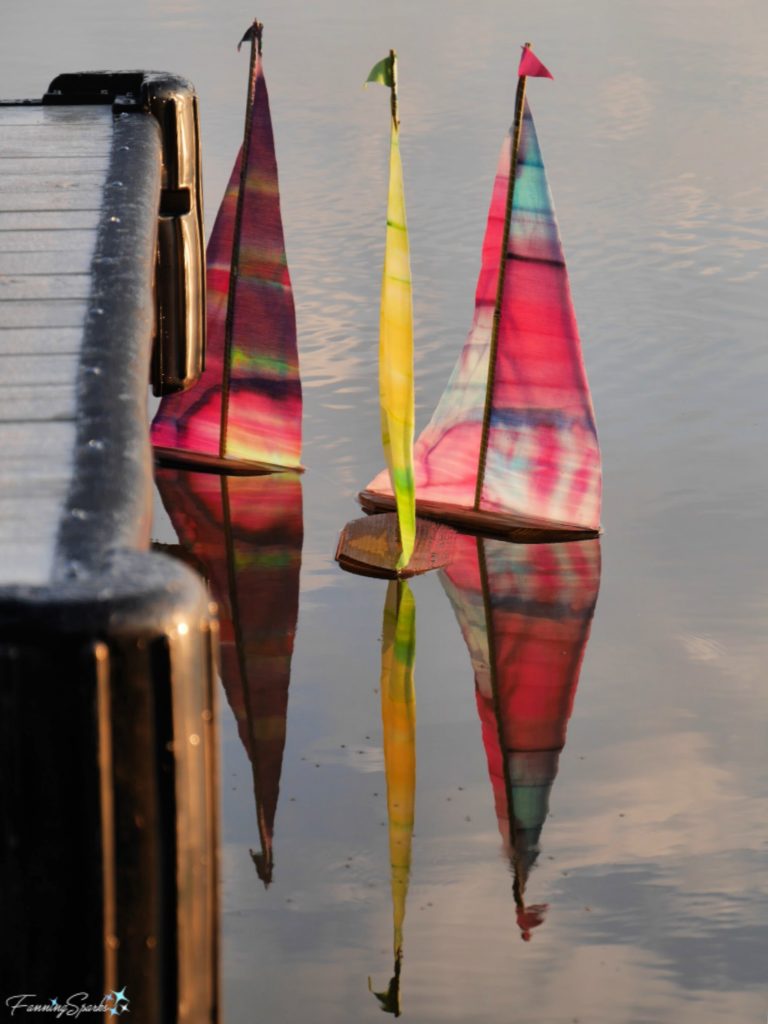
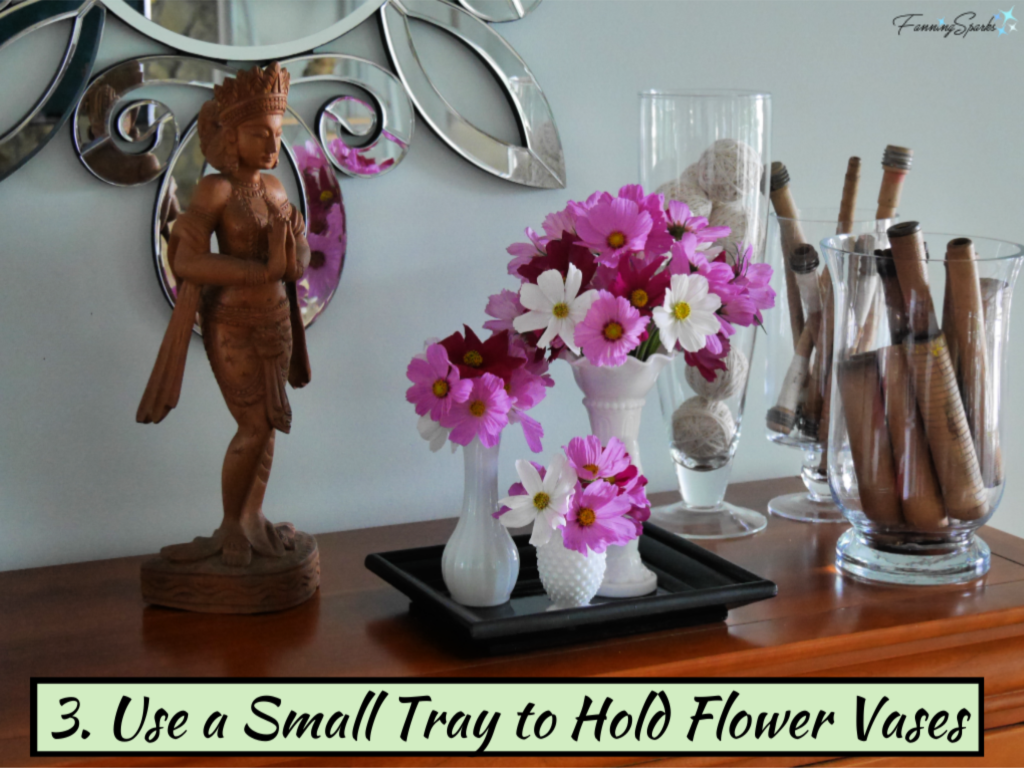
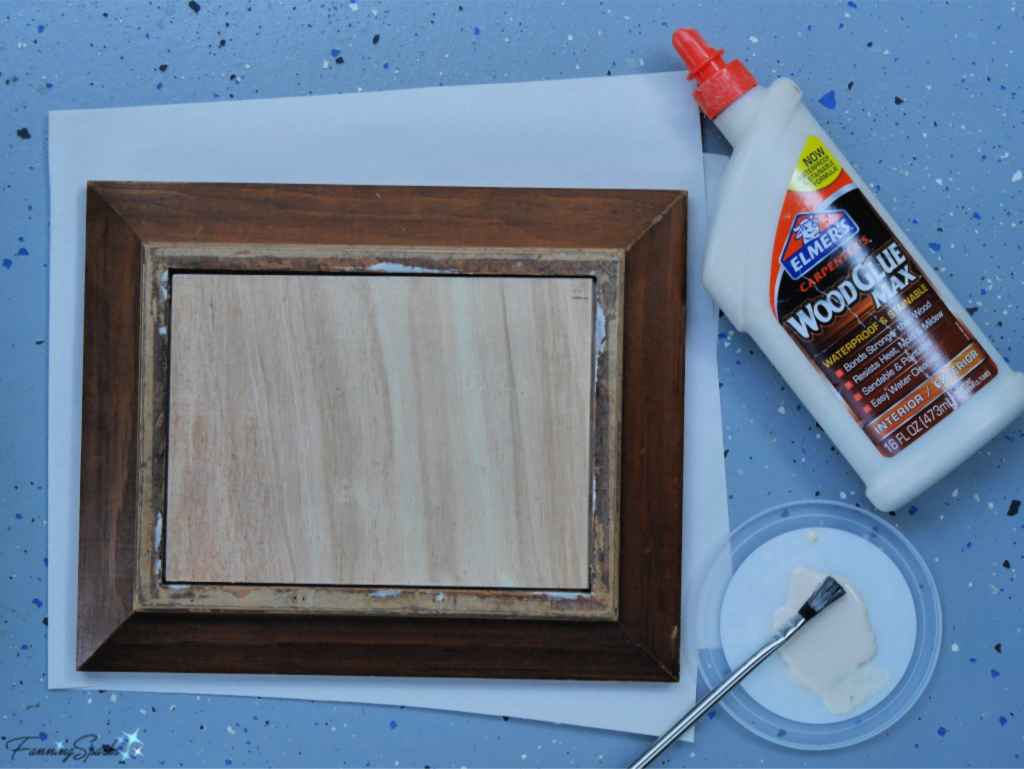
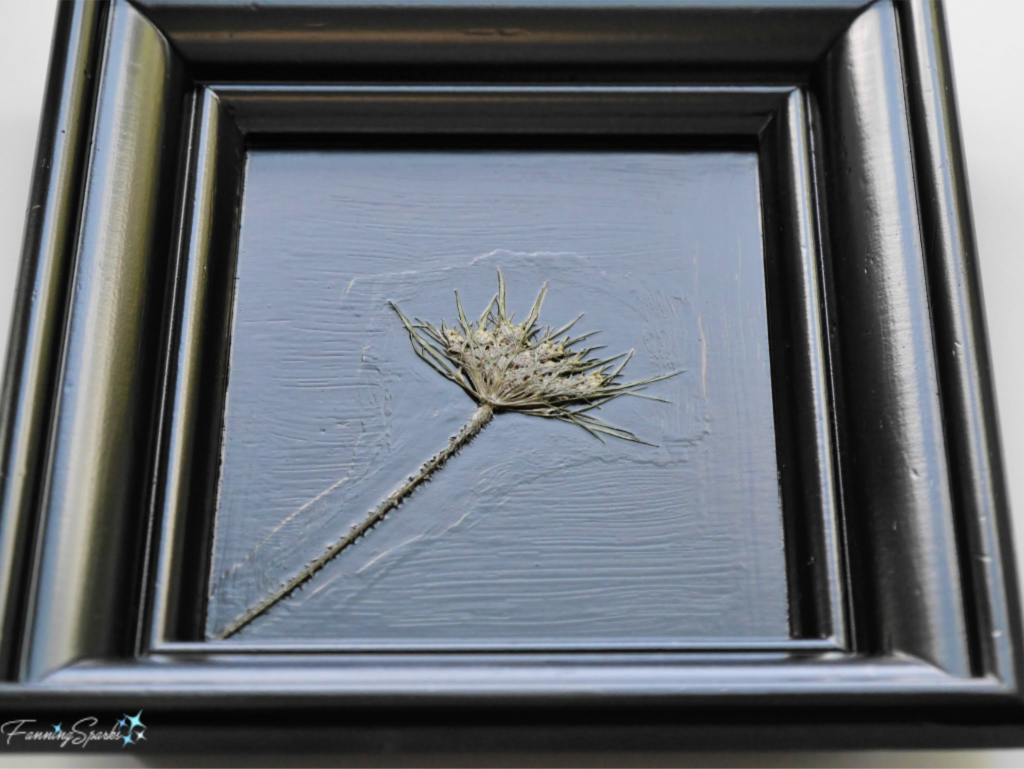
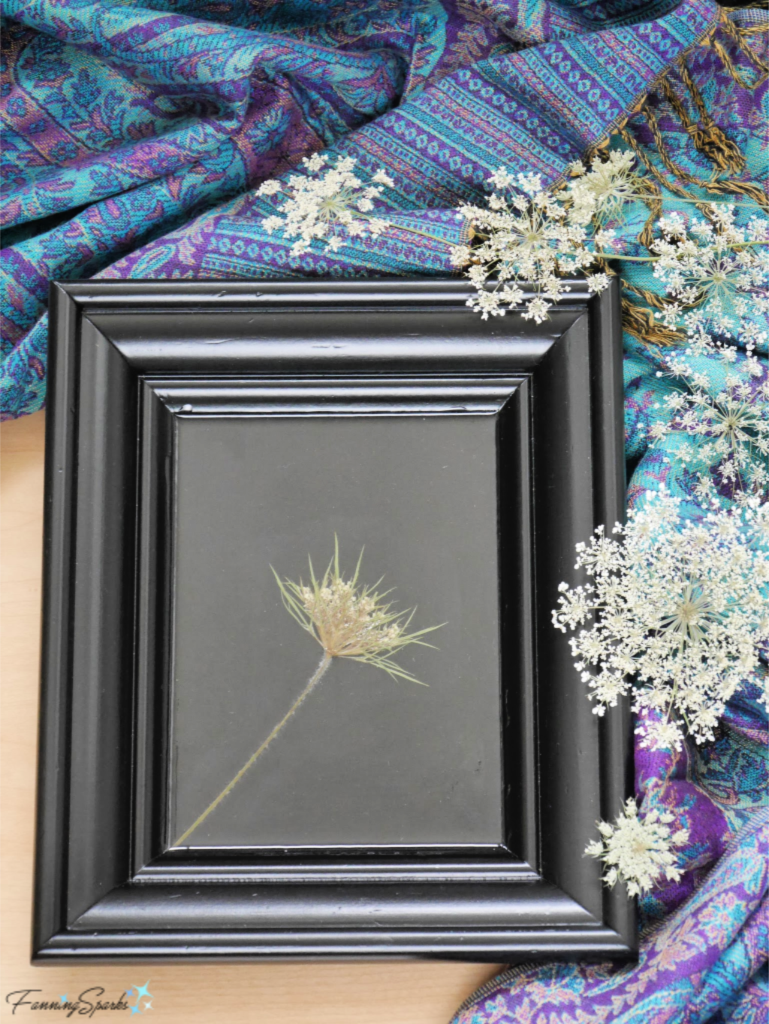
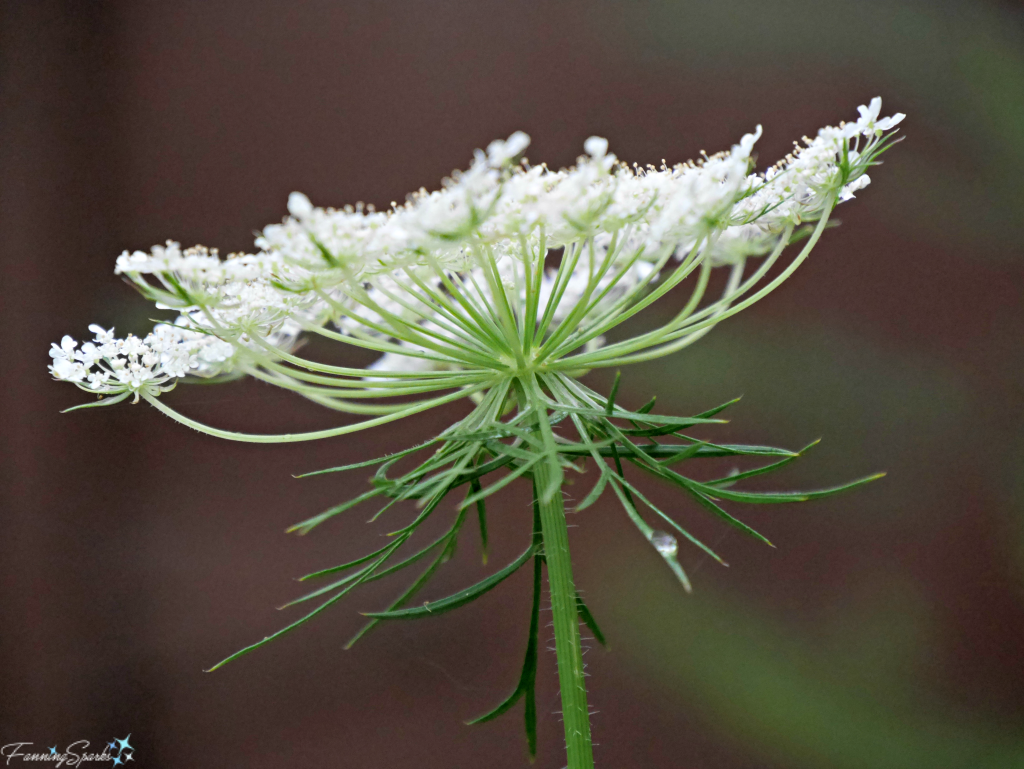 The partially open blossom of Queen Anne’s Lace (shown below) is strikingly simple against the black background. I used Mod Podge matte finish to glue the pressed wildflower in place and to seal the surface.