

One tap on my mobile phone’s weather app and a comprehensive weather report, tailored to my specific location, is instantly revealed. Weather apps with their user-friendly, visual presentations of site-specific, real-time, always-on weather information have become so commonplace, it’s easy to take this technological innovation for granted. But they’ve only been around since about 2010 ― a time when television broadcasts and newspapers were the go-to source for weather forecasts.
Looking back even further, there was a time when people relied on their own abilities to read and interpret Nature’s signs to predict the seasons and the weather. The shift from human-based observation and awareness to science-based instrumentation and measurement started with the invention of the barometer in the mid-1600s.
I’m not suggesting we should ditch our weather apps and go back to the days before the barometer, but I do think it’s a shame to lose that connection to nature’s rhythms. If nothing else, traditional weather lore and old-school idioms are incredibly entertaining.
The well-known weather proverb “Red sky at night, Shepherd’s delight; red sky in the morning, Shepherd’s warning.” is a case in point. There’s also a maritime version ― “Sky red in the evening, the Sailor may rest; sky red in the morning, the storm is a guest.”
I was reminded of this saying recently when we witnessed this awe-inspiring sunset. I feel compelled to point out this photo hasn’t been altered ― the entire sky really was this incredible, vibrant magenta! Interestingly, this centuries-old proverb has some scientific merit. “A particularly red sunset or sunrise is typically the result of an atmosphere charged with more particles. According to the UK Meteorological Office, this tends to happen during systems of high pressure, which are associated with clear skies.” writes Ada McVean in the McGill University article, What Can Sunset and Sunrise Tell Us About the Weather?
“Since the weather in the United Kingdom, United States, and Canada tends to travel from west to east, a red sunset in the west means that a high-pressure system, a.k.a. clear weather, is incoming.”
The red-sky-at-night sunset is one of the many photos I’ve been taking to capture the arrival of spring here on the Sunrise Trail in Nova Scotia. The result is a visual diary, of sorts, which I’d like to share in this blog post. I’ve tried to pair the photos with traditional and playful old-timey sayings to highlight nature’s springtime rhythms.
This flock of sheep – with ewes and lambs – gently grazing in a spring-green pasture was an unexpected discovery along a country road. Could there be a more idyllic spring scene?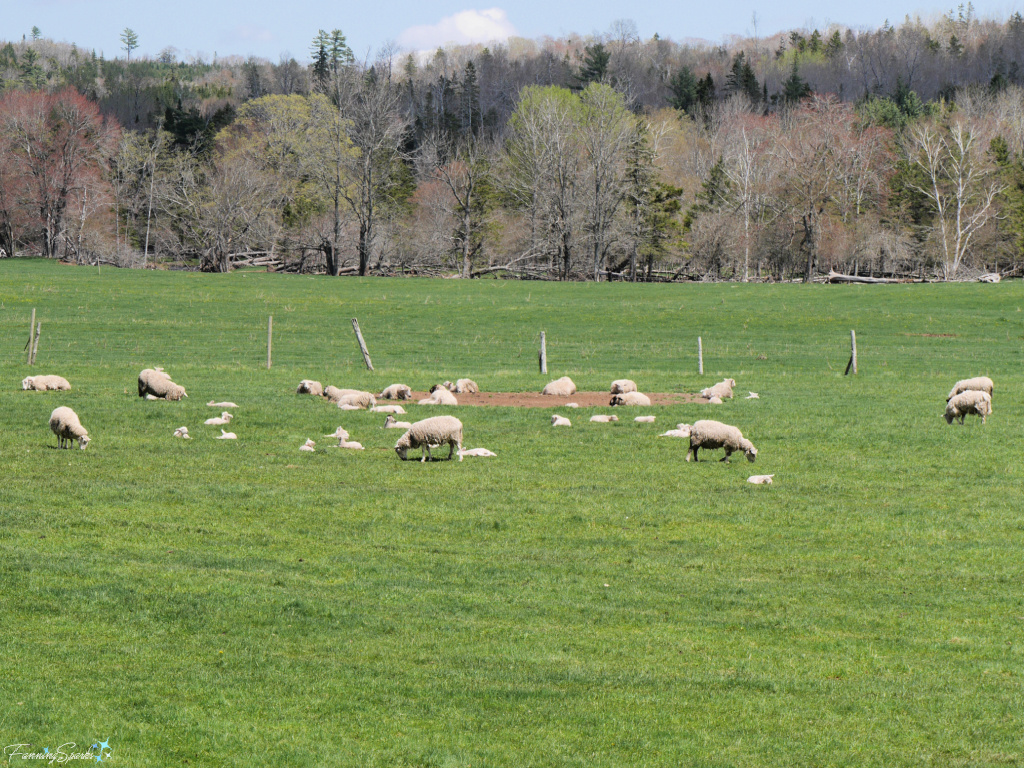 Sheep and lambs have inspired a surprising number of weather lore sayings. The reason, I’ve learned, is that much traditional weather lore comes from shepherds who spent all their time outdoors and relied on their weather forecasting abilities to keep their flocks safe. In fact, one of the first weather guides ever published (circa 1670) was The Shepherd of Banbury’s Rules to Judge of the Changes of the Weather.
In his introduction to the book, author and shepherd John Claridge writes “The Shepherd whose sole Business it is to observe what has a Reference to the Flock under his Care, who spends all his Days and many of his Nights in the open air, and under the wide spread Canopy of Heaven, is in a Manner obliged to take particular Notice of the Alterations of the Weather, and when once he comes to take a Pleasure in making such Observations, it is amazing how great a Progress he makes in them, and to how great a Certainty at last he arrives by mere dint of comparing Signs and Events, and correcting one Remark by another.
Every thing in Time becomes to him a Sort of Weather-Gage. The Sun, the Moon, the Stars, the Clouds, the Winds, the Mists, the Trees, the Flowers, the Herbs, and almost every animal with which he is acquainted. All these I say become to such a Person Instruments of real Knowledge.”
The original language is a little awkward to read but it’s clear the author is proud of the Shepherd’s ability to gauge the weather and derive knowledge from the sun, moon, stars, clouds, winds, mists, trees and other natural elements.
Although it didn’t come from The Shepherd of Banbury’s book, the saying “When sheep turn their backs to the wind, it is a sign of rain” is a great example of shepherdly wisdom.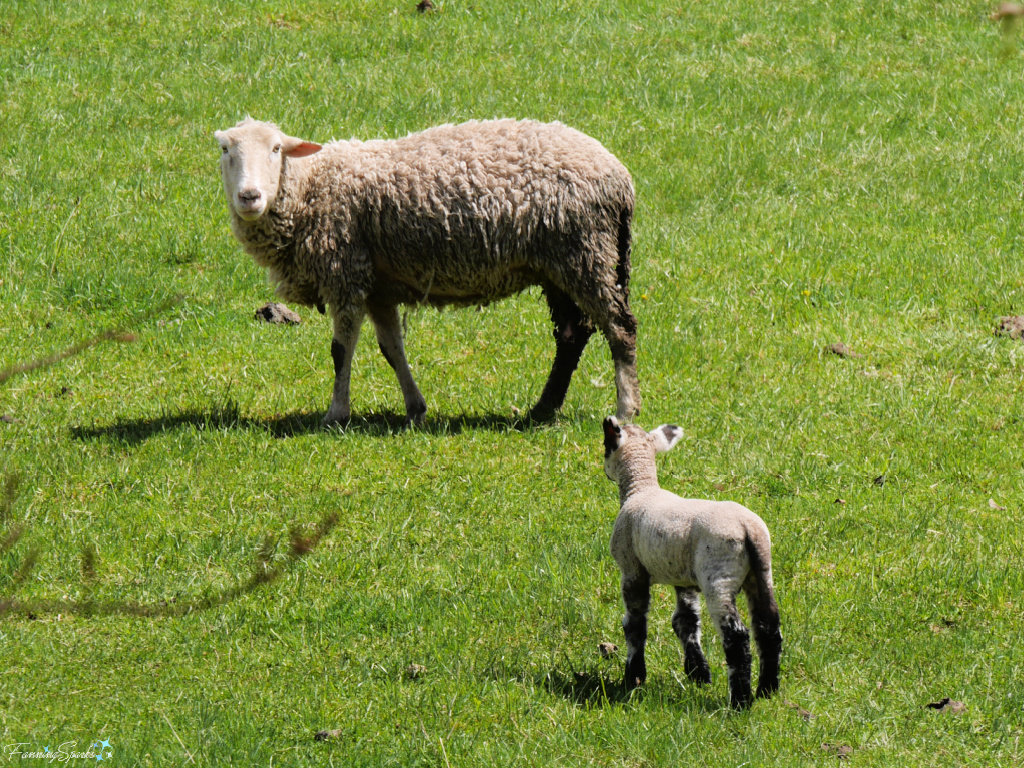 Then there’s the old classic ― “If the old year goes out like a lion, the new year will come in like a lamb.” as captured by Richard Inwards in his book The Unique Bedside Book Weather Lore.
Inwards’ book is regarded as one of, if not the, best reference book on the subject. First published in 1869, it is a compilation “taken from the world’s literature and the age-old wisdom of farmers, mariners, bird watchers … concerning flowers, plants, trees, butterflies, birds, animals, fish, tides, clouds, rainbows, stars, mock suns, mock moons, haloes …”.
Inwards includes a strong focus on times and seasons. He explains, “Amongst the first attempts at weather guesses, those concerning the seasons and their probable fitness for agriculture, the breeding of animals, or the navigation of the seas would take a prominent place. The weather during the winter and spring seems to have been narrowly watched, and the chances of a good harvest, a fat pasture, or a loaded orchard inferred from the experience of previous years, combined with a fair reliance upon fortune.”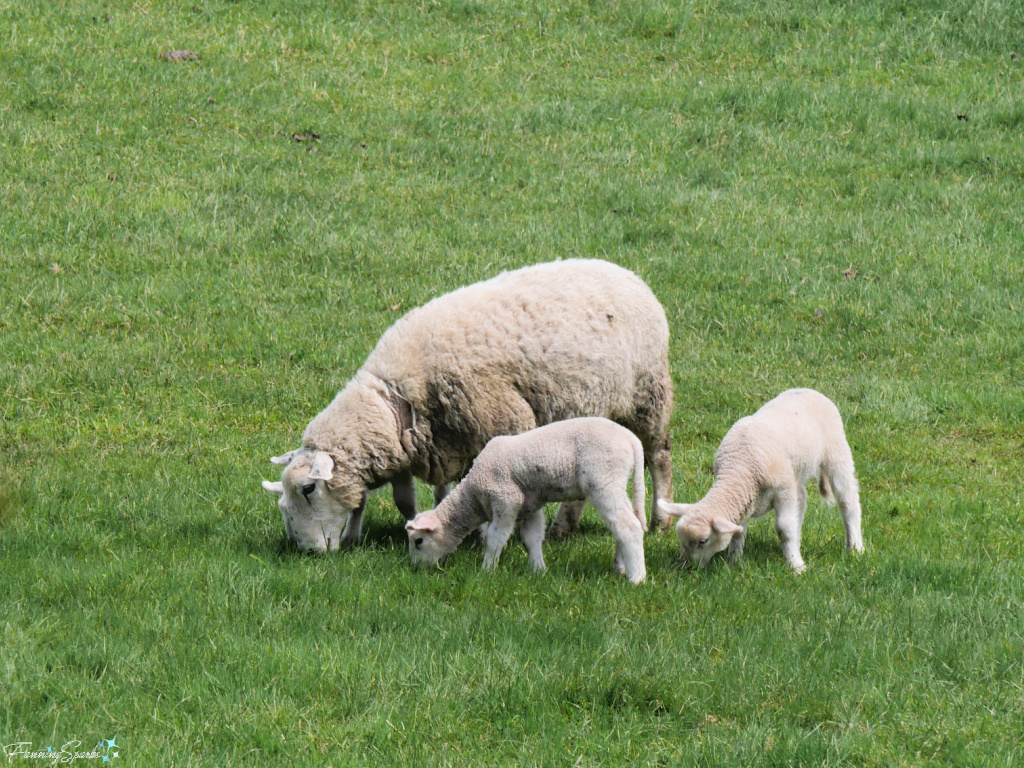 Speaking of lambs, “lambs’ tails” was a common country name for the distinctive catkins of hazel, birch, willow and alder which bloom in spring. Hazel catkins feature prominently in Cicely Mary Barker’s poem The Song of the Hazel-Catkin Fairy from her 1923 book of beautiful illustrations and poetry titled Flower Fairies of the Spring.
“Like little tails of little lambs,
On leafless twigs my catkins swing;
They dingle-dangle merrily
Before the wakening of Spring. …
While yet the woods lie grey and still
I give my tidings: ‘Spring is near!’
One day the land shall leap to life
With fairies calling: ‘Spring is HERE!’”
Shown below are male catkins I spotted on the alders (Alnus genus) along our driveway. The inset shows Cicely Mary Barker’s Hazel-Catkin Fairy.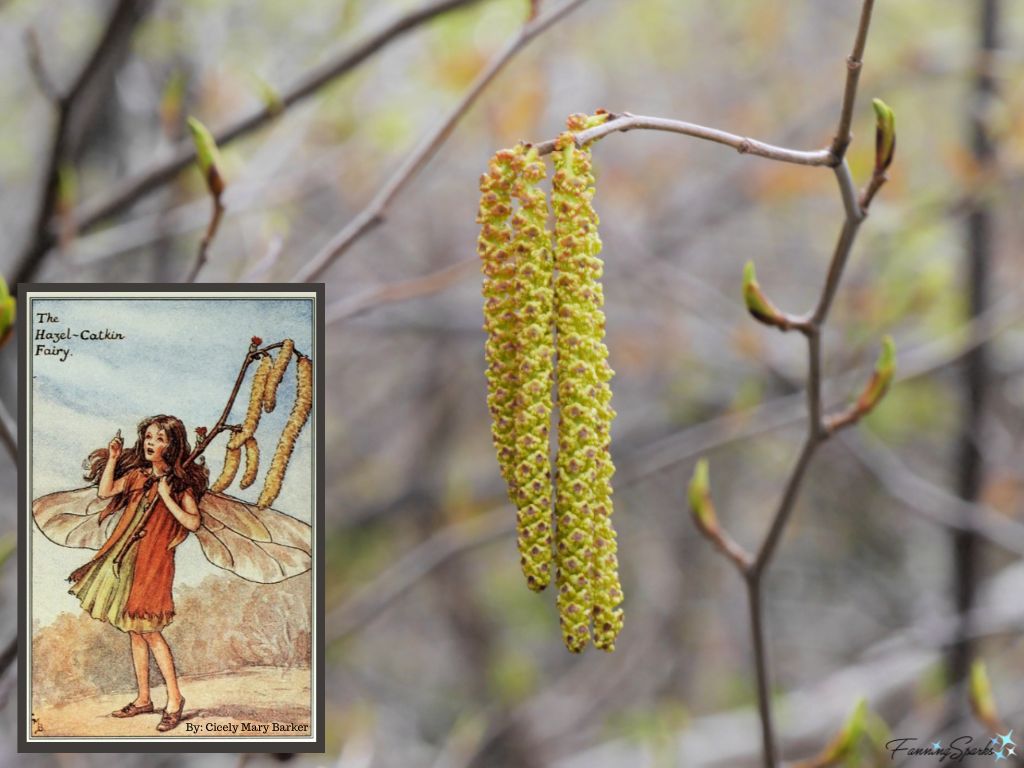 Catkins are not the only springtime blossom which inspired close inspection. Dandelions ― those ubiquitous, yellow flowers typically regarded as weeds ― are mentioned in several sayings. Inwards includes several examples including “When the dandelions bloom early in spring, there will be a short season. When they bloom late, expect a dry summer.” He also notes that “Dandelions close their blossoms before a storm”.
Author Ruth Binney calls out dandelions as “one of many plants whose behaviour is believed to predict the weather” in her 2010 book Wise Words & Country Ways: Weather Lore. Binney researched a variety of weather sayings “delving into their origins and their truth – or total fiction!”.
Of the saying “Dandelions close their blossoms before a storm” she writes, “It is certainly a fact of plant physiology that the dandelion flower is sensitive to changes in humidity, which explains why it will close its petals before and during rain”.
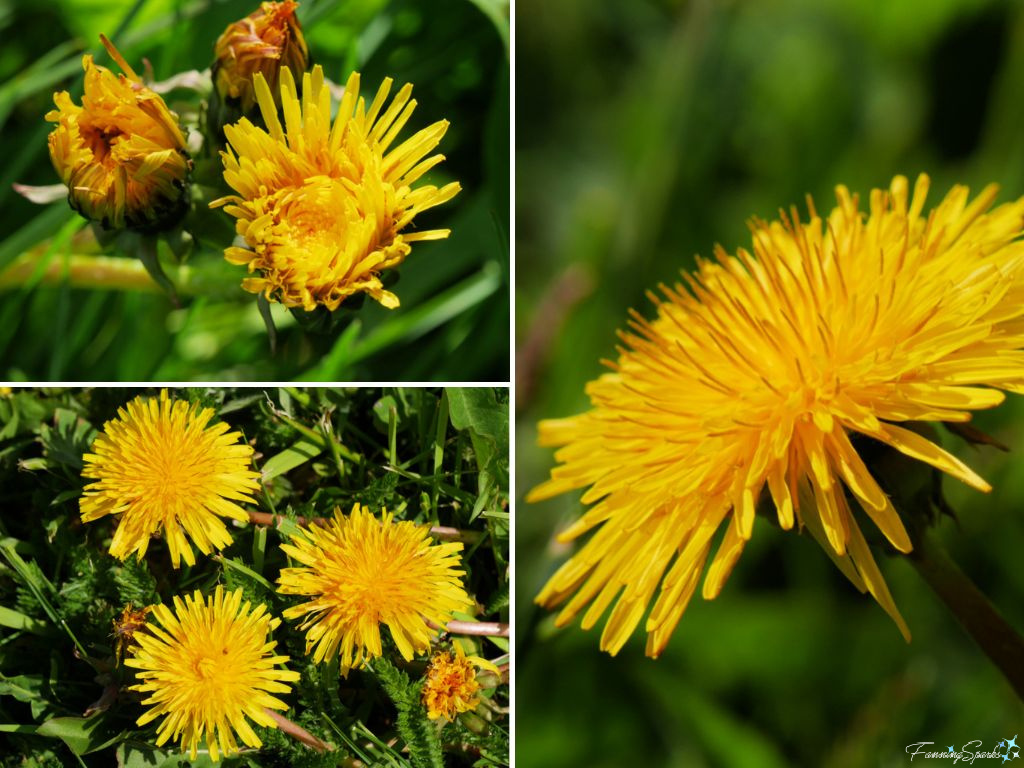
Binney goes on to say “As well as the flowers, the seed heads or ‘clocks’ of the dandelion are also used to forecast the weather. When there is no wind, yet the down flies off the seed heads, then it is said that rain is on the way”. Inwards has a slightly different perspective. He writes “When the down of the dandelion contracts, it is a sign of rain”. I doubt anyone has studied if the dandelion’s down flies off or contracts before rain but there has been some fascinating scientific research conducted on dandelion seeds.
As most people know, “a week or two after flowering, the dandelion’s flower becomes a round seed head. … When development is complete”, Wikipedia explains, “the mature seeds are attached to white, fluffy ‘parachutes’, which easily detach from the seed head and glide on the wind, dispersing”.
What most people probably don’t know is that “the dandelion seed holds the record as the farthest travelling passive flying structure that we know of in the plant world, flying up to 100 kilometres”. A 2018 CBC News article by Torah Kachur reported that “researchers from the University of Edinburgh … discovered the secret to the flight of the dandelion, and [suggest] it could improve future drone technology”.
More recently, a 2025 article, Nature Inspires New Drone Technologies, reported that “Researchers at the New Mexico Institute of Mining and Technology are developing an array of nature-mimicking drones that could ultimately be used for a range of missions, including border surveillance, planet exploration and climate monitoring. … The project focuses on developing a biomimetic swarm sensing system that emulates the dispersal method of dandelion seeds.” Amazing!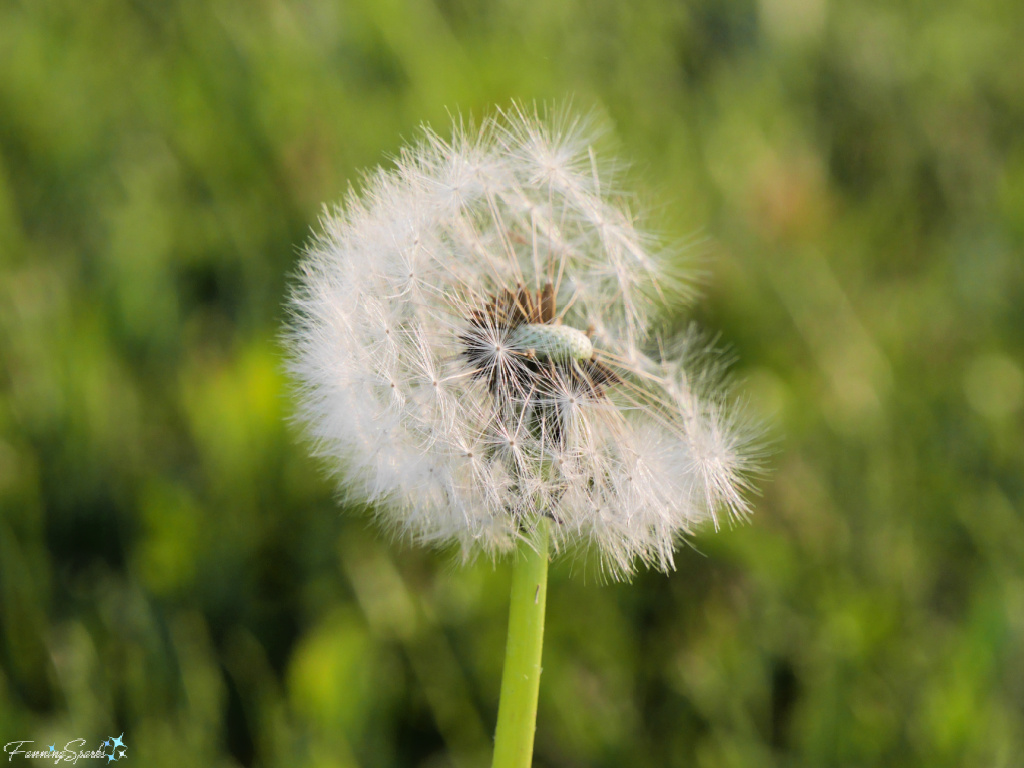 On a lighter note, there’s a charming children’s ritual around dandelion seeds. “In Ireland, where dandelions carpet the hillsides, children pluck the fluffy, white seed heads and make wishes while blowing away the fluff.” explains author Roseanne Thong in her book Wish: Wishing Traditions Around the World. “If all the down comes off with one breath, it is said that the wish will be granted.”
This fun rhyme supports the ritual.
“We puff on dandelions
with their fluff as white as milk-
our wishes sail through the breeze
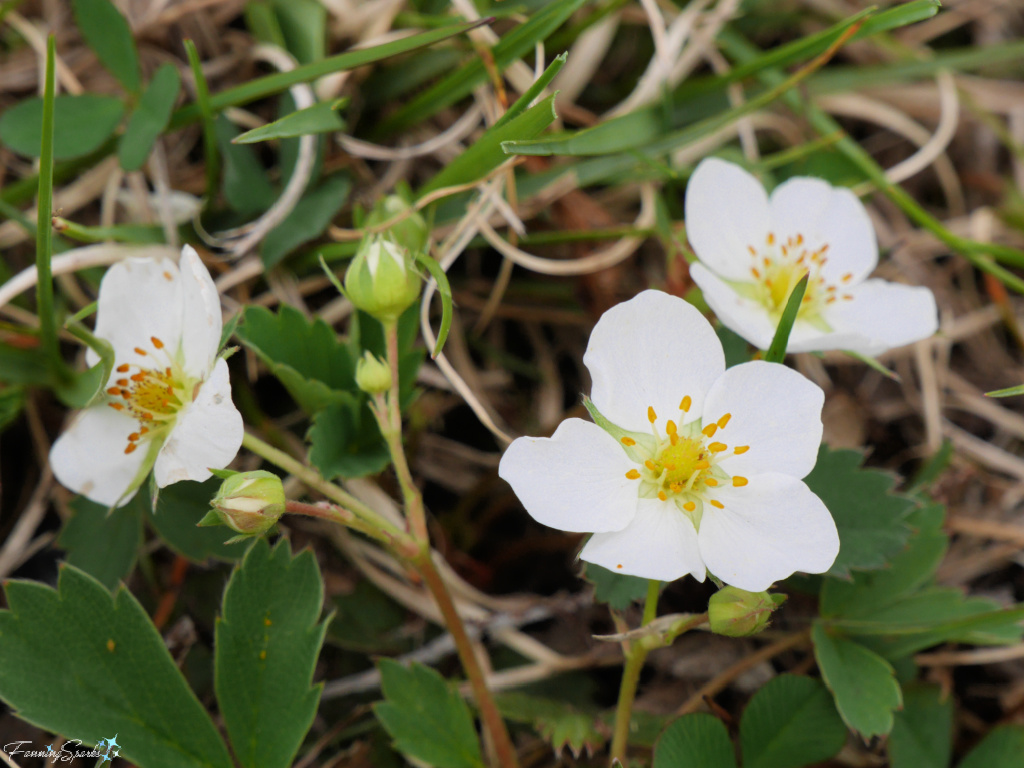
on parachutes of silk.”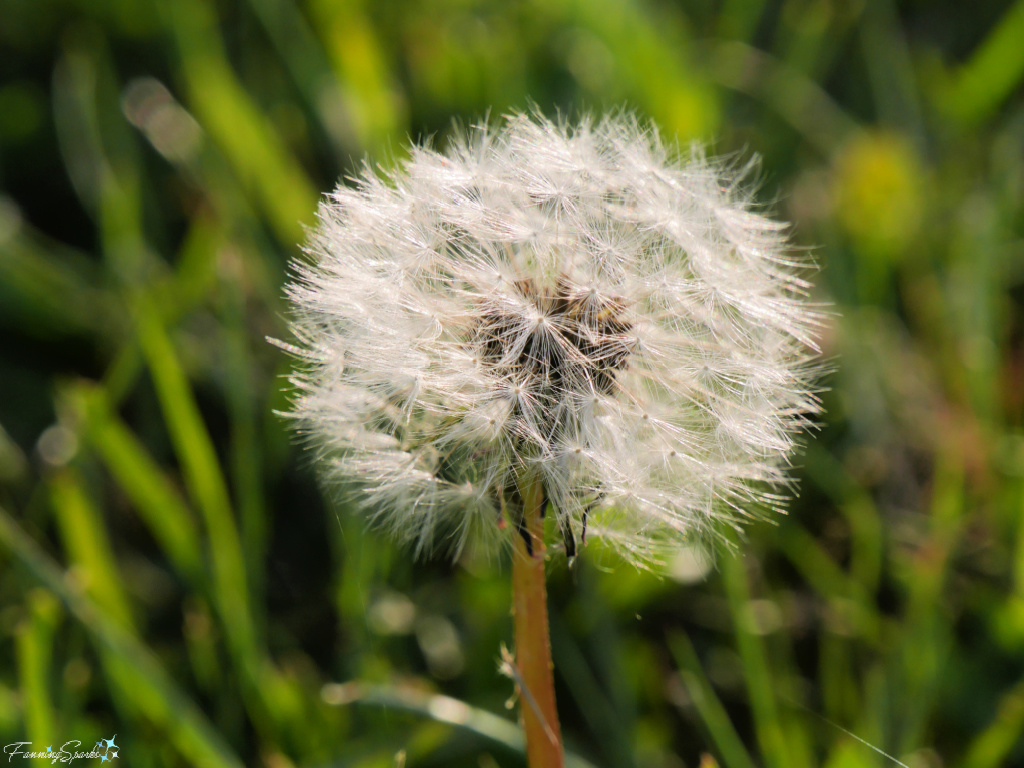 Naturally, not all of spring’s flowers inspired weather lore sayings, scientific research or children’s rhymes. Here are a few others I captured during the season. Little, white Wild Strawberry (probably Fragaria virginiana) blossoms peeked out of the new green grass.
 There’s a small woodland stream that runs through our property. It’s barely visible due to the overgrown shrubs and fallen trees along its banks but the sweet, faint sound of running water gives it away. I cleared a path down to the stream’s bank for a better look and was rewarded with a rainbow of greens ― the lush, yellowish-green of moss; the pure, bright green of new meadow rue leaves; and the rich, earthy green of ostrich fern fiddleheads.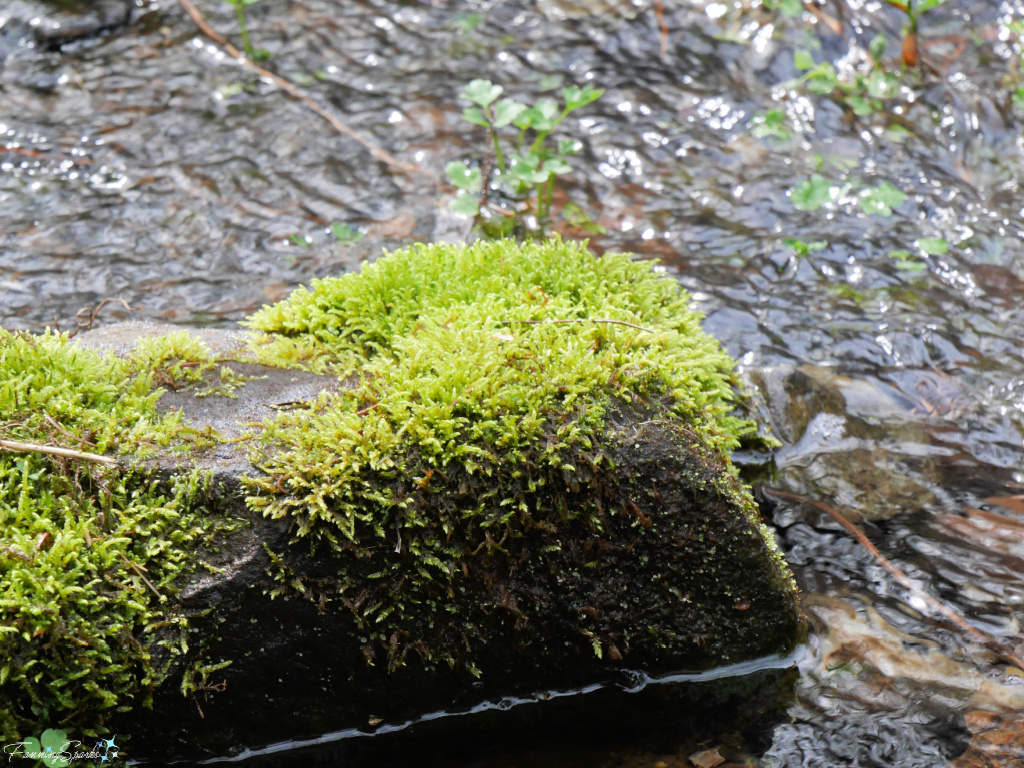
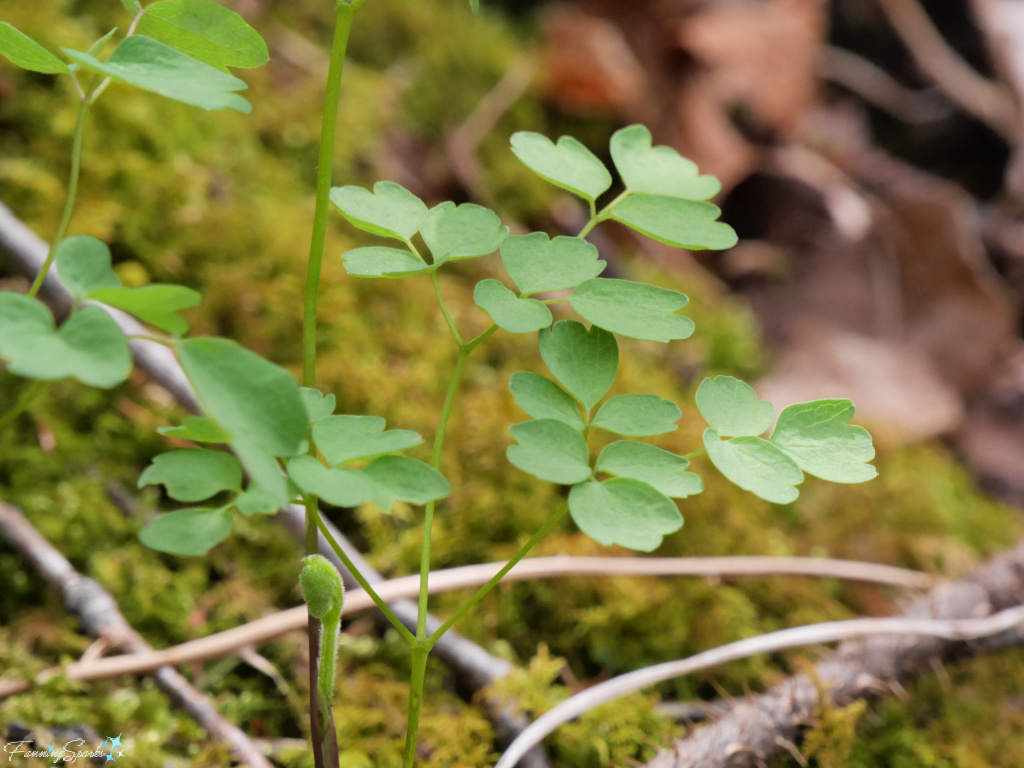
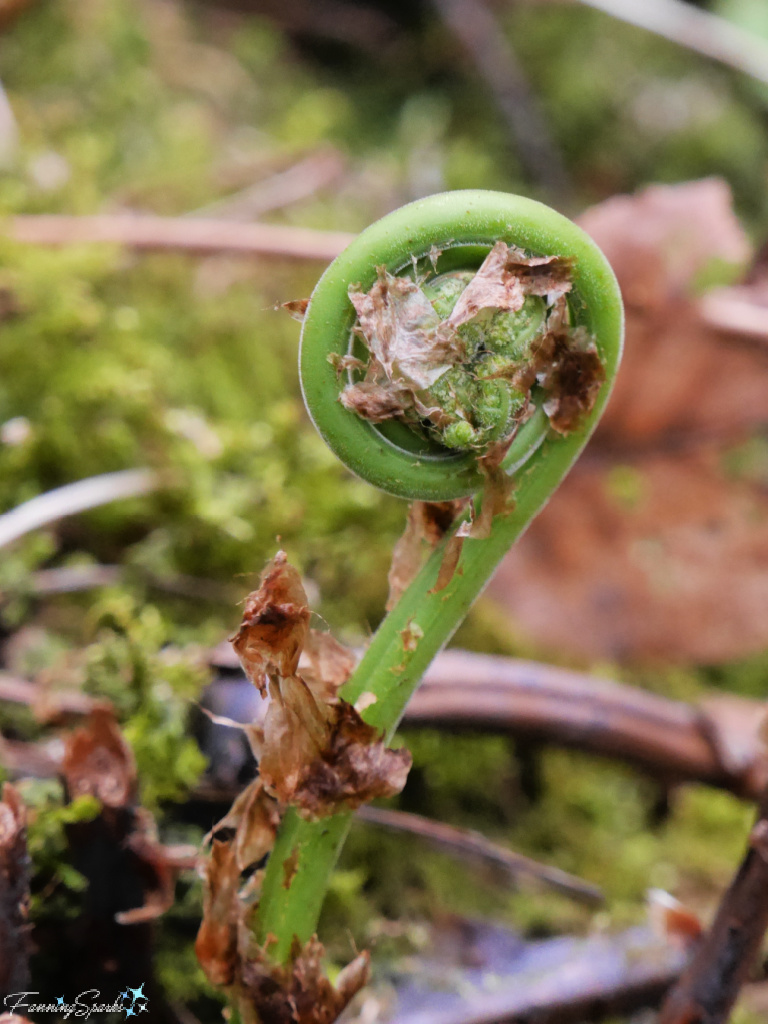 Meanwhile, clouds of delicate, white blossoms cover the landscape turning my favorite hiking spot into a magical place!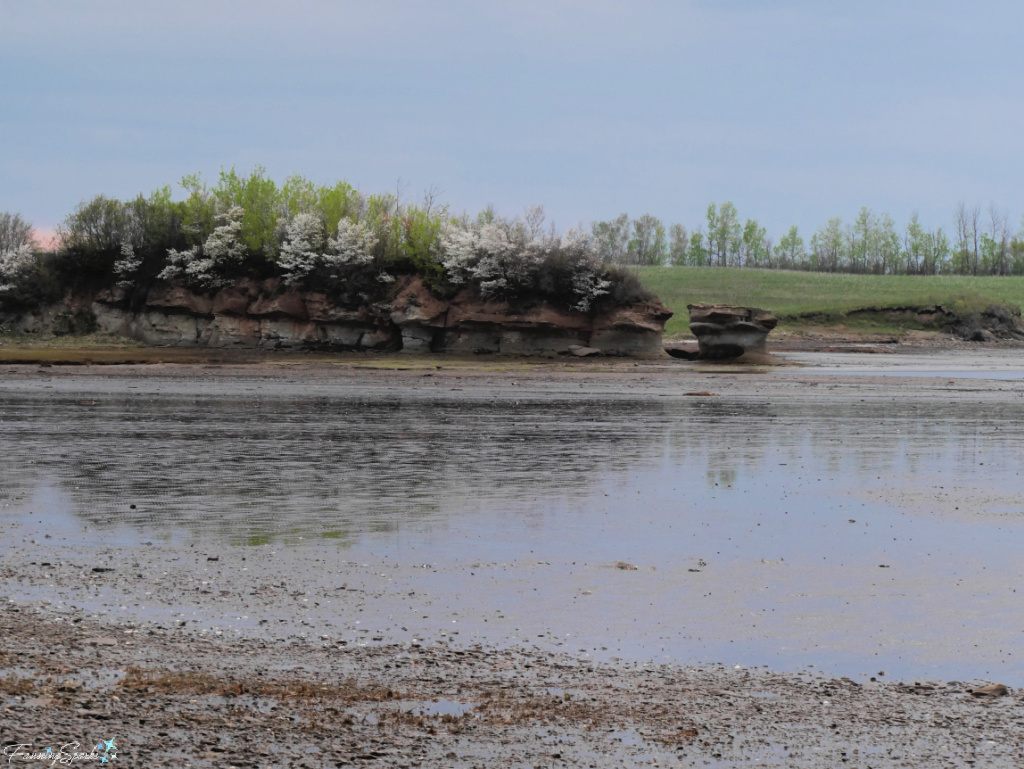

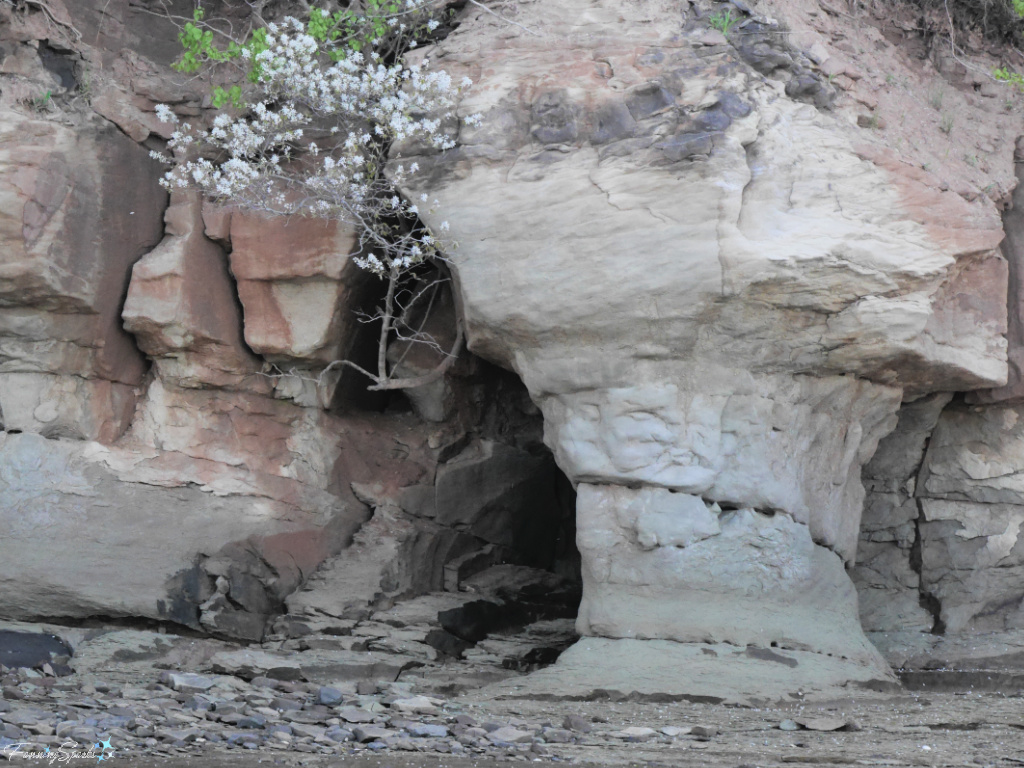 Here’s a closer look ― I believe the white flowers are Serviceberry (Amelanchier) shrubs. They also grow along the edges of our yard and driveway.
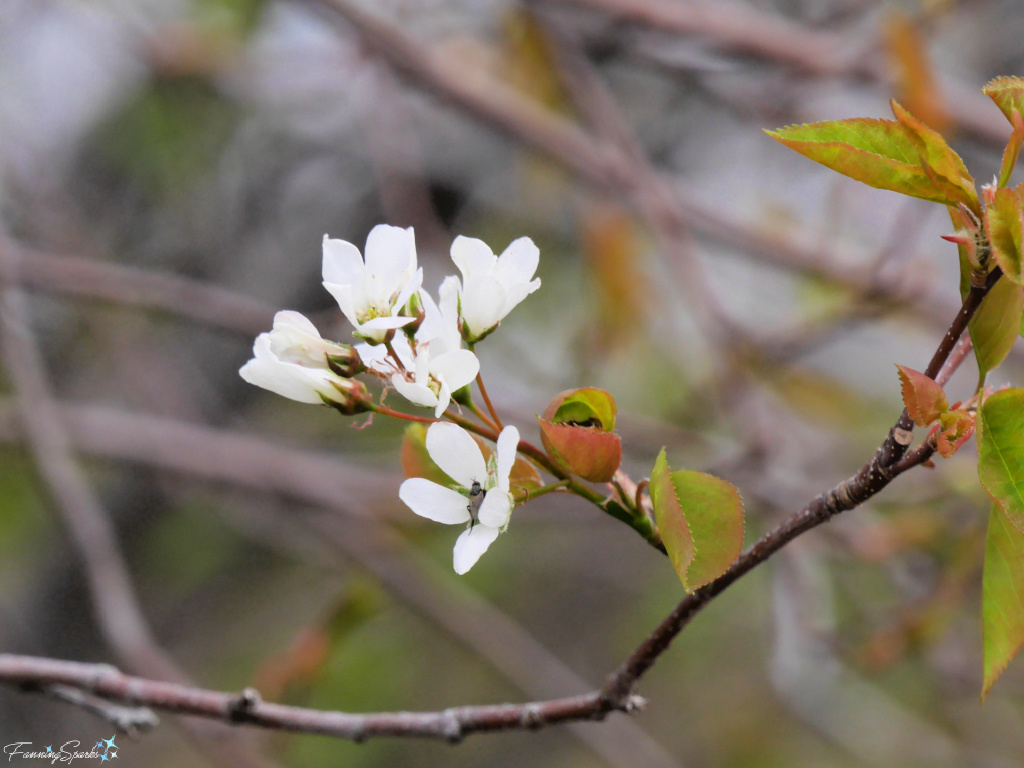 While looking them up, I learned from Wikipedia that “Amelanchier plants are preferred browse for deer and rabbits”. I guess the deer and rabbits who share our property will be happy about that! The deer seem to have gone into hiding over the last few weeks but the rabbits are out in full force. And given their reputation for multiplying exponentially, I suspect their population will increase by leaps and bounds this season.
Shown below is one of the regulars ― a snowshoe hare (Lepus americanus) with a white patch on his right ear. The photo on the top left was taken about three months ago as its fur was starting to turn from its winter white to its summer brown.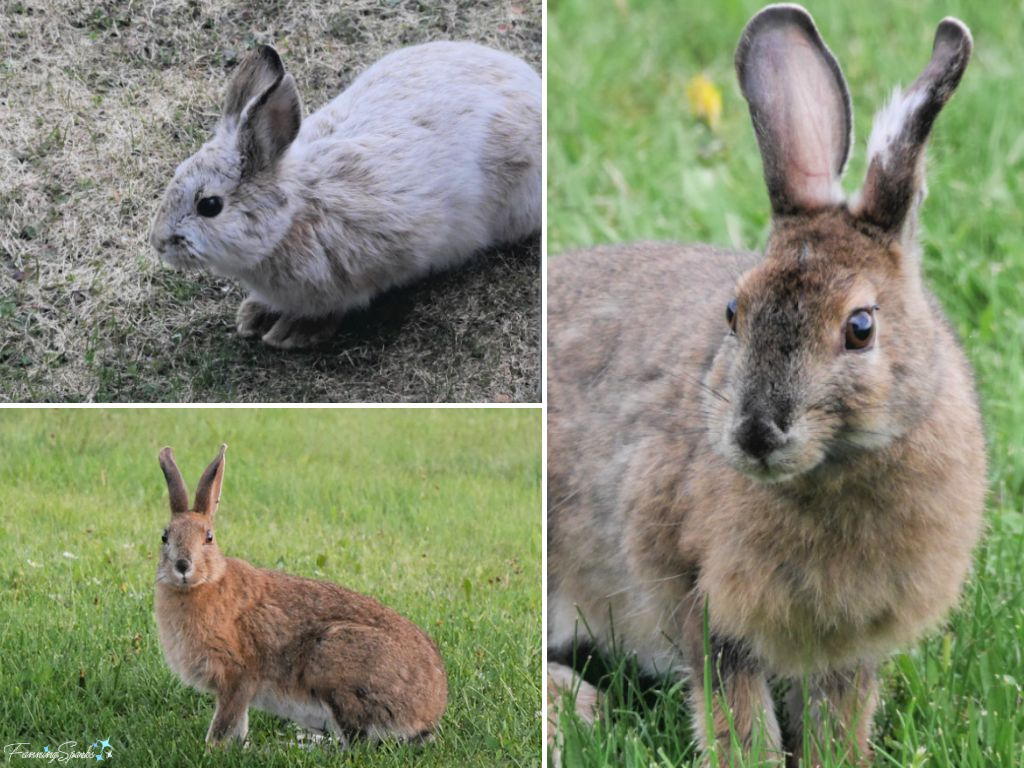 These hares bring up a few more traditional country sayings. The idiom ― “mad as a March hare” ― is based on the hare’s energetic springtime activities. “During the breeding season … male hares typically chase female ones. However, if a female hare does not wish to mate with a male hare, she may respond by engaging in a fight with the male hare” explains Wikipedia. I haven’t actually seen the hares fighting but they have indeed been “behaving in an excitable and unpredictable manner”. They’ve been running around, leaping into the air unexpectedly, and chasing each other around. Yep… probably more rabbits on the way!
Given that the average litter size is three to five leverets (young hares in their first year) and the average number of litters per female is around three per year… that’s a lot more rabbits! As it is, we already have so many rabbits our local delivery driver dubbed our place “Rabbit Central”.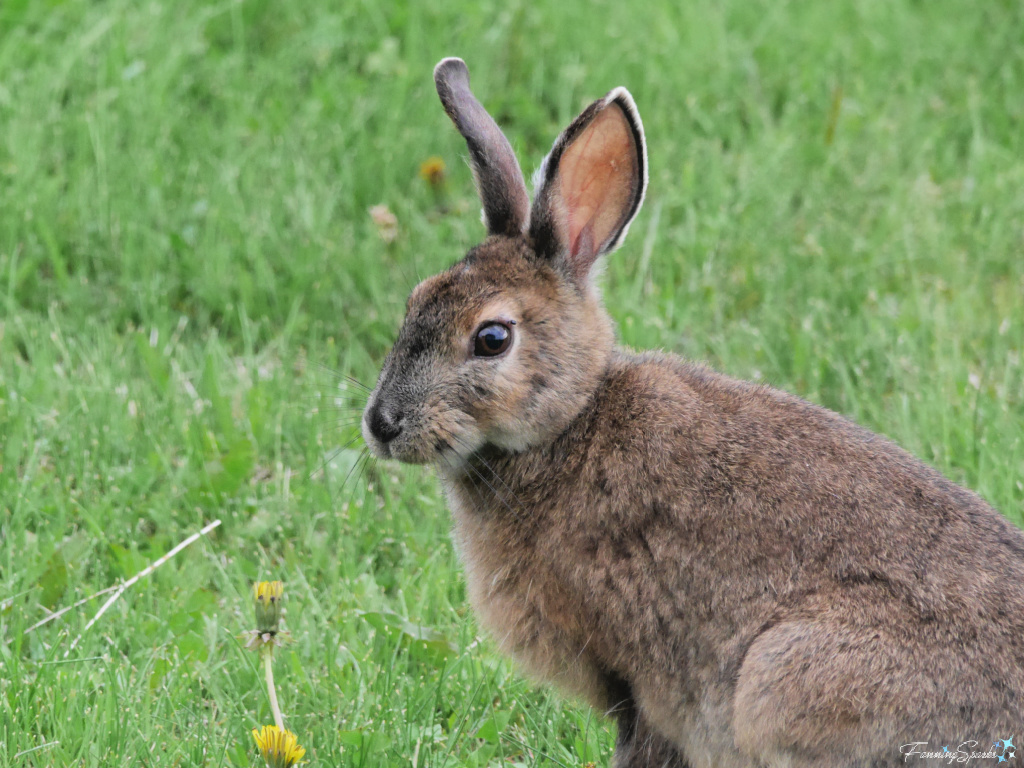 While I’m on the subject of spring shenanigans, a pair of tree swallows (Tachycineta bicolor) have moved into the new nesting box I built for them (see Now Open: Affordable Housing for Aerial Insectivores).
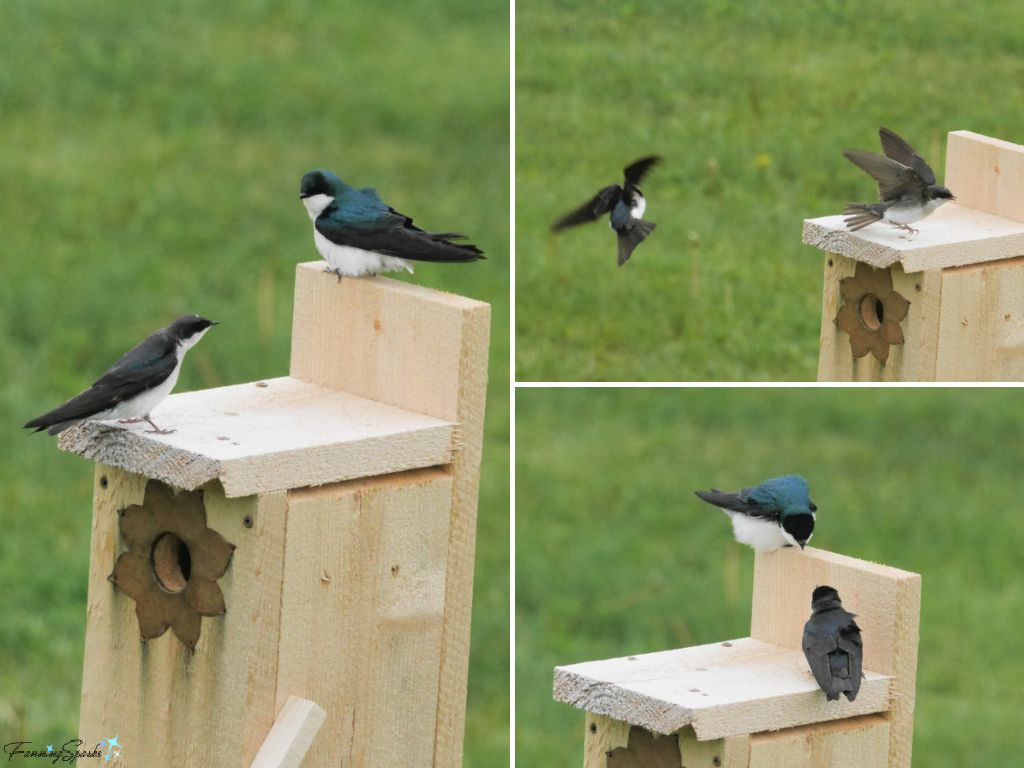 Turns out, they’re quite the exhibitionists!
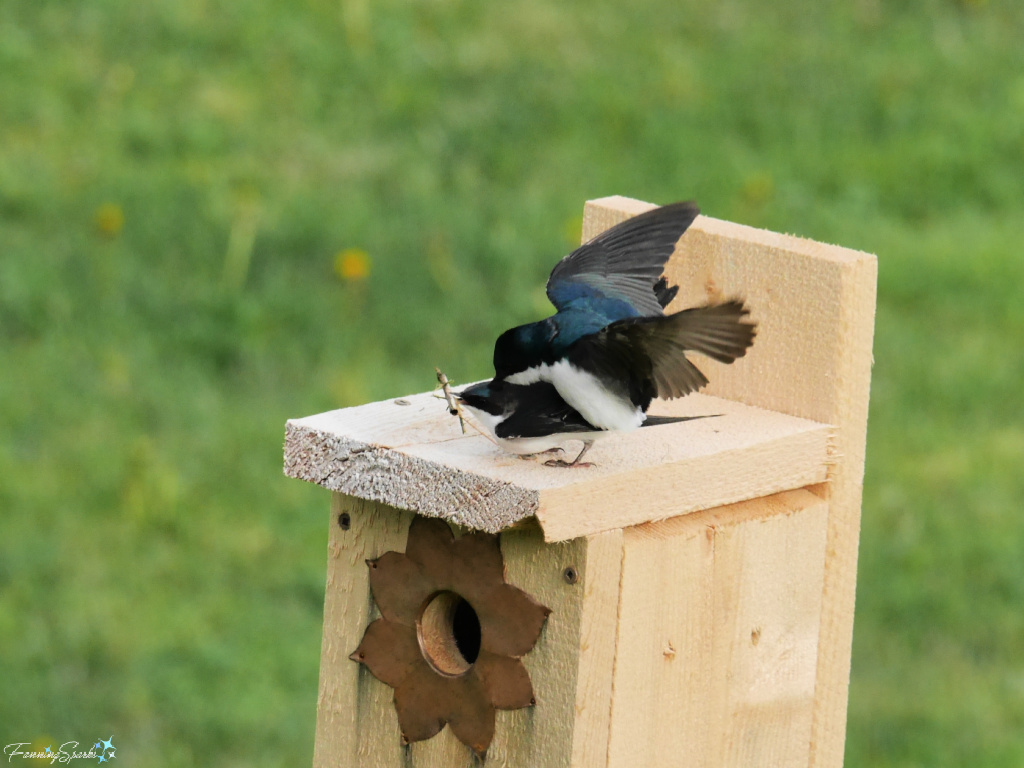 The swallow is also a popular harbinger of spring. Generations of country people have anxiously awaited their annual migratory return. They were warned, however, that “One swallow does not make a summer”.
In his classic 1846 book, A Collection of Proverbs and Popular Sayings Relating to the Seasons, the Weather, and Agricultural Pursuits, author M.A. Denham notes “The 15th of April is, in some parts of England, known by the name of ‘swallow-day‘”. He also reports another proverb about these incredible birds ― “Swallows flying low, and touching the water often with their wings, presages rain” ― which he attributes to Thomas Willsford’s circa 1660 book Nature’s Secrets.
Binney assesses this last proverb in her book. She explains “Although swallows rarely fly very high in the sky, these graceful birds have been used as weather predictors since ancient times”.
“On a fine day, as they hunt for flying insects, which they scoop up into their wide, deep bills, swallows will alternately glide high in the air, to catch groups of weak prey that have been drawn up from the ground by warm air currents, and down over open ground or water, where larger insects abound. But when the air pressure falls and the air is full of moisture (whether or not it is going to rain) insects descend much nearer the ground, as do the swallows that pursue them.”
We see the swallows conducting their aerobatics every day but I’ve yet to get a photo of their graceful manoeuvres. I did, however, catch this rare moment ― a swallow holding a feather.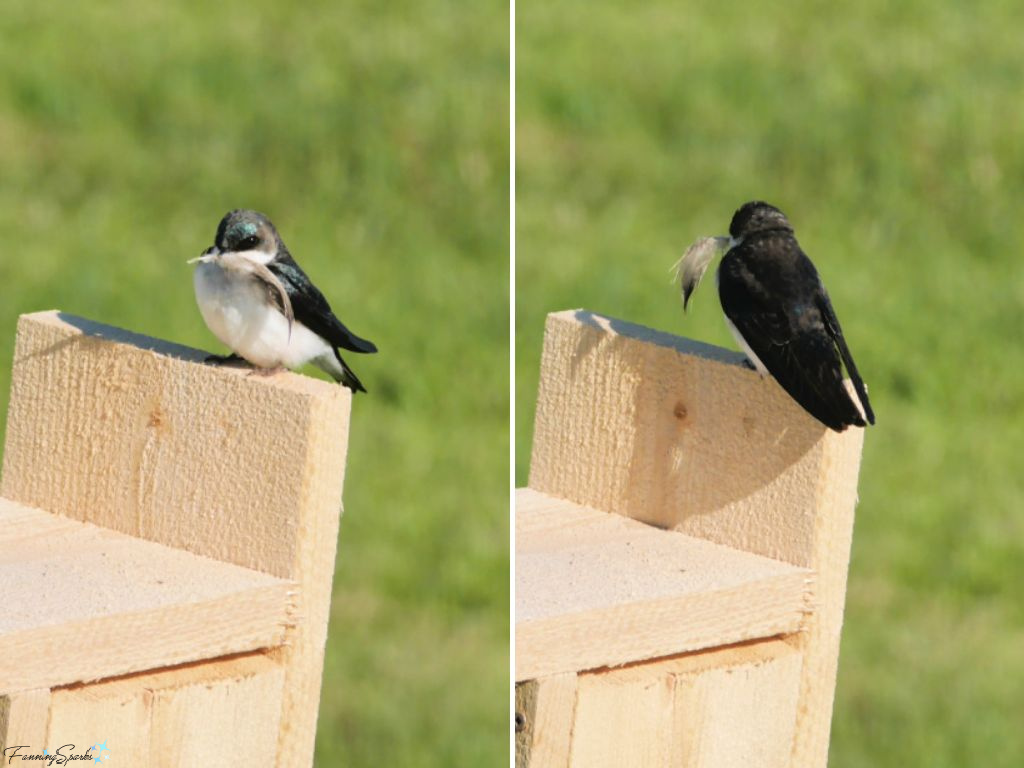 The saying “feather one’s nest” could have come from tree swallows since they literally line their nests with feathers to keep their eggs and young warm. The same expression is used to describe people decorating and furnishing their own homes in style and comfort. Unfortunately, though, it’s become more common to give the expression a negative connotation ― “feather one’s own nest” ― which means to selfishly use power and prestige to benefit oneself.
The TreeSwallows.com website, the go-to resource for all things tree swallow, describes a tree swallow nest this way ― “There’s usually a base with a shallow cup, both made of dead dry grasses and plant stems, or occasionally pine needles. They don’t use sticks or twigs. In completed nests feathers, usually white, are placed to line and arch over the cup.” They go on to explain that in their experience, “females bring all the plant material… but both males and females bring feathers… and females do the actual nest building, arranging the vegetation and feathers”.
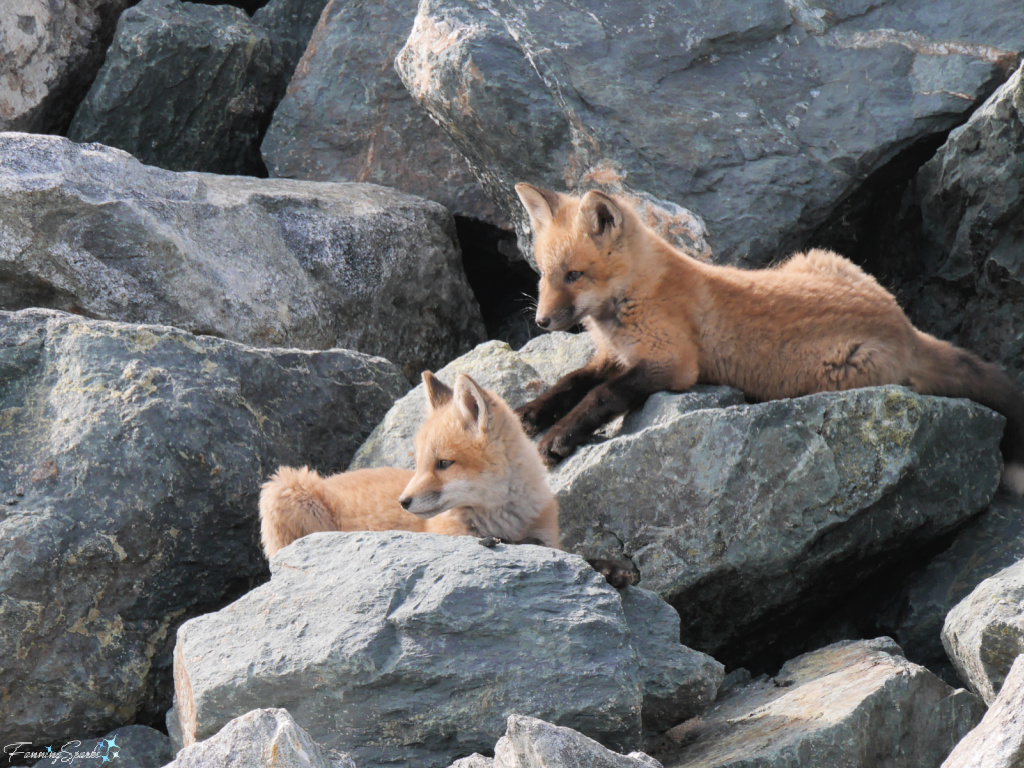
Interestingly, tree swallows prefer white feathers but no one seems to know why. The authors suggest “it’s possible they make swallows’ pure white eggs less visible to predators”.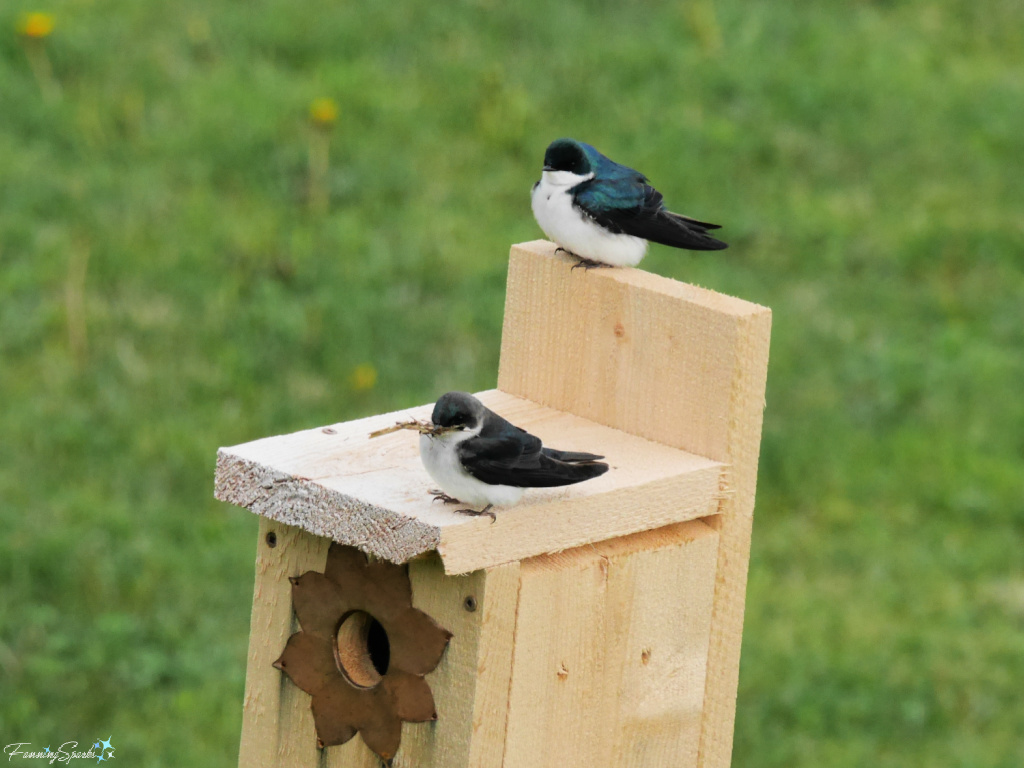 I shared a series of photos featuring red fox kits in my last blog post, The Quick Red Fox, so I won’t repeat them all here. But fox pups are a definite sign of spring and foxes have inspired at least one oft-reported weather prediction ― “When foxes bark and utter shrill cries, expect a violent tempest of wind and rain within three days”.
 Writer and University of Limerick associate professor Karol Mullaney-Dignam calls out barking foxes as an example of animal behaviour used to predict weather changes in their article Reading the Sky: How Irish Weather Lore Preserved a Deep Understanding of the Natural World. The article goes on to make the case that “weather lore is more than folklore. It is evidence of a society attuned to subtle environmental cues – what researchers now call traditional ecological or environmental knowledge”. Mullaney-Dignam wraps up with this thoughtful conclusion ― “In an era of climate uncertainty, Irish weather lore points to something we risk losing: the habit of paying attention to what nature is telling us.”
More Info
Previous blog posts mentioned in this blog post include:
. Now Open: Affordable Housing for Aerial Insectivores
. The Quick Red Fox.
The following books and articles were consulted in the writing of this blog post:
. What Can Sunset and Sunrise Tell Us About the Weather? article by Ada McVean; Published July 2023 on McGill University website
. The Shepherd of Banbury’s Rules to Judge of the Changes of the Weather book by John Claridge, Shepherd; First published in 1670 and available here on Internet Archives
. The Unique Bedside Book Weather Lore book by Richard Inwards; First published in 1869 and available here on Internet Archives
. The Complete Book of the Flower Fairies book by Cicely Mary Barker; Published in 1997 and available here on Internet Archives
. Wise Words & Country Ways Weather Lore book by Ruth Binney; Published in 2010 and available here on Internet Archives
. Dandelion Seeds Can Fly Up To 100 Km, And Now We Know How article by Torah Kachur; Published October 2018 on the CBC (Canadian Broadcasting Corporation) News website
. Nature Inspires New Drone Technologies article by George I Seffers; Published April 2025 on USA AFCEA (Armed Forces Communications and Electronics Association) website
. Wish: Wishing Traditions Around the World book by Roseanne Thong; Published in 2008 and preview available here.
. A Collection of Proverbs and Popular Sayings Relating to the Seasons, the Weather, and Agricultural Pursuits book by M A Denham; Published in 1846 and available here on Internet Archives
. Nature’s Secrets or The Admirable and Wonderful History of the Generation of Meteors and Blazing-Stars book by Thomas Willsford; Published around 1660 and available here on Internet Archives
. TreeSwallows.com website
. Reading the Sky: How Irish Weather Lore Preserved a Deep Understanding of the Natural World article by Karol Mullaney-Dignam; Published January 2026 on The Conversation website
… Various Wikipedia entries.
Today’s Takeaways
1. Much traditional weather lore comes from shepherds who spent all their time outdoors and relied on their weather forecasting abilities to keep their flocks safe.
2. “The weather during the winter and spring seems to have been narrowly watched, and the chances of a good harvest, a fat pasture, or a loaded orchard inferred from the experience of previous years, combined with a fair reliance upon fortune.” Richard Inwards
3. “Weather lore points to something we risk losing: the habit of paying attention to what nature is telling us” Karol Mullaney-Dignam

Comments are closed.