
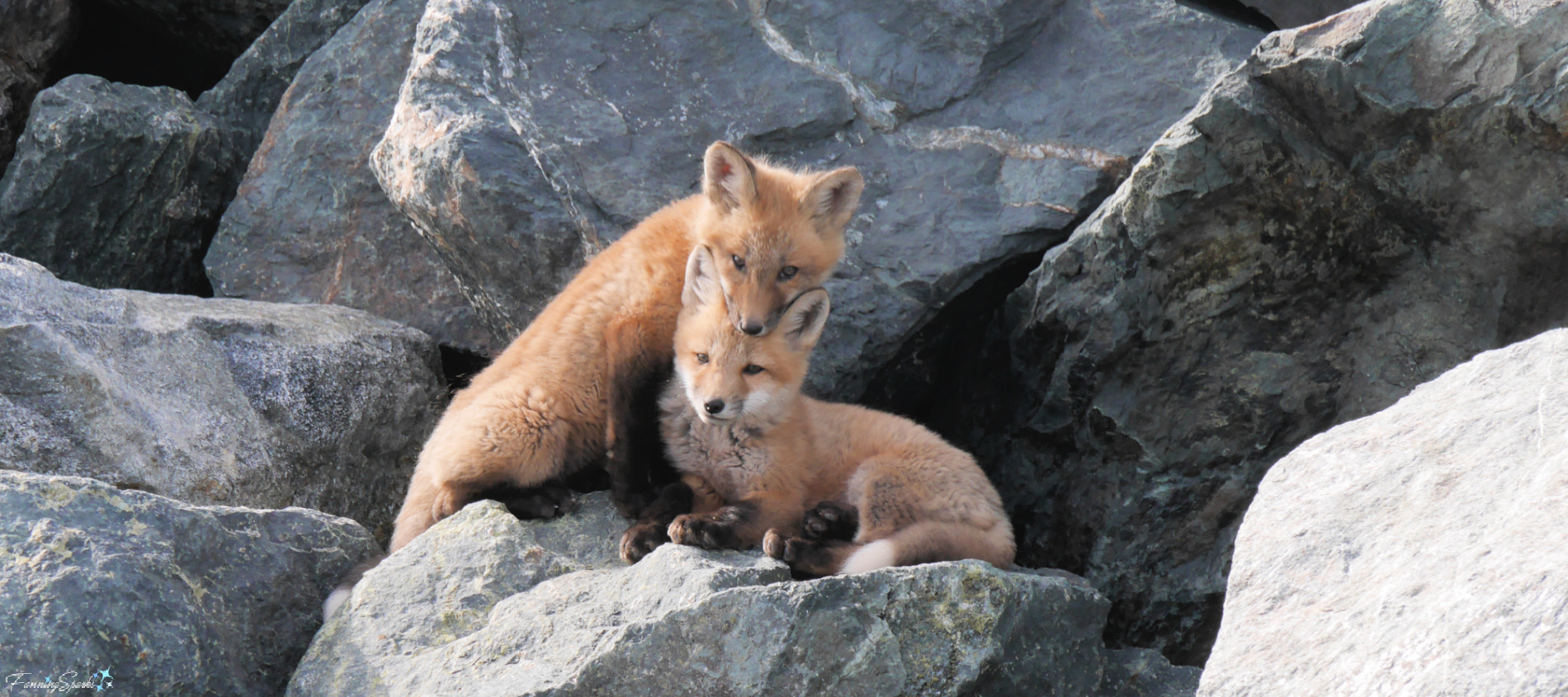
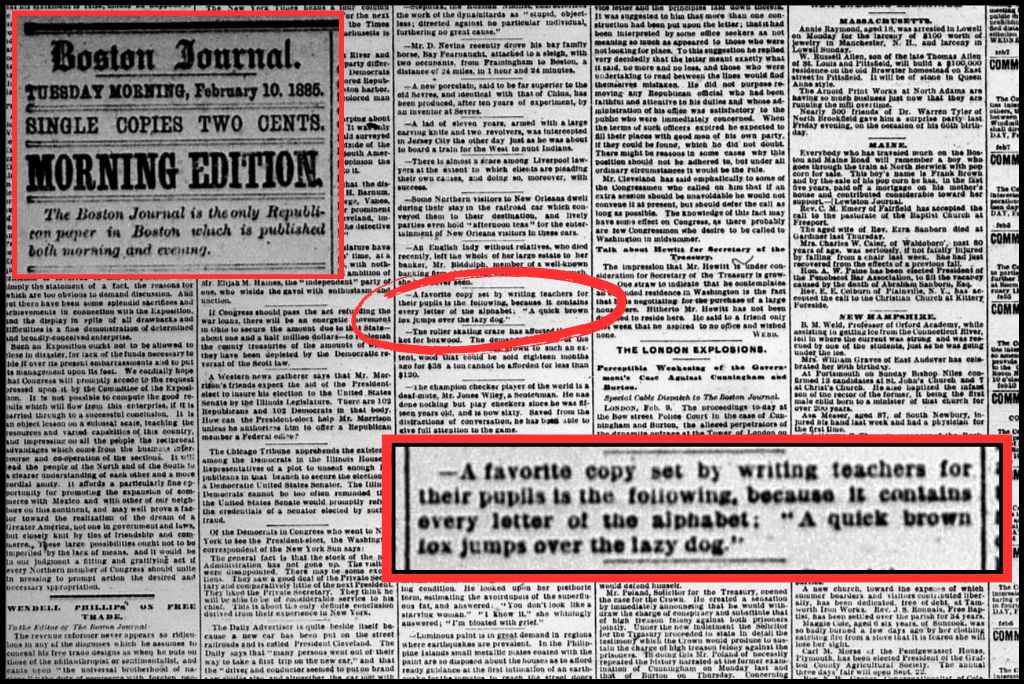
Over 140 years ago, the most famous English language pangram appeared in the Boston Journal. Buried in the Current Events column on a page crammed with heavy text, a note read “A favorite copy set by writing teachers for their pupils is the following, because it contains every letter of the alphabet: ‘A quick brown fox jumps over the lazy dog.’“
From this subtle introduction, the “quick brown fox” pangram went on to widespread use. In addition, to helping students learn to write, it has been used to teach touch-typing and signaling, to test typewriters, keyboards and data communication equipment, and to display text fonts.
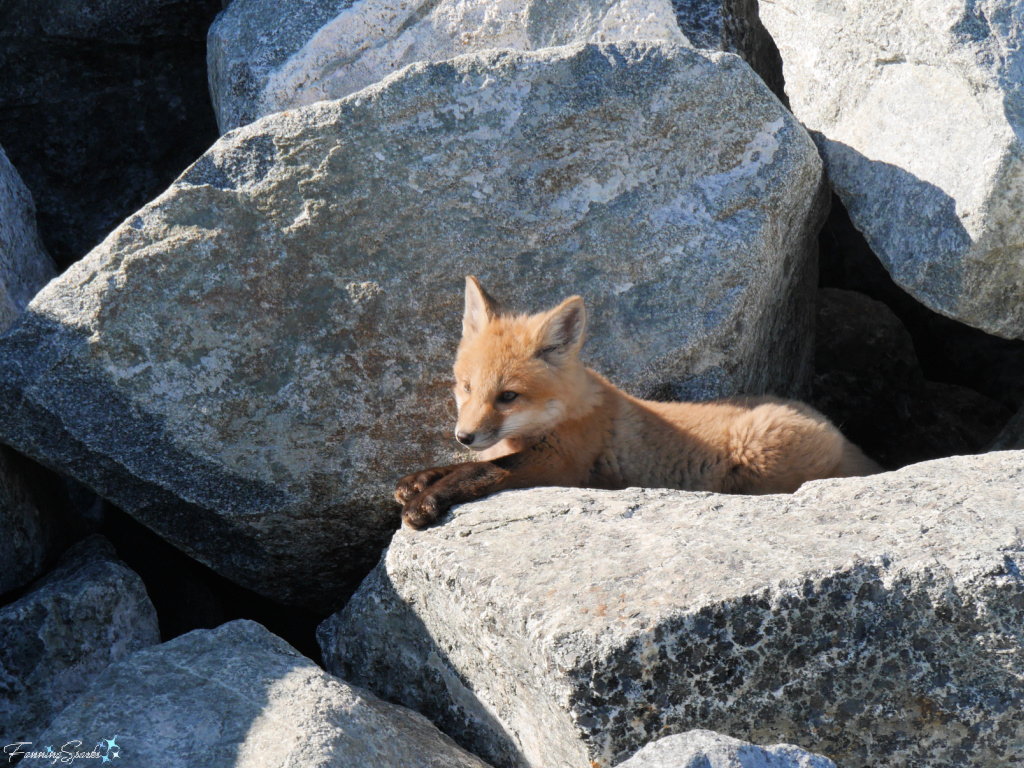
But enough about this famous pangram, today’s blog post is actually about quick red foxes not quick brown foxes ― more specifically, Nova Scotia Red Fox (Vulpes vulpes ssp. rubricosa) kits. There’s a litter of these little charmers nearby and it’s been educational and entertaining to observe, study and photograph them.
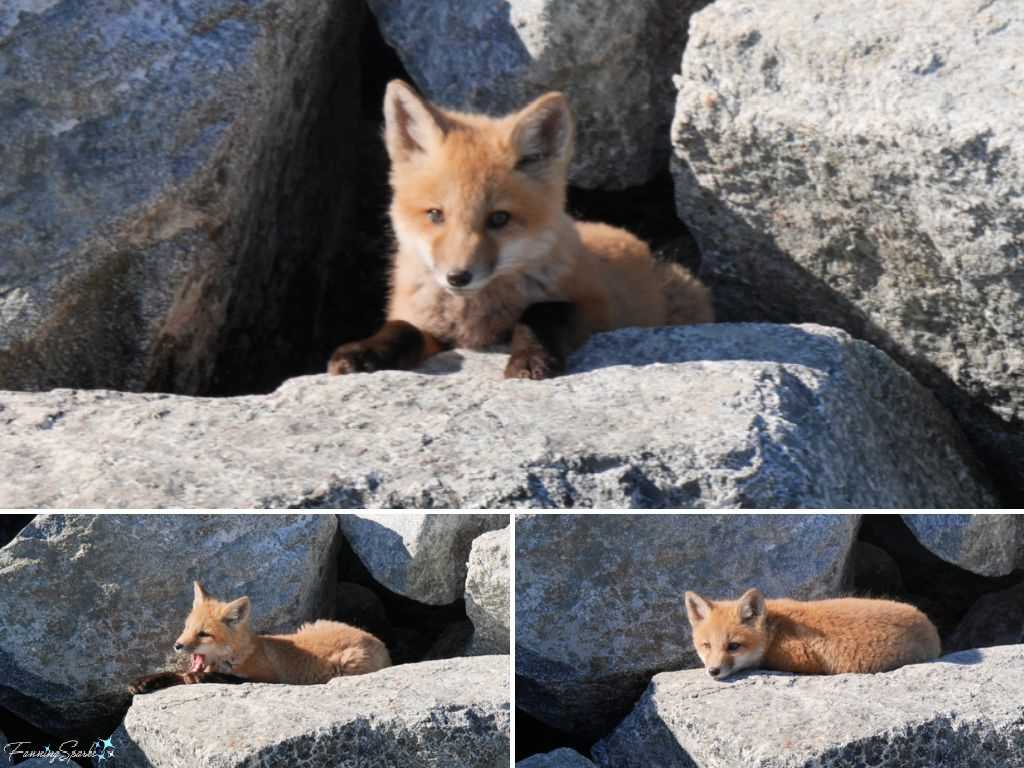
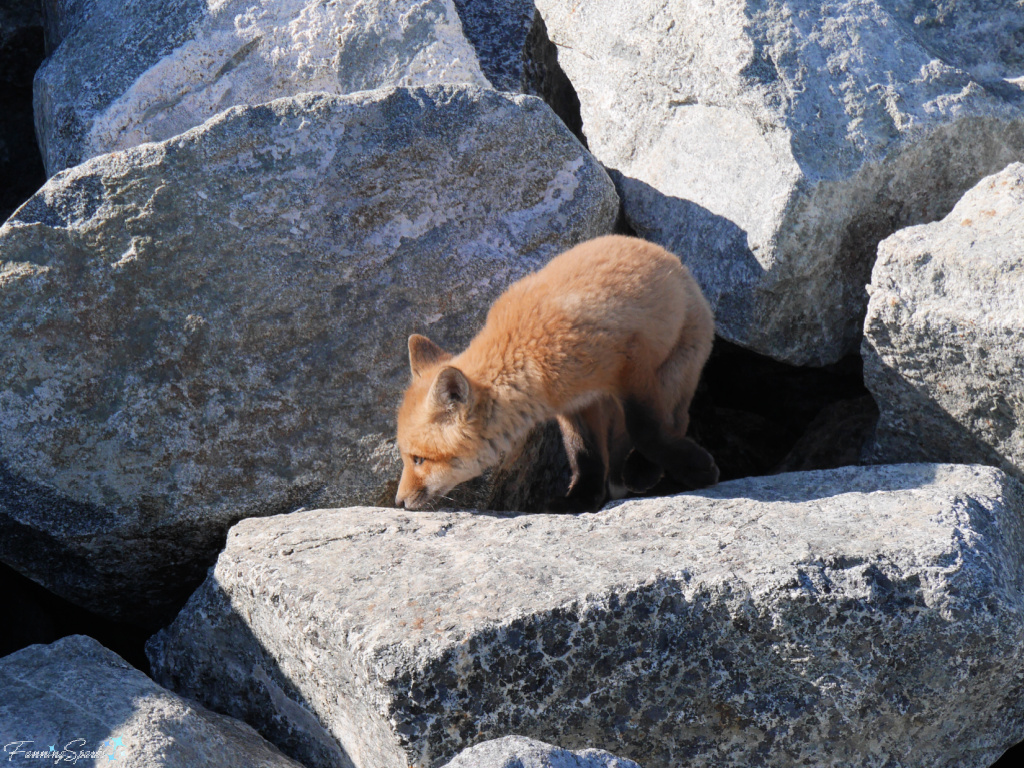
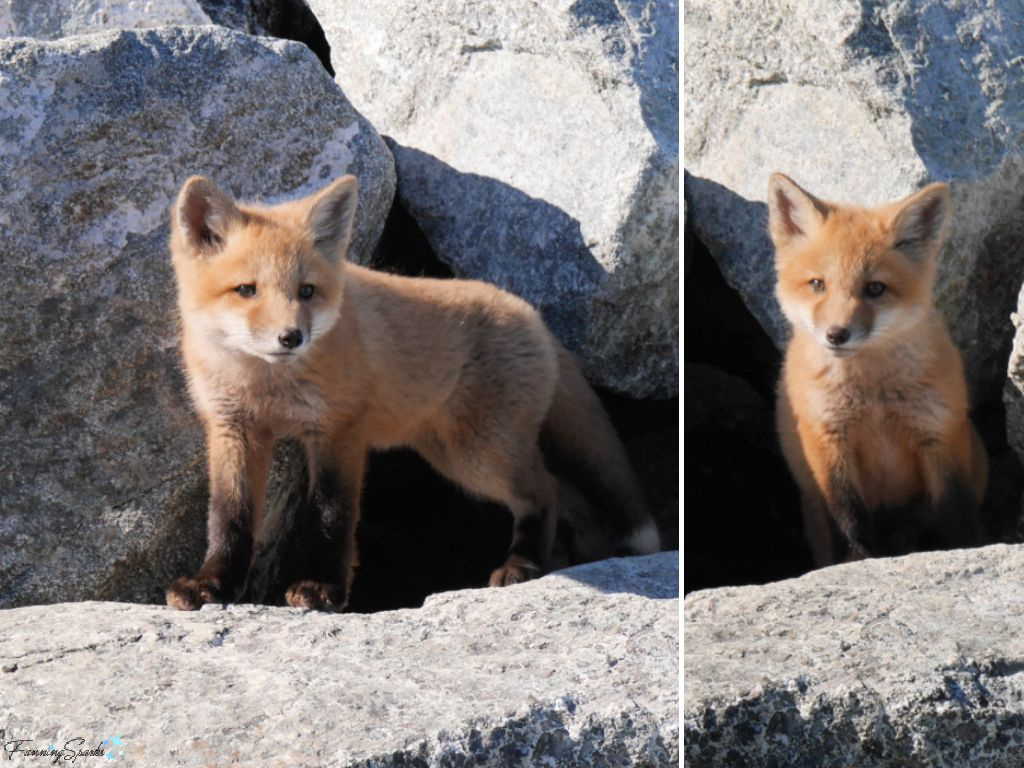
I’ve seen four kits but a fellow wildlife admirer told me there are actually nine. According to my research, that’s an unusually large litter ― the average is five to six kits, or pups, once a year.
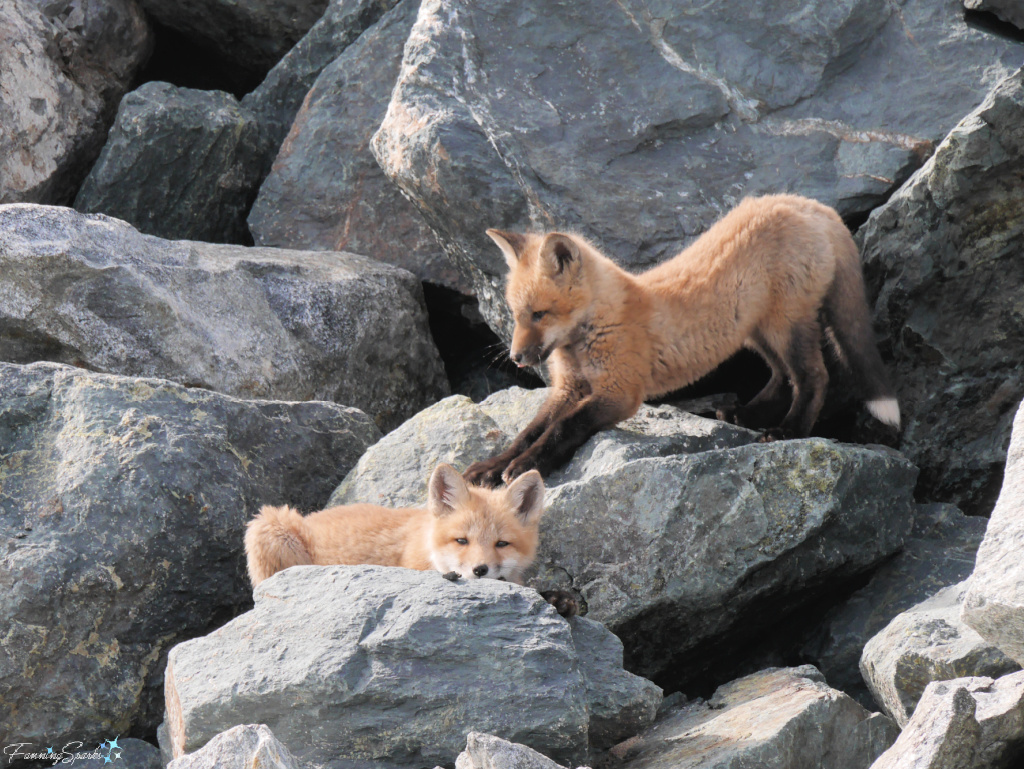
According to the incredibly thorough book How to Spot a Fox, it’s possible there are actually two litters. Author and professor J. David Henry studied hundreds of free-ranging red foxes in Canada before writing this book.
“In the early spring, the female fox gives birth to between 3 and 6 kits. … In northern Saskatchewan … fox families normally consist of one dog fox and one vixen raising a litter of pups” writes Henry in the section titled The Family Plot. “But when … food resources become truly abundant … a dog fox may breed two vixens, and two litters of pups are raised on his territory. Normally, the vixens give birth to their litters in separate natal dens, and the dog fox brings food to both vixens. … It all makes sense if it is understood as a fox family’s way of making use of abundant food resources occurring on the territory that spring.”
I did notice two separate pairs of kits hanging out in two separate locations. But considerably more study would be required to accurately assess the situation.
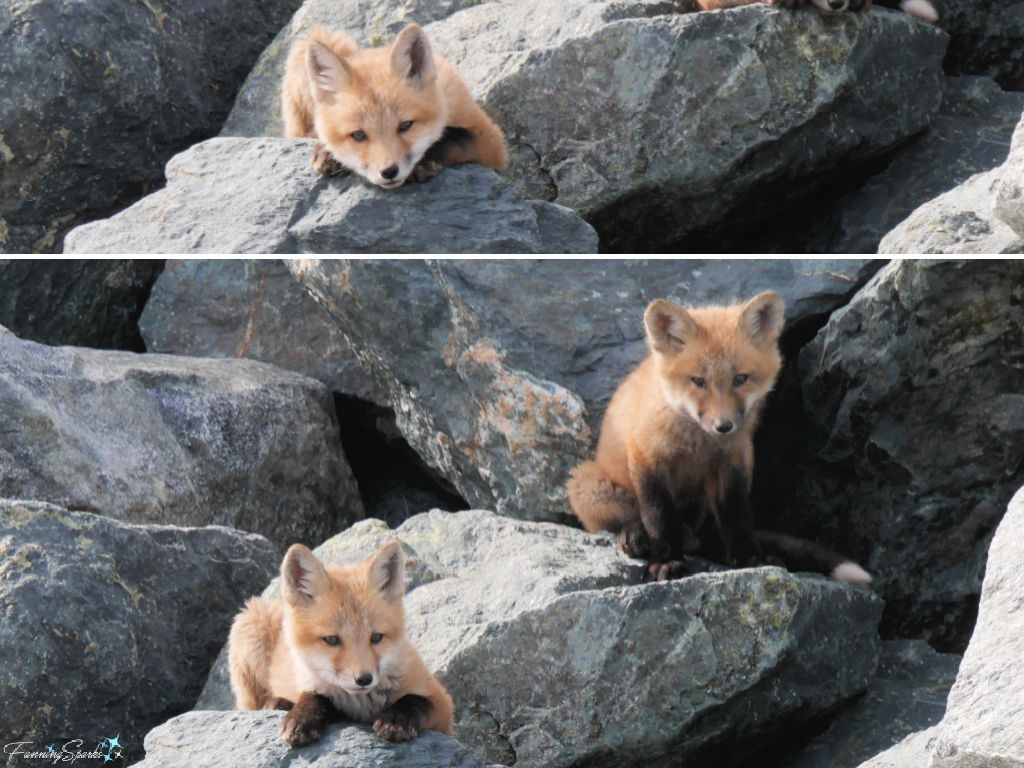
I’m not sure how old these kits are but Henry writes “When the pups are four or five weeks old, they begin to come above ground for longer periods, and this is the time when the prime observing opportunities begin.”
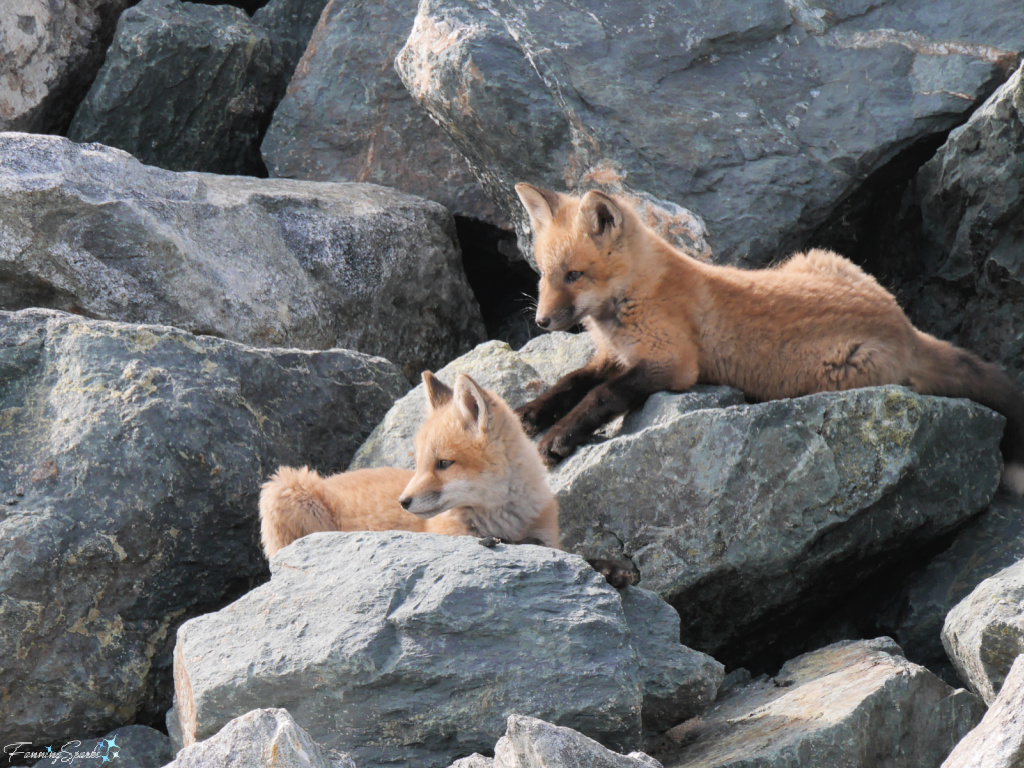
“They become more social, playful and puppylike. Over the next several weeks, the kits interact with one another and with their parents, and a naturalist can observe hunting, fighting and food-caching behaviors developing. The foxes seem genetically programmed to try out these motor patterns in sessions of play fighting and play hunting, and it is fascinating to watch young foxes practicing and perfecting these adult behaviors”.
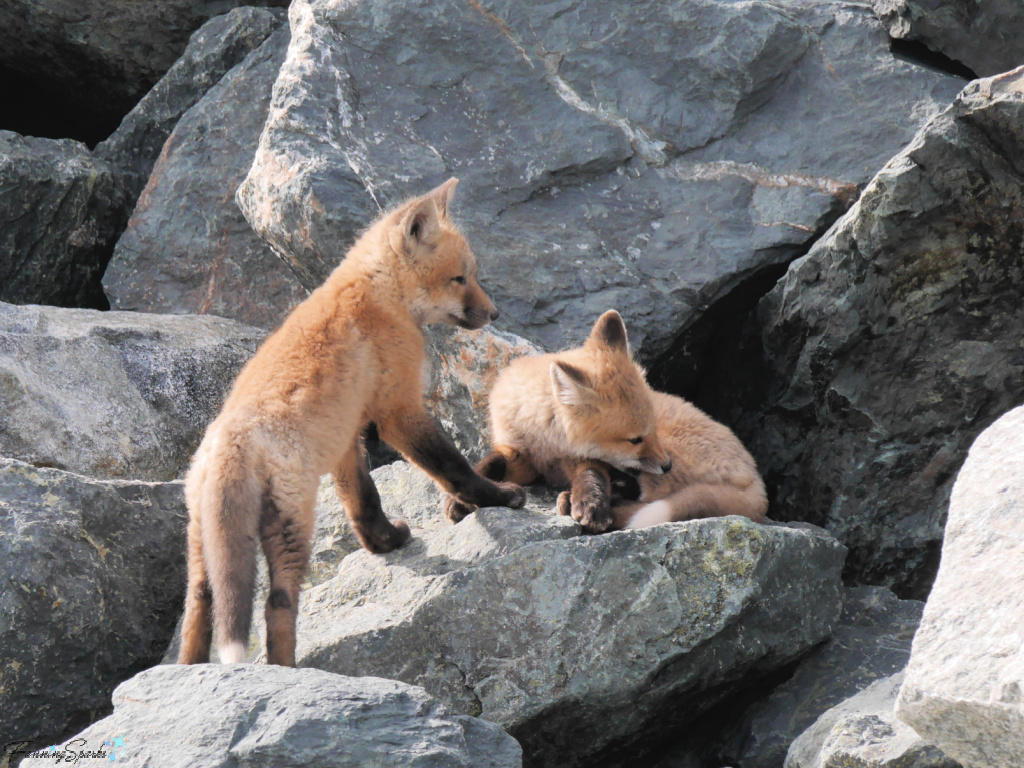
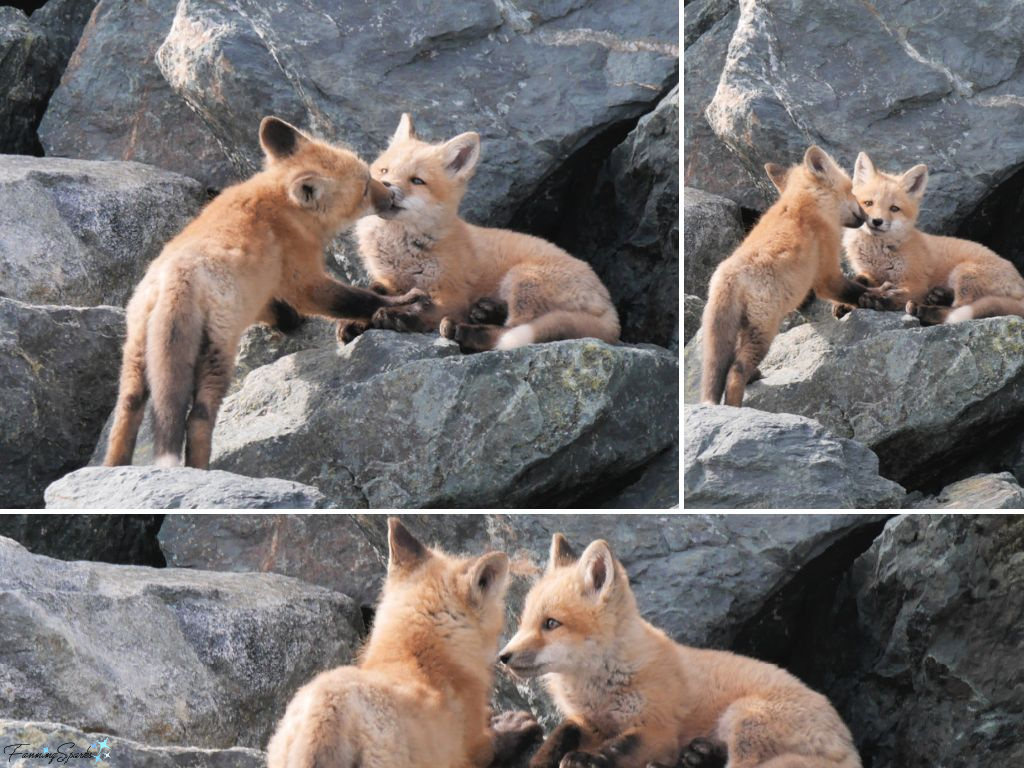
“Alert, cunning and ever-watchful, red foxes can nonetheless be observed and studied if approached correctly” writes Henry. “Any active den where adult red foxes are raising their kits affords a wonderful opportunity to study these animals on a day-to-day basis. But be careful. You will want to proceed with caution for good reasons: certainly you will not want to do anything that could endanger the welfare of the kits”.
Henry goes on to explain “There is no way you can hide yourself from the hypersensitive nose of a red fox. The parents will know that you are there. … I think the most important thing to keep in mind is for you to act in a polite, considerate manner and avoid at all costs disturbing the pups or alarming the adults. In your movements walking to or watching from your observation spot, be relaxed or quiet, not tense, excited or nervous. Don’t arrive at the den during dusk or dawn when the foxes are most active. … Begin observing at a safe distance – several hundred yards if possible – and only slowly move in closer. … There is an invisible boundary around the den that varies with each parent fox. … some foxes will tolerate you at a distance of 20 feet (6 m), and other foxes will not tolerate you at 100 yards (90 m). But if the parent fox finds you within that boundary once, the pups will be moved to a new location that same night.”

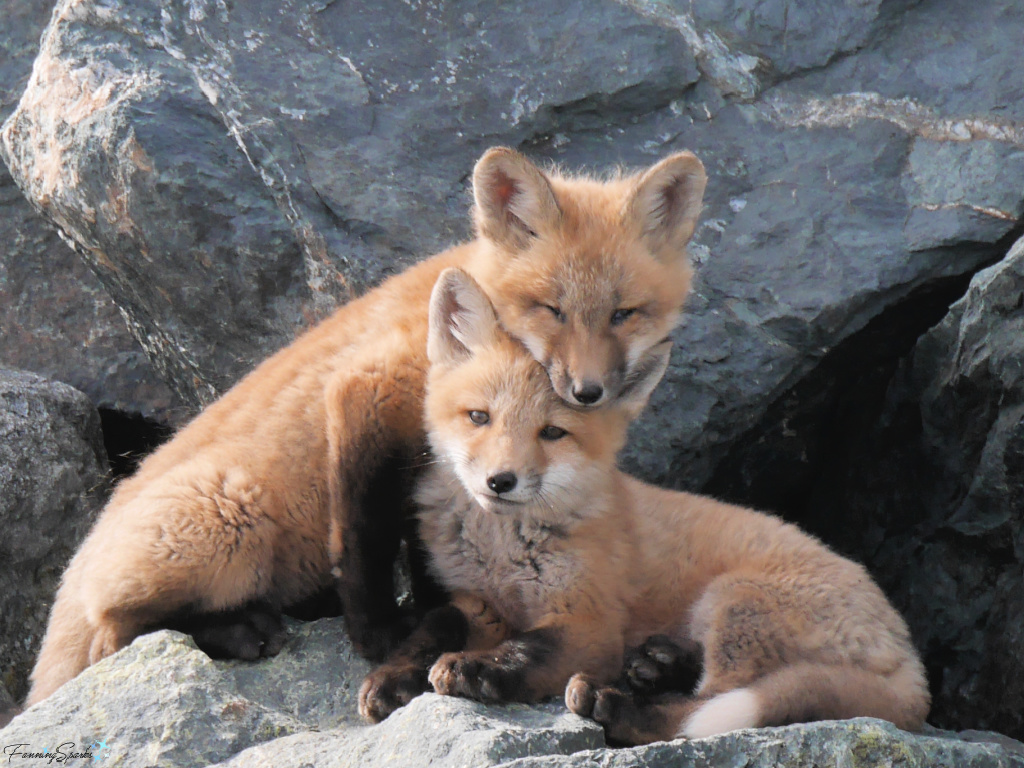
It’s easy to see why people are tempted to mistake these adorable little animals for pets ― but they aren’t. Here’s my public service announcement from the folks at Hope for Wildlife ― a highly-regarded, non-profit wildlife rehabilitation and education centre located in Seaforth, Nova Scotia. Their instructions are clear: “Please Don’t Feed Me … Don’t Harm Me with Kindness … Help Keep Me Wild”.
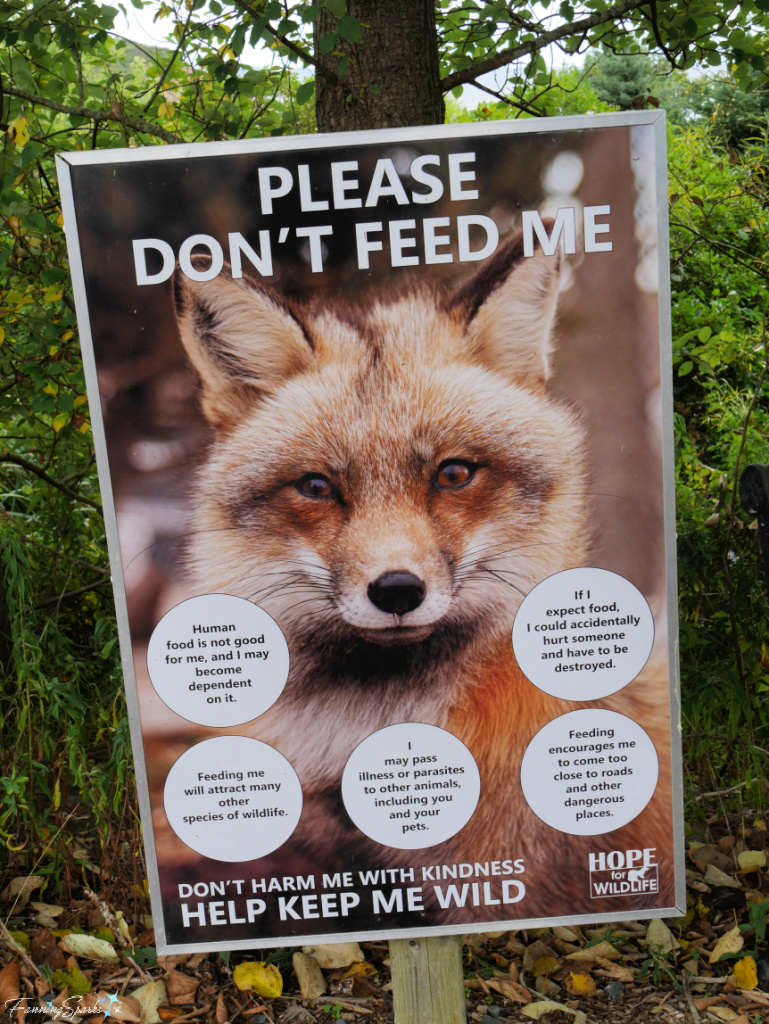
Thanks to the long-running documentary TV series Hope for Wildlife, the Centre is well-known for providing care to injured and orphaned animals before releasing them back into the wild. They also seek to connect people to wildlife in a positive way through education. As I learned during my visit last year, they only keep and exhibit animals that can’t be rehabilitated. One of those animals is a red fox named Frankie.
An exhibit card mounted on the pen tells Frankie’s story. “Frankie arrived as a pup in 2018 with head trauma, most likely the result of being hit by a car. While she was recovering from her serious injury, we noticed that she appeared to have trouble seeing. Eventually, she was diagnosed with the inability to see in one eye and only having partial vision in the other. Frankie has been a beautiful and charming member of our education team ever since.”
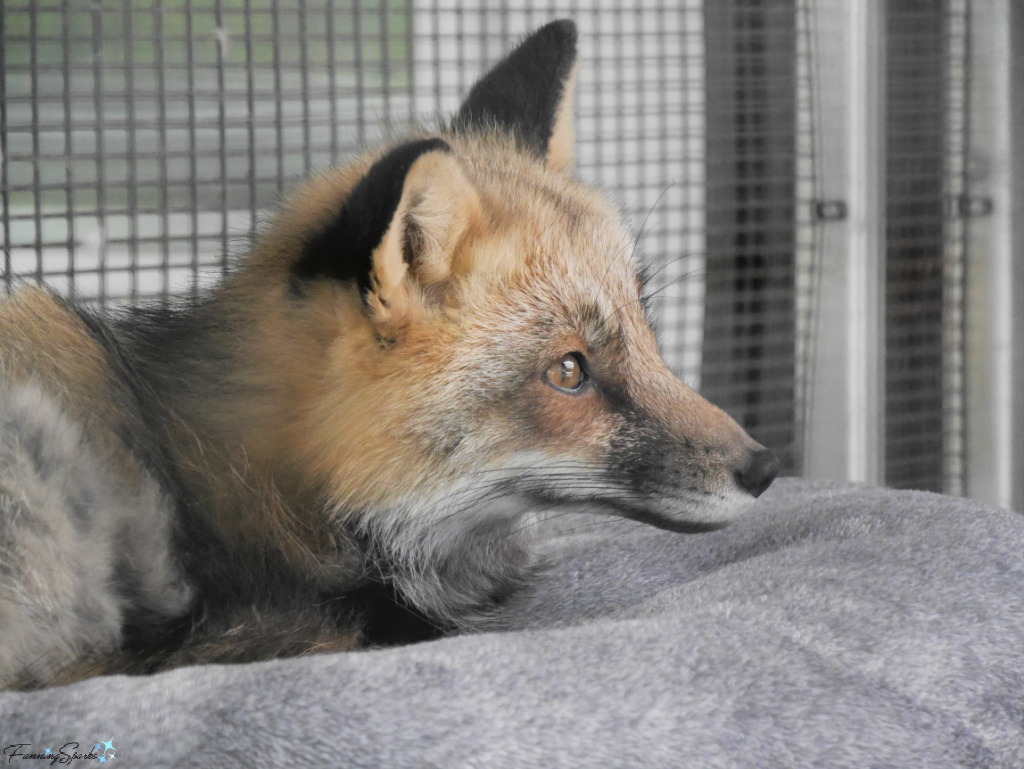
The exhibit card also explains “Red foxes are comparable to domestic dogs in general intellect, but have an edge in problem-solving, adaptability, and independent decision making, whereas dogs are more specialized in social learning and obedience.” Perhaps these characteristics form the kernel of the popular idioms about foxes.
“As sly as a fox”, for instance, implies someone is crafty, cunning or deceitful. “Crazy like a fox” means someone may seem foolish or eccentric but they are actually highly shrewd, calculating, and effective. Or if one person “outfoxes” another, they are using clever strategy to outsmart, outwit or outmaneuver
The commonly-held belief that foxes are crafty, shrewd and clever is rooted in the folklore, mythology and traditional oral storytelling of various cultures. In Japanese folklore and religious mythology, for instance, foxes ― or fox-like spirits called kitsune ― have come to be regarded as sacred.
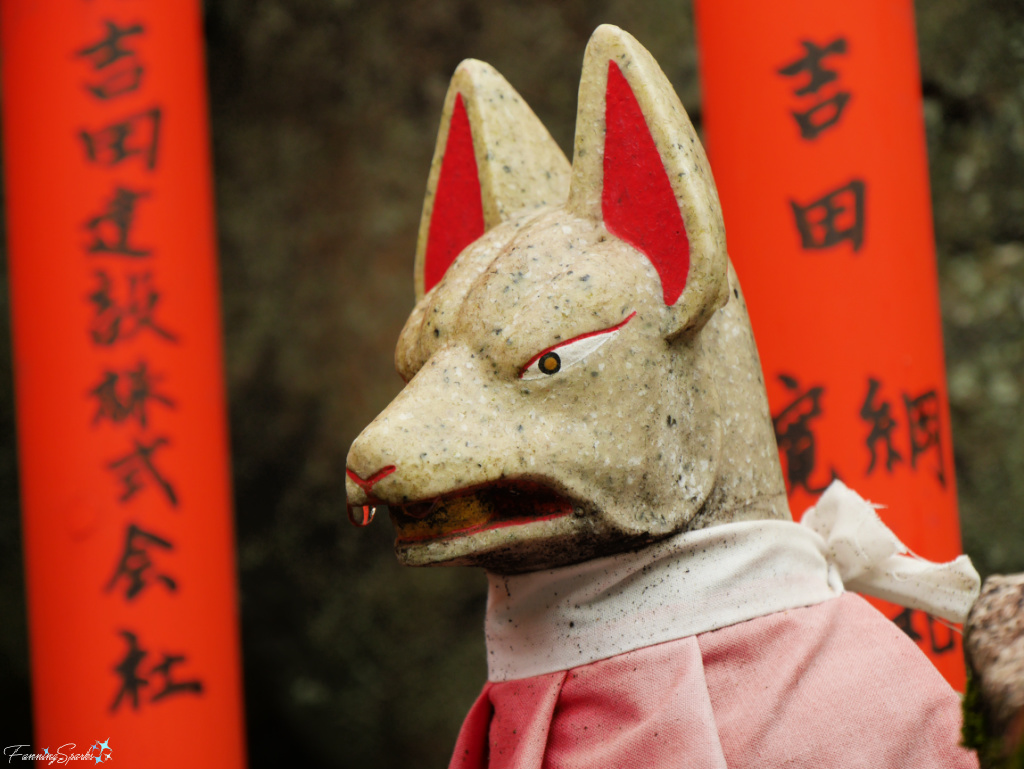
In his article 6 Things to Know About the Inari Fox in Japanese Folklore, David McElhinney writes “The kitsune (fox) recurs throughout stories in Japanese history, usually appearing as an intelligent and/or cunning being with paranormal abilities and often residing at Shinto shrines. They’re portrayed as having a deep connection with their human companions and as manifestations of a major kami (Shinto spirt) in the Japanese story of creation.”
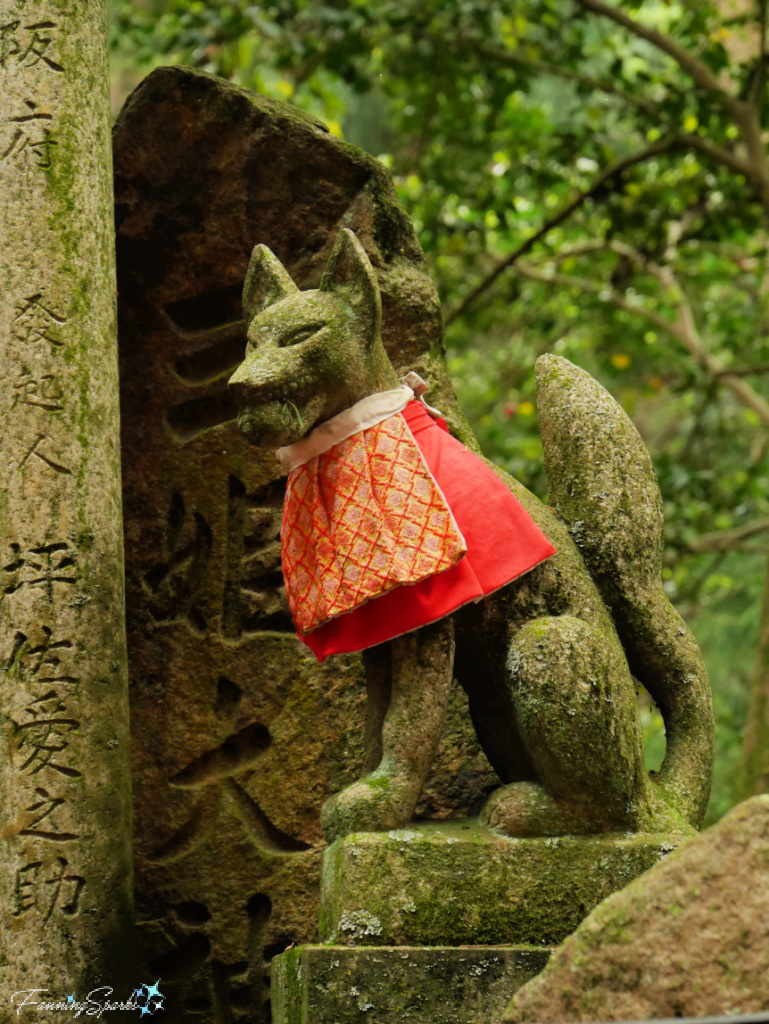
The Fushimi Inari-taisha Shrine in Kyoto, one of the most famous shrines in Japan, is the birthplace of fox shrines in Japan. I had the pleasure of visiting this shrine and its stunning tunnel of vermilion torii gates a few years ago (see Postcards from Japan #3). The stone kitsune pictured here are some of those we saw “peppered throughout the complex, guarding gates and watching over worshippers”.


McElhinney explains “the Shinto kami, Inari – the goddess of rice, harvests, agriculture, fertility and more … was said to have arrived in Japan during its creation riding on the back of a white fox. A harsh famine had struck the land, ushering the goddess from her heavenly abode into the land of mankind carrying grains to liberate the starving people from their hunger.
In 711 AD, the first Inari shrine [the Fushimi Inari-taisha Shrine in Kyoto] was erected … to solidify the significance of the myth. Kitsune would operate as the guardian protectors of the shrine, and their physical presence throughout the nation would forever be a reminder of the benevolent goddess’s deeds.”
Many stone kitsune carry symbolic objects in their mouths. The scrolls, visible in the below photo, symbolize the kitsunes’ role as a messenger of the god.
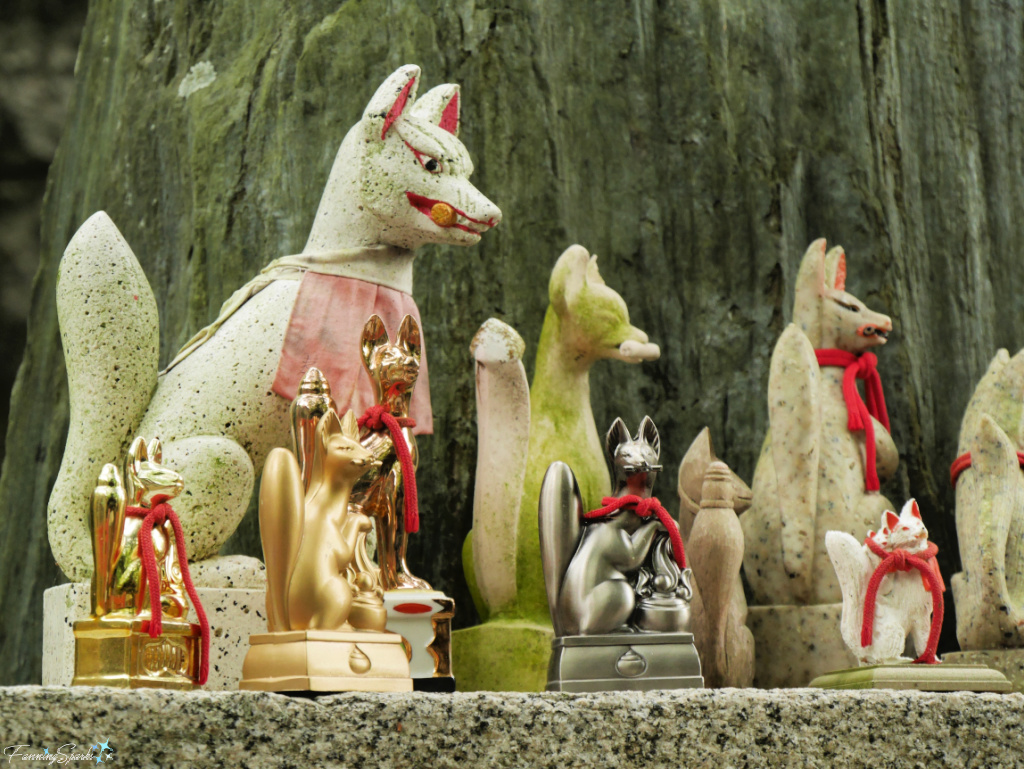
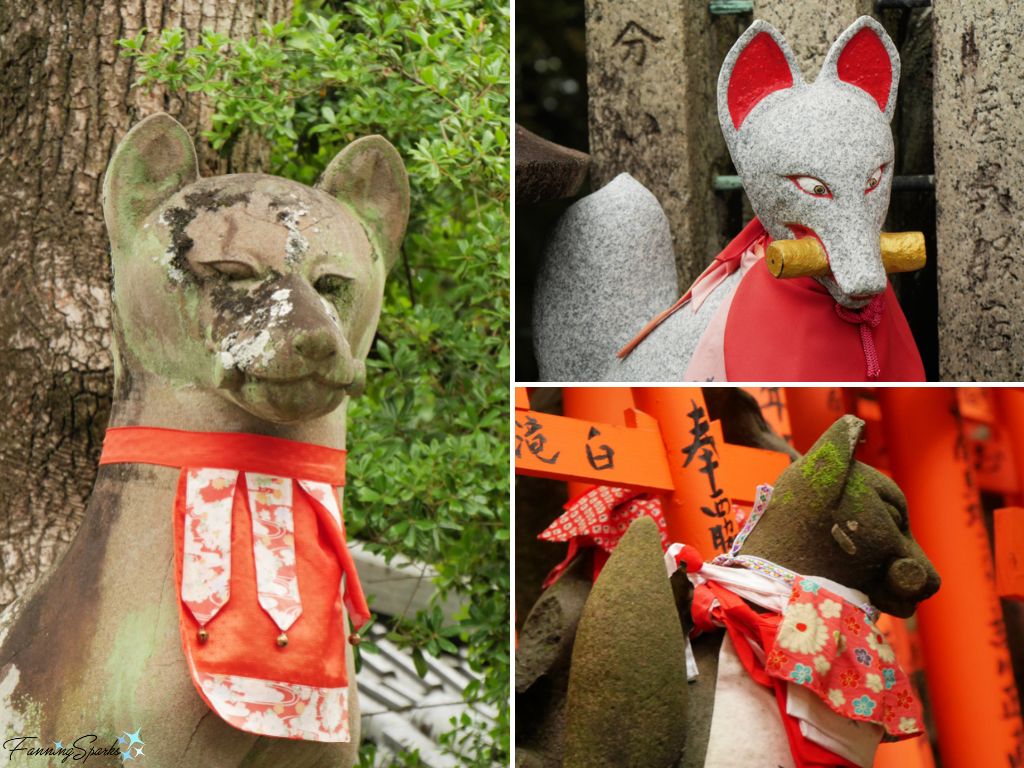
Worshippers often drape and tie red aprons or bibs around the necks of statues as a sign of their divinity. The red bibs can also serve to express gratitude for answers to prayers and to ward off evil forces.
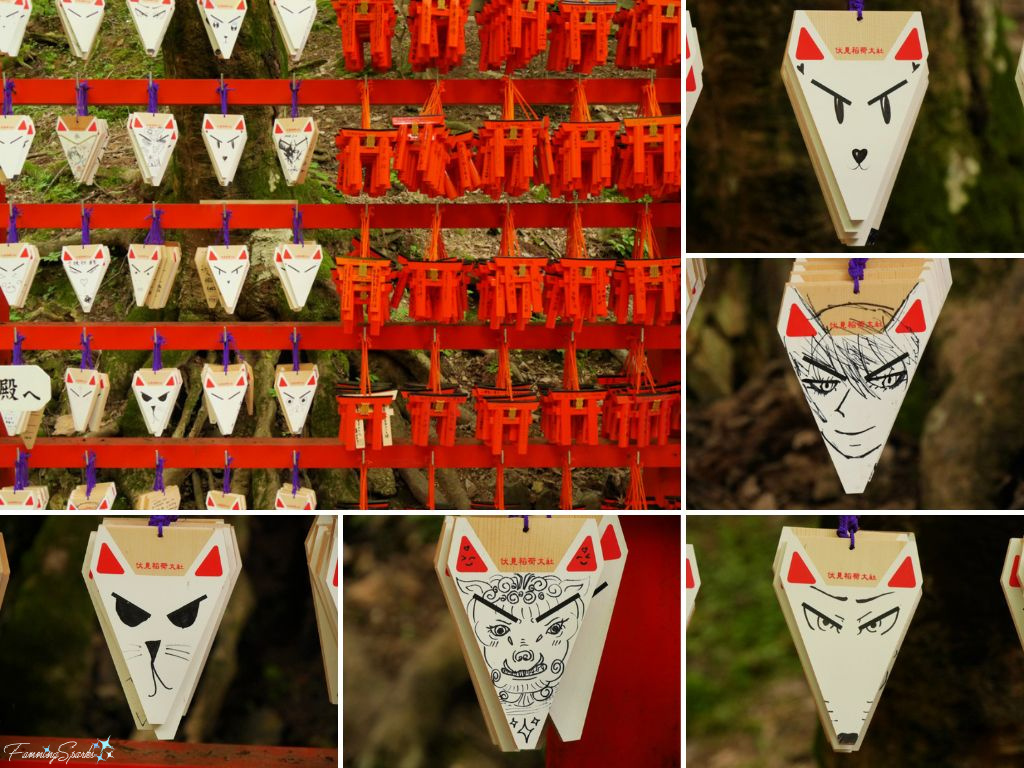
Shinto shrines typically sell small wooden plaques, called ema, to worshippers so they can write a wish or prayer on the back before hanging the ema at the shrine. The ema at the Fushimi Inari-taisha Shrine are uniquely shaped as fox heads and miniature torii gates. In addition to writing their prayers on the back of the kitsune ema, worshippers can draw unique, playful facial expressions on the front.
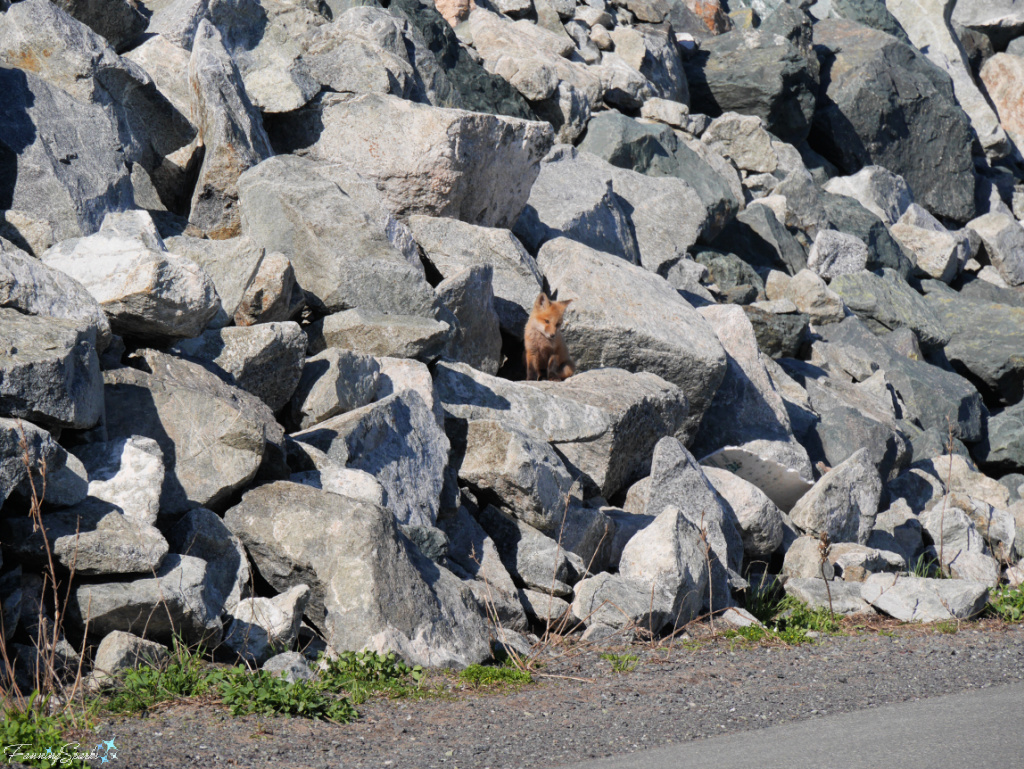
I’ll finish up where it all began. This was my first sighting of one of the fox kits outside its den. Spot the quick red fox!
More Info
Previous blog posts mentioned in this blog post include:
. Postcards from Japan #3.
The following books and articles were consulted in the writing of this blog post:
. Scan of the Boston Journal for February 10 1885
. How to Spot a Fox book by J. David Henry which is available here on Internet Archives; Published 1993
. 6 Things to Know About the Inari Fox in Japanese Folklore article by David McElhinney; Published on February 2022 on Japan Objects website
. Various Wikipedia entries.
Hope for Wildlife is a well-known, highly-regarded, non-profit wildlife rehabilitation and education centre located in Seaforth, Nova Scotia. See their website or Instagram page for more information.
Today’s Takeaways
1.“Alert, cunning and ever-watchful, red foxes can nonetheless be observed and studied if approached correctly. … Begin observing at a safe distance – several hundred yards if possible – and only slowly move in closer.” J. David Henry
2. “Please Don’t Feed Me … Don’t Harm Me with Kindness … Help Keep Me Wild” Hope for Wildlife
3. The commonly-held belief that foxes are crafty, shrewd and clever is rooted in the folklore, mythology and traditional oral storytelling of various cultures.



Comments are closed.