
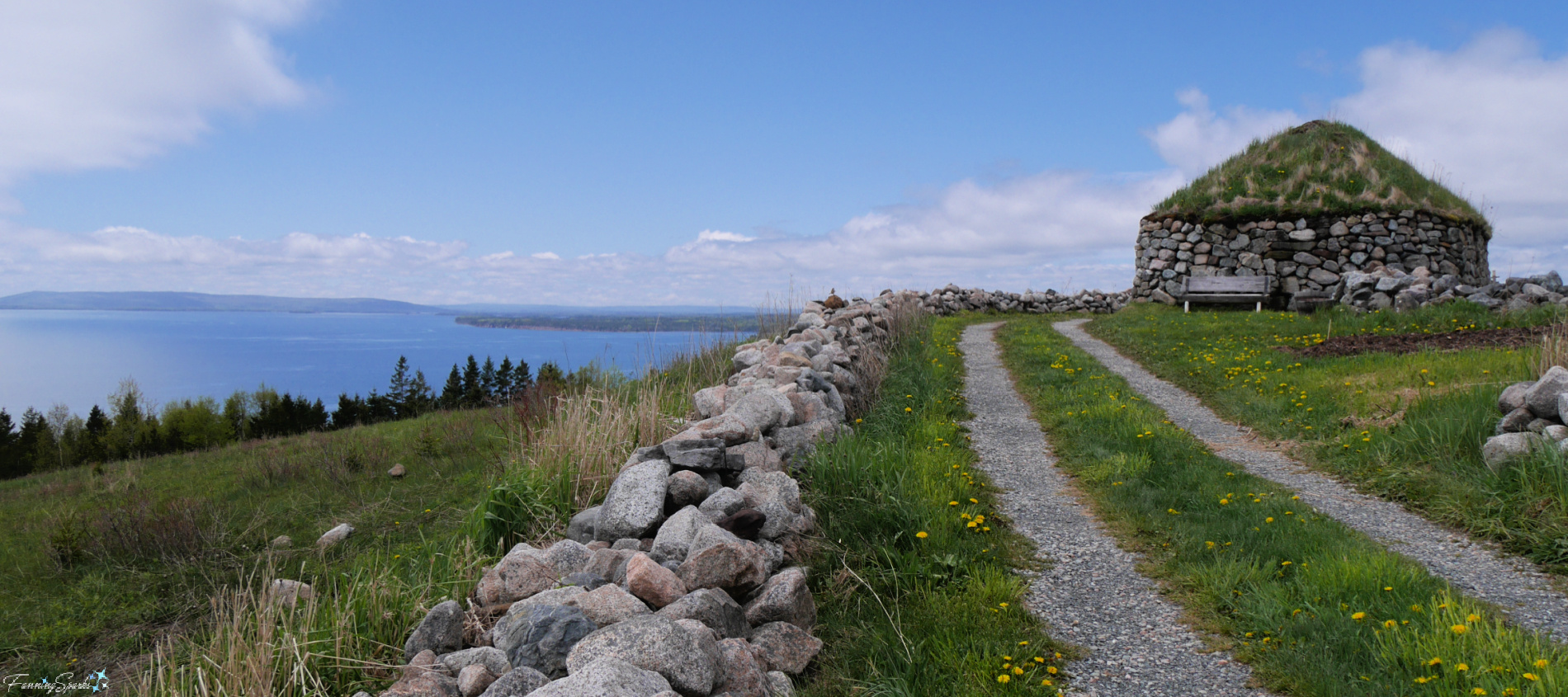
Who doesn’t love a good story? Good stories engage, entertain and educate. They spark our imaginations and create connections. Talented storytellers know the importance of setting a scene, breathing life into characters, creating the mood and building a strong storyline ― from introduction, through a plot of interconnected events, to climax and conclusion.
Visitors to Highland Village (Baile nan Gàidheal) ― an open-air, living history museum in Iona, Nova Scotia ― might not realize they’re about to experience the wonder of superb storytelling. But a walk through the Village takes visitors on “the journey of the Gaels” starting in Gaelic Scotland in the 1770s and travelling through the next 150 years into Gaelic Nova Scotia in the 1890s -1920s. The experience is perfectly captured in the Highland Village tagline ― “Made of Stories”.
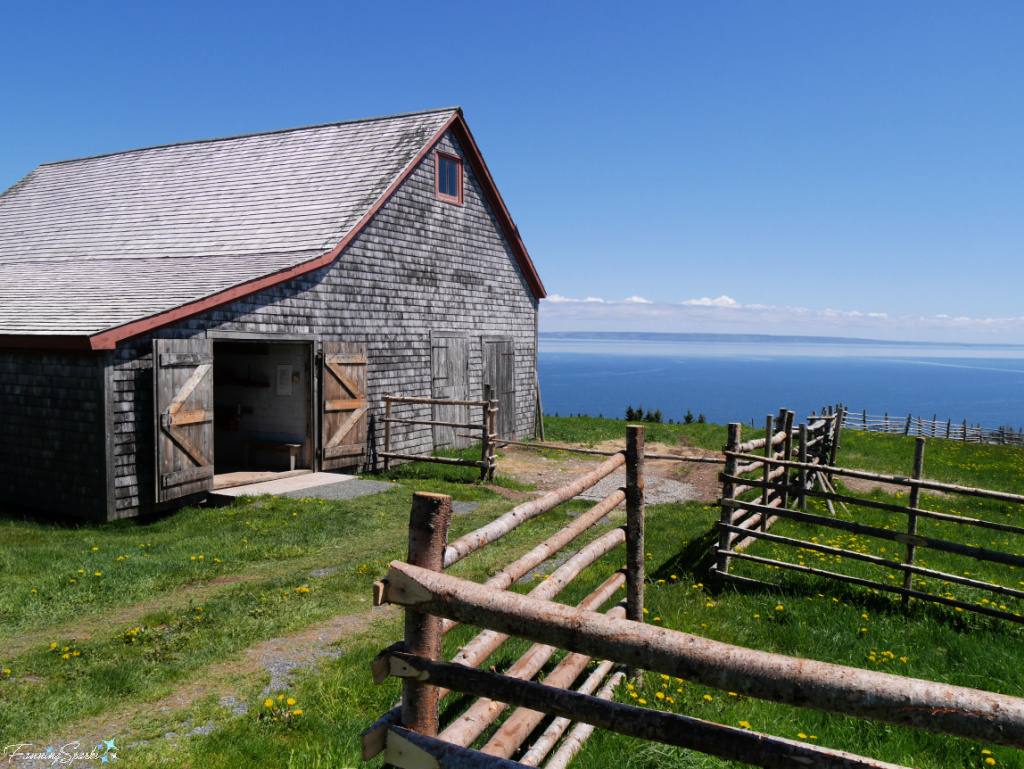
The scene for the Highland Village story is meticulously set on 43 acres of natural landscape overlooking the Bras d’Or Lake in Cape Breton, Nova Scotia. Visitors can catch a glimpse of Highland Village ― topped by the distinctive Malagawatch Church steeple ― across the Barra Strait as they enter the town of Iona.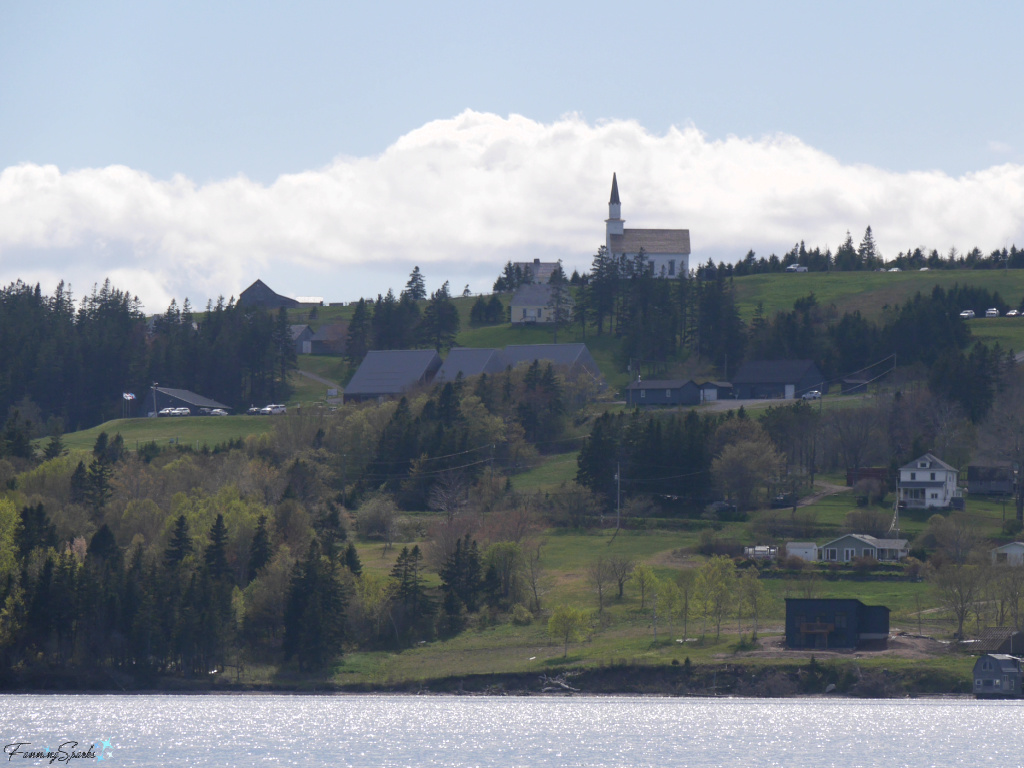
The view is even more spectacular in the opposite direction ― looking down across the Bras d’Or Lake from the top of the hill in Highland Village.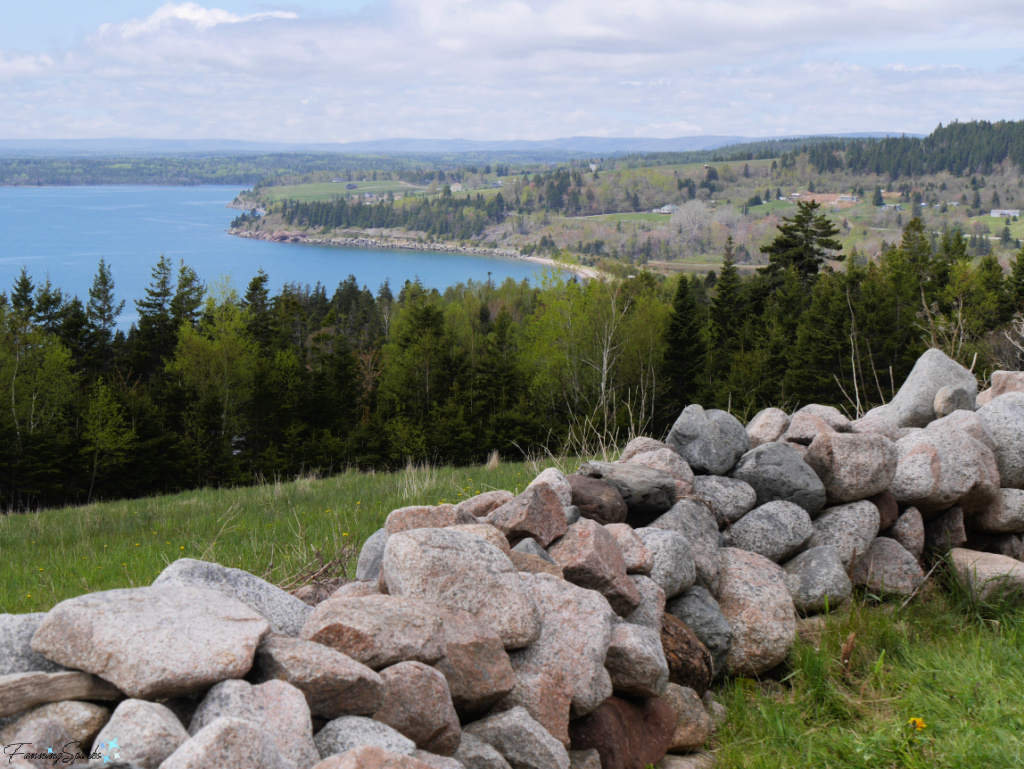
The Highland Village story begins in the Visitor Center where visitors meet the main characters ― the Gaels of the Gàidhealtachd in the Highlands and Islands of Scotland. Then the storyline is introduced “Centuries of conflict and shifting allegiances … culminated with the Battle of Culloden in 1746. The clan system had been in decline for generations at this point. Culloden spelled the end of traditional Gaelic society in the Gàidhealtachd, and solidified the shift towards colonial systems of governance and economy. … We can’t support our families. Plots of land are smaller, and rents are higher. Our traditional rights are greatly restricted. Some of us are persecuted for our faith. Landlords are wanting to make money at the expense of the people. There are opportunities elsewhere we no longer have here. Gaels are leaving for many destinations across the Americas, Australia, and New Zealand.”
The Stone House is the first stop on the Highland Village walking route. It is a replica of a traditional Scottish blackhouse with stone walls and a turf roof. It was constructed on this spot in the early 1970s with plans which are said to have been brought over from Scotland.
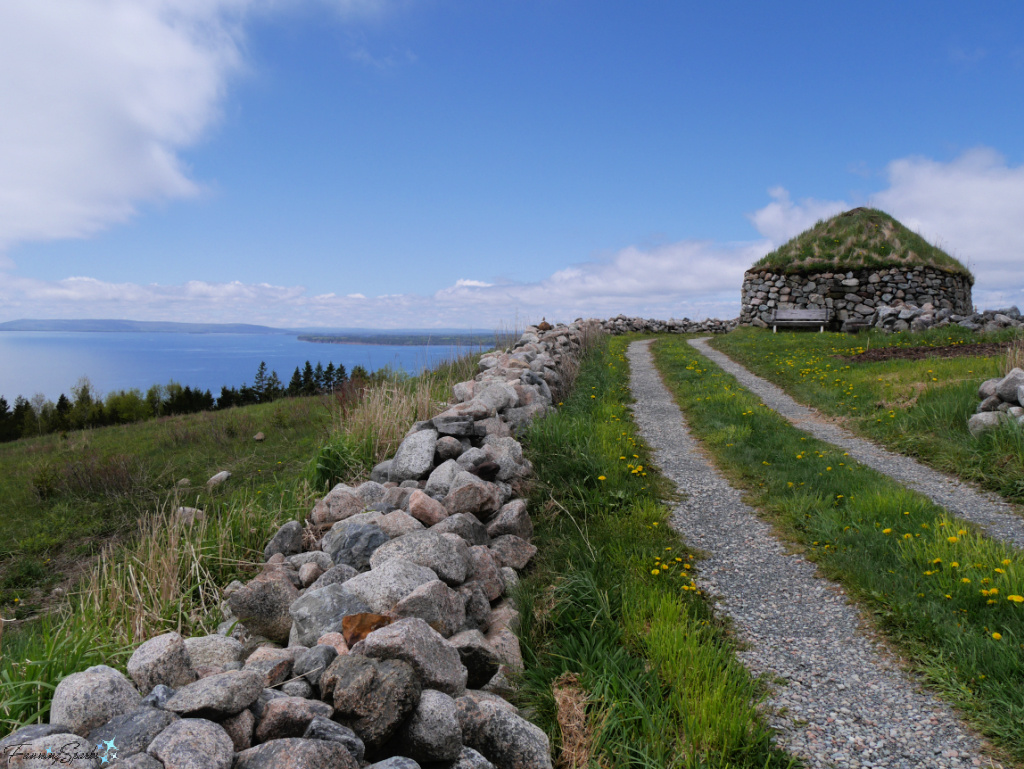
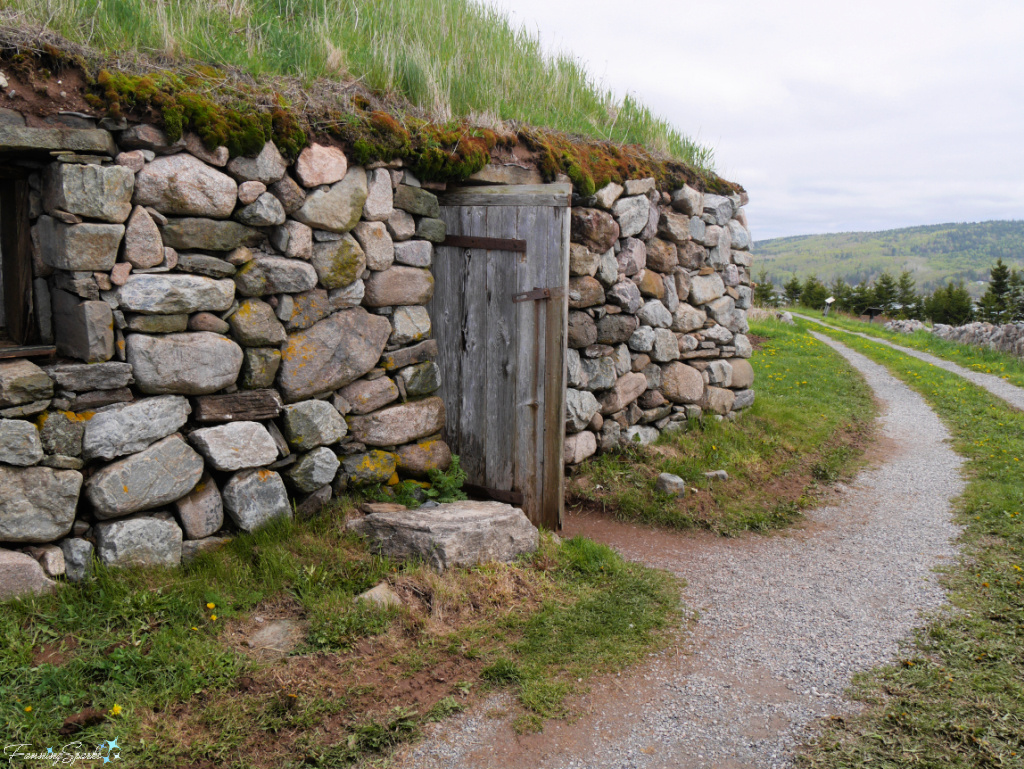
Mòrag, the first of many heritage interpreters dressed in period costume I would meet in the Village, welcomed me into the Stone House. Mòrag was a genial hostess and gifted storyteller. She described the challenges her family was facing and explained why immigration to New Scotland (Nova Scotia) was necessary.
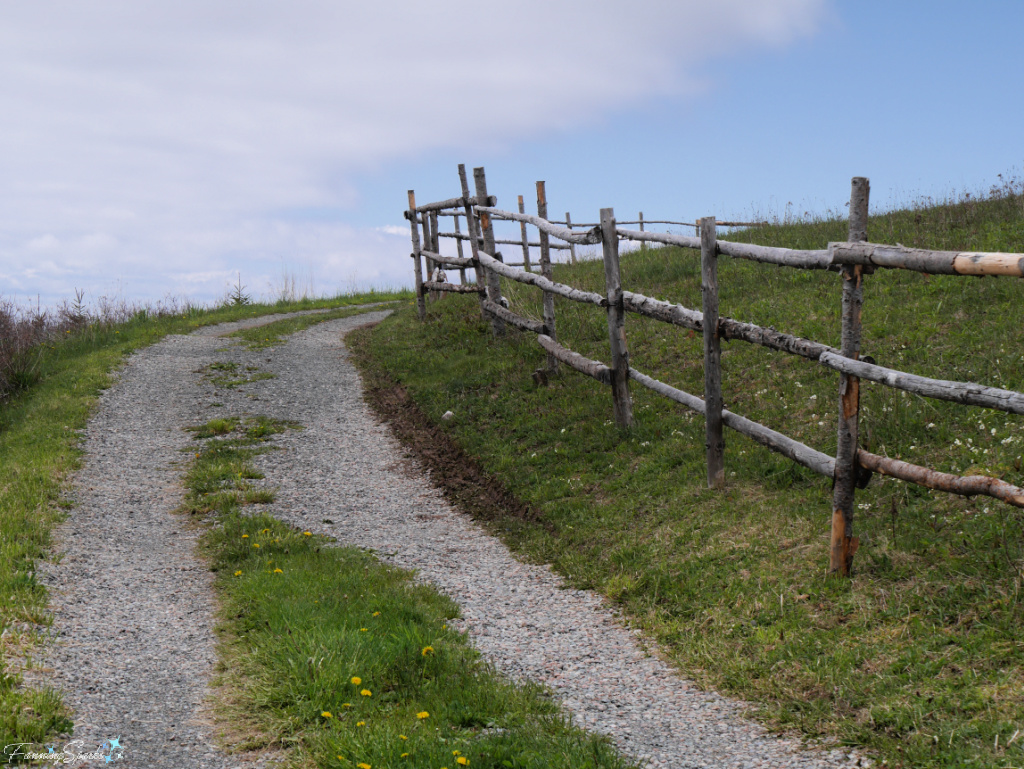
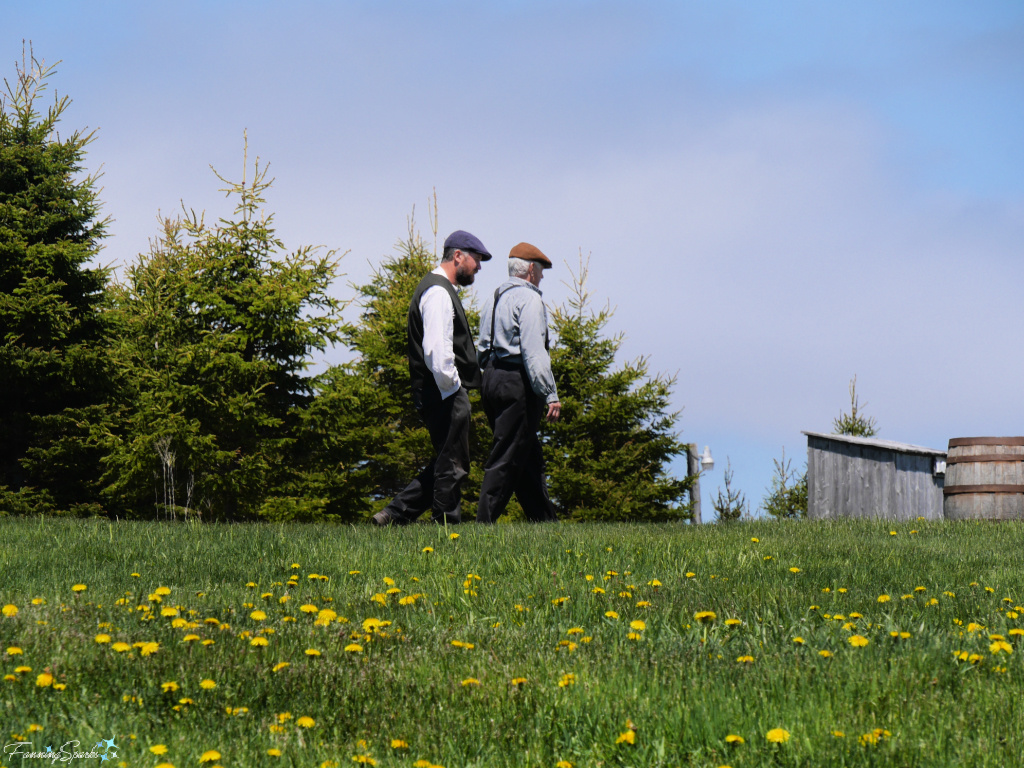
An article on the Highland Village blog, dated September 2014, shares an interesting glimpse behind the scenes: “Over the past few years, Highland Village animation staff have been transitioning interpretation from 3rd person to 1st person (or role playing). Through this process, staff have developed their own personas each with their own stories and experiences.” 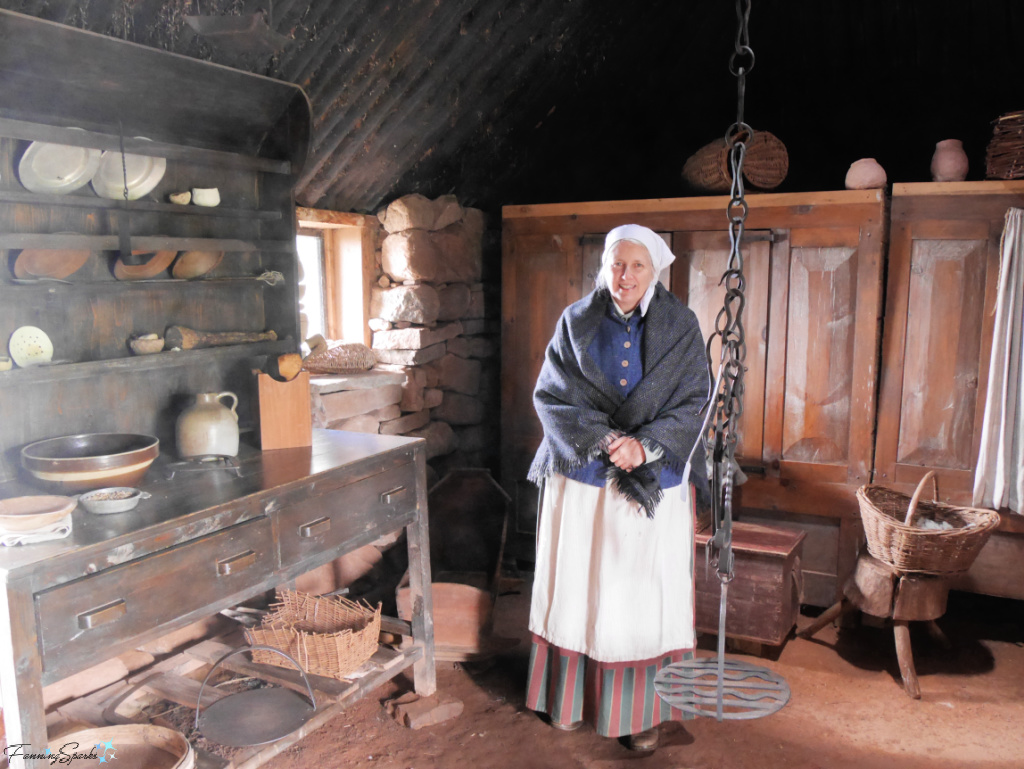 After leaving Mòrag to meet her next visitors, I headed up the path to the next chapter in the Highland Village story. This transition from the dry stone wall to the wooden post-and-rail fence could be viewed as a bridge between Gaelic Scotland and the forests of Nova Scotia.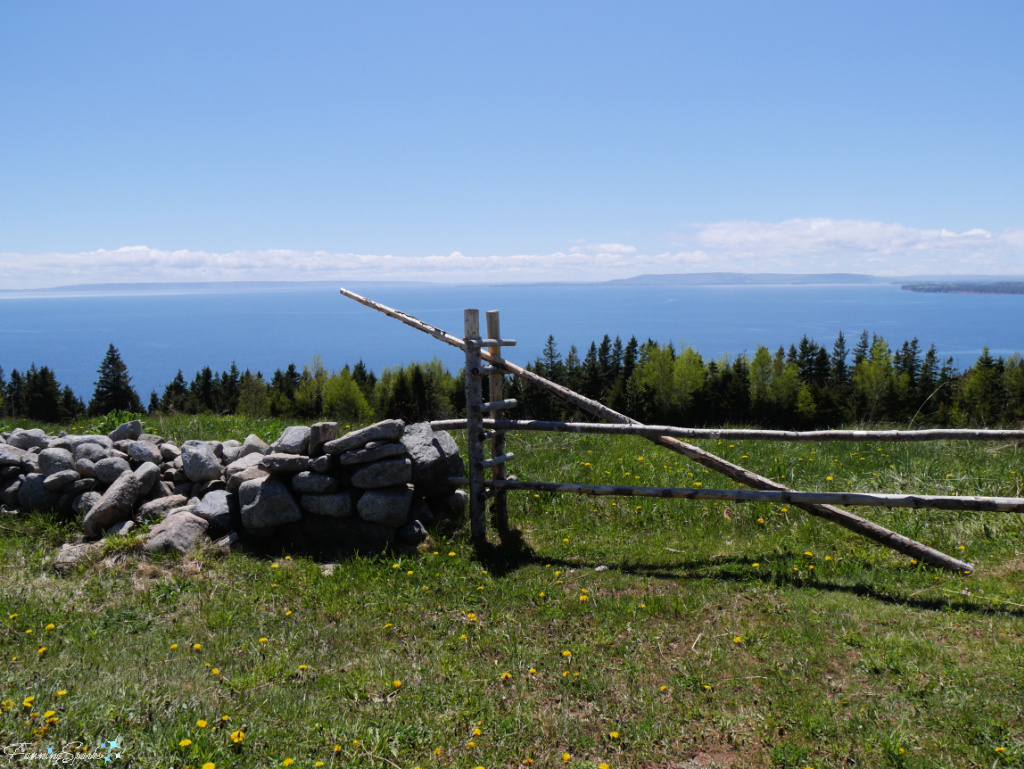
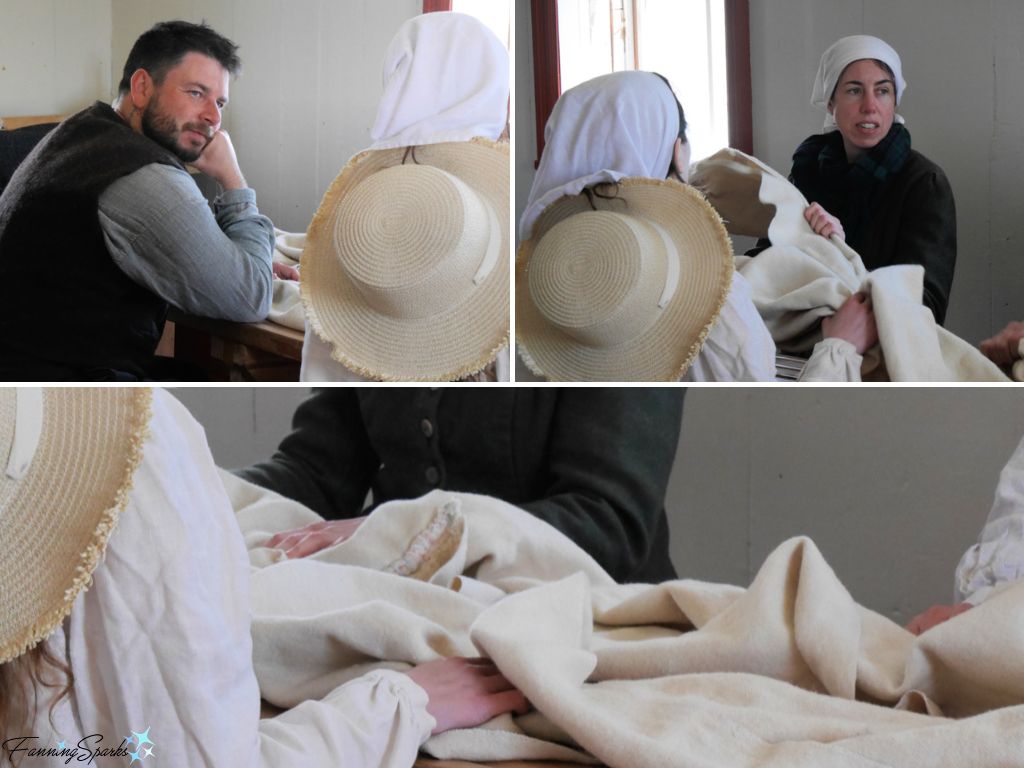
Kaye Michael’s Place, aka the Centre Chimney House, is one of the buildings included in the Forests of Nova Scotia story chapter. There I was incredibly lucky to come upon a milling frolic! “The Gaels way to make the cloth [lengths of handloom woven wool] ready for home use was to wet it, beat it and make a time of it, while communally singing choral songs in rhythm during the milling frolic”.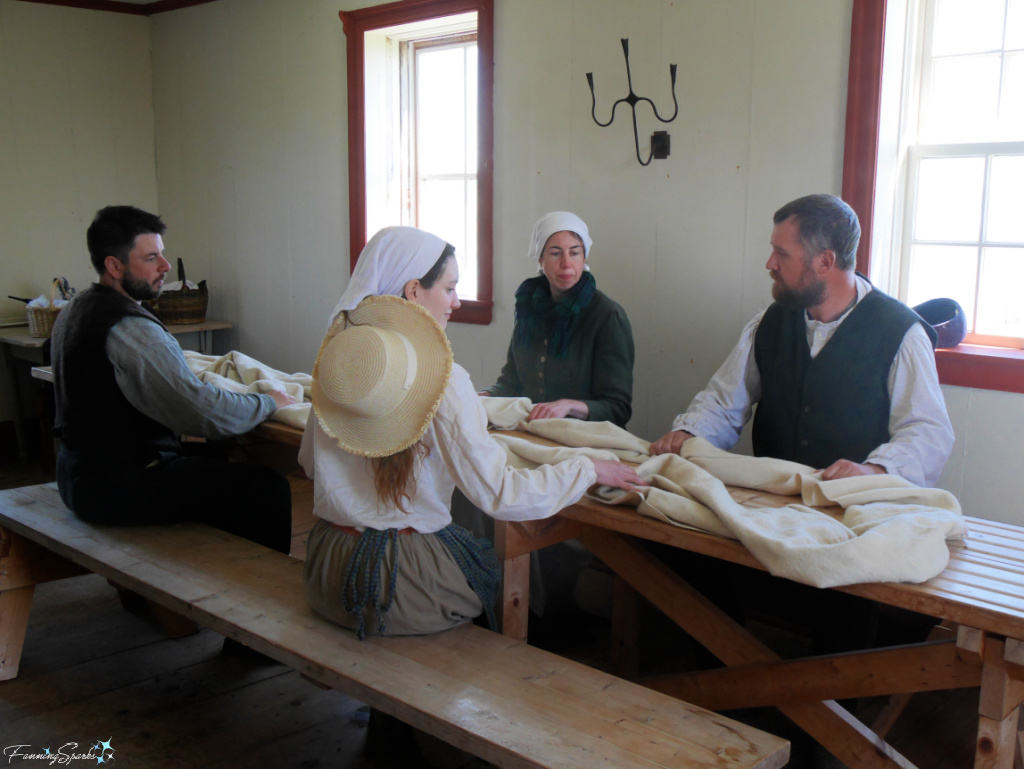
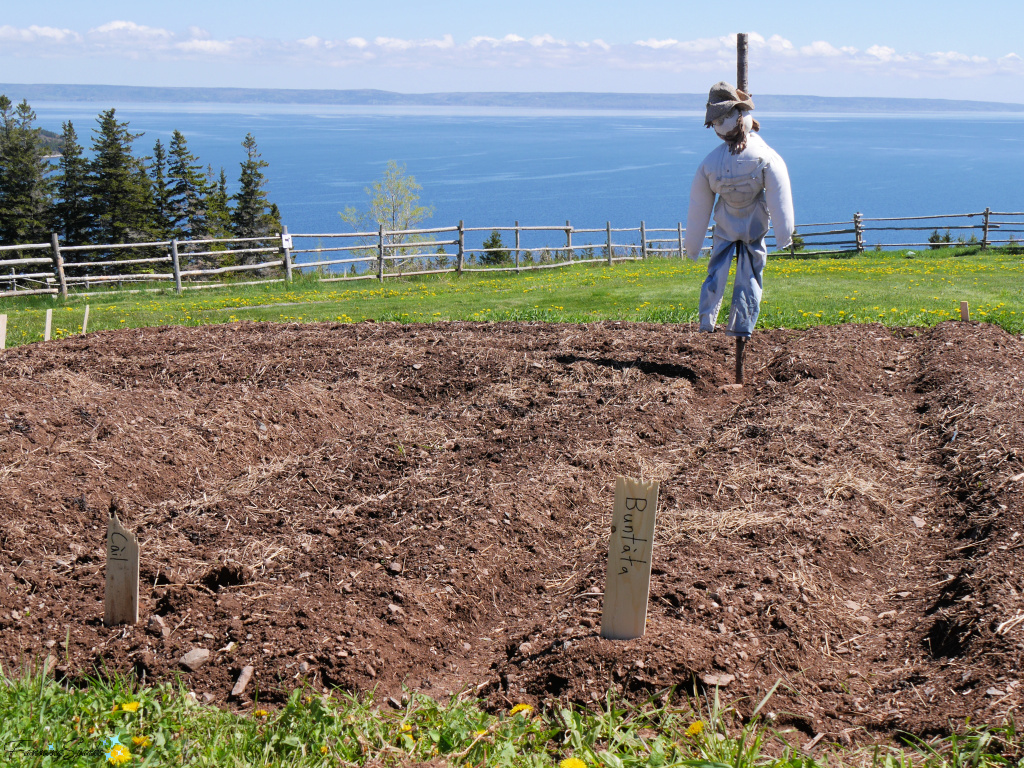
The early Gaels of Nova Scotia were self-sufficient out of necessity. They raised livestock such as cattle, horses, sheep and pigs. They “grew large quantities of hay, oats, potatoes and spring wheat as well as smaller amounts of buckwheat, barley and turnip” explains a June 2016 Highland Village blog article titled Field Crops ― Preparation. “Occasionally they would grow field peas, beans and rye. They grew very little winter wheat and corn because these crops were difficult to grow in the local climate.”
In the past, visitors could see special heritage breeds — such as Highland cattle and Soay sheep ― in the fields and the barn. Unfortunately, “Due to operational changes, for the 2026 season livestock and farm animals will not be present on site at Baile nan Gàidheal | Highland Village Museum this year”, as stated in an advisory on the official Highland Village website.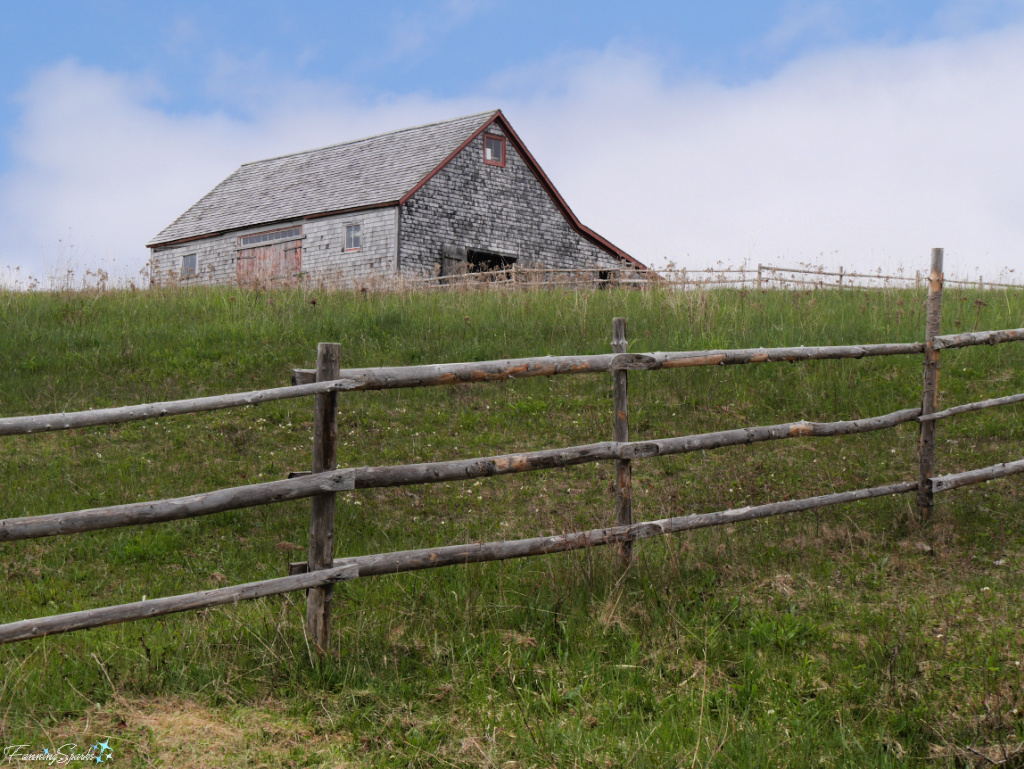
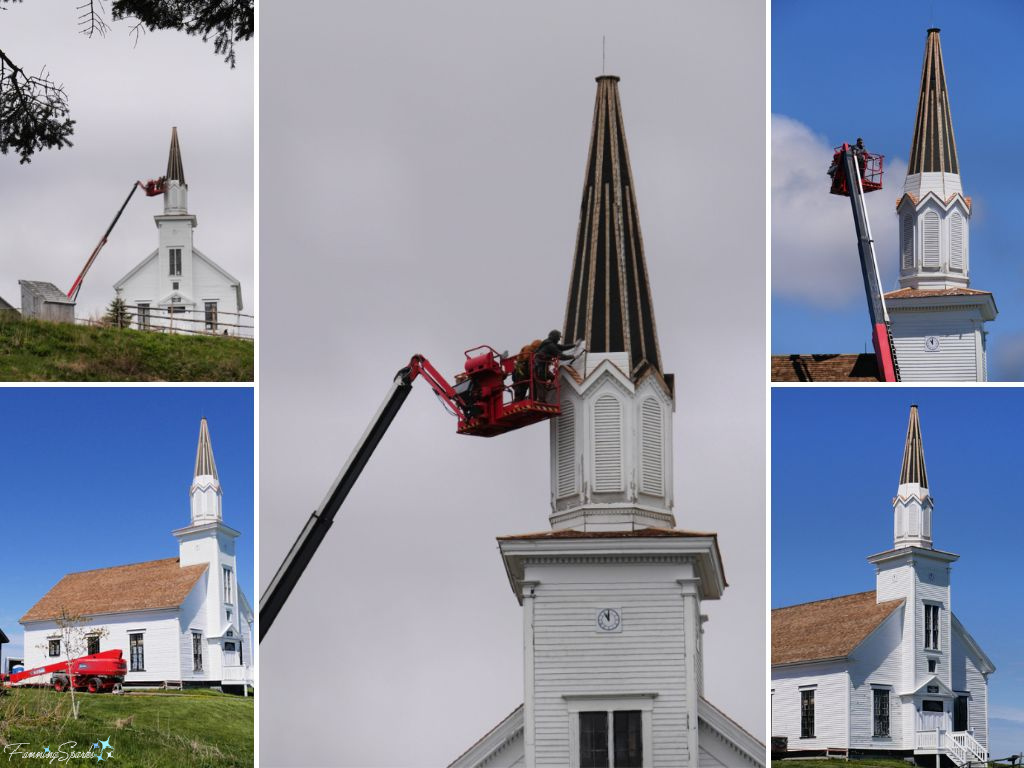
Perched atop the hill is the spectacular Malagawatch Church. It’s arguably the most photographed sight in the Village. 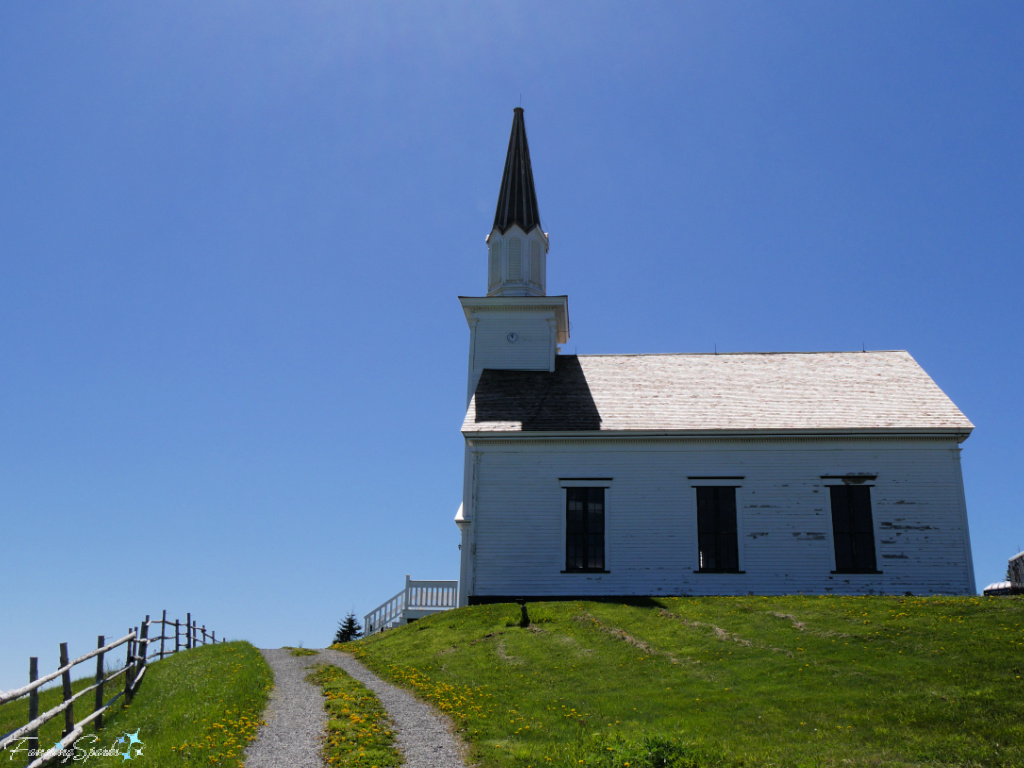
The church has a fascinating history. It was built in 1874 in Malagawatch, Nova Scotia where it served a predominantly Gaelic-speaking congregation as the Union Presbyterian Church. In November 2003, the church was relocated to Highland Village in Iona. It was “a spectacular and much watched journey by road and water … The church was moved 1.5 km by land down the Marble Mountain Road followed by 15 nautical miles to the Barra Strait. It was then hauled up the Village hill to its new home, where it greets visitors today” reports the Highland Village blog. “The Church underwent some major construction in repair during the 2015 season” and is, once again, getting a glow-up with restoration work on the roof and steeple.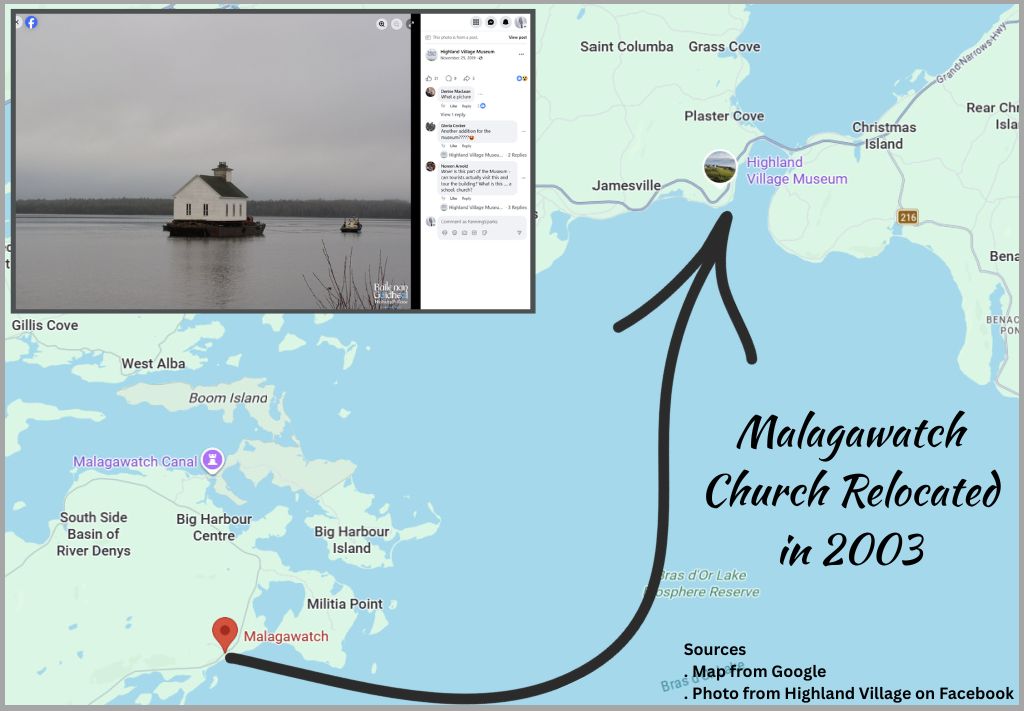
Leaving the church behind me, I followed the Highland Village walking route to the final chapter in the Highland Village story ― Gaelic Nova Scotia between the 1880s and 1920s. This era is “depicted and interpreted through the School House, the General Store, the Forge, the Carding Mill and the Turn of the Century house”.
As revealed in the visitor brochure, “The language, culture, and rural lifestyle of Gaelic Nova Scotia reached its height in the early 20th century. In the years that followed, there was a drastic decline in the language. The outside world had begun to encroach upon Gaelic life with the attraction of cities, industrial jobs, the railroad, an English-only education system and international conflict.”
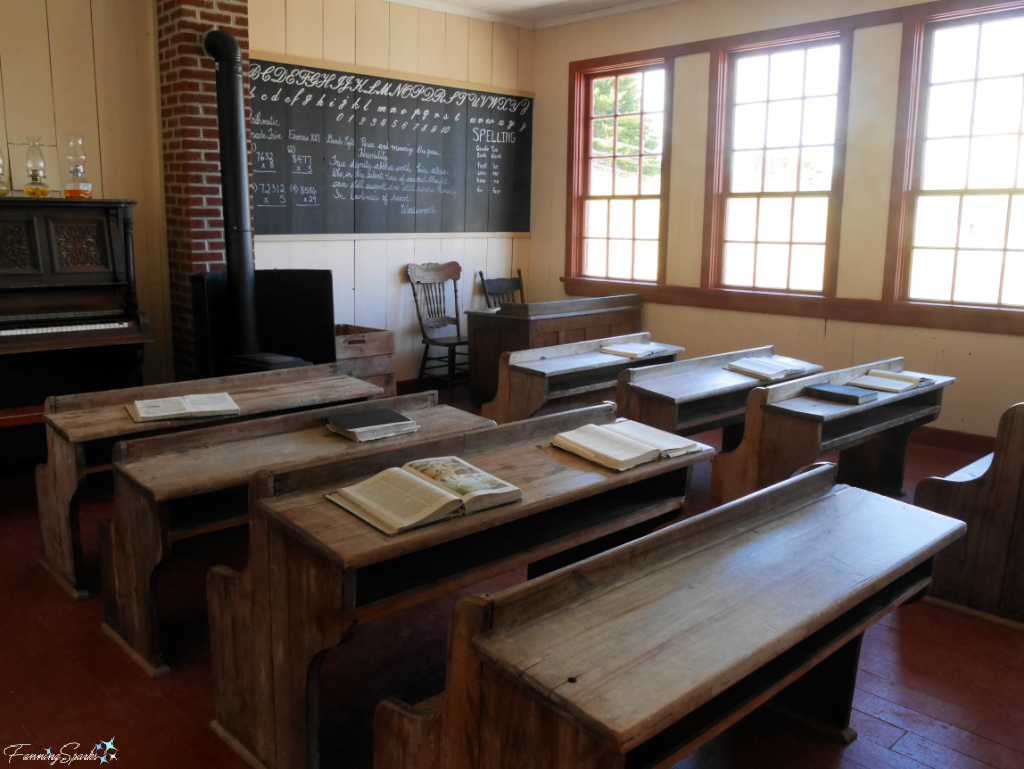
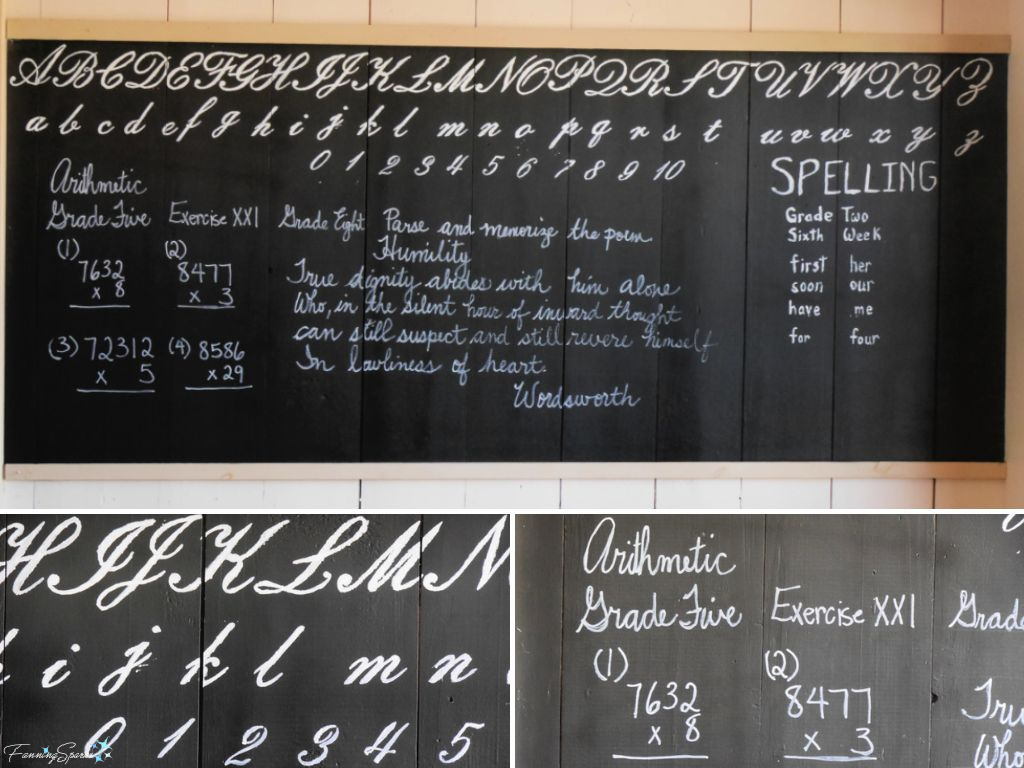
Here’s a look inside the Whycocomagh Portage School House where “teachers [were] instructed to teach in English only … [and] children are often punished for speaking Gaelic in school”.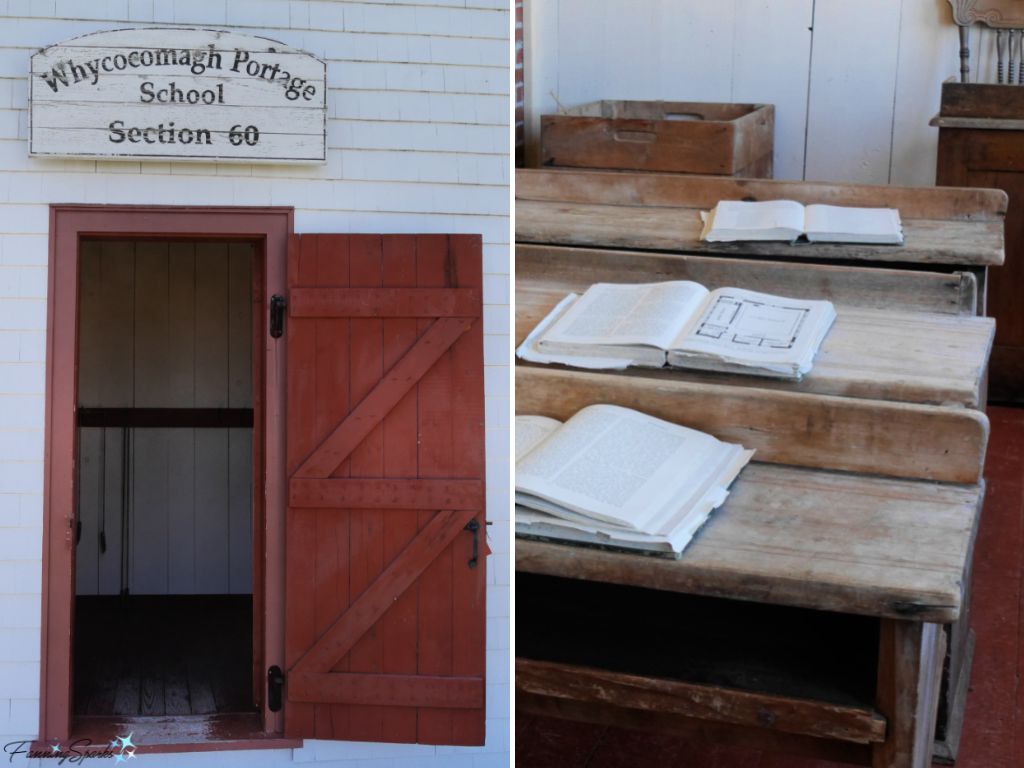
“Merchants … opened stores”, such as the A.M. MacLeod General Store, “to serve [the] needs for staples and merchandise. Credit [was] commonly extended. Sometimes [residents] settle bills by bartering butter, eggs and knitted items.”
This store is generously stocked with all manner of merchandise from dishware to eyeglasses to canned goods to boots. 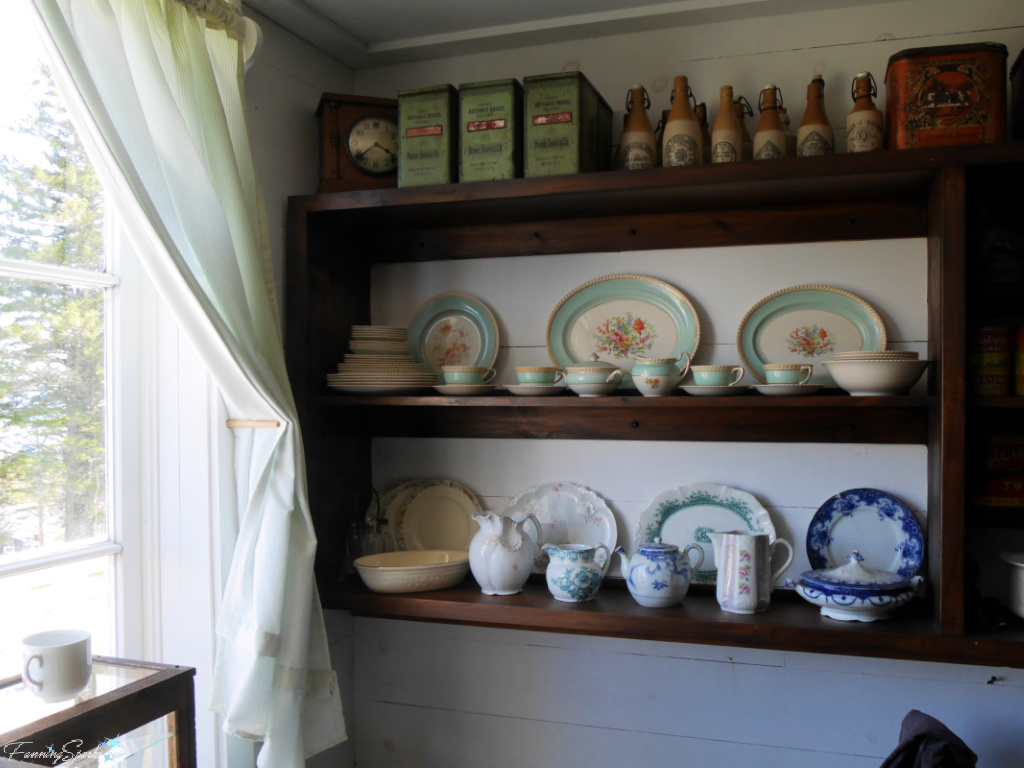
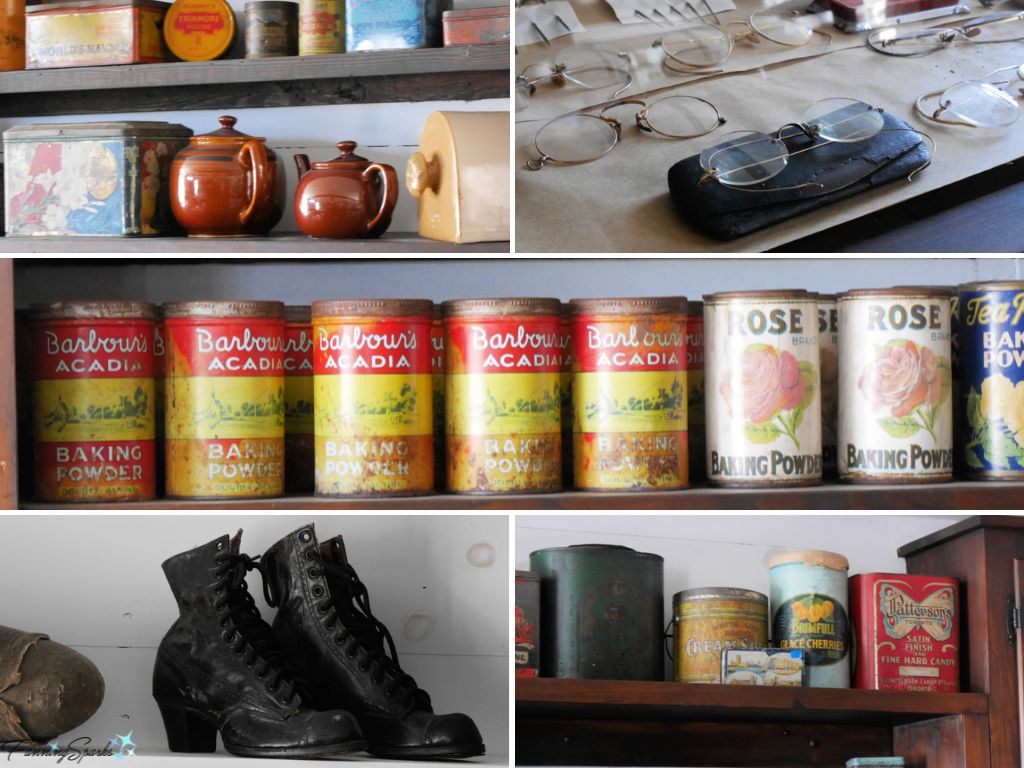
The General Store included a post office where residents could send and receive letters and packages. 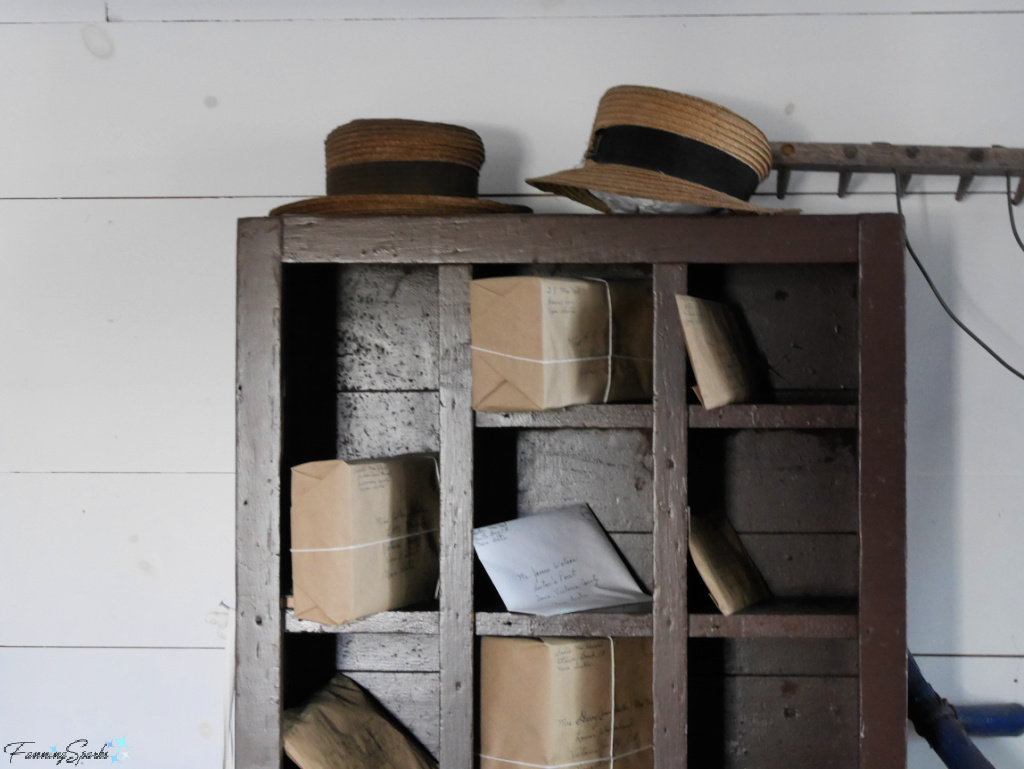
I thoroughly enjoyed my visit to Highland Village ― the location is spectacular, the setting is intriguing and the heritage interpreters are welcoming. But it was the storytelling ― learning about the Nova Scotian Gaels, hearing their stories and glimpsing life in another place and time ― that made it an unforgettable experience.
Storytelling, I’ve learned, is “the heart of Gaelic culture. For Gaels the well-known art of storytelling is used as the means of passing down the traditions from one generation to the next. In the past it was a common occurrence for families, friends and neighbours to be gathered in the kitchen for a cèilidh (visit). During these visits tales were told and songs were sung. These stories offered tales of travel and triumph, heroes, fools, and sometimes loss or tragedy. They were often composed, rarely written down, and retold endlessly by their descendants from memory”.
More Info
Highland Village (Baile nan Gàidheal) is an open-air, living history museum in Iona, Nova Scotia. It’s located in a beautiful setting ― on a hillside overlooking the Bras d’Or Lake in Cape Breton. A series of historic buildings and settings are brought to life by heritage interpreters dressed in period costume. A rich visitor experience is orchestrated around a 150-year journey from Gaelic Scotland in the 1770s to Gaelic Nova Scotia in the 1920s. There’s a lot more to see than I was able to include in this blog post. Check out their website to learn more about Baile nan Gàidheal | Highland Village.
Nova Scotia is endowed with more than one outstanding, open-air, living history museum. Two others are:
. The Fortress of Louisbourg is also located on Cape Breton Island in Nova Scotia. See Travel Through Time to 1744 to learn more.
. Sherbrooke Village is located on the Eastern Shore of Nova Scotia. See Printer’s Devil for a Day to learn more.
The following books and articles were consulted in the writing of this blog post:
. Storytelling Tips & Tales book by Mark Pierce which is available here on Internet Archives
. Storytelling book by Claudia Royal which is available here on Internet Archives
. Storytelling by Ruth Tooze which is available here on Internet Archives
. Constructing Architectural History at the Open-Air Museum: The Highland Village Museum of Nova Scotia and the Highland Folk Museum of Scotland study by Amy Clarke. Published in 2013 in the Proceedings of the Society of Architectural Historians, Australia and New Zealand
. Various articles from the Highland Village Blog; published 2014 ― 2016
. Feeding in the Forest: How Scottish Settlers Learned to Raise Livestock in the Old-Growth Forests of Upper Canada, 1814 To 1850 study by Elizabeth Ritchie; Published in 2017 by the British Agricultural History Society
. Various Wikipedia entries.
Today’s Takeaways
1. Good stories engage, entertain and educate. They spark our imaginations and create connections.
2. Talented storytellers know the importance of setting a scene, breathing life into characters, creating the mood and building a strong storyline.
3. Visitors to Highland Village (Baile nan Gàidheal) ― an open-air, living history museum in Iona, Nova Scotia ― can experience the wonder of superb storytelling.

2 Comments
@Vicki – Thanks! And excellent news! Peg
Loved this post!!
I’m ready to get on that road!