
Who doesn’t love a good road trip? Especially when you’ve done the homework and mapped out the ideal itinerary — one that balances the must-sees with a little “let’s-just-see-what-happens”. There’s nothing quite like the freedom of tossing your gear in the car, queuing up a great audiobook and hitting the road.
I’m kicking off a multi-week summer adventure with three garden visits. Three Canadian provinces ― three outstanding botanical destinations― in only one week! And there are several more on the road trip itinerary.
Harriett Irving Botanical Gardens
First up is the Harriett Irving Botanical Gardens at Acadia University in Wolfville, Nova Scotia. These gardens are relatively new, having been established only twenty years ago. The 6-acre botanical garden was carefully planned to showcase nine Acadian Forest Region habitats such as a mixed woodland, sand barrens, coastal headlands and freshwater inland marsh.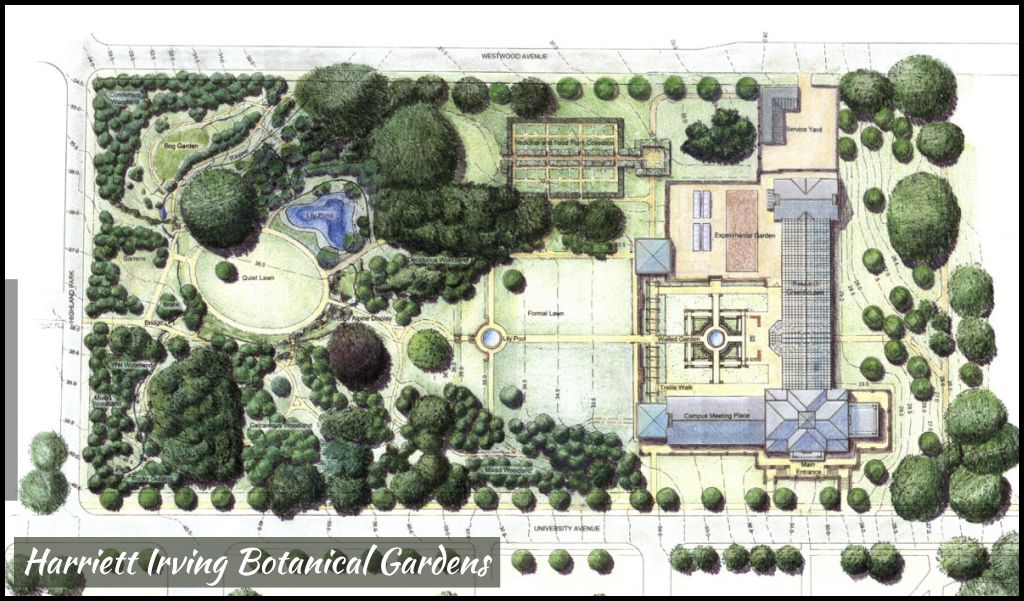
Visitors are welcomed into a formal, Georgian-style, walled garden. The KC Irving Environmental Science Centre, with its outstanding conservatory and research greenhouses, forms two of the walls.
Surprisingly, the hedges are formed with native plants instead of the typical boxwood. They are “bordered by a low-boxed hedge of inkberry, a native evergreen holly that bears dark blue-black berries. The centre … is planted with the native high-bush blueberry. Around the outside … are beds planted with various species of low-bush blueberries.”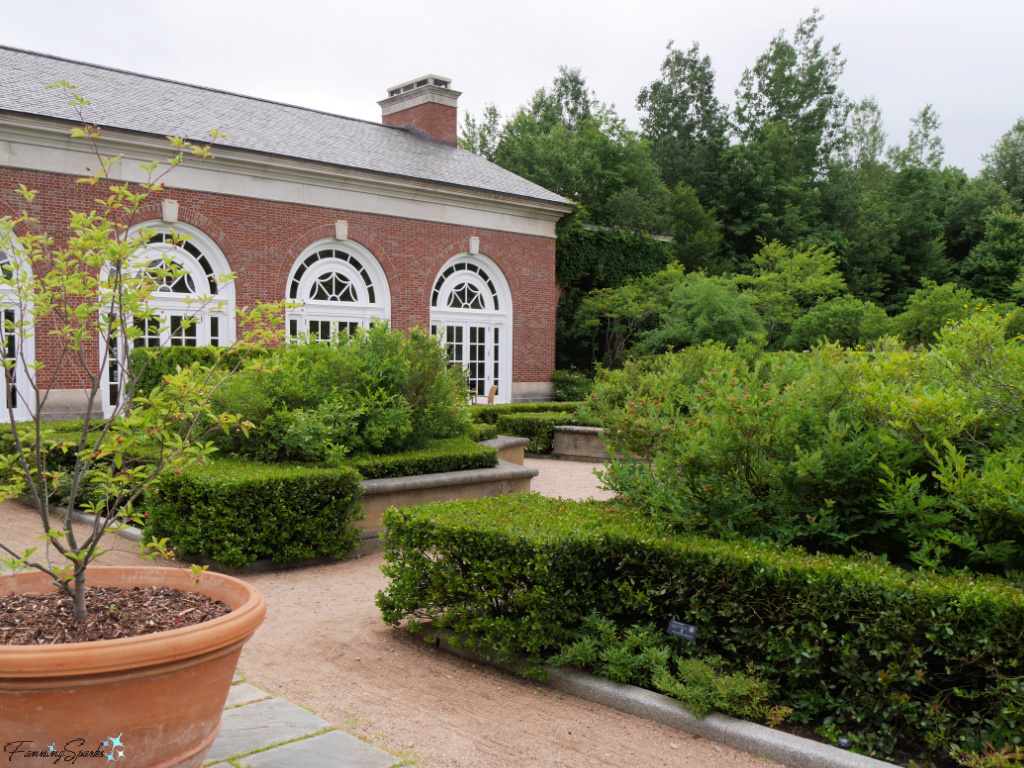
This focus on native plants is what makes the Harriett Irving Botanical Gardens extraordinary. “Planted with over 17,000 individual plants and over 250 species that are all native” to the region, the Botanical Gardens “embody the importance of conservation, the value of research, and the aesthetic possibilities of native plants. Importantly, the gardens constitute a living gene bank for the native flora of the Acadian Forest Region, supporting researchers dedicated to the recovery and protection of endangered plant species”.
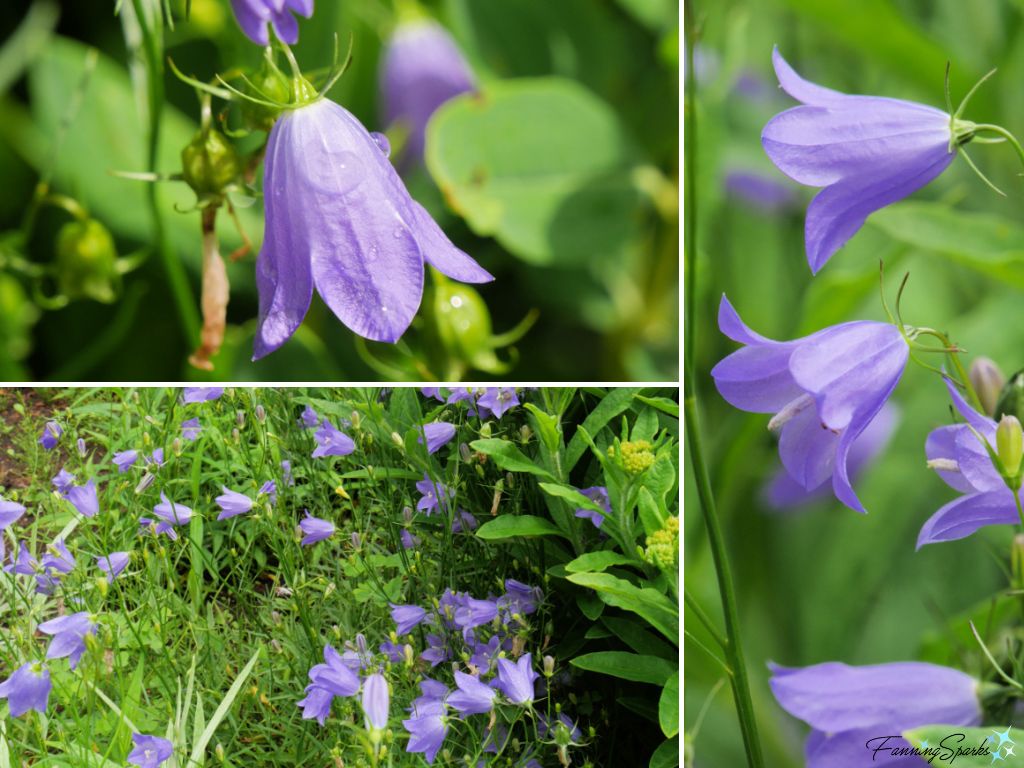
Native wild roses, Virginia Rose (Rosa virginiana) I believe, added a splash of pink and a delicious scent throughout the gardens. 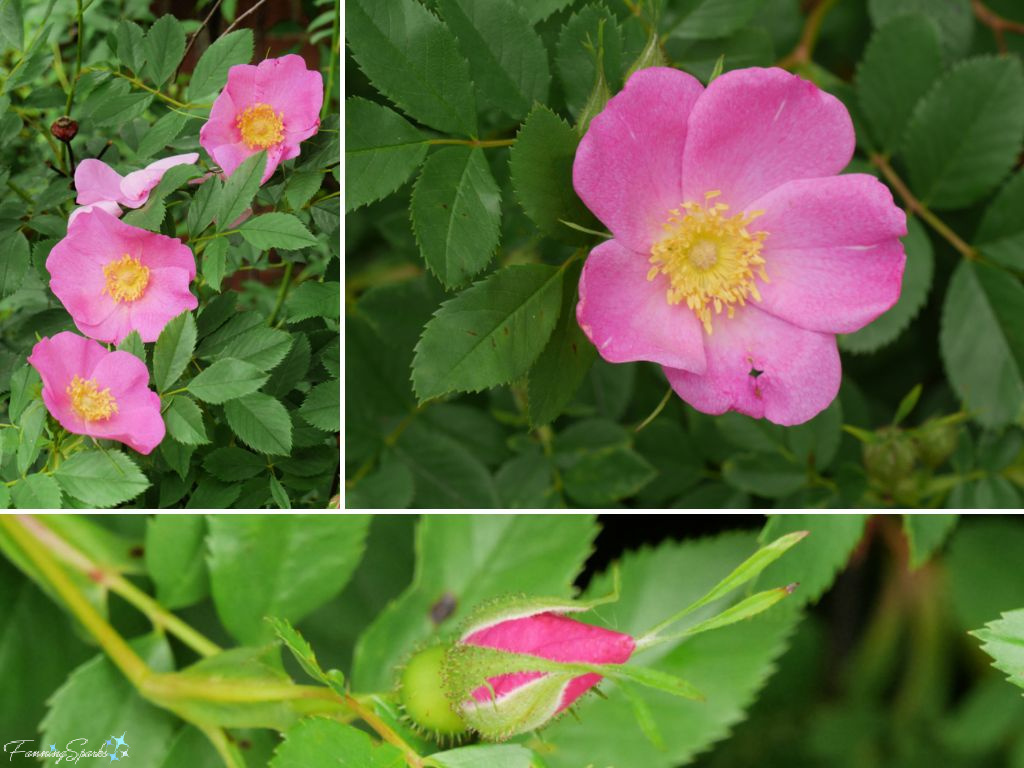 The native Common Harebell (Campanula Rotundifolia), also known as the Bluebell of Scotland, was in full bloom. The beloved, delicate, sky-blue bells are an iconic cultural symbol of Scottish identity and are often mentioned in songs and poems.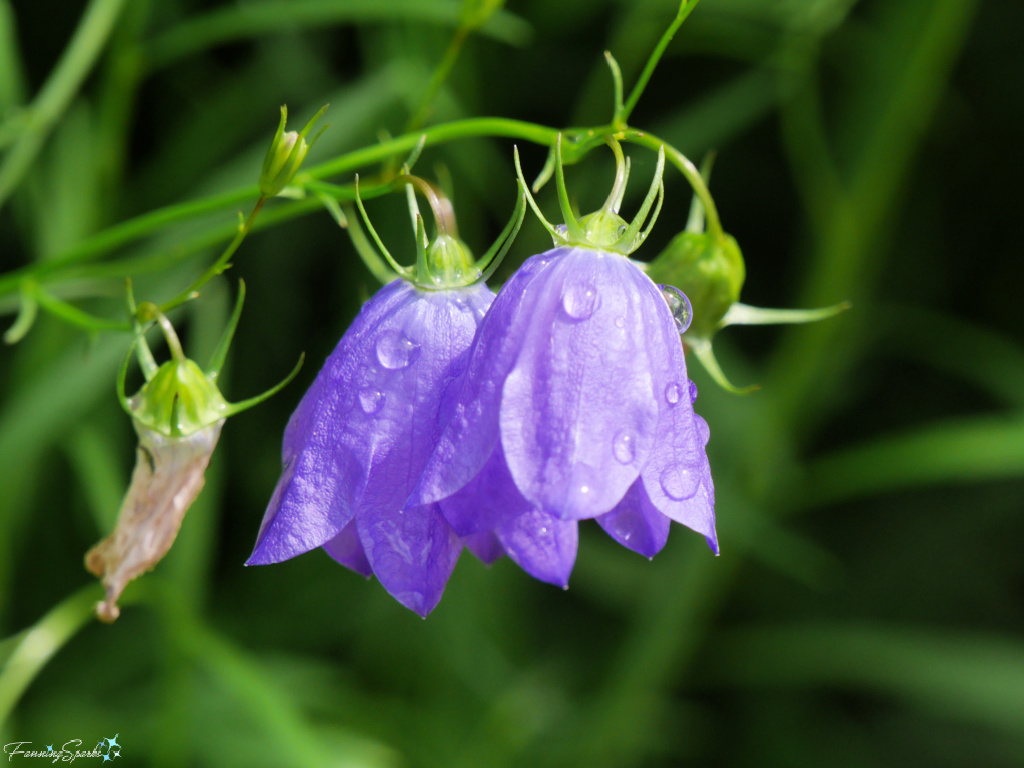
Woodbine (Parthenocissus vitacea), daisies and buttercups were just a few of the unassuming native plants surrounding the large green Quiet Lawn where visitors are invited to “play, sit and cartwheel”.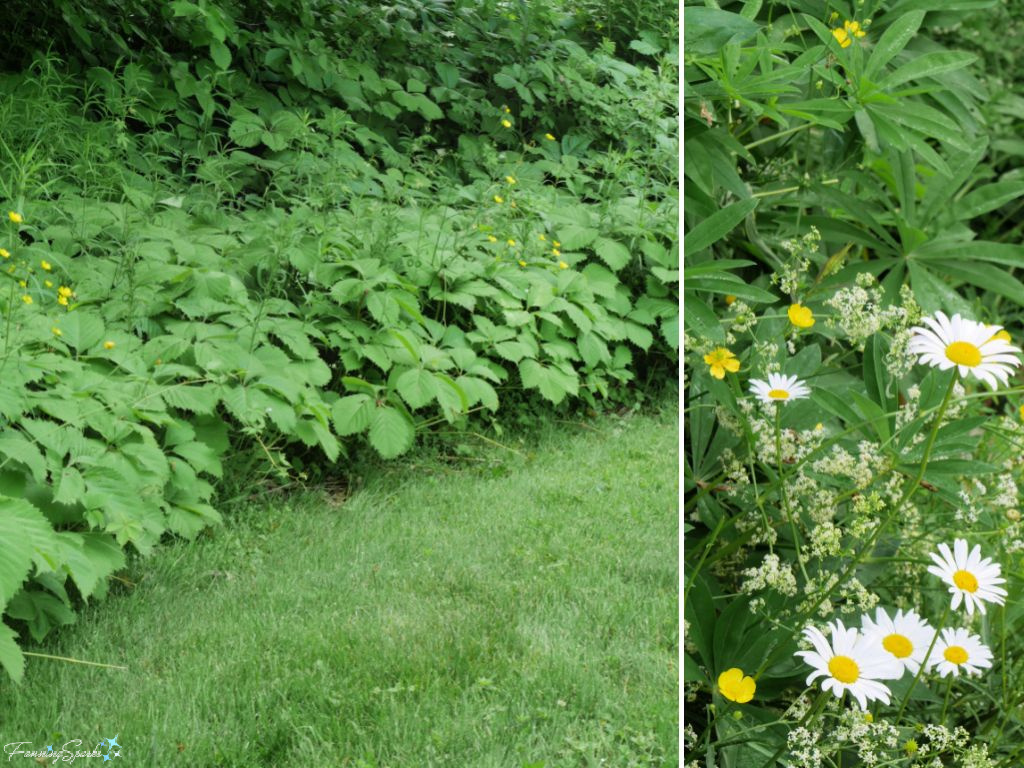
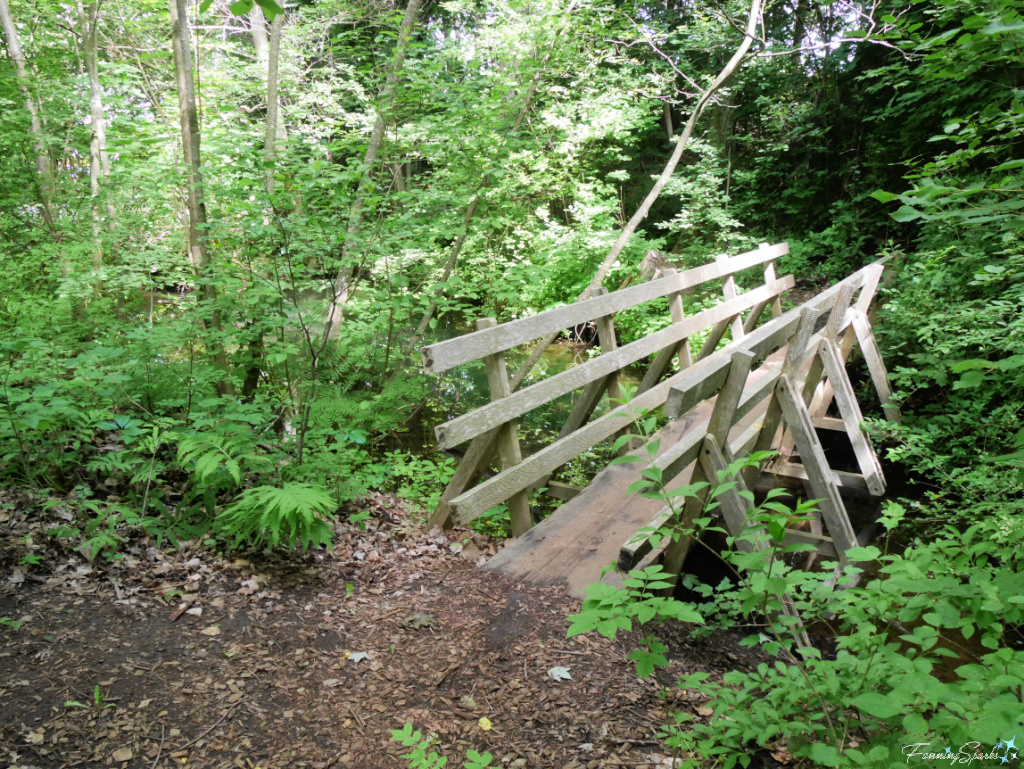
Several water features are incorporated into the Gardens including a lively stream which runs through the wooded areas. Miniature waterfalls add motion and sound while rustic footbridges add adventure. 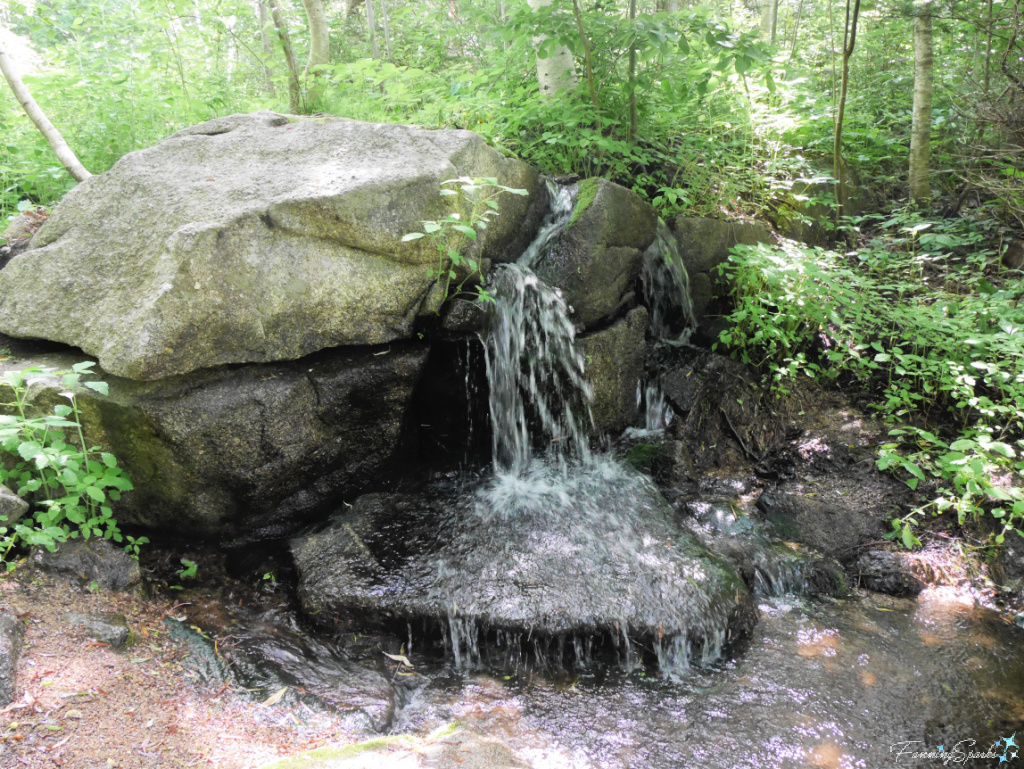
New Brunswick Botanical Garden / Jardin botanique
Next was the New Brunswick Botanical Garden / Jardin botanique in Edmundston, New Brunswick. Not only was this garden beautifully designed and planted with the most amazing variety of plants and flowers but it also had a number of splendid surprises. The first one greets visitors at the front entrance ― a bigger-than-life mosaiculture horse.
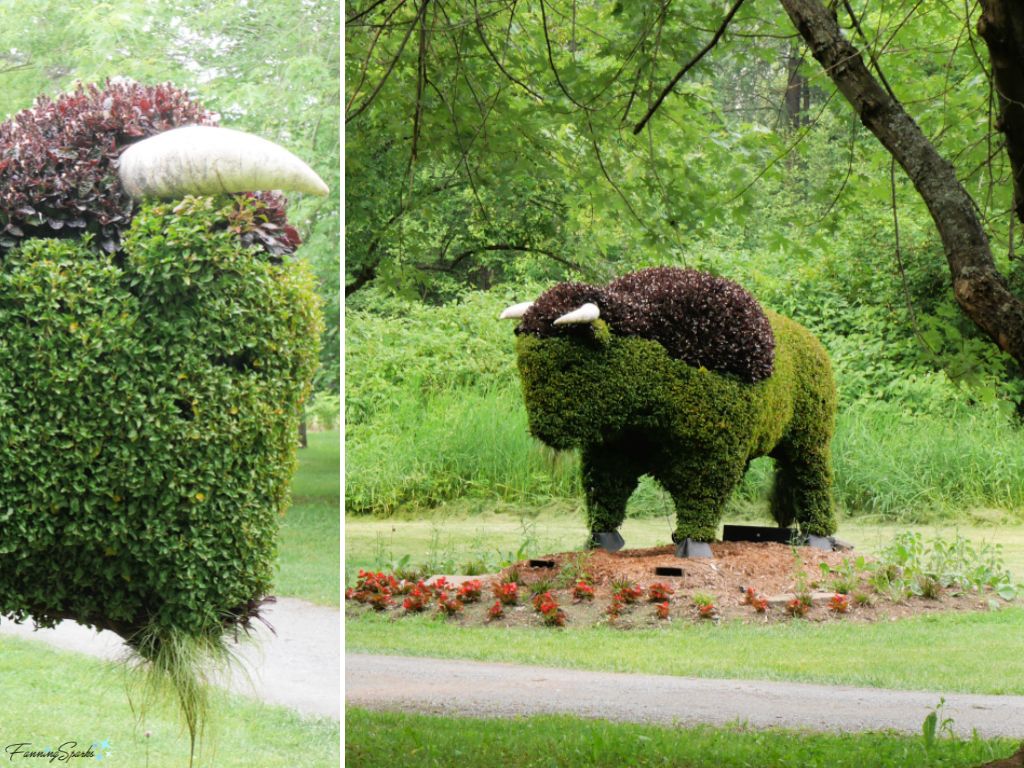
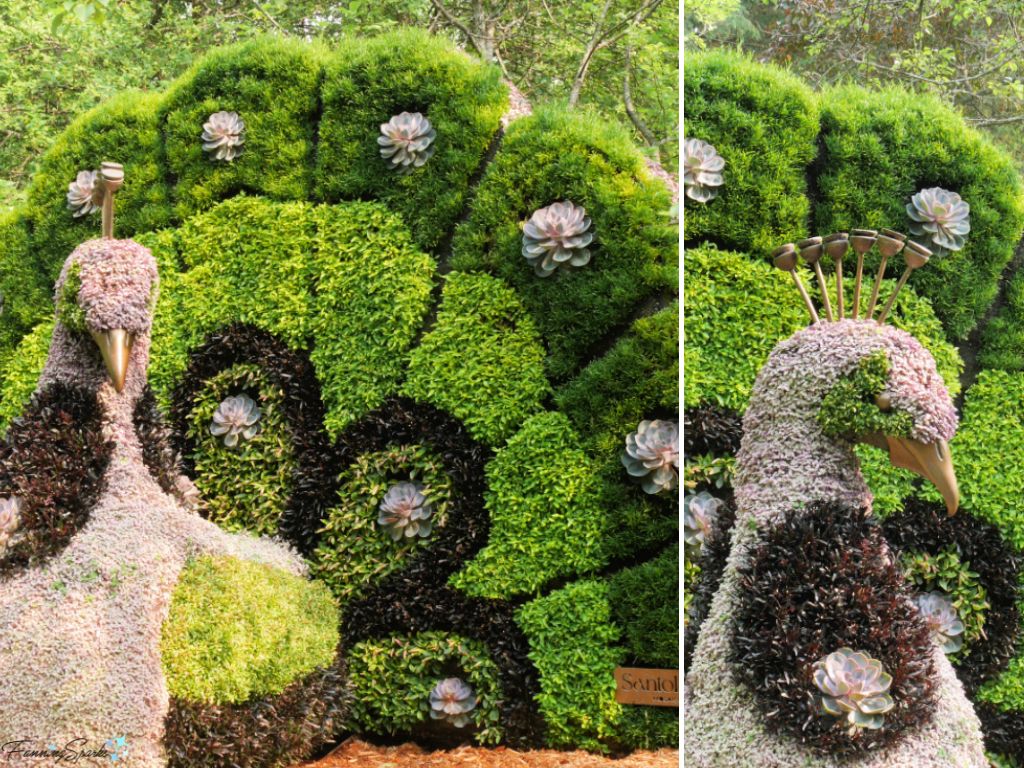
Mosaiculture is the horticultural art of creating two- or three-dimensional living sculptures. In this case, large metal frames were shaped into the desired form, wired with watering lines, stuffed with soil and covered with a thin fiber. Then they were planted with thousands of small, colorful plants. It’s like painting with plants. 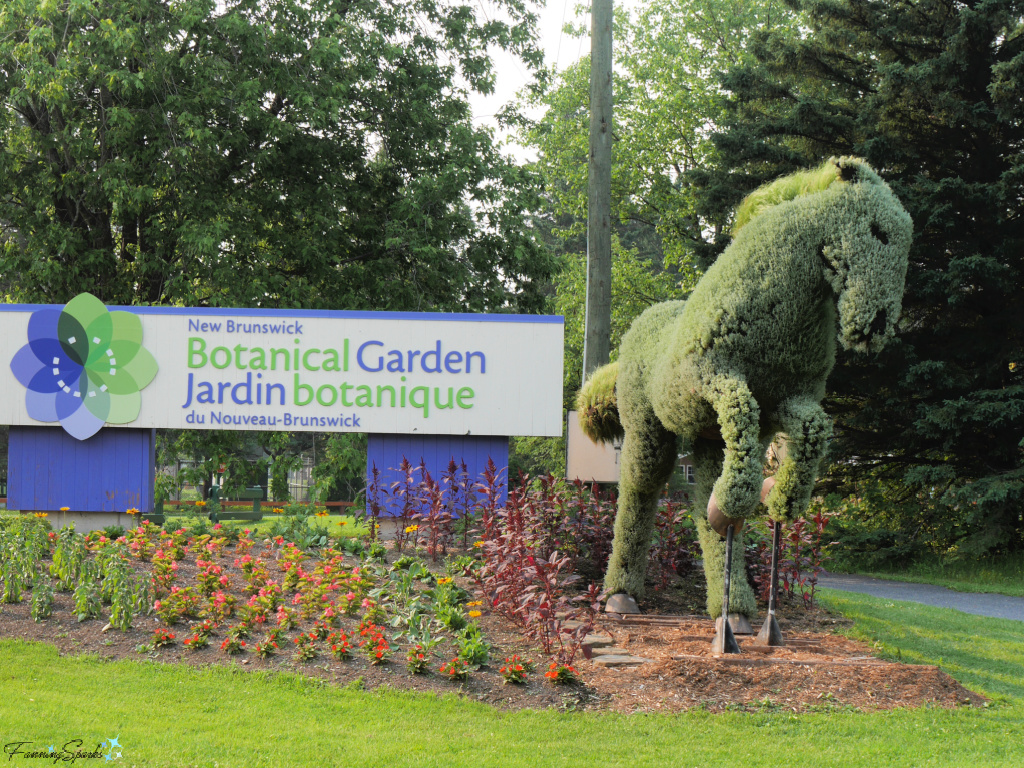
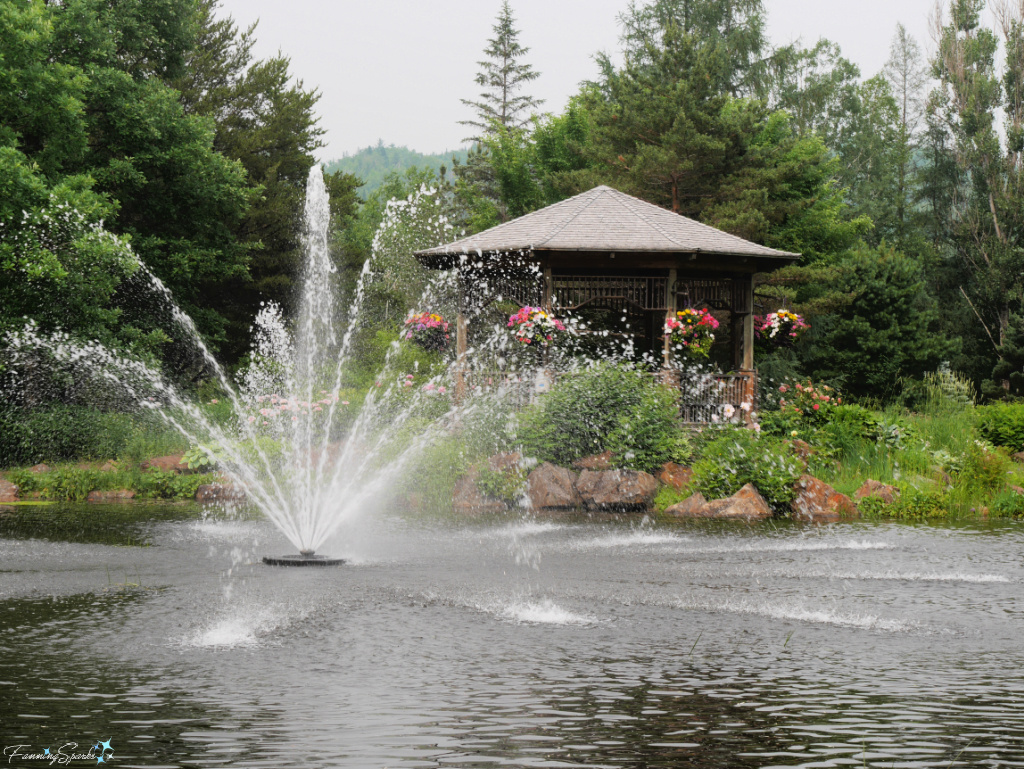
This fountain and pond are located at the centre of the garden.
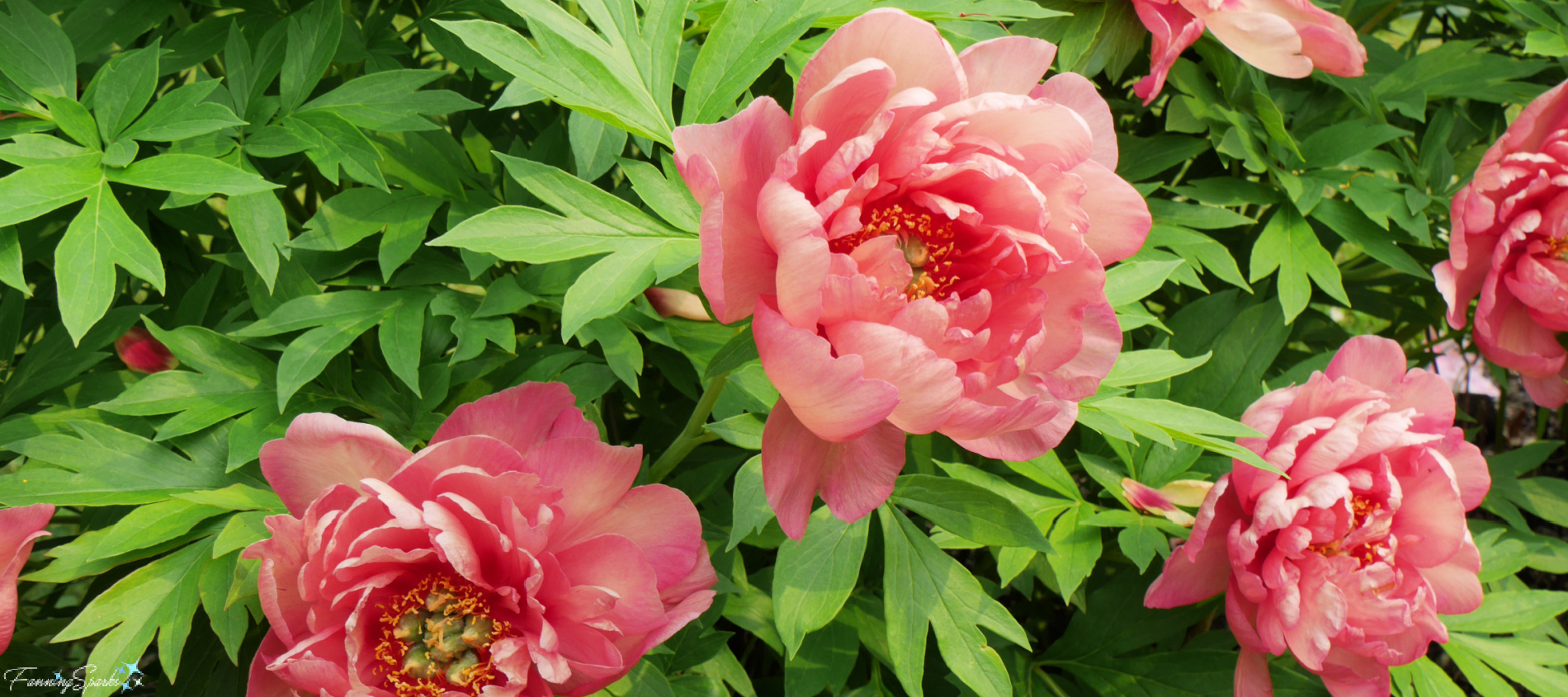
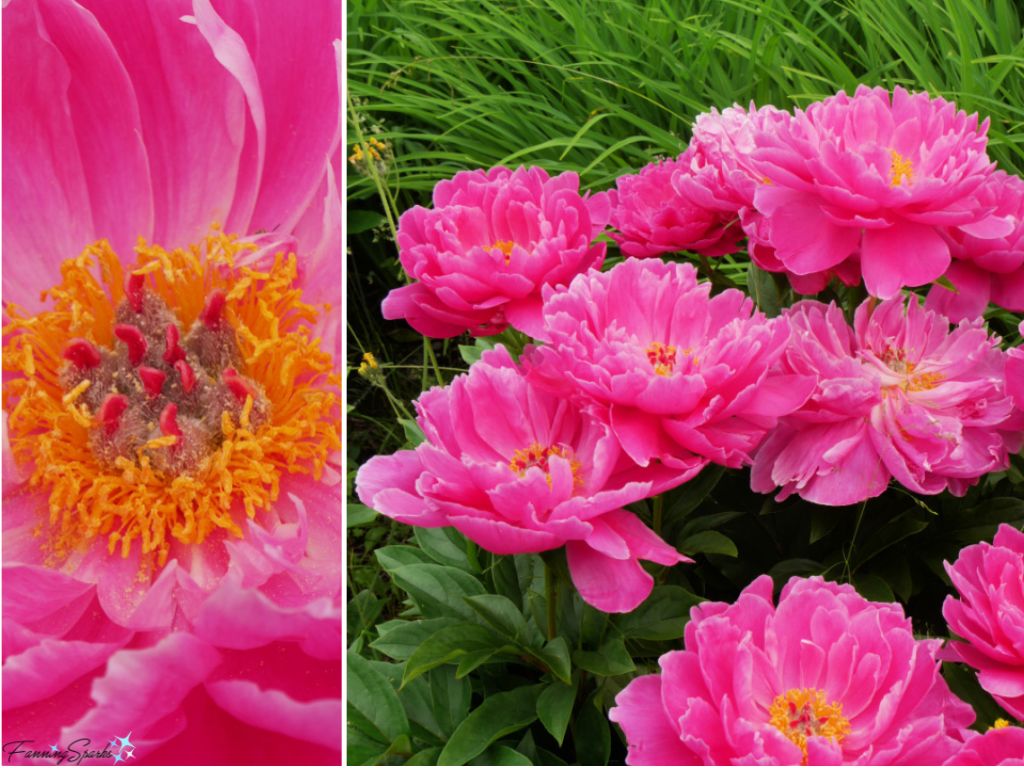
We visited at the peak of peony season ― the garden was overflowing with vibrant, scented peony blooms like this gorgeous Peony ‘Athens’ (Paeonia lactiflora).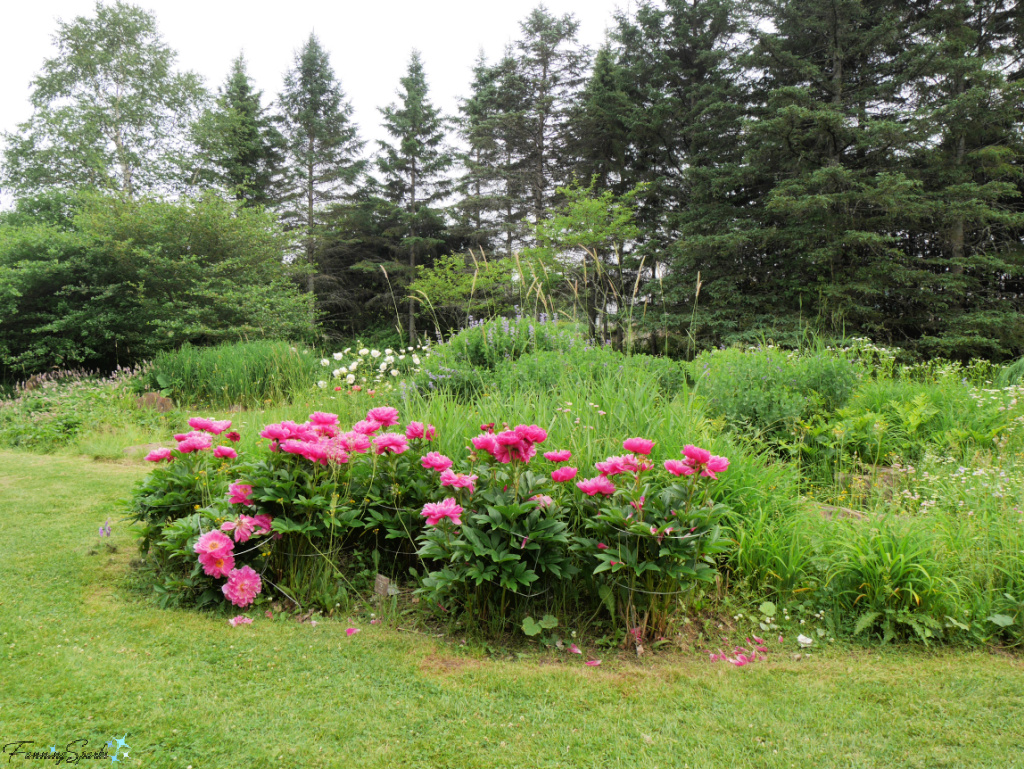
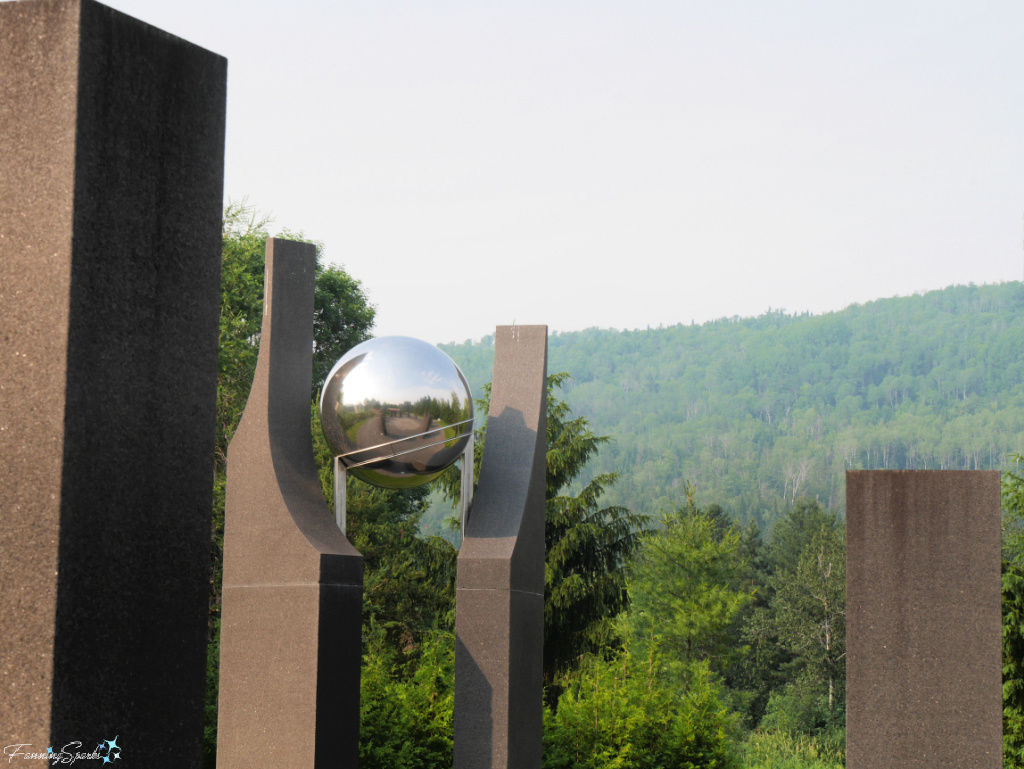
 The most unique feature of the New Brunswick Botanical Garden is the standing stones artwork titled Khronos. It is described as “a celestial garden where everyone can travel in space and time. It is sometimes an observatory, a compass, a meeting place or a peaceful environment for meditation”.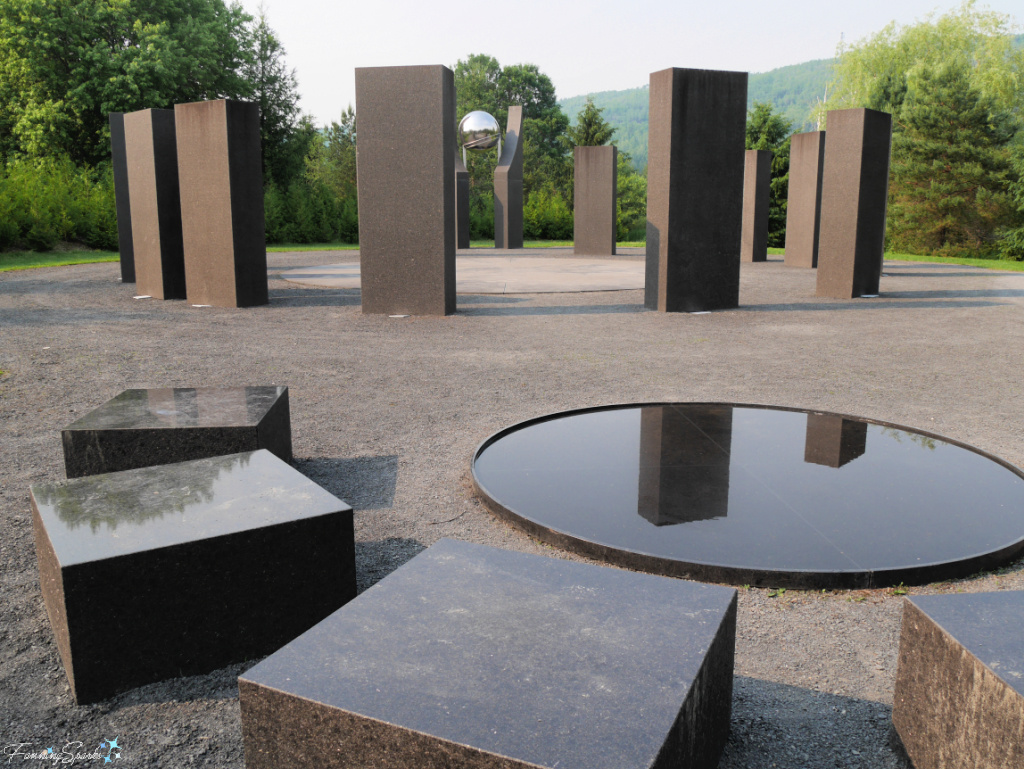
Reford Garden/ Jardins de Métis
The final garden I’ll squeeze into today’s blog post is Reford Garden/ Jardins de Métis in Grand-Métis, Quebec, at the start of the Gaspé Peninsula. Reford Gardens is a historic estate display garden designated as a National Historic Site of Canada. The 20-acre gardens were designed and created by Elsie Reford over the course of thirty plus years. Reford Gardens was opened to the general public in 1962.
The gardens are known for many excellent features including the famous Himalayan blue poppy (Meconopsis gakyidiana) which were in full bloom during our visit.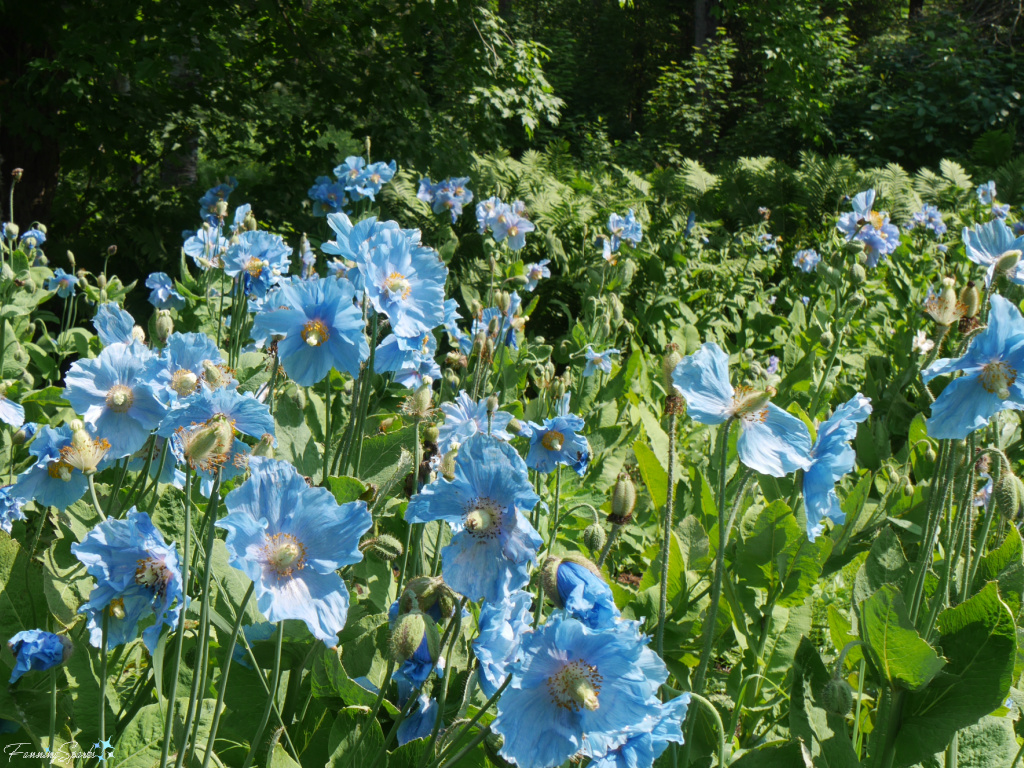
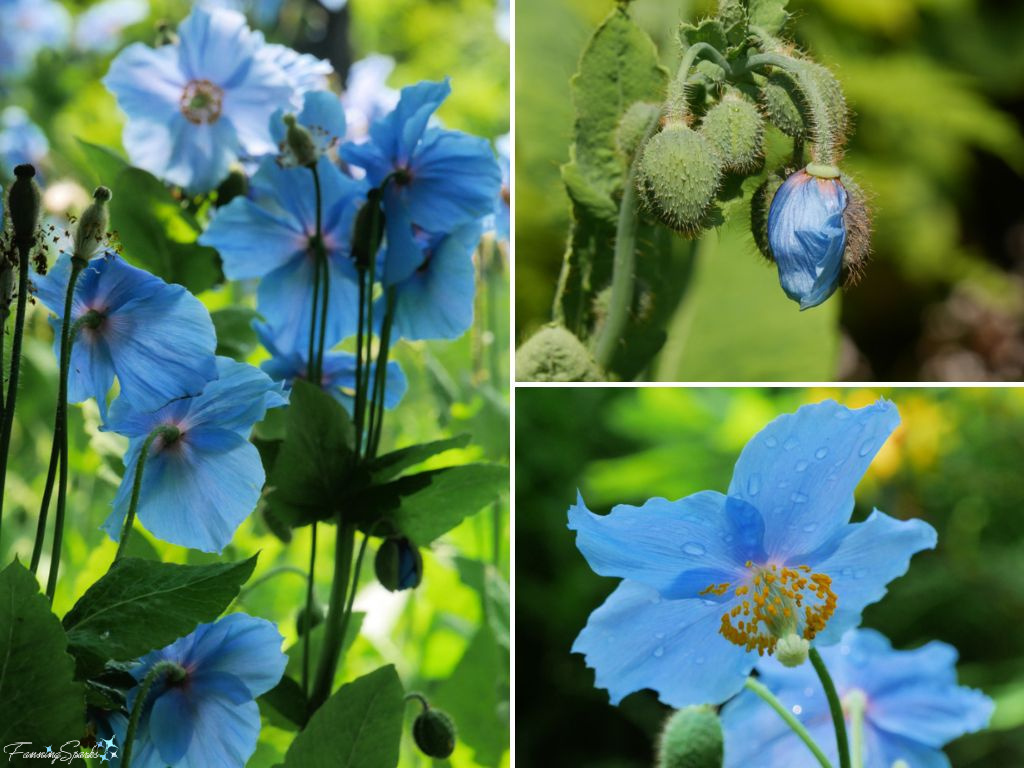
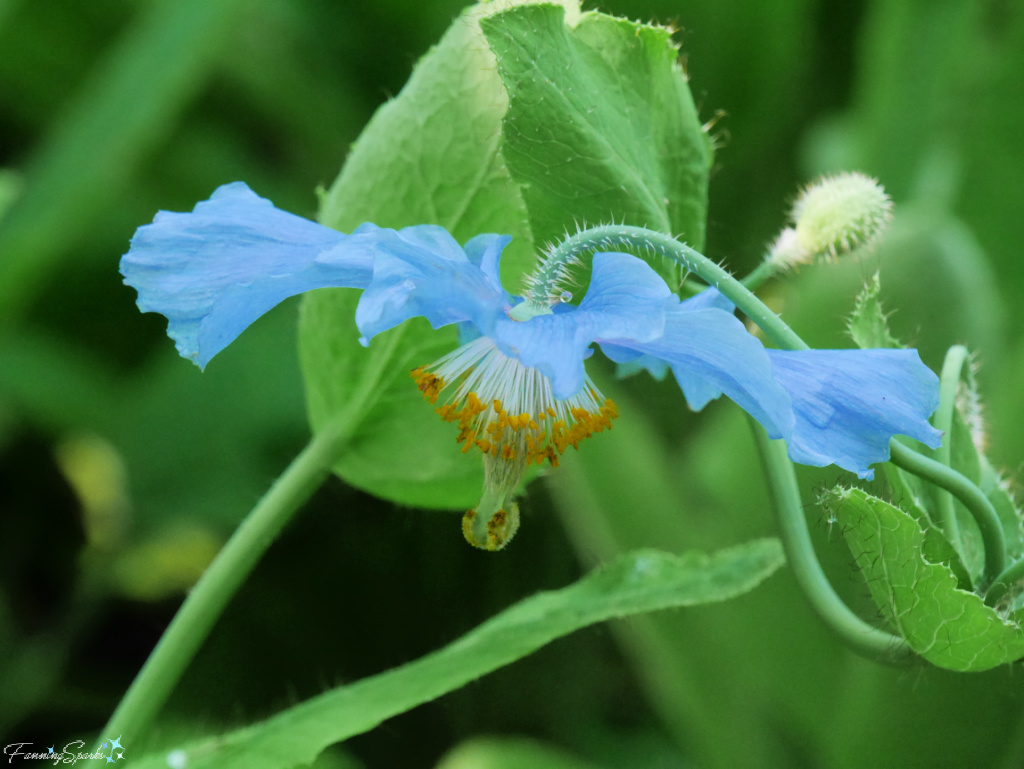
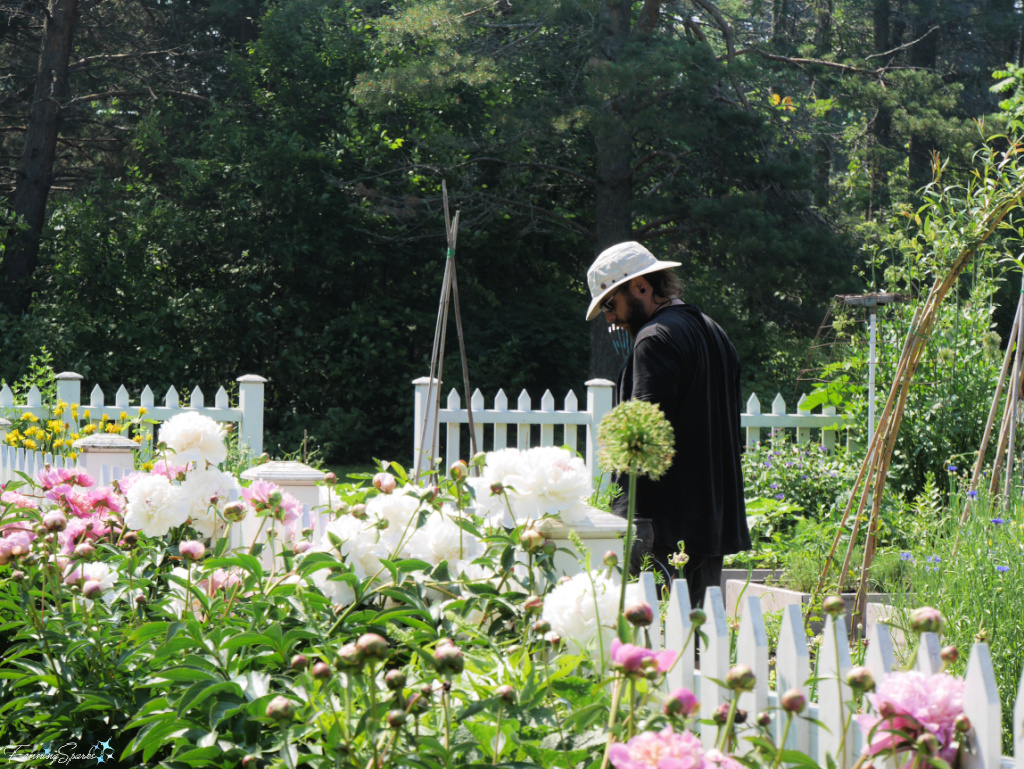
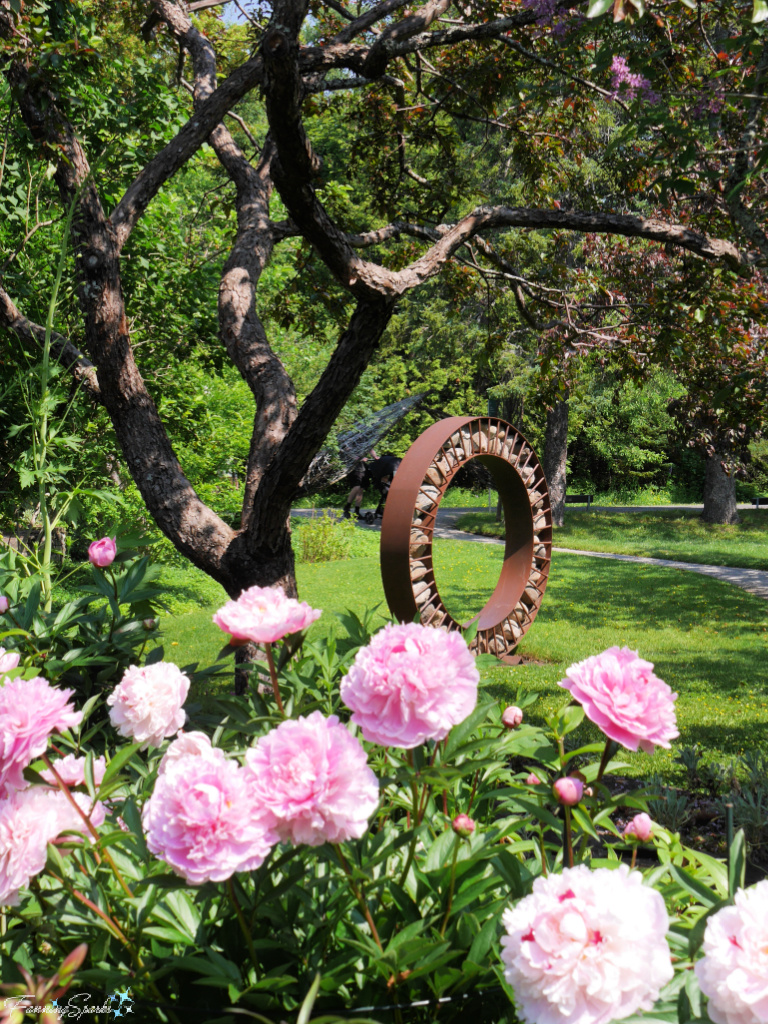
Here are a few scenes illustrating the variety and beauty of Reford Gardens.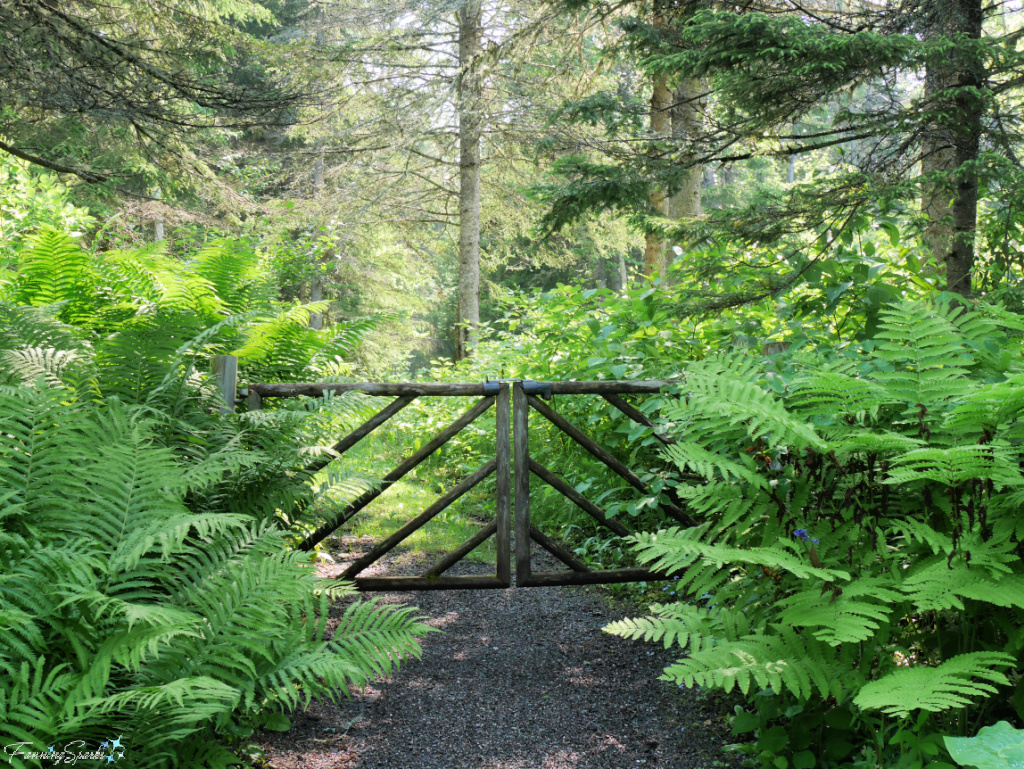
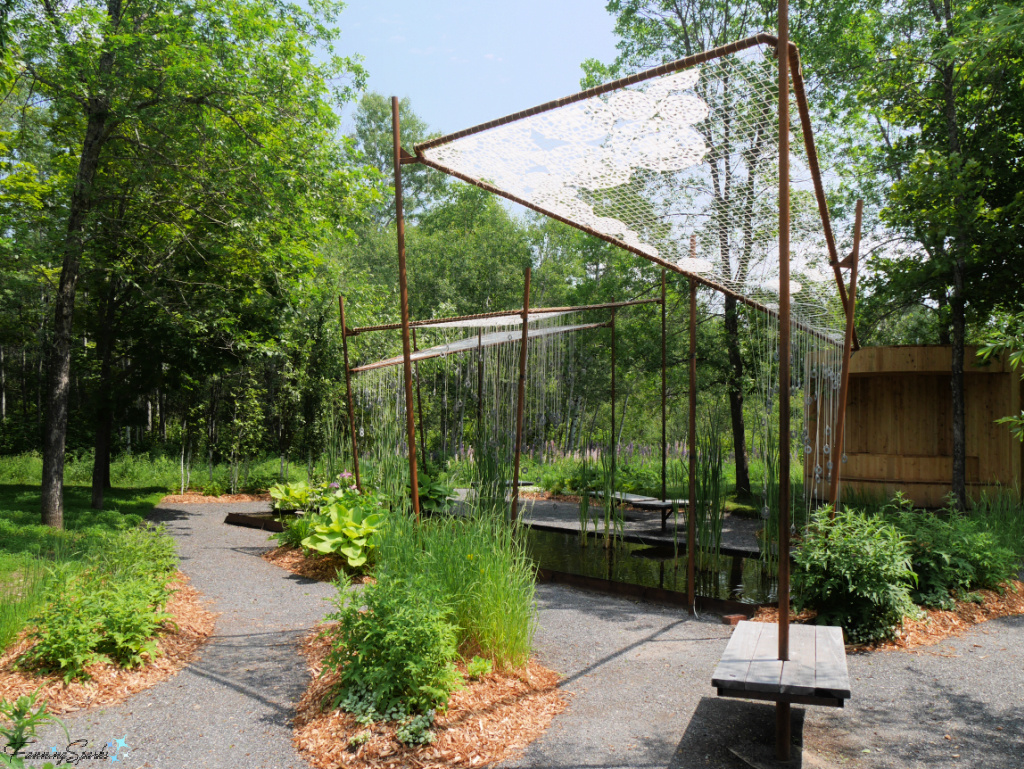
Reford Gardens is also the home of the International Garden Festival ― described on their website as “the largest contemporary garden festival in North America showcases around thirty projects by some 70 landscape architects and designers from diverse disciplines and backgrounds. A dialogue between history and modernity, between conservation and innovation”. This fascinating living exhibition deserves a blog post of its own but here’s a peek into the types of exhibits on display. This is Bruissement d’ailes by Bernard Chapuis and Georges Vafias.
In summary, the three outstanding botanical destinations I had the pleasure to visit are the Harriett Irving Botanical Gardens, the New Brunswick Botanical Garden/ Jardin botanique and the Reford Garden / Jardins des Métis which are located in three Canadian provinces: Nova Scotia, New Brunswick and Quebec.
More Info
Check out the websites linked below, to learn more about the splendid gardens included in this blog post.
. Harriett Irving Botanical Gardens at Acadia University in Wolfville, Nova Scotia ― see more on their website
. New Brunswick Botanical Garden / Jardin botanique in Edmundston New Brunswick ― see more on their website
. Reford Garden/ Jardins de Métis in Grand-Métis, Quebec ― see more on their website.
Today’s Takeaways
1. Research if the gardens you plan to visit feature specific flowers.
2. If so, consider visiting when those featured flowers are in bloom.
3. Seek out and take note of any special features at a garden you visit.
Comments are closed.