We’ve all come to expect impressive design and decor ideas from high end hotels.  But, while you may have to look a little harder, you can also find inspiration during a stay at a standard chain hotel.  Regardless of the source, it’s worth the effort to look for these details when staying away from home.  Obviously, when you spot design and décor ideas in person, you can touch and examine them in detail.  But you can also live with them for a short time and put them to the test.  For instance, is the lamp that caught your eye during daylight as impressive at night when it’s lit?  Or what about that ottoman, is it as convenient as it looks when you actually use it?  Or what about that wild wallpaper, could you really live with it all day every day?  Best of all, for the ideas you really like, you can snap lots of photos, take measurements, check for sources, and even note construction details. So what kind of design and décor ideas might you expect to find?  Let’s look at some examples, taken from a range of hotels, from my travels far and near.

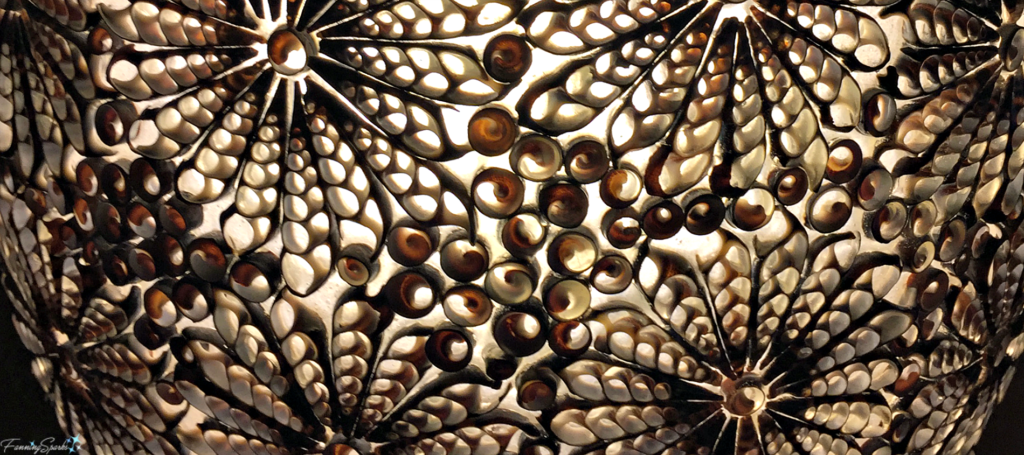
First up, 3 amazing lamps from the Intercontinental in San Jose, Costa Rica.  I love these lamps because of the unusual materials, their pleasing shapes, and the amazing texture they bring into the room.  They’re also beautiful both when turned off during the day and when turned on at night.
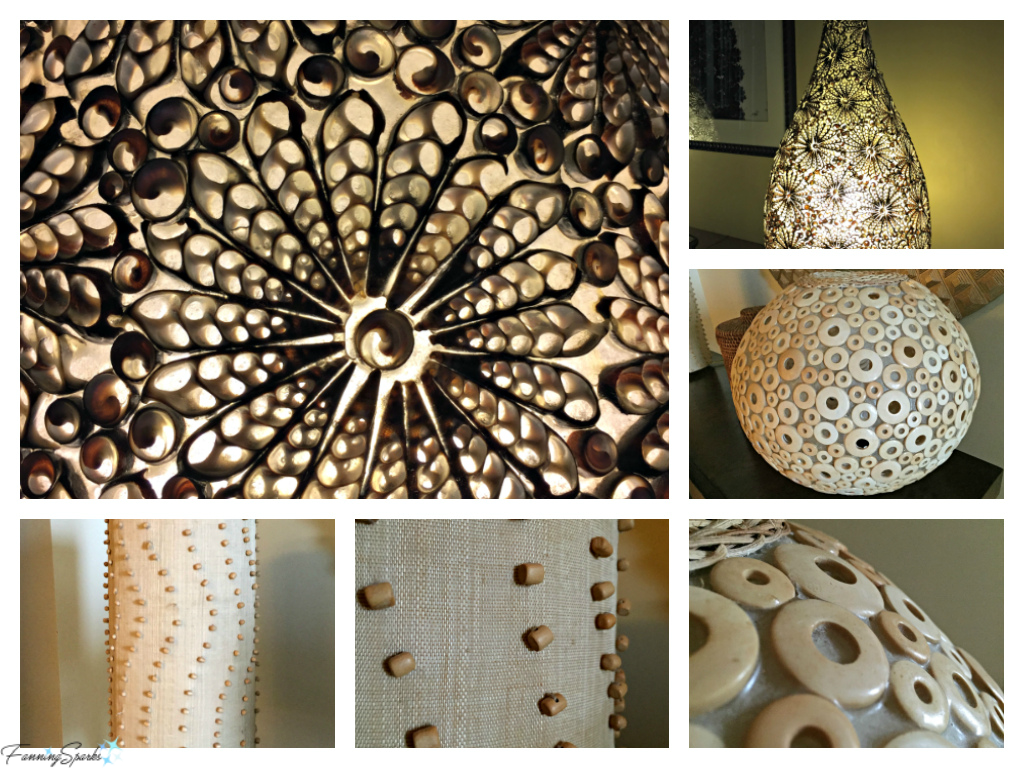
 Inspiring lamps from Costa Rica hotel room. @FanningSparks

Next I’d like to share an idea from the Grand Bohemian Hotel Mountain Brook in Birmingham, Alabama.  This boutique hotel, which exemplifies the boho style, is jam-packed with interesting and fun design and décor ideas.  Not all of these ideas would translate well into my home but one item that really caught my eye was the below mirror.  I love the unexpected detail of the integrated shelf and vase.  So original!
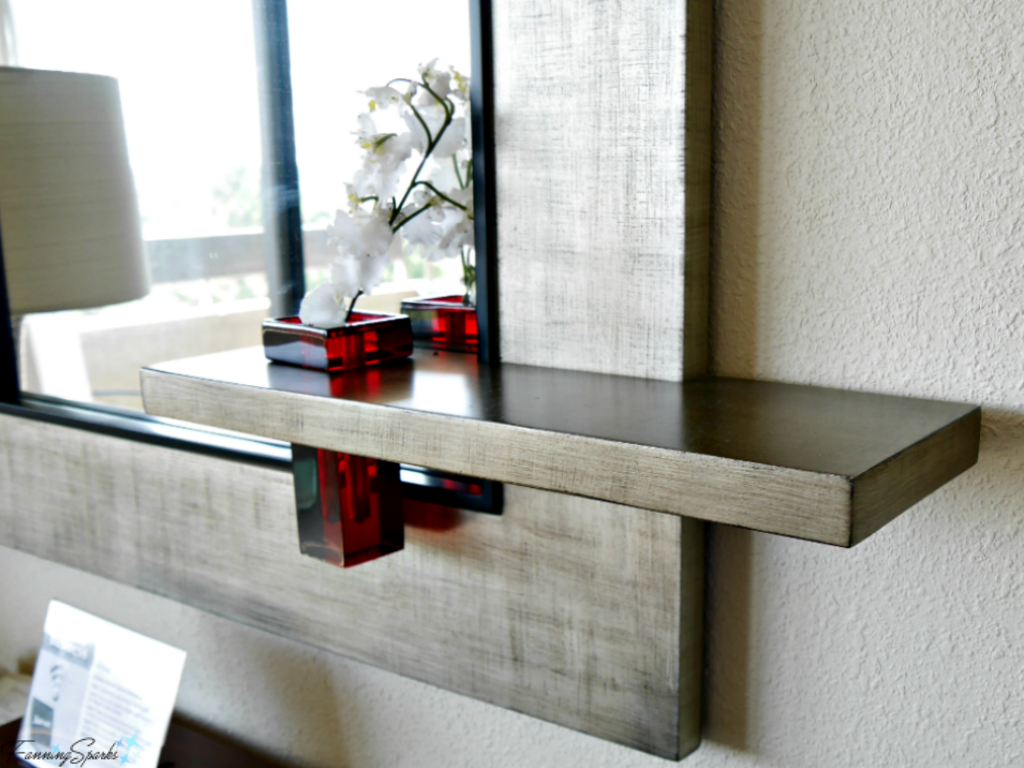
Mirror with integrated shelf and vase. @FanningSparks

Speaking of decorating ideas that don’t easily translate into my home, I recently had the opportunity to stay at the Hotel nhow Berlin.  This hotel is full of surprises.  It’s unusual, modern and hip.  With a bold pink color scheme and a strong music theme it’s not your run of the mill chain hotel!  Here’s a look at the hotel lobby areas.
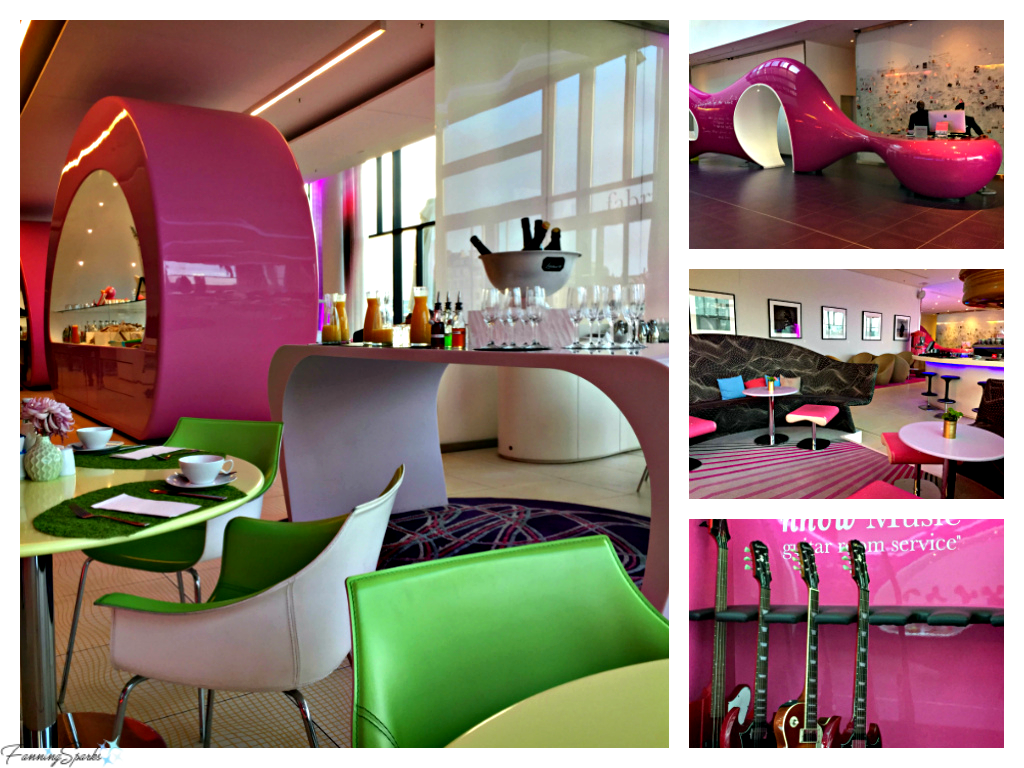
Hotel nhow Berlin lobby areas. @FanningSparks

 The guest rooms are equally unusual.  The patterns are bold and the colors are super bright.
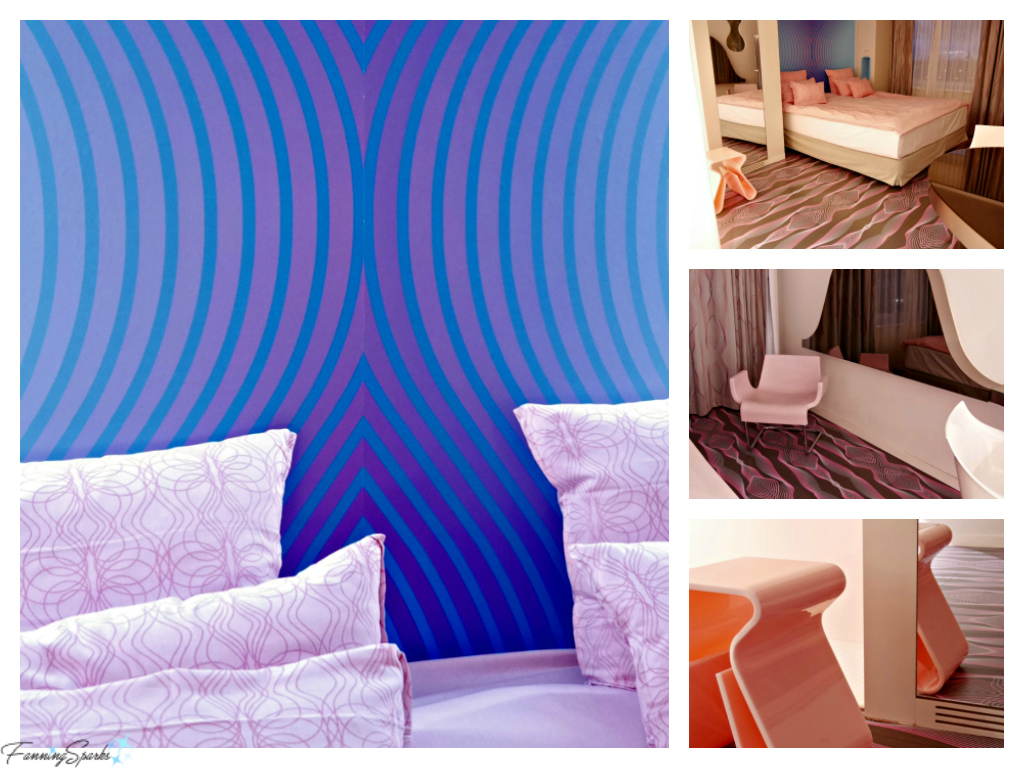
Hotel nhow Berlin guest room. @FanningSparks

I think this design is a little too chaotic for my home but I did find some interesting details that might be worth considering.  The below cubby hole, built right into the wall beside the bed, would be ideal in a small space.  In fact, it’s rather similar to the shower niches that are currently so popular.

Unique bedside cubby at Hotel nhow Berlin. @FanningSparks

I love the below lighted closet rod.  Lights that automatically turn on when the closet door opens are not unusual.  But incorporating that same functionality into the actual closet rod?  Genius!  A quick internet search indicates these rods are readily available although rather pricey.
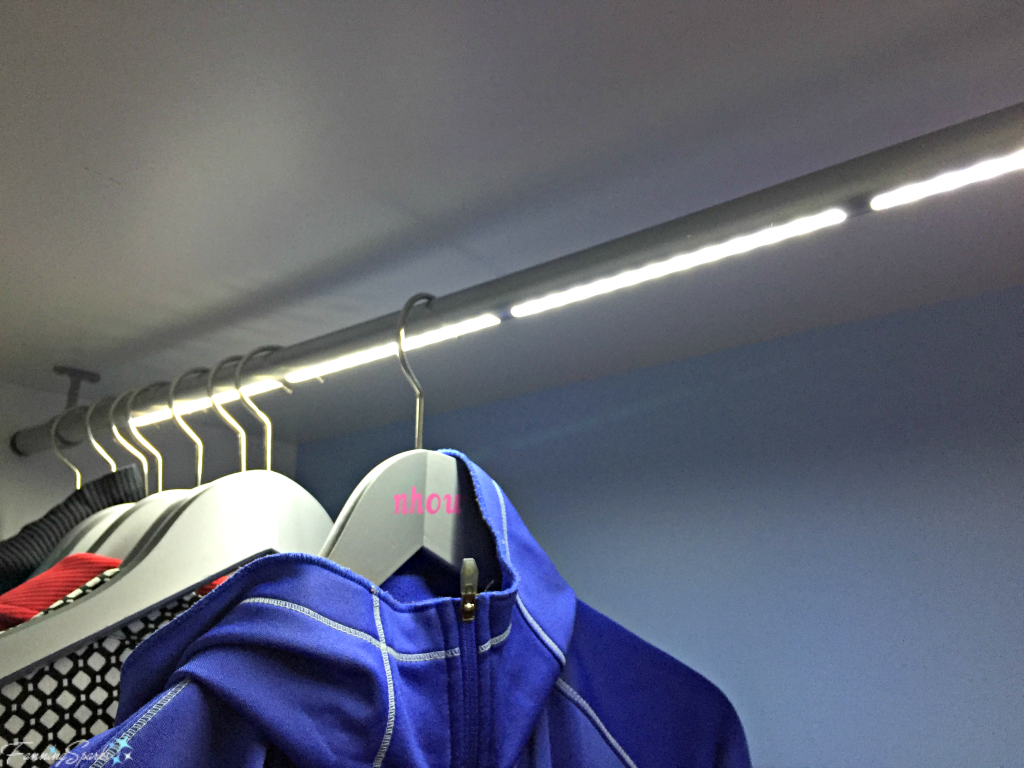
Lighted closet rod at Hotel nhow Berlin. @FanningSparks

Hotel lobbies can also present some useful home design and décor ideas.  A few years ago I had the opportunity to visit Dubai, UAE.  To say Dubai hotels are over the top would be an understatement.  While most of the amazing design and décor ideas wouldn’t translate well into my home, they certainly helped me think big and bold.  The below fused glass curtain was used to divide the space in a hotel lobby bar area at Atlantis The Palm.  When the light hits the various pieces of glass, the colors and facets took on a life of their own.  As I was preparing this post, it occurred to me that a glass tile curtain like this would be perfect in the bathroom window in our new home.  The window is above a garden tub in the master bathroom and it’s currently just a large bare pane of frosted glass.  Done on a much smaller scale, of course, the below glass curtain could be just the thing to liven up this space.
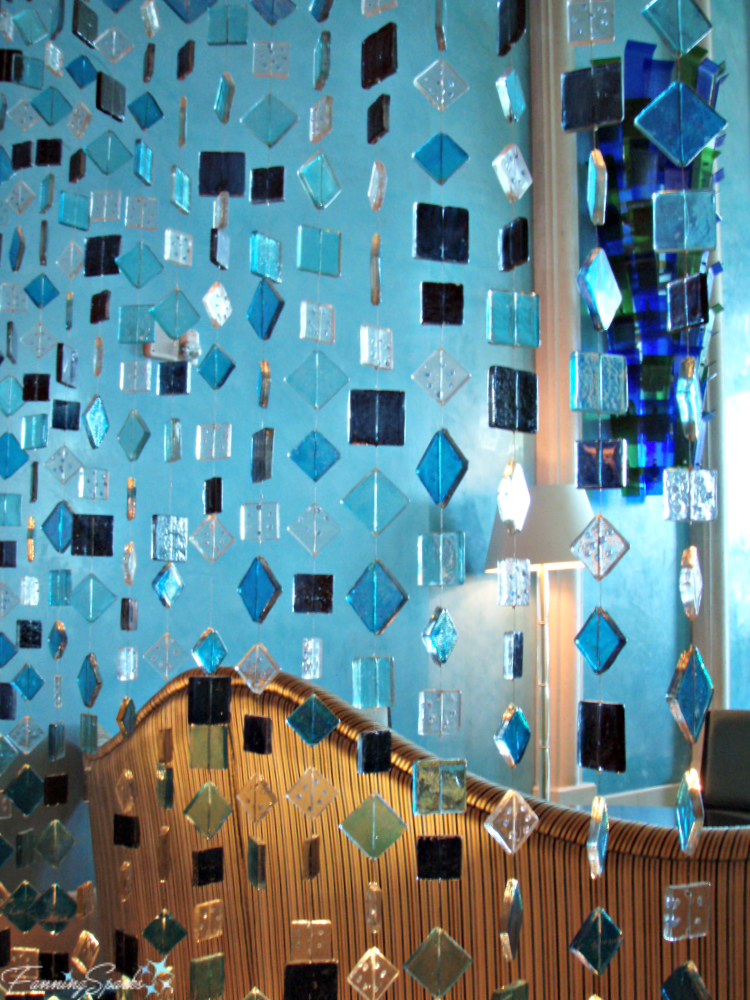
Fused glass curtain at Atlantis The Palm Dubai. @FanningSparks

Here’s another detail from a hotel lobby that caught my eye.  It’s from the Aria Hotel in Las Vegas, Nevada.  Isn’t it beautiful?  A mobile of origami cranes, done on a smaller scale in colors to match a room, could be just the right accessory.
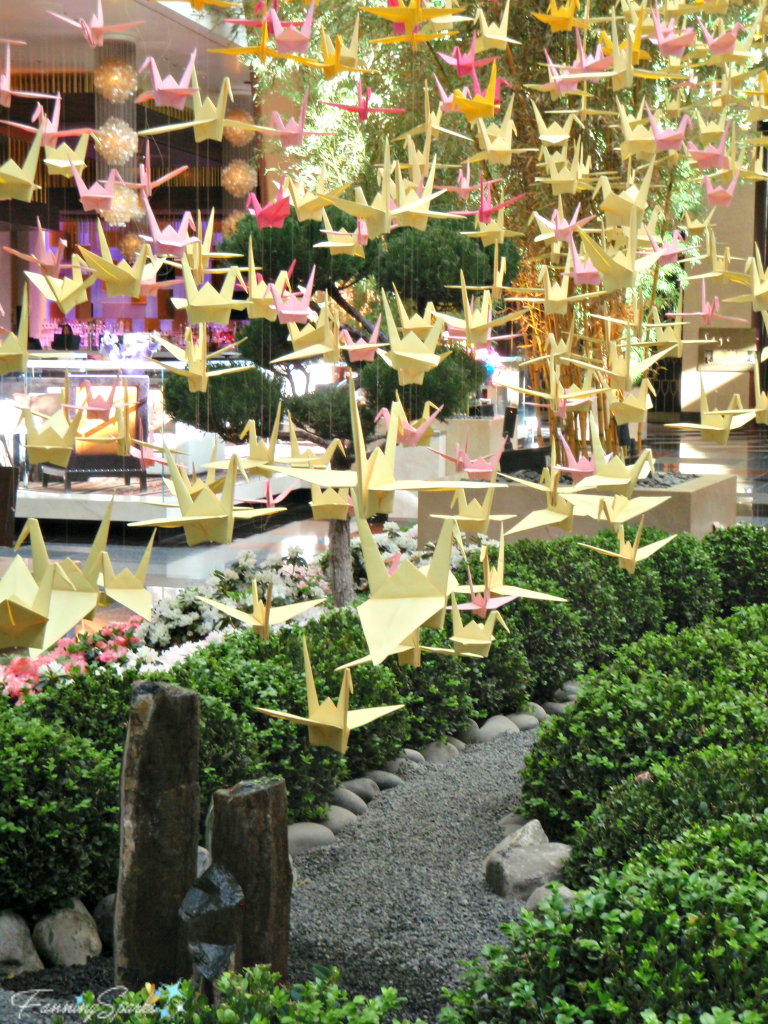
Paper cranes Aria Hotel Las Vegas. @FanningSparks

Now let’s scale it back and look at something a little less grand.  This room, at the Residence Inn in Florence Alabama, is an extended stay room so it has a lot of functionality squeezed into a small space.  In the below photo, you can see how they’ve separated the kitchen from the entrance.  The short pony wall cleverly provides both a visual and physical barrier between the two spaces.  I recently applied this same concept at our new house.

Room entrance at Residence Inn Florence Alabama. @FanningSparks

In the below photo, notice how a change in the wall treatments and floor coverings create a visual break and signal a change in room function.  This is also a great technique to keep in mind.

Visual room division at Residence Inn Florence Alabama. @FanningSparks

The final idea I’ll share is the below ottoman.  It’s on casters and easily slides inside the coffee table when not in use.  It’s a brilliant setup… the coffee table and ottoman are attractive independently but are even more handsome when combined.  When the ottoman is inside the coffee table, the deep red covering highlights the design of the coffee table’s black metal design.  Genius!
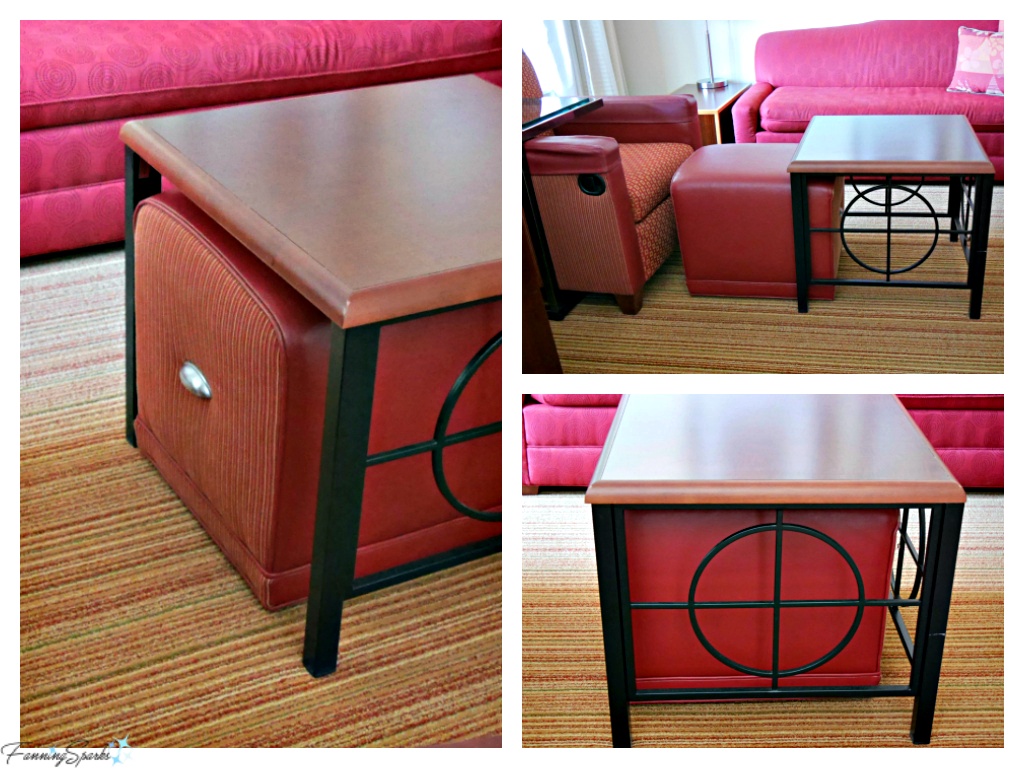
Integrated ottoman and coffee table at Residence Inn in Florence Alabama. @FanningSparks

More Info

Here are the website links for the hotels mentioned in this post:

Intercontinental Costa Rica at Multiplaza Mall in San Jose, Costa Rica

Grand Bohemian Hotel Mountain Brook in Birmingham, Alabama, USA

Hotel nhow Berlin in Berlin, Germany

Atlantis The Palm in Dubai, UAE

Aria Hotel in Las Vegas, Nevada, USA

Residence Inn in Florence, Alabama, USA

Today’s Takeaways

  1. Be on the lookout for design and decorating ideas when staying away from home.
  2. Take advantage of the opportunity to “try out” ideas that catch your attention.
  3. Make notes, take photos and note measurements for ideas you may decide to adopt.

Peg - FanningSparks Author

Do you remember Little Golden Books?  Did you have a favorite?

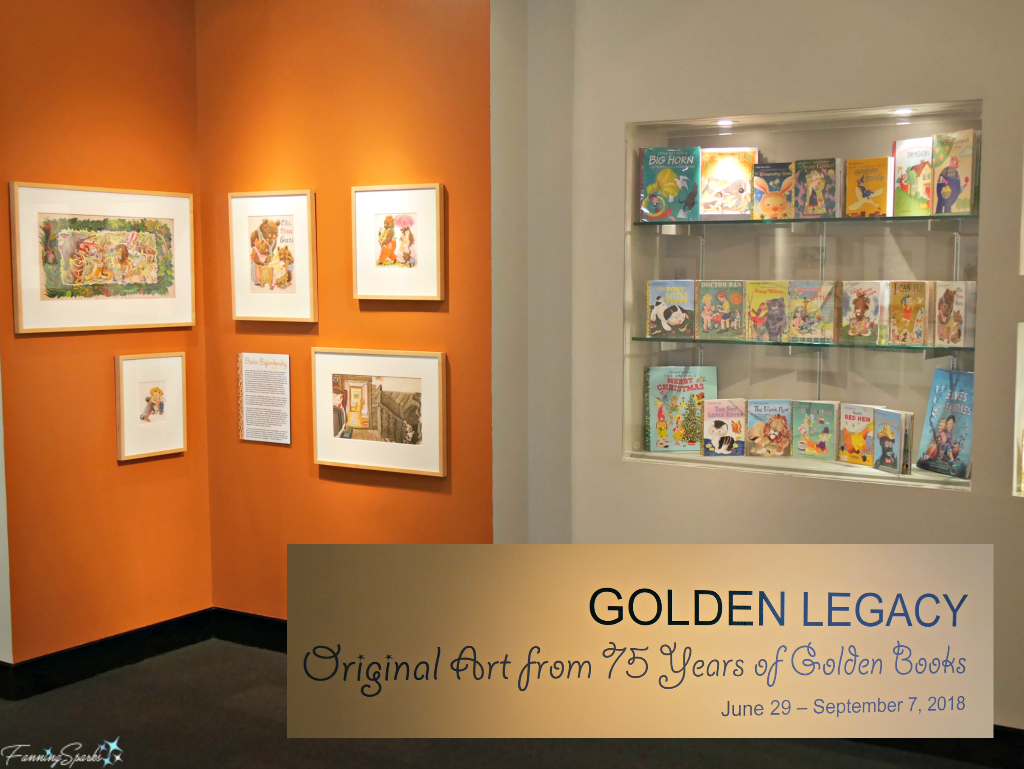
For those not familiar, Little Golden Books are children’s books which have been immensely popular for the last 75 years.  There’s an outstanding exhibit called “Golden Legacy: 75 Years of Original Art from Golden Books” currently being held at The Robert C. Williams Museum of Papermaking in Atlanta, Georgia.

Golden Legacy exhibit at RCW Museum of Papermaking @FanningSparks

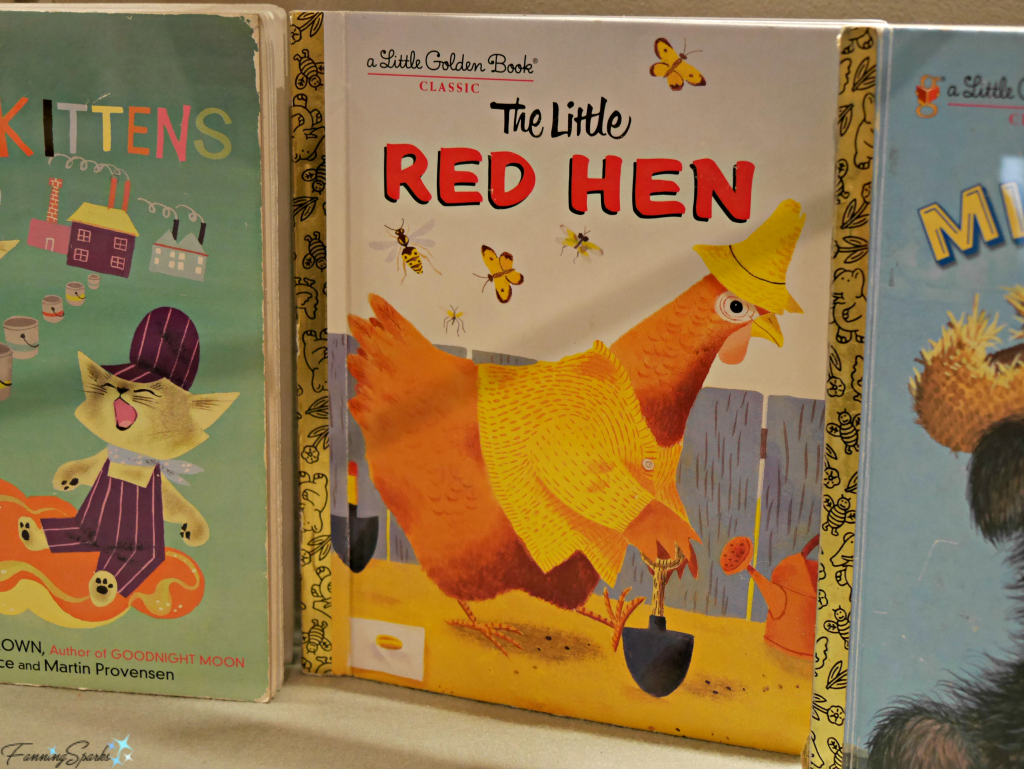
While I was familiar with Little Golden Books, I didn’t really appreciate why they are so special until I visited this exhibit and attended an associated gallery talk.  Little Golden Books were launched in 1942 during the first full year of America’s involvement in the Second World War.  This timing is significant because paper, ink and fuel shortages forced the publishers to find innovative, cost effective ways to offer books to the masses at affordable prices. Little Golden Books’ publisher chose a unique format for the books; a child-sized 8” by 6.5” with a hard cover and a distinctive gold foil spine.

Little Golden Book - The Little Red Hen book cover @FanningSparks

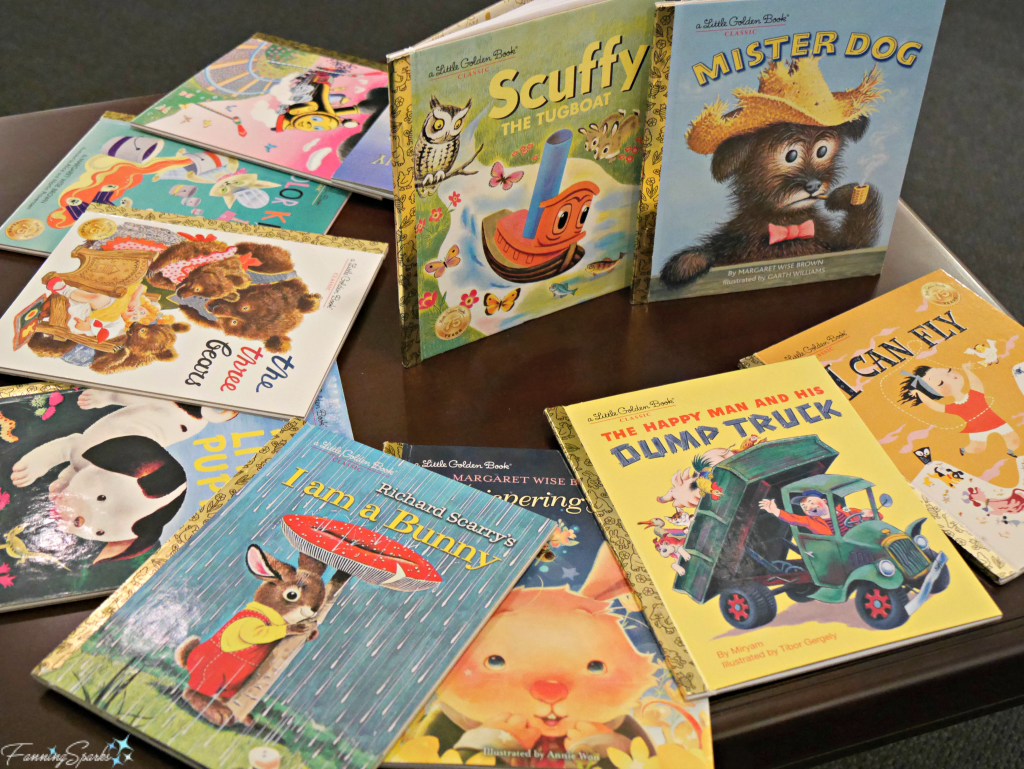
They chose well-written stories and displayed professional expert endorsements.  They also chose to emphasize original, high-quality illustration and engaged some of the best artists of the time.  But perhaps the biggest breakthrough was that for the first time children’s books were readily available in large colorful displays at grocery and department stores priced at only 25 cents.  Little Golden Books made it easy and affordable for millions of young children and their parents to own children’s books and, most importantly, to open up a new world of reading.  There’s a nostalgic and emotional connection to Little Golden Books that lives on from generation to generation.

Classic Little Golden Books @FanningSparks

The Golden Legacy exhibit showcases the illustrations from numerous Little Golden Books.  Over 25 of the best known artists, such as Tibor Gergely, Eloise Wilkin, Garth Williams, Richard Scarry, Corinne Malvern, Jan Pfloog, Feodor Rojankovsky and Mary Blair, are featured.  This is where the magic happens!  I admit I never paid much attention to illustrations in children’s picture books.  I may have admired a picture or two but I never fully appreciated this delightful art form.  After a few hours with the original artwork from Little Golden Books artists, I can see the attraction.  I can even see why someone, like the fellow gallery viewer I met, might want to collect these treasures and could end up with upwards of 500 children’s books!

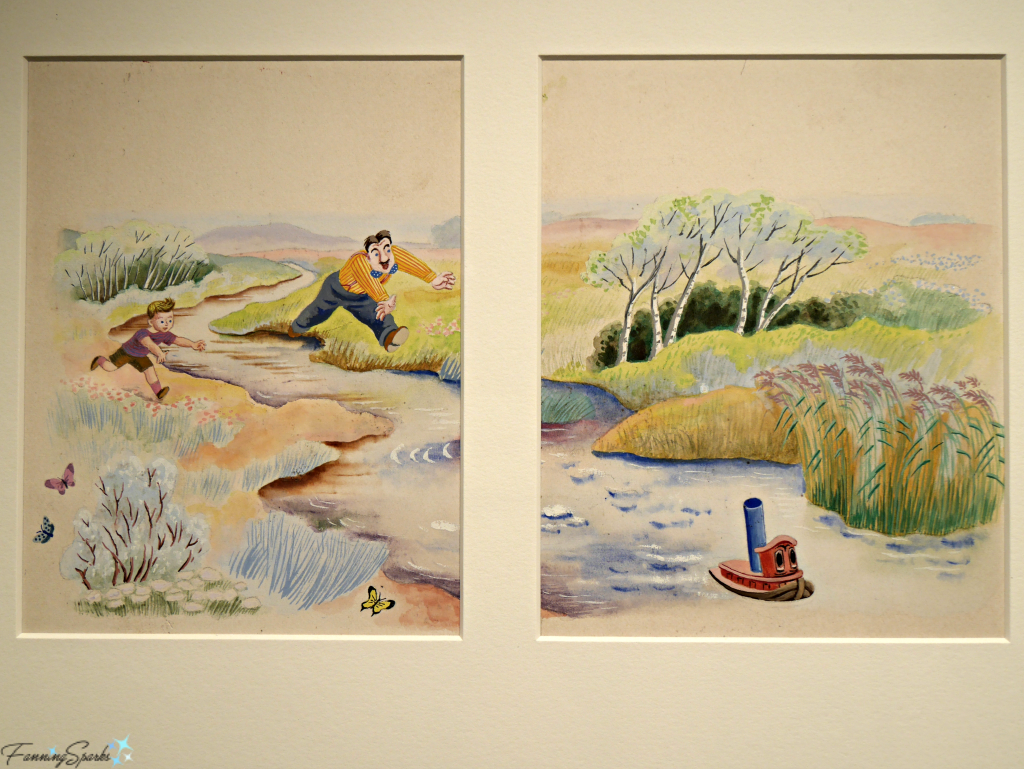
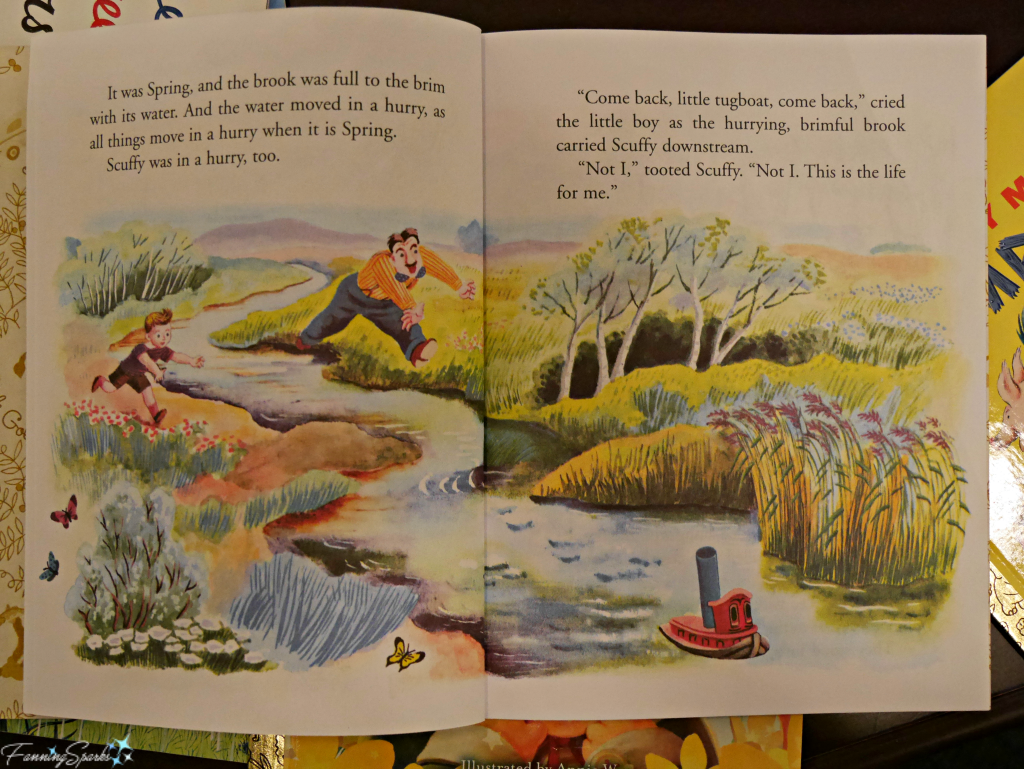
It was fascinating to see the transition from original artwork to book illustration.  Here’s an example by Tibor Gergely from the classic Scuffy The Tugboat.
Tibor Gergely original Illustration for Scuffy @FanningSparks

Tibor Gergely illustration from Scuffy @FanningSparks

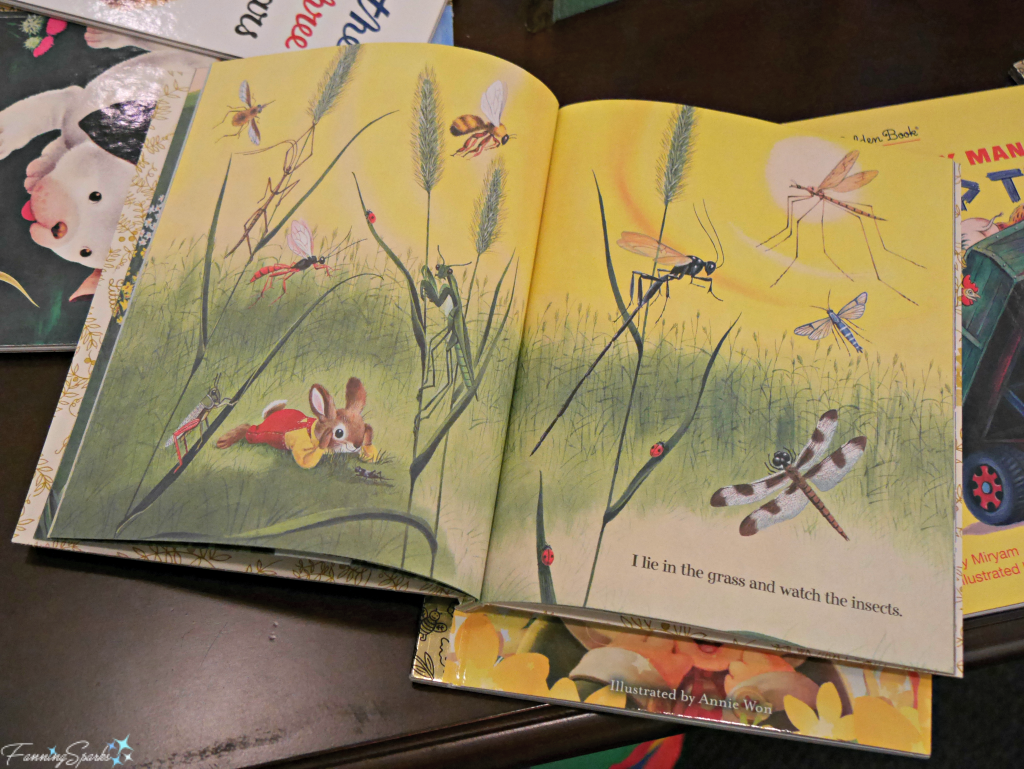
Richard Scarry illustrated and authored many Little Golden Books.  His iconic book I am a Bunny stars an adorable young rabbit in red overalls.  Scarry is quoted to have said: “It’s a precious thing to be communicating to children, helping them discover the gift of language and thought.”

Richard Scarry illustration from I Am A Bunny @FanningSparks

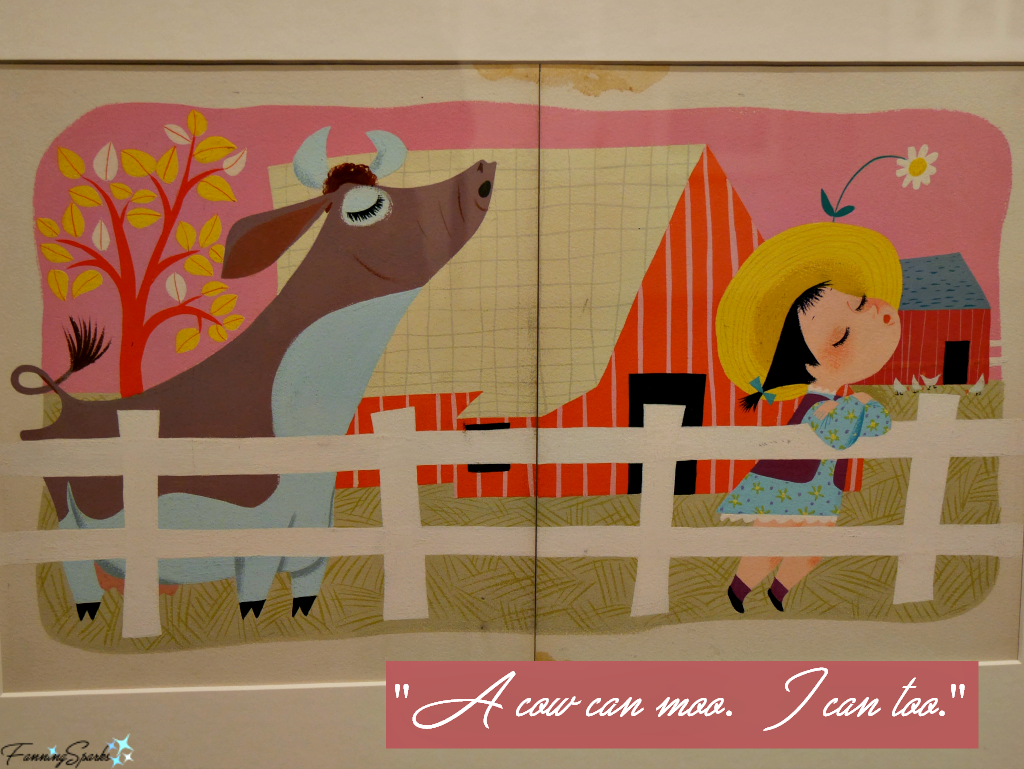
I found the work of Mary Blair particularly compelling.  Blair, perhaps best known for her accomplishments at Walt Disney Studios,  created the concept sketches for such animated feature films as Cinderella, Alice in Wonderland and Peter Pan, and designed the 1964-65 New York World’s Fair exhibit “It’s a Small World”.  She also illustrated several Little Golden Book classics. Here’s an example of her work from I Can Fly.  I inserted the accompanying text to give the full effect.

Mary Blair illustration for I Can Fly @FanningSparks

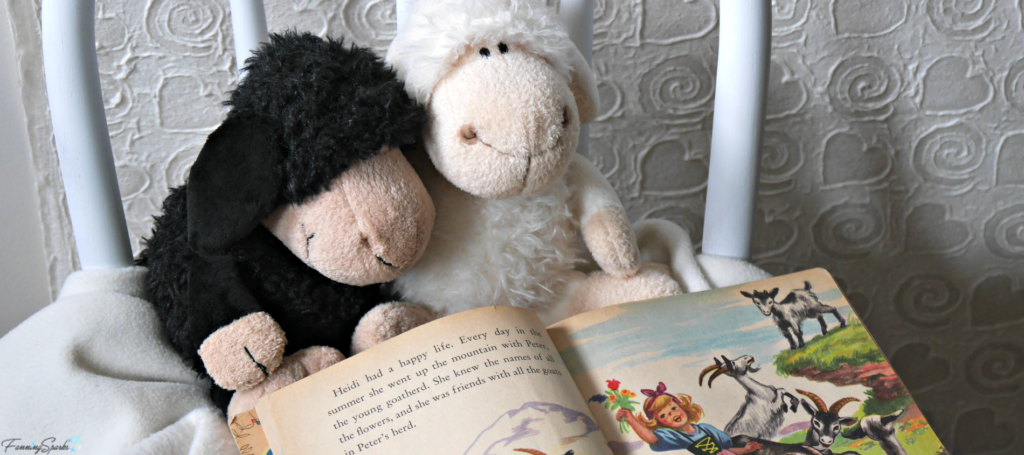
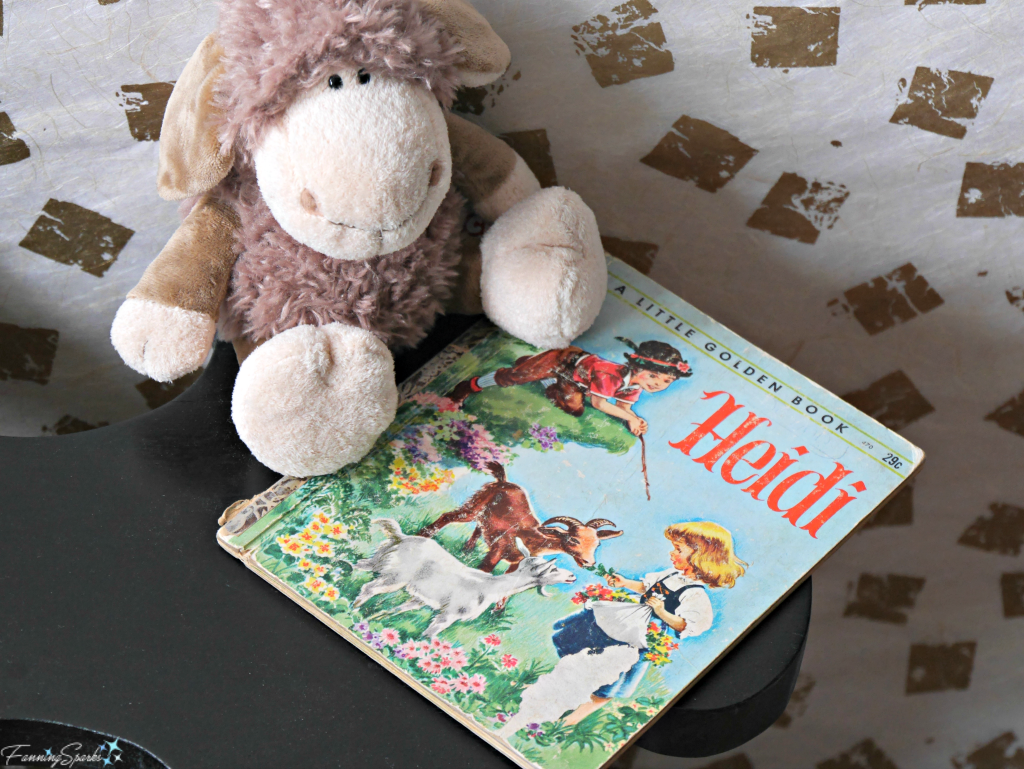
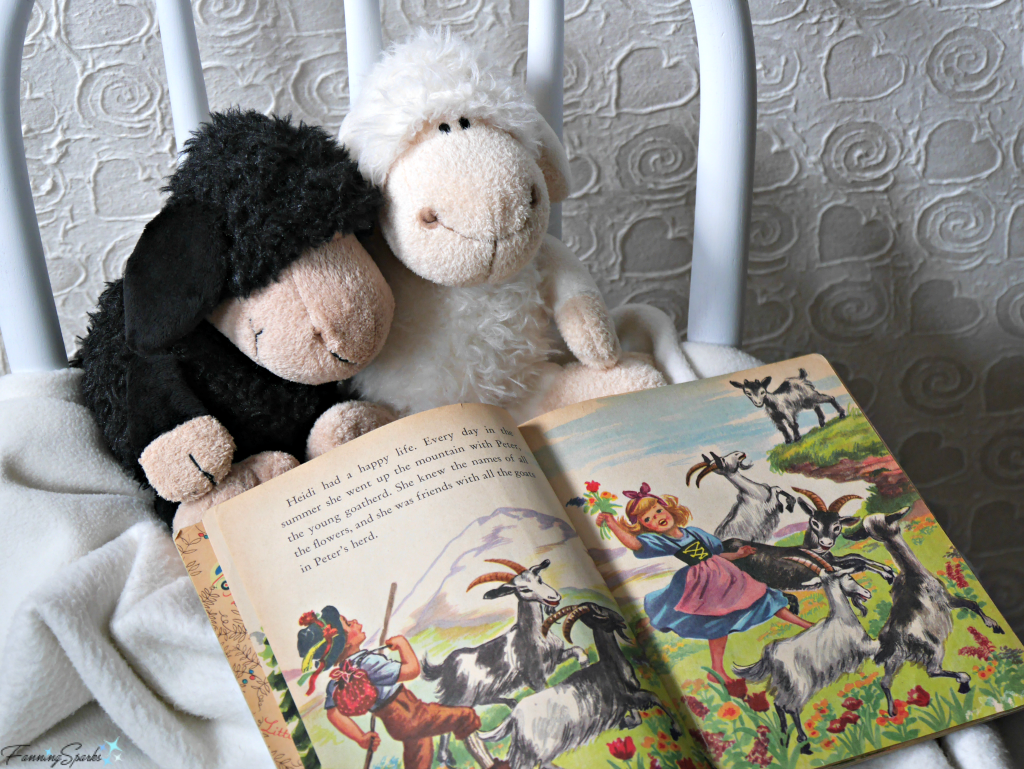
By happy coincidence, I already own a vintage 1954 copy of Heidi in Little Golden Book format.  The coincidence is twofold; I have an authentic reminder of the Little Golden Books exhibit and the street we just moved to is called Heidi Trail.  The story is adapted from the original by Johanna Spyri and it’s illustrated by Corinne Malvern.  The below photos show this “much-loved” and a little worn copy of Heidi.

1954 Little Golden Book - Heidi @FanningSparks

1954 Little Golden Book - Heidi @FanningSparks

It strikes me that these beautiful illustrations could be incorporated into my home and surroundings.  They are, of course, an obvious fit for children’s rooms, apparel and belongings.  But how could I weave them into an adult environment?  I’d especially like to play up the Heidi/ Heidi Trail angle.  I did some searching on Pinterest and found a few ideas (see More Info below).   Hmmmm…. my mind is spinning with the possibilities.

More Info

Learn more about The Golden Legacy: Original Art from 75 Years of Golden Books exhibit at the Robert C Williams Museum of Papermaking.  The exhibit is on until September 7, 2018.  Be sure to check it out if you’re in Atlanta Georgia USA.
The Museum of Papermaking has an intriguing program of exhibits and events.  Recently, I attended their Natural Dyes workshop and shared my experience in this post on Natural Dye Making.
The Little Golden Books website also has some great information.
Here’s the FanningSparks Pinterest board I created with ideas for using vintage children’s books.

Today’s Takeaways

  1. If you have an opportunity to visit the Golden Legacy exhibit, it’s definitely worthwhile.
  2. Children’s book illustrations open up a whole new world of art and creative adventures.
  3. Consider weaving items with a nostalgic connection into your home.

Peg - FanningSparks Author

One of the many interesting things about settling into a new home is discovering the wildlife in your new surroundings.  My husband and I just moved into a lake house with a fair bit of wooded area.  Since we’re not native to this area, there are many plants and animals that we’re not able to identify.  That’s where the Seek app comes to the rescue.

Seek is a mobile app used to identify plants and animals.  It was created by the team at iNaturalist who created the original browser-based nature identification application.  Their website introduces iNaturalist as “a global community of naturalists, scientists, and members of the public sharing wildlife sightings to teach one another about the natural world while creating high quality citizen science data for science and conservation.” The cool thing about their Seek app is it works with several modern technologies to help you identify wildlife.  Seek works with the camera on your mobile phone to let you capture photos of a subject.  It leverages location identification services to identify the general area where the photo was taken.  Then Seek uses image recognition software to look for similarities between your photo and the reference photos in the iNaturalist database.

Seek also uses gaming features to increase the “fun factor”.  Here’s how iNaturalist positions Seek:
Take your nature knowledge up a notch with Seek! Seek encourages outdoor exploration and learning by harnessing image recognition technology to help you identify plants and animals from your photos.
Choose from a list of nearby plants, animals, and fungi and collect photographs of as many species as you can!
. Earn badges as you photograph new species.
. Become more engaged with the wildlife around you.
. Learn cool facts about the critters and plants that live right in your own backyard wilderness.”

Obviously, Seek is great for children but it’s also useful for curious adults.  I’d like to share some of my own experiences using Seek.

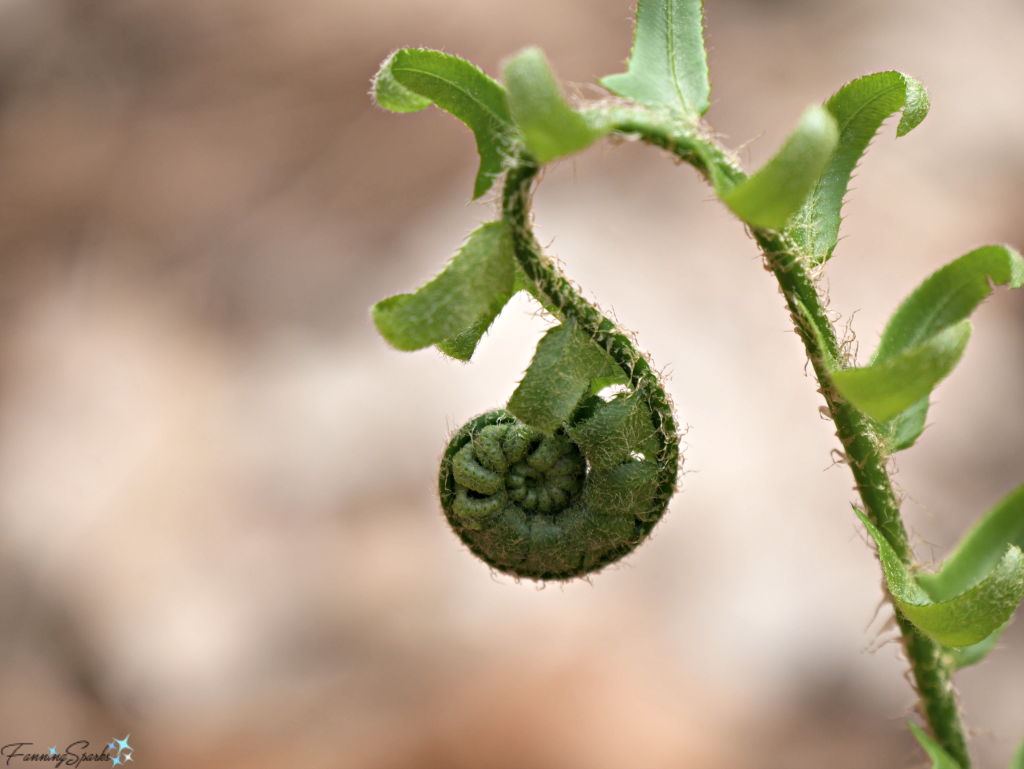
After taking the below photo, I wanted to know the correct name of this fern.

Christmas fern frond unfurling. @FanningSparks

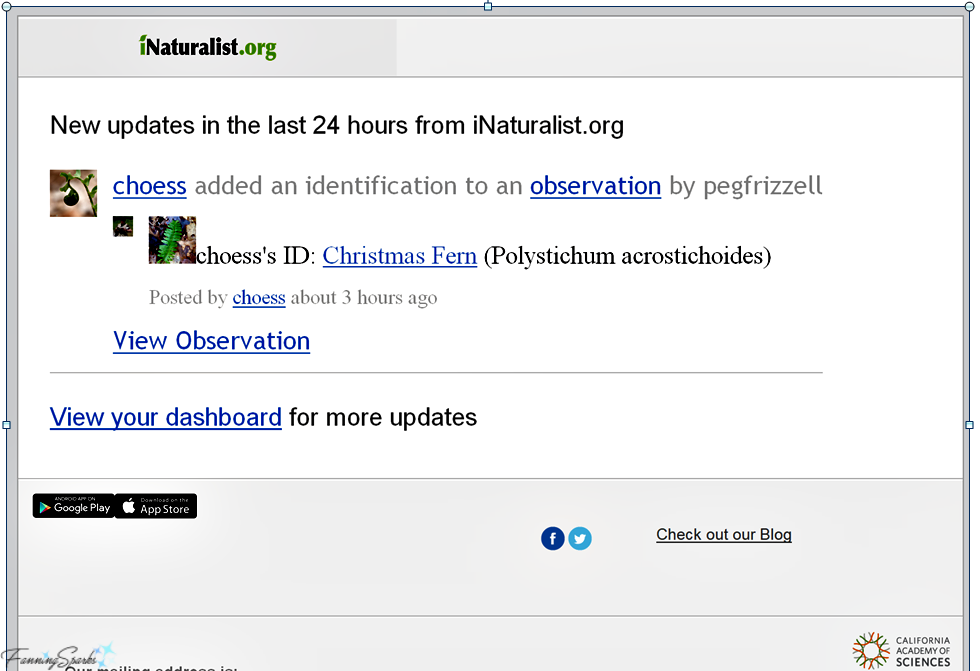
During my online research, I came across iNaturalist and decided to give it a try.  I entered my photo as an observation and followed the prompts to attempt identification.  I thought it was likely Ebony Spleenwort (Asplenium platyneuron) and submitted my observation with the suggested identification.  Within the day, an iNaturalist curator identified the fern as Christmas Fern (Polystichum acrostichoides).

iNaturalist curators provide expert identification. @FanningSparks

While using iNaturalist, I learned about their Seek app and decided to put it to the test.  I went back to the fern glade to study the ferns more carefully.  Sure enough, when I examined the mature leaves it was a clear match to the Christmas Fern photos.  Then I took a new photo with my iPhone showing the mature fern leaves and submitted my observation via Seek.  Instantly, Seek came back with a match.  Impressive!

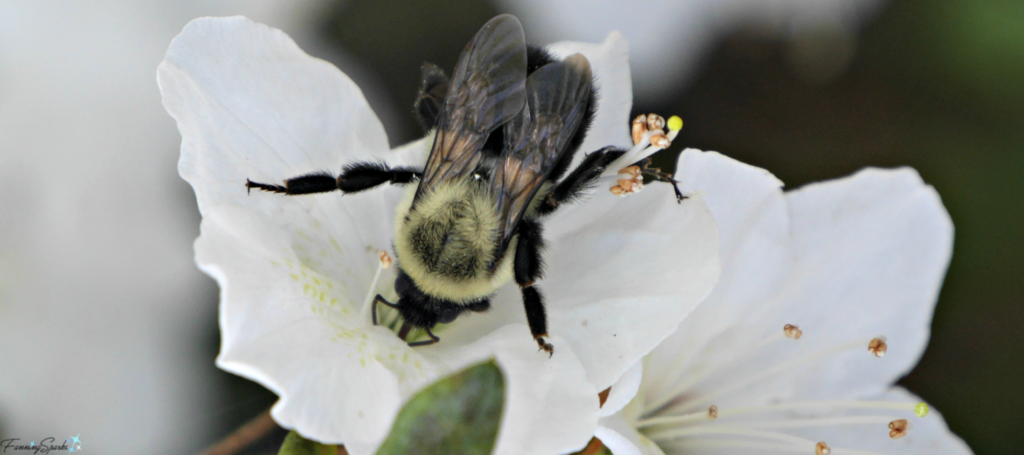
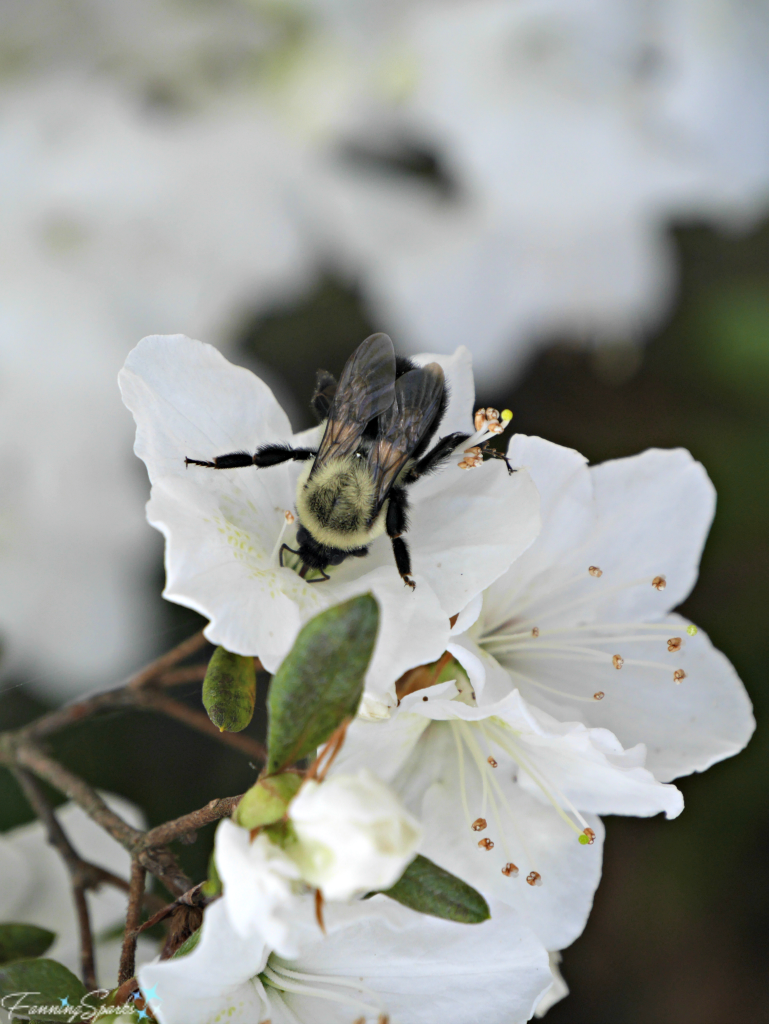
My next opportunity to use Seek occurred a few weeks later when I took the below photo at Callaway Gardens in Pine Mountain, Georgia.  This time I wanted to identify the bee sitting on the white azalea flower.

Common Eastern Bumble Bee on azalea. @FanningSparks

Seek immediately recognized this as the Common Eastern Bumble Bee.

iNaturalist Seek app identifies Common Eastern Bumble Bee. @FanningSparks

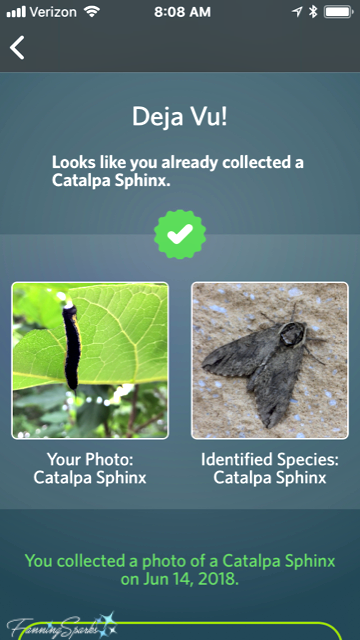
Recently, I noticed an army of caterpillars on a tree next to the deck at our new house.  This time I didn’t just want to identify a subject in a photo; I wanted to know what to do about all those caterpillars chomping away on the leaves.  Seek easily identified the culprits as Catalpa Sphinx (Deratomia catapae) which is a type of hawk moth.  I was able to use this information for further research and discovered the caterpillars would attack only the catalpa tree.  Thankfully, while they will defoliate the tree, they do not cause permanent damage.  Interestingly, these caterpillars are considered the best natural catfish bait and the Southern catalpa tree is commonly called the fish bait tree.

I didn’t save a screenshot of my original observation but when I re-submitted my caterpillar photo, Seek reminded me of the first match.

iNaturalist Seek identifies Catalpa Sphinx. @FanningSparks

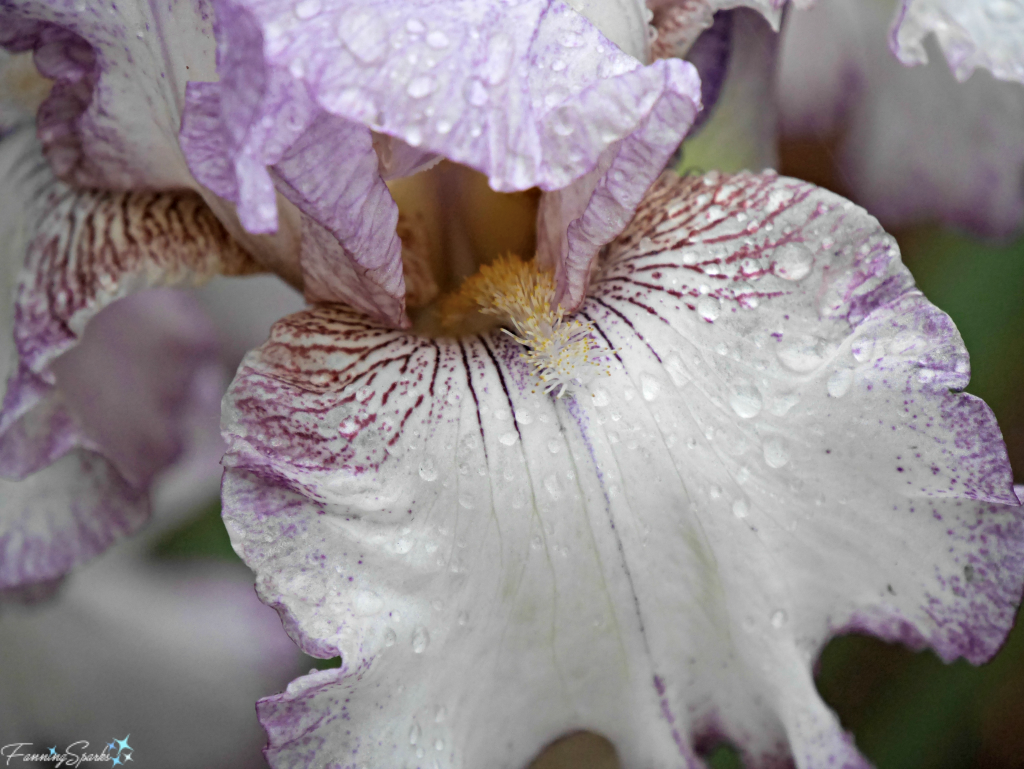
These experiences have made me a big Seek fan!  But it’s only fair to call out a few limitations.  Seek only identifies wildlife; it doesn’t identify cultivated plants and animals.  So you can’t use Seek to identify that gorgeous new iris that just bloomed in your flower garden as I tried to do with the below photo.   I found out from other sources this beauty is a tall bearded iris called  ‘Autumn Tryst’.

Tall Bearded Iris Autumn Tryst in morning dew. @FanningSparks

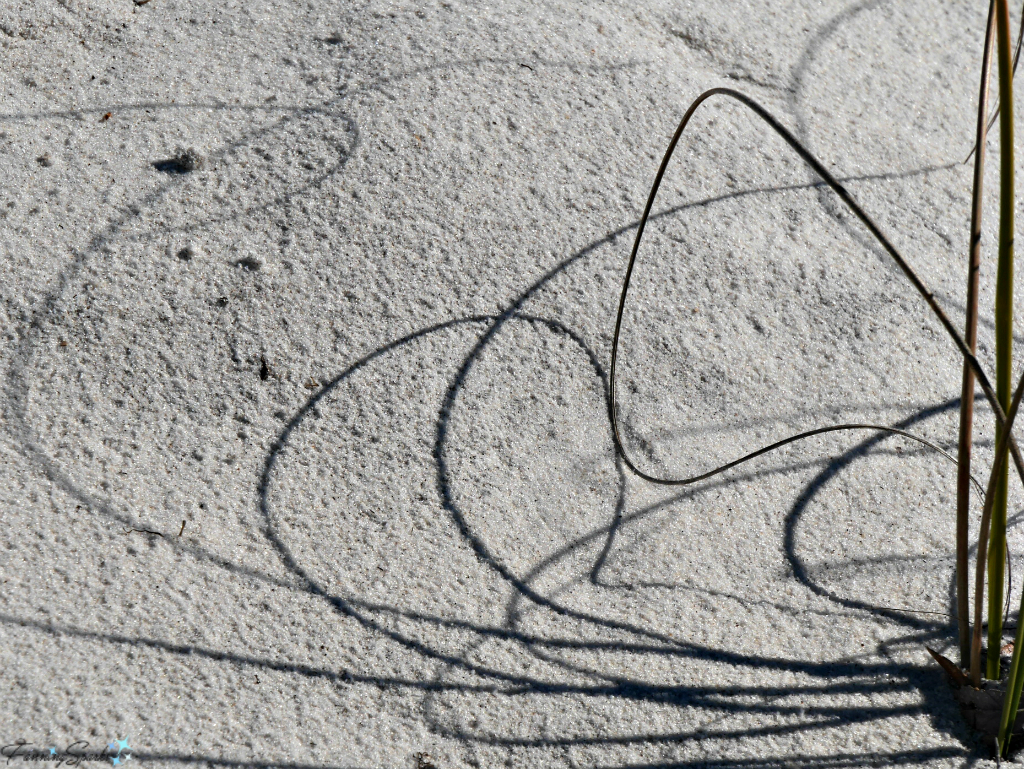
Another thing to be aware of is that you need a good quality photo of your subject.  Understandably, Seek isn’t interested in the pretty shadows created by this curly grass.

Curly shadows of sea grass. @FanningSparks

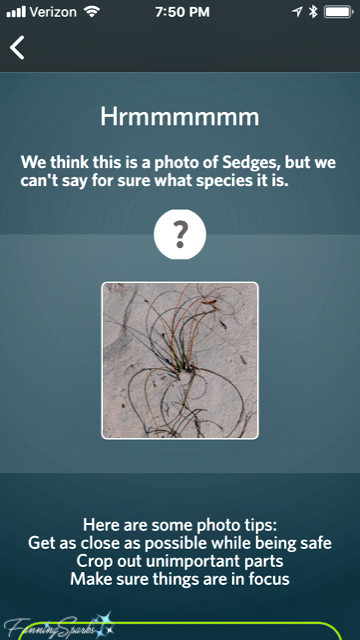
Seek needs a clear photo for identification purposes and offers the below tips.  Based on the reference photos, I think the Sand Sedge (Carex pumila) gets credit for those curvy shadows.

iNaturalist Seek tips for clear photos. @FanningSparks

Why not give Seek a try? I’d love to hear about your experiences.  Seek is a global solution with species from around the world so I’m especially interested in hearing from readers outside the USA.  Were you able to find local plants and animals?

More Info

You can learn more about iNaturalist and their Seek app at www.iNaturalist.org.

Today’s Takeaways

  1. iNaturalist.org and their Seek app are great resources for identifying wild plants and animals.
  2. By using these tools you can help create “citizen science data for science and conservation”.
  3. Knowing the correct name of a plant or animal makes research easier and can help you be better informed.

Peg - FanningSparks Author

Thrift stores, estate sales, antique malls, flea markets… all call my name. It’s not that I buy a great deal. I don’t collect mountains of old dishes or hoard collector’s plates or stash old time silver. Well… there is that collection of milk glass that may be a little out of control… but that’s a story for another day.  One might wonder why it’s so appealing to just look at someone else’s discards. It’s the thrill of the hunt. It’s all about finding that one, perfect vintage piece. An item that brings back memories and is a pleasure to view. In my opinion, a well-placed vintage piece adds character and completes the story of our home.

The below vintage tin container is a case in point.

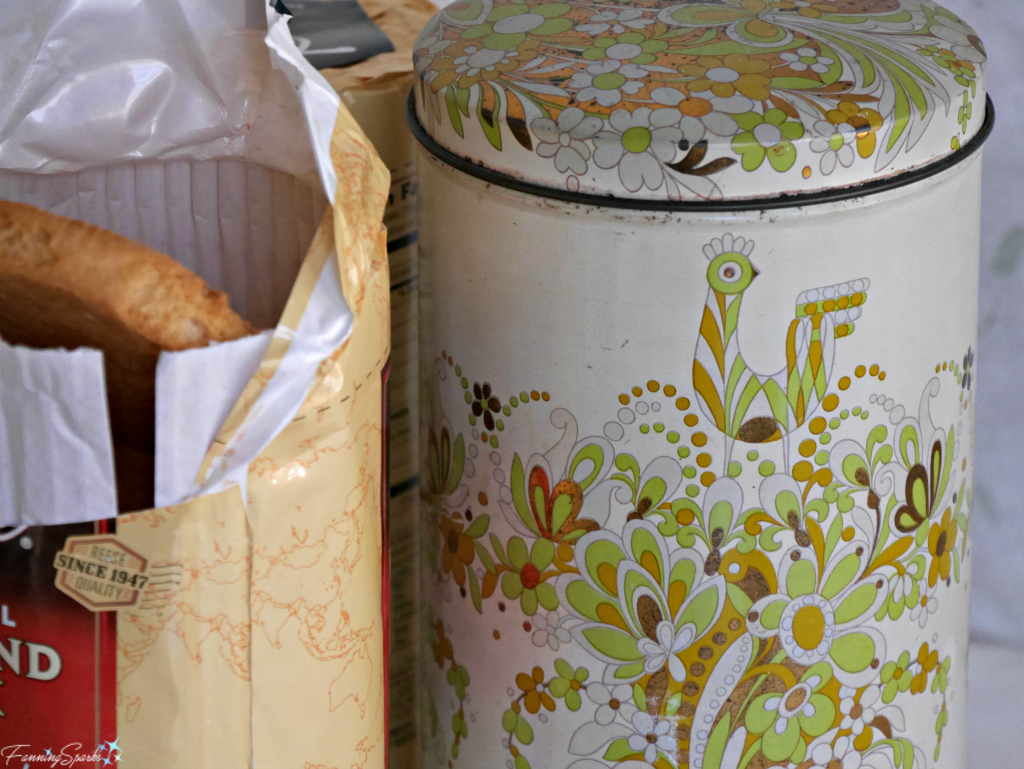
Vintage tin container, specifically designed to hold Dutch rusk, on display in my home. @FanningSparks

I love the design on this container.  It has a distinctive art deco style and the gold and green colors are pretty and unusual.  I found this container a few years ago in an antique/flea market in Belgium. I love its old world origins.  But the real story here is why this container is meaningful to me.

Vintage tin designed to hold Dutch Rusk. @FanningSparks

My mother and father were born in The Netherlands. They immigrated to Canada just after they were married in 1955. They brought many Dutch traditions, beliefs and practices with them including some favorite foods.  One of those foods was beschuitjes or rusk which is a twice-baked bread. As children, rusk were a rare treat enjoyed when family members visited from The Netherlands. One of the unique things about rusk is the way in which it’s packaged; a dozen rusk are neatly stacked into a little tower.  This brings me back to my beloved vintage tin. Notice how the vintage tin is the perfect fit for the package of rusk? When I look at that tin, I see special times with my family.

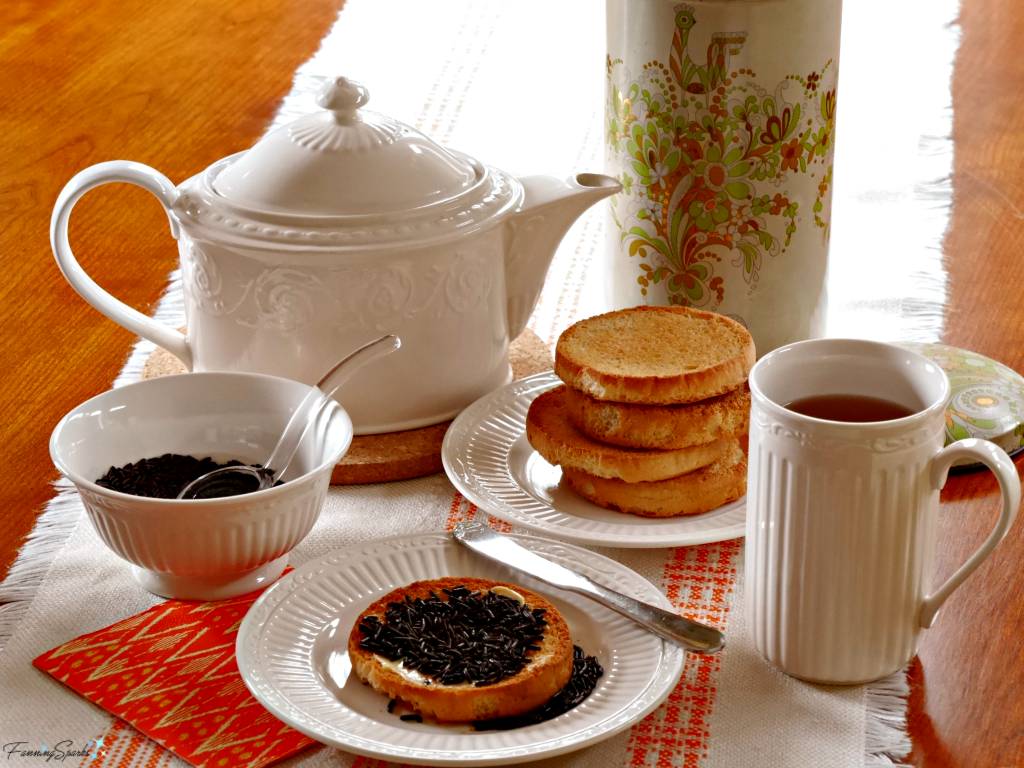
Lovely breakfast setting... beschuit , hagelslag and tea... with a Dutch flair. @FanningSparks

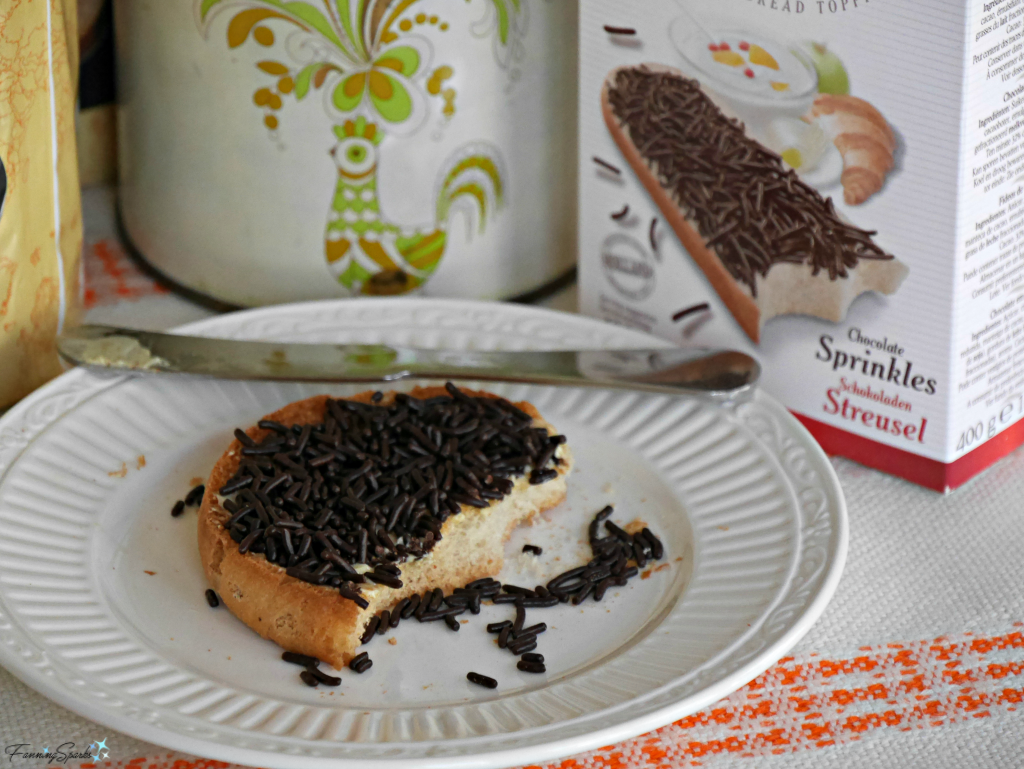
You may notice something else that’s rather unusual in the above photo.  The topping on the rusk looks like chocolate sprinkles.  Indeed it is!  The Dutch name for this sweet topping is hagelslag.  It’s not at all unusual to have hagelslag on a beschuit for breakfast in The Netherlands.

What a treat! Beschuit / rusk with hagelslag / chocolate sprinkles for breakfast. @FanningSparks

Interestingly, there’s a Dutch tradition to celebrate the birth of a child that involves rusk and sprinkles.  In this case, the sprinkles, called muisjes, are anise seed flavored and come in baby blue or baby pink.  Traditionally, visitors are served rusk with color-coordinated sprinkles … blue for a boy or pink for a girl… when they visit a family to celebrate the birth of a baby.  My immediate family did not follow this tradition but my Mom does remember getting these treats when babies were born to the Dutch royal family.  Are you familiar with this tradition?  Do you have similar memories?

Today’s Takeaways

I hope this post sparks some ideas for you too:
1. Keep your eyes open for meaningful vintage items at thrift stores, estate sales, antique malls and flea markets.
2. A well-placed vintage item can add richness and depth to your home’s décor.
3. Connecting with the past is integral to telling the story of our lives.
Peg - FanningSparks Author

One of the great things about writing a blog is it keeps me motivated to search out and investigate intriguing ideas.  One of the great things about being retired is it affords me the time to do just that.  For instance, recently I heard designer Ingrid Fetell Lee give a TED Talk titled “Where Joy Hides and How To Find It”.  Her ideas resonated with me and so I delved deeper into her “The Aesthetics of Joy” website and Instagram account.  Ingrid explores the relationship between our environment and our emotions and then applies these linkages to inspire her designs with joy.  We can define joy as a passing pleasure or a momentary feeling of great pleasure and happiness.

Through research Ingrid has identified a series of joyful things… things that bring joy universally… like cherry blossoms, rainbows, fireworks and bubbles.  Over time, she recognized patterns across these joyful items.  In her TED Talk she reveals that the patterns include “round things, pops of bright color, symmetrical shapes, sense of abundance or multiplicity, feeling of lightness or elevation.”  She makes a strong case for purposely incorporating these elements into our surroundings.  I admire and respect that her ideas are backed by scientific research.  Ingrid has written a book, called Joyful: The Surprising Power of Ordinary Things to Create Extraordinary Happiness. The book, which will become available in September 2018, can be preordered now.
Jan 8, 2019 Update: I loved the book Joyful.  See my followup post: My Top 3 Nonfiction Reads from 2018 for more info.

In the meantime, I’ve been following Ingrid’s Instagram account where folks are encouraged to tag their photos with “#JoySpotting”.  This got me thinking about my own photos.  Have I captured photos of joyful moments and objects?  Do these joyful moments and objects fit the patterns?  Which photos could I tag as #JoySpotting?  Today, I’d like to share the outcome of #JoySpotting in my own favorite photo archives.

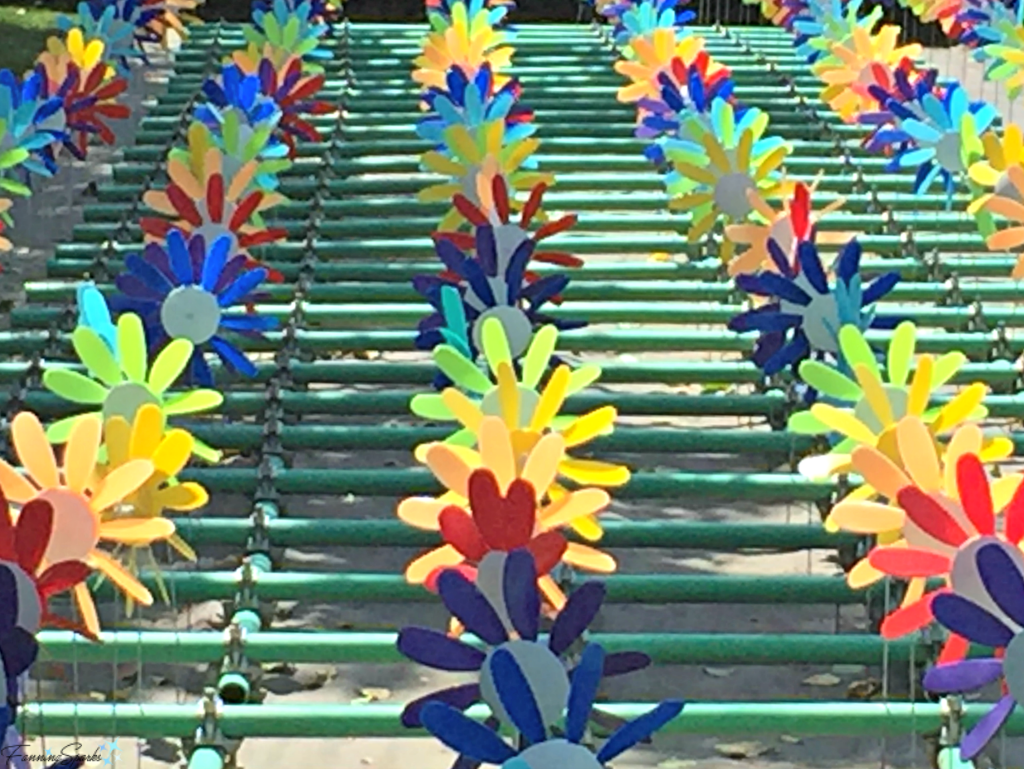
I recall being drawn to the below art installation at Cornerstone Gardens in Sonoma California. This series of jaunty pinwheels was constantly in motion.  It was bright, colorful and mesmerizing.  Joyful? Check.

Joyful pinwheels spinning at Cornerstone Gardens in Sonoma California @FanningSparks

The below sculpture, titled “Swing Me Mama”,  is by Dominic Benhura and on display in the Singapore Botanic Gardens.  It’s a delightful work of art guaranteed to make you smile.  Joyful?  Check.

Swing Me Mama Sculpture in Singapore Botanic Gardens @FanningSparks

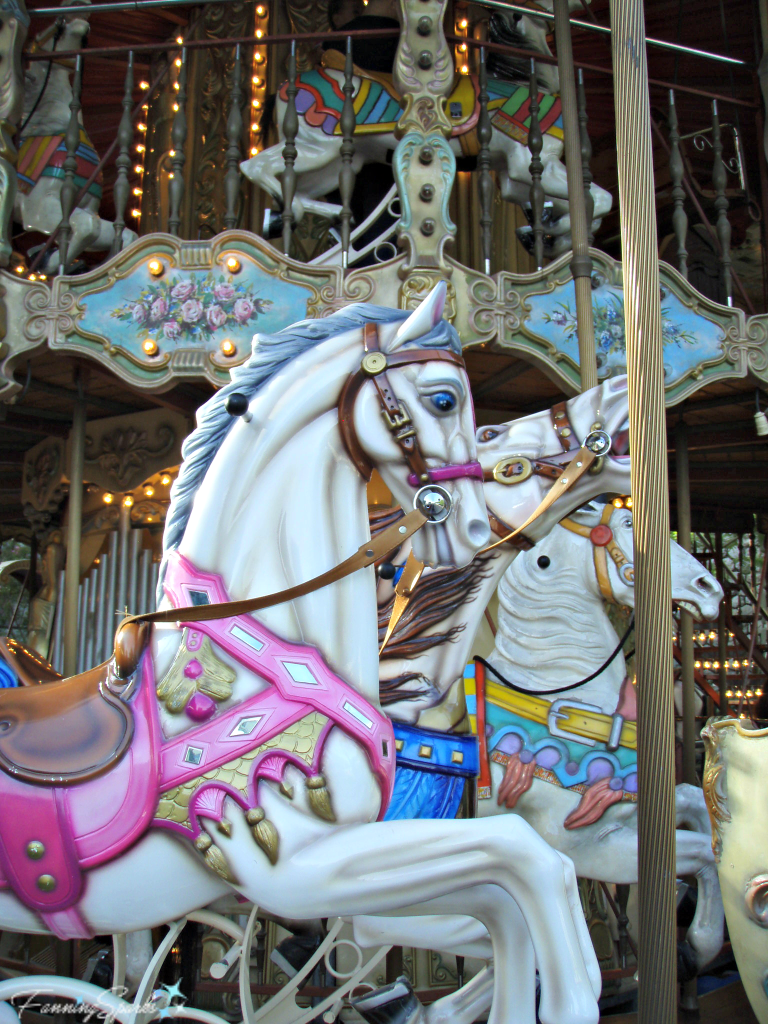
While on the theme of spinning and movement, I have quite a few shots of carousels and merry-go-rounds but they’re challenging to photograph.  I remember being drawn to the below beautifully carved and painted horses on the Carrousel de la Tour Eiffel in Paris.  The music was playing.  Children were enjoying the ride.  Joyful? Check.

Eiffel Tower Carousel horses in Paris France @FanningSparks

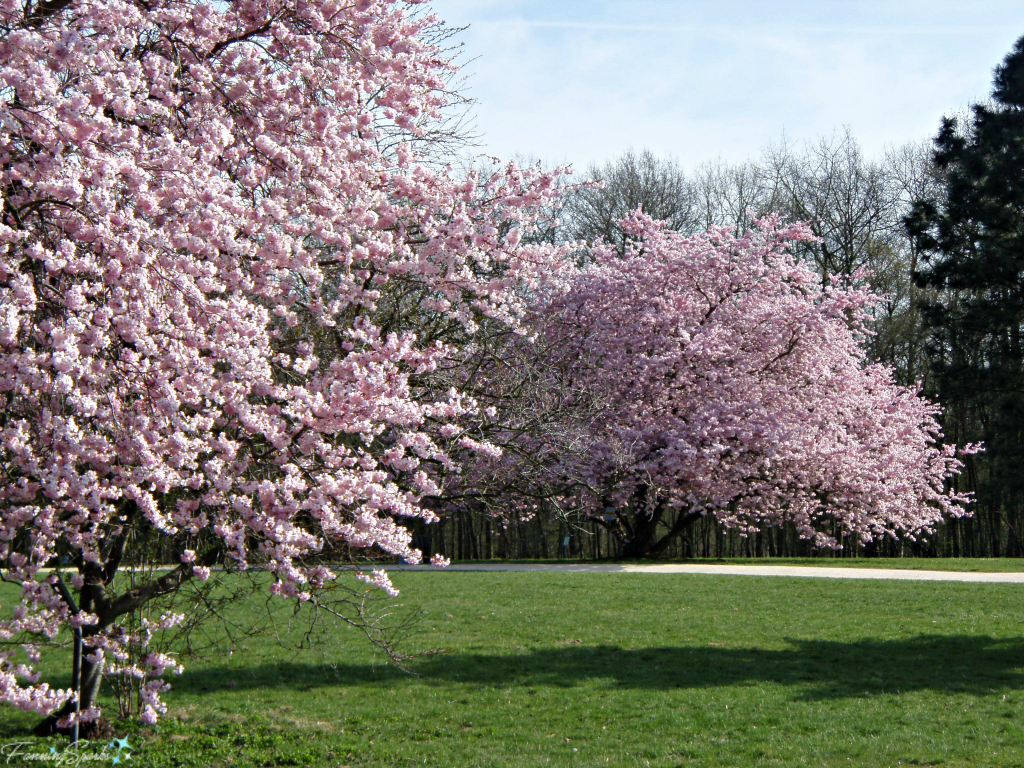
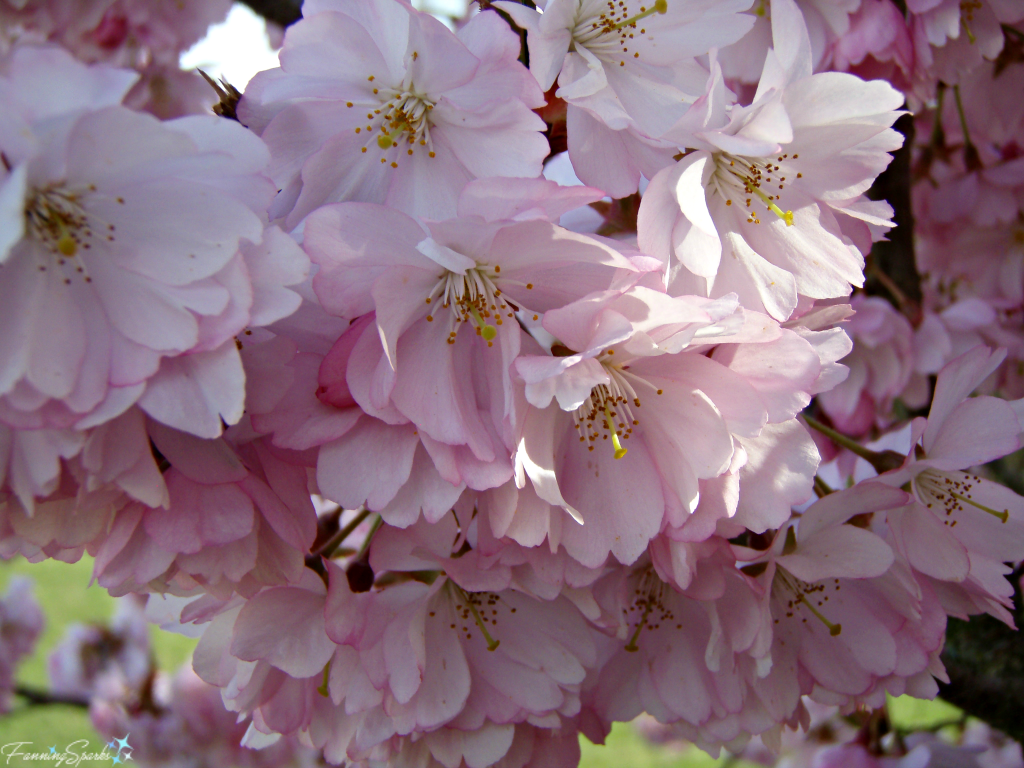
Cherry blossoms are a universally recognized joyful object.  Cherry blossoms are fleeting… you have to catch them at just the right moment to see their full beauty.  The cherry blossoms in the below photo, taken near Cologne Germany where I lived for several years, are at their peak.  Joyful?  Check.

Cherry trees in full bloom in Cologne Germany @FanningSparksCherry trees in full bloom in Cologne Germany @FanningSparks

There’s a connection between joy and things that don’t seem possible like floating and flying.   Below is a shot of a hang glider taken in Tenerife.  I’ve always loved this photo, partly because of the slow natural descent of the hang glider, but primarily because of the split-second timing that captured the hang glider directly above the church steeple.  Joyful?  Check

Hang glider slowly descends in Tenerife @FanningSparks

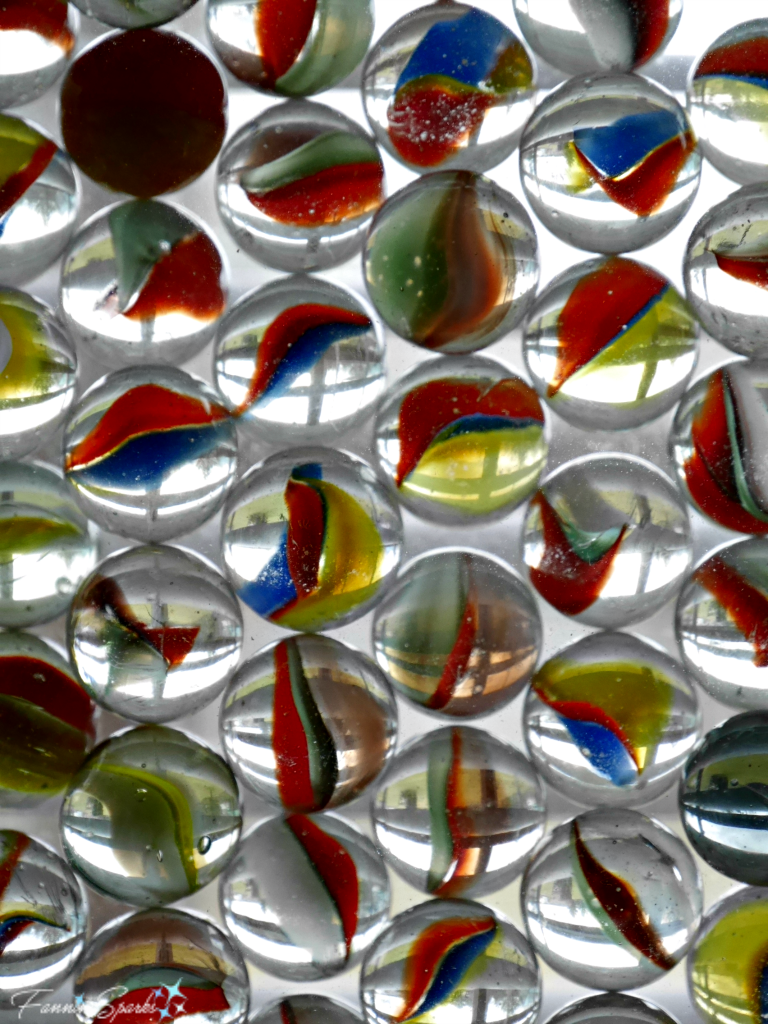
Roundness, and its connection to play, is one of the joyful patterns.  The below marbles are suspended in a frame and hung in a window.  I remember being drawn to this display because of the repeating shapes and how the marbles affected the light.  Joyful?  Check.

Marbles framed in front of window light @FanningSparks

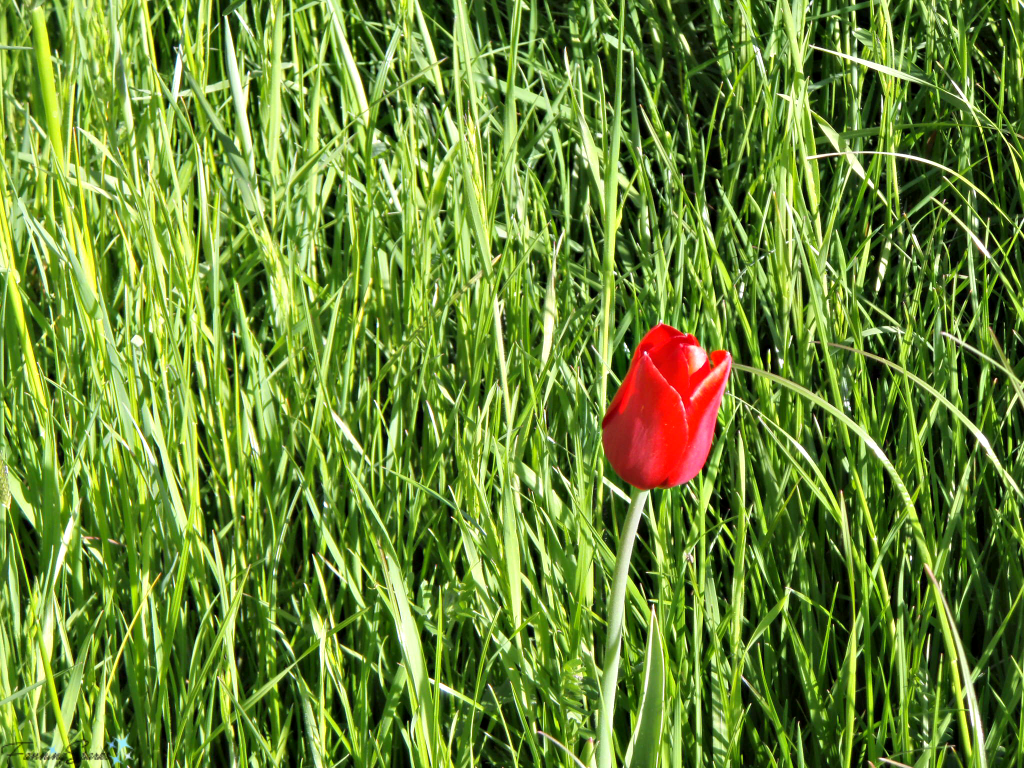
I have numerous photos with pops of color but the below photo, showing a lone red tulip in a field of rich green grass, really stands out.  It’s the unexpected surprise of seeing this tulip out of context that drew me to this scene.  Joyful?  Check.

Lone red tulip in field of green grass @FanningSparks

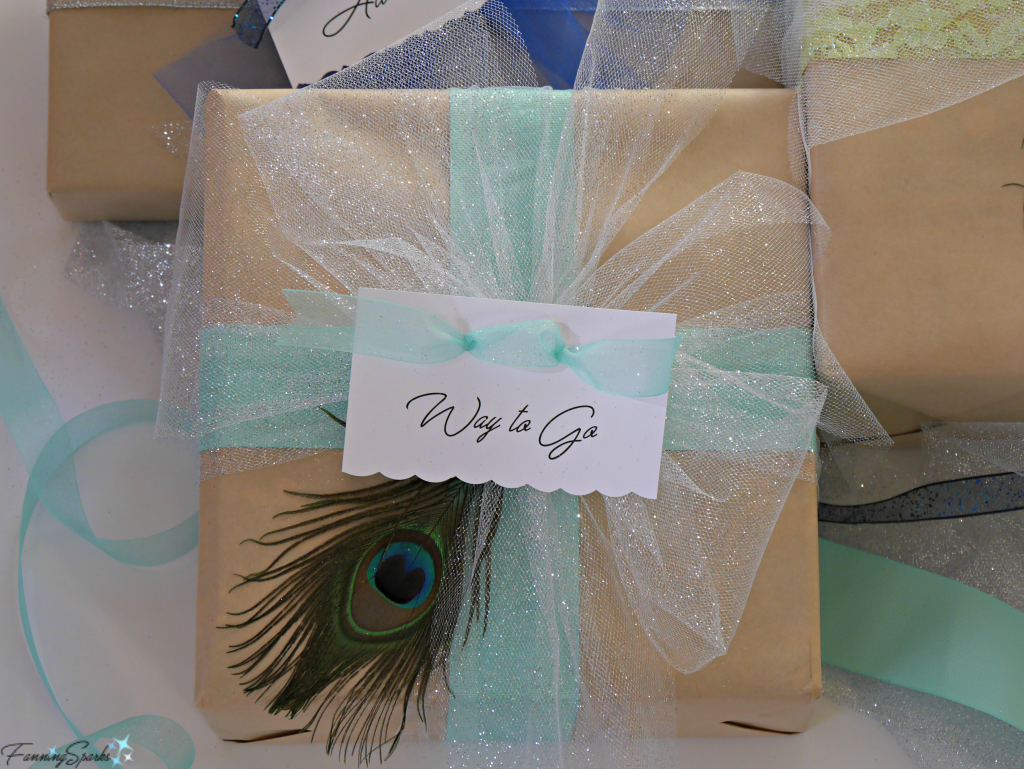
Gift-giving is usually a source of joy.  I believe a beautifully wrapped gift enhances that joyful experience.  The below photo shows a carefully wrapped gift intended to make the recipient feel extra special.  Joyful?  Check.

Pretty gift wrapping with Way To Go note. @FanningSparks

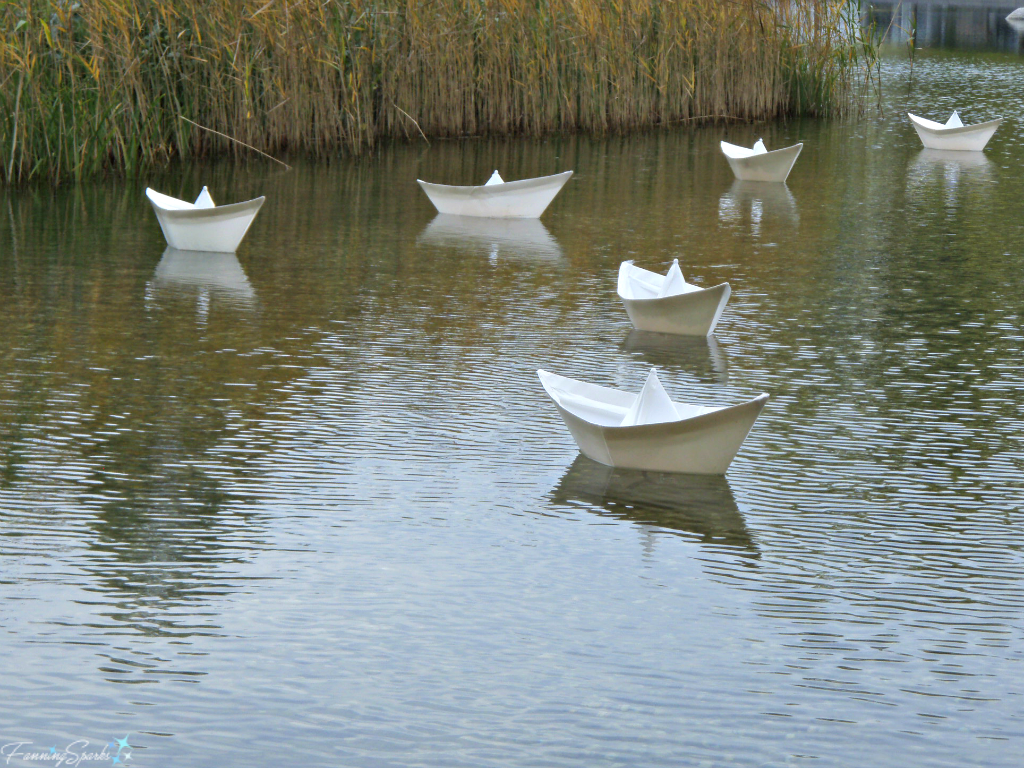
I came across this art installation in Berlin Germany some time ago.  It was a wonderful surprise!    The image of all those paper boats floating on the water of the naturalistic pond has stayed with me.  Joyful?  Check.

Paper boats floating on naturalistic pond in Berlin Germany @FanningSparks

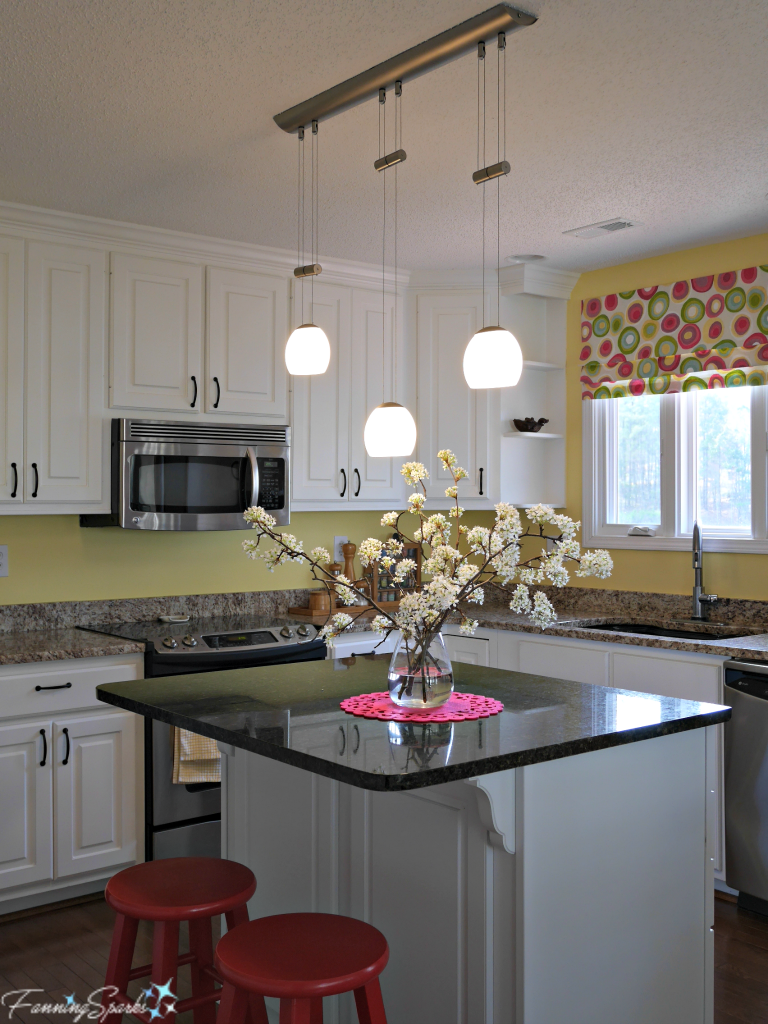
After going through this little exercise, I realize I’ve always been drawn to joyful objects as I travel and explore.  I’ve also incorporated some joyful patterns, like pops of bright color, into my home decor.  Here are a couple of examples from my current kitchen.

Bright cheery kitchen in my Villa Rica home @FanningSparks

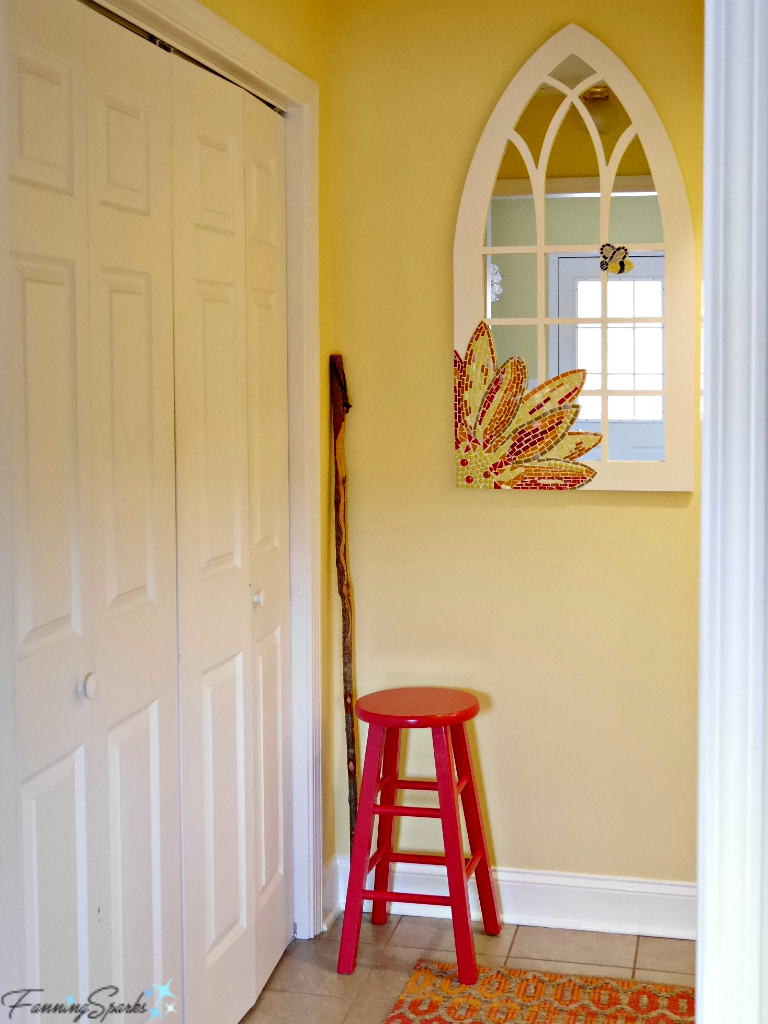
Happy sunflower mosaic mirror in my Villa Rica home @FanningSparks

Similar bright colors were chosen for the chairs and table in my outdoor seating area.

Bright pops of color in my Villa Rica garden @FanningSparks

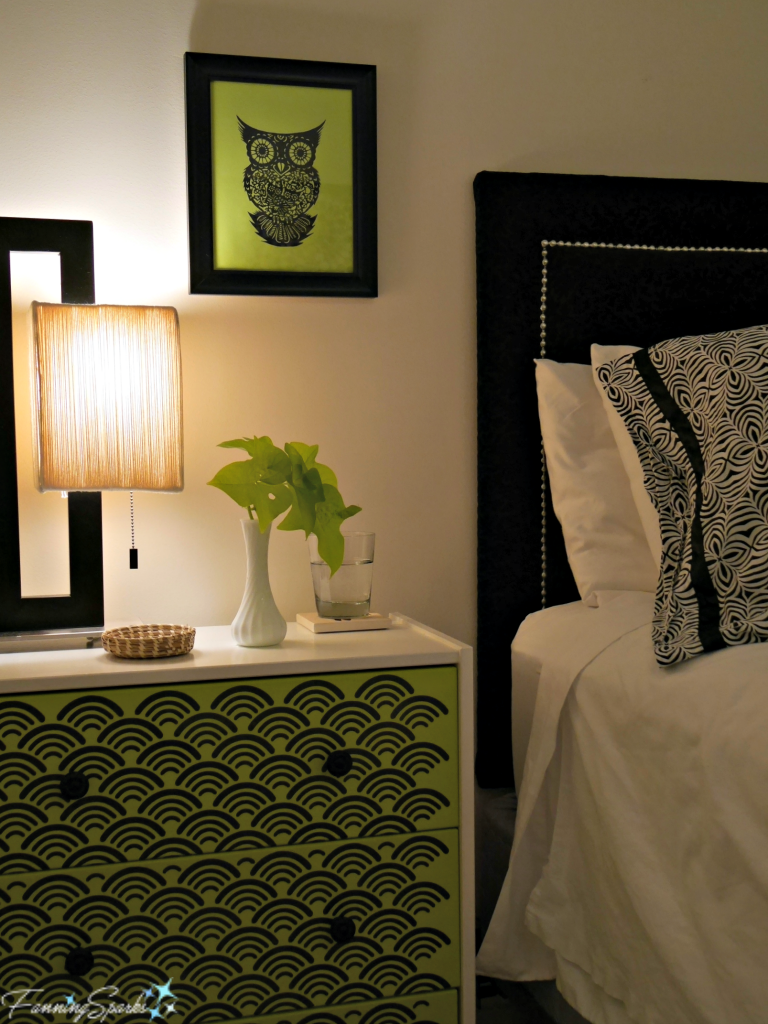
I love bright chartreuse green especially when its grounded with black and white.  Here are some examples from a condo where we used to live.

Pops of green in my Atlanta condo @FanningSparks

Pops of green in my Atlanta condo @FanningSparks

Given this new awareness of joyful objects and patterns, I’ll be looking for more ways to incorporate joy into my surroundings going forward.

More Info

You can learn more about Ingrid Fetell Lee, The Aesthetics of Joy, and her book Joyful: The Surprising Power of Ordinary Things to Create Extraordinary Happiness on her website.
Jan 8, 2019 Update: I loved the book Joyful.  See my followup post: My Top 3 Nonfiction Reads from 2018 for more info.

Today’s Takeaways

I hope you’ve enjoyed today’s post and that, you too, will be motivated to do some joy spotting.   Here are a few thoughts to get you started.

  1. Ordinary things have the ability to create joy universally.
  2. There are commonalities and patterns across joyful objects.
  3. Consider incorporating joyful objects and patterns into your own home and life.

Peg - FanningSparks Author

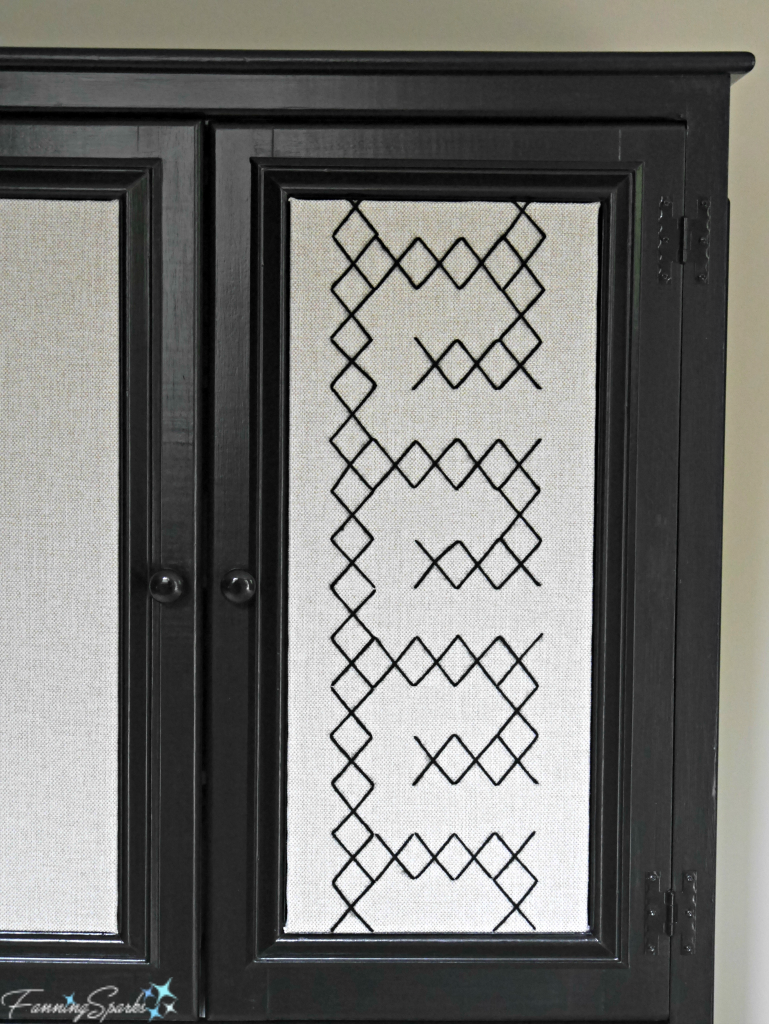
Today I’d like to delve into the cross stitch and how it’s being re-imagined in surprising new ways.  You may recall from my post on The Ultimate Maker’s Cabinet that I recently used extra-large cross stitches to add interest to my cabinet doors.  But I’m certainly not the first person to consider using the cross stitch in unconventional ways.  Here are some great examples that I found in my online exploration.

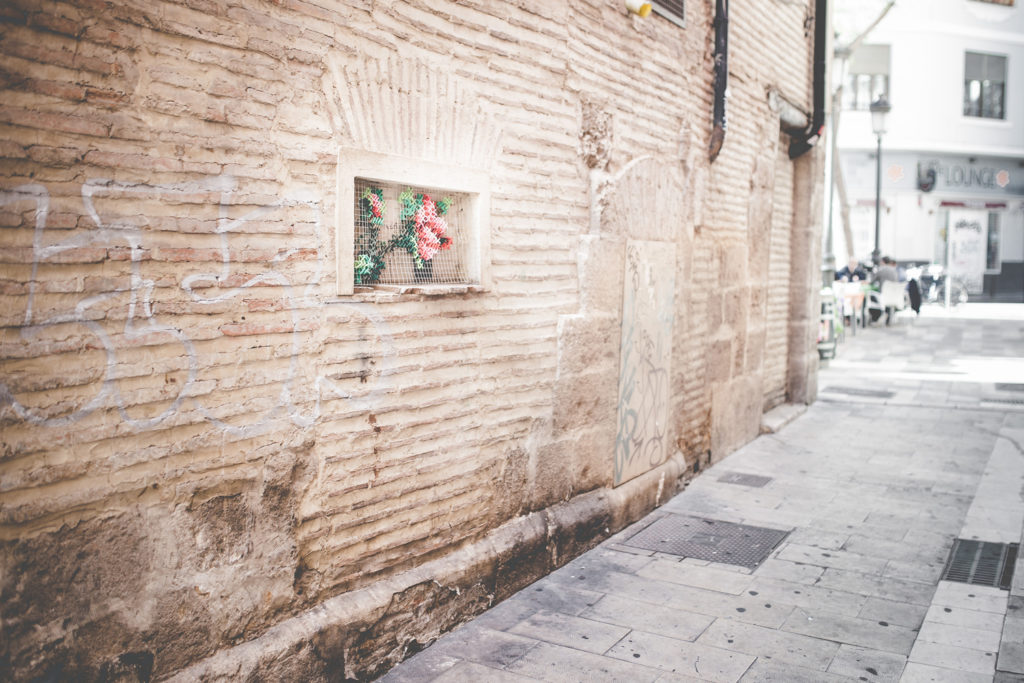
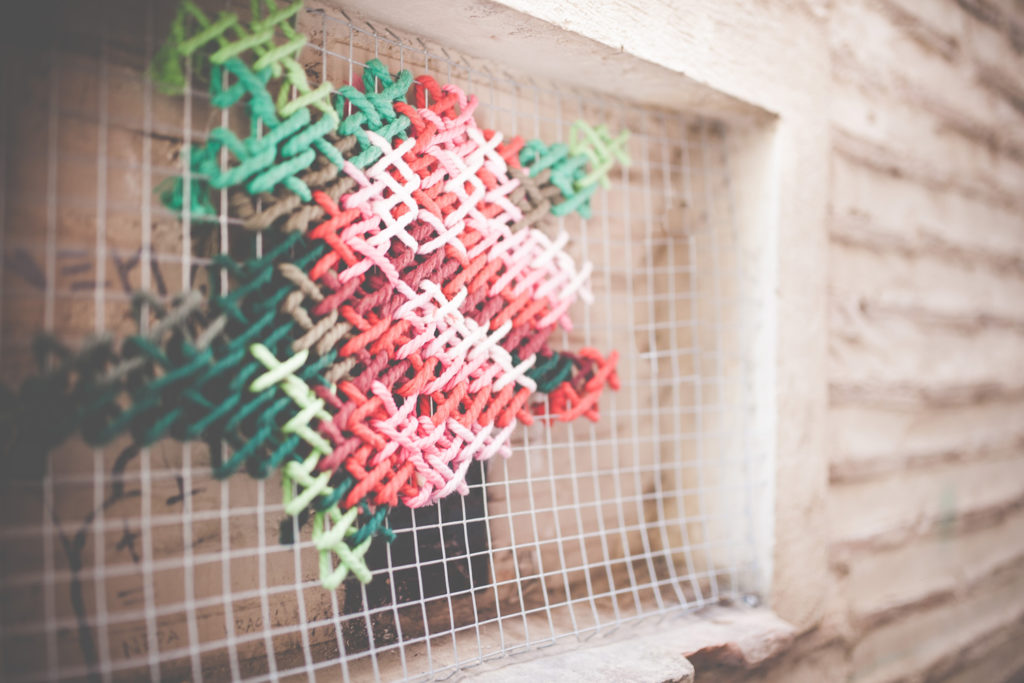
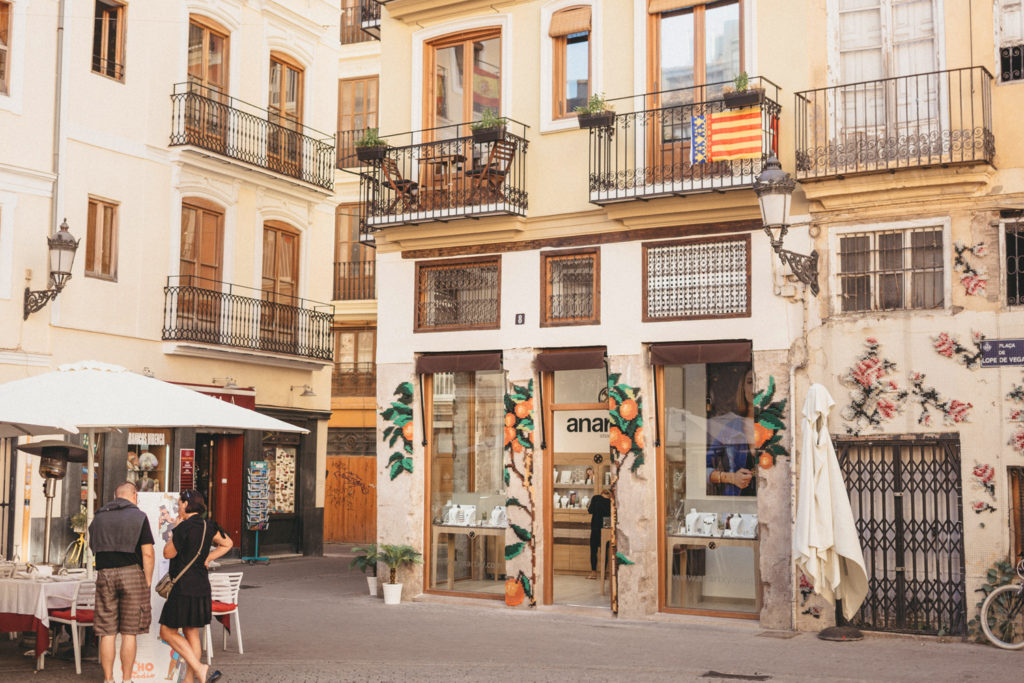
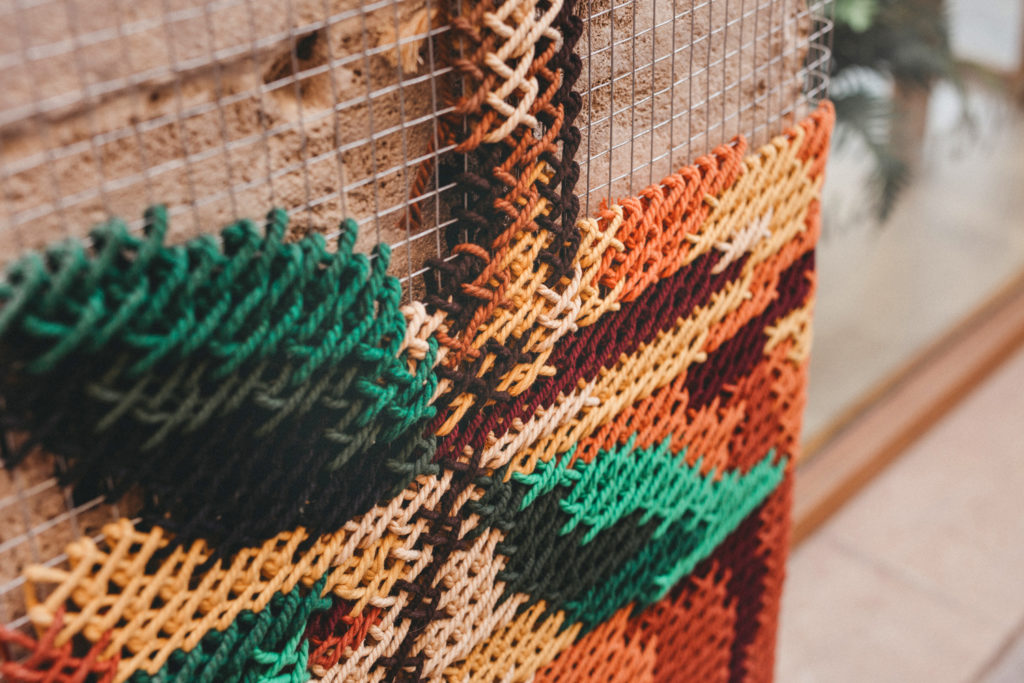
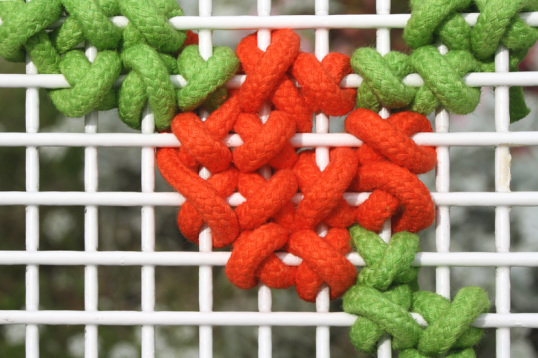
Spanish artist Raquel Rodrigo and her studio Arquicostura are known for amazing large scale outdoor installations of cross stitch.  On her website Raquel explains that she’s passionate about designing spaces and products that generate emotions.  Below are examples of her street art and street marketing.  They are created with cross stitches in colored thick string on wire mesh.  Imagine strolling along the street in Valencia Spain and coming across one of these awesome works.

Street art by Raquel Rodrigo/ Arquicostura in Valencia Spain Shared @FanningSparks
Photo via Arquicostura
Street art by Raquel Rodrigo/ Arquicostura in Valencia Spain Shared @FanningSparks
Photo via Arquicostura
Street Marketing by Raquel Rodrigo/ Arquicostura in Valencia Spain Shared @FanningSparks
Photo via Arquicostura
Street Marketing by Raquel Rodrigo/ Arquicostura in Valencia Spain Shared @FanningSparks
Photo via Arquicostura

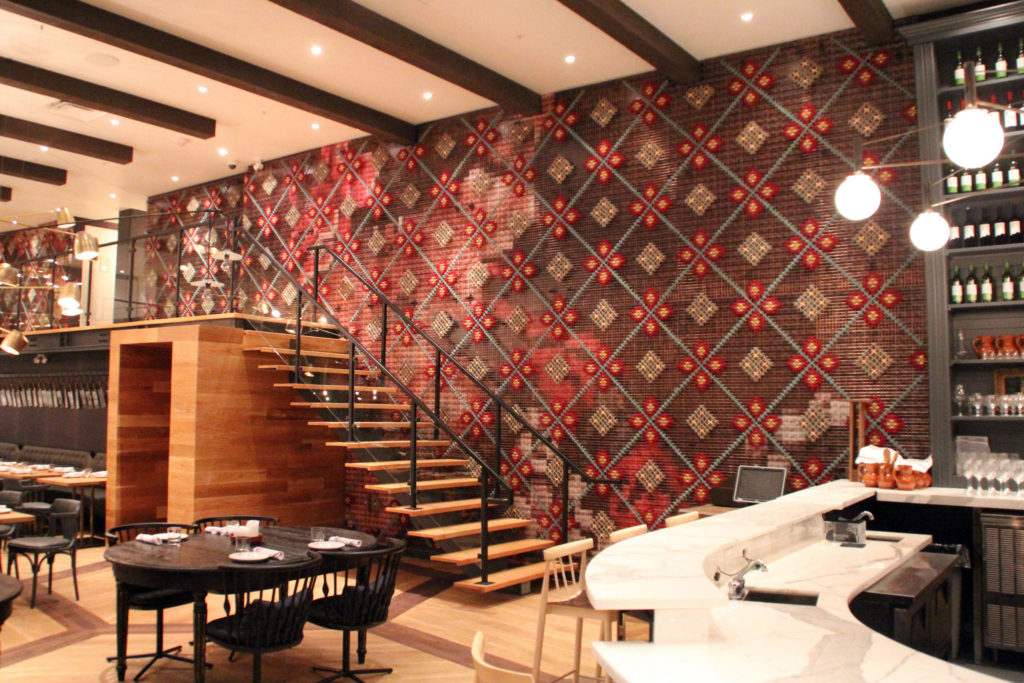
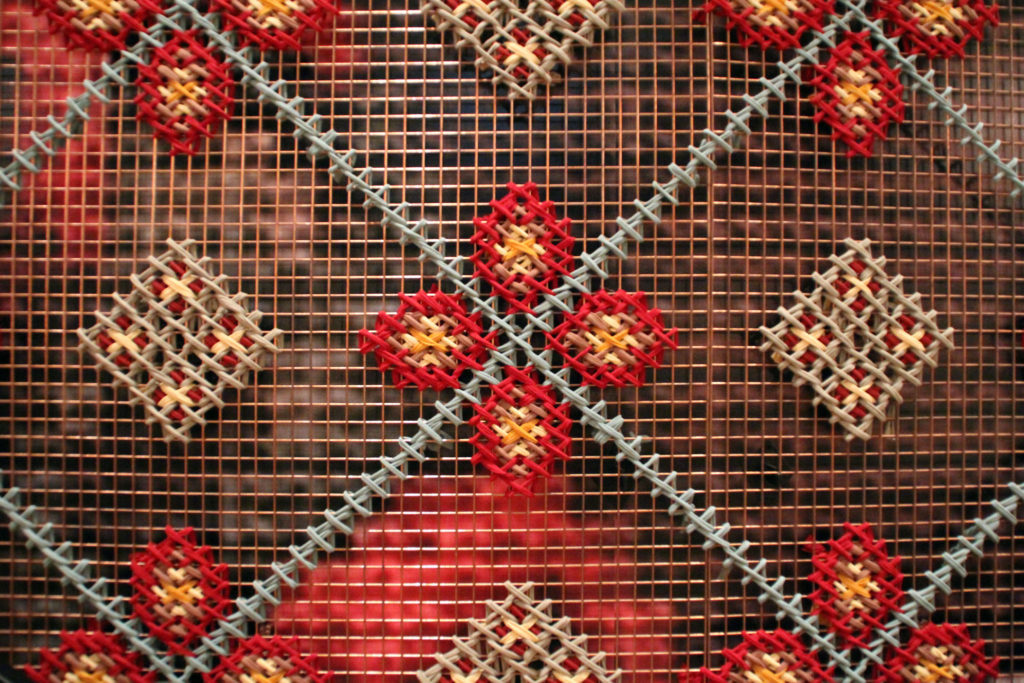
Canadian designer, Laura Carwardine, created a spectacular feature wall in Patria Restaurant, a Spanish tapas restaurant in Toronto Canada.  The two-story wall showcases an intricate cross stitch design made with over 17,000 stitches of cotton jersey on copper-coated steel grid.  I’d love to see this in person someday… hmmm, maybe I could swing by the next time I travel to Nova Scotia to visit family.

Laura Carwardine/ Cargo Collective feature wall at Patria Restaurant in Toronto Canada Shared @FanningSparks
Photo via Cargo Collective
Laura Carwardine/ Cargo Collective feature wall at Patria Restaurant in Toronto Canada Shared @FanningSparks
Photo via Cargo Collective

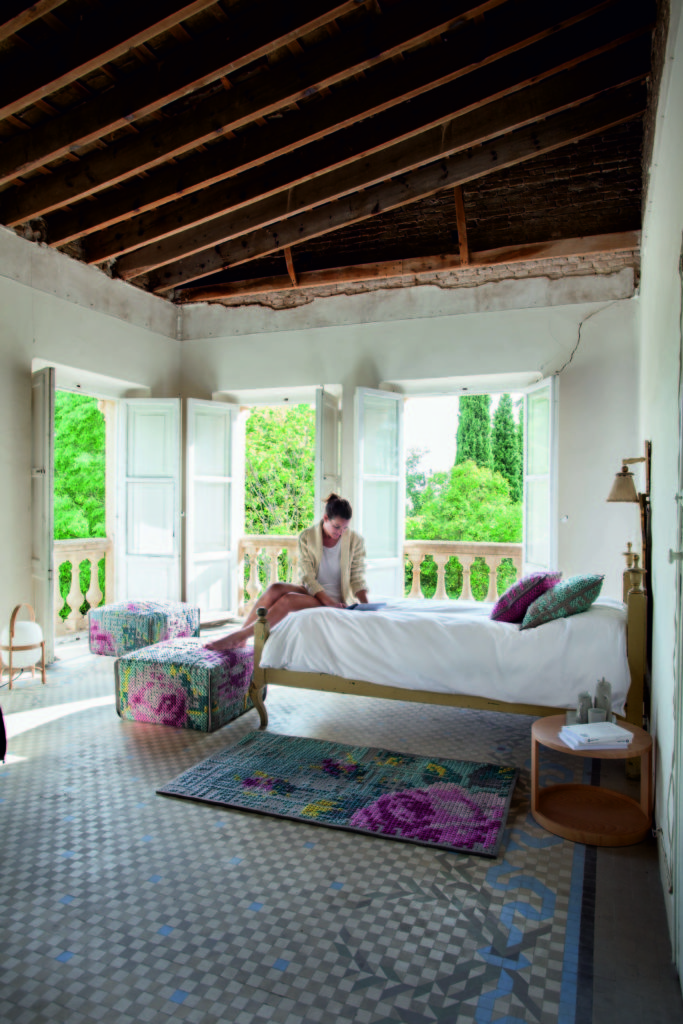
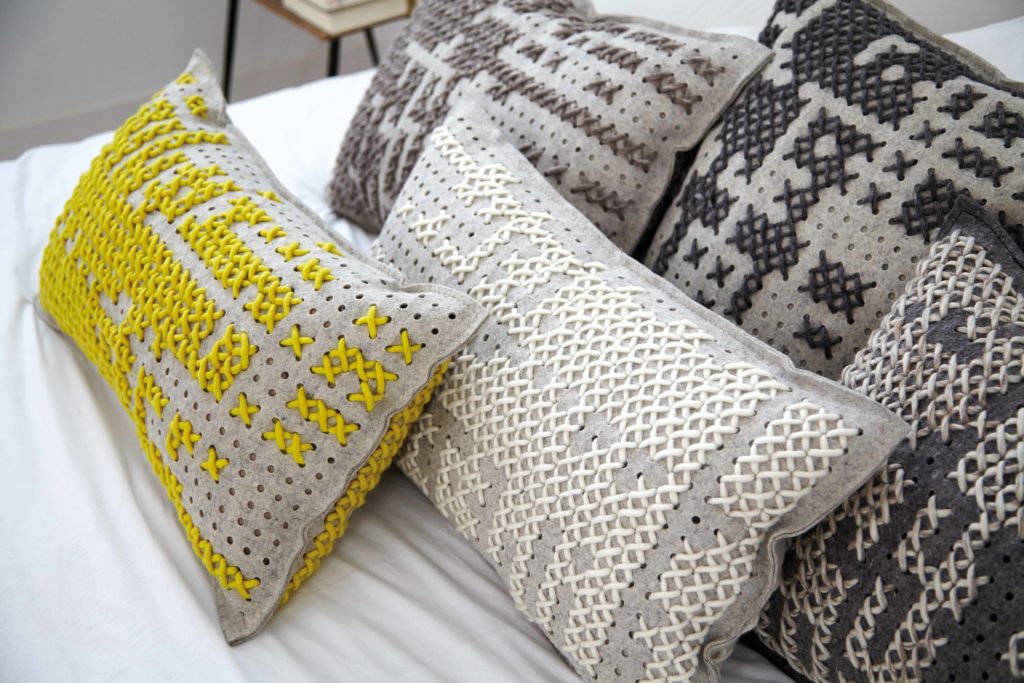
Charlotte Lancelot Design Studio, from Belgium, worked in collaboration with Gan to present a collection of over-sized felt cross stitches.  The Canevas collection included rugs, poufs and cushions.  On her website, Charlotte explains how she’s re-interpreted the cross-stitch by updating the support and materials.  She notes that even in this transformed state the cross stitch maintains its essence and adds warmth to our homes and surroundings.  That’s the perfect explanation of re-imagining the traditional cross stitch.

Charlotte Lancelot Design Studio for Gan Canevas Collection Shared @FanningSparks
Photo via Charlotte Lancelot Design Studio
Charlotte Lancelot Design Studio for Gan Canevas Collection Shared @FanningSparks
Photo via Charlotte Lancelot Design Studio

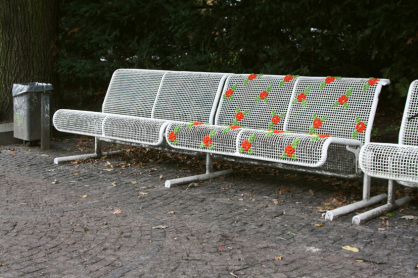
German artist, Miss Cross Stitch, leverages cross stitch in public spaces to jazz up benches, chairs and other mundane public furniture.  She refers to this as street embroidery.   These unexpected treatments delight passersby in several European cities such as Berlin and Cologne Germany, Milan Italy, and Zurich Switzerland.  Here is an example of her street embroidery:

Miss Cross Stitch street embroidery from Berlin Germany Shared @FanningSparks
Photo via Miss Cross Stitch
Miss Cross Stitch street embroidery in Berlin Germany Shared @FanningSparks
Photo via Miss Cross Stitch

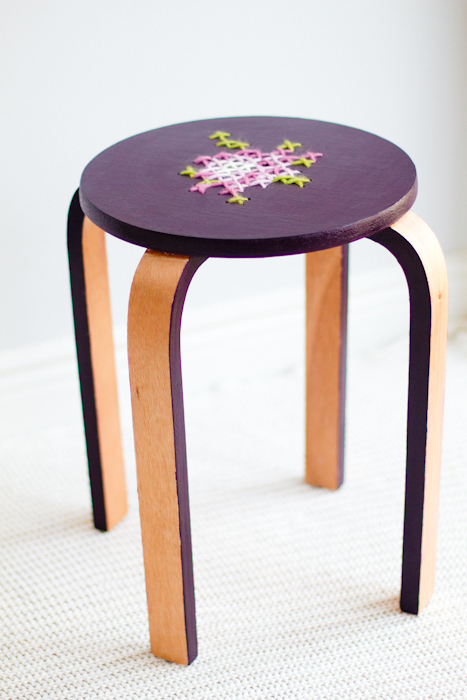
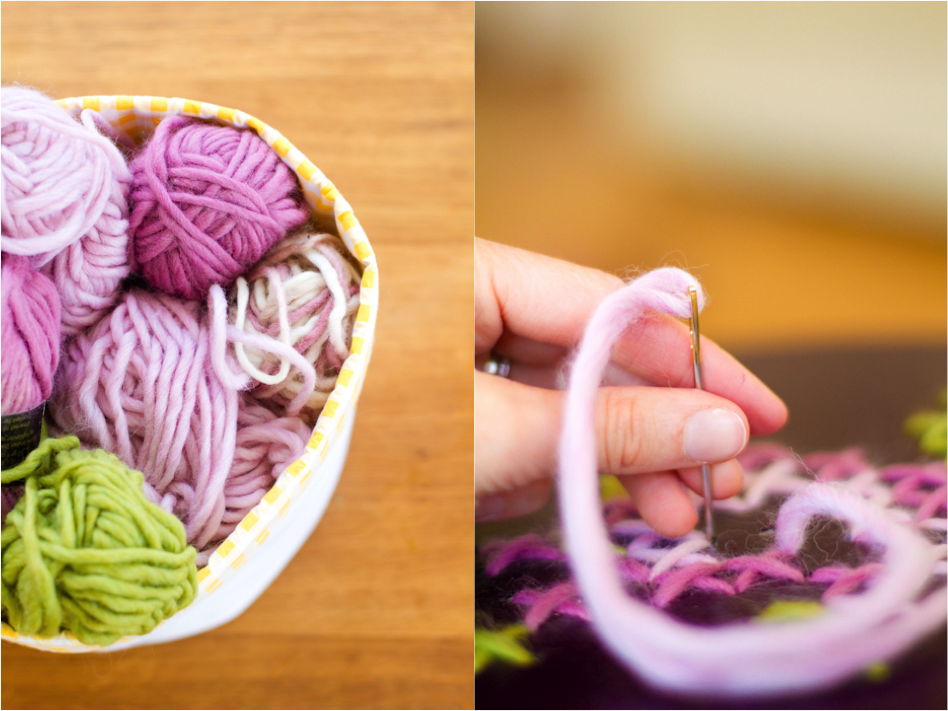
This Little Street blog, based in the US and authored by Audrey Smit, featured an unusual cross stitch project a few years ago.  It’s an interesting application of the traditional flower motif done in cross stitch on an nontraditional item.

Audrey Smit/ This Little Street cross stitched stool Shared @FanningSparks
Photo via This Little Street
Audrey Smit/ This Little Street cross stitched stool Shared @FanningSparks
Photo via This Little Street

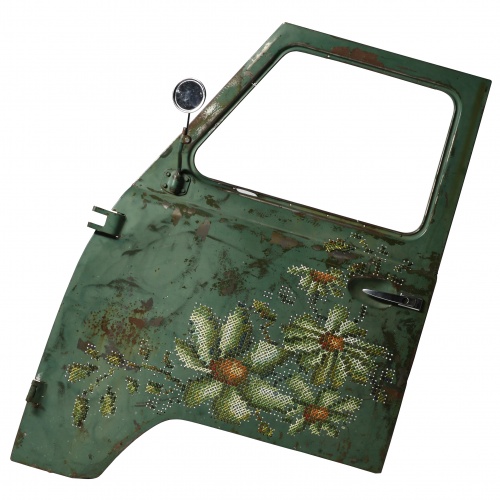
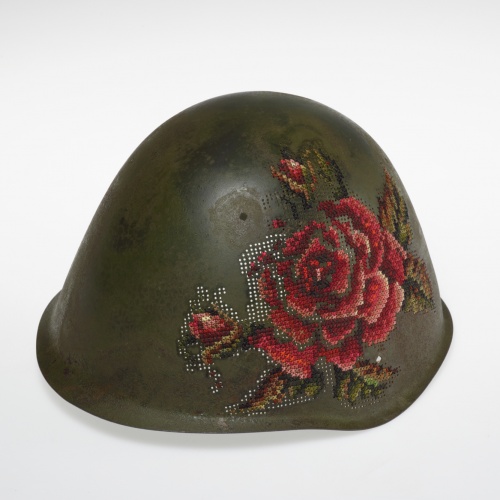
But perhaps the most unexpected application of cross stitch comes from Lithuanian artist, Severija Inčirauskaitė-Kriaunevičienė, who cross stitches domestic metal objects such as pans, watering cans, spoons and even car doors.  Integrating traditional elements from her Lithuanian heritage, Severija creates beauty from the simplest of items.

Severija Inčirauskaitė-Kriaunevičienė cross stitch Shared @FanningSparks
Photo via Severija
Severija Inčirauskaitė-Kriaunevičienė cross stitch Shared @FanningSparks
Photo via Severija

In the company of such talented artists and designers, embellishing my Maker’s Cabinet with extra-large cross stitch isn’t so exceptional.  But, as you can see from the below photo, this treatment does push the limits on the materials and scale of traditional cross stitch.  I’m very pleased with how it turned out.

Maker's Cabinet showcasing cross stitch on fabric covered panels @FanningSparks

To fully appreciate to what extent these artists and designers have reimagined the traditional cross stitch, consider the below example of a conventional work of cross stitch.  The cross stitches are hand sewn on cotton fabric with embroidery floss in a classic rose pattern.

Cross stitched roses on vintage dresser scarf @FanningSparks

More Info

You can learn more about the talented artists and designers mentioned in this post on these sites:

In addition, I created a FanningSparks Pinterest board to showcase reimagined cross stitch works.

For the basics on cross stitch, The Cross Stitch Guild  and DMC, the world-renowned thread company, both offer outstanding reference sites.

Today’s Takeaways

  1. Studying the groundbreakers in an art/craft form that interests you can spark lots of ideas.
  2. Transforming traditional craftwork in contemporary ways leads to outstanding results.
  3. Challenge yourself to “transcend the ordinary”.

Peg - FanningSparks Author