
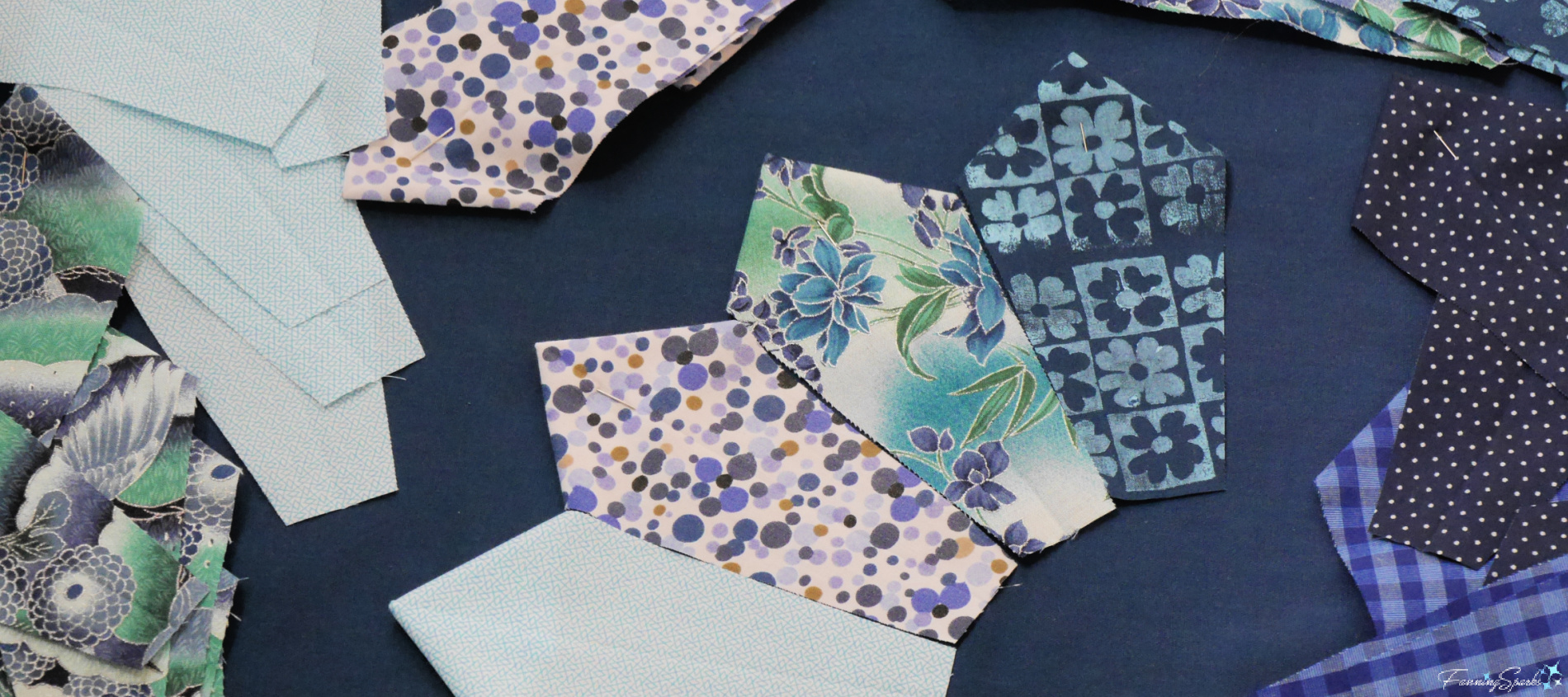
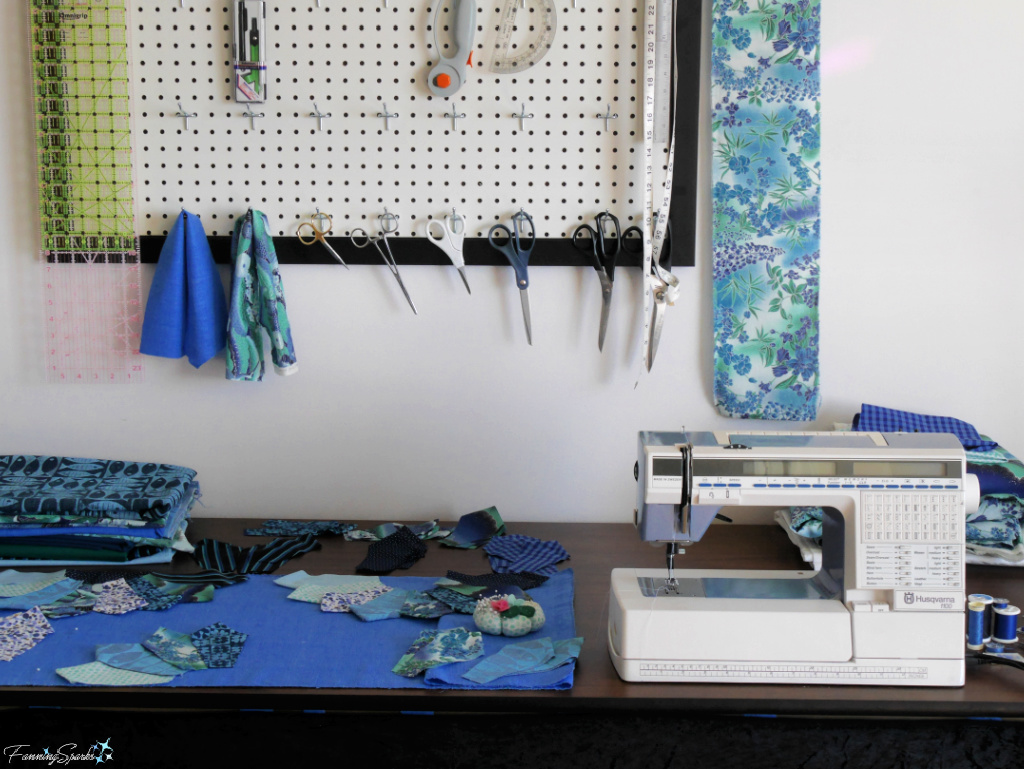
There’s lots of activity in my studio these days. I’m attempting my first quilt ― not a full-size quilt, just a table runner ― and it’s both stretching my skills and keeping things exciting.
 I’m happy to report all the decor planning I’ve been doing is starting to pay off! The mood board I created for our new Sunrise Trail home was the first step. See In the Mood for Mood Boards for the full story.
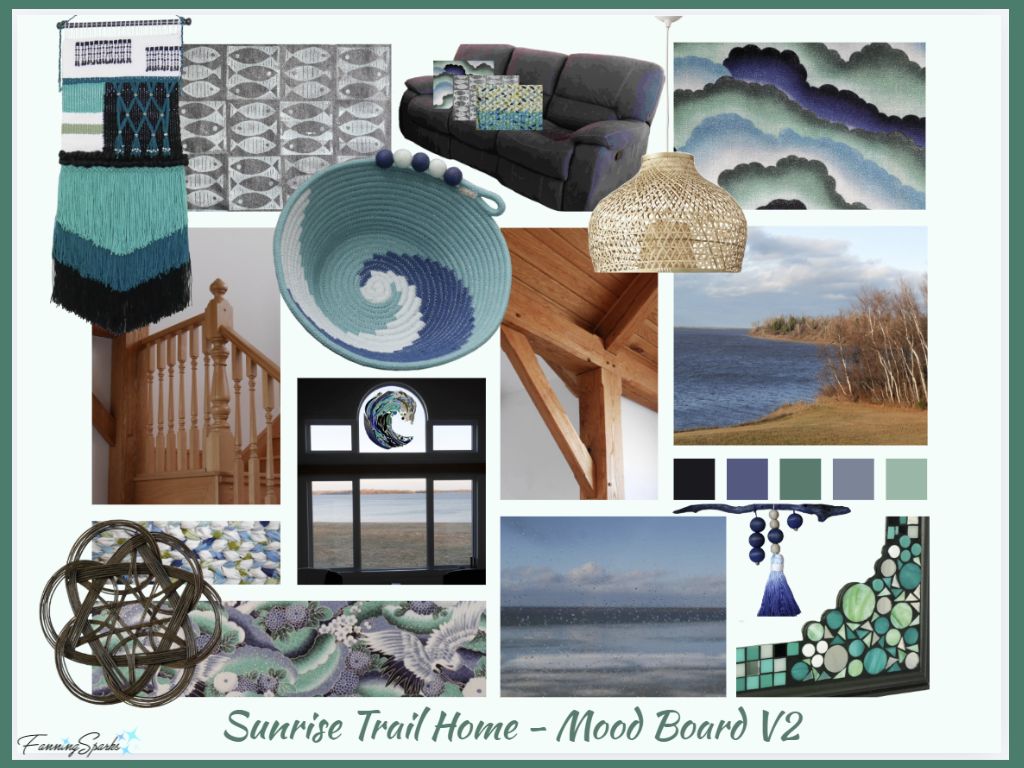
The mood board captures our new colour palette which leans into the range of blues from the sky and sea which surround our new home.

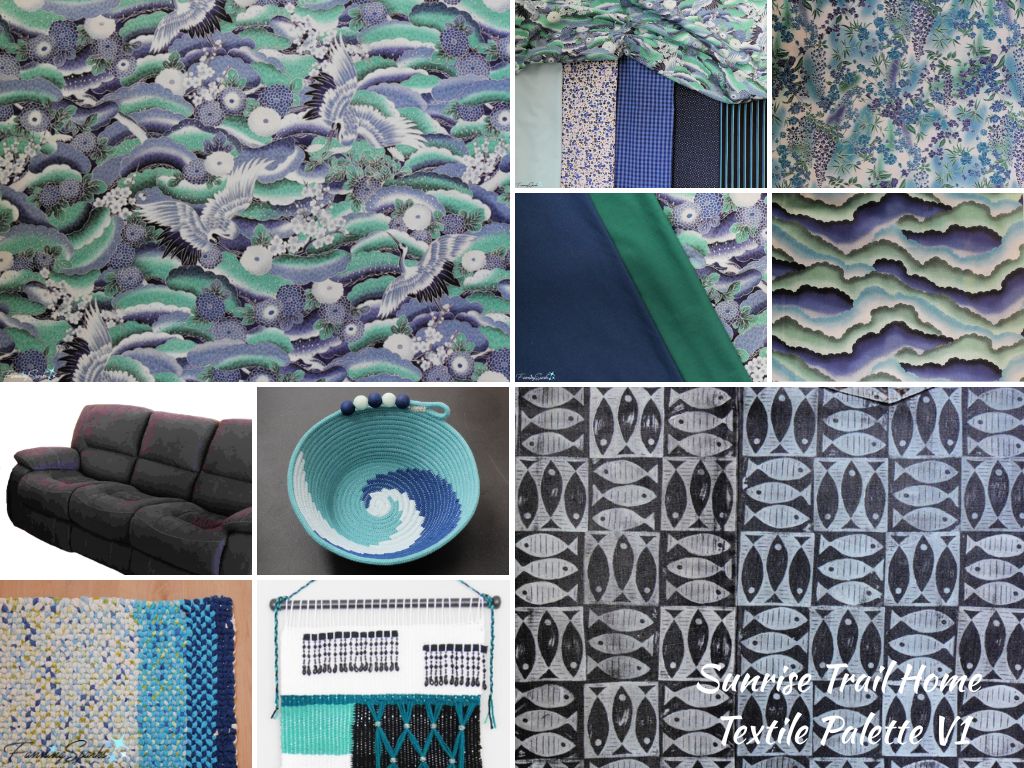
While researching mood boards and colour palettes, I came across the concept of a textile palette. The idea is to select a cohesive collection of textiles – fibres, fabrics and finished goods – for the soft furnishings in a home. I’ve been using the textile palette to pull together a selection of complementary fabrics. See Weave Texture into a Room with Textiles for the details. This is the textile palette for our Sunrise Trail home.
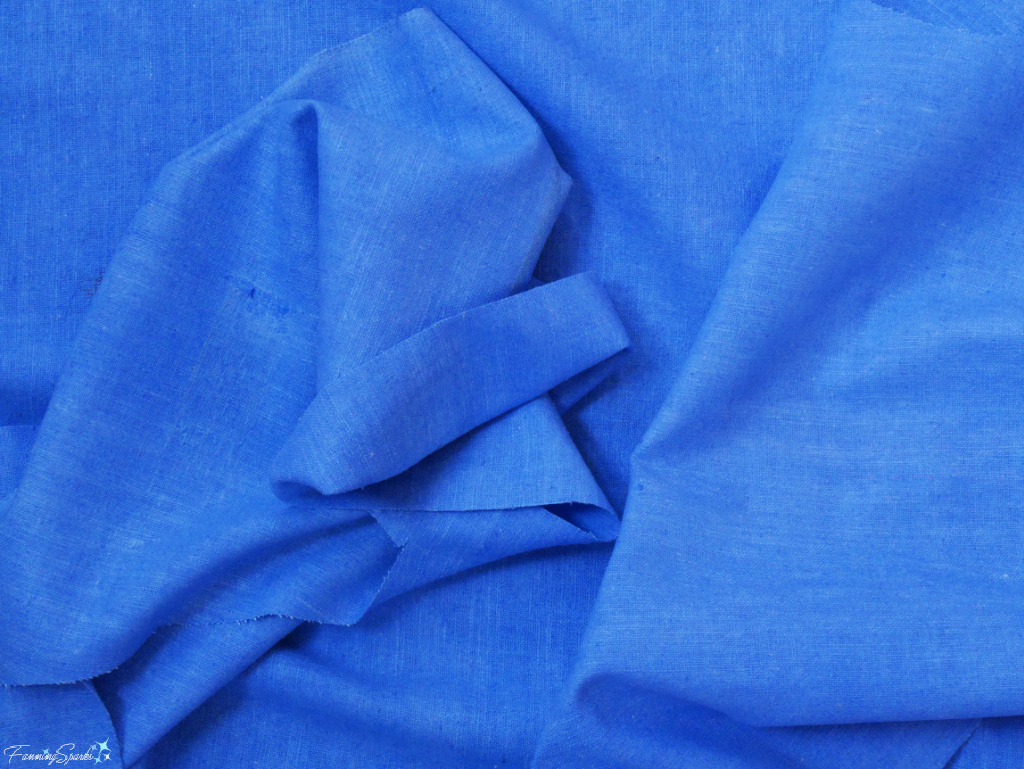
These references serve as a jumping off point for my home decorating. They will, undoubtedly, change and evolve as things progress. The quilted table runner I’m currently making is a case in point. When it came time to choose the background fabric, I started with the fabrics in my textile palette. Then I took one more run through my, admittedly extensive, fabric stash and found the ideal piece ― a slubby raw silk (aka silk noil) in the most gorgeous delphinium blue. It was left over from a summer jacket I sewed some time ago – the jacket is long gone but the remnant has travelled with me ever since. I loved it then ― and I love it now! Not only is it the perfect colour but it also has an interesting, nubby, organic texture.
As I discovered while writing the blog post, Runners Around the House, textile runners can add texture, color and form to beds, tables and other furniture surfaces. Runners can be made in a variety of styles, materials and colors using an array of techniques including sewing, quilting, weaving, embroidery, crocheting, knitting, making macramé and so on. All these options, plus their simple, straightforward shape, make runners ideal do-it-yourself projects. Most importantly, whether it’s a simple strip of colorful fabric or an elaborate, one-of-a-kind work of art, runners can add a personal touch to a room’s décor.
Regular readers won’t be surprised that I chose to go for a one-of-a-kind table runner. I’m looking for opportunities to add colour and texture to our home so a quilted table runner seemed to fit the bill.
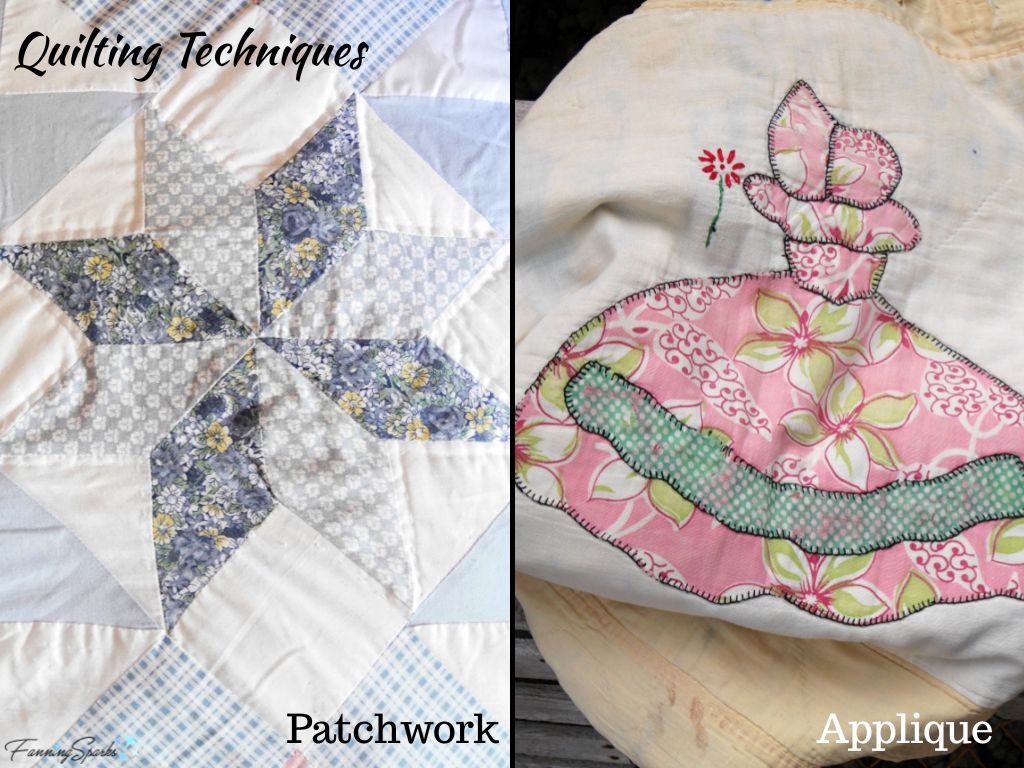
There are a number of different quilting techniques including “patchwork” where small pieces of fabric are sewn together to create larger blocks of fabric and “applique” where pieces of fabric are stitched into a design on top of fabric blocks.
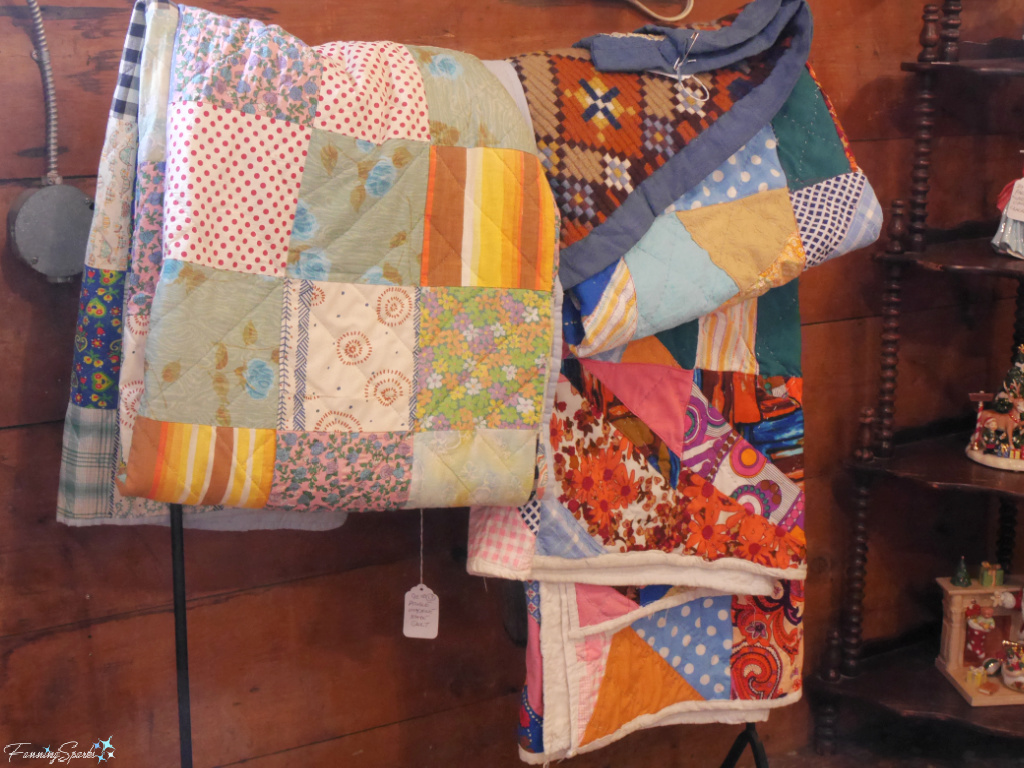
While some people might see quilts as old-fashioned, I prefer to think of them as timeless. Shown below are a couple of vintage patchwork quilts I spotted at a local antique shop recently.
People, mostly women, have been making quilts out of necessity for centuries. In Canada, for instance, “the first quilts arrived … with immigrants to ‘New France’ in the early 1600s. … Blankets and quilts were extremely important … since [the settlers] had no good way of heating or insulating their homes, especially at night” explains the article A History of Quilting in Canada. Eventually as linen and wool fibres became available locally, they were able to make their own quilts. I imagine the same would have been true in the United States.
The necessity and popularity of quilting waxed and waned through the years. For instance, when the economic hardship of the Great Depression hit (1929 – 1939), “quilting became a necessity again for many families. Quilts made at this time were scrappier, and tended to be pieced rather than appliquéd, because fabric was a scarcer resource. Despite the hardship, the Depression was a boom time for quilting. Newspapers carried syndicated quilting columns that featured pattern sketches. … Popular patterns from the 19th century were revived, and new patterns were written.”
Quilt patterns which maximized small pieces of fabric ― including fabric scraps and cotton flour and feed sacks ― were massively popular. Interestingly, flour and feed manufacturers, such as the Kansas Wheat Company, noticed the repurposing trend and deliberately began printing colorful floral and geometric patterns on their sacks.
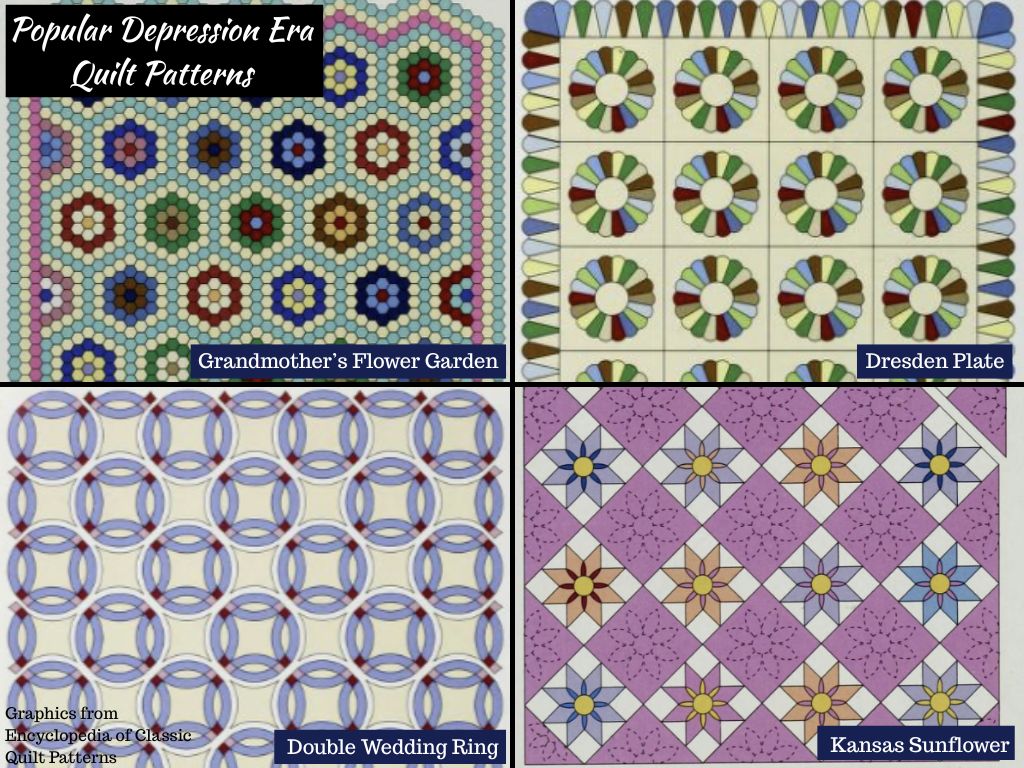
Many of the quilt patterns that became popular during this time are still popular today. Examples include Grandmother’s Flower Garden, Dresden Plate, Double Wedding Ring and Kansas Sunflower.
I chose a variation of the Dresden Plate quilt pattern for my table runner. The pattern is known by a few different names such as Grandmother’s Sunburst, Friendship Ring, Sunflower and Dahlia. However, the “Dresden Plate” name seems to be used most frequently. But why this name?
Dresden is a beautiful city in eastern Germany. But what is the connection to this quilt pattern? The last time I gave serious thought to Dresden was when Marian and I visited their Christmas markets in December 2024. See my previous blog post Postcards from Germany #2.
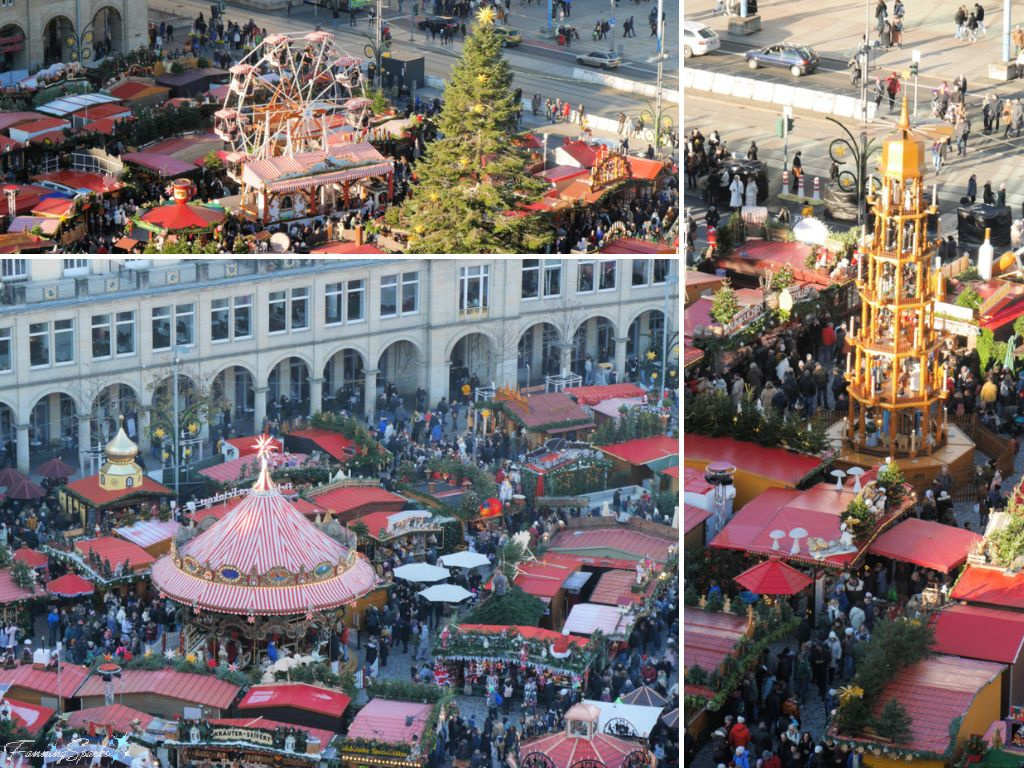
The markets were everything we’d hoped and the city of Dresden was even more amazing.
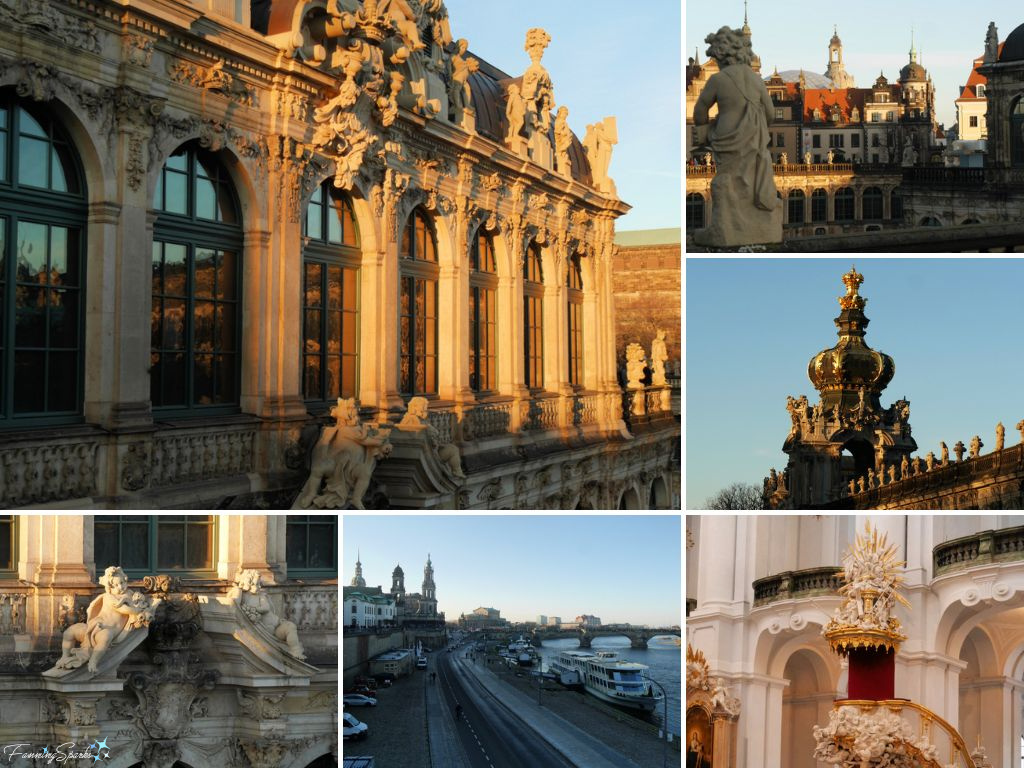
But looking back, I can’t remember ― or even conjure up ― a connection to the quilt pattern. As it turns out, the link is literally “plates”. The Dresden Plate quilt pattern was inspired by delicate porcelain plates which were manufactured near Dresden Germany over a hundred years ago. These plates are said to have been highly prized status symbols in early 20th-century American homes.
By sheer coincidence, we own a porcelain plate tied to this story. Truth be told, I bought this plate at a thrift store, along with a stack of others, for a broken china project (see A Transformation Worthy of HGTV). But when it was time to break the plates, I couldn’t bring myself to damage this one! It was just too unique and pretty. So, it’s been on display in my studio ever since.
I’ve just learned it’s an Austrian porcelain cake plate dating back to 1890-1910 ― meaning it’s a legitimate antique. The trademark on the back indicates it’s from the late Victorian or early Edwardian era when porcelain bearing the same mark was heavily exported to North America to satisfy the demand for European fine dining wares. It’s no surprise, then, that this plate is worth considerably more than the few dollars I paid for it!
This plate has several unique features including a deeply scalloped rim, a ruffled “Dresden-style” edge, two integrated open-pierced handles, a delicate pink blossom design (applied as a decal) and gilt work around the perimeter.
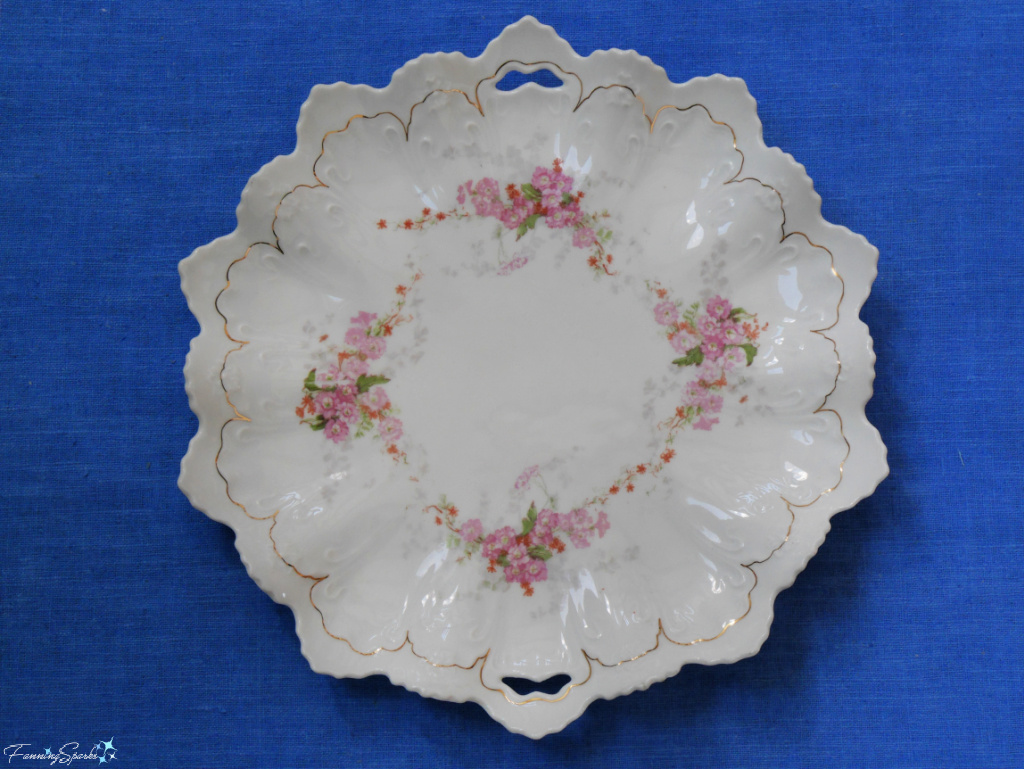
To bridge back to the Dresden Plate discussion, my Austrian porcelain cake plate is the same style, and comes from the same era, as the Dresden plates which are believed to have inspired the quilt pattern. In fact, it illustrates the connection perfectly because this plate has wide, molded panels radiating out from a smooth center circle. It’s not too big of a leap to believe a quilter could have been inspired to piece together the blades of a fabric Dresden Plate quilt block after examining the layout of a similar cake plate.
How’s that for an uncanny coincidence? I just happened to choose a quilt pattern which just happens to be tied to an antique European porcelain plate like one I just happen to own.
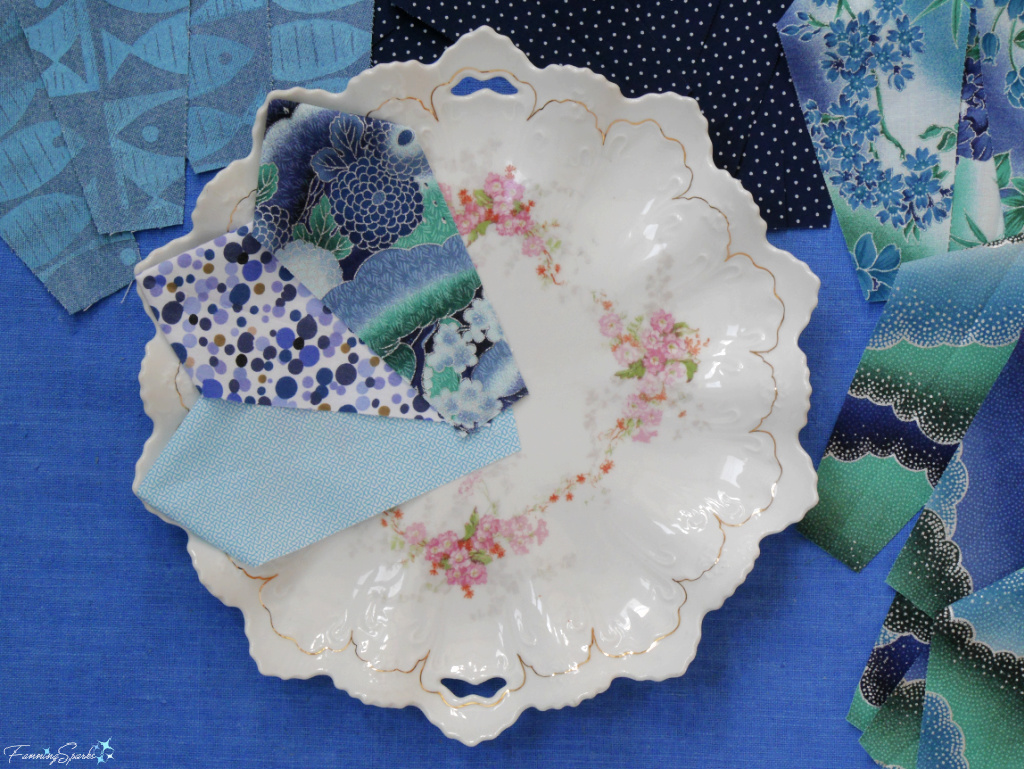
To complete the story about the origin of the Dresden Plate quilt pattern, there are actually two schools of thought on how it all came about. The first school of thought is as described above ― elements of the actual plate inspired the design. The second school of thought is explained in the article The Rivalry and Dresden Plates and Quilts, Oh My! on The American Ceramic Society website. It states “However, the quilt block’s shape is not modeled on the fronts of the plate; rather, it is modeled on the mark that Dresden artists used on the back or bottom of plates to identify their work. The blue crown mark became the model for the quilt block’s alternating pattern of rounded and pointed wedge ends.”
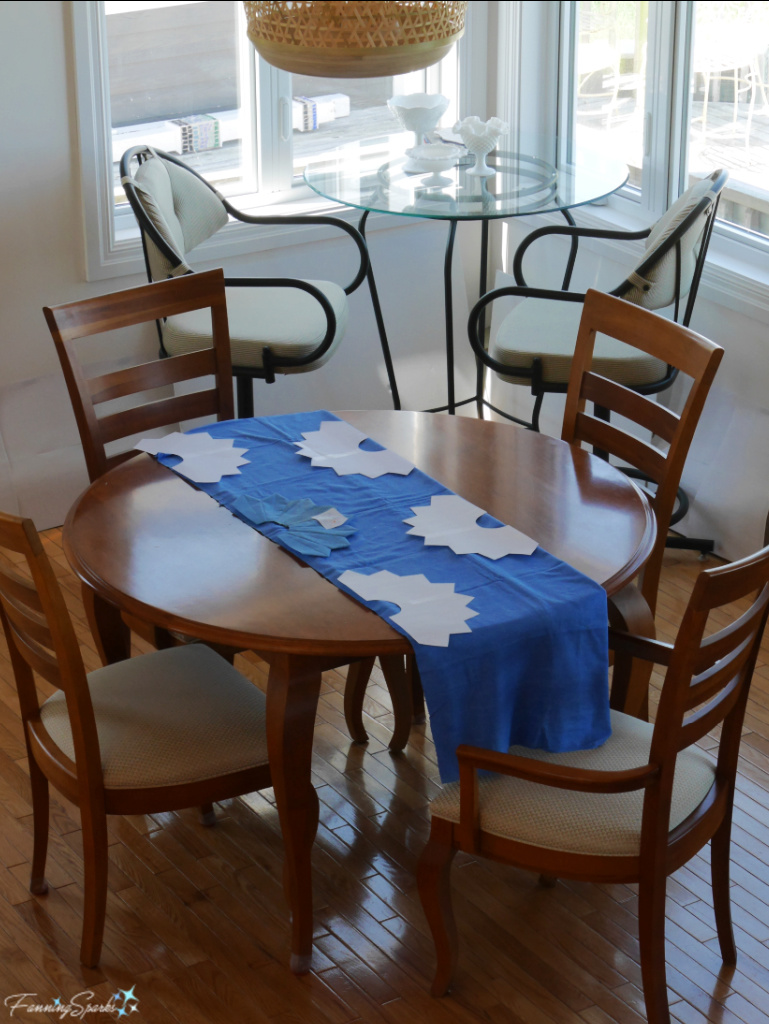
Regardless of what inspired it, the Dresden Plate quilt pattern is a winner! Here’s how it might look as a table runner on our dining table. This mockup shows five half-circles or fans ― each with eight pointed blades.
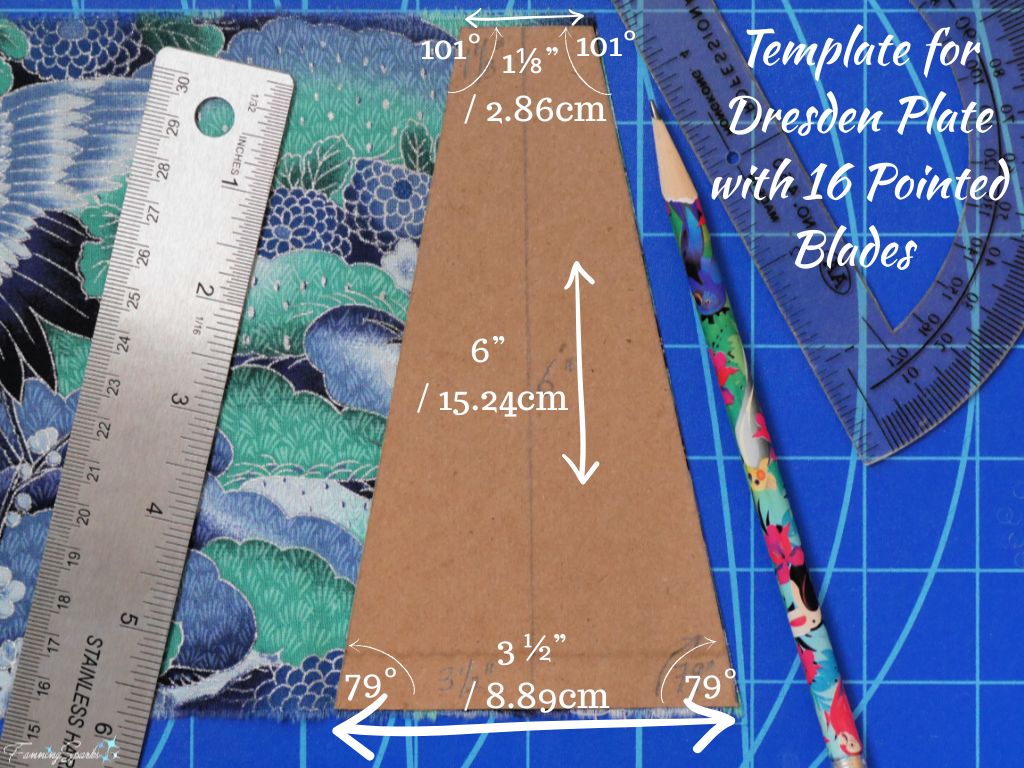
I had to dust off my old high school circle geometry skills to convert the standard 20-blade circle into a 16-blade circle. Alternatively, templates are available for purchase. Here’s the template I created.
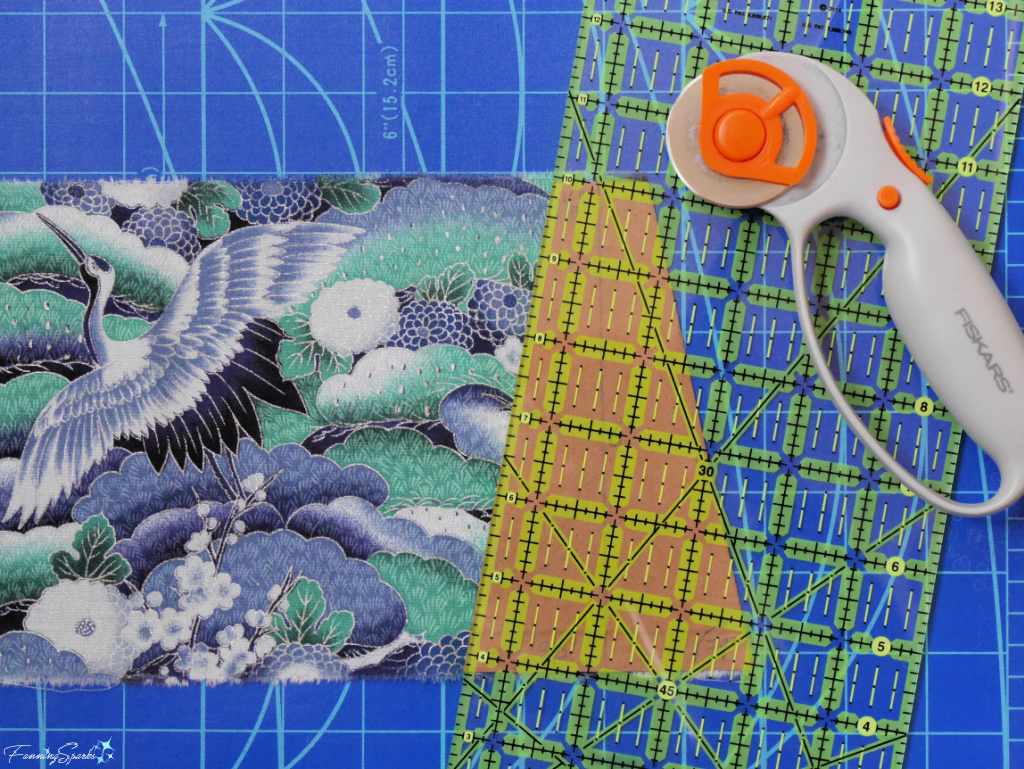
I overlaid my template with a quilting ruler to cut out my fabric blades with a rotary cutter.
Sewing the blades is quite straightforward as shown below.
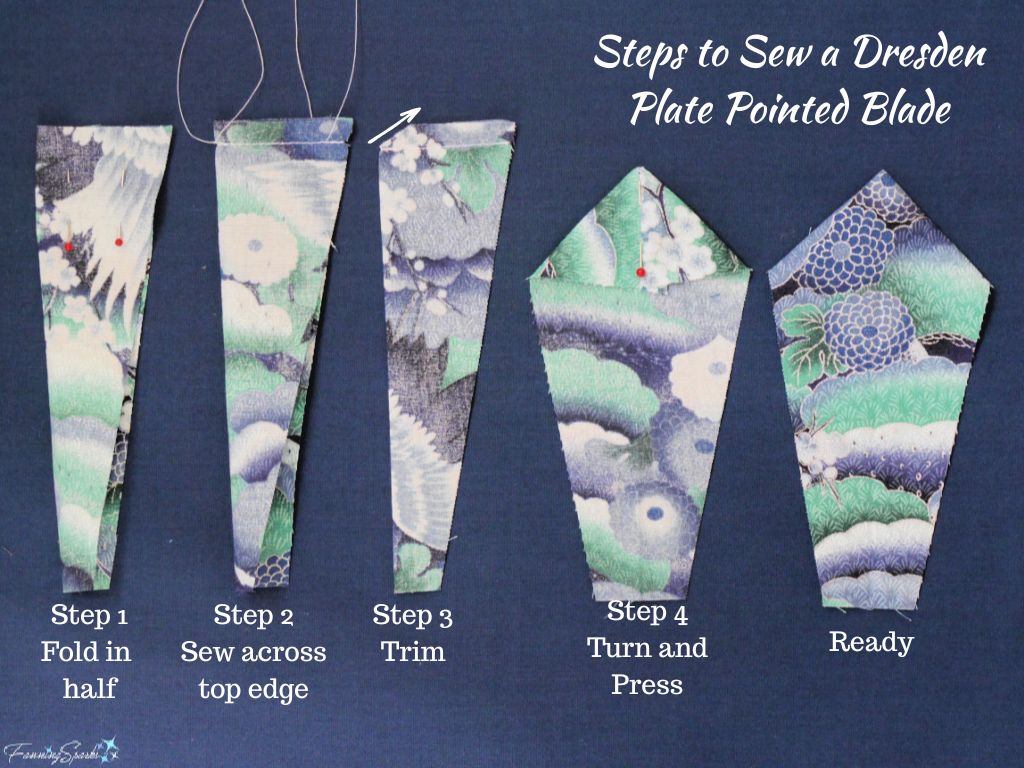
One time-saving tip is to sew the blades in a continuous seam. It’s called “chain piecing” and it’s done by sewing one blade after the other without ending the seam, cutting the thread or lifting the presser foot. After the row of blades is sewn, simply clip the threads between blades.
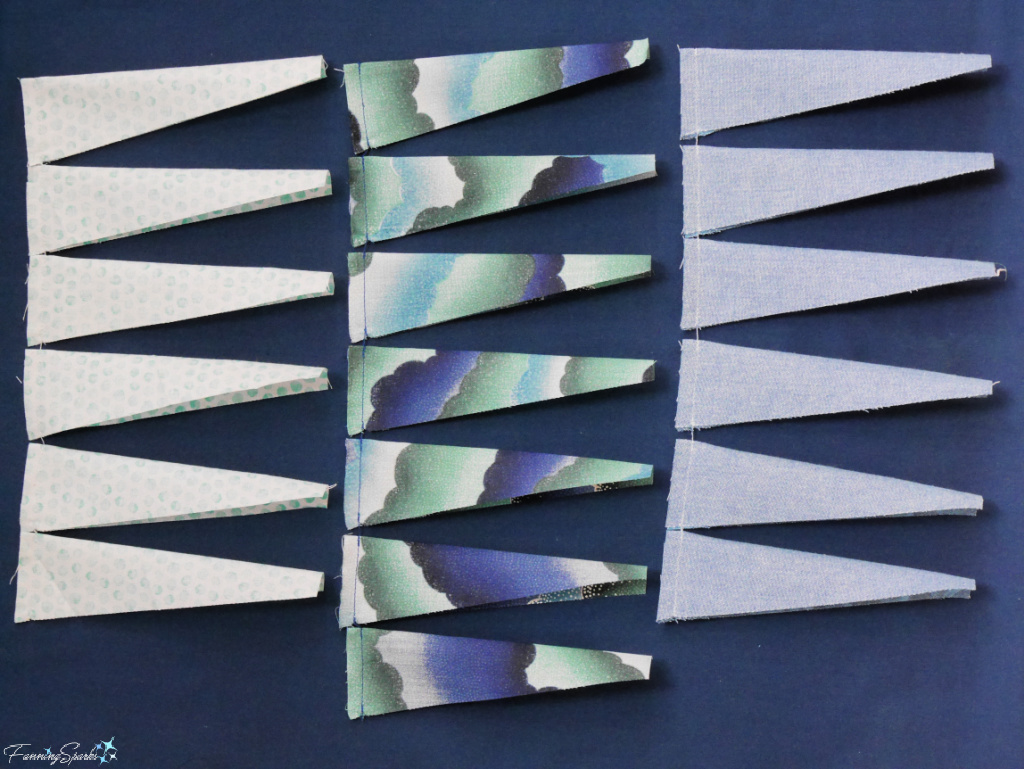
Here are some of my Dresden Plate blades ready to be laid out in the semi-circle pattern.
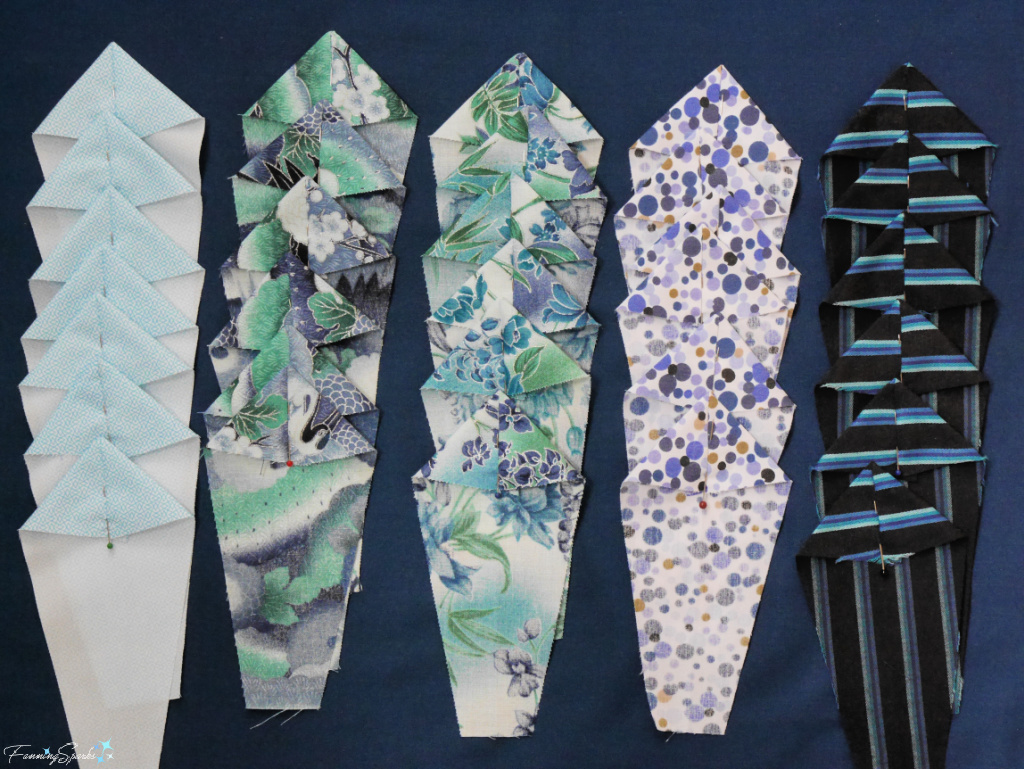
The next step is to arrange the Dresden Plate designs. Should the blades be sequenced from light to dark? Should all the semi-circles be the same? How will I create the centers of the circles?
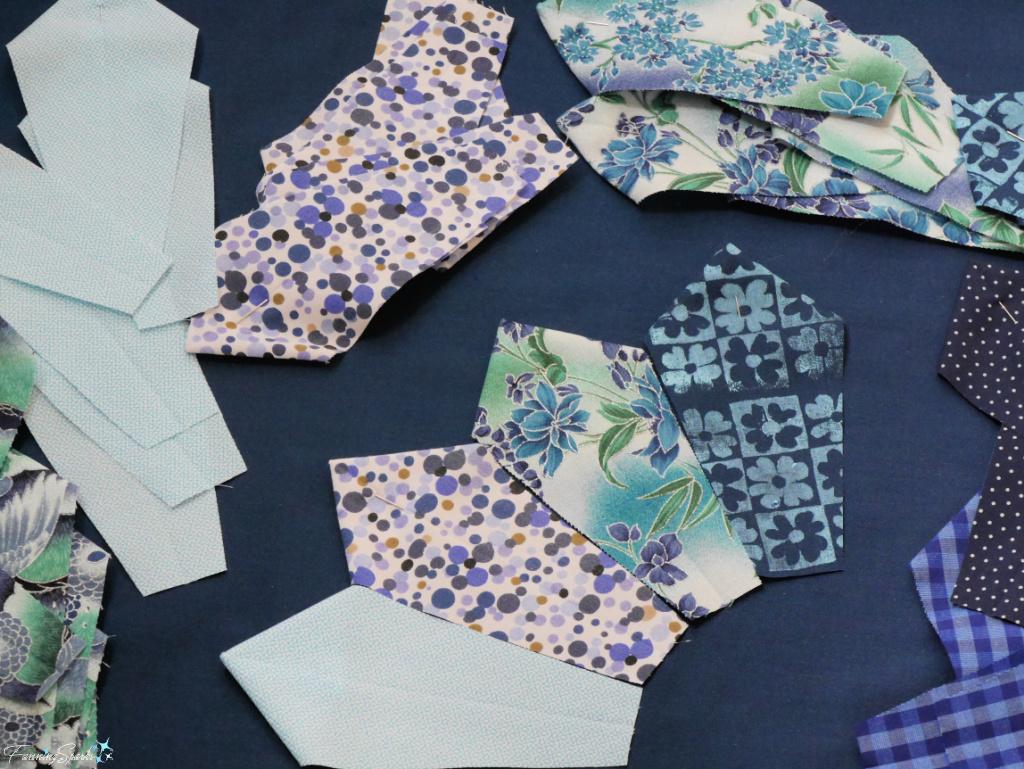
I’m off to a running start with my Dresden Plate table runner! But there are still a lot of steps to finish ― some of which I have yet to figure out. Thank goodness for online tutorials and reference books!
If (OK… more like “when”) I get impatient or frustrated, I’ll just remind myself that “when you challenge the brain with unfamiliar tasks … it lights up new pathways, offering a unique neurological boost” as Tiffany Nieslanik wrote in her article How Knitting May Be Rewiring Your Brain. See my previous blog post Grandma Hobbies for Everyone for more on the benefits of hobbies which engage the mind and hands in concert.
More Info
Previous blog posts mentioned in this blog post include:
. In the Mood for Mood Boards
. Weave Texture into a Room with Textiles
. Runners Around the House
. Postcards from Germany #2
. Grandma Hobbies for Everyone.
The following resources were consulted in writing this blog post:
. A History of Quilting in Canada article; Published 2017 on One Stitch One Step website
. Encyclopedia of Classic Quilt Patterns book by Patricia Wilens which is available here on Internet Archives; Published 2001
. Rivalry and Dresden Plates and Quilts, Oh My! A Look at the History and Impact of European Porcelain Production article; Published August 2024 on The American Ceramic Society website
. Dresden Porcelain article; Published March 2013 on GAUK Artifact website
. How To Make Your Own Dresden Plate Template and Dresden Plate Quilt Block Tutorial articles by Becky Jorgensen; Originally published circa 2014 on the Patchwork Posse website
. 21 of the Most Gorgeous Dresden Plate Quilt Patterns You’ll Ever See article by Miriam Ronne; Published August 2022 on the Quiltdom website
. Dresden Plate Block Pattern + Tutorial article by Melissa; Published October 2021 on the Hand Madiya website
. Dresden Plate Quilt How-To & Free Templates article; Published in October 2017 on the Quilting Daily website.
Today’s Takeaways
1. Consider trying a new craft to both stretch your skills and keep things exciting.
2. Quilts have been made out of necessity for centuries.
3. While some people might see quilts as old-fashioned, I prefer to think of them as timeless.


Comments are closed.