

This year’s Madison in May Spring Tour of Homes was another great opportunity to visit outstanding historic properties in the Madison, Georgia area. But for me, what started out as a house tour somehow morphed into a house crush. Let me explain.
One of the properties featured on the tour this year was the Foster-Thomason-Miller House. It doesn’t look too grand right now but here’s the thing‒this house was once a masterpiece and, if all goes according to plan, it will be again.
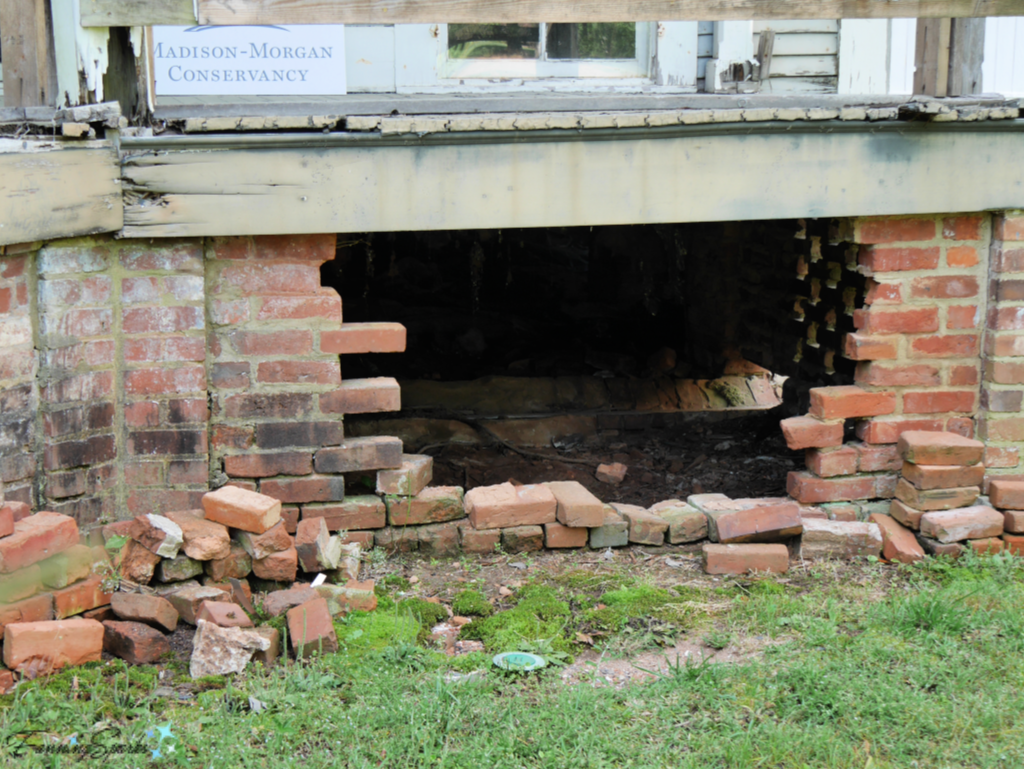
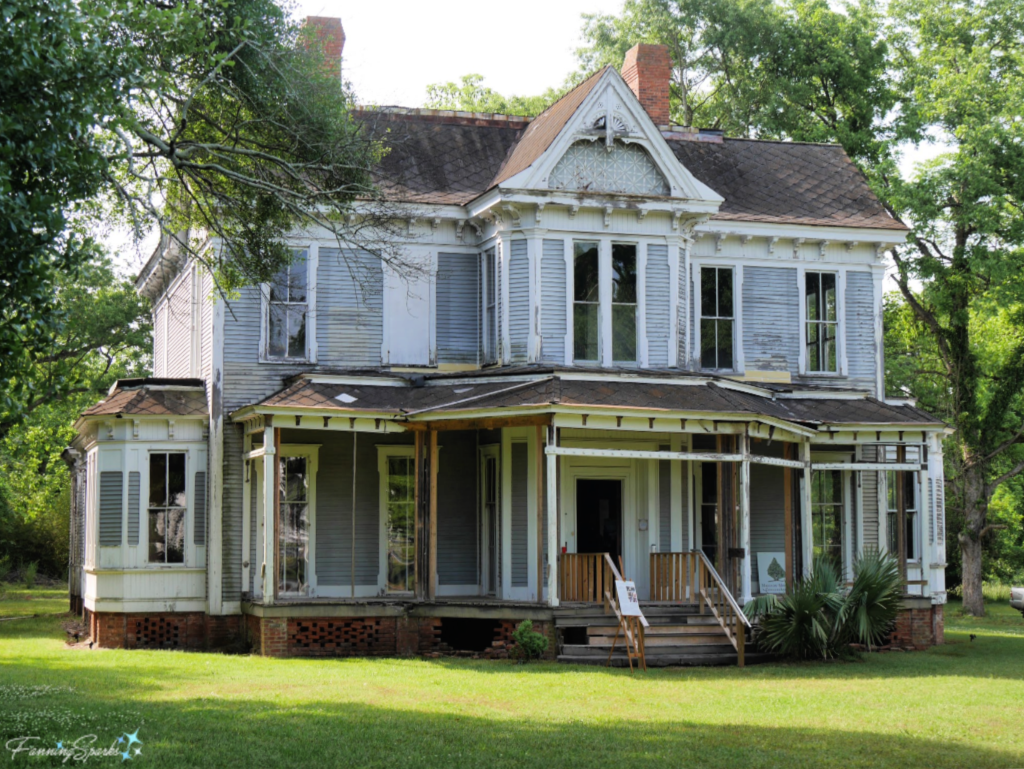 This house is located on Main Street in Madison. I often drive by it when I run errands around town. Sadly, the property was neglected and had fallen into disrepair. Then over the last few months, I noticed things were happening‒workers were present, scaffolding was erected, wooden braces were installed, piles of bricks appeared, and signs were posted.
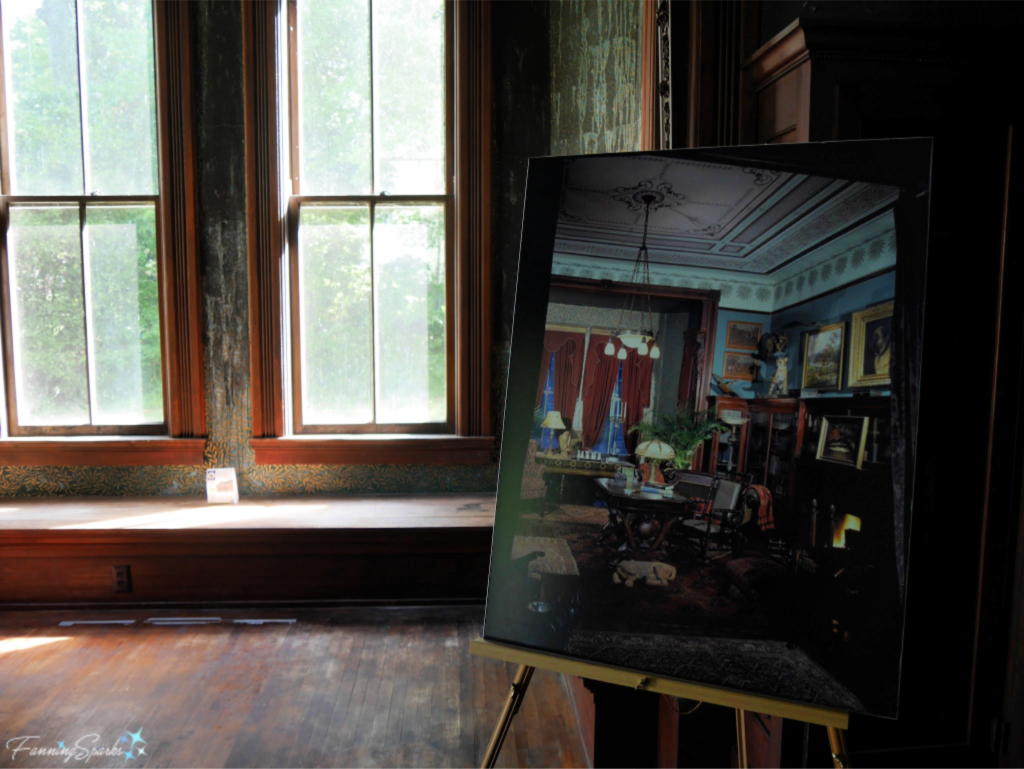
 When I noticed the house was included on the Madison in May tour, I was excited to go have a look. I wasn’t disappointed‒there’s definitely something special about this house! Below you can see the Library as it is today with a large photo showing how it looked previously.
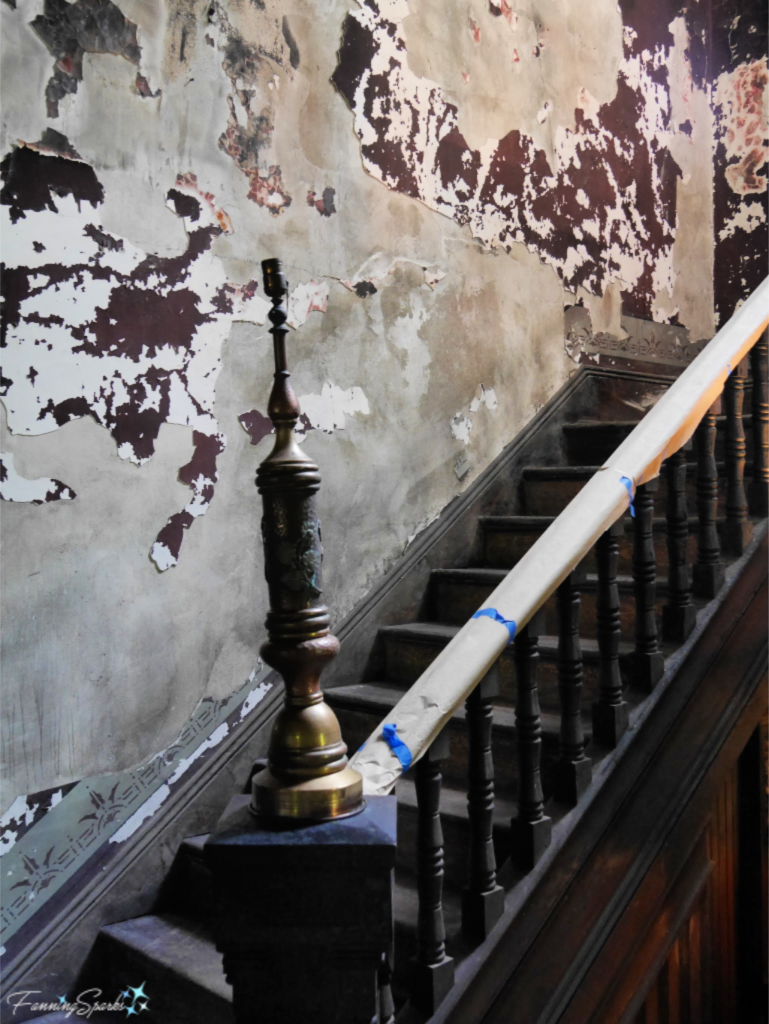
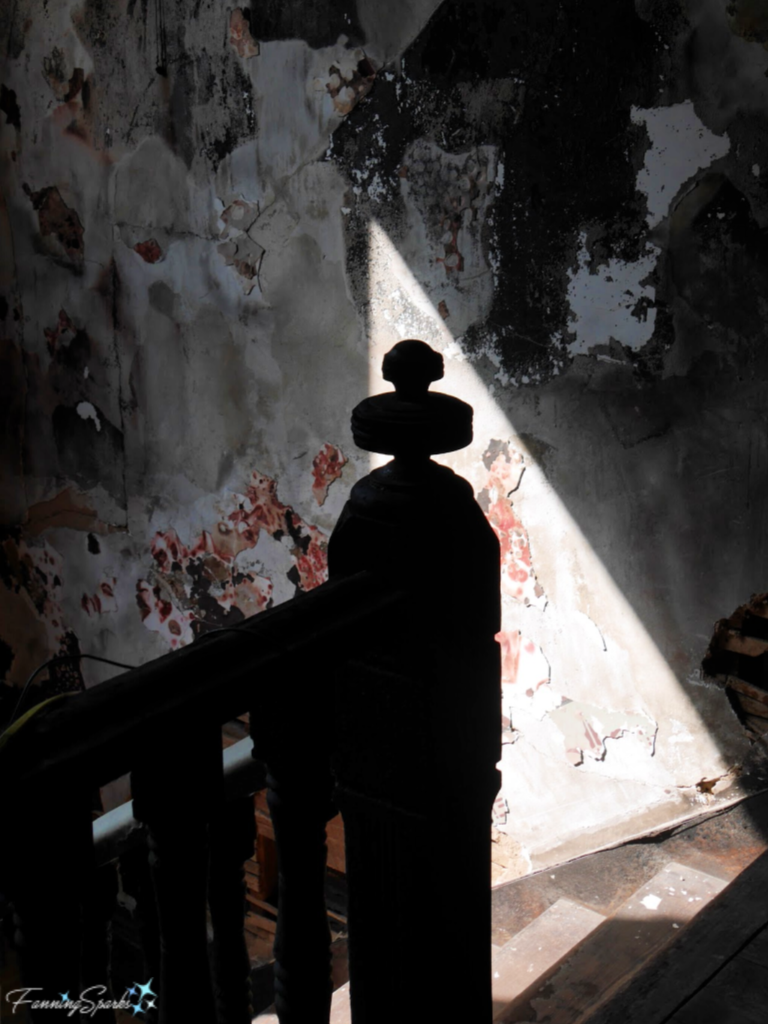
 This is the Entry Hall which originally showcased a solid walnut staircase.
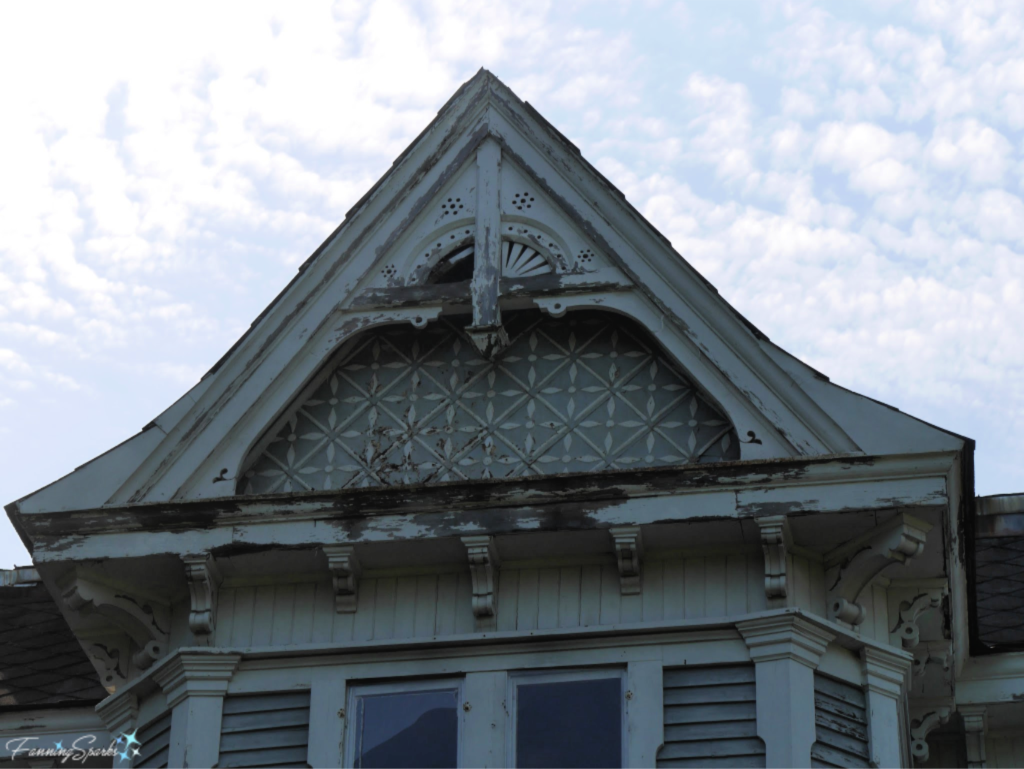
 This house was obviously beautiful in its day. And maybe that’s the attraction‒its the possibility of bringing it back to its former glory! Every detail that’s still intact‒and there are many‒is just waiting to be restored. Lucky for the house, many citizens of Madison and the surrounding area feel the same way. Here’s a glimpse of the ornate trim on the exterior. Can’t you just picture it as it was?
Turns out, a local organization called the Madison-Morgan Conservancy (MMC) purchased the property in an effort to save it. They took on the task of preparing it for sale. Having moved to the area recently, this was all new to me. I’ve since learned the MMC’s mission is to “provide public education on conservation matters and to protect and enhance the heritage and quality of life of the residents of Morgan County, by preserving historic sites, greenspace, farmland, and timberland.” The house is currently under contract so a conservation buyer has been found and, fingers crossed, everything will come together for a smooth transition.
The more I learn about this house, the more intrigued and fascinated I become. Here are a few more photos along with some of its rich heritage.
The house, officially called the Foster-Thomason-Miller House, was built in 1883 by Legare H. Foster. Foster had grand plans for this house and he had the funds to make those plans a reality. Here’s an excerpt from a 1883 Madisonian newspaper article: “An Elegant Residence Perhaps the most elegant country home in Middle Georgia is that of Legare H. Foster, in this city. Of all the attractive residences in Madison, this is the most desirable. A stranger to parsimony, this thrifty and comfort-loving man has just completed, by contract, one of the most beautiful and costly residences ever built in this city.”
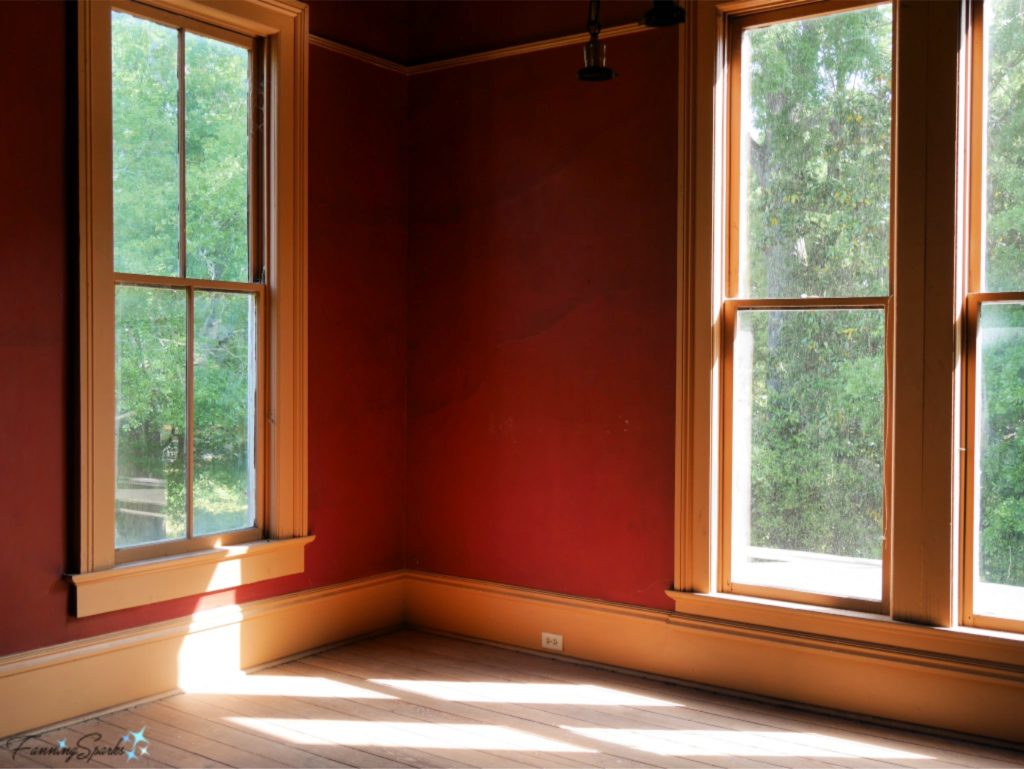
The article goes on to say the below room, the Red Room “is one of the prettiest rooms we ever saw, and is finished at great cost‒being beautifully frescoed.”
 The house reflects the Aesthetic Movement and, as the story goes, was greatly influenced by a lecture given in Atlanta, Georgia in 1882. Surprisingly, the lecture was given by Oscar Wilde, someone more widely recognized for his plays, novels and poetry, than for his decorating expertise. Wilde’s lecture was part of a 9-month, 140-lecture tour across Canada and America. The Atlanta lecture was titled “House Beautiful” and promoted the virtues of the Aesthetic Movement. This is why I’ve come to think of the Foster-Thomason-Miller House as “Madison’s House Beautiful”.
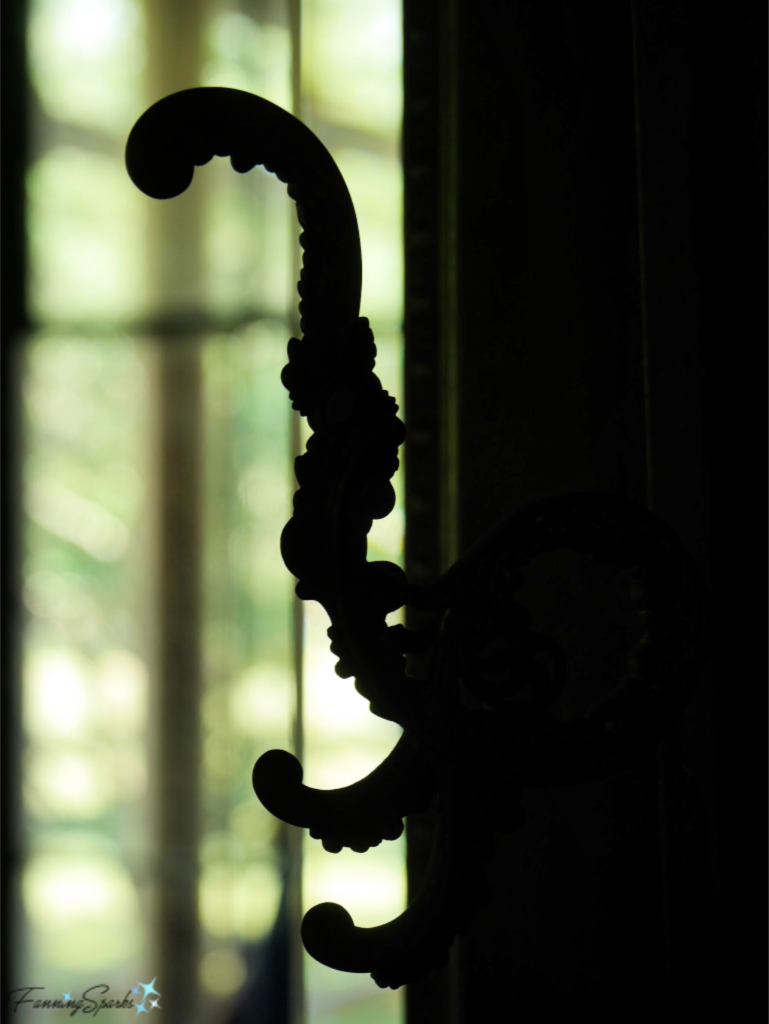
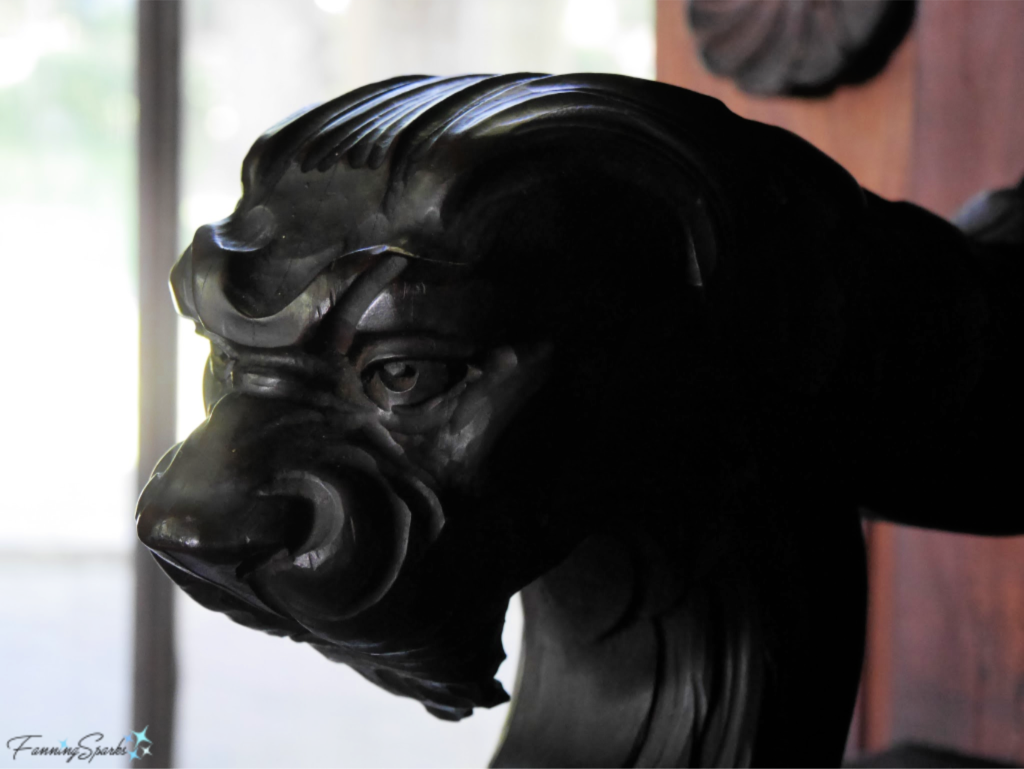
Here are a few excerpts from Wilde’s lecture with illustrative examples from Madison’s House Beautiful. Wilde said “There is nothing which gave me a greater sense of barrenness in travelling through the country than the entire absence of wood carving in your houses. Wood carving is the simplest of the decorative arts.” This House Beautiful contains several excellent examples of wood carving including this stunning lion head in the Entry Hall.
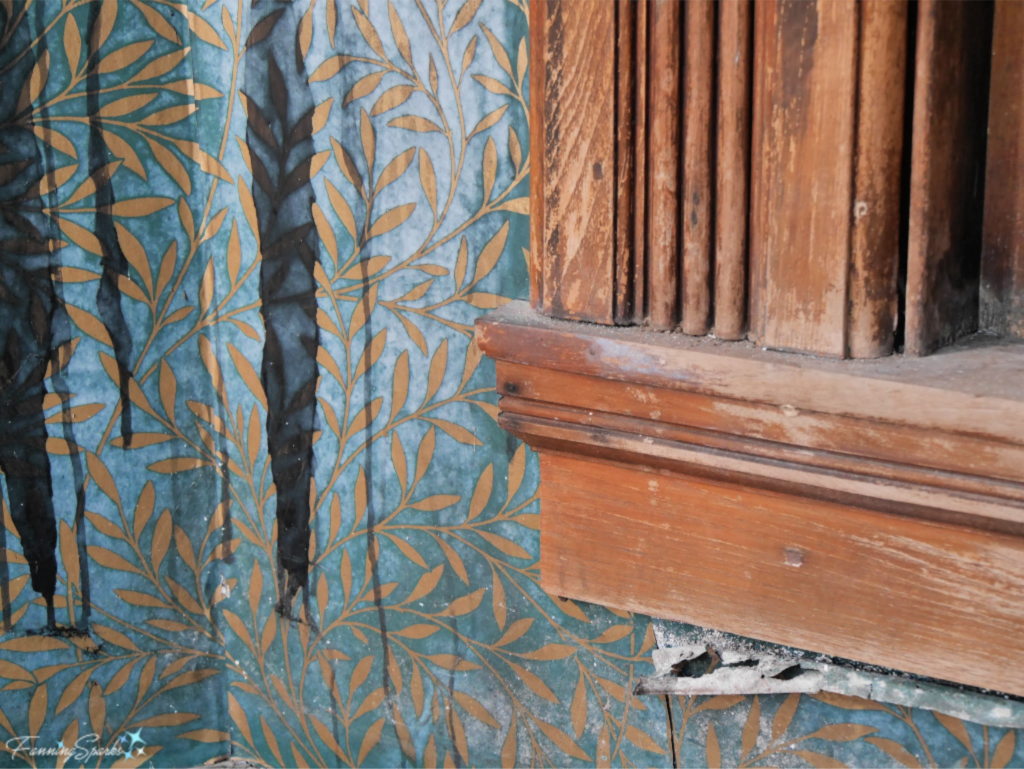
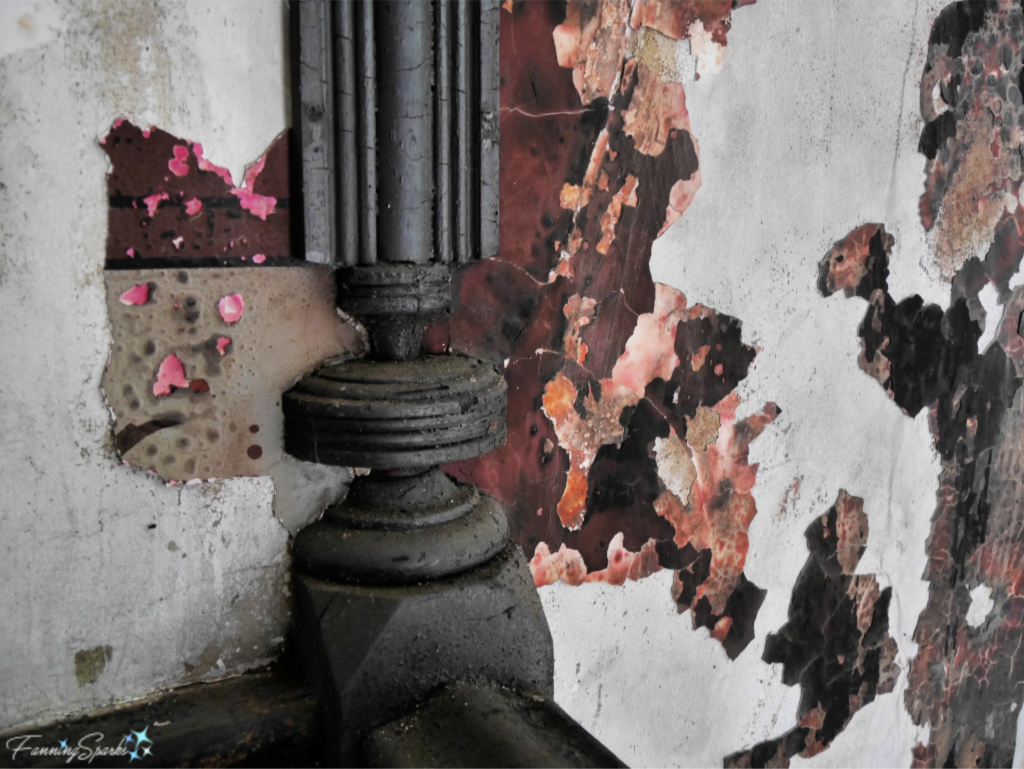
 In regards to the use of color, Wilde said “You have too many white walls. More colour is wanted.” The owners of this House Beautiful seem to have taken this advice to heart. Color is used throughout the house including this beautiful wall in the Library.
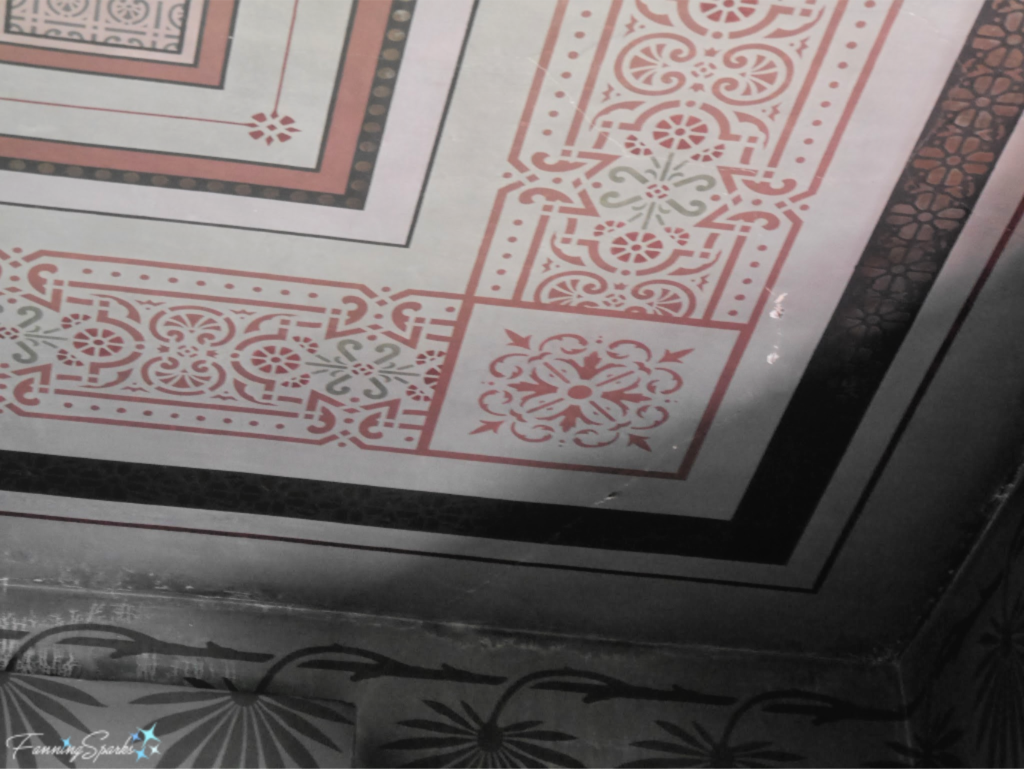
 Wilde advised his listeners to look to nature for decoration inspiration. “Golden rod and aster and rose and all the flowers that cover your valleys in the spring and your hills in the autumn: let them be the flowers for your art… Nature [has] given you the noblest motives for a new school for decoration.” Here are some examples of floral motifs in this House Beautiful. This stenciled ceiling is from the Library.
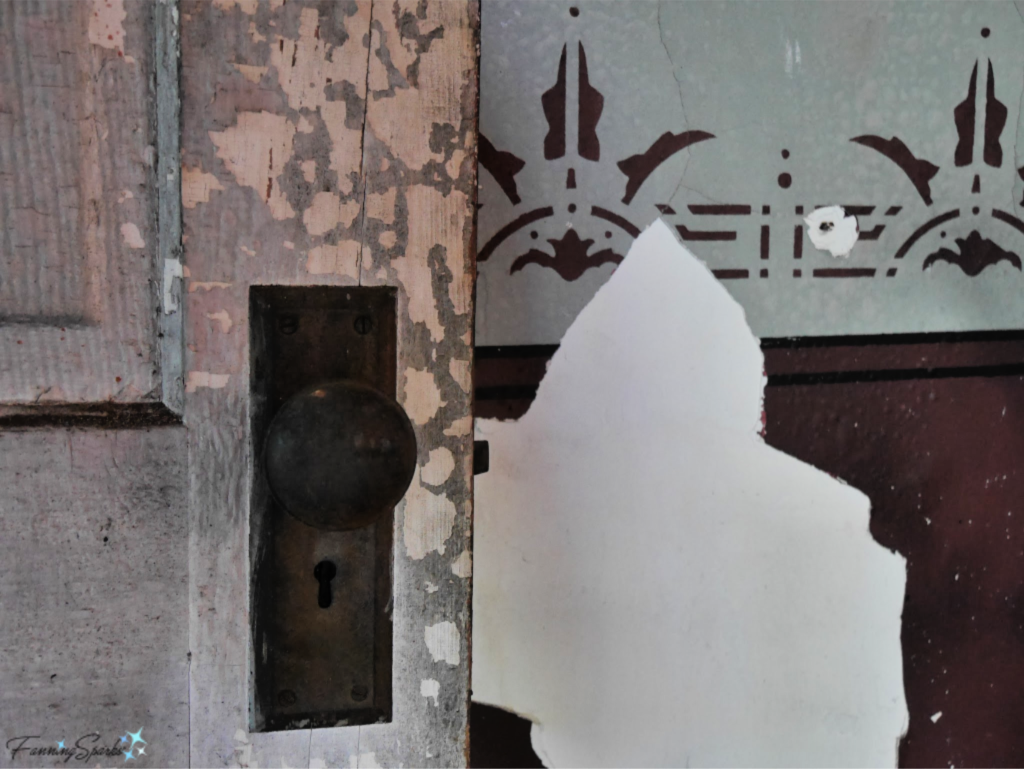
The below stenciled wall is from one of the upstairs rooms.
 The Aesthetic Art Movement was short lived, lasting for only about 10 years from 1880 to 1890. As a result, there are not many surviving examples of this style‒a situation which makes Madison’s House Beautiful even more significant.
This House Beautiful has had its ups and downs over the 136 years since it was lauded in the Madisonian. Six years after completion, it was sold to Robert Usher Thomason whose family owned the house for nearly 90 years. In 1978, the house was bought by Richard and Marcia Miller who undertook a meticulous restoration. They were recognized for their outstanding accomplishment winning the Georgia Trust for Historic Preservation’s award for residential restoration in 1986.
Sadly 15 years later, a fire in the kitchen addition destroyed that section of the house and caused severe water and smoke damage throughout.
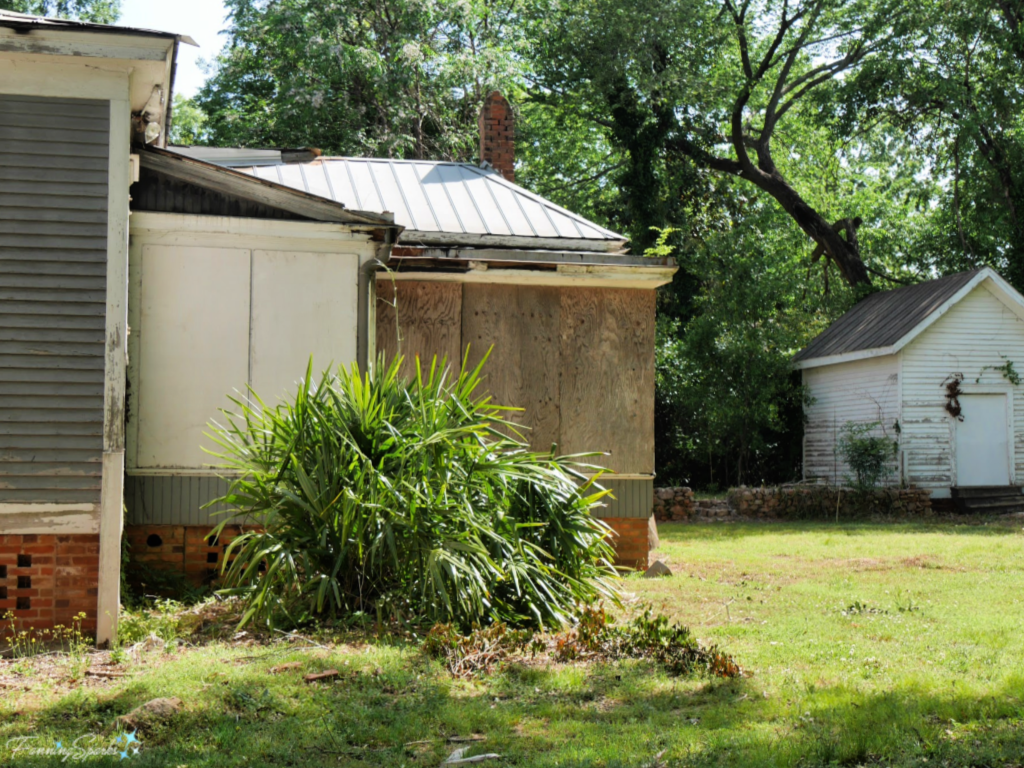 The house has been vacant since the fire. It was placed on the Georgia Trust’s 2018 “Places in Peril” list meaning it was recognized as a valuable structure at risk of being lost. This brings us back to present day with the MMC having found a conservation buyer to preserve this outstanding property.
Thank you MMC for your efforts to preserve this beautiful residence! Best of luck to the MMC and the new owners with the pending restoration. I’ll be waiting anxiously for my next opportunity to view Madison’s House Beautiful.
More Info
I also had the pleasure of attending the Madison in May Spring Tour of Homes last year. Here’s a peek into the tour: Madison in May – 15 Favorite Fotos.
You can learn more about the Madison-Morgan Conservancy (MMC) on their website.
To learn more about the Foster-Thomason-Miller House, check out the relevant section on the MMC website or the FTM House website.
Interestingly, the Aesthetic Art Movement (from about 1880 to 1890) was immediately followed by the Art Nouveau period (from about 1890 to 1914). I’ve long admired Art Nouveau and shared My Art Nouveau Love Affair in a previous post.
Today’s Takeaways
1. Let fine craftmanship inspire your decorating choices. Both the Aesthetic Movement and Art Nouveau promoted handcraftsmanship over mass production.
2. Consider viewing historical homes for decorating inspiration.
3. If you feel strongly about preserving historical homes, consider getting involved with the Madison-Morgan Conservancy or a similar organization near you.


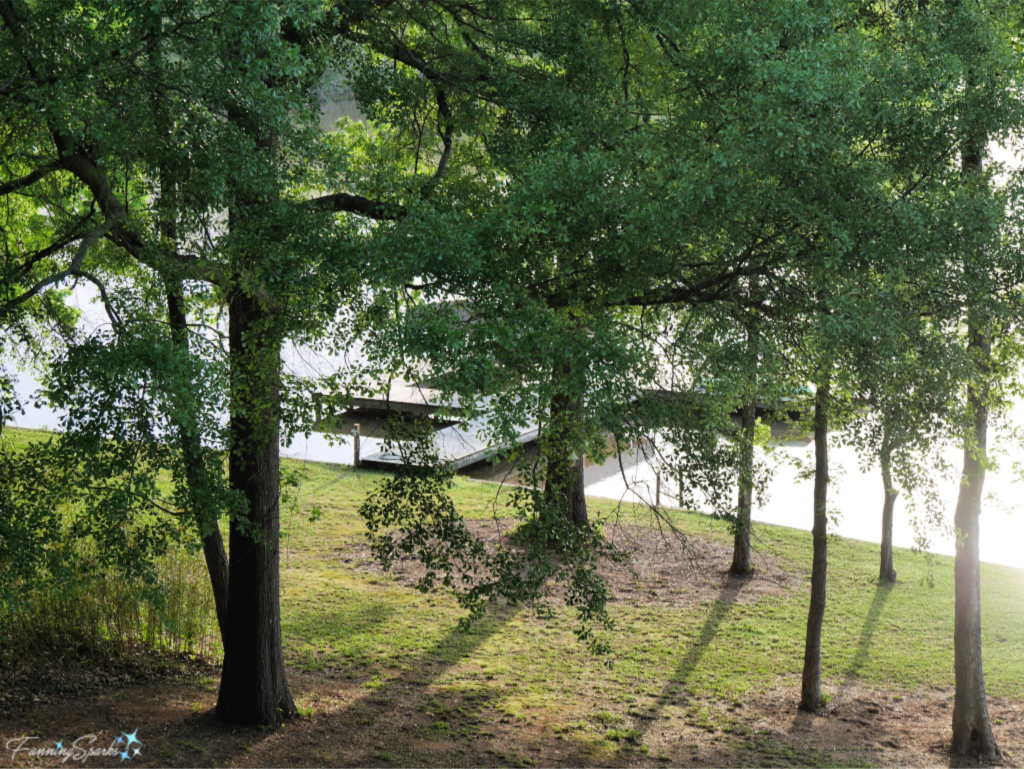 Later in the day, the scene from my picnic blanket looked like this.
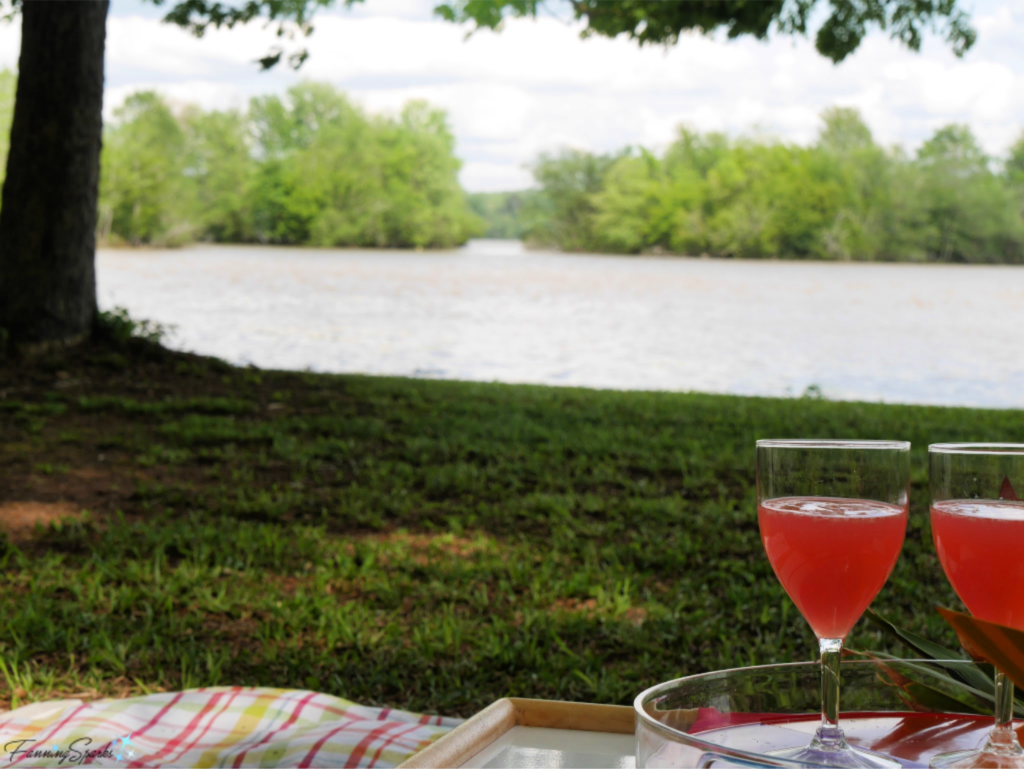 Today’s picnic theme is bright and joyful.
 Colorful pinwheels set the mood.
 A clear plastic tray, decked out as a color wheel, carries the colorful theme forward.
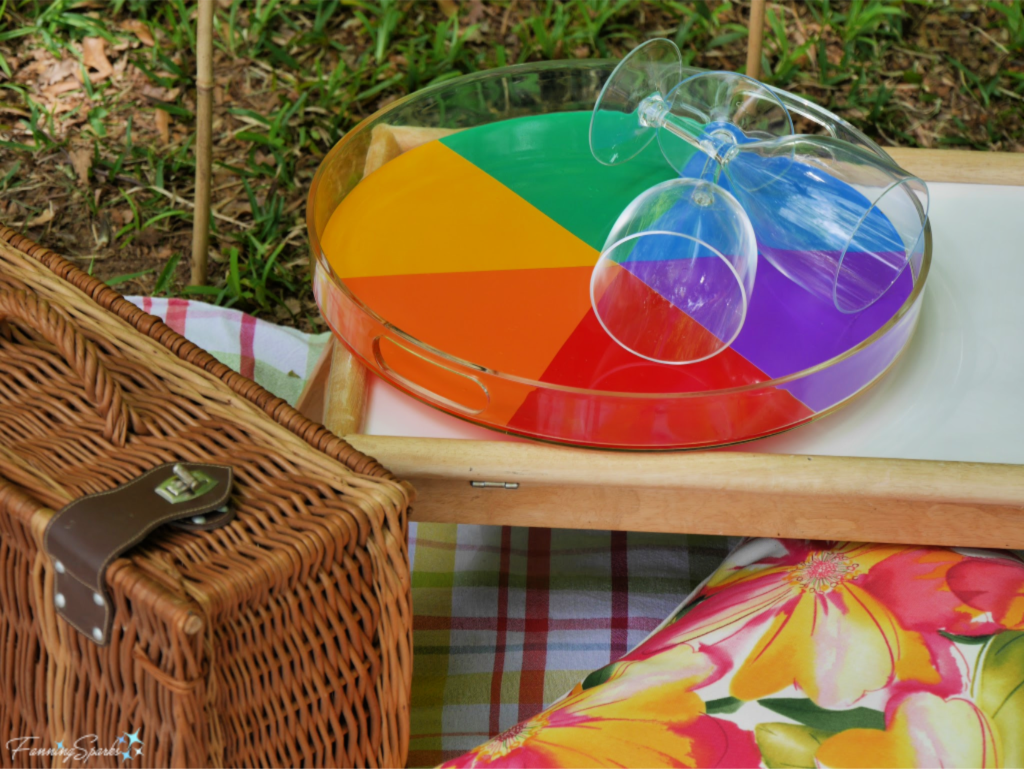 A matching picnic blanket, pillow and napkins pull it all together. Plastic glasses and melamine plates add ease and convenience. A wicker picnic basket and small table tray help with transport and set up.
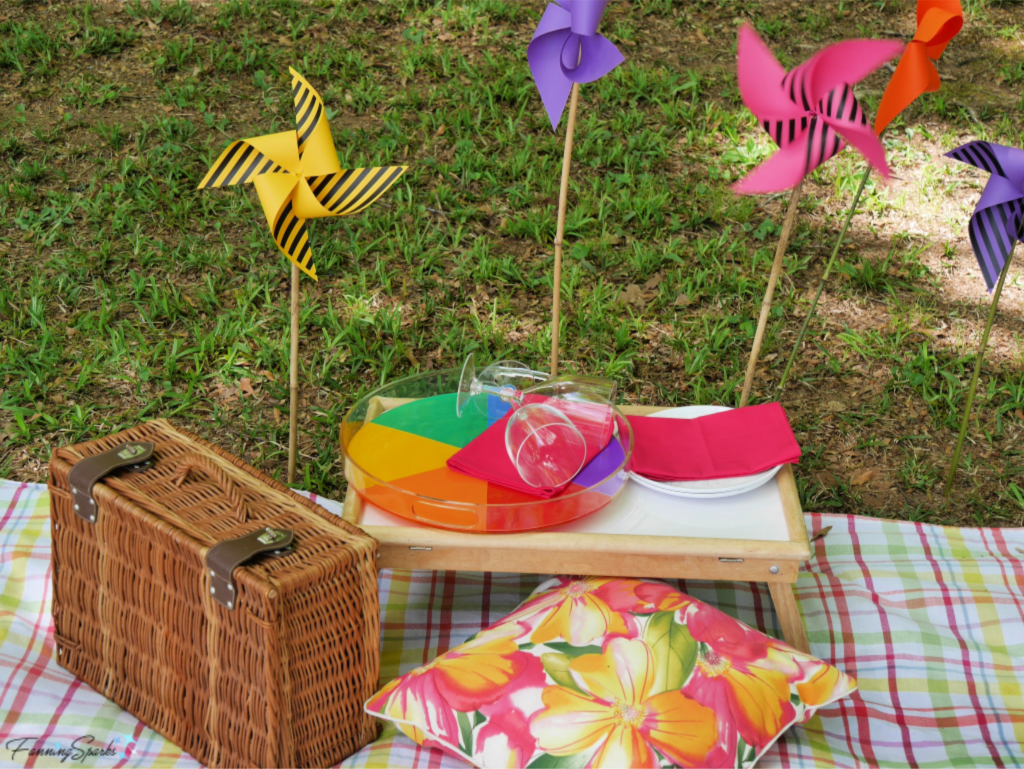 Meanwhile, a vintage lawn croquet set adds playful fun and character.



 A simple meal of bread, cheese, olives, meats and fruit hit the spot.
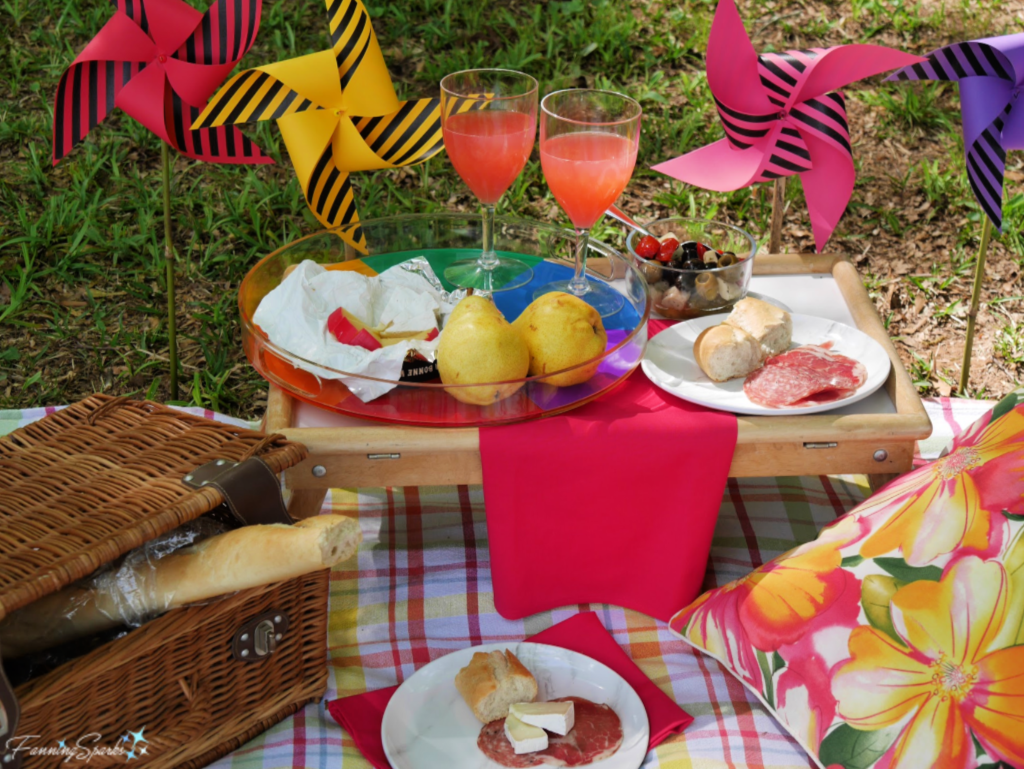
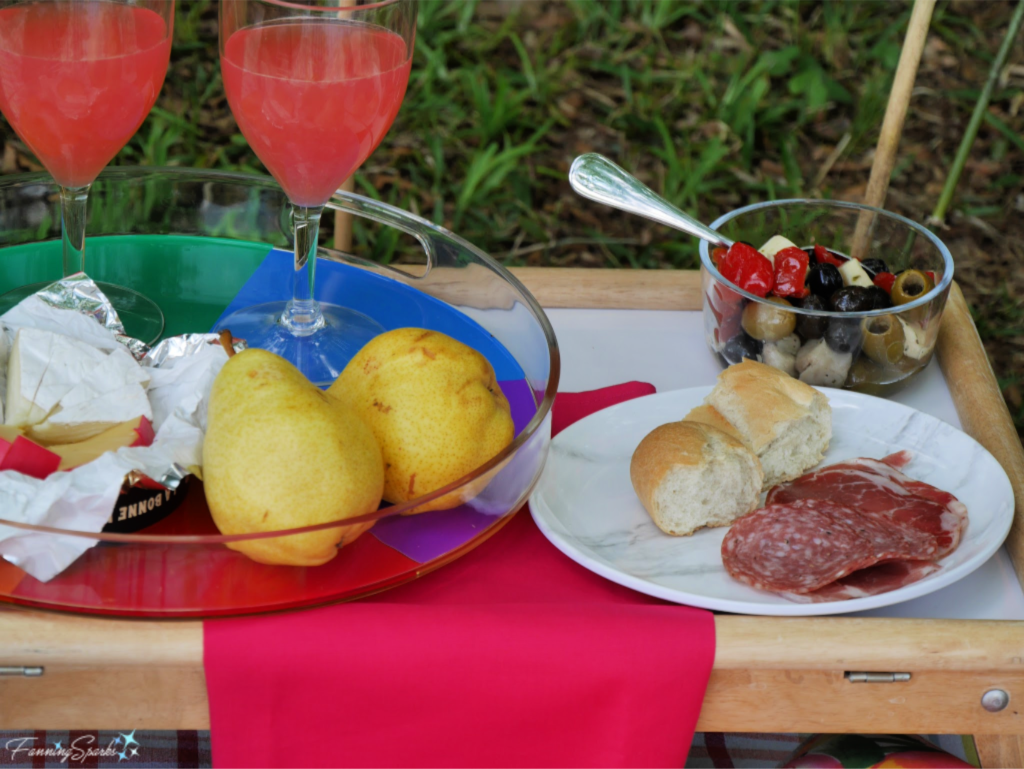
 After this nice light meal, a little cloud gazing was in order.

 Cardstock turned out to be the ideal material. It comes in lots of colors and can easily be printed to add a little extra interest (eg black stripes). Cardstock is flexible enough to bend the wings without creasing or folding. I drilled a small hole in the end of a bamboo stick to hold the pinwheel. We have lots of bamboo in our yard so that was an easy choice. Alternatively, you could use small dowels.
 The tricky part was making the pinwheels spin smoothly. After a little trial and error, I found a solution that worked. Short pieces of wire, with a small loop at each end, held the pinwheels to the bamboo sticks. But getting the tension and spacing right was the challenge. The pinwheel didn’t spin if it was attached too tightly or too loosely. I finally got the right tension when I inserted 3 small wooden beads as spacers between the layers‒one bead on top of the wings, one bead between the wings and the paper back, and one bead between the paper back and the stick. That worked like a charm and the pinwheels were spinning in the breeze.

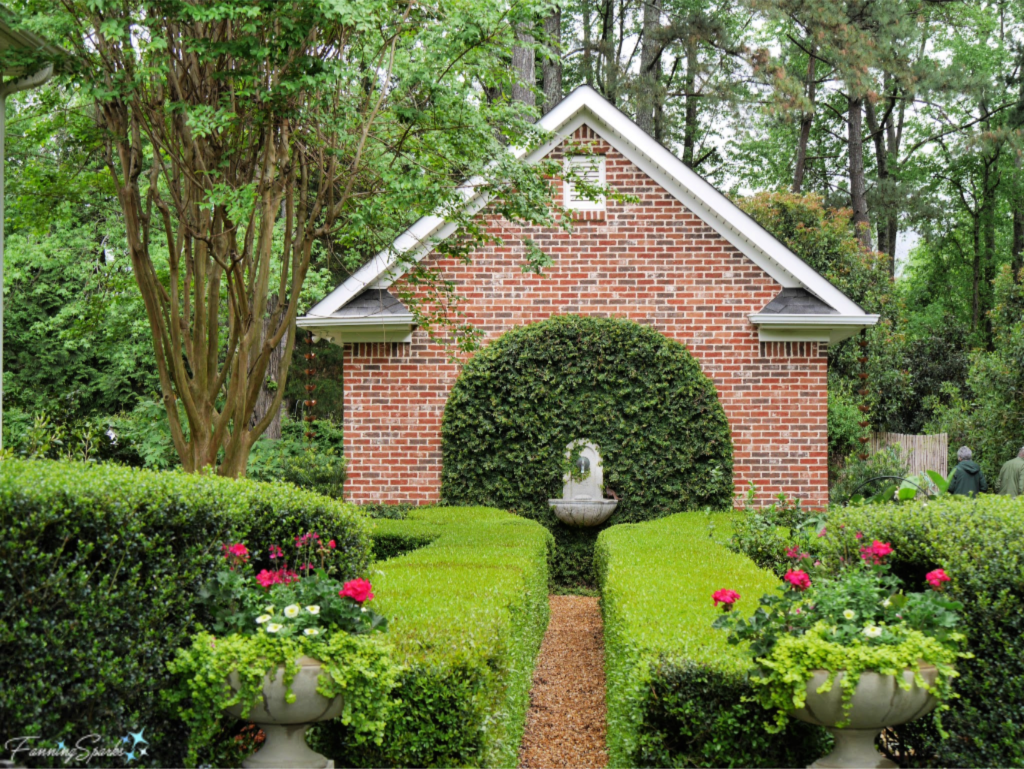
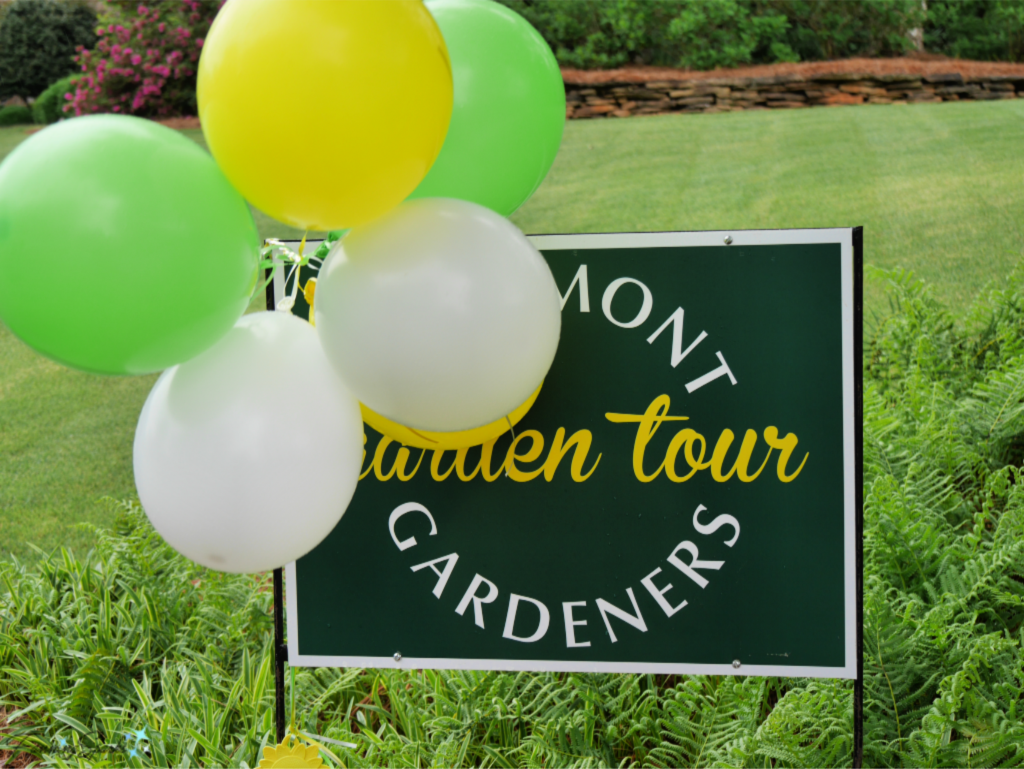 The tour included 5 great gardens and encouraged visitors to “immerse yourself in this self-guided tour filled with garden creativity and ideas”. I followed those instructions to the letter and immersed myself in 4 beautiful gardens. Today I’d like to share some of the creativity and ideas from those gardens.
 But just around the corner, this delightful scene took the edge off the formality. And, yes, that’s a rock alligator in the green grass! I love how the gardener used a variety of grasses and plants to “paint” this scene.
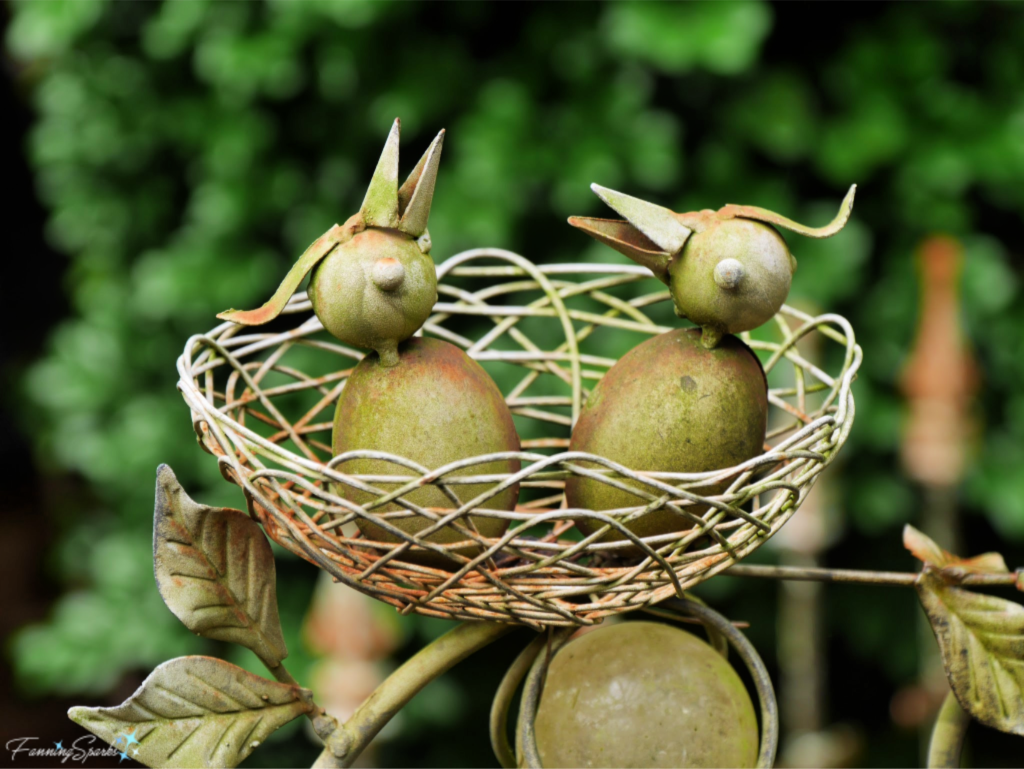
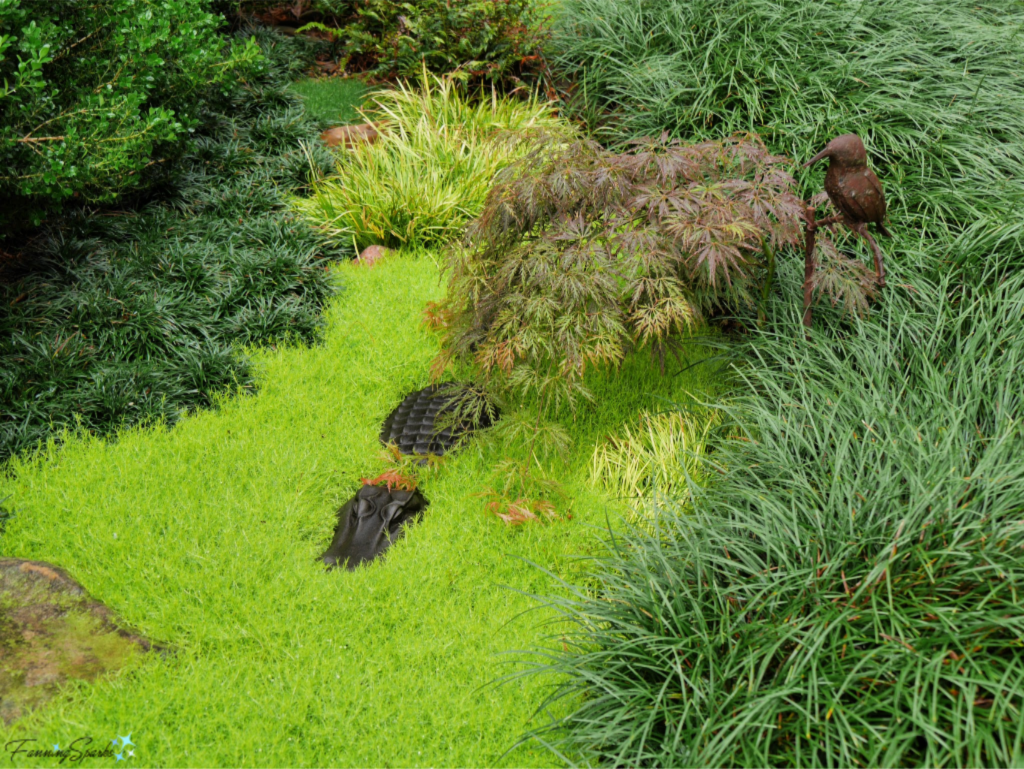 Touches of whimsy, like this bird sculpture, kept things light and fun.
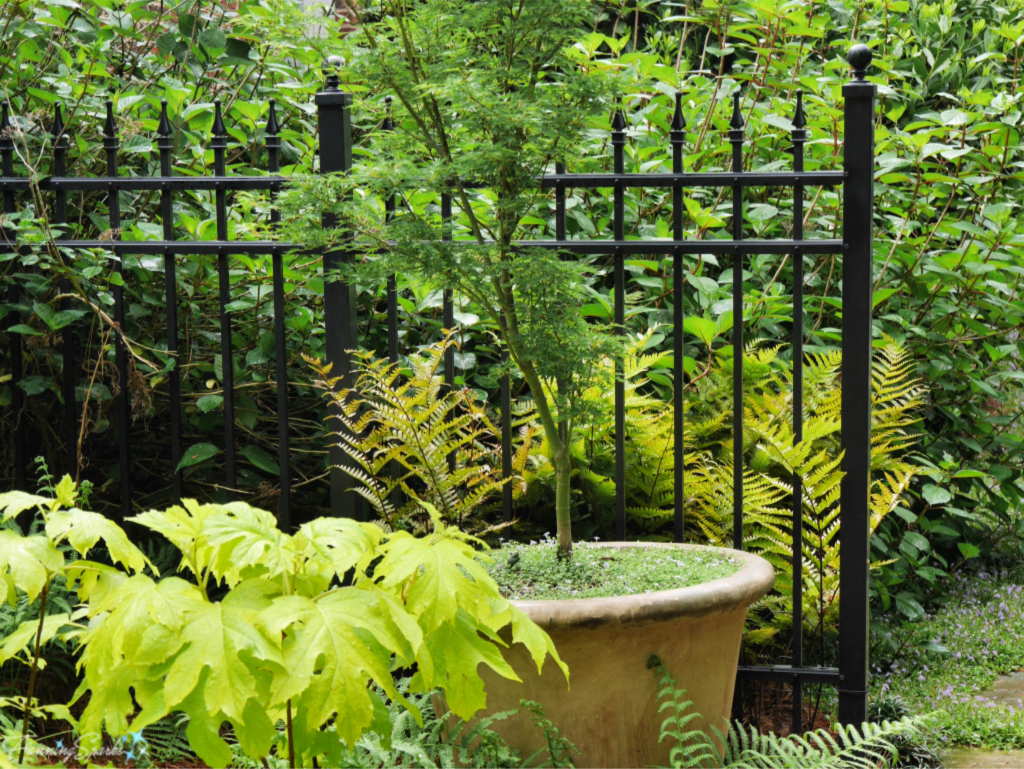
 This gardener strategically placed large potted plants throughout the garden. It’s a great way to vary height and add interest. Planting a delicate ground cover at the base of the potted tree helps the pot blend in and hides the potting soil. That’s a nice detail I’ve filed away for future reference.
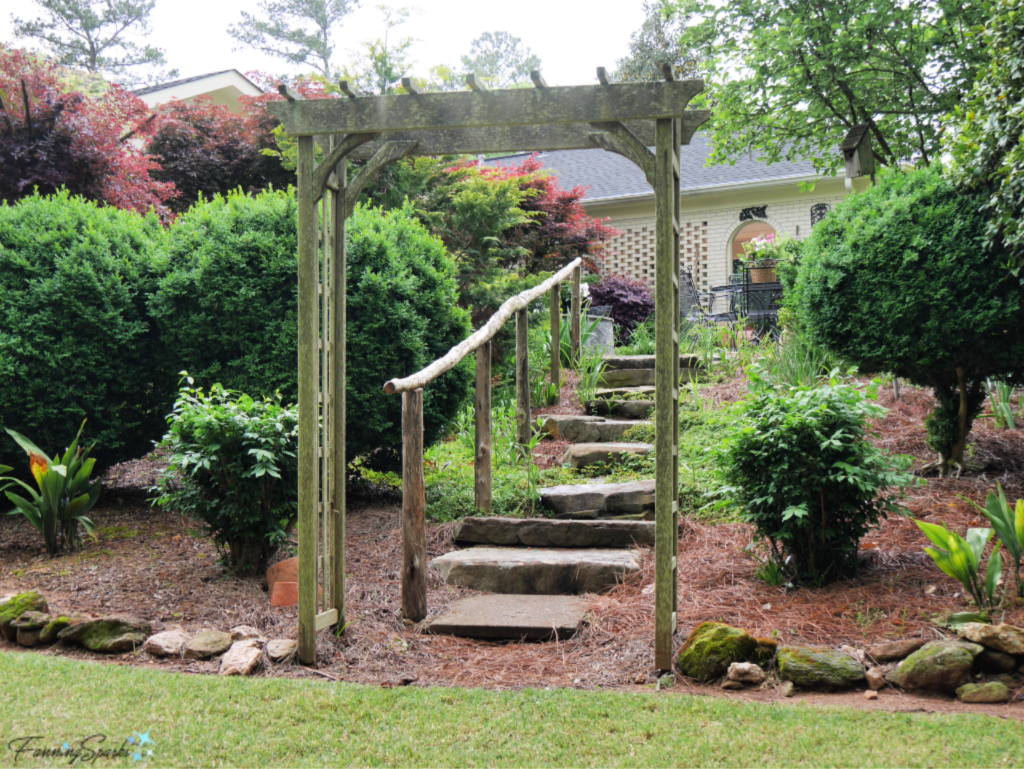
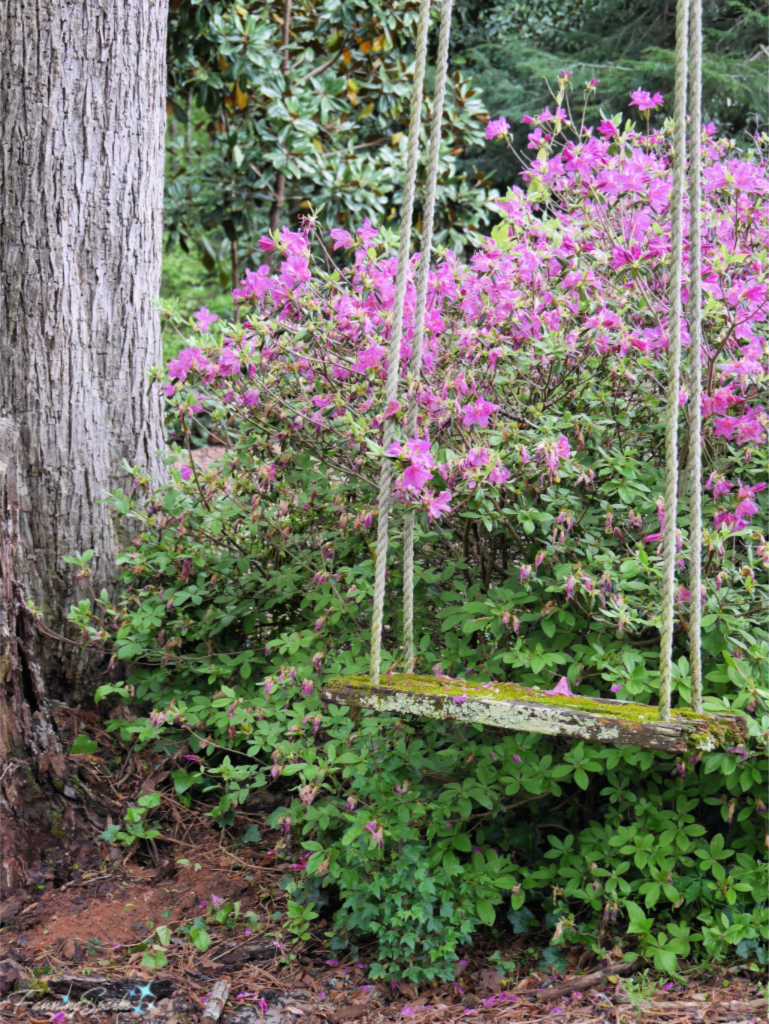
 The Cavan garden at Mal Bay Rd had a fun, casual vibe. Here a set of stone steps and a simple arch connect the backyard seating area to a grassed section.
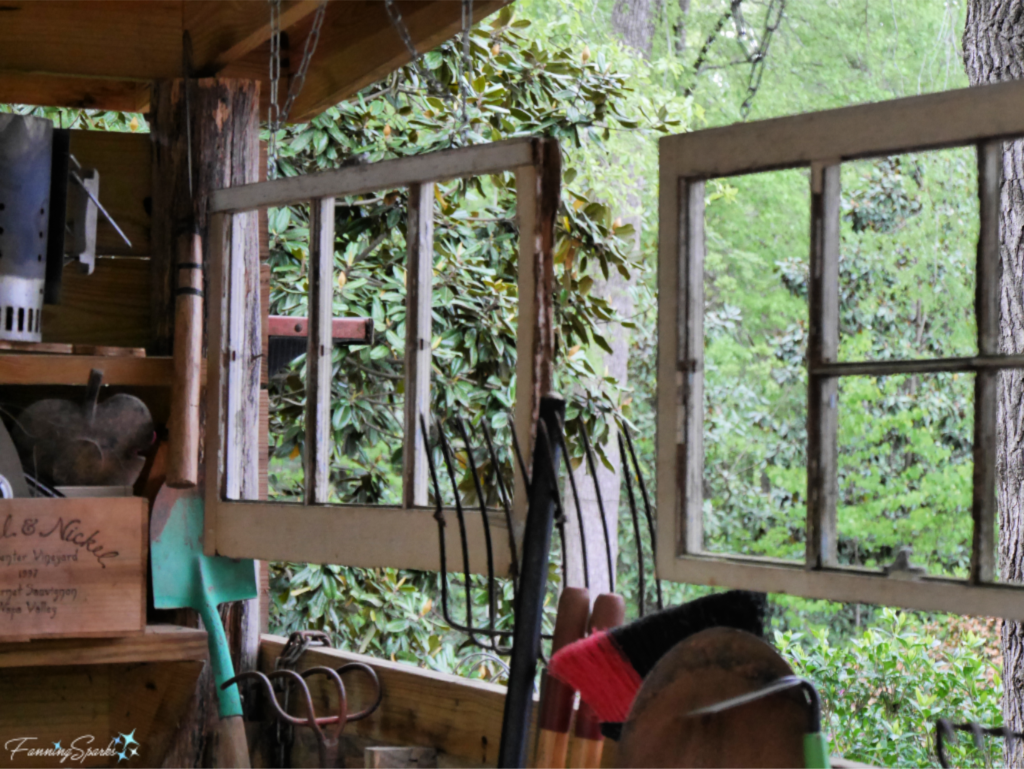
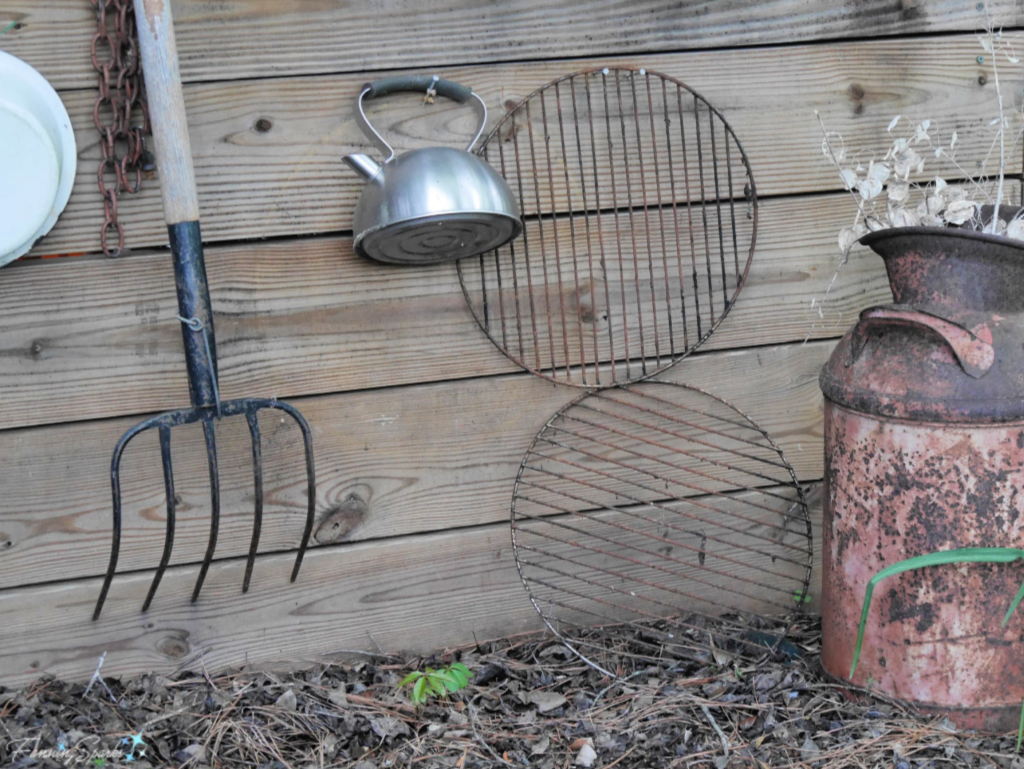
 This potting shed caught my eye. It’s situated towards the back of the property, has open walls, a fun collection of vintage items and a delightful, laid back feel.
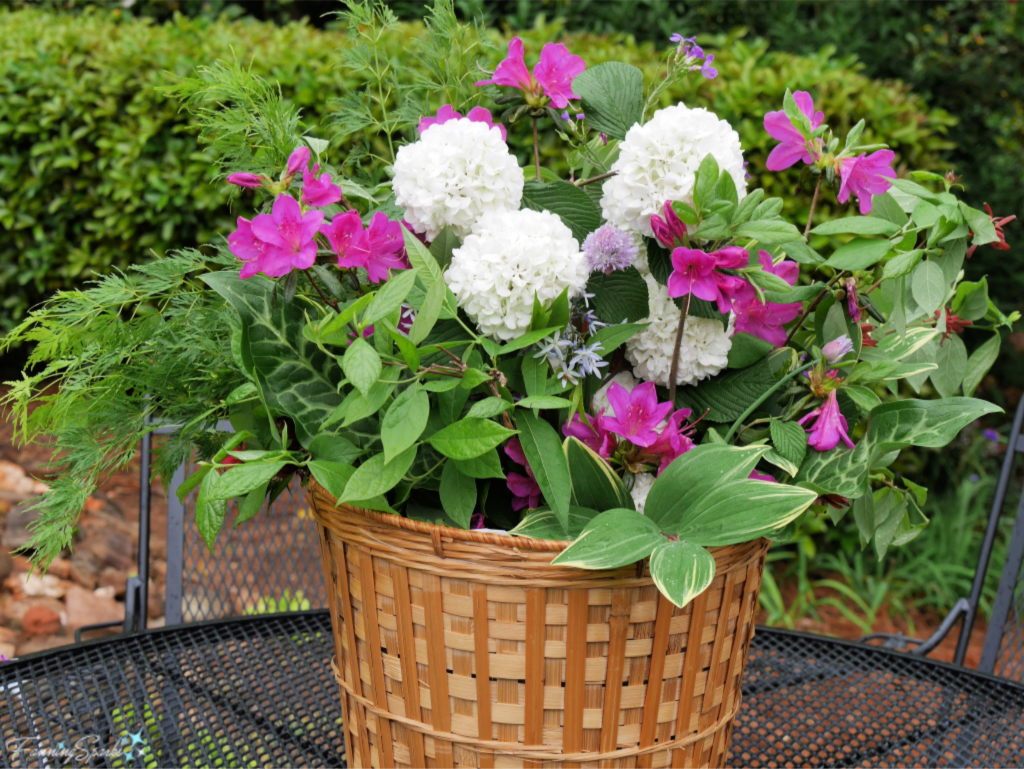
 Several casual floral arrangements were placed throughout the seating and eating areas. I rarely think to do this but it’s easy to do and adds such a nice touch.
 The Carey garden on Fox Trace featured a network of dry streams and bridges leading to this lovely covered seating area.
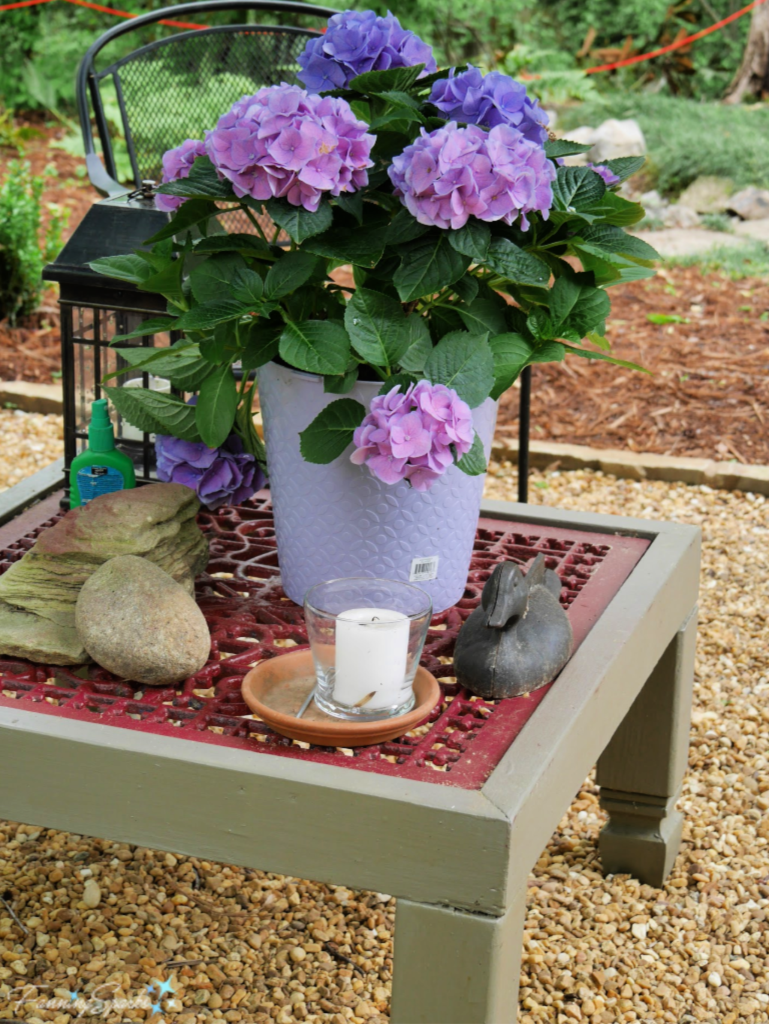
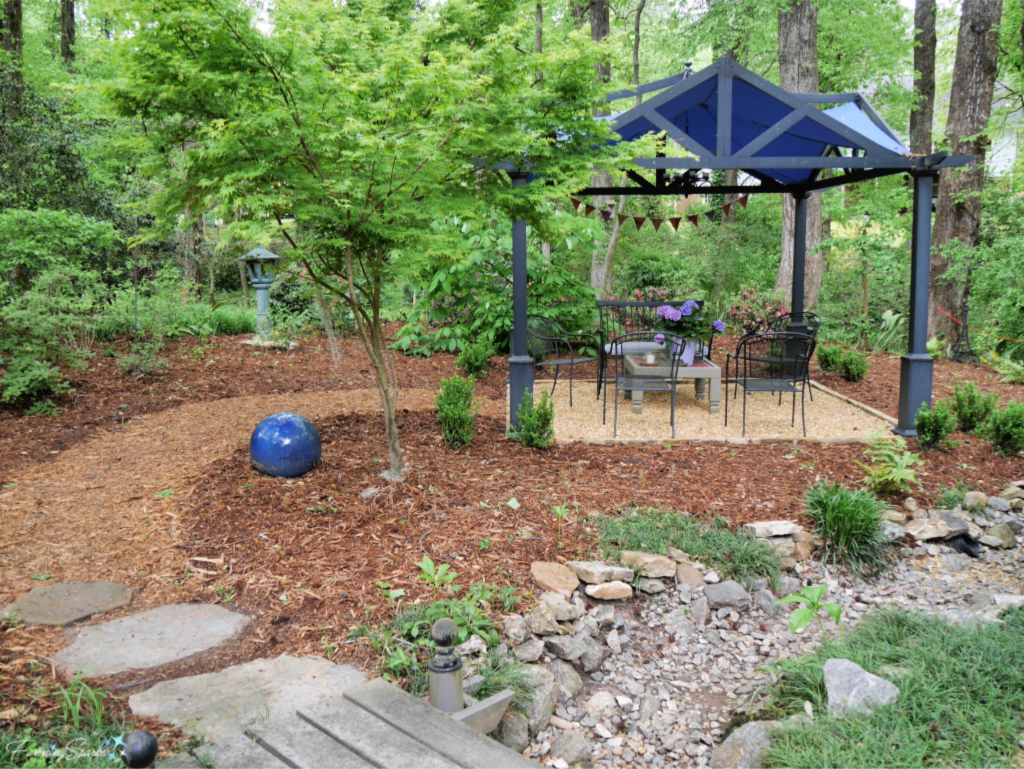 The coffee table adds interest to the seating area with its unusual surface. It reminds me of a vintage heat grate floor register.
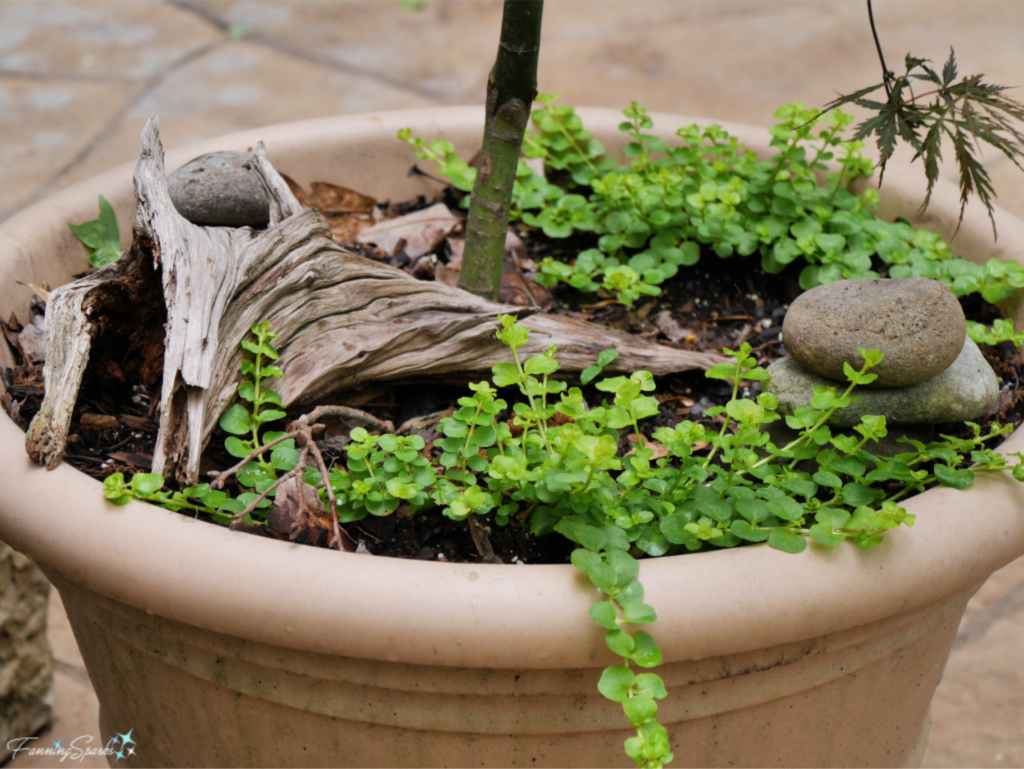
 Here’s another take on dressing up the soil under a potted tree. A little driftwood, a few carefully selected stones, and some creeping jenny complete the scene.
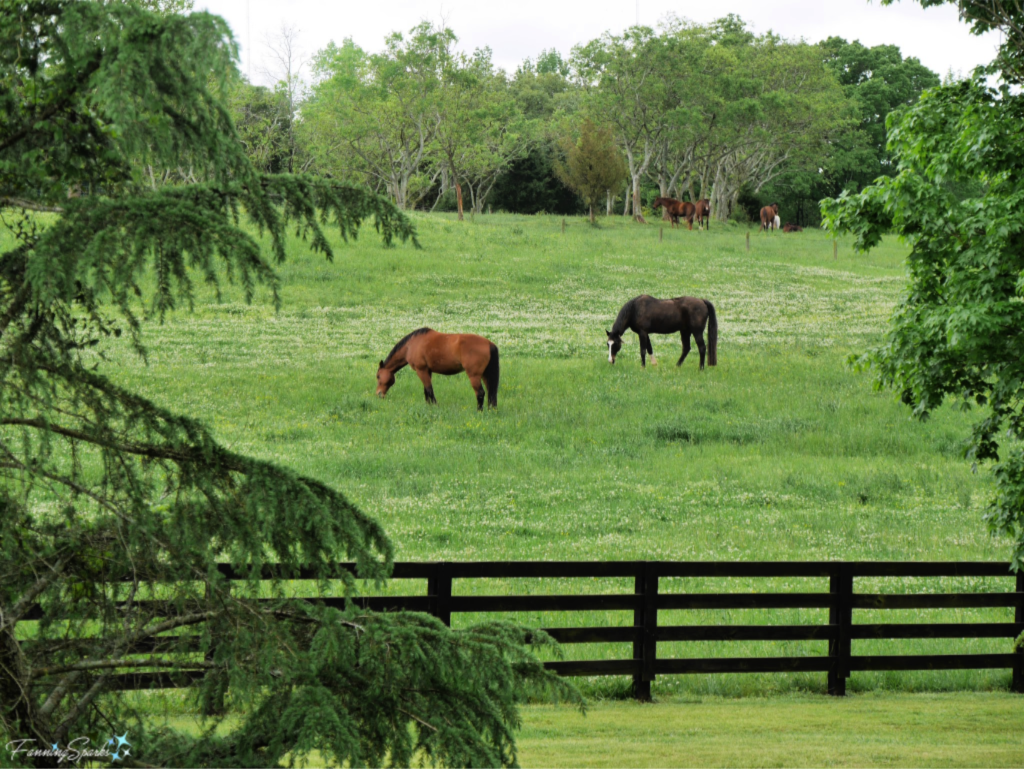
 I wrapped up my tour with the Middendorf garden on Jefferson River Rd. As it turned out, I saved the best for the last! All the gardens were lovely but the Middendorf garden is located on a 137-acre horse farm, called Silverthorn Farm, which was open for our viewing pleasure. Gardeners often strive to frame views in their designs but not many have vistas like this!
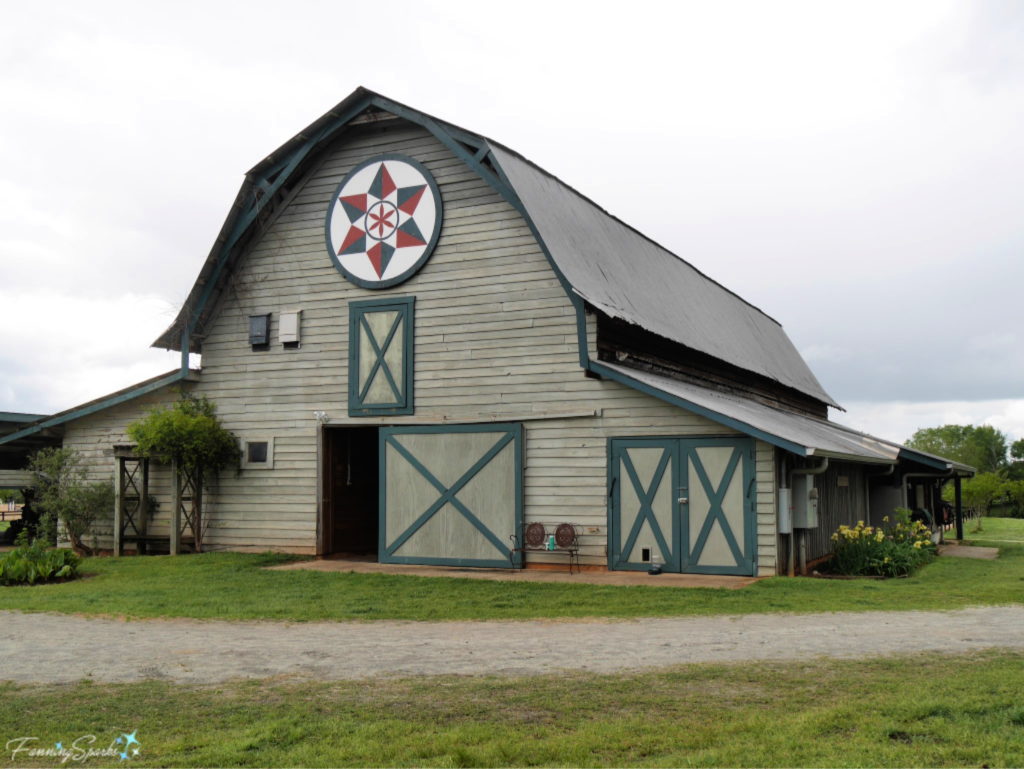
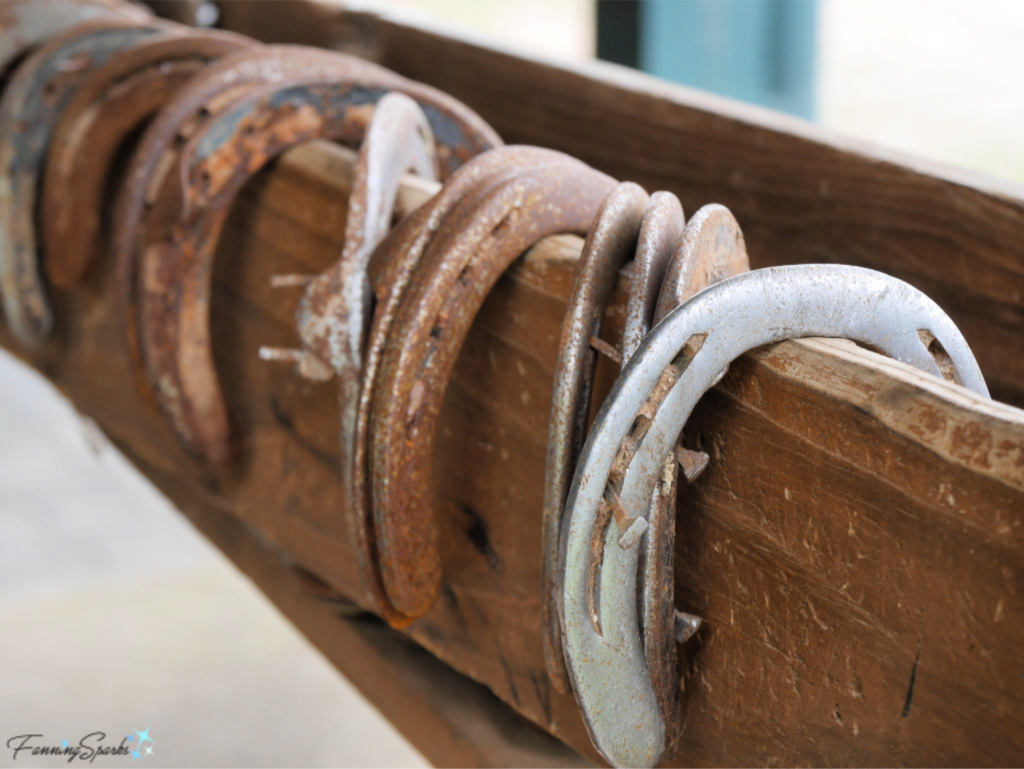
 This horse barn is 200 years old and packed with charm and character.
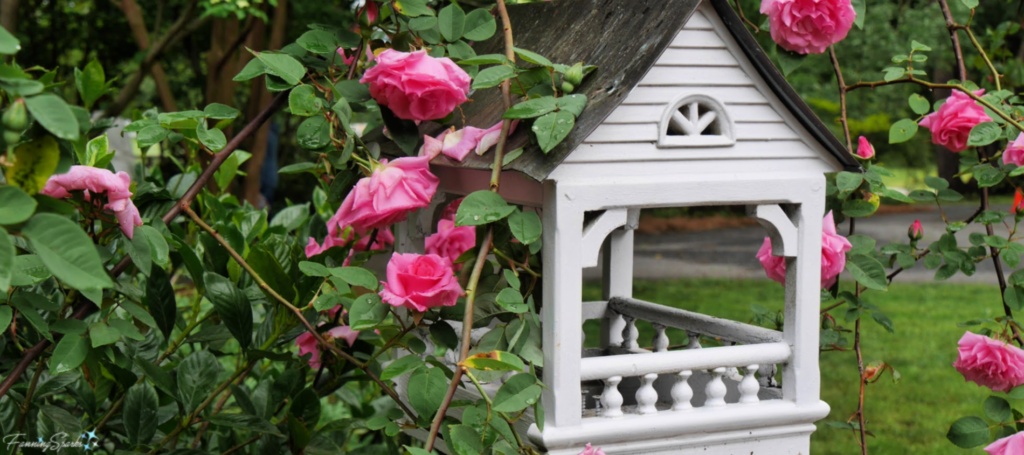
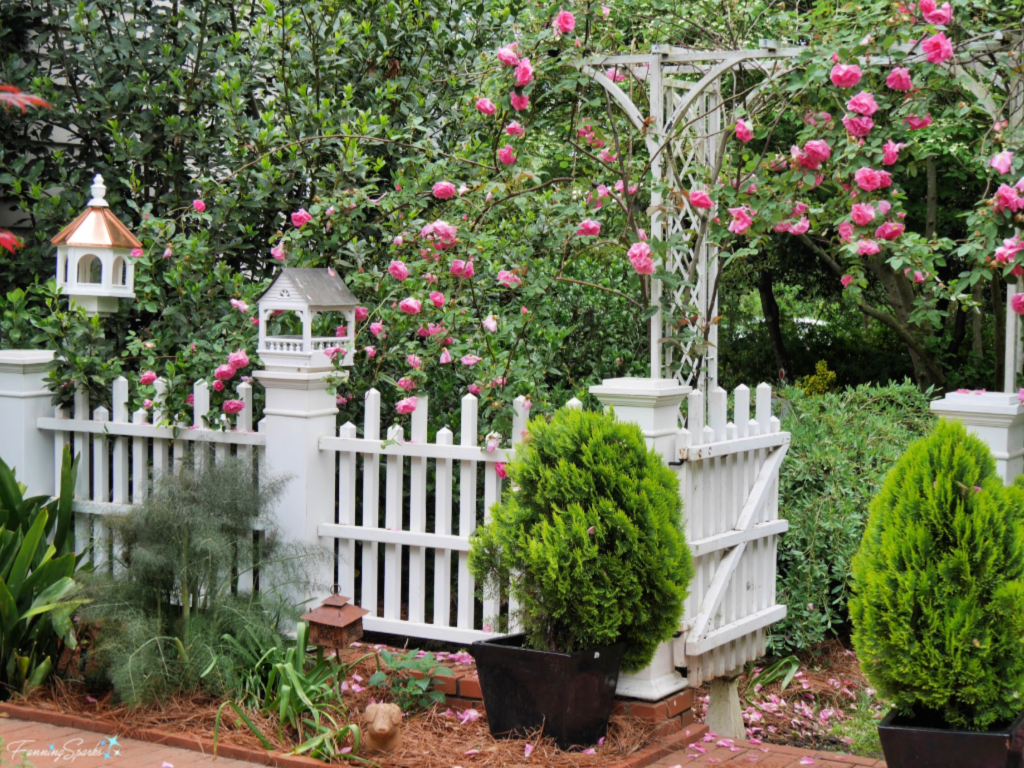
 The flower gardens were lovely as well. This enclosed rose garden was at its prime.
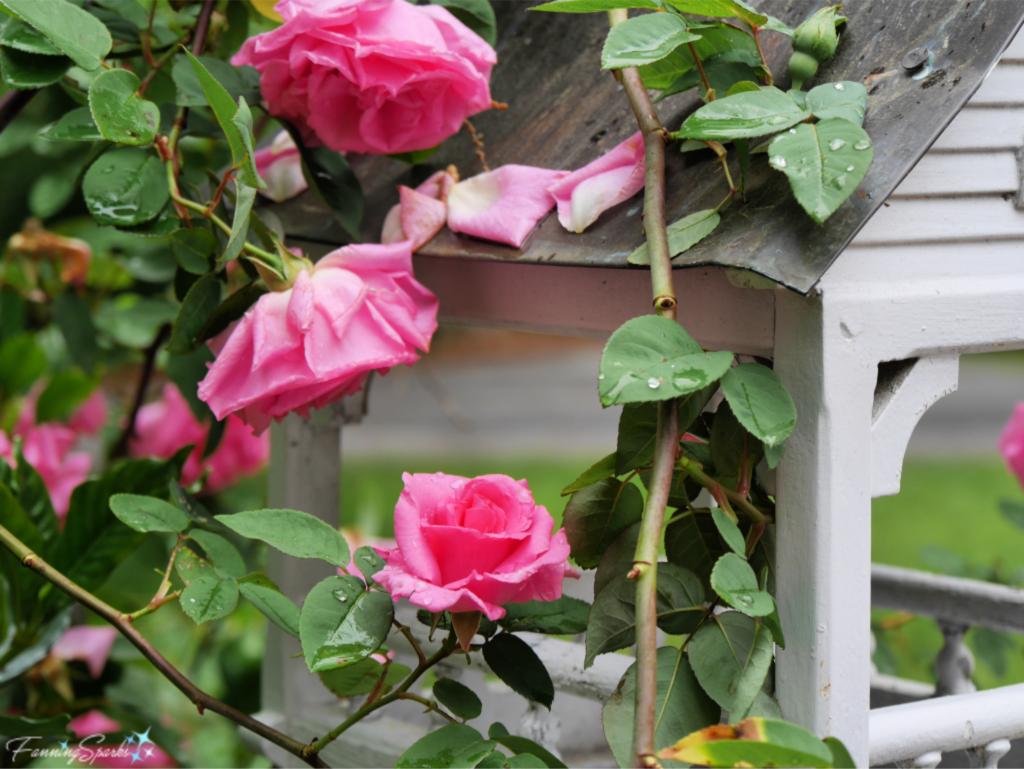
 The setting was delightful and the roses were splendid. It was the perfect way to wrap up a day of magnificent spring gardens.

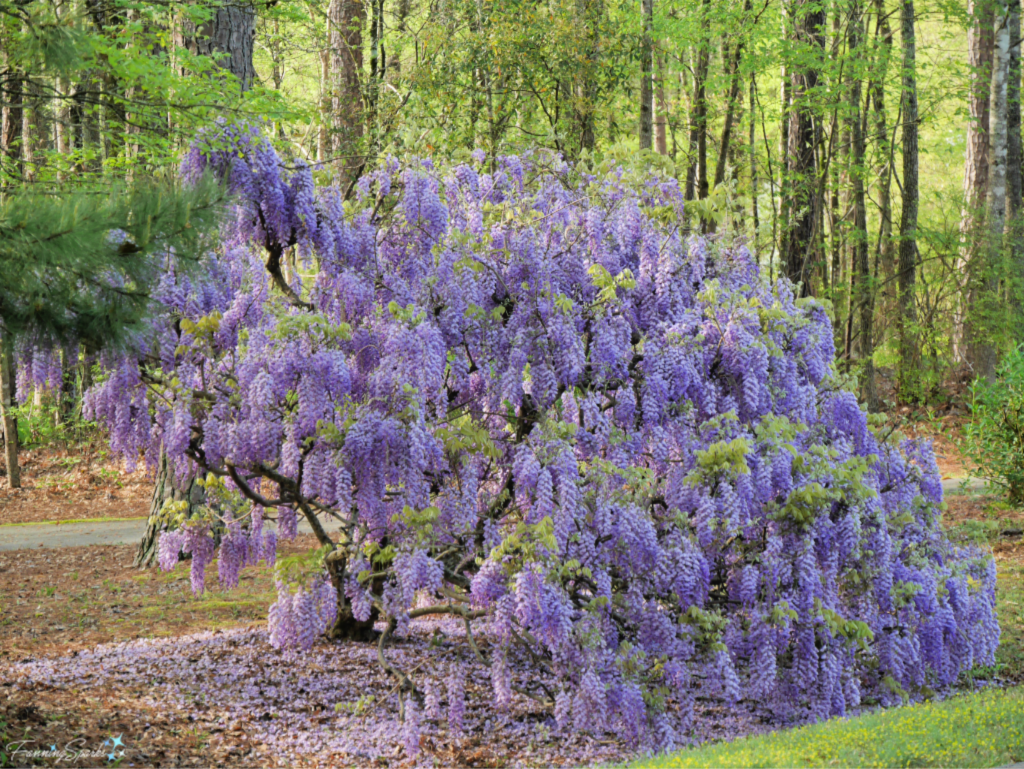 Upon closer inspection, a curtain of rich color and shape came into focus.
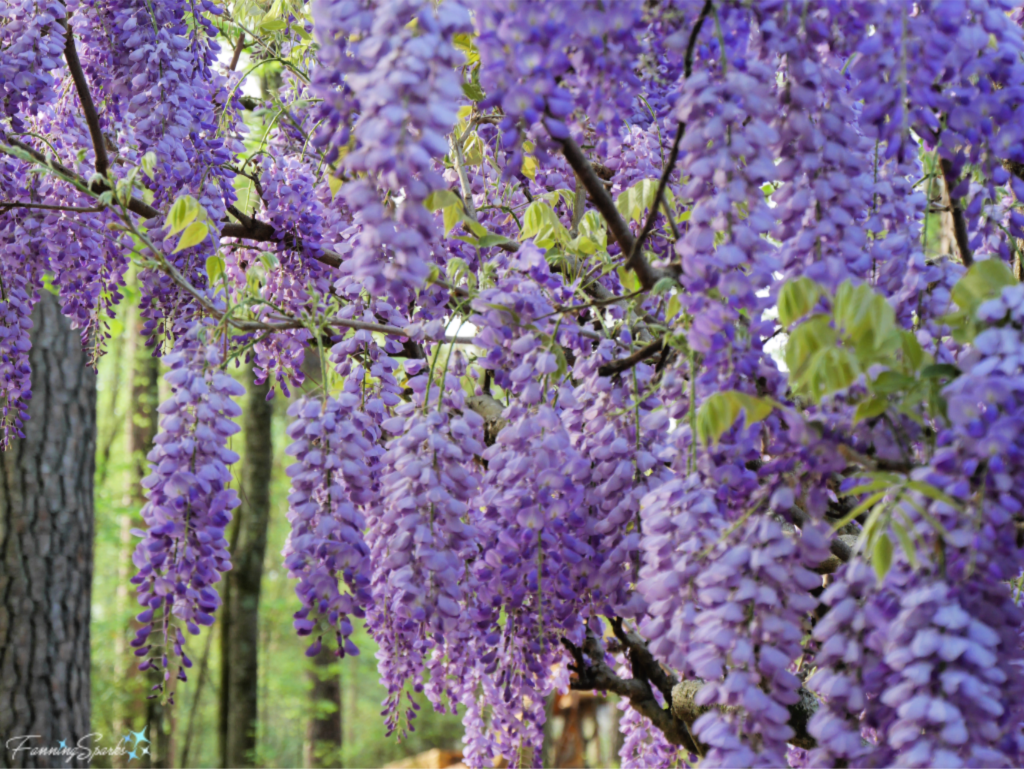 The curtain consisted of dozens of pendulous blooms called racemes.
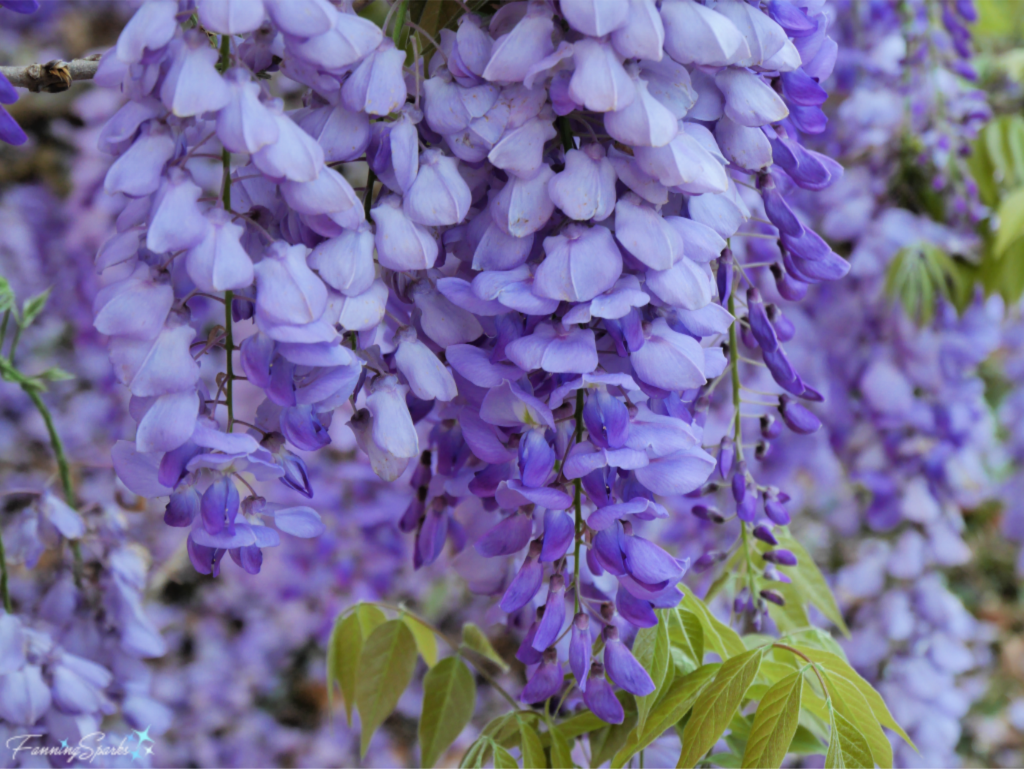 Separate flowers clustered along a central stem to form the raceme. The flowers open from the top down.
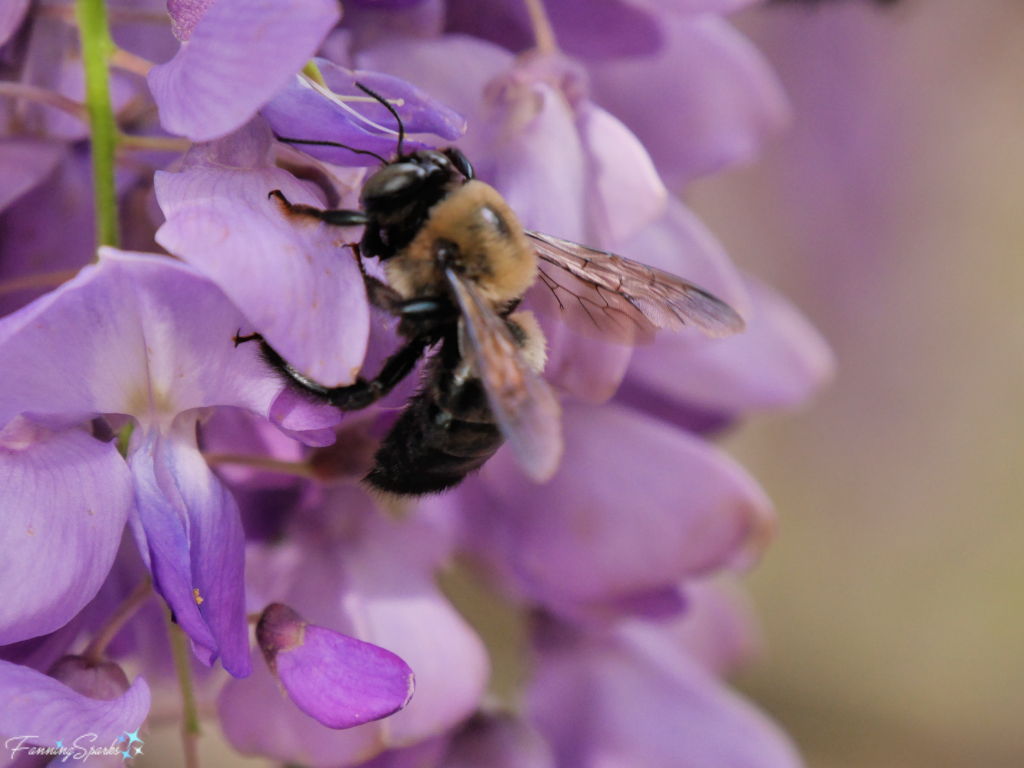
 Not only was this wisteria beautiful, it also smelled heavenly. And it created a soft, musical buzz from all the bumble bees that were busy at work.
 It was so lovely that I couldn’t resist staging a charming spring picnic under the wisteria. Luckily, my neighbor was very accommodating. Thank you, Bill!
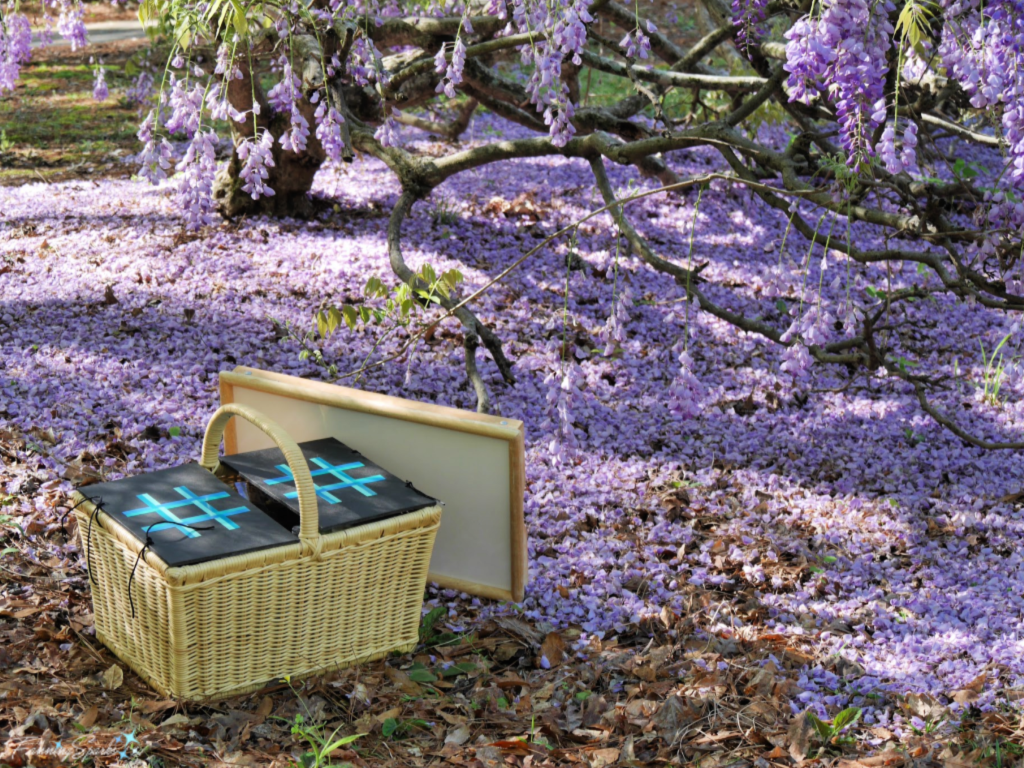 Here’s how it came together.
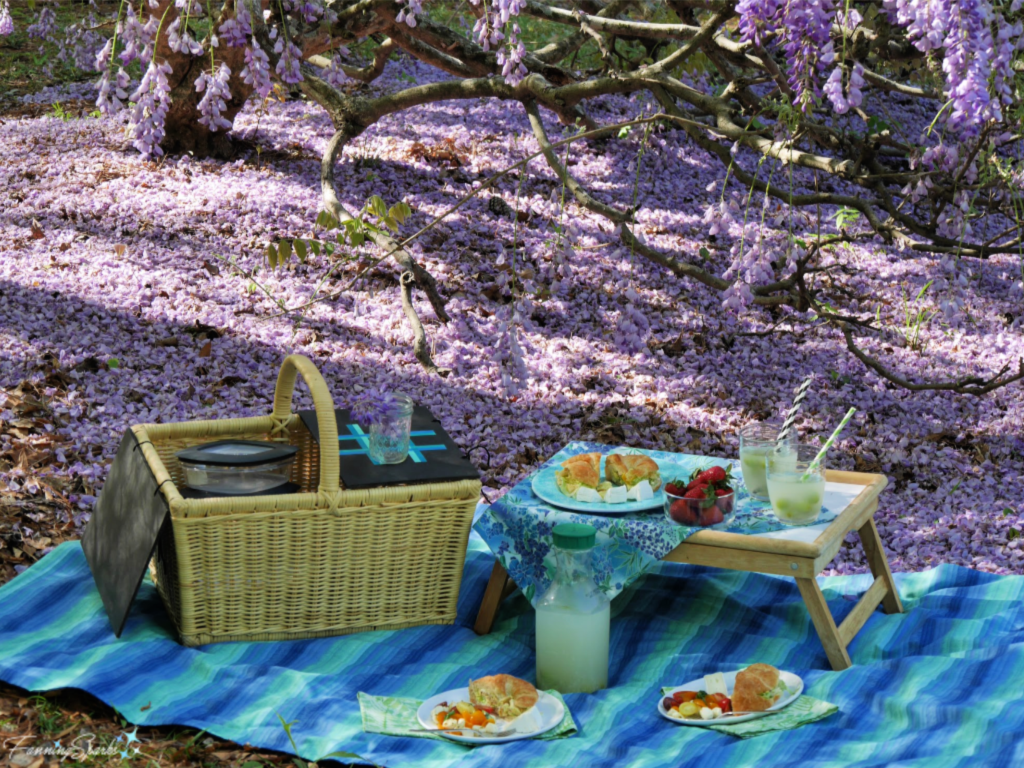 Special thanks to my favorite chef, David, for the curry chicken salad croissants and the caprese salad.
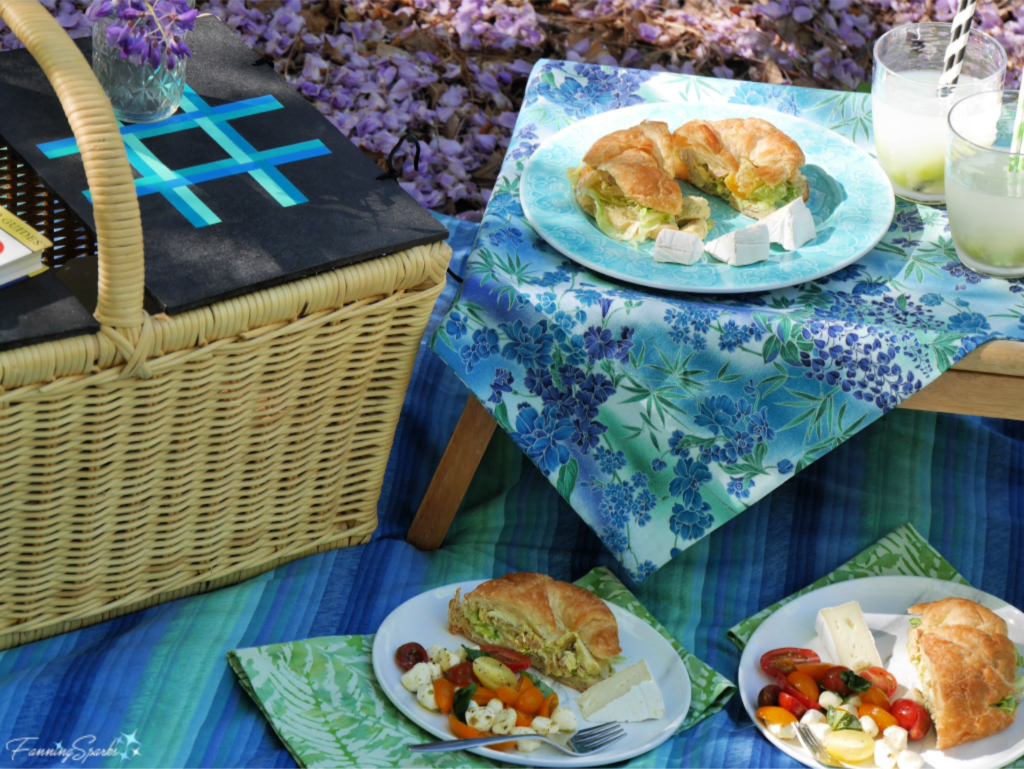 This was my first time using this picnic basket. It was ideal. It’s a generous size, solidly constructed, and the top serves as a handy, little table.
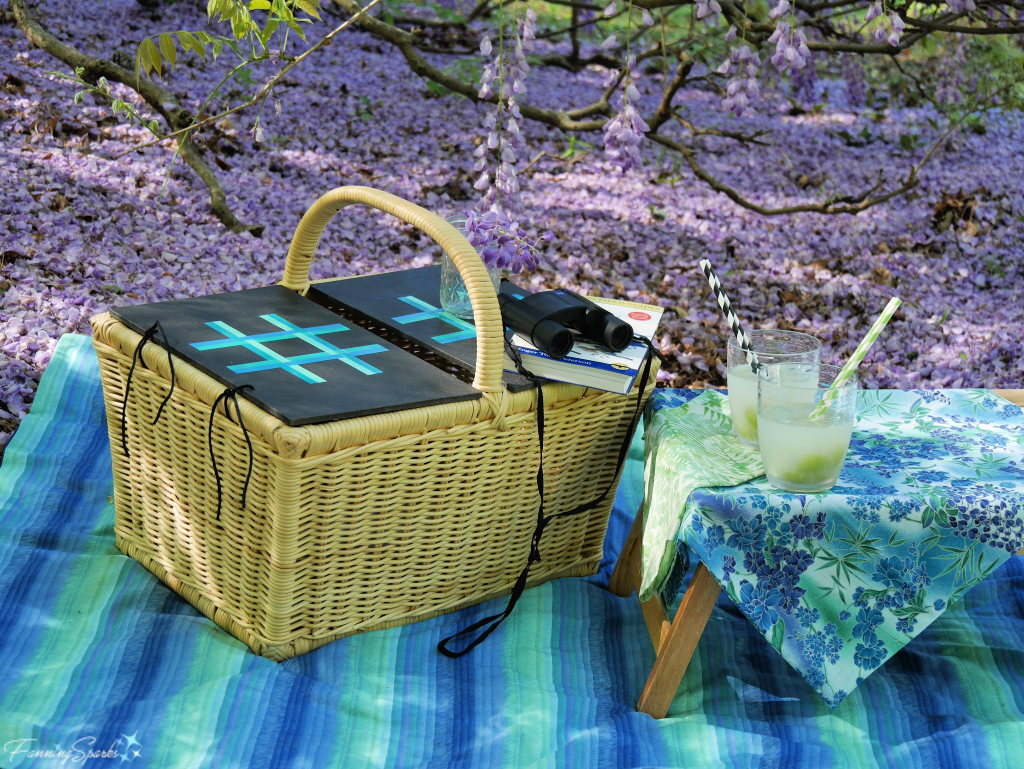 I actually found the wicker basket at a local thrift store for only $7.00 but it was missing the lids. A couple of pieces of MDF, some black spray paint and black cord solved the problem. Of course, I couldn’t just leave the covers plain black. A few strips of adhesive vinyl in a simple woven design added some punch. The new colorful grid is perfect for an impromptu game of tic-tac-toe.
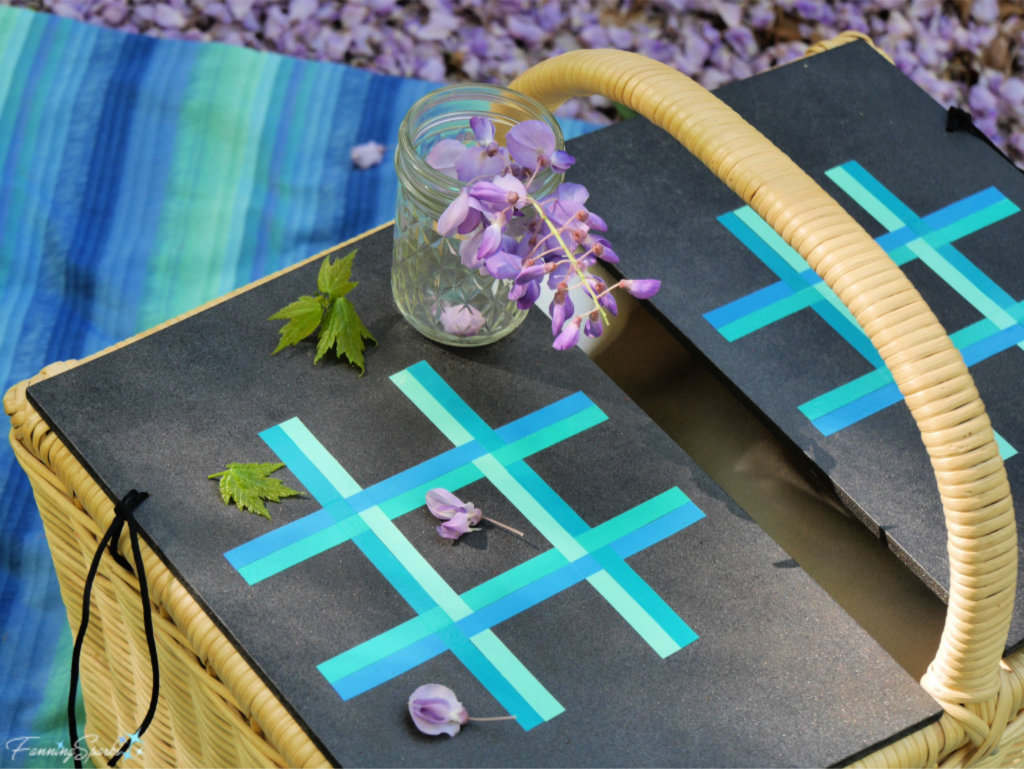 Staging this picnic was a great photography challenge. In fact, it was so much fun I may have to do it again!
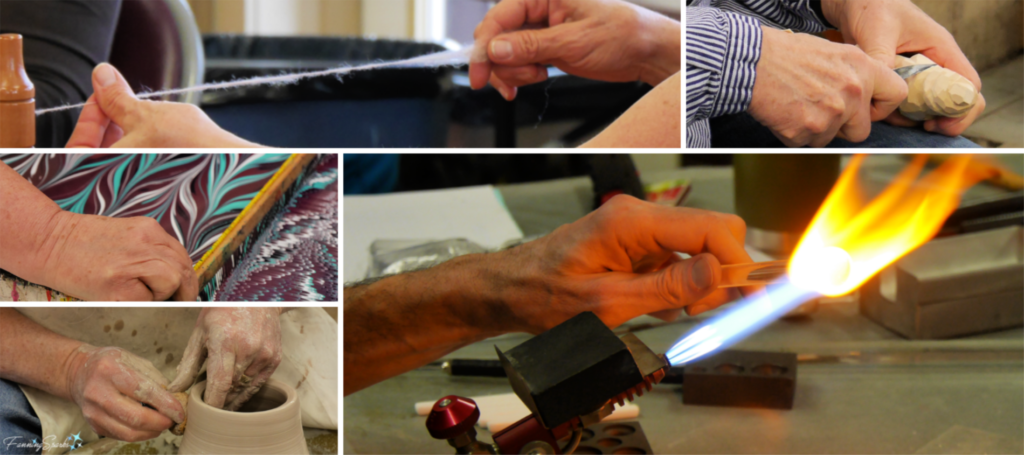
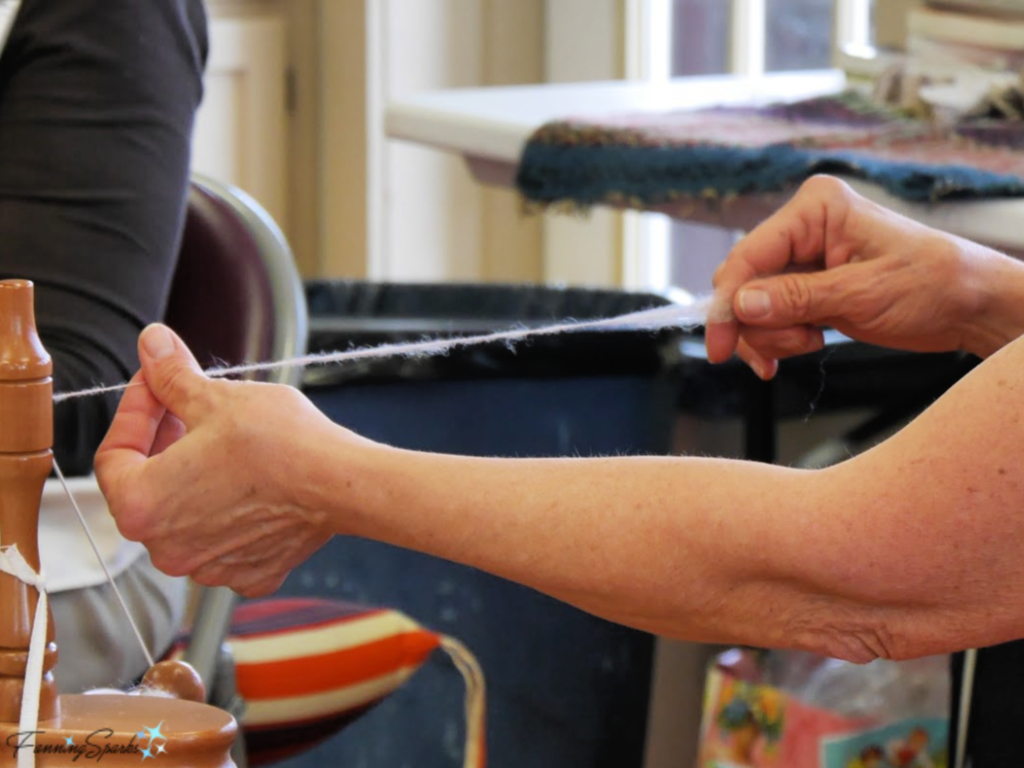 In
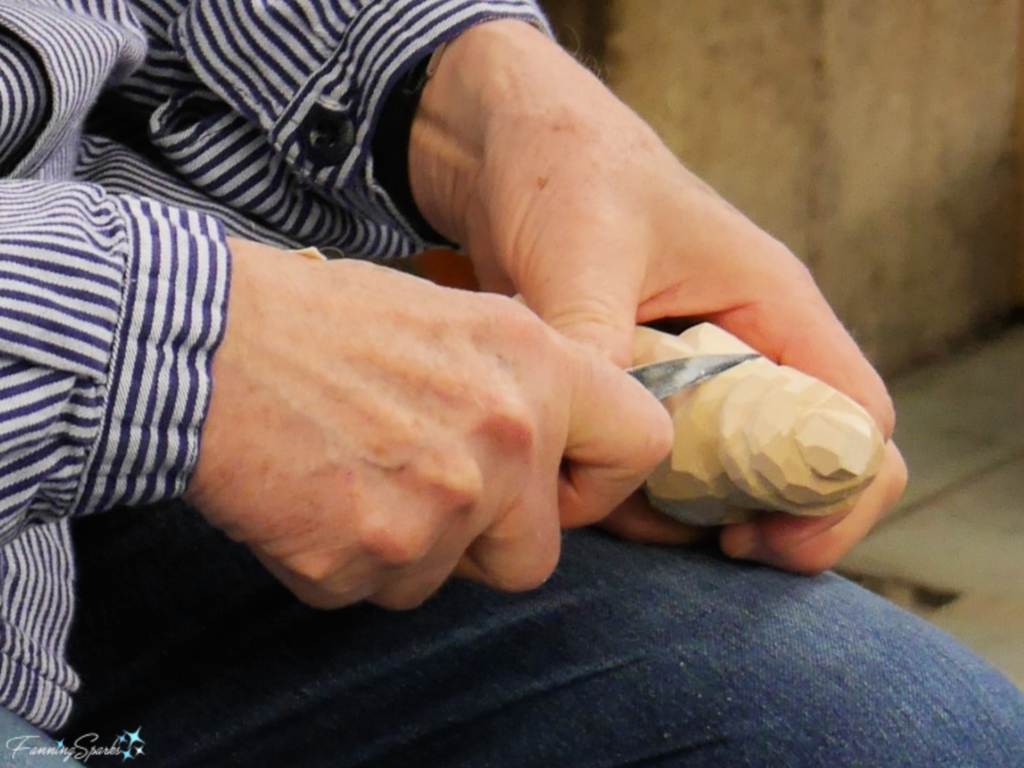 In
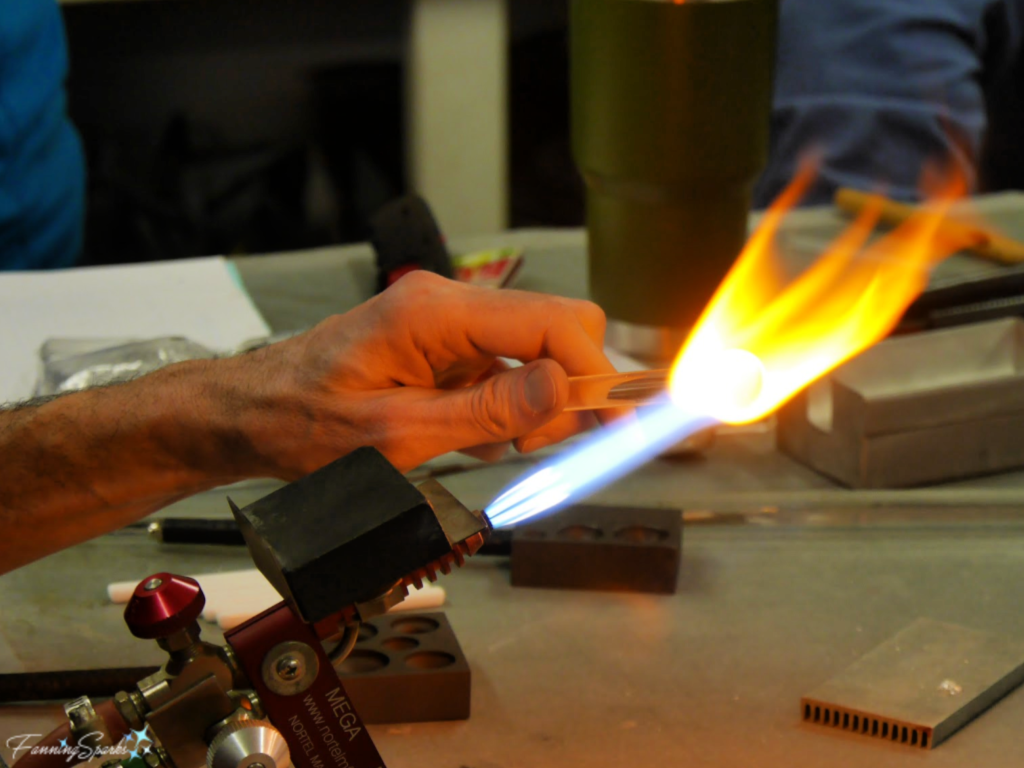
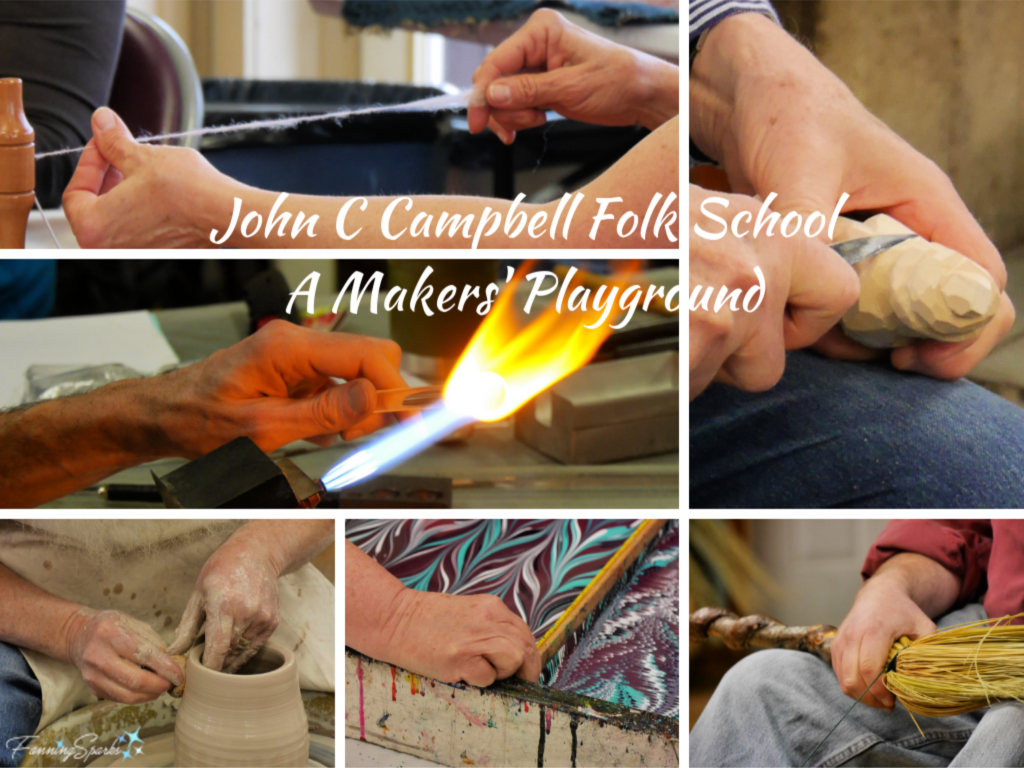
 I didn’t post about every class I attended although I enjoyed them all. I participated in a week-long class on glassblowing with Alex Greenwood and Tony Prince. Here Tony demonstrates flamework.
 Weekend classes on Basketry, Inkle Weaving and Portrait Photography were also informative and great fun.
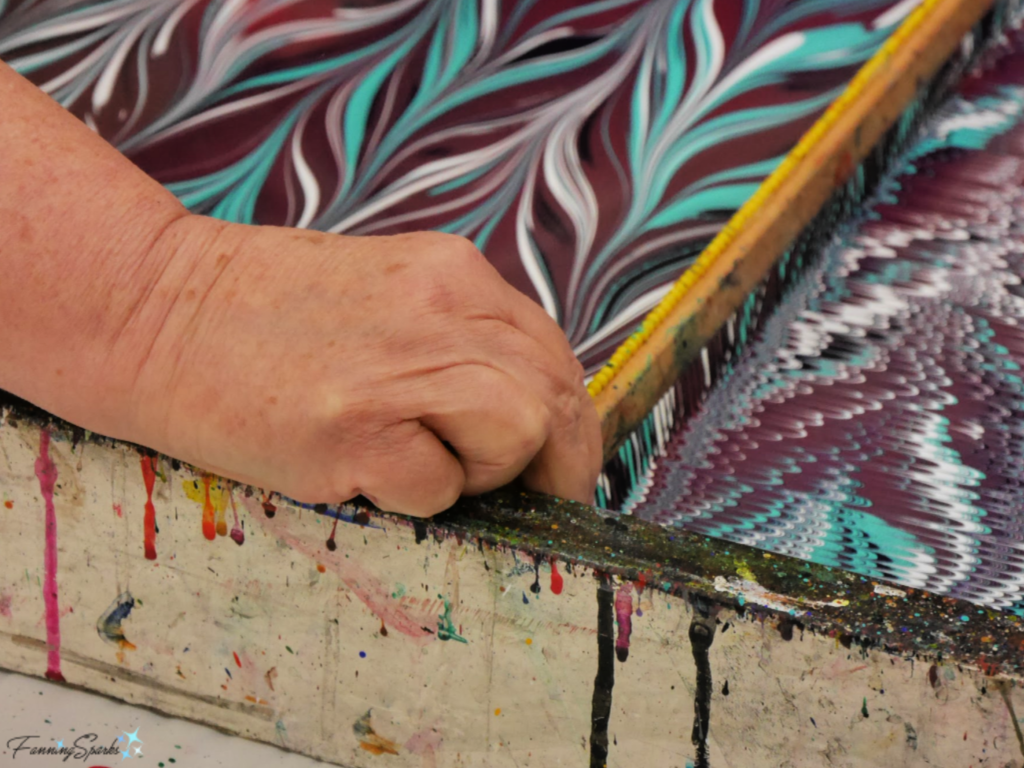 Vasanto demonstrated felt making.
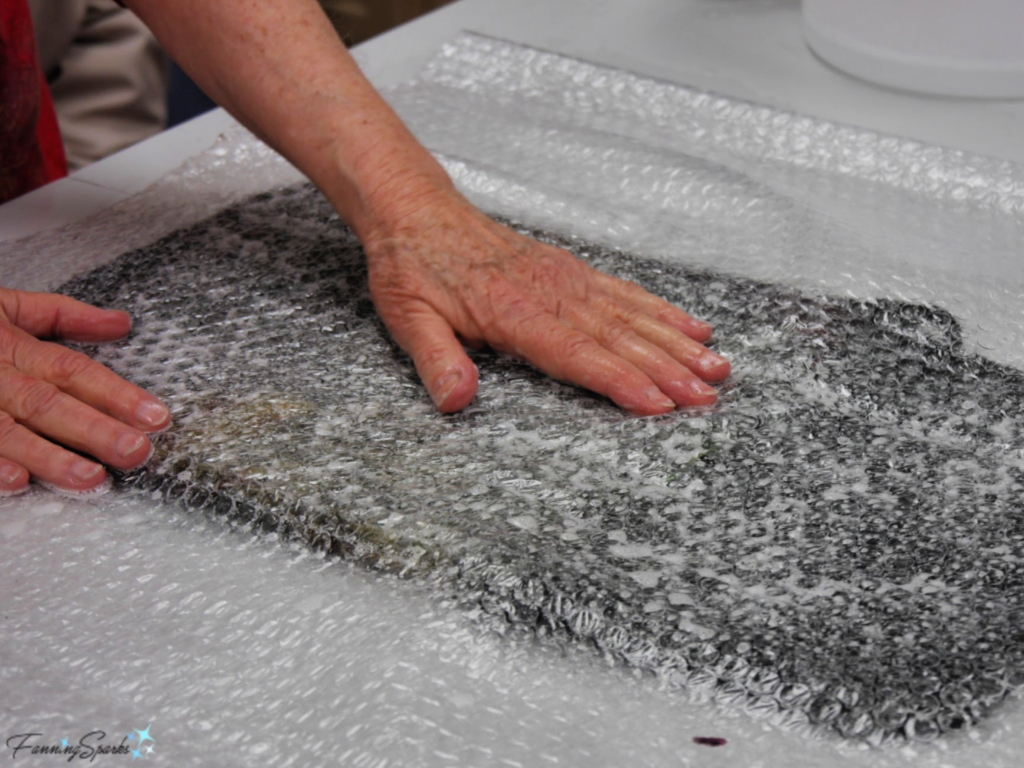 A blacksmithing demo was hosted by Paul Garrett who is the Resident Artist for Blacksmithing.
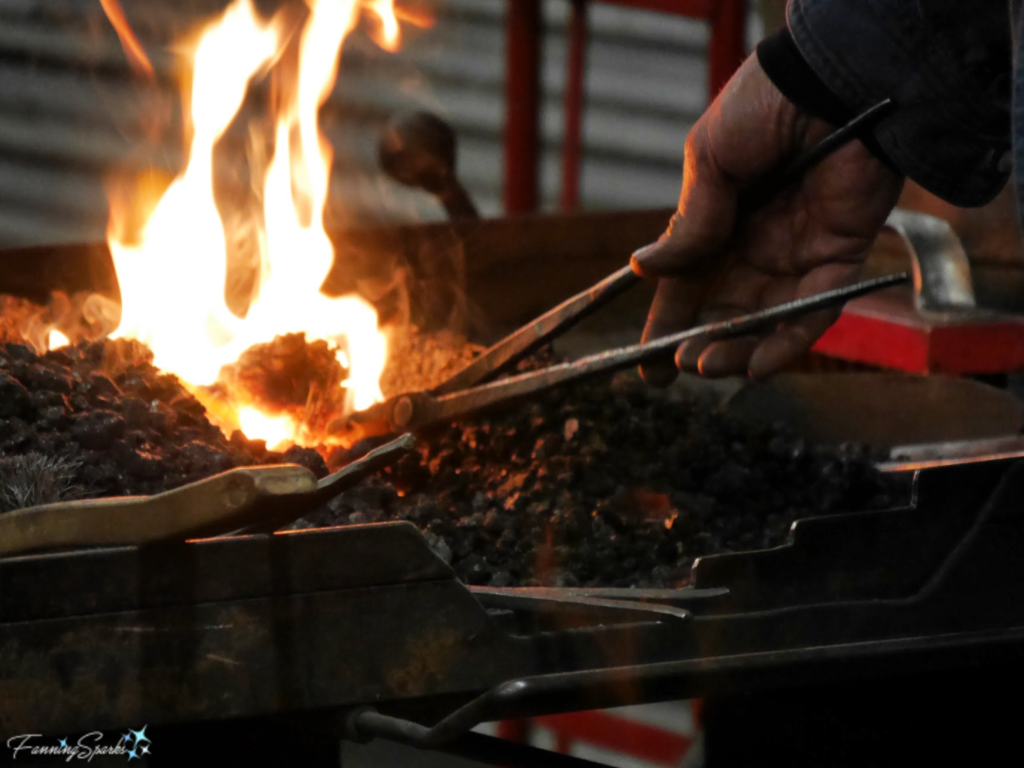 Marlow Gates demonstrated broom making.
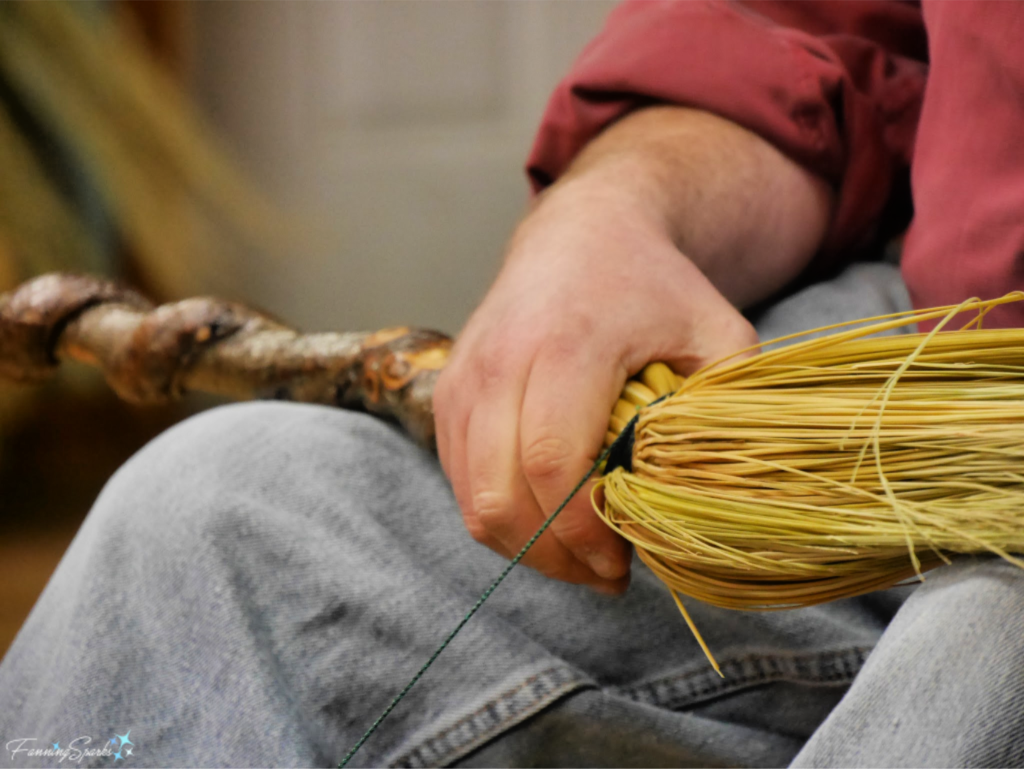 This is merely a sampling of what the Folk School has to offer. For instance, I haven’t mentioned the music and dance program but it is very popular and offers a wide variety of classes.
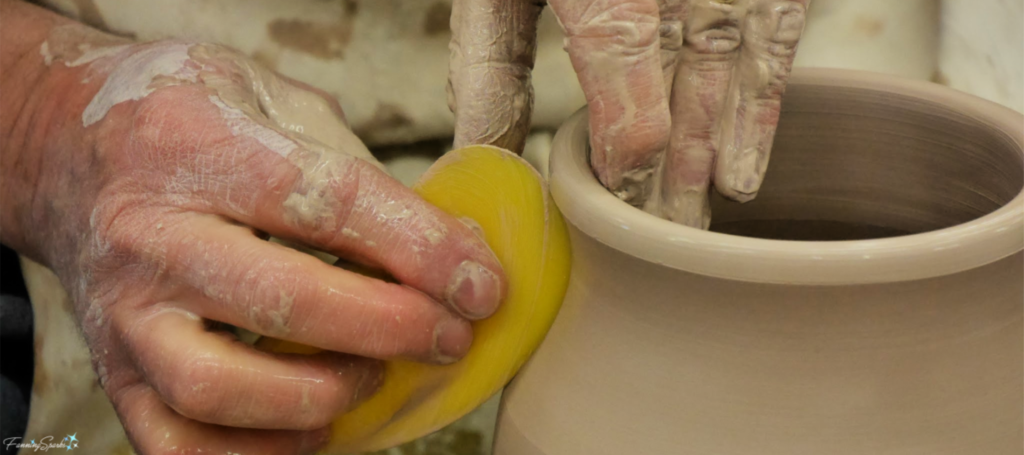
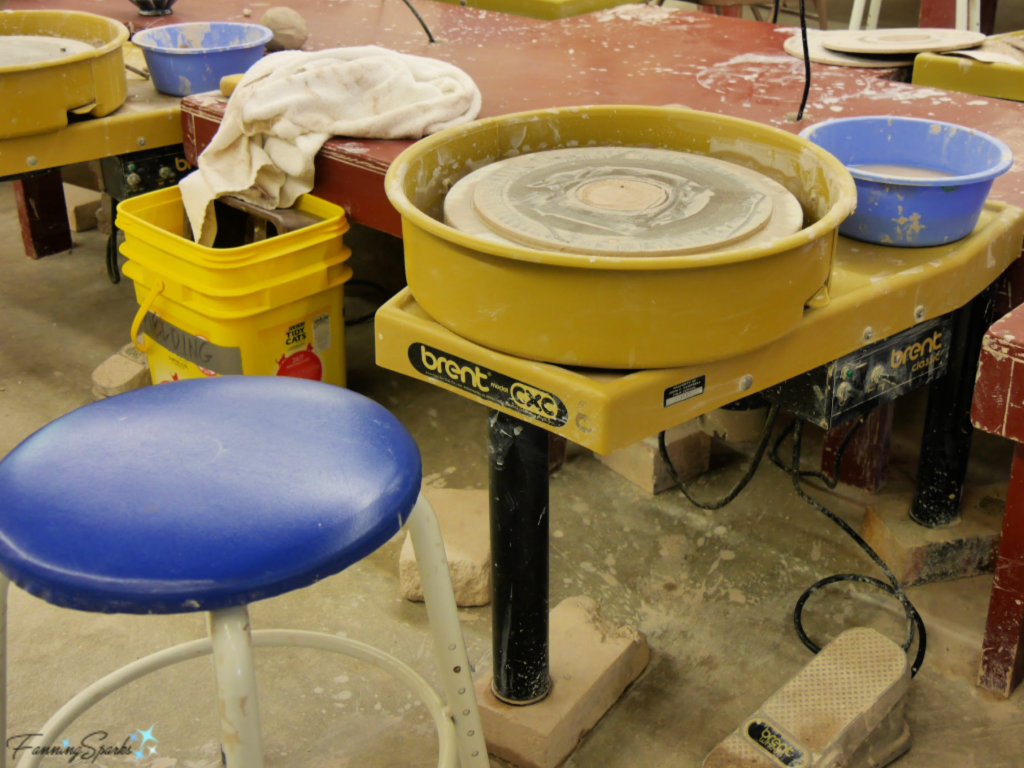
 On Monday morning, instructors, Steve Fielding and Mike Lalonde, started with an information-packed demonstration. We learned about the potter’s wheel‒to set the direction and control the speed. We learned the importance of body position and posture at the wheel. Here’s a photo of my working station.
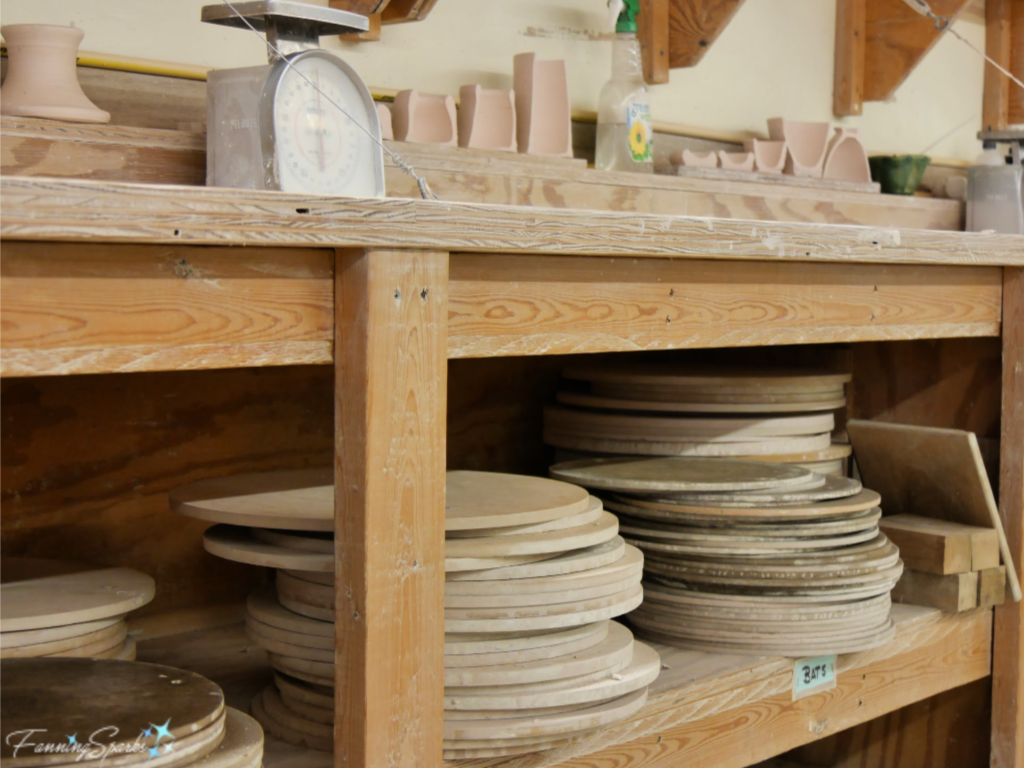
 We learned about bats, which are the removable platforms on top of the wheel head, and other pieces of equipment.
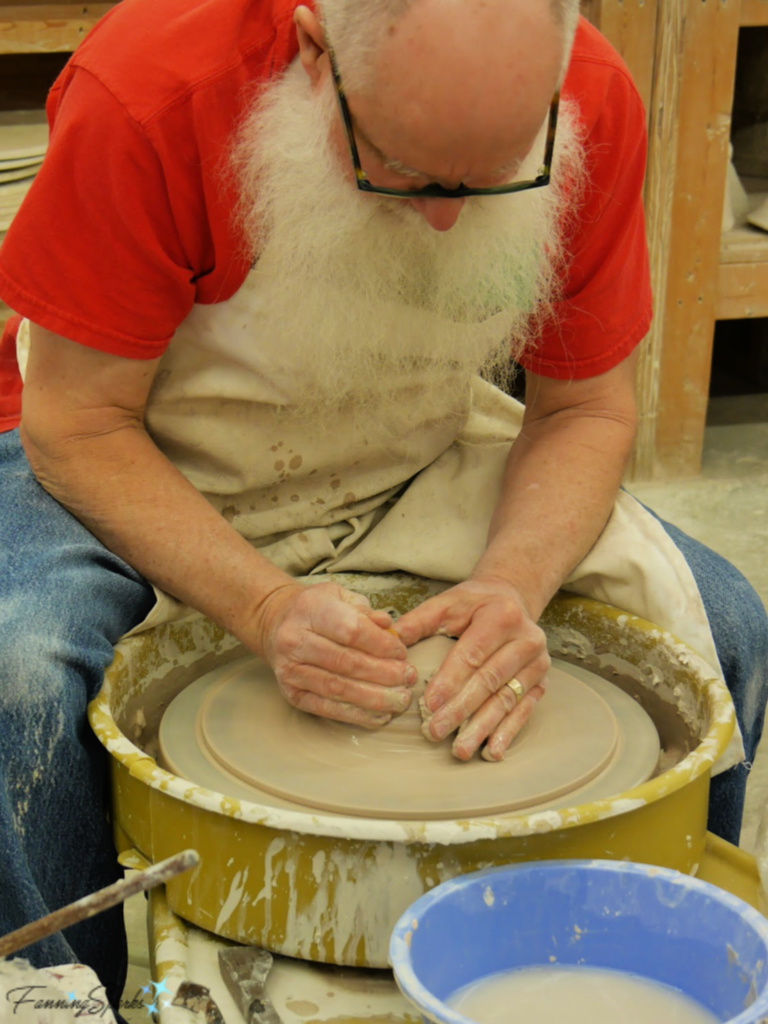
 We learned about applying water to lubricate the clay without getting it too wet. Then we watched the essential steps to center, open and pull the clay. This is Steve demonstrating how to center.
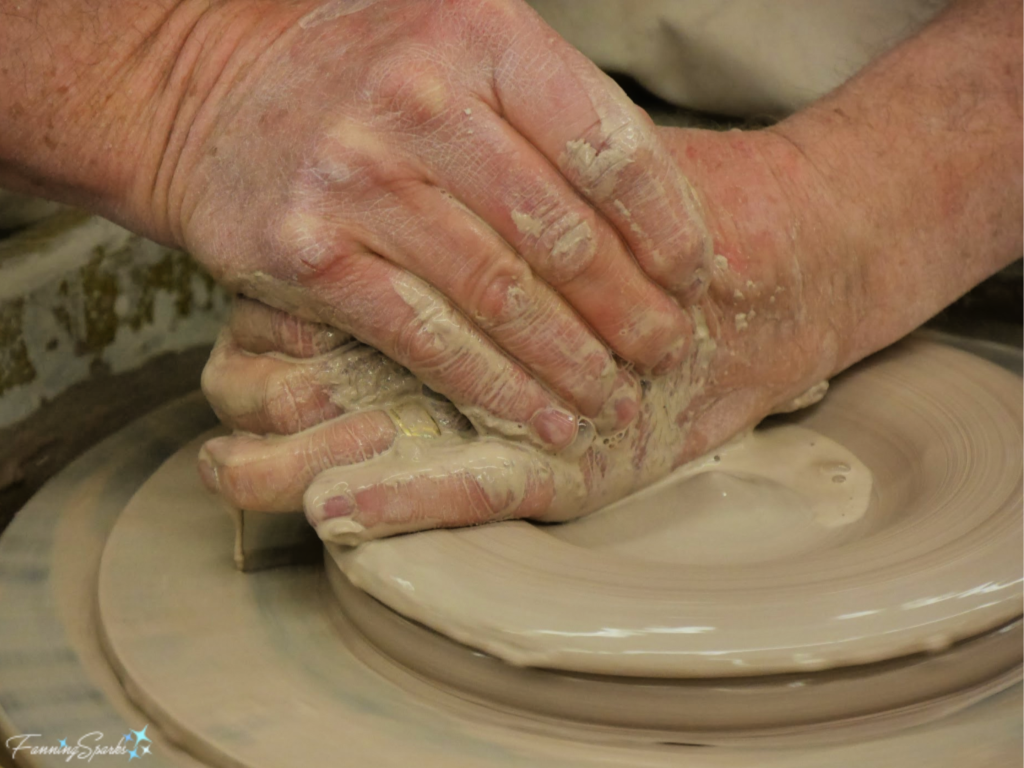 After opening, he demonstrates how to pull. “Center, Open, Pull” quickly became our mantra.
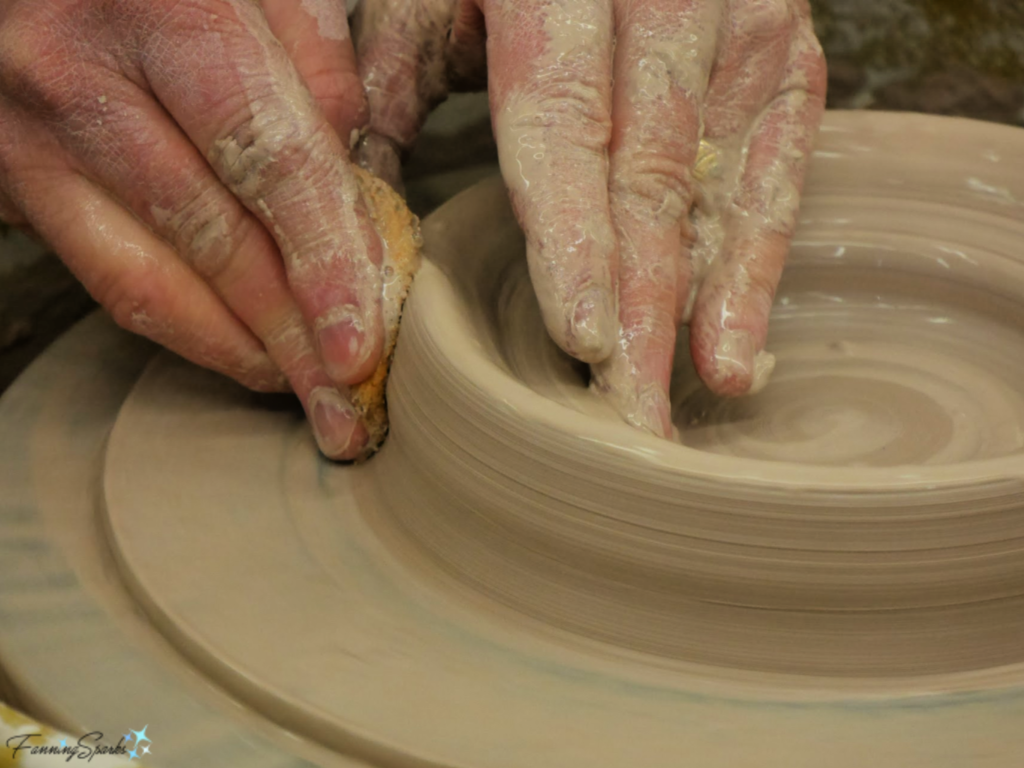 We learned about checking the thickness, compressing the rim, shaping, and various other steps. Here Steve refines the shape of his piece.
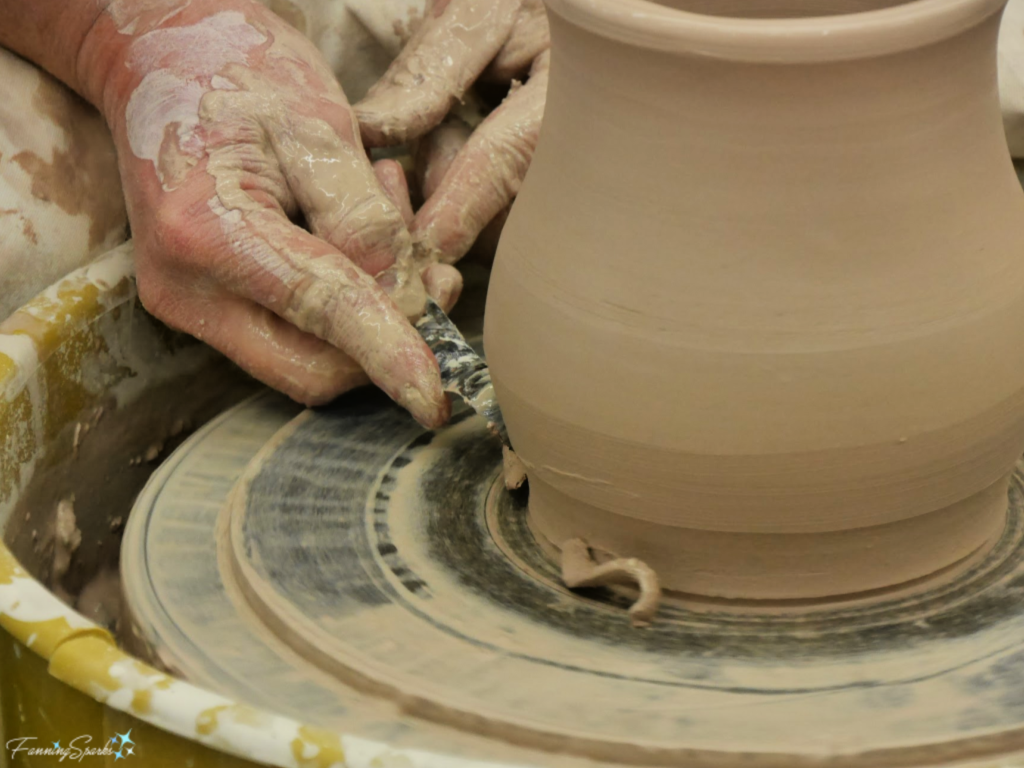
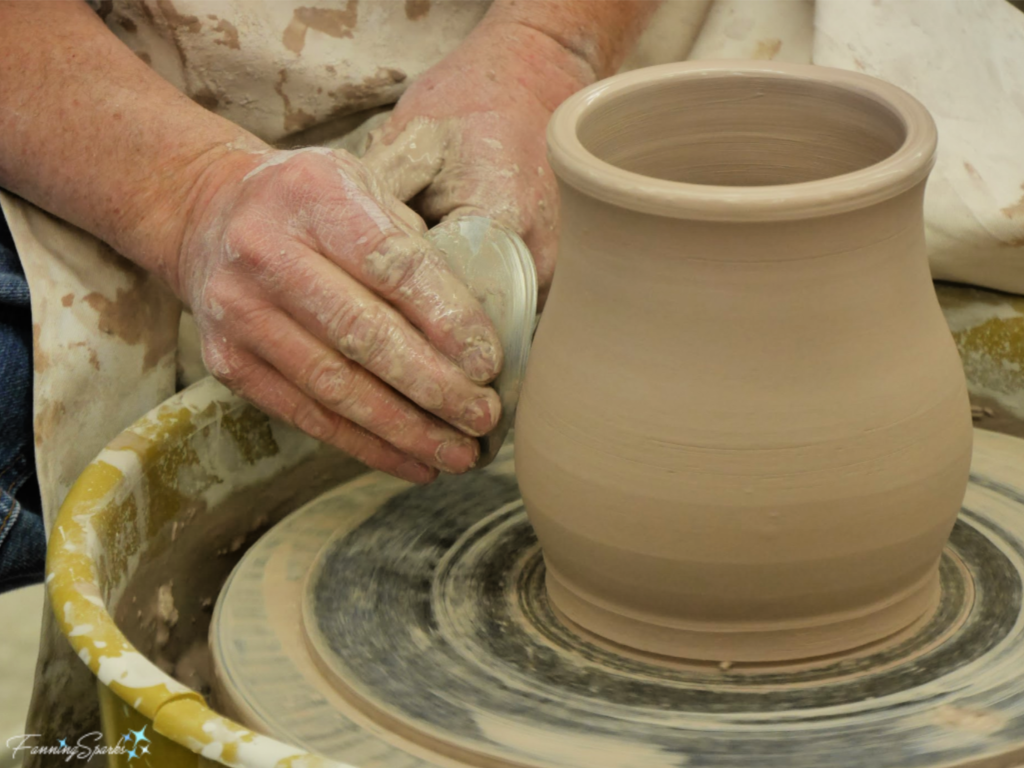 We learned about trimming the bottom edge and the importance of a “BOLD undercut” (an instruction delivered with such force that none of us will ever forget it!).
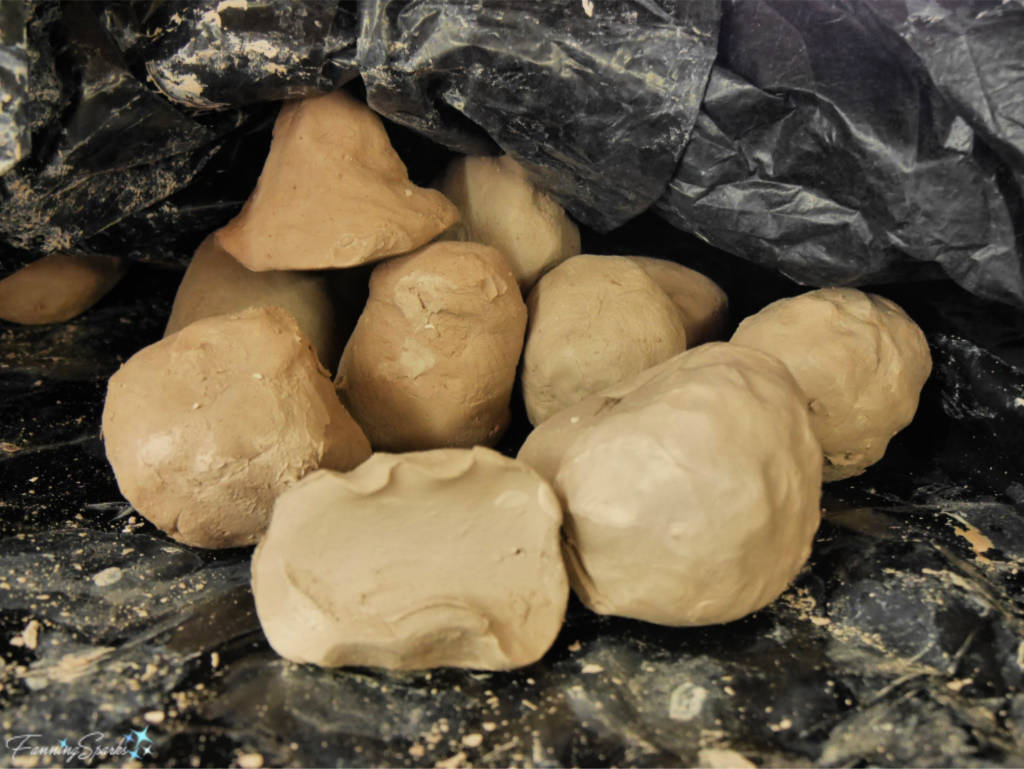
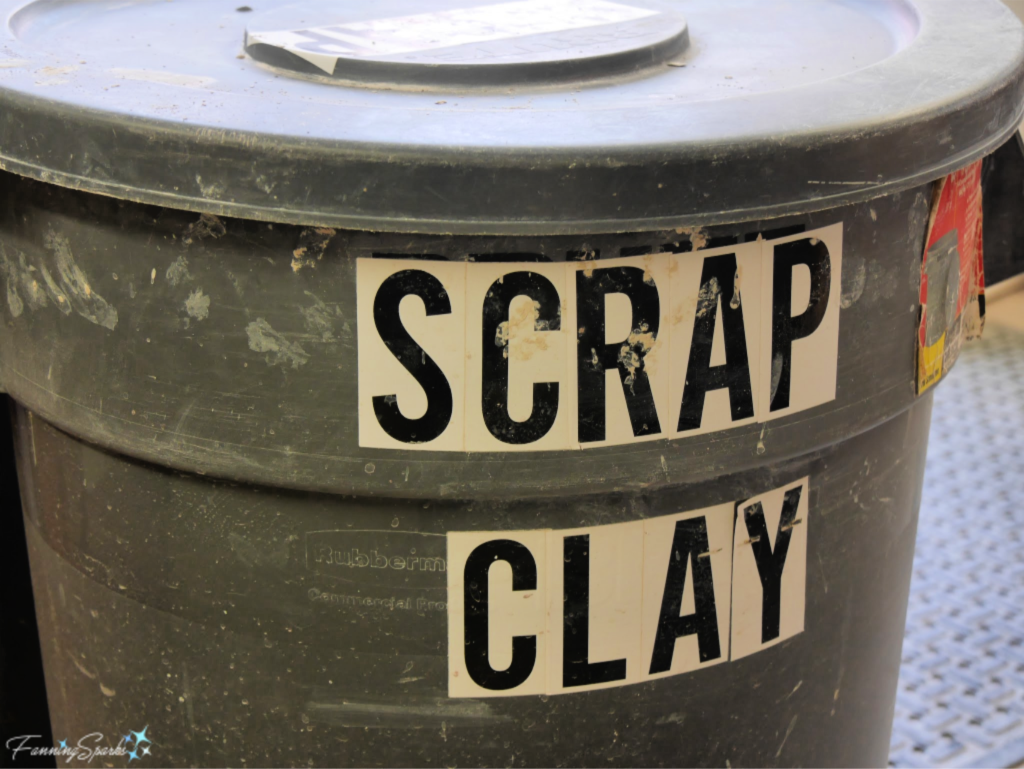
 Then it was our turn to give it a try. And try and try and try. Vince Pitelka puts it this way in his book Clay A Studio Handbook: “When learning to throw, always sit down at the wheel with at least a dozen balls of clay. You must abandon the preciousness of the individual piece. Starting with only a few balls of clay encourages an unconscious determination to make every piece a success and thus an unproductive tendency to overwork the clay. Keep working on a piece if things are going well, but the instant it starts to go bad, scrap it and start another. You will accelerate the learning curve and accomplish far more.” I wish I’d realized this from the get-go. Abandoning the preciousness of each piece is not something that comes naturally to me! But I did become very familiar with the Scrap Clay bucket where we abandoned our precious pieces.
 The instructors told us about the importance of a slow and steady touch‒to always apply and release pressure on the clay slowly. But experience was the best teacher on this point. Clay is very responsive which means you have total control over how the clay is shaped but it also means one, small misplaced movement can quickly ruin the piece. Developing the right touch can only be accomplished through a great deal of practice.
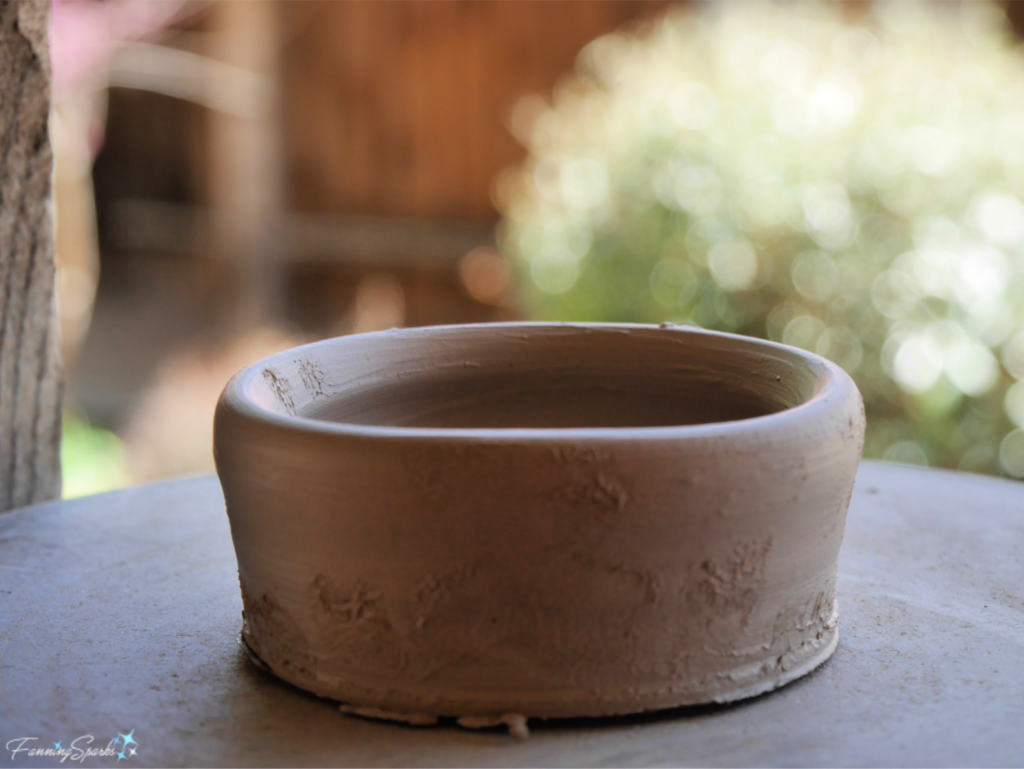 Some of the students were more experienced as evidenced by the beauty of their first pieces.
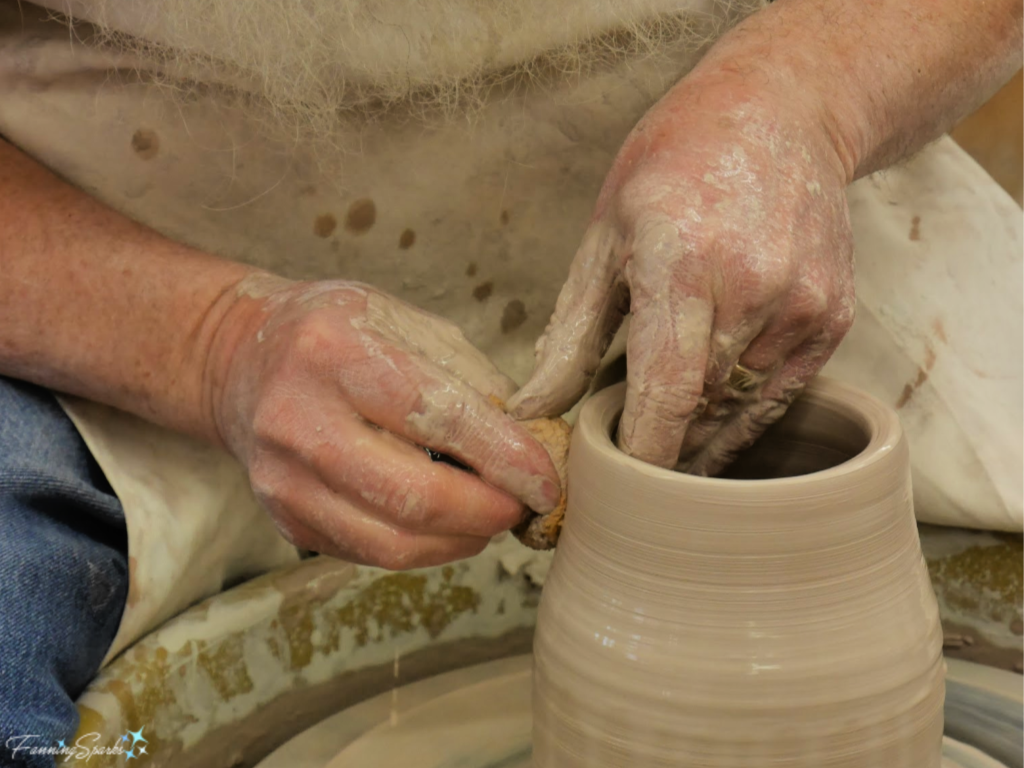
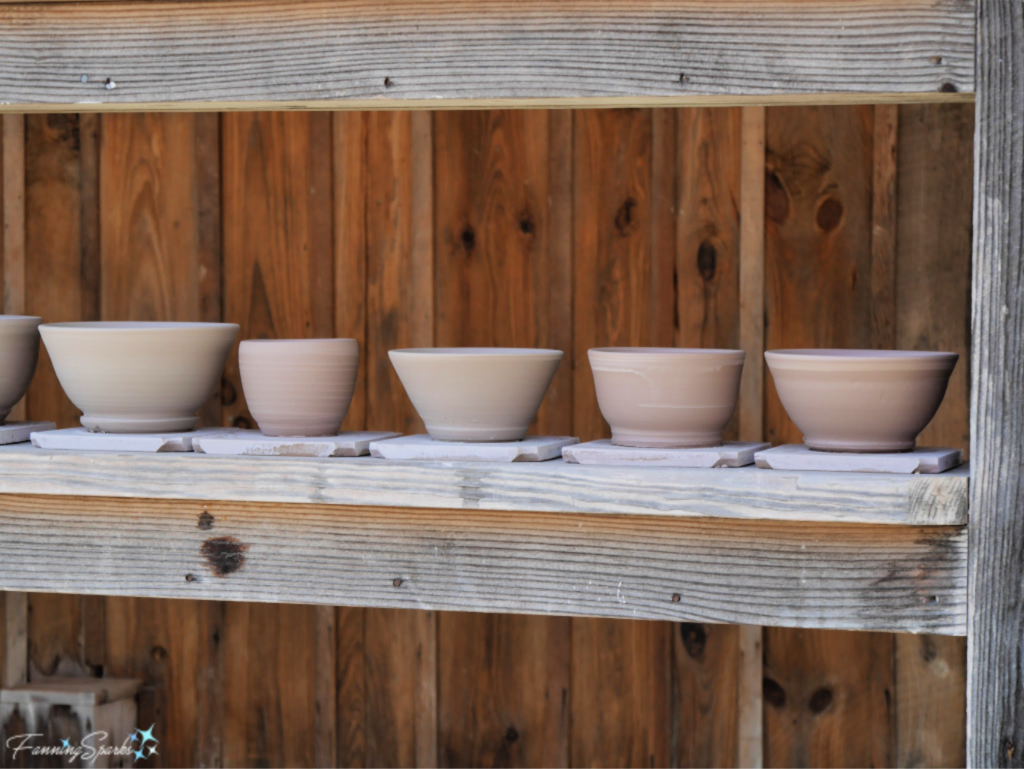 Throughout the week, we witnessed the process to center, open and pull multiple times. We learned about drying and firing clay. We learned the steps to complete at each stage from wet, leather-hard, bone-dry to bisque. We started with bowls and then progressed to cylinders and mugs. We had fun experimenting with glazes trying different colors and combinations.
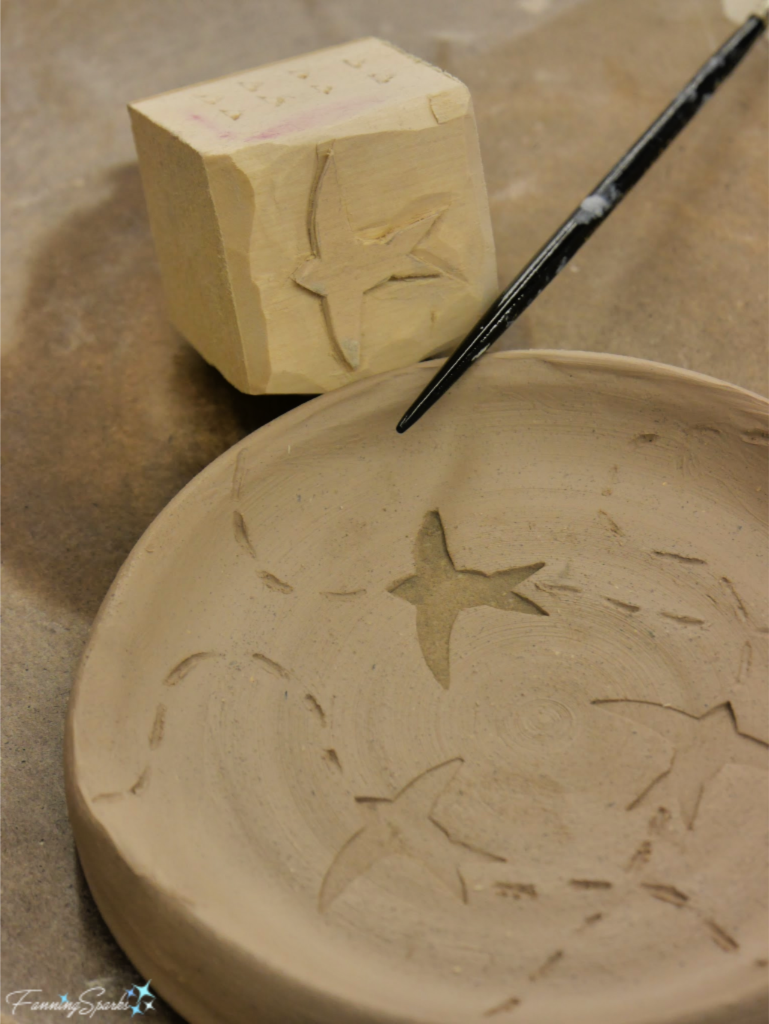
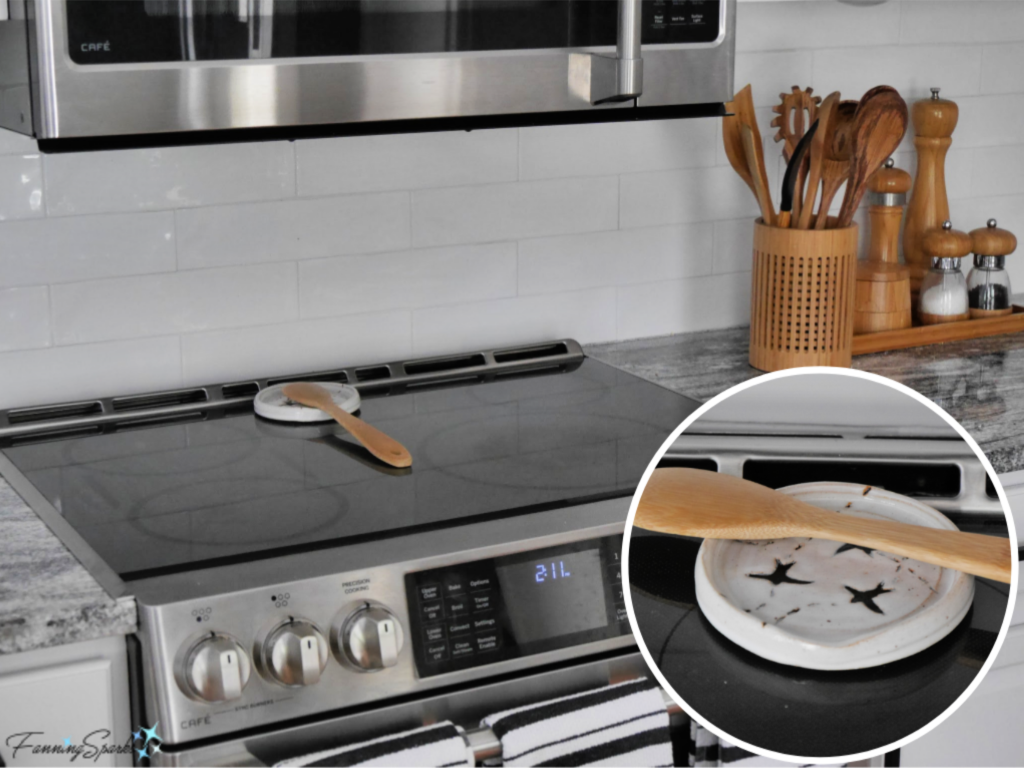 I love this spoon rest! I love that it’s functional and serves a purpose in my daily life. But most of all, I love that it is a combination of two new skills I learned at the Folk School‒woodcarving and clay throwing. It is one of a kind and truly unique to me.