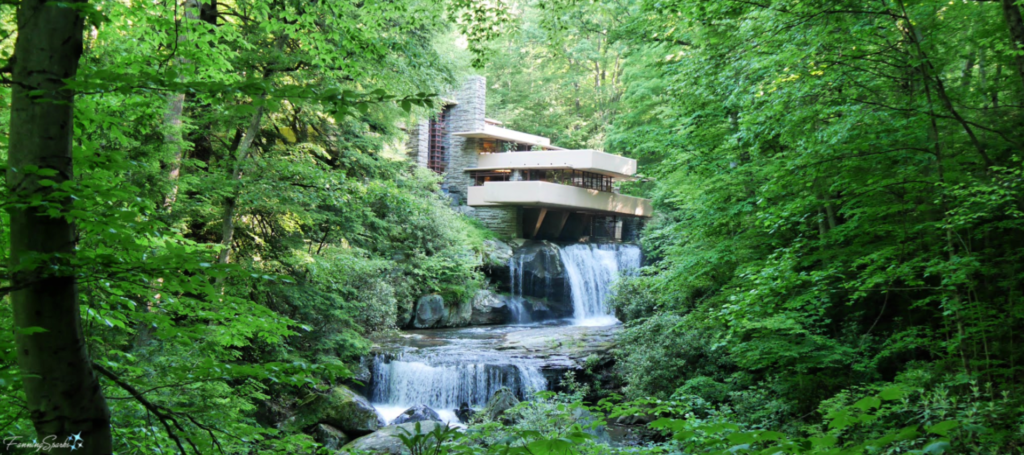
Earlier this month, I finally had the opportunity to visit FallingWater. I say “finally” because I’ve wanted to see this Frank Lloyd Wright architectural masterpiece ever since I became intrigued by the famous architect while living in Wisconsin over 5 years ago. Since then, I’ve had the pleasure of visiting nearly a dozen of his famous structures across a half dozen US states.
While few of us will ever live in a house like Fallingwater, there are lots of interesting lessons to be learned from Frank Lloyd Wright’s design philosophies and architectural creations. I’ve noticed a few recurring themes that I’d like to share with you in this post. In the interest of keeping this post to a manageable length though, I’ll focus only on exteriors today and hold interiors for a future post.
Update July 16, 2019: Check out the post, Step Inside with Frank Lloyd Wright.
 Blurred Lines
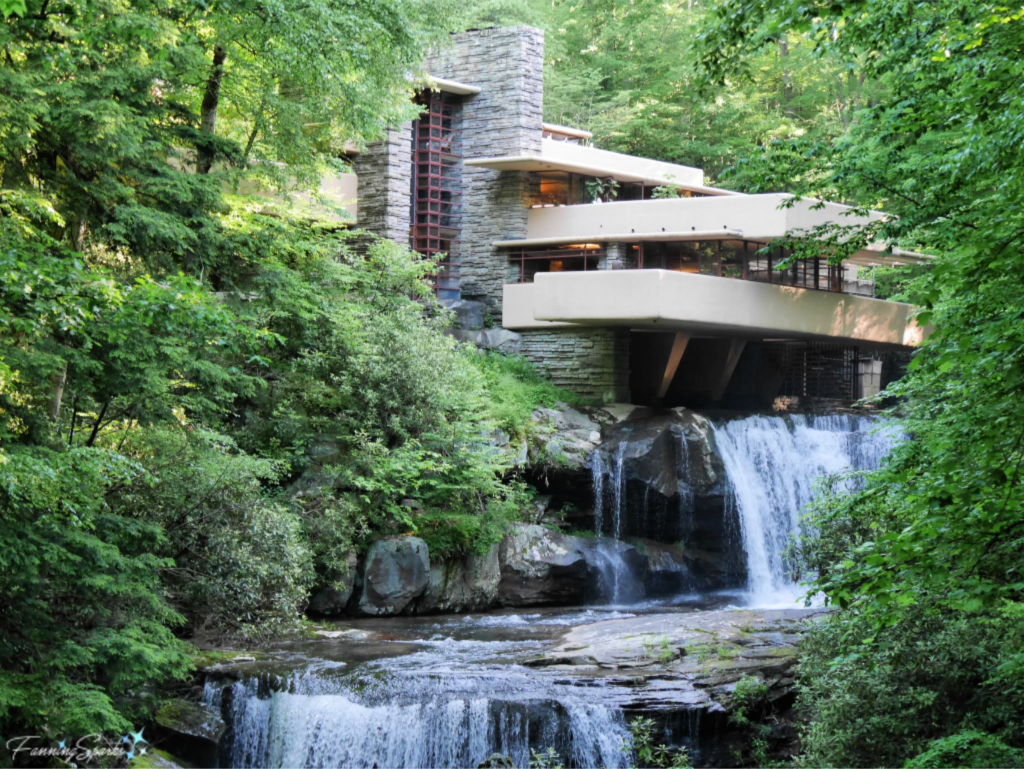
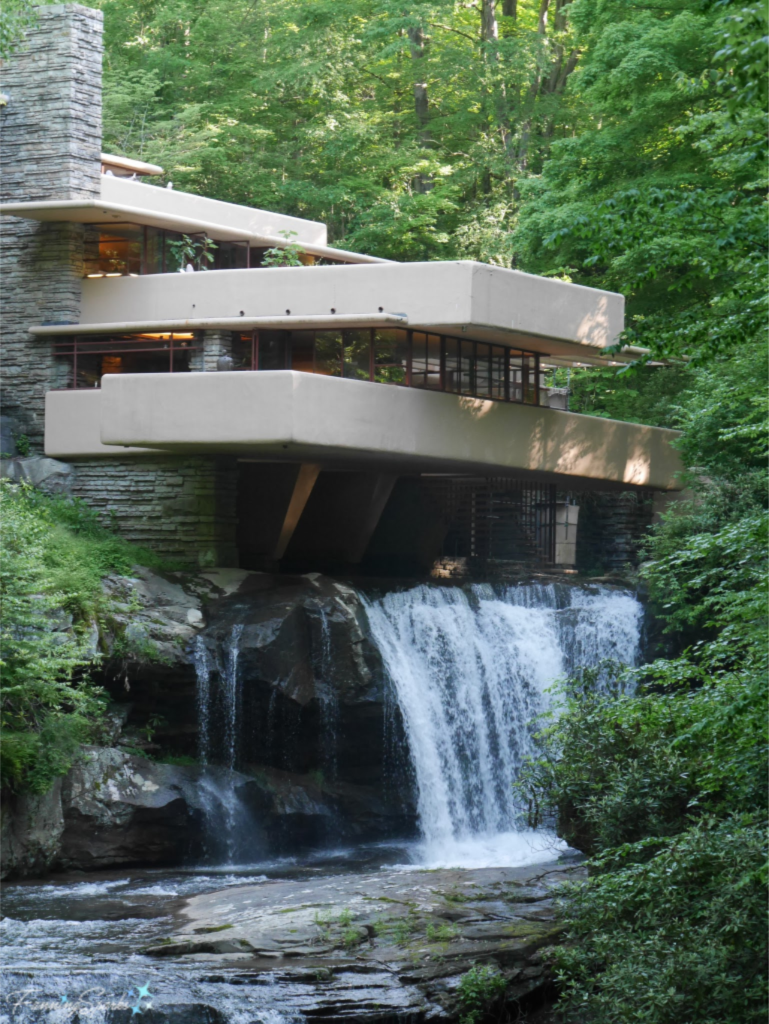
Probably the most remarkable thing about FallingWater is its placement‒it sits above a small waterfall on the Bear Run mountain stream. The Kaufmanns, who owned FallingWater, “were surprised to discover they would be living over the falls rather than across from them. Wright told the family he wanted them “to live with the waterfall, not just to look at it”. Now that’s thinking outside the box! You can see how the living room is suspended over the water of Bear Run in the below photo.
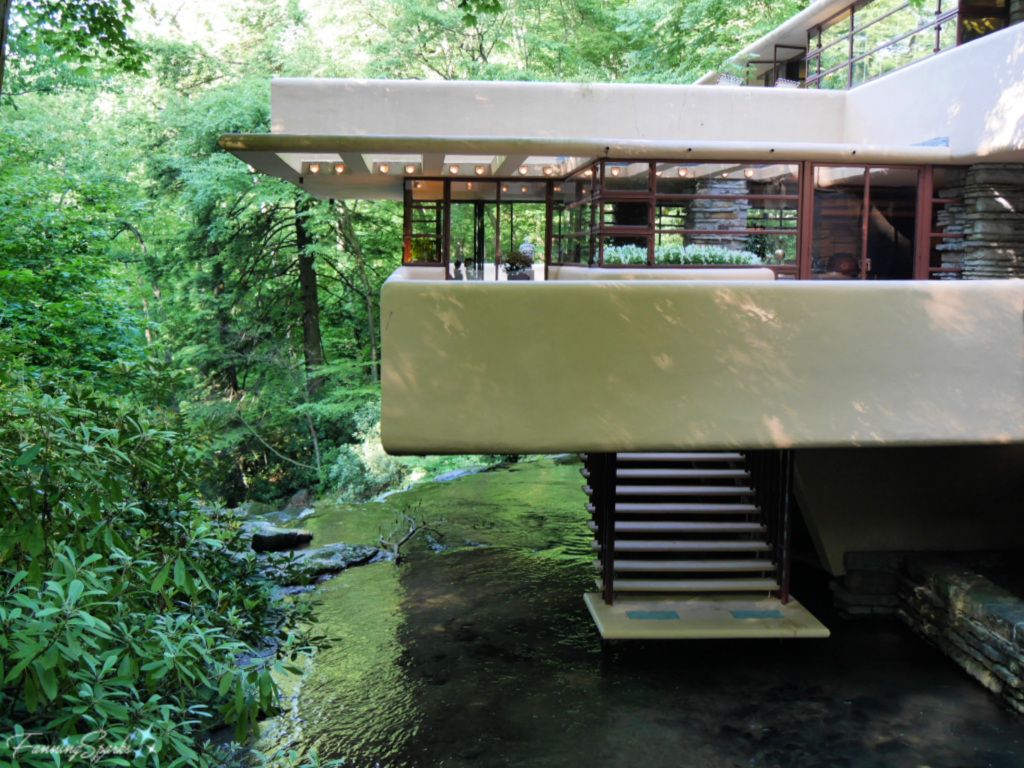 And those stairs that you see coming down to the stream, they are accessed from this glass-enclosed stairwell or hatchway in the living room.
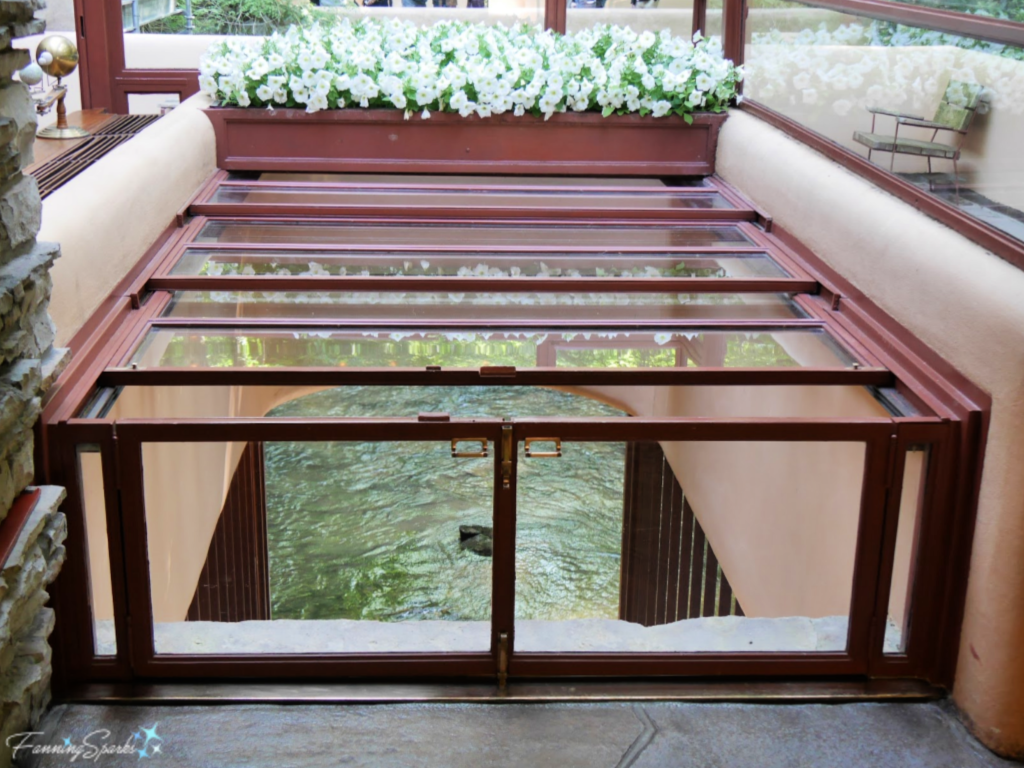 This is a great illustration of one of Wright’s philosophies. He liked to blur interior and exterior space by making the interior decor complement the exterior. The idea of “bringing the outside in” is still popular today. It’s fascinating to see how Wright accomplished this nearly a hundred years ago.
Nature Inspiration
Wright’s most inspirational force was nature. He advised students to “Study nature, love nature, stay close to nature”. Wright is considered the pioneer of “organic architecture” in which natural forms are translated into architectural shapes.
The Guggenheim Museum in New York City, Wright’s last major work, exemplifies the use of organic form. Having had the pleasure of experiencing the Guggenheim firsthand, I can attest the building design is extraordinary. You begin your visit on the top floor and then slowly descend on a spiraling ramp around a huge light-filled rotunda. According to the Guggenheim Museum, “it is thought that a nautilus shell inspired the spiral ramp and that the radial symmetry of a spider web informed the design of the rotunda skylight.”
Horizontal Planes
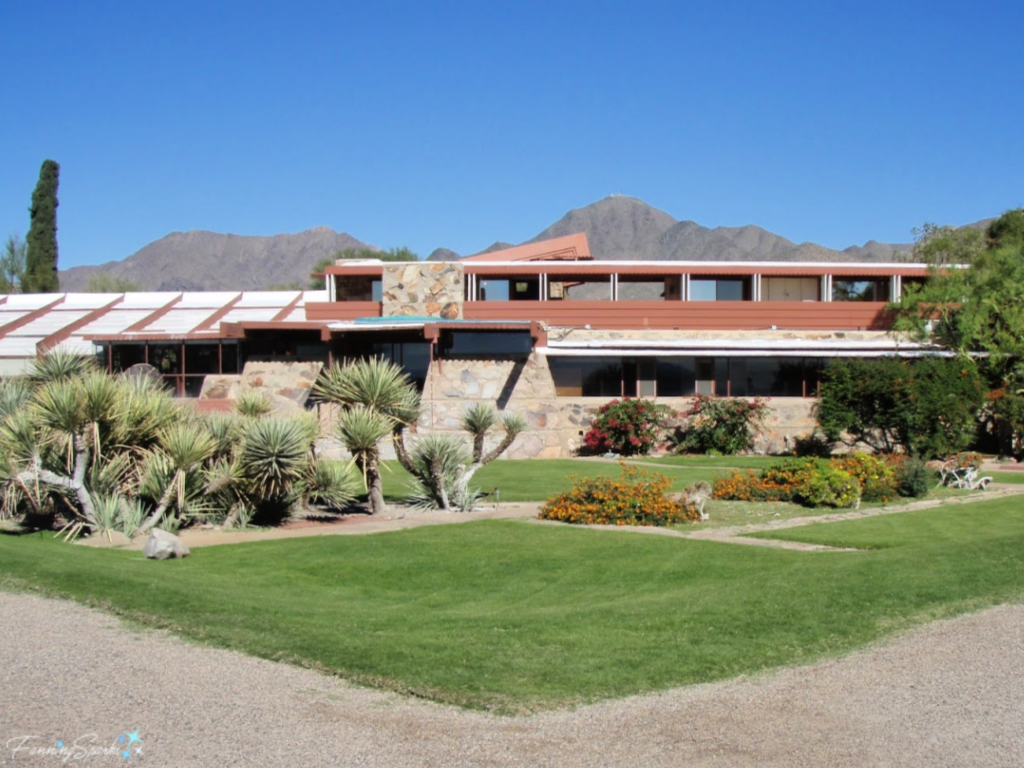
In the same way FallingWater blends into the Bear Run waterfall, Wright designed his buildings to blend into the landscape rather than perch on top of it. Wright said “I had an idea that the horizontal planes in buildings, those planes parallel to earth, identify themselves with the ground—make the building belong to the ground”. You can see how he applied this philosophy at Taliesin West, Wright’s winter residence and school of architecture in Scottsdale, Arizona.
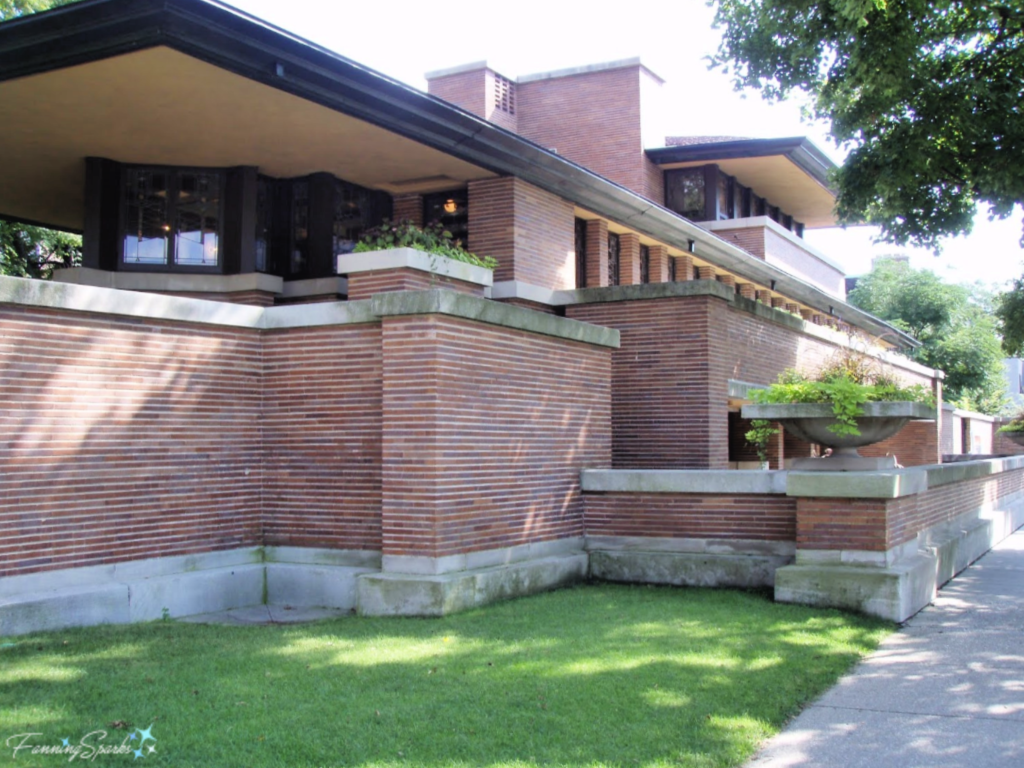
 These same horizontal planes are a strong design element in Robie House in Chicago. Robie House is considered the finest example of the “Prairie Style” of architecture which Wright created in the early 1900s.
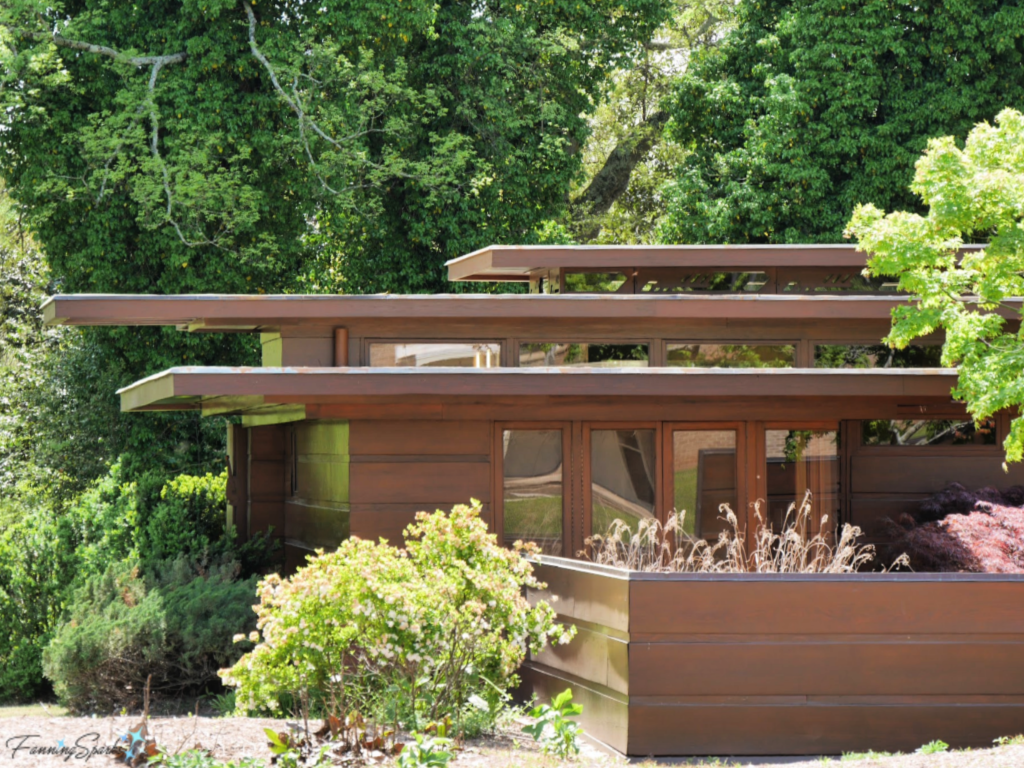
 Rosenbaum House in Florence, Alabama continues with horizontal planes and rectangular shapes. Rosenbaum is an example of Wright’s Usonian style. His Usonian vision was to make home ownership affordable for the American middle class. To accomplish this, he simplified his design (eg by eliminating attics and basements) and reduced construction costs (eg by eliminating the need for specialized labor).
 Natural Materials
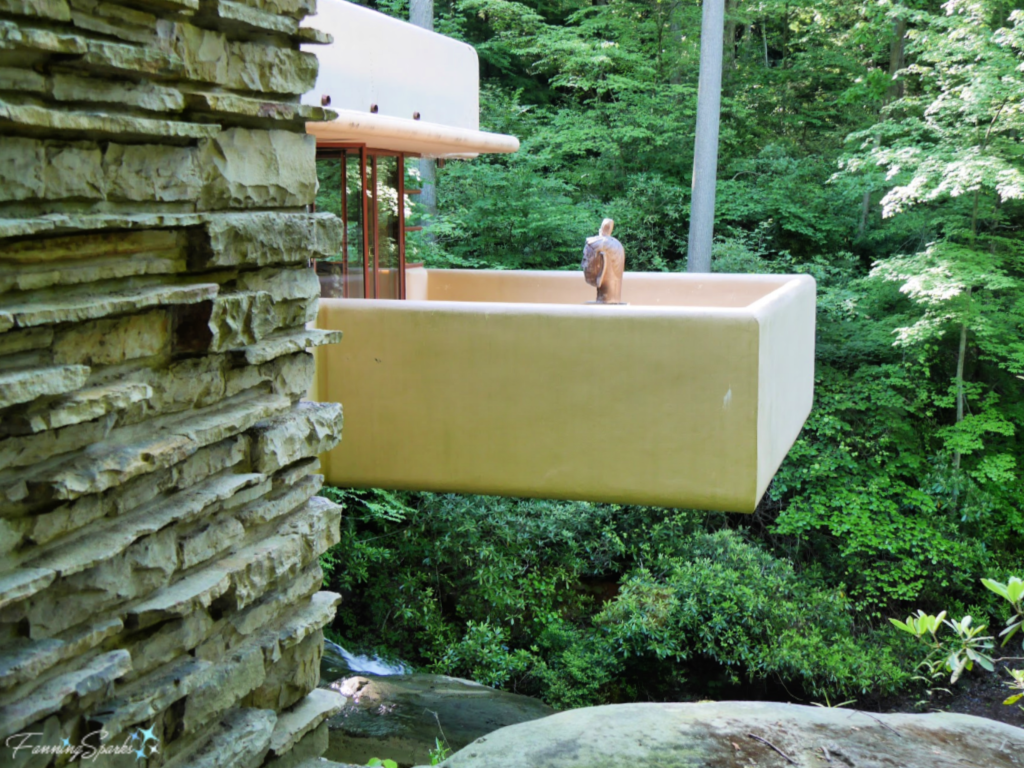
Wright used local building materials to create a connection between the structure and its surroundings. At FallingWater, his generous use of local sandstone (on left) creates this harmony.
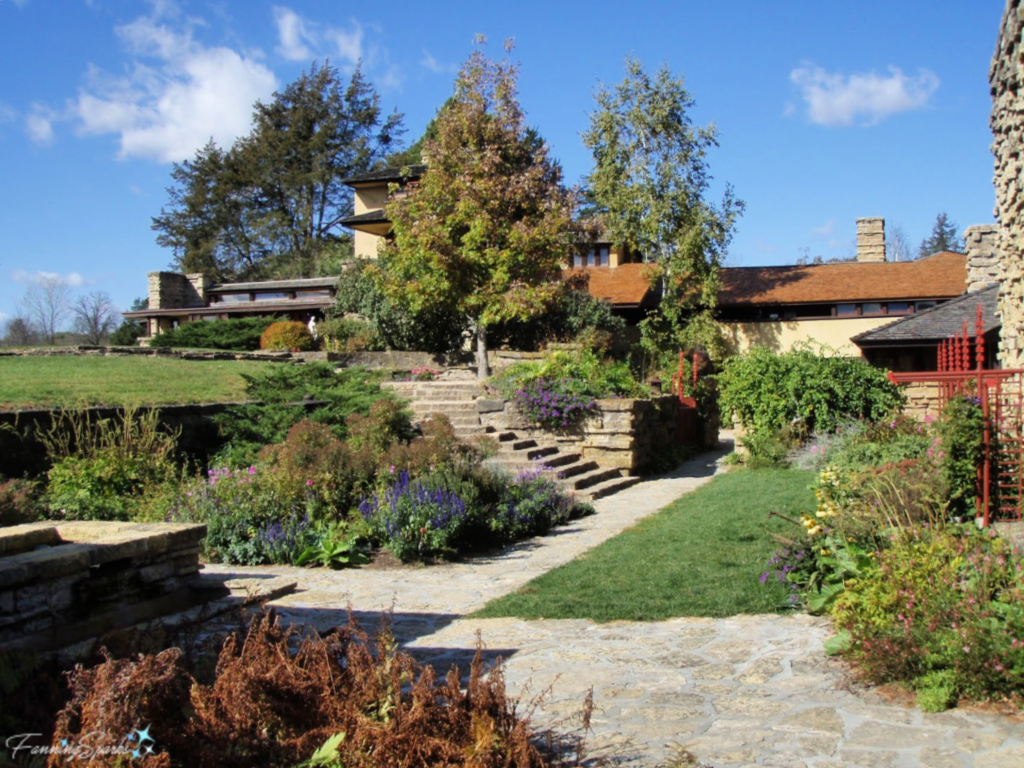
 He used a similar approach at Taliesin in Spring Green, Wisconsin where he chose local yellow limestone and river sand to construct the walls. Taliesin is of particular interest because it was Wright’s home, studio, and garden sanctuary for over 30 years. He used Taliesin as a laboratory for architecture and design and started his school of architecture there. This was the first Frank Lloyd Wright home I had the opportunity to visit.
 Cantilever Construction
When asked about the source of his design for FallingWater, Wright replied “There in a beautiful forest was a solid, high rock ledge rising beside a waterfall, and the natural thing seemed to be to cantilever the house from that rock bank over the falling water…” I’m not so sure a cantilevered house would be the “natural thing” for anyone other than Wright but cantilever construction (ie where a beam, or other structural member, is supported at one end with the other end projecting beyond its surrounding wall or column) was a technique he used frequently.
 Natural Light
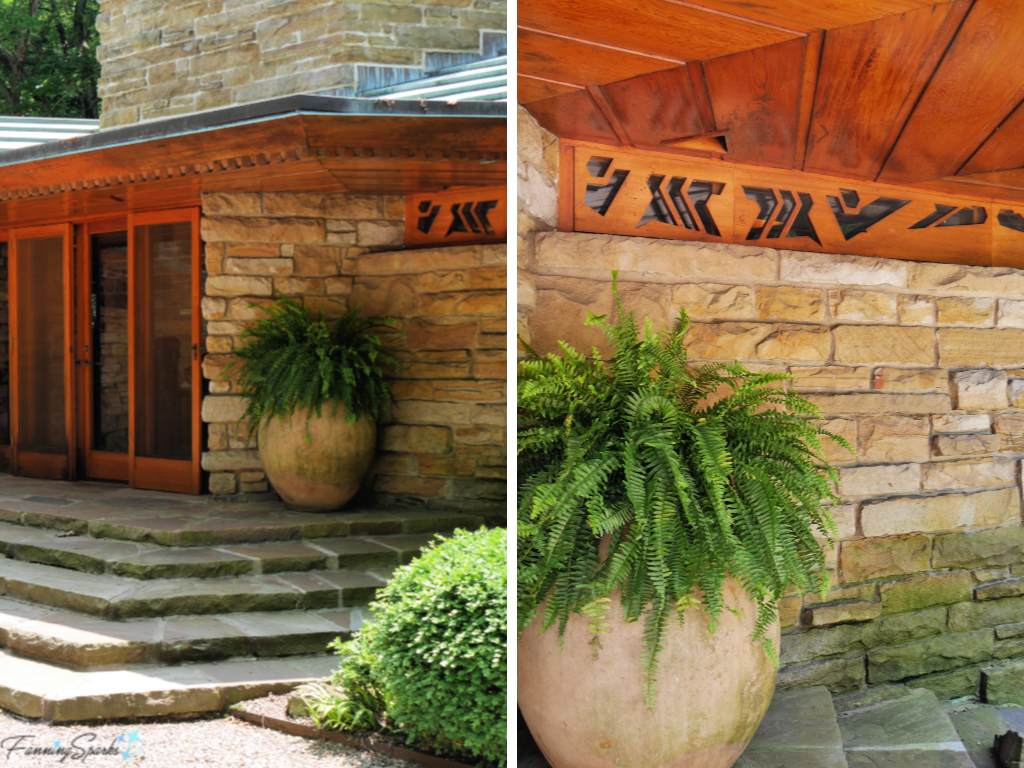
Wright maximized and showcased natural light in his designs. He is well-known for his use of clerestory windows which are a series of windows placed high on a wall to allow light in while simultaneously preserving wall space and interior privacy. Here’s the entrance of Kentuck Knob in Chalk Hill, Pennsylvania with a series of clerestory windows to the right.
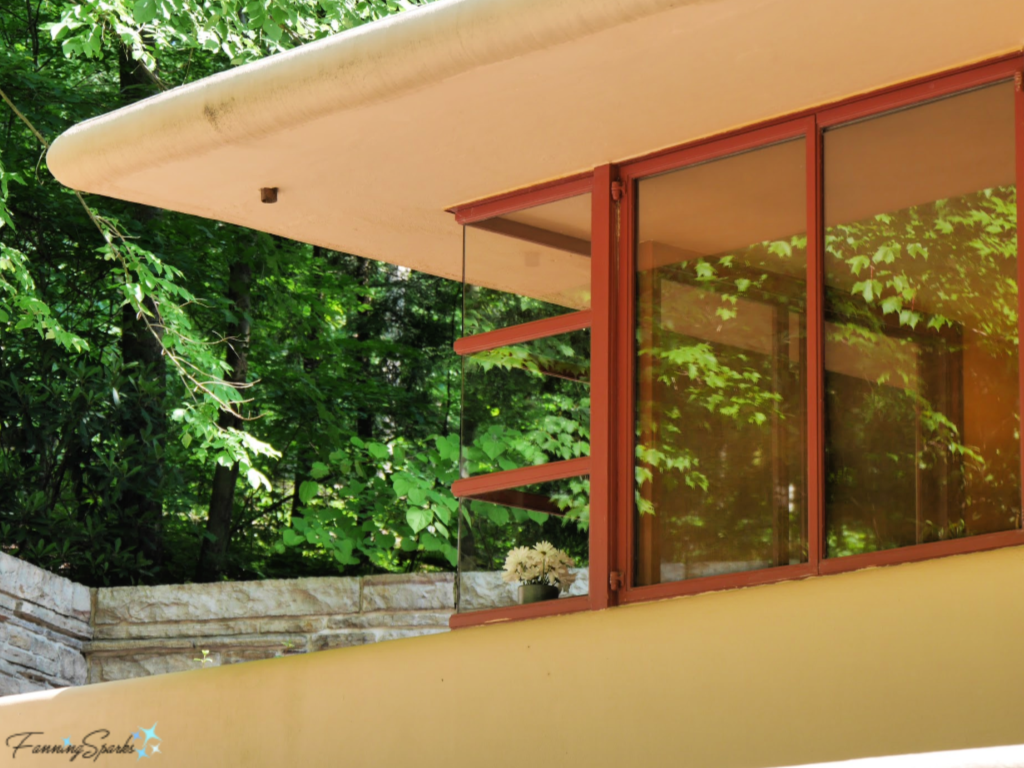
Wright created new and innovative windows along the way. This corner window of mitered glass from FallingWater is a case in point.
 Art Glass
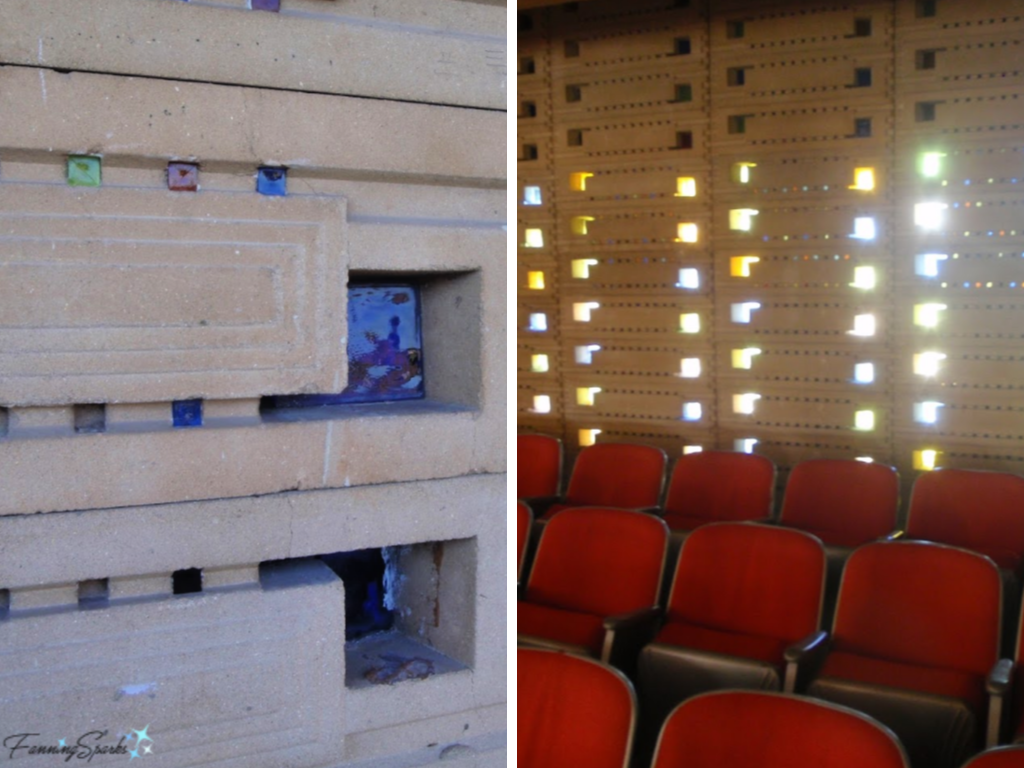
Wright often used art glass to maximize natural light. The exterior walls of the Annie Pfeiffer Chapel at Florida Southern College in Lakeland, Florida are rather unusual. But it isn’t until you enter the chapel that you can fully appreciate those small squares of colored glass.
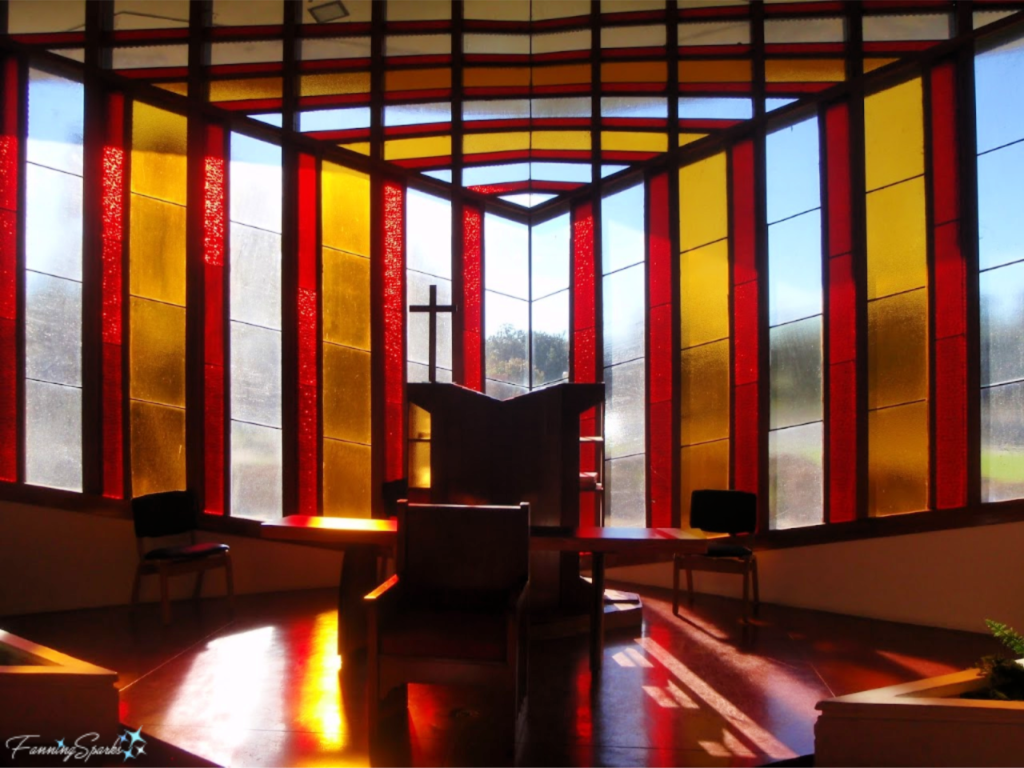
 Meanwhile, the front of the chapel has this stunning display of light and color.
 Geometric Shapes
It’s impossible to discuss Frank Lloyd Wright without mentioning geometric shapes. One of his principle methods of design was a system of rotating geometric forms. Interestingly, Wright credits the Froebel kindergarten education he received from his mother for this inspiration. Part of this education included a set of wooden blocks designed to teach design and elementary geometry. Here’s how he put it in his autobiography “That early kindergarten experience with the straight line; the flat plane; the square; the triangle; the circle! If I wanted more, the square modified by the triangle gave the hexagon, the circle modified by the straight line would give the octagon. Adding thickness, getting ‘sculpture’ thereby, the square became the cube, the triangle the tetrahedron, the circle the sphere. … These primary forms and figures were the secret of all effects . . . which were ever got into the architecture of the world.”
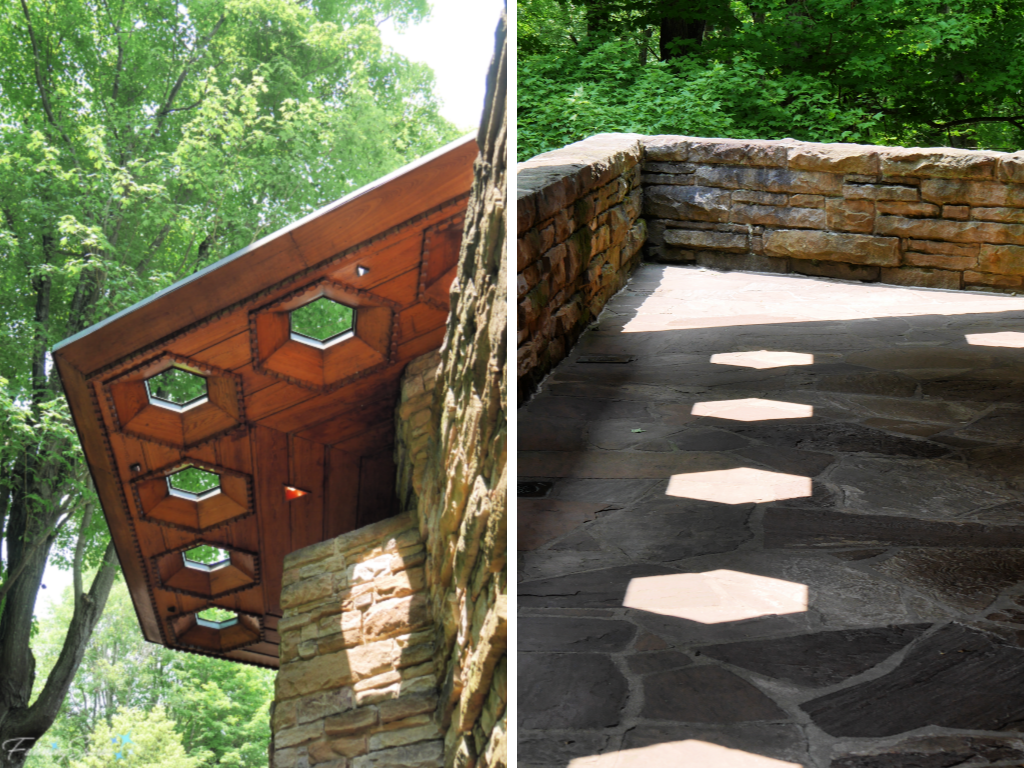
It’s fun to pick out the geometric shapes and forms in Wright’s designs. The hexagon figures prominently in Kentuck Knob. These photos show the hexagonal cutouts in the eaves along with the interesting shadows they cast on the terrace.
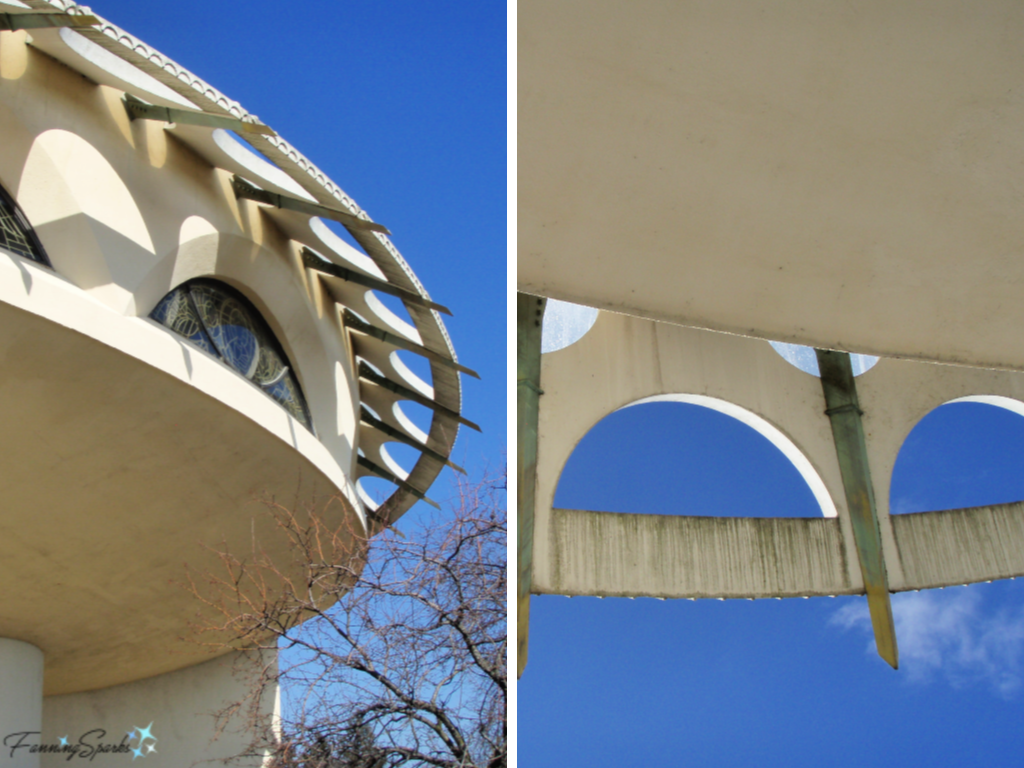
 Circles and semi-circles are prominent in Wright’s design for The Annunciation Greek Orthodox Church in Milwaukee, Wisconsin.
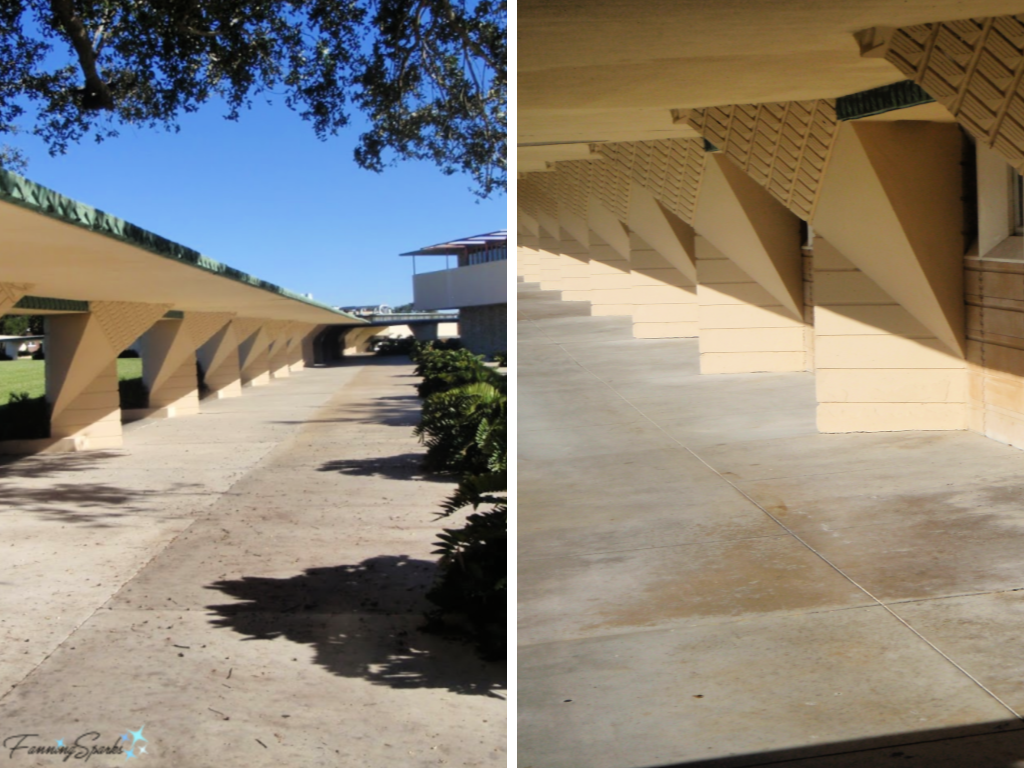
Triangular shapes are seen all around campus at Florida Southern College including along the roof of the central walkway.
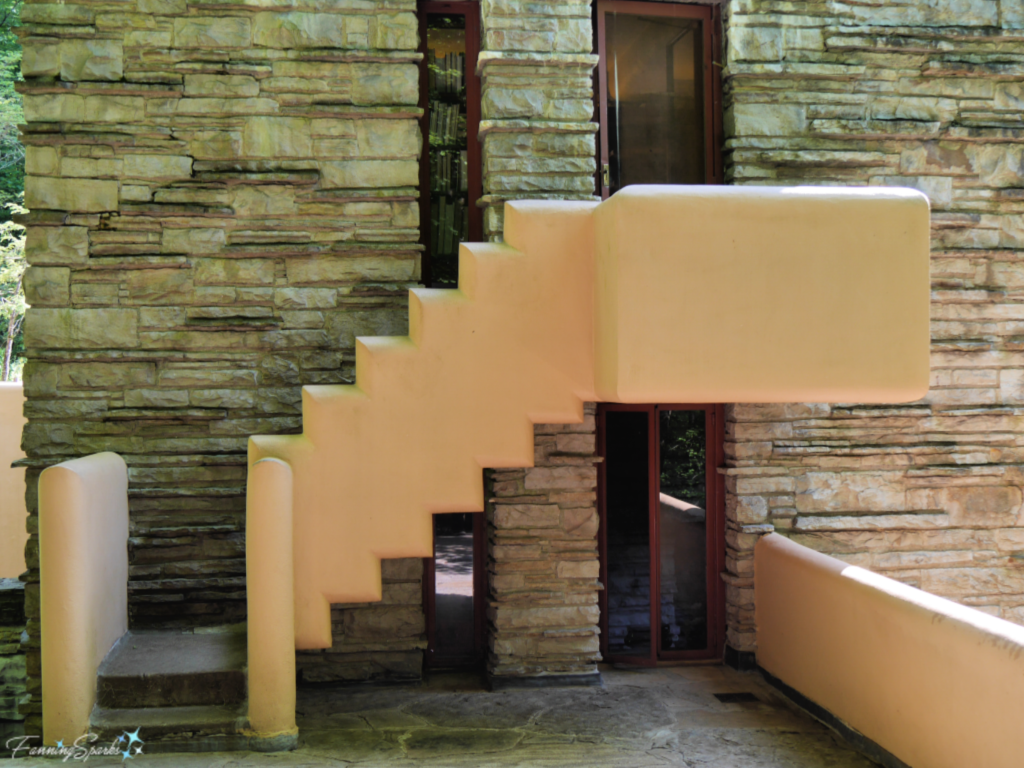
Rectangles, especially arranged into a step pattern, can be seen throughout FallingWater including on this exterior staircase…
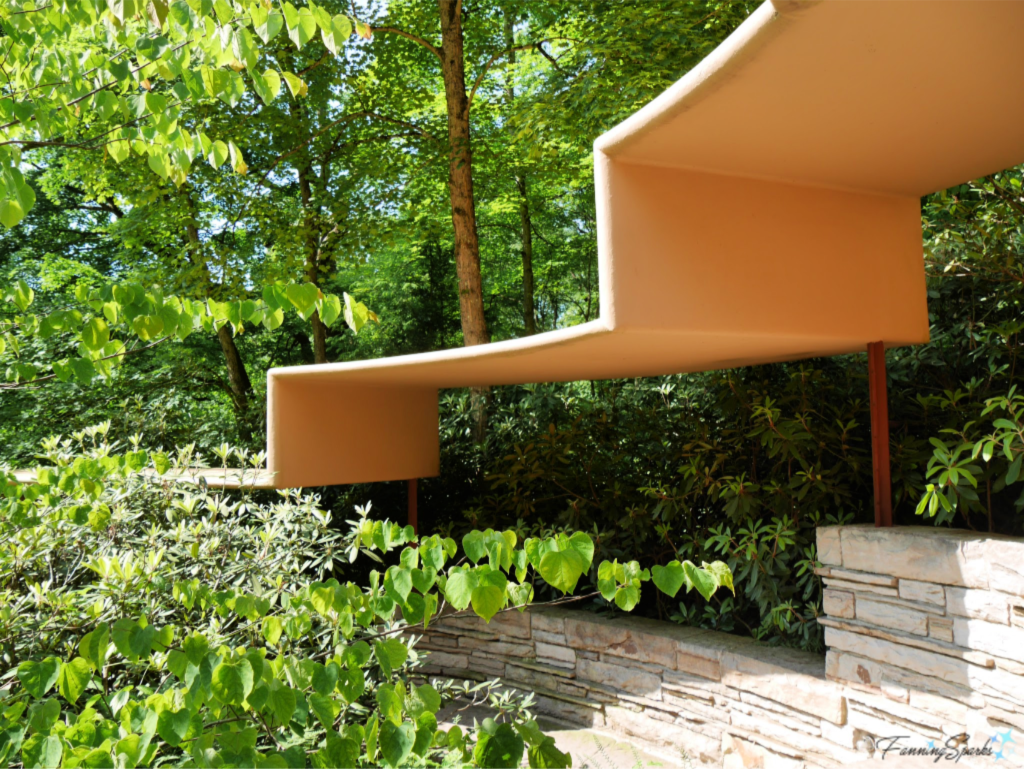
and along the covered walkway to the guest quarters.
Blurred lines, nature inspiration, horizontal planes, natural materials, cantilever construction, natural light, art glass, and geometric shapes‒these are all recurring themes I’ve observed in the Frank Lloyd Wright architectural treasures I’ve had the opportunity to visit. Certainly, all of these themes are evident in Wright’s most extraordinary house at FallingWater.
More Info
Update July 16, 2019: Check out a second post, Step Inside with Frank Lloyd Wright, to see the interior of FallingWater.
There is a wealth of information available on Frank Lloyd Wright and his architectural designs. Here are some links for the buildings mentioned in this post.
. Frank Lloyd Wright
. Taliesin and Taliesin West in Spring Green, Wisconsin and Scottsdale, Arizona (respectively)
. FallingWater in Mill Run, Pennsylvania
. Kentuck Knob in Chalk Hill, Pennsylvania
. Florida Southern College in Lakeland, Florida
. Annie Pfeiffer Chapel at Florida Southern College in Lakeland, Florida
. Solomon R Guggenheim Museum Architecture in New York City
. Robie House in Chicago, Illinois
. Rosenbaum House in Florence, Alabama
. The Annunciation Greek Orthodox Church in Milwaukee, Wisconsin.
You can learn more about the Froebel blocks Wright played with as a child on this website about Friedrich Froebel, creator of Kindergarten and designer of Froebel play gifts.
Today’s Takeaways
1. Consider exploring design outside your chosen discipline or area of focus.
2. Explore a master’s entire body of work.
3. Use a combination of observation and research to identify recurring themes.


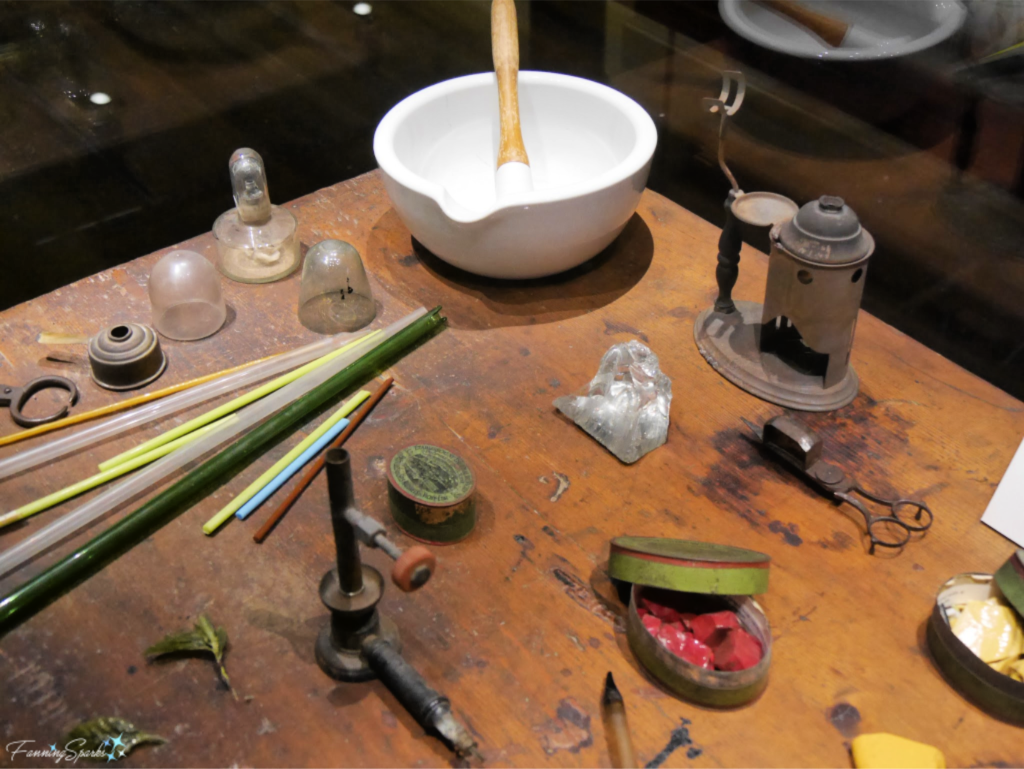
 While it looks easy when a pro like Tony does it, it’s not! Glass flamework takes exceptional coordination and lots of practice. My own meager attempt to blow a round Christmas ornament turned into an odd shape more like a vegetable. Yet, I’m insanely proud of my pepper-like ornament!

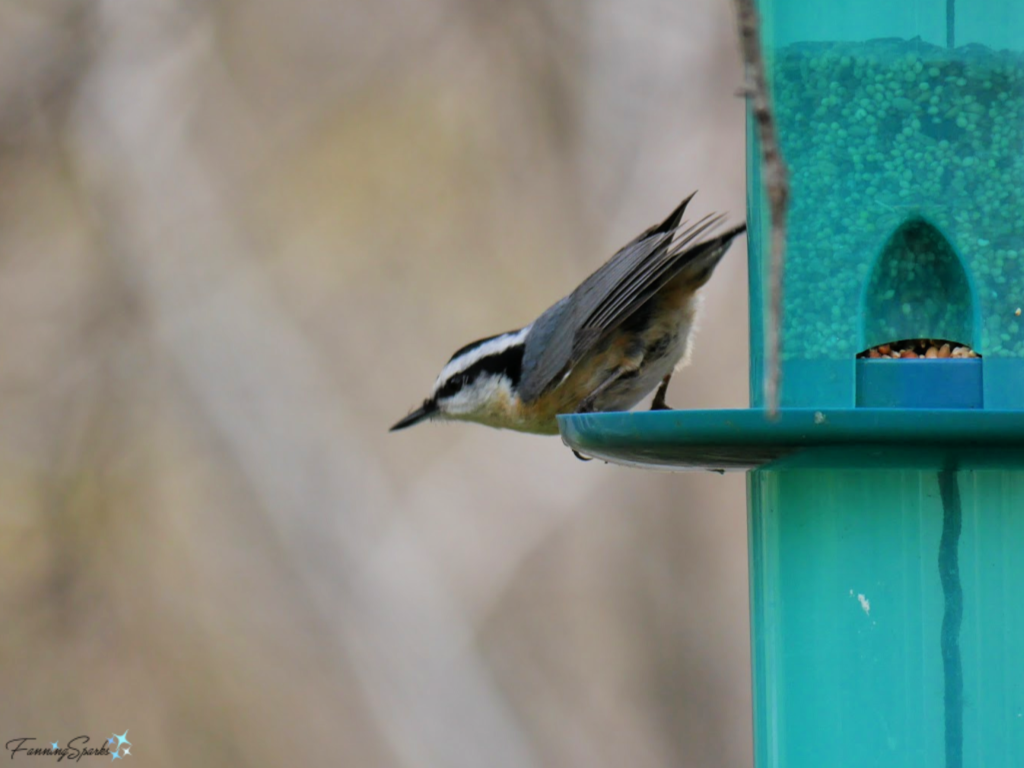
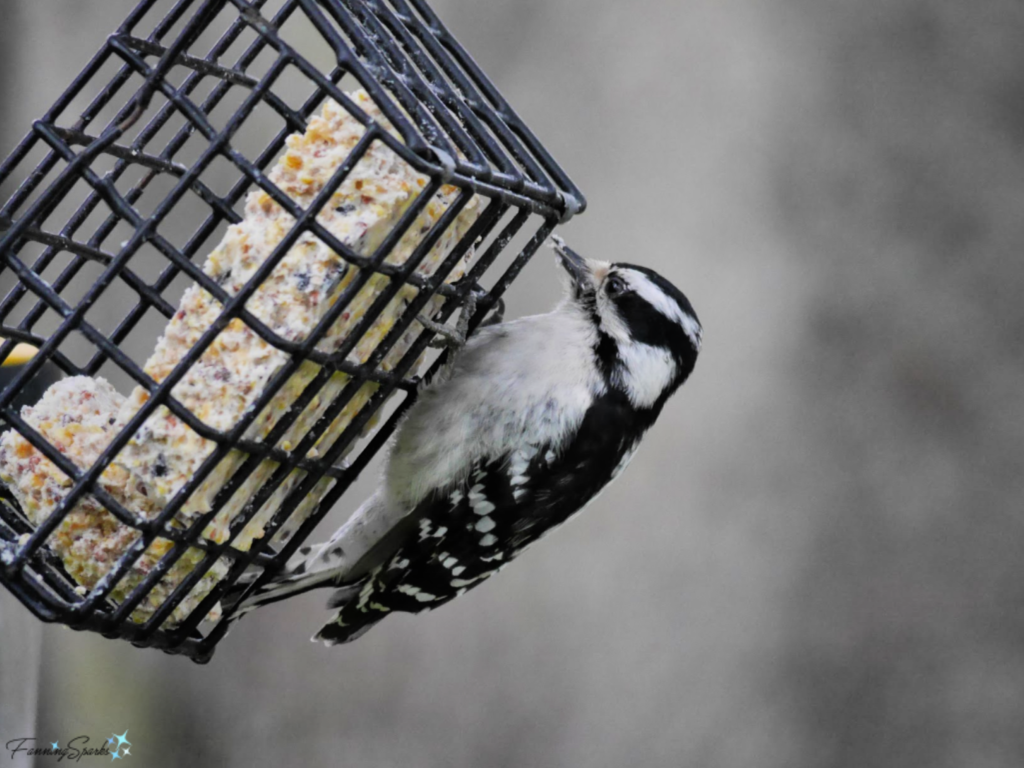
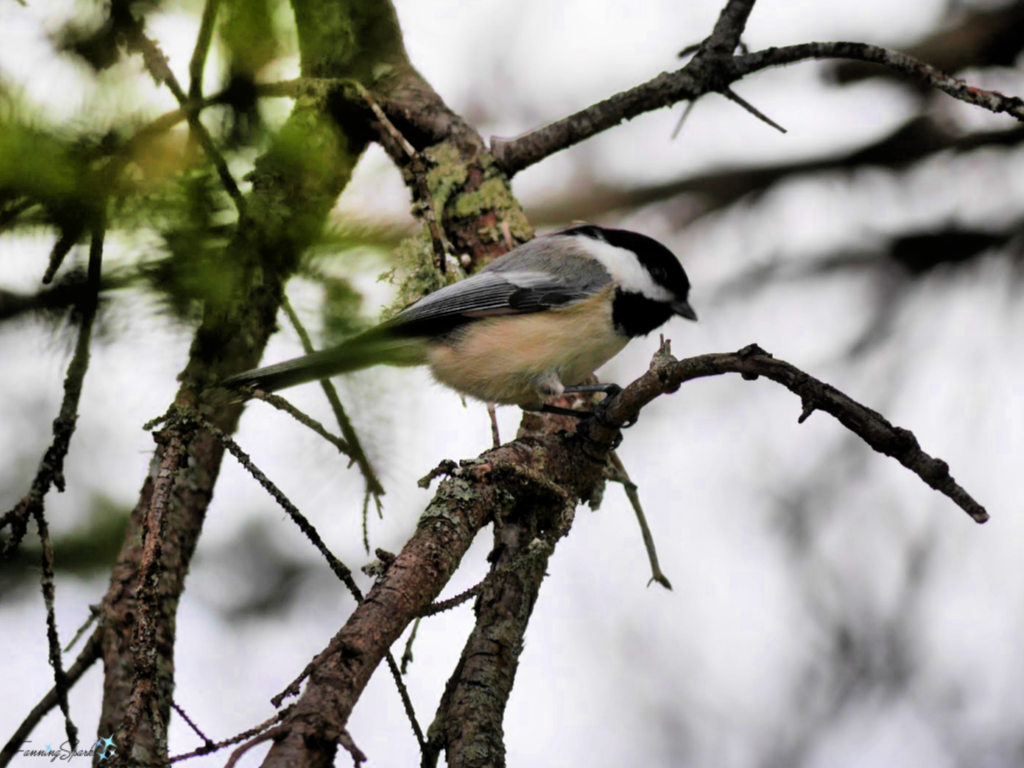
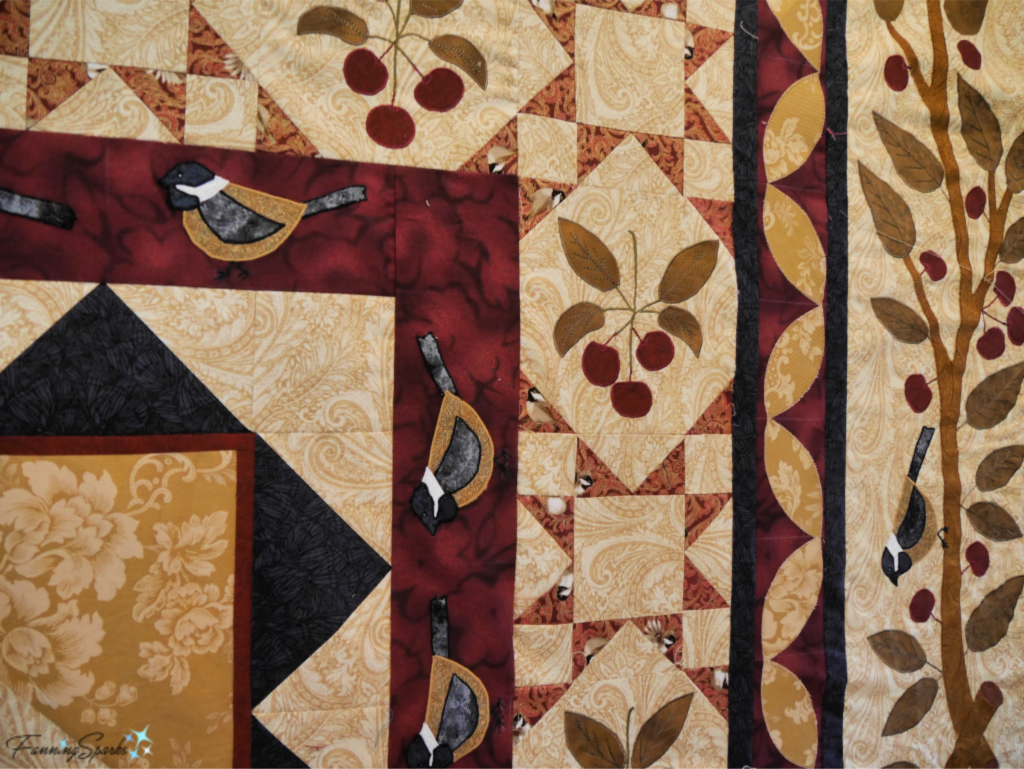
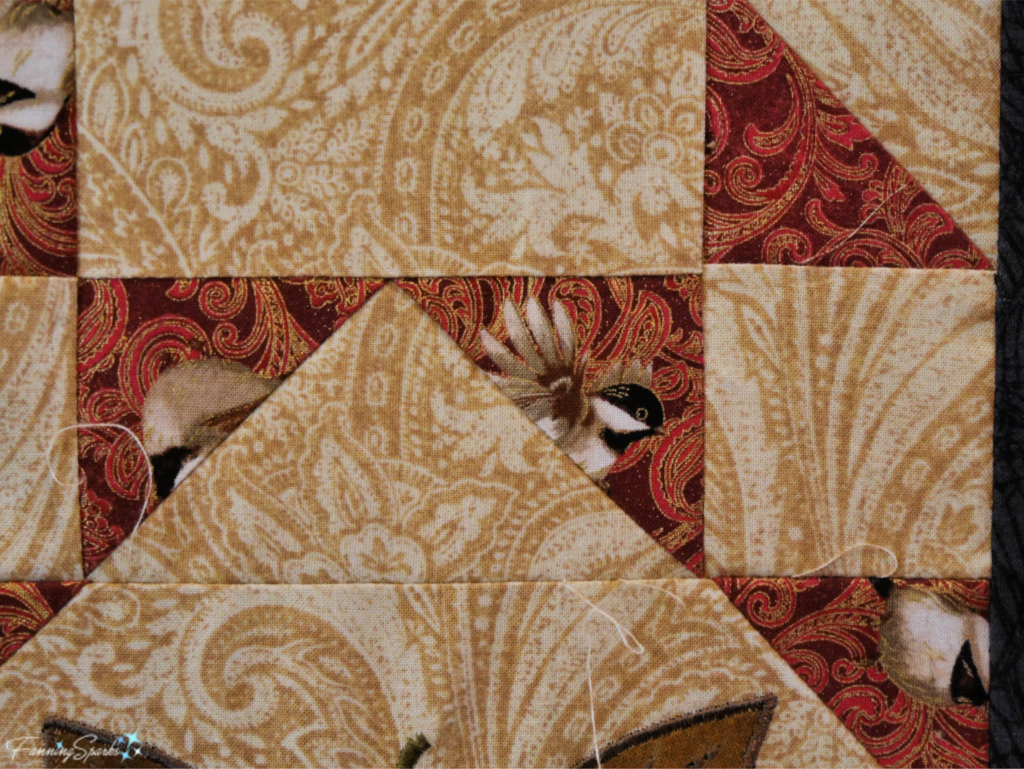
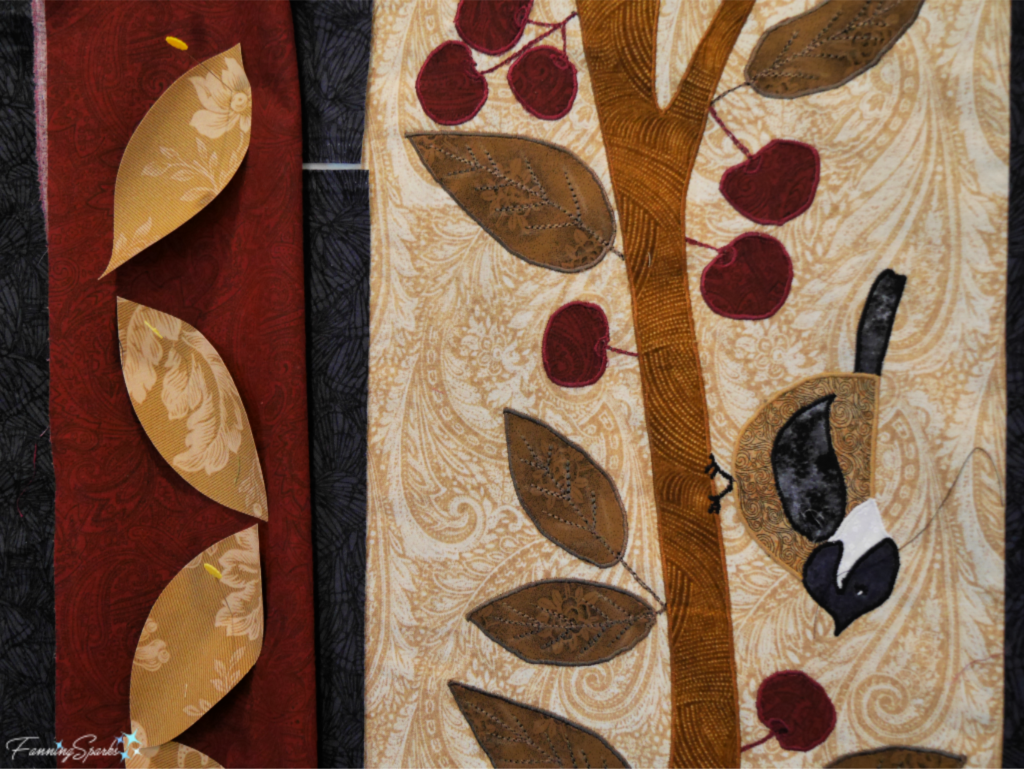
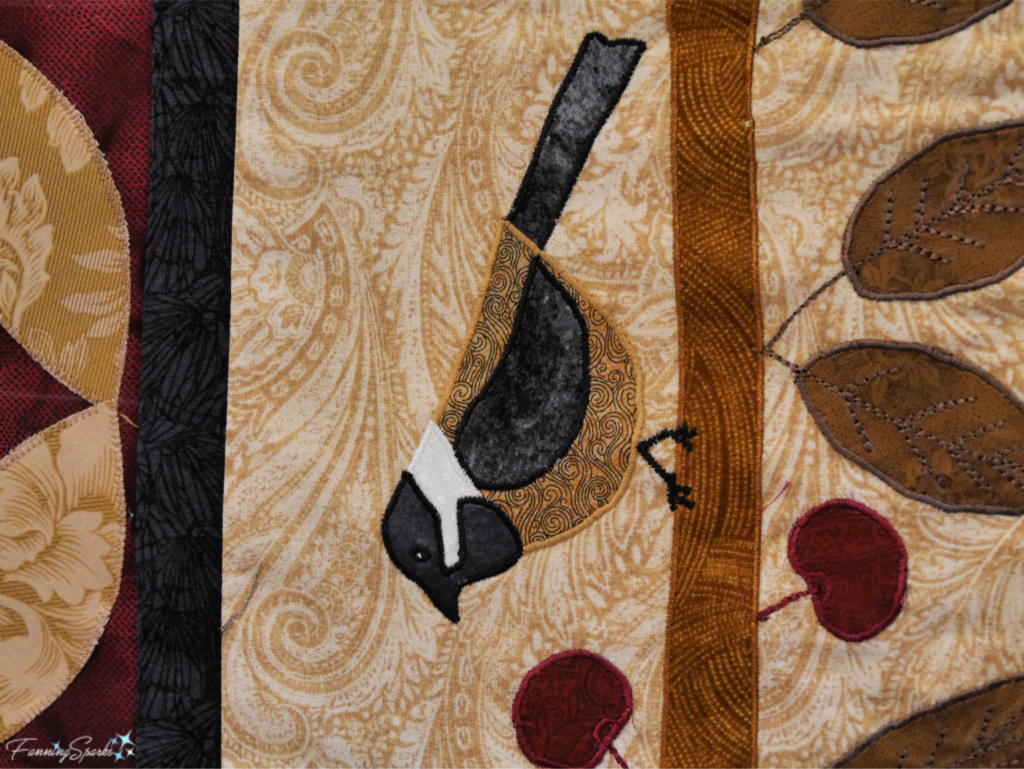
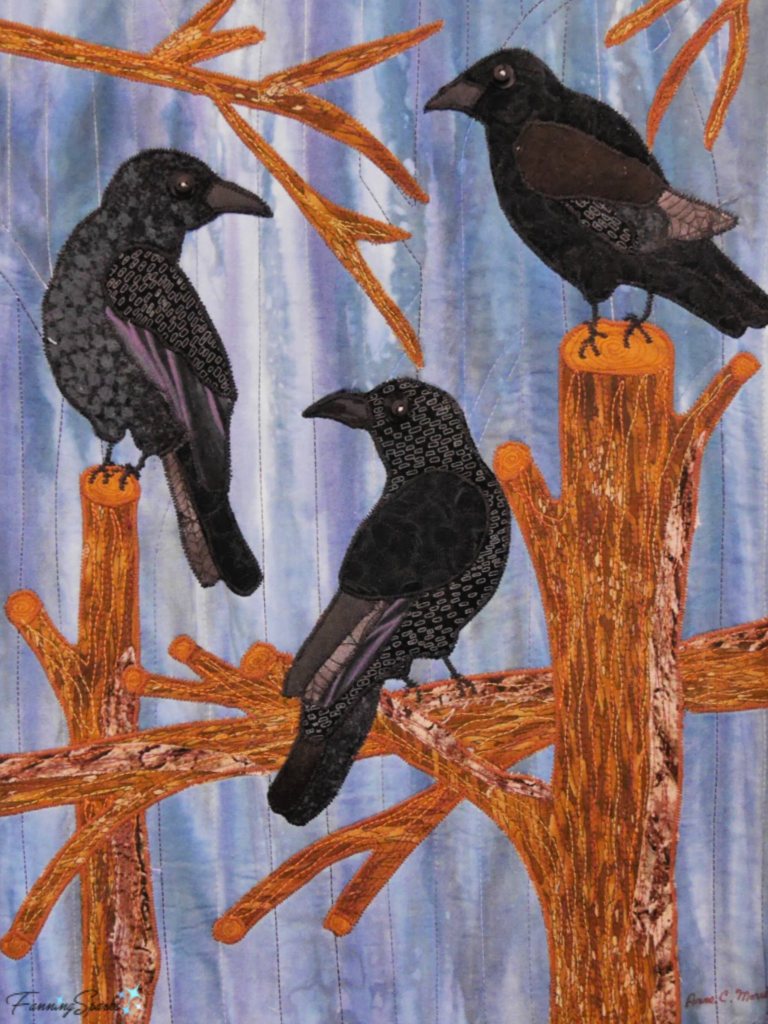
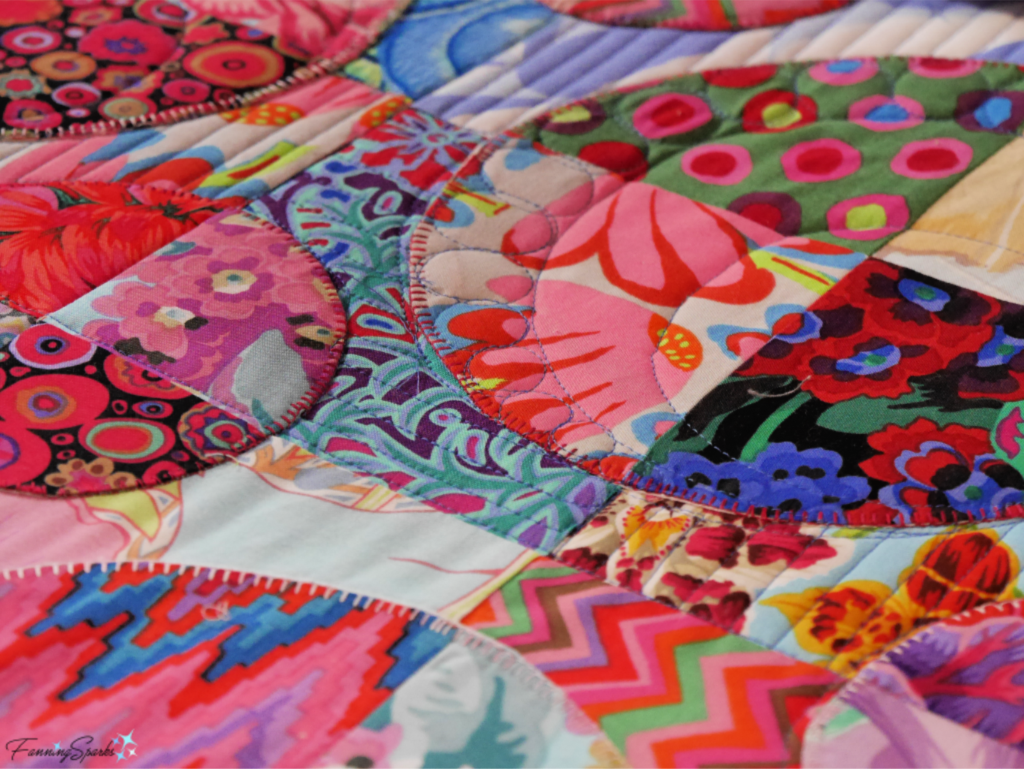
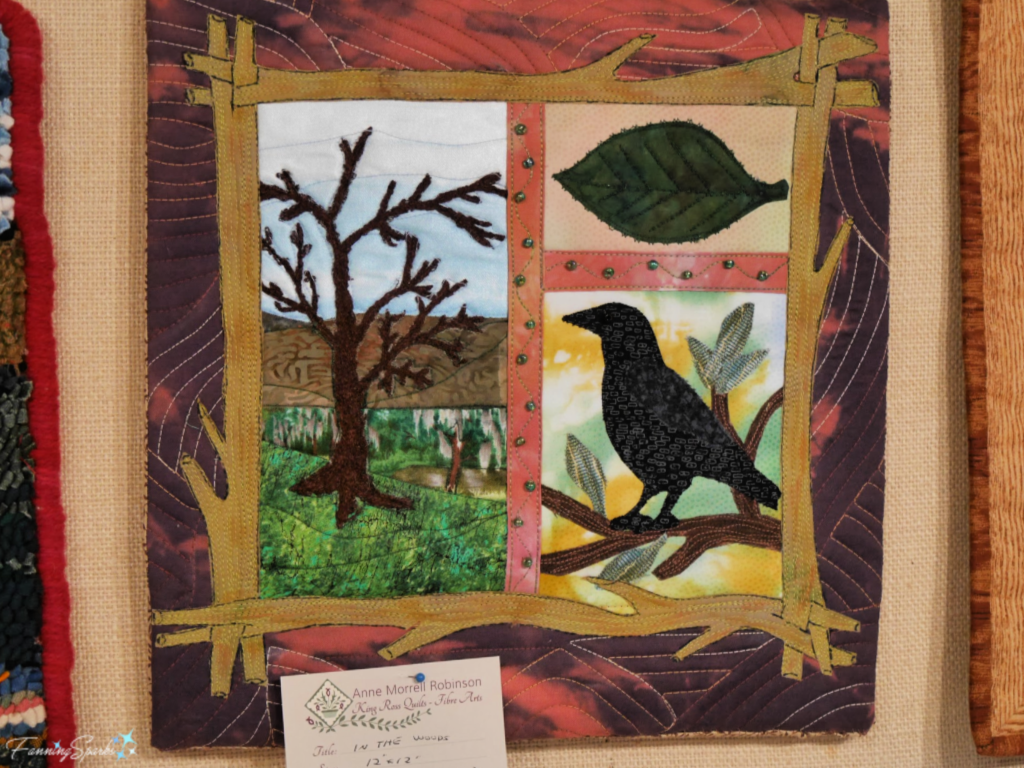 I don’t want to give the impression that Anne’s work is limited to bird themes. Her studio was filled with beautiful quilts, hooked rugs and other fiber arts with a wide variety of subjects. Here’s a quilt she had in progress on her quilting machine.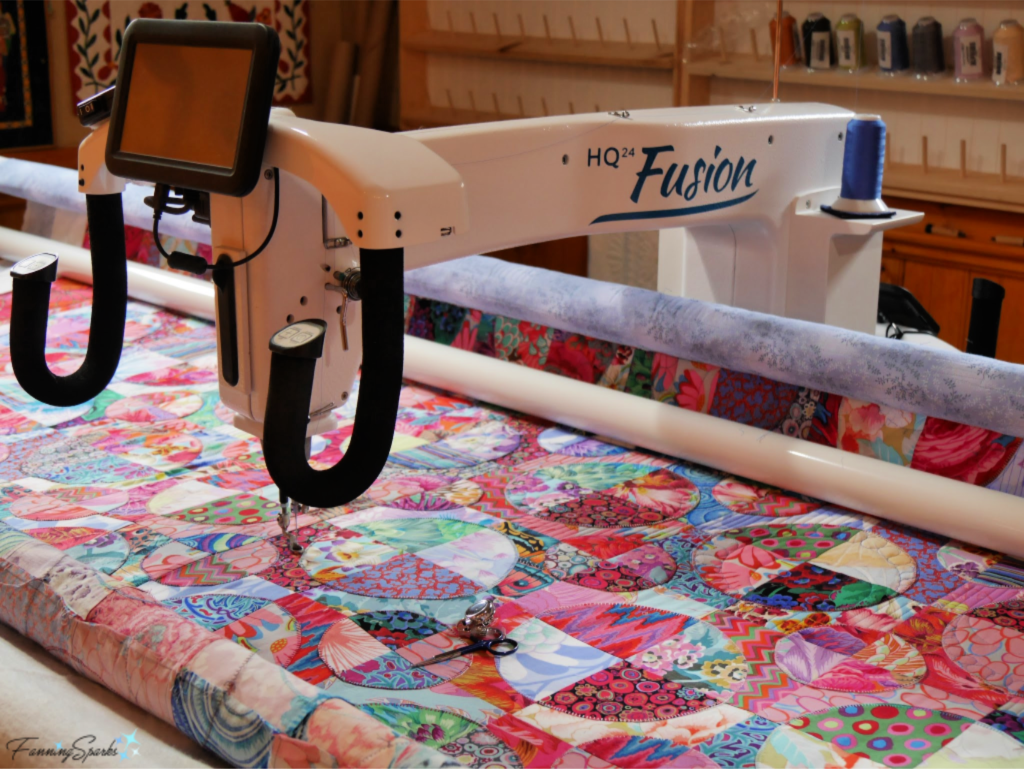
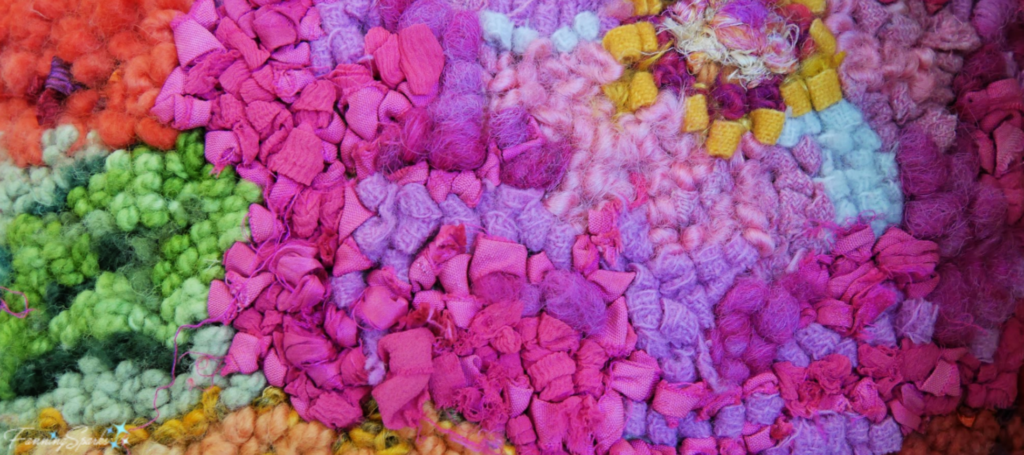
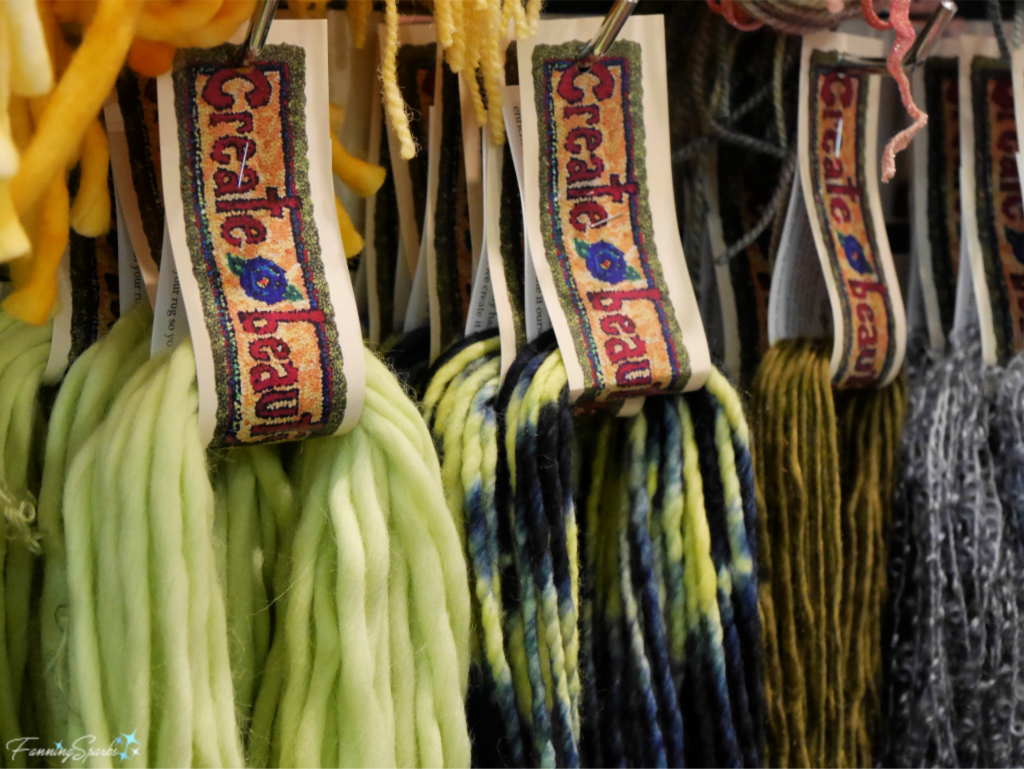 Perhaps it’s that long winter nap that has led to the long-standing tradition of rug hooking in this region. Originally, rugs hooked by housewives from old clothing, were used to provide warmth on household floors. Hooked rugs are rooted in practicality and frugality‒a fitting metaphor for this region. But over the years, the rugs have become works of art and the makers have become artists. They’ve taken something that started as a functional necessity and made it into something beautiful for the home. This type of transformation is common in this region which boasts many talented artists and artisans. I recently had the opportunity to visit one of those artists.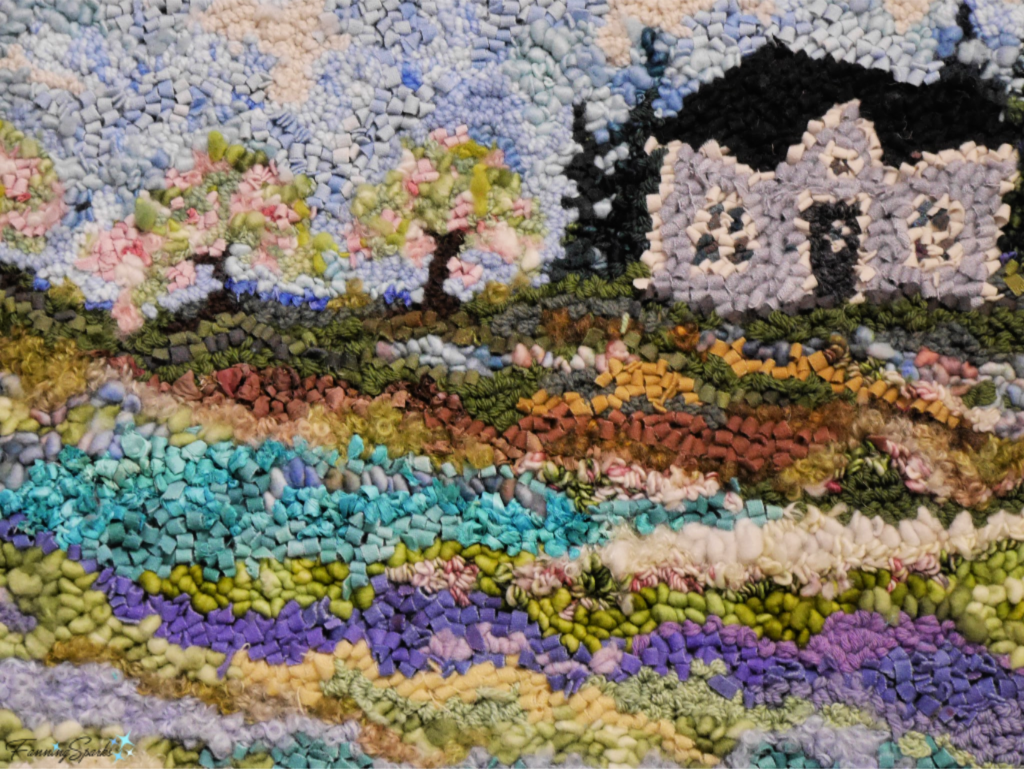
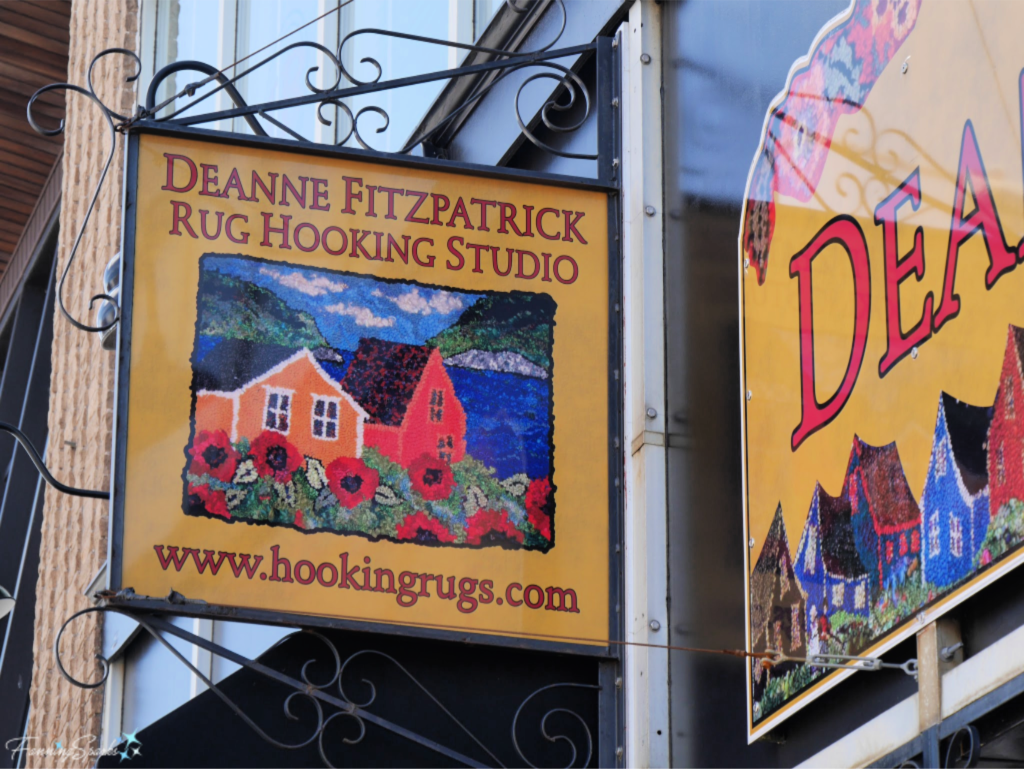 Before I go any further, I need to warn you; don’t let the name fool you! “Rug hooking” is not about making floor mats. Don’t even think about wiping your shoes on one of these beauties!
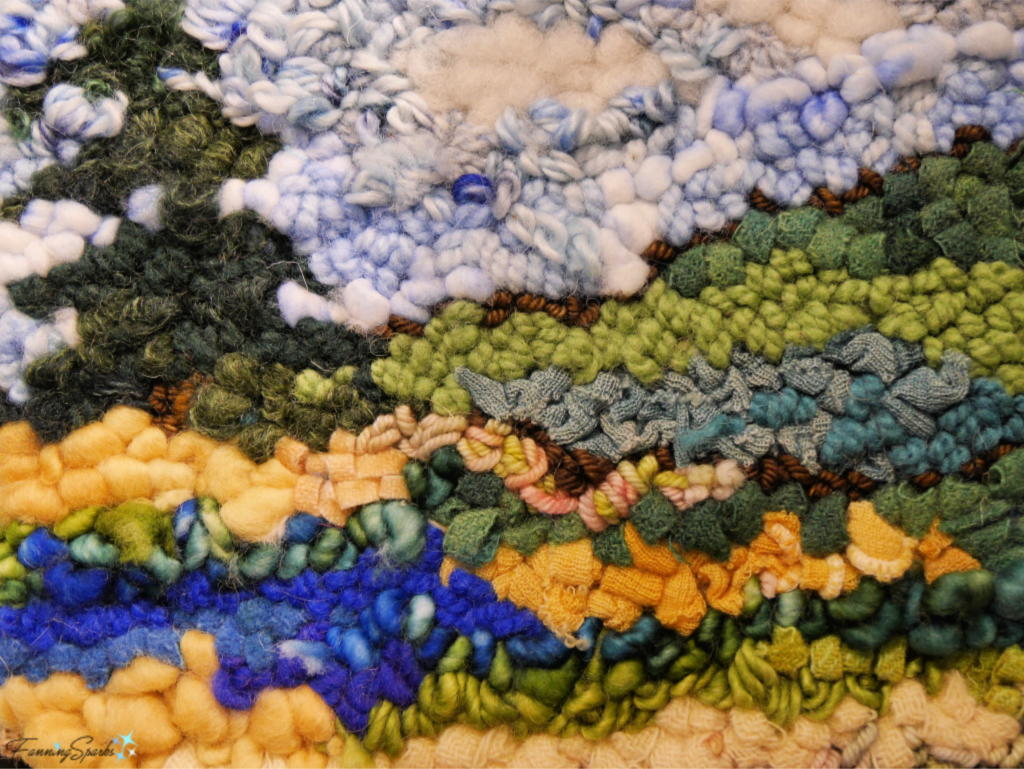 Deanne’s Studio is a treasure trove of colorful fiber in artistic displays.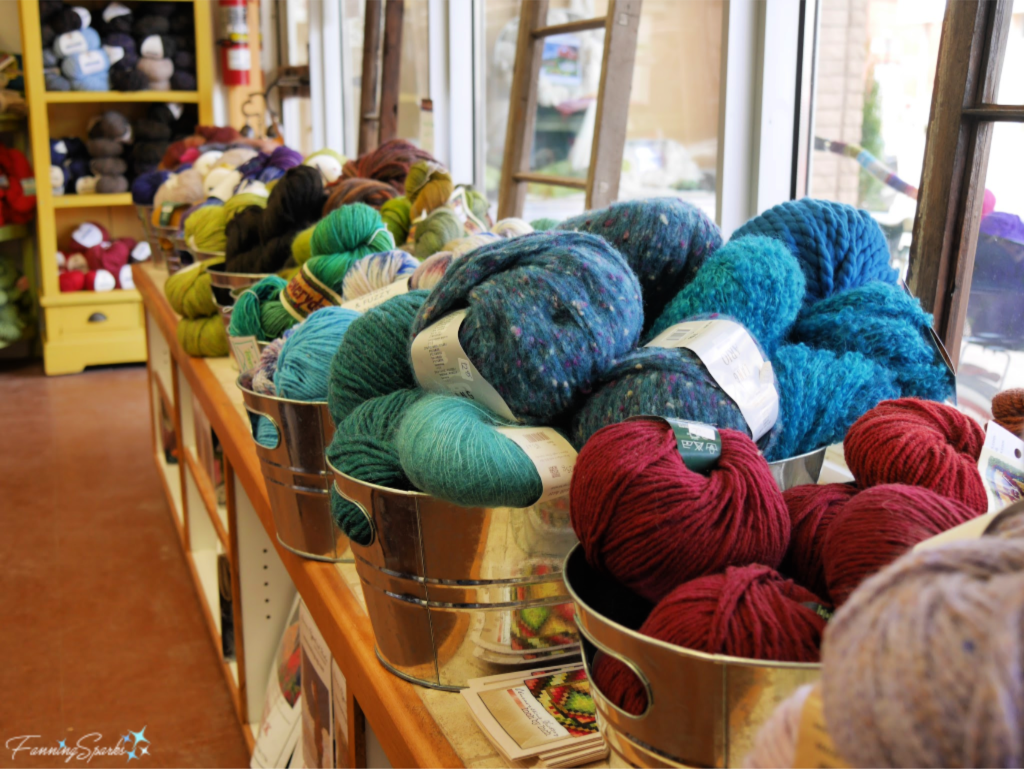
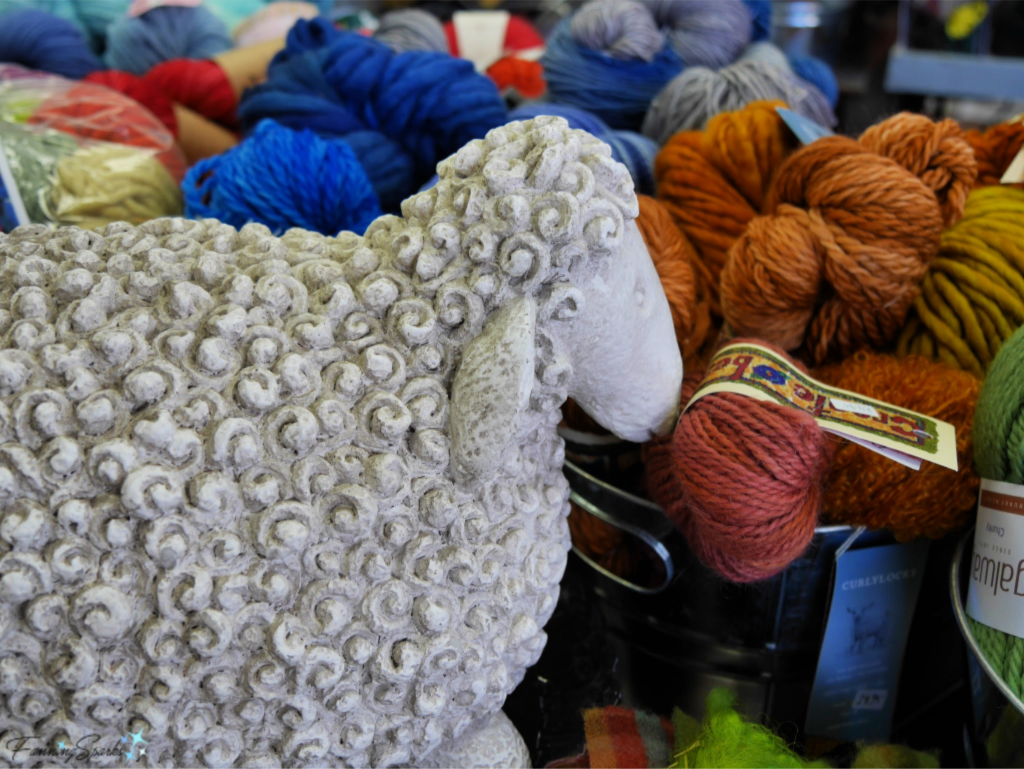
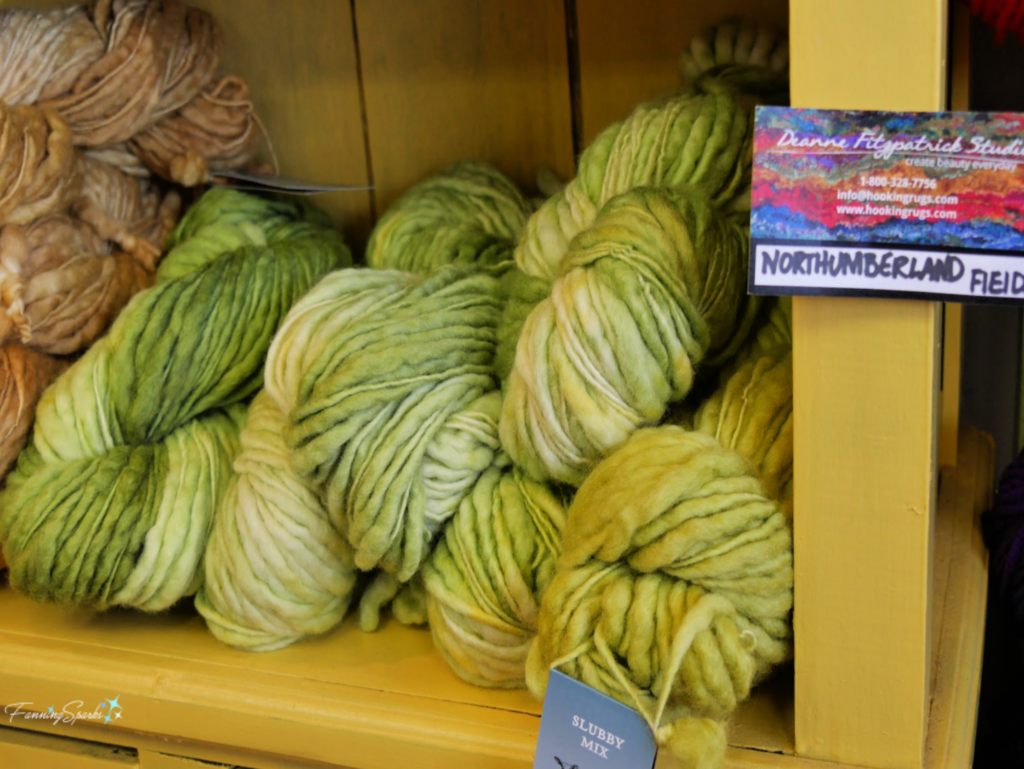 One of the best things about visiting the Studio is the legendary Maritime hospitality. Where else would you be given free rein to wander around the entire studio and invited to enjoy a cup of tea with delicious oak cakes? Plus you’re encouraged to learn to hook. Deanne, herself, taught us how.
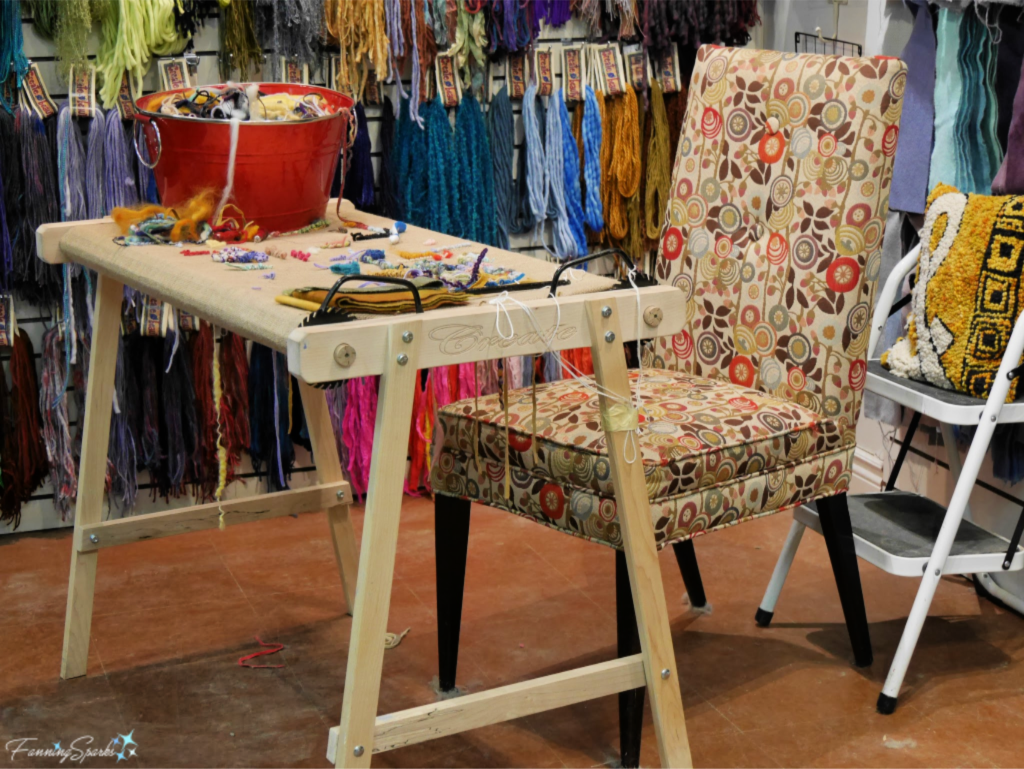 As promised, it only took a few minutes to learn. Here’s my sister, Marian, giving it a try.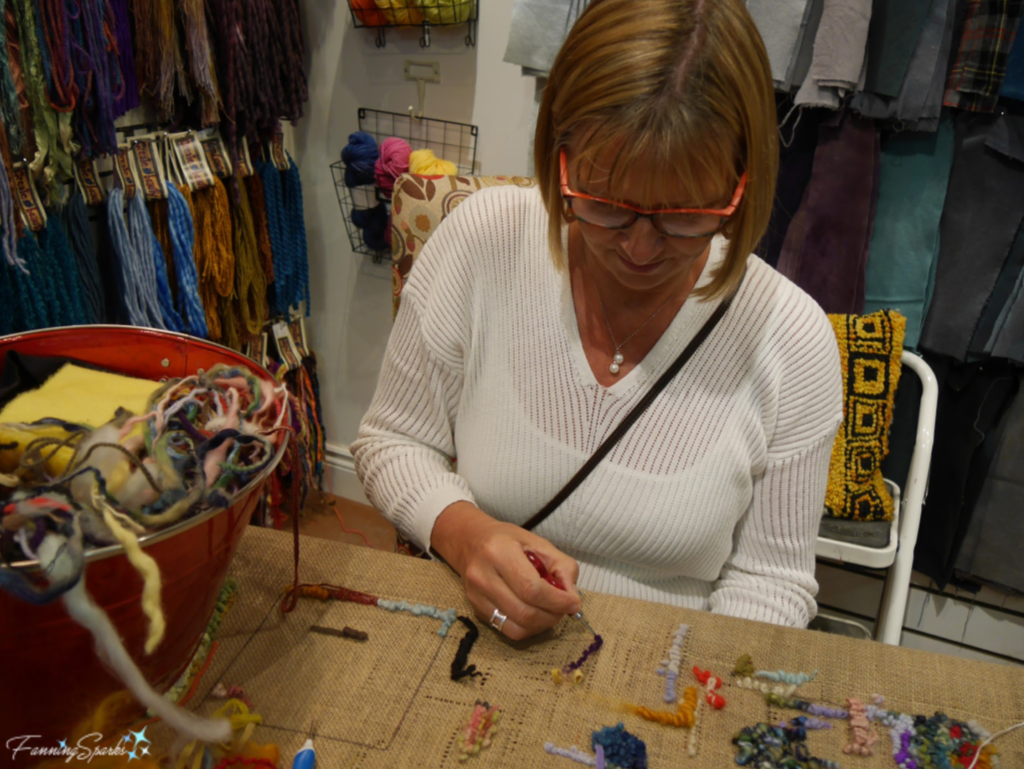
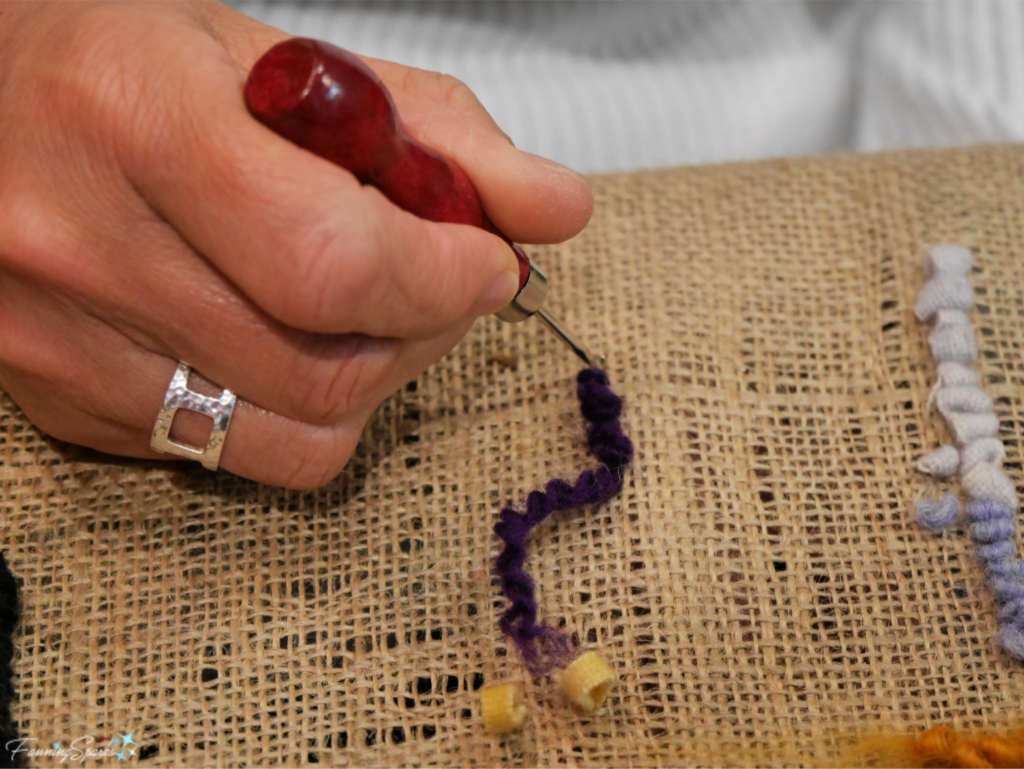 You start with a backing of burlap or linen stretched on a frame. Then using a simple hook you pull strips of fabric, strands of yarn, or other fiber through the backing to make a small loop. You repeat this process until you’ve covered the surface with fiber loops.
 Of course, it takes an artistic eye and lots of practice to work up to beautiful pieces like Deanne’s “The Golden Season”.
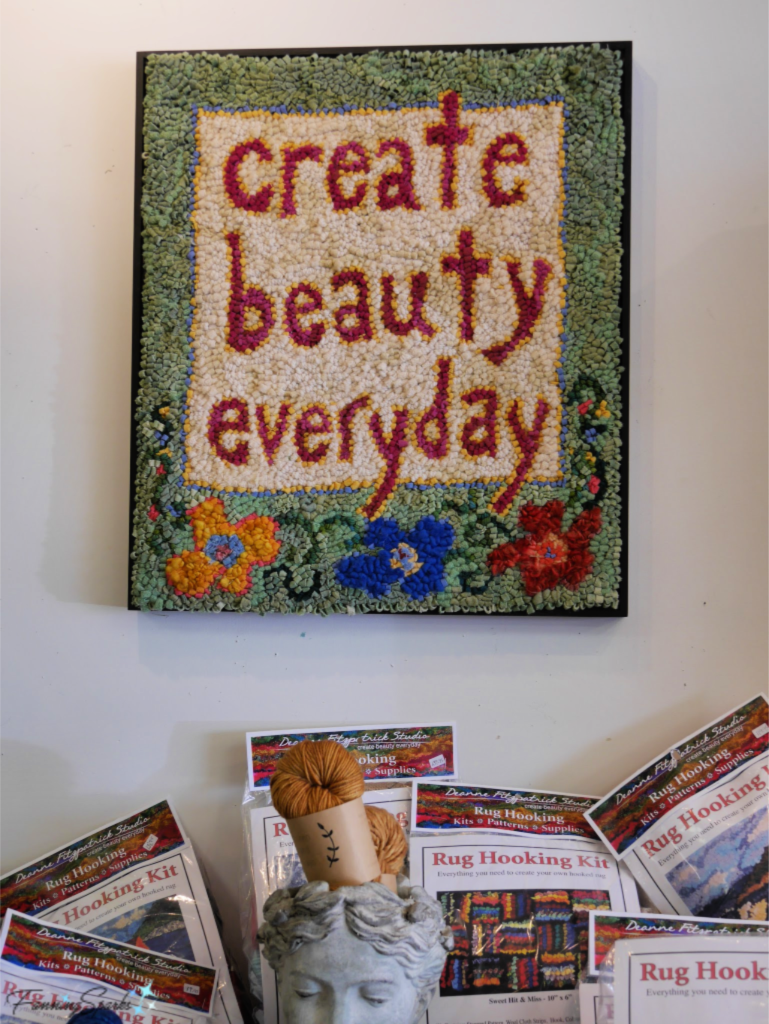
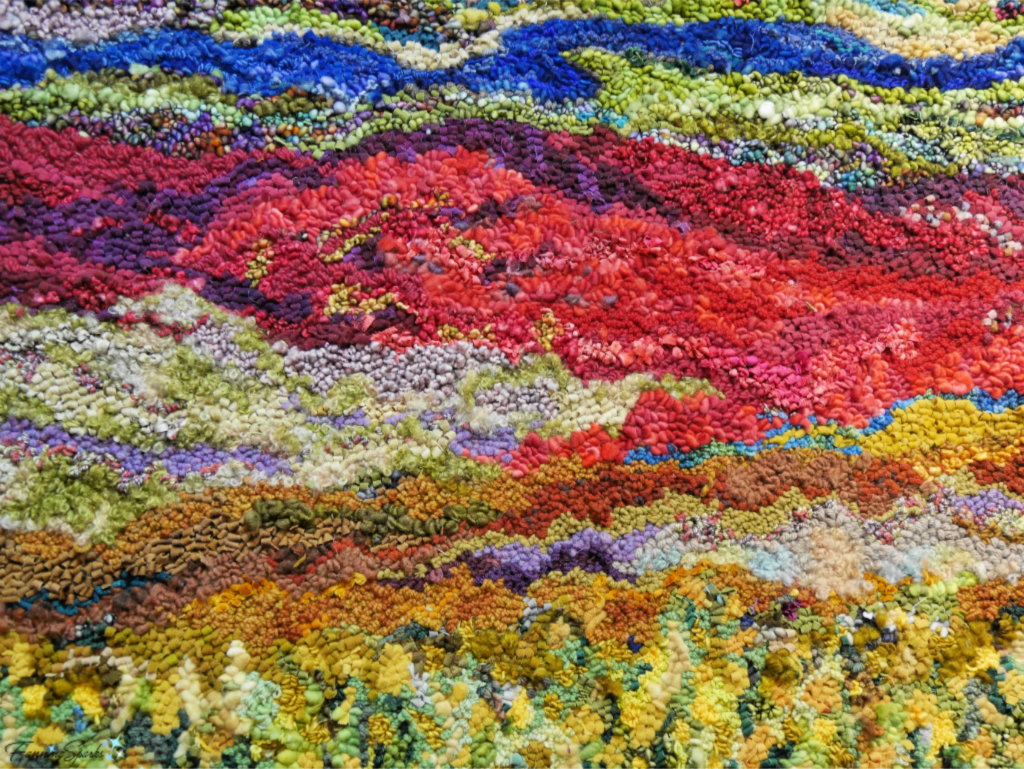 Deanne and her team strive to “Create Beauty Everyday” and they encourage their customers to do the same. She’s said “it is my goal to live simply, and make hooked rugs that are unmistakably art”. Obviously, she has accomplished that goal.
 Special thanks to Deanne and her team for your kind hospitality and a memorable visit!
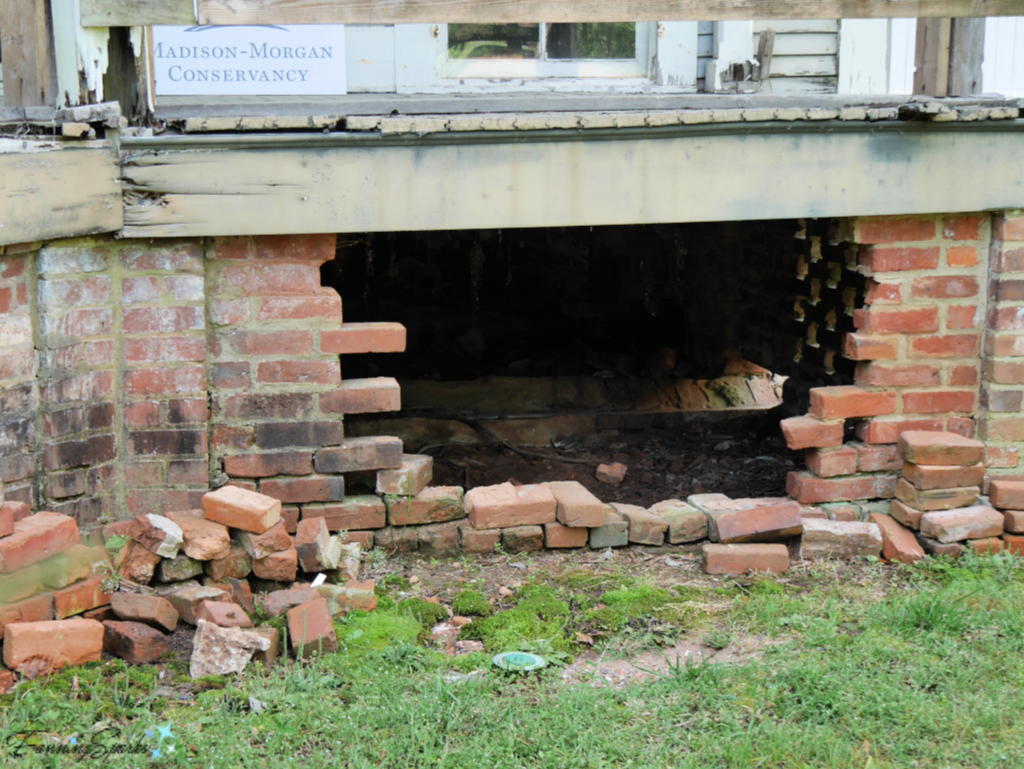
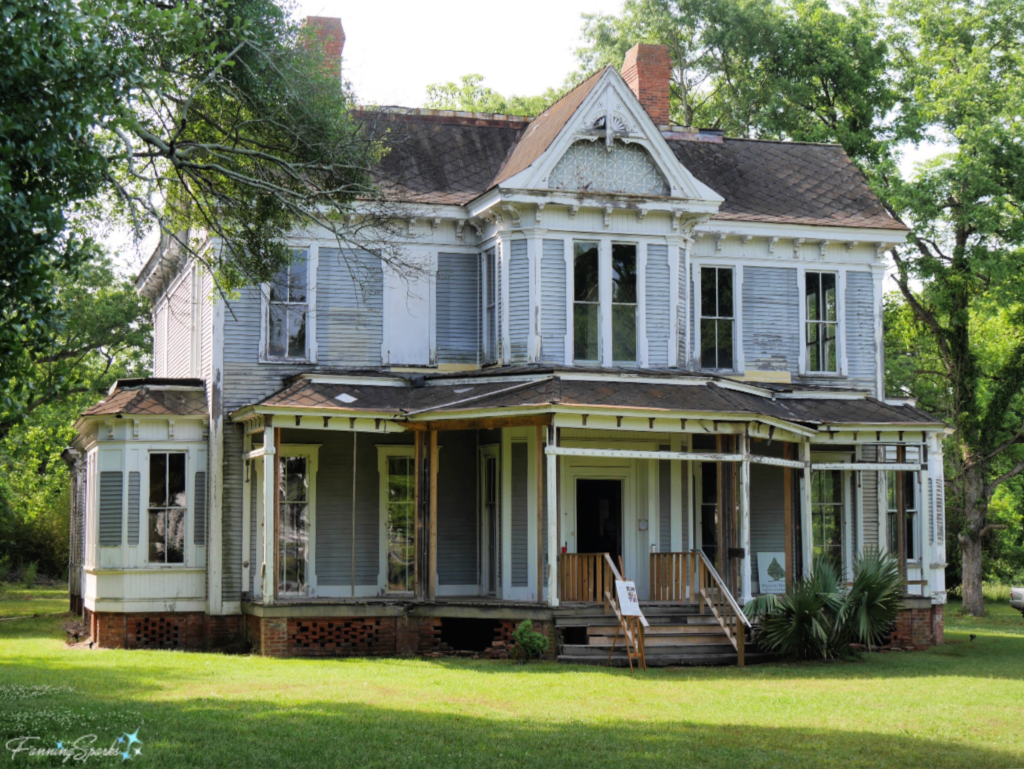 This house is located on Main Street in Madison. I often drive by it when I run errands around town. Sadly, the property was neglected and had fallen into disrepair. Then over the last few months, I noticed things were happening‒workers were present, scaffolding was erected, wooden braces were installed, piles of bricks appeared, and signs were posted.
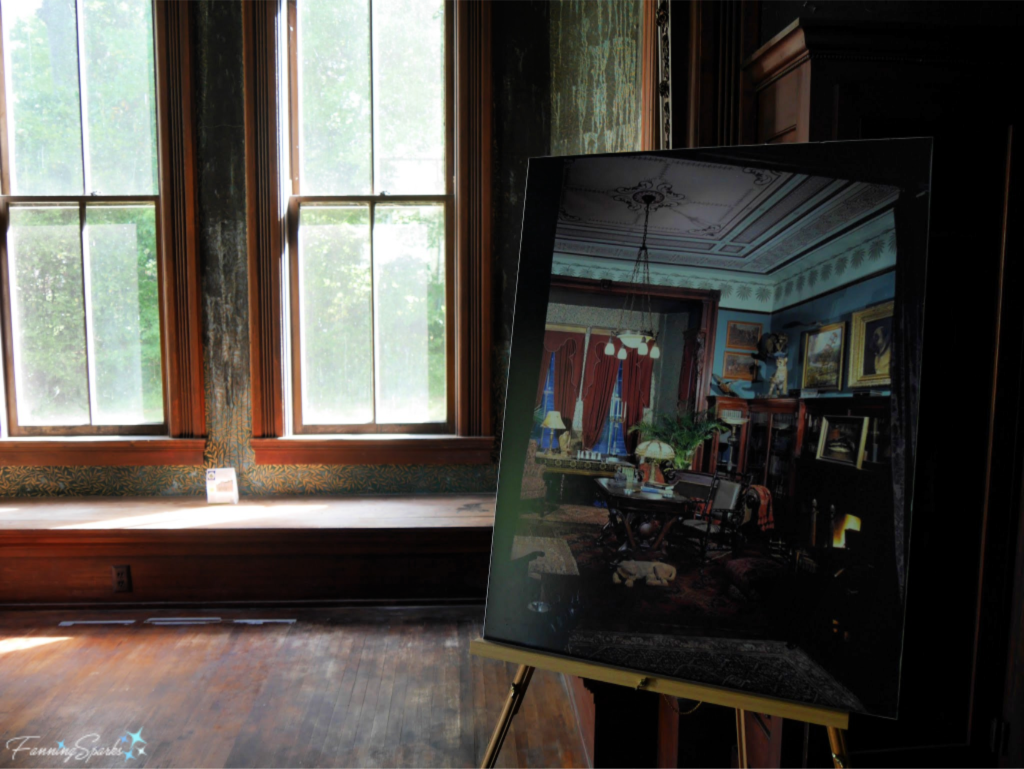
 When I noticed the house was included on the Madison in May tour, I was excited to go have a look. I wasn’t disappointed‒there’s definitely something special about this house! Below you can see the Library as it is today with a large photo showing how it looked previously.
 This is the Entry Hall which originally showcased a solid walnut staircase.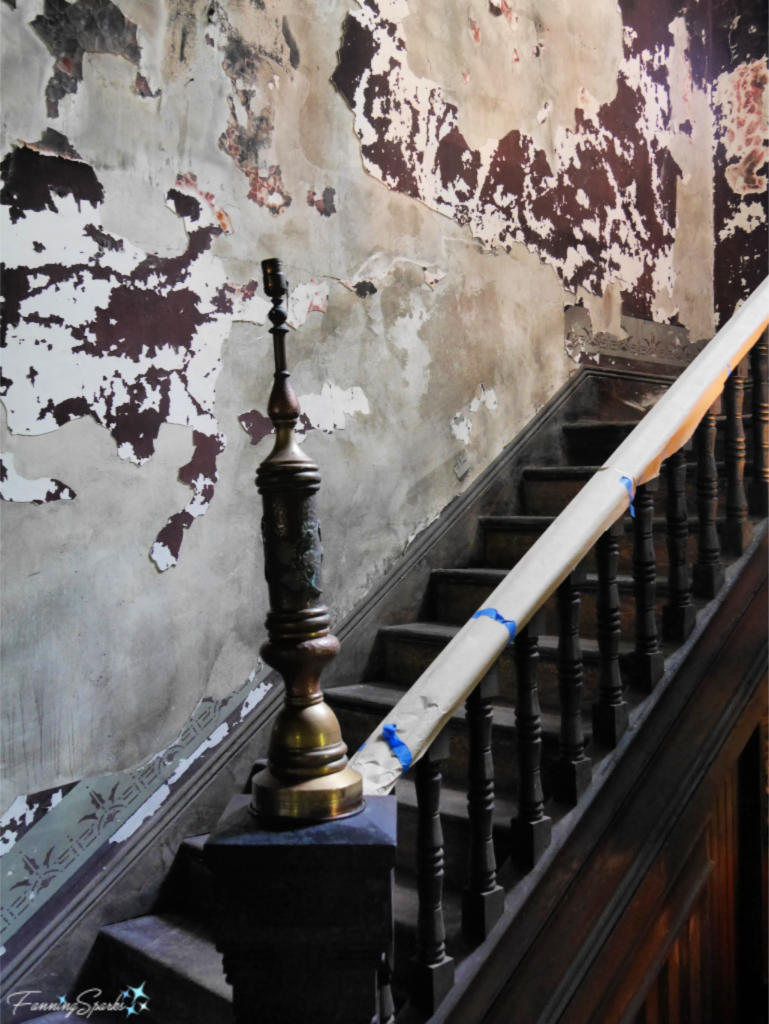
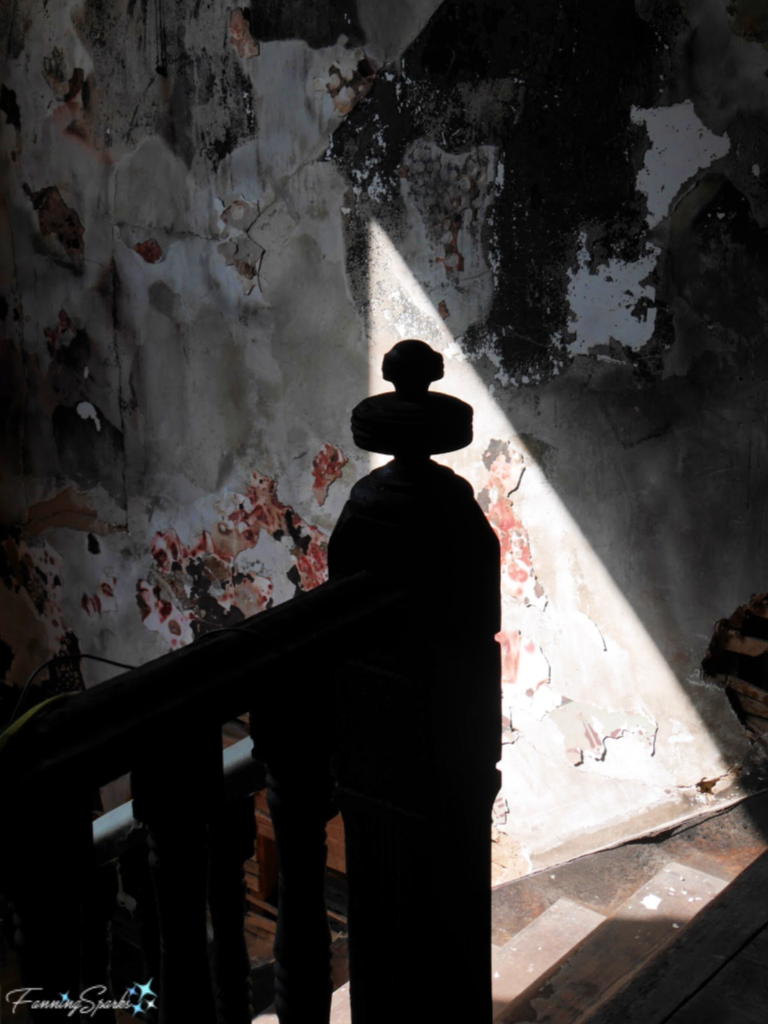 This house was obviously beautiful in its day. And maybe that’s the attraction‒its the possibility of bringing it back to its former glory! Every detail that’s still intact‒and there are many‒is just waiting to be restored. Lucky for the house, many citizens of Madison and the surrounding area feel the same way. Here’s a glimpse of the ornate trim on the exterior. Can’t you just picture it as it was?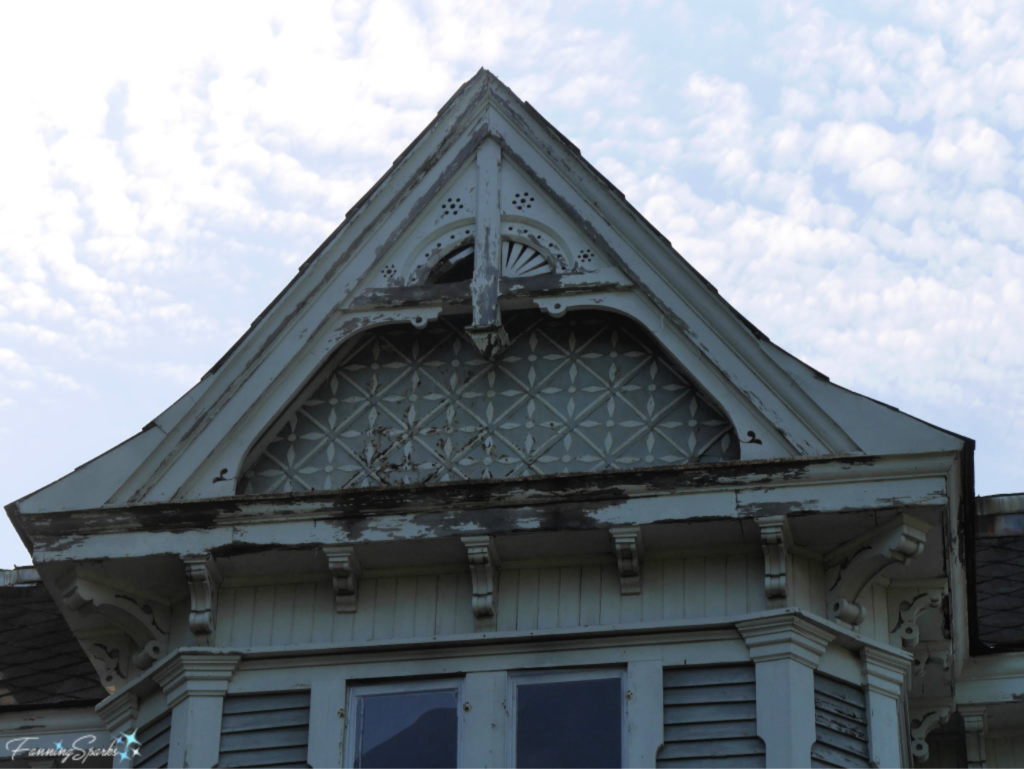
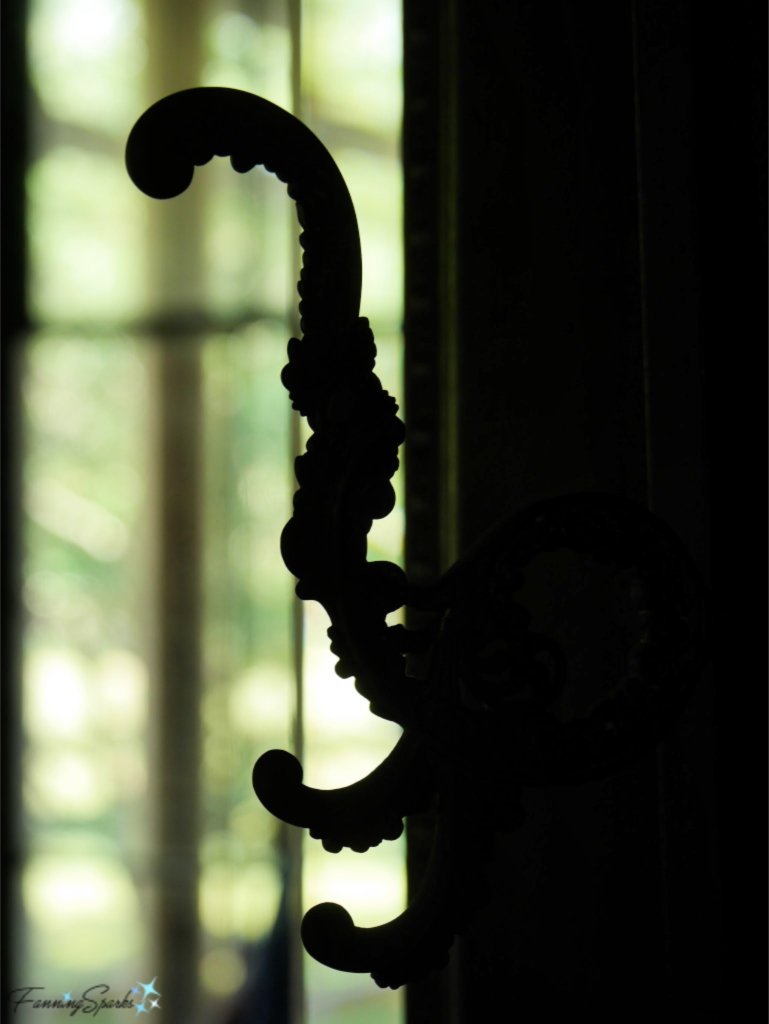
 The house reflects the Aesthetic Movement and, as the story goes, was greatly influenced by a lecture given in Atlanta, Georgia in 1882. Surprisingly, the lecture was given by Oscar Wilde, someone more widely recognized for his plays, novels and poetry, than for his decorating expertise. Wilde’s lecture was part of a 9-month, 140-lecture tour across Canada and America. The Atlanta lecture was titled “House Beautiful” and promoted the virtues of the Aesthetic Movement. This is why I’ve come to think of the Foster-Thomason-Miller House as “Madison’s House Beautiful”.
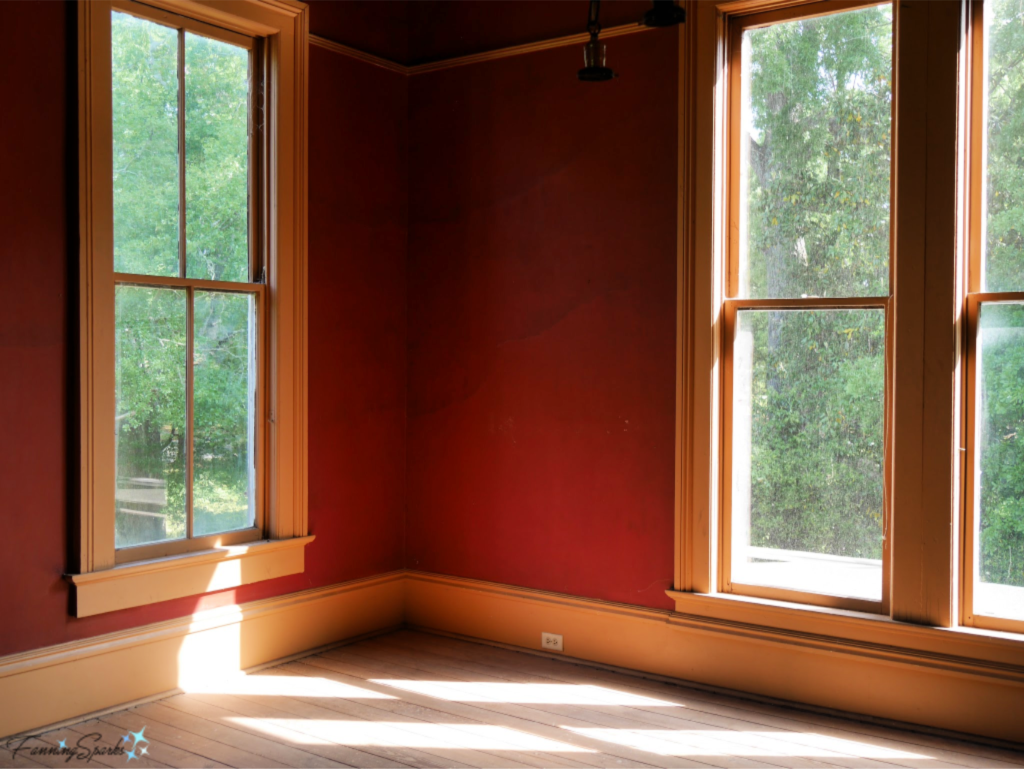
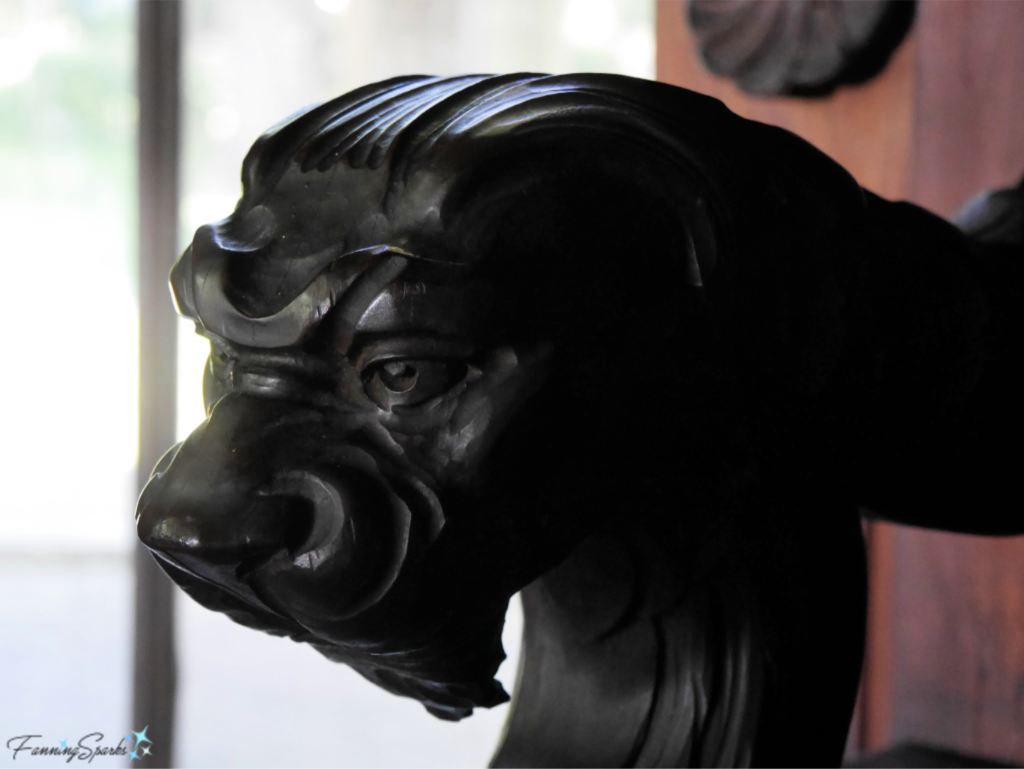 In regards to the use of color, Wilde said “You have too many white walls. More colour is wanted.” The owners of this House Beautiful seem to have taken this advice to heart. Color is used throughout the house including this beautiful wall in the Library.
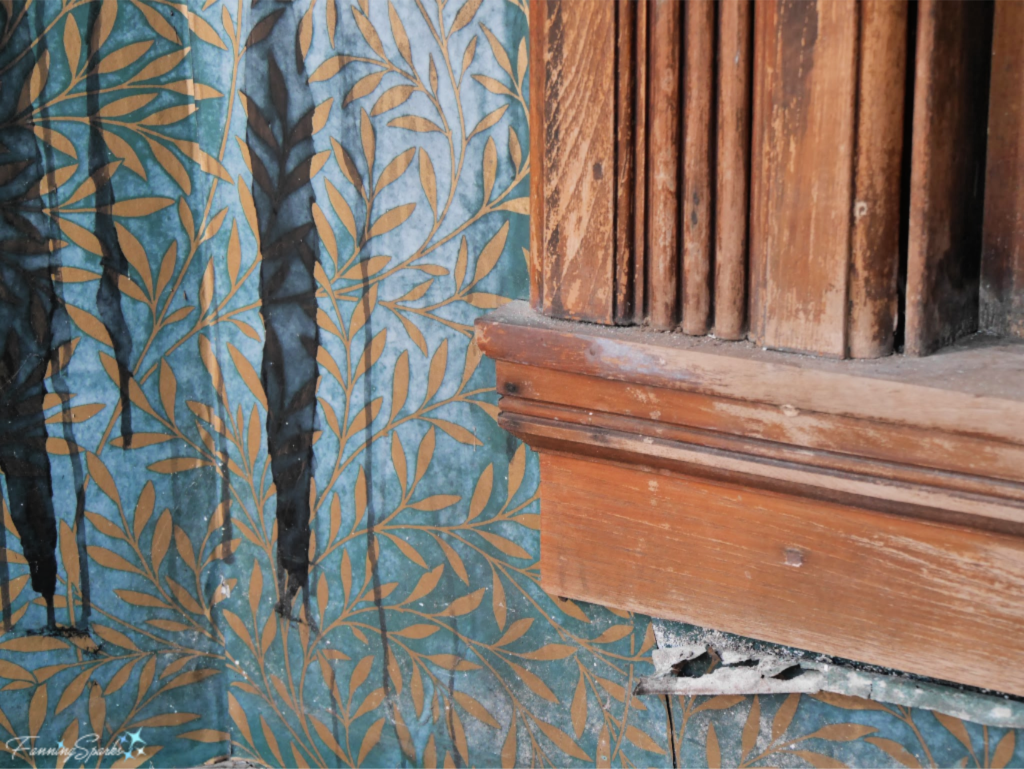 Wilde advised his listeners to look to nature for decoration inspiration. “Golden rod and aster and rose and all the flowers that cover your valleys in the spring and your hills in the autumn: let them be the flowers for your art… Nature [has] given you the noblest motives for a new school for decoration.” Here are some examples of floral motifs in this House Beautiful. This stenciled ceiling is from the Library.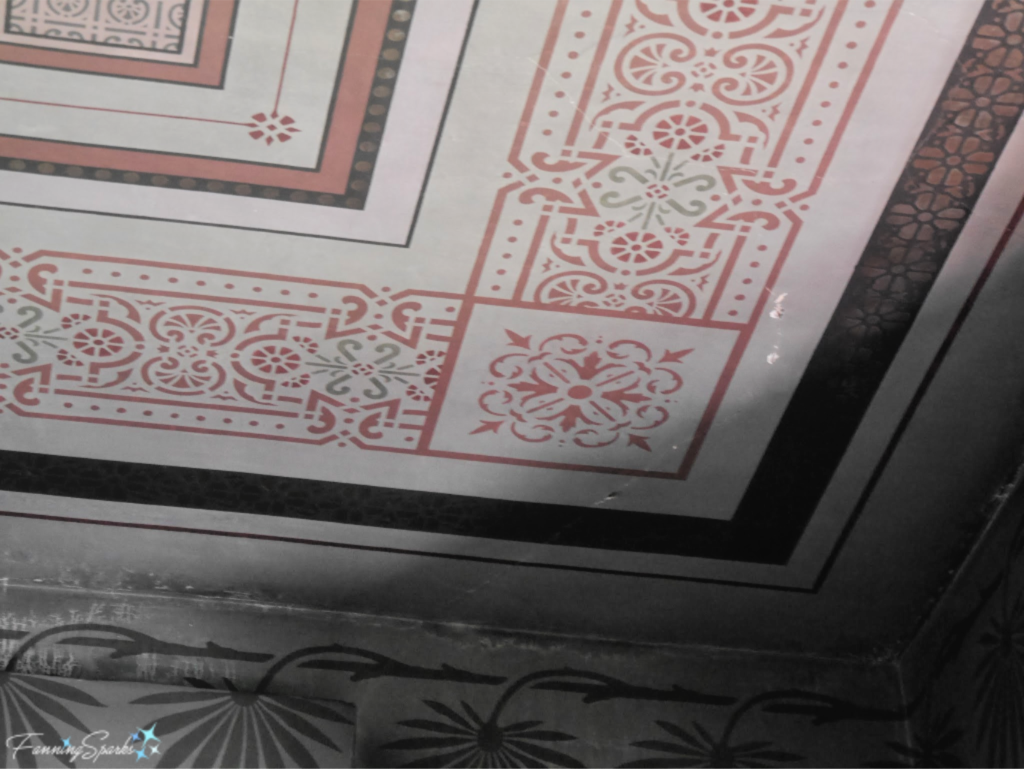
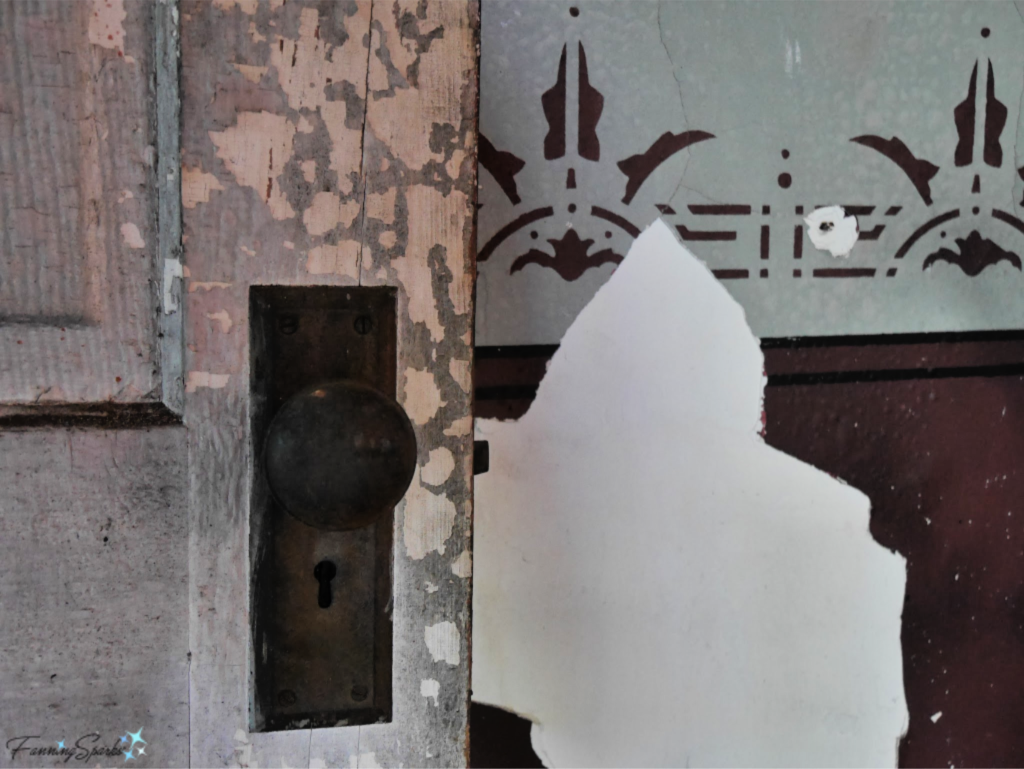 The Aesthetic Art Movement was short lived, lasting for only about 10 years from 1880 to 1890. As a result, there are not many surviving examples of this style‒a situation which makes Madison’s House Beautiful even more significant.
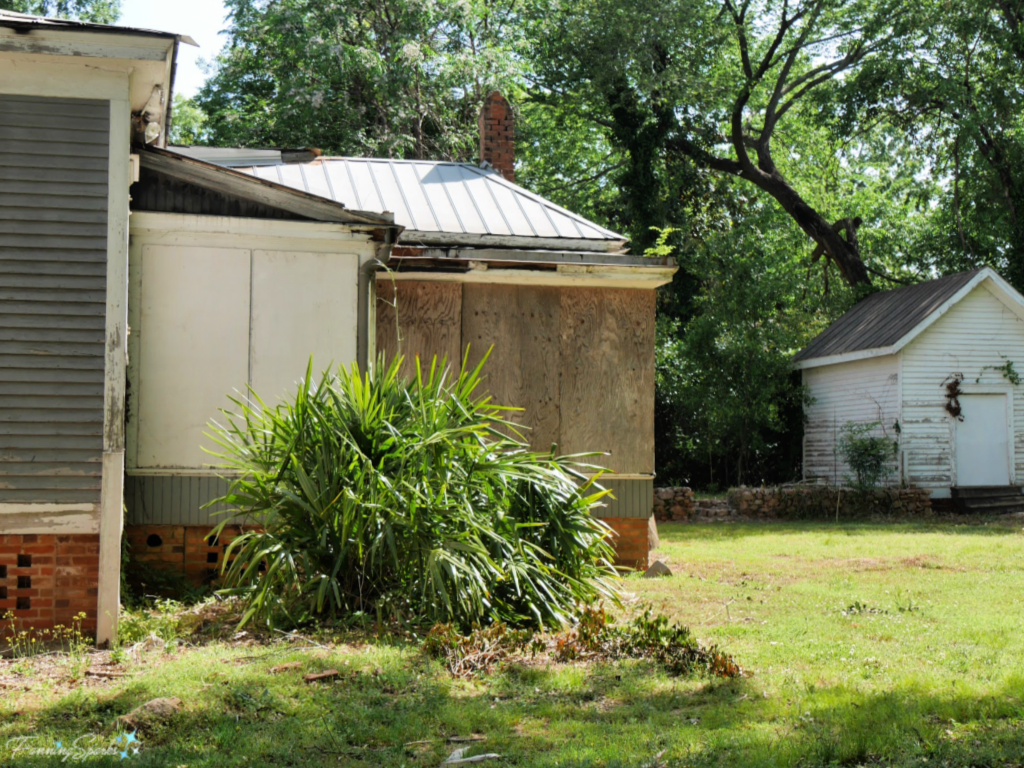 The house has been vacant since the fire. It was placed on the Georgia Trust’s 2018 “Places in Peril” list meaning it was recognized as a valuable structure at risk of being lost. This brings us back to present day with the MMC having found a conservation buyer to preserve this outstanding property.