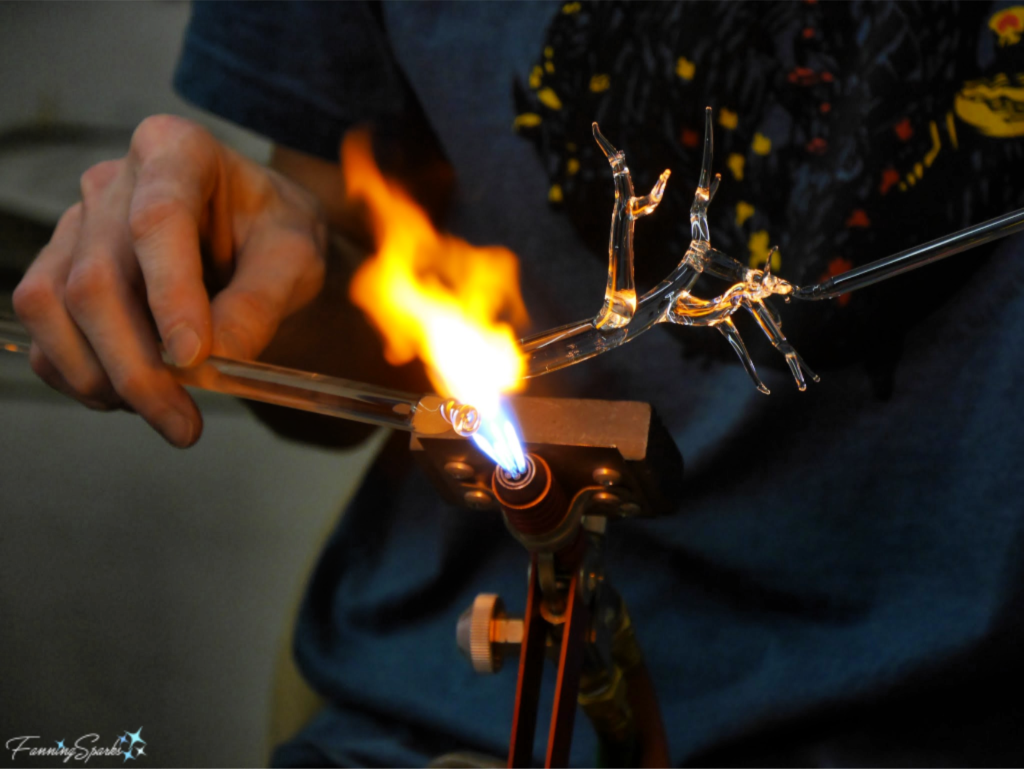
Incredible! That’s the word that kept popping into my head as I explored the Glass Flowers exhibit at the Harvard Museum of Natural History. I first heard about this exhibit during an Intro to Glass Blowing class at the John C Campbell Folk School. During our class, we learned flamework techniques including glass sculpting and blowing with a propane torch. Here’s one of the instructors, Tony Prince, demonstrating how to make a small glass tree.
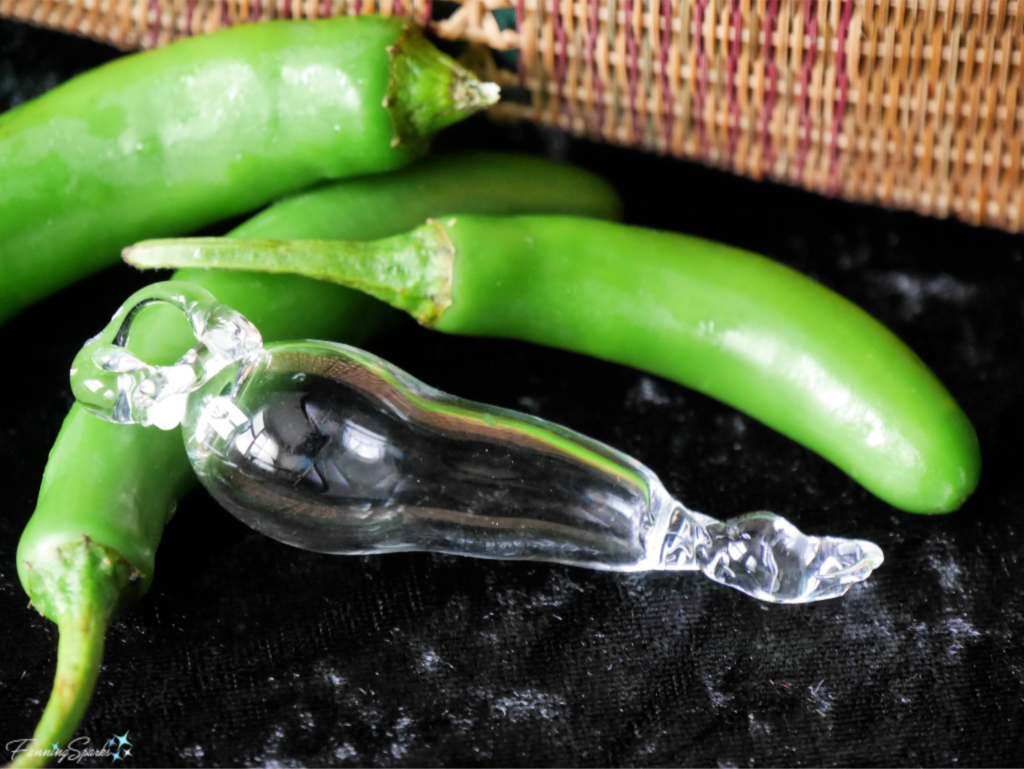
 While it looks easy when a pro like Tony does it, it’s not! Glass flamework takes exceptional coordination and lots of practice. My own meager attempt to blow a round Christmas ornament turned into an odd shape more like a vegetable. Yet, I’m insanely proud of my pepper-like ornament!
My fellow students said the Glass Flowers were amazing and, boy oh boy, were they right!
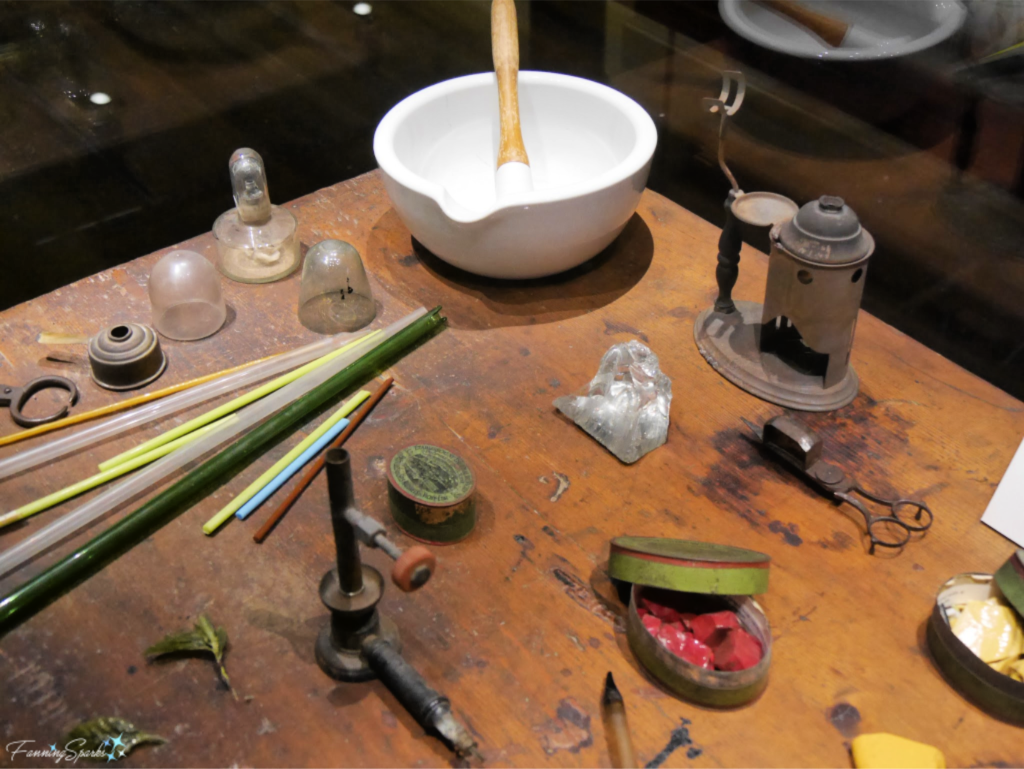
Not only are the botanical models impressive in their detailed accuracy but the fact they’re made of glass and wire with the simplistic equipment used at the time (1886 – 1936) is simply mind blowing. Here’s the lampworking bench believed to have been used in the making of the Glass Flowers.
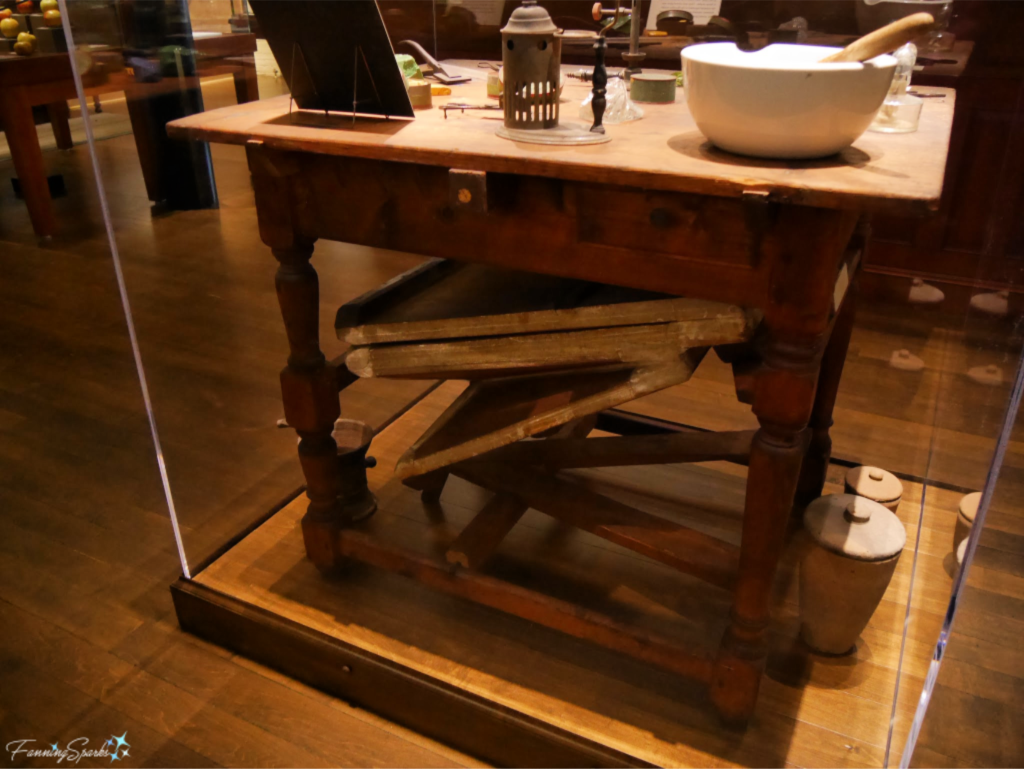
As a case in point, instead of adjusting the flame of a propane-fueled torch with the simple turn of a dial as is done today, they used foot-operated bellows to provide a stream of air to intensify the flame of the lamp. The bellows are below the desk.
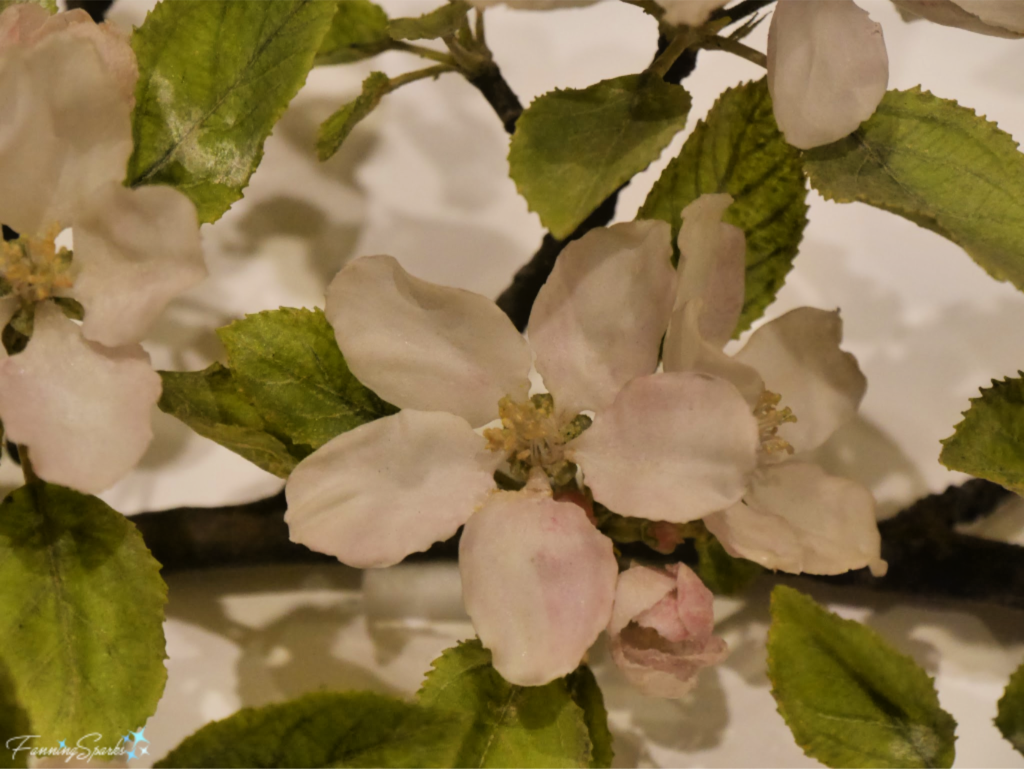
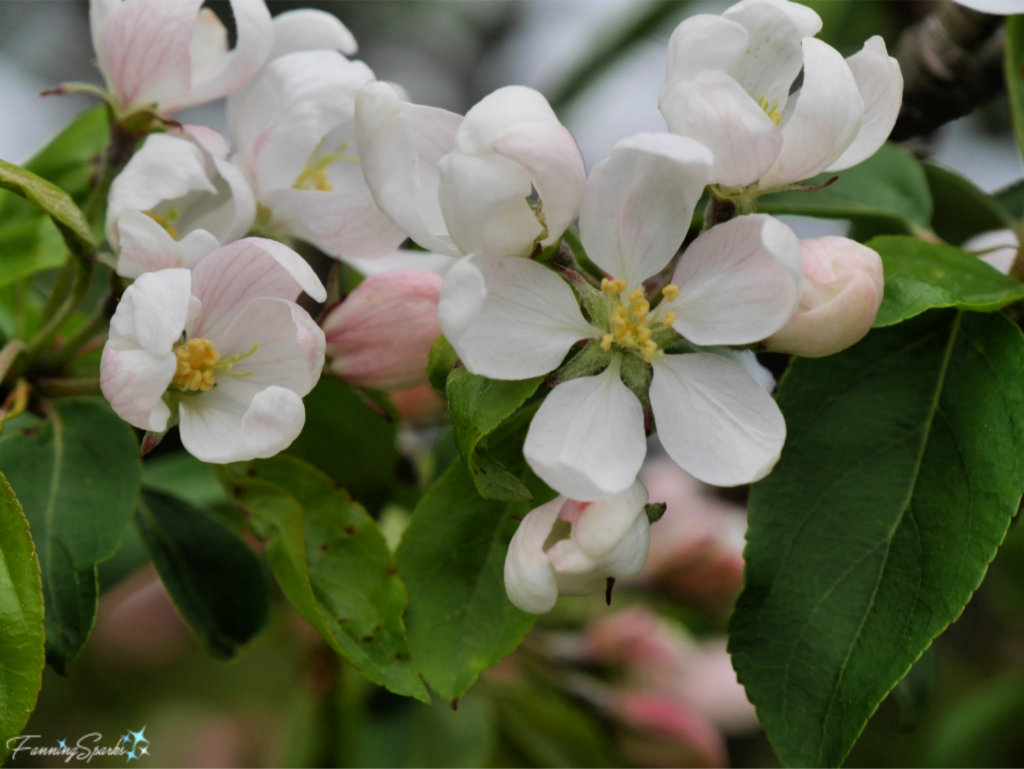
Being able to manipulate glass to the precision needed to replicate real life plants and flowers is just incredible. I am in awe! Let’s look at an example to prove this isn’t an exaggeration. Here’s a photo of the Malus pumila, aka apple, flower in glass. Please note this photo was taken through the glass display case under harsh showroom lights so it’s not as clear as it could be.
And here’s a photo I took just 2 days earlier of apple blossoms in the Kingsbrae Garden in St. Andrews, New Brunswick. Incredible, right?
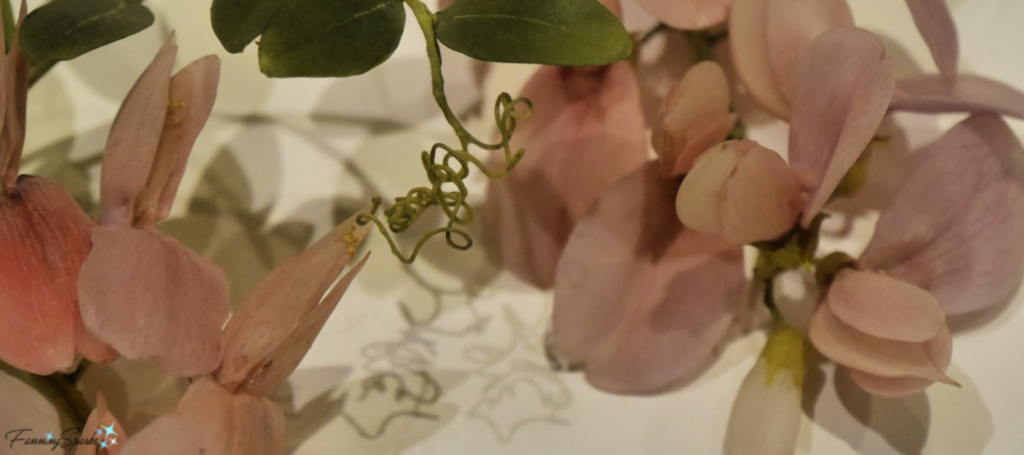
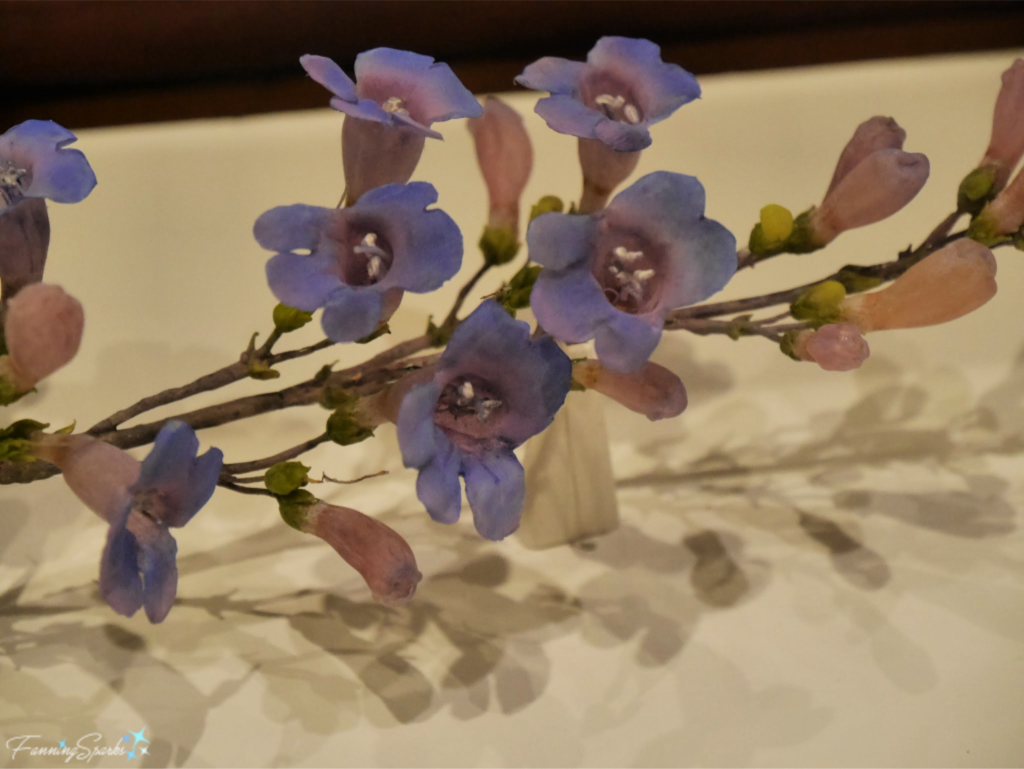
Each specimen is shown with flowers (if any) along with magnified sections of significant parts. Here’s the display for the Lathyrus splendens with the common name of Pride of California or Wild Pea. It’s very similar to the flower we know as Sweet Pea (Lathyrus odoratus).
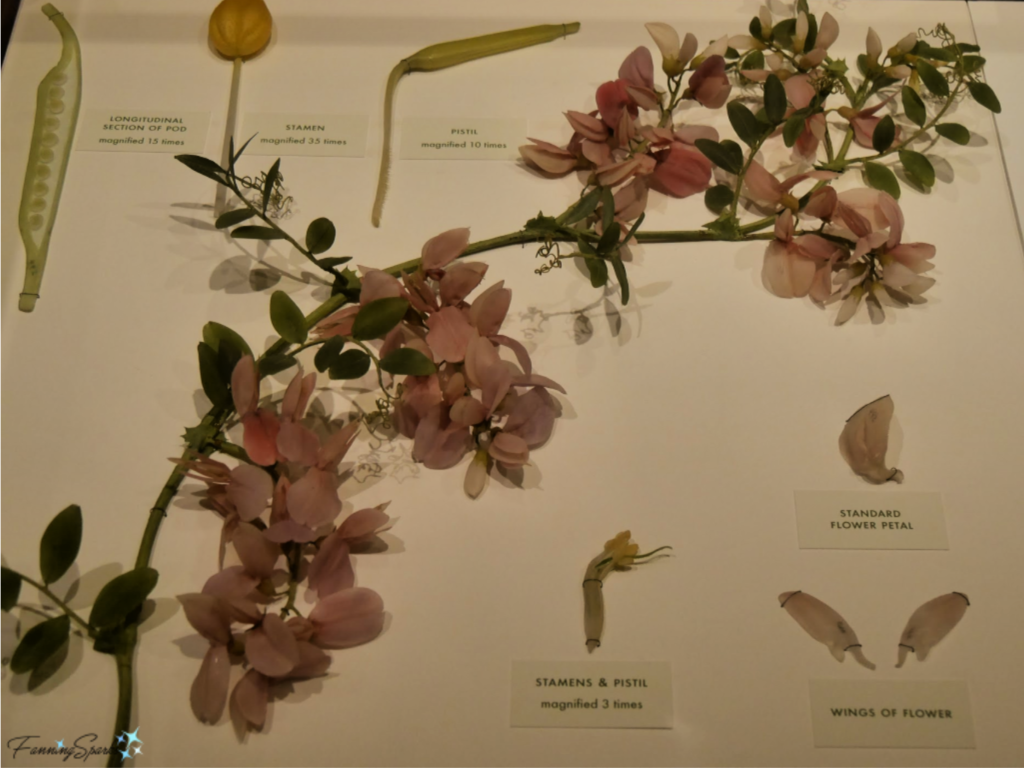
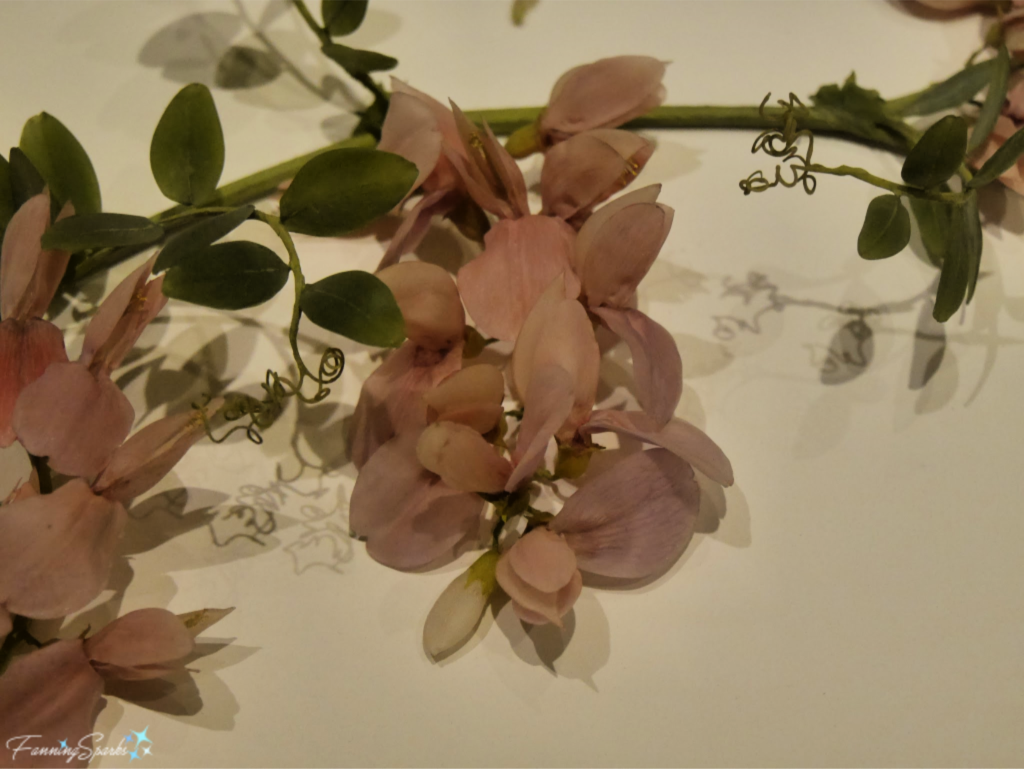
Here’s a closeup of the flower blossoms.
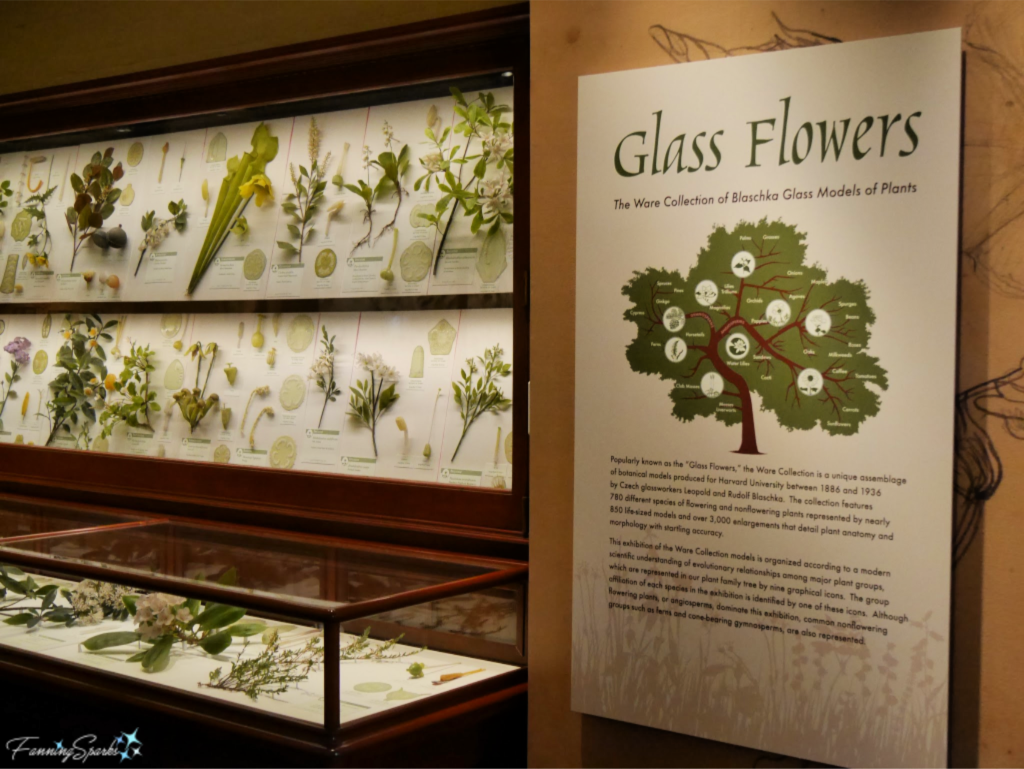
The story behind the glass flower models is fascinating. Here’s the explanation provided at the Exhibition along with a few more photos.
“Tradition of Glass Making Leopold Blaschka was born into a family of glass workers on May 27, 1822 in Böhmisch Aicha, now the Czech Republic. Like his father and grandfather, Leopold Blaschka embraced the family tradition. He built a vibrant business producing jewelry and other fine goods, as well as more practical items such as laboratory equipment and glass eyes.”

“From Father to Son After Leopold was commissioned to make sea anemones for Dresden’s natural history museum in 1863, he began to focus on scientific model making. Gifted with exceptional aptitude as a flameworker and a love of natural history, 19-year-old Rudolf joined the family business in 1876. Together, they supplied invertebrate marine models to private collectors, museums and universities worldwide, attracting the attention of Harvard’s first Botanical Museum Director, George Lincoln Goodale …”
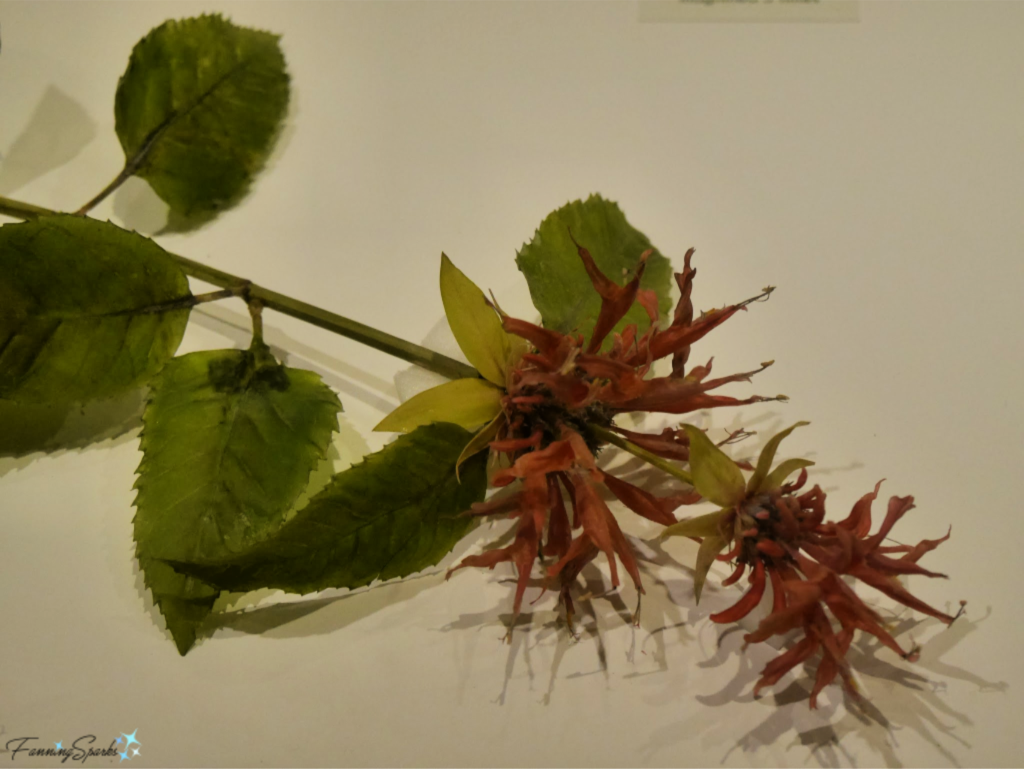
“Pursued by Harvard In Leopold and Rudolf Blaschka, Harvard Botanical Museum Director George Goodale had found a source for scientifically accurate plant models for study and display. Goodale actively lobbied a reluctant Leopold and in 1886, finally persuaded the father and son duo to create a small selection of plant models for Harvard University. Entranced by the models’ beauty and accuracy, Boston residents Elizabeth C. Ware and her daughter Mary Lee Ware agreed to finance the creation of an entire collection.”
“To Model the Plant World In 1890, Goodale’s persistence was rewarded when the Blaschkas signed an exclusive 10-year contract with Harvard University to create the Ware Collection of Glass Models of Plants. Leopold and Rudolf completed the majority of the collection before Leopold’s death in 1895. In the nearly four decades to follow, Rudolf dedicated himself to producing plant models for Harvard, all the while experimenting with innovative materials and techniques.”
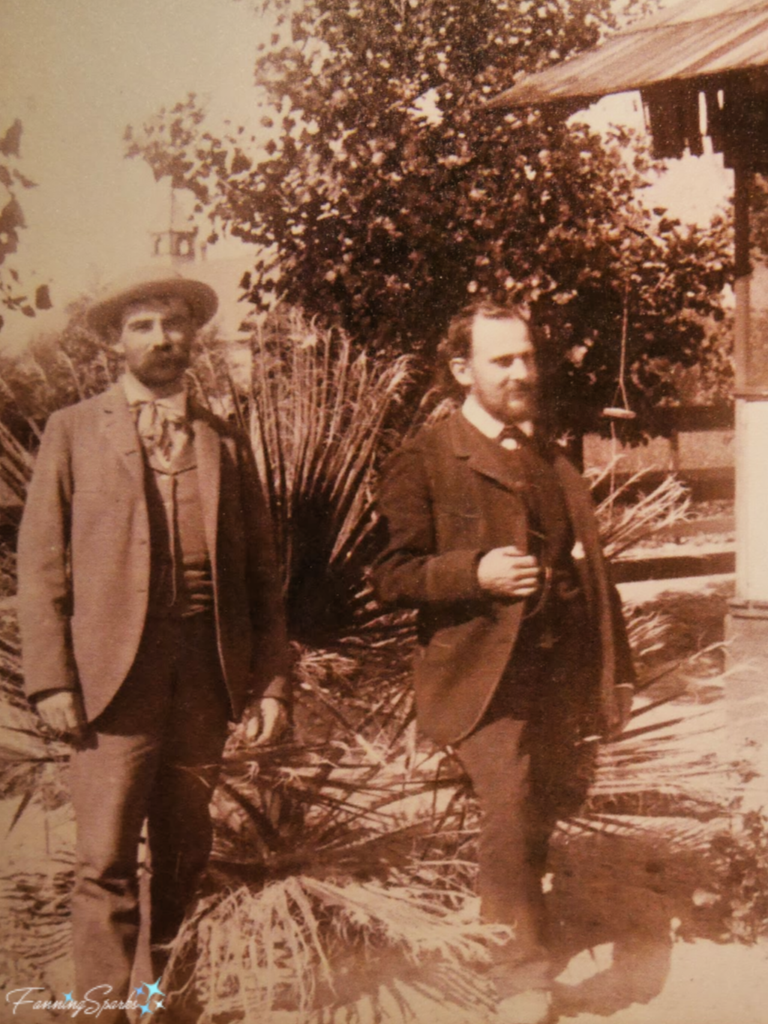
Another interesting aspect to the story was the research the Blaschkas conducted. “This photograph of Rudolf Blaschka (right) and botanist William Ganong (left) was taken in 1892 during one of several field trips to the Caribbean and the United States. In order to create accurate models, Rudolf observed and collected specimens, made drawings and took detailed notes to document plant forms and colors. The Blaschkas used field specimens as references for 312 of the models created for the collection.”
The Glass Flowers exhibit at the Harvard Museum of Natural History is… well… incredible! Whether you’re interested in flowers and gardening or fine glasswork, it’s well worth seeing.
More Info
You can learn more about the Glass Flowers: The Ware Collection of Blaschka Glass Models of Plants exhibition at the Harvard Museum of Natural History in Cambridge, Massachusetts on their website.
My first experience working with glass was at a Gilbert Glassworks’ workshop, in Santa Rosa Beach, Florida. You can read about that experience in my post A True Hot Glass Experience. Then I attended a week-long Intro to Glass Blowing class at the John C Campbell Folk School. You can learn more about the folk school on their website or in my post A Makers’ Playground.
Today’s Takeaways
1. Fellow enthusiasts are a great source of recommendations for experts to admire, exhibits to see and places to visit.
2. Consider examining the work of experts in a medium that interests you.
3. Seek out examples of work that push the limits and make the impossible possible.

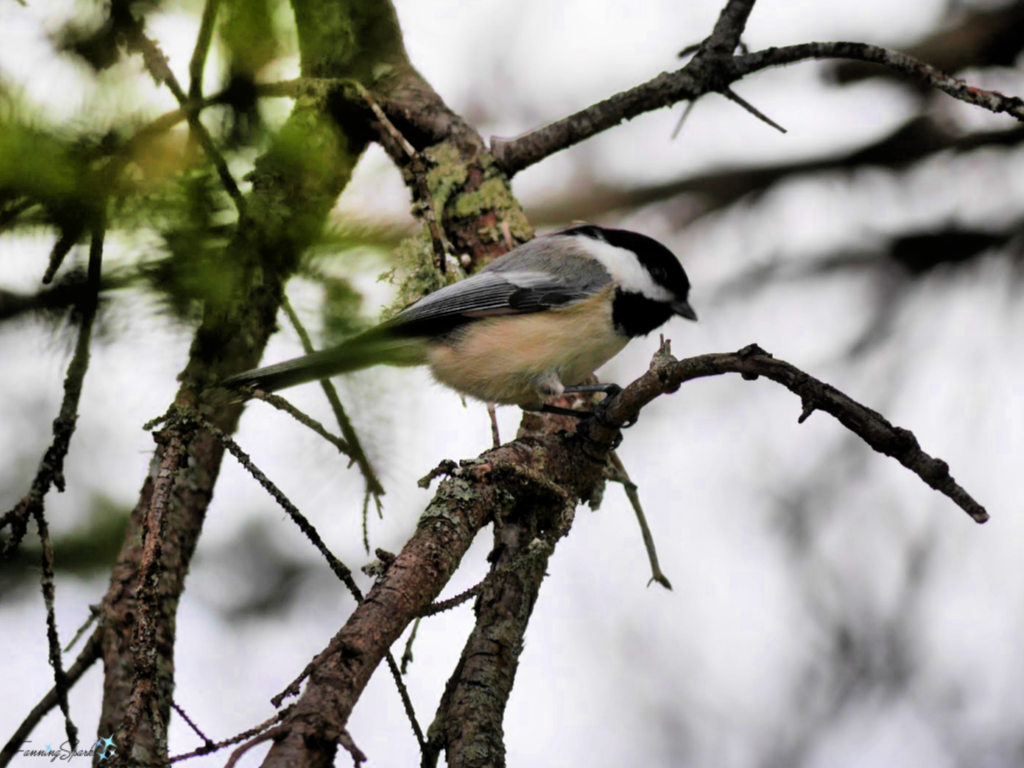
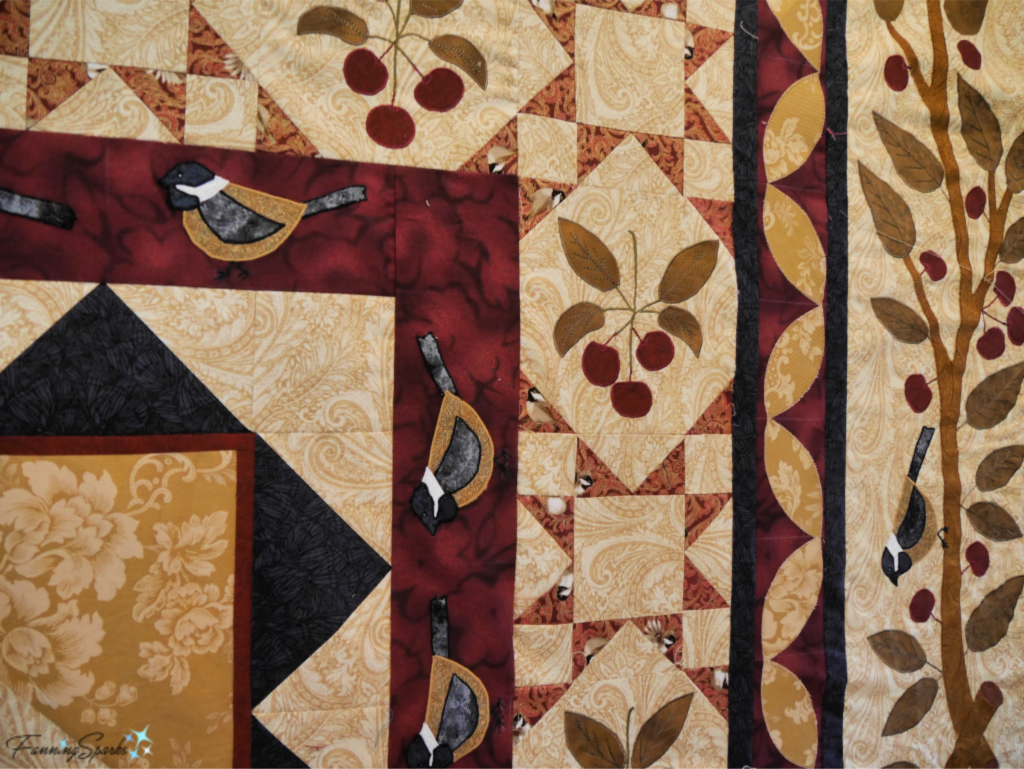
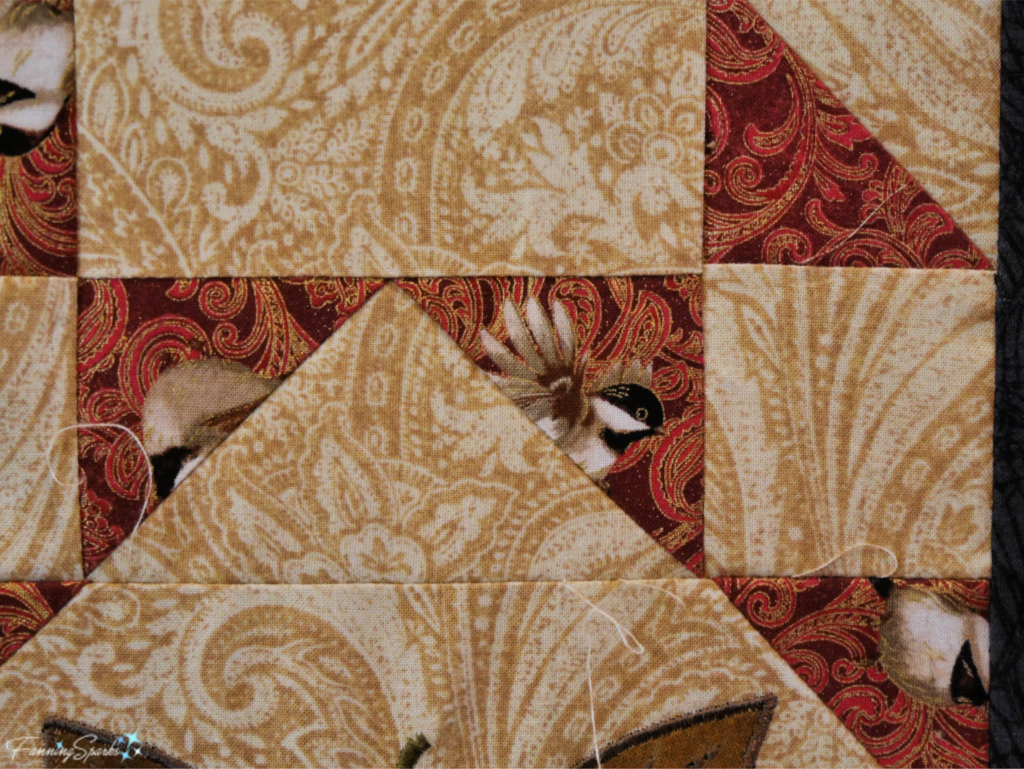
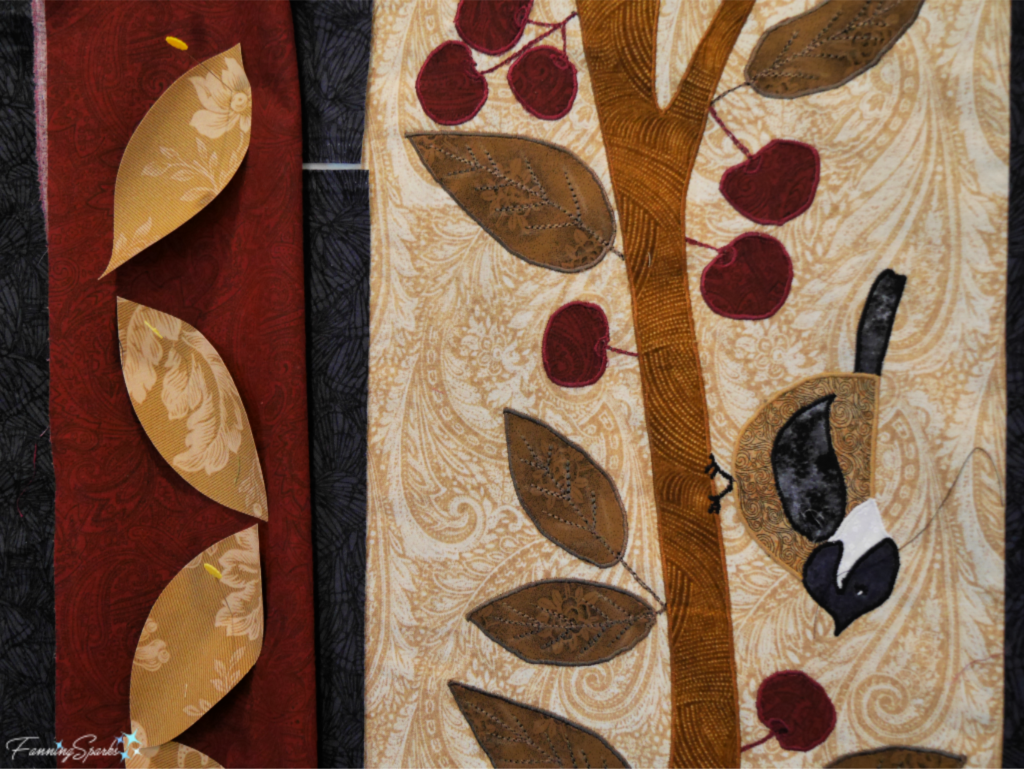
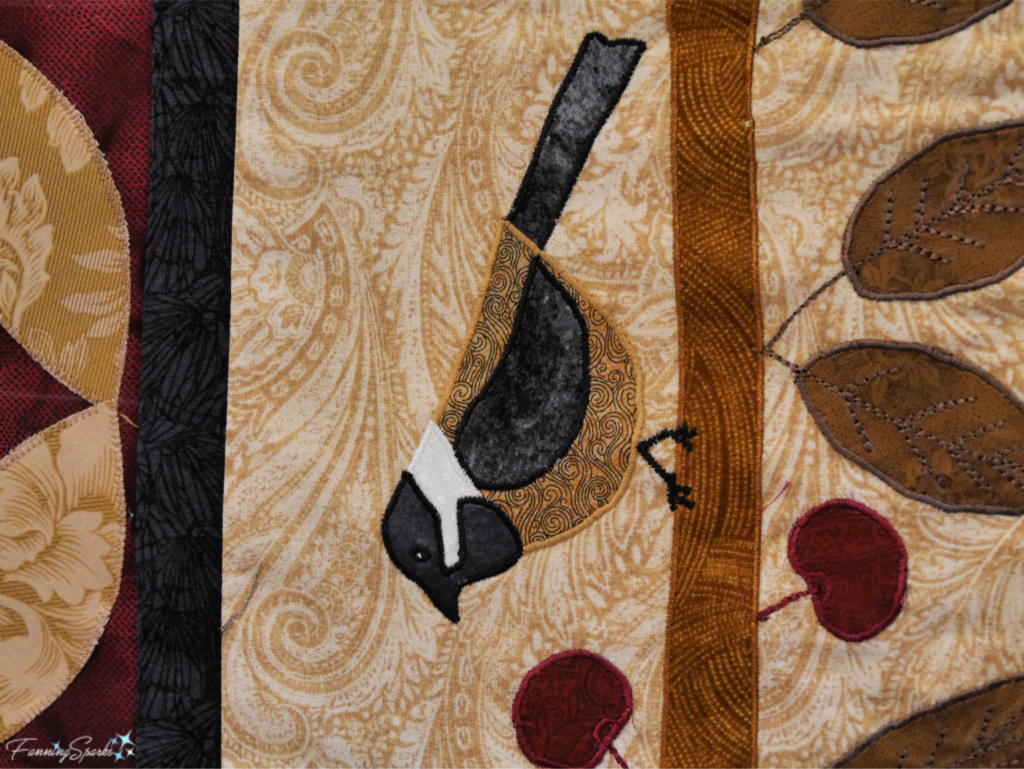
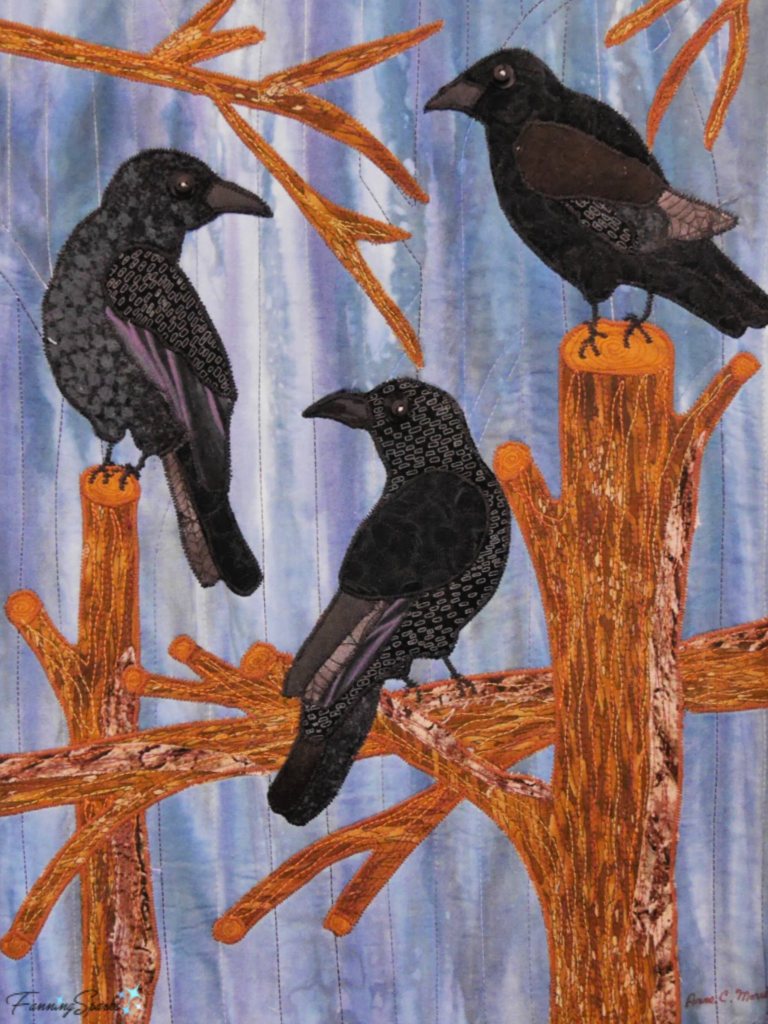
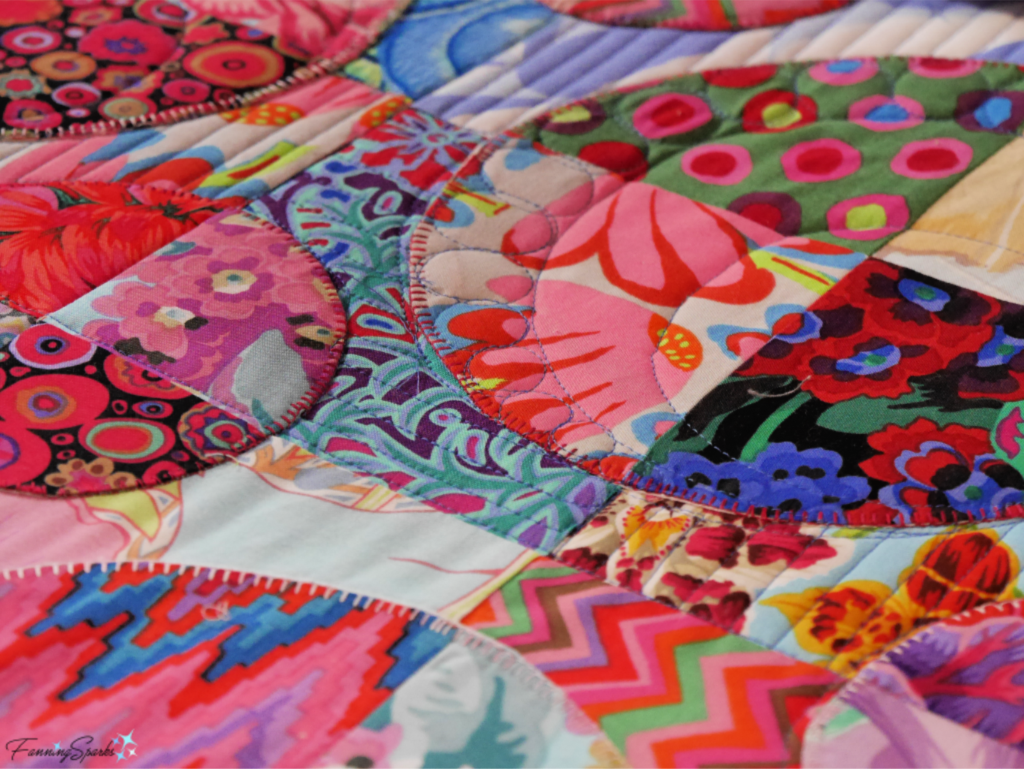
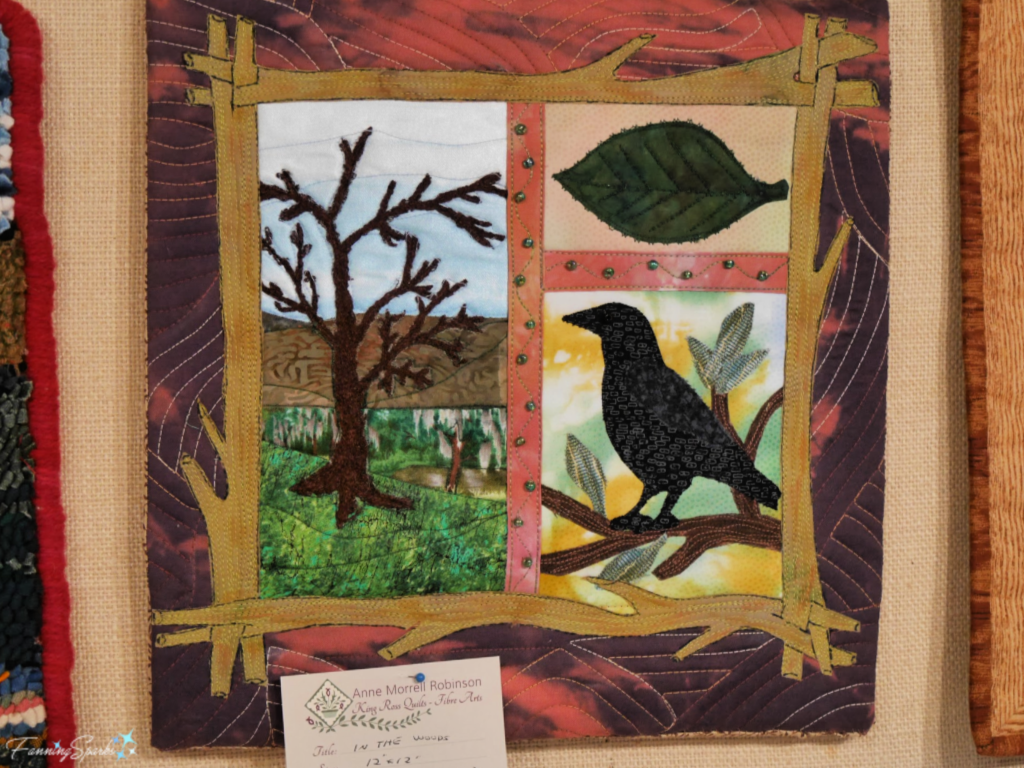 I don’t want to give the impression that Anne’s work is limited to bird themes. Her studio was filled with beautiful quilts, hooked rugs and other fiber arts with a wide variety of subjects. Here’s a quilt she had in progress on her quilting machine.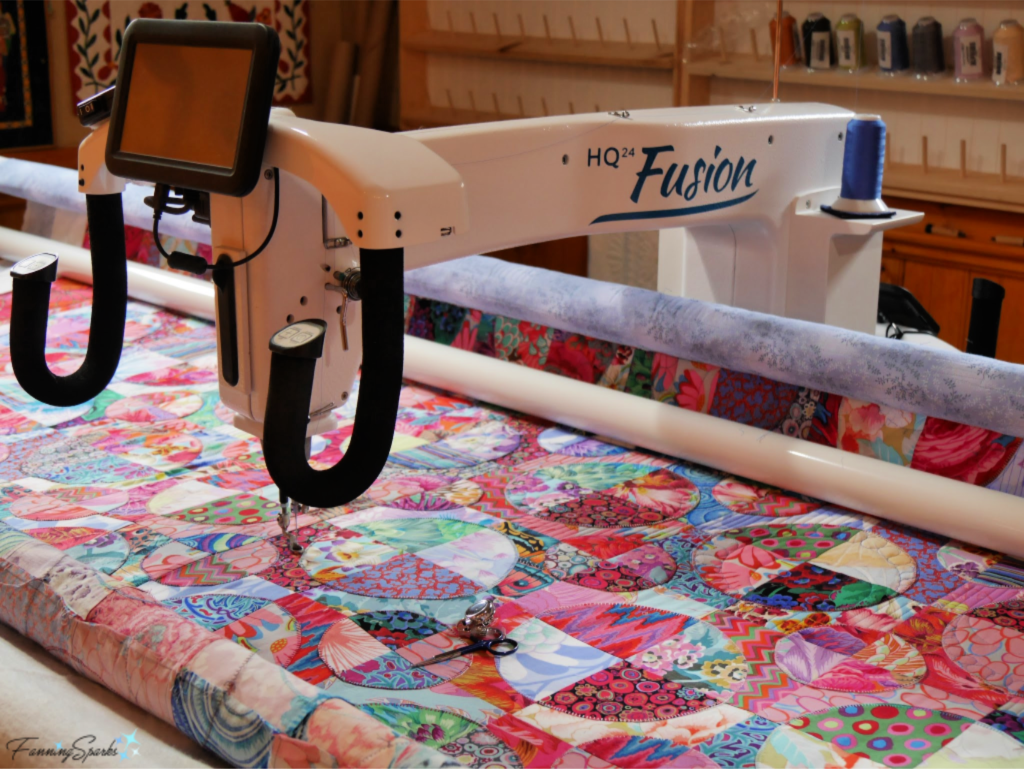
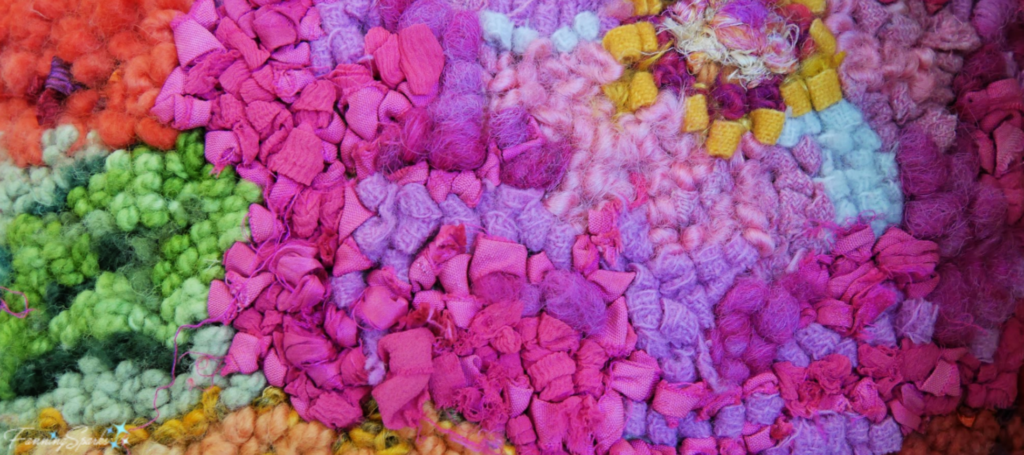
 Perhaps it’s that long winter nap that has led to the long-standing tradition of rug hooking in this region. Originally, rugs hooked by housewives from old clothing, were used to provide warmth on household floors. Hooked rugs are rooted in practicality and frugality‒a fitting metaphor for this region. But over the years, the rugs have become works of art and the makers have become artists. They’ve taken something that started as a functional necessity and made it into something beautiful for the home. This type of transformation is common in this region which boasts many talented artists and artisans. I recently had the opportunity to visit one of those artists.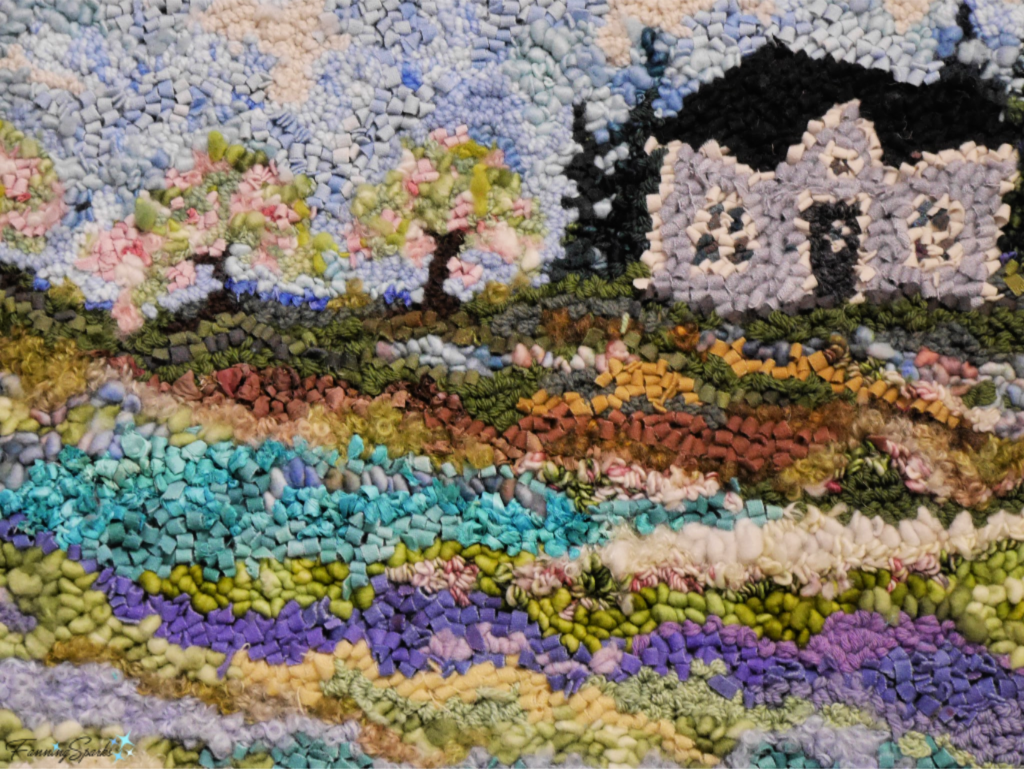
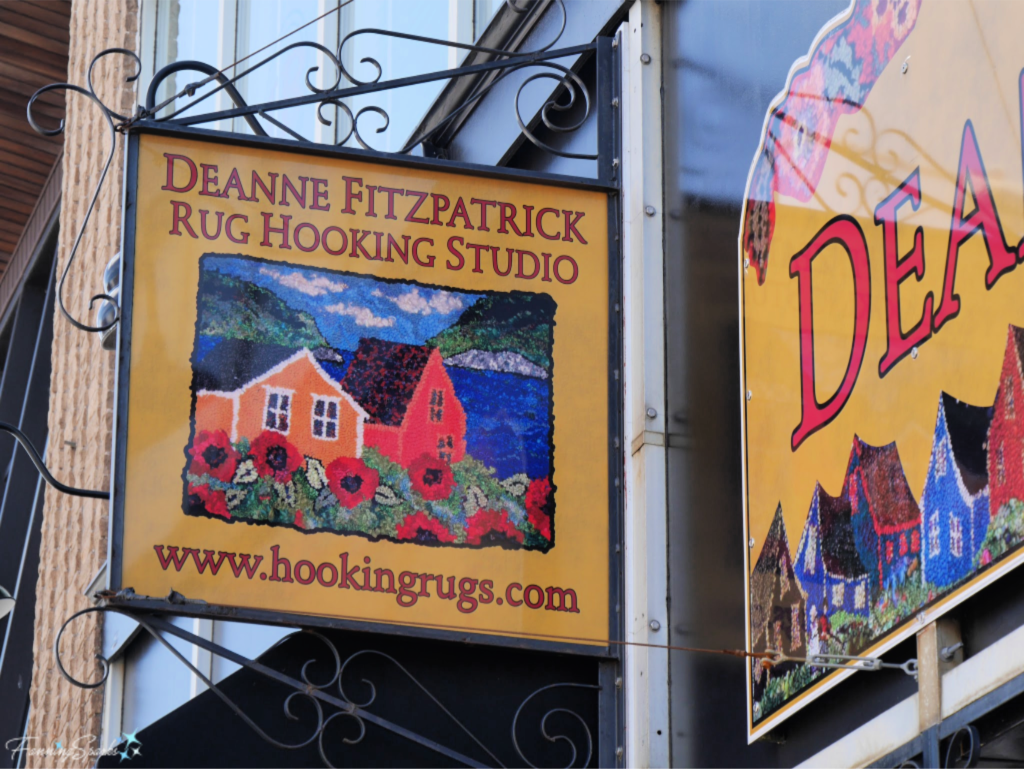 Before I go any further, I need to warn you; don’t let the name fool you! “Rug hooking” is not about making floor mats. Don’t even think about wiping your shoes on one of these beauties!
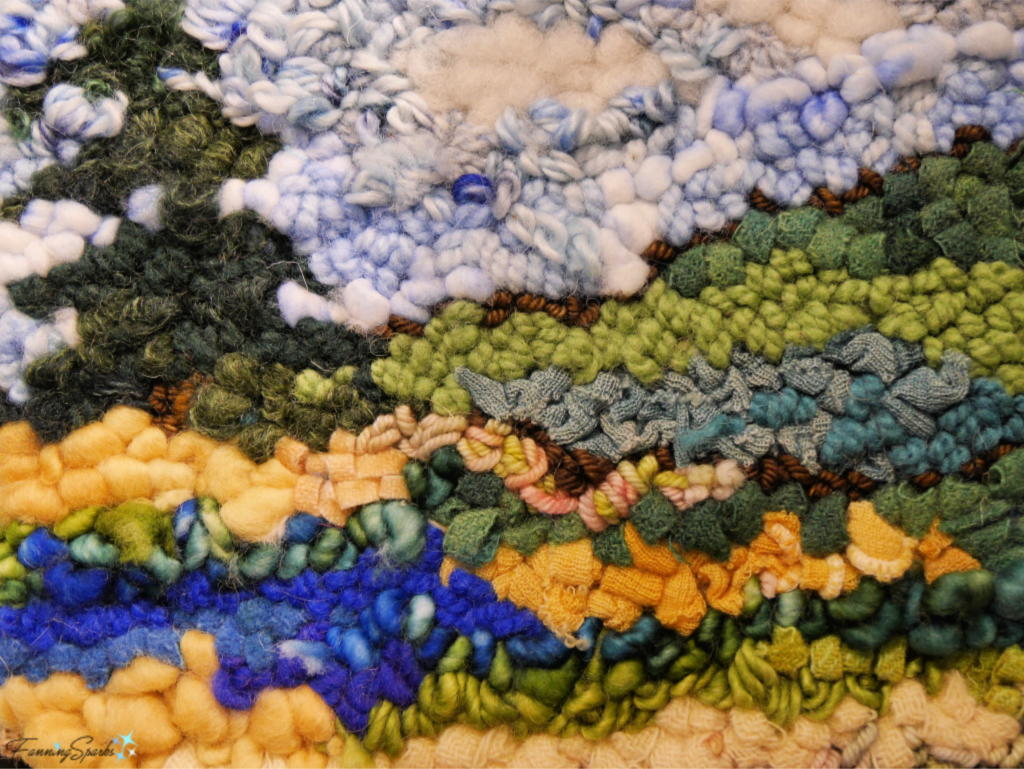 Deanne’s Studio is a treasure trove of colorful fiber in artistic displays.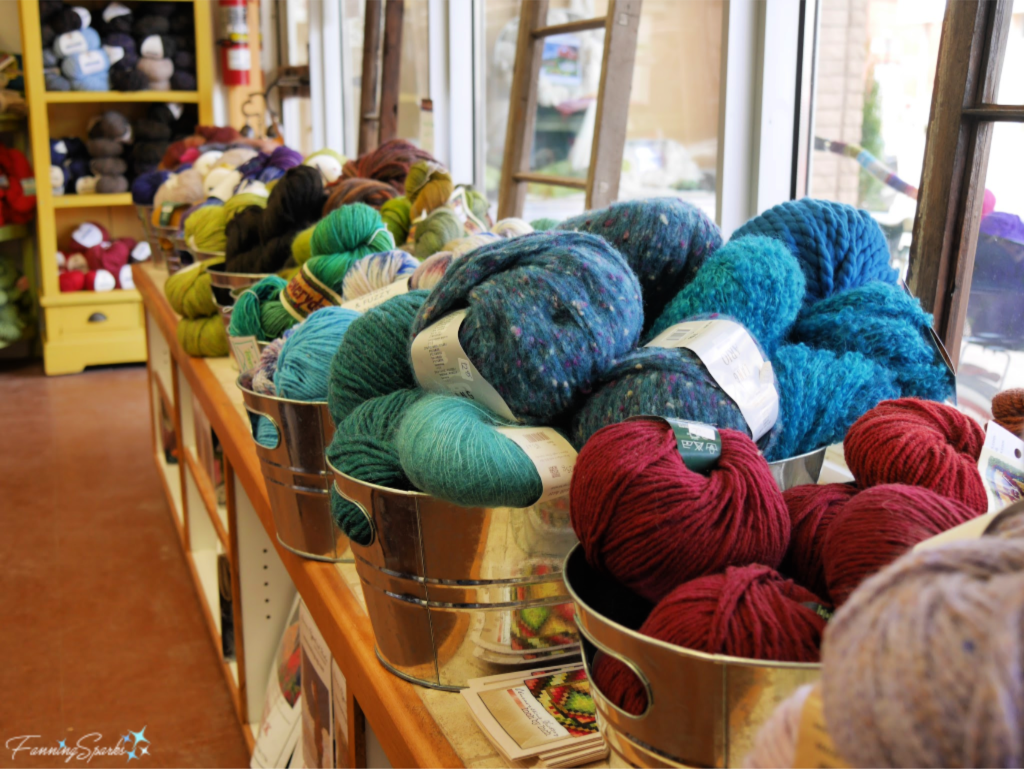
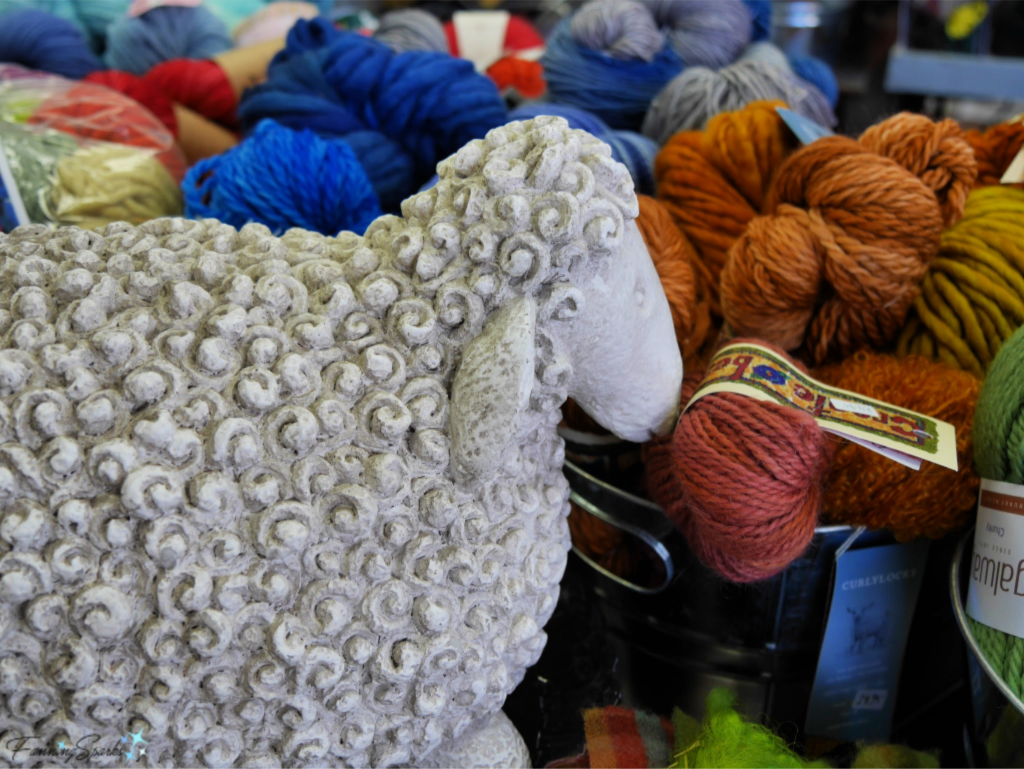
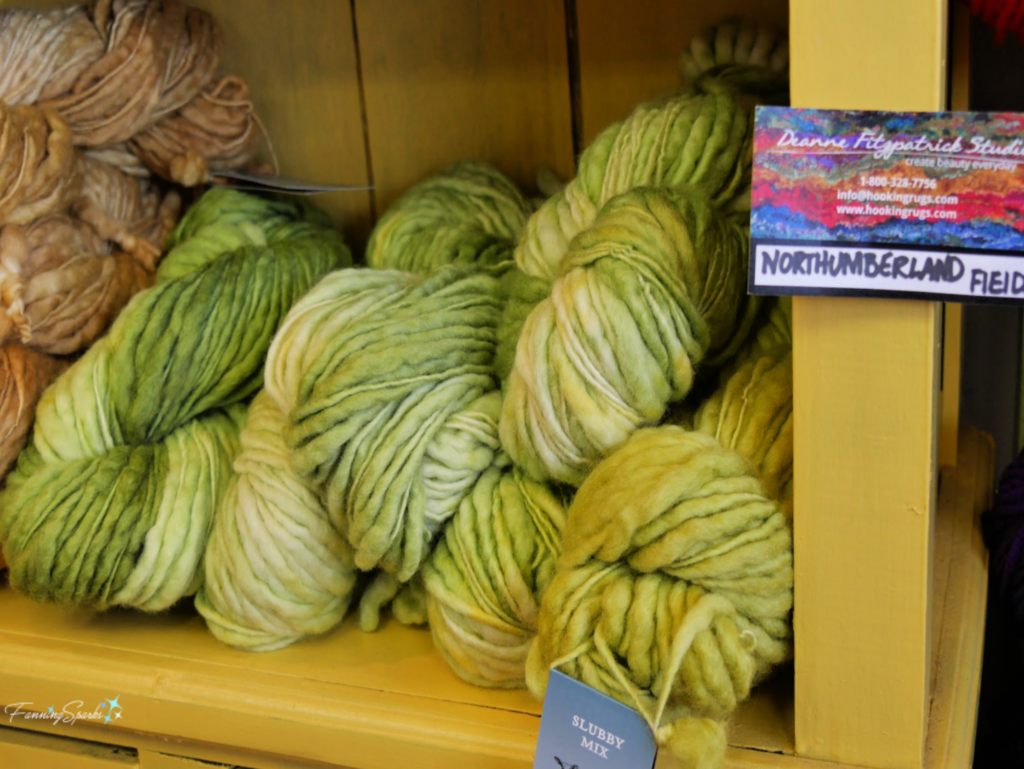 One of the best things about visiting the Studio is the legendary Maritime hospitality. Where else would you be given free rein to wander around the entire studio and invited to enjoy a cup of tea with delicious oak cakes? Plus you’re encouraged to learn to hook. Deanne, herself, taught us how.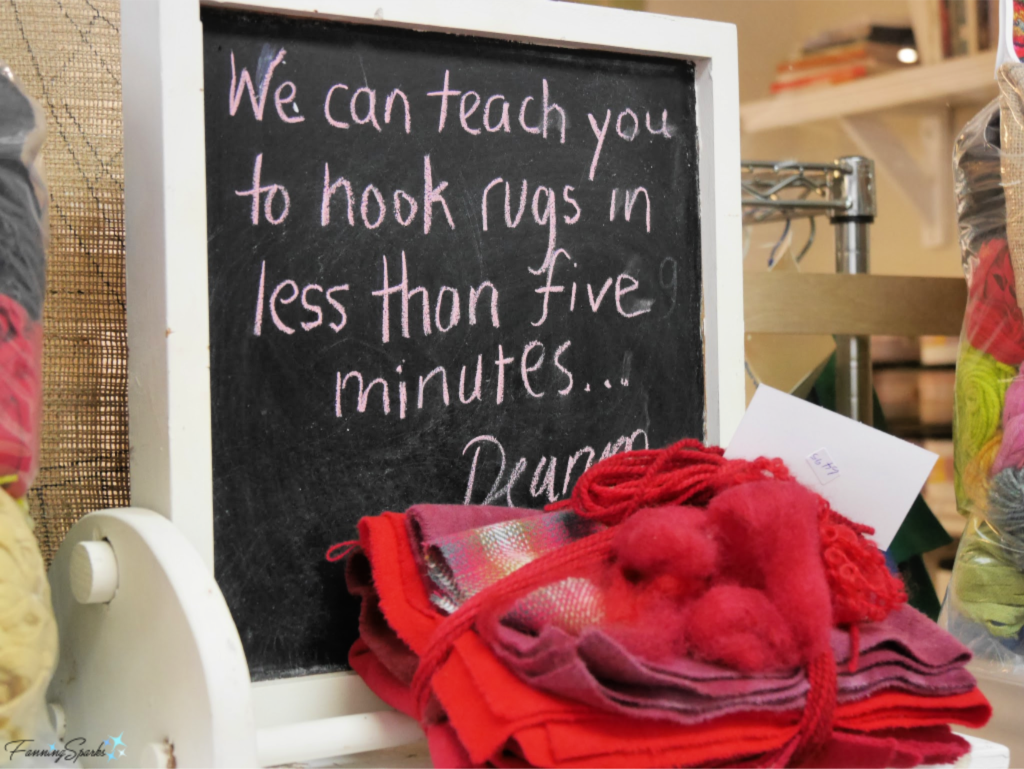
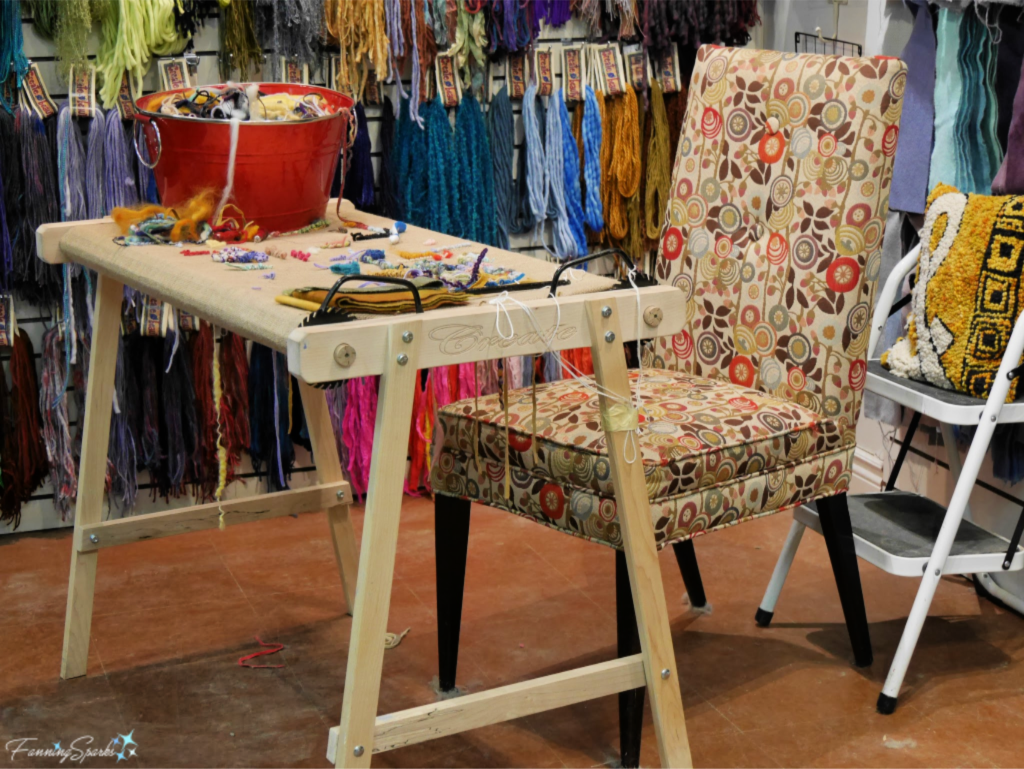 As promised, it only took a few minutes to learn. Here’s my sister, Marian, giving it a try.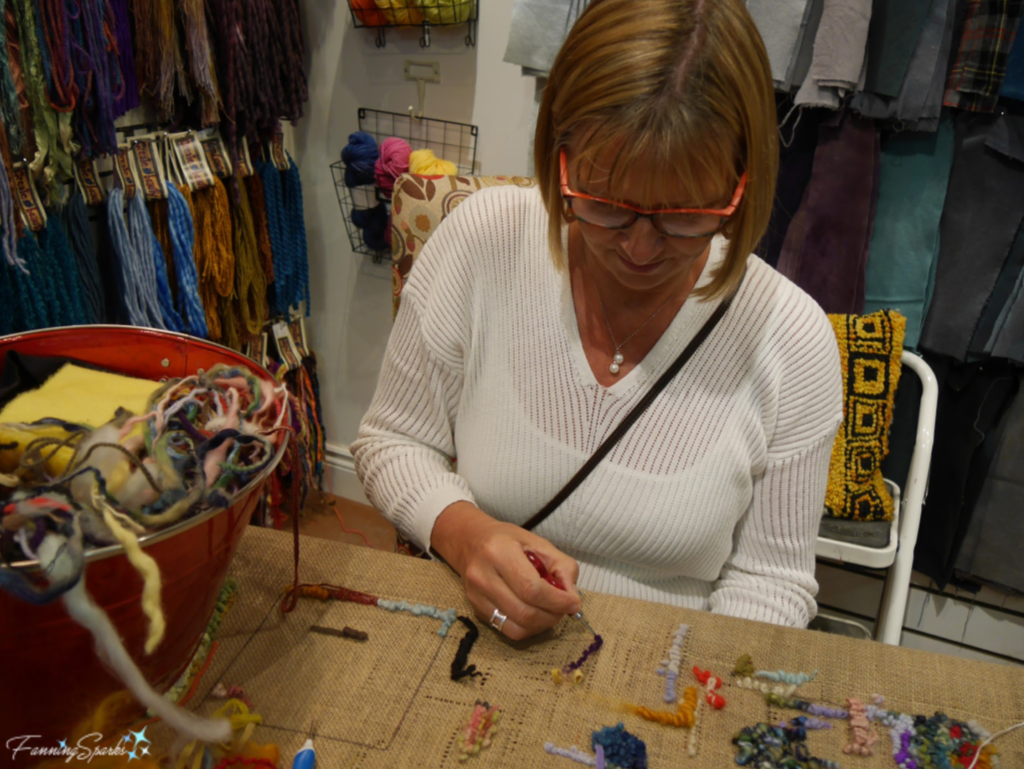
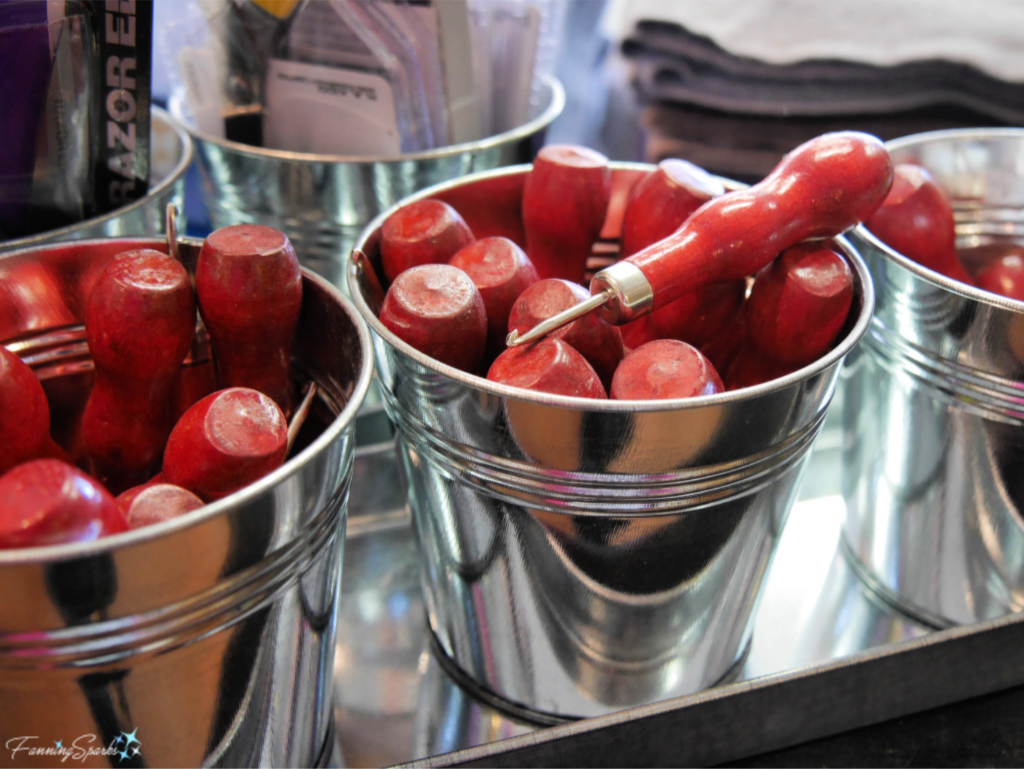
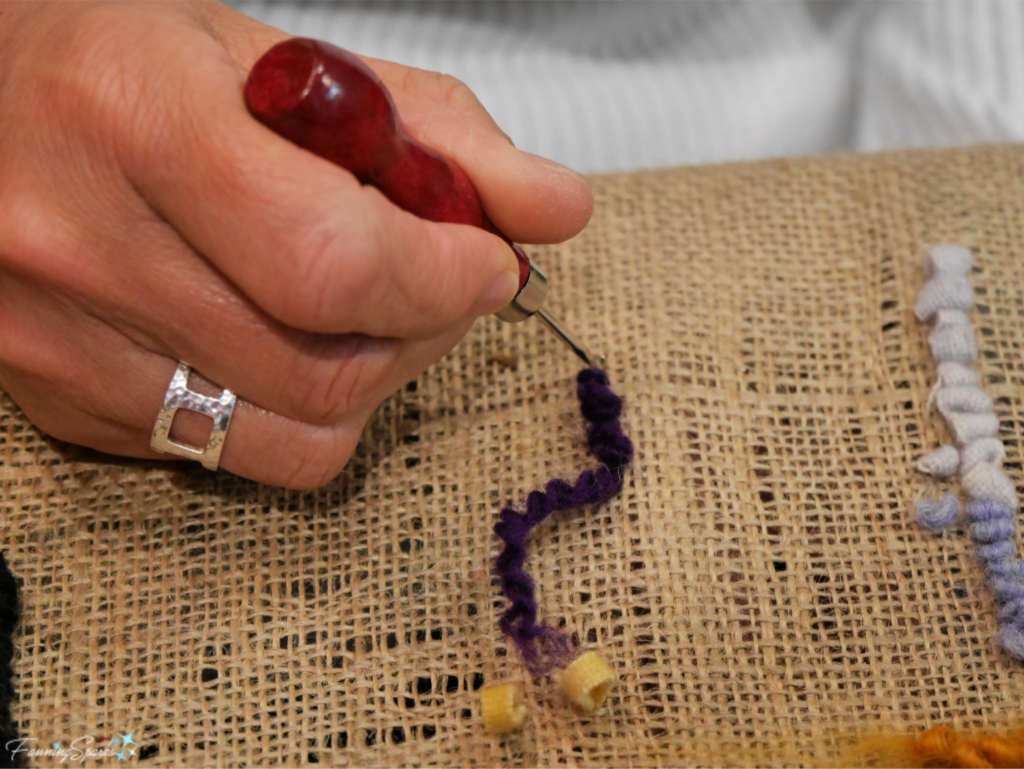 You start with a backing of burlap or linen stretched on a frame. Then using a simple hook you pull strips of fabric, strands of yarn, or other fiber through the backing to make a small loop. You repeat this process until you’ve covered the surface with fiber loops.
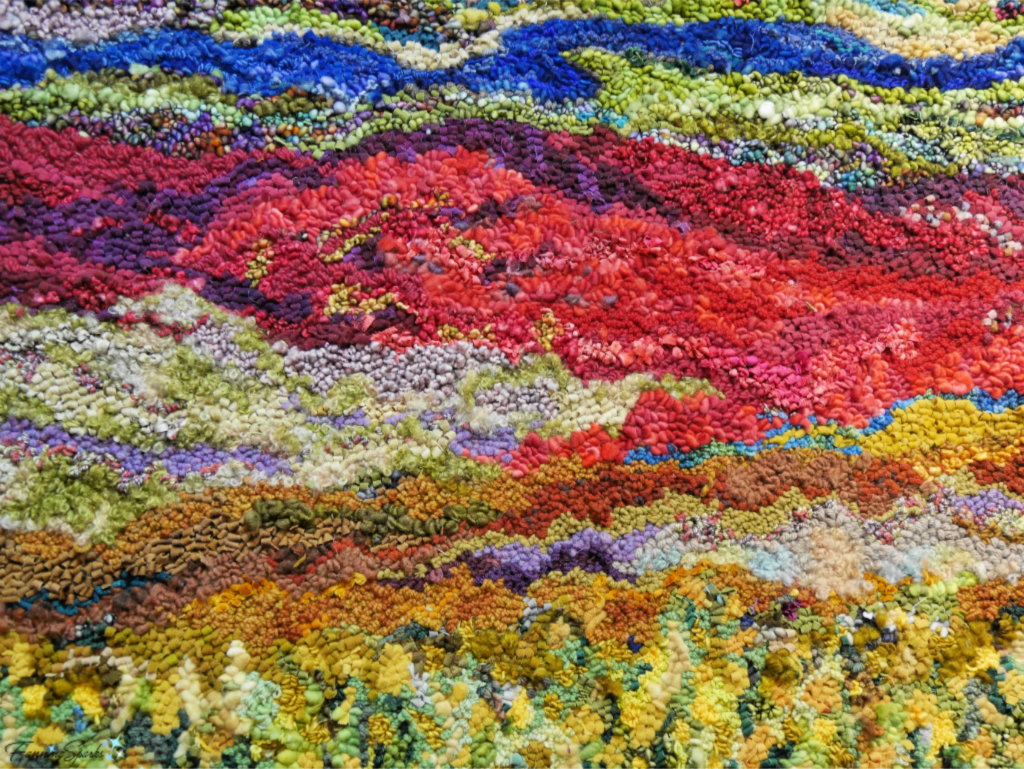
 Of course, it takes an artistic eye and lots of practice to work up to beautiful pieces like Deanne’s “The Golden Season”.
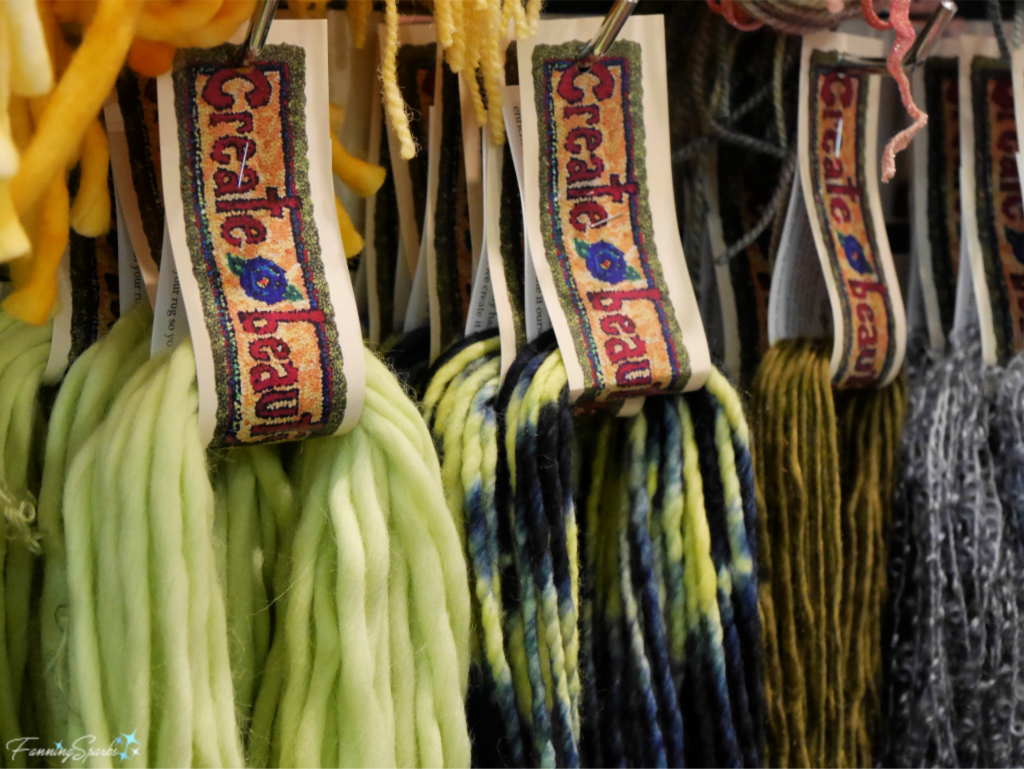
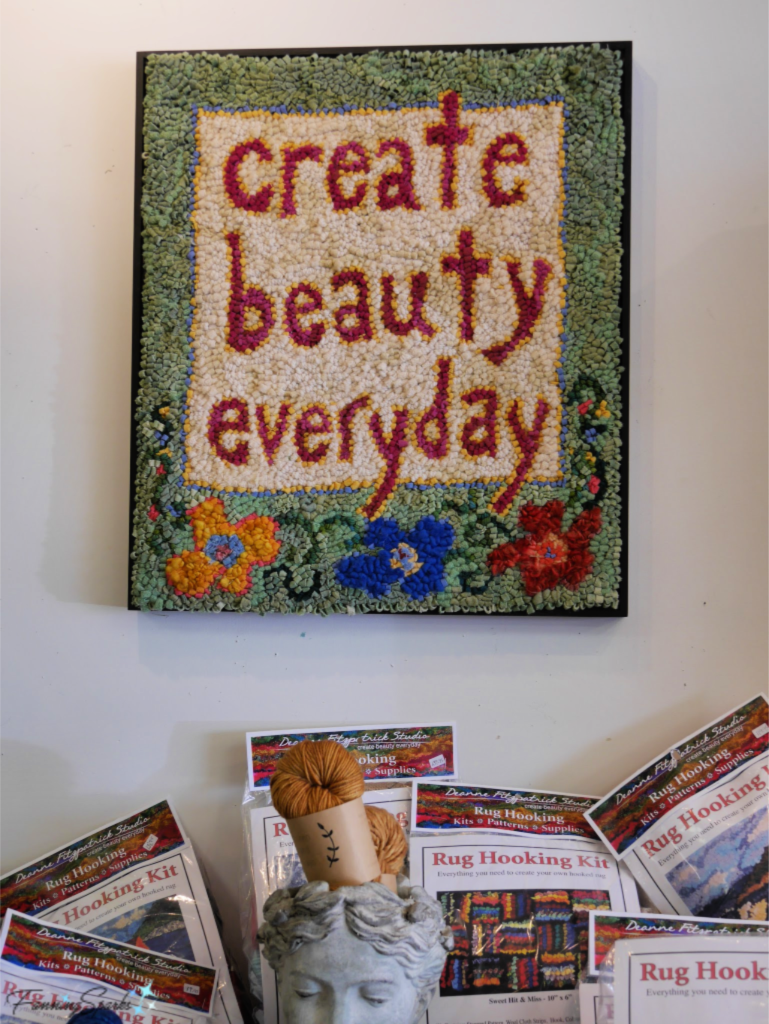
 Deanne and her team strive to “Create Beauty Everyday” and they encourage their customers to do the same. She’s said “it is my goal to live simply, and make hooked rugs that are unmistakably art”. Obviously, she has accomplished that goal.
 Special thanks to Deanne and her team for your kind hospitality and a memorable visit!
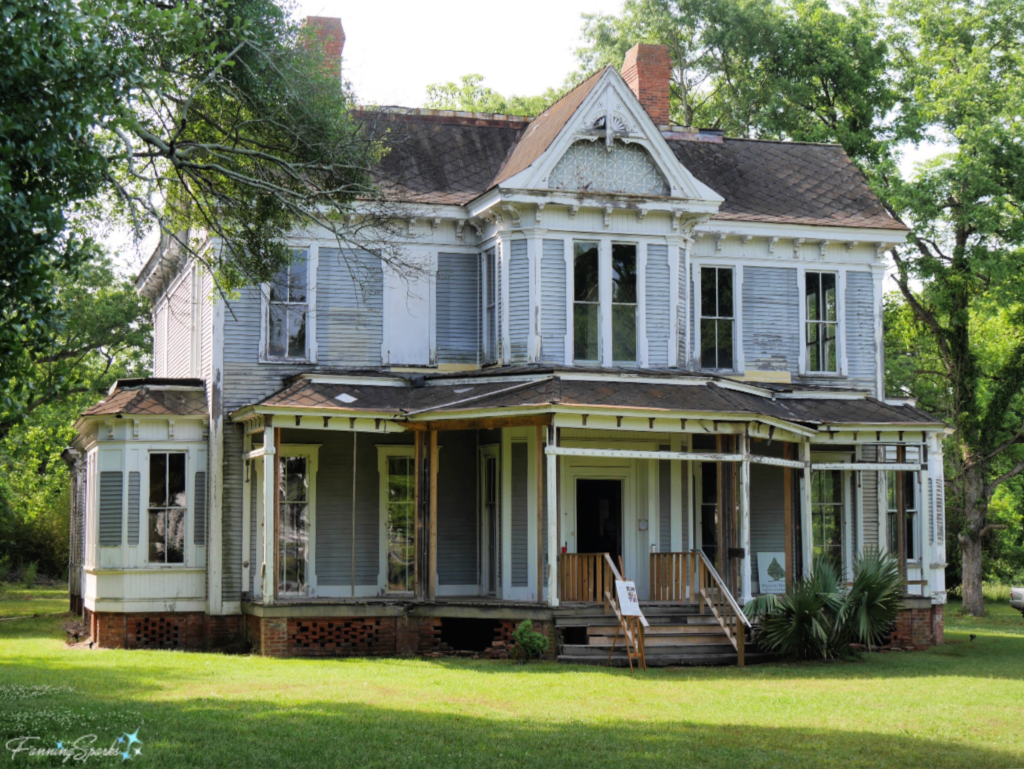 This house is located on Main Street in Madison. I often drive by it when I run errands around town. Sadly, the property was neglected and had fallen into disrepair. Then over the last few months, I noticed things were happening‒workers were present, scaffolding was erected, wooden braces were installed, piles of bricks appeared, and signs were posted.
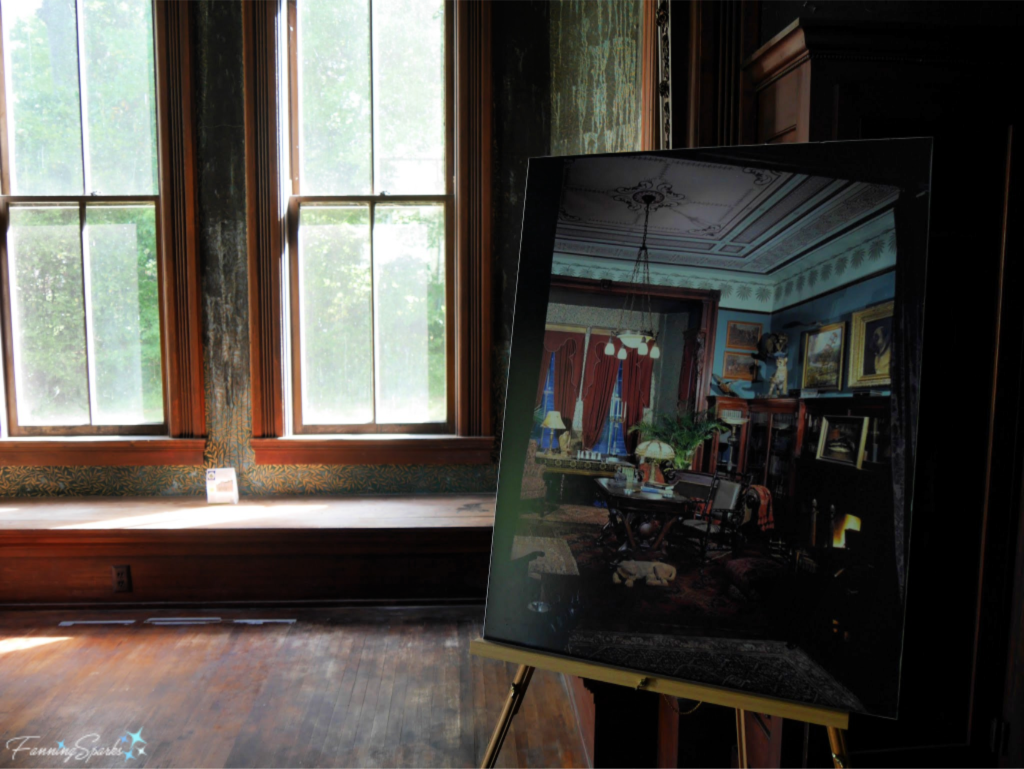
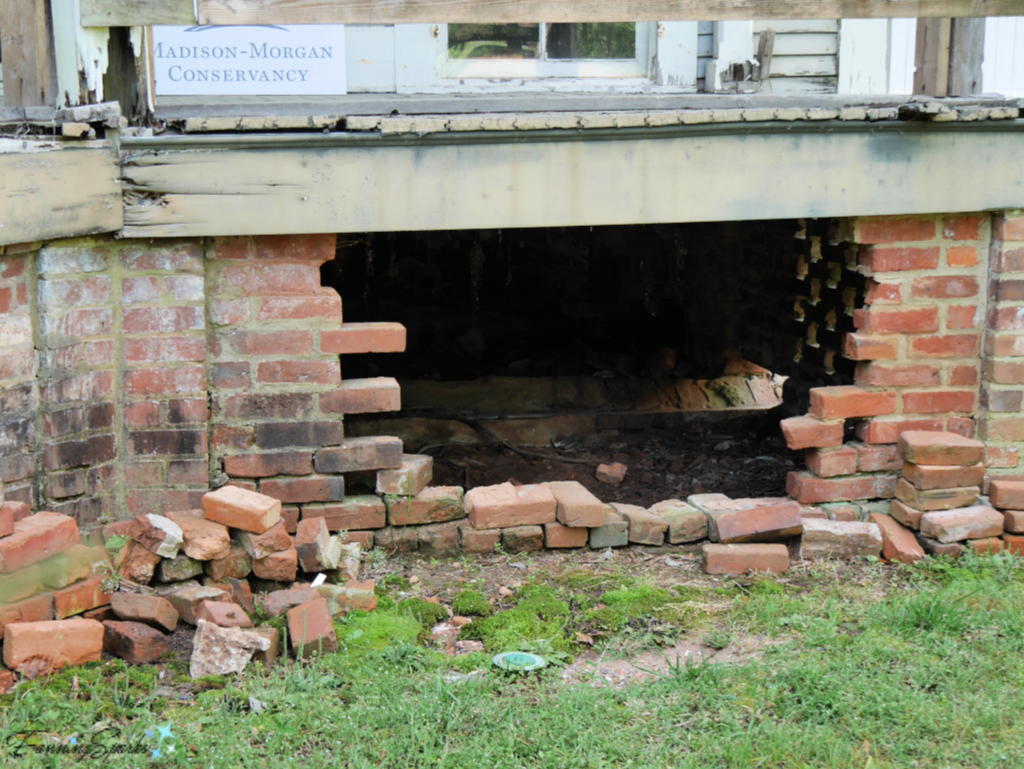 When I noticed the house was included on the Madison in May tour, I was excited to go have a look. I wasn’t disappointed‒there’s definitely something special about this house! Below you can see the Library as it is today with a large photo showing how it looked previously.
 This is the Entry Hall which originally showcased a solid walnut staircase.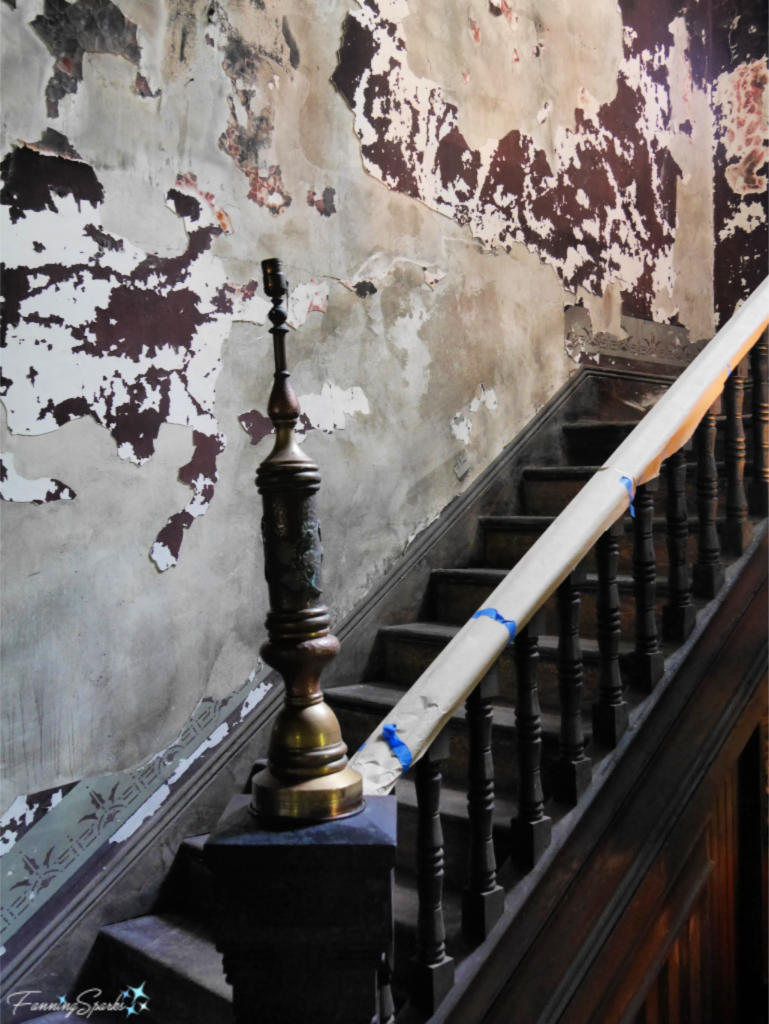
 This house was obviously beautiful in its day. And maybe that’s the attraction‒its the possibility of bringing it back to its former glory! Every detail that’s still intact‒and there are many‒is just waiting to be restored. Lucky for the house, many citizens of Madison and the surrounding area feel the same way. Here’s a glimpse of the ornate trim on the exterior. Can’t you just picture it as it was?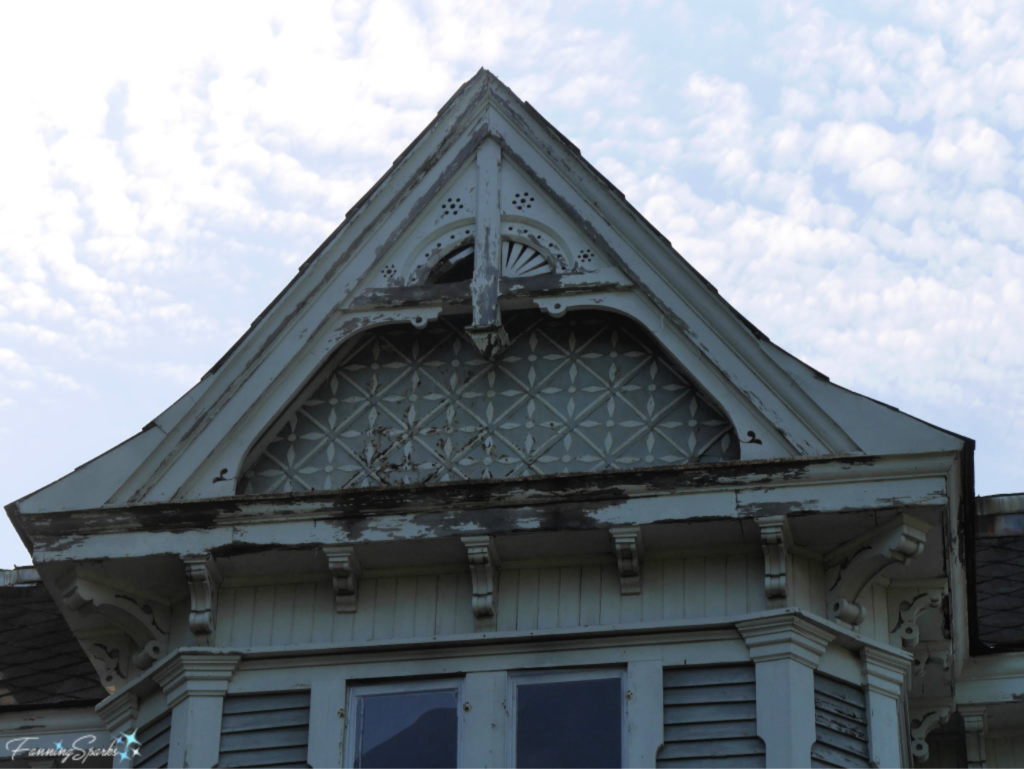
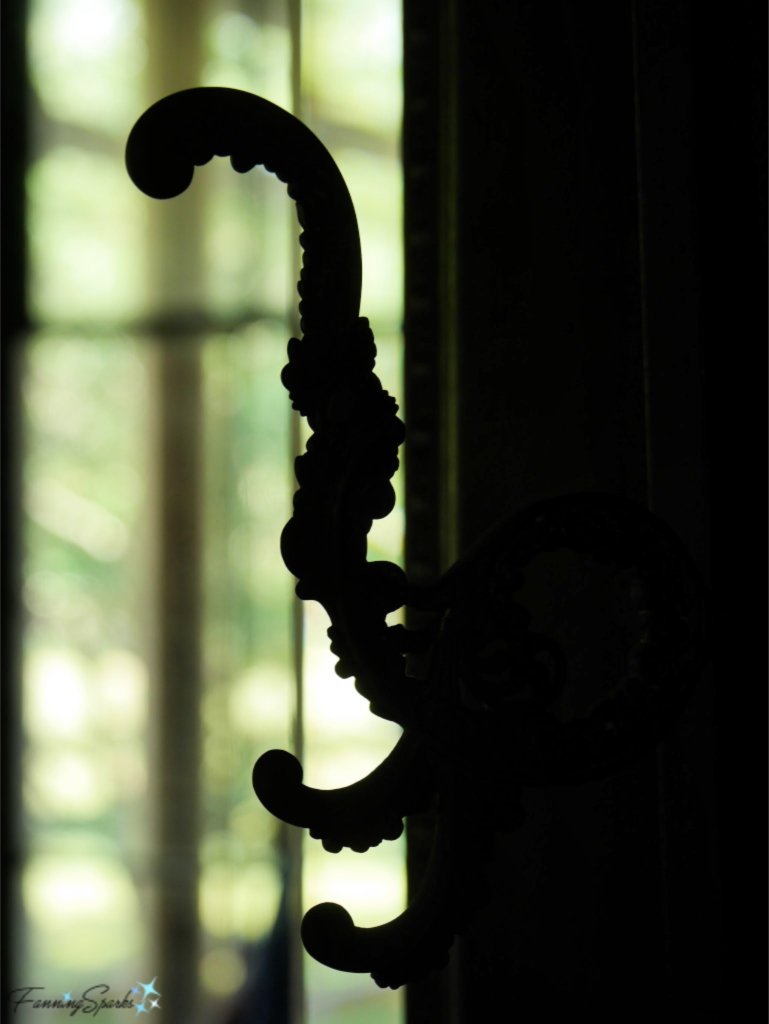
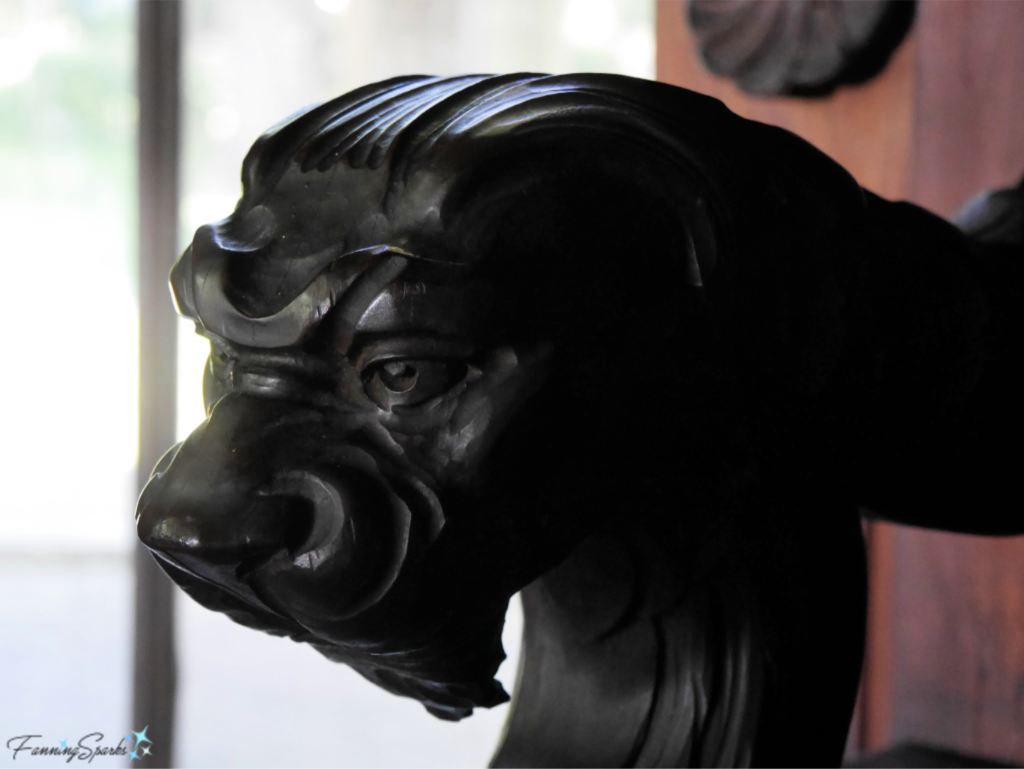
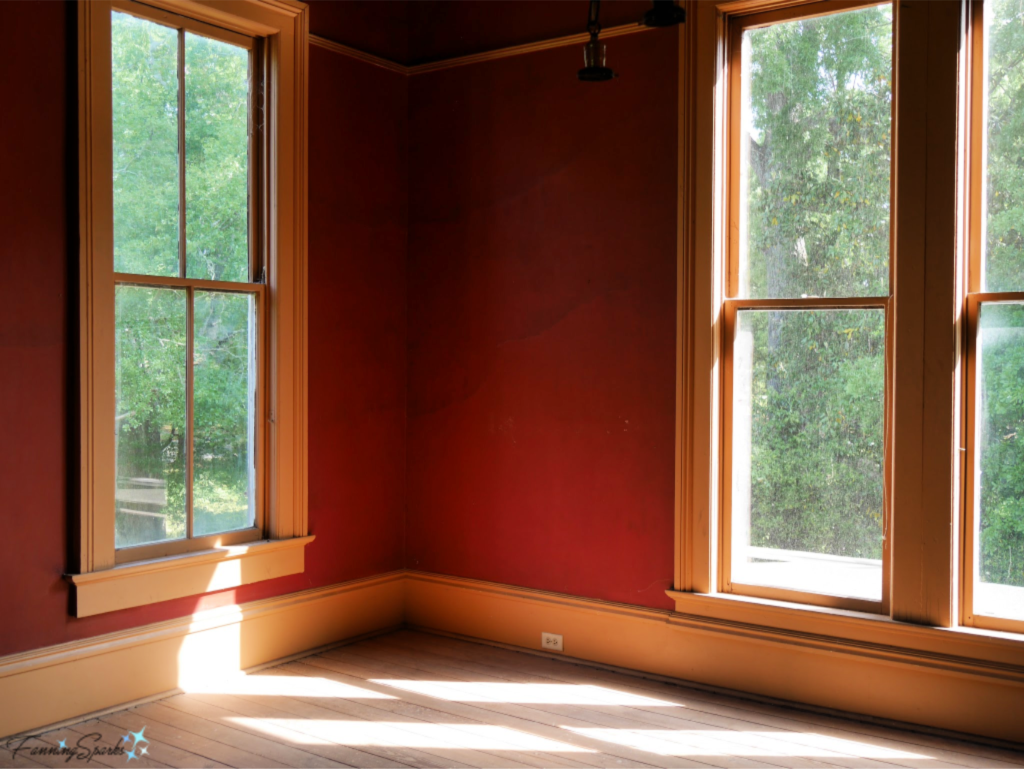 The house reflects the Aesthetic Movement and, as the story goes, was greatly influenced by a lecture given in Atlanta, Georgia in 1882. Surprisingly, the lecture was given by Oscar Wilde, someone more widely recognized for his plays, novels and poetry, than for his decorating expertise. Wilde’s lecture was part of a 9-month, 140-lecture tour across Canada and America. The Atlanta lecture was titled “House Beautiful” and promoted the virtues of the Aesthetic Movement. This is why I’ve come to think of the Foster-Thomason-Miller House as “Madison’s House Beautiful”.
 In regards to the use of color, Wilde said “You have too many white walls. More colour is wanted.” The owners of this House Beautiful seem to have taken this advice to heart. Color is used throughout the house including this beautiful wall in the Library.
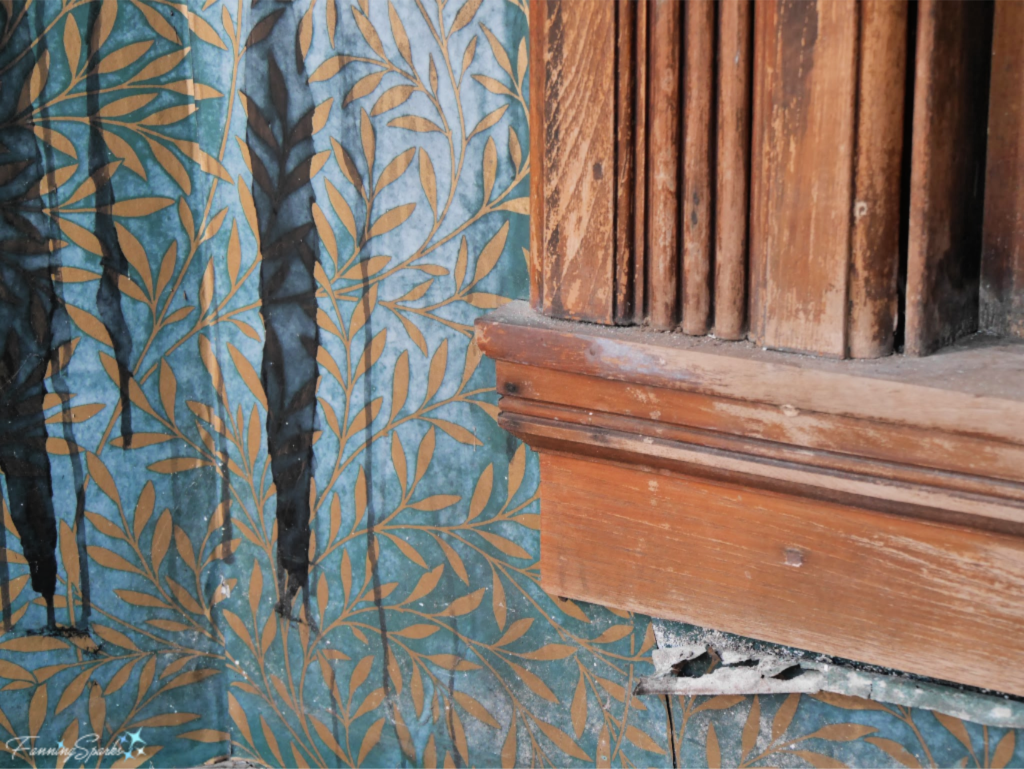 Wilde advised his listeners to look to nature for decoration inspiration. “Golden rod and aster and rose and all the flowers that cover your valleys in the spring and your hills in the autumn: let them be the flowers for your art… Nature [has] given you the noblest motives for a new school for decoration.” Here are some examples of floral motifs in this House Beautiful. This stenciled ceiling is from the Library.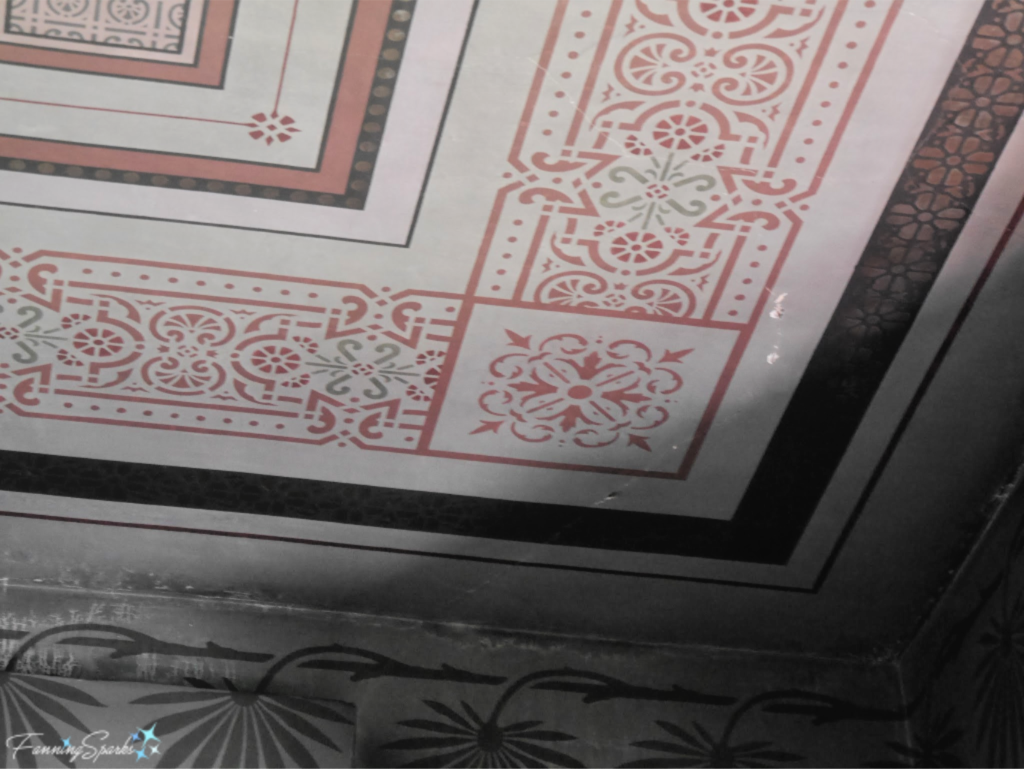
 The Aesthetic Art Movement was short lived, lasting for only about 10 years from 1880 to 1890. As a result, there are not many surviving examples of this style‒a situation which makes Madison’s House Beautiful even more significant.
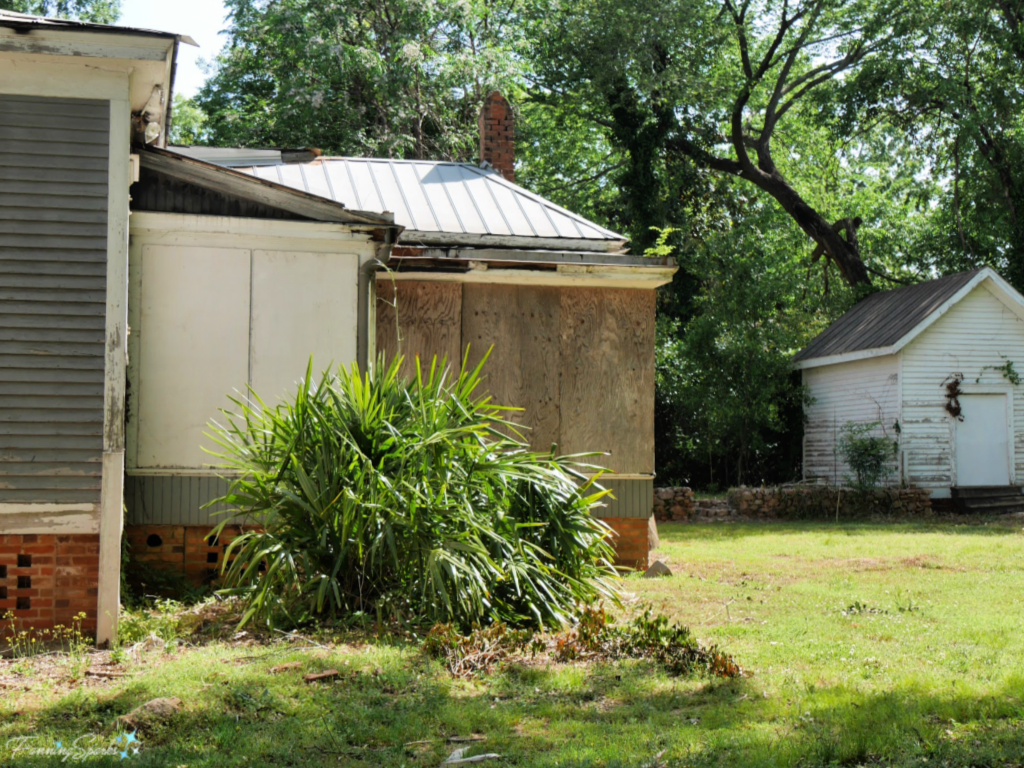 The house has been vacant since the fire. It was placed on the Georgia Trust’s 2018 “Places in Peril” list meaning it was recognized as a valuable structure at risk of being lost. This brings us back to present day with the MMC having found a conservation buyer to preserve this outstanding property.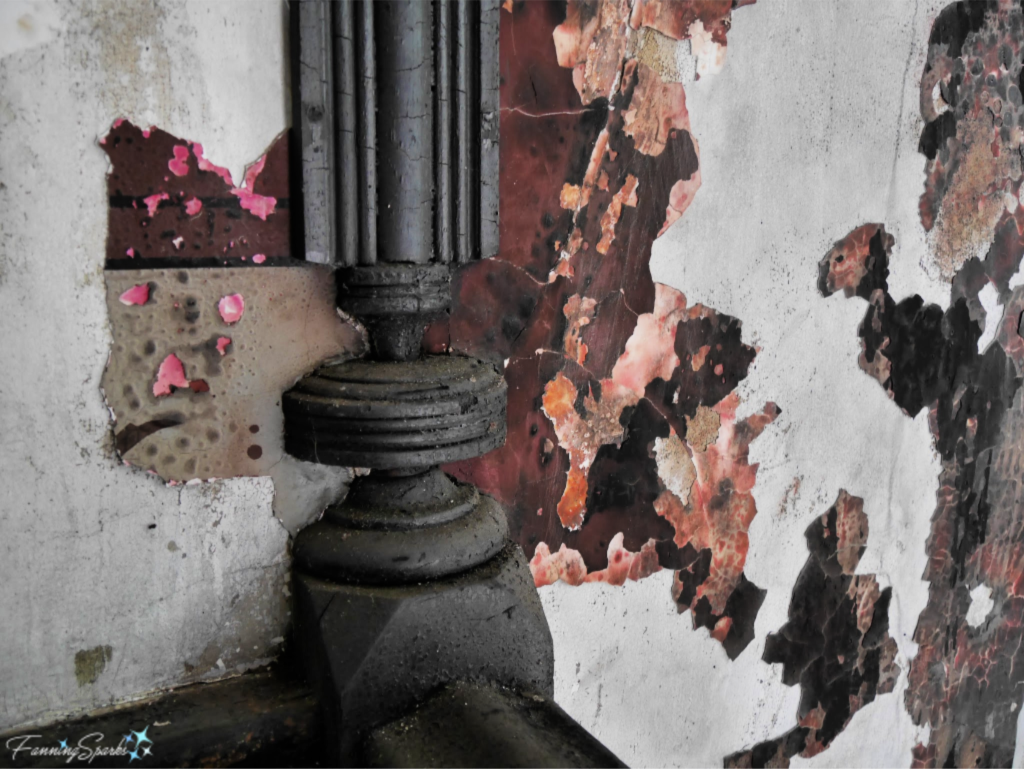

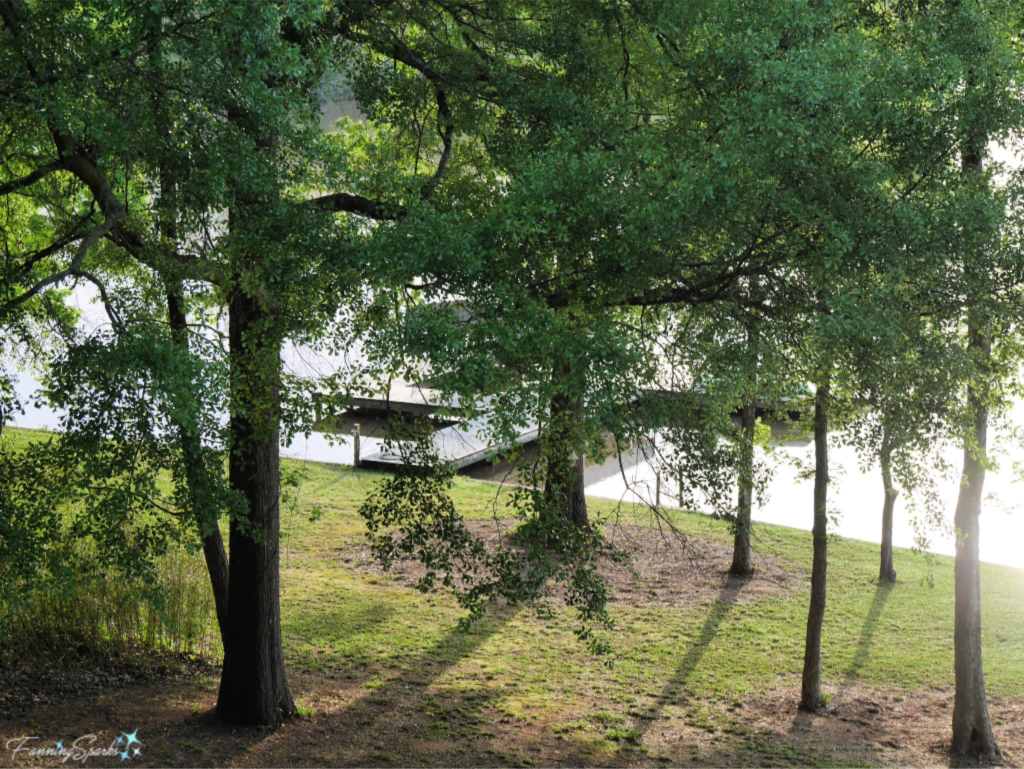 Later in the day, the scene from my picnic blanket looked like this.
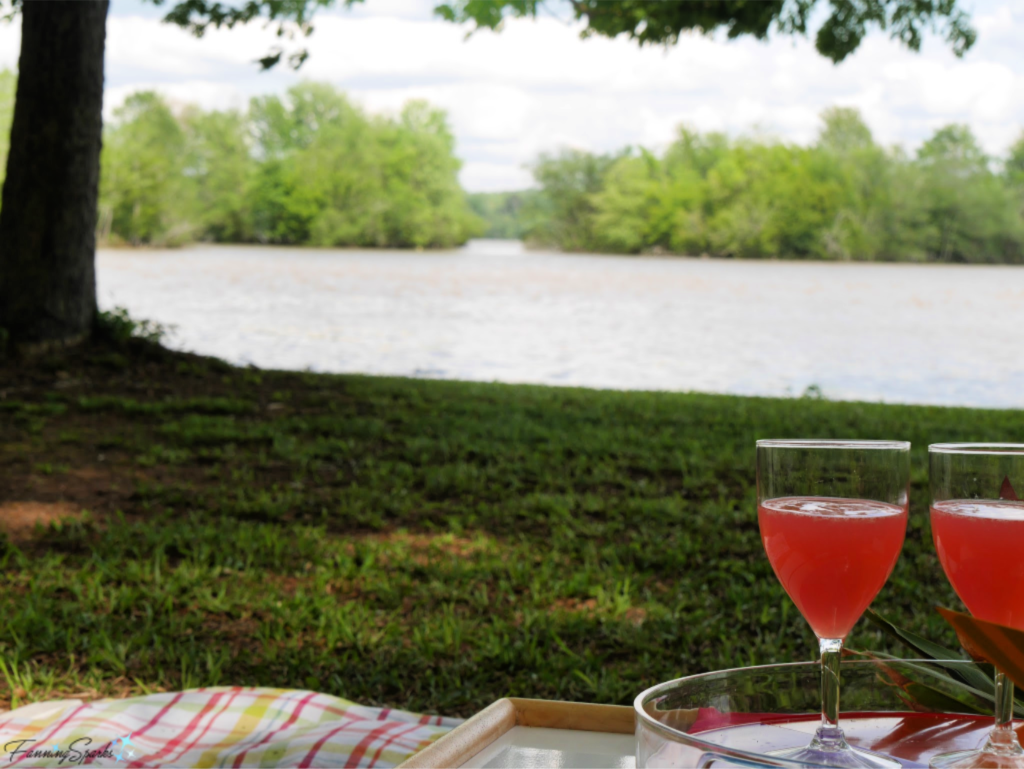 Today’s picnic theme is bright and joyful.
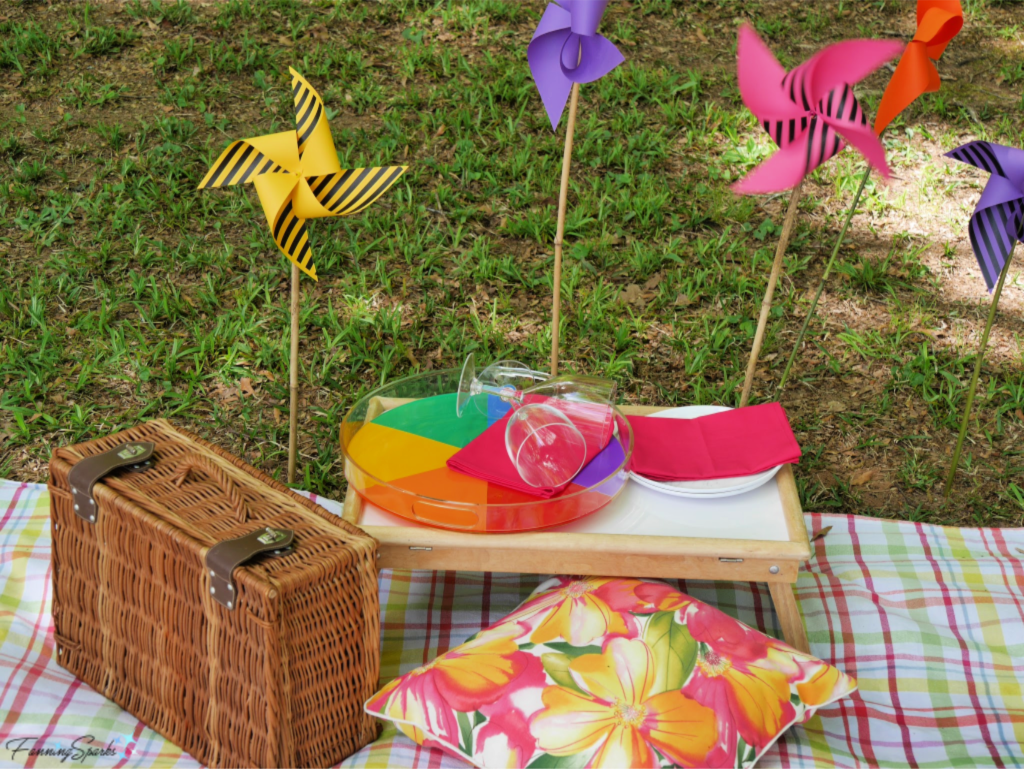
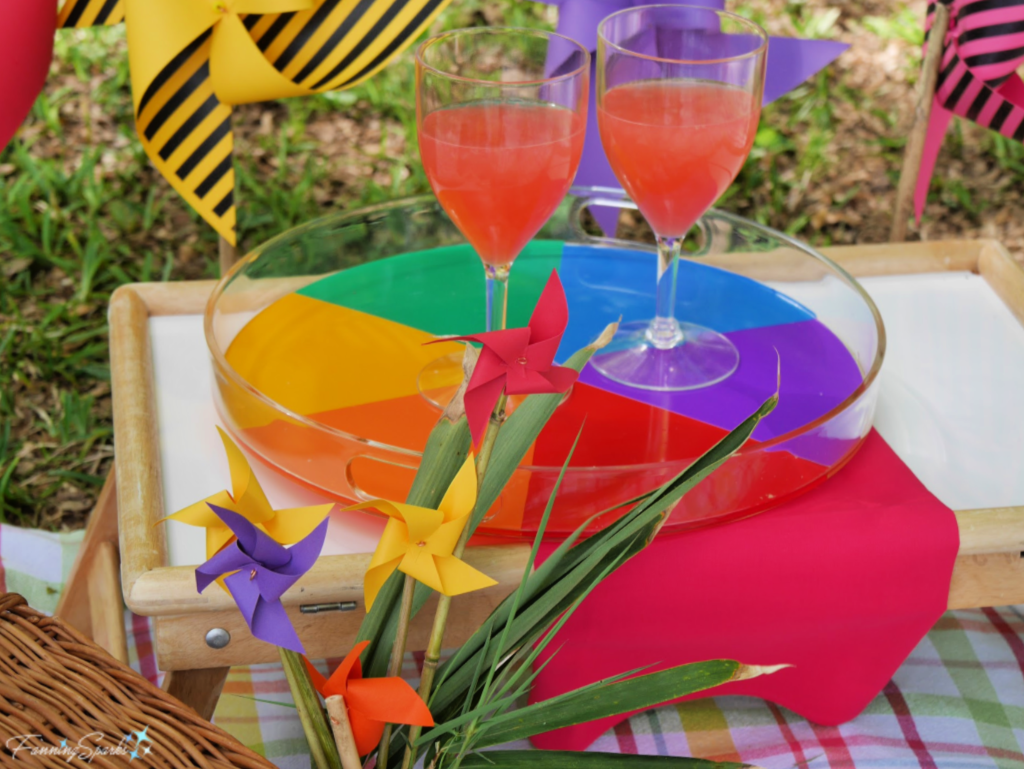 Colorful pinwheels set the mood.
 A clear plastic tray, decked out as a color wheel, carries the colorful theme forward.
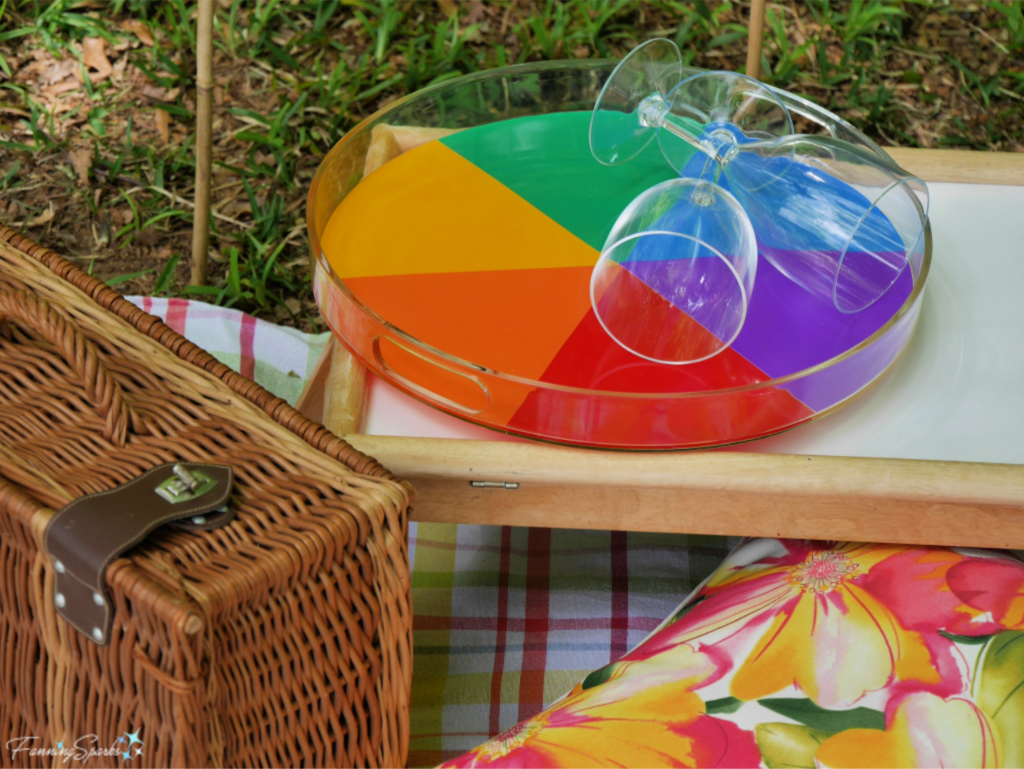 A matching picnic blanket, pillow and napkins pull it all together. Plastic glasses and melamine plates add ease and convenience. A wicker picnic basket and small table tray help with transport and set up.
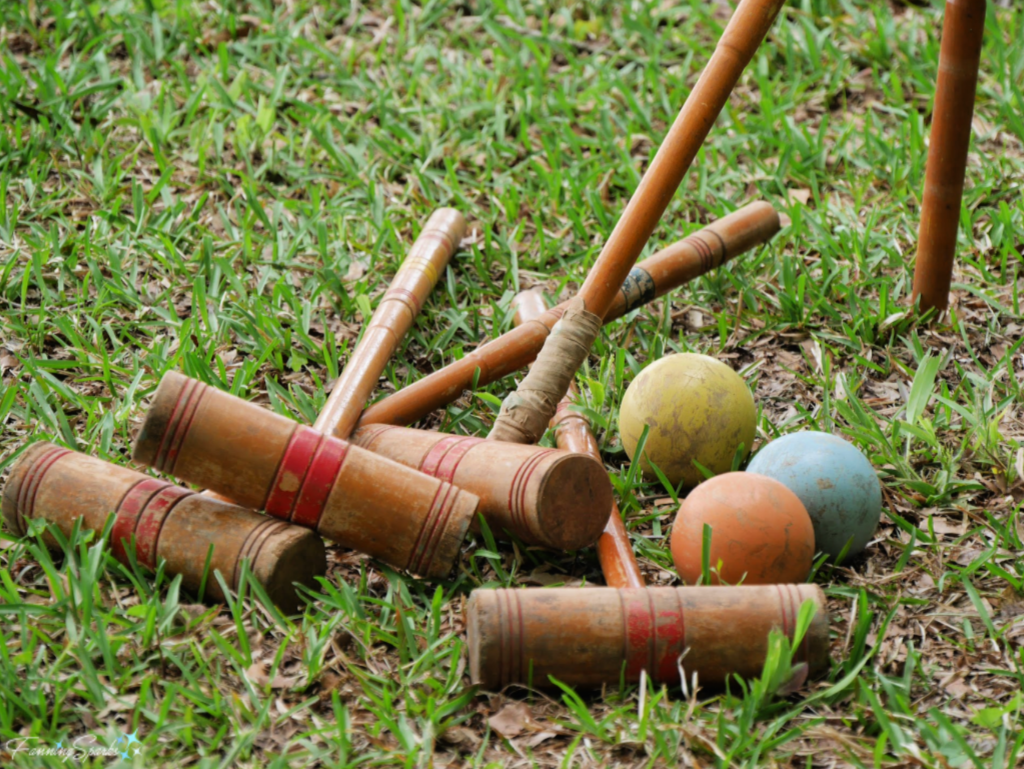
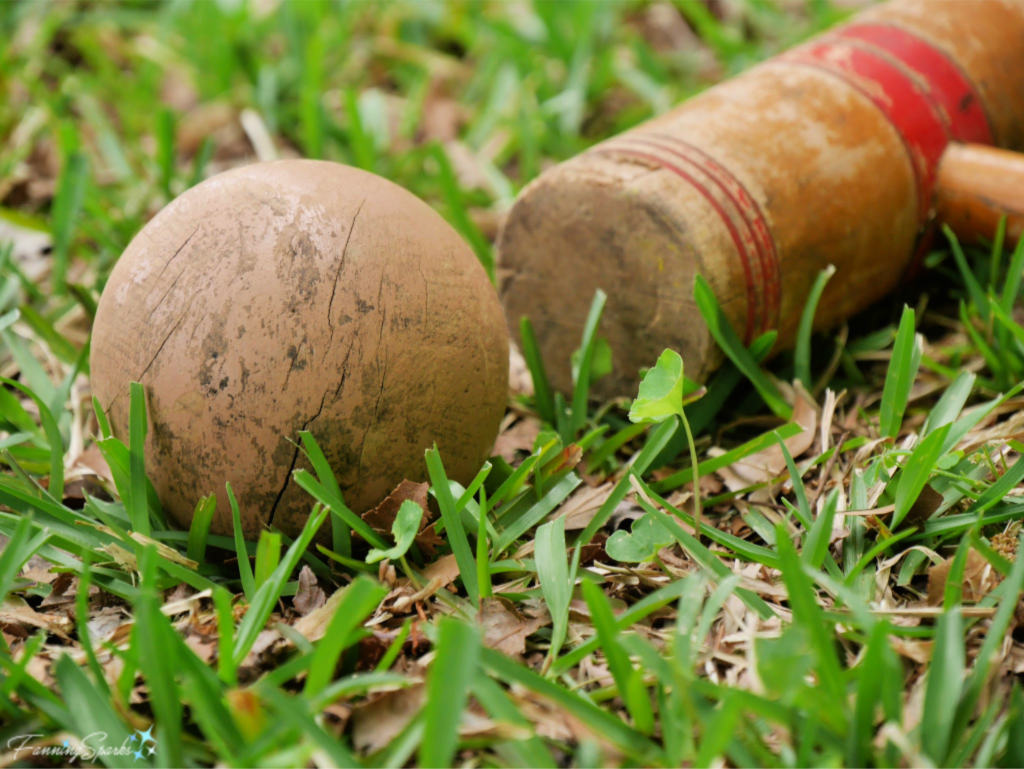
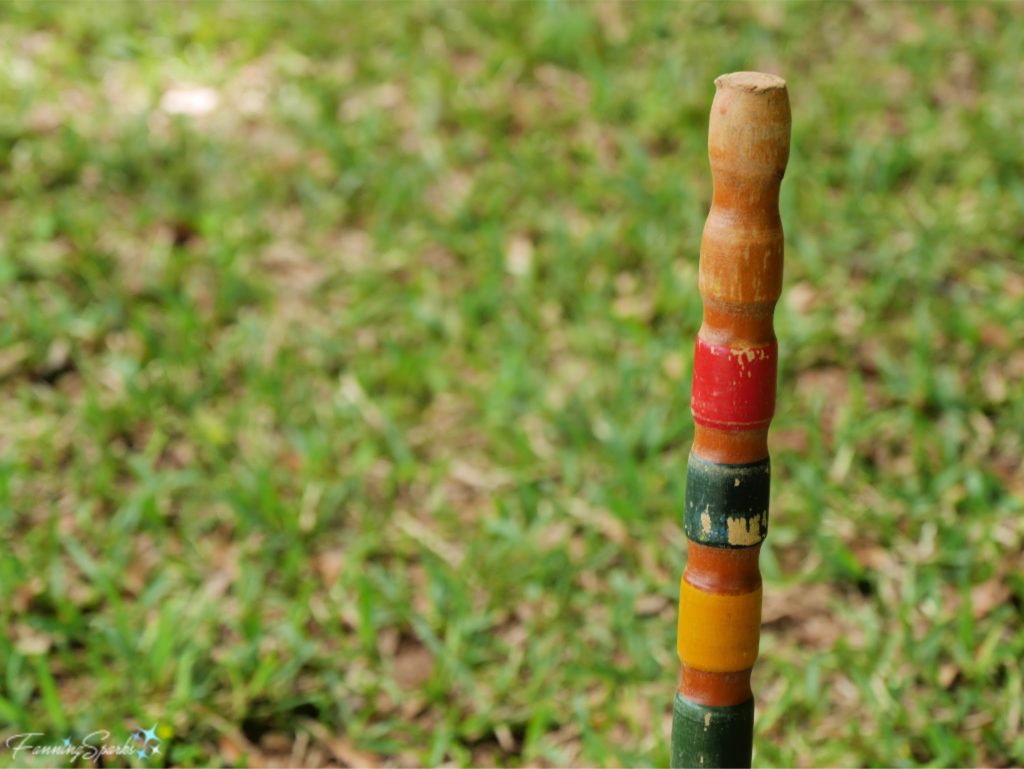
 Meanwhile, a vintage lawn croquet set adds playful fun and character.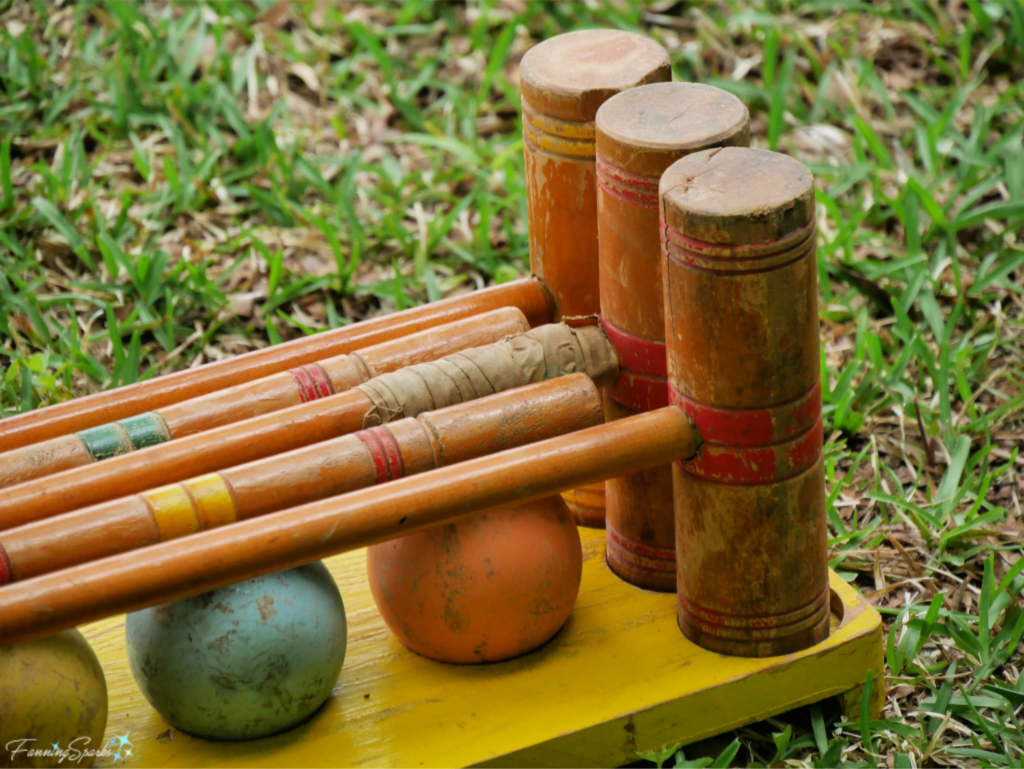
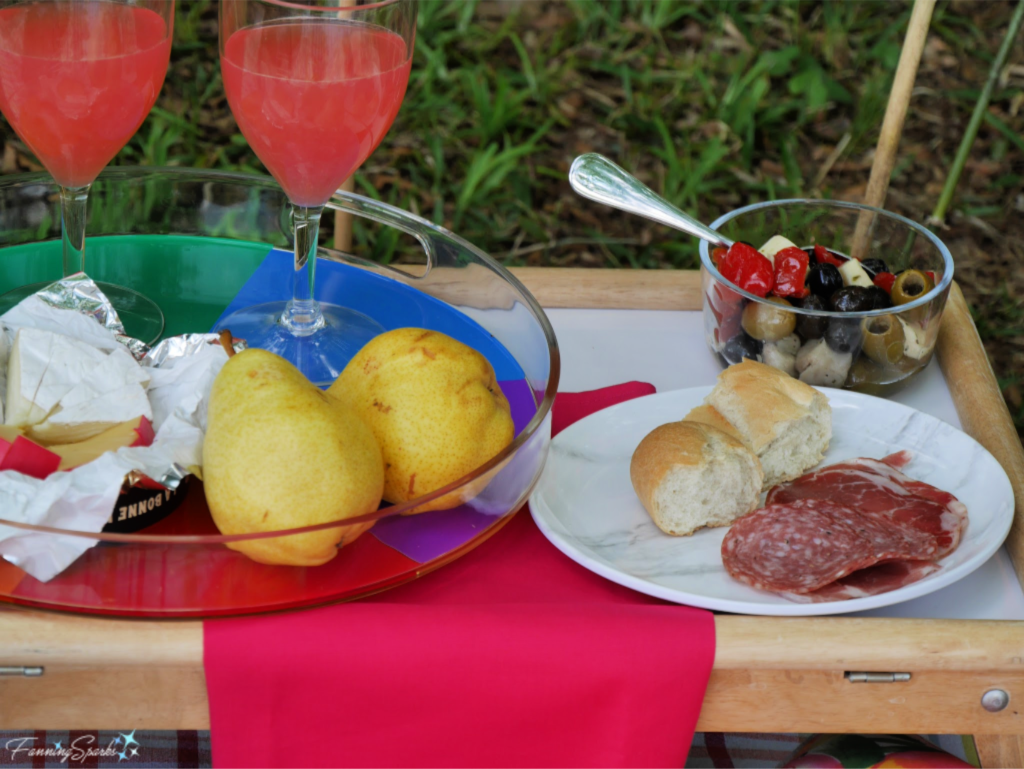
 A simple meal of bread, cheese, olives, meats and fruit hit the spot.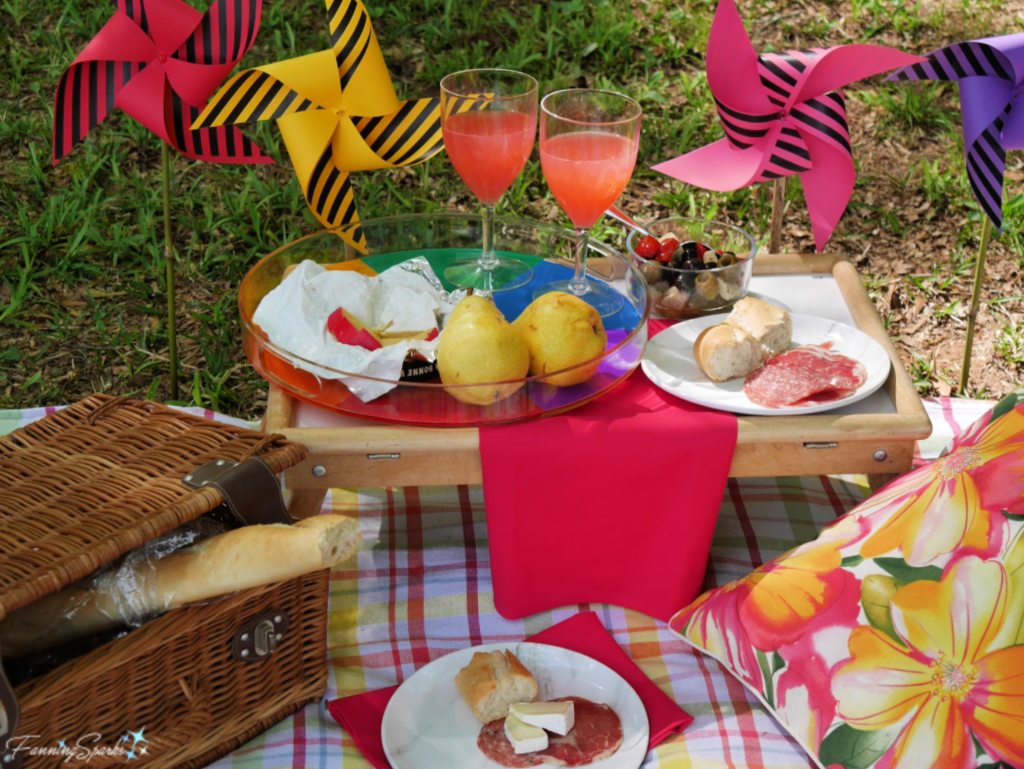
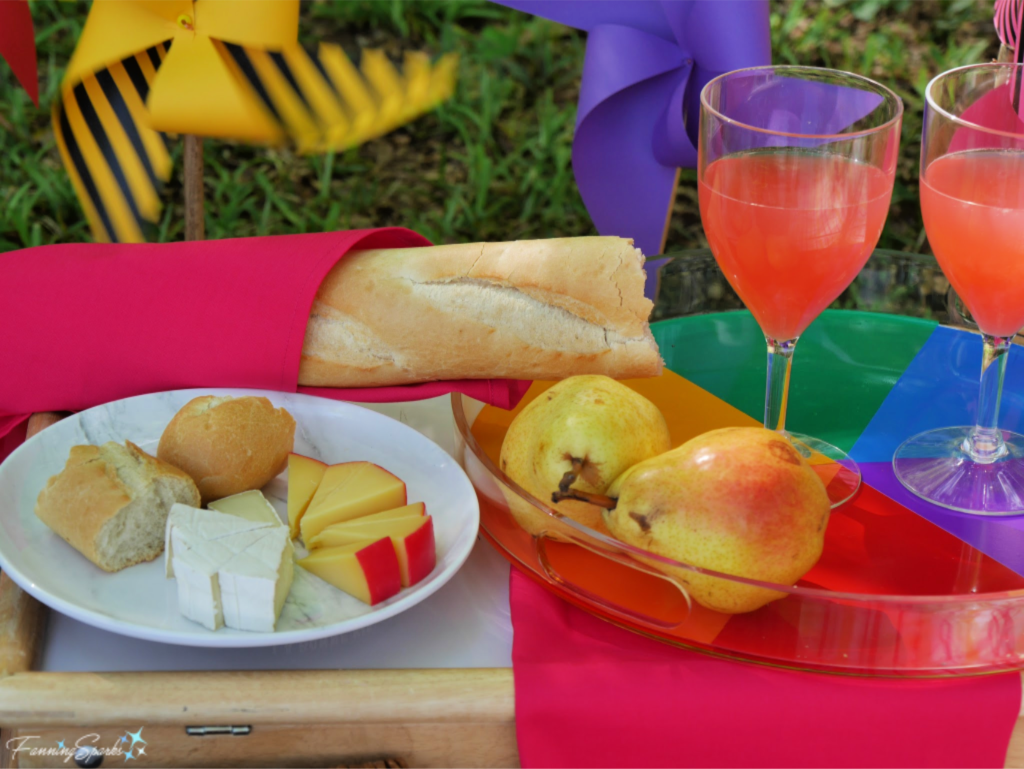 After this nice light meal, a little cloud gazing was in order.
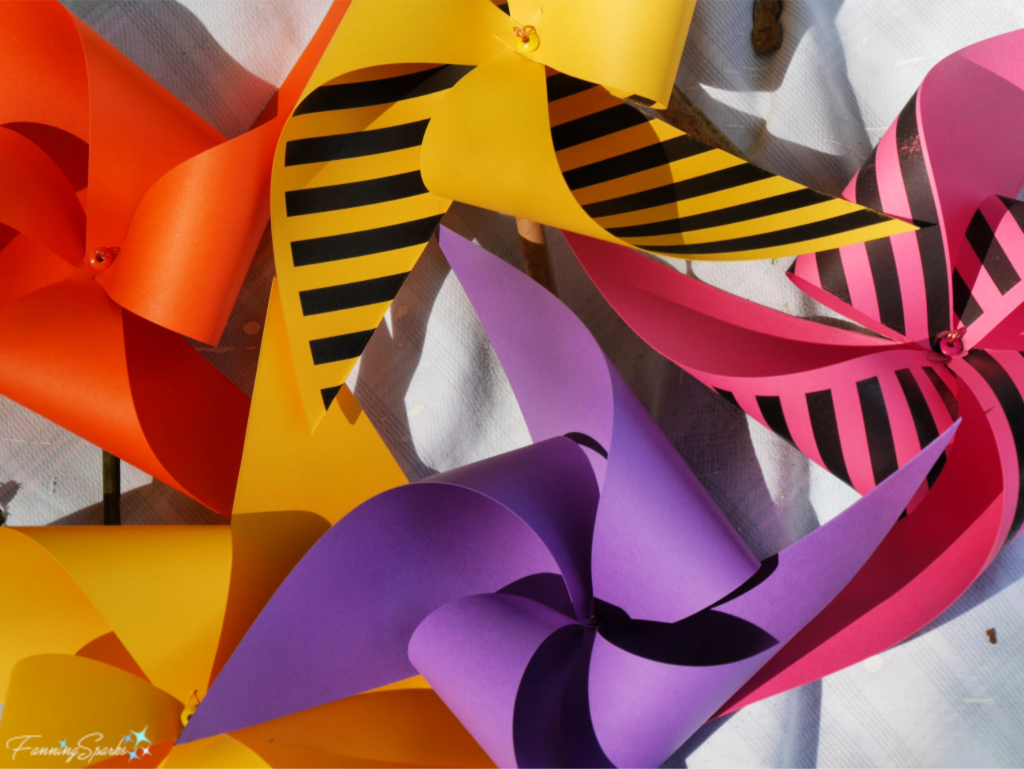
 Cardstock turned out to be the ideal material. It comes in lots of colors and can easily be printed to add a little extra interest (eg black stripes). Cardstock is flexible enough to bend the wings without creasing or folding. I drilled a small hole in the end of a bamboo stick to hold the pinwheel. We have lots of bamboo in our yard so that was an easy choice. Alternatively, you could use small dowels.
 The tricky part was making the pinwheels spin smoothly. After a little trial and error, I found a solution that worked. Short pieces of wire, with a small loop at each end, held the pinwheels to the bamboo sticks. But getting the tension and spacing right was the challenge. The pinwheel didn’t spin if it was attached too tightly or too loosely. I finally got the right tension when I inserted 3 small wooden beads as spacers between the layers‒one bead on top of the wings, one bead between the wings and the paper back, and one bead between the paper back and the stick. That worked like a charm and the pinwheels were spinning in the breeze.
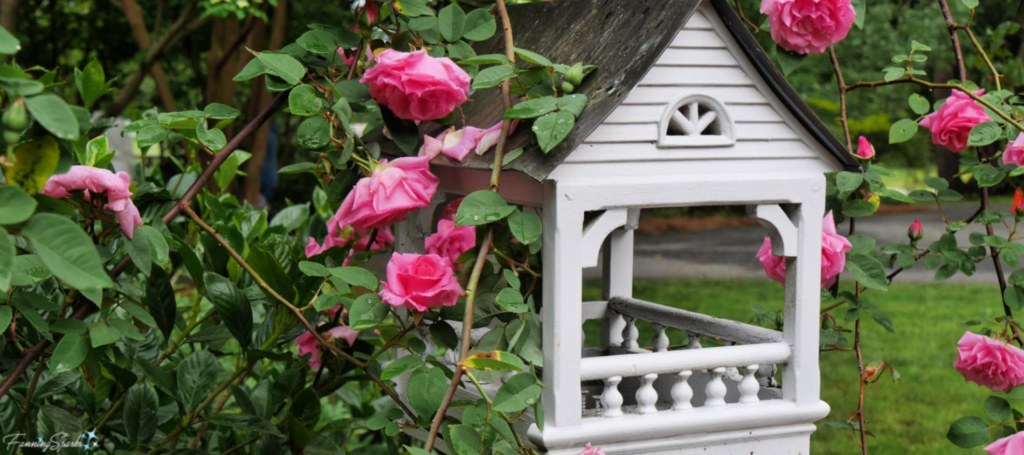
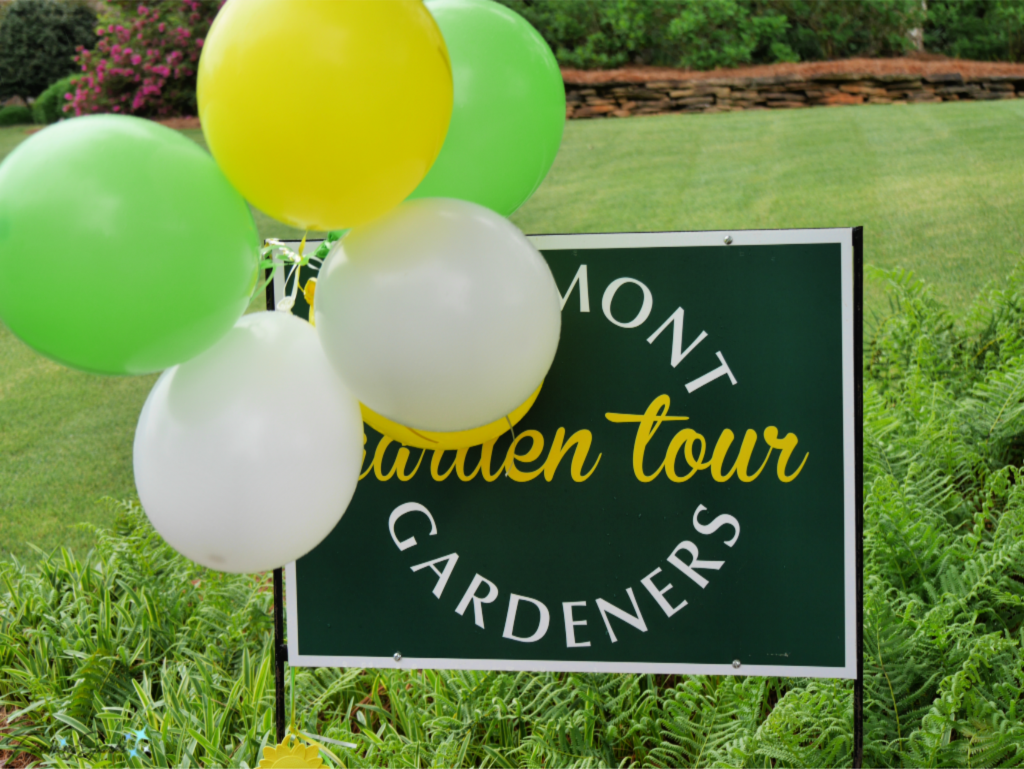 The tour included 5 great gardens and encouraged visitors to “immerse yourself in this self-guided tour filled with garden creativity and ideas”. I followed those instructions to the letter and immersed myself in 4 beautiful gardens. Today I’d like to share some of the creativity and ideas from those gardens.
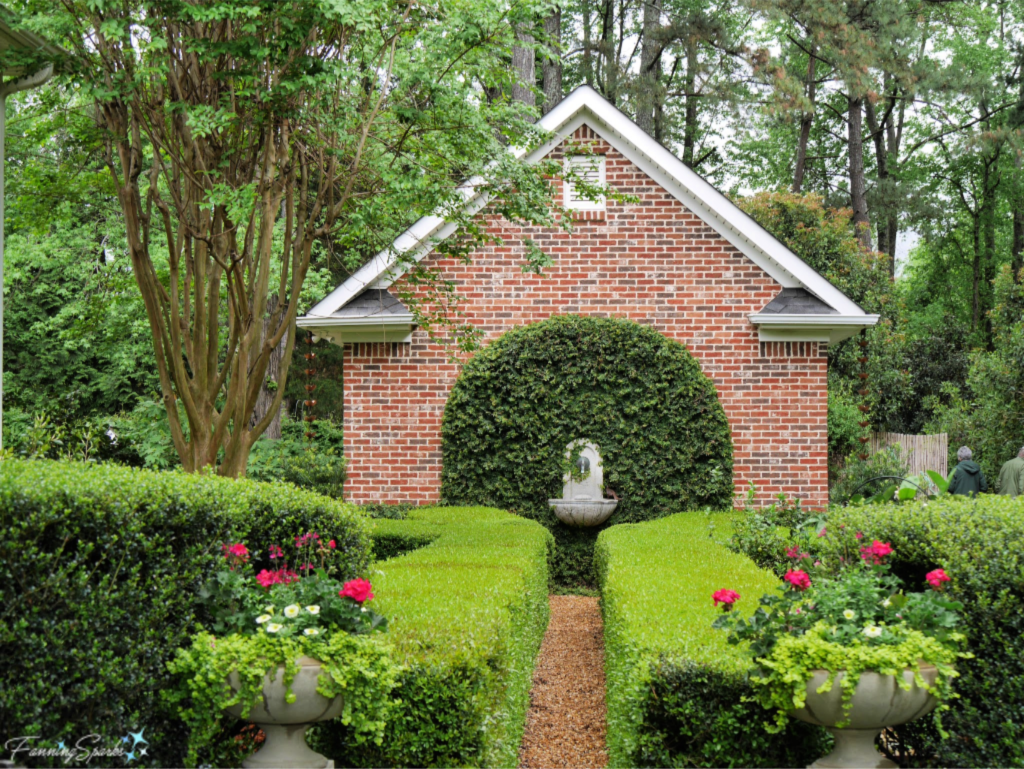 But just around the corner, this delightful scene took the edge off the formality. And, yes, that’s a rock alligator in the green grass! I love how the gardener used a variety of grasses and plants to “paint” this scene.
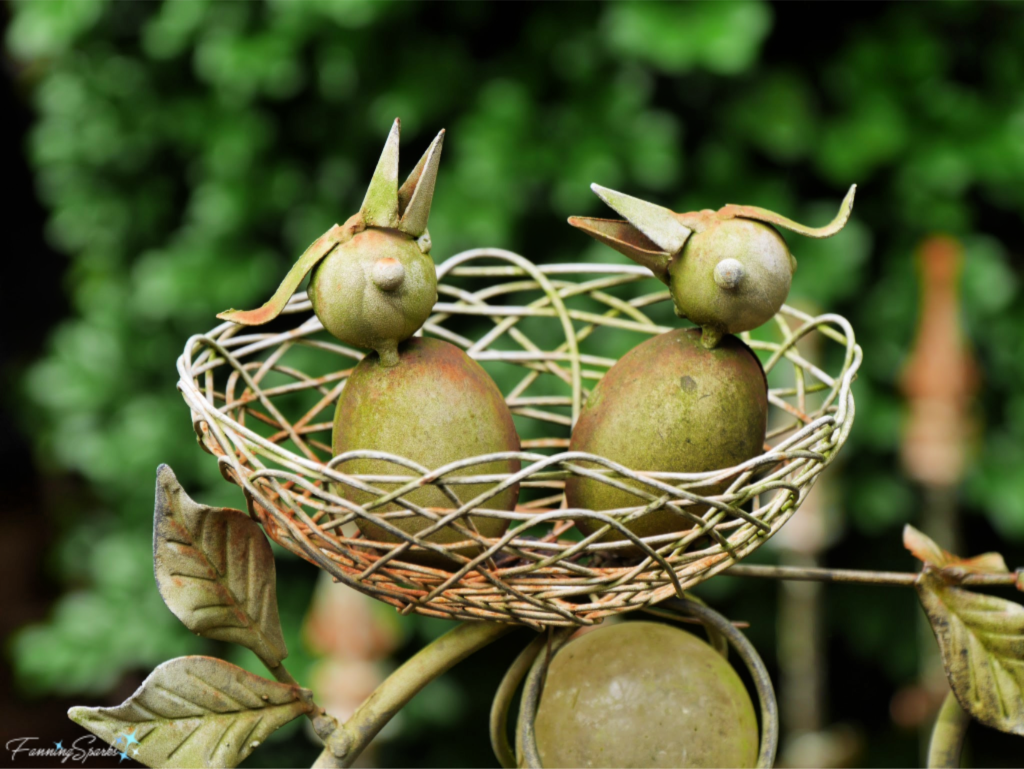
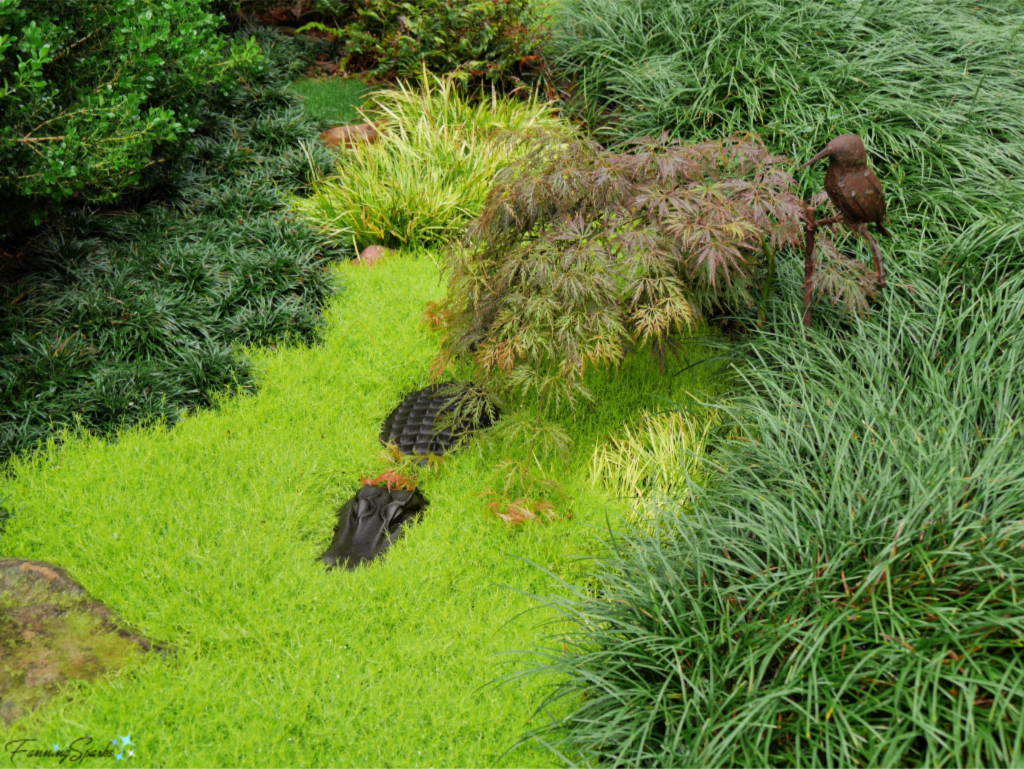 Touches of whimsy, like this bird sculpture, kept things light and fun.
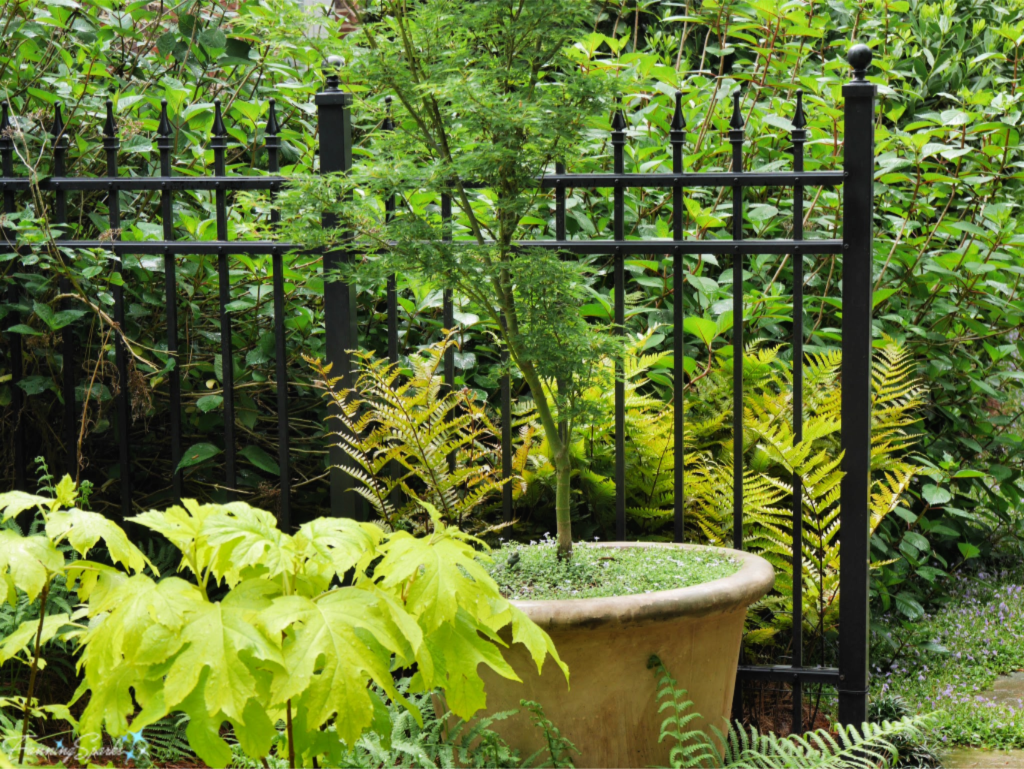
 This gardener strategically placed large potted plants throughout the garden. It’s a great way to vary height and add interest. Planting a delicate ground cover at the base of the potted tree helps the pot blend in and hides the potting soil. That’s a nice detail I’ve filed away for future reference.
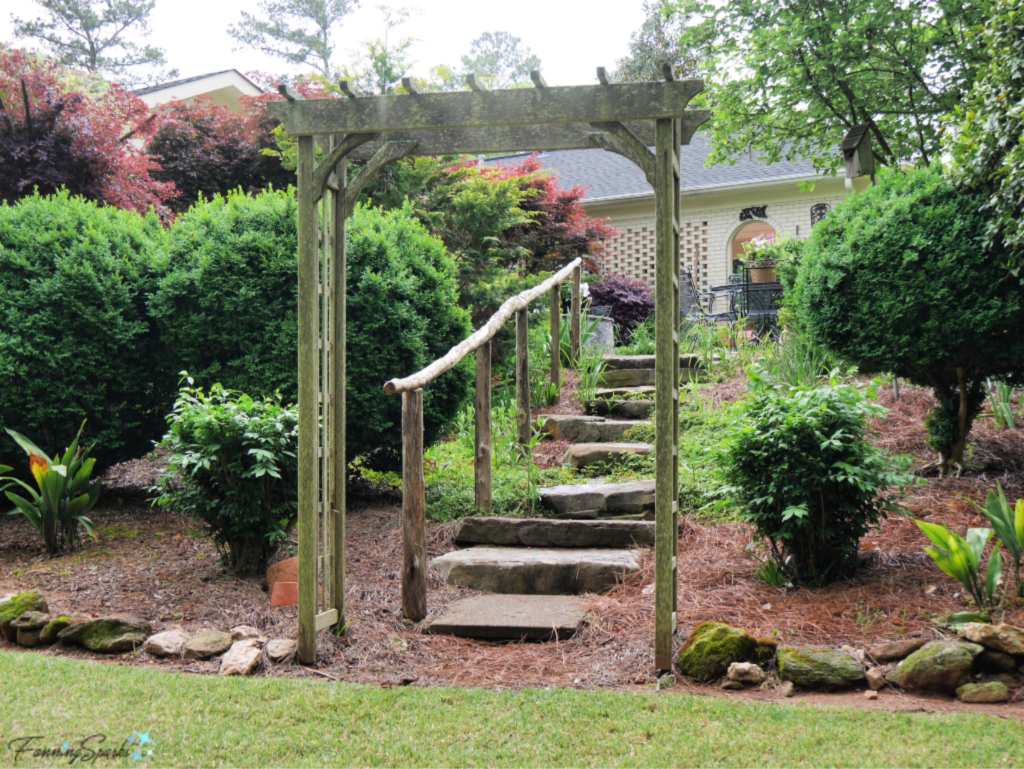
 The Cavan garden at Mal Bay Rd had a fun, casual vibe. Here a set of stone steps and a simple arch connect the backyard seating area to a grassed section.
 This potting shed caught my eye. It’s situated towards the back of the property, has open walls, a fun collection of vintage items and a delightful, laid back feel.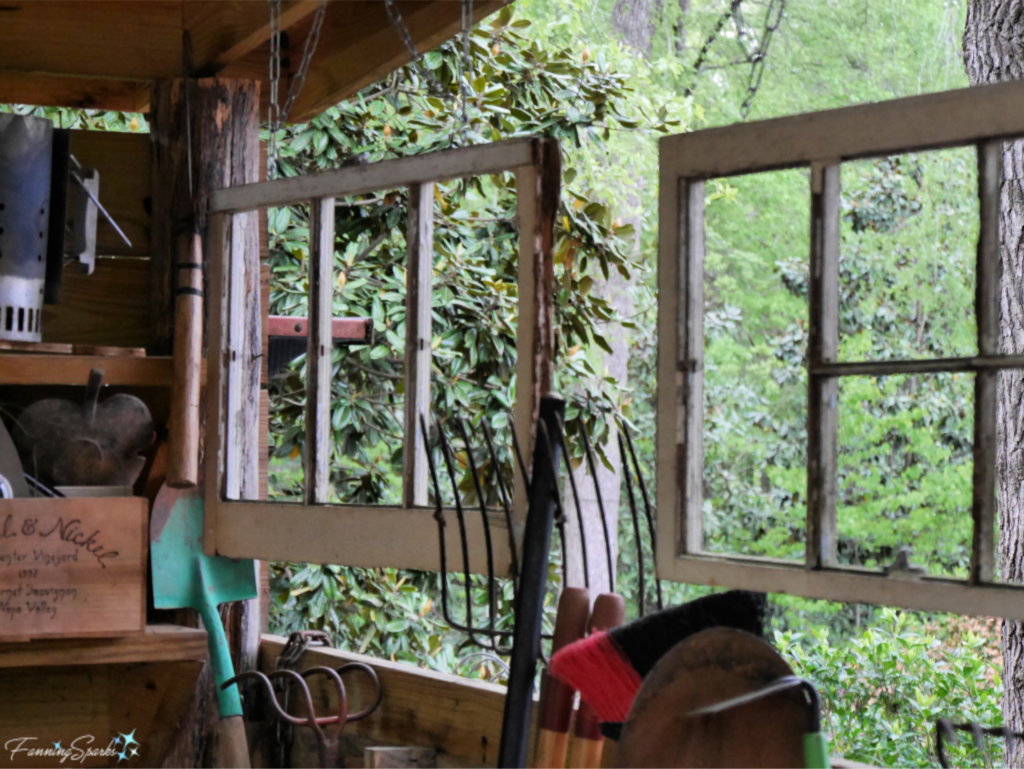
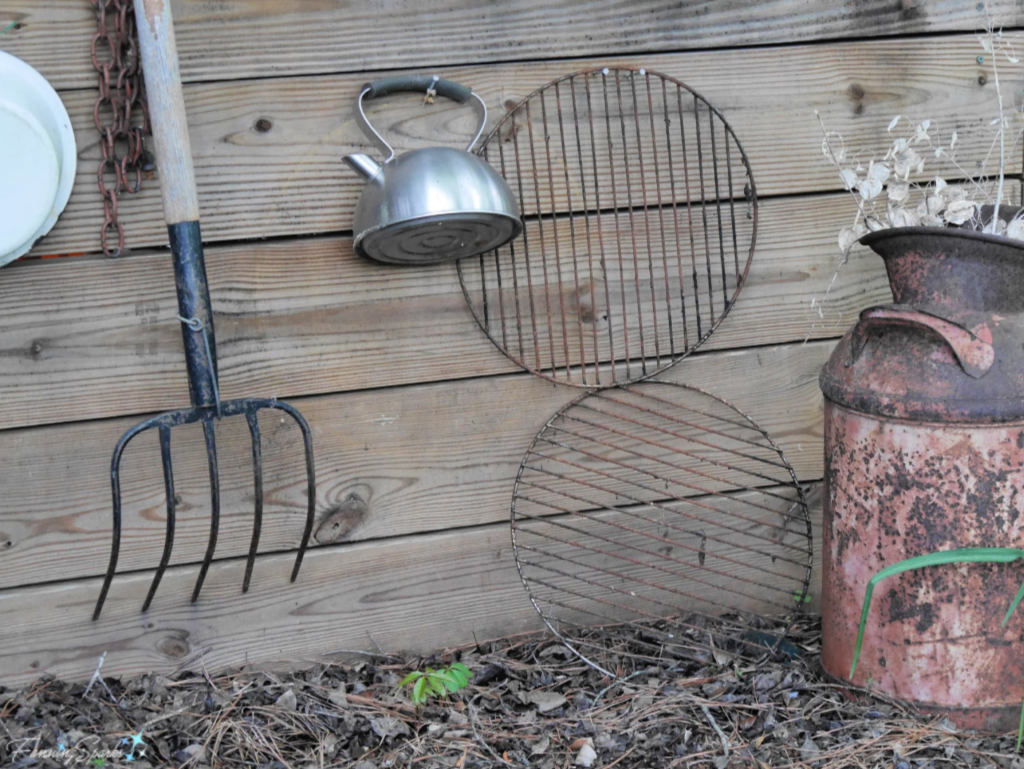
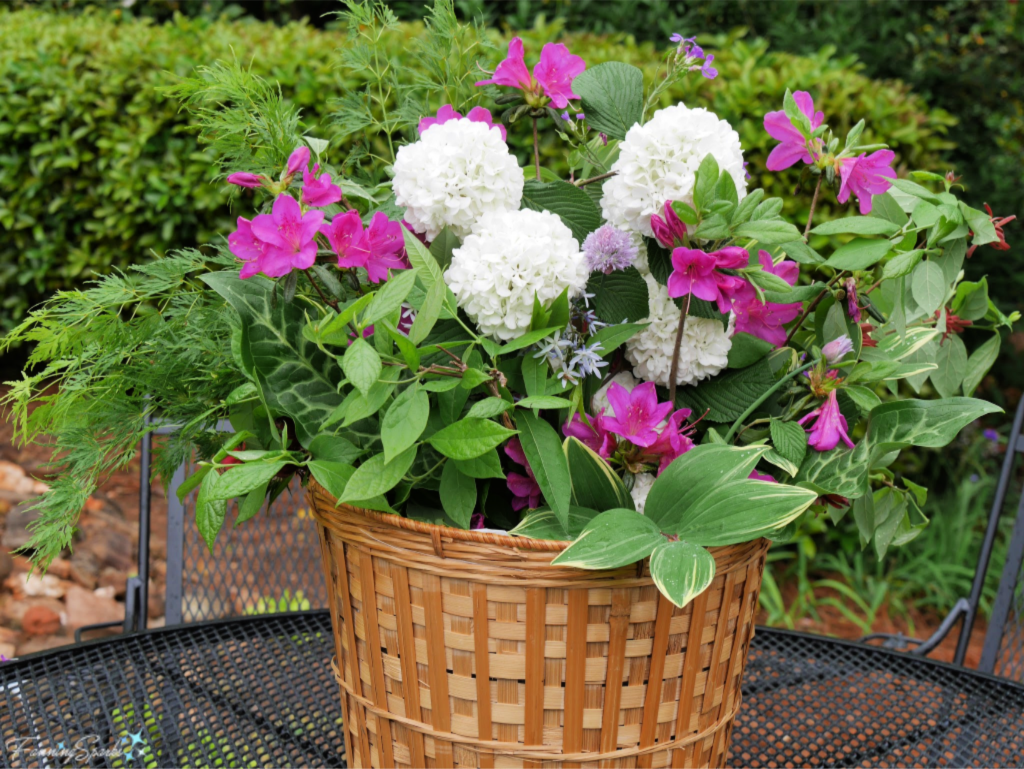
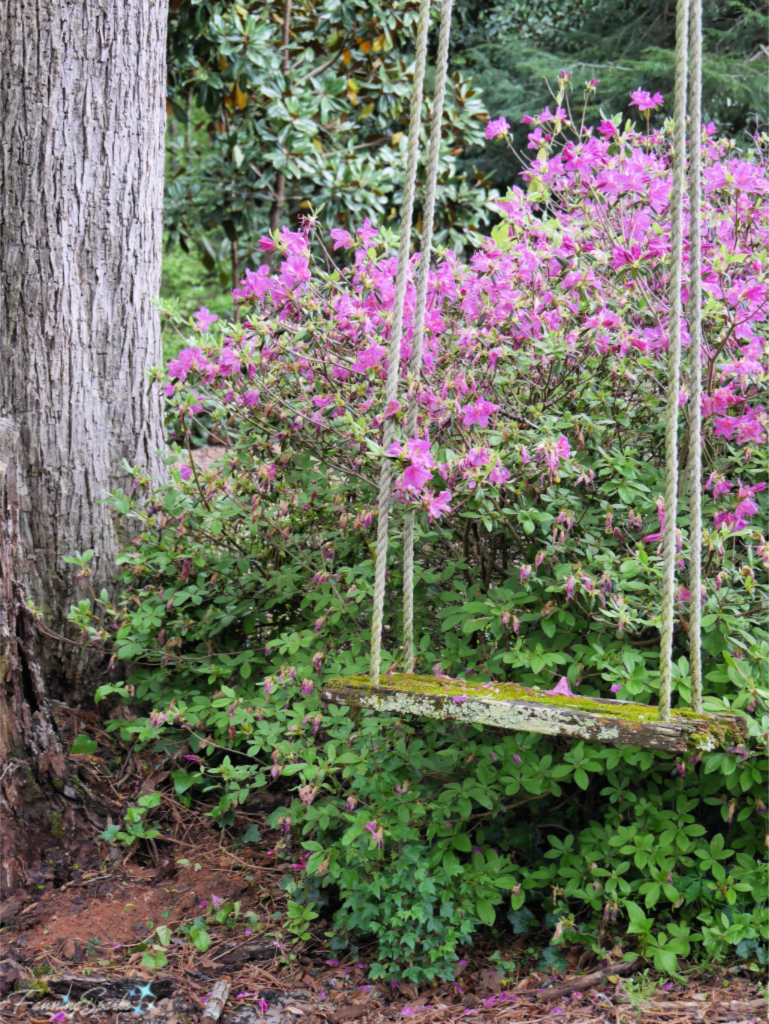 Several casual floral arrangements were placed throughout the seating and eating areas. I rarely think to do this but it’s easy to do and adds such a nice touch.
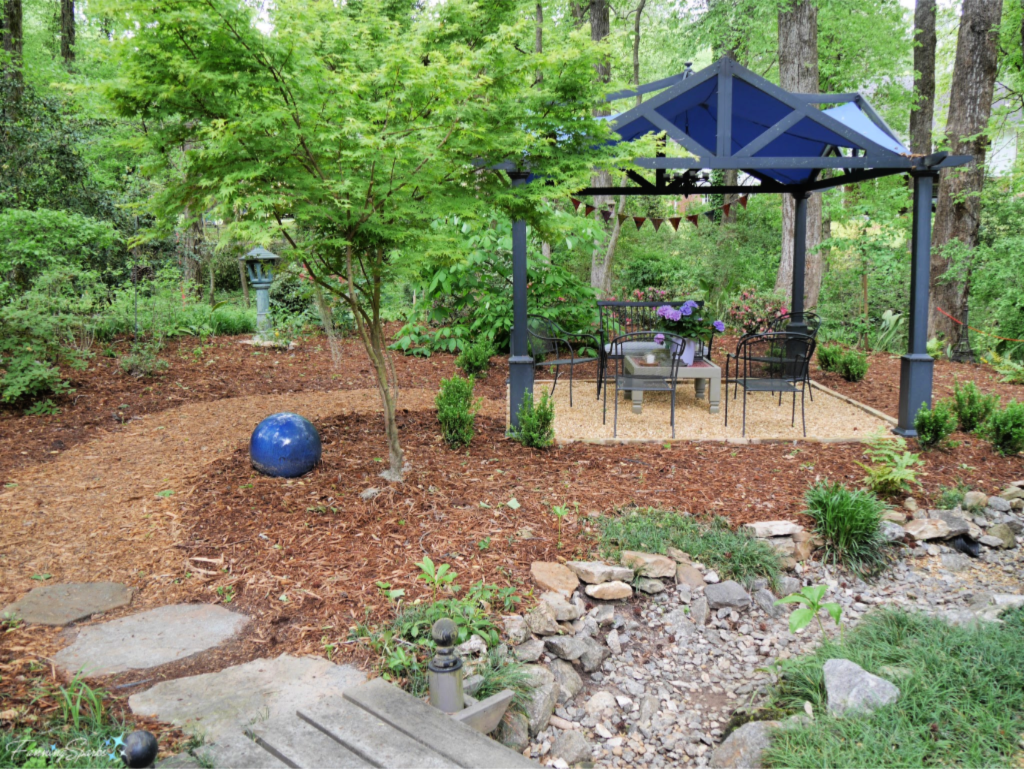
 The Carey garden on Fox Trace featured a network of dry streams and bridges leading to this lovely covered seating area.
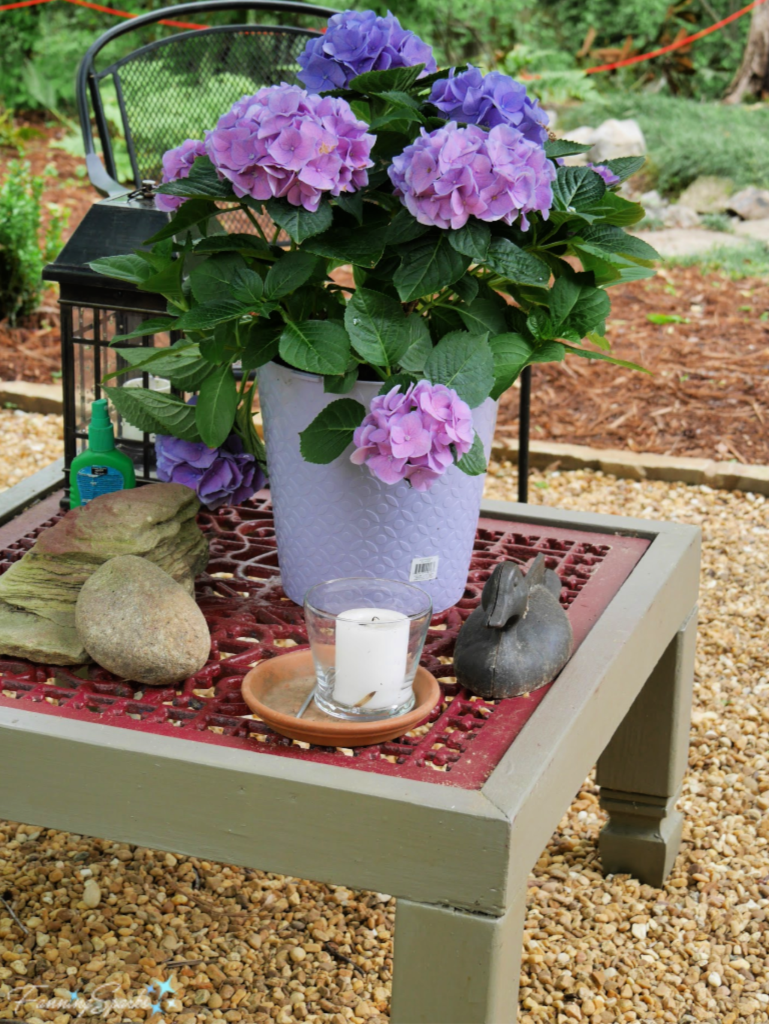
 The coffee table adds interest to the seating area with its unusual surface. It reminds me of a vintage heat grate floor register.
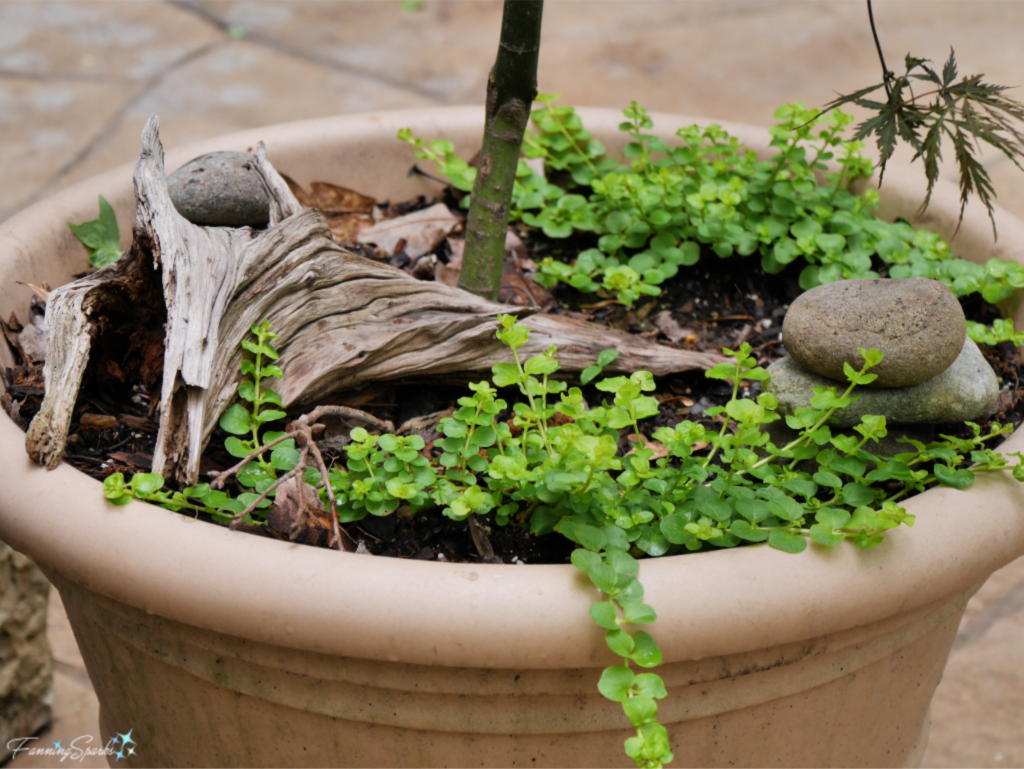
 Here’s another take on dressing up the soil under a potted tree. A little driftwood, a few carefully selected stones, and some creeping jenny complete the scene.
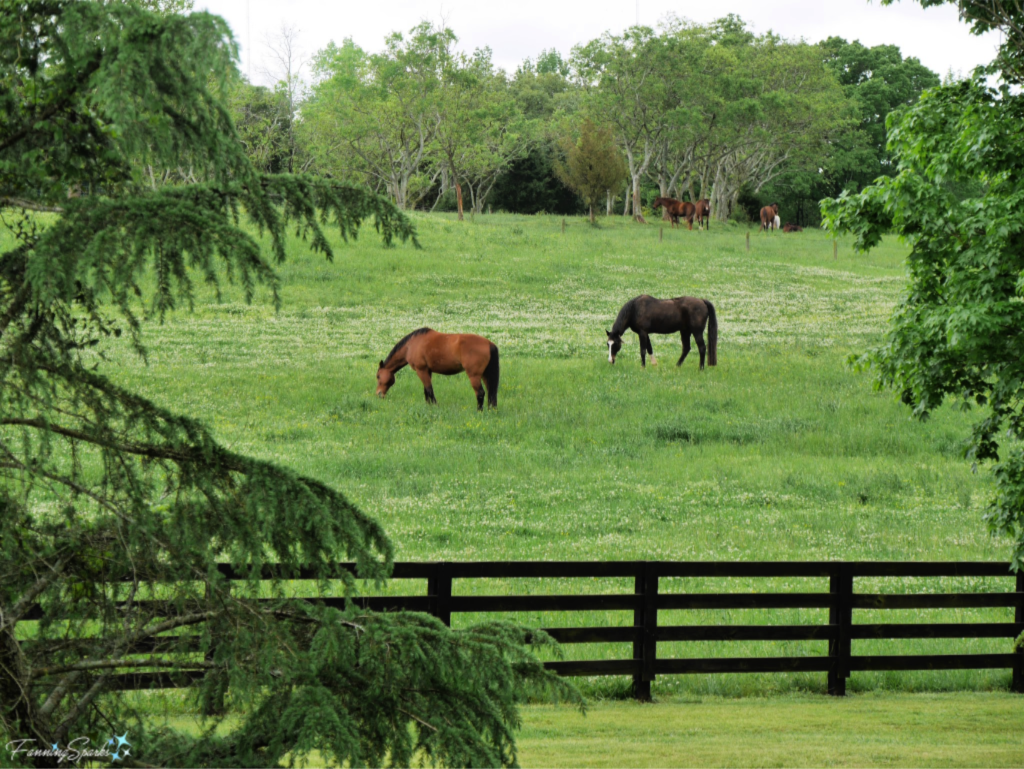
 I wrapped up my tour with the Middendorf garden on Jefferson River Rd. As it turned out, I saved the best for the last! All the gardens were lovely but the Middendorf garden is located on a 137-acre horse farm, called Silverthorn Farm, which was open for our viewing pleasure. Gardeners often strive to frame views in their designs but not many have vistas like this!
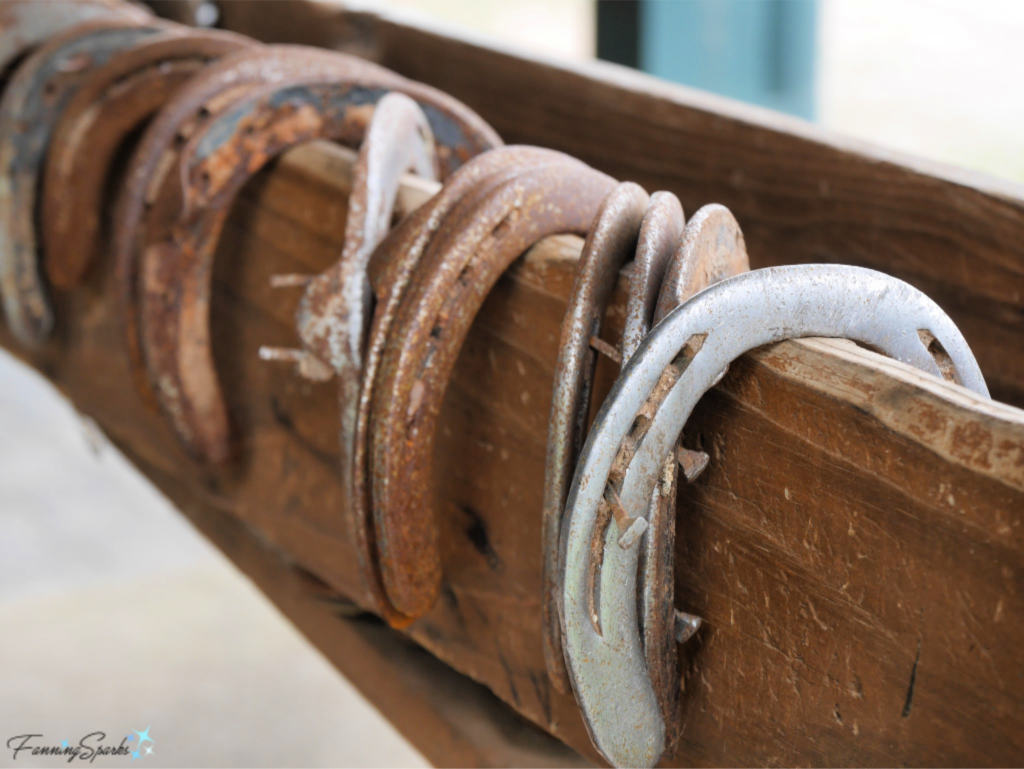
 This horse barn is 200 years old and packed with charm and character.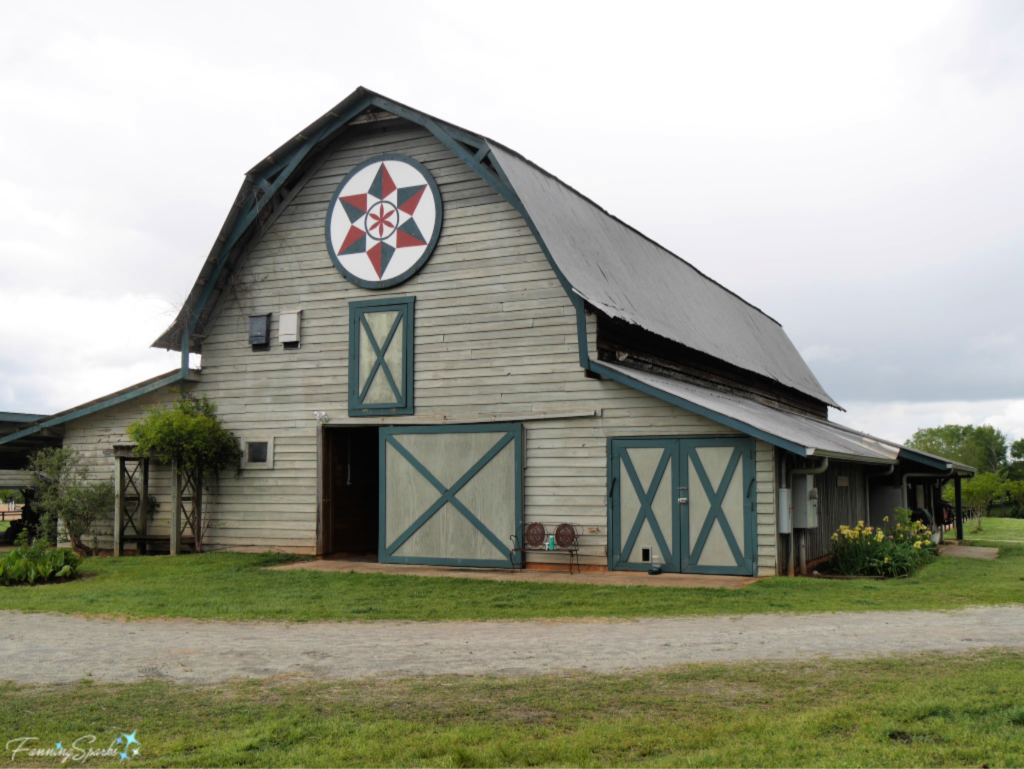
 The flower gardens were lovely as well. This enclosed rose garden was at its prime.
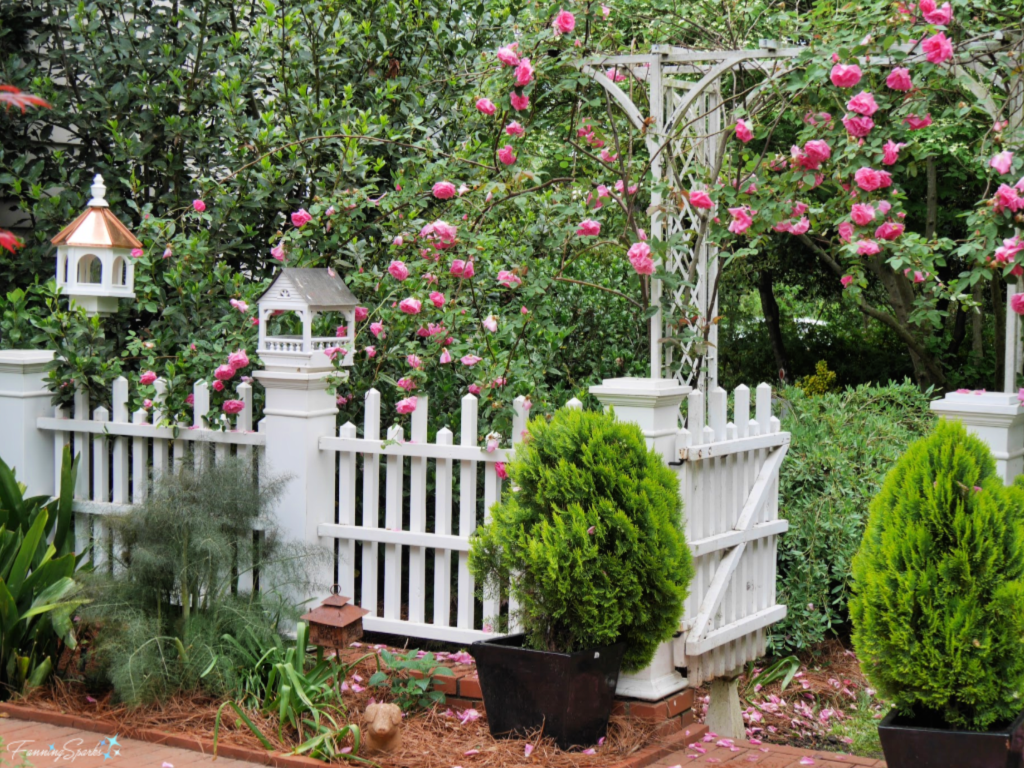 The setting was delightful and the roses were splendid. It was the perfect way to wrap up a day of magnificent spring gardens.