Decorative pillows, dressed in the cheerful colors and patterns of the season, are an easy way to add a holiday touch. I like to sprinkle them throughout the house. But buying an extra set of pillows and storing them for 11 months of the year seems incredibly wasteful. So I devised a way to make a temporary pillow cover-up. I made a set of these in cheerful red and green plaid years ago and we’ve enjoyed them every December since. It takes only a moment to dress up my regular decorative pillows for the holidays. Then after the holidays, the pillow cover-ups are stored in a fraction of the space needed for actual pillows.
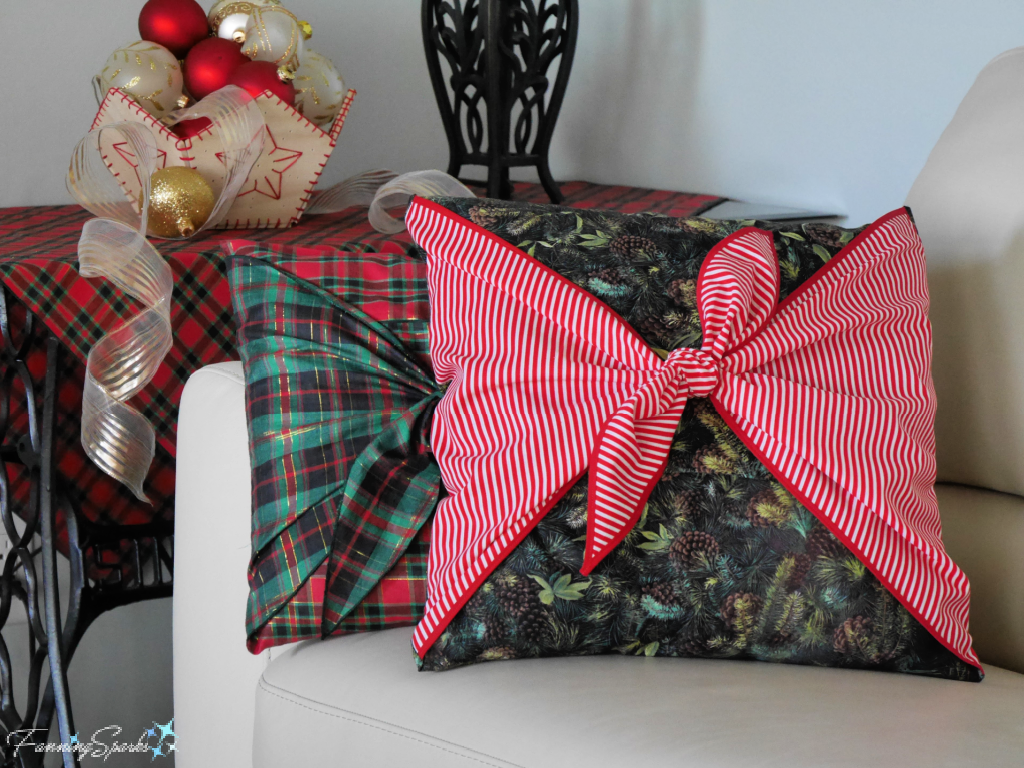
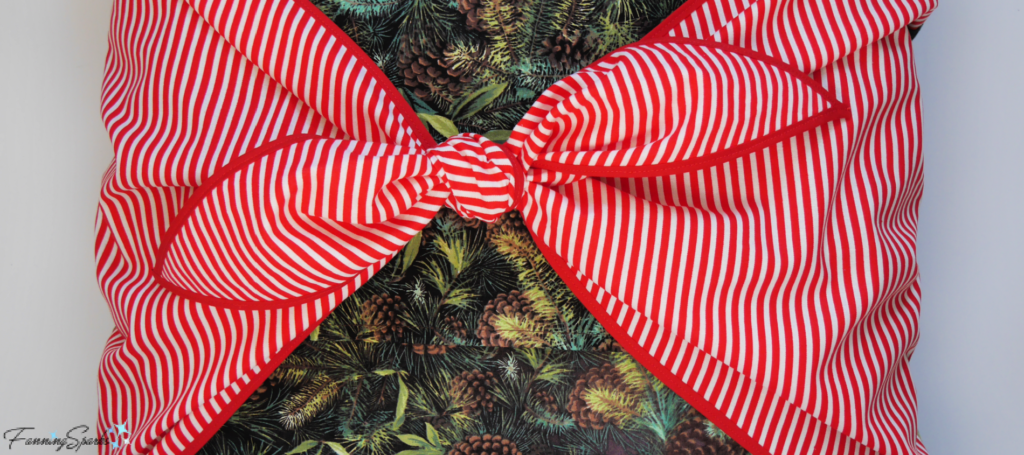
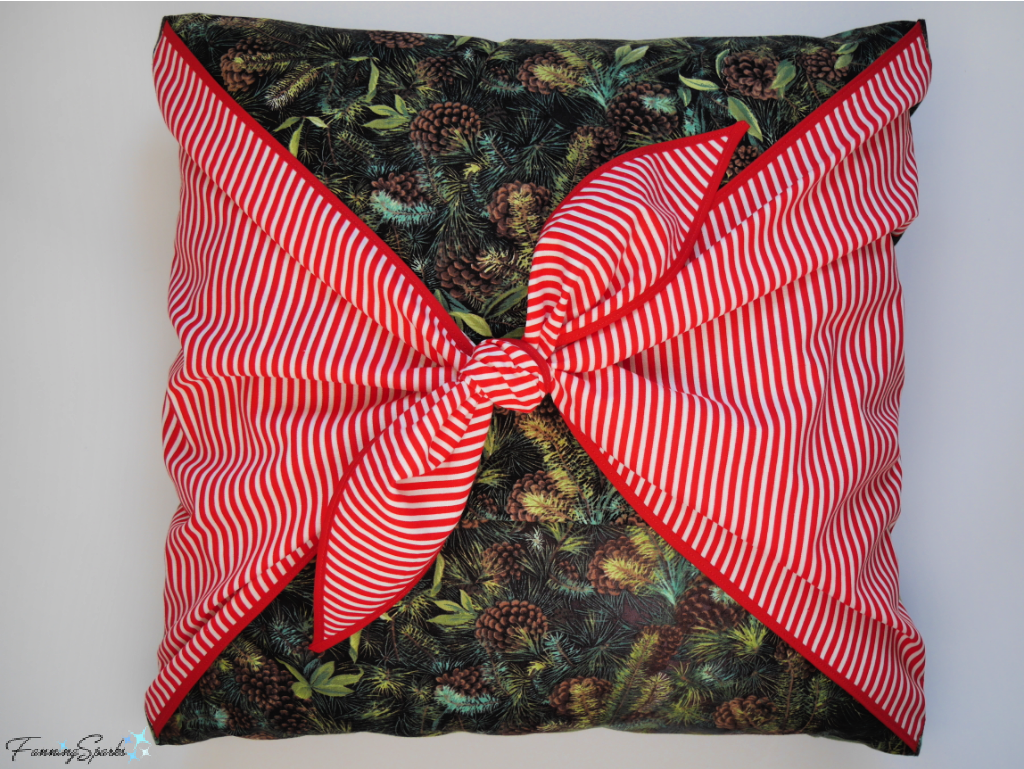
Making a Festive Pillow Cover-up isn’t difficult. It requires basic sewing skills and few hours of time. A popular-sized 18” square pillow requires about 1 yard of fabric— ½ yard of base fabric and ½ yard of accent fabric. Online sources, such as Spoonflower, have an endless variety of fabric designs. The base fabric is cut into a long rectangle which is sewn into an envelope—wrapping around the pillow and overlapping to form a pocket. The accent fabric is cut into 2 isosceles triangles which are sewn into the side seams. When it’s time to decorate, simply slip a decorative pillow into the cover-up and tie the triangles into a pretty knot.
Of course, pillow cover-ups aren’t limited to only Christmas—they could just as easily be made in fabric for other special occasions such as Valentine’s Day, Halloween or birthdays. They could also be used to refresh decorative pillows and left in place.
Why not give it a try? Here’s how it’s done.
Supplies Needed
NOTES: Be sure to consider the direction of the fabric’s design—see TIP below for explanation. The required yardage amount is based on an 18” square pillow—see Step 1 below to calculate fabric requirements for different pillow sizes.
. Base Fabric: ½ yard of 42” (or wider) cotton or other home decorating fabric. I chose a non-directional green print with pine cones and leaves.
. Accent Fabric: ½ yard of 42” (or wider) fabric. I chose a crisp red and white striped print.
. Thread
. Bias Tape (Optional): About 3 yards for an 18” square pillow. I chose single fold bias tape in red.
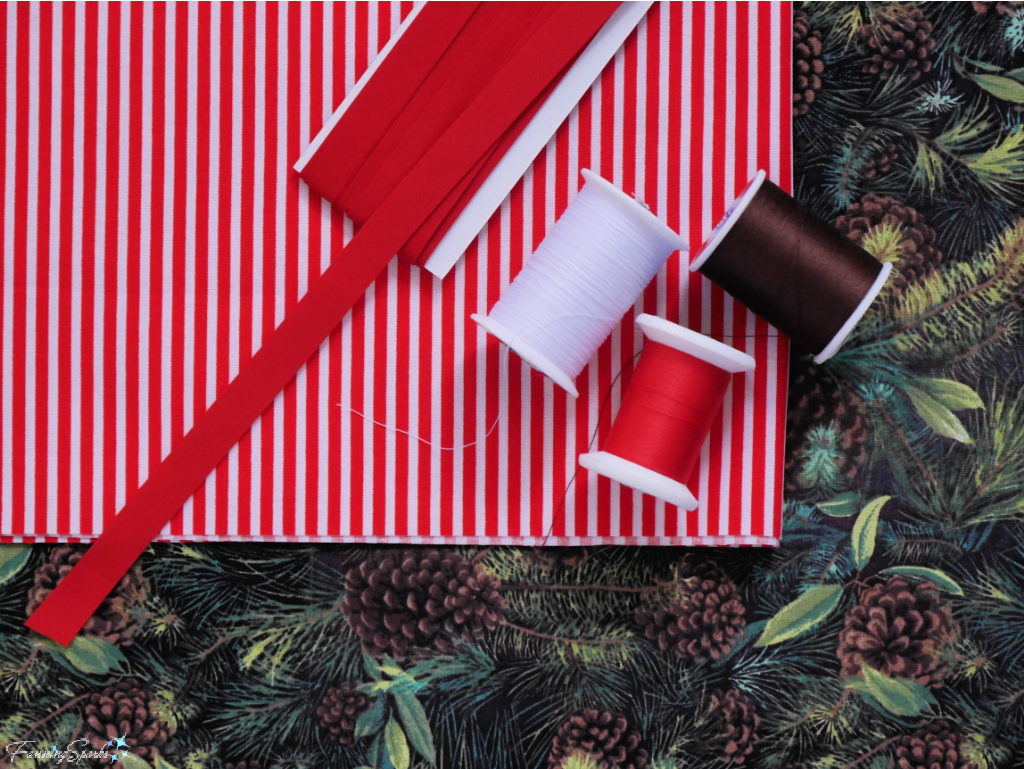
TIP: Consider the Direction of the Fabric’s Design The orientation of the fabric’s print or pattern comes into play in this project. It’s easiest to choose a non-directional design, such as the pine and evergreen print shown, because the fabric, and thus the resulting covered pillow, can be viewed from any direction.
Alternatively, to create a pillow cover-up with ties at the sides (as shown in this tutorial), choose the fabric designs carefully. The base fabric will be cut into a tall, thin rectangle giving it a portrait orientation. A regular design, which looks good with the fabric selvages positioned at the top and the bottom, will work best for the base fabric.
On the other hand, the accent fabric will be cut into a short, wide rectangle giving it a landscape orientation. A “railroaded” design, which looks good with the fabric selvages positioned at the right and left sides, will work best for the accent fabric.
By the way, the term “railroaded” is used to describe fabrics with a directional design running from selvage to selvage. Designs with letters, text, stripes, village scenes or landscapes are often railroaded. Shown below are a few examples of railroaded designs from my fabric stash. The elements in these designs (eg giraffes, palm trees, boats, houses and cyclists) have an obvious direction.

Tools and Equipment Needed
. Tape Measure
. Scissors or Rotary Cutter with Mat and Cutting Edge
. Sewing Machine
. Iron
. Standard Sewing Notions such as Pins
Step-by-Step Instructions
Step 1. Calculate Fabric Yardage If your pillow does not measure 18” square, start by determining the amount of fabric needed.
Measure your pillow to determine the height (h) and width (w). Multiply the height of your pillow by 2.5 to determine the height of the base fabric rectangle. The width of the base fabric rectangle will be the width of your pillow plus ½” for seam allowances.
The rectangle for the accent fabric has the opposite orientation. The height will be equal to the height of your pillow. Multiply the width of your pillow by 2.5 to determine the width of the accent fabric rectangle.
Please note the factor of 2.5 isn’t an exact science—the factor could vary from 2.3 to 2.6 —and a few inches more or less in the overlap will work fine.
Convert the size of the rectangles into yardage based on the width of your selected fabric. Fabric for home decorating is typically 42”, 45” or 54” wide.
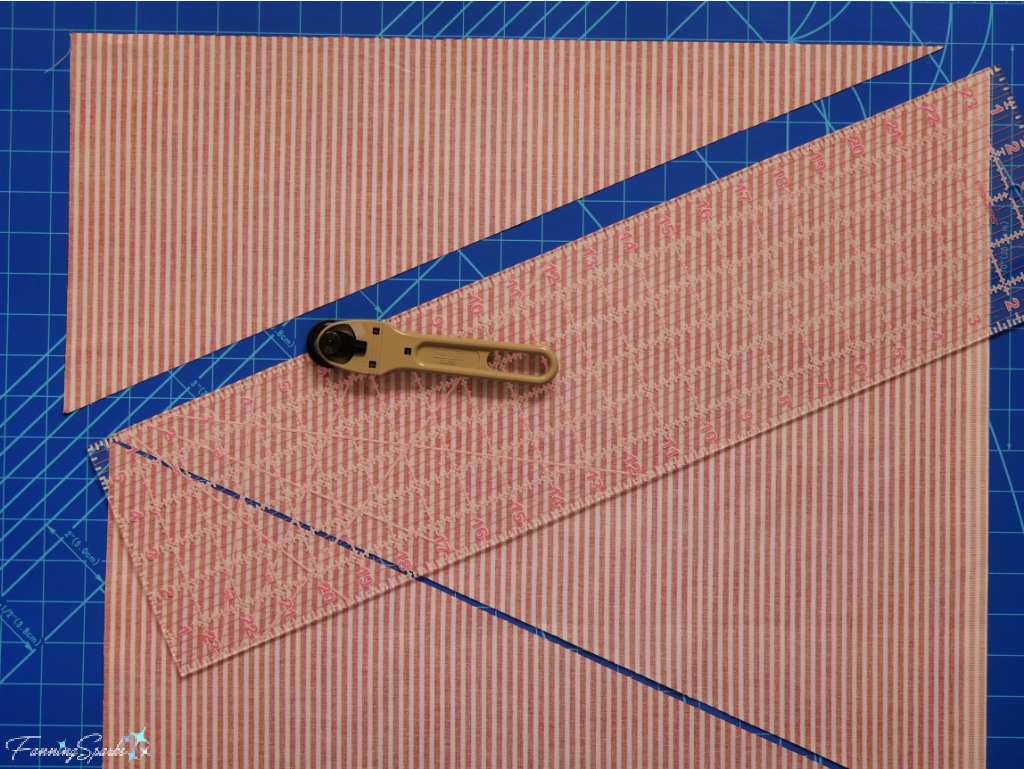
Step 2. Prepare Ties Cut an 18” (h) x 42” (w) rectangle from the accent fabric. The ties are made from two isosceles triangles (ie a triangle with two equal sides and two equal angles). Cut the accent fabric in half horizontally resulting in 2 – 18” x 21” rectangles. Find the vertical center of the resulting rectangle and mark (ie at 9”). Cut from this midpoint to the top edge and the bottom edge of the opposite side (as shown below). Repeat for the second triangle.
Finish the long angled edges of the triangles with bias tape. I used single fold bias tape, in red, for added contrast. Alternatively, you could finish these edges with an overcast or zigzag stitch. Unfold the bias tape. Align the edge of the tape with one of the long angled sides of the triangle. Pin and stitch.
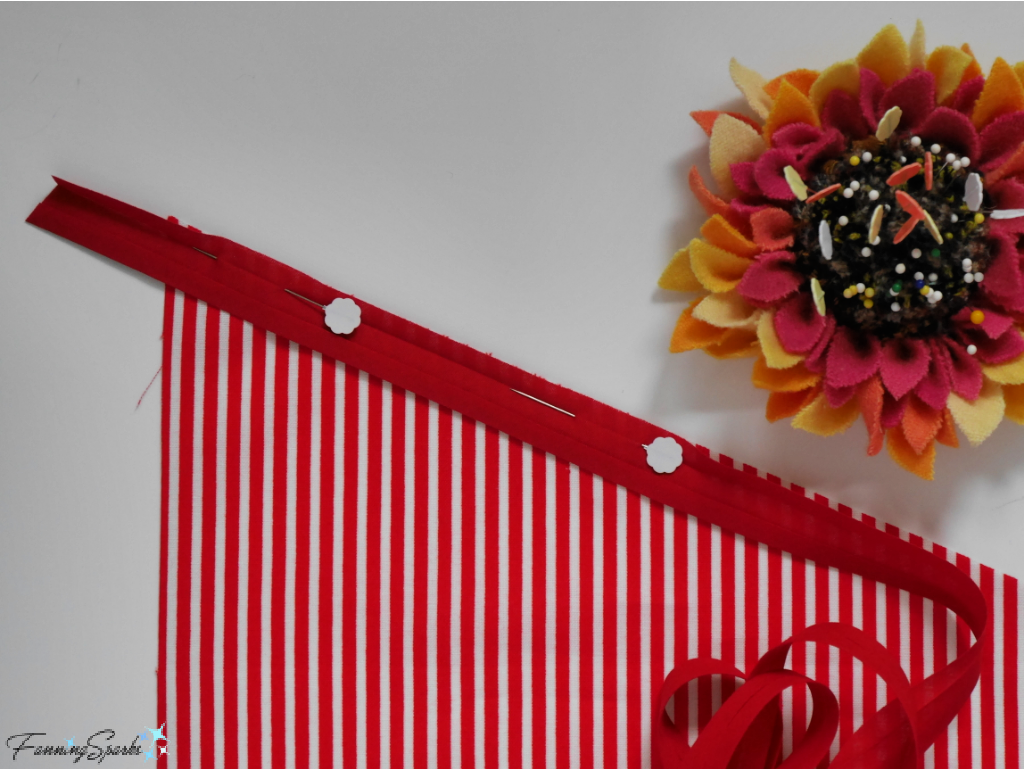
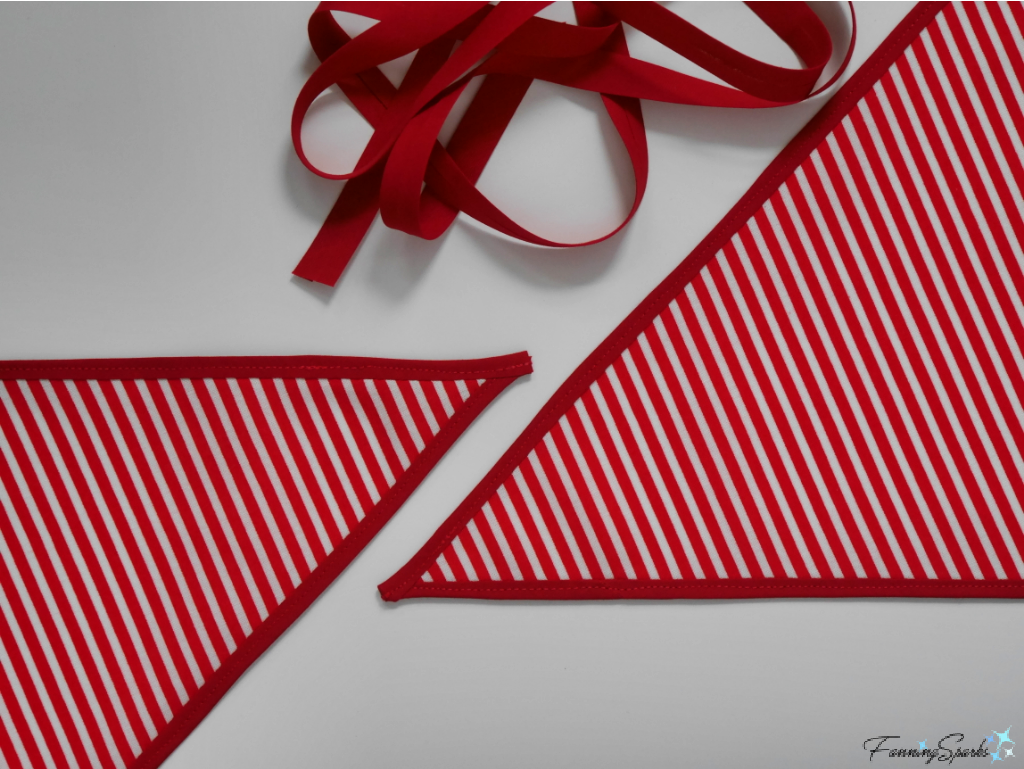
Wrap the bias tape to the back tucking all raw edges inside the fold. Pin and stitch. I find it easiest to stitch this second pass on the front while occasionally checking the back to ensure all layers are being caught in the seam. Repeat this process on the second long angled side of the triangle but leave the last 2-3”, at the tip of the triangle, unstitched. Trim and fold under the end of the bias tape as neatly as possible. Stitch the tip. The ends should be hidden inside the seam resulting in a clean finish. Repeat this process on the second tie.
Step 3. Prepare Base Fabric Rectangle Cut a 42”(h) x 18½”(w) rectangle from the base fabric. Overcast or zigzag one short edge of the base fabric rectangle. Fold under a ¼“ seam and stitch the other short edge. The long edges will be finished later.
Step 4. Assemble The trick to assembling the cover-up is to layer the pieces in a specific sequence. Start by laying the base fabric rectangle, with the right side facing up, on your working surface. The short end with the finished seam should be at the bottom of the working surface. Measure down 12“ from the top edge. Mark with pins at the right and left edges. Note if your pillow is not 18” square, determine this placement by centering the ties on the long edge of the base fabric rectangle.
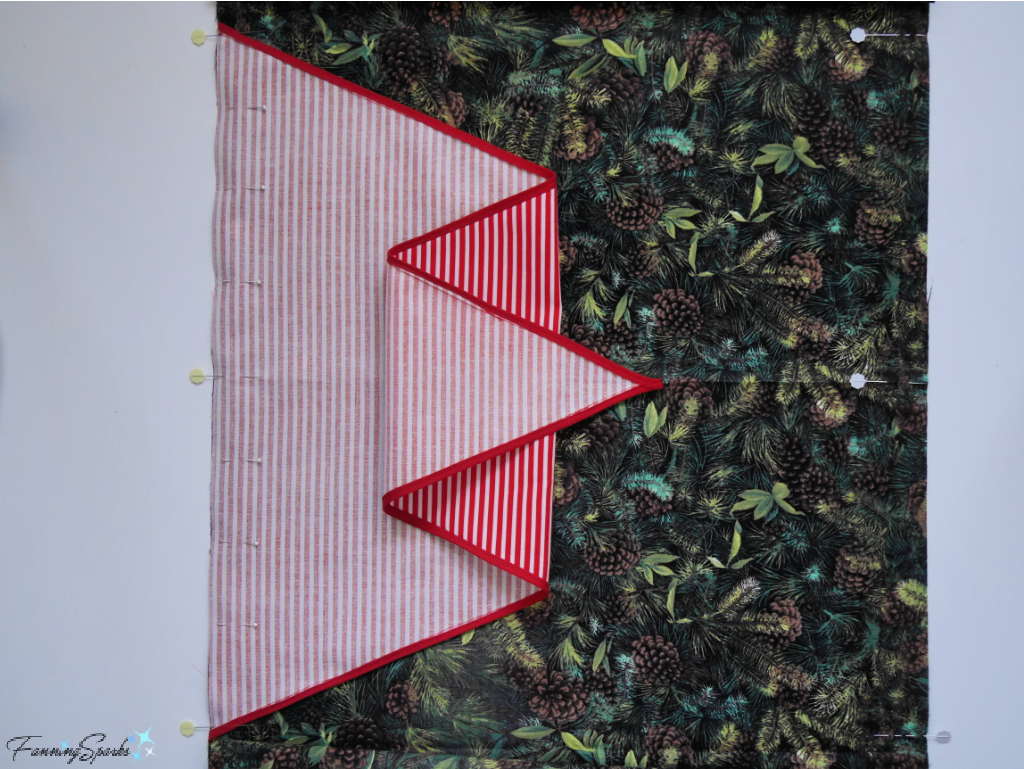
Position a tie, right side facing down, over the base fabric rectangle. Align the short, straight side edge of the tie with the left side of the base fabric rectangle at the 12“ mark as shown. Pin in place.
Repeat with the second tie along the right side of the base fabric rectangle. Pin in place.
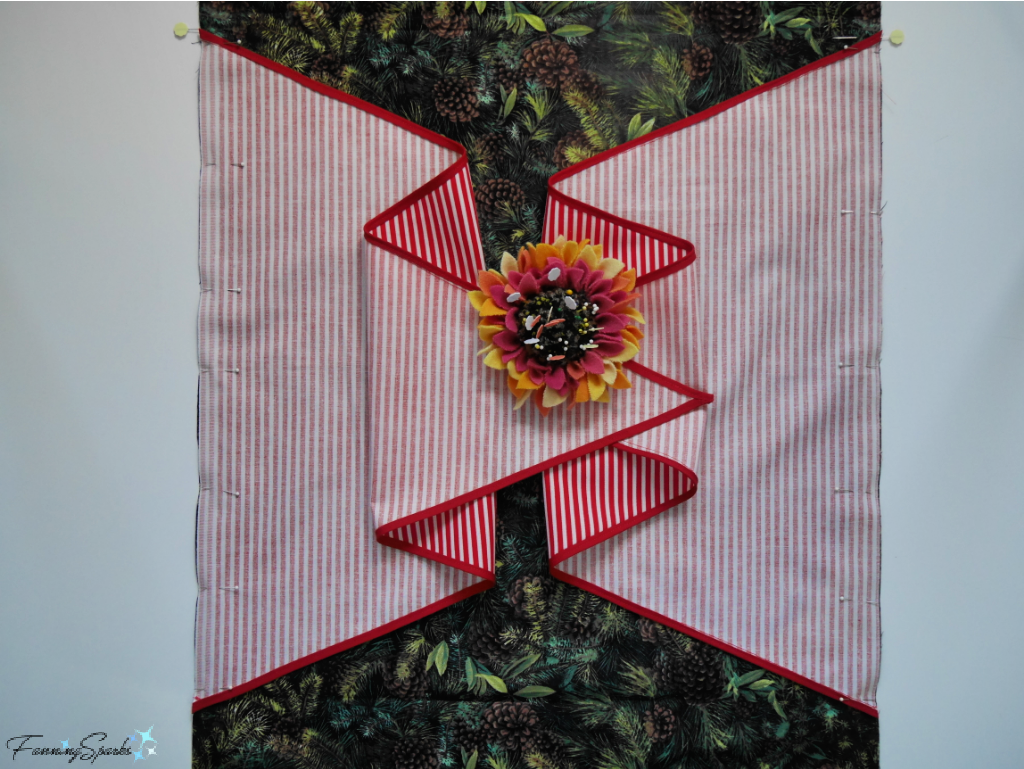
Flip up the bottom edge of the base fabric rectangle folding up at the bottom edge of the ties. Pin in place. Flip down the top edge of the base fabric rectangle folding down at the top edge of the ties. Pin all layers in place removing extra pins from previous layers. Stitch the side edges with a ¼“ seam allowance. Finish the side seams with an overcast or zigzag stitch.
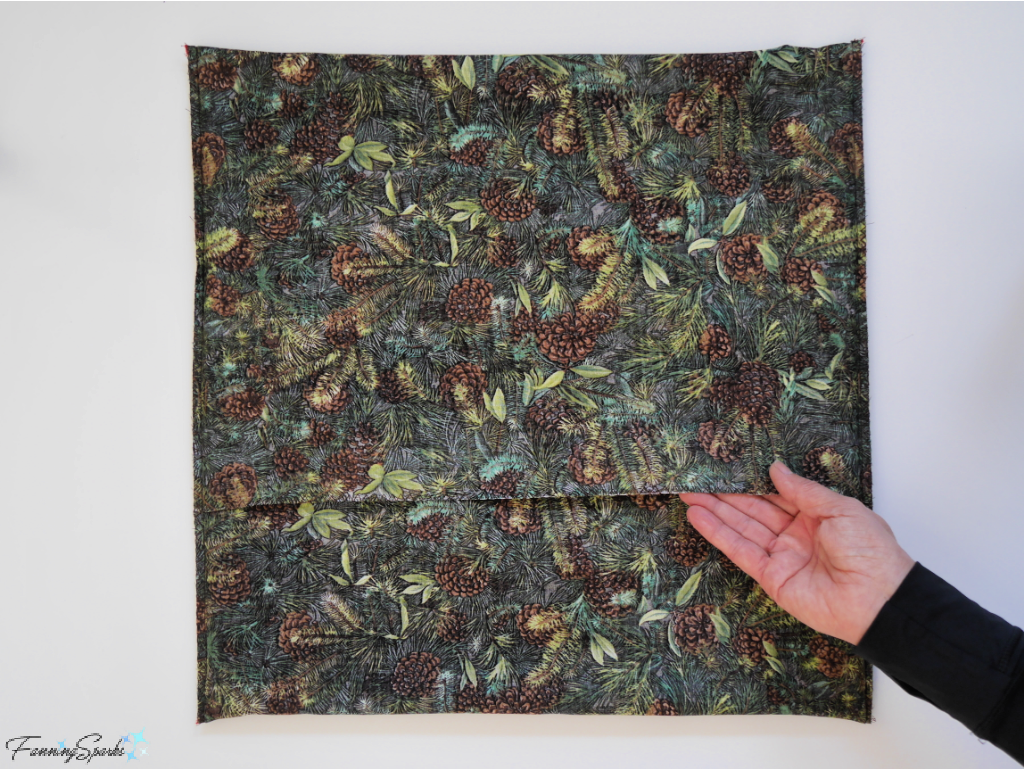
Step 5. Finish Turn the cover-up right side out, pull ties free and push out corners. The opening, which is on the front of the pillow cover-up, will be hidden by the ties. Press.
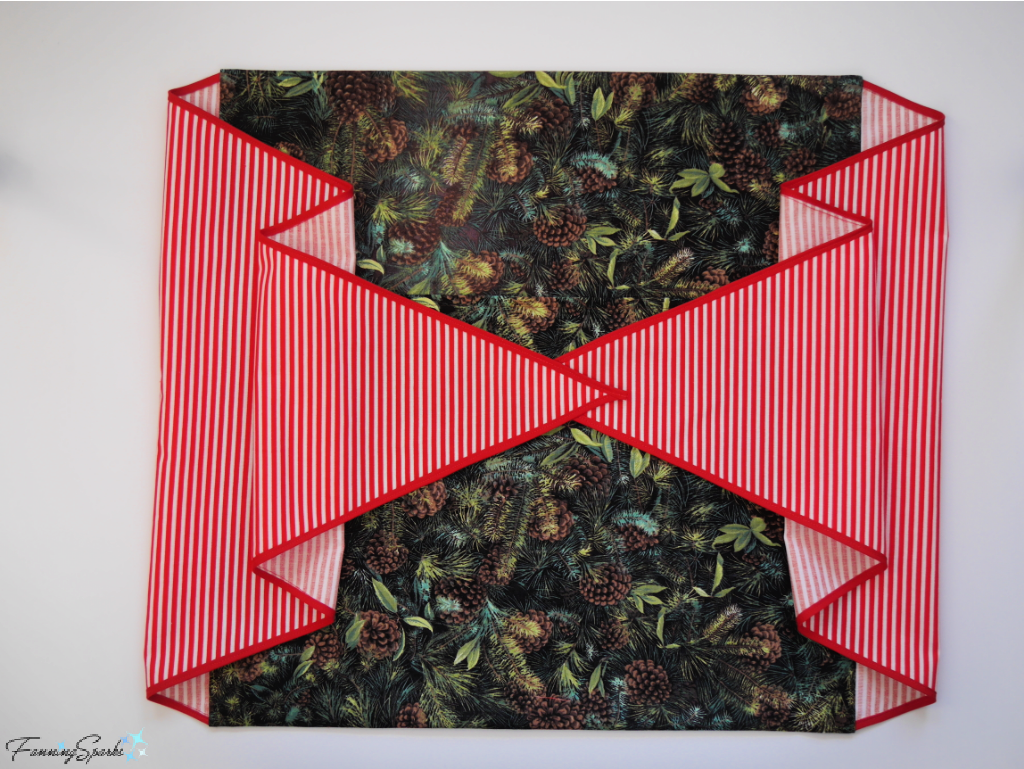
Insert the pillow into the cover-up smoothing out the layers of fabric. Secure the ties in an attractive knot. Presto! Your Festive Pillow Cover-up is ready!
More Info
Please share this image or pin for later reference.
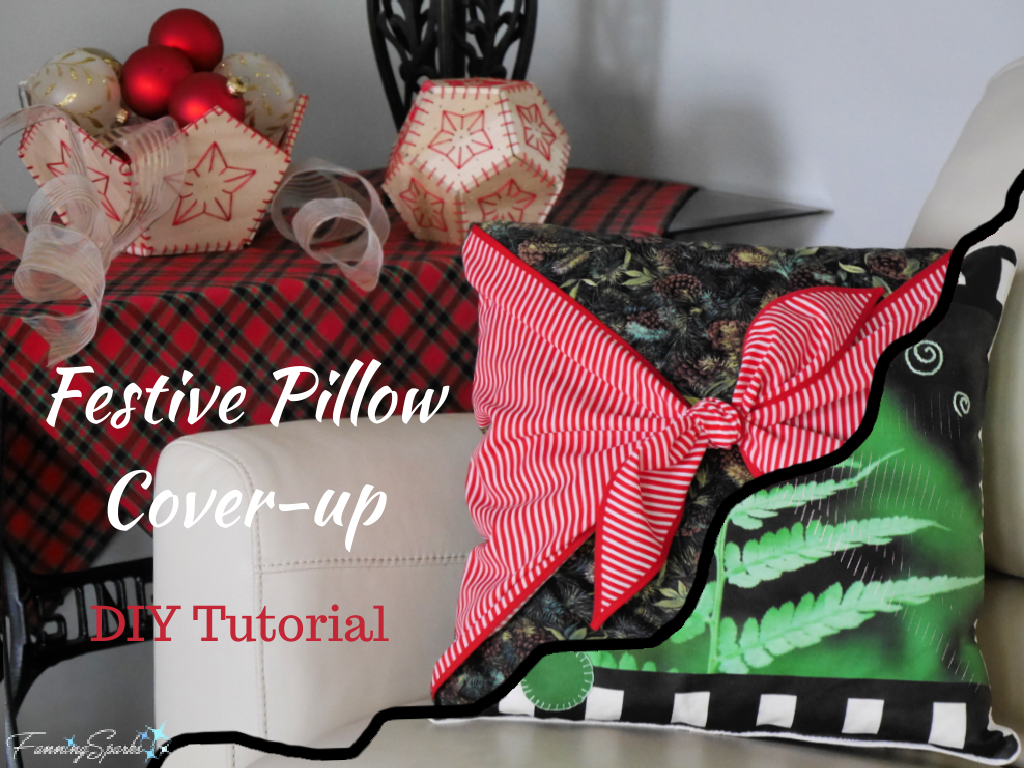
The decorative pillow, shown above in its Festive Pillow Cover-up, is one of the fern photo pillows from the FanningSparks “Bring In the Outdoors – Fern Collection”. Get the scoop on this collection in the post Bring in the Outdoors – Fern Collection. This is the link to the FanningSparks shop on Spoonflower where you can order the cut-and-sew fern photo pillow covers. The post Basic Pillow DIY Tutorial provides step-by-step instructions to make these amazingly simple cut-and-sew pillows.
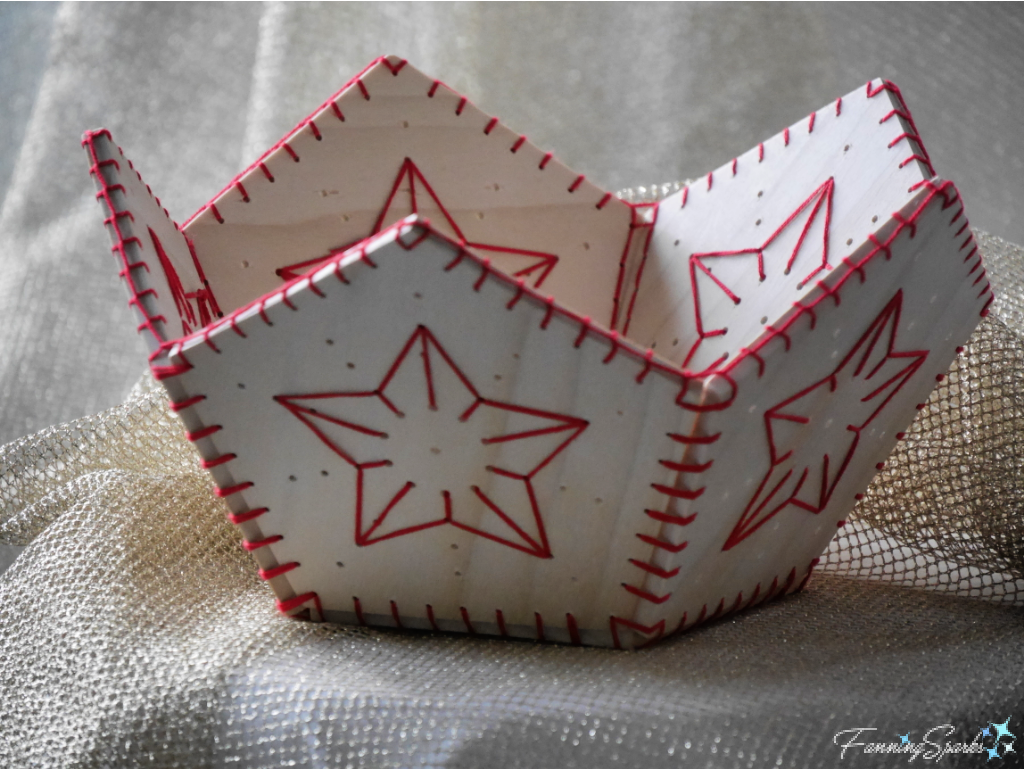
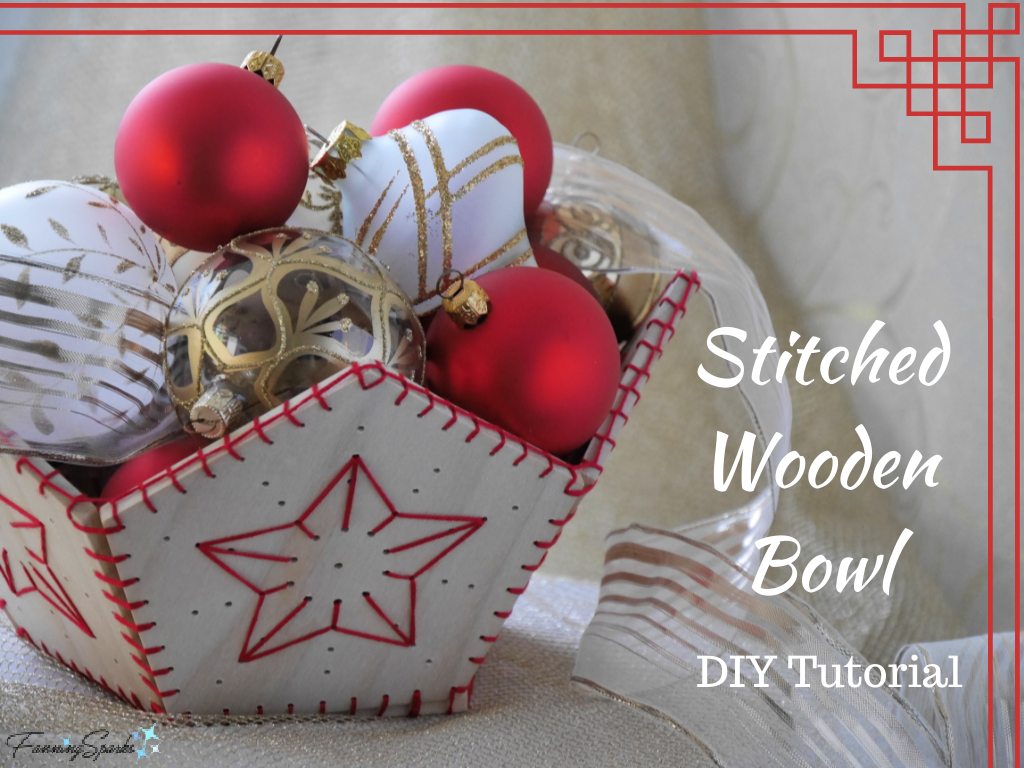
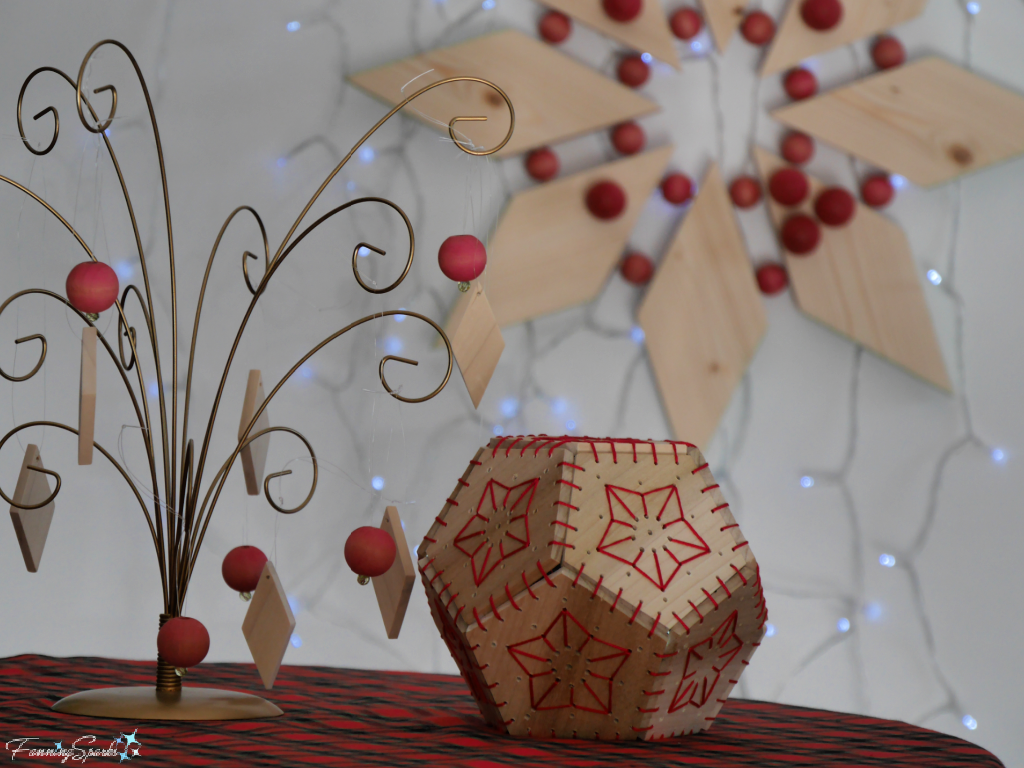
The stitched wooden bowl and sphere, shown above, are projects I shared recently. Full step-by-step instructions can be found in the posts Starry Stitched Sphere – DIY Tutorial and Stitched Wooden Bowl – DIY Tutorial.
Today’s Takeaways
1. Decorative pillows in holiday fabrics can add a festive touch to your home.
2. Dress up everyday pillows with a temporary cover-up for the holidays.
3. Festive pillow cover-ups are easy to make.













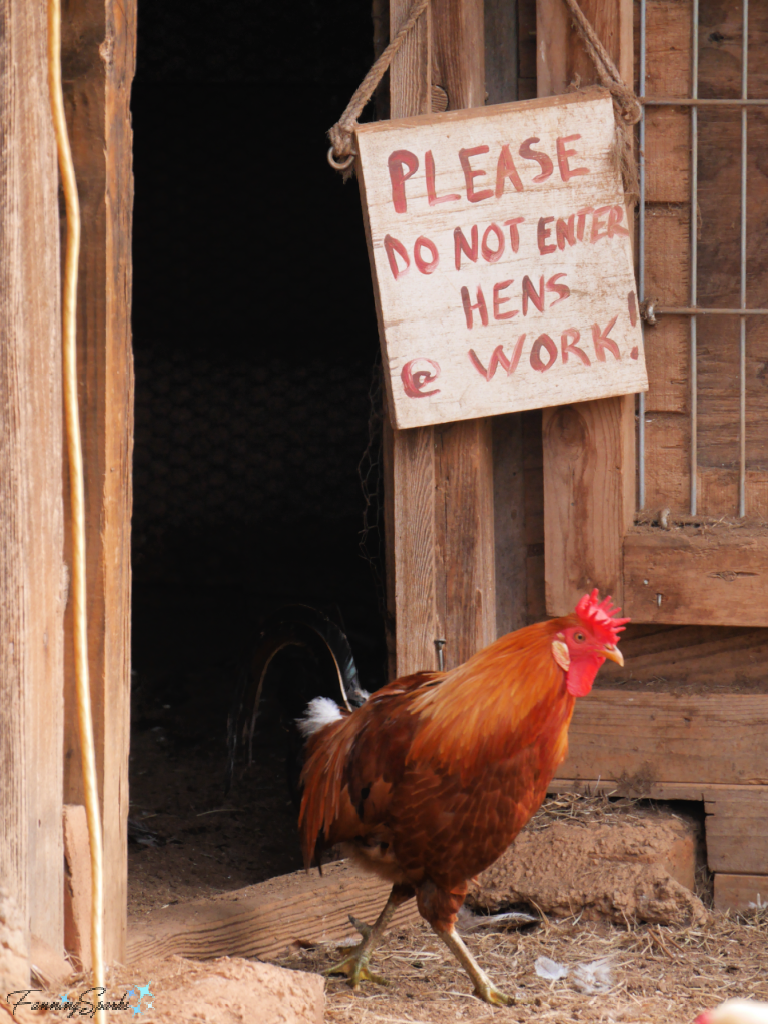
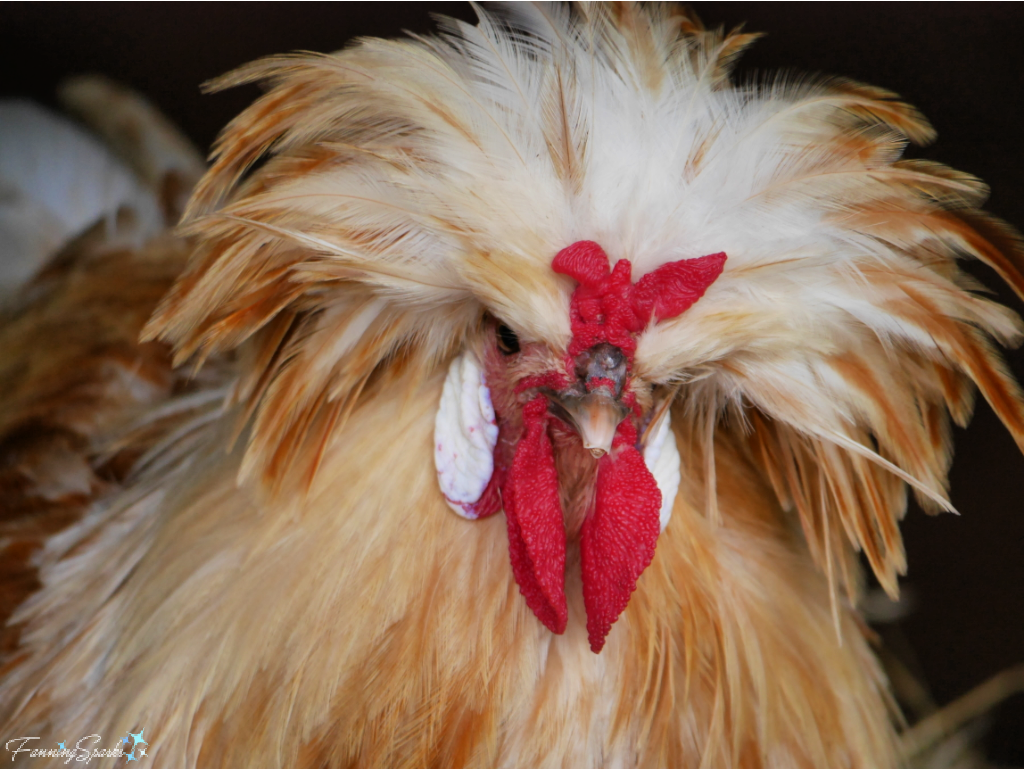 Timing, as they say, is everything. I couldn’t have asked for better timing when I spotted this rooster leaving the hen house.
 Timing was also an important factor in this next photo. The rainbow is beautiful but, for me, it’s the magical lighting on the clouds that makes this shot.

 I made the below trio of sailboats for the post,
  The boating fun continued with the post
 A post of favorite photos wouldn’t be complete without a sunrise or sunset—so I have one of each. This is first light at Crowbush Cove on Prince Edward Island.
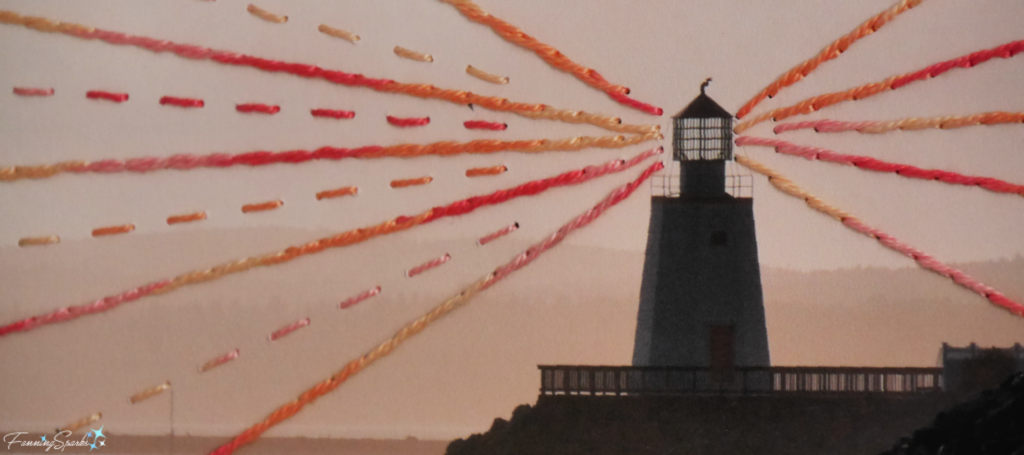
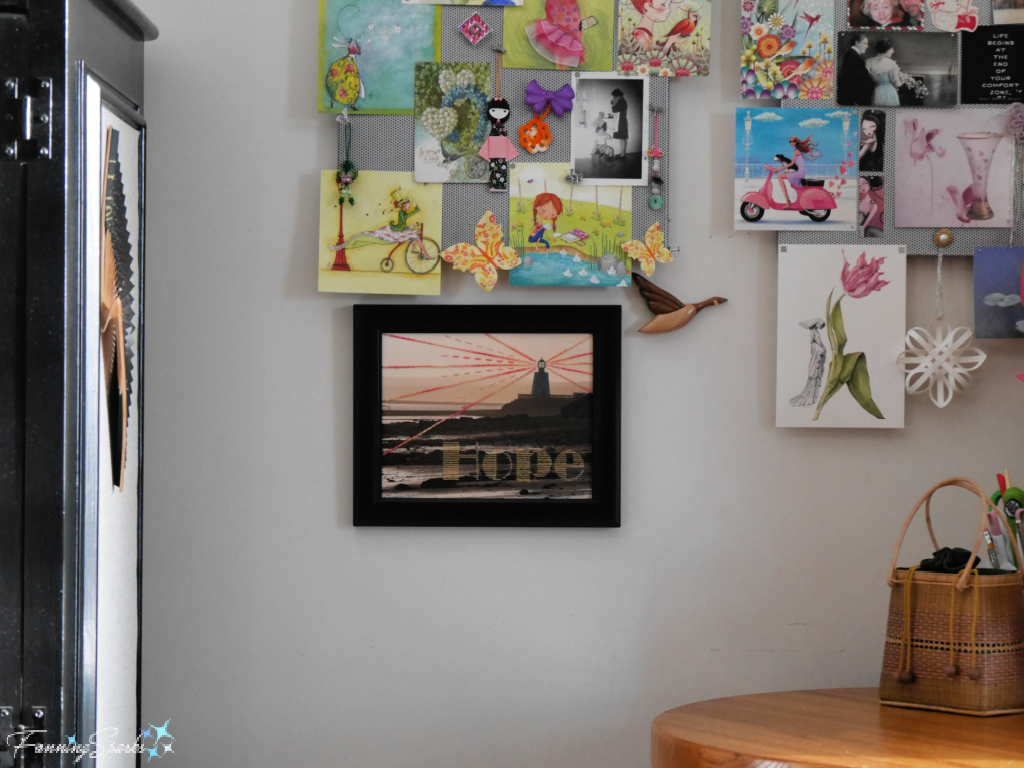
 This is the St Andrews North Point Lighthouse at sunset in St Andrews New Brunswick.