
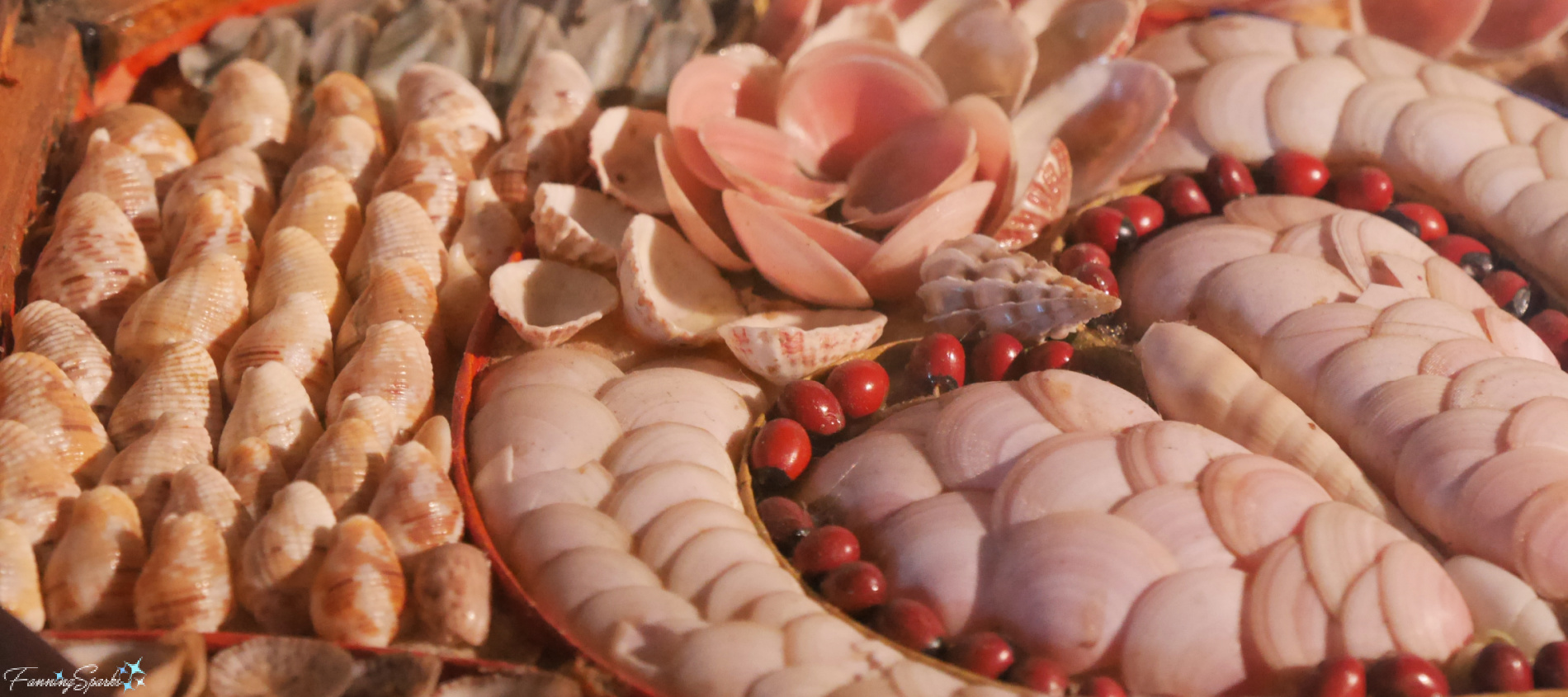
One of the many fascinating artifacts on exhibit in the Fisheries Museum of the Atlantic in Lunenburg, Nova Scotia is a sailors’ valentine. A sailors’ valentine is a mosaic of small seashells artistically arranged in a symmetrical pattern. Traditionally, the fragile artwork is protected behind glass in a double octagonal wooden frame which is hinged for safe transport.
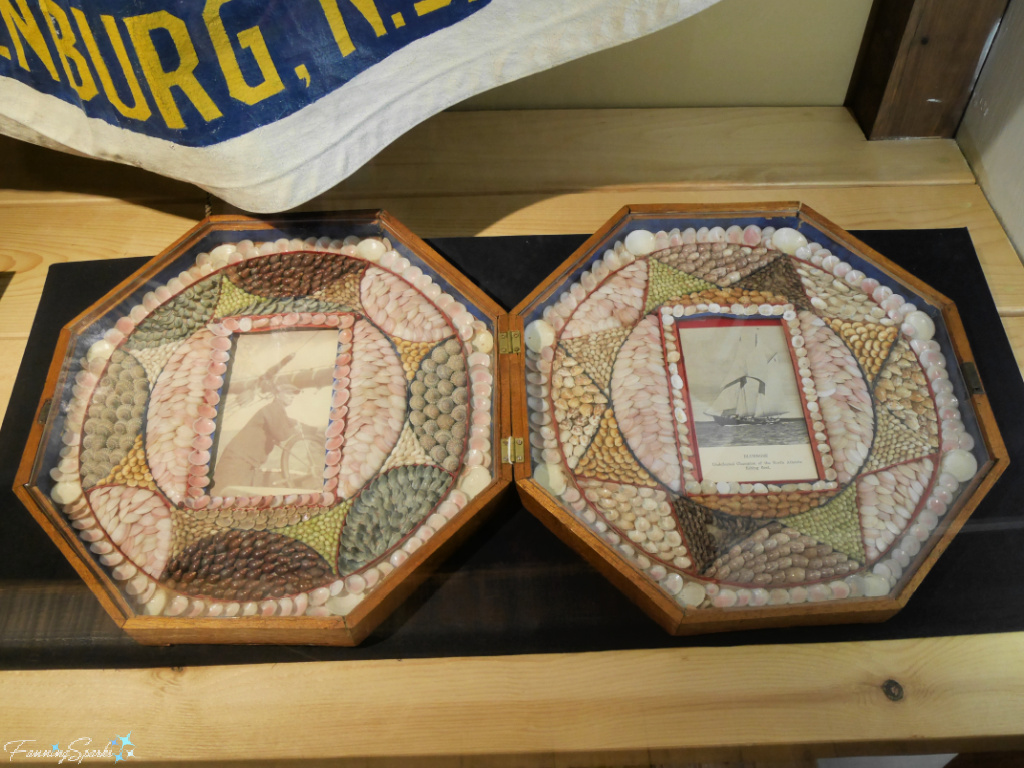
Here’s a closer look at the Fisheries Museum’s sailor’s valentine courtesy of the Museum and the Nova Scotia Archives. The photo is accompanied with this caption: “Brought home to Lunenburg by Captain Angus Walters from a West Indies voyage. The ‘Sailor’s Valentine’ was an intricate shell-design ornament or memento, often framing a photograph of the loved one.”
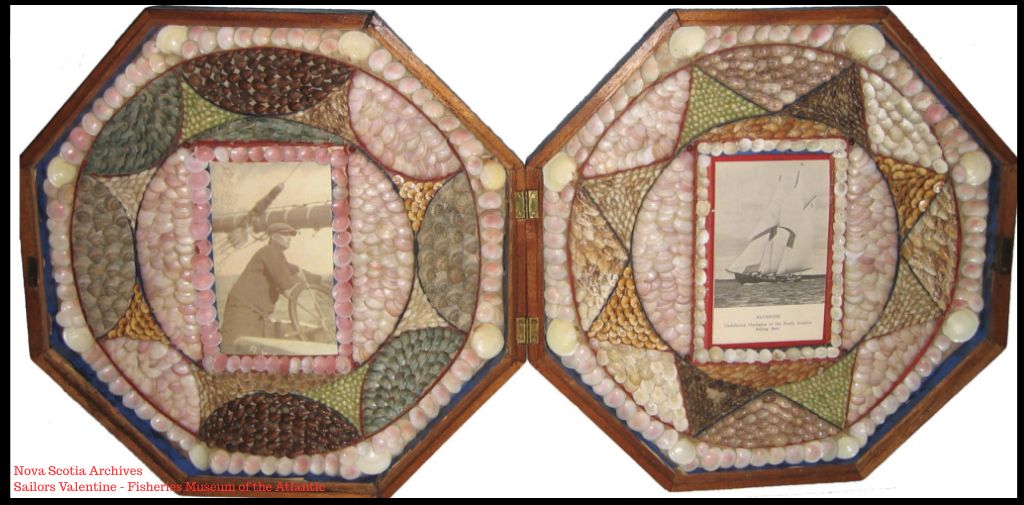
Captain Angus Walters was, as Wikipedia explains, “a sailor and sea captain who skippered the famed Grand Banks fishing schooner Bluenose from 1921 to 1938. Walters captained Bluenose to five international sailing championships, and was undefeated for seventeen years.”
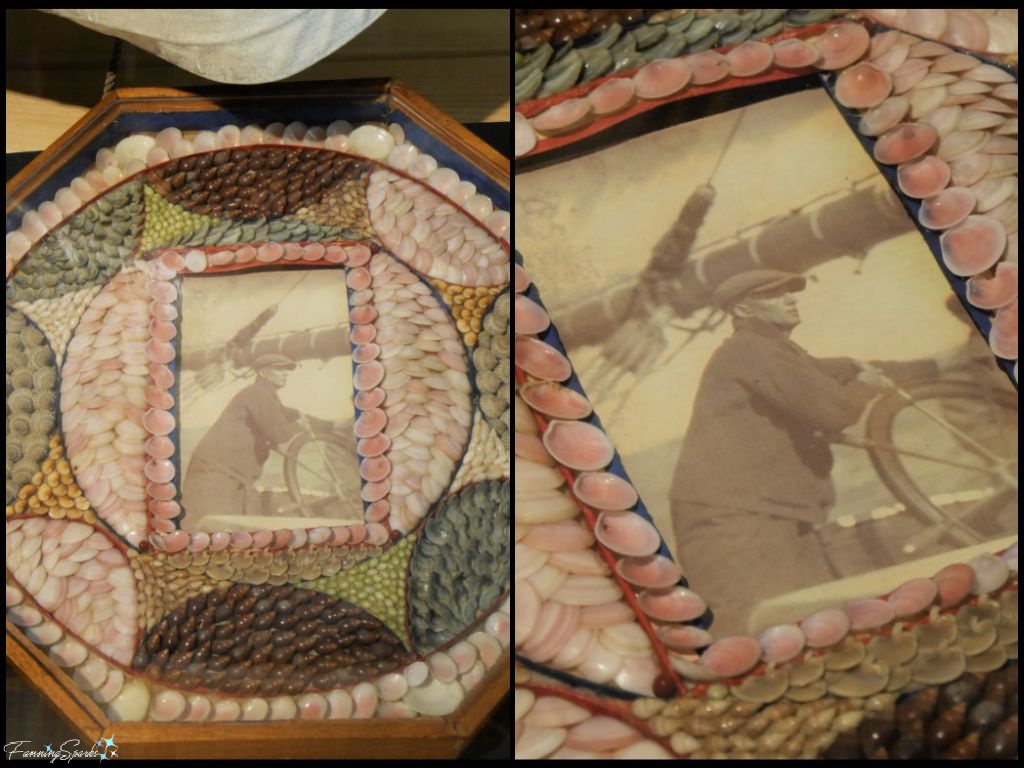
“He and his ship became inseparable in the popular imagination” adds the Canadian Encyclopedia. This, I guess, might explain why this sailors’ valentine includes matching photos of Captain Walters and the iconic Bluenose.
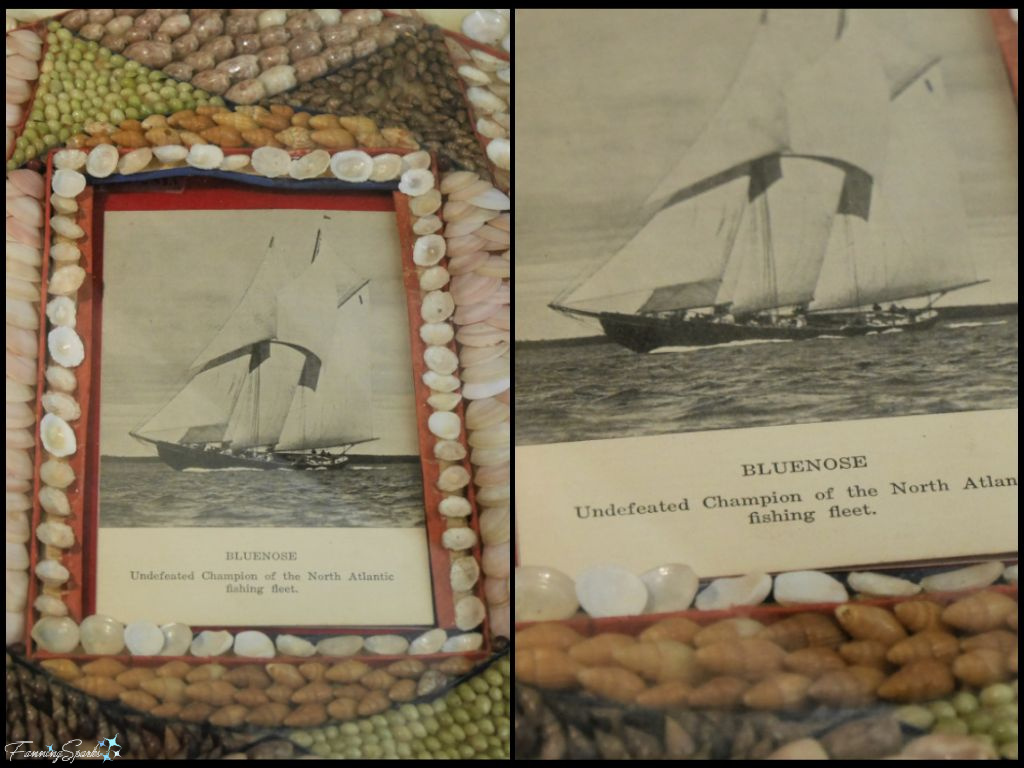
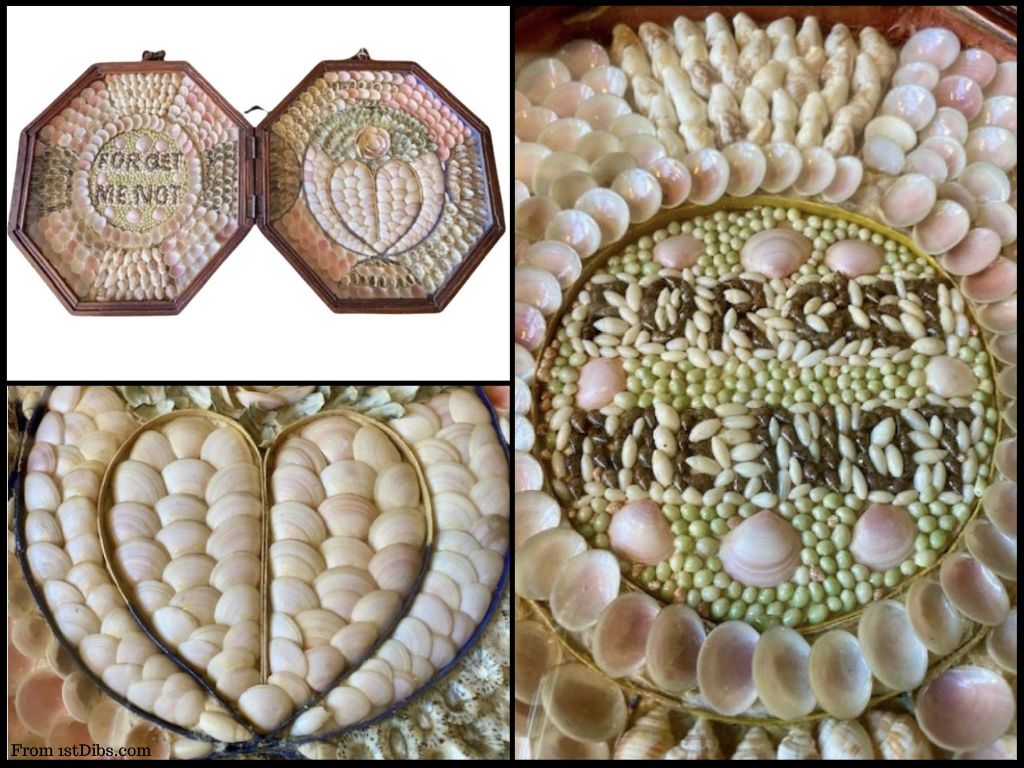
Interestingly, because of the two photographs, this is a rather atypical example of sailors’ valentine. These intricate shell-work objects were “designed to be brought home from a sailor’s voyage at sea and given to the sailor’s loved one or loved ones” reports Wikipedia. Most of the vintage examples I’ve found online showcase sentimental messages to the recipient. For instance, “FORGET ME NOT” is the clear message on this “1880 Antique Double Sailors’ Valentine” which was listed on the 1st Dibs website.
These next two examples are from the collection at The Strong Museum of Play which, according to Molly Duggins’ research paper Sailors’ Valentines: Shell Mosaics from Victorian Barbados, “holds one of the largest institutional collections of sailors’ valentines”. This valentine features the words “HOME AGAIN”. 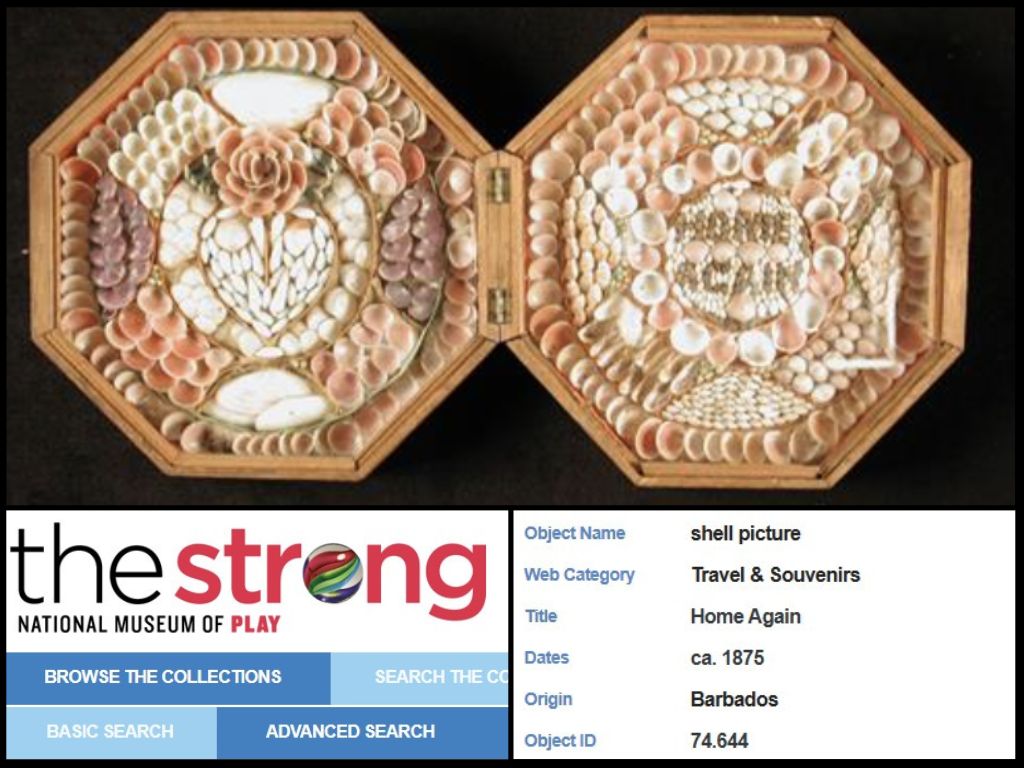
Home Again Sailors Valentine – The Strong Collection
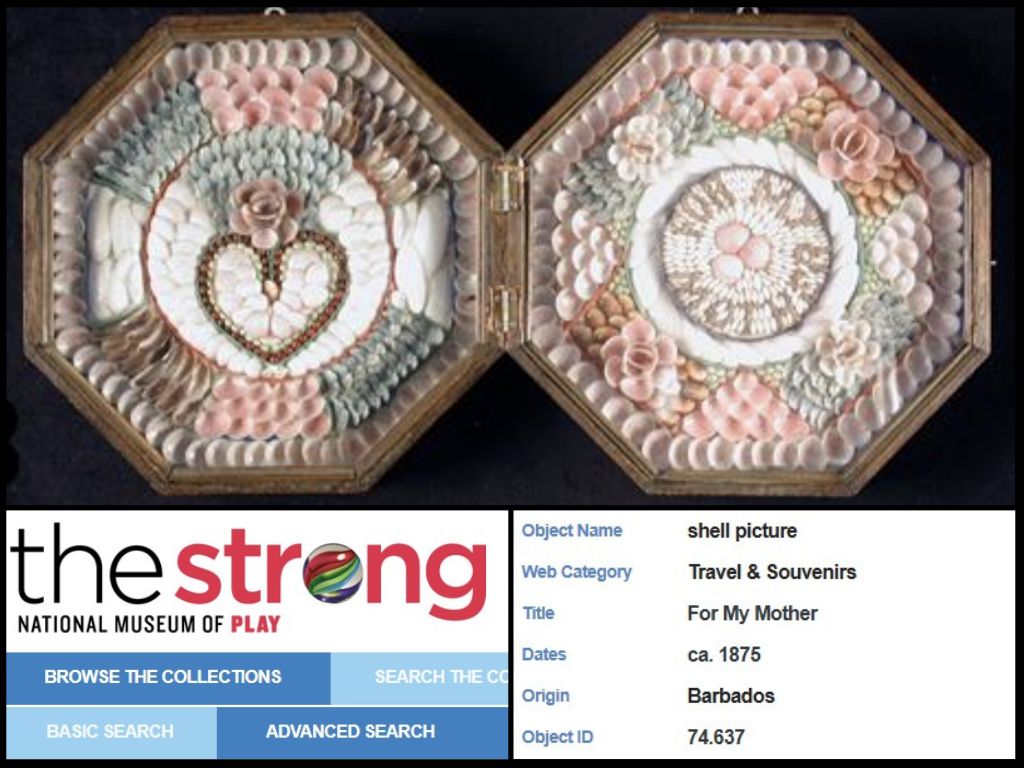
“FOR MY MOTHER” is clearly spelled out in the sailors’ valentine shown below.
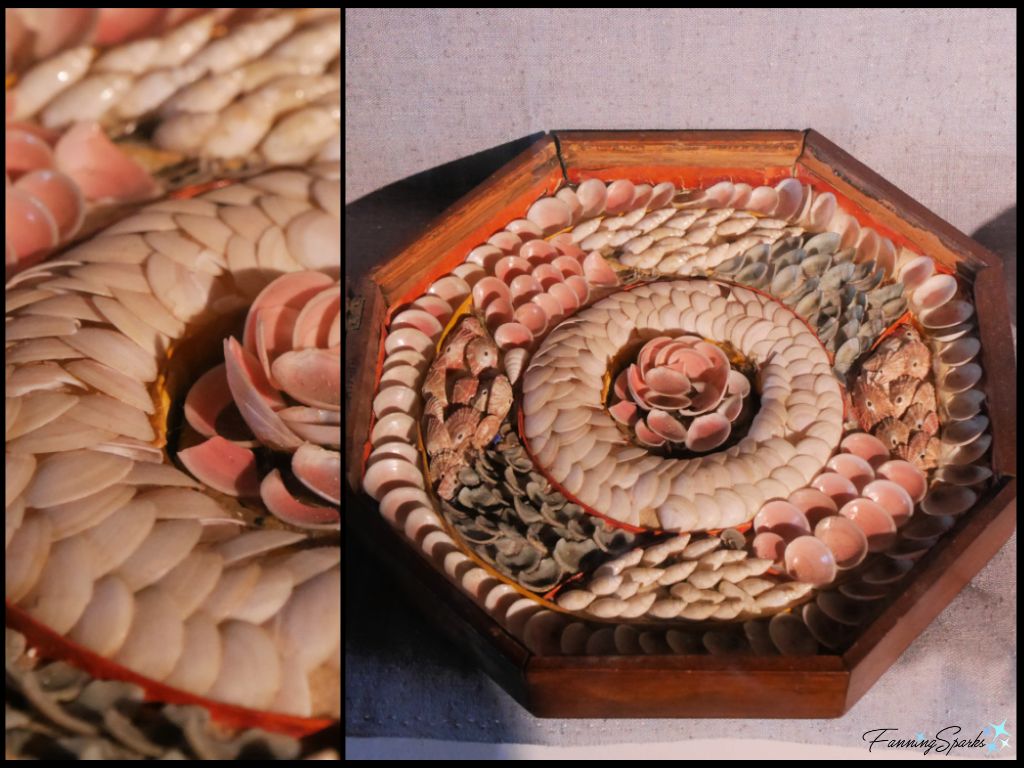
A closer look at the Captain Walters/ Bluenose valentine reveals the intricacy of the shell work. It’s not hard to imagine a great deal of time and effort would be required to meticulously place each of these tiny treasures into the shell-work mosaic. Not to mention, the effort required to gather, clean and sort the shells in preparation for assembly.
Supposedly, it’s this connection with the sea and the hours of creative endeavor that fed the romantic notion that sailors made these valentines themselves. They are, after all, called “sailors’ valentines”. As Duggins put it, “Sailors’ valentines have long been perceived as a form of shipboard craft, occupying mariners’ idle hours at sea.”
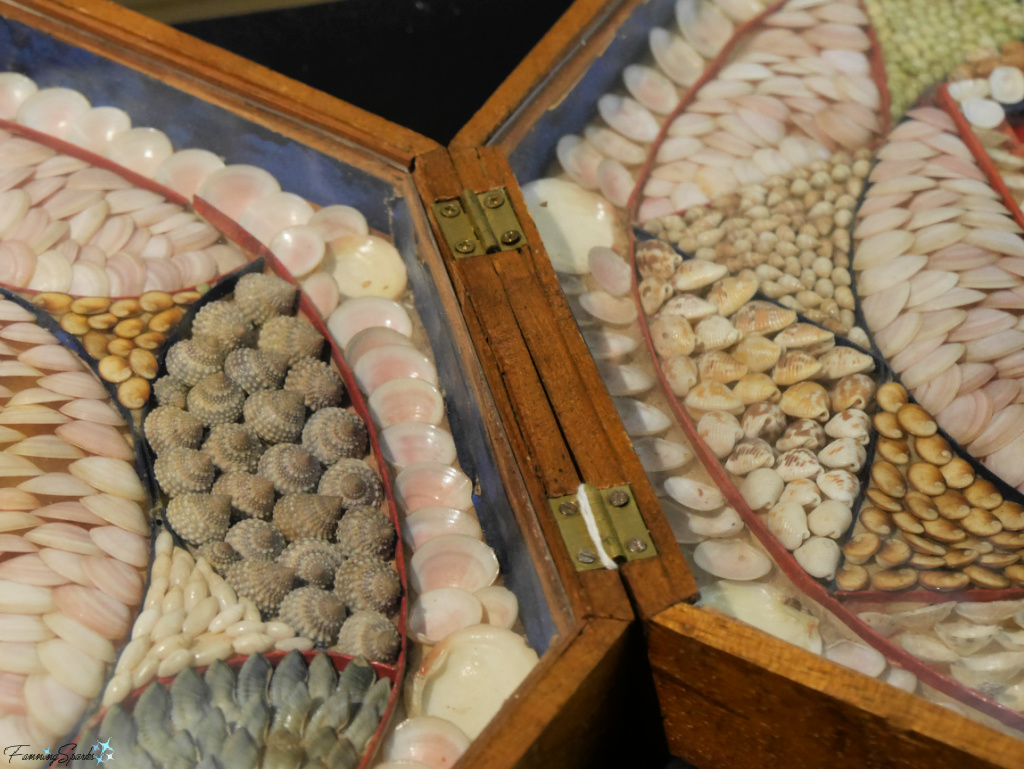
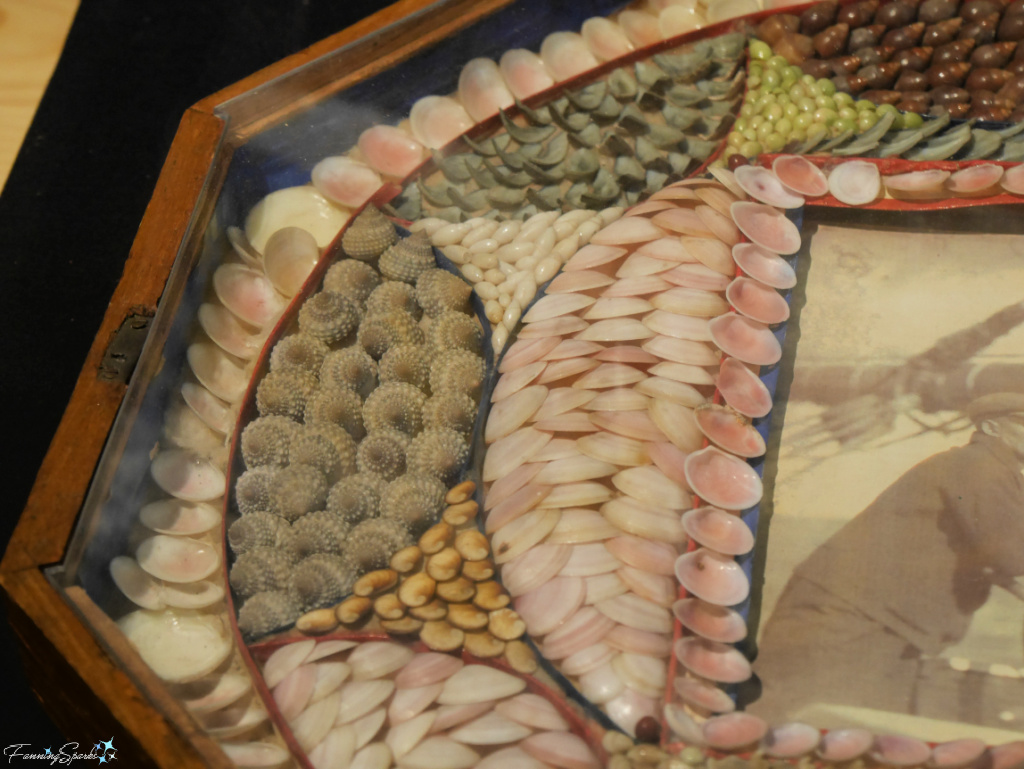
The commonly-held belief that sailors created sailors’ valentines persisted for nearly a century. These shell mosaics were most popular between 1830 and 1890 but, as the story goes, it wasn’t until 1961 that a decorative arts specialist named Judith Hughes seriously questioned their origin.
“By researching and getting the answers to the questions ‘Where did the shells come from?’ ‘How are the mosaics made?’ and ‘Why are so many examples so similar?’ Hughes was able to rectify the idea of the valentines having been made by sailors.” reports author Karen Knapstein in her article Contemporary Artists Carry on Sailors’ Valentine Tradition. “… the sailors’ valentines she studied were very similar; they included a limited variety of shells, which were all native to Barbados; and, considering the number of shells the maker would need at hand, and the tools and other materials (hundreds of shells, glue, paper, wood, etc.), it is highly unlikely that sailors at sea would be able to accomplish such a feat aboard ship.”
To Hughes’ point about similarities between examples, Duggins explains “Mosaic compositions, moreover, are governed by a high degree of uniformity … central medallions decorated with figural motifs of hearts, rosettes, bouquets, or nautical imagery are encircled by alternating shelled segments encased in glazed, octagonal boxes made of cedar or mahogany”.
Some of these design elements are evident in the Captain Walters/ Bluenose valentine but they are even more obvious in the sailors’ valentine I saw at the Maritime Museum of the Atlantic in Halifax. This artifact is simply labelled “Sailor’s Valentine”. I was unable to find any additional information about this specific object but it illustrates most of the design elements Duggins called out in her article. Central medallions ― check. Motifs of hearts and rosettes ― check. Encircled by alternating shelled segments ― check. Octagonal box ― check.
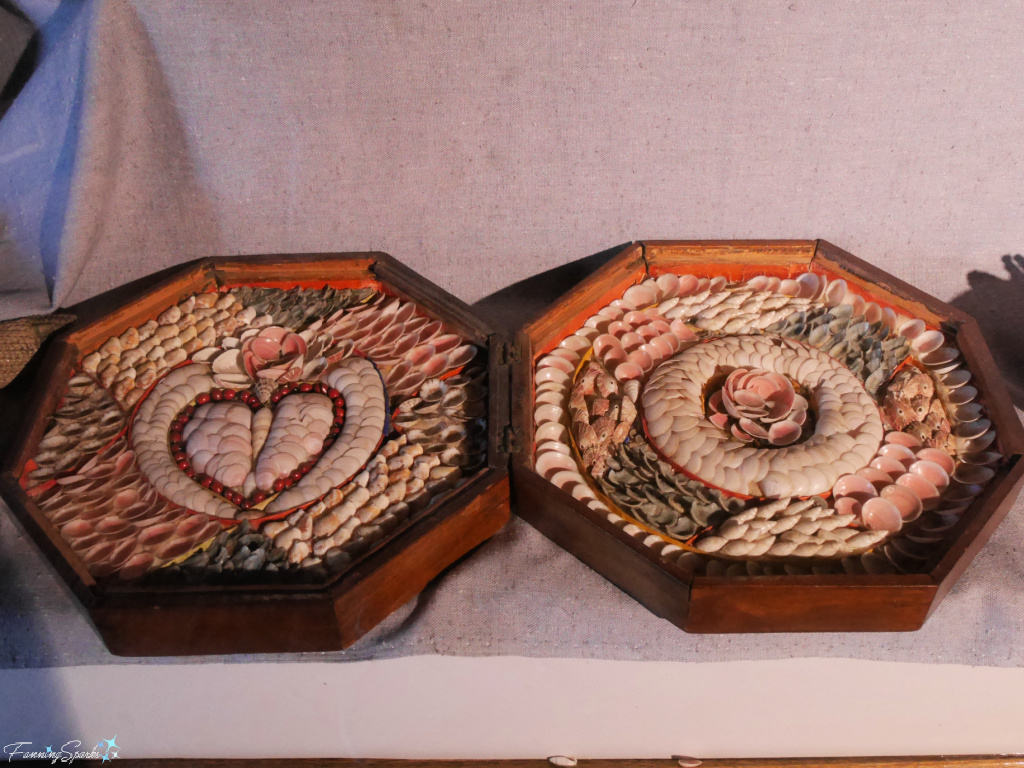
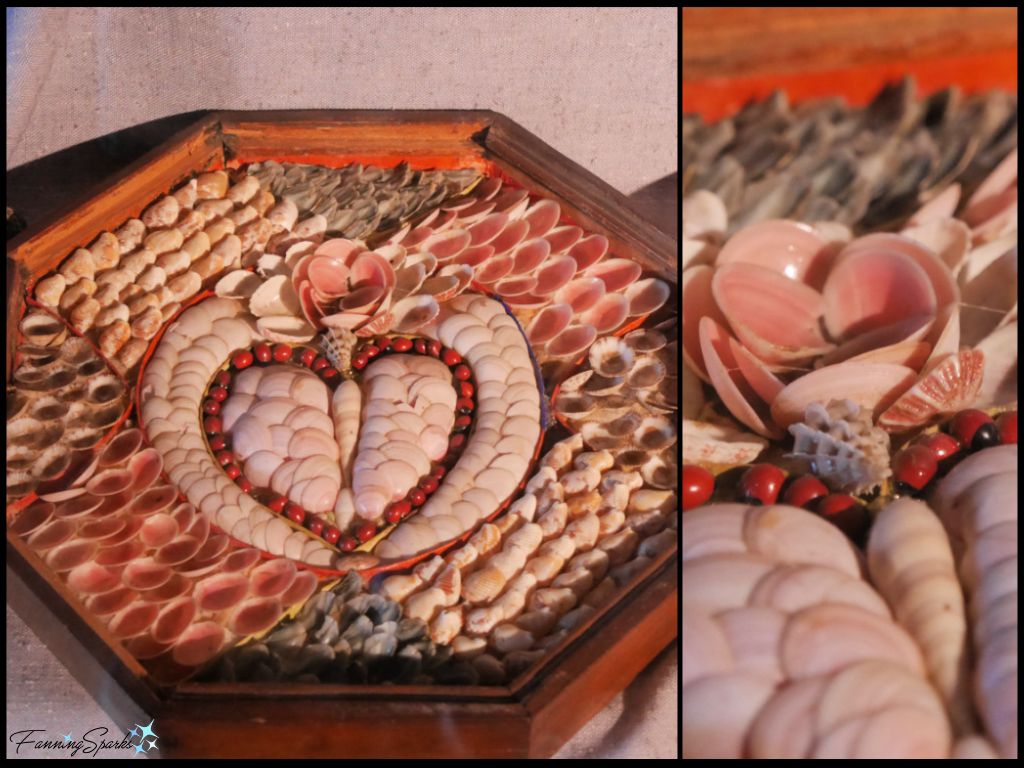
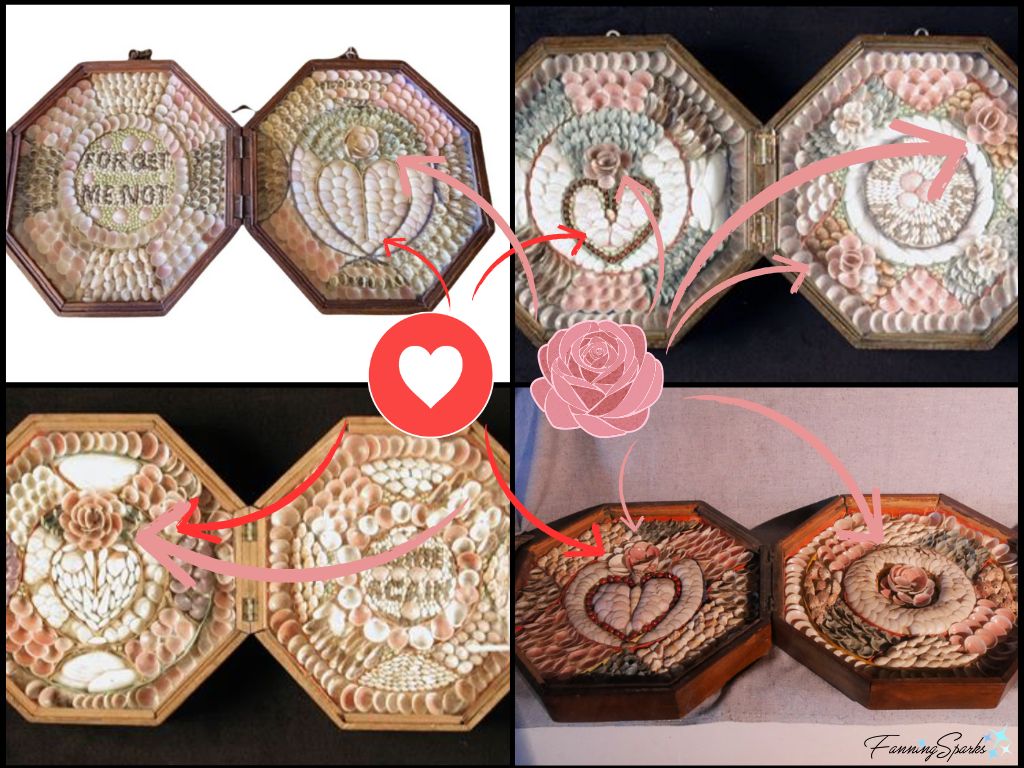
Here’s a side-by-side comparison of some of the sailors’ valentines I’ve shared thus far. Note the repetition of the central heart motif and the 3-dimensional shell rosettes.
This leaves the question: if sailors’ valentines weren’t made by sailors, where did they come from? The answer is “a large number of them originated on the island of Barbados, which was an important seaport during this period. Historians believe that the women on Barbados made the valentines using local shells, or in some cases, using shells imported from Indonesia, and then the finished products were sold to the sailors.” reports Wikipedia.
“In his book Sailors’ Valentines, John Fondas concludes that the primary source for sailors’ valentines was the New Curiosity Shop, located in McGregor Street, Bridgetown, Barbados, a popular shop where sailors would purchase souvenirs. The shop was owned by the English brothers B.H. and George Belgrave. The Belgraves organised local women to create the designs using indigenous shells and seeds.”
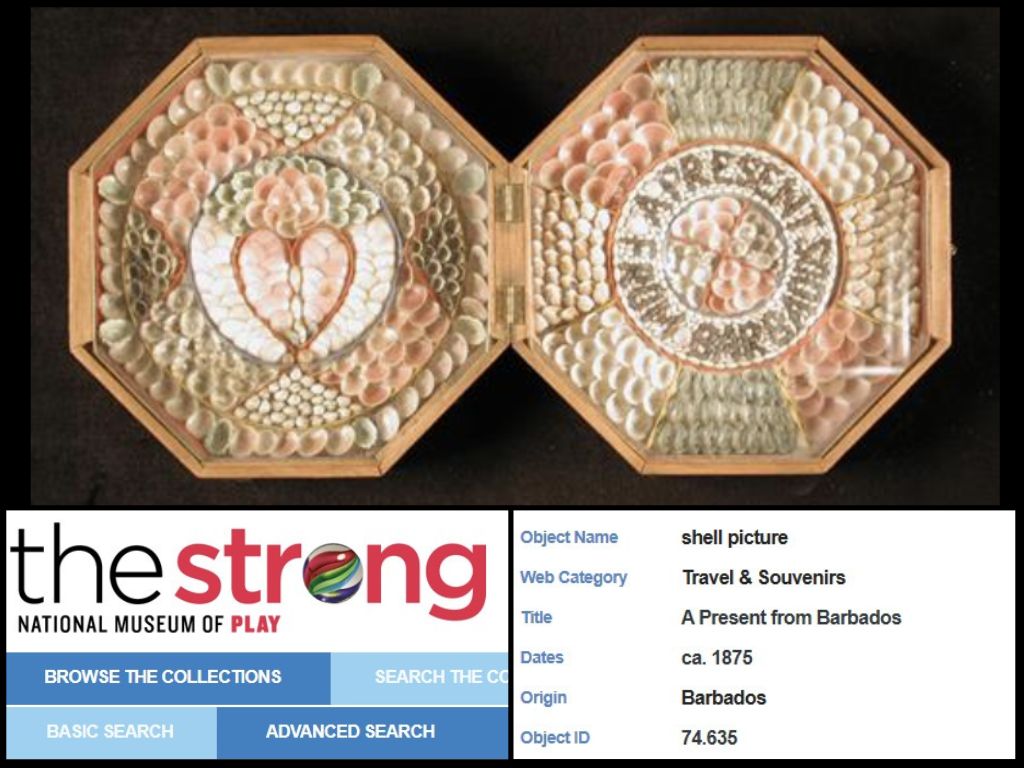
The below sailors’ valentine, from The Strong Collection, features the message A PRESENT FROM BARBADOS which appears to support the revised origin story of this fascinating mosaic shell art.
Sailors’ valentines fell out of fashion for a time but eventually resurfaced when they caught on as collectibles and new artists started to create their own versions. It’s unclear how this resurgence came about but the names of a few shell-work artists pop up repeatedly.
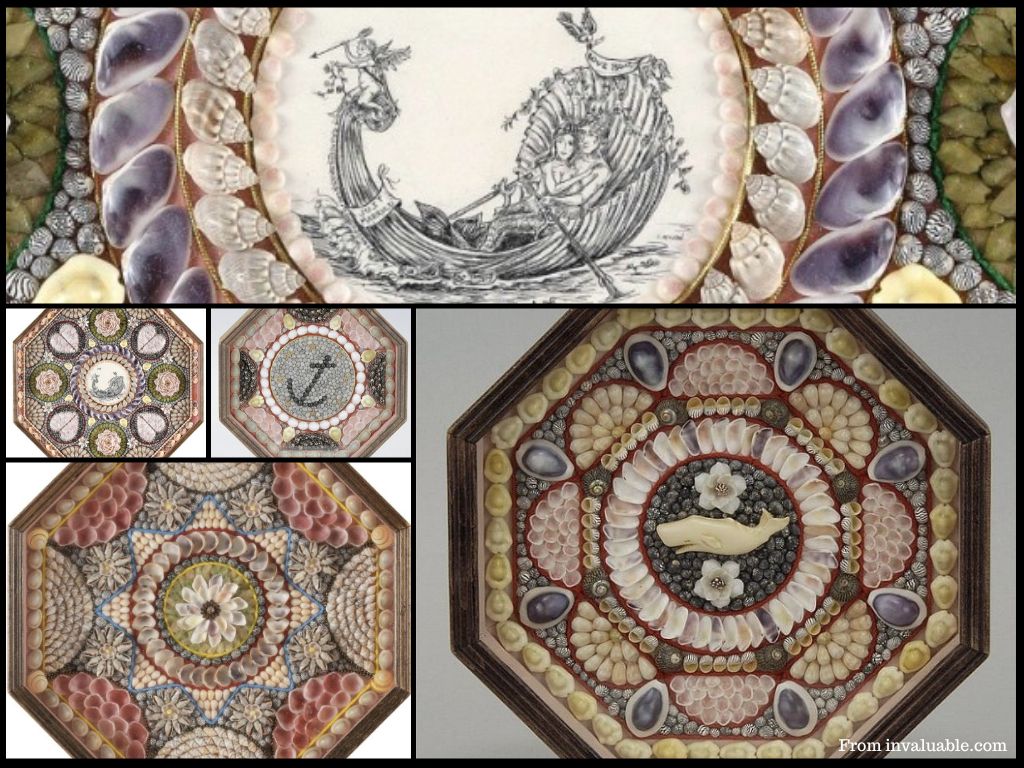
One of these artists was the late Bernard Woodman who, according to the Cahoon Museum of American Art in their article Exquisite Shells: The Art of Sailors Valentines, “created dozens of delicate and charming sailors valentines between 1977 and 1982”. Shown below are photos of Woodman’s work from sold listings on the online auction marketplace invaluable.
The late William “Bill” Jordan was another well-known, award-winning shell artist. He created most of his shell art between 1997 and 2017. The sailors’ valentine shown below, A GIFT FROM SANIBEL, is currently listed on Etsy for an eye-popping amount $12,259 CDN (nearly $10,000 USD). A note on the back of the piece states “Case and Shell Art Created in the Traditional Style of the 1800’s – March 2012 William W. Jordan”.
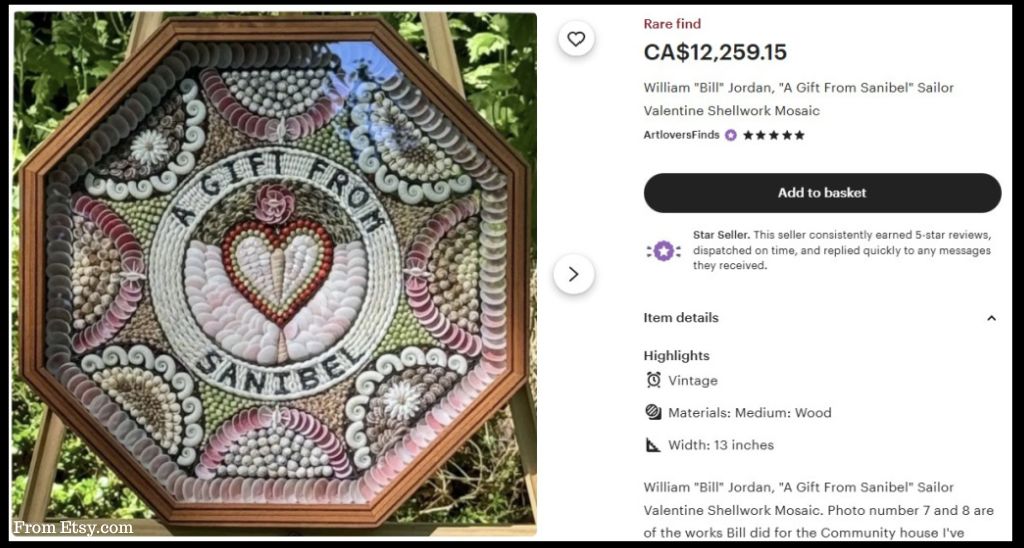
It’s nearly impossible to research the topic of shell art without coming across references to Sanibel. “Sanibel Island is one of the top shelling destinations in the world” according to the Bailey-Matthews National Shell Museum & Aquarium website which is located on the Island. “Thanks to an exceptionally broad continental shelf off the coast of Southwest Florida, the dynamics of local ocean currents, and the island’s atypical east-west orientation, Sanibel is a place where shells gather in abundance and where people have traveled to discover and collect them for well over 100 years.”
In fact, 2026 marks the 89th year the annual Sanibel Shell Show and Festival will be held. The show includes activities such as world-class juried exhibitions in scientific and artistic divisions, specimen and craft shell sales, shell crafting demos, education, rare finds, silent auctions, live mollusk tanks, and shell identification from the Shell Museum. Topics such as proper shelling etiquette, finding the best specimens, conservation (eg the importance of never taking a shell that still has a living animal inside) and ecosystem health are examples of the educational offerings.
Many of the sailors’ valentine artists I’ve read about call out the Sanibel Shell Show as having influenced their work. Knapstein writes “Although each artist has their stylistic differences, they all agree on the importance of the Sanibel Shell Show. [Pamela] Boynton says “[The Sanibel Shell Show] is the most important show in the country (and probably the world) to see what people who make sailors’ valentines are doing and to meet artists and share knowledge.”
Pamela Boynton is an award-winning shell artist and author. Her 2016 book, Contemporary Sailors’ Valentines: Romance Revisited, showcases the work of 18 artists including herself. The gorgeous sailors’ valentine shown below was created by Boynton and features the message “OUR STARS ALIGNED OUR HEARTS ENTWINED”.
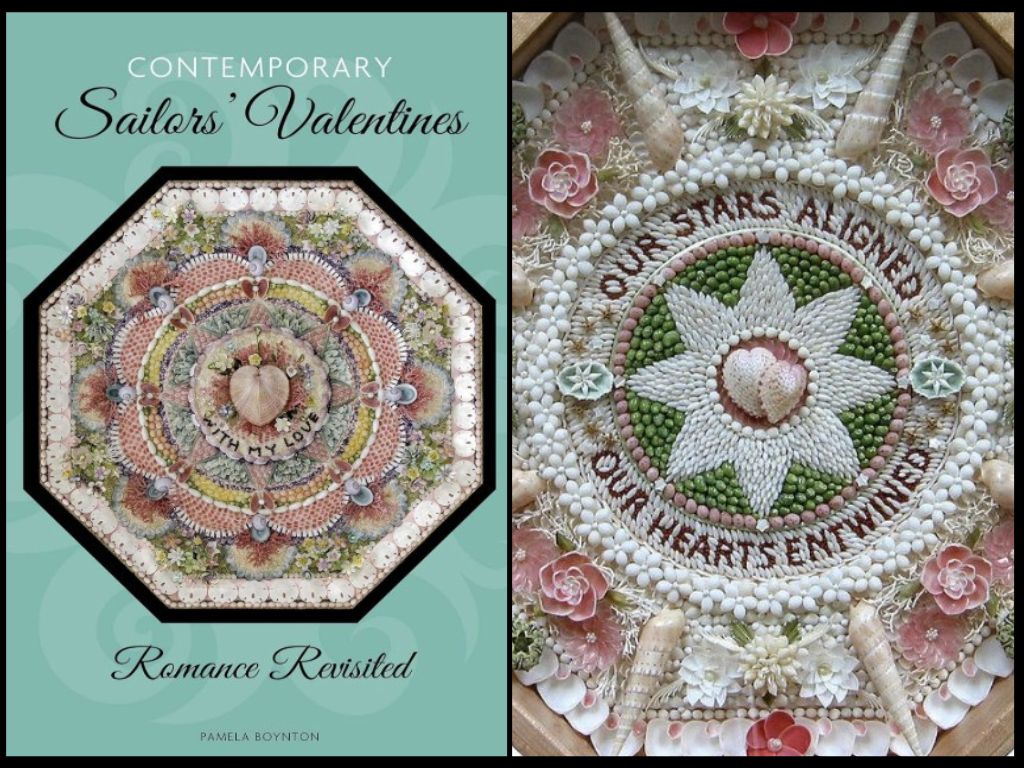
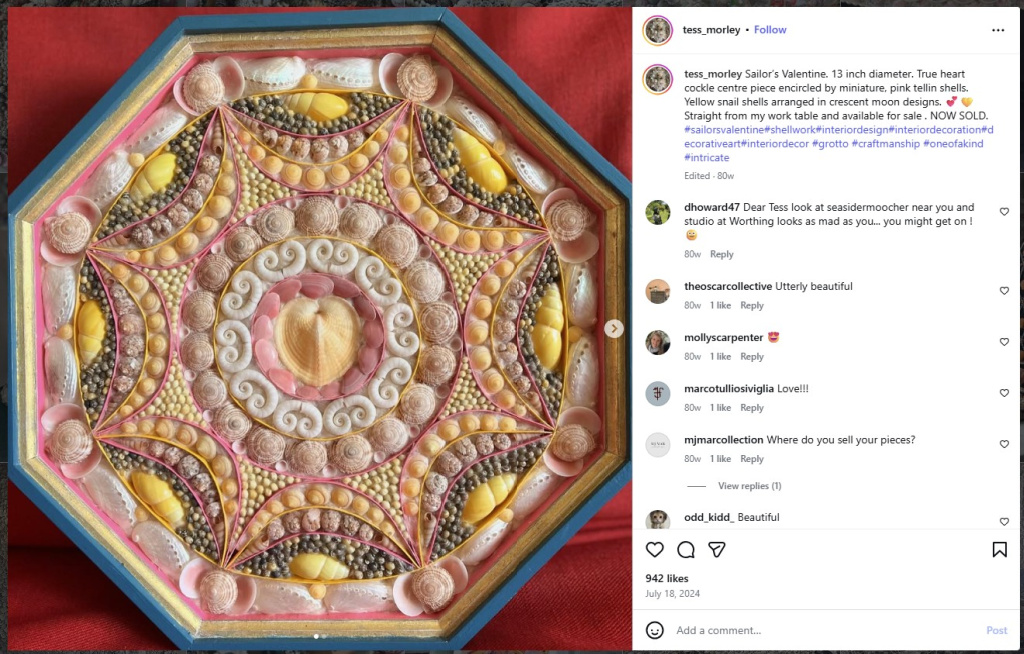
An online search revealed several amazing shell-work artists who actively make sailors’ valentines. Here are a few examples from Instagram.
This sailors’ valentine was made by Tess Morley, a shell-work and grotto decoration artist, from the UK.
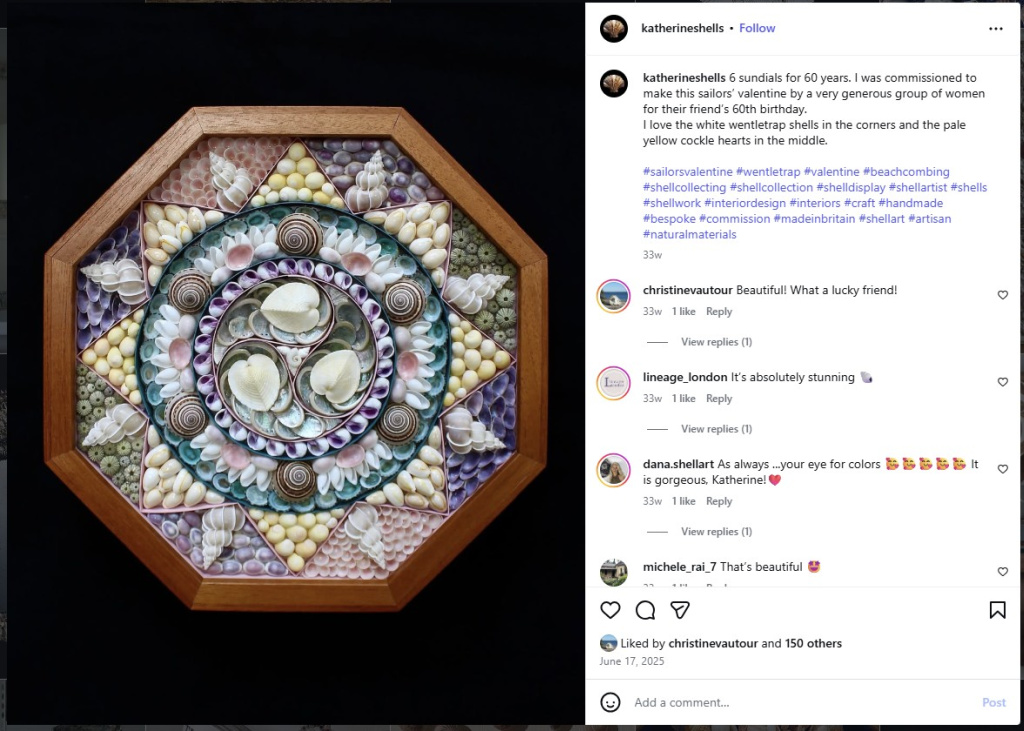
Katherine Lloyd, of Katherine Shells, is also a shell-work and grotto artist in the UK who makes fantastic sailors’ valentines.
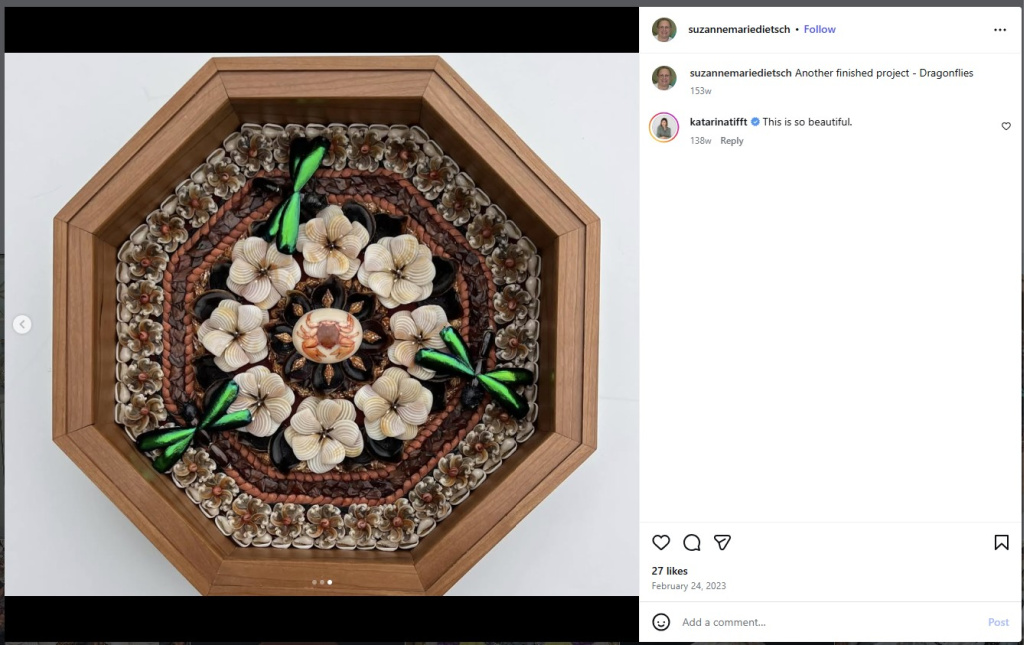
Shown below is Dragonflies created by Suzanne Marie Dietsch, of Seashell Valentines, an award-winning mosaic shell and sailors’ valentine artist.
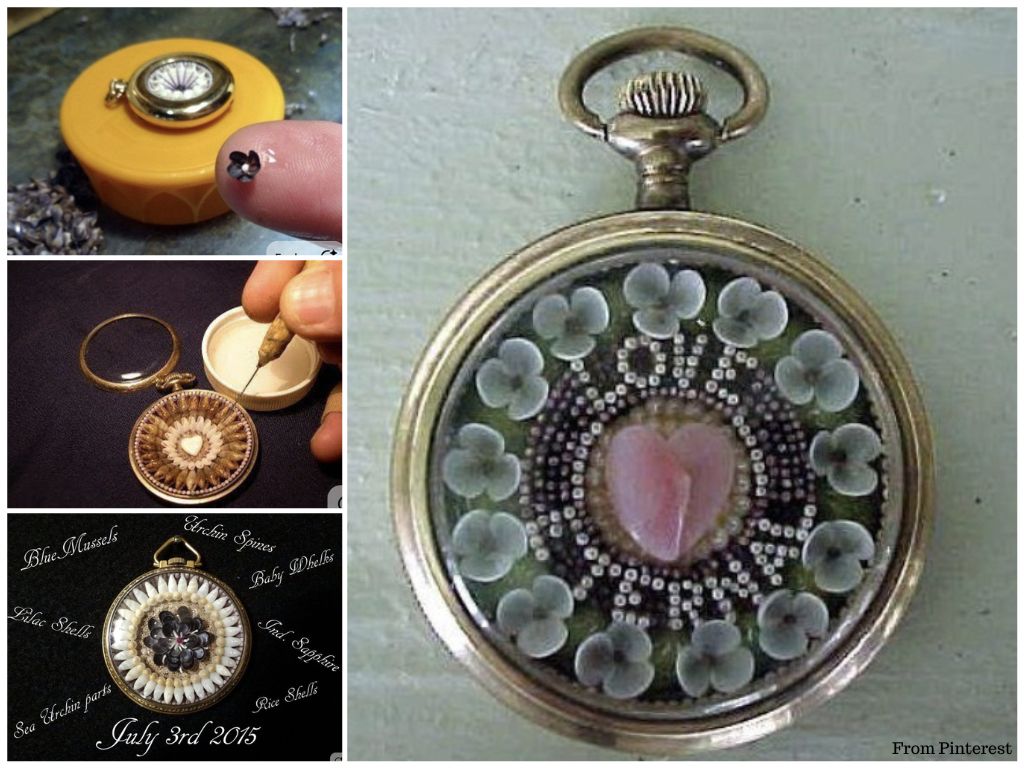
Predictably, contemporary artists are finding fascinating ways to stretch the artform. For instance, according to the Bill Jordan Tribute Pinterest board, in addition to creating beautiful sailors’ valentines in the traditional style, William Jordan is credited with having been “the first to incorporate these delicate shell mosaics into antique pocket watches”. Here’s a sampling of his miniature sailors’ valentines.
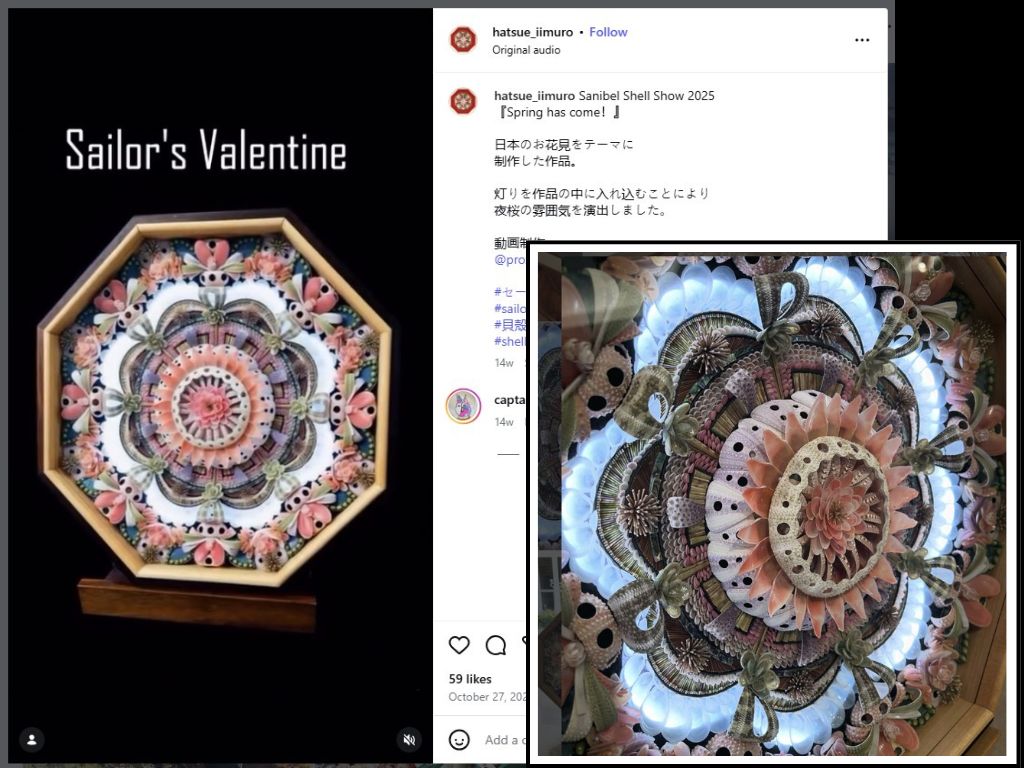
Award-winning shell artist Hatsue Iimuro, of Shell Forest and the Japan Sailors’ Valentine Association, provides another example of extending the artform. Iimuro created a stunning sailors’ valentine called Spring Has Come! featuring a “collaboration of light and seashells”. As explained on her Instagram posting, “This piece is themed around Japanese cherry blossom viewing. By incorporating lights into the piece, I created the atmosphere of cherry blossoms at night.” Iimuro‘s Spring Has Come! won the Best in Show (Professional) category in the 2025 Sanibel Shell Show.
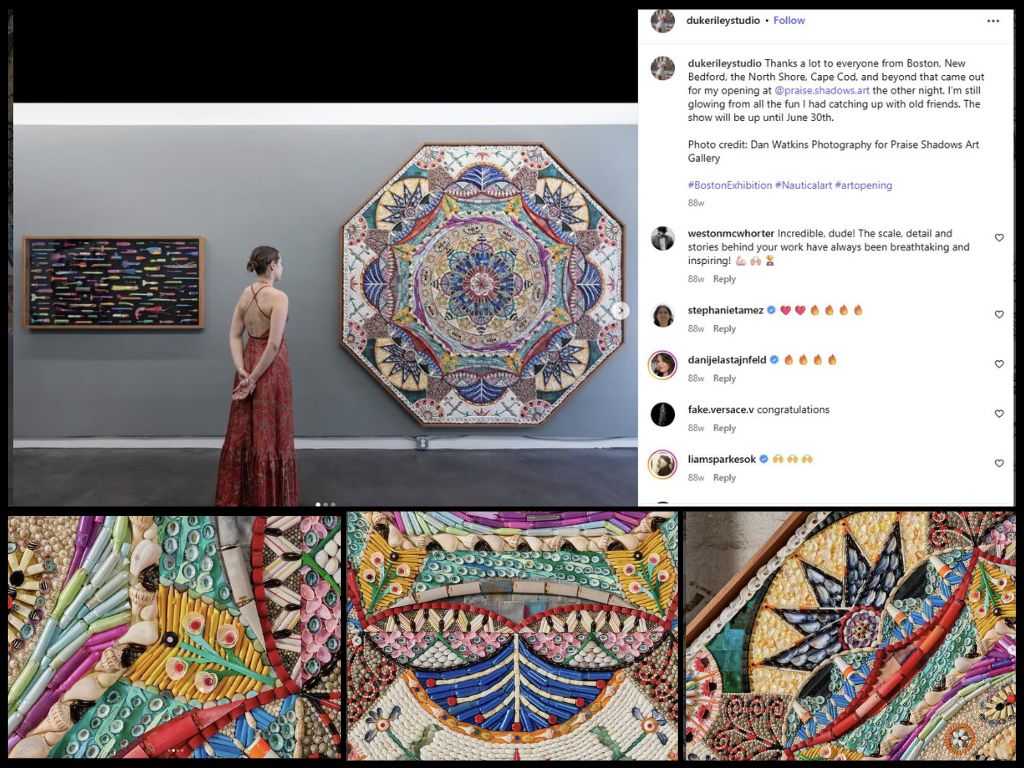
I’ll wrap up with one more extraordinary example of a sailors’ valentine ― it is the Guinness Book of World Records Largest Sailor Valentine in the World. Created by Duke Riley, this piece is 8 feet (2½ meters) square and features plastic and other trash pulled from New York waterways. According to a Virginia Museum of Contemporary Art Instagram post promoting a recent exhibition, “Riley’s works, which evoke the aesthetics and imagery of early Americana and maritime craft, are rooted in folkloric narrative while addressing contemporary issues. … such as corporate greed, environmental crises …).
More Info
The Fisheries Museum of the Atlantic, located in Lunenburg Nova Scotia, celebrates the rich history of Canada’s North Atlantic fishery. To learn more, see the Fisheries Museum website.
The Maritime Museum of the Atlantic, located in Halifax Nova Scotia, is the oldest and largest Maritime Museum in Canada. See the Maritime Museum website for more information.
The following resources were consulted in the writing of this blog post:
. Nova Scotia Archives website
. Canadian Encyclopedia website
. 1stdibs.com website which is an online marketplace selling luxury items
. The Strong National Museum of Play website. The Strong explores the ways in which play encourages learning, creativity, and discovery, and how it illuminates cultural history. Located in Rochester New York, The Strong holds one of the largest institutional collections of sailors’ valentines.
. Sailors’ Valentines: Shell Mosaics from Victorian Barbados research paper by Molly Duggins; published by British Art Studies in 2023
. Contemporary Artists Carry on Sailors’ Valentine Tradition by Karen Knapstein; published by Antique Trader in 2018
. Exquisite Shells: The Art of Sailors Valentines article by Cahoon Museum of American Art
. Etsy.com website
. Bailey-Matthews National Shell Museum & Aquarium website. This facility, located in Sanibel Florida, serves as a premier institution for the conservation, interpretation, and celebration of shells, mollusks, and their ecosystems.
. Sanibel Shell Show and Festival website. This show is held annually at the Community House in Sanibel Florida.
. Contemporary Sailors’ Valentines: Romance Revisited book by Pamela Boynton.
. Various Wikipedia entries.
The following talented shell-work artists are mentioned in this blog post:
. Tess Morley, shell-work and grotto decoration artist – see more on Instagram or website
. Katherine Lloyd, of Katherine Shells, shell-work and grotto artist – see more on Instagram or website
. Suzanne Marie Dietsch, of Seashell Valentines, award-winning mosaic shell and sailors’ valentine artist – see more on Instagram or website
. William (Bill) Jordan (1997 – 2017) – see Bill Jordan Tribute on Pinterest
. Hatsue Iimuro, of Shell Forest and the Japan Sailors’ Valentine Association – see more on Instagram or website
. Duke Riley – see more on Instagram or website.
Today’s Takeaways
1. A sailors’ valentine is a mosaic of small seashells artistically arranged in a symmetrical pattern in an octagonal wooden frame.
2. Astute observations and deductive reasoning led to the truth about how sailors’ valentines were traditionally made.
3. It can be fascinating to observe how art forms evolve over time.

Comments are closed.