Maybe it’s the vast expanse of sparkling white snow that has me dreaming about spring flowers. Or maybe it’s just that flowers have always been a go-to motif for creative endeavors. In either case, I’ve been having fun making blossoms and blooms out of fabric.
I’ve made flowers from felt before but this was my first attempt with woven fabric. Working with felt is super easy because the material doesn’t ravel and there’s no need to finish edges or worry about fraying. Plus felt is very pliable and comes in an amazing array of colors.
To get started, I went back to look at a few past projects featuring flowers made from felt.
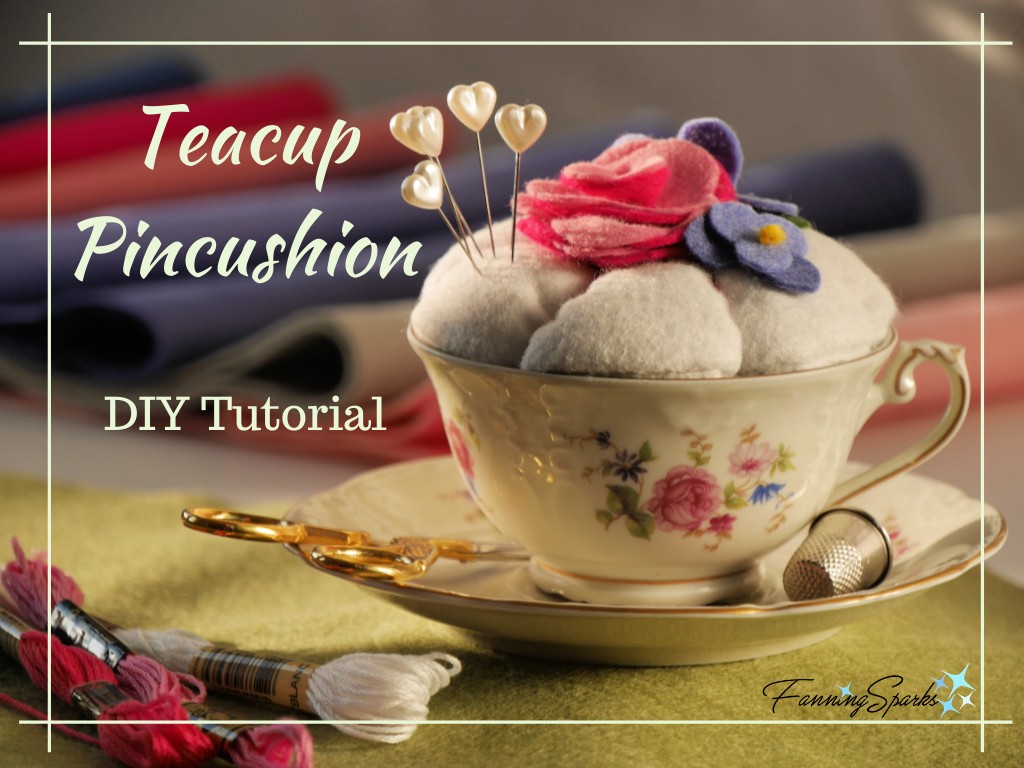
The heirloom teacup pincushion, shown below, is one of my all-time favorite projects. It features a cup and saucer set which my mother brought with her when she immigrated from the Netherlands to Canada as a young bride. I turned it into a pincushion and decorated the top with a few small, colorful, felt flowers. It’s on display in my studio where it serves as a daily reminder of my Mom.
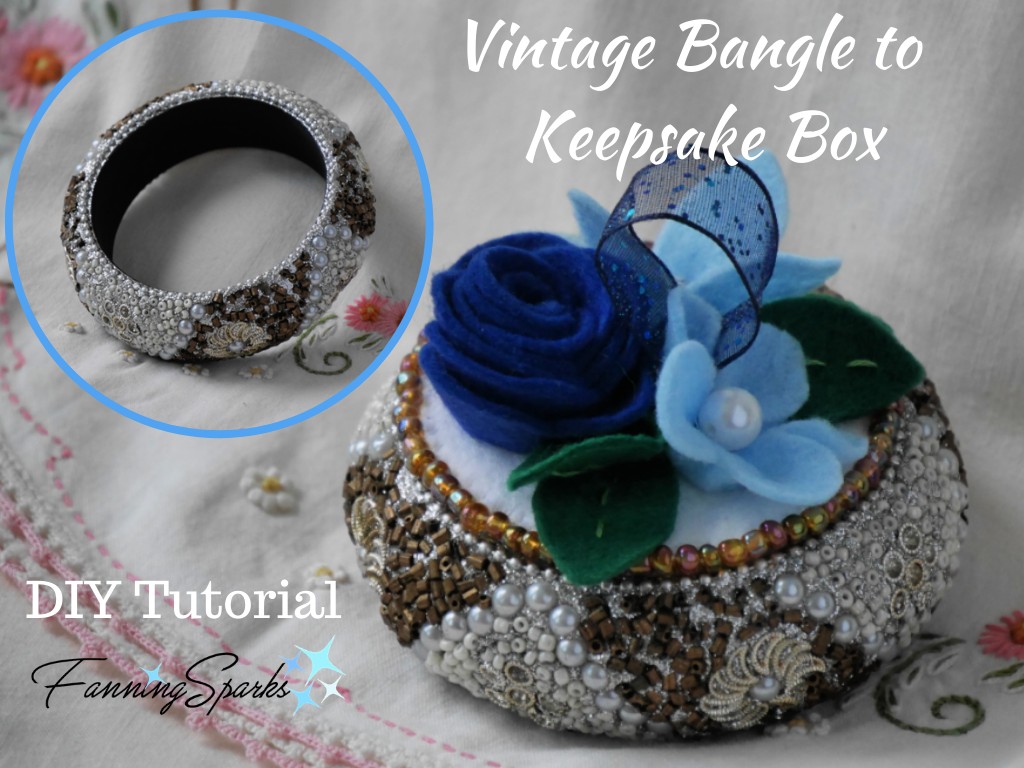
In this next project a vintage bangle bracelet was repurposed into a keepsake or trinket box. The box lid is embellished with a dainty bouquet of felt flowers.
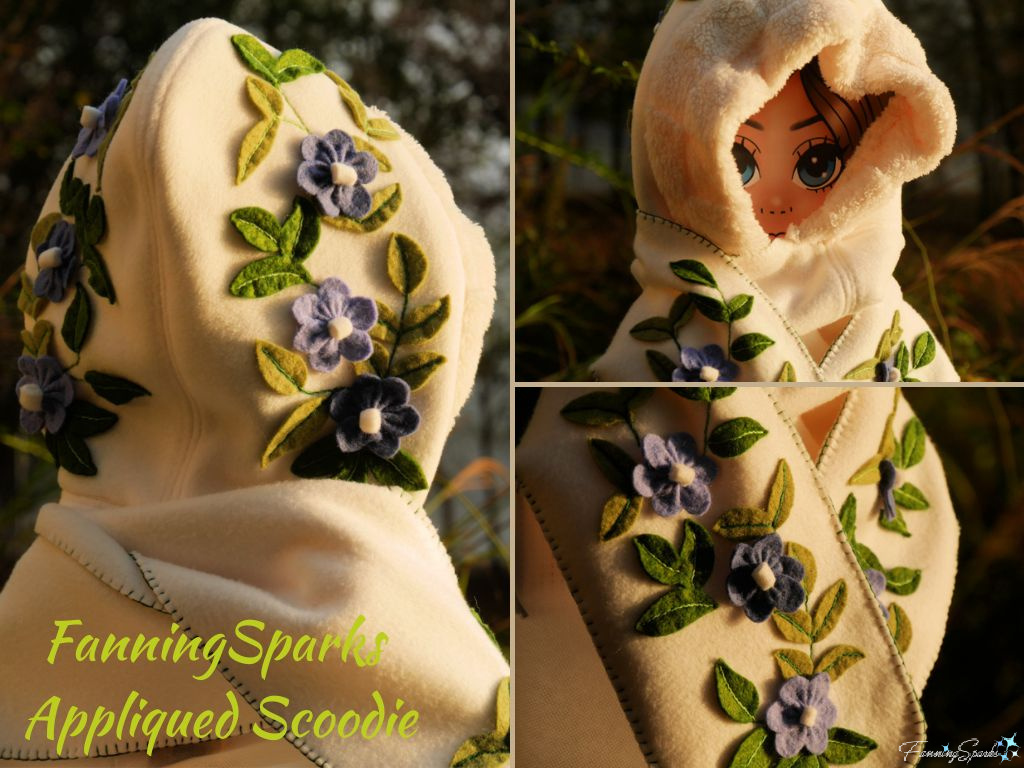
This final project, the FanningSparks Appliqued Scoodie, showcases daisy-like blue flowers on branches of green leaves ― all made from felt.
Templates and detailed instructions for making these flowers can be found in the blog posts about the projects: Teacup Pincushion – DIY Tutorial, Vintage Bangle to Keepsake Box – DIY Tutorial and FanningSparks Appliqued Scoodie.
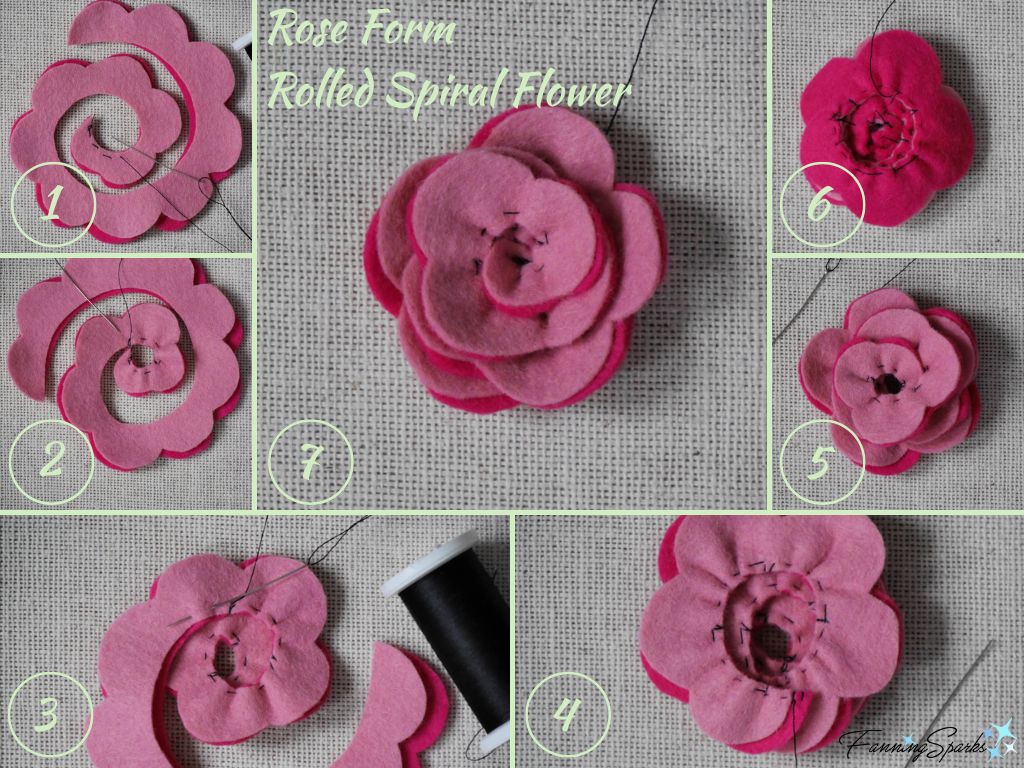
Specifically, I’ve shared tutorials for five forms of felt flowers including the Rose Form Rolled Spiral Flower, Apple Blossom Form Round Petal Flower, Dogwood Form Pointed Petal Flower, Hydrangea Form 3-Pointed Petal Flower and Daisy Form Row of Petals Flower. Shown below are the illustrated steps for each. See the original blog posts for a more complete explanation of the process as well as detailed lists of the supplies, equipment and tools needed.
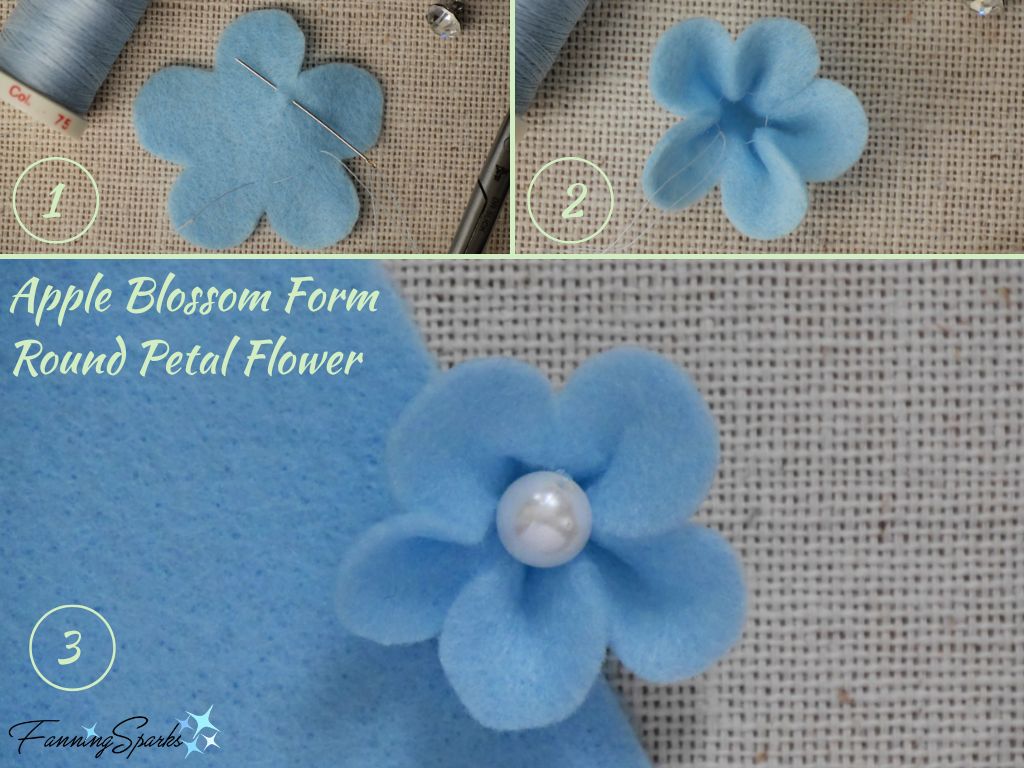

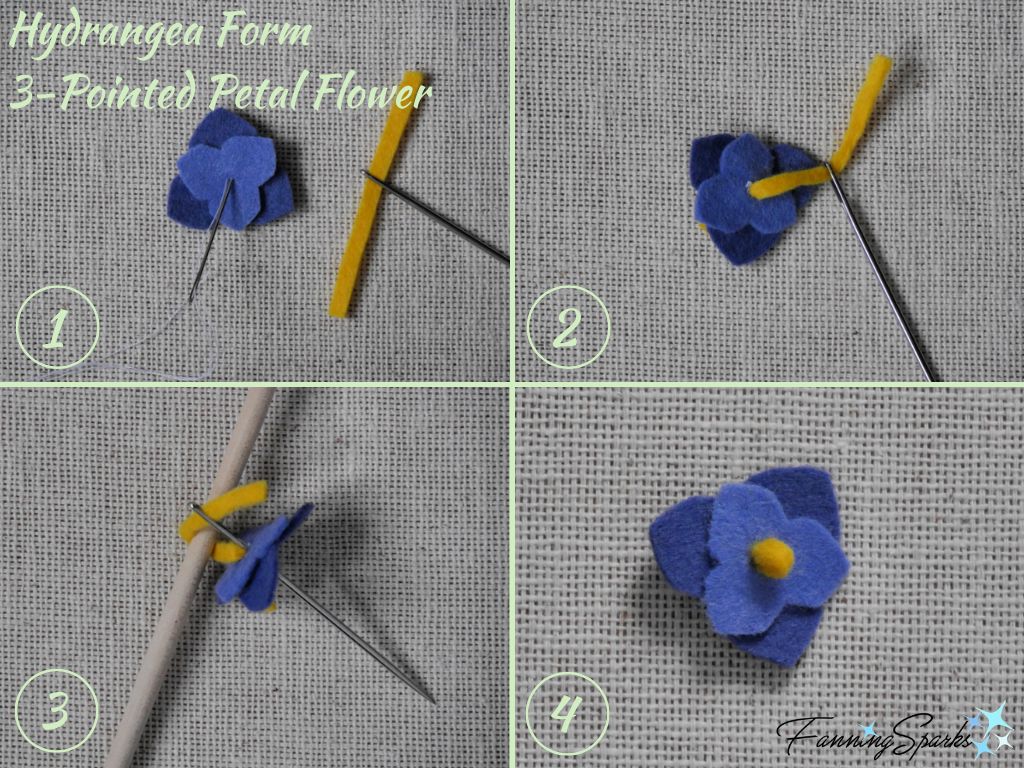
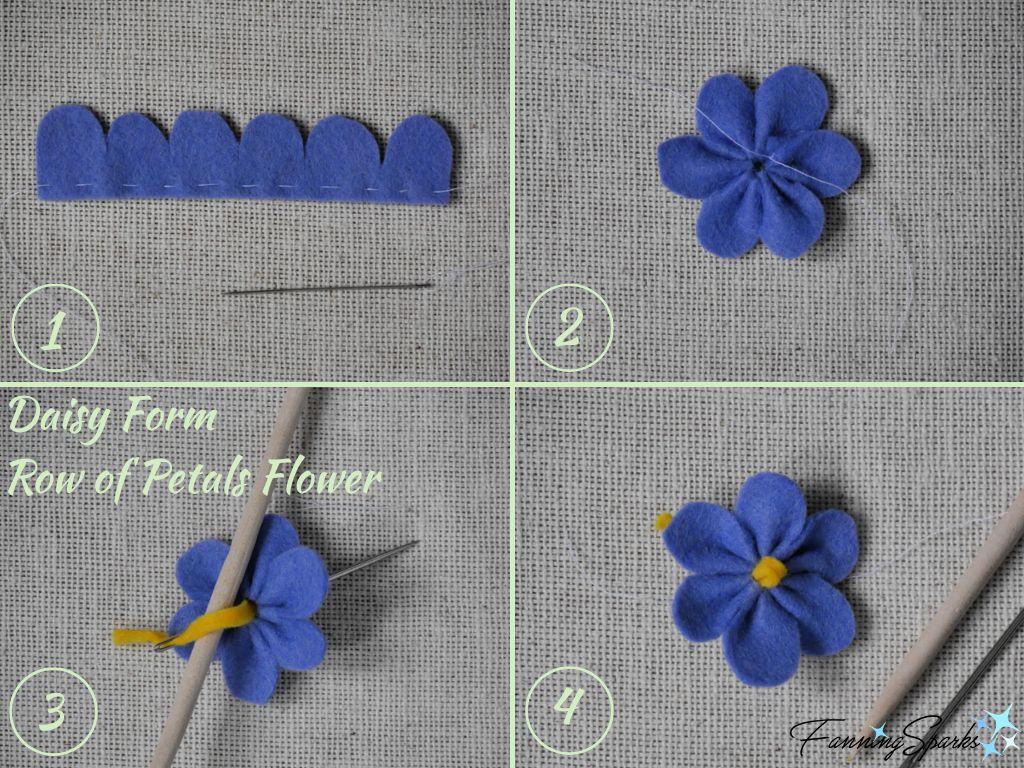
The templates for these felt flowers have been packaged into two separate complimentary downloads. Access the Felt Flowers for Bangle Keepsake Box – Complimentary Download for the rose, apple blossom and dogwood templates which look like this.
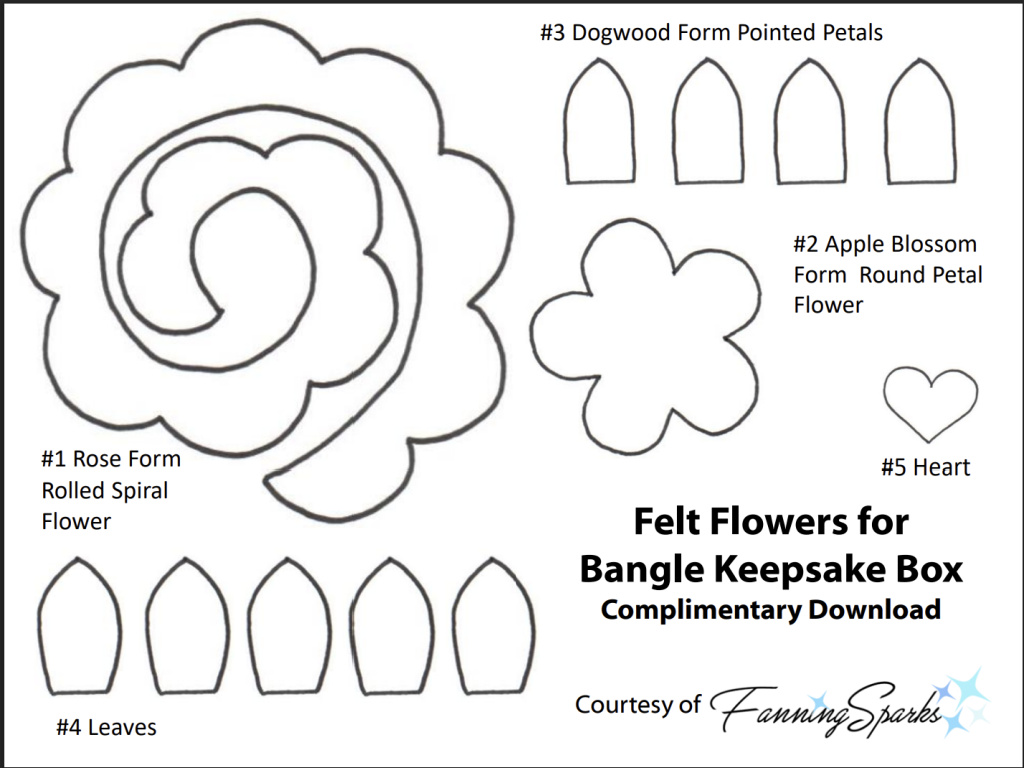
Or access the Felt Flowers for Teacup Pincushion – Complimentary Download for another rose, the hydrangea and daisy templates which look like this.
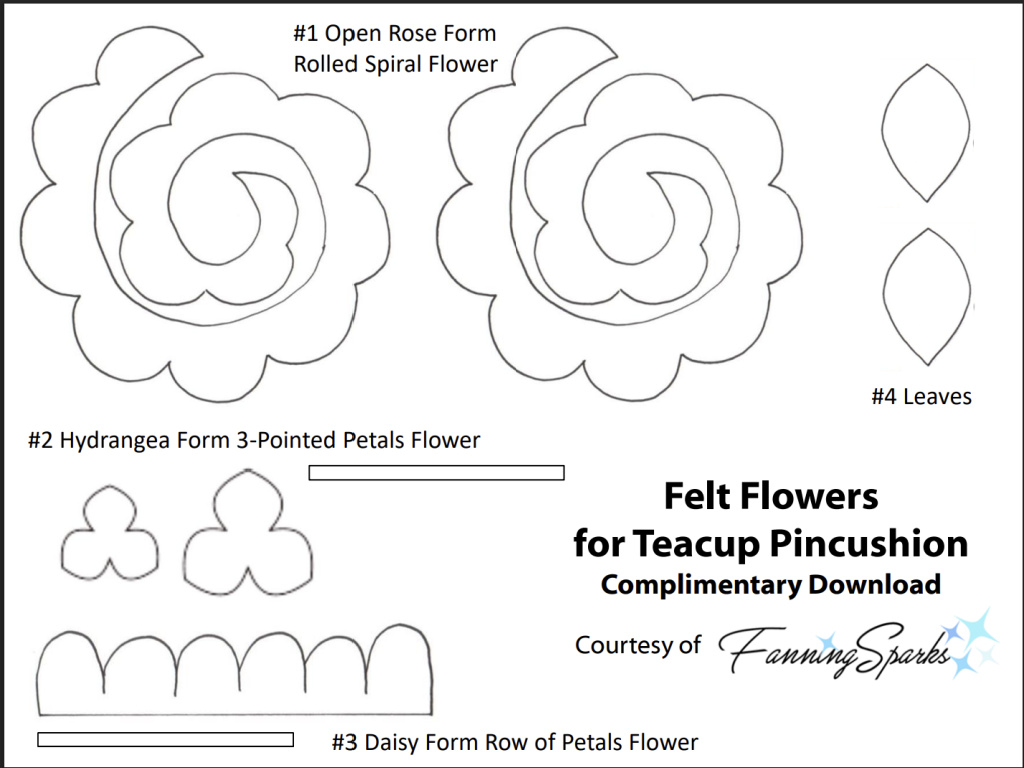
So, that’s the refresher on making flowers from felt. Now, moving on to making flowers from woven fabric. Are they made the same way?
Felt flowers are typically made by cutting out precise shapes from felt, then molding the felt pieces into the desired forms which are then secured with a few, well-placed hand stitches. I’ve discovered there are some similarities when working with woven fabric but the previously mentioned issue of fraying necessitates some notable differences.
Rose Form Twisted Strip Flower
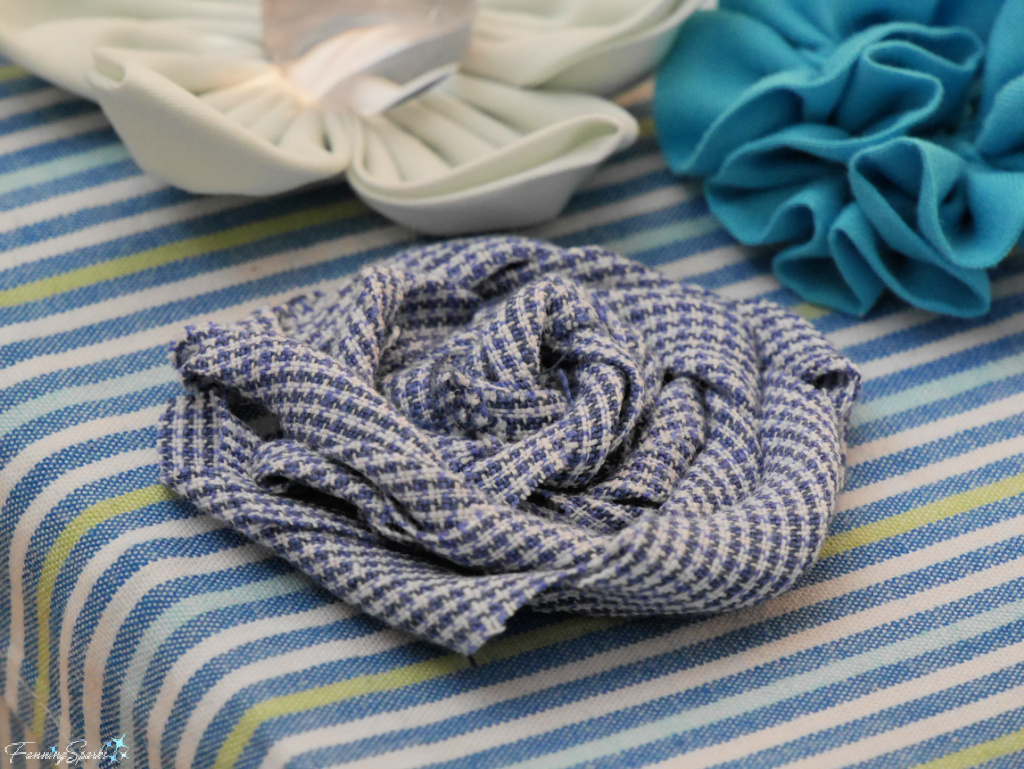
In some fabric flower designs ― like the Rose Form Twisted Strip Flower shown below ― the raw edges of the fabric are deliberately left unfinished. This rose form flower is made by twisting and shaping a long, narrow strip of fabric. The exposed raw edges result in a rustic, casual style.
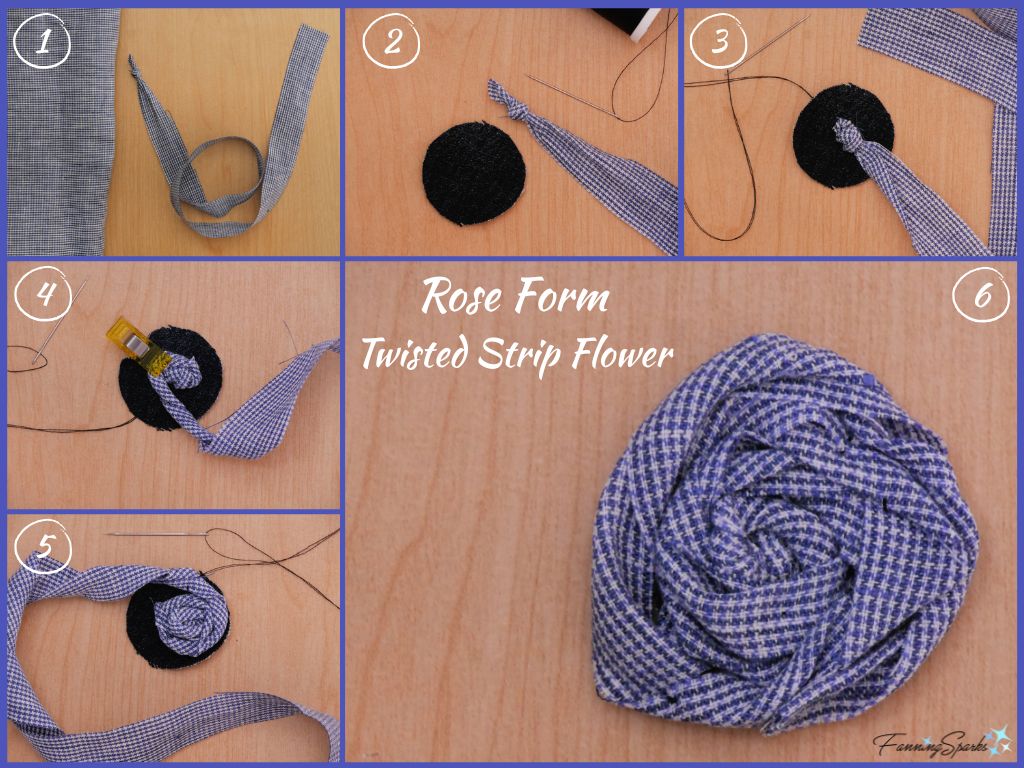
Shown below are the steps to create a Rose Form Twisted Strip Flower. A 2.5 x 60cm (1 x 24”) strip of fabric will result in a 6.5cm (2½”) rose.
Peony Form Gathered Strip Flower
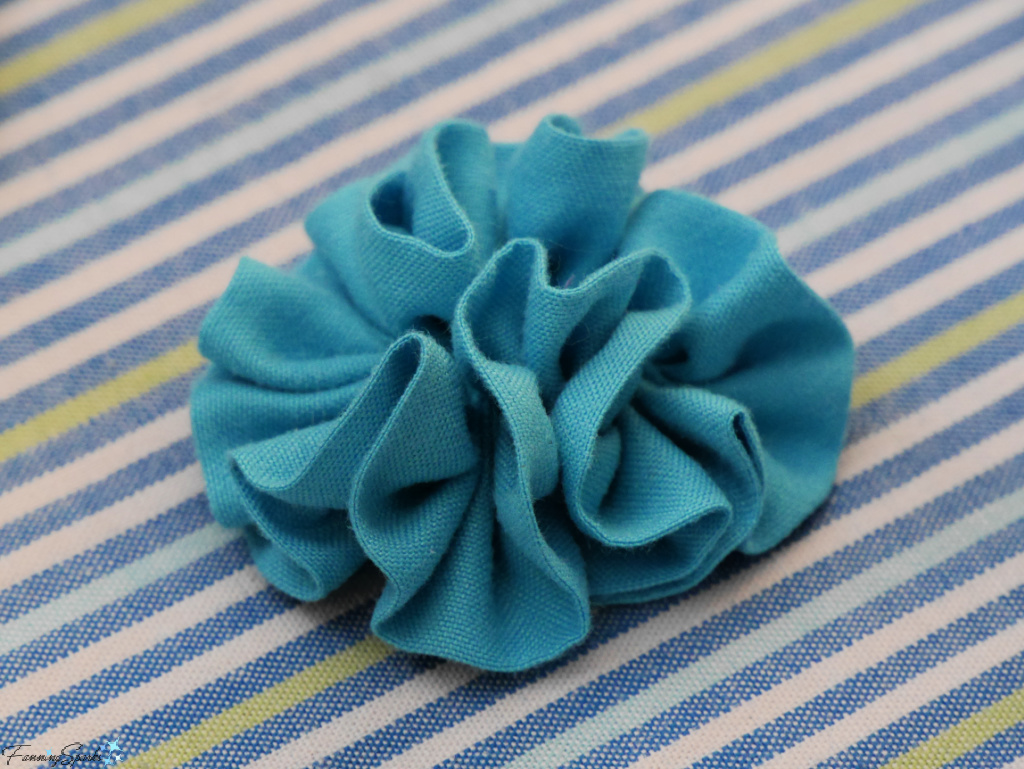
While the above rose form flower exposes the fabric’s raw edges, most of the other fabric flower designs I found use clever folding techniques to hide the raw edges. The Peony Form Gathered Strip Flower shown below is a case in point. It’s made by folding and then gathering a long, narrow strip of fabric. The folded edge becomes the tips of the “petals” while the unfinished edges are tucked underneath out of sight.
Here are the steps to create a Peony Form Gathered Strip Flower. A 4 x 53cm (1½ x 21”) strip of fabric will result in a 5cm (2”) peony.

Daylily Form 6-Pointed Petal Flower
A third fabric flower, the Daylily Form 6-Pointed Petal Flower, is also made by folding fabric shapes and hiding the raw edges.
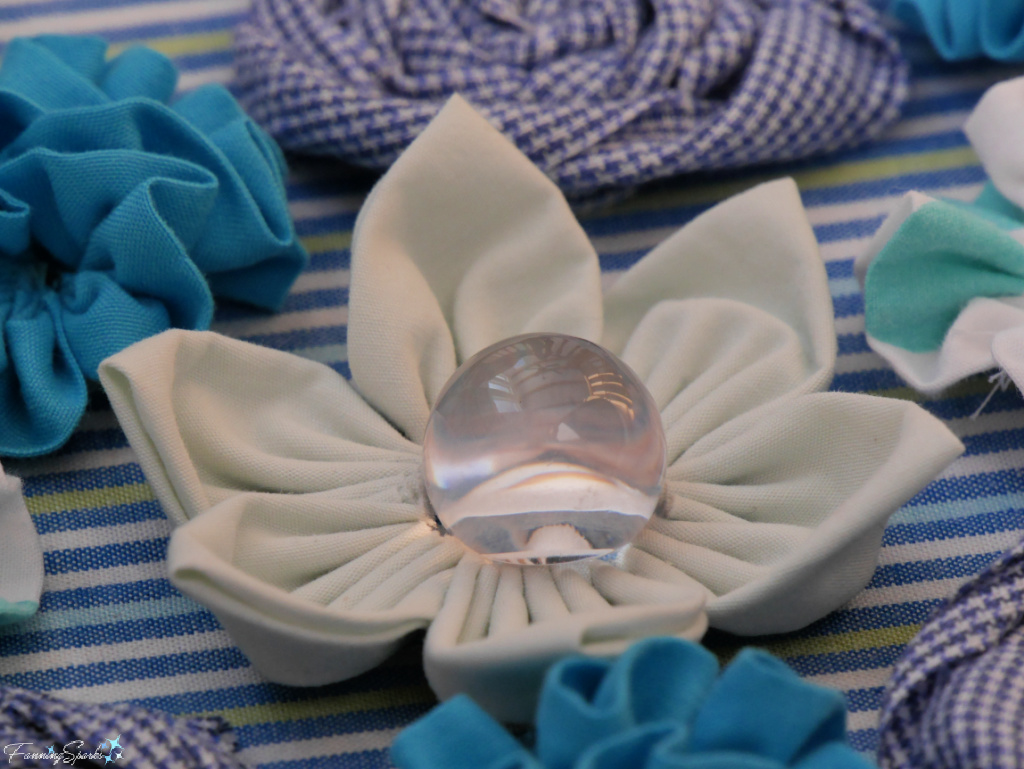
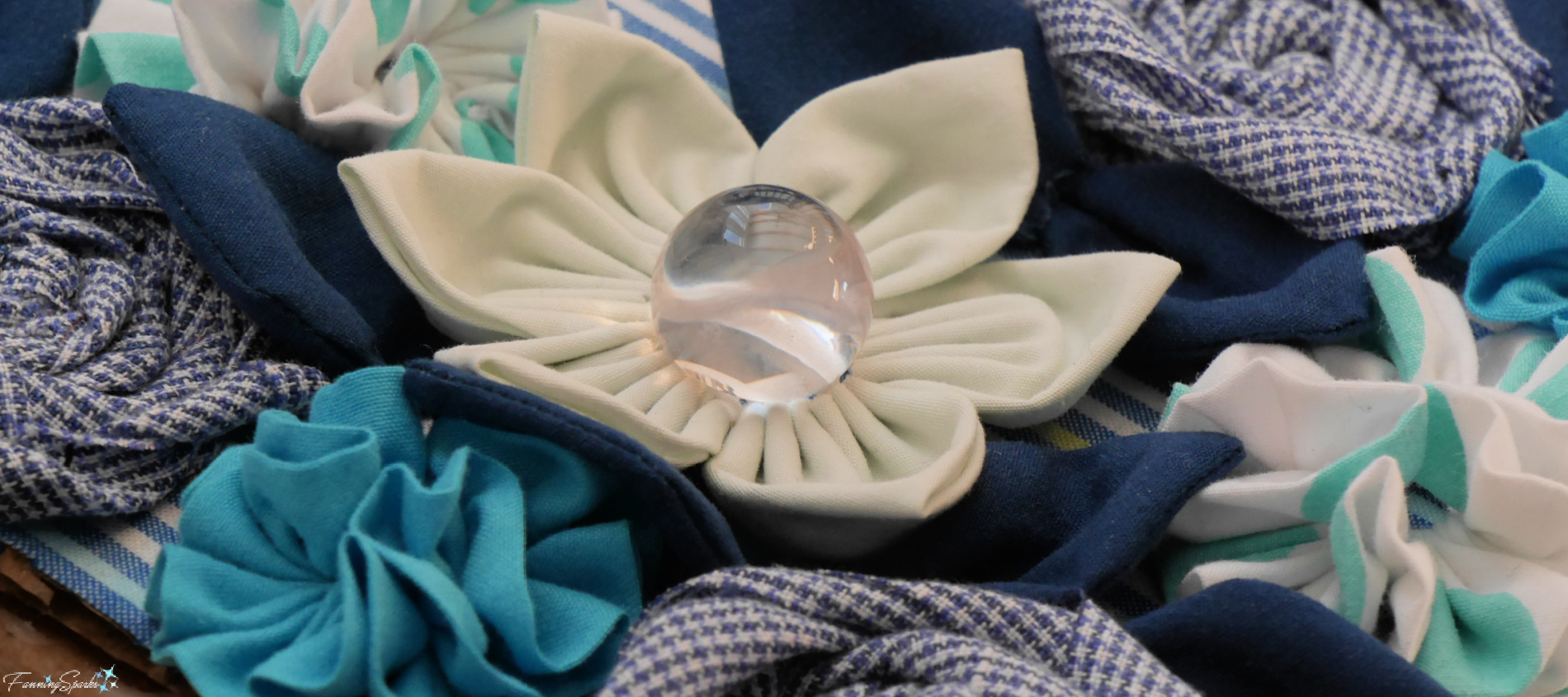
Shown below are the steps to create a Daylily Form 6-Pointed Petal Flower. Six 7.5cm (3”) circles of fabric will create a 7.5cm (3”) daylily. This fabric flower needs a small accent, such as a button, pompom or bead, to finish off the center. Although they’re not very daylily-like, I’m really pleased with how the unusual, clear plastic, sphere buttons elevated my fabric flower.

After arranging my new fabric flowers on my background, I realized something was missing. Leaves! I needed leaves to fill in and complete the arrangement.
The leaves were made by sewing together two layers of fabric in a simple leaf shape. A short, straight stitch on a sewing machine works well. The leaf shape was trimmed after sewing and then turned right side out. A small hand-sewn stitch at the base of the leaf adds a little depth to the finished leaf.
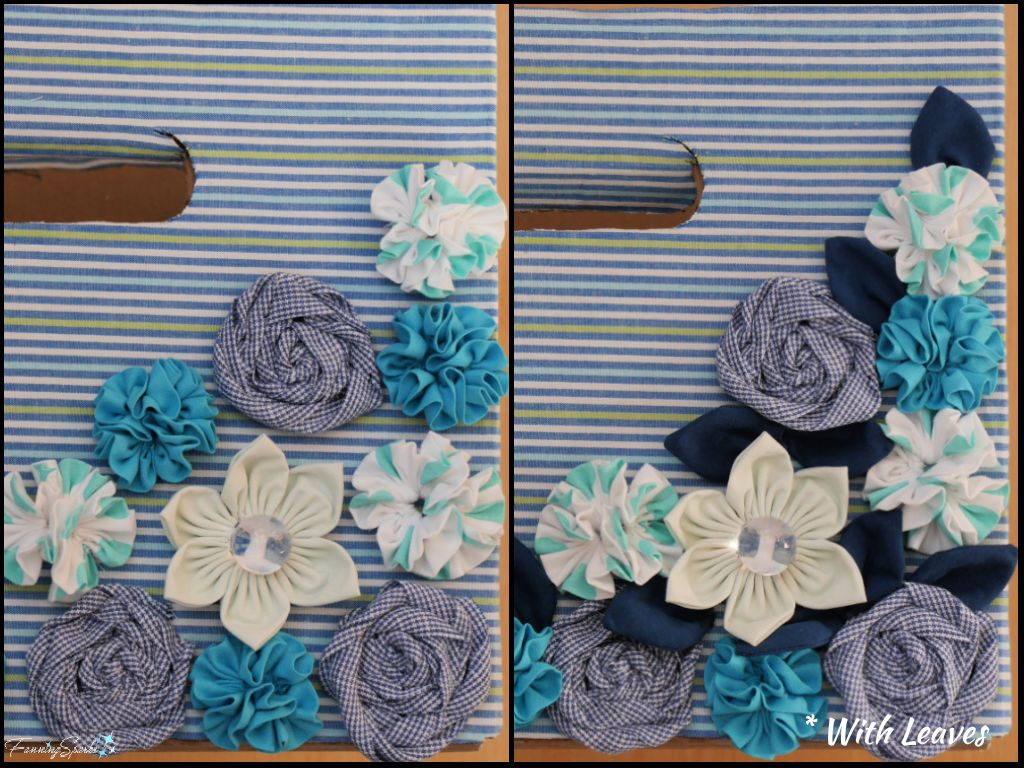
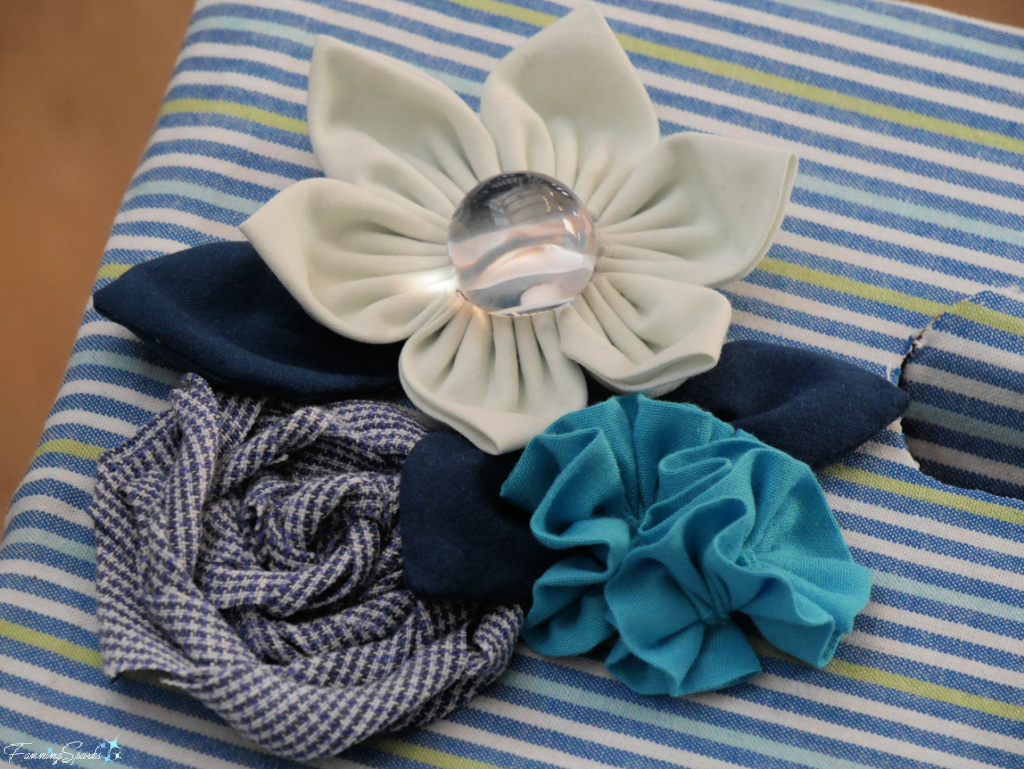
Fabric flowers can add color, texture, depth and interest. All that’s needed is some fabric scraps and a little know-how. Here’s a closer look at the final results.

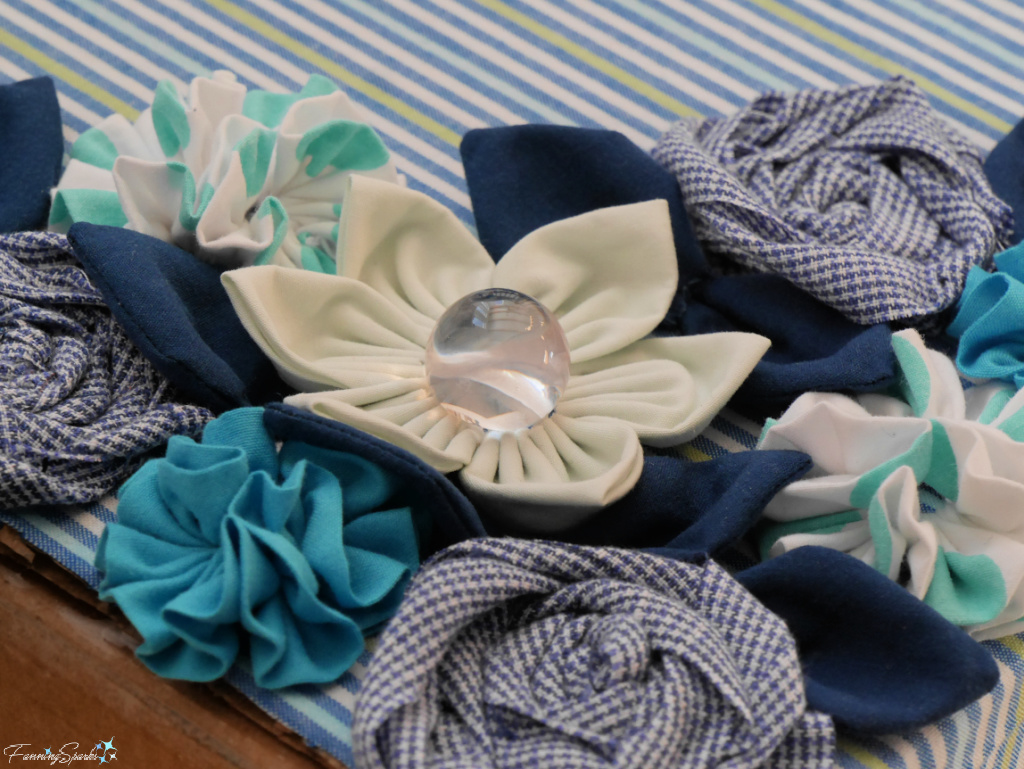
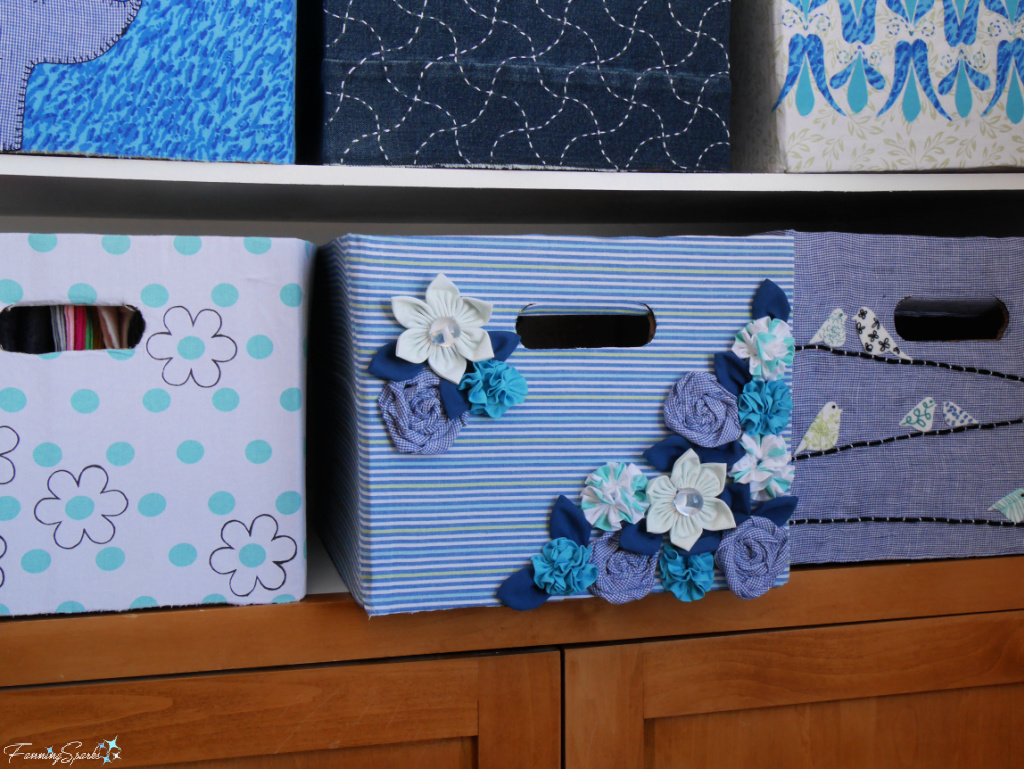
Sharp-eyed, regular readers may recognize that these fabric flowers are arranged on one of my repurposed cardboard storage bins.
This is an ongoing project which started with a desire to repurpose some of the corrugated cardboard boxes from our recent move. I successfully made a set of nine custom storage bins to house my fabric stash. See Repurposed Cardboard Storage Bins for the details.
These nine Repurposed Cardboard Storage Bins will be displayed in an open cabinet resulting in the perfect grid of blank canvases. So, I’ve been making the most of this opportunity by covering and embellishing each storage bin differently. They are covered in a variety of fabrics, in a mix of colors and designs, that would work together. Each storage bin will feature a different embellishment technique. To date, I’ve used simple mark-making, fabric applique, sashiko-stitching and raw-edge applique. See Zhuzhing Up My New Storage Bins.
The zhuzhing continues and my mini textile art gallery is coming along nicely. Here’s the latest addition featuring my new fabric flowers.
More Info
You can download the project templates from these links:
. Felt Flowers for Bangle Keepsake Box – Complimentary Download
. Felt Flowers for Teacup Pincushion – Complimentary Download
Previous blog posts mentioned in this blog post include:
. Teacup Pincushion – DIY Tutorial
. Vintage Bangle to Keepsake Box – DIY Tutorial
. FanningSparks Appliqued Scoodie
. Repurposed Cardboard Storage Bins
. Zhuzhing Up My New Storage Bins
The following books were consulted in the writing of this blog post:
. Folded Flowers: Fabric Origami with a Twist of Silk Ribbon book by Kumiko Sudō; Published in 2002 and available here on Internet Archives
. Flower Origami: Fabric Flowers from Simple Shapes book by Kumiko Sudō; Published in 2004 and available here on Internet Archives
. Fabulous Flowers: Mini-Quilts in Dimensional Appliqué book by Sharon K. Baker; Published in 2005 and available here on Internet Archives
. More Fabulous Flowers: Mini-Quilts in Dimensional Appliqué book by Sharon K. Baker; Published in 2008 and available here on Internet Archives
. 200 Sewing Tips, Techniques & Trade Secrets book by Lorna Knight; Published in 2010 and available here on Internet Archives.
Today’s Takeaways
1. Three-dimensional textile flowers can be made from felt or woven fabric.
2. Making fabric flowers is a great way to use fabric scraps.
3. Fabric flowers can add color, texture, depth and interest.