
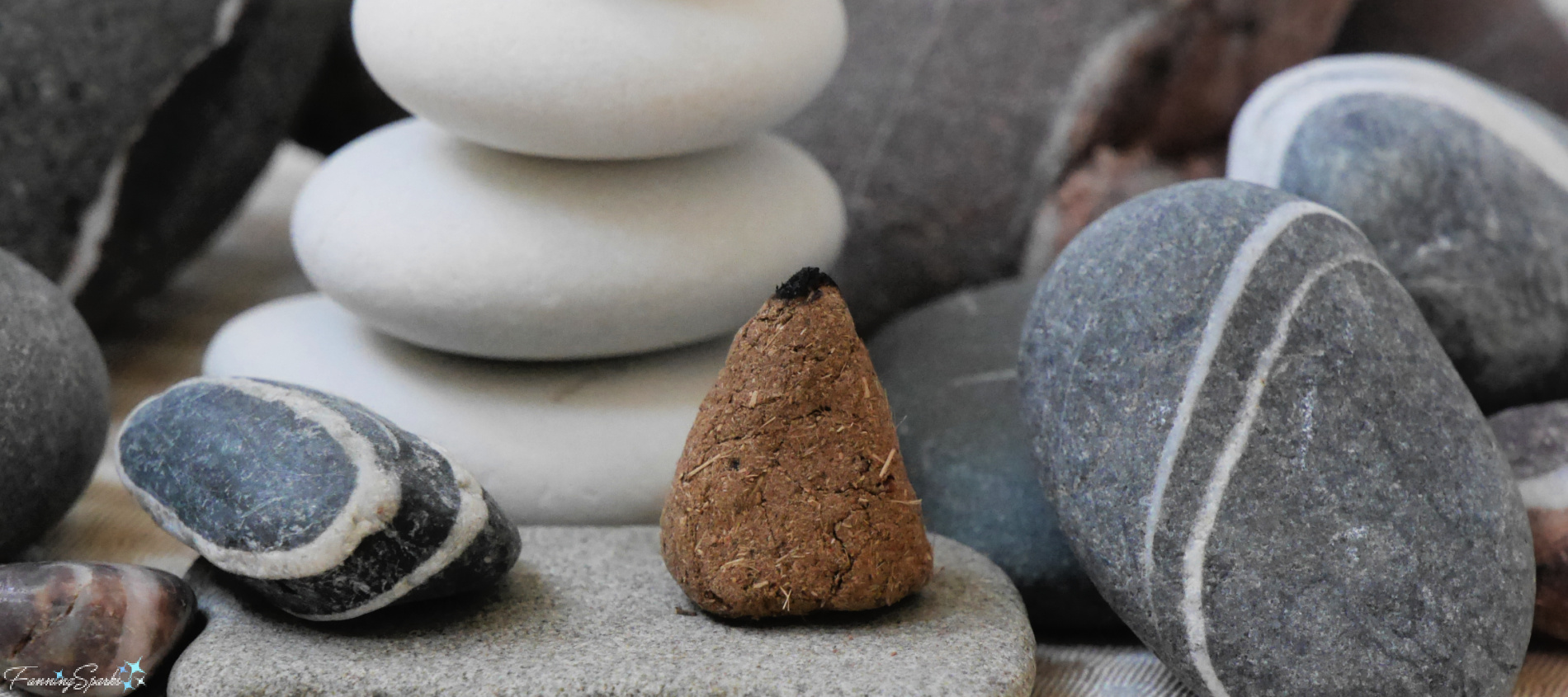
Is incense its own specific scent? Or can any smell be incense? I’d always assumed the former but, surprisingly, it’s actually both!
Despite spending considerable time in Southeast Asia, where burning incense is part of daily life for the majority of the population, I failed to take notice of this fascinating subject.
Shown below is one of Japan’s many beautiful temples ― the Shinobazu no ike Temple ― which is located in Tokyo. 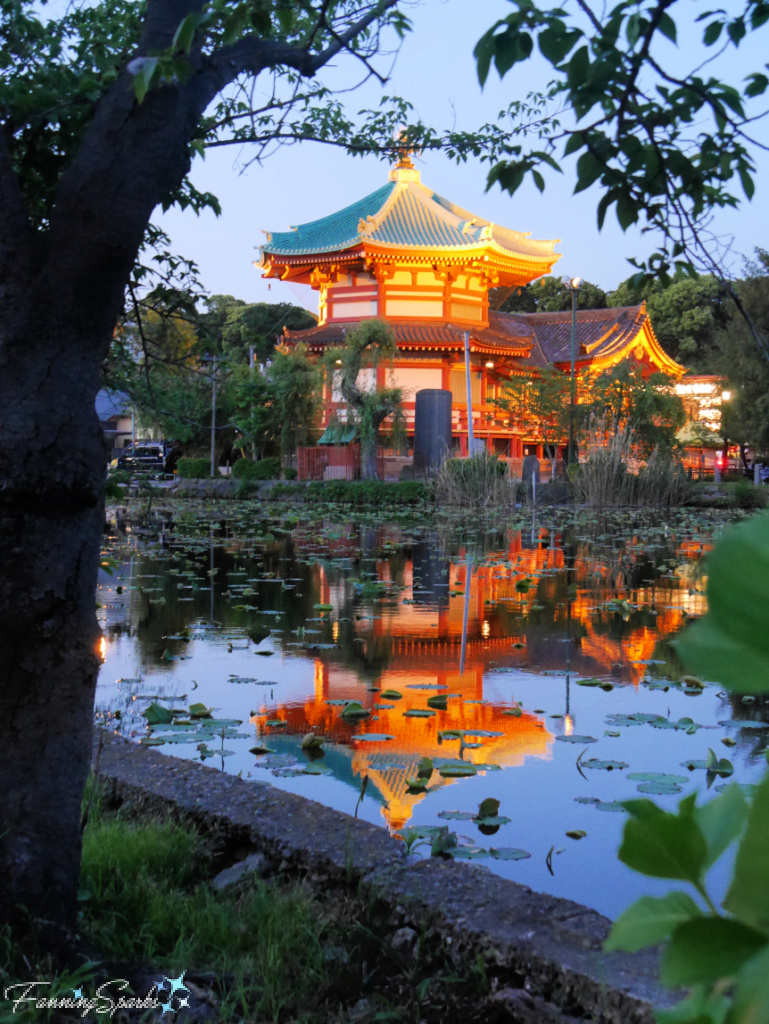
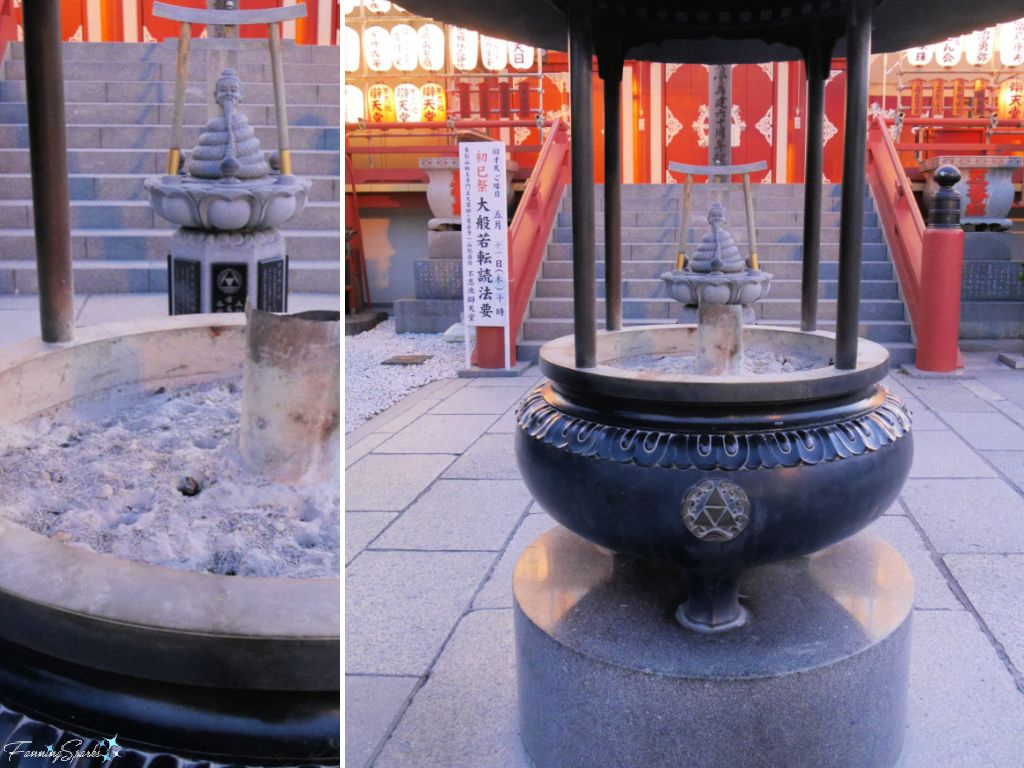
Large incense burners, like the one shown below at the Shinobazu no ike Bentendo Temple, are a common sight in front of temples. They are an integral part of the purification ritual worshippers perform before entering.
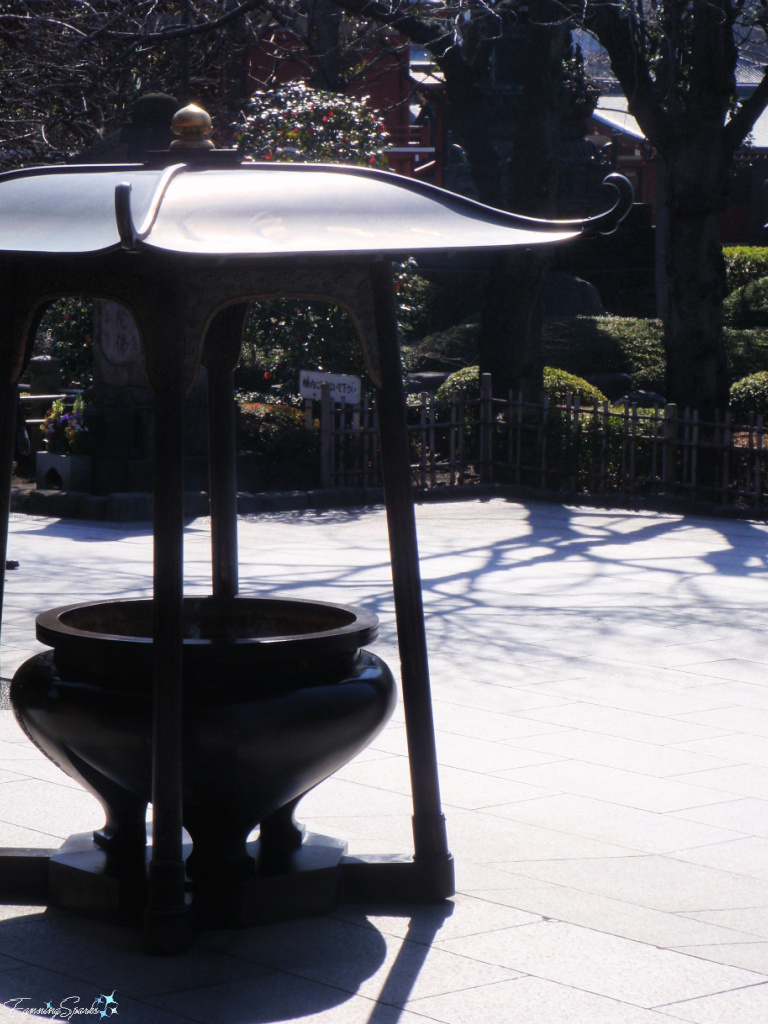
Here’s another example ― the incense burner in front of the main hall of the Sensō-ji Temple (also known as Asakusa Kannon Temple) in Tokyo.
Worshippers buy bundles of incense sticks, light them, place them inside the burner and then gently wave the rising smoke towards their head and shoulders. “To offer incense at Sensō-ji is not just a ritual act; it is a moment to cleanse one’s heart and body before meeting the sacred. The fragrance bridges the visible and invisible worlds, reminding visitors that faith in Japan is not only spoken — it is experienced through the senses.” as reported in the Crossing Tokyo article, Why Incense Is Burned at Sensō-ji: A Guide to Japanese Purification Rituals.
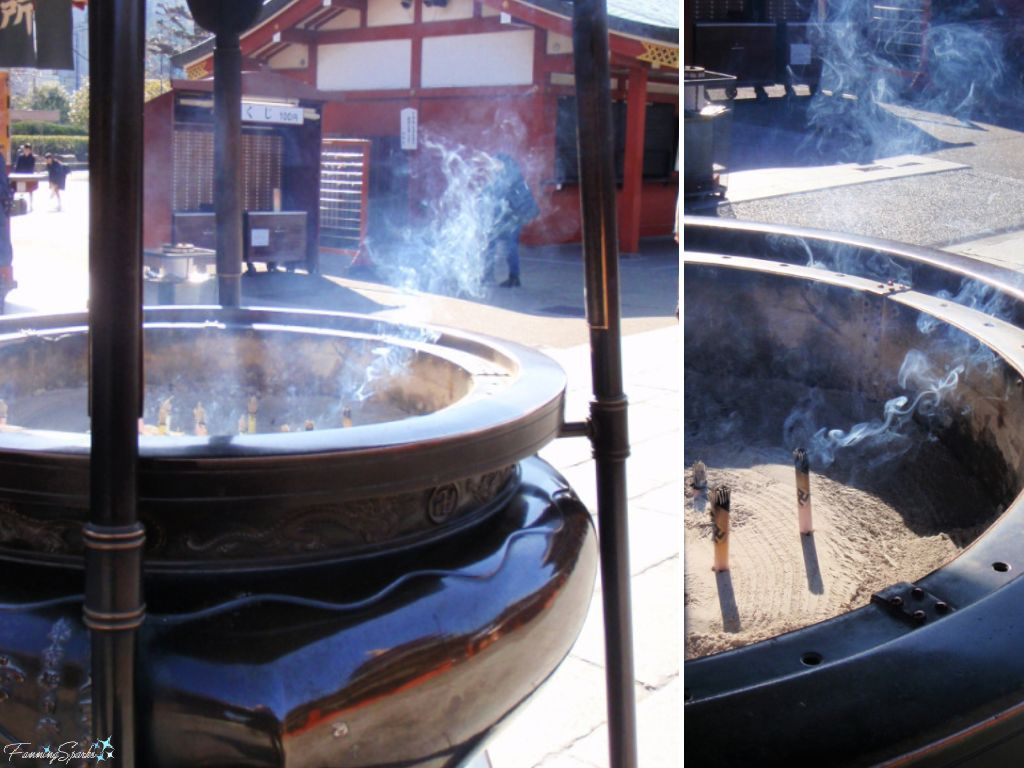
As I recall, the incense at the various places of worship I visited all had the same strong, overpowering, earthy, sandalwood scent.
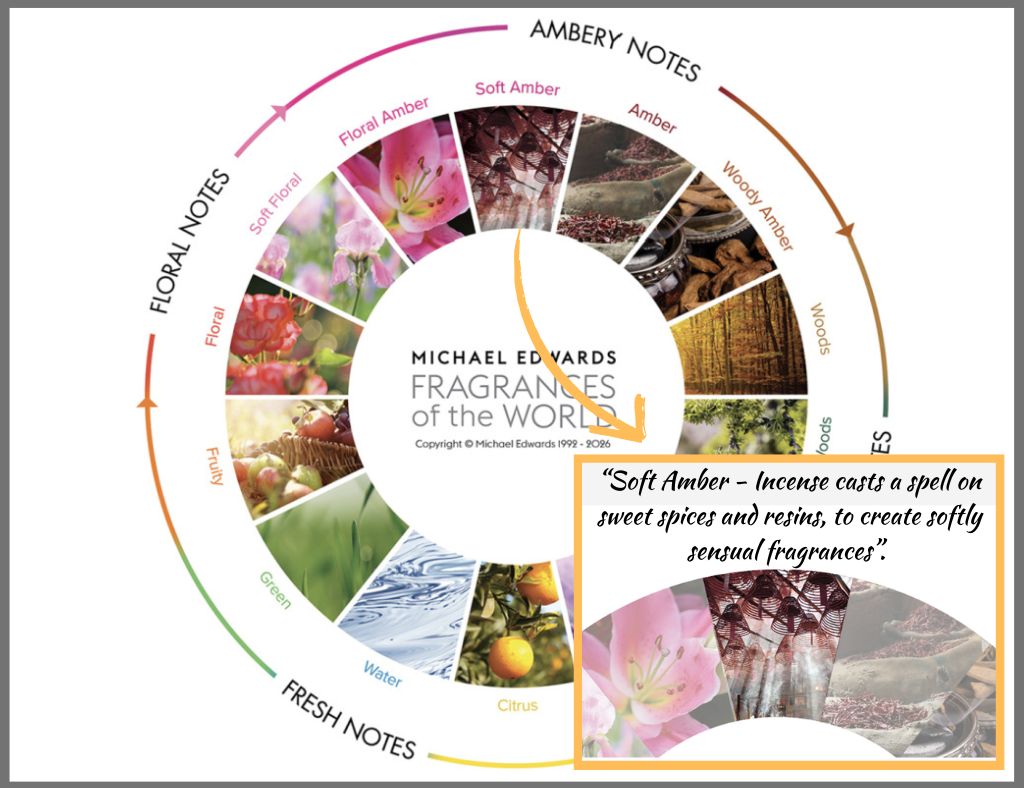
Incense is called out separately on the Michael Edwards’ Fragrance Wheel. Edwards, a world-renowned perfume expert, developed the circular classification system, much like a colour wheel, to group and organize the various scent profiles and their “inferred relationships … based upon similarities and differences in their odor” explains Wikipedia.
The Soft Amber family of scent profiles, found in the Ambery Notes quadrant, has this description ― “Incense casts a spell on sweet spices and resins, to create softly sensual fragrances”.
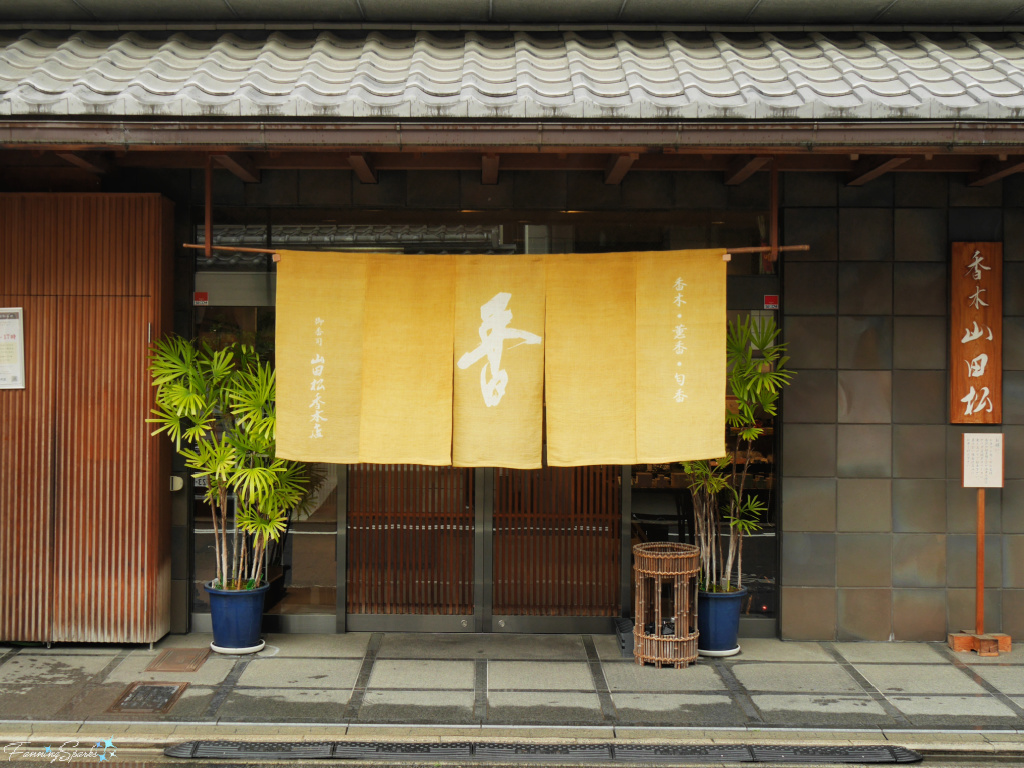
I was under the impression that all incense smells the same. That is, until I visited the Yamada-Matsu Incense-Wood shop in Kyoto with my intrepid travel companion Marian a few years ago.
Our research had shown it was possible to attend an “incense listening” workshop but the timing didn’t work out so we decided to simply visit the shop. Neither of us knew much about incense so we were bound to learn something.
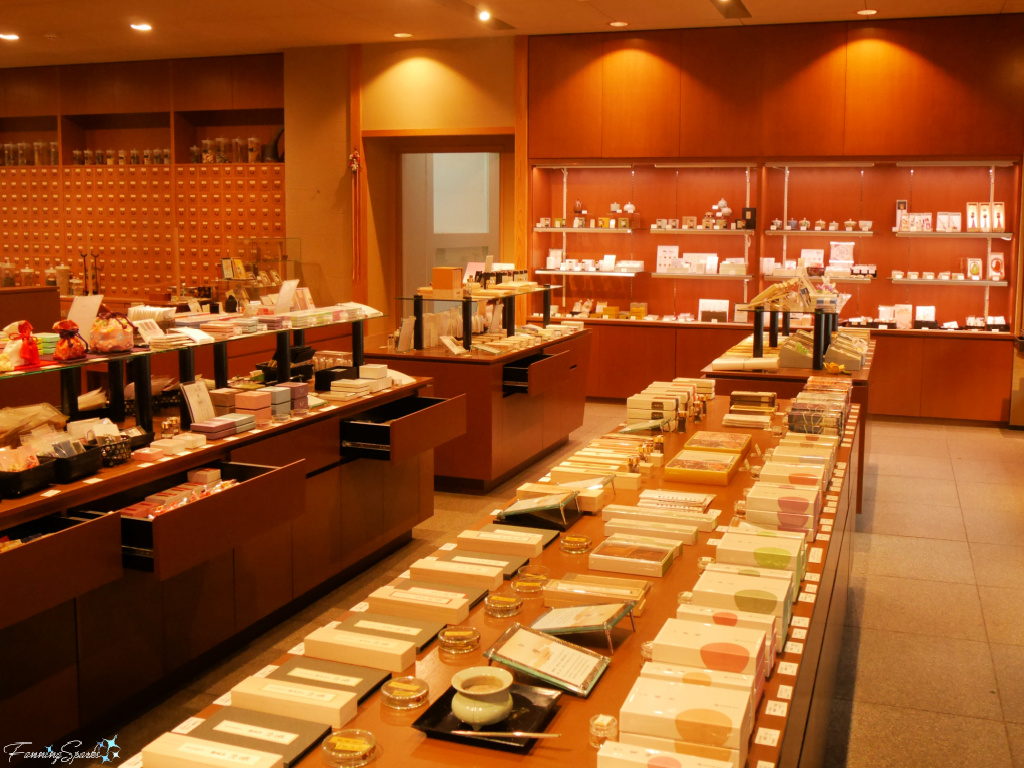
The variety and range of incense scents was mind-boggling ― a little overwhelming ― but definitely amazing!
Kōdō is the Japanese art of appreciating incense. It is recognized as one of Japan’s traditional arts of refinement along with tea ceremony and flower arrangement. “In Kōdō, the two main elements are monkō, which is listening to and appreciating the scent of fragrant trees, and kumikō, which is a game of distinguishing the different scents” explains Sachiko Tamashige in the article Monkō: The Japanese Way of Listening to Incense.
“In Kōdō, the expression ‘listen’ is used instead of ‘sniff’. ‘Listen’ has the meaning of sharpening one’s mind and deepening oneself through the scent of fragrant trees, influenced by Zen Buddhism.”
The Yamada-Matsu incense listening workshops were held in a special area of the shop.
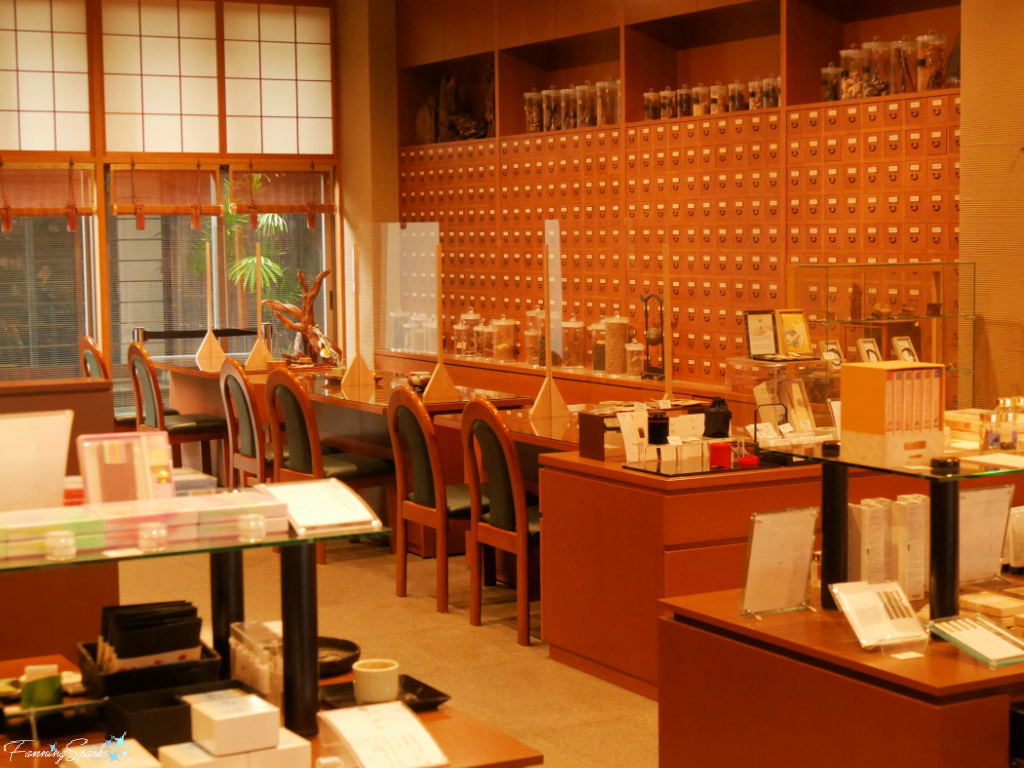
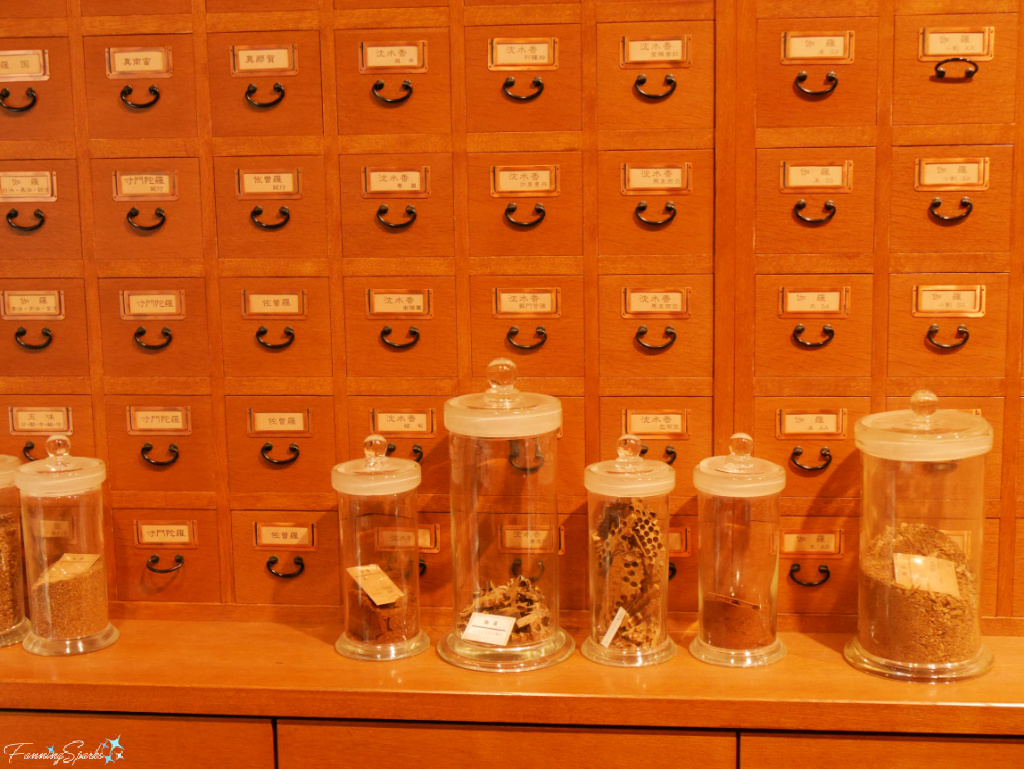
The Yamada-Matsu website provides further context. “Ashikaga Yoshimasa, the 8th shogun of the Muromachi period” is credited with the establishment of Kōdō. “Yoshimasa saw the necessity to organize his enormous collection of Incense wood, and appointed the experts of incense at that time … to establish the system of classifying incense called ‘Rikkoku Gomi (six countries, five tastes)’. Tools and manners for listening to incense developed as well, and gradually formed Kodo. (Rikkoku refers to the characteristics of fragrance and consists of Kyara, Rakoku, Manaban, Manaka, Sumondara, and Sasora. Gomi is five tastes describing the fragrance – sweet, sour, spicy, salty and bitter.)”
It appears these same categories may be used to organize incense ingredients in the traditional herbal medicine cabinet at the Shop.
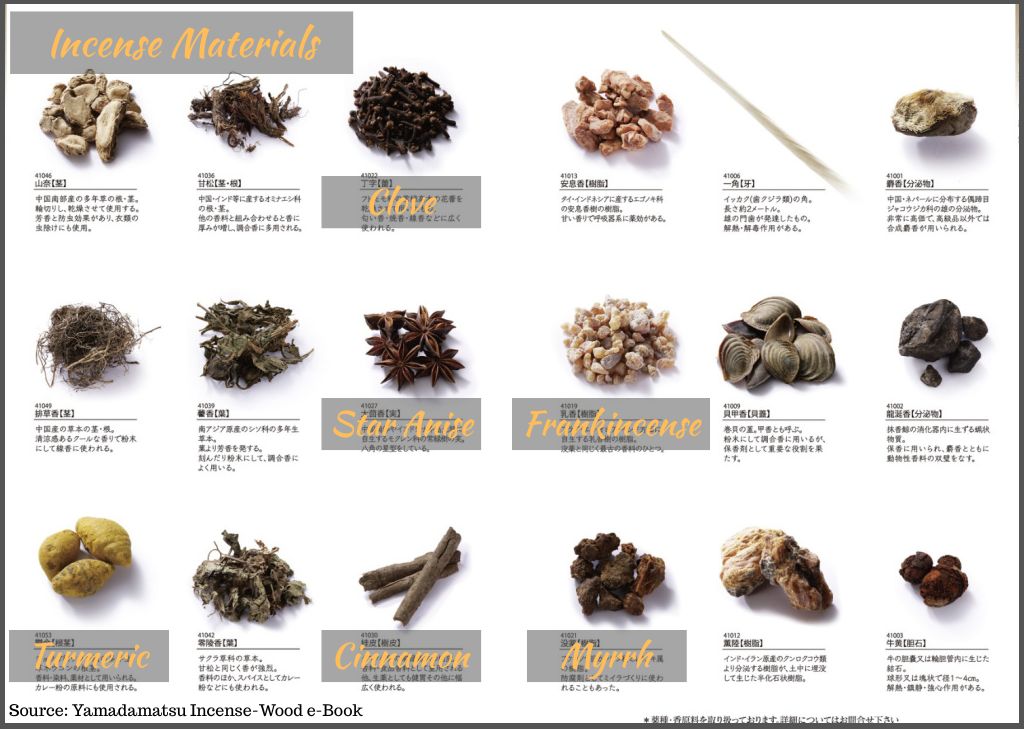
It’s possible to examine a wide variety of incense ingredients on the Yamada-Matsu website. I added English labels to some of the more familiar materials.
Recently, I happened upon a unique opportunity to learn more about incense ― Iris Kedmi was hosting a Sacred Smoke: Natural Incense Workshop as part of the inaugural Unama’ki – Cape Breton Craft Week. Promoted as “a dynamic week of events, workshops, exhibitions, and community gatherings”, Craft Week, “fosters connections between makers and learners”.
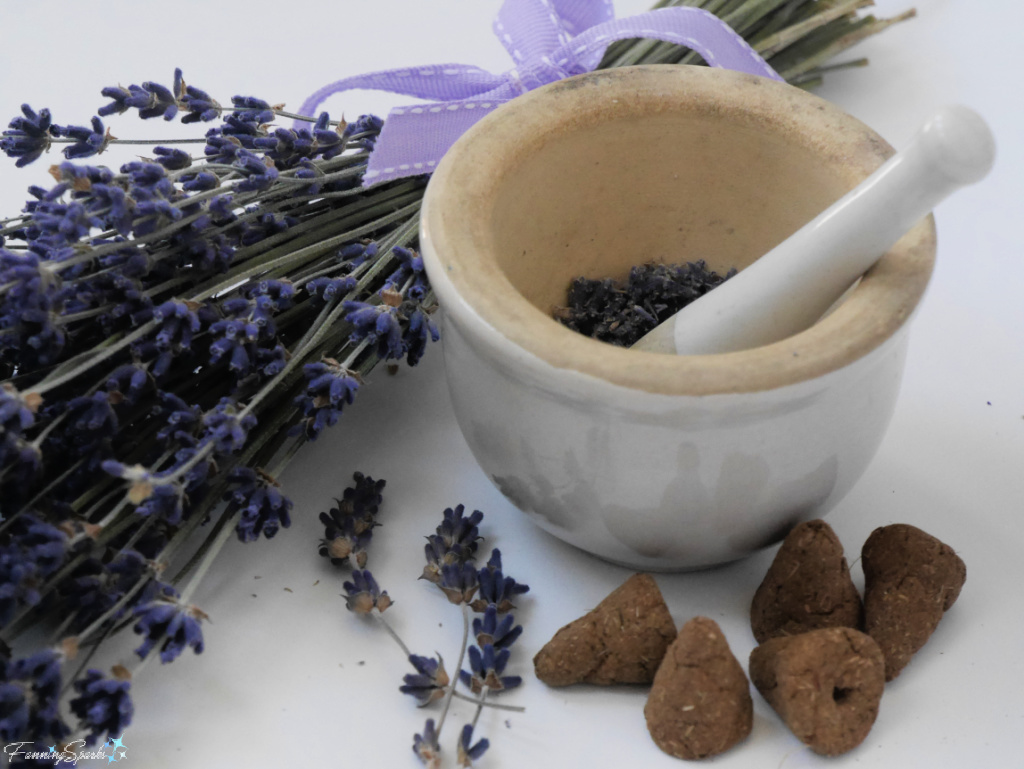
The workshop offered a rare chance to make our “own all natural incense cones using locally foraged botanicals”. This possibility had never occurred to me.
We did indeed learn to make incense cones. As a form of direct-burning or combustible incense, incense cones can be lit with a flame. The flame is blown out to leave a glowing ember and release the incense aroma. Direct-burning incense requires self-standing structures such as cones, sticks and coils.
Indirect-burning or non-combustible incense, on the other hand, has a loose form ― such as chunks, chips, powders or granules ― and is burned over a lit charcoal tablet or an electric burner.
Iris explained there are four ingredients needed to make incense cones ― combustible, binder, aromatics and distilled water. The challenge in making direct-burning incense is to create a combustible base which “does not produce a perceptible smell …, binds the fragrant material together” and “allows the produced incense to burn with a self-sustained ember, which propagates slowly and evenly through an entire piece of incense” according to Wikipedia.
We used “makko”, a bark-based powder from Asia which serves as both combustible and binder, as the foundation of our incense cones. Then we added our aromatics ― a mixture of dried and ground white yarrow, mullein, lavender and rose.
Aromatics can include a wide variety of materials including florals such as rose, jasmine or gardenia; herbs such as lavender, rosemary or sweetgrass; spices such as cinnamon, ginger or cloves; earthy ingredients such as oakmoss or patchouli; citrus such as lemon, lime or mandarin; wood powders such as sandalwood or cedar; or balsamic, resinous or animal ingredients.
The beauty of making one’s own incense cones is that the fragrance can be customized to personal preferences. I love florals but prefer a faint, fresh, calming scent… which is not something I would have associated with incense. I’ve been playing around with lavender to see what’s possible.
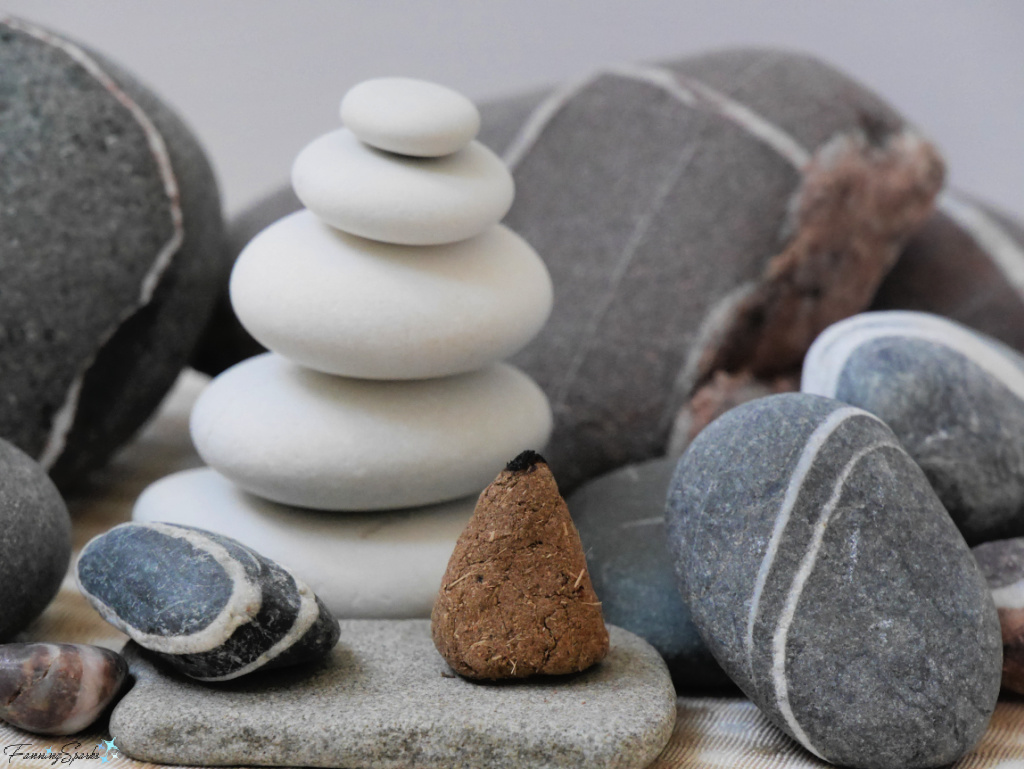
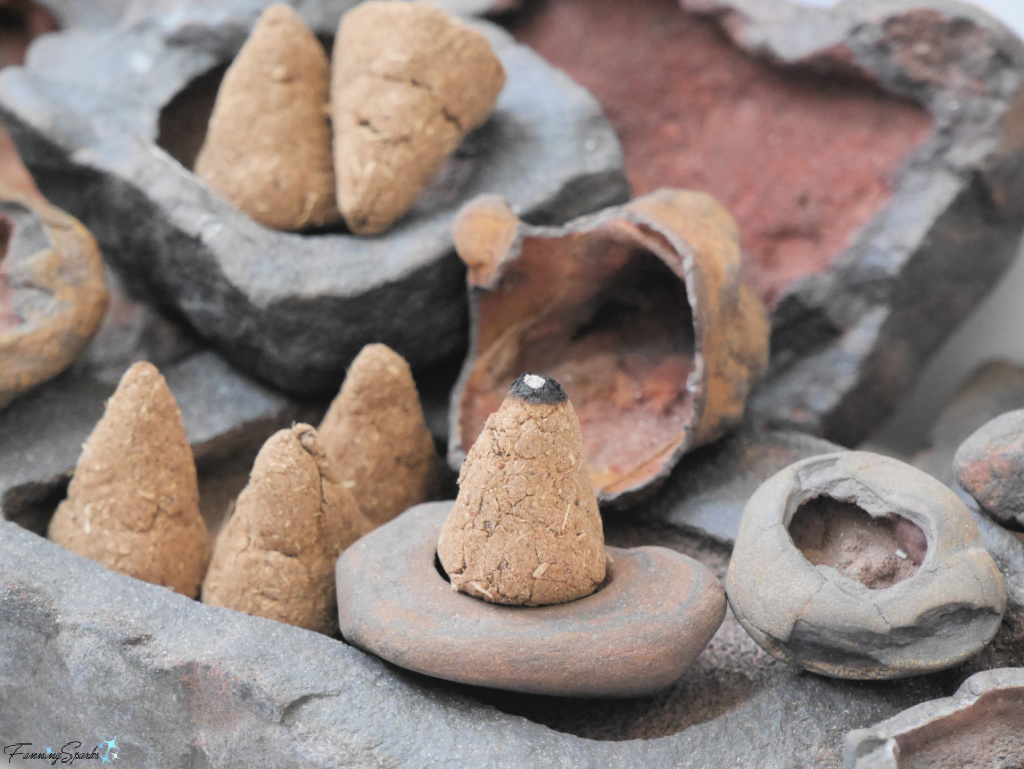
Iris advised us to let our incense cones dry for a week before burning them. Here’s my first lit incense cone sitting pretty amongst the hollowed stones collected from our shoreline.
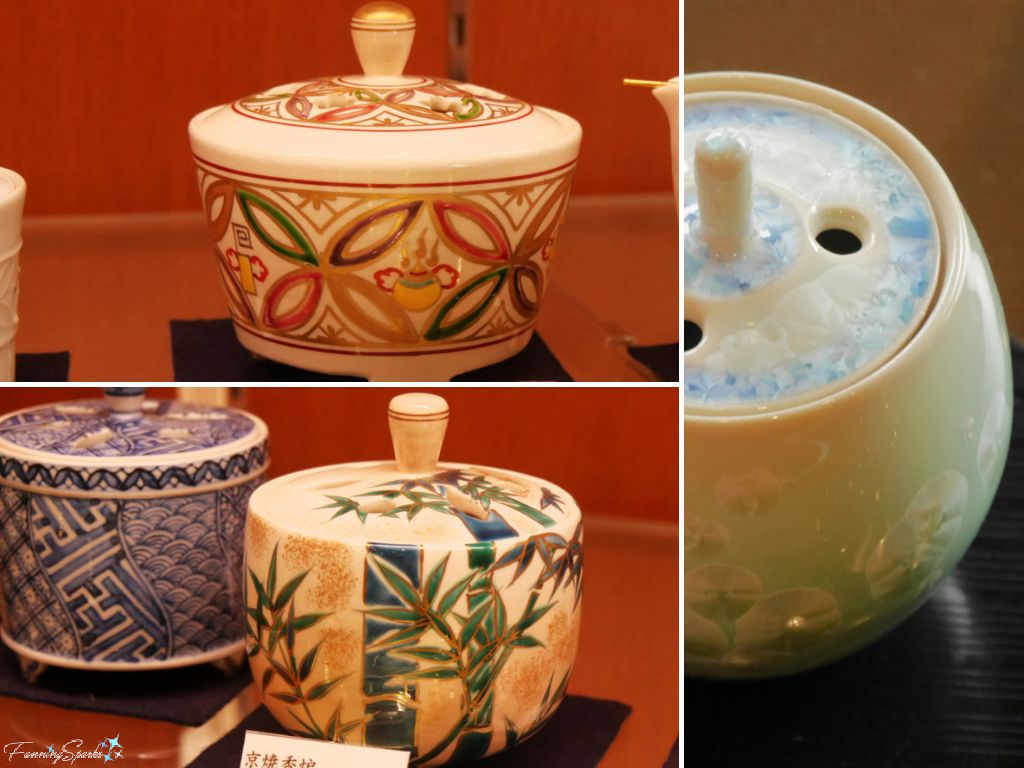
My simple stone incense holder pales in comparison to some of the beautifully crafted ceramic incense holders and bowls we saw in the Yamada-Matsu store.
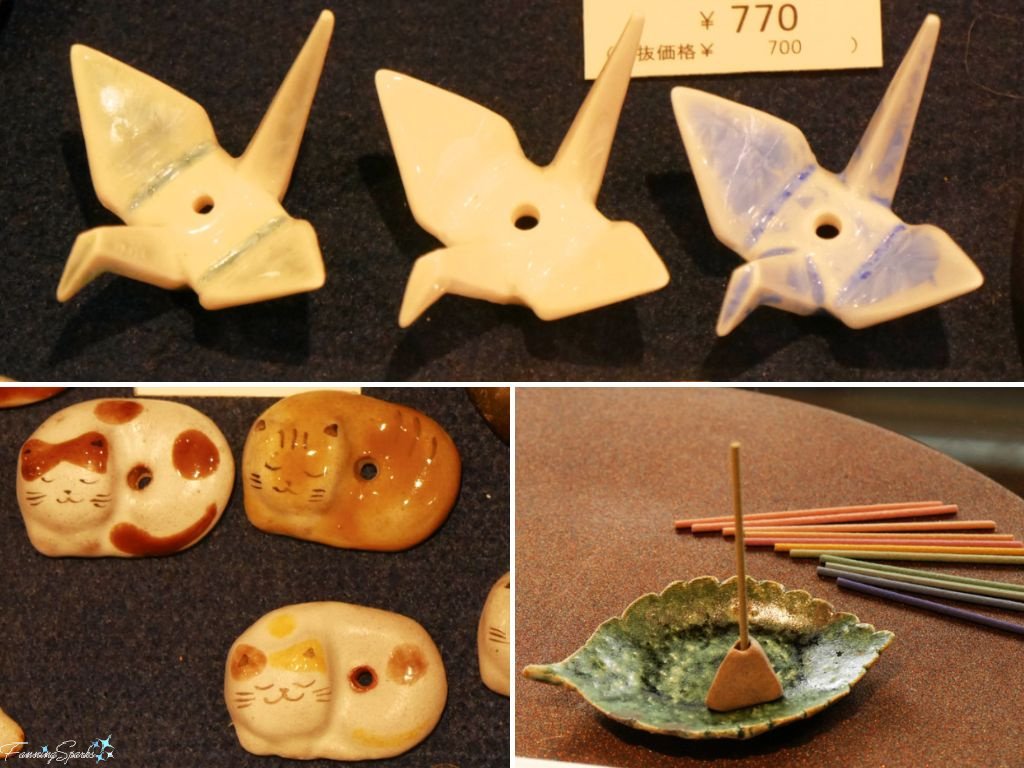
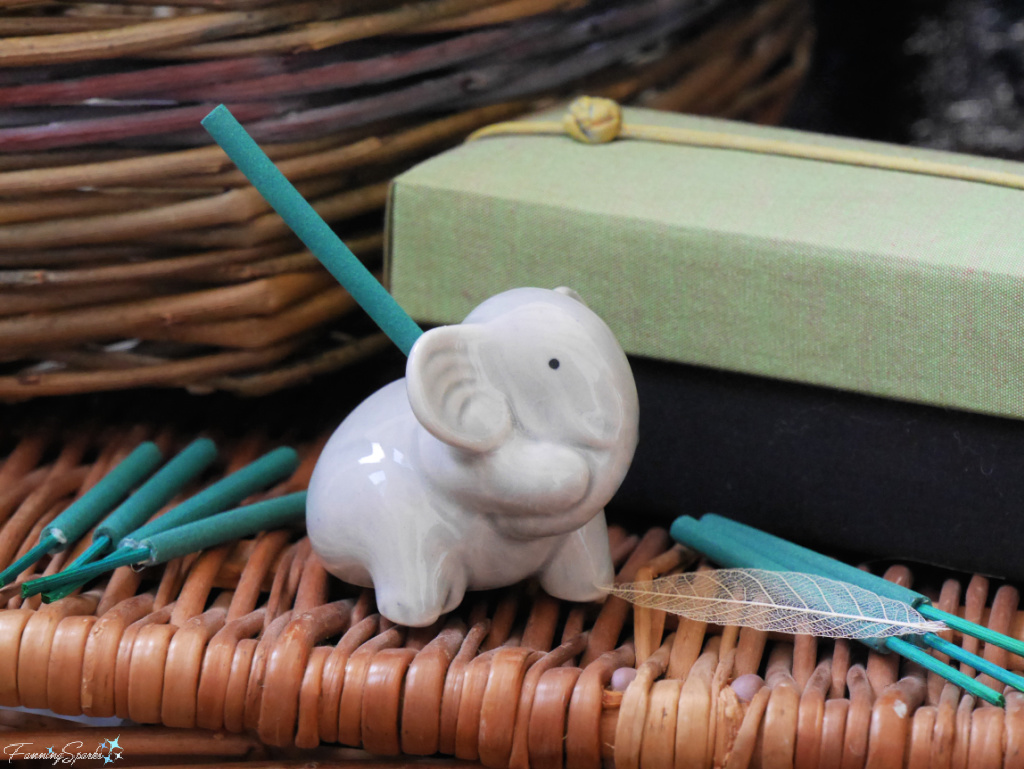
Here’s another example of an incense holder. I purchased this cute, little, elephant incense holder with the incense sticks in Thailand some time ago.
Incense burners ― also known as censers ― have been in use since ancient times. Because burning incense was a sacred ritual, censors were usually beautifully crafted by master artisans to honor both worshippers and gods.
Some time ago, while visiting the Amazing World of Dr. Seuss Museum located in downtown Springfield, Massachusetts (see my previous blog post What is an Elephant Doing in a Tree?), I came across an extraordinary collection of antique Chinese cloisonné enamels at the George Walter Vincent Smith Art Museum. There are several outstanding incense burners in the collection.
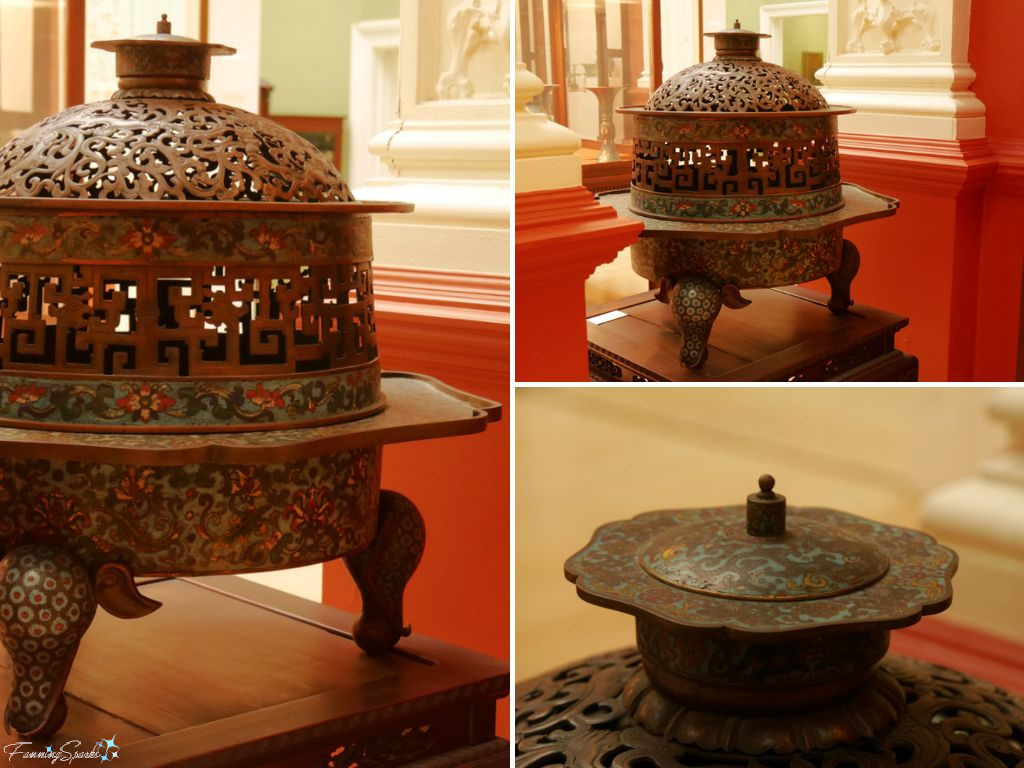
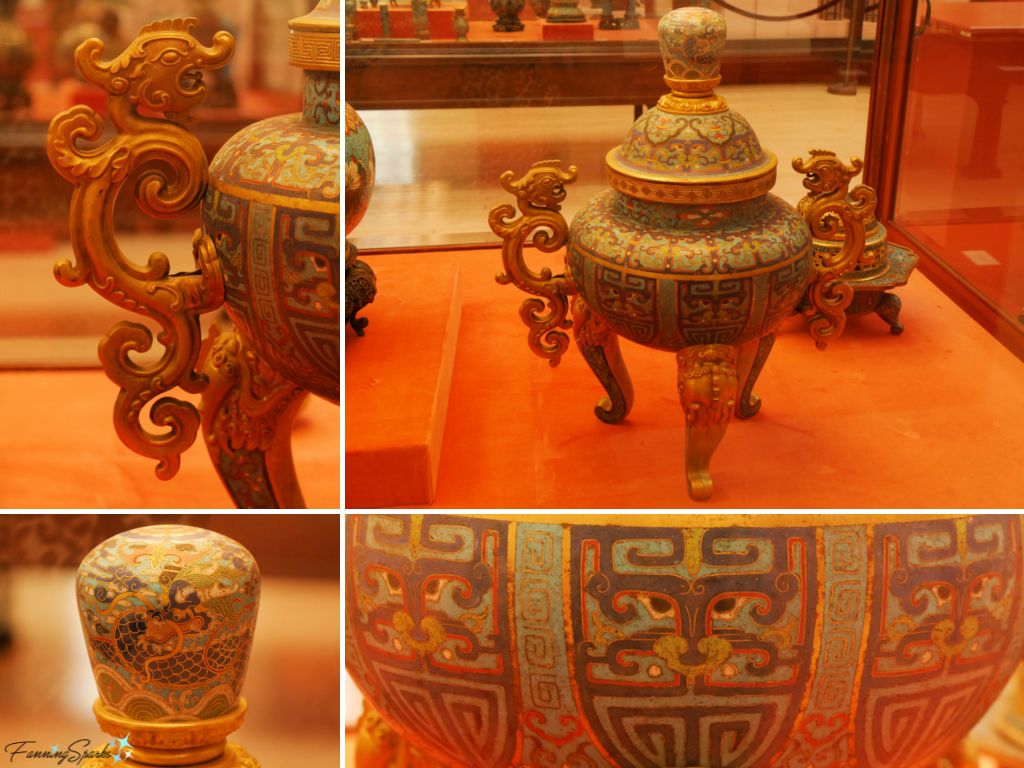
The first two censors pictured below feature spectacular Chinese cloisonné enamelwork. Their elaborate style and significant size suggest they were designed for both large-scale ancestral altars in imperial temples and as decorative statement pieces inside court palaces.
This covered incense burner, elaborately decorated with openwork and cloisonné enamel, sits on a tripod base. It is attributed to China’s High Qing Dynasty (1683-1799).
This Chinese Imperial cloisonné enamel censer, featuring fine, vivid enamel designs and highly-stylized bronze work, dates back to the 15th century.
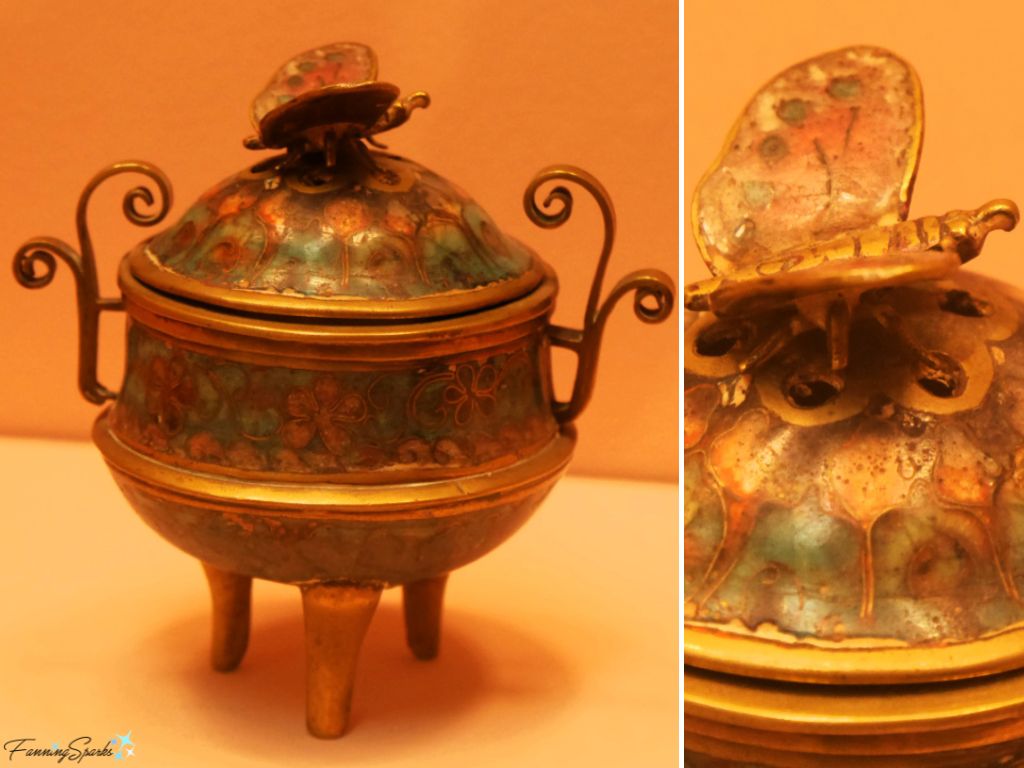
Judging from the much-smaller scale, these next two incense burners were probably used for private devotion.
Crafted from cloisonné enamel on copper alloy, this 17th century incense burner is topped with a charming butterfly.
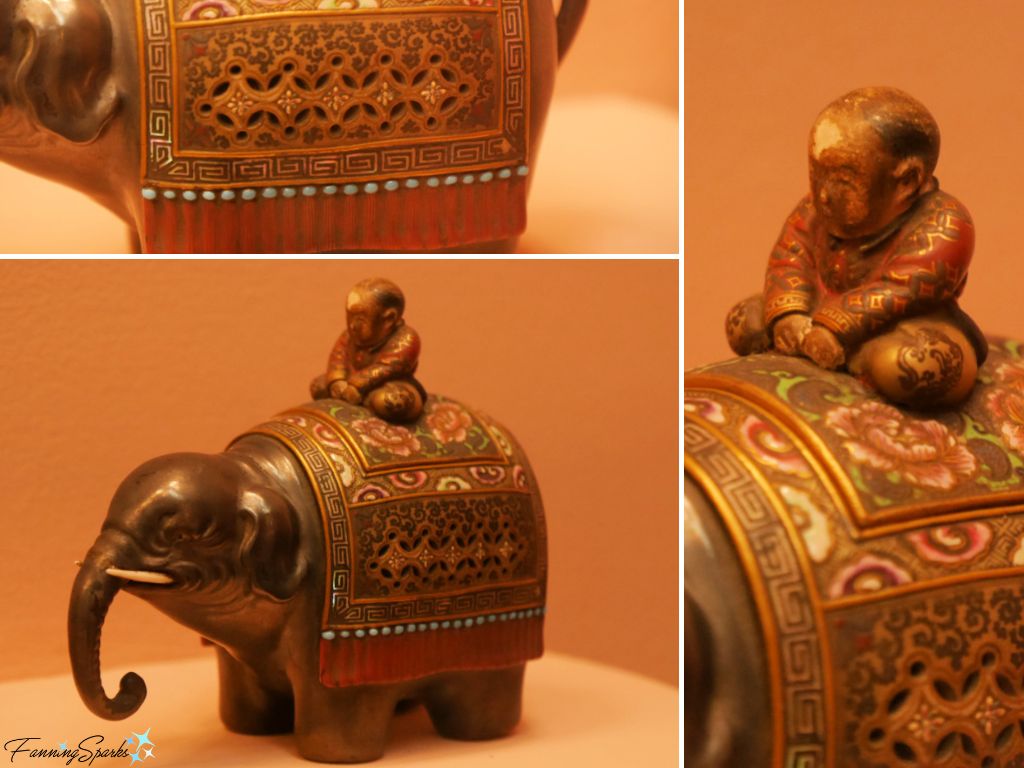
This adorable incense burner depicting a young boy riding an elephant was created by Ritsuo, a Japanese artist, circa 1740. It is made with cloisonné enamel, lacquer and mother of pearl on copper alloy.
It’s obvious there’s a lot more to incense than I originally thought. Incense offers a mind-boggling selection of scents, can be created in a variety of forms and can be held in an endless array of incense burners. There are also a variety of reasons to burn incense. As Susanne Fischer-Rizzi writes in her book, The Complete Incense Book, “From the many different ways available to burn incense, here are some of the most important … burning incense to cleanse the atmosphere … to calm and reduce anxiety, stress, and fear … for revitalization, stimulation, and energy renewal …for dreams … for prayer, meditation, and contemplation … to celebrate the season … for love … for creativity … and for healing”.
More Info
Previous blog posts mentioned in this blog post include:
. What is an Elephant Doing in a Tree?
I thoroughly enjoyed the Sacred Smoke: Natural Incense Workshop led by Iris Kedmi. Many thanks to Iris and my fellow students for an enjoyable evening.
Unama’ki – Cape Breton Craft Week was a week-long celebration ― held June 1-7, 2026 ― connecting makers and learners through a dynamic slate of events, workshops, exhibitions and community gatherings across Cape Breton, Nova Scotia. Check out the Cape Breton Center for Craft & Design website to learn more.
The Yamada-Matsu Incense-Wood shop provides a fascinating look into the incredible scents and deep-rooted history of incense in Japan. The head store is located in Kyoto Japan. Learn more on the Yamada-Matsu website.
Included in the eclectic collections at the George Walter Vincent Smith Art Museum, in Springfield Massachusetts USA, is one of the largest collections of Chinese cloisonné outside of Asia. Check the Springfield Museums website for more information.
The following articles, books and websites were consulted in the writing of this blog post:
. Why Incense is Burned at Sensō-ji: A Guide to Japanese Purification Rituals article on Crossing Tokyo website
. Fragrances of the World website by Michael Edwards
. Perfume: The Art and Craft of Fragrance book by Karen Gilbert which is available here on Internet Archives
. The Complete Incense book by Susanne Fischer-Rizzi which is available here on Internet Archives
. Monkō: The Japanese Way of Listening to Incense article by Sachiko Tamashige
. Incense: Rituals, Mystery, Lore book by Gina Hyams which is available here on Internet Archives
. Various Wikipedia entries.
Today’s Takeaways
1. Aromatic substances have been used for worship since ancient times.
2. In the present day, incense is burned for a variety of reasons such as cleansing, healing, mediating, calming, energizing and celebrating.
3. Making incense with your own customized scent is very doable.


Comments are closed.