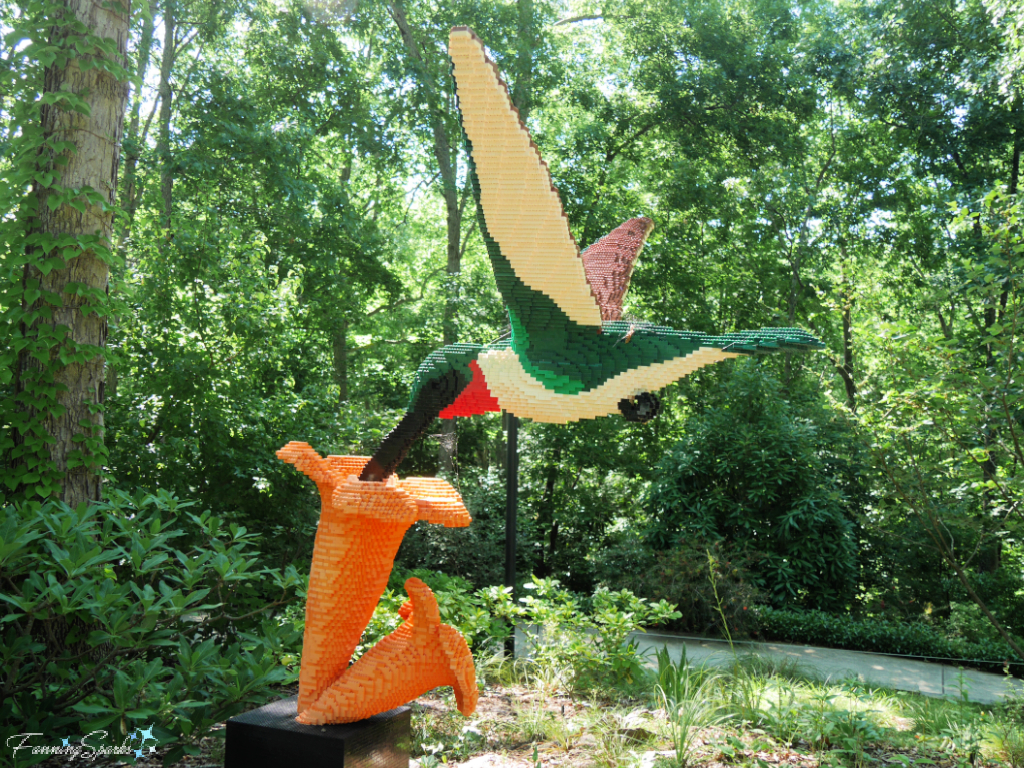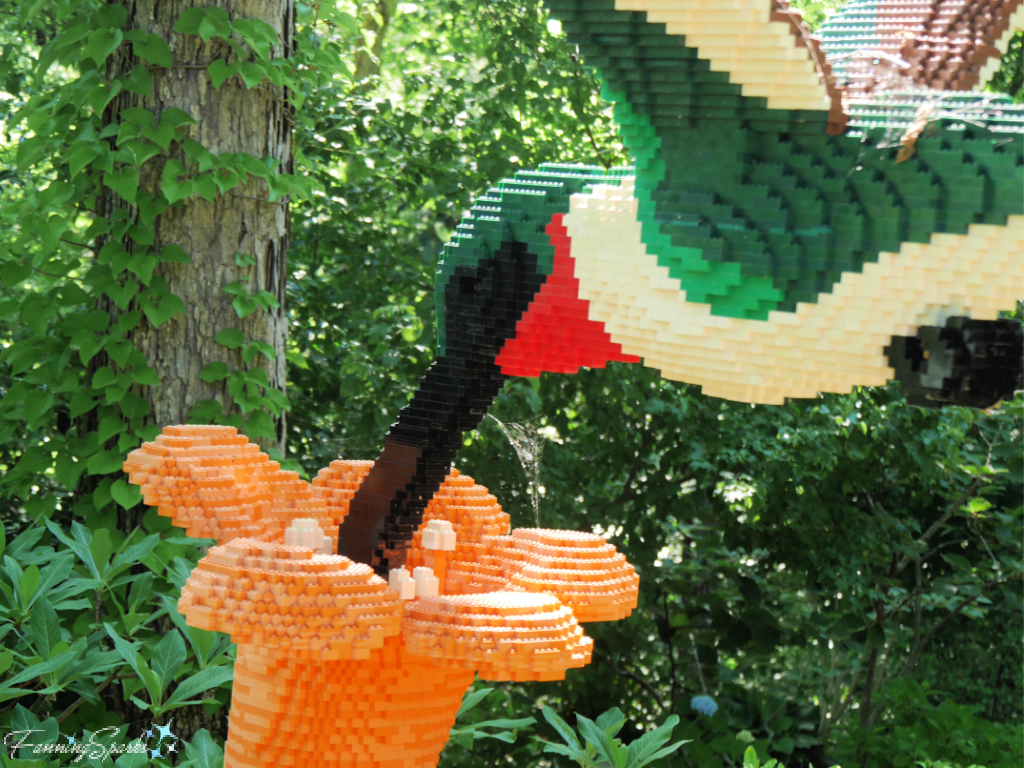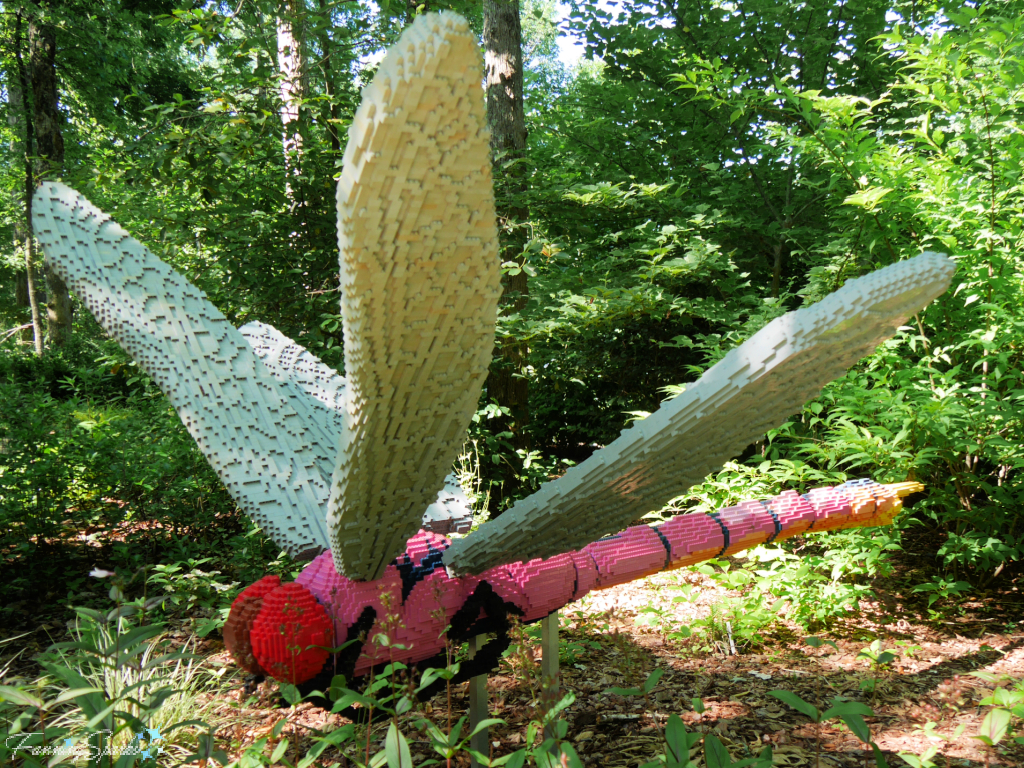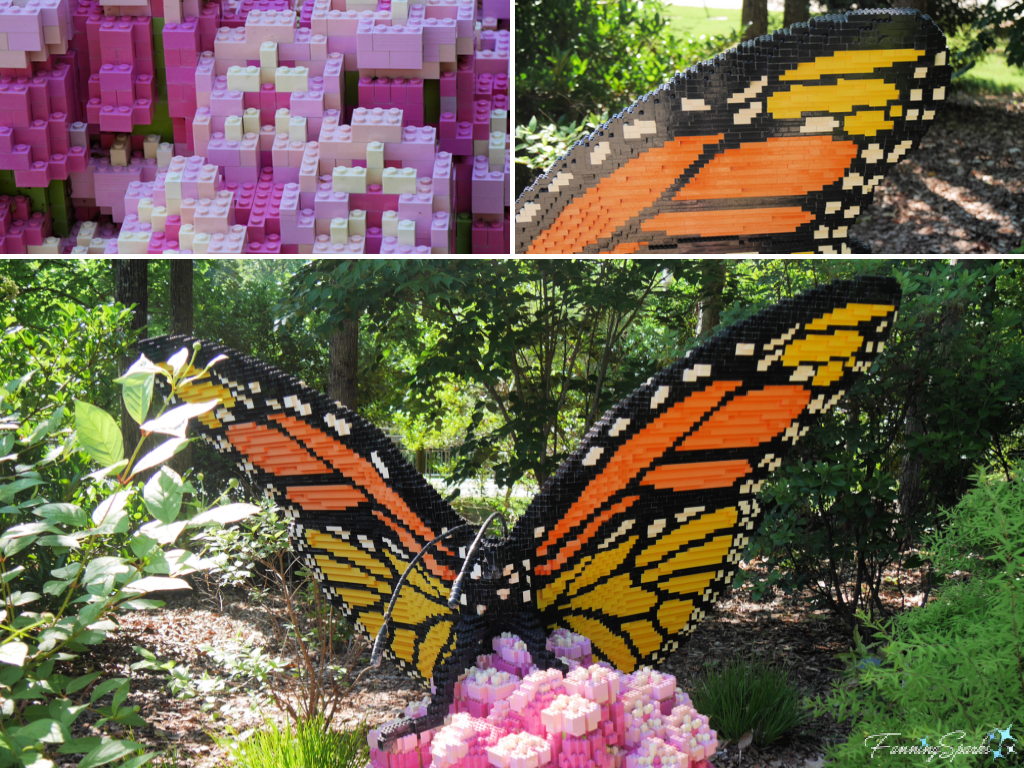
Anyone who has visited Murrells Inlet in South Carolina is likely familiar with Brookgreen Gardens.  This award-winning, floral jewel is renowned for its botanical gardens and sculpture collection.  Brookgreen Gardens is, in fact, an outdoor museum containing the largest and most comprehensive collection of American figurative sculpture in the USA.  The collection contains over 2,700 works by 425 artists!  Here are a few of my favorites from a recent visit.
This beautiful bronze sculpture, Forest Idyl, is by Albin Polasek.
Forest Idyl by Albin Polasek   @FanningSparks
Triton on Dolphin, a charming limestone sculpture, is by Benjamin Franklin Hawkins.
Triton on Dolphin by Benjamin Franklin Hawkins   @FanningSparks
This dramatic Samson and the Lion limestone sculpture was carved by Gleb Derujinsky.
Samson and the Lion by Gleb Derujinsky   @FanningSparksThis majestic bull, Toro Bravo, is by Charlotte Dunwiddie.
Toro Bravo by Charlotte Dunwiddie   @FanningSparks
I’ve had the pleasure of wandering these spectacular gardens more than once.  But it wasn’t until recently when I visited nearby Atalaya that Brookgreen Gardens became a whole lot more than just a beautiful garden full of splendid sculptures.  Turns out, we owe our thanks to a remarkable woman named Anna Hyatt Huntington.
In 1930, Archer and Anna Hyatt Huntington purchased 4 adjoining plantations along the South Carolina coast to form a 9,000-acre estate.  “Drawing on her artistic talents as a sculptress, Anna Huntington formulated, designed and executed the twofold, original garden plan.  The first, and most important, aspect of the plan was to preserve and protect the wonderful natural treasures.  Her plan was to enhance the already beautiful native flora with additional plantings suitable to the area.  The second part of the plan was designed to showcase her massive pieces of sculpture.  This part of the plan evolved to include the work of other American sculptors in the garden displays.” writes Cindy Spicer in her book Carolina Edens.
Pictured below is the quintessential Lowcountry scene with live oaks draped in Spanish moss along a quiet creek.   This charming scene was spotted near the boat dock in Brookgreen Gardens.
Lowcountry Scene at Brookgreen Gardens   @FanningSparks
Half of the Huntington’s property was used to build Brookgreen Gardens which opened in 1932.  Sixty years later, another 2,500 acres, including Atalaya (the Huntington’s winter home), was leased for free to the state of South Carolina.  This area became beautiful Huntington Beach State Park.
Atalaya is a pleasant surprise; it’s unassuming, casual and surrounded by nature.  It’s built in an unexpected style—being designed after the Moorish architecture of the Spanish Mediterranean Coast.  There are inner courtyards filled with palm trees,…
Atalaya Inner Courtyard   @FanningSparks
… covered walkways of open brickwork,…
Atalaya Covered Walkway with Open Brickwork   @FanningSparks
… and beautiful wrought iron grillwork.
Atalaya Wrought Iron Grillwork   @FanningSparks
The home was custom-designed by Anna Hyatt Huntington’s husband, Archer M. Huntington, an industrialist, philanthropist and noted authority on Spanish culture.  Interestingly, it was this passion for Spanish culture that brought them together.
After several years of casual acquaintance with Archer Huntington, she came into frequent association with him while serving on the planning committee for an exhibition of sculpture at the Hispanic Society of America, an institution that Huntington had founded.  After a very brief courtship, they were married [in 1923] on their common birthdate, March 10, ….  At the time of her marriage, she was forty-seven years old; her husband, fifty-three.” reports author Janis C Conner in her book Rediscoveries in American Sculpture.
Seeing the grandeur of Brookgreen Gardens, it might be tempting to assume Anna Hyatt Huntington walked into a successful artist’s career.  But that’s not the case at all!  By the time she married, she’d already spent 25 years developing her skills, building her career and earning a living—all despite the challenges of being a woman sculptor.
Anna Vaughn Hyatt was born in Cambridge, Massachusetts in 1876.  Wikipedia says “At a time when very few women were successful artists, she had a thriving career. Hyatt Huntington exhibited often, traveled widely, received critical acclaim at home and abroad, and won multiple awards and commissions.”
Here’s a stunning example of her work from Brookgreen Gardens.  This spectacular piece, called Fillies Playing, was originally cast in 1956.
Fillies Playing by Anna Hyatt Huntington    @FanningSparks
Fillies Playing by Anna Hyatt Huntington Close   @FanningSparks
Viewing this piece, it’s apparent why Anna Hyatt Huntington became “known as one of the finest American animal sculptors of the twentieth century … Her knowledge of animal anatomy, the basis for her sculpture, was the result of a keen power of observation developed through childhood field trips with her father” says the US Dept of State website.
Nearly every account I’ve read of Anna Hyatt Huntington’s life credits her father, Alpheus Hyatt, with seeding her love of animals.  He was a zoologist and paleontologist with an impressive academic/scientific career.  Anna Hyatt’s sculpting career began in a collaboration with her older sister Harriett.  Together they created a sculpture of the family dog which they exhibited at the National Sculpture Society in New York.  Two years later, Anna Hyatt was working independently, exhibiting and selling her own animal sculptures. She held her first solo exhibition including 25 sculptures at the Boston Art Club when she was only 26!
Anna Hyatt often studied the animals at the Bronx Zoo while she lived in New York.  Several of her works depicting tigers, lions and jaguars were influenced by these studies.  Anna Hyatt’s skillful realism was soon recognized.  In 1914, the New York Tribune reported “She knows not only their forms but their movements, the way they carry their heads, the way in which their feet grip the ground.  There is something immediately convincing about these creatures of hers”.
Her sculpture Brown Bears, which is exhibited at Brookgreen Gardens, is a great case in point.
Brown Bears by Anna Hyatt Huntington   @FanningSparks
Brown Bears by Anna Hyatt Huntington Close   @FanningSparks
At the age of 31, Anna Hyatt moved from New York to France to work and exhibit.  Two years later, she began work on a large equestrian statue featuring Joan of Arc.  This effort led to one of her most famous works—a monument commemorating the 500th anniversary of Joan of Arc’s birth which is now located in New York City.
She continued to create and exhibit, winning awards and gaining recognition.  When decorative outdoor sculpture started to gain popularity, Anna Hyatt shifted focus to this genre.  She created another of her most famous works, Diana of the Chase, in 1922.
Diana of the Chase by Anna Hyatt Huntington   @FanningSparks
As described on the gallery sign at Brookgreen Gardens, “The Roman goddess of the hunt has just released her arrow as a hound leaps at her feet.  Considered among Huntington’s finest works, and one of the few where the human figure is primary, Diana of the Chase was so popular Huntington eventually created a second version some twenty years later to satisfy public demand.”
Diana of the Chase by Anna Hyatt Huntington Close   @FanningSparks
Anna Hyatt Huntington was a prolific artist sculpting animal and garden sculptures well into her 90s.  “She succeeded in every way against every odd,” says Art History Professor, Anne Higgonet “And that’s a lesson for women and a lesson for anyone who thinks they can’t become an artist.”

More Info

Brookgreen Gardens are located in Murrells Inlet, South Carolina, USA.  You can learn more about these beautiful sculpture gardens on the Brookgreen Gardens website.
You can learn more about Atalaya and Brookgreen Gardens on the National Park Service website.
Carolina Edens, by author Cindy Spicer, is a photographic tour of gardens, arboretums and nature preserves in North and South Carolina, USA.  Brookgreen Gardens are included.
Janis C Conner’s book, Rediscoveries in American Sculpture, includes a fascinating description of Anna Vaughn Hyatt Huntington’s life and career.
The Art in Embassies – US Dept of State website mentions Anna Hyatt Huntington here.
You may also enjoy these FanningSparks blog posts:
. Sculpture Parks: Crafted Art + Crafted Nature
. Sculpture for the Home Garden.

Today’s Takeaways

1. Consider the story behind a beautiful garden, park or museum.
2. A keen power of observation can lead to success in art… and life.
3. Take a minute to appreciate the hard work, determination and generosity of others.
Peg - FanningSparks Author

In my last post, I introduced the idea of making your own tiny door and shared a tutorial to create the design (Part 1 of this DIY Tutorial).  In this blog post, we’ll finish the project with a tutorial to construct the actual tiny door.  Get out your tweezers—we’re going to work in miniature!
Although all doors can be described as “a swinging or sliding barrier by which an entry is closed and opened”, the specifics of a door vary greatly.  Doors have different sizes, materials, configurations, designs, colors and accessories.  The following instructions will describe building a replica of my own front door (shown below) which has a standard-size door with an oval glass window, two sidelights with glass windows and two light fixtures.  I chose not to include the porch, porch posts or railings.
Our Front Door Photo for Tiny Door Design @FanningSparks
It would be impossible to write instructions for all variations of doors so please adapt this tutorial to meet your specific situation.
Supplies Needed
Before selecting your materials, you’ll want to determine where your finished tiny door will be placed.  If you decide to place your tiny door outside, for instance, you’ll want to select exterior grade materials and finishes.
. Photo(s):  As described in Part 1 of this DIY Tutorial
. Line Drawing:  As described in Part 1 of this DIY Tutorial
. Basic Shapes Diagram:  As described in Part 1 of this DIY Tutorial
. TWO ⅜” thick x 5 ½” wide x 4’ long Pine Project Boards
. ⅛” thick x 3” wide x 3’ long Balsa Board
. Wood Glue
. Sandpaper in fine grit
. E6000 Glue or similar adhesive
. Sheet of Frosted Plastic (optional):  Use for any window “glass”.  I used a plastic divider intended to separate sections in a 3-ring binder.
. Sheet of Adhesive Vinyl (optional):  Use for any designs in window glass.
. Polymer Clay:  In relevant colors for any accessories such as door knobs, light fixtures, house numbers, planters, etc.   I used a small amount of Premo Sculpey in black.  If you’re unfamiliar with polymer clay, please reference my previous post, I Only Have Eyes For You with DIY Tutorial, for a rundown of the materials, tools and process.
. Marker:  A fine tip marker with permanent black ink.
. Paint:  In relevant colors.  Select interior or exterior grade paint depending on where you plan to place your tiny door.  Include black paint if your tiny door has any window glass.
. Wire Brads in ½“ x 19 size
. Tape: Use to paint straight edges and hold paper patterns in place.  I used blue painter’s tape in two widths: 1” and ¼“.
. Paper
Supplies Needed to Make Tiny Door   @FanningSparksEquipment and Tools Needed
. Bar Clamps (optional):  To glue wood boards edge-to-edge for a wider panel, if needed for your tiny door.
. Jigsaw (or saw of your choice)
. Drill with drill bit large enough for jigsaw blade
. X-Acto Knife
. Self-Healing Mat
. Ruler
. Electronic Cutting Machine (optional):   To cut designs for window “glass”.  I used a Cricut Explorer electronic cutting machine but you could use an X-Acto knife instead.
. Polymer Clay Tools (optional):  To make accessories such as door knobs, light fixtures, house numbers and planters.  I used a polymer clay slicing knife, a small ceramic tile, a round hole cutter and my Amaco polymer clay/craft oven.  If you’re unfamiliar with polymer clay, please reference my previous post, I Only Have Eyes For You with DIY Tutorial, for a rundown of the materials, tools and process.
. Computer with Rapid Resizer Software (see Part 1 of this DIY Tutorial for an explanation)
. V Groove Chisel (optional):  To carve design lines in the wood for siding, bricks, and other exterior wall treatments.
. Clamps: To hold glued wood parts.
. Small Hammer
. Pencil
. Scissors
. Tweezers
Instructions
Step 1 – DIY Tutorial Part 1  Please begin with Part 1 of this DIY Tutorial which explains the scale for this project.  Our tiny door will be 1/12 the size of an actual door which means 1 foot equals 1 inch.  My actual front door is a standard size of 80 inches high by 36 inches wide—my tiny replica is about 6⅝” high x 3” wide.  Part 1 also explains how to take a photo of your door and transform that photo into a line drawing and basic shapes diagram using Rapid Resizer software.
Photo with Line Drawing and Basic Shape Diagram for Tiny Door @FanningSparks
Step 2 – Cut Wood Base   This project uses multiple layers of materials to replicate the depth of the actual door and its frame.  The layers are built up from the bottom to the top and include: ⅜” thick wood base layer, plastic glass in door and sidelights, ⅛” thick balsa wood door and sidelights, ⅜” thick wood top layer, and accessories.  The below photo illustrates the depth and dimensionality gained from layering.
Multiple Layers Give Depth to Tiny Door   @FanningSparks  Start by preparing 2 rectangles of wood for the base and top layers.  I used ⅜” thick x 5 ½” wide pine project boards.  Since the overall size of my piece was to be 7.9” high x 8.7” wide, I first had to glue the 2 pieces of wood together edge to edge.
Glue Boards Edge to Edge for Wide Panel   @FanningSparks
Step 3 – Cut Rectangles for Base and Top Layers  Measure and mark the outside dimensions of your rectangles.  Use a jigsaw (or your saw of choice) to cut out 2 identical rectangles.  One of these rectangles will remain intact and serve as the base layer.  The other rectangle will have windows and sidelights removed and serve as the top layer.
Step 4 – Cut Window and Sidelights into Top Layer   Use your basic shapes diagram to mark the areas to be cut out for the door and sidelight frames from the top layer rectangle.
Mark Windows and Sidelights to Cut Out   @FanningSparks
It’s helpful to start by boring holes inside the cutout areas.  Then insert the jigsaw blade into these holes to carefully cut out the openings.
Bore Holes to Start Cut Outs   @FanningSparks
Step 5 – Sand  Use sandpaper to sand and smooth the cut edges as needed.
Sand and Smooth Cut Edges   @FanningSparks
Step 6 – Make Door and Sidelights   Using the basic shapes diagram, prepare paper pattern pieces for the door and sidelights.  Check that the paper pattern pieces slip easily inside the cutout areas of the top layer.  Make any necessary adjustments.  I prepared an oval for the door and 2 rectangles for the sidelight sections of my tiny door.
Prepare Patterns for Door and Sidelights   @FanningSparks
The door and sidelights will be made from thin balsa wood.  I used a ⅛” thick x 3” wide x 3’ long board which I cut into three sections to cover the entire base layer.  Use a sharp X-Acto knife with a ruler to cut the balsa wood.  Take care to hide any seams under the top layer.  In my case, the seams fell under the vertical bars of the door frame.
Prepare Sections for Door and Sidelights   @FanningSparks
Use the paper pattern pieces to make the door and sidelights.  Cut out the openings with an X-Acto knife and ruler.
Cut Openings in Doors and Windows   @FanningSparks
At this stage, you should have prepared 3 layers: the base layer, the top layer with cutouts, and the door and sidelights (as shown below).
3 Layers to Make a Tiny Door Prepared   @FanningSparks
Step 7 – Prepare Window Glass  The next step is to make the “glass” windows for the door and sidelights.  I considered a number of options for this layer including glass and plastic.  In the end, I settled on a thin sheet of frosted plastic.  It is actually a plastic divider—the kind used to separate sections in a 3-ring binder.  With a solid black surface behind it, the plastic is a reasonable imitation of the glass in our front door.
Completed Miniature Window Glass   @FanningSparks
After selecting the glass for your window and sidelights, prepare to transfer any design markings using your line drawing.  Our front door has a pretty diamond design in the window glass.  I used a black marker in my first attempt to replicate this design element but wasn’t satisfied with the results… perhaps I should have used a marker with a finer tip.
Window Glass Design Drawn with Marker   @FanningSparks
In my second attempt, I used my Cricut electronic cutting machine to cut the design elements from adhesive vinyl.  It was a considerable amount of work to build the pattern as a Cricut cutting pattern, but I’m very pleased with the results.  Alternatively, you could cut adhesive vinyl with an X-Acto knife.
Window Glass Design Made with Adhesive Vinyl   @FanningSparks
Step 8 – Make Accessories  Elements such as door knobs, locks, light fixtures, planters and house numbers can be made in miniature from materials such as polymer clay.  Premo Sculpey polymer clay was ideal for making my light fixtures.  If you’re new to polymer clay, check out my previous blog post, I Only Have Eyes For You with DIY Tutorial, for a rundown of the materials, tools and process.
I cut a small piece of frosted plastic, scored it, decorated it a with marker, and folded it into a cylinder to replicate the glass on my light fixtures.
Make Miniature Light Fixtures from Polymer Clay   @FanningSparks
The key to making these accessories is to keep them in proportion to the rest of the piece.  Use the same 12:1 scale used for the door design to calculate the size of these elements.  I found it easiest to make a line drawing to the correct scale using a photo of the light fixture and the Rapid Resizer software (see Part 1 of this Tutorial for details).
Completed Miniature Light Fixture   @FanningSparks
I used the same approach to make a miniature door handle and lock.
Completed Miniature Door Handle and Lock   @FanningSparks
Step 9 – Add Details to Top Layer  Add any additional details to your top layer, door frame, door and sidelights.  Our exterior house walls, for instance, are vinyl siding.  I replicated the horizontal lines of the siding with a V groove chisel.
Carve Horizontal Marks Into Siding Sections   @FanningSparks
Step 10 – Paint Parts  Paint the various parts of your tiny door to match your actual door.  If your tiny door includes plastic glass, paint the sections behind the glass black.
Paint the Various Sections for Tiny Door   @FanningSparks
Step 11 – Assemble Tiny Door   As described in Step 2, this project uses multiple layers of materials to replicate the depth of the actual door and its frame.   In this step, we use glue and small wire brads to attach the layers.  The layers are built up from the bottom and include: ⅜” thick wood base layer, plastic glass in door and sidelights, ⅛” thick balsa wood door and sidelights, ⅜” thick wood top layer, and accessories.
Start by gluing the plastic glass to the back of the balsa wood door and sidelights.
Glue Door and Sidelights to Base Layer   @FanningSparks
Then glue and nail the balsa wood door and sidelights to the base layer.
Reinforce Doors and Sidelights with Small Nails   @FanningSparksNext, glue on the top layer and clamp it in place to dry.
Glue and Clamp Top Layer onto Base   @FanningSparks
Finally, glue polymer clay accessories, such as light fixtures, door handle and lock, into place with E6000 glue.
My Completed Tiny Door   @FanningSparks
Voilà!  Your tiny door is ready to be placed in its new home!

More Info

The first part of this tutorial, Make Your Own Tiny Door – DIY Tutorial Part 1 explains the scale for this project as well as how to create the design for your own tiny door.
Check out my previous blog post, Tiny Adventure in the Big City, to see art installations by Karen Anderson Singer, aka Tiny Doors ATL, which inspired this tiny door project.
Please pin the below image to share or save for future reference.
Make Your Own Tiny Door – DIY Tutorial Part 2   @FanningSparks
This tutorial references a previous post, I Only Have Eyes For You with DIY Tutorial, for a rundown of the materials, tools and process of using polymer clay.

Today’s Takeaways

1. Successful miniatures start with a good design and a specific scale.
2. A variety of materials and techniques can be used to create miniatures.
3. Making miniatures is a great creative challenge.
Peg - FanningSparks Author

After visiting the Tiny Doors ATL installations (see Tiny Adventure in the Big City), I couldn’t resist trying to make a tiny replica of my own front door.  Figuring out how to make a recognizable, scaled down, version of an actual door was a fun challenge.  Turns out, it’s not as difficult as you might think.  I’m pleased to share the details in a DIY Tutorial so you can make your own tiny door.
As a reminder, here are three Tiny Doors ATL installations I visited and shared in my previous post.  This Tiny Door ATL is found at the Atlanta Botanical Garden.
Tiny Door Atlanta Botanical Garden - Two-Sided Door  @FanningSparks
This is the Atlanta Symphony Orchestra’s Tiny Door.
Tiny Door #18 Atlanta Symphony Orchestra  @FanningSparks
This is Tiny Door 10W Grant Park.
Tiny Doors Atlanta Grant Park #10W with Vintage Roller Skates  @FanningSparks
This project does take a little effort—there are quite a few steps—but it’s not particularly difficult.  The instructions are split into two parts to keep them to a manageable length.  In this post, Make Your Own Tiny Door – DIY Tutorial Part 1, I’ll explain how to create a design for your own tiny door.  In Part 2, my next blog post, I’ll explain how to use this design to construct the actual tiny door.
Let’s get started!  We’ll begin with a list of the supplies and tools you’ll need along with an explanation of the special software I used.  Detailed step-by-step instructions follow.
Supplies Needed.
. Measuring Tape
. Paper: To print design
. Tape: To connect printed pages
Equipment and Tools Needed
. Camera
. Computer with Rapid Resizer Software (explanation follows)
. Printer
. Scissors
Rapid Resizer Software
I used special software to create my design.  The software, called Rapid Resizer, offers several helpful design tools including a Picture Stencil Maker and a premium Customize & Resize tool.
. The Picture Stencil Maker allows you to easily transform a photo into a stencil, pattern, line drawing or sketch.  You can gain access to the Picture Stencil Maker for no charge from the Rapid Resizer website.
. The Customize & Resize tool allows you to create, resize and print designs.  This software offers two features which are huge time-savers on this project: 1) you can automatically scale your entire design based on the size of a single part and 2) you can automatically print your design across multiple pages.  After signing up for their Picture Stencil Maker, Rapid Resizer sent me an email with a special 50% off discount offer for their premium tools (an annual fee of $19.00 USD vs $39.00 USD).
It’s possible, of course, to complete these steps manually but using the software saved me a tremendous amount of time (not to mention paper and ink).  Rapid Resizer is specifically designed to create, resize and print patterns for art projects.  It was, in fact, originally created by Patrick Roberts to help his mother with her stained glass designs.   I can honestly say it is the best investment I ever made for designing art projects!
Screenshot - Rapid Resizer Main Page   @FanningSparks
Instructions
Step 1 – Determine Size
  The first consideration is size and scale.  My tiny door is a replica of our own front door.  It is 1/12 the size of the actual door—so a 12:1 ratio where 1 foot equals 1 inch.  My actual front door is a standard size of 80 inches high by 36 inches wide—the tiny replica is about 6⅝” high x 3” wide.  Measure the height and width of your actual door.
You’ll also want to consider the outside dimensions of your tiny door piece.  I chose to add a border of 9 inches (.75”) to the right and left of the door frame so I could incorporate our light fixtures.  I added a smaller border of 6 inches (.5”) above the door frame.  The bottom of my piece aligns with our porch floor.  The overall size of my piece is 7.9” high x 8.7” wide.  Shown below is a photo of my front door overlaid with my line drawing to illustrate the 12:1 scale.
12 to 1 Scale Tiny Door Design - Photo with Line Drawing   @FanningSparks
Step 2 – Take Photo   The secret to creating a recognizable replica of your front door is to start with a clear, precise photo.
Here’s an example photo of my front door.  It was taken in the early evening with all the house lights turned on which, by the way, is a great trick to give your home a welcoming glow!
Our Front Door Viewed from Right   @FanningSparks
The above photo may be pretty but it’s not ideal for the purposes of this project. The photo shown below is better suited to our purposes because the entire door frame is visible, the door is level (straight horizontally) and plumb (straight vertically) and the details are clearly visible.  Take care to hold your camera, level, plumb, and at about the same height as the horizontal center of the door.  Avoid holding your camera at an angle because it will skew your subject.  It’s helpful to include the borders, as defined in Step 1, in your photo.
Our Front Door Photo for Tiny Door Design   @FanningSparks
Step 3 – Get Software  As explained above, it is possible to create a design from your photograph manually but the Rapid Resizer software makes it MUCH easier.  The following instructions assume you’re using the Rapid Resizer software.  Please note the screenshots in this tutorial were taken in April 2022; any software changes made since that time will not be reflected.
Step 4 – Turn Photo into Line Drawing  You will be presented with the below page when you open Rapid Resizer’s Picture Stencil Maker software.
Screenshot - Rapid Resizer Picture Stencil Maker – Main Page   @FanningSparks
Follow the instructions provided to upload the photo of your door.  Start with 1. Select a Photo.  This is how my photo looked at this stage.
Screenshot - Rapid Resizer Picture Stencil Maker – My Photo Uploaded   @FanningSparks
Use the options offered under 2. Turn It into a Design to fine-tune the line drawing.  I found the Edges option most effective.  I darkened my photo using the Dark/White slider and increased the sharpness with the Sharp/Soft slider.  You may need to experiment to create the most precise and complete line drawing possible.  This is my fine-tuned line drawing.
Screenshot - Rapid Resizer Picture Stencil Maker – My Photo Refined   @FanningSparks
Step 5 – Resize Line Drawing  The next step is labelled 4. Use It.  Select the Customize and Print Full Size button.  You will be presented with the below Customize & Resize screen.
Screenshot - Rapid Resizer Customize & Resize – My Design Loaded   @FanningSparksExamine the door in your line drawing to ensure it is level (straight horizontally) and plumb (straight vertically).  If not, use the tools under the Customize Before Resizing button.  Rotate and Skew options, for instance, will allow you to straighten your design.
The next step—resizing the line drawing based on a specific part—makes this software worth its weight in gold!  Select the button to Resize by Part (indicated by my red arrow below).
Screenshot - Rapid Resizer Customize & Resize – Ready to Resize by Part   @FanningSparks
Your line drawing will be displayed full screen with a blue line placed diagonally across it.  Move the blue line to indicate the height of your door by aligning the ends of the line with the top and bottom of your door.  Then enter 6.7 (or your desired measurement) in the box at the bottom of the screen labelled “Drag the ends of the line to set that part’s size to”.  Remember this is the scaled down size of your front door based on your calculations in Step 1 – Determine Size.  My actual front door is 80 inches high while the scaled down version is 6⅝” high.  Click Use Size button on the far right.
Screenshot - Rapid Resizer Customize & Resize – Resizing by Part   @FanningSparks
Step 6 – Print Line Drawing   After resizing your line drawing, you’ll be returned to the Customize & Resize screen.  Click the Print button to print.  Select your printer as the Destination and set any other relevant options.  If your design is bigger than a single sheet of paper, Rapid Resizer will automatically tile it across multiple pages.  Tape your printed design together into one large sheet of paper.
Screenshot - Rapid Resizer Customize & Resize – Print Design   @FanningSparksThis is the finished line drawing for my front door.
Our Front Door - Completed Line Drawing from Rapid Resizer   @FanningSparks
Step 7 – Prepare Basic Shape Diagram   For simplicity, it will be helpful to make a simple line diagram including only the major elements from your line drawing.  In my case this includes the overall frame, door, oval window in the door, sidelights and sidelight windows.  You could simply trace over the desired major elements on your printed design or copy them to a clean sheet of paper.  You may wish to exclude some elements from your design.  The porch posts and railings surrounding my front door are a case in point.
With these three elements in hand—photo, line drawing and basic shape diagram—you’ll be ready to follow along with the second part of this DIY Tutorial to construct your own tiny door.
Photo with Line Drawing and Basic Shape Diagram for Tiny Door   @FanningSparksAs an alternative to creating a replica of your own front door, you may wish to make a miniature version of a door you admire like this one I spotted at the Art Nouveau Museum in Aveiro, Portugal.
Balcony Door at Art Nouveau Museum in Aveiro Portugal   @FanningSparks
Thanks to Rapid Resizer it was easy to create the below design.   Actually building this spectacular tiny door, however, may be a bigger challenge than I’m ready for at this time!
Line Drawing Design for Balcony Door at Art Nouveau Museum in Aveiro Portugal   @FanningSparks

More Info

See my next blog post, Part 2 of the DIY Tutorial, for step-by-step instructions  to construct the actual tiny door.
Check out my previous blog post, Tiny Adventure in the Big City, to see the Tiny Door ATL art installations by Karen Anderson Singer which inspired my own tiny door project.
To learn more about the Rapid Resizer software used in this project, see the Rapid Resizer website.  Please note: this is not a sponsored endorsement; I am merely sharing my personal experience using this software.

Today’s Takeaways

1. Set and apply a specific scale when working with miniatures.
2. Clear, precise photos are key to creating accurate replicas.
3. Be on the lookout for software tools that could be useful in art making.
Peg - FanningSparks Author

There are too many clothes on the planet… so much that there is enough already in existence to dress the next six generations of the human race.”  The next SIX generations!  This shocking statistic (from fashion designer and Community Clothing founder Patrick Grant) was one of the many thought-provoking facts revealed at the recent Reinvented & Reclaimed exhibition at OCAF (Oconee Cultural Arts Foundation).  The exhibition, which featured wearable art from recycled materials, was held in celebration of Global Recycling Day.
Reinvented and Reclaimed Exhibition at OCAF   @FanningSparks
The exhibition included an interesting variety of wearable art from local artists—ranging from the whimsical to the practical.  This delightful Vintage Book Dress was made by Jessica Varsa from reused donated books, glue, reused satin dress and burlap fabric.
Vintage Book Dress by Jessica Varsa   @FanningSparks
The two recycled art pieces shown below fall on the practical end of the spectrum.  The bag on the left, titled Daddy’s Ties, was made by Paula Lansford.  The accompanying exhibit tag explains its heartwarming story “When my Father passed away I wanted to create something that would remind me of him.  Every day, no matter what, he would wear a tie.  I created a bag I could use, of ties he loved to wear.
Regular readers may recognize the FanningSparks Maker Apron on the right.
Daddy’s Ties Bag and FanningSparks Maker Apron   @FanningSparks
This is the first time I’ve participated in an art exhibition.  It was fun going through the submission process and preparing the requested information.  I even wrote my first artist statement!  The Maker Apron, made from a pair of thrifted denim jeans, is very serviceable.  A full tutorial was featured here on the blog in the post Maker Apron – DIY Tutorial.
Repurpose Old Jeans into this Fabulous Maker Apron pin @FanningSparks
The below sun hats were made from newspaper by Margaret Agner.  The artist’s statement explains “I’ve made two big sun hats from old newspapers, crushed down and tied over bowls or pans, and allowed to dry after spraying with starch, water and paint.  Embellishing with junk from my collection was the fun part, finding old plastic things and cellophane …to make flowers and hatbands.
Paper Sun Hats by Margaret Agner   @FanningSparks
This creative piece, titled Caution: Hot Stuff, was created by a team of 12th grade students from Oconee County High School.  It is made from discarded fabric, broken shoes, glass, aluminum, cardboard, wire, snack trash, pop tabs, dry pallet paint, scrap metal, forks and newspaper.
Caution Hot Stuff Dress by Oconee County High Grade 12 Team   @FanningSparks
This collared shirt is part of an ensemble by Lizzie Zucker Saltz, of Sugar Und Salt Designs, titled Pollock Party.  It is a rescued garment improved with bleach altering.  The artist notes “These are Goodwill rescues, ie flawed, likely to get yanked in 3-4 weeks.  When an item doesn’t sell, Goodwill tries to sell it at a 99-cents-a-pound outlet… They also hold bulk auctions, and if that fails, sells to textile recycling companies which shred clothing for use as carpet padding, inside automobiles or resell as rags.
Some clothes are exported to 3rd world countries where their low prices can have a destabilizing effect on local textile businesses.  So much so that several African countries tried to ban thrift imports in 2019.”
Pollock Party Shirt by Lizzie Zucker Saltz   @FanningSparks
The exhibition included two imaginative cloaks: Murmurations by Abigail West and Harry Potter Cloak of Invisibility by Christopher Garrison.  Both utilized bubble wrap creatively embellished with a variety of other materials.
Murmurations Cloak by Abigail West and Harry Potter Cloak of Invisibility by Christopher Garrison   @FanningSparks
Unexpected items can also be reinvented and reclaimed as jewelry.  In the below piece, Margaret Agner transforms photographic slide frames into a striking necklace.
Slide Necklace by Margaret Agner   @FanningSparks
A rainbow of discarded clothing provided the backdrop for a few well-chosen data points.  Shown below is a statistic from the World Economic Forum explaining that “The equivalent of one garbage truck full of clothes is burned or dumped in a landfill every second.”
One Garbage Truck Every Second   @FanningSparks
Patrick Grant, also mentioned at the top of this blog post, is a Scottish fashion designer and businessman.  He is best known for his role as judge on the BBC TV show The Great British Sewing Bee.  He is the founder of Community Clothing, a social enterprise which creates employment and pathways to employment in the United Kingdom’s textile manufacturing regions.  Grant provides this sage advice: “The most sustainable clothes are the ones that already exist. So if you really want to live in a way that’s best for the planet then love the clothes you have, fix them, pass them on, swap them, ebay them, or give them to a charity shop or a clothing bank.”  OCAF’s Reinvented and Reclaimed exhibition provided plenty of inspiration to do just that!

More Info

Reinvented & Reclaimed: A Recycled Art Exhibition was hosted by OCAF (Oconee Cultural Arts Foundation) in Watkinsville, Georgia, USA from March 18-30, 2022.  The exhibition was supported by the Georgia Council for the Arts, in partnership with the Keep Oconee County Beautiful Commission, the Oconee County Library, and UNG-Oconee Campus.
Check out the FanningSparks blog post Maker Apron – DIY Tutorial for step-by-step instructions to transform a discarded pair of jeans into a functional apron.
Learn more about the fashion waste crisis from the ThredUp 2021 Resale Report.

Today’s Takeaways

Here are a few more data points for your consideration from the Reinvented & Reclaimed exhibition:
1. “18.1 billion pounds of apparel are thrown away annually, 95% of which could be reused or recycled.  Circular models, like resale, empower consumers to keep clothing in use and out of landfill.”  ThredUp
2. “The fashion industry contributes up to 10% of global carbon emissions—more than all international flights and maritime shipping combined.”  Water Footprint Calculator
3. “Extending the life of a piece of clothing an extra nine months reduces its carbon, waste and water footprint by 20-30%—which means shopping more mindfully and buying secondhand is one of the best ways we can reduce fashion’s environmental impact.”  Water Footprint Calculator

Peg - FanningSparks Author

A recent visit to the Cameron Art Museum in Wilmington, North Carolina included a most unexpected discovery.  Flying School (Ecole d’aviation) is an art installation by Canadian artist Diane Landry.  The motorized sound installation features 24 multi-colored umbrellas which open and close in a series of orchestrated moves.
Umbrellas in Diane Landry’s Flying School   @FanningSparks Halogen lighting is placed under the umbrellas projecting their shadows onto the ceiling.  A plaintive melody, reminiscent of the inhaling and exhaling of breath, is synchronized with the shadow action.  It’s a slow dance of light and shadow… mesmerizing in its simplicity.
Diane Landry’s Flying School Shadow Display    @FanningSparks |
Diane Landry’s Flying School Shadow Display    @FanningSparks
This isn’t the only art exhibit I’ve seen featuring light and shadow.  When I visited the Art Gallery of Nova Scotia last summer, a structure by Canadian artist Lyla Rye caught my eye.  The structure, titled Dome, is constructed of aluminum tubes, bungie cords and nylon strapping.  It is part of the artist’s “Nomadic Architecture series, a collection of tent-like sculptures that merge elements of traditional portable structures from around the world with contemporary materials and references to Western architectural history.”
Dome by Lyla Rye   @FanningSparks
The structure was interesting but it was the intricate web of lines and shadows I found most intriguing.
Lyla Rye’s Dome Shadow Display    @FanningSparks
Shadows can also be used for dramatic lighting displays.  Below is a beautiful sculpted wall from a hotel lobby in Madrid, Spain.
Light and Shadow Wall Sculpture   @FanningSparks
Here is a closer look at the striking rectangular arrangement.
Light and Shadow Wall Sculpture Closeup    @FanningSparks
Photography is often described as the study of light so it stands to reason photographers would be interested in shadows.  Shadows are, after all, the result of blocked light.  I’m often drawn to shadows in the sunlight and have made more than a few attempts to capture the magic of these fleeting moments.
Delicate foliage, such as fern and palm fronds, cast particularly beautiful shadows.
Shadows of Fern Fronds in Sunlight   @FanningSparks
Shadows of Palm Fronds in Belize Sunlight   @FanningSparks
Here curling blades of beach grass, caught in the sunlight, create a study of curvaceous lines.
Curling Beach Grass in Sunlight   @FanningSparks
The gorgeous lines and patterns of wrought iron (see previous post Lines and Patterns in Wrought Iron) often cast lovely shadows.  This stunning railing was spotted in Nancy, France, a city known for its outstanding Art Nouveau structures and art.
Shadows of Wrought Iron Stair Railing   @FanningSparks
Sunlight can transform common elements, such as this café set, into the most uncommon vignettes.
Shadows of Café Table and Chair   @FanningSparks
Shadow of Café Chair   @FanningSparks
In this example, a parking garage railing creates a striking composition.
Shadow of Parking Garage Railing   @FanningSparks
Examples can also be found around the home.  Recently, I was struck by this beautiful shadow cast by sunlight on our living room walls.
Our Table Lamp Caught in Sunlight   @FanningSparks
This lamp has always been a favorite because of its unusual open base.  I added the beaded fringe to dress up the shade.  Together these elements combine to make a strikingly unique lamp.  But when the sunshine hit the lamp and cast those shadows on the wall, this interesting lamp became a work of art!
Our Table Lamp Caught in Sunlight Closeup   @FanningSparks

More Info

To learn more about Diane Landry and her Flying School (Ecole d’aviation) installation, check out her website.
Information about Lyla Rye and her Nomadic Architecture installation can be found on her website.
Check out a previous blog post Lines and Patterns in Wrought Iron.

Today’s Takeaways

1. Light and shadow can be used to create fascinating art installations.
2. Watch for intriguing displays of blocked light.
3. Consider ways to incorporate shadows into your home décor.
Peg - FanningSparks Author

We’re celebrating a major milestone in FanningSparks’ world this week—the blog turns 4!  It’s another ring on the tree, another trip around the sun, another chapter in the book… it’s time to take a step back and assess our progress.  More importantly, it’s time to acknowledge those that make this endeavor possible—you, the readers!  Thank you so much for reading the blog, viewing the photos and sharing in the FanningSparks adventure.
Tree Rings on Oak Log   @FanningSparks
It’s always heartening to hear from readers directly.  Whether it’s in real life or virtual, your feedback, comments, shout-outs, and reactions are greatly appreciated.
A few months ago, I received an email from a work colleague—we’d worked together on a short consulting engagement.  We’ve lost touch but stay connected on LinkedIn.  It was a wonderful surprise to receive his email with the subject line: Glad I Looked You Up.  He went on to say “I stumbled across your name today on my contacts and on a lark, looked you up on LinkedIn. … pulling the thread a little, I found your website and am glad I did.  I just love it. … I see excellence in clay, wood, leatherwork, fiber arts, … design/decoration, gardening and so much more!  Then we add in a traveling spirit and an eye to capture the moments in photos.  Keep going and keep making the world beautiful.”  (Thank you Sean for your thoughtful email and kind words!)
In October-November 2021, I had the opportunity to participate in a Work Study program at the John C Campbell Folk School.  As stated in their mission, the Folk School “transforms lives, bringing people together in a nurturing environment for experiences in learning and community life that spark self-discovery”.  I love this nurturing and supportive creative environment and enjoy sharing my Folk School experiences on the blog.  In turn, the Folk School often shares FanningSparks’ stories with their audience.  Here are two examples from the Folk School’s Instagram stories.  (Thank you Robert!)
Folk School Instagram Story Shout-Outs   @FanningSparks
The FanningSparks blog post, My Top 12 Picks from the Folk School Craft Shop, got top billing on the Folk School social media channels.  There was a noticeable uptick in blog visitors that week!
Folk School Instagram Post Featuring FanningSparks Post   @FanningSparks
In addition to hearing from readers directly, data analytics provide a comprehensive view of the blog.  There are data points to consider for the FanningSparks blog, the associated social media platforms, and Google search.

FanningSparks Blog
FanningSparks blog posts have been published every Tuesday since the blog was launched on March 20, 2018—this is the 211th blog post!  Google Analytics reports that over 44,550 people have visited the FanningSparks blog over the last 4 years.  It’s so gratifying to know the blog is being read!
The number of blog visitors continues to grow: Year 1 -> 3,000; Year 2 -> 6,000; Year 3 -> 12,000; Year 4 -> 23,000.  Below is a Google Analytics growth chart showing the number of active users (ie visitors to FanningSparks) over the last 4 years.  The 3 trend lines represent the average number of visitors in 1 day (106 daily), 7 days (624 weekly) and 30 days (2,500 monthly).
Google Analytics Growth Chart   @FanningSparks
A few months ago, Google Analytics surprised me with this message:
Google Analytics Great Work Message   @FanningSparks
Google Analytics also calculates which posts are the most popular.  Shown below are photos from the Top 10 FanningSparks blog posts since the blog’s beginning.  Many of these blog posts were also amongst the most popular last year.  But two of them, Lucet Cordmaking – DIY Tutorial and Natural Dye Making are new to the Top 10 this year.  It’s interesting to note that tutorials and instructional posts continue to do well.  Links to the Top 10 posts are listed below the graphic should you wish to check them out.
Top 10 Posts To Date – as of March 2022   @FanningSparks
1. DIY Turkish Mosaic Candle Holder Tutorial
2. Flat Plane Carving with Harley
3. Getting Started with Woodcarving
4. DIY Bluebird-Approved Birdhouse Tutorial
5. Lucet Cordmaking – DIY Tutorial
6. Artisan Transforms Quahog Shells
7. Our Pony Wall and Banquette Combo
8. DIY Pyramid Trellis Tutorial
9. Pair of Mosaic Mirrors Completed
10. Natural Dye Making
Obviously, posts which have been available longer are likely to garner more visitors than recent posts.  For comparison, I pulled the top 5 posts from the past year.  Links to these posts are listed below the graphic for your convenience.
Top 5 Posts Past Year – as of March 2022   @FanningSparks   1. Strawberry Tower Planter – DIY Tutorial
2. Teacup Pincushion – DIY Tutorial
3. From One to Many: Propagating Flowering Shrubs
4. Swept Away by Broom Making
5. Old Silver Wind Chimes – DIY Tutorial

FanningSparks Social Media Platforms
The FanningSparks presence on Instagram, Facebook, Pinterest and Bloglovin’ continues to be well received.
FanningSparks Social Media Platforms   @FanningSparks
Pinterest continues to be the most active platform.  This is to be expected since Pinterest content lives on beyond the initial publication.  I’ve created over 5,000 pins and I’m thrilled to have 584 Pinterest followers (up from 268 at this time last year).  FanningSparks’ pins were shown over 600K times in the last 90 days resulting in 17,740 engagements.

FanningSparks on Google Search
Google also provides helpful analytics about how visitors find FanningSparks via Google Search.  Based on the following report from the past 28 days, I’d say visitors to FanningSparks are getting ready for spring by building birdhouses and strawberry tower planters!
Google Search Most Popular Content   @FanningSparks
This concludes our behind-the-scenes peek into the FanningSparks blog.  It’s time to wrap up this celebration of four successful years and look forward to what lies ahead.  Please join me for another year of making, traveling and sharing!
Cheers,
Peg - FanningSparks Author