
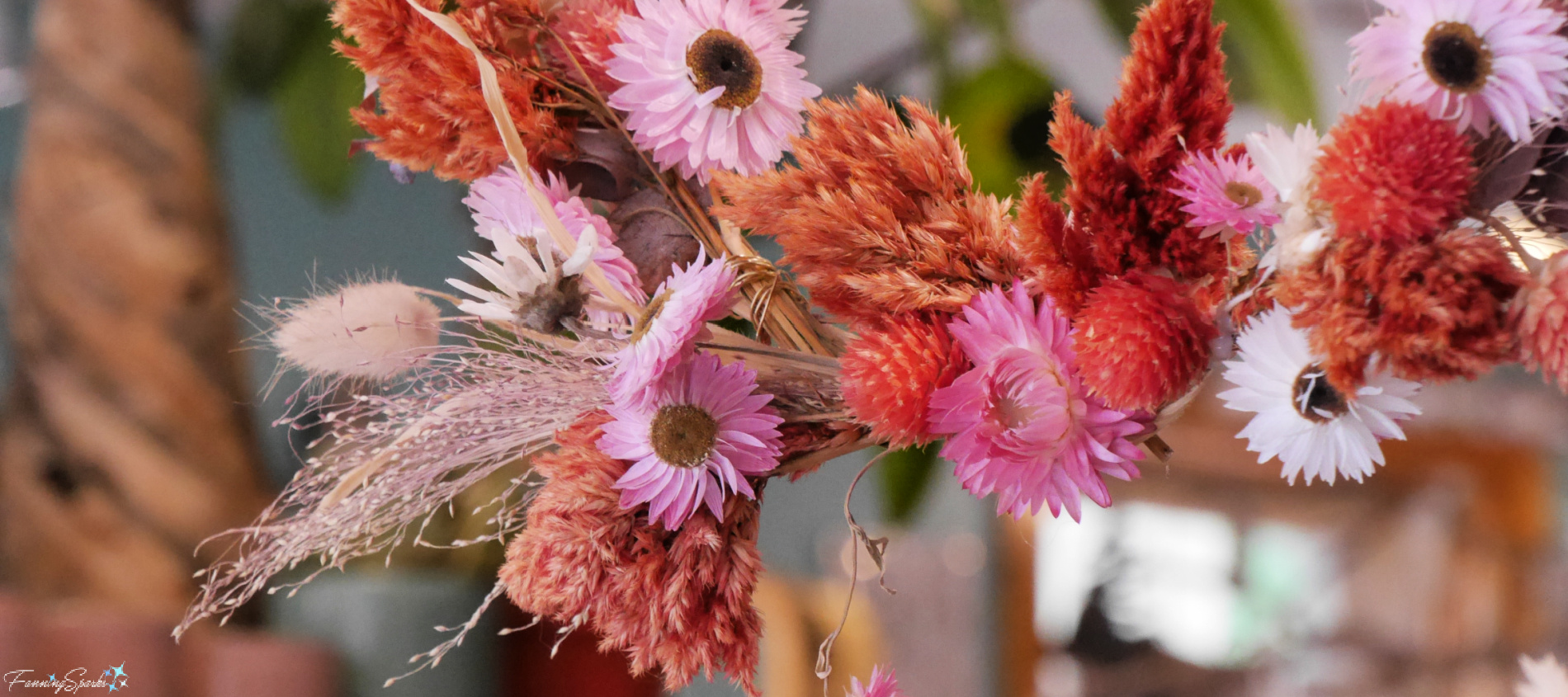
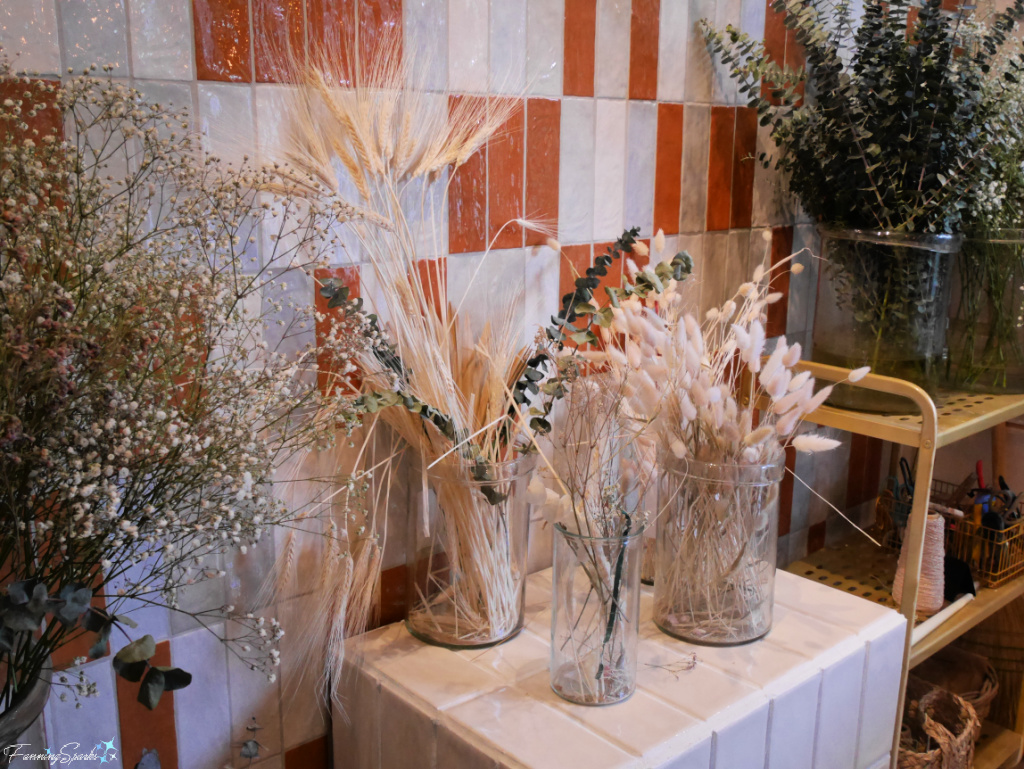
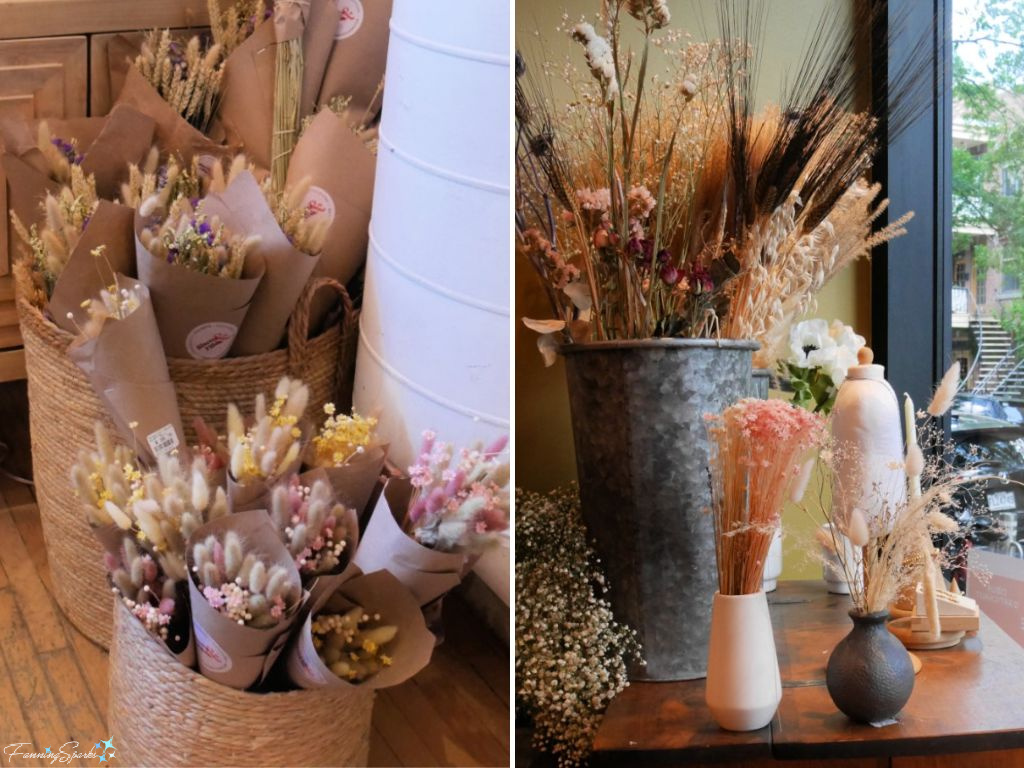
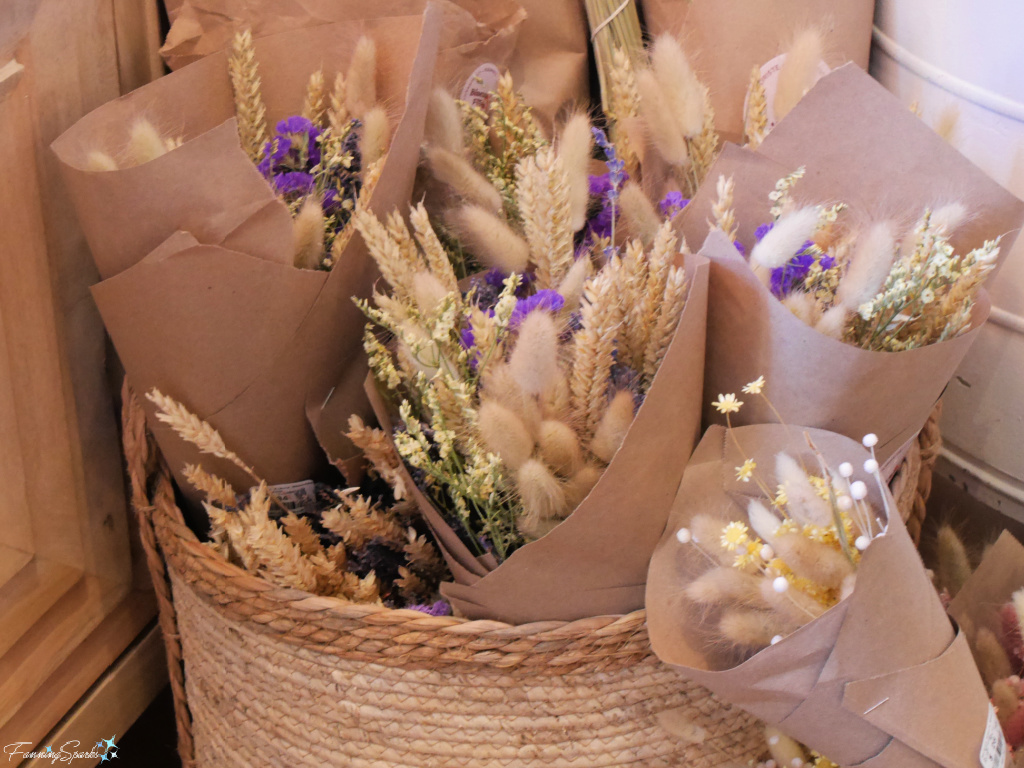
Dried flowers emerged as a standout trend during my Montréal style scouting excursion earlier this summer. Preserved blooms, seed heads and leaves were showcased in nearly every high-end home décor shop we visited. Most were left in their natural state allowing their understated colours, organic shapes, and subtle textures to take centre stage.
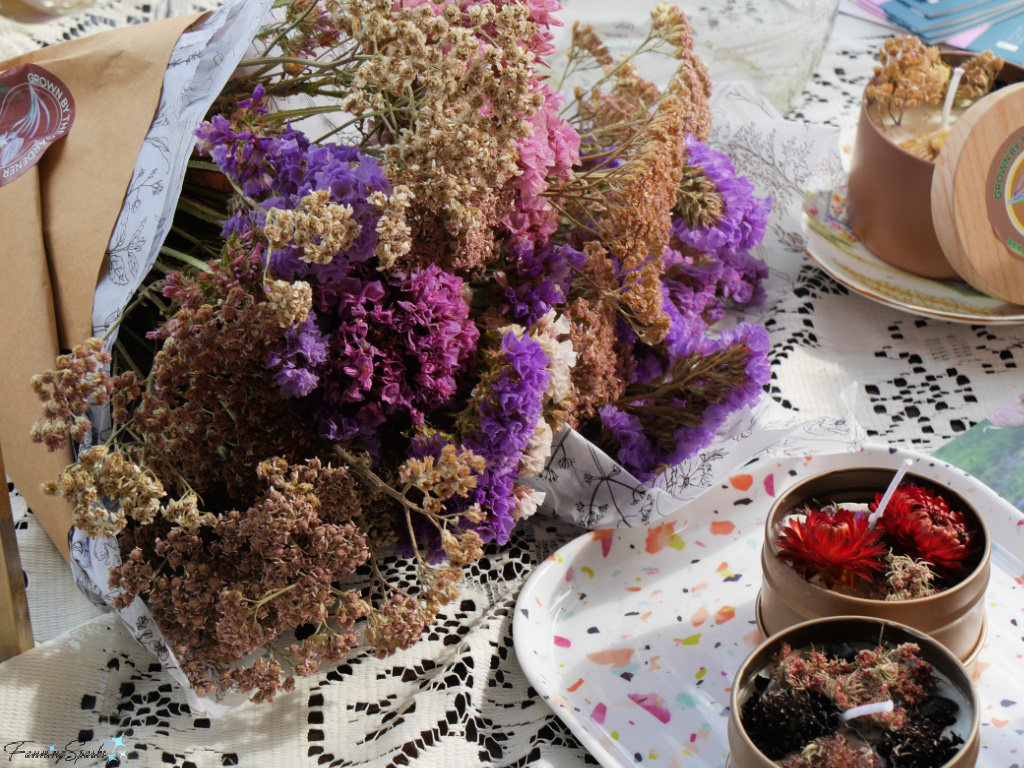
 Dried flowers have also been popping up in artist studios. This gorgeous bouquet of colourful statice and other dried botanicals was spotted at Grown by the Gardener Flower Farm in Lawrencetown, Nova Scotia.
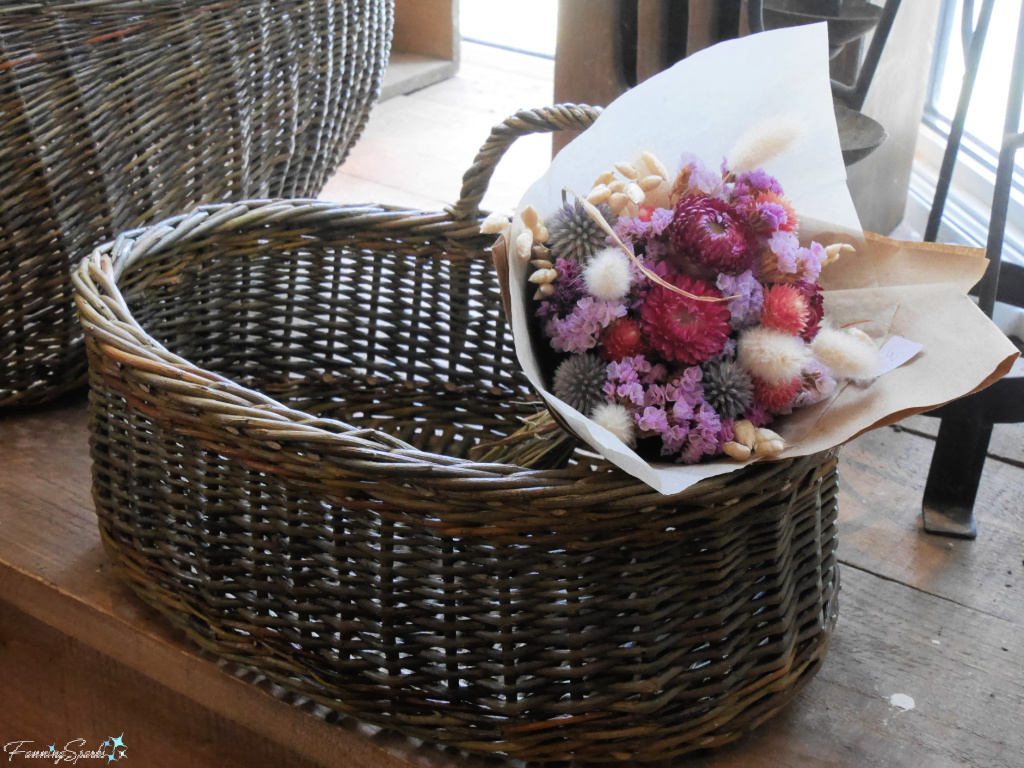
 Sweet Mama Grass in Sutton, Quebec was packed with stunning willow creations and accented with pops of natural floral colour.
 Likewise, the folks at Big Barn Little Farm in Antigonish, Nova Scotia sprinkled their willow basketry displays with dried hydrangea blooms and a variety of preserved botanicals.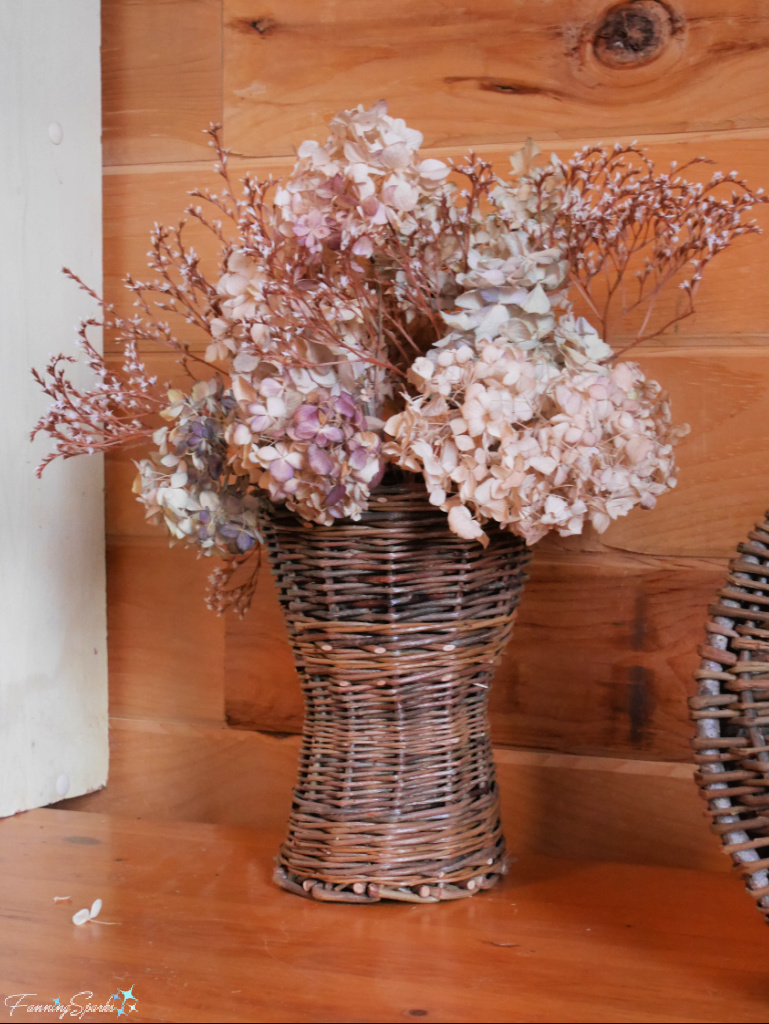
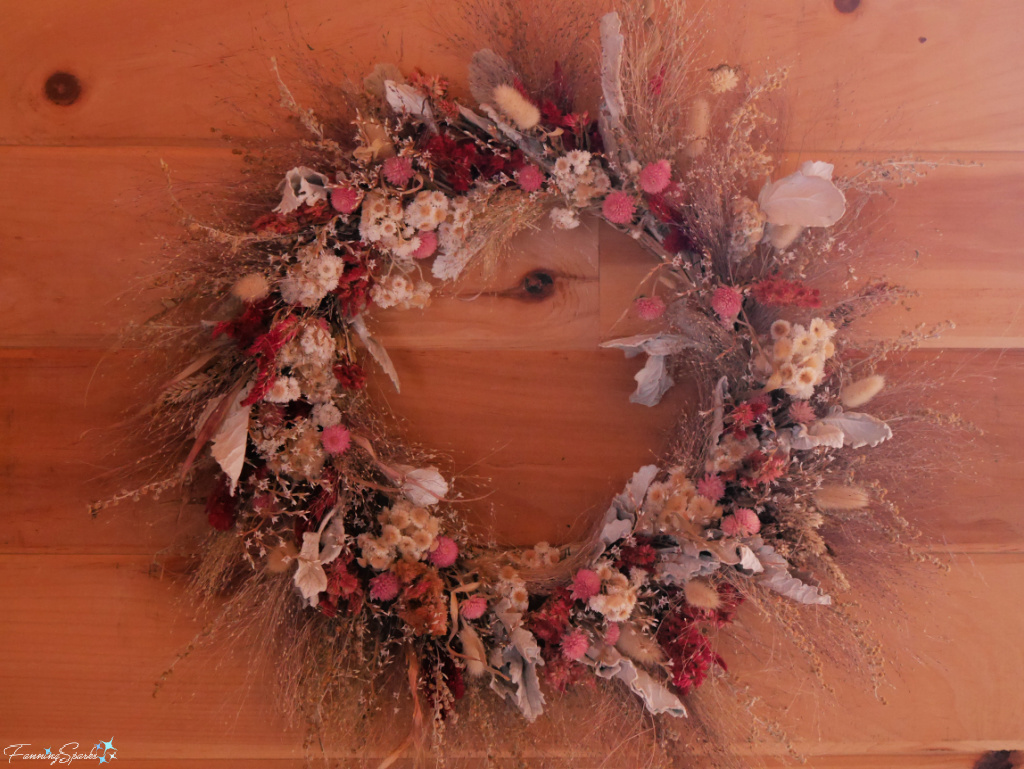 Dried flowers are one of those trends that continually swings in and out of vogue ― hot one minute, cold the next ― then hot again. In the 1980s and 1990s when shabby chic and county styles were at their peak, everyone was hanging big, blowsy grapevine wreaths over their fireplaces and on every available wall space. I know I did! Then, as with all trends, dried flower décor saturated the market, became commonplace and fell out of favour.
About 10 years ago, I noticed dried flowers making a comeback ― but in a more subdued and restrained manner. Here are a couple of examples from a Southern Living Idea House I visited in Senoia, Georgia ― on the left is a simple bouquet of dried love-in-a-mist seed pods and on the right are a few branches of rain tree seed pods.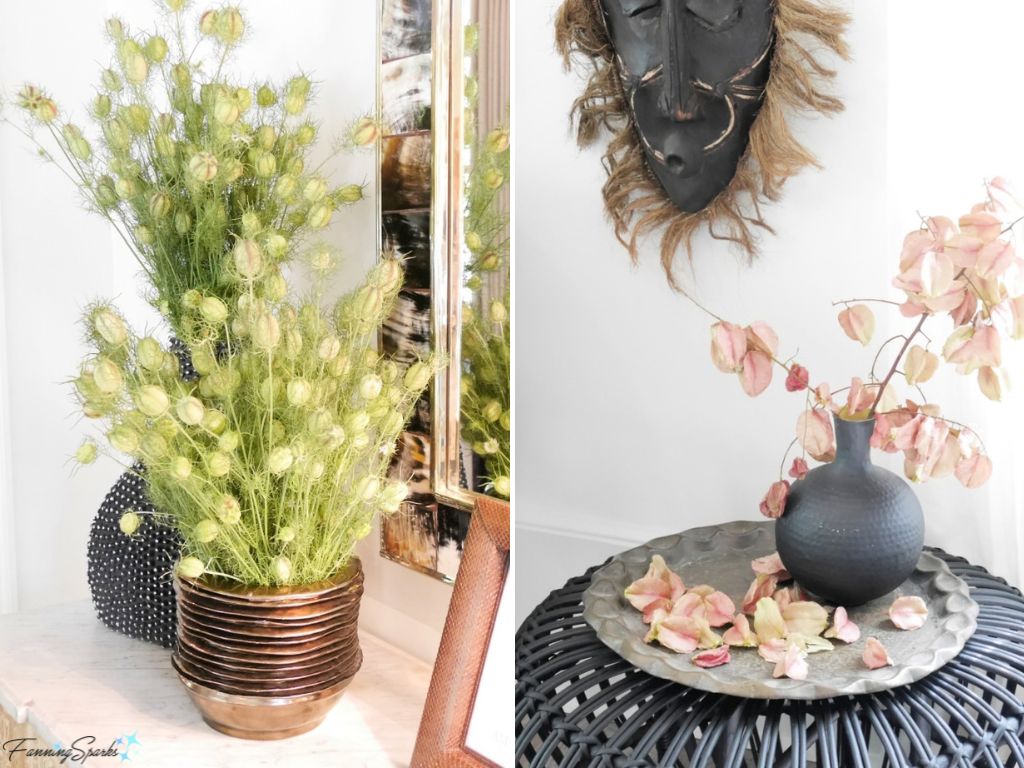 Late summer and fall are the ideal time of year to be thinking about dried flowers. This is the season to harvest blooms, seed heads and foliage to dry. “There are essentially three methods of preserving flowers” explain authors Alan Cormack and David Carter in their book Flowers: Growing, Drying, Preserving. The three methods are “using air, using a desiccant, and using glycerine”. Air drying ― hanging the elements upside down and letting them dry naturally ― is considered “the simplest way of drying any plant material”. But, the authors emphasize, specific conditions are needed for success. “The air should be dry, warm and moving” to avoid mould and mildew and the botanicals should be hung out of the light to avoid bleaching and fading.
This photo shows one way to bundle and hang flowers for drying. The location, however, is not ideal ― it has great air flow but is too brightly lit.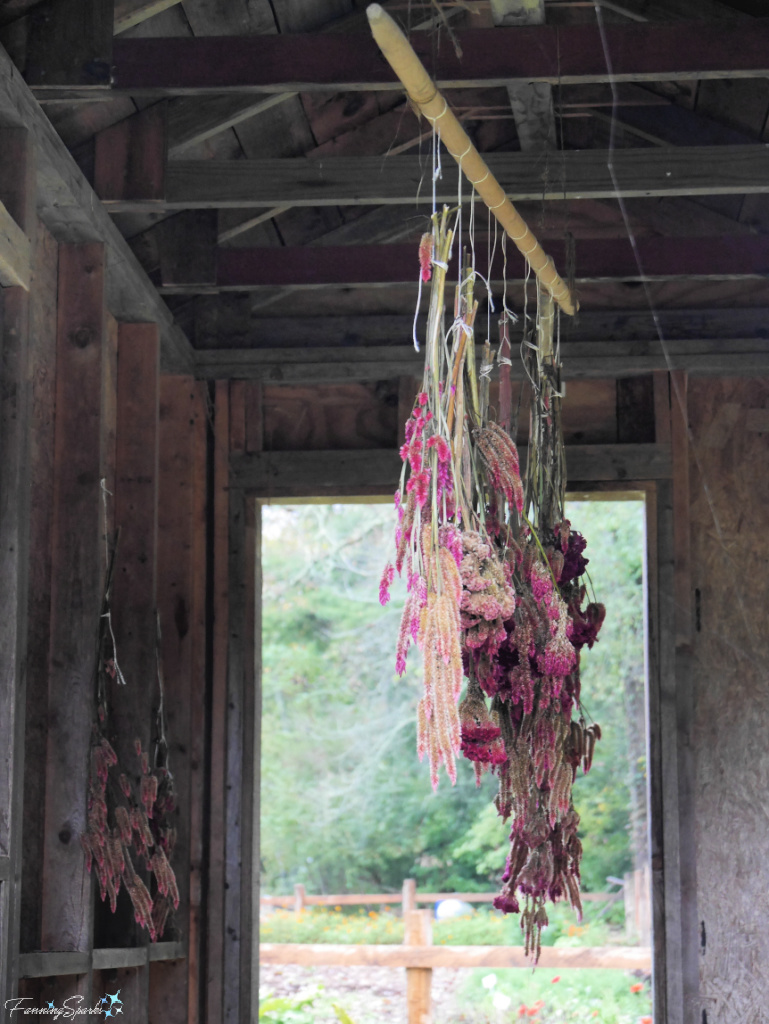 Here’s another example ― bundles of lavender are tied and hung via S hooks. With the doors closed, this location was dark and airy ― ideal for drying flowers.
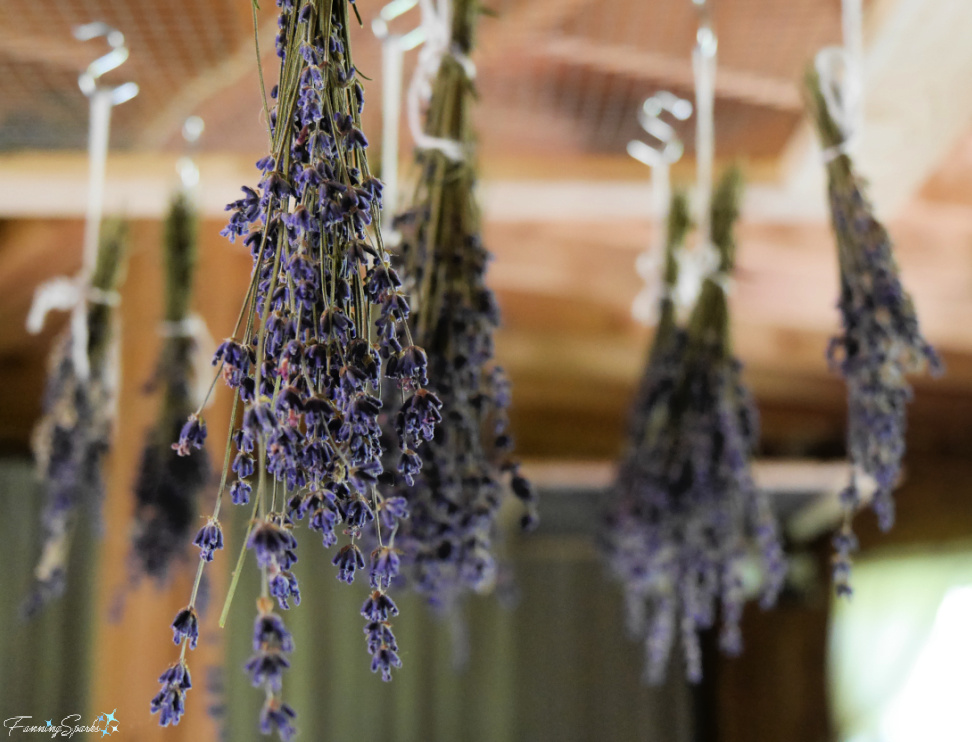 Lavender is one of the most widely used flowers for drying although it must share the spotlight with strawflowers. Strawflowers (Helichrysum), which are also known as Everlastings or Paper Daisies, are prized for holding their vibrant colours when dried. This photo shows a beautiful strawflower, still in the garden, in full bloom.
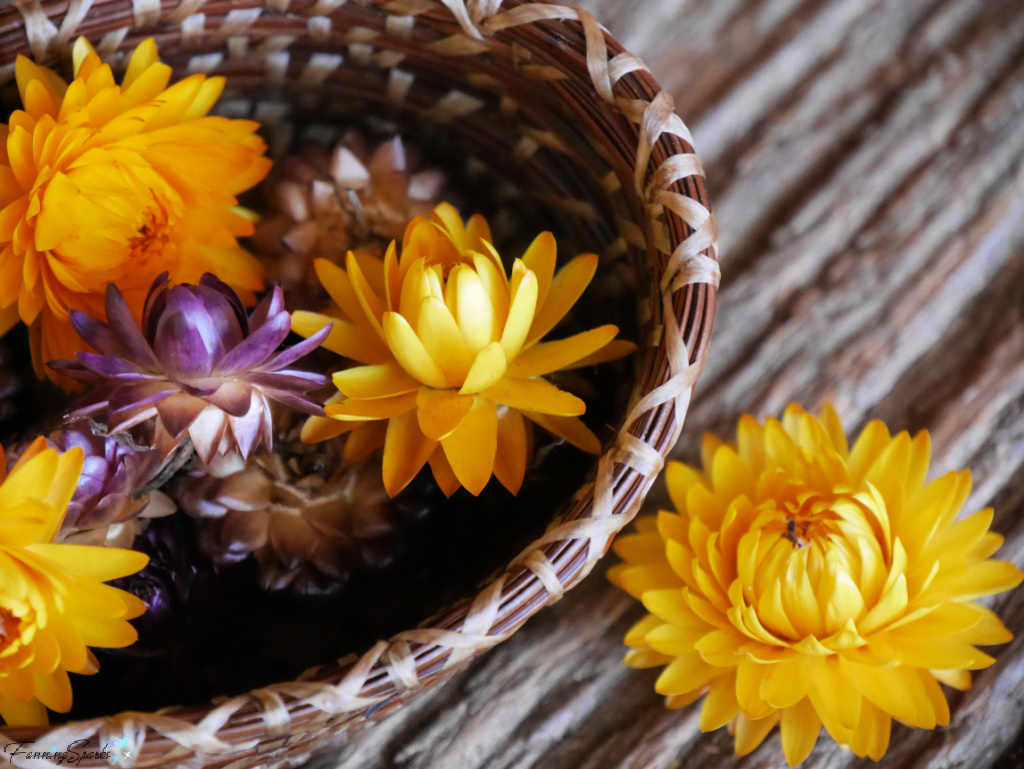
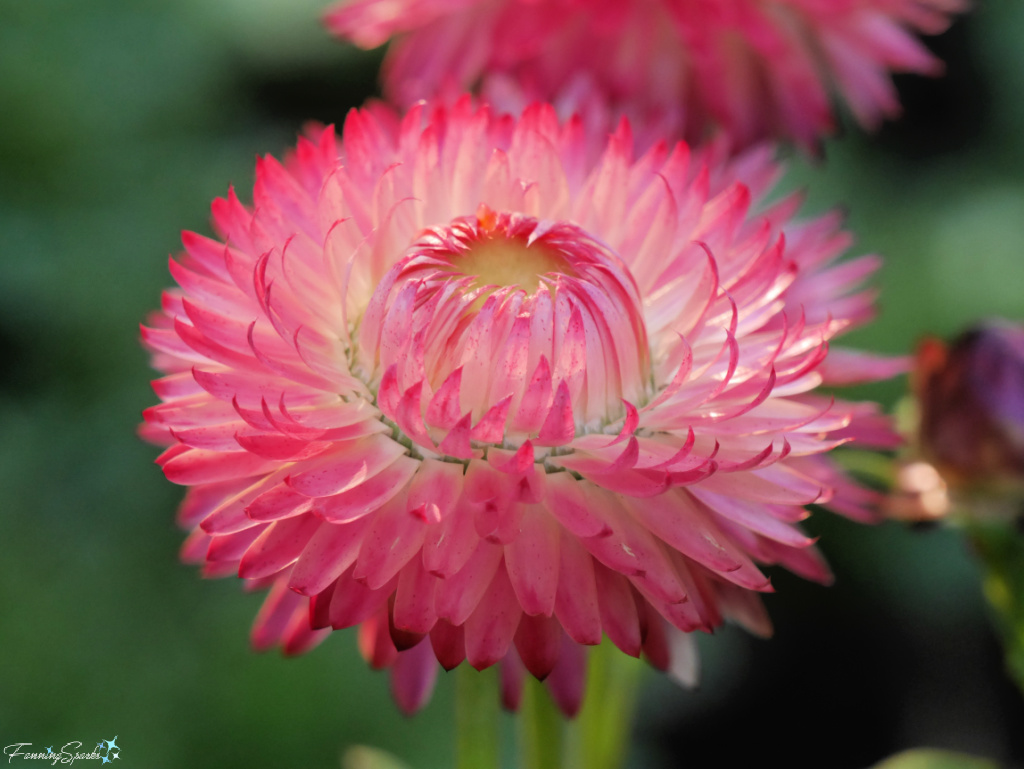 In comparison, here are some dried strawflowers ― they have kept their vibrancy and intensity during the drying process.
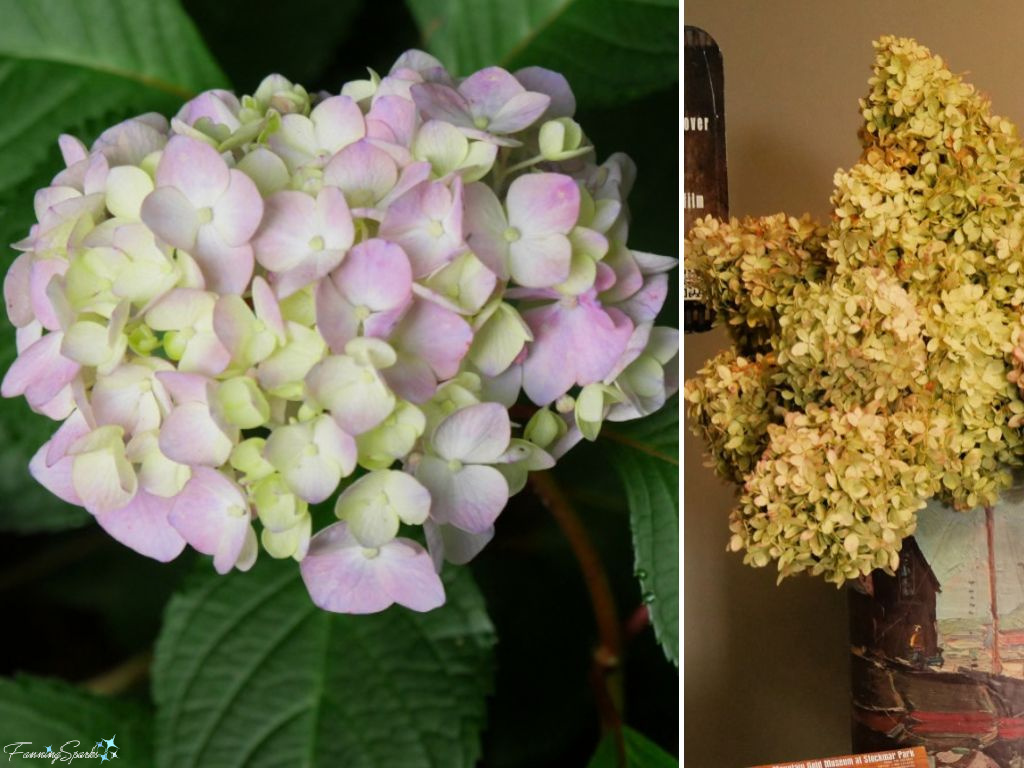
 Hydrangeas maintain their delicate, fluffy appearance but typically lose their colour when dried. These beautiful pinkish blooms, for instance, would likely fade into the muted tans and golden beiges shown on the right.
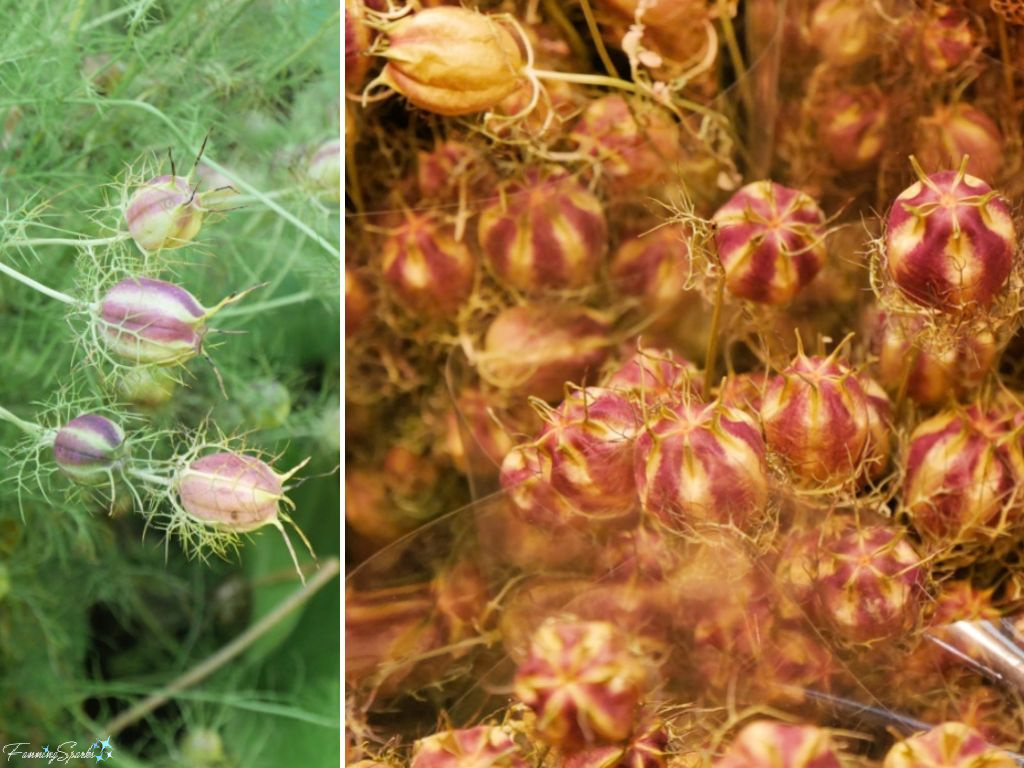
 A similar transformation would occur with love-in-a-mist (Nigella damascene) seed pods, as shown below.
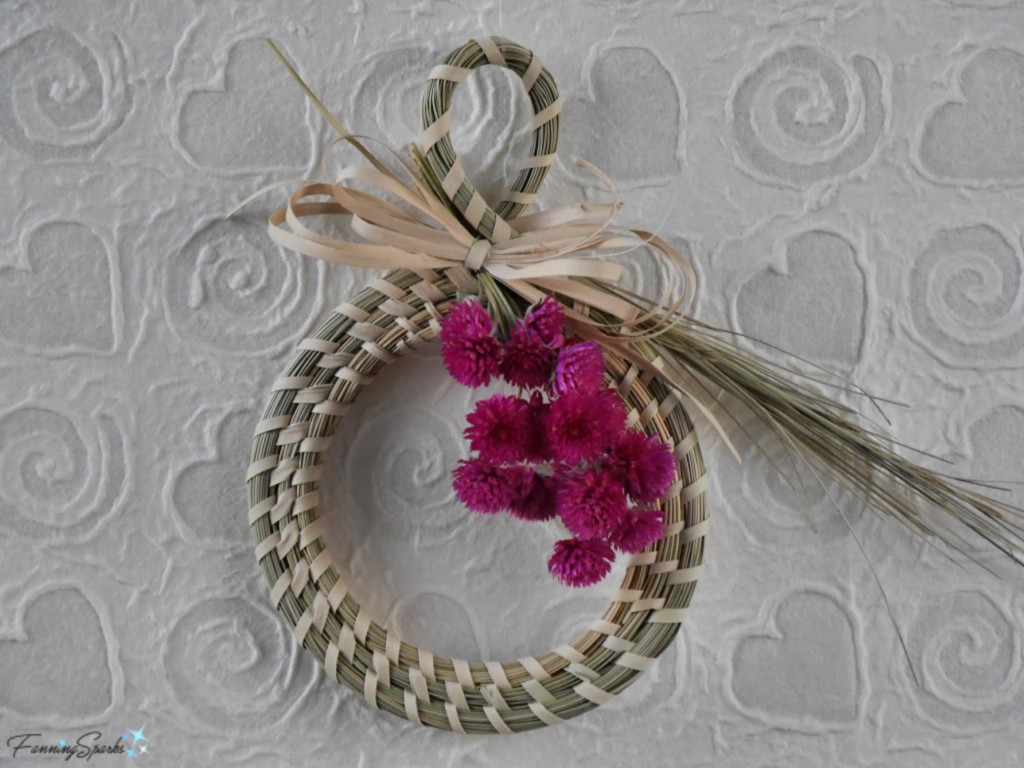
 Personally, I’ve had great success drying globe amaranth (Gomphrena globosa) blooms ― they easily maintained their vibrant colours and unusual forms during the drying process. Shown below are some of the dried blooms I used to decorate a small sweetgrass wreath (see My Sweet Sweetgrass Wreath for the full story).
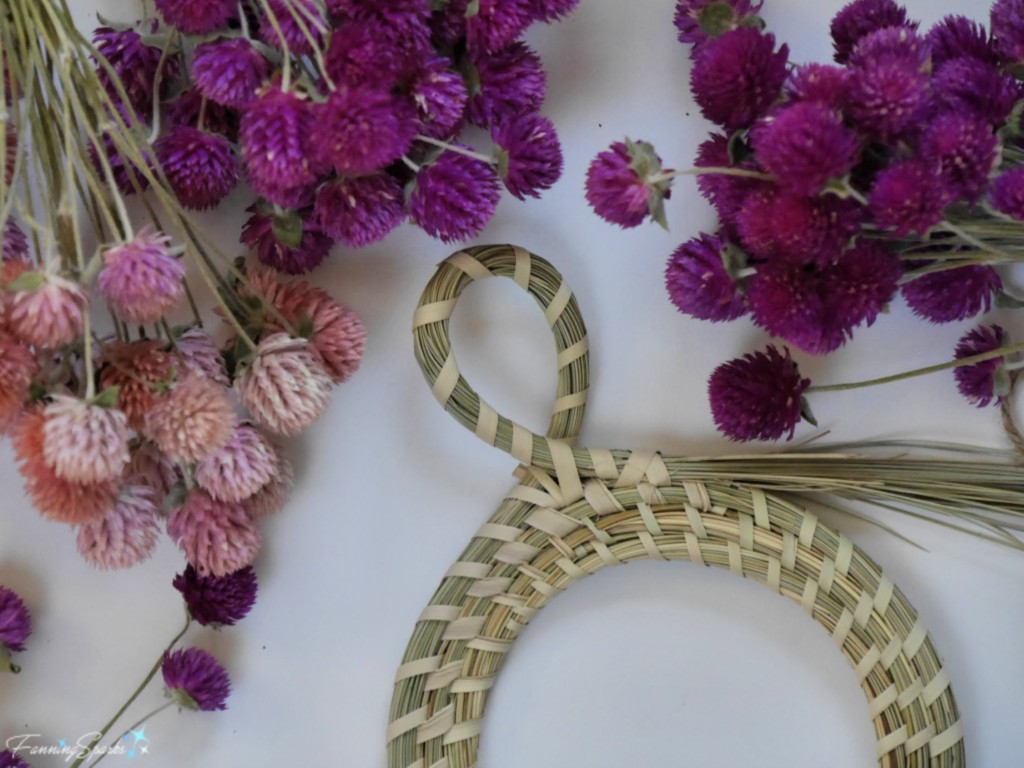 Here’s the finished wreath with a simple, small bundle of dried globe amaranth flowers.
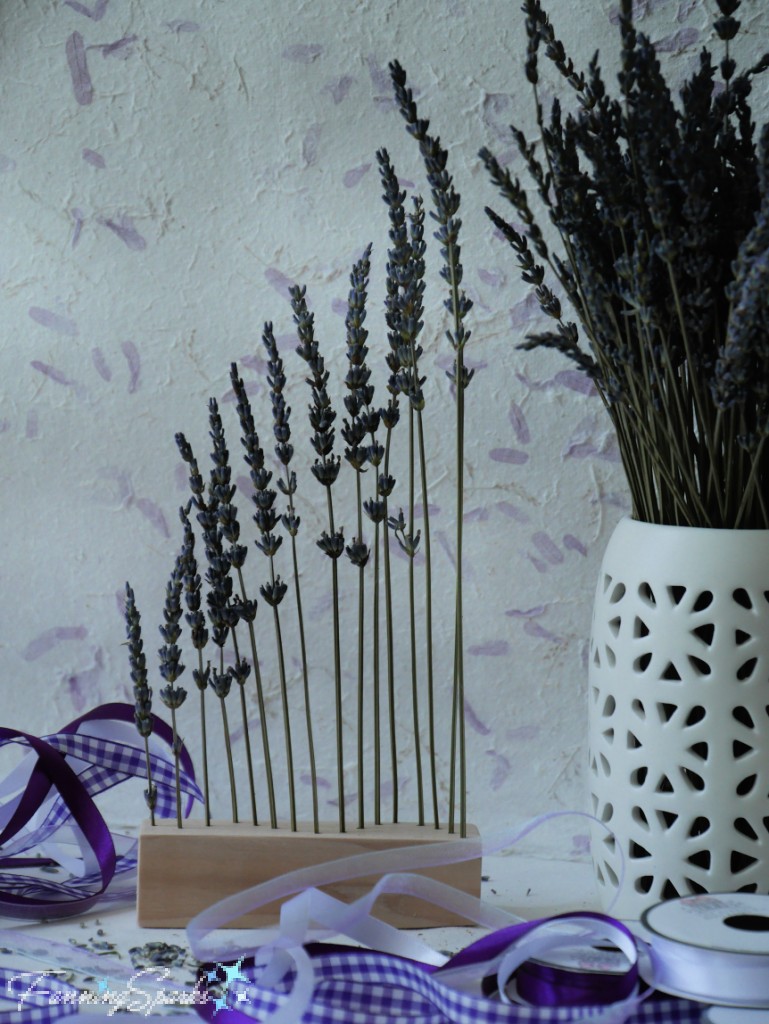
 Another easy way to display dried flowers is in a basic, wooden, display block. Here’s one I made holding some dried lavender stems. See my previous blog post, Stop and Smell the Lavender, for instructions.
 Recently, I was inspired to create some dried flower arrangements to decorate our upstairs hallway.
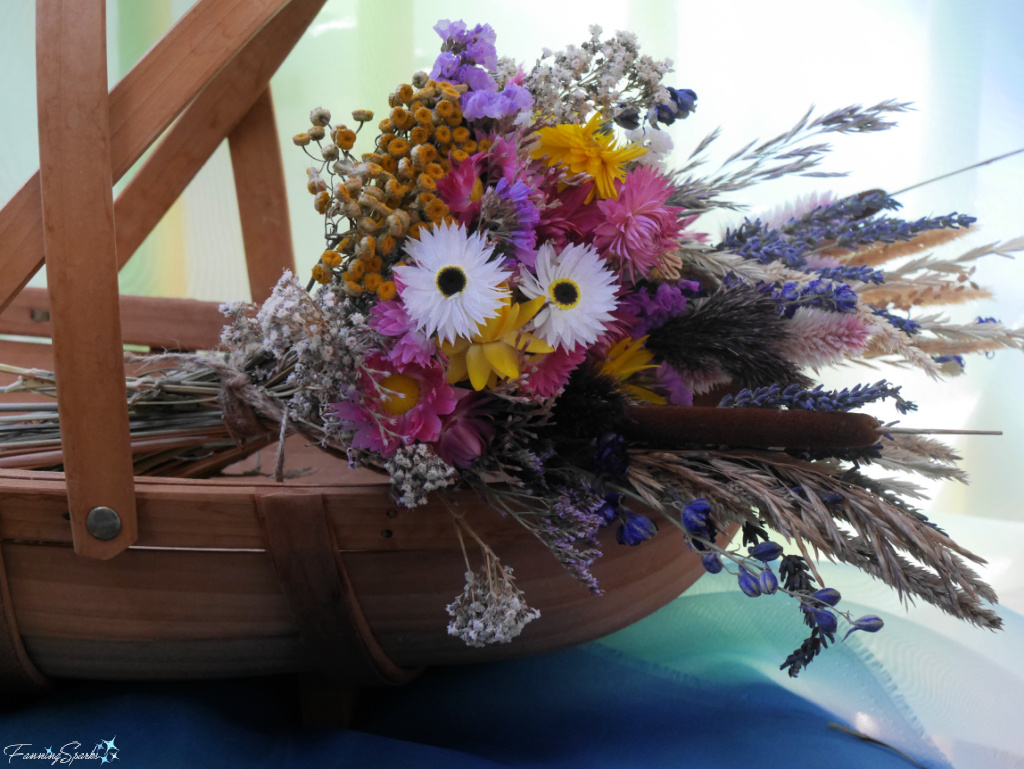
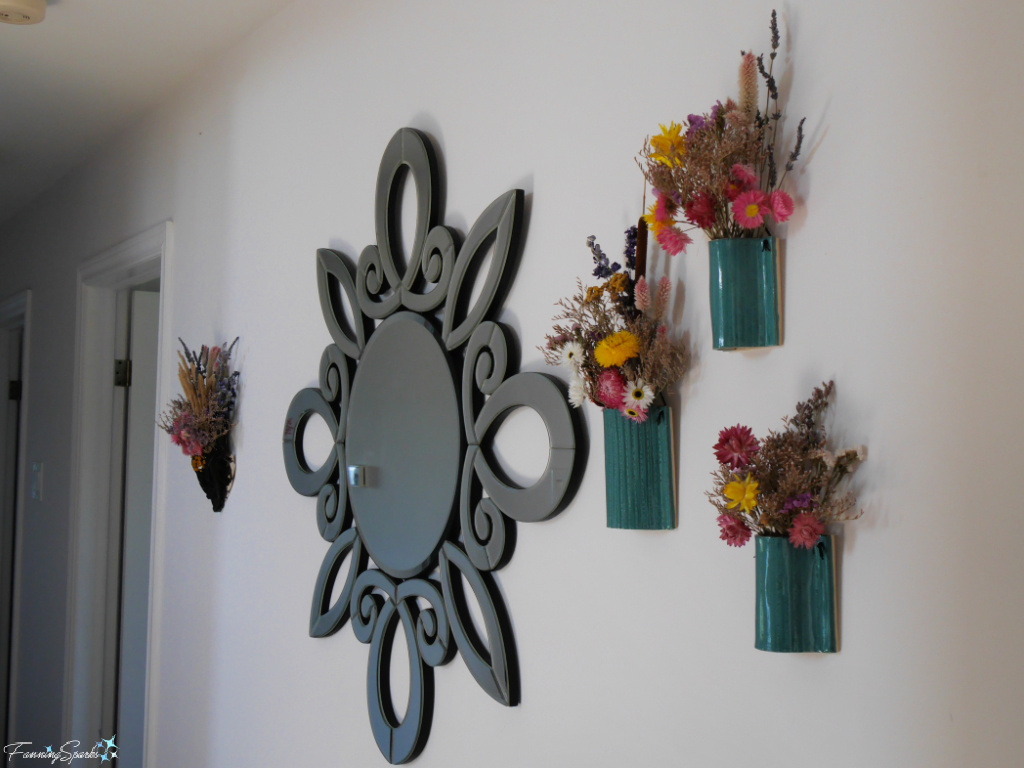 The idea was to add some colour, texture and interest while staying true to the aesthetic direction for our new home (see In the Mood for Mood Boards). This project started with some gorgeous dried flowers I found at a local gardening nursery.
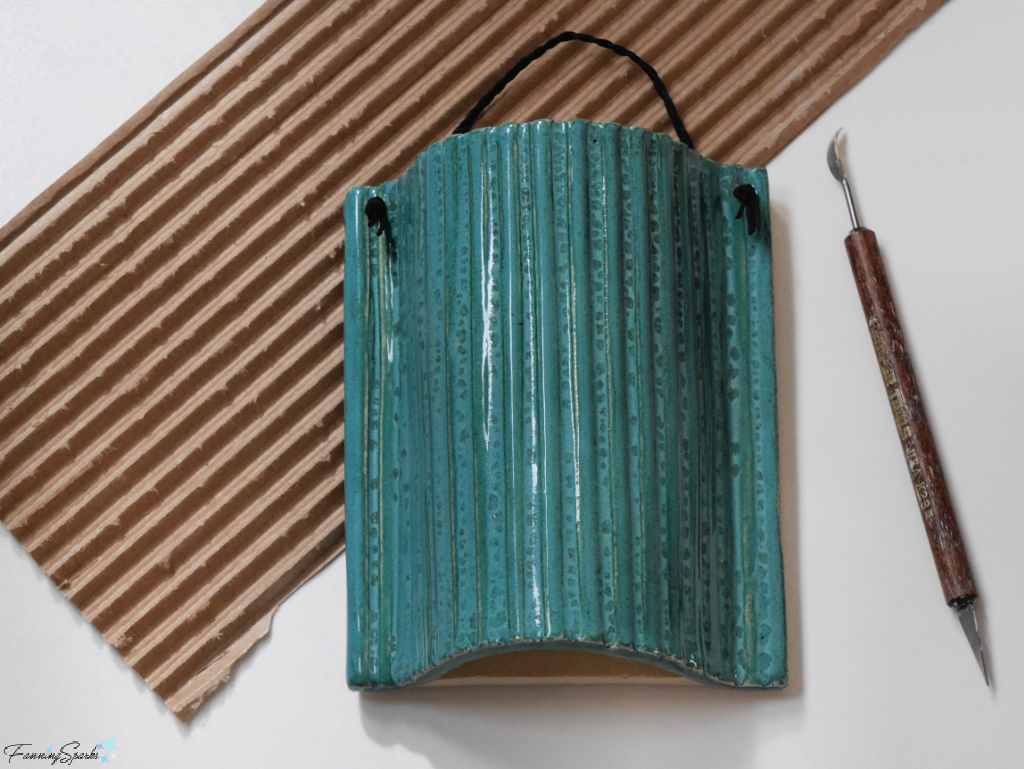
 The trio of wall pockets are new, too. They are made from rectangular slabs of clay ― the front of each piece was imprinted with linear grooves from a piece of corrugated cardboard. They are finished in an Amaco glaze called “Teal Drift”. I hand built these pieces at the Pearl Art Studio in New Glasgow, Nova Scotia ― a nearby studio I discovered recently. This was my first pottery project after being away from the clay studio for several years. It was great fun!
Here are a few more views of the results.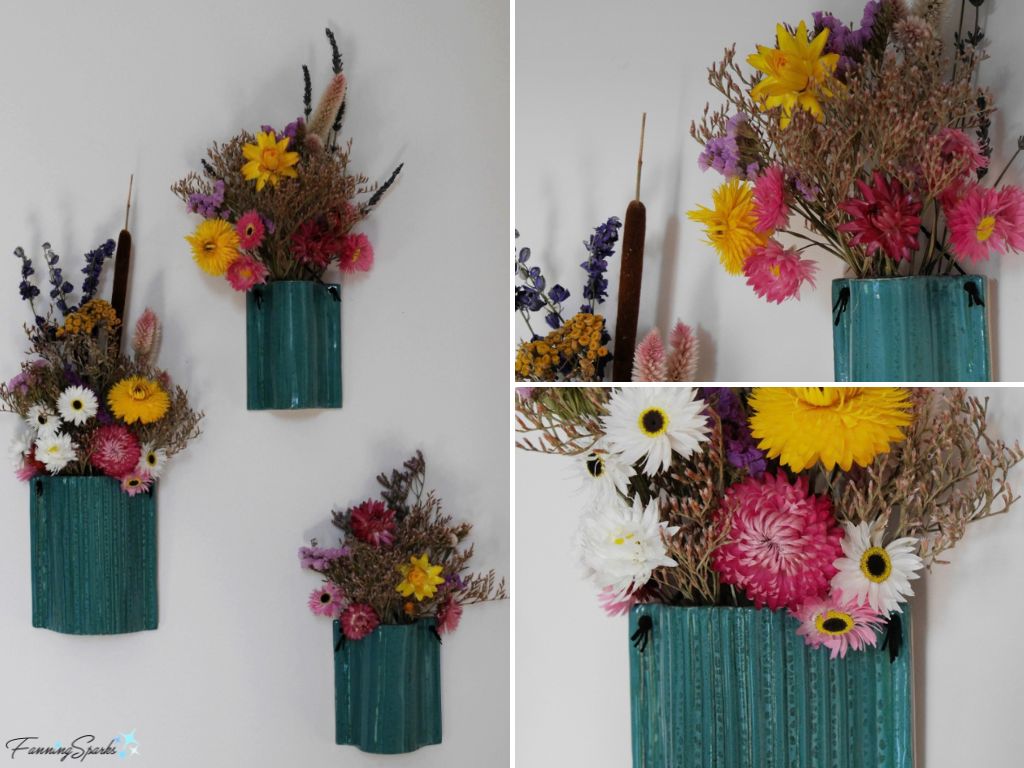
More Info
Previous blog posts mentioned in this blog post include:
. My Sweet Sweetgrass Wreath
. Stop and Smell the Lavender
. In the Mood for Mood Boards.
In addition, see Postcards from Quebec #2 for information about my style scouting excursion in Montréal, Quebec.
I really enjoyed the Ceramic Handbuilding classes taught by Julia Kansas at Pearl Art Studio in New Glasgow, Nova Scotia. Julia is a great instructor ― knowledgeable, attentive and enthusiastic. Thank you Julia for a great experience! Pearl Art Studio offers a range of pottery classes, workshops and services designed to help “participants unlock their artistic potential – whether they’re taking their first steps or honing their craft”. See their website or Instagram for more information.
The following artists/studios are mentioned in this blog post:
. Grown by the Gardener – see their website or Instagram
. Sweet Mama Grass – see more on their website or Instagram
. Big Barn Little Farm – see more on their website or Instagram.
The following books and articles were consulted in the writing of this blog post:
. Flowers: Growing, Drying, Preserving book by Alan Cormack and David Carter which is available here on Internet Archives
. Dried Flowers article updated in 2026 and published on Local Flower website
. Discovering Dried Flowers article published in August 2021 on Floret website.
Today’s Takeaways
1. Dried flowers are back in vogue for home decorating.
2. Late summer and fall are the ideal time to harvest blooms, seed heads and foliage for drying.
3. The simplest way to dry botanicals is to hang them upside down in a dark, airy place.

Comments are closed.