
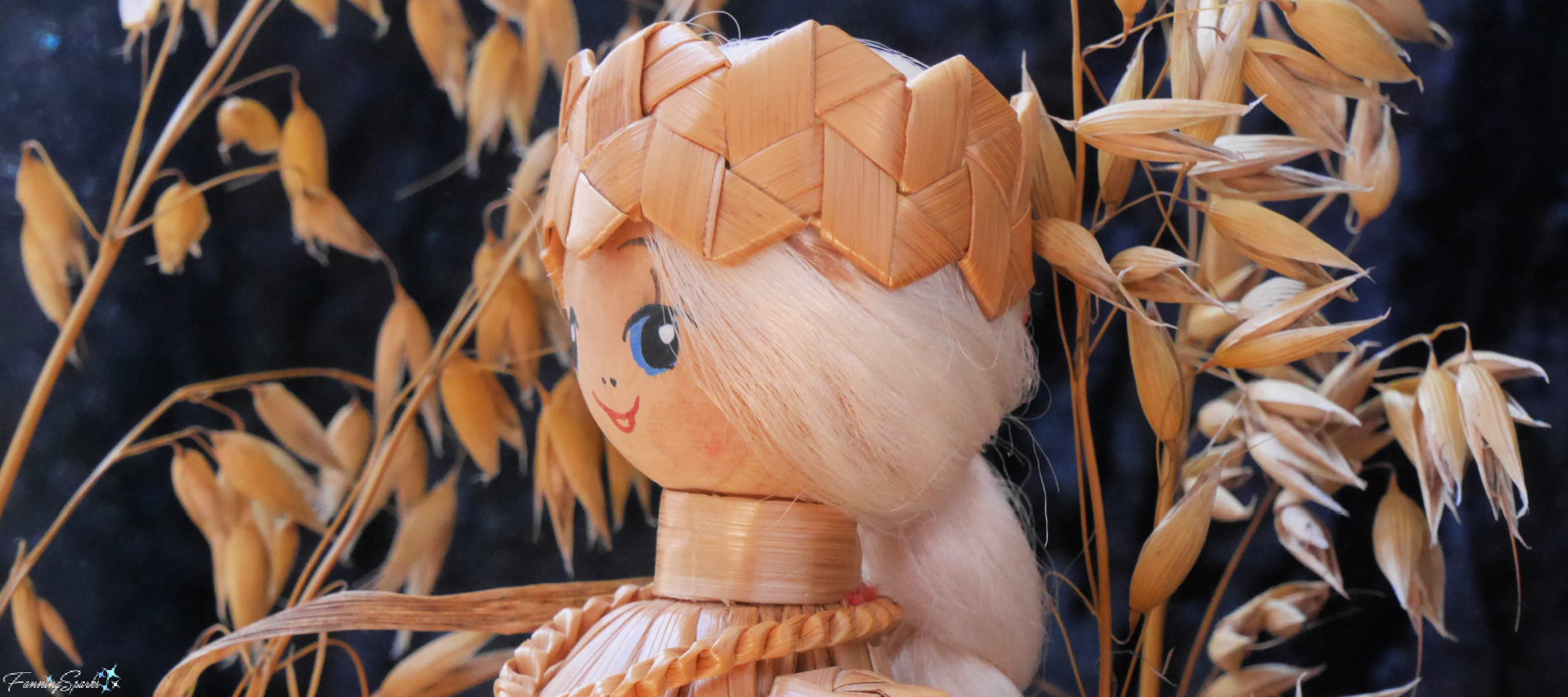
Farmers and gardeners have been busy gathering the autumn harvest. From picking apples to gathering pumpkins to baling hay, they are working tirelessly to stock up for the long winter ahead. It is a season of peak ripeness, marked by a countryside shifting from green to gold.
This patch of Maiden Grass (Miscanthus sinensis) glows in the afternoon sunlight.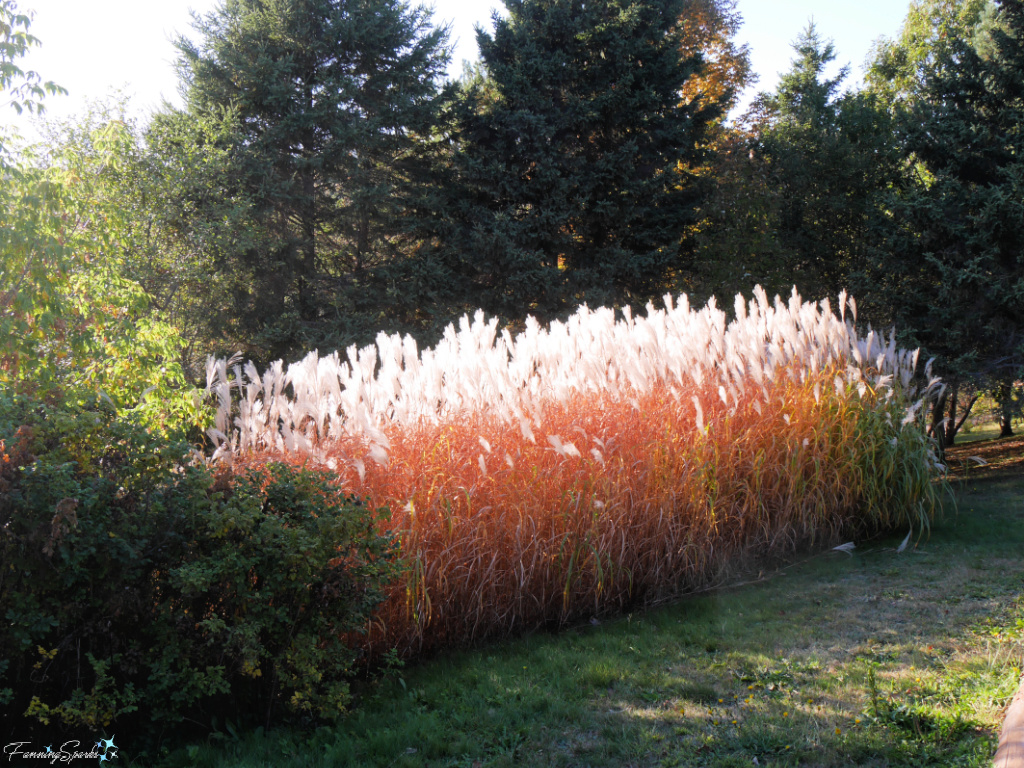
For centuries, people have celebrated the completed harvest with traditional rituals and festivities. For instance, “the practice of making a corn dolly or harvest figure is very ancient and almost worldwide”. Authors Doris Johnson and Alec Coker delve into this intriguing harvest tradition in their book The Complete Book of Straw Craft and Corn Dollies: Techniques and Projects.
Shown below is an example of a straw harvest figure. Titled Earth Mother, it was created by Carol Partridge of The Wheat Weaver in Kent, England.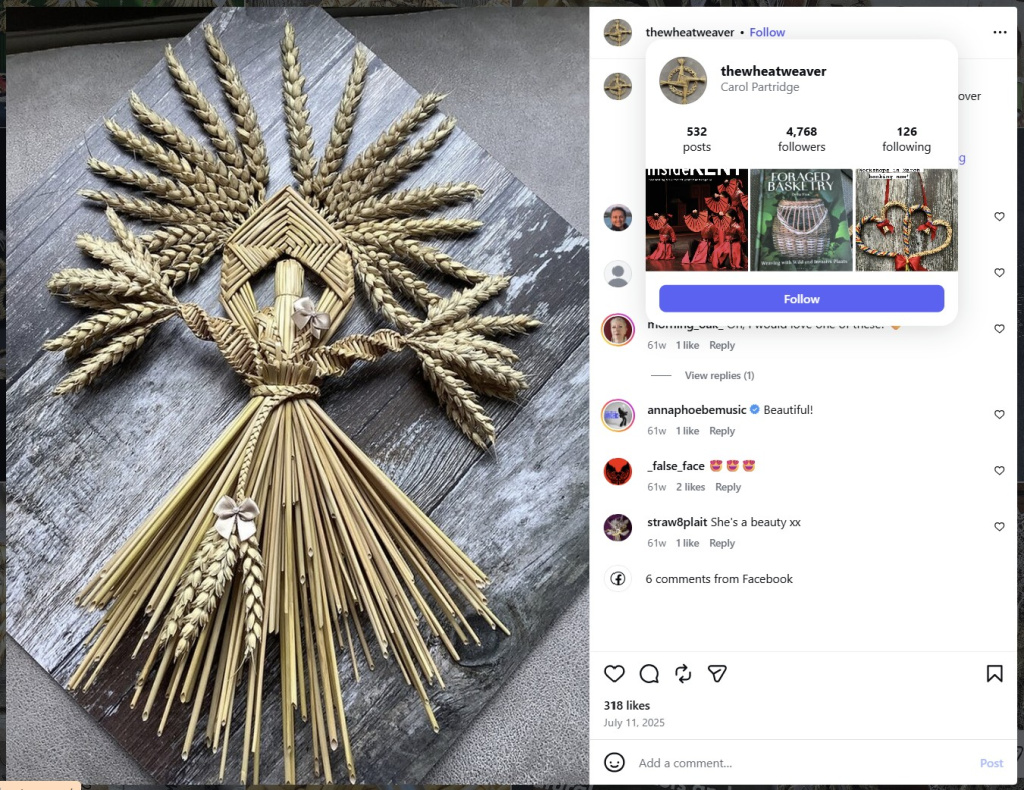
Harvest figures, also called harvest trophies, harvest tokens or corn dollies, vary significantly. “Corn dolly” seems to be the most popular term but it’s also the most misleading. It’s easy to assume a corn dolly would be a small human figure made of corn foliage but it’s not. At one time, the word “corn” was used to describe a family of grains which included barley, oats, wheat and rye. Furthermore, experts believe the word “dolly”, used in this context, was derived from the word “idol” meaning it could take on many forms.
This is another example of a corn dolly. It was created by Elaine Lindsay of Something Corny in Aberdeenshire, Scotland.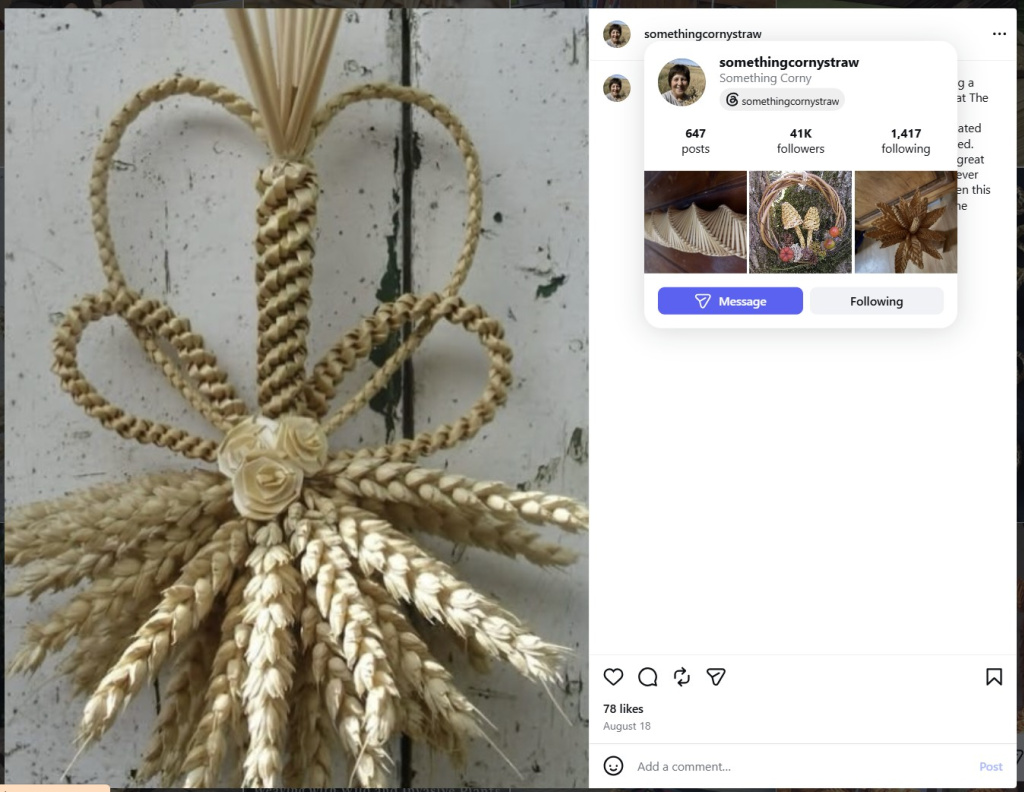
Historically, corn dollies played a fascinating role in the annual harvest. “Primitive farmers did not understand the germination of the seed and associated the growth of the crop with the action of a harvest spirit who lived in the grain” explain Johnson and Coker. “As the grain was cut, this spirit retreated into the last bit of grain still standing, and it was this last bundle which was plaited into a talisman and carefully preserved through the winter as a resting place for the corn spirit. In the spring the seeds were crumbled from the old talisman and sown with the new crop to transfer the vital force from one year’s crop to the next.”
The straw talisman became the corn dolly. Shown below is yet another example. The traditional Mell Doll harvest trophy was created by Penny Maltby of the Ministry of Straw from Oxfordshire, England. Maltby shares this perspective on her website” “‘Corn dolly’ is a wide-ranging term which includes figures, love tokens, crosses, Scandinavian star designs, and Far Eastern shrine dolls made from ‘corn’ straw. Techniques used in the craft include tying, plaiting, weaving and marquetry. The corn dolly was originally an object used in rites and rituals.”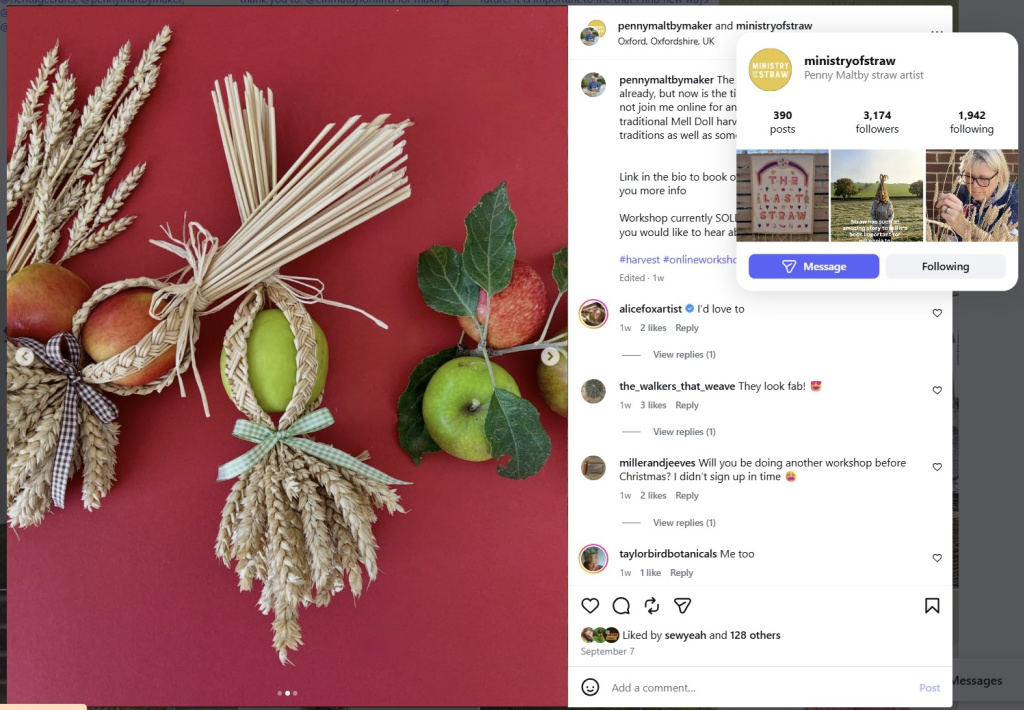
Another straw art form related to the annual harvest season is the Finnish himmeli ― those intricate, three-dimensional, geometric mobiles made of straw which appear to float in the air. Unlike corn dollies which were believed to house and protect crop spirits, himmelis were traditionally “hung in living rooms as bringers of good fortune for the harvest” notes the Paimio Sanatorium’s website in their announcement of a Healing Power of Himmeli exhibition. “The greater the bringer of fortune, the greater the hope for an even larger harvest. This means there were truly large himmelis that could only be constructed by hanging them in barns and assembling them similarly.”
The exhibition featured work by Finnish himmelist Eija Koski. Koski is “world-renowned for her intricate artworks and has played a significant role in the revitalization of this tradition. More than merely decorative, this traditional Finnish folk art form has played a part in contemporary community building around the world” writes Joelle Jackson in her article Heavenly Harmony: The Universal Language of Finnish Himmeli.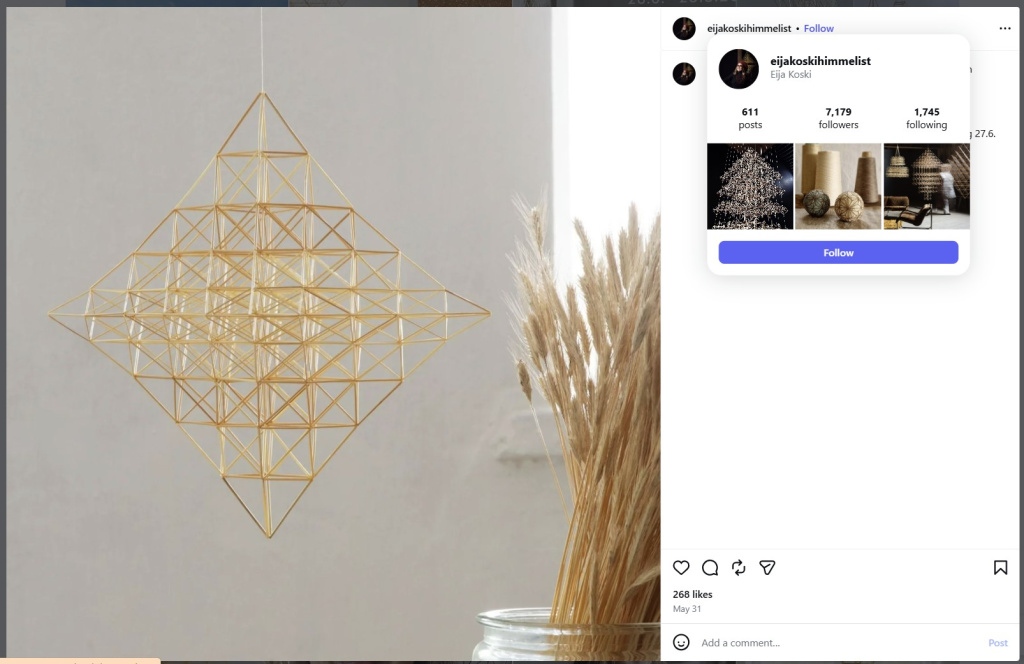 But the Finns are not the only makers of straw mobiles. As noted in the article Straw Mobiles: Pajak, Himmel, Puzur, Sodas, Pavuks, Himmeli and More, from The Straw Shop website, “straw mobiles are/were found [in] Belarus, Sweden, Lithuania, Latvia, Finland, Estonia, Norway, Poland, Ukraine, Russia and possibly others”. As a result, straw mobiles are known by a variety of names including “Puzuris, Spider and Himmelli … Sodas, Oro, Pajak, Pavuks, Halmkrona, Pulmakroon, and Himmel. All these names describe amazingly intricate straw mobiles”.
This observation is supported by the fact the making of Lithuanian straw mobiles ― known as sodai or straw gardens ― has been recognized as “a unique cultural phenomenon [and] inscribed on the UNESCO Representative List of the Intangible Cultural Heritage of Humanity”. The honour was recently celebrated on a new Lithuanian €2 coin announced by the Lithuanian Bank. They provided this context on their website: “Straw gardens are geometric ornaments made from natural fibre straws, which are threaded to form triangles and squares. They decorate Lithuanian homes and are deeply rooted in Lithuanian culture. In ancient cultures, triangles symbolised the spirit and squares symbolised matter, the combination of which forms a garden.”
The Lithuanian coins are featured in this Instagram post by Sonata Žemguliené, a straw garden artist from Kaunas, Lithuania.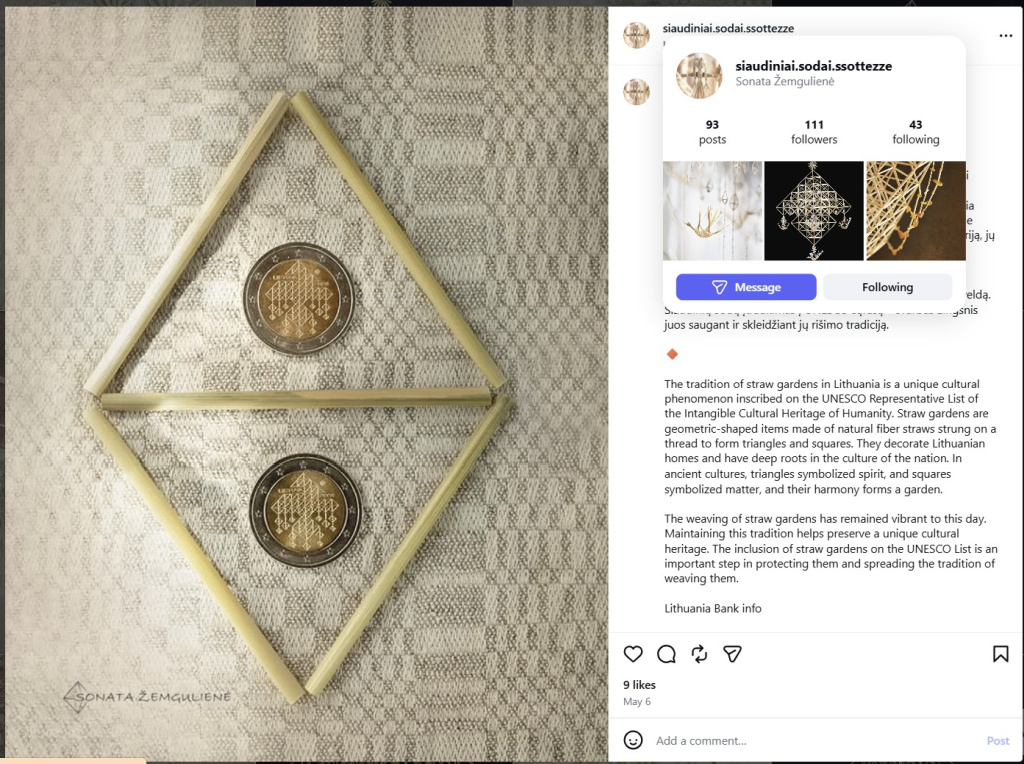
The Lithuanian Bank website concludes: “Making straw gardens is an activity that is still cherished today. Upholding this tradition helps to preserve our unique cultural heritage. The inscription of straw gardens on the UNESCO list is an important step in their preservation and will help to continue the tradition of making them in Lithuania.”
Here’s an example of Sonata Žemguliené’s outstanding work. The piece, titled Baltic Wave, features an elaborate straw structure decorated with tiny amber beads.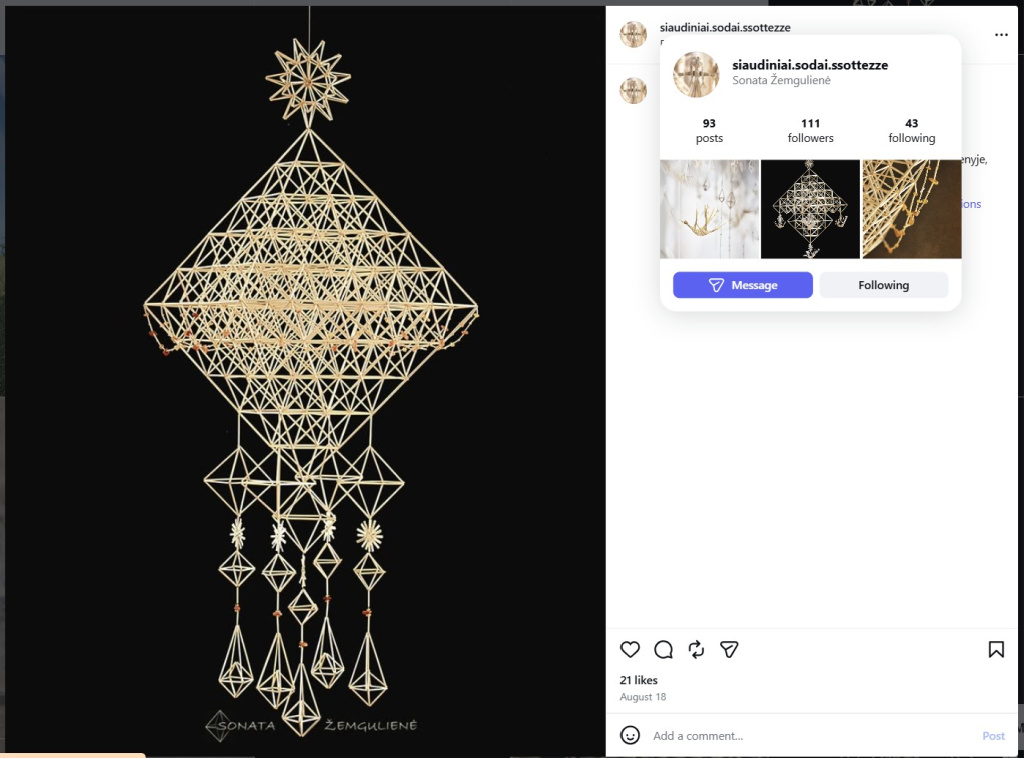
Over the last decade, the popularity of straw mobiles has grown around the globe. There are several masterful himmeli artisans in Japan including Hitomi Tokudome of Himmeli Sora no Oto. Their work is pictured below. The translated captions read: “A Classic Shape This is the most popular design —the fundamental Himmeli form—composed of an octahedron. … The shape of large, medium and small octahedrons is like a golden chandelier”. As a reminder, an octahedron is like two square-based pyramids glued together perfectly at their bases. “The pyramid that opens towards space and the pyramid that opens towards earth overlap, are said to symbolize connecting heaven and earth and circulating the energy that flows between them. Each one has a simple shape, but their combinations are endless”.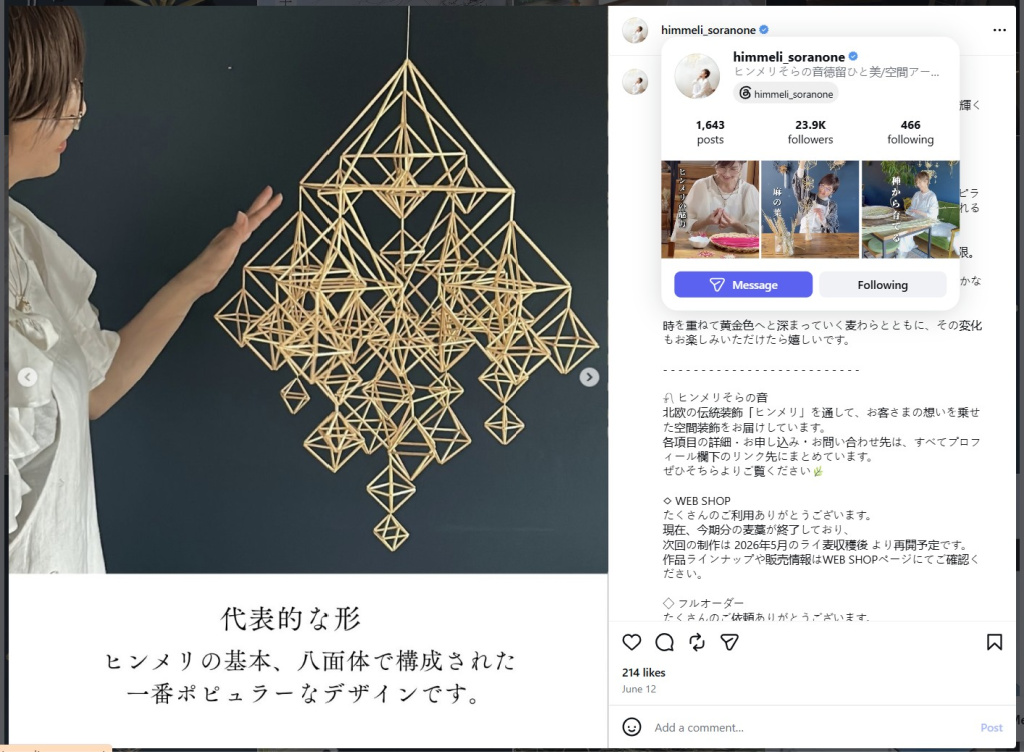
Speaking of straw art from around the world, weaving with straw is a deeply rooted tradition in the country of Belarus. In fact, Belarusian straw weaving was officially inscribed onto the UNESCO Representative List of the Intangible Cultural Heritage of Humanity.
As noted on the UNESCO website, “Belarusian straw weaving emphasizes the spiritual value and symbolism of the material and the products. Various utensils (such as boxes and baskets), headgear, toys and accessories are made from straw. Some products have special meaning, such as the harvest wreaths or pawuks, [aka straw mobiles] … believed to protect the household from evil and diseases. The modern straw weaving art in Belarus is based on folk traditions and is continuously enriched by the creative achievements of individual experts who transmit their knowledge and skills”.
The associated announcement on the Official Belarus.BY Facebook page elaborates: “Belarusian straw art is unique; it is one of the most nationally distinctive forms reflecting the spiritual values and artistic traditions of Belarusians. In Belarus this craft has found a new lease on life and has become a popular type of modern art. “Belarusian straw” has become a national brand. Artistic products and souvenirs made of straw are unmistakably associated with Belarus, creative abilities and diligence of Belarusians.”
The post, shown below, was accompanied by a series of photos showcasing Belarusian straw weaving.
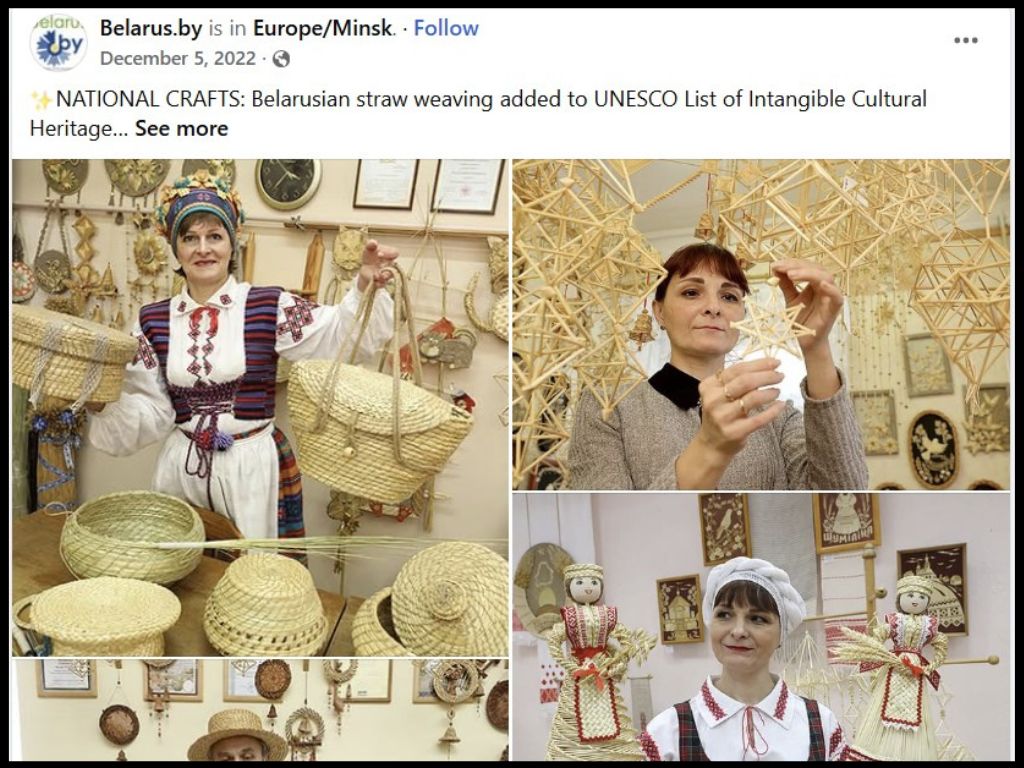
The artist holding the two straw female figures caught my eye and sent me down the internet rabbit hole looking for similar Belarusian straw dolls. Eventually, I found the work of Natalia Vasilievna Avlasevich on Instagram under the label Solomopletenie (straw weaving). Avlasevich is a recognized folk master and methodologist registered with the Mogilev Regional Methodological Center in the art of Belarusian straw weaving. She specializes in creating traditional straw sculptures.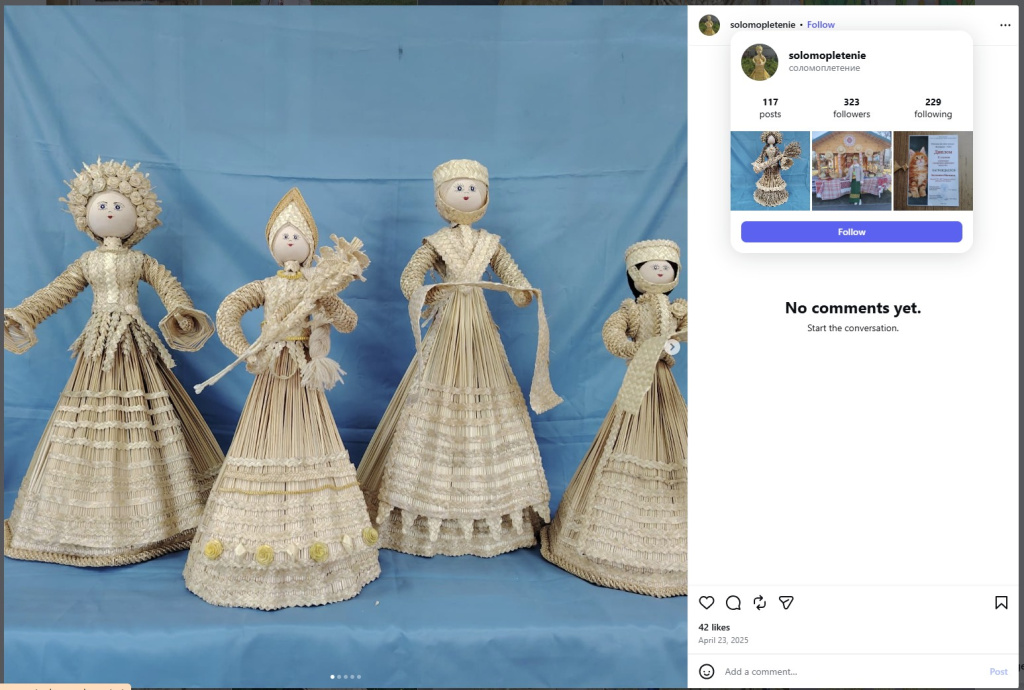
My curiosity was sparked by a desire to uncover the origins of a recent thrifting find ― the extraordinary woven straw figure shown below. My research leads me to believe it is a hand-crafted, woven straw figure originating from Belarus, probably from the Mogilev Handicraft Factory, where it was made in the 1970s or 1980s.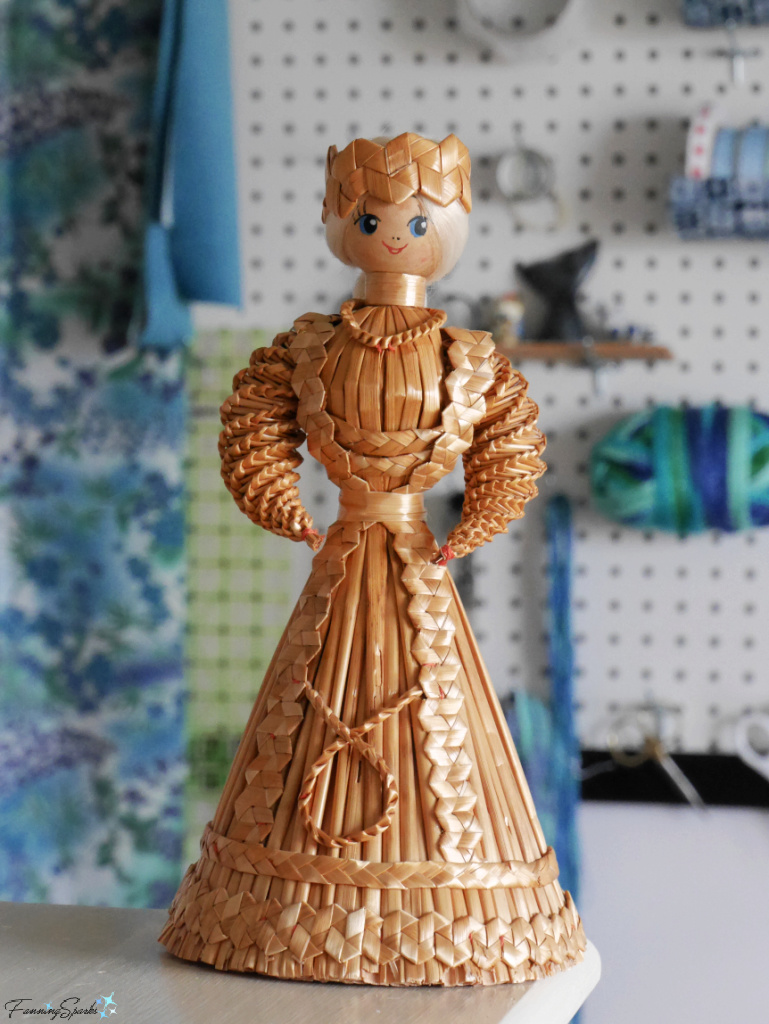
Here’s my vintage Belarusian straw doll staged for her “hero” shot.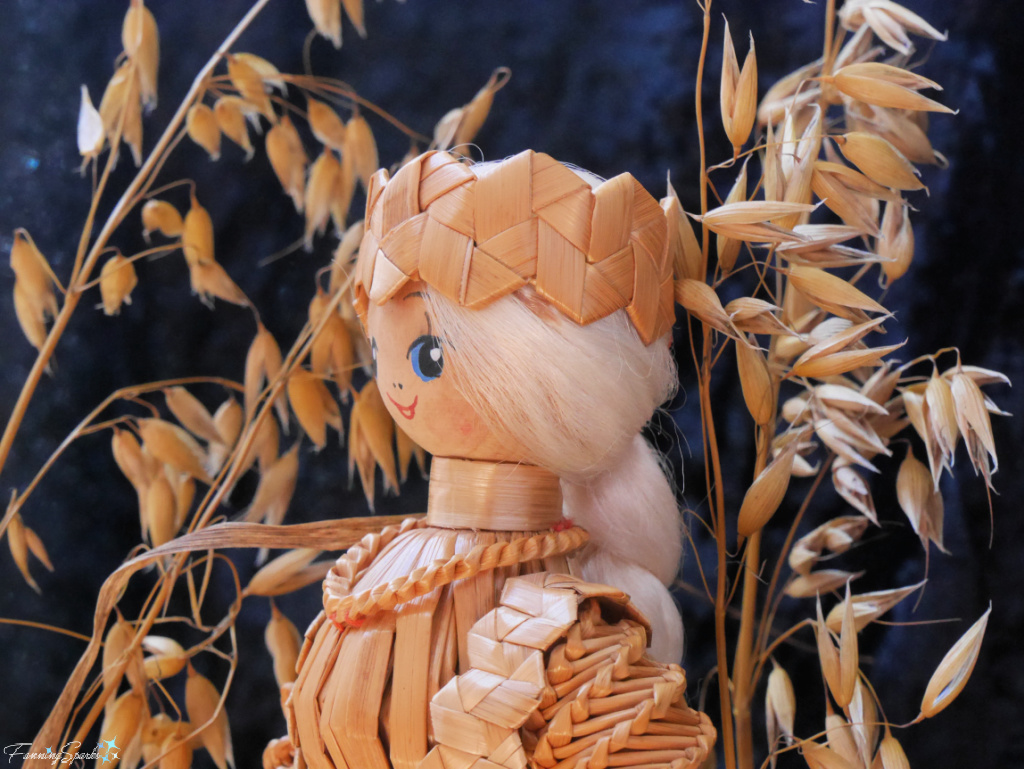
A closer look reveals some astonishing straw work.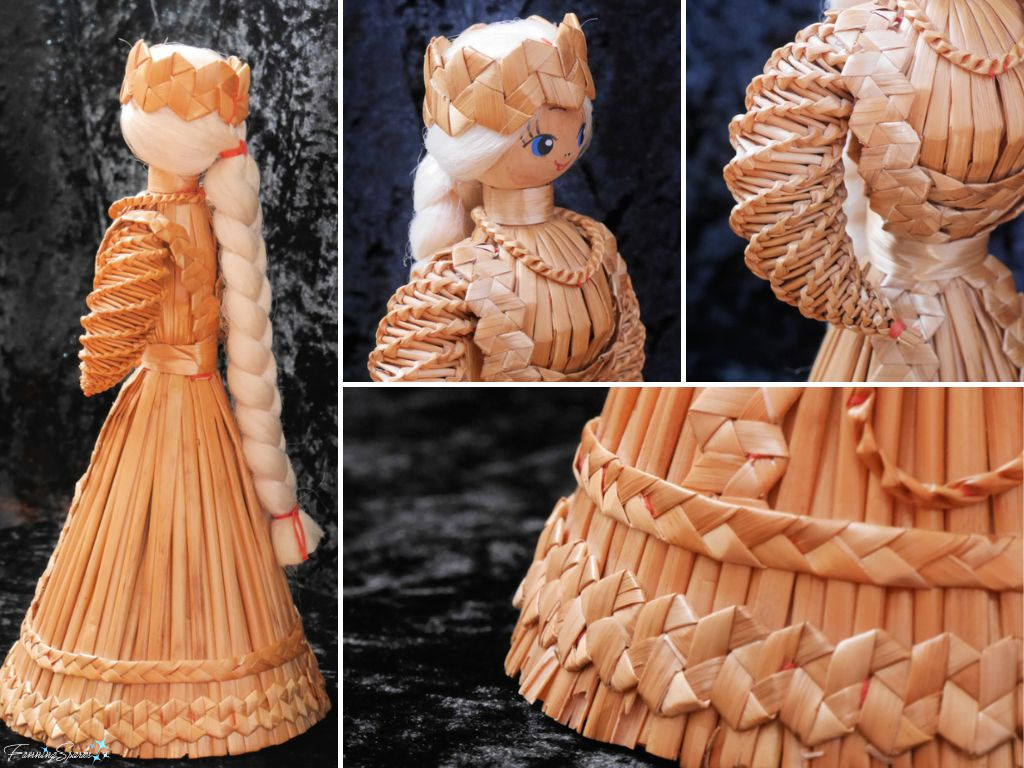
There are several rows of plaited straw similar to the plaiting I learned about at the Ross Farm Museum earlier this summer. Check out my previous blog post, Hats Off to Ross Farm!, to see how straw hats are made from plaited straw.
Shown below is a four-straw braid I started during my museum visit. It is made by braiding ― or plaiting ― together four individual pieces of straw into a long, narrow band. Several of the woven straw bands on my Belarusian straw doll appear to be the same.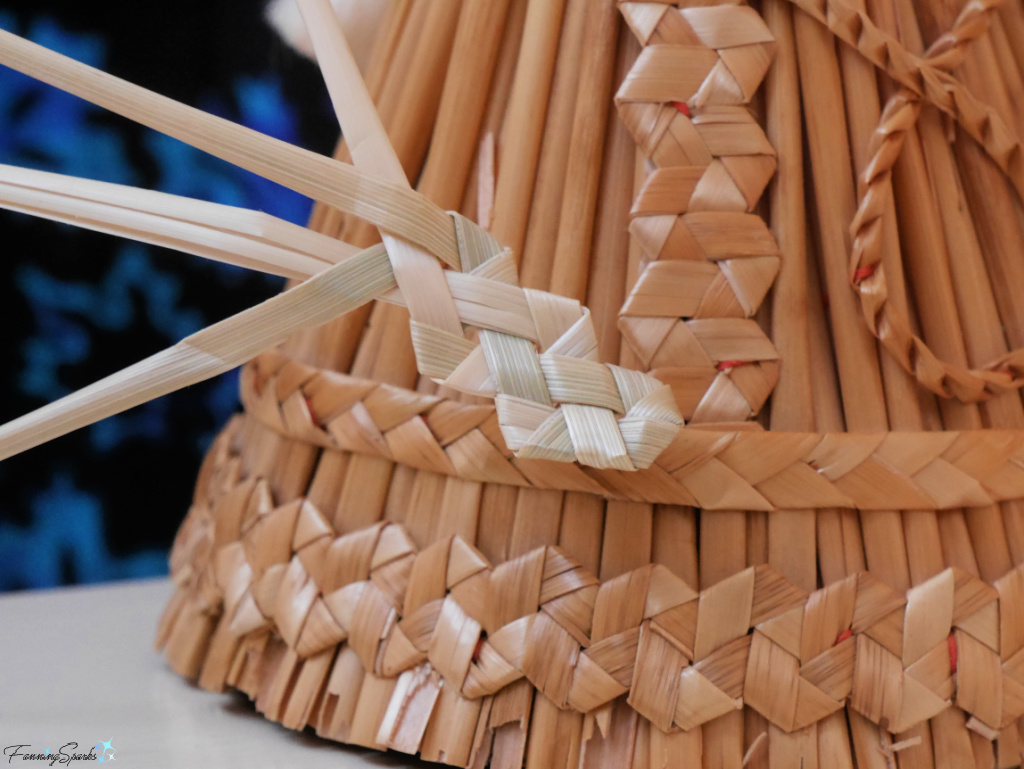
Plaiting (or weaving) straw is one of several different techniques used to work with straw. A listing for Straw Working in the Craft Inventory of the UK-based Heritage Crafts website, provides the following insight:
“Construction methods include:
. plaiting by hand, with whole or split straws
. a range of interlacing techniques using tools or purely by hand some based on knotting, some on passementerie weaving
. tying whole or split straws
. coiling groups of straws into shape
. splitting straws to produce flat sheets … which are then cut up to create marquetry/parquetry or figurative designs
. straw embroidery
. straw threads.”
Several of these straw work techniques are illustrated in the above photos ― the corn dollies, harvest trophies and Belarusian straw dolls are plaited and tied while the straw mobiles and himmelis are tied or, as some artisans say, “threaded” or “linked”. But I wanted to see examples of all the straw work techniques ― my findings follow.
These delicate birds, created by Mana Ooka of Himmeli no Oka, are tied straw. They are often hung from Lithuanian straw gardens.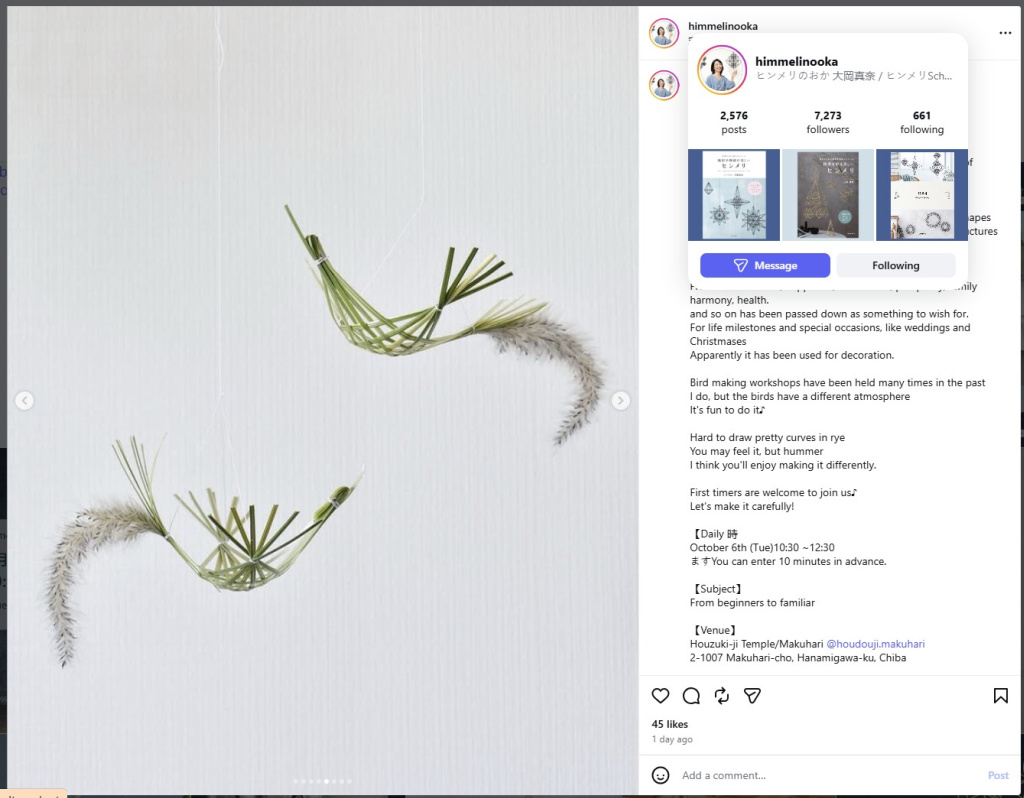
Shimenawa, which are commonly seen in Japan surrounding Shinto shrines, provide an example of twisted, or coiled, straw. The straw, in this case, is from the rice plant. They are used to indicate a sacred or ritually pure space. Shown below is a shimenawa at the Fushimi Inari Taisha in Kyoto, Japan. The white zig-zag paper ― called shide ― cleanse the space while their lightning-bolt shape invokes rain and thunderstorms for a fertile harvest.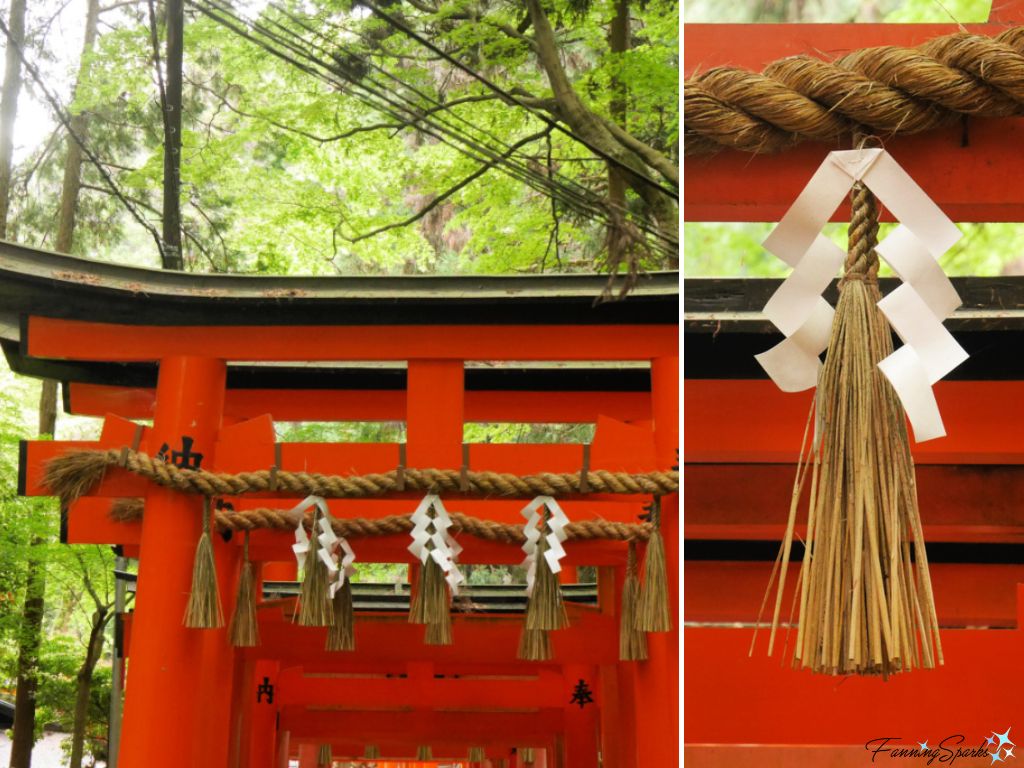
“Marquetry is the art and craft of applying pieces of veneer to a structure to form decorative patterns or designs” as defined by Wikipedia. “The veneers used are primarily woods, but may include bone, ivory, “tortoiseshell”, mother-of-pearl, pewter, brass or fine metals. Marquetry using colored straw was a specialty of some European spa resorts from the end of the 18th century.”
I was surprised and delighted to stumble across a piece of straw marquetry during a recent visit to the local antiques shop (see Great Village Vintage Vibes).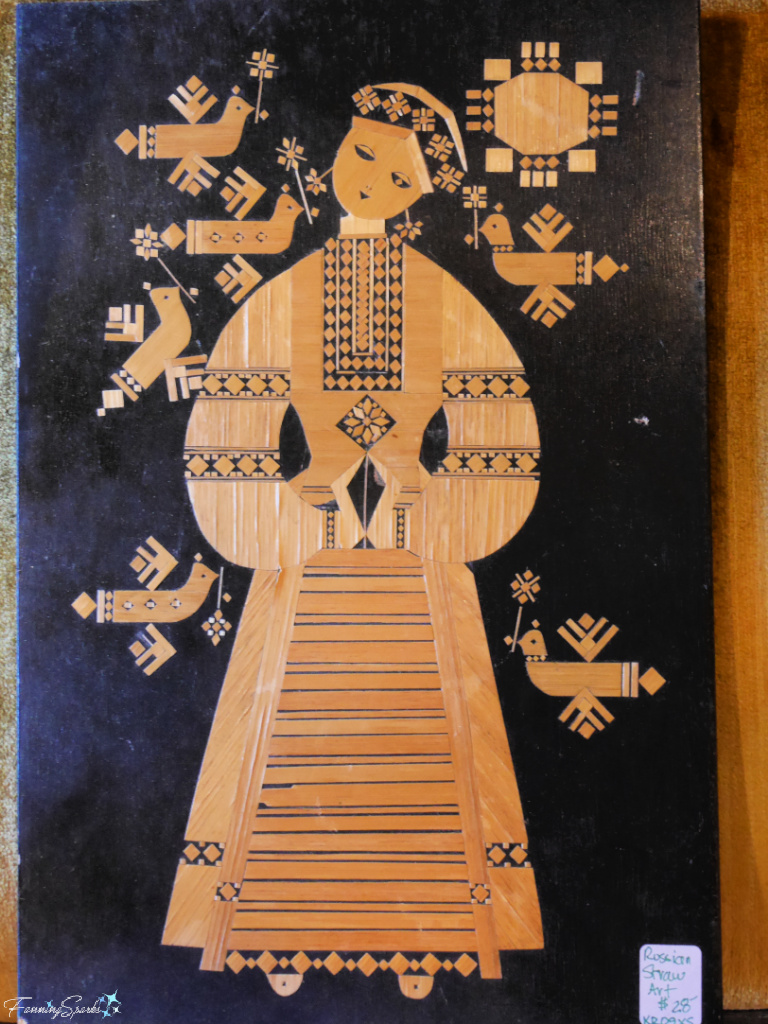
At first glance, the plaque didn’t appear to be much. But a closer look revealed some fascinating facts ― the design is exquisite, it really is made of split straw, the work is titled “Spring” and it originates from Zhlobin, Belarus (formerly part of the USSR) which means it is, at least, 35 years old.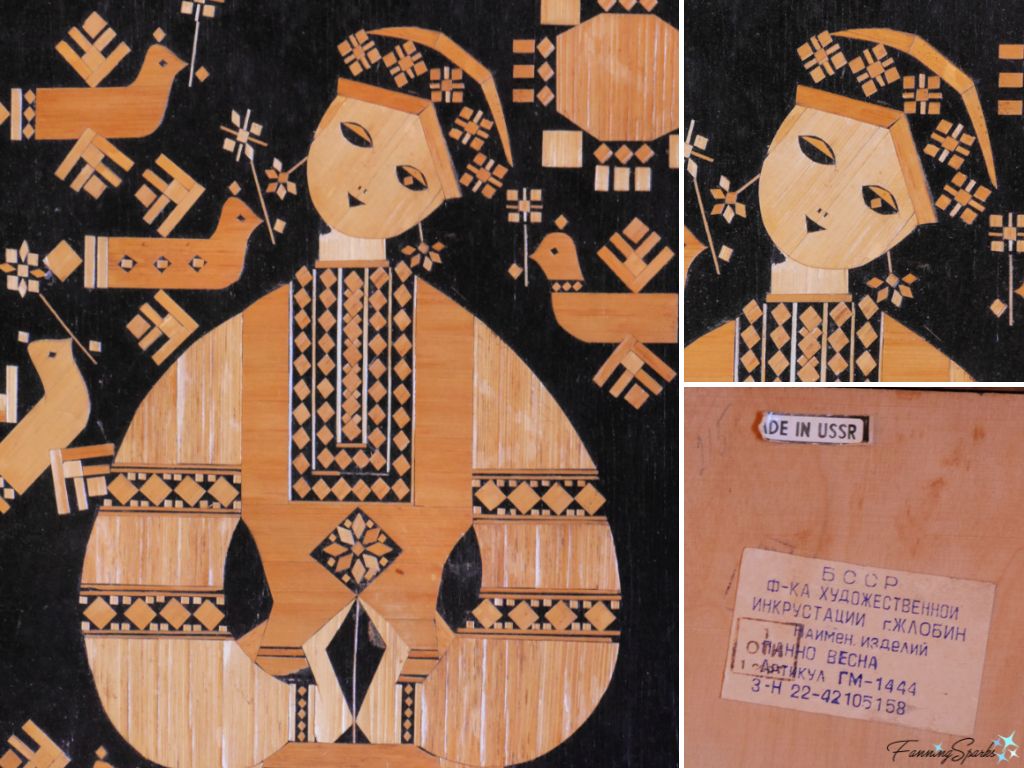
There are also a few modern-day artists who specialize in straw marquetry. Manon Bouvier-Toth of Atelier Paelis in Lyon France creates contemporary, and astonishing, pieces with this little-known traditional art form. Check out the straw marquetry interior of this Steinway & Sons grand piano! This spectacular instrument was part of the limited-edition Straw Marquetry Masterpiece Collection created in a collaboration between Atelier Paelis and Steinway & Sons.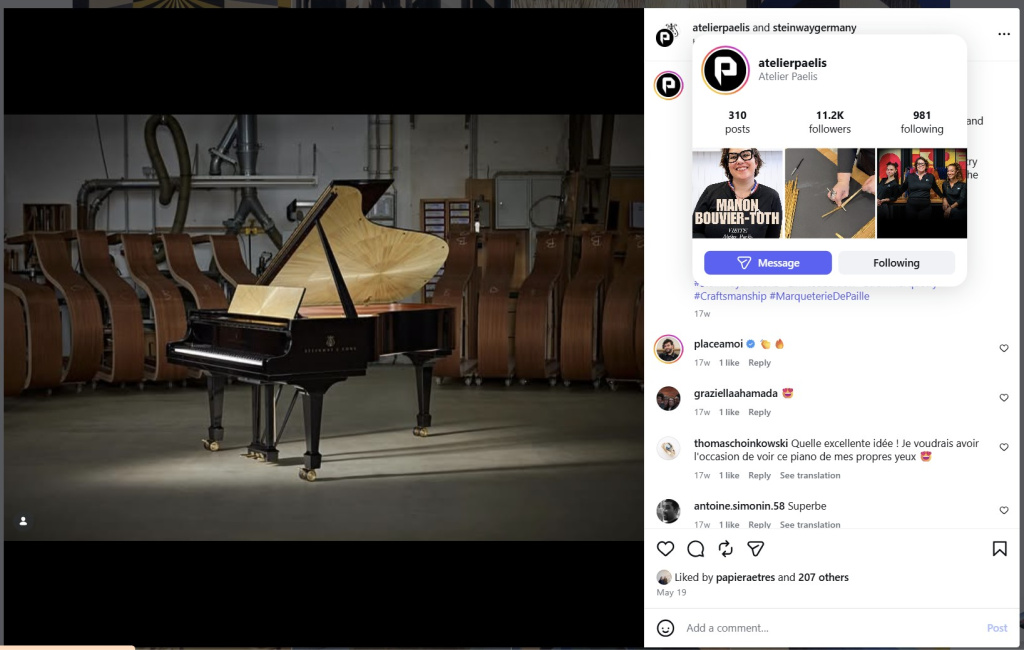
This photo catches a glimpse of their work in progress.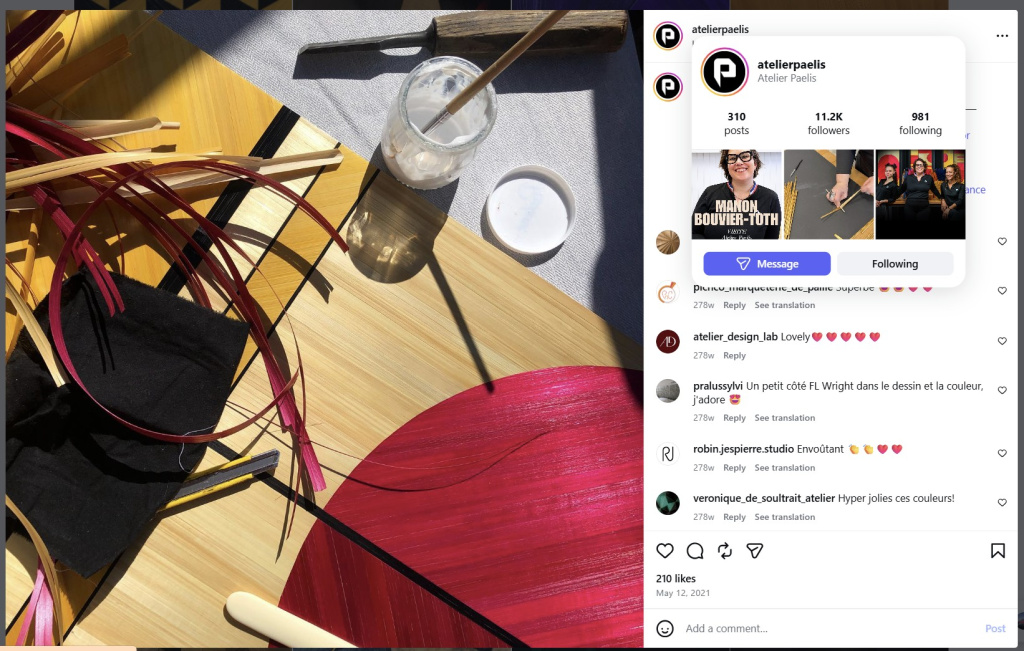
Straw embroidery is yet another little-known artform with unexpectedly striking results. Incredibly, flattened split straws are used as thread for traditional embroidery stitches. Shown below is an antique full-length gown lavishly embellished with straw embroidery. The dress, originating from 1867, is in the Pitti Palace Museum of Costume and Fashion collection in Florence, Italy.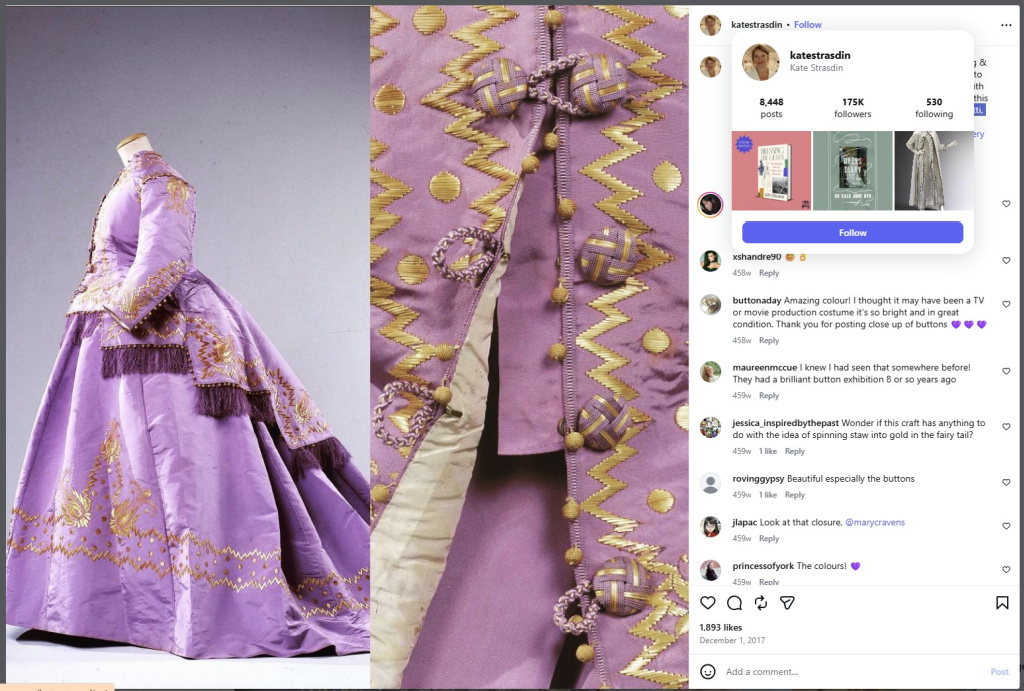
Once again, I was surprised to find several artists actively practicing this straw work technique. Hanny Newton from the Shropshire/Powys borders in the UK, according to their website, has been “exploring straw and grasses to create a sustainable ‘natural gold’, questioning the notion of what is ‘precious’ and contribute to the revival of largely lost straw craft skills”.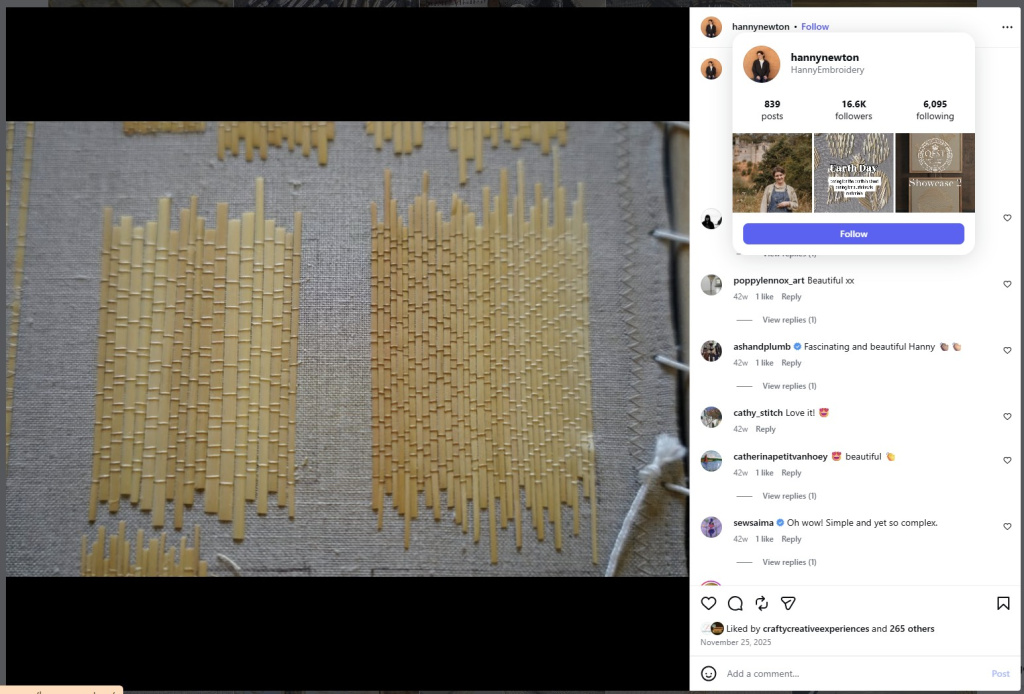
Claire de Waard, a talented French artist based in London UK, is a hand embroidery designer specializing in straw embroidery and needlelace making. This photo shows how they use straw in a mixed media embroidery piece. Stunning!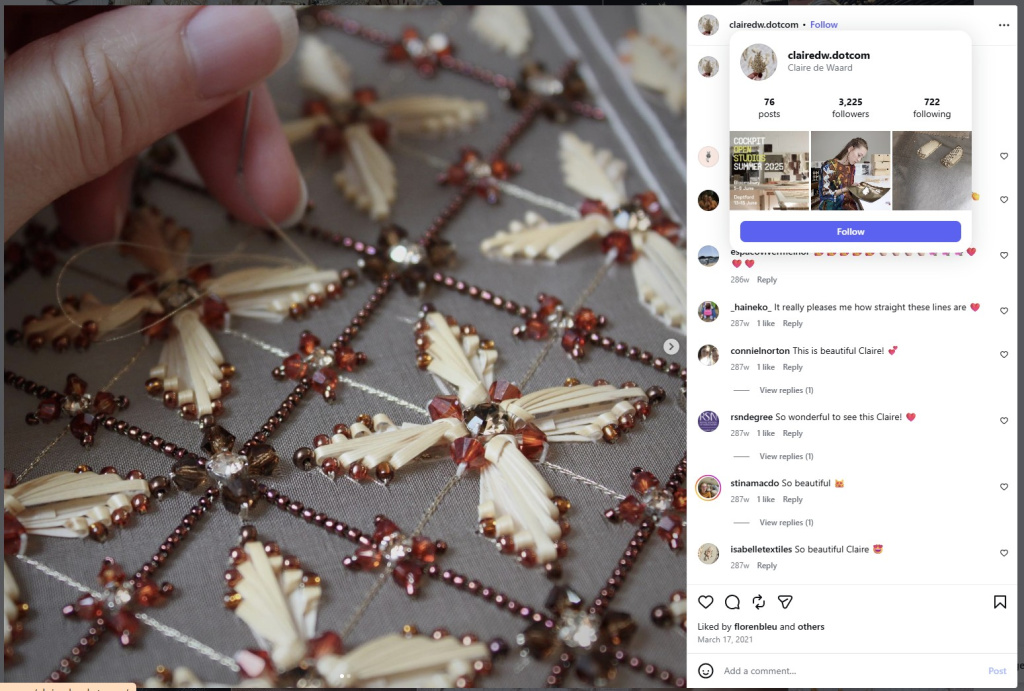
Making jewellery with straw introduces a whole new world of possibilities. Shown below are a couple of Instagram posts showcasing the incredible work of Clémence Bourneuf of Estampille in Angers, France.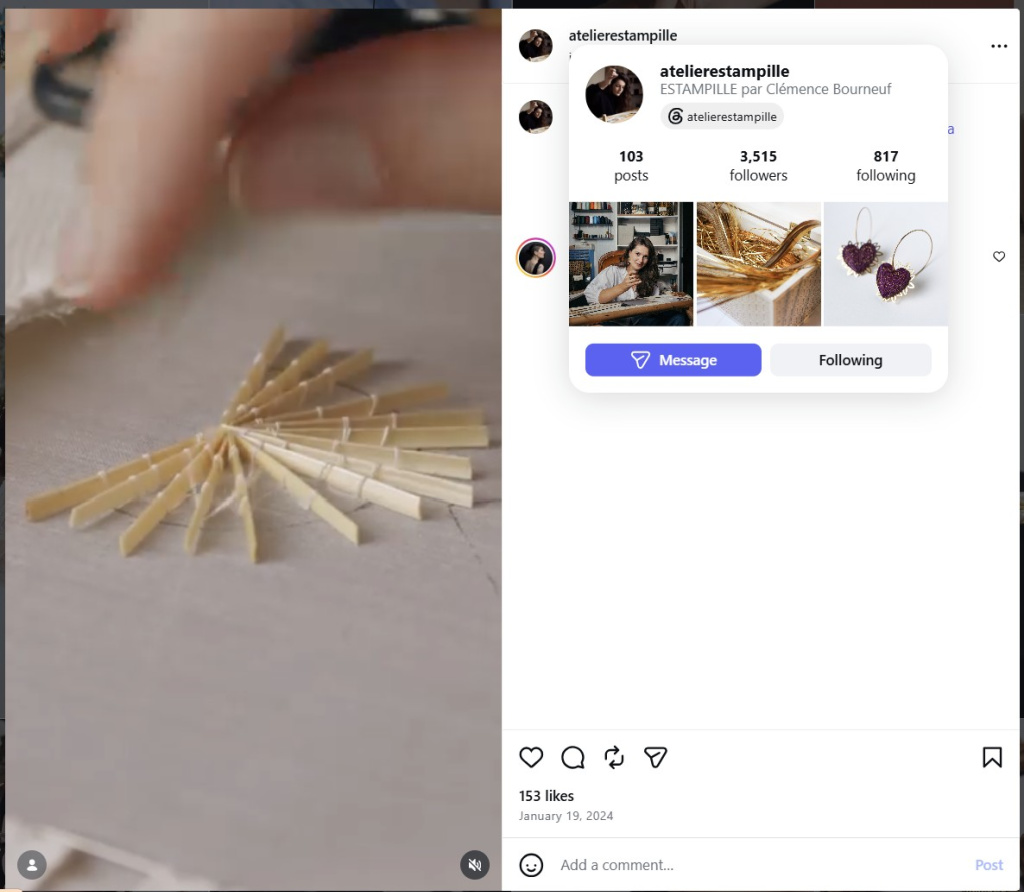
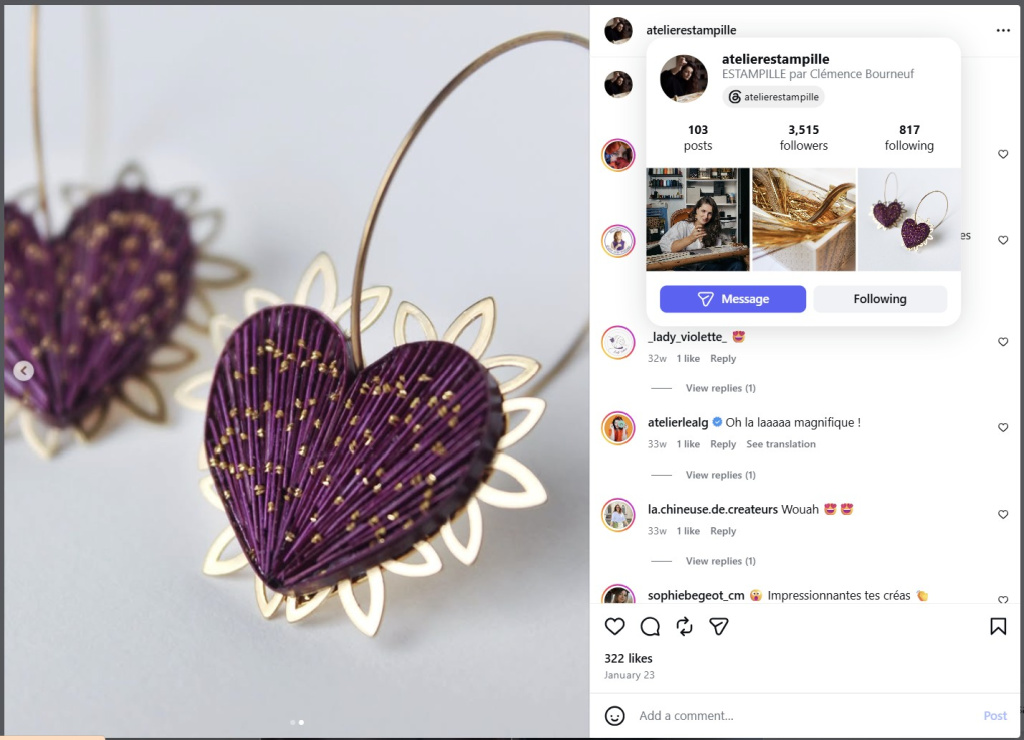
Although I wasn’t able to find examples of every straw work technique included on the UK Heritage Crafts’ Straw Working list, I’ve been surprised and delighted by the limitless opportunities hidden within such a humble material.
More Info
Previous blog posts mentioned in this blog post include:
. Hats Off to Ross Farm!
. Great Village Vintage Vibes.
The following books and articles were consulted in the writing of this blog post:
. The Complete Book of Straw Craft and Corn Dollies: Techniques and Projects book by Doris Johnson and Alec Coker which is available here on Internet Archives
. Healing Power of Himmeli on the Paimio Sanatorium website
. Heavenly Harmony: The Universal Language of Finnish Himmeli article by Joelle Jackson; published July 2012 on the Smithsonian Center for Folklife & Cultural Heritage website
. Straw Mobiles: Pajak, Himmel, Puzur, Sodas, Pavuks, Himmeli and More article published on The Straw Shop website
. Coin dedicated to the Lithuanian tradition of straw gardens inscribed on the UNESCO Representative List of the Intangible Cultural Heritage of Humanity article published on the Lietuvos bankas website
. Sodai Straw Garden Making in Lithuania article on the UNESCO Intangible Cultural Heritage website
. Straw Weaving in Belarus, Art, Craft and Skills article on the UNESCO Intangible Cultural Heritage website
. Official Belarus.by Facebook page
. Straw Working listing in the Craft Inventory of the UK-based Heritage Crafts website
. Various Wikipedia entries.
The following talented makers and artists are mentioned in this blog post:
. Carol Partridge of The Wheat Weaver ― see more on Instagram or their Etsy shop
. Elaine Lindsay of Something Corny ― see more on Instagram or their website
. Penny Maltby of Ministry of Straw ― see more on Instagram or their website
. Eija Koski Himmelist― see more on Instagram or their website
. Sonata Žemguliené― see more on Instagram
. Hitomi Tokudome of Himmeli Sora no Oto― see more on Instagram or their website
. Solomopletenie by Natalia Vasilievna Avlasevich― see more on Instagram
. Mana Ooka of Himmeli no Oka― see more on Instagram or their website
. Manon Bouvier-Toth of Atelier Paelis― see more on Instagram or their website
. Straw Embroidery by Hanny Newton― see more on Instagram or their website
. Straw Embroidery by Claire de Waard― see more on Instagram
. Straw Embroidery by Clémence Bourneuf of Estampille ― see more on Instagram or their website.
Today’s Takeaways
1. For centuries, people have celebrated the completed harvest with traditional rituals and festivities.
2. Corn dollies and harvest tokens were believed to house and protect crop spirits while straw mobiles and himmelis were considered bringers of good fortune for the harvest.
3. Straw working is “the making of decorative and functional products from straw, incorporating a range of techniques originally used in hat making, corn dollies, straw marquetry and other crafts.” UK Heritage Crafts – Straw Working


Comments are closed.