
“Come and weave a traditional Tatza basket” said the course description. A willow basket workshop only a hop, skip and jump away from home? Count me in!
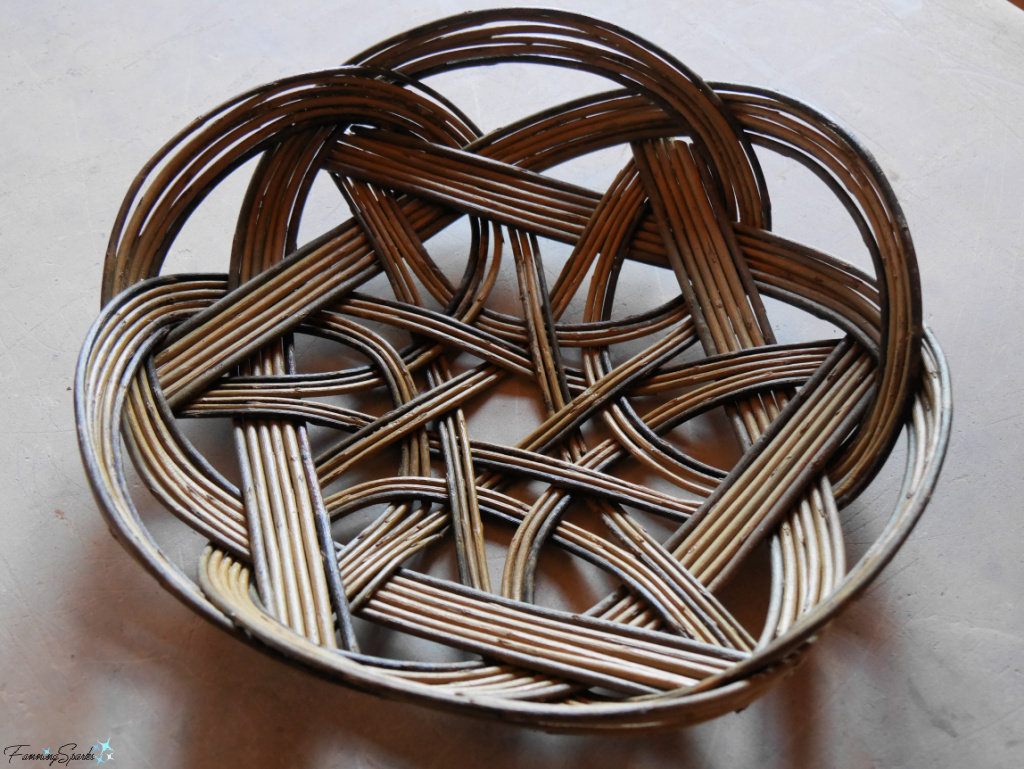
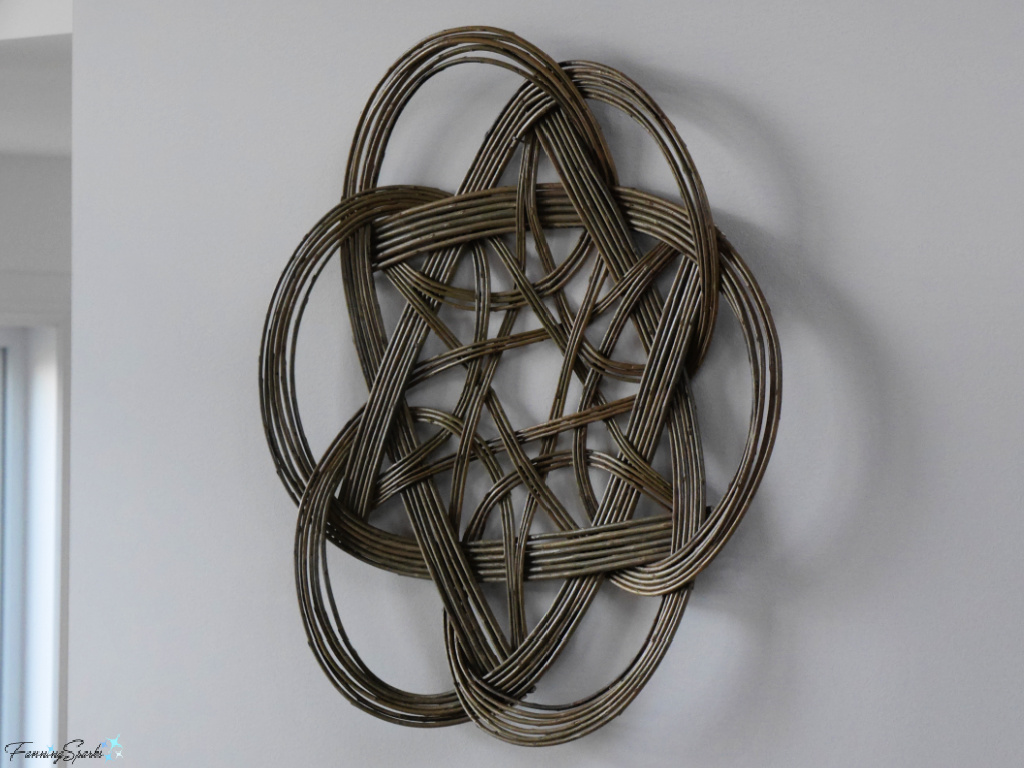
A tatza (or taca meaning “tray” in Polish) is a traditional bread basket originating from Poland. It’s an openwork tray featuring a stunning geometric design. This basket is also known as a Celtic Knot Basket.
The tatza shown below was created by Susie Murphy our workshop instructor.
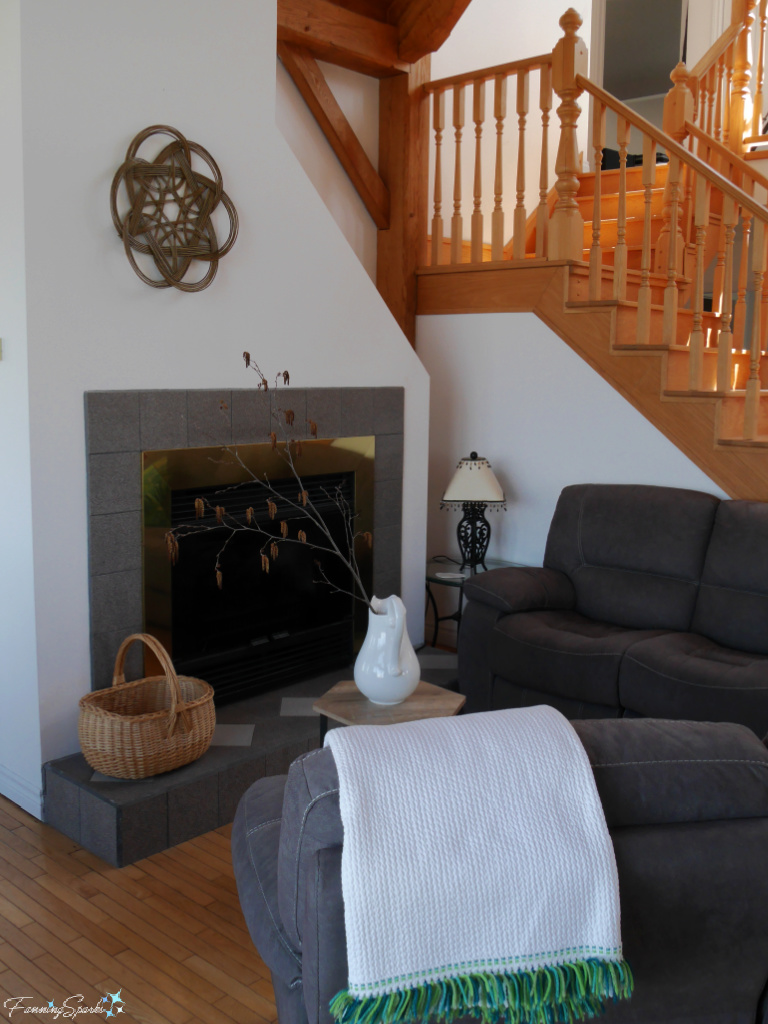
Tatzas were traditionally used to serve bread, rolls and baked goods ― and they can still be used for that purpose. But beyond that, the beauty of the natural willow and the intricacy of the design really shine when the tatza is displayed on a wall ― as mine is below.
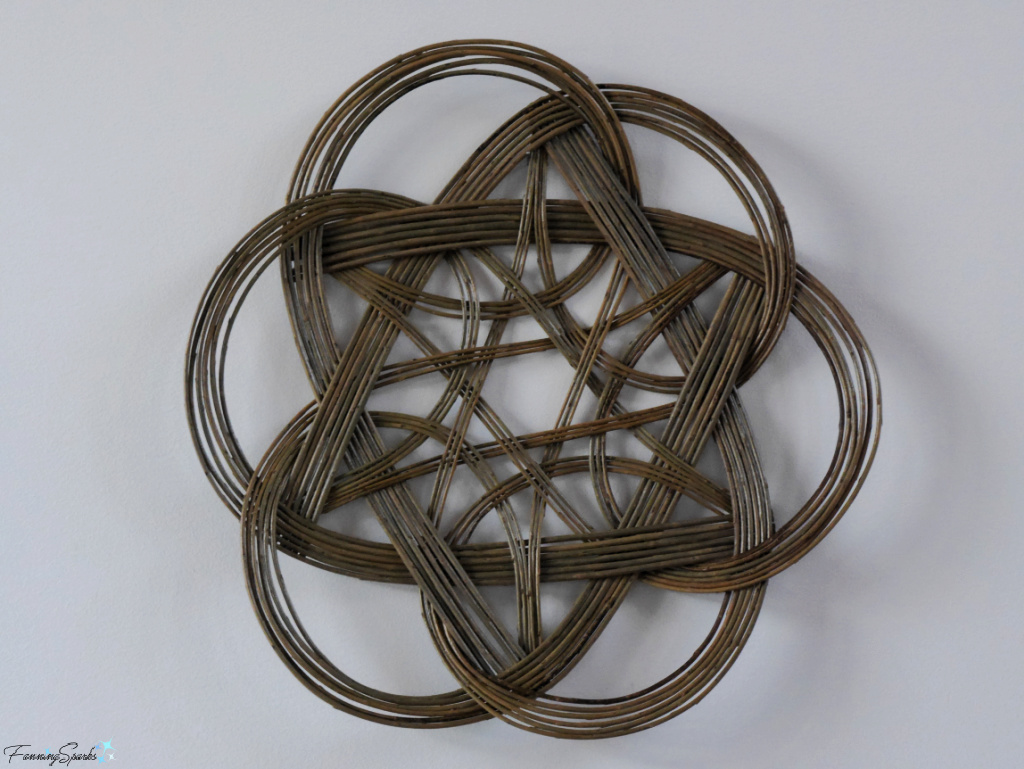
I have quite a few decorating plans for our new home and the tatza is a great start. In fact, it meets several of the strategies behind the mood board I created for our Sunrise Trail home (see previous blog post In the Mood for Mood Boards) including:
Adopt Slow Decorating ― I’m making a conscientious effort to follow interior decorator and popular YouTuber Reynard Lowell’s advice to “Allow your space to evolve naturally as you collect items that you truly love. … There’s no problem with spending years curating your space!”.
Add Variety with Texture ― Interior designers use texture to bring a unique dimension, give a sense of depth, incorporate sensory richness and add visual weight to a room. See my previous blog posts, Texture by Mother Nature and Decorating with Texture, for more insight on this subject.
Introduce Curves ― One of the most noticeable characteristics of our contemporary coastal home is its clean geometry. The clean lines, simple shapes and minimalist details portray a linear orderliness. I’d like to blend in some flowing lines and irregular, organic shapes to soften those lines.
Feature Natural Elements ― According to the experts there’s a growing interest in an “organic modern” decorating style. As the name implies, this style blends raw, natural materials like willow, wood, stone, linen and greenery with the clean lines of modern design. The goal is to blur the lines between built and natural environments and foster a deeper connection to the outdoors.
Showcase one-of-a-kind, hand-crafted artwork ― In her article about how hand-crafted block prints can add charm to any room, Chloe Frost-Smith writes “In an age of hyper-clean lines and digitally perfect finishes, they offer a refreshing counterpoint: pattern that feels crafted rather than manufactured.” I think the same can be said for all hand-crafted artwork.
In addition, the tatza’s rich brown willow adds colour to our space while its intricate openwork design adds an intriguing pattern.
Shown below is the mood board for our Sunrise Trail home updated with my new willow tatza. 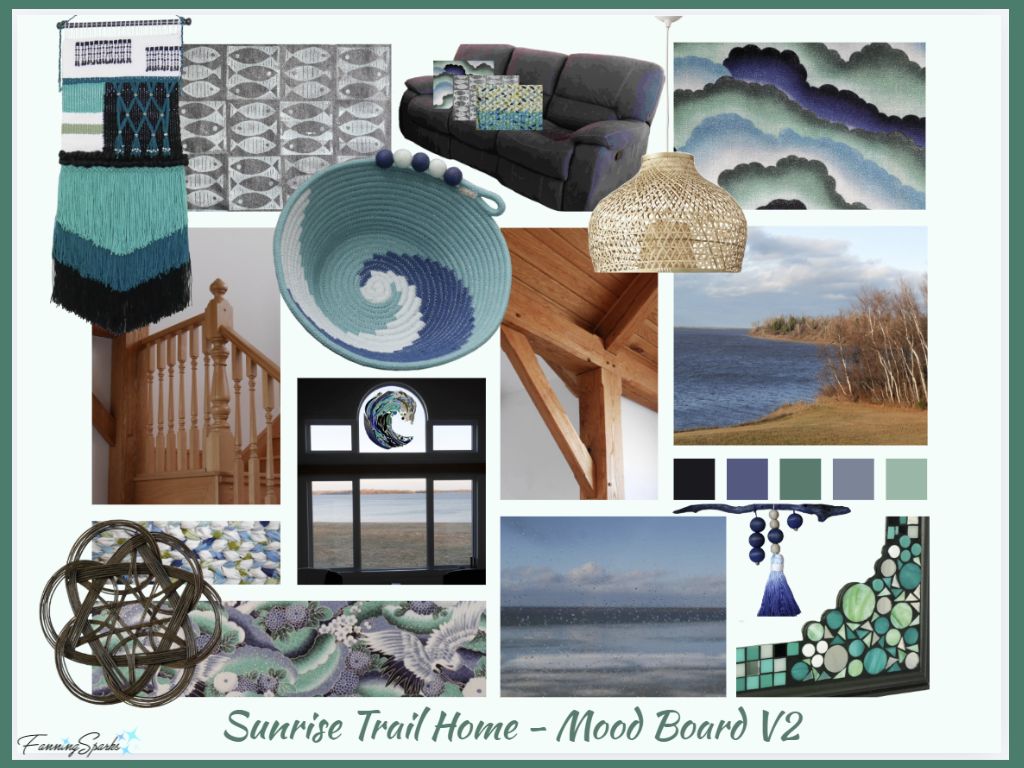 As pleased as I am with my finished tatza, I’m even more thrilled with the experience of creating it. Our workshop was hosted by Willow’s Bend Collective at Big Barn Little Farm in Antigonish, Nova Scotia. “Our century barn is a place to welcome community and celebrate ruralness.” promises the Big Barn Little Farm website.
Once part of a thriving dairy farm, the big, beautiful century barn was the idyllic setting for our workshop. And our charismatic instructor, Susie Murphy, did indeed make us feel welcome!
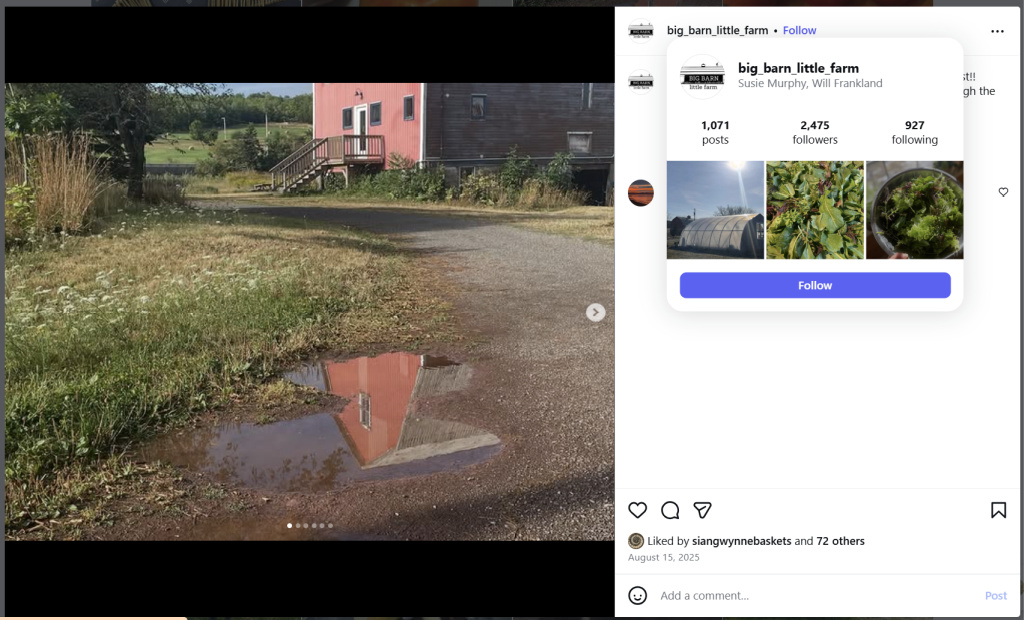
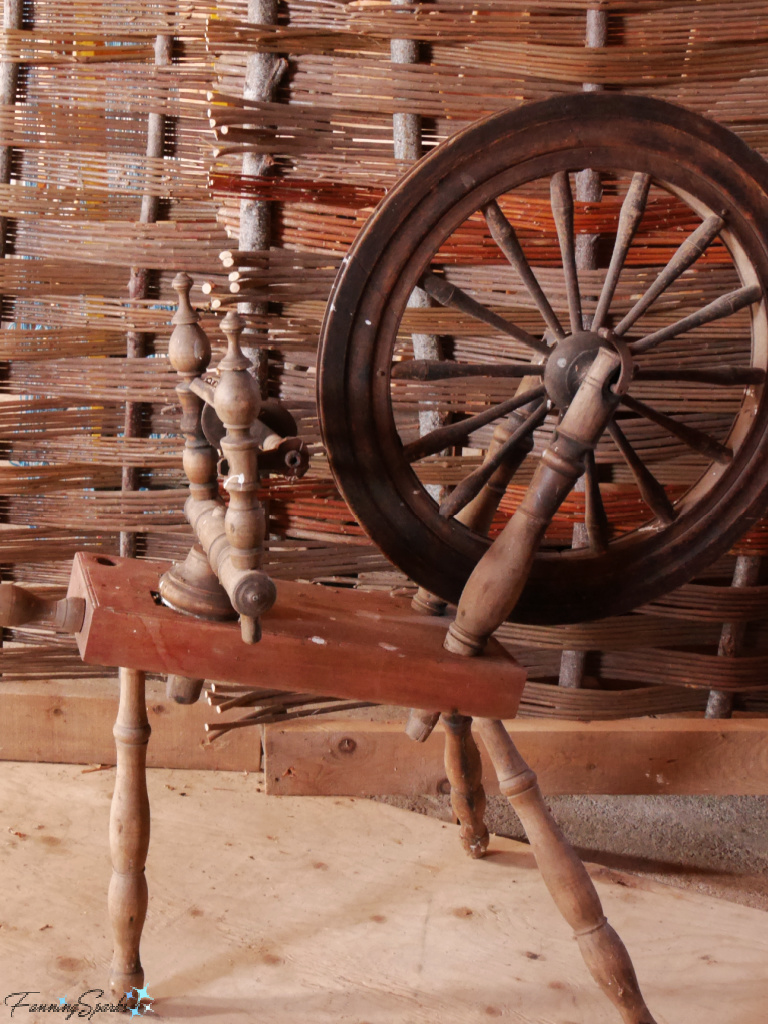
As soon as I stepped inside the weaving workshop, I knew this place was special! There was willow-weaving inspiration everywhere!
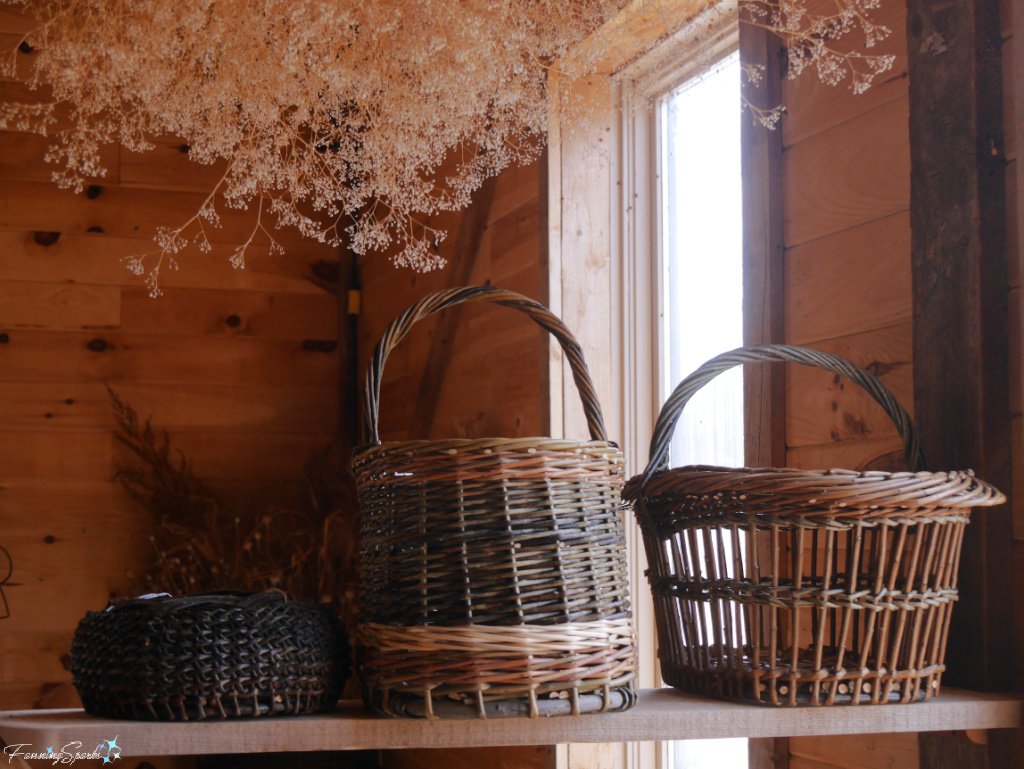
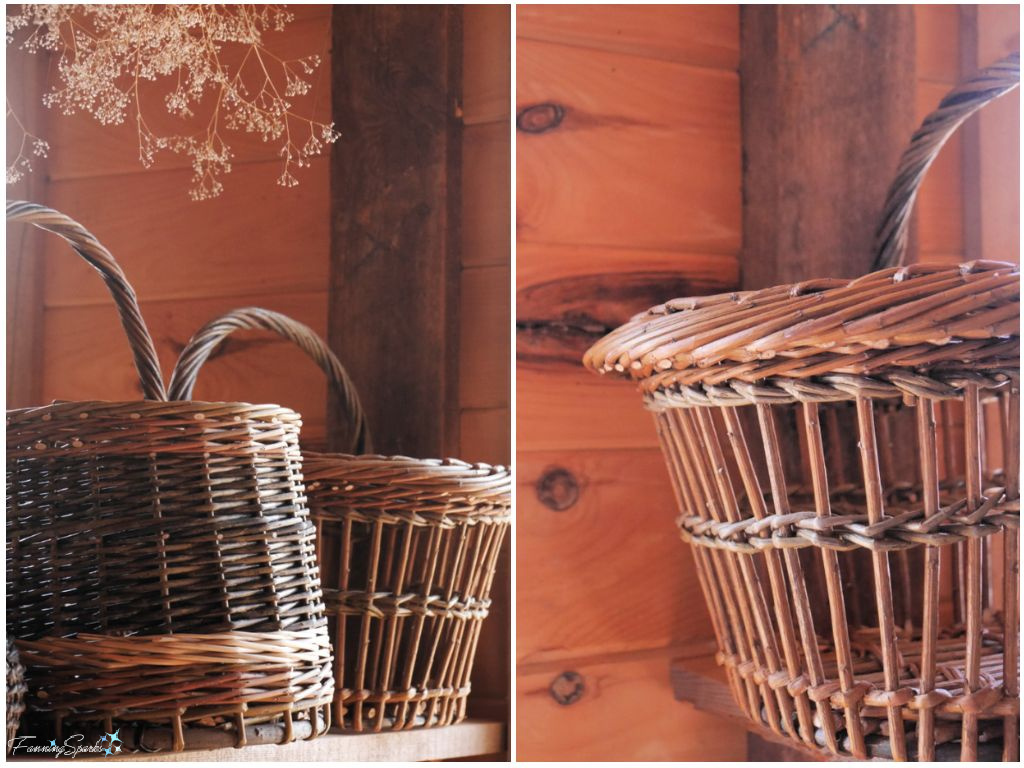
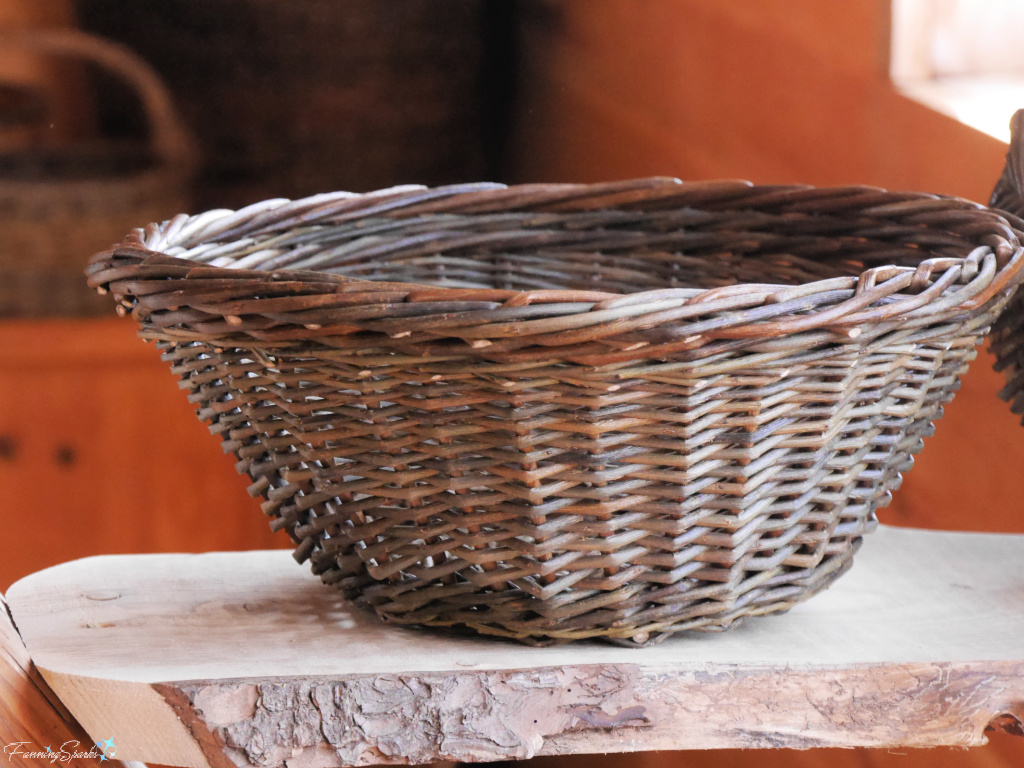
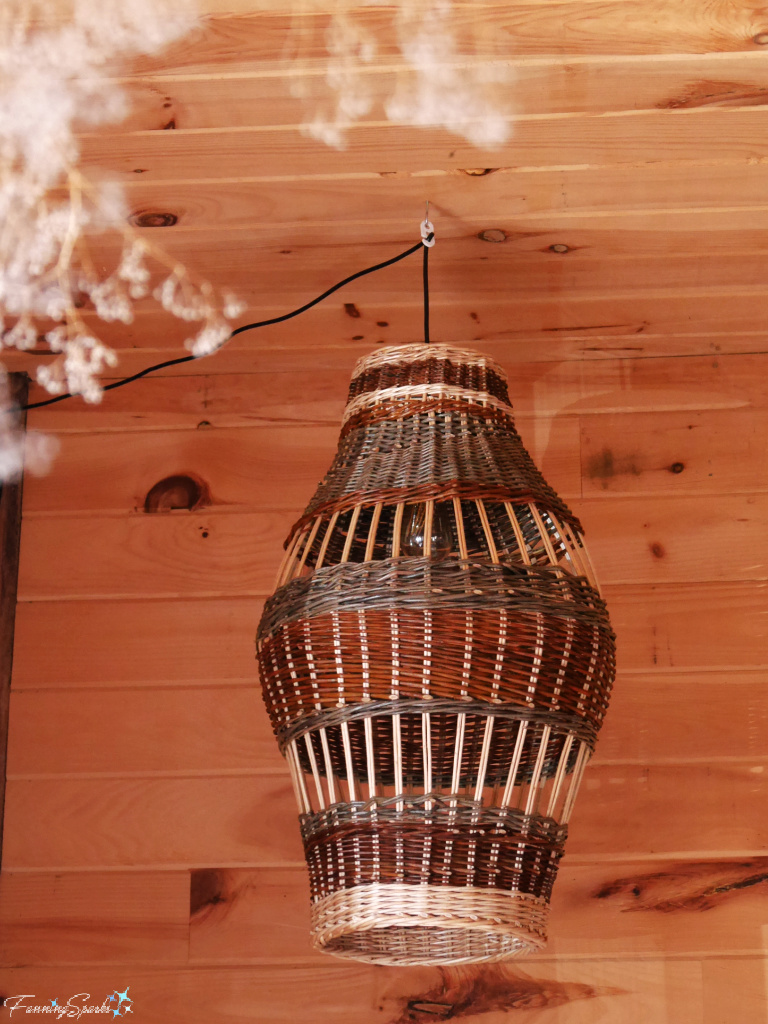
We also had the opportunity to pop into what would originally have served as the barn’s hay loft. Today, this spacious area is used for a variety of activities including hosting special events and drying willow.
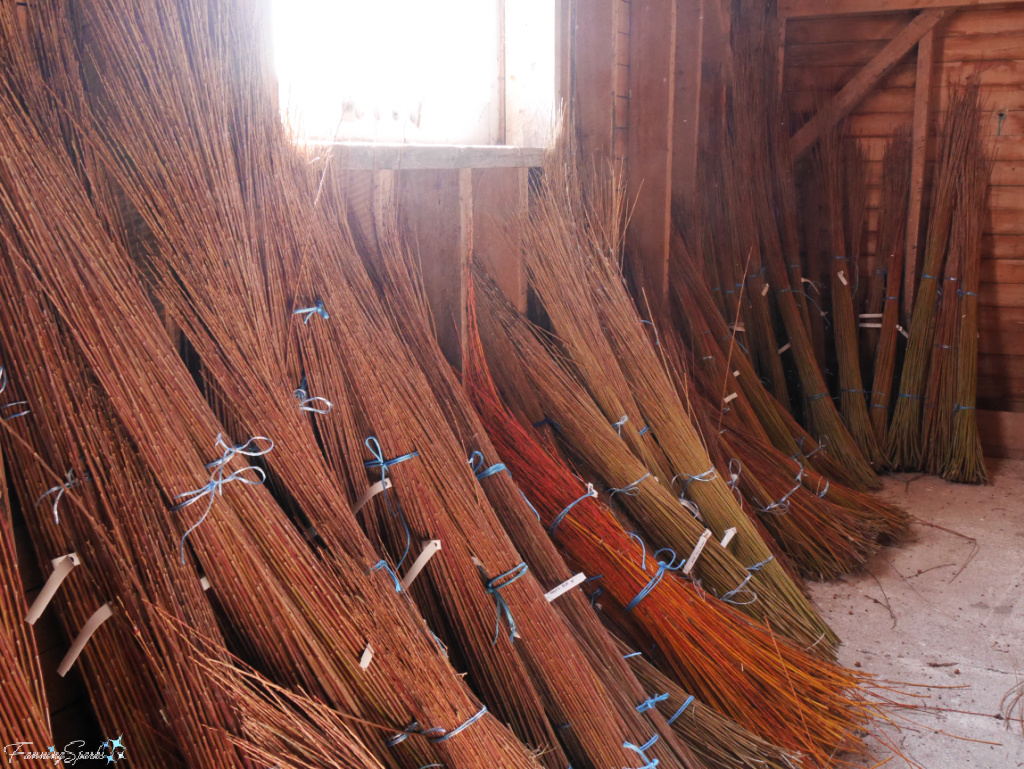
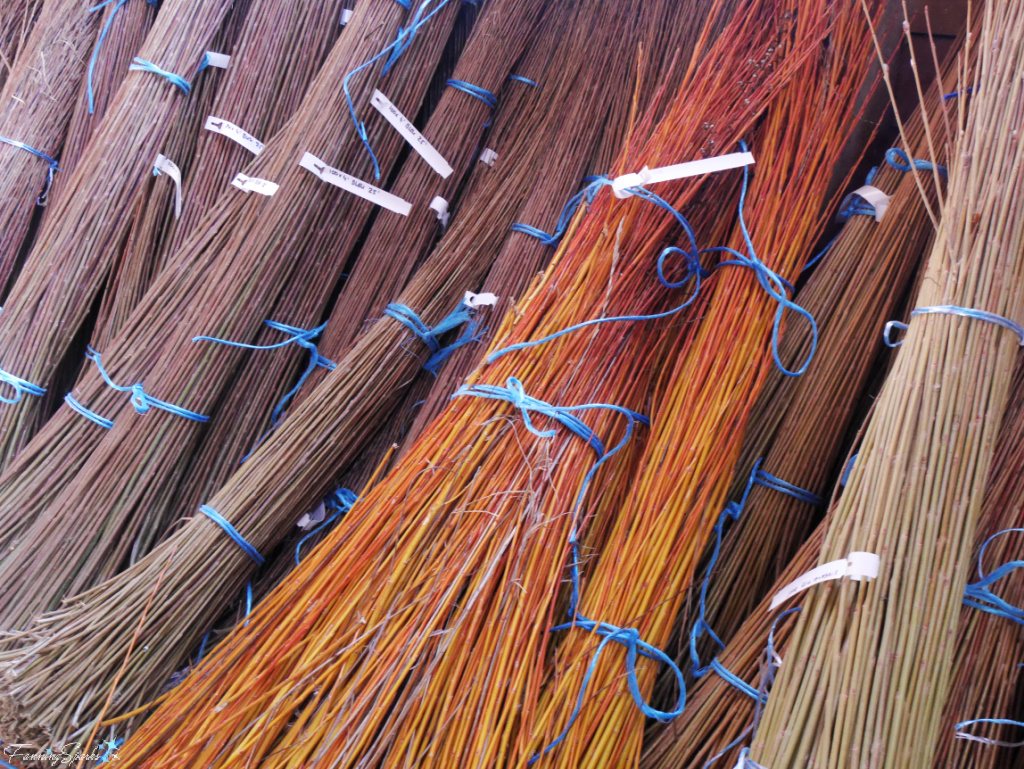
The tatza workshop was great fun! There were only four students which made it possible for Susie to both guide the group and provide one-on-one assistance.
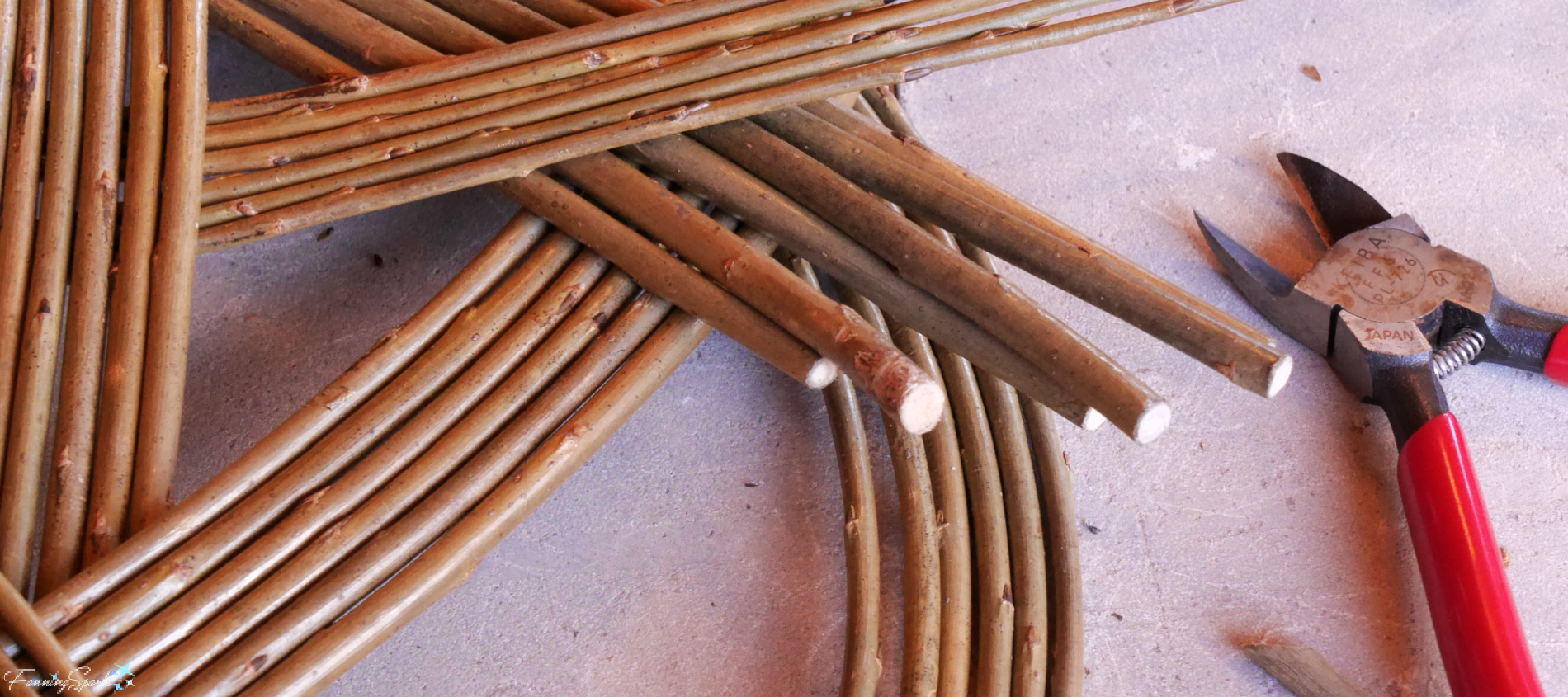
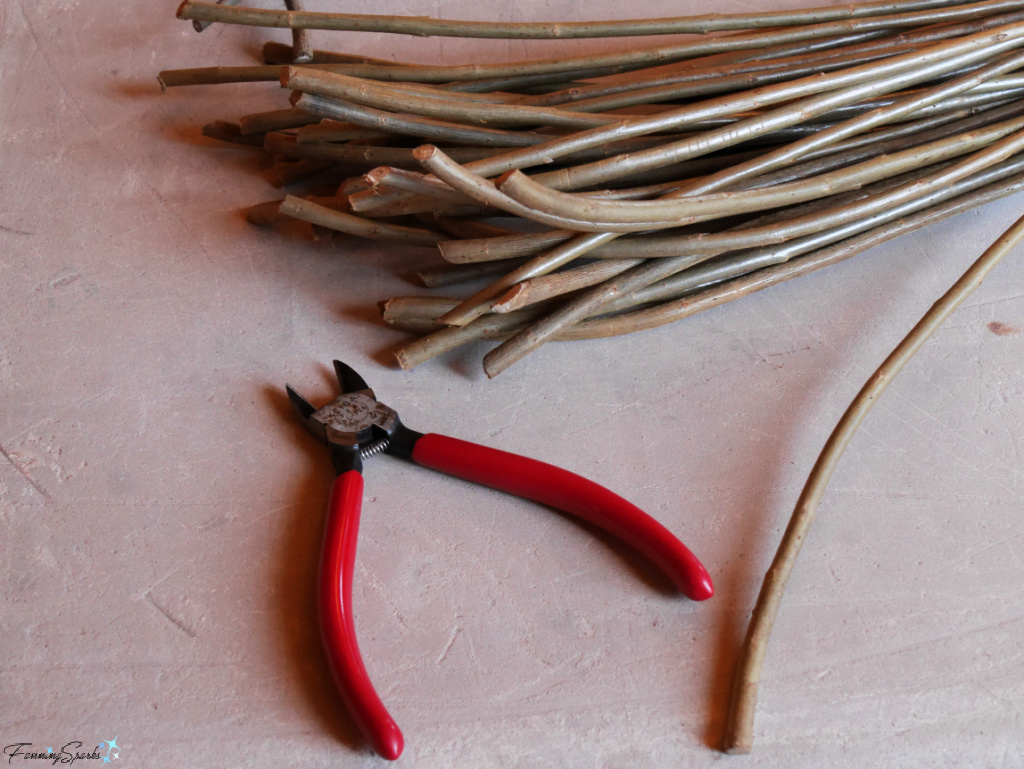
Susie started with an introduction to willow weaving including terminology, basic techniques and material selection. Shown below are the butt ends of the willow rods I used in my project. We used 36 rods ― six groups of six rods ― for each tatza. We started by trimming the rods to the same length.
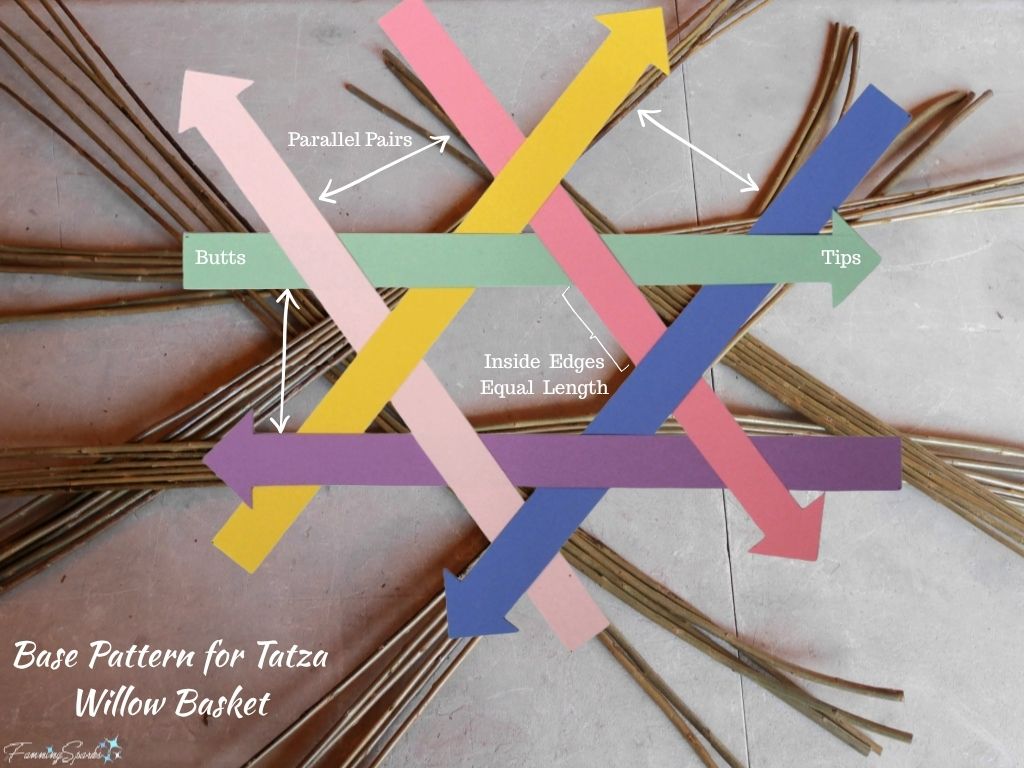
The idea is to align the six rods ― side-by-side ― in each group of six. Then to weave them into the base design ensuring the butts and tips were placed correctly, the groupings were kept parallel and the specific over-under sequence was followed. I added arrows and notes to this photo to help me remember how it’s done.
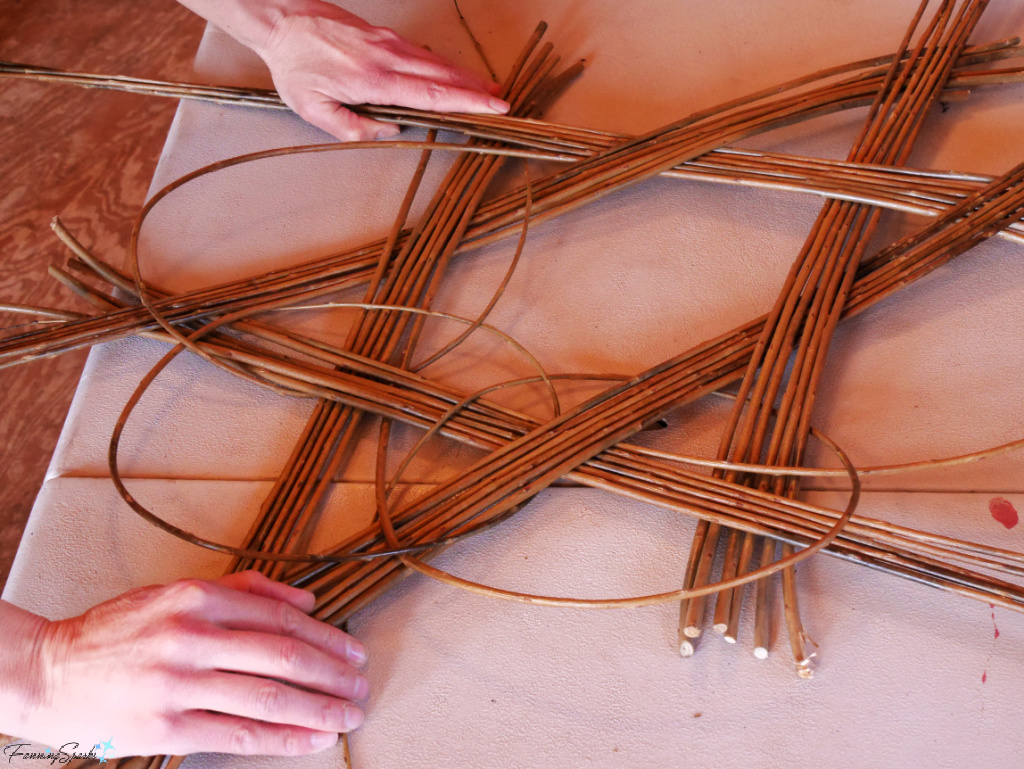
The next step was to build out the outer circular pattern. This photo shows Susie demonstrating the technique.
Getting the pattern right takes concentration and, sometimes, a second set of eyes! We worked in pairs to get the pattern established.
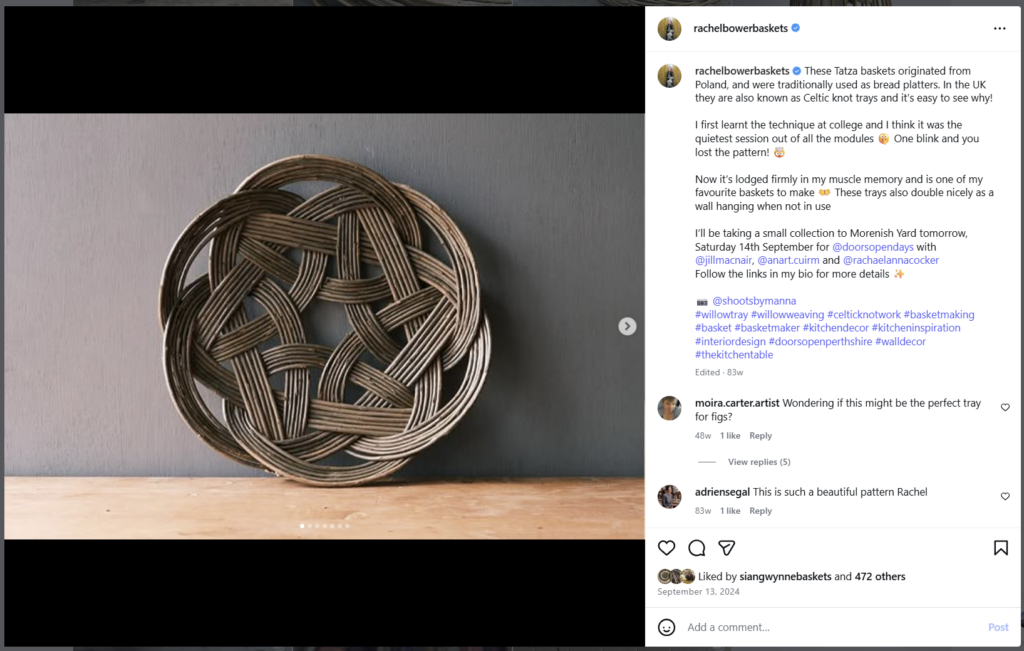
I couldn’t help but chuckle when I came across the below Instagram post by Rachel Bower, a well-known, artisan, willow basketmaker from Scotland. In her post about tatza baskets, she shares this comment “I first learnt the technique at college and I think it was the quietest session out of all the modules … One blink and you lost the pattern!”
Yep, one blink ― one lapse in concentration ― and we were backing up to retrace the pattern and remind ourselves which rods went where.
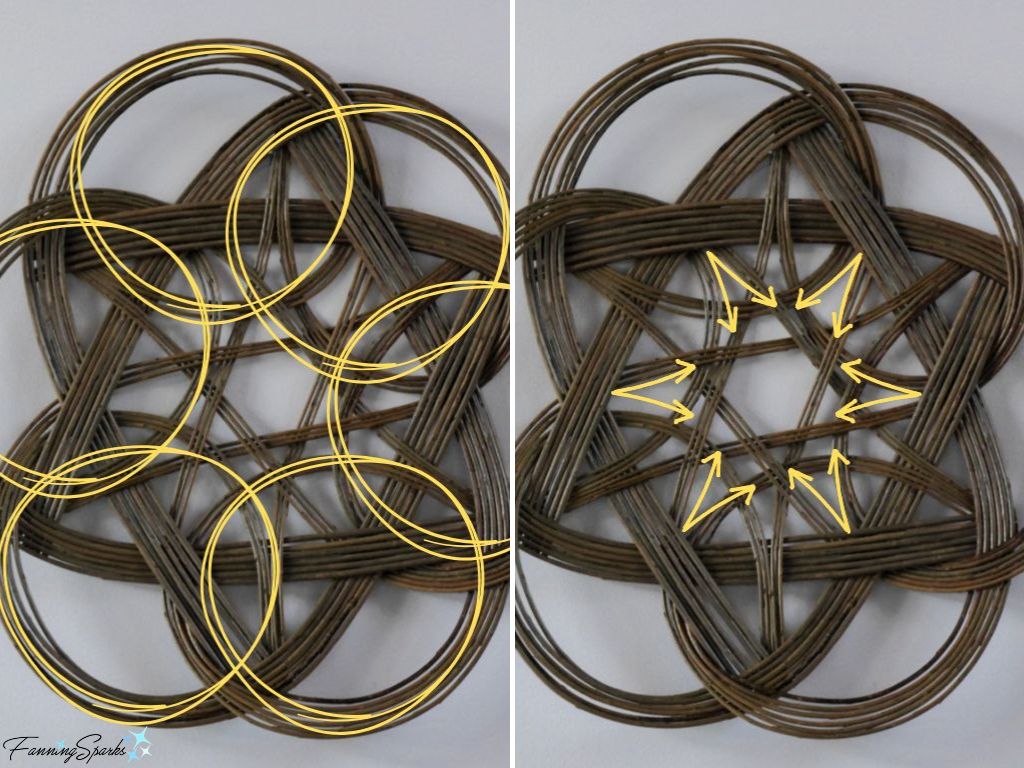
I failed to take a photo at the time but after the outer circular pattern is completed, we had the option to stop or to add openwork in the center. The openwork is done with groups of three rods so it’s noticeably more delicate than the outer section. We all chose to add the openwork. I tried to point out the outer and inner sections on this image.
This photo shows my tatza as I’m about to finish weaving through the last tip.
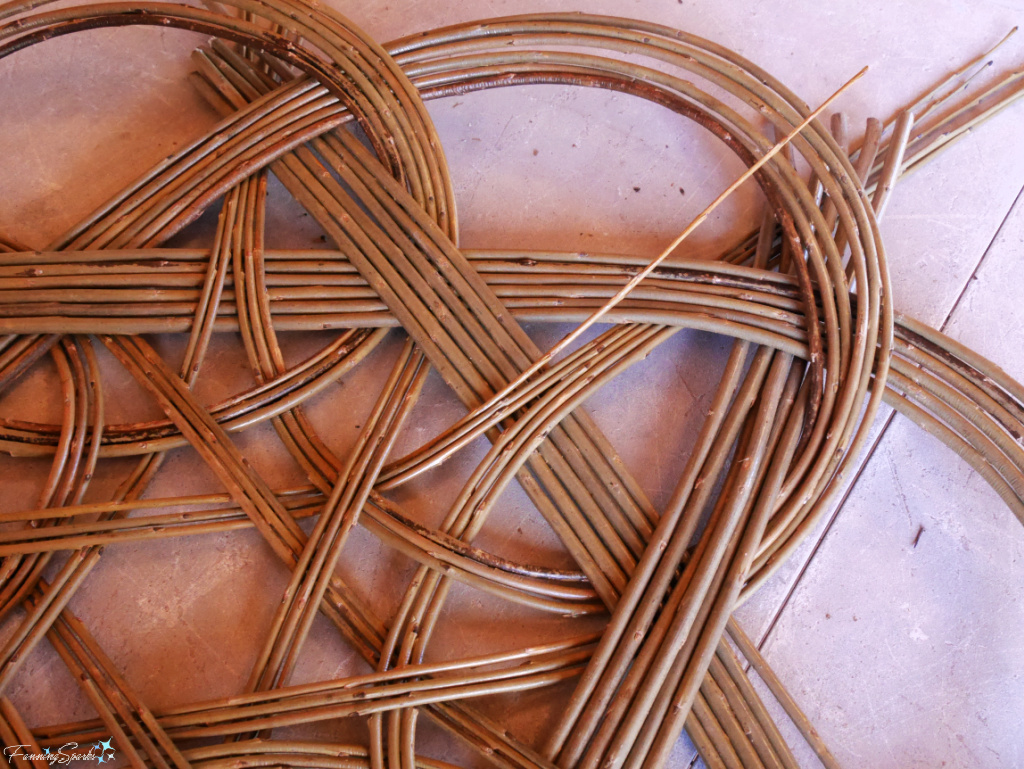
The final step is to tighten the entire basket. This is done gradually by working round and round the piece. Care is taken to keep everything even and parallel while tugging and tightening every willow rod.
At this point, we had a choice on how to finish our baskets ― did we want them to be large and loose or small and snug? Because I intended to use mine as décor, I left it large and loose. In fact, I chose not to trim off the willow tips so I could see how it would look on the wall. Although I liked the size and overall impact of the untrimmed version, I couldn’t get past the feeling that it was unfinished. So, I trimmed off the tips. Here’s a comparison.
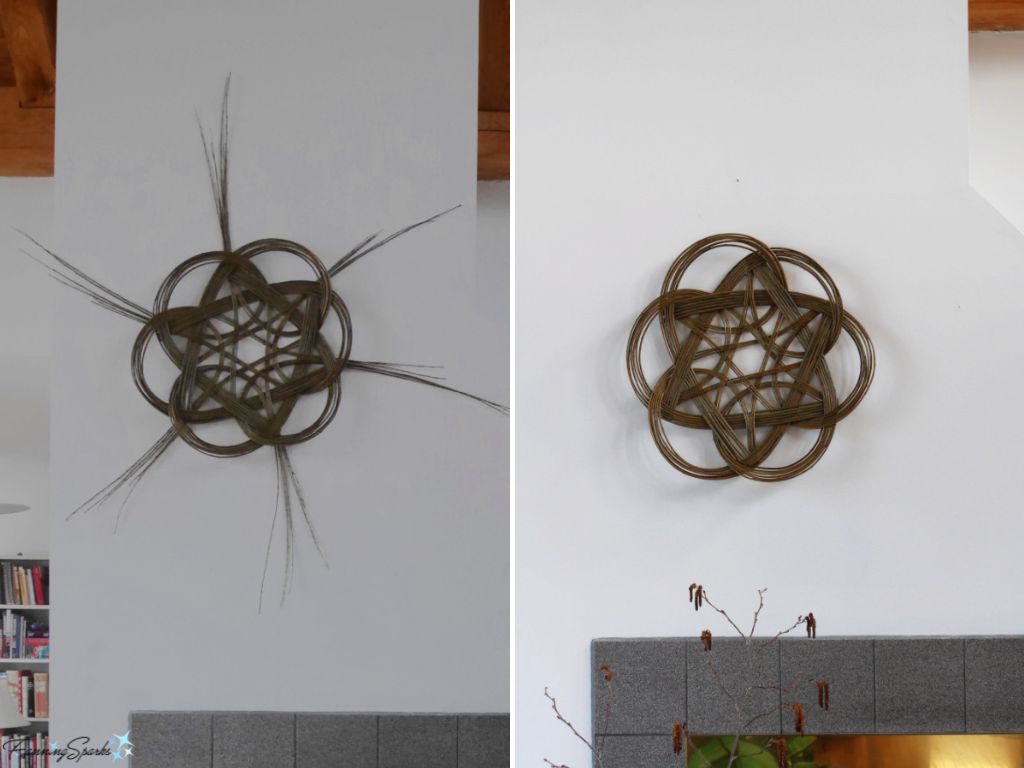
To wrap up, here are a couple more photos of my finished tatza.
 More Info
Previous blog posts mentioned in this blog post include:
. In the Mood for Mood Boards
. Texture by Mother Nature
. Decorating with Texture.
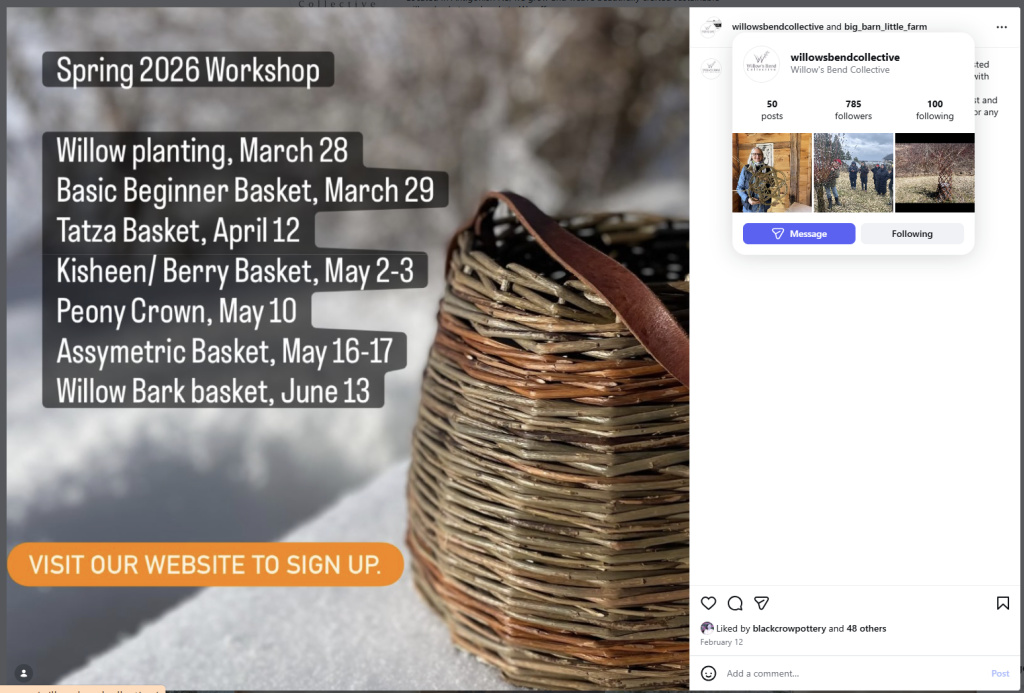
Willow’s Bend Collective is a not-for profit co-operative of willow growers, weavers and teachers based in Antigonish, Nova Scotia. Their vision, as stated on their website, is to “be a hub of cultural and environmental regeneration through willow craftsmanship and education”. Members of the Collective share their passion for willow and weaving through seasonal workshops and private small group sessions. See the Willow’s Bend Collective website or Instagram account for the workshop schedule and more information.
I really enjoyed the Tatza Workshop. It was a great day of making ― spent with kindred spirits, learning new skills, in a charming setting! Special thanks to Susie and my fellow students for making it a memorable experience.
Big Barn Little Farm is a small-scale, community-based regenerative farm owned and operated by Susannah Murphy and Will Frankland. Located in Antigonish, Nova Scotia, they “grow over 200 different varieties of vegetables, herbs, flowers, and fruit ”. See the Big Barn Little Farm website or Instagram account for more information.
The following resources were consulted in writing this blog post:
. Rachel Bower Baskets on Instagram
. The Tatza Basket blog post by Creative With Nature
. Basketmakers’ Association on Facebook, specifically this post featuring a tatza. The information ― instructions and photos ― are credited to Jane Allan @seafieldbaskets. The Basketmakers’ Association is the leading organisation for basketmaking, chair seating and allied crafts in the UK. See their website, Instagram page or Facebook page for more information.
. This Once-Dated Print Is Back for 2026 – Here’s How to Decorate with Block Prints to Add Charm to Any Room article by Chloe Frost-Smith
. Various Wikipedia entries.
Today’s Takeaways
1. Consider seeking out local opportunities to learn traditional skills.
2. Interior designers use texture to add dimension, depth, sensory richness and visual weight to a room.
3. Hand-crafted artwork offers a refreshing counterpoint to the prevalence of hyper-clean lines and digitally perfect finishes.



Comments are closed.