
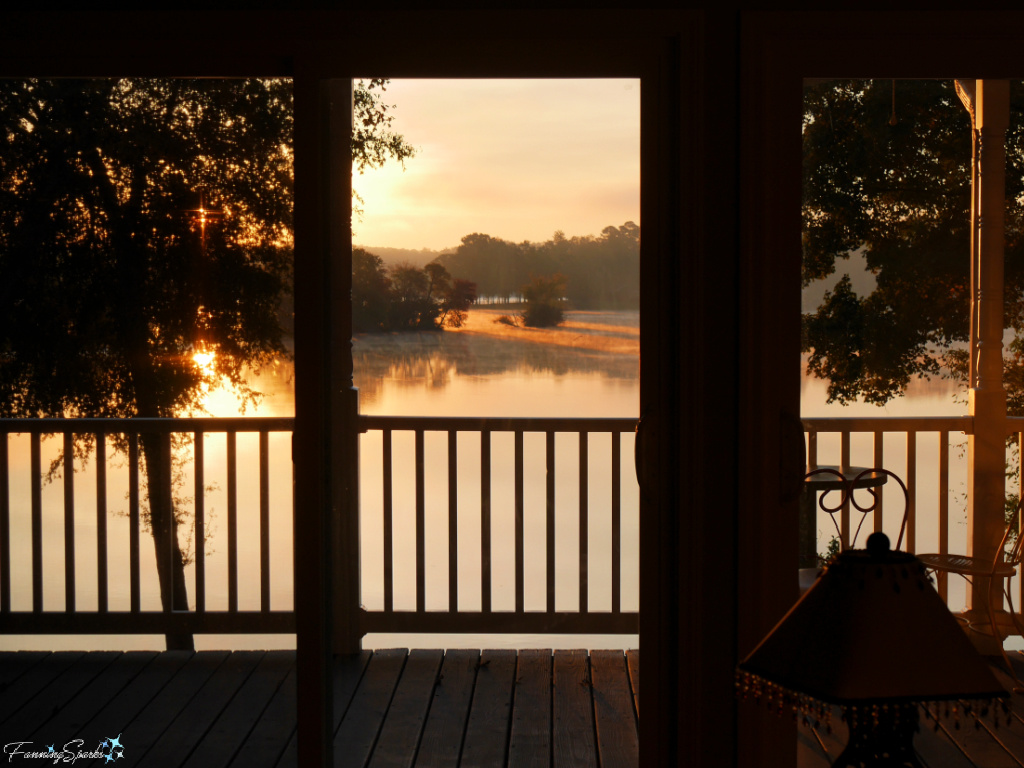
Architects, garden designers, photographers, painters and other visual artists often frame a view to present it in the most compelling way. “View framing does not create a new view, rather, it frames it, draws attention to it, and amplifies its beauty” writes the architect/author of Where Is the North website.Windows are, of course, the most common mechanism used by architects and builders to frame a view. Here’s an example from our home on Lake Oconee where a wall of windows frames the view of a gorgeous morning sunrise over the lake.
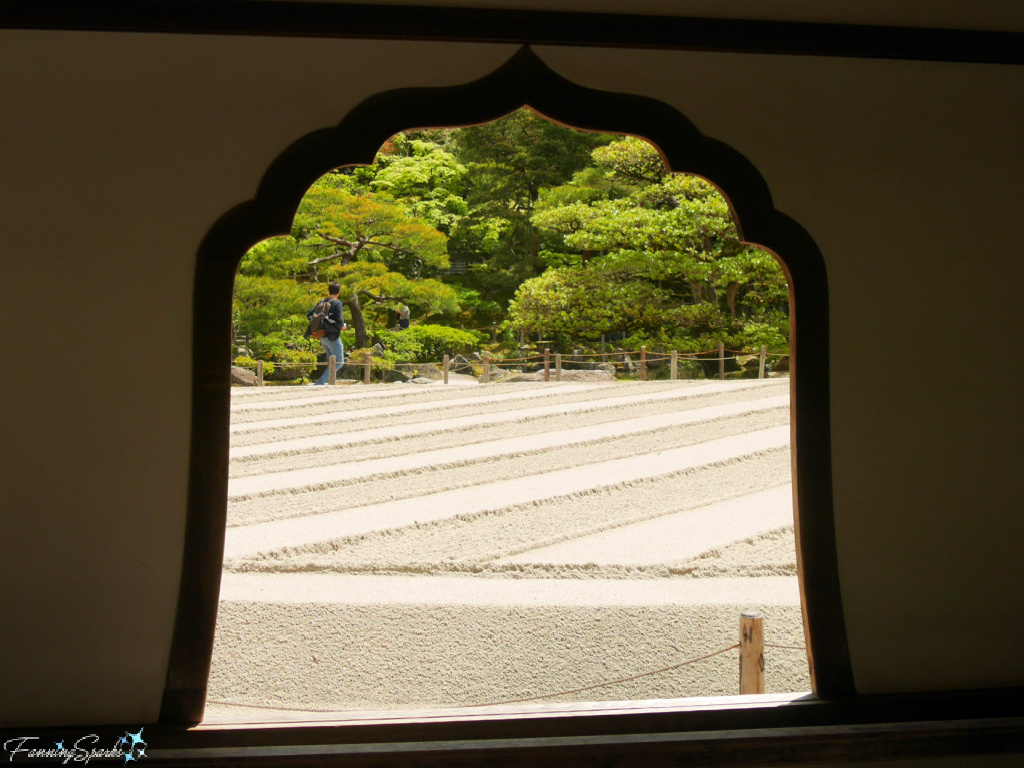
Garden designers use a variety of techniques to frame views. Japan’s meticulously planned gardens provide many examples. Shown below is a view of the dry garden at the Ginkaku-ji Temple in Kyoto. It is greatly enhanced by the interesting lines of the window frame.
My previous blog post Garden Strolling and Viewing in Japan highlighted several Japanese garden design concepts. Garden designers during Japan’s Edo period “continued the trend of involving participants in the garden, while at times manipulating the participant using new techniques to create the desired effect, including diagonal approaches, ‘hide and reveal’ and shakkei (borrowed scenery)” writes Mike Roberts in his online article Japanese Gardens 101 – Part 1: The History of Japanese Gardens.
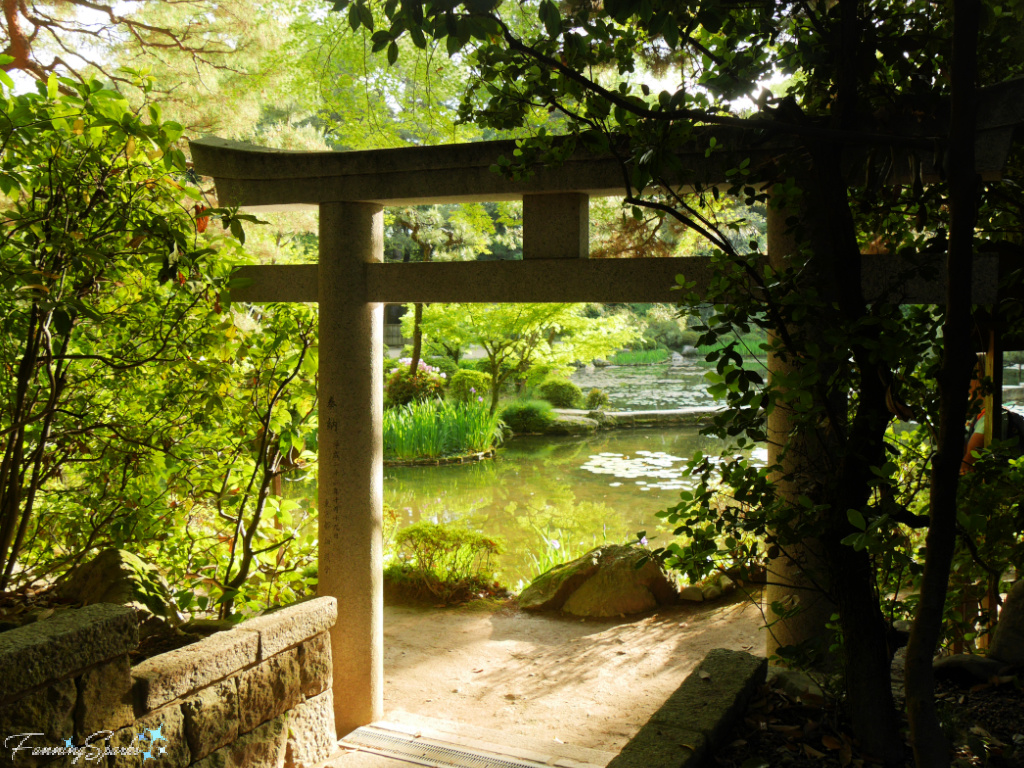
To “hide and reveal”, garden designers deliberately direct the visitor’s attention from one view to another to slowly reveal the garden. They often frame those views to catch the visitor’s eye. Shown below, a torii gate in the Heian Jingu Shrine Gardens frames the view to reveal a lovely pond.
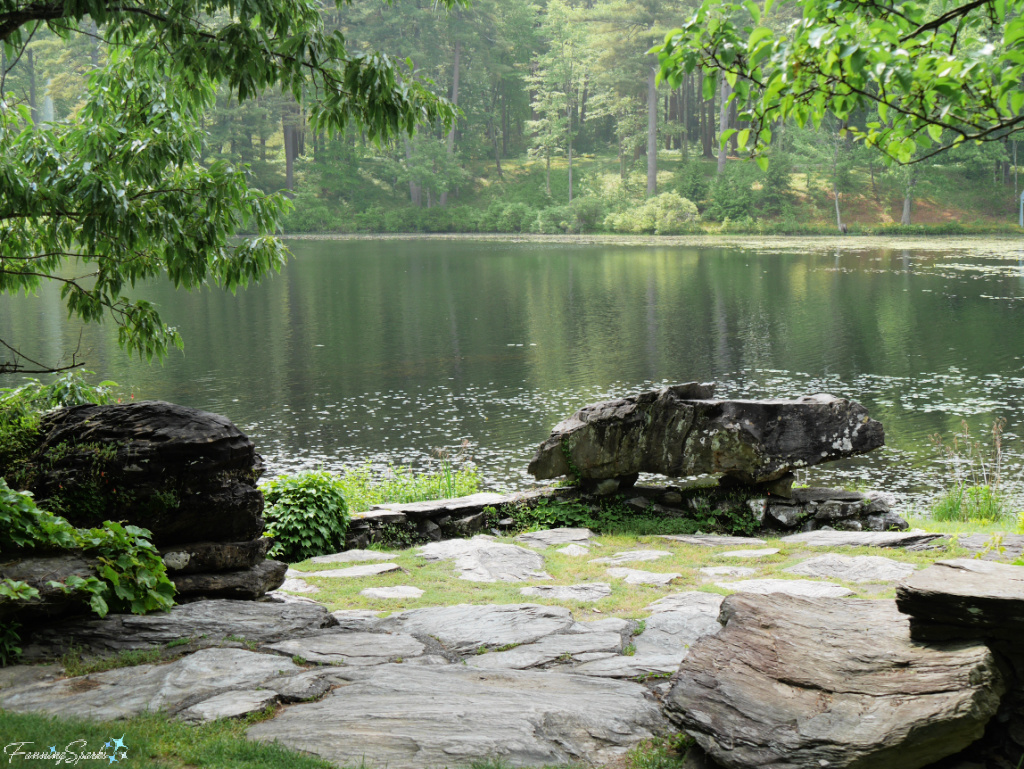
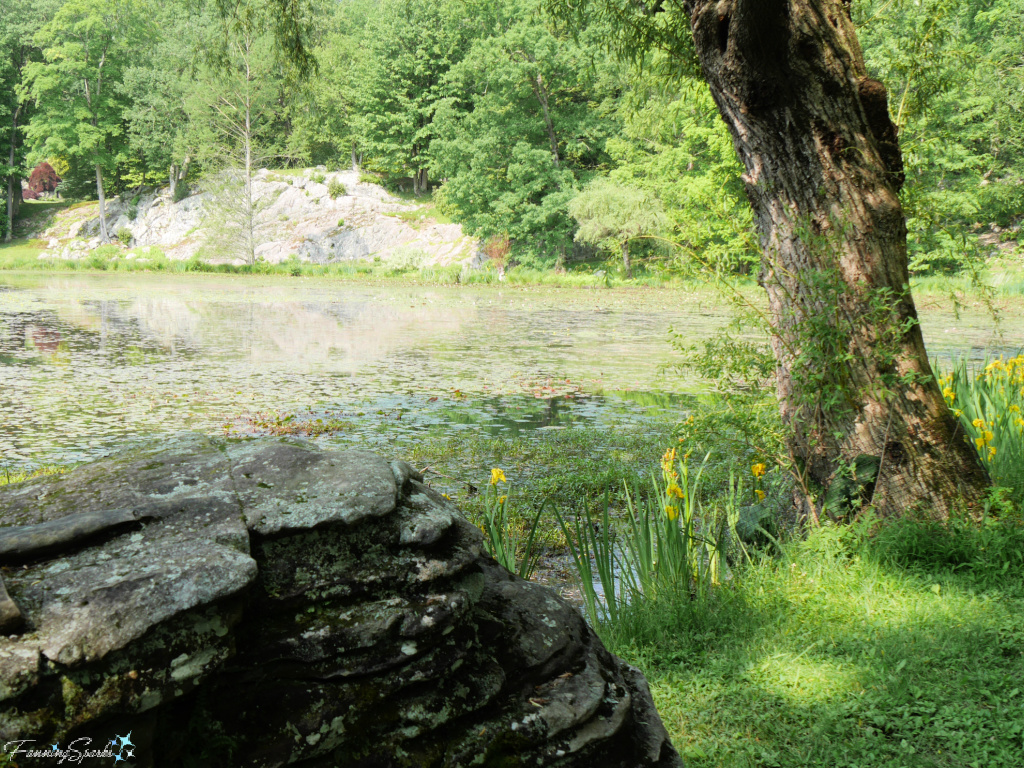
Natural elements can also be used to frame a subject or scene. I noticed several examples of natural framing while visiting Innisfree Garden in Millbrook, New York. According to their website, this “185-acre work of art” is considered to be the “quintessential American stroll garden”. Innisfree Garden is “a subtle conversation between human creativity and nature” and shares a “spirit of awe and sense of wonder” with its visitors. Original garden owners, Walter and Marion Beck, along with landscape architect Lester Collins incorporated many splendid garden design techniques including framed views.
Shown below are a few examples of natural framing from Innisfree Garden.

Outdoor art installations, outdoor sculpture and garden art can also incorporate frames and view-framing. Shown below are a couple of outdoor art installations which demonstrate the idea. I photographed these many years ago at A New Leaf Gallery’s SculptureWALK which was located at CornerStone Sonoma in Sonoma California at the time. You can see more outstanding work from this exhibition in my previous blog post, Sculpture Parks: Crafted Art + Crafted Nature.
Unfortunately, I did not take note of the artists responsible for the two installations shown below. This first installation leverages a pair of closely-placed parallel walls, covered in natural materials.
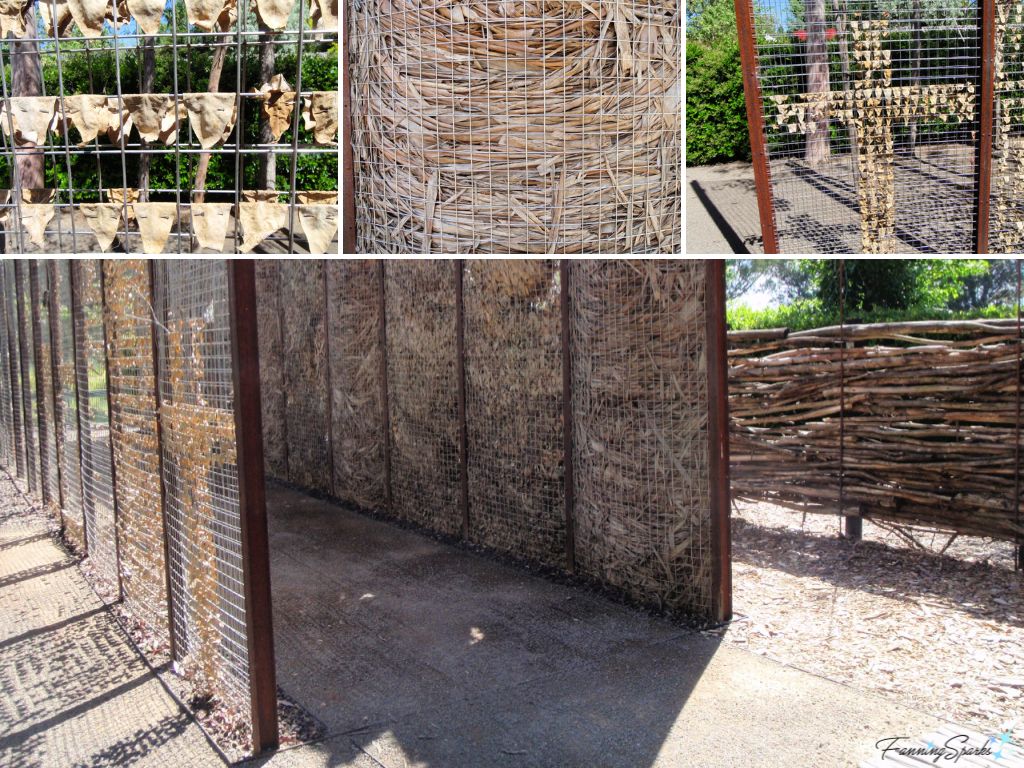
The walls invite the visitor to move forward while framing the view and directing their gaze to a still, secluded pool. A carefully-placed chair completes the composition.
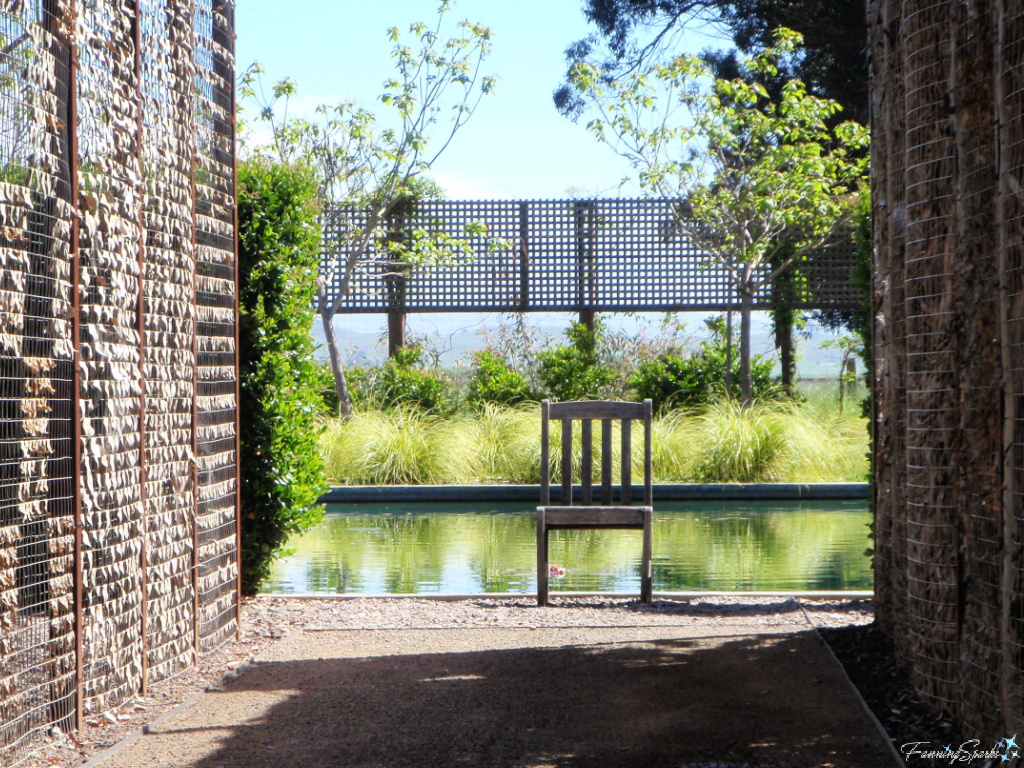
In the second art installation, a cylindrical tunnel slowly reveals a splendid view…
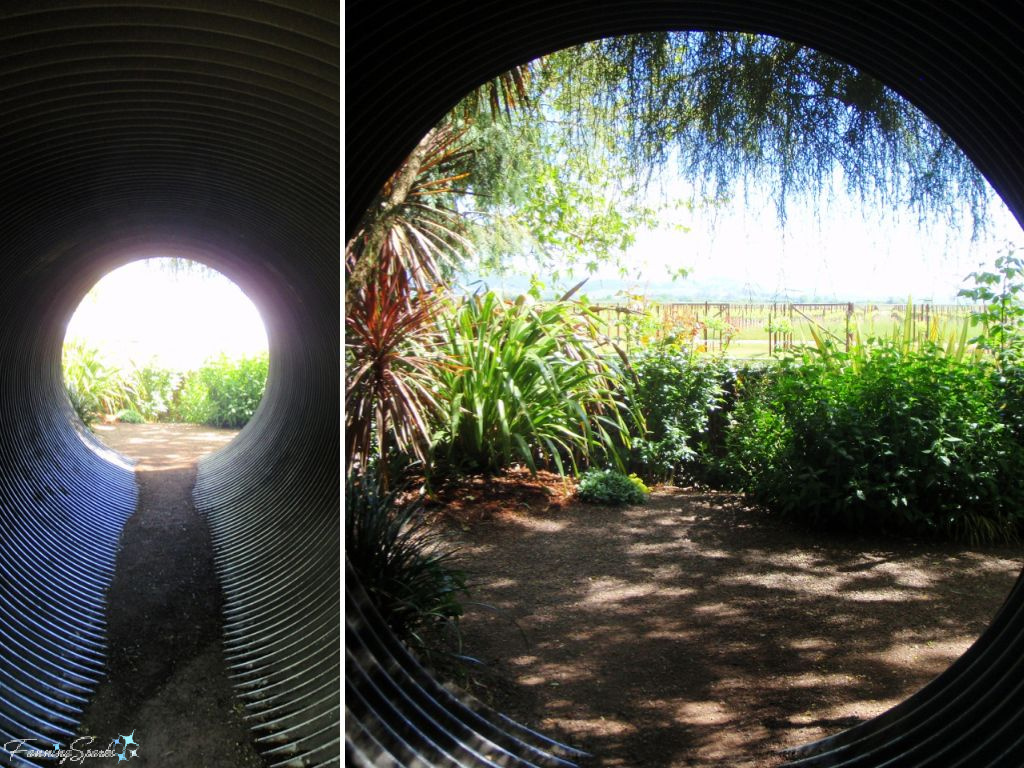
… while guiding visitors to the ideal viewing spot to admire the beautiful vineyards and mountain backdrop.

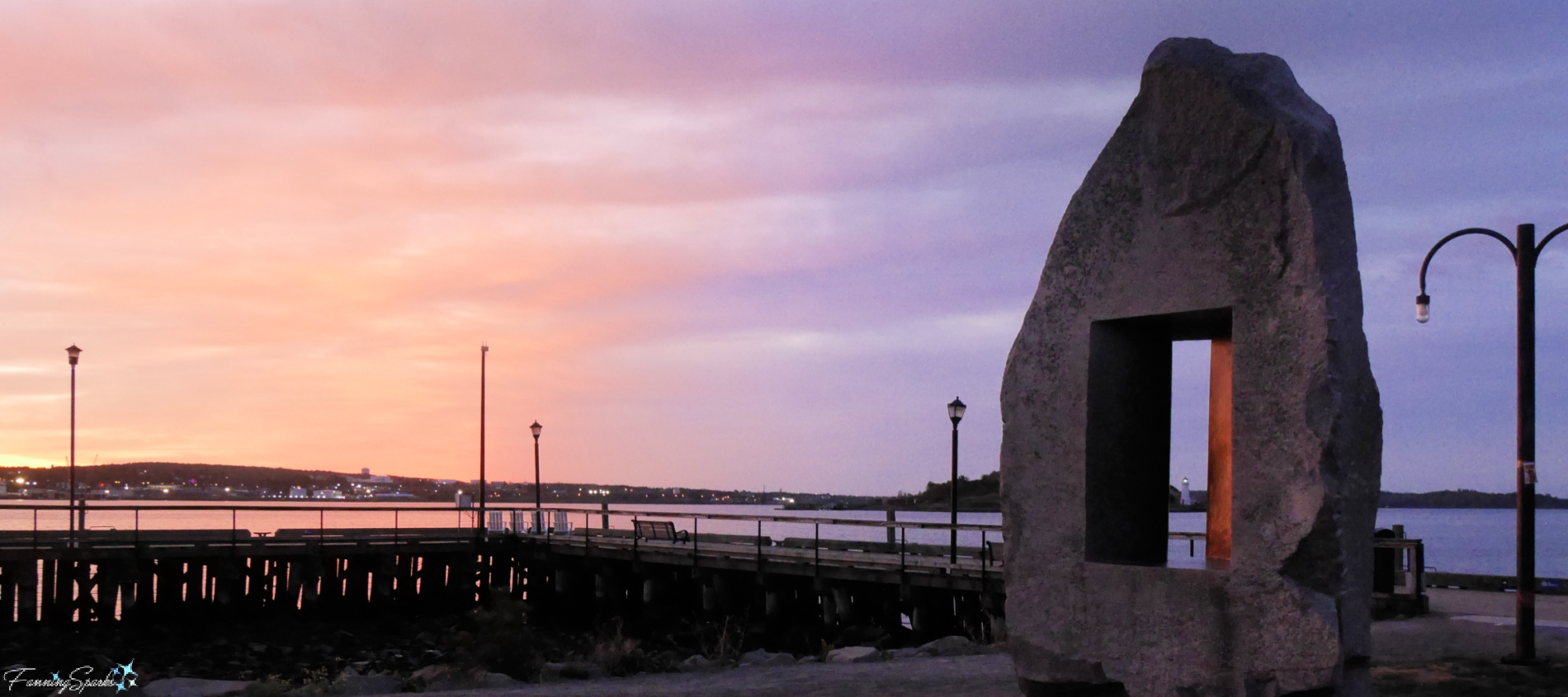
I’ve also found some extraordinary applications of frames in outdoor art. This nine-tonne sculpture carved from Nova Scotia granite by sculptor Vasilis Vasili is a case in point.
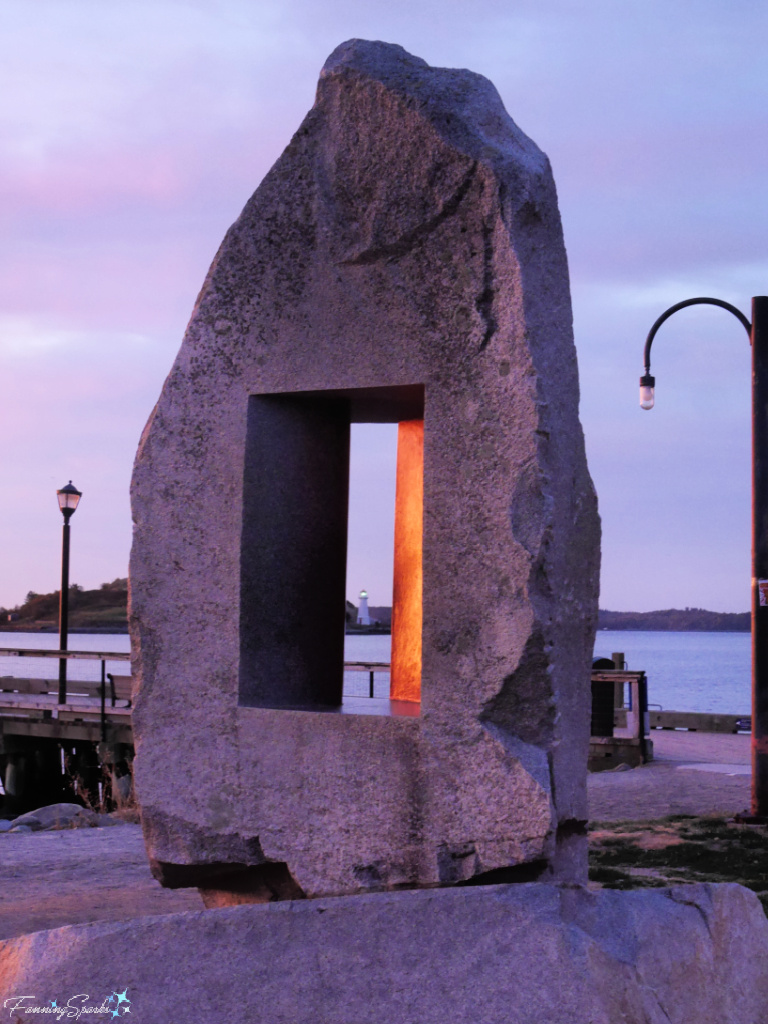
The sculpture, titled Passage, features a dramatic window which draws the viewer in to look through to the view beyond. “Vassili spent four weeks carving and polishing a curved passageway through the top boulder … the opening frames a view to the east, to Georges Island, the Atlantic Ocean, and the world beyond Halifax Harbour” reports the NSCAD University website in their article Passage – A Tribute to Anna. “Timed right, a viewer could watch the morning sun rise through the opening—symbolizing a new start for many in a new home. ‘To me, this makes sense for Halifax, which has traditionally been a gateway for many immigrants to Canada from around the world,’ says Vassili. ‘I wanted to create a space which can function as a window to connect to the other side.”
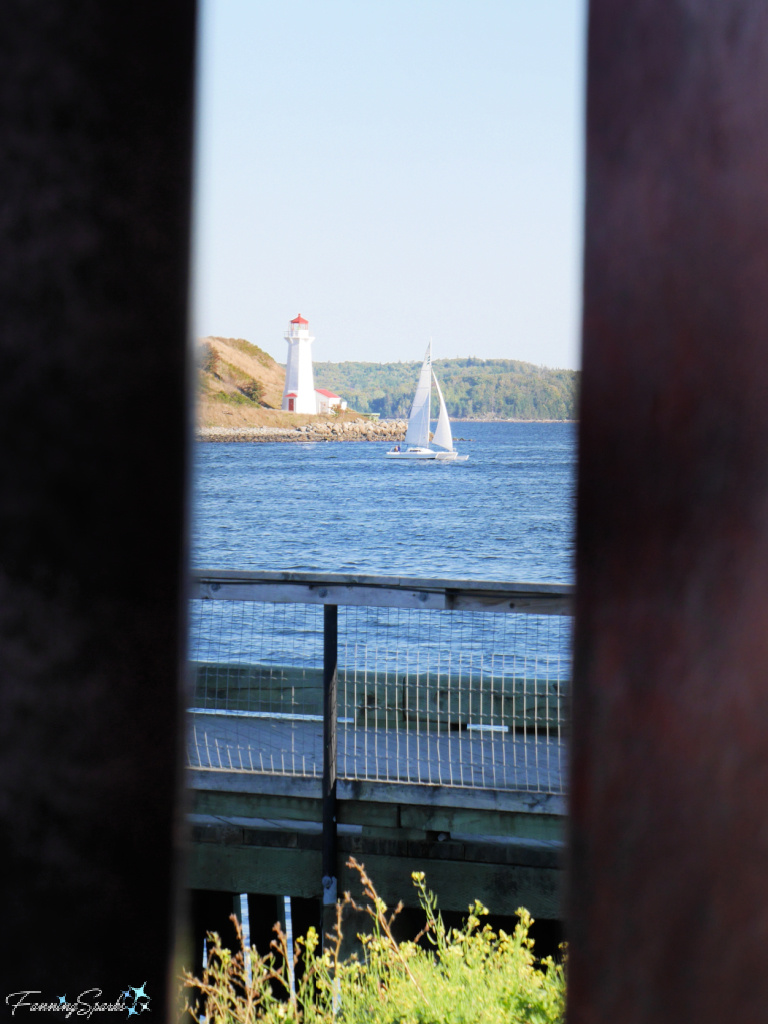
Shown below is the lighthouse on Georges Island viewed through Passage.
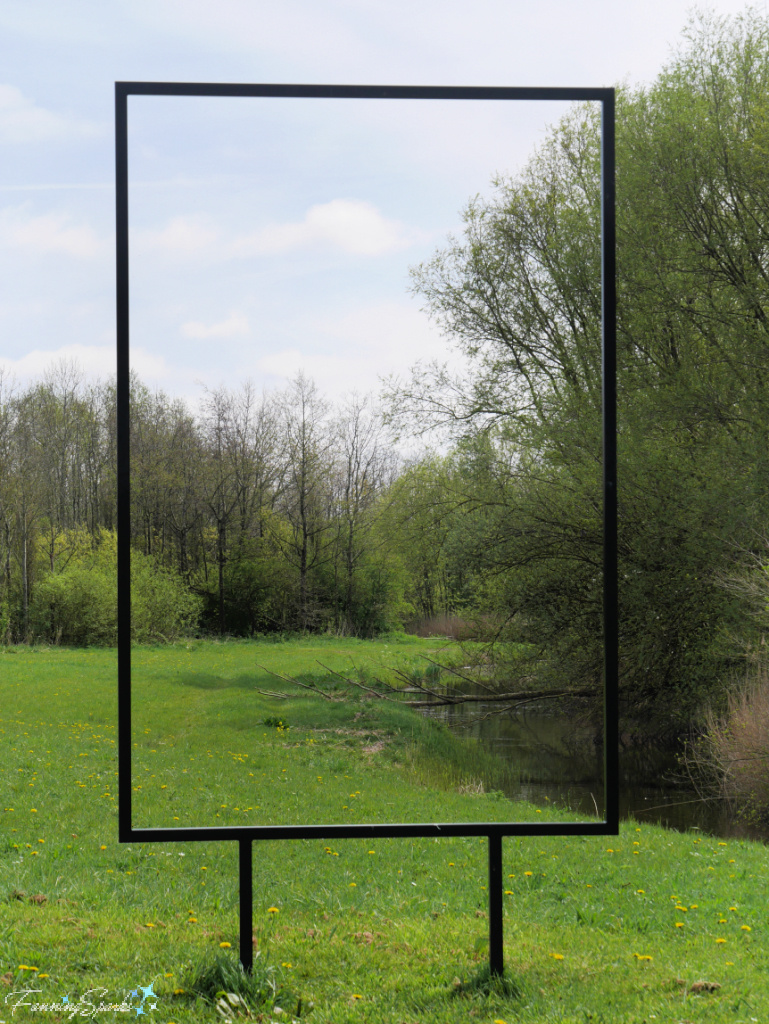
I spotted another great example of view-framing at Stichting Land Art Delft in Delft, Netherlands. I love the simplicity of this outdoor sculpture.
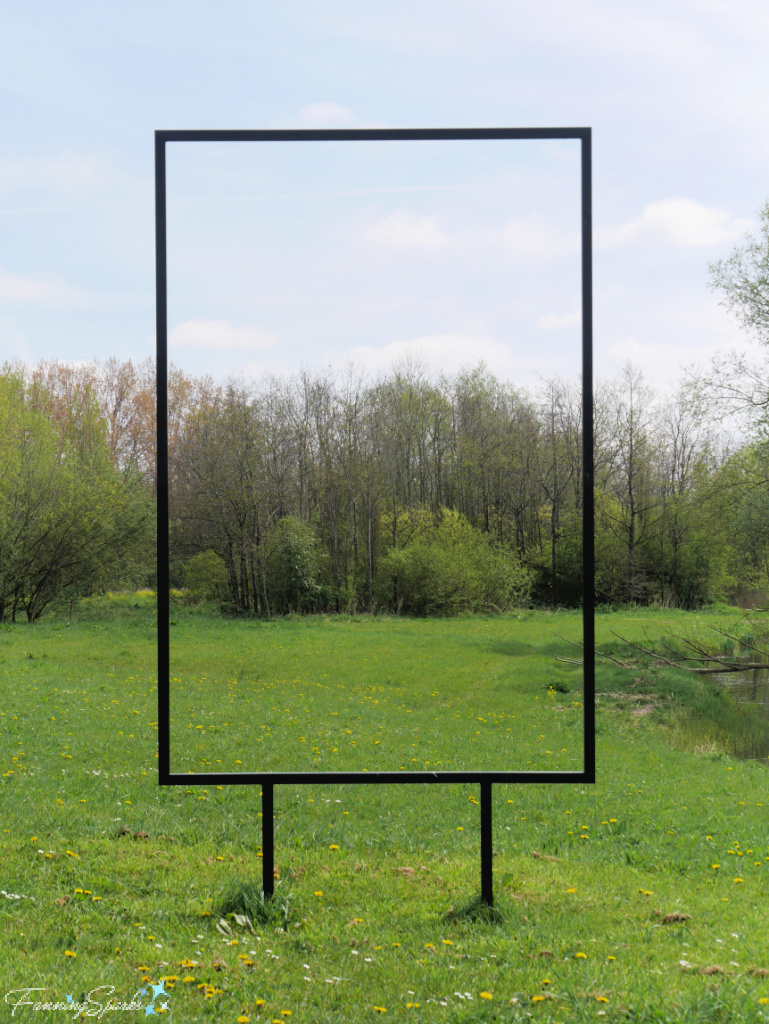
It was fascinating to see how effectively the simple black frame drew my attention to the highlighted view as I moved around the frame.
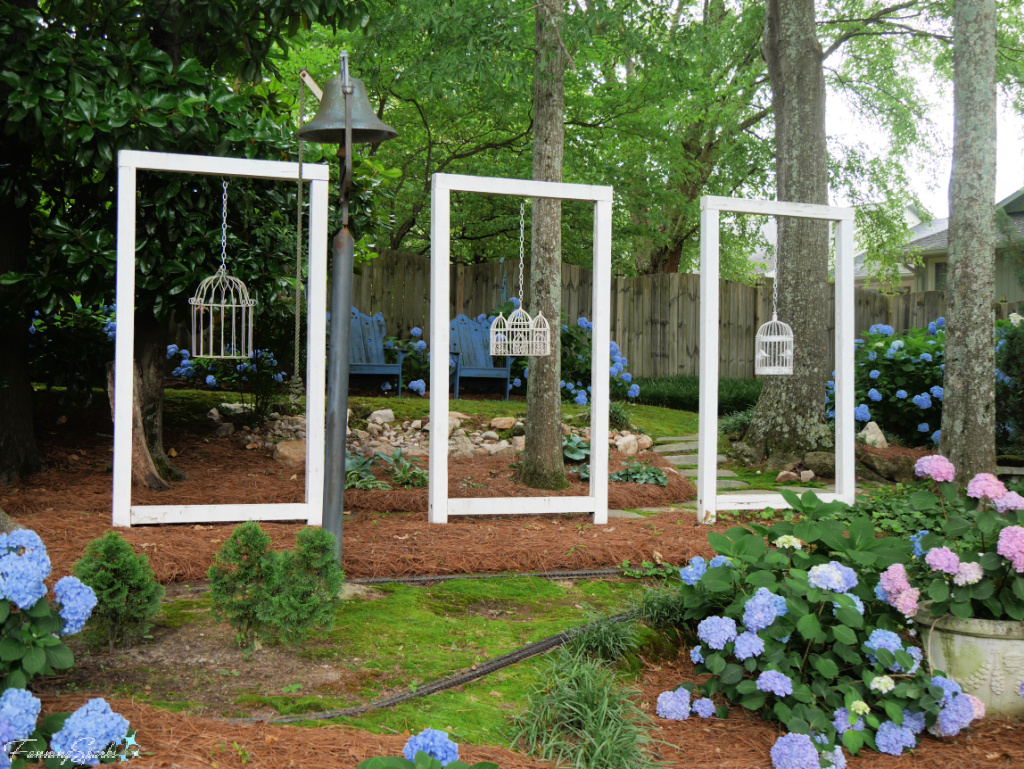
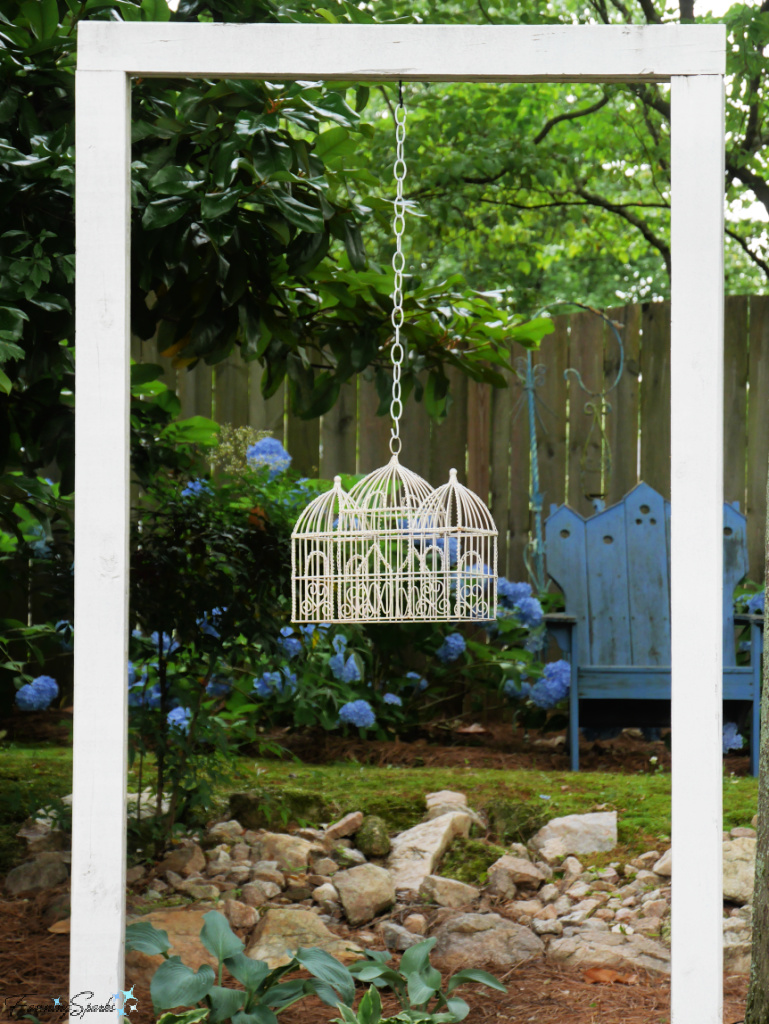
I’ve seen a similar, although much smaller scale, approach used in a private garden in Douglasville, Georgia. This trio of white frames instantly called the visitor’s attention to the white wire bird cages and the pretty views beyond.
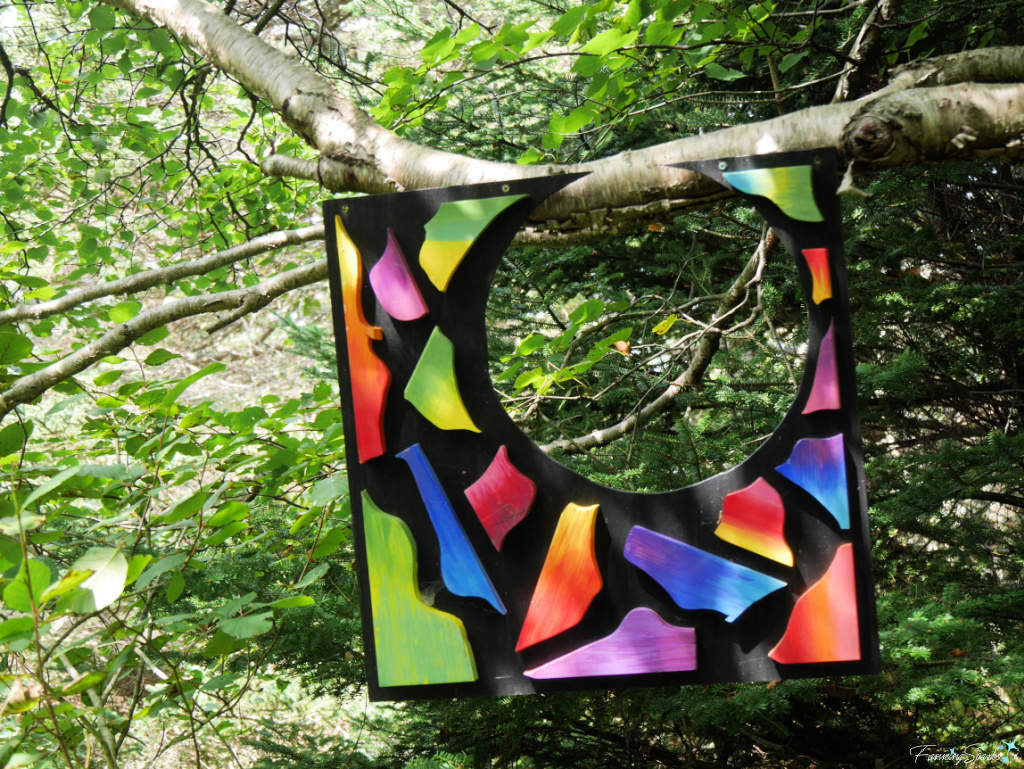
Shown below is an example of view-framing garden art which we spotted along the Bear Cove Road walking trail in Nova Scotia.
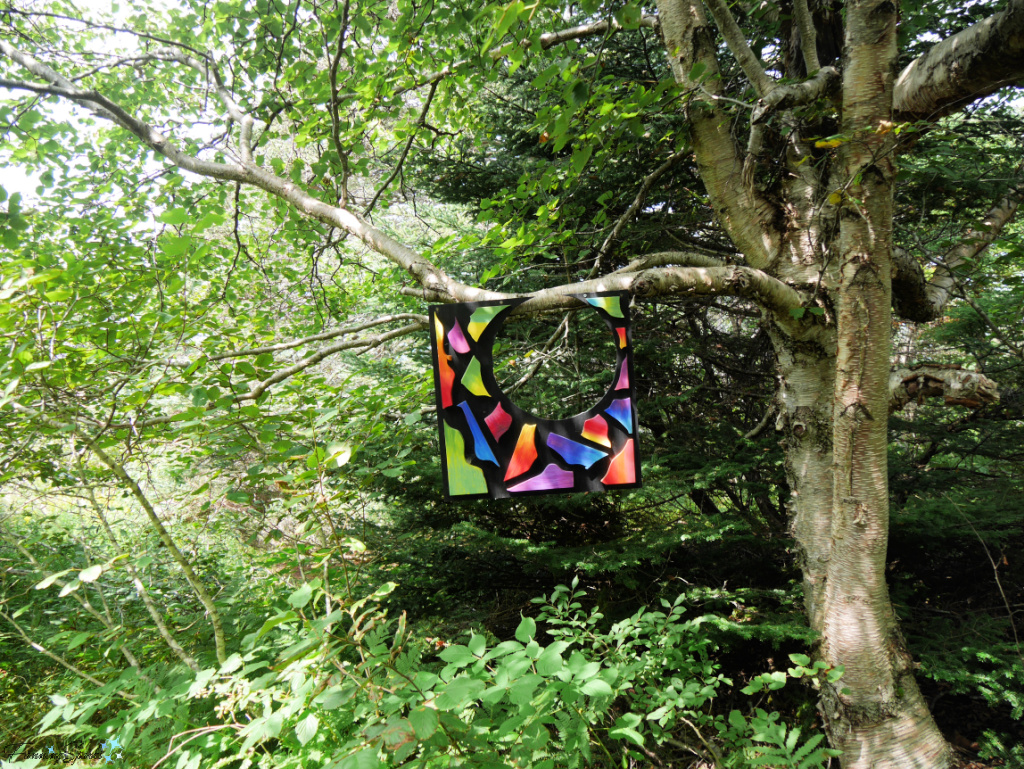
The natural elements viewed through the circular cutout are beautifully framed by the colorful square.
In this final garden art example, a frame plays a more traditional role ― sitting on a rustic birch wood easel, the simple, white frame borders a wood carving of a bear.
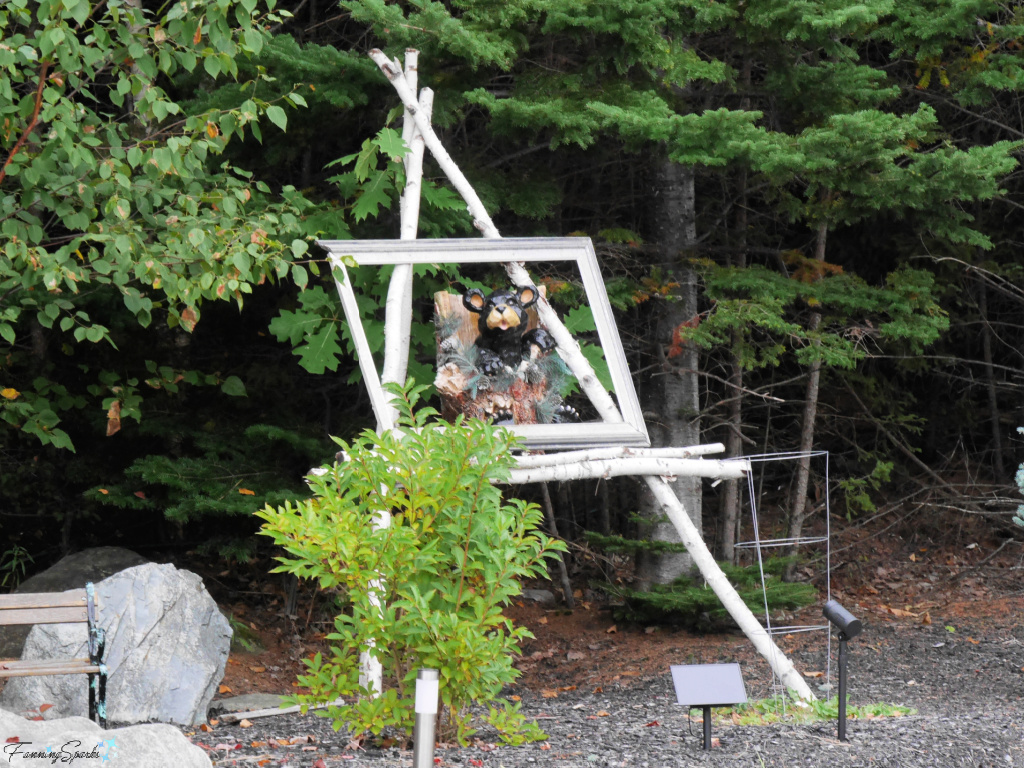
This arrangement is striking because of its unexpected placement ― framed art like this is more commonly displayed indoors.
Interior art, especially two-dimensional paintings, illustrations, and photographs, are inevitably framed by the edges of the work itself. So, a great deal of thought goes into deciding what to put inside the frame – what specific scene or subject does the artist want to highlight?
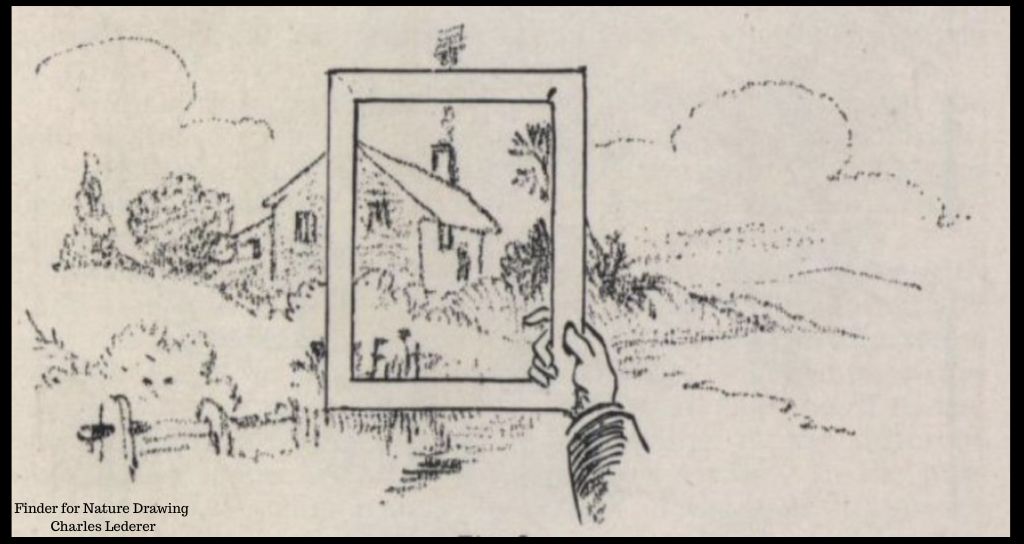
In his book, Drawing Made Easy, Charles Lederer advises artists to create a “finder for nature drawing … Cut out the center from an oblong of cardboard [as shown below] … Hold it either vertically or horizontally as a picture frame at arm’s length and select what to draw by moving the frame from side to side or up and down. Then draw what appears within.”
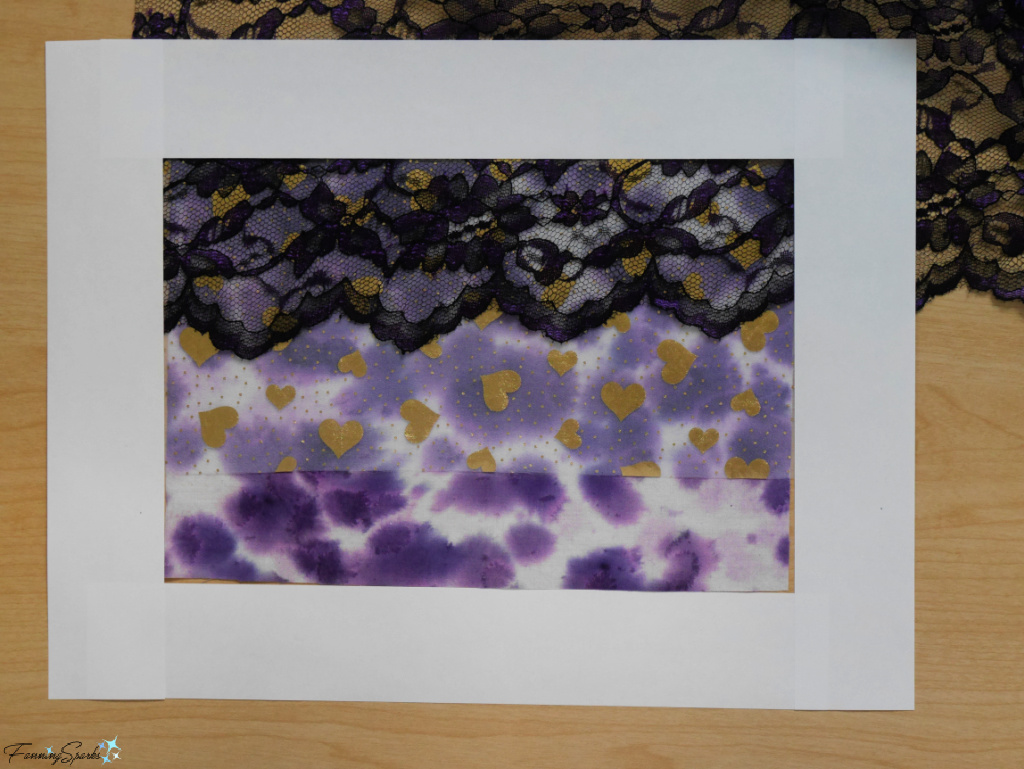
I’ve used a similar technique to compose art projects. For instance, while experimenting with various compositions, arrangements, fabrics and embellishments for a textile collage, I found it very helpful to lay a paper frame over the work to help me visualize the results. See my previous blog post My Patchwork Heart Textile Collage for the full story on this project.
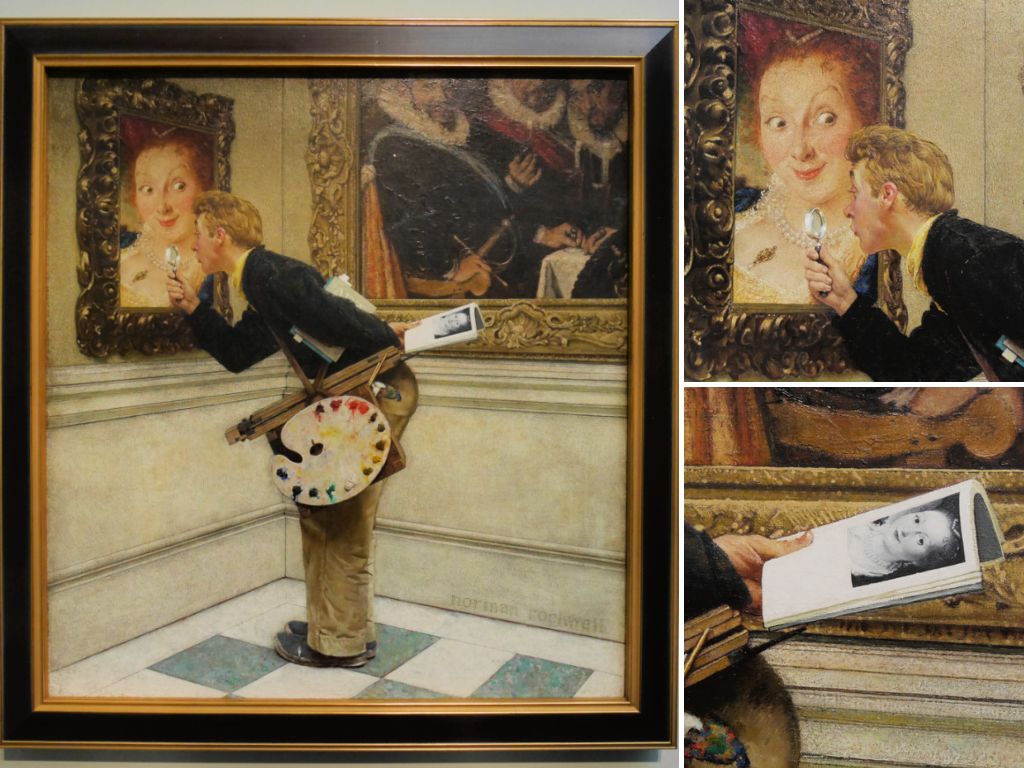
After defining a viewpoint and choosing the subject, the artist may want to select a frame. Often the frame is a simple, narrow border that surrounds the artwork ― like the frame around the Norman Rockwell oil painting shown below. I had the pleasure of seeing this painting, titled Art Critic, at the Norman Rockwell Museum in Stockbridge, Massachusetts. The painting was featured on the cover of The Saturday Evening Post in April 1955.
The physical picture frame surrounding Art Critic is subtle ― it merely supports the artwork without distracting from it. But the picture frames depicted in the painting ― around the art the critic is examining ― are elaborate and ornate. They are integral to the paintings and contribute to the complete picture.
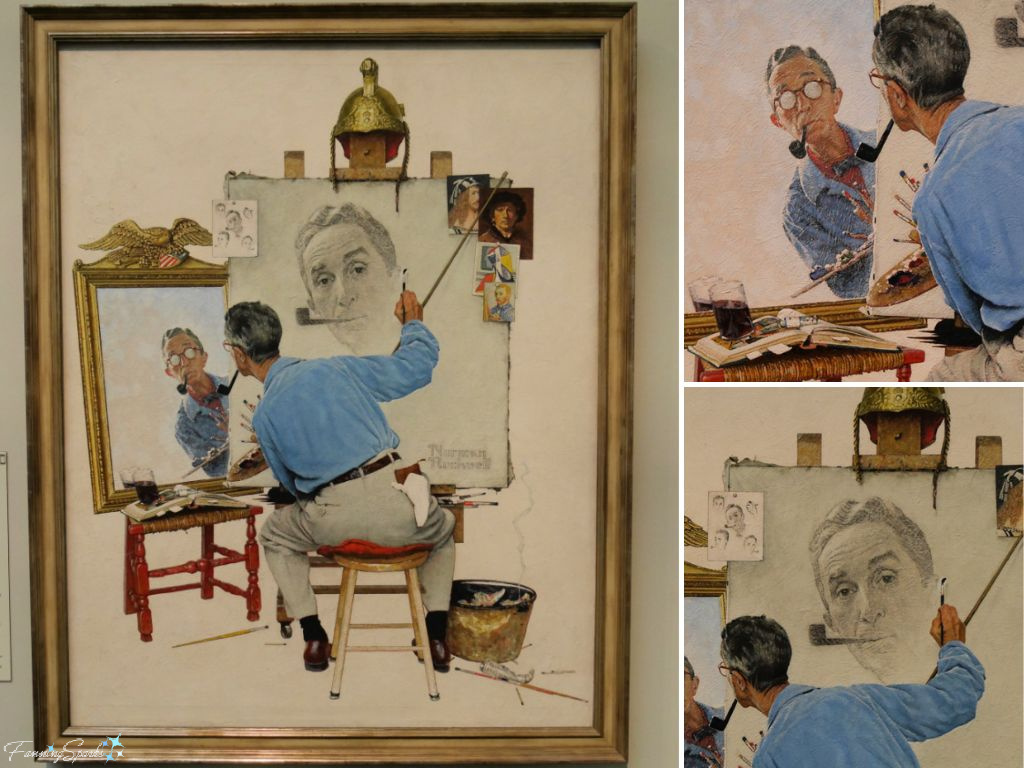
Here’s another Norman Rockwell painting depicting frames. Titled Triple Self-Portrait, it was used as the cover illustration for The Saturday Evening Post in February 1960. Clever view-framing around the mirror and the work-in-progress painting make this complex composition work beautifully.
Speaking of frames being integral to the artwork, I’ve been watching and admiring the work of contemporary artist, Andrew Scott, on Instagram recently. “Whether through breaking, shattering, burning, or reconfiguring frames, Andrew brings the subjects in his artwork to life. By breaking the fourth wall and making the frame part of the artwork itself, Andrew continually bends artistic convention in new and surprising ways.” states Scott’s website. Here are a couple of his artworks.


I’ll wrap up with one final photo depicting a framed view. In this instance, the frame ― clusters of beautiful cherry blossoms forming a heart-shaped cutout ― is actually the art!

More Info
Previous blog posts mentioned in this blog post include:
. Garden Strolling and Viewing in Japan
. Sculpture Parks: Crafted Art + Crafted Nature
. My Patchwork Heart Textile Collage
The following resources were consulted in writing this blog post:
. 7 Methods of View Framing in Architecture with Examples article from Where Is the North website
. Japanese Gardens 101 – Part 1: The History of Japanese Gardens article by Mike Roberts
. Passage – A Tribute to Anna article from NSCAD University website
. Drawing Made Easy book by Charles Lederer which is available here on Internet Archives.
“Innisfree Garden is a 185-acre work of art … located in Millbrook, New York … designed over decades of close collaboration with the land. Nestled within a natural bowl that wraps around the 40-acre Tyrrel Lake, the garden has a private, intimate feel that will delight and surprise you.” To learn more, check out the Innisfree Garden website or Instagram.
As of October 2025, the website for A New Leaf Gallery SculptureSite reports “Our indoor gallery has now closed, but you can still visit Jack London Village in Sonoma County to see our continuing outdoor sculptureWALK exhibition in person!”
Stichting Land Art Delft is a unique sculpture and nature park located in Delft, Netherlands. See their website for more information.
Norman Rockwell was an American painter and illustrator known for his charming depictions of American life. His beloved artwork was featured on 323 covers of The Saturday Evening Post magazine over a 48 year period. The Norman Rockwell Museum, located in Stockbridge, Massachusetts, “illuminates the power of American illustration art to reflect and shape society, and advances the enduring values of kindness, respect, and social equity portrayed by Norman Rockwell”. See the Norman Rockwell Museum website for more information.
To learn more about contemporary artist, Andrew Scott, see his website or Instagram.
Today’s Takeaways
1. Architects, garden designers, photographers, painters and other visual artists often frame a view to present it in the most compelling way.
2. Frames can serve as a border, surrounding the featured view or artwork, or they can be integral to the work itself.
3. “View framing does not create a new view, rather, it frames it, draws attention to it, and amplifies its beauty” Where Is the North website.


Comments are closed.