

There was a time when ships communicated with each other using only line-of-sight visual signaling. An elaborate system of flags and pennants, with distinct shapes and color combinations, was devised to standardize communication. Known as the International Code of Signals, this visual communication system came into operation in April 1969. Although they were replaced by radio and other technologies, the distinctive signal flags are still in evidence in maritime environments around the world.
The Cape Sable, a vintage steel-hulled side trawler at the Fisheries Museum of the Atlantic in Lunenburg Nova Scotia, is shown flying its colors.
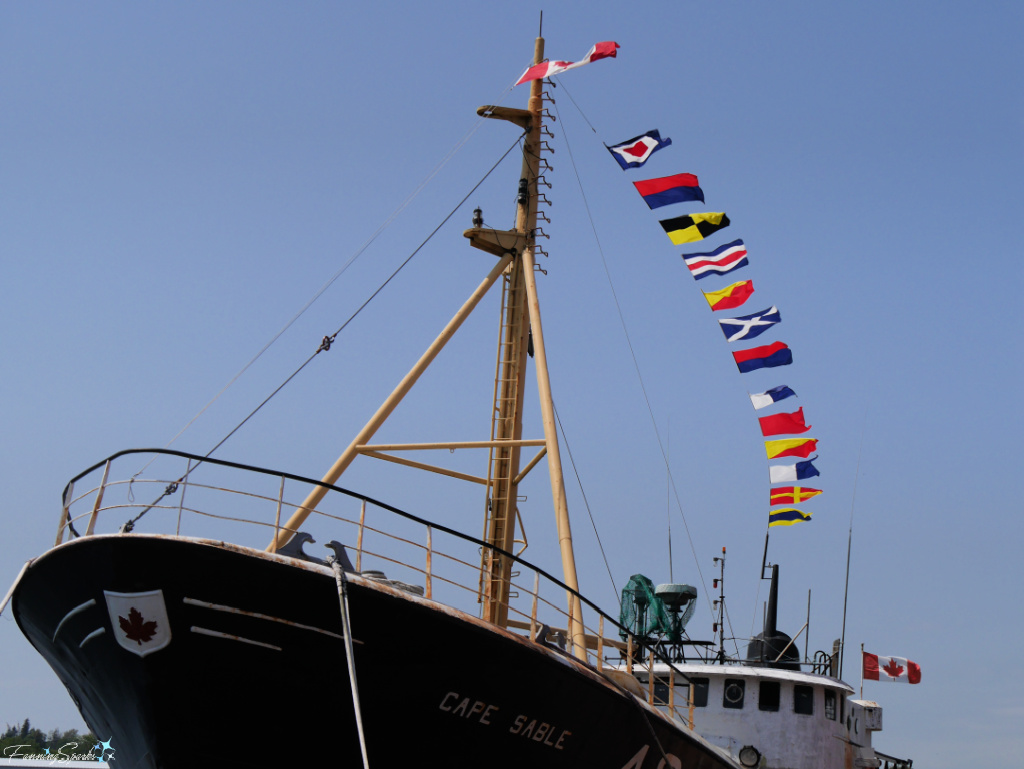
“Flags are in use at sea by all kinds of vessel, from working ships to warships to yachts, both sail and power.” explains Reeds Maritime Flag Book. “There are technical implications to certain words in the English language used when flags, or colours, are shown. These words include fly and wear. Strictly speaking, a ship or boat wears a flag and the mariner flies a flag. Other terms such as display, hoist, show, and rig are also used … more or less interchangeable.”
Inside the Museum, an International Safety Management Code Safety Poster illustrates the International Signalling Flags. There are 26 alphabetical flags, 10 numeral pendants, 3 substitute pendants and 1 code and answering pendant.

Using this poster, I was able to decode the Cape Sable’s flag signal to mean “WELCOME ABOARD”.
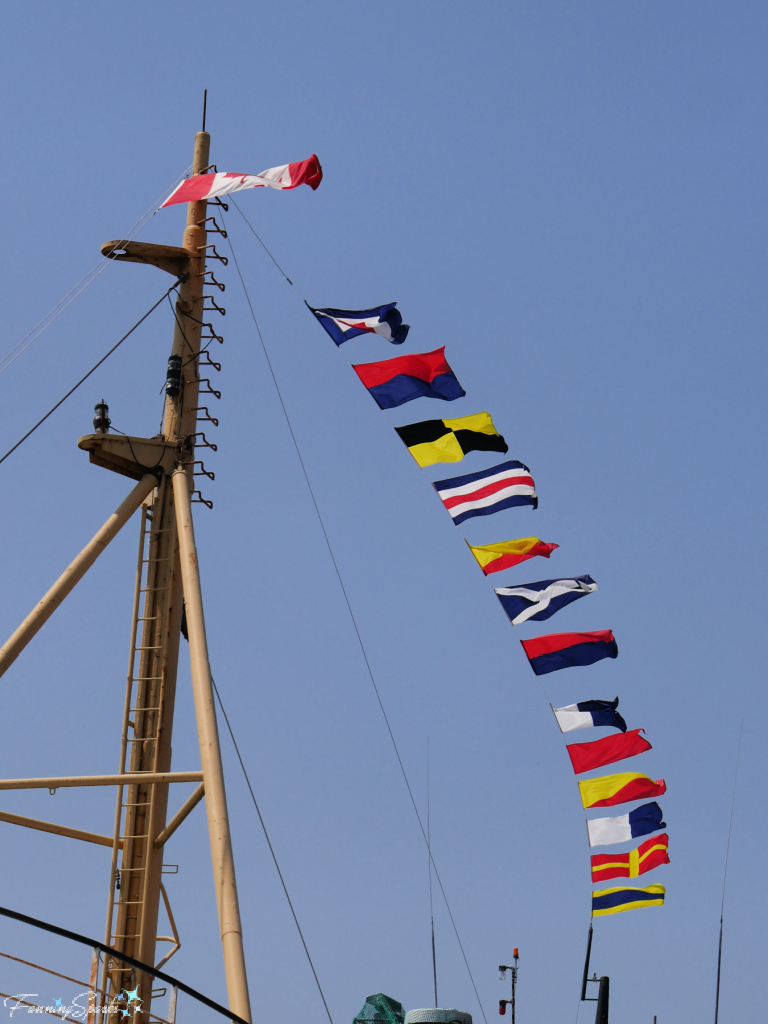
This was a straightforward translation because each flag translated to a single letter. I believe this type of cipher is called a “mono-alphabetic substitution cipher”.
The Maritime Museum of the Atlantic in Halifax also displays nautical flags on their premises. The building exterior, for instance, is encircled by a ribbon of flag symbols.
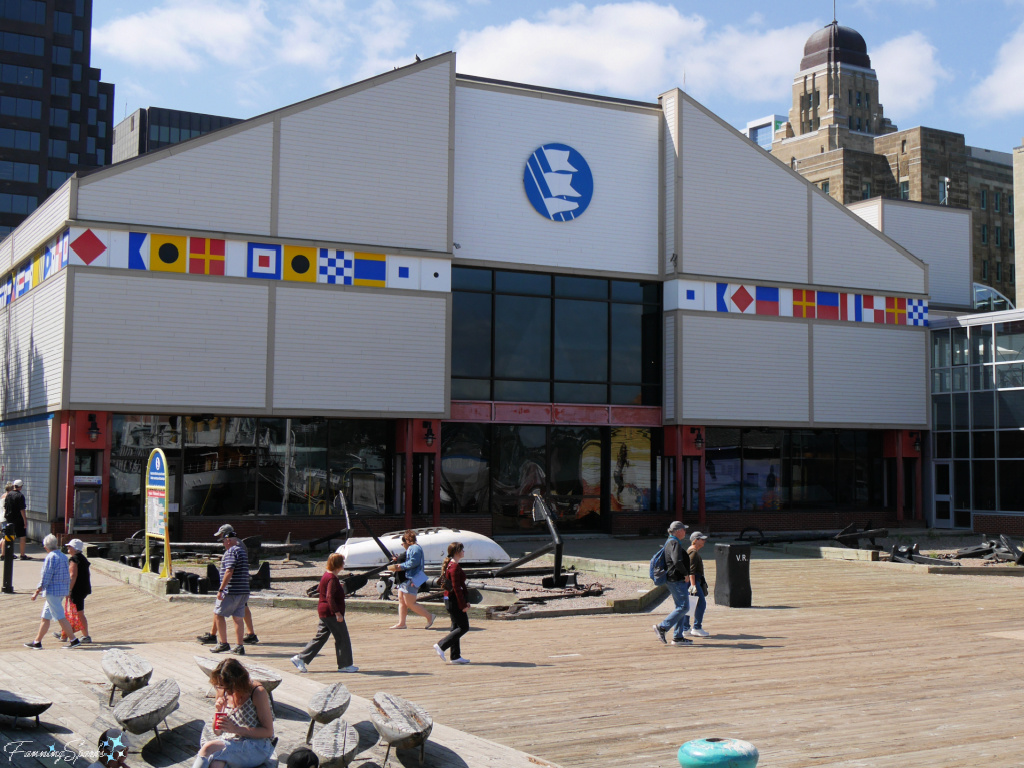
These flag messages provided a good opportunity to seek out and try some online flag translation tools.
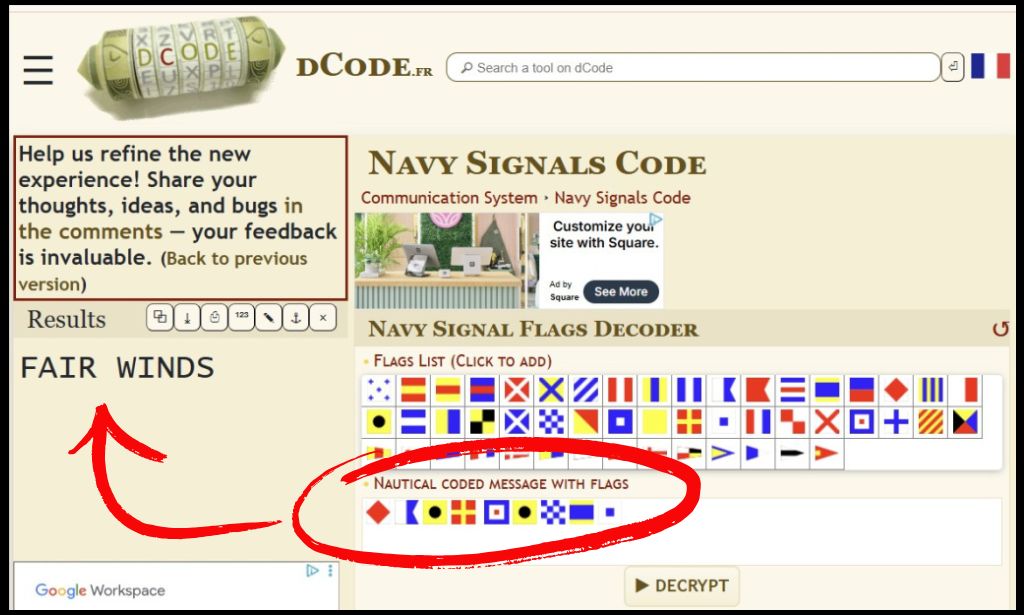
The first tool I found was dCode / Navy Signals Code. To use this tool, I had to manually select each flag from the flags list. Then click the DECRYPT button. After selecting each of the flags on the left side of the building, the tool correctly returned “FAIR WINDS” in the Results window.
This was a promising outcome but I wondered if it would be possible to translate directly from a photo instead. After a little more searching I was able to find a couple of tools which allowed me to upload photos. These tools promised to use AI (artificial intelligence) to identify the flags in my photo.
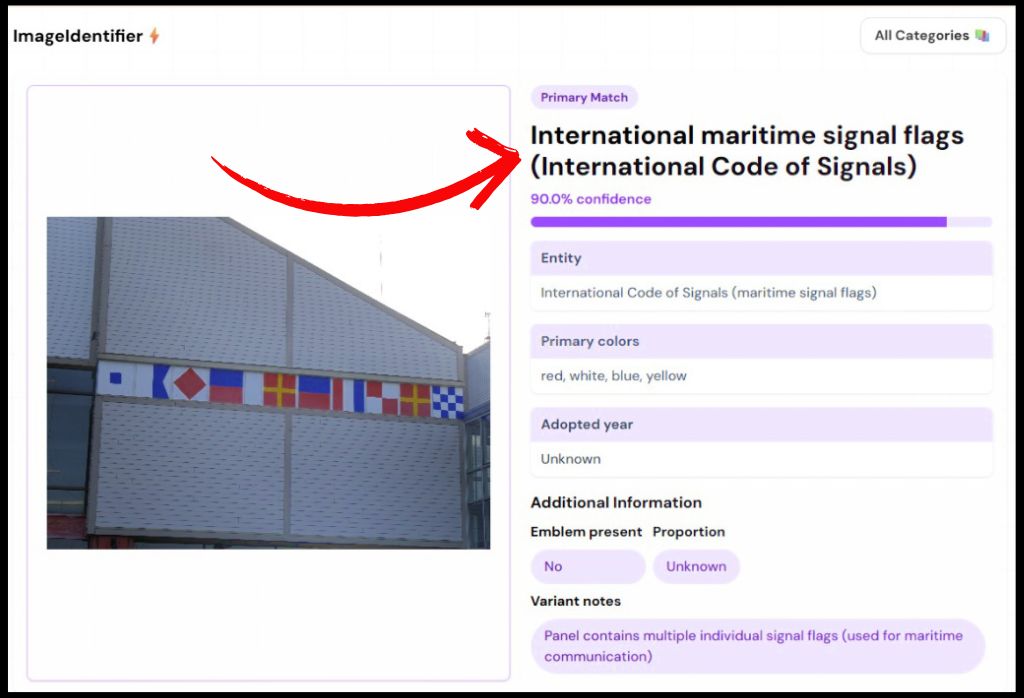
The first one I tried, Image Identifier AI / What Flag Is This, claimed to “Instantly recognize national, regional and special flags”. Here are the results from Image Identifier AI―it correctly identified the flags as “International Code of Signals” flags but failed to decrypt the actual message.
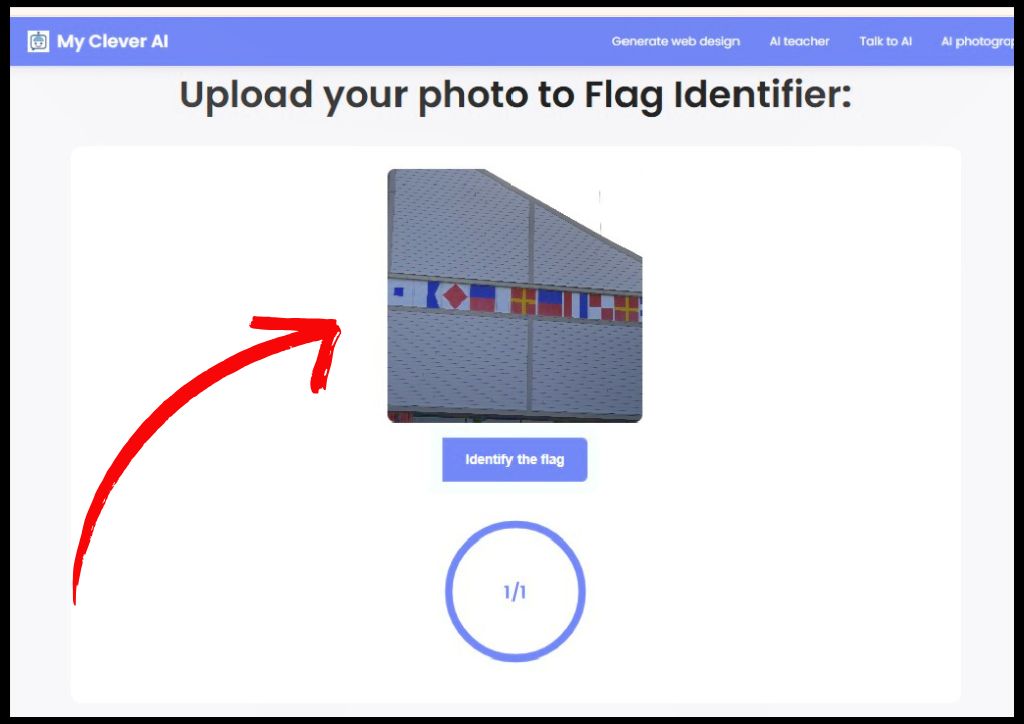
The next tool I tried was My Clever AI / Flag Identifier. Again, I successfully uploaded the photo.
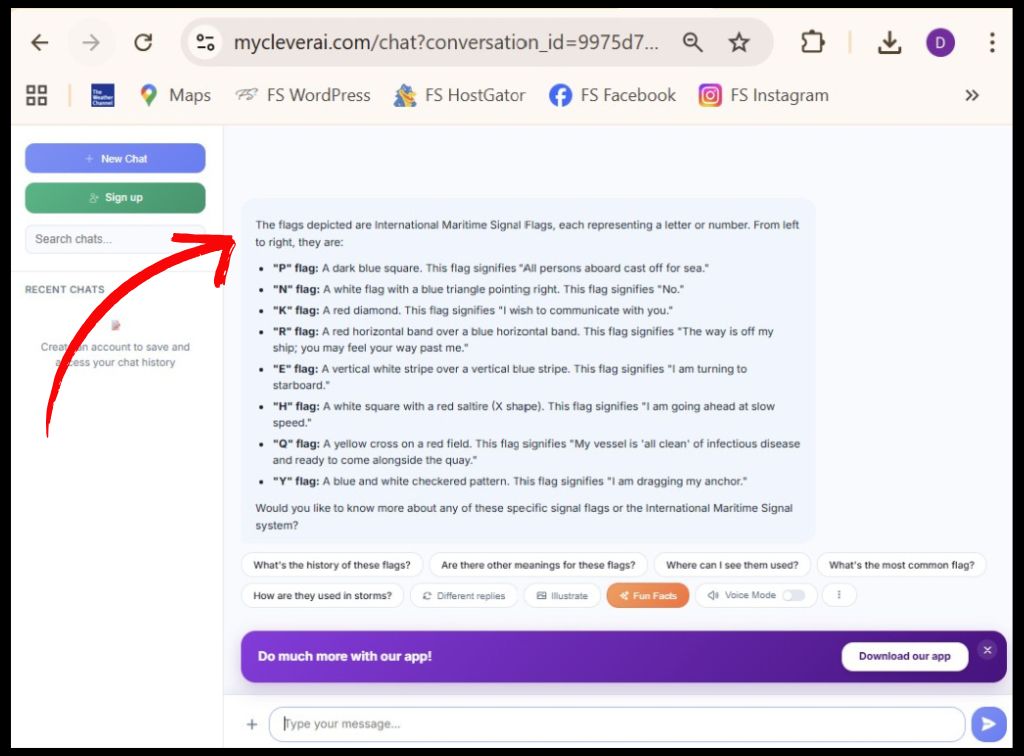
My Clever AI also correctly identified the image as displaying “a series of International Maritime Signal Flags”. Then, it listed, described and decoded the “identifiable flags”. Some of the descriptions of the flags were fairly accurate. For instance, it identified “A red diamond … A yellow cross on a red field [and] A blue and white checkered pattern”. Other descriptions were incorrect and every single letter was wrongly decrypted. The flags spell “SAFE RETURN”―they do not spell “PNKR EHQY”.
I tried tweaking and reloading the photo but to no avail. My Clever AI just wasn’t clever enough!
The CSS Acadia, a retired Canadian Scientific Ship (CSS) is one of the highlights at the Maritime Museum of the Atlantic. “Acadia was launched in 1913 …She was the first vessel specifically designed and built to survey Canada’s northern waters” explains the Museum’s website. The Acadia “holds the distinction of being the only surviving ship to have served the Royal Canadian Navy during both world wars [and she is] the only vessel still afloat today to have survived the Halifax Explosion”.
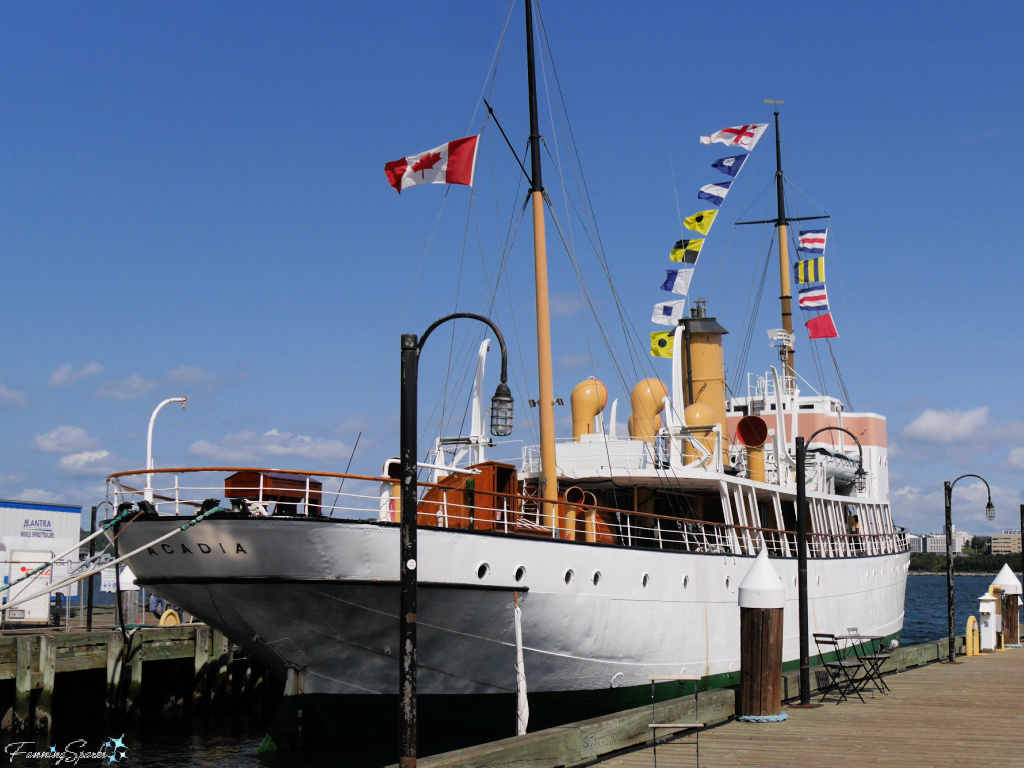
I’m looking forward to learning more about the CSS Acadia in the future but, for today, it’s her flags that have my attention.
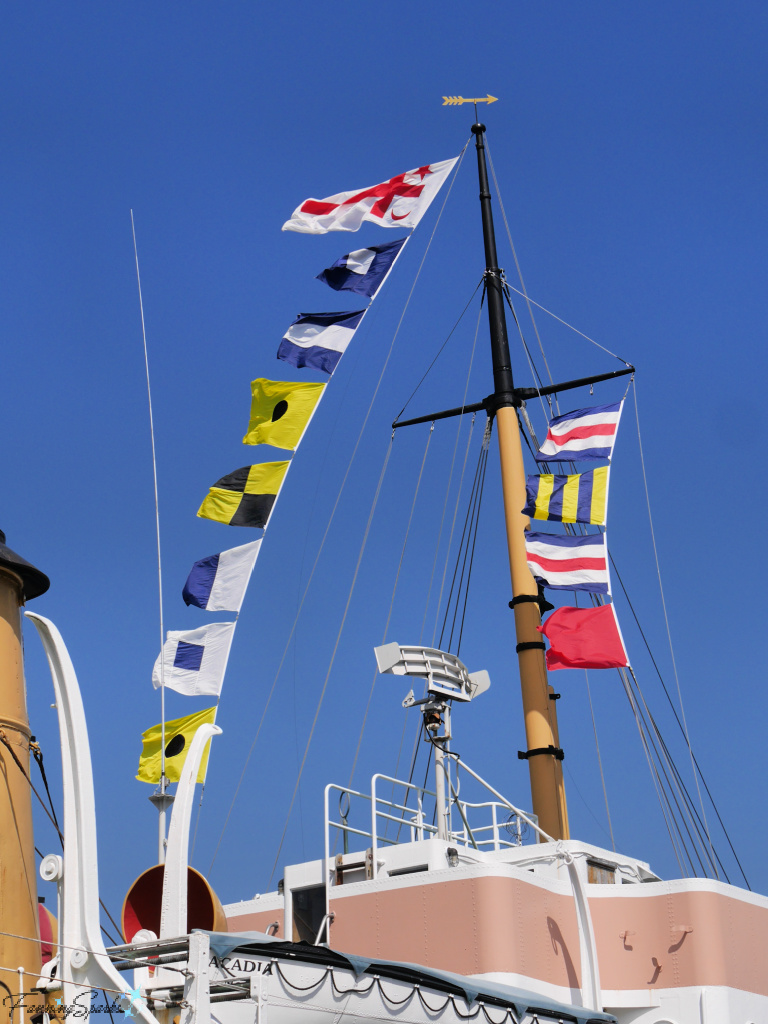
The left flag signal is topped with the Mi’kmaq flag and spells “PJILASI” meaning “WELCOME” in Mi’kmaw. The right flag signal appears to spell out “CGCB”―which I have yet to figure out.
A second look at the International Code of Signals shows that each flag/letter signifies a specific message. For instance, ‘A’ flag – a white flag with a blue swallowtail – means “Diver is down, keep clear” or ‘P’ flag – a white flag with a blue square – means “Ship about to sail”.
This is a crucial aspect of the International Code of Signals. As explained by Captain PJ Russell in his 1976 book Sea Signalling Simplified: A Manual of Instructions for the New International Code of Signals, “Each letter of the alphabet when made by itself has a meaning and therefore conveys a message. These signals, known as single-letter signals, should be memorized as they are either very urgent, important or in common use.”
When displayed individually, marine signal flags have the special meanings shown below.
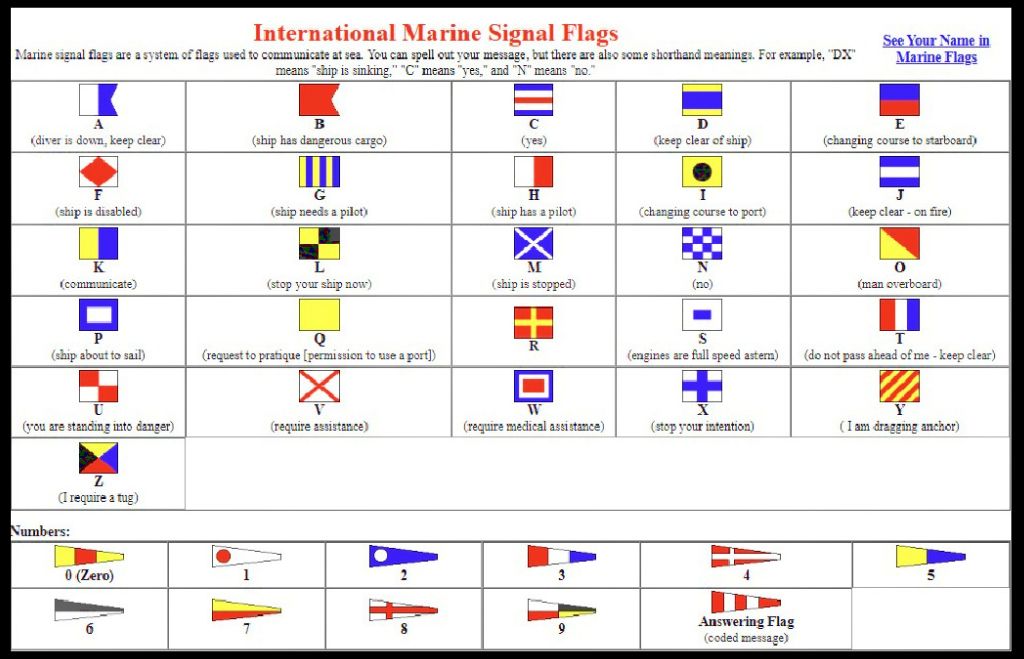
This is where the universality of the marine signal flags becomes apparent. “Ships of all nations can converse, and give or ask information without the signalers knowing a word of each other’s language.” writes Jack Coggins in his book Flashes and Flags: The Story of Signaling. “Each flag or group of flags stands for a word, phrase, or complete sentence. The urgent or more commonly used messages are usually carried by one or two flags. Other words or phrases are conveyed by three; and geographical positions and signal letters of ships and stations by four flags.”
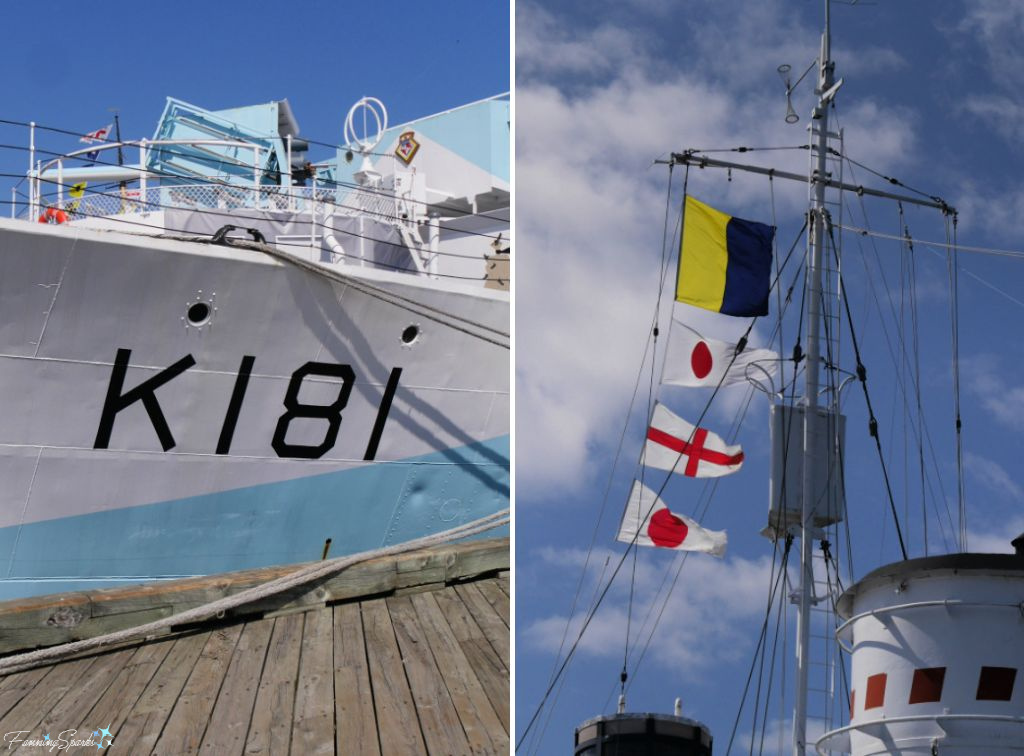
An example of flags conveying a ship’s signal letters is visible from the balcony where we are currently staying. The HMCS Sackville is moored at its summer berth at Sackville Landing on the Halifax waterfront.
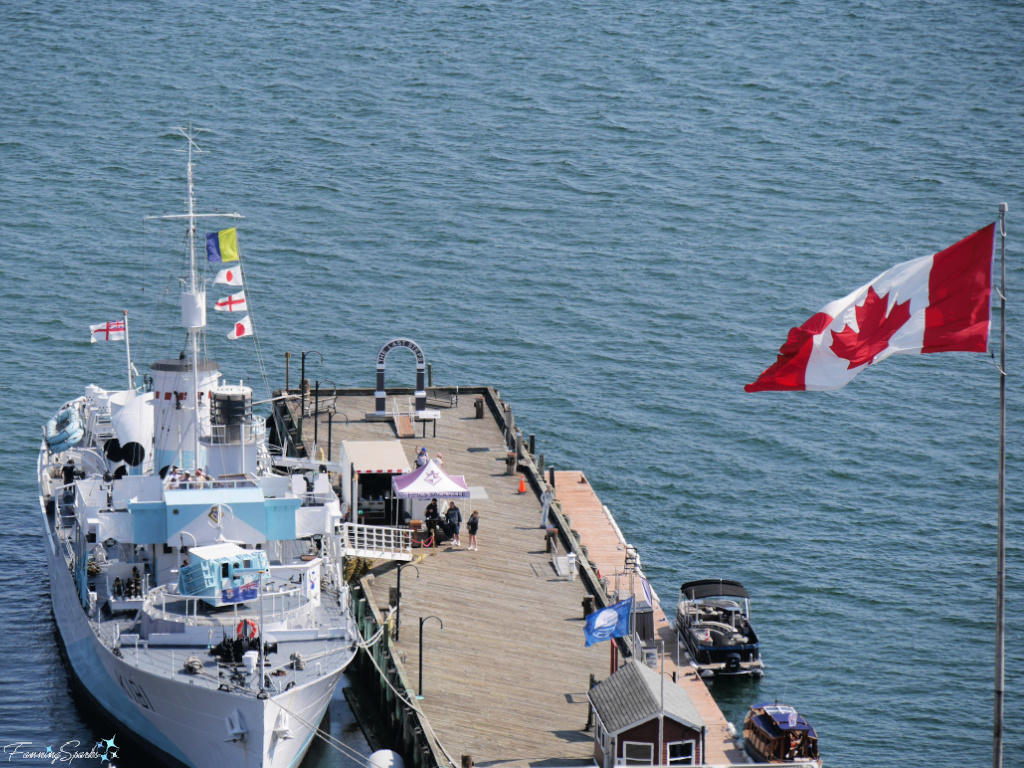
The HMCS Sackville serves as “Canada’s Naval Memorial to honour the 2,000 sailors who lost their lives at sea and to honour all generations of Canadian sailors including those who continue to serve” states their website. Originally commissioned in December 1941 in Saint John, New Brunswick, this restored vessel is the last surviving corvette of the 294 that were built during the Second World War.
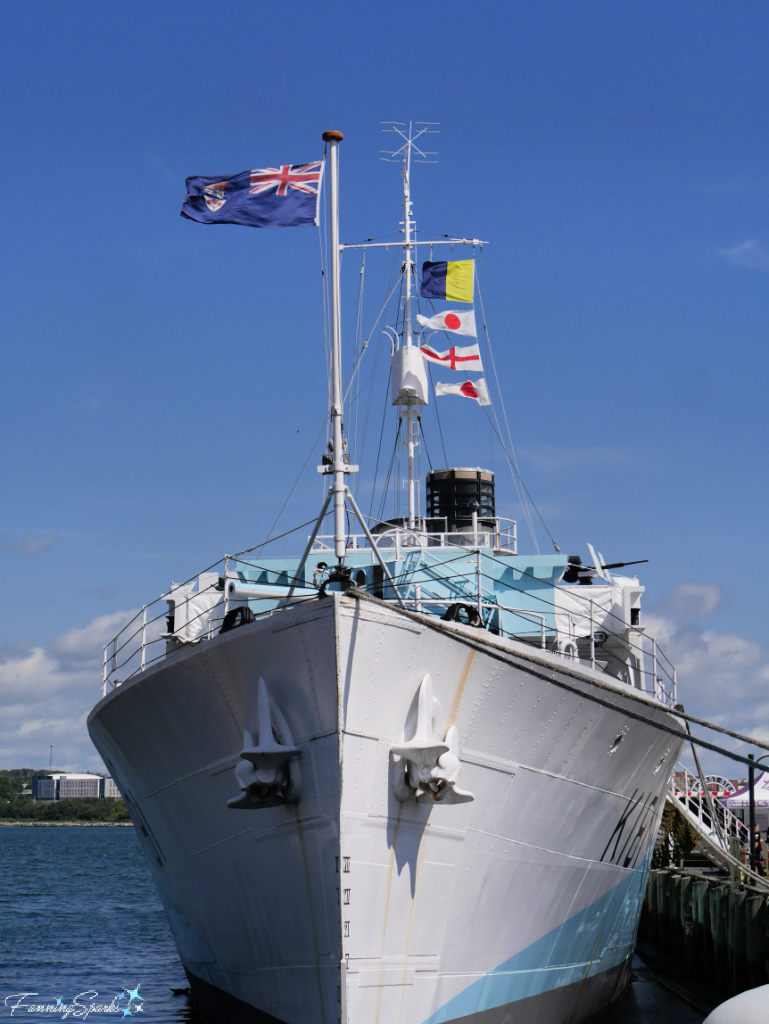
The flags she’s wearing on the right decode to K181 which is the ship’s pennant or hull number. In the article RCN Ship Pennant Numbers, the authors provide this insight “When two warships first sight each other at sea, it can be difficult for them to identify each other… To aid identification, each ship of the Royal Canadian Navy (RCN) and allied navies is assigned a unique number called a ‘pennant number’. At first sighting each other, ships can hoist flag signals comprising pennant flags representing usually the last numeral but possibly more of each ship’s number, preceded by a pennant indicating the ship type.”
The HMCS Sackville’s pennant or hull number is clearly visible on its hull as well as in the colours she is wearing.
“Traditionally, three flags have been considered essential to mark a vessel’s identity” explains the United States Power Squadrons website in their article Flag and Etiquette Committee – Nautical Flags. “A vessel always displays the national ensign (country), the yacht club burgee (fleet), and a private signal (master).” The article goes on to explain how to properly fly nautical flags.
“Flag state” is the term used to describe the “nation in which a vessel is officially registered—granting it the right to fly that nation’s flag and operate under its legal framework” explains the London Maritime Academy in their article Flag State Explained: What It Means and Why It’s Crucial in Maritime Law. “Any vessel registered under a particular country’s flag is subject to its laws, and the administration of that nation is responsible for enforcing operational standards, maritime regulations and environmental guidelines.”
In addition, “Under UNCLOS (United Nations Convention on the Law of the Sea), a flag state must enforce that its vessels meet international obligations” such as maritime standards, environmental regulations, pollution control, and labor laws.
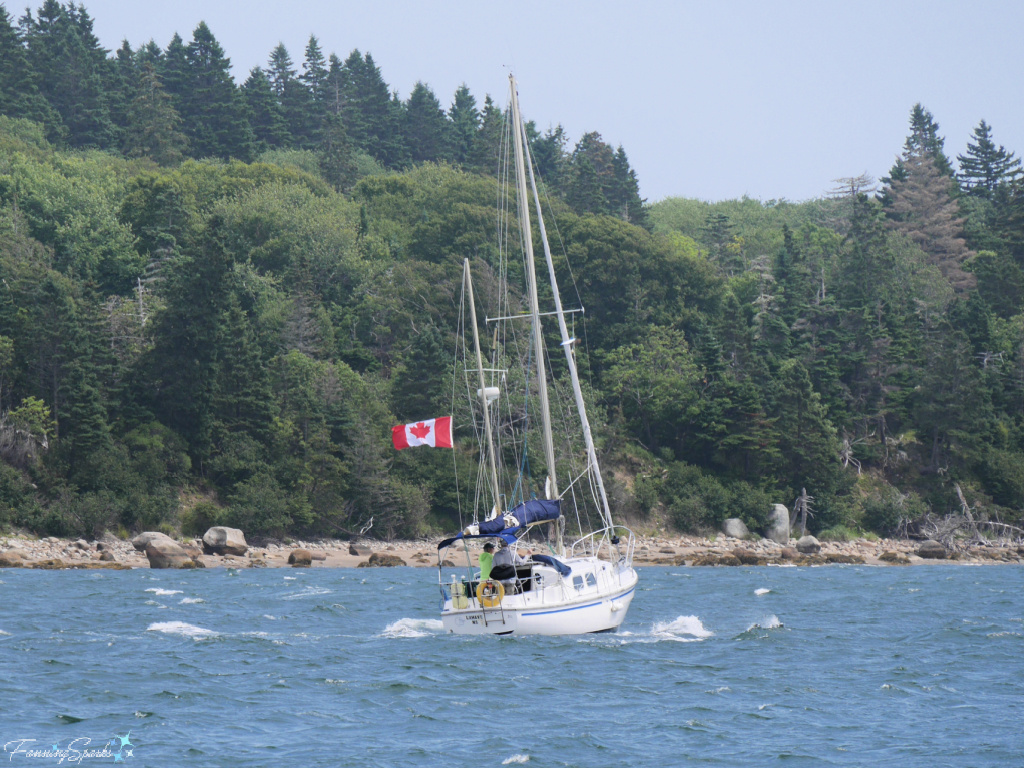
I went through my photo archives to find examples of vessels wearing their national ensigns. The first example is this sailboat, spotted in LaHave, Nova Scotia, wearing the flag of Canada.
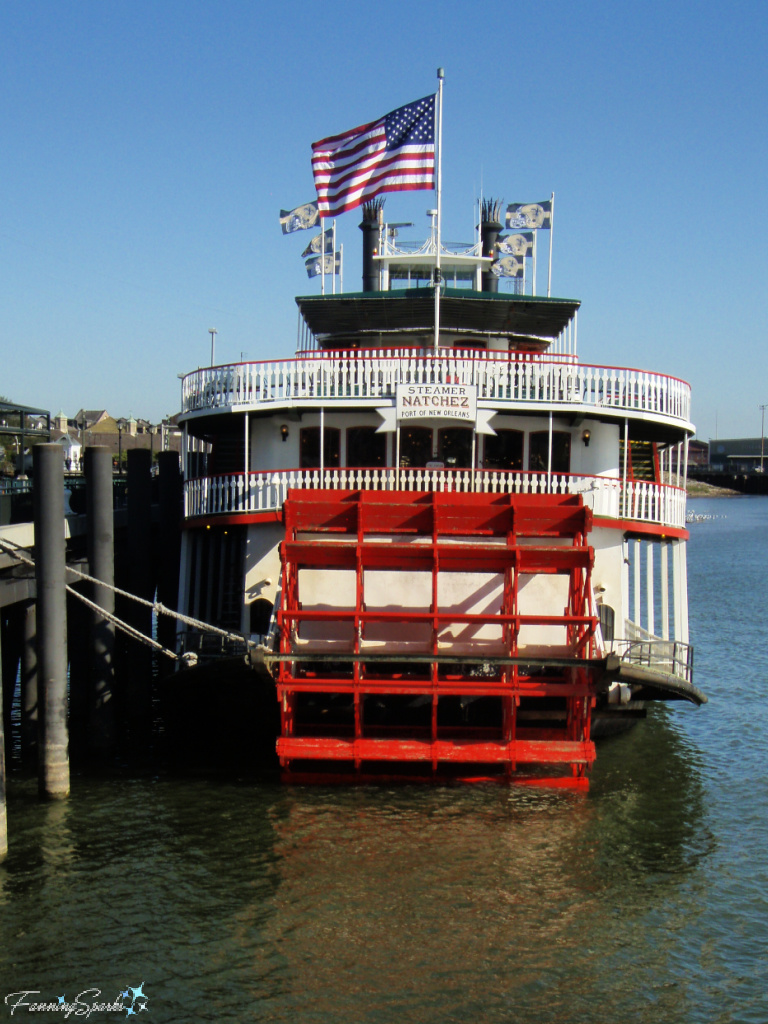
Next, is a grand old Mississippi River steamboat, the “Steamer Natchez Port of New Orleans”, proudly wearing the USA flag.
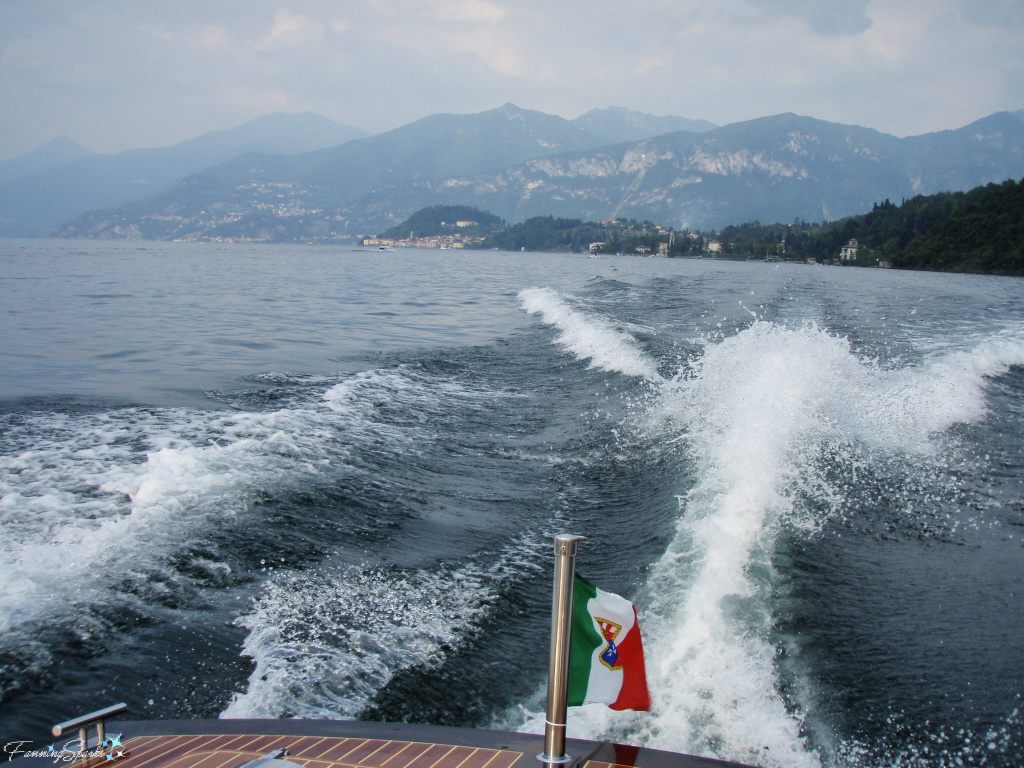
The next ensign is a little difficult to see―it’s the flag of Italy which I snapped while enjoying a boat tour on Lake Como, Italy.
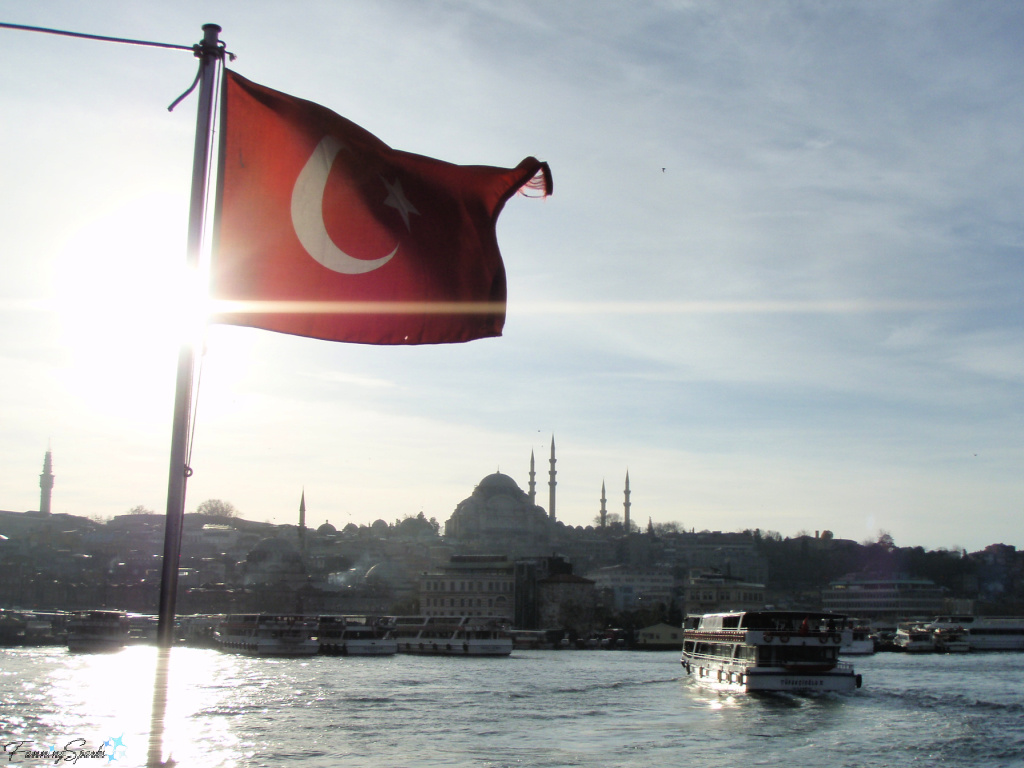
And speaking of boat tours, this photo of the Turkish flag was taken on a water tour of the Bosphorus Strait in Istanbul, Turkey.
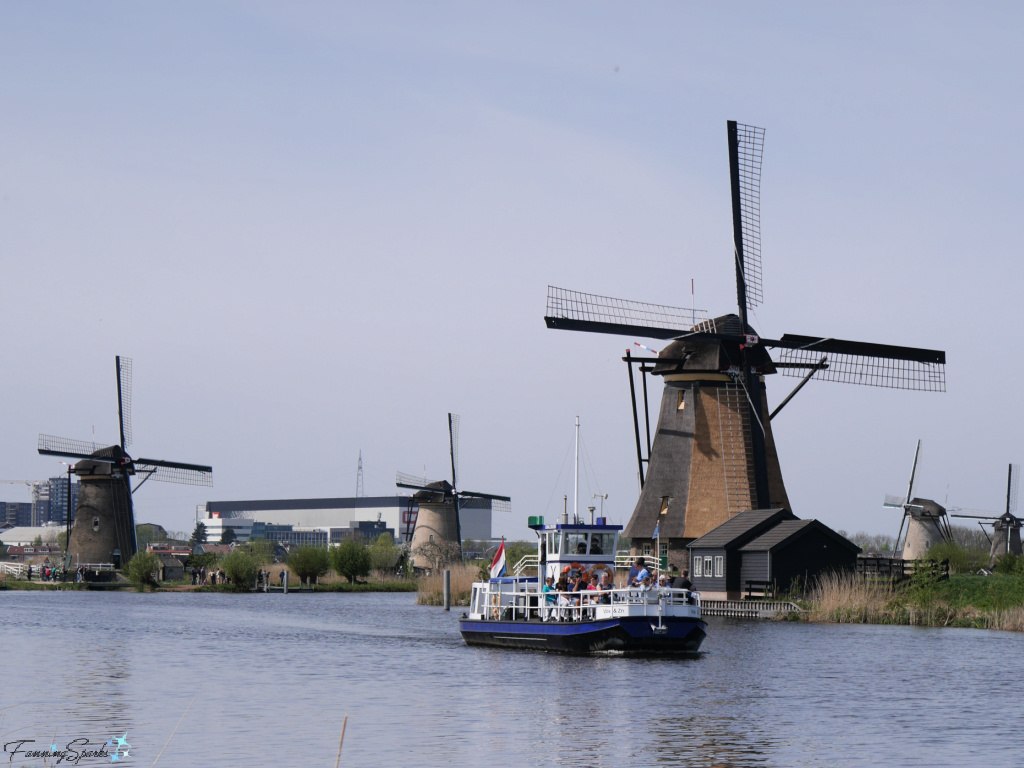
In this next photo a passenger ferry wears the Dutch flag while plying the canals of the Kinderdijk in the Netherlands. See my previous blog post Milling the Water of Kinderdijk to learn more about the fascinating mill network at Kinderdijk-Elshout and why it is designated as a UNESCO World Heritage Site.
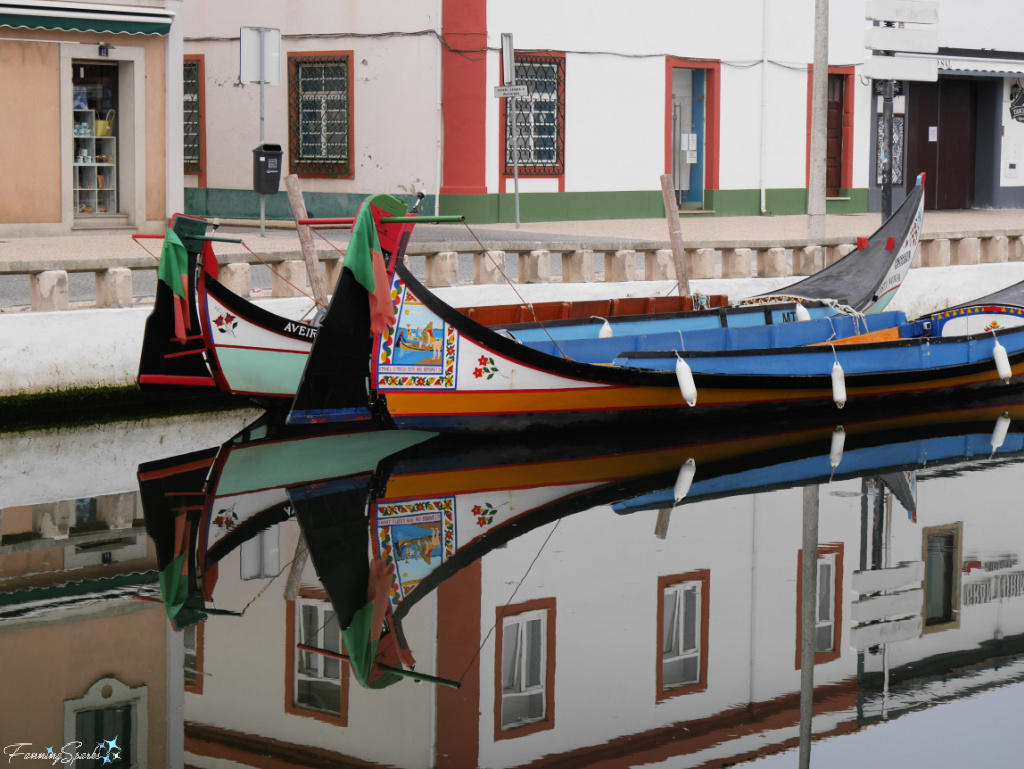
Aveiro, Portugal is often referred to as the “Venice of Portugal” for its network of canals and unique boats which resemble gondolas. These lively boats, barcos moliceiros, were once used to collect moliço seaweed. Nowadays, they transport visitors around this outstanding city (see my previous blog posts Lines and Patterns in Wrought Iron and Talk About Tiles! for several reasons to love Aveiro).
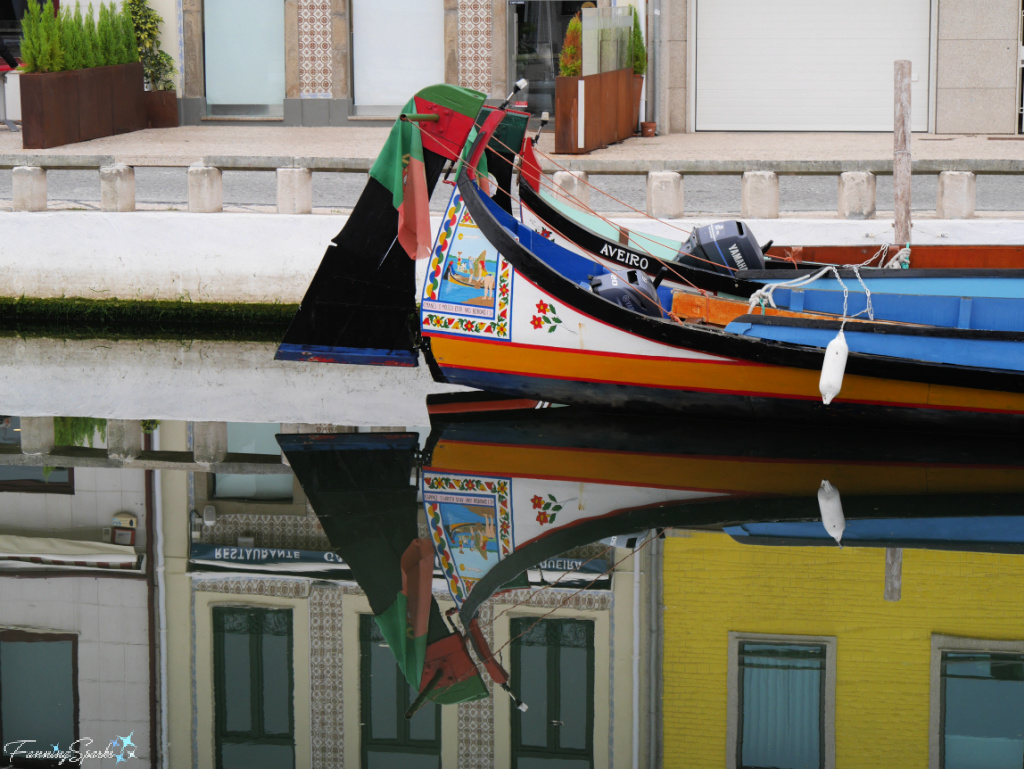
The Portuguese flag may be a little difficult to spot amongst all the vibrant colors of the moliceiros but it’s there.
“A yacht club or other boating organization is traditionally considered to be a ship facing the water” writes John Rousmaniere in The Annapolis Book of Seamanship. “This is why the flagpole often looks like a gaff-rigged mast without the sail or boom but with the gaff and spreaders. Therefore, the ensign is flown from the gaff below the yacht club’s burgee, which is at the top of the flagpole. This is not disrespectful to the national flag but, rather, reflects traditional usage on a ship.”
Shown below is the flagpole at the Charlottetown Yacht Club on Prince Edward Island. The yacht club’s burgee with its bold CYC acronym is visible at the top of the flagpole. A burgee, by the way is defined by Wikipedia as, “a distinguishing flag, regardless of its shape, of a recreational boating organization. In most cases, they have the shape of a pennant”.
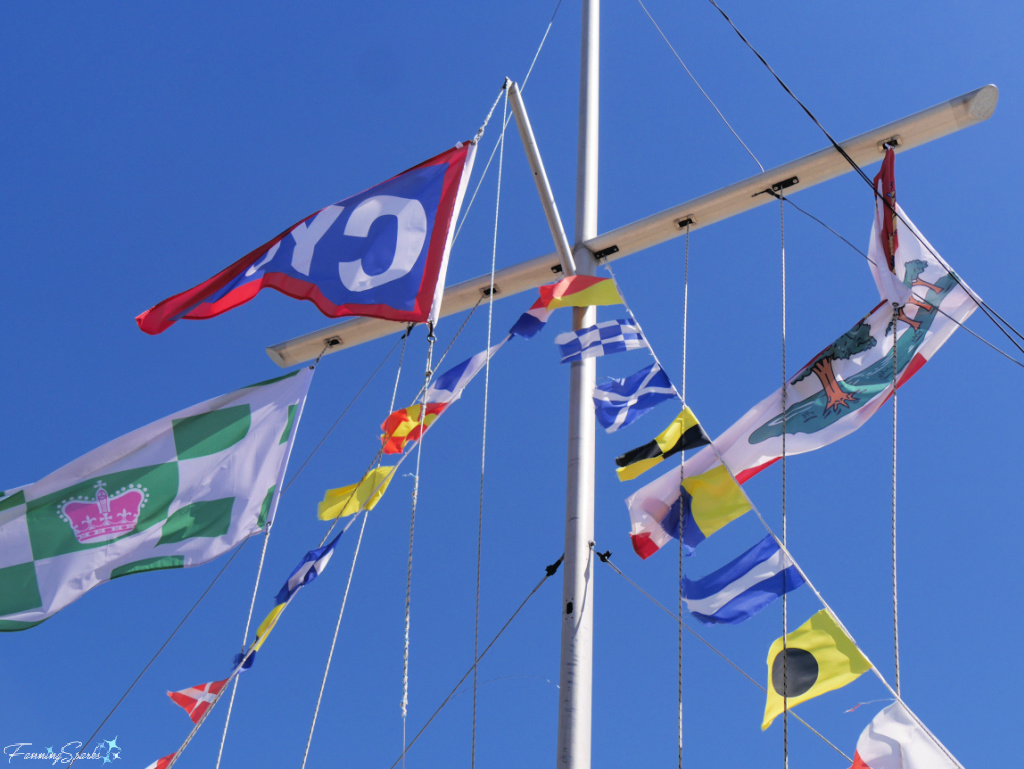
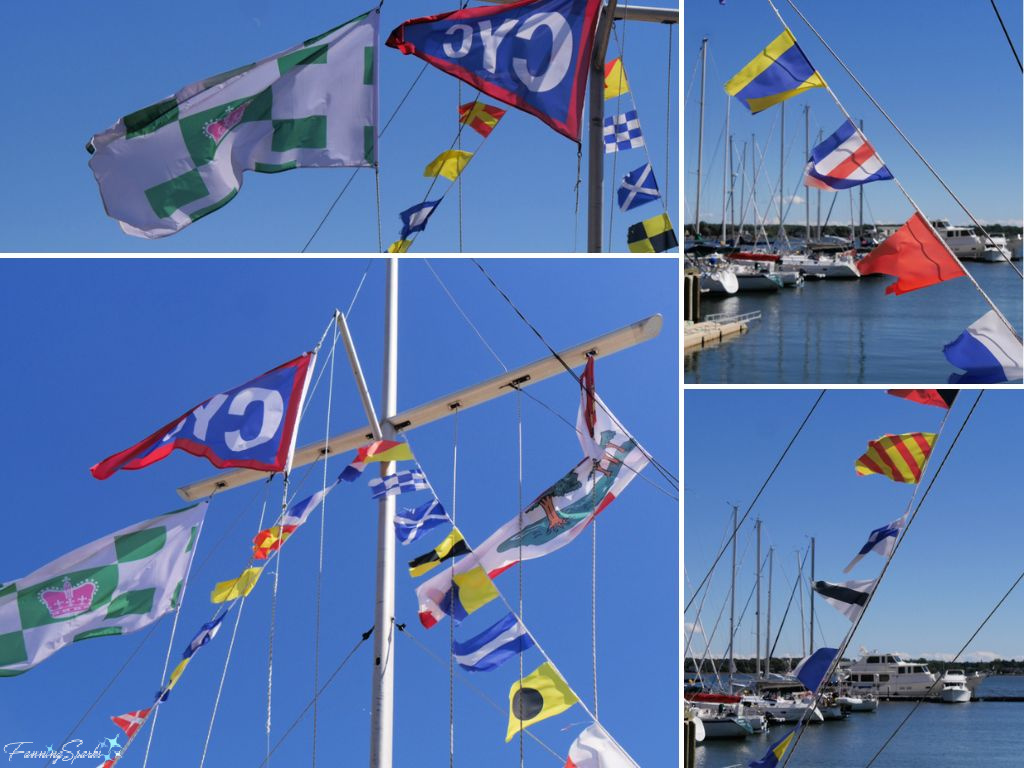
The Charlottetown Yacht Club was wearing several other flags in addition to its burgee. I’m able to decipher most of the individual flags but, if there’s a message, I haven’t been able to crack the code. It seems more likely they were displaying the entire set of International Code of Signal flags to celebrate a holiday, regatta or other special occasion.
One more fun fact to wrap up: The study of flags is called vexillology and those who admire and study flags as a hobby are called vexillophiles.
More Info
Previous blog posts mentioned in this blog post include:
. Milling the Water of Kinderdijk
. Lines and Patterns in Wrought Iron
. Talk About Tiles!
The following books, articles and websites were consulted in the writing of this blog post:
. International Code of Signals for Visual, Sound, and Radio Communications United States Edition 1969 Edition (Revised 2020)
. Reeds Maritime Flag Book edited by Miranda Delmar-Morgan
. The International Safety Management (ISM) Code section on the International Maritime Organization website
. Sea Signalling Simplified: A Manual of Instructions for the New International Code of Signals book by Captain PJ Russell; Published 1976 and available here on Internet Archives
. Flashes and Flags: The Story of Signaling book by Jack Coggins; Published 1963 and available here on Internet Archives
. RCN Ship Pennant Numbers article (where RCN is the Royal Canadian Navy); Published 2023 on Royal United Services Institute of Nova Scotia website
. Flag and Etiquette Committee – Nautical Flags article on the United States Power Squadrons website
. Flag State Explained: What It Means and Why It’s Crucial in Maritime Law article; Published 2025 on the London Maritime Academy website
. The Annapolis Book of Seamanship book by John Rousmaniere
. The Visual Encyclopedia of Nautical Terms Under Sail book by Basil W. Bathe; Published 1978 and available here on Internet Archives
. Various Wikipedia entries.
The two outstanding museums mentioned in this blog post, Fisheries Museum of the Atlantic and the Maritime Museum of the Atlantic, are located in Lunenburg and Halifax (respectively), Nova Scotia, Canada. See their websites for more information.
. Fisheries Museum of the Atlantic including the Cape Sable
. Maritime Museum of the Atlantic including the CSS Acadia
To learn more about the HMCS Sackville, check out the Canadian Naval Memorial Trust website.
You can learn more about the Charlottetown Yacht Club from Prince Edward Island on their website.
The following flag identification tools are mentioned in this blog post:
. dCode / Navy Signals Code
. Image Identifier AI / What Flag Is This
. My Clever AI / Flag Identifier.
Today’s Takeaways
1. The International Code of Signals is a system of flag signals and codes used by vessels around the globe to communicate important messages.
2. “Each flag or group of flags stands for a word, phrase, or complete sentence. The urgent or more commonly used messages are usually carried by one or two flags.” Jack Coggins
3. Flag state is the “nation in which a vessel is officially registered—granting it the right to fly that nation’s flag and operate under its legal framework.” London Maritime Academy


Comments are closed.