
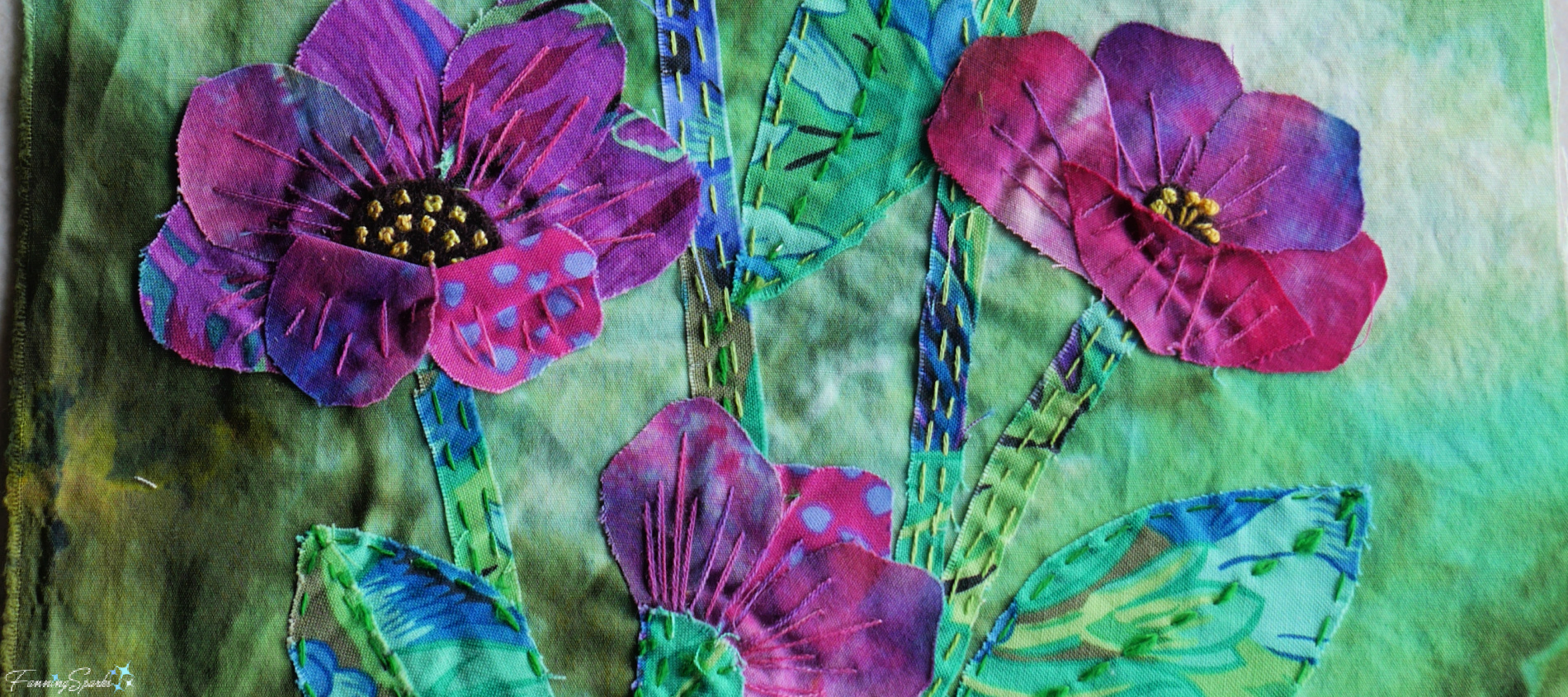
Textile collage artists create artistic compositions―pictures or designs―from fabric, thread and other fibers. “A collage is a piece of art composed by combining various materials … in a visually interesting manner” writes Barbara Matthiessen in her book Collage Creations.
Creating a collage with fabrics and textiles is similar to creating a collage with papers―a creative endeavor I described in my previous blog post Collage: The Original Cut-and-Paste. Both textiles and papers engage artists visually but textiles are more tactile especially when stitched, appliqued, embroidered, gathered or manipulated in some way.
I was introduced to textile collage, aka fabric collage, by artist Silke Cliatt during the recent Northeast Georgia Arts Tour (see An Art Road Trip in the Georgia Mountains). Silke is best known for her art quilts but has recently been focused on fabric collage and slow stitching. The next few photos show Silke’s work.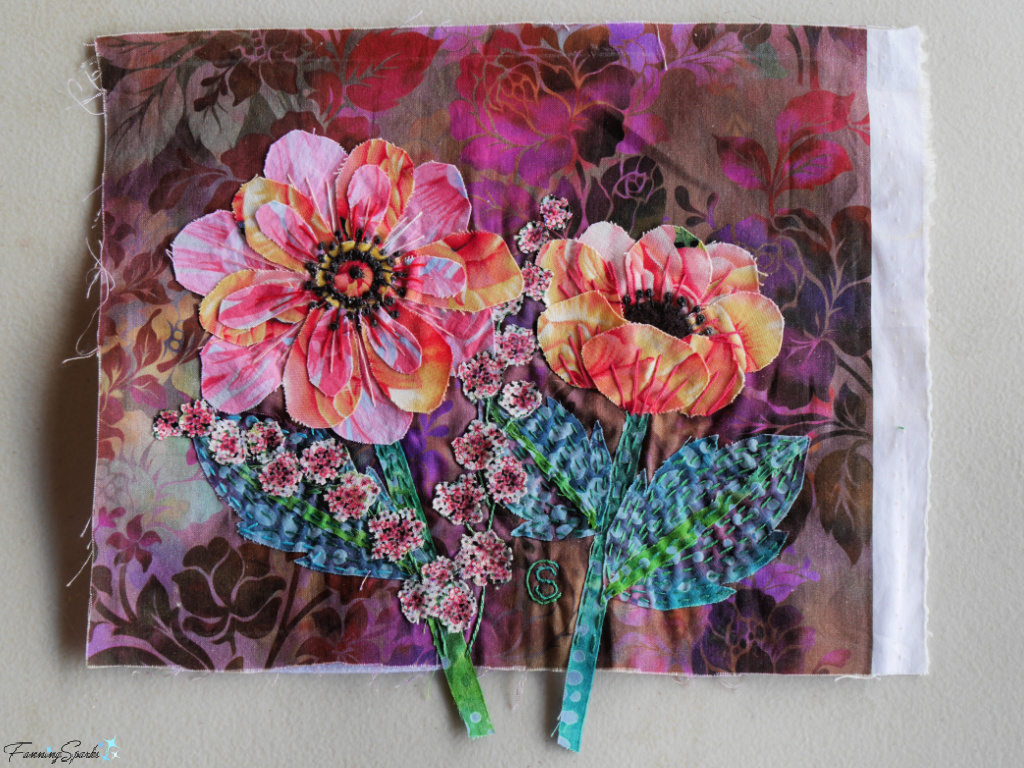
Creating a collage is a nice balance between creative flow and hands-on assembly. The composition evolves in a freewheeling way―changing and refining―as the work progresses.
Another advantage of textile collage is that very few materials are needed―and those materials don’t need to be new. Textile collagists often repurpose fiber materials, such as fabric scraps, decorating fabric samples, thrifted garments, vintage linens and waste fiber, for their textile collages.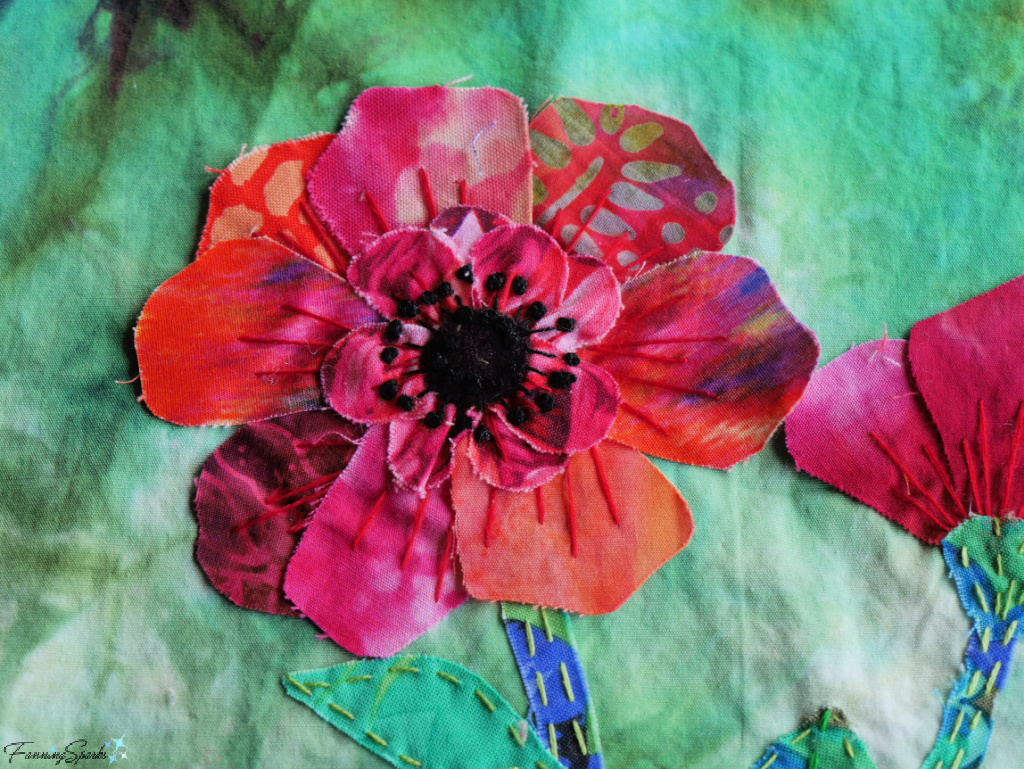
Textile collages are typically intended for display―meaning raw edges and unfinished borders are completely acceptable. In contrast, when making functional textiles like quilts, table linens and garments, a great deal of effort is required to ensure edges are properly finished and borders are bound. Learning to appreciate the imperfections of this artform is one of its greatest challenges―and rewards!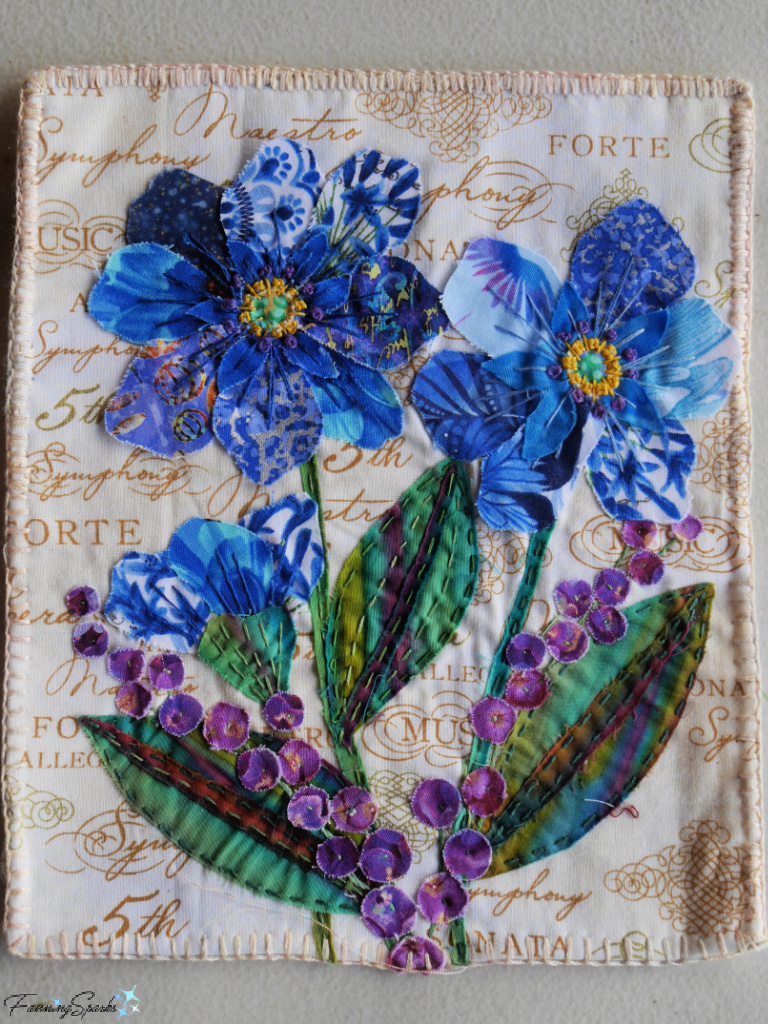
Textile collages can vary significantly in their complexity. A beginner project might involve creating a coaster-sized project with only a handful of fabric scraps and a few rows of running stitches. While a more advanced project might involve creating custom fabrics by dyeing, painting, photo transferring or block printing. Fabrics can be manipulated by pleating, folding, ruching, gathering, and so on. Buttons, beads, papers, trinkets and found objects can be added, essentially turning it into a mixed media piece. Elaborate hand-sewing and embroidery, including advanced techniques such as 3-dimensional beading and stump work, can be added. Machine sewing techniques such as thread painting, free-motion embroidery, and quilting can be used. Needle felting, tapestry, weaving, crocheting and macrame techniques can be incorporated. And the list goes on.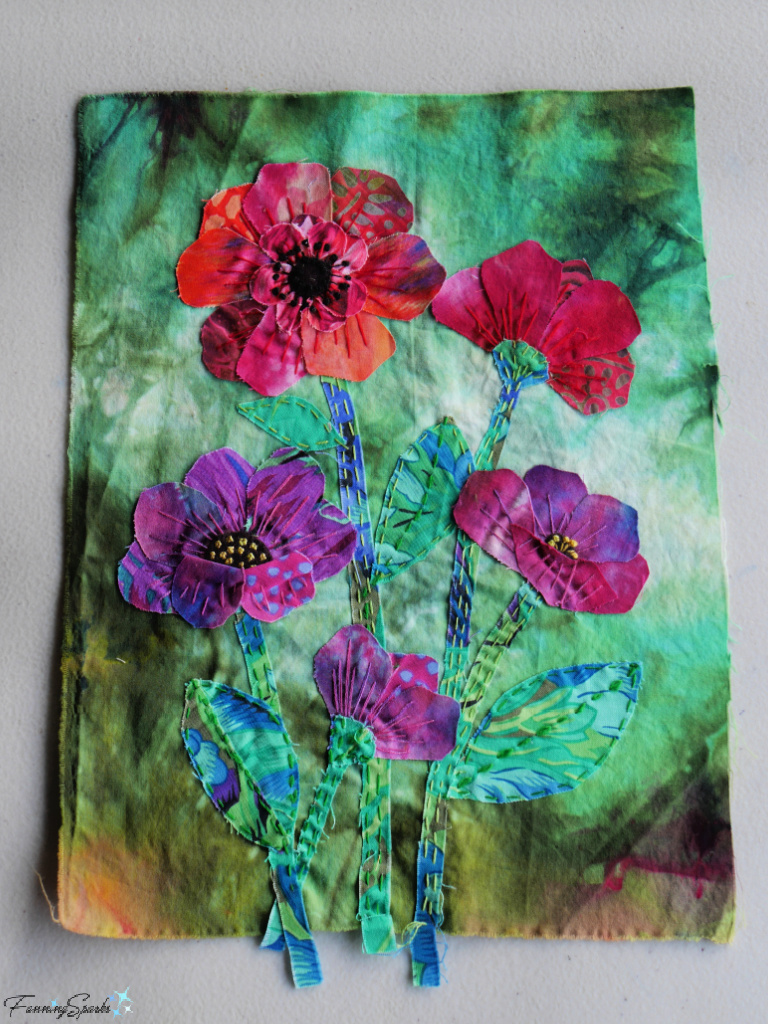
Some time ago while visiting Vietnam, I bought a set of pretty greeting cards showcasing small silk pictures. Based on what I know now, I’d say these are actually textile collages.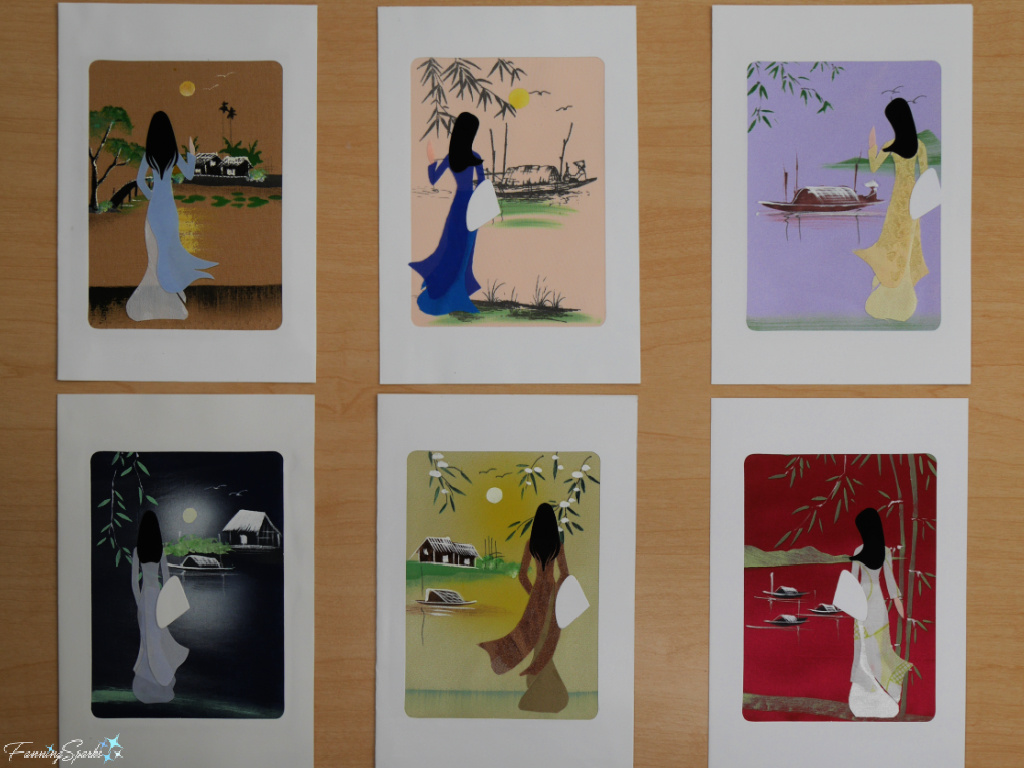
Here’s a closer look at the moonlit version. The background, which appears to be hand-painted silk, features a sampan floating in front of a traditional wooden stilt house under a full moon. The lady in the foreground is dressed in a silvery áo dài (a traditional dress) and holding a nón lá (a traditional conical hat). The lady’s hair and dress are composed of silk fabric pieces but her hat is cut from paper. The entire collage is mounted in a folded-card, paper frame.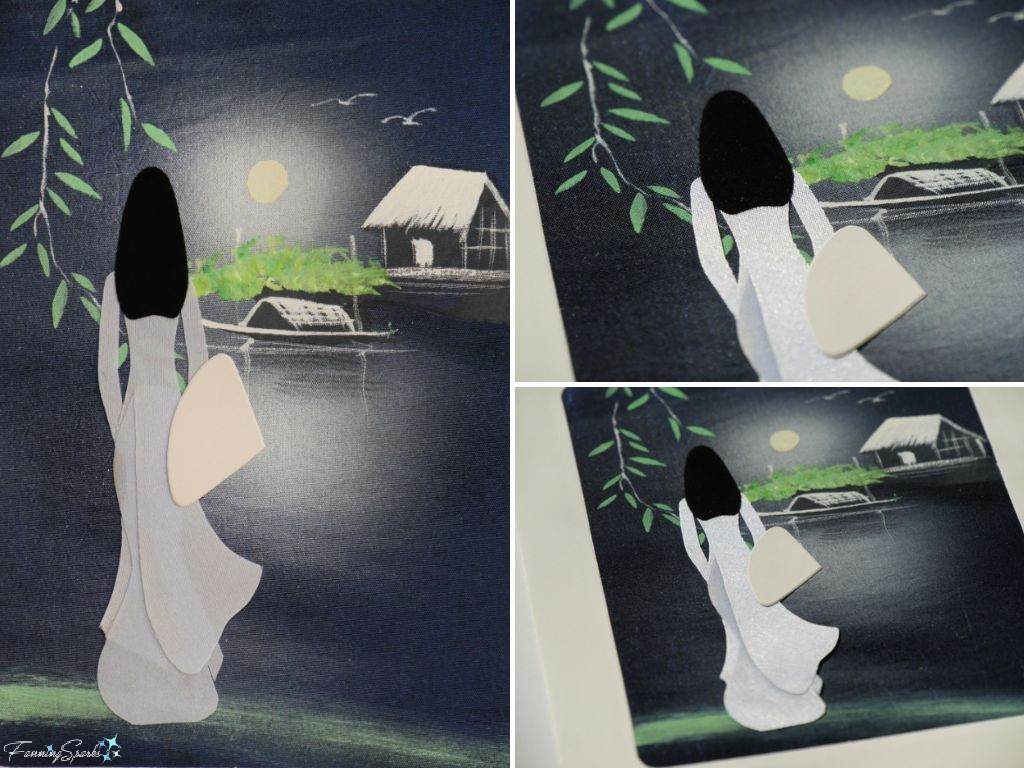
Here’s a closer look at a couple more of the silk textile collages.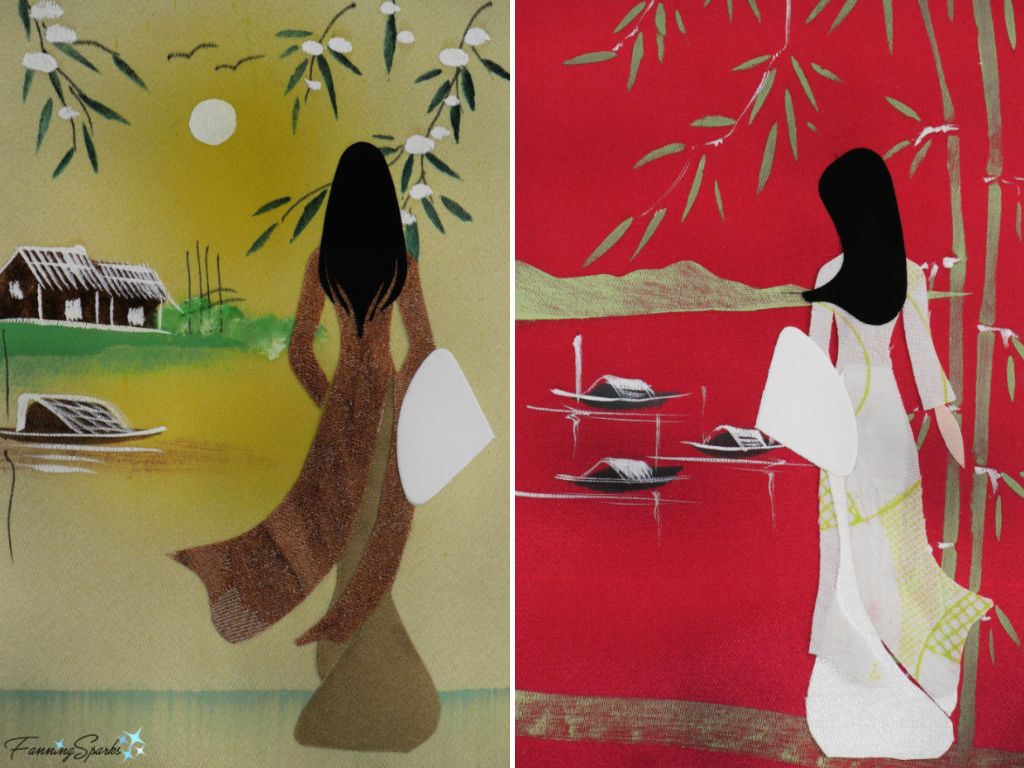
After seeing Silke’s fabric collages and examining the Vietnamese textile collages, I was eager to see more examples. So, I turned to the internet in search of textile collagists and textile collage techniques.
I found a book, published in 1996, called Snippet Sensations in which author Cindy Walter introduced what she called “snippet art”. She writes: “Snippet art is created by following a sequence of easy steps that incorporate fusible webbing and assorted fabrics”.
I love the story of how Walter came up with this technique. “The concept of painting with fabric was extraordinary to me”, she writes. “I had wanted to learn to oil paint for several years, but felt intimidated. Painting with a brush seemed impossible-I could never turn dabs of paint into an image. The idea of “painting” with fabric came to me … Maybe I could paint with dabs (snippets) of fabric? Fabric is a medium I love and understand. … I decided to study the work of Impressionist artists and came to realize that I could create similar impressionistic pictures, not with paint-but with fabric!”
Here’s an example of Walter’s snippet art.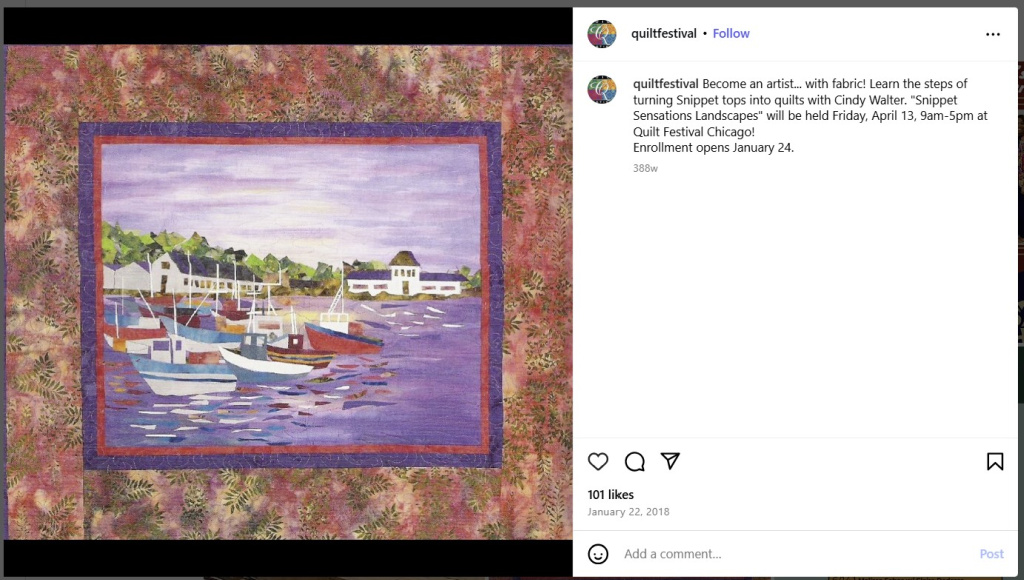
Lisa Thorpe is a mixed media artist and educator who “love[s] exploring and experimenting with new mediums and techniques”. She often creates her own custom fabrics to incorporate into her textile collages. Thorpe also offers online classes in block printing on fabric, gel plate printing on fabric, marbling on fabric and coloring fabric with Inktense pencils and pastels.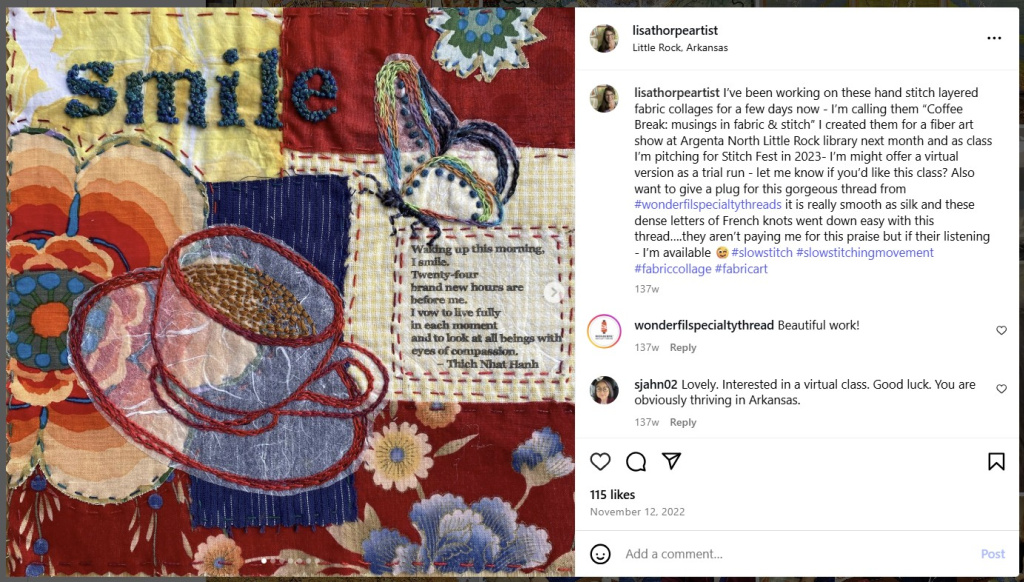
Jo Morphett, of Peace of Pi, is a textile artist focused on hand stitched collage art. Her YouTube introduction states “My videos are about textile art, slow stitch, collage, hand embroidery, hand sewing and quilting. My work is bird and nature inspired, colourful, relaxing, calming … creative handwork with fabric and thread”.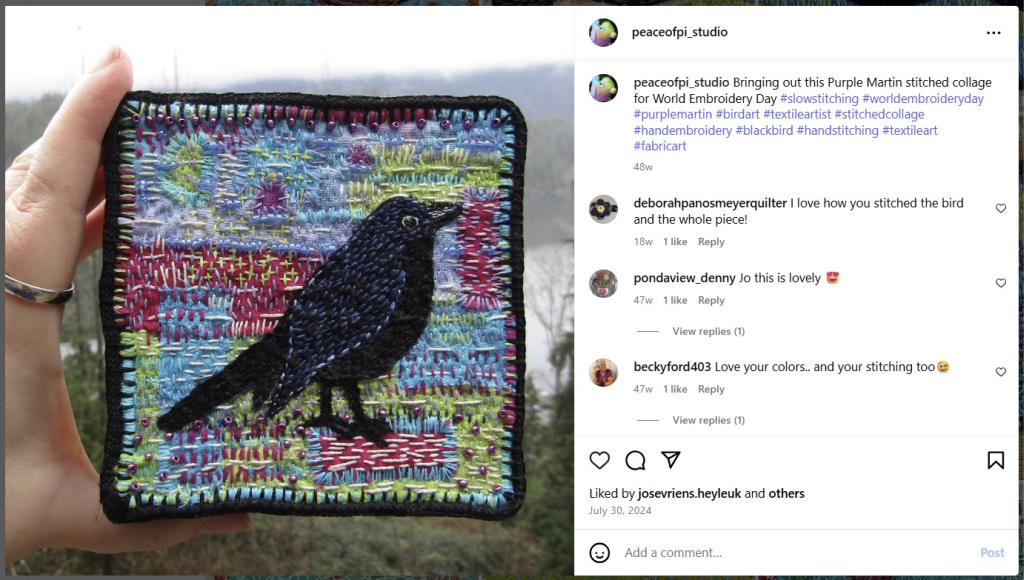
My quest to learn about textile collage led me back to a great website I’d discovered while researching Soft Sculpture (see What is Soft Sculpture?). TextileArtist is “a place where passionate stitchers from all walks of life could find inspiration, learn new techniques, and connect with like-minded souls”.
The TextileArtist article, Captivating Collage: Six Artists Show the Way written by Mary Carson, describes the collage process this way: “Artists first sort through beloved collections and stashes of materials to choose select treasures to be featured. Then those treasures audition for their place in the composition. Ephemera of all types are layered, swapped, snipped and reshuffled to see how colours, patterns and textures dance together. Once the pieces are in position, how to keep them all in place? Sewing? Glueing? Machine stitch? Hand stitch? The possibilities are endless, and that’s what makes collage a great way to explore textile art and develop your artistic voice.” Carson then goes on to showcase the work of six renowned collage artists.
One of those artists is Mandy Pattullo, a textile collagist, workshop leader and writer, who writes “I think collage and patchwork share a history. Both are about arranging things and juxtaposing colour, tone and pattern. But patchwork is more prescriptive, whereas my freer approach of layering materials from many different sources is textile collage.”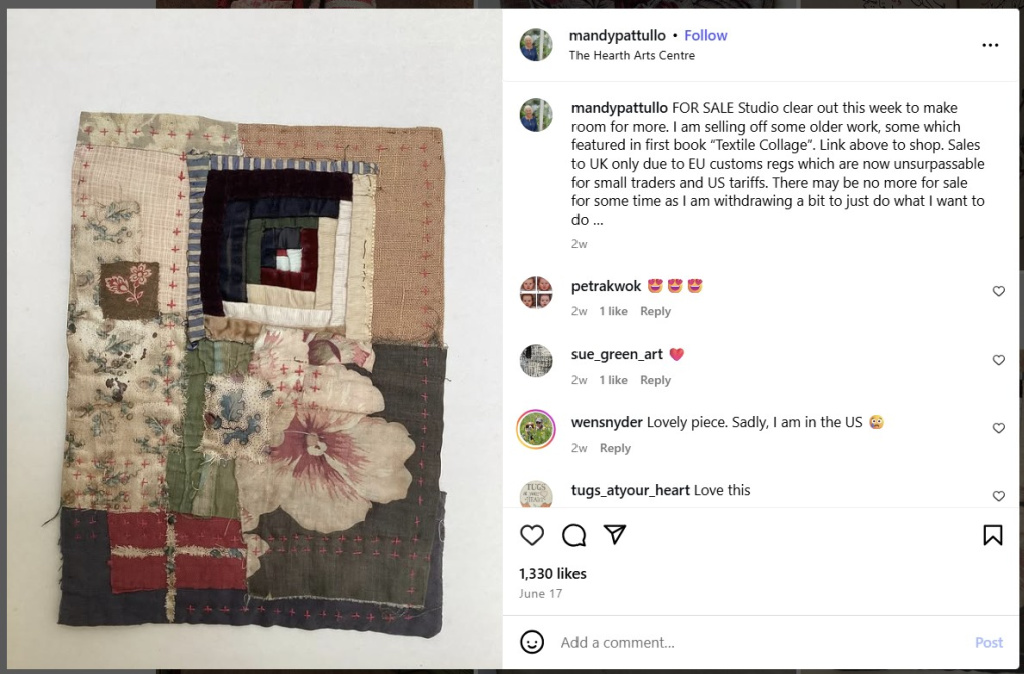
Deborah Boschert is an art quilt collagist who “creates art with layers of fabric, paint and stitch”. Boschert typically finishes her fabric collage pieces by adding a backing and quilting by machine―essentially turning a textile collage into an “art quilt”.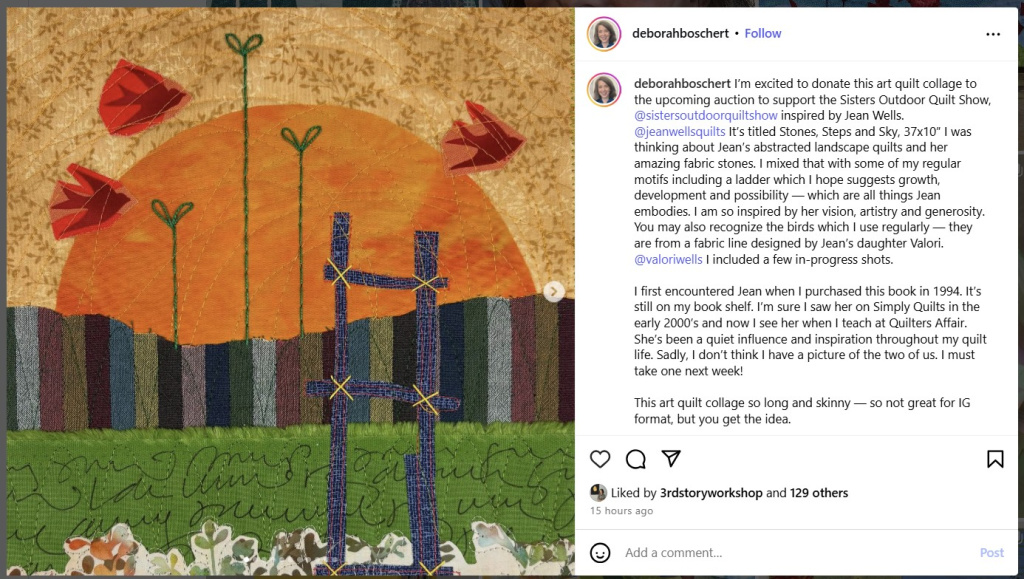
I learned a new term, “collage quilt”, from The Quilt Show website. “We often think of collage as being done with paper and paint” explains the website. “The same process can be used to create a collage style quilt. Motifs or shapes are cut from a variety of fabrics and combined with other materials, then layered onto a fabric base to create a picture or design. The materials in the collage can be fused, glued or stitched in place as well as painted or embellished with a variety of different mixed media. … The collage style can be used on its own to create an entire quilt, or become an element in a larger overall design.” Two benefits of collage quilts are called out: 1) “A Collage Quilt is a creative style that is less structured than pieced quilts” and 2) “Collage Quilts allow for the introduction of mixed media and other embellishments”.
The Quilt Show website showcased several collage quilt artists including Laura Heine of Fiberworks. Her majestic lion is titled Be Brave.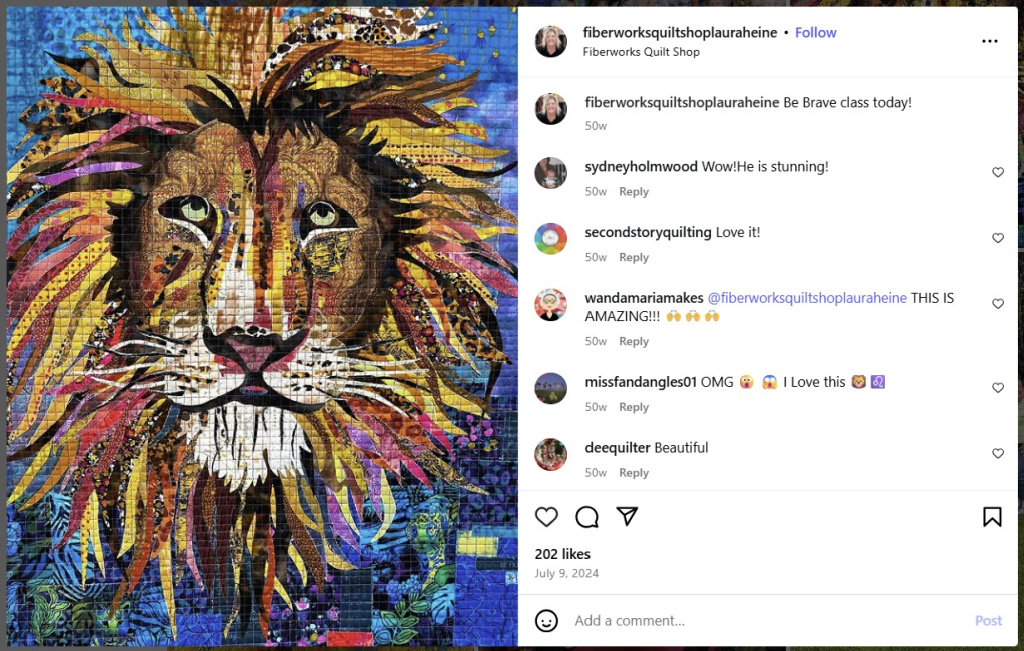
This beautiful floral piece, called Lizzy’s Garden, was made by Emily Taylor of Collage Quilter.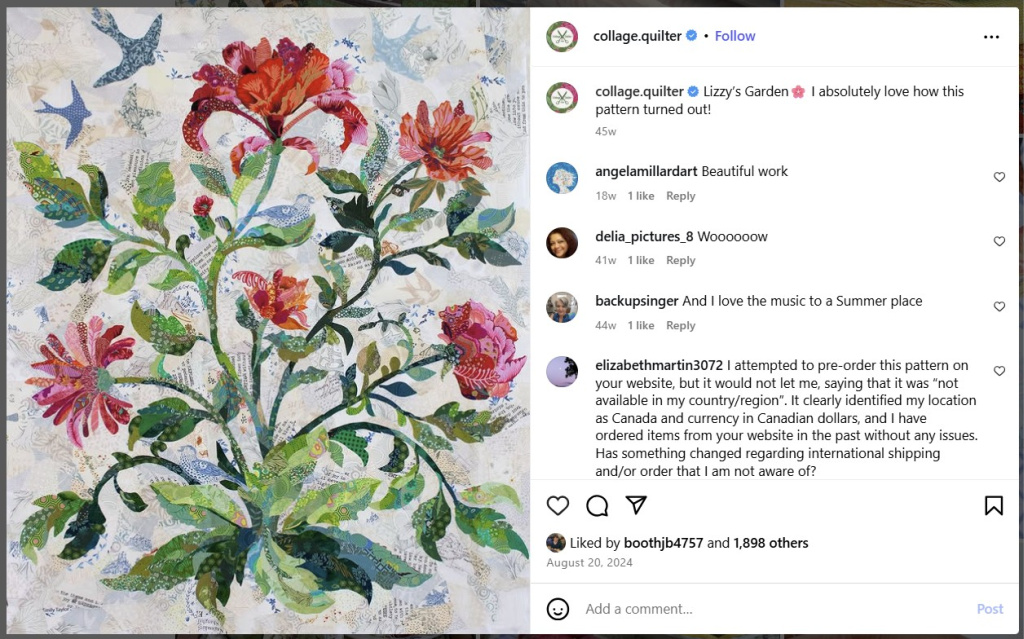
“Art quilts” get special attention on the Studio Art Quilt Associates (SAQA) website. SAQA is a nonprofit organization dedicated to promoting the art quilt which they define as “a creative visual work that is layered and stitched or that references this form of stitched layered structure”.
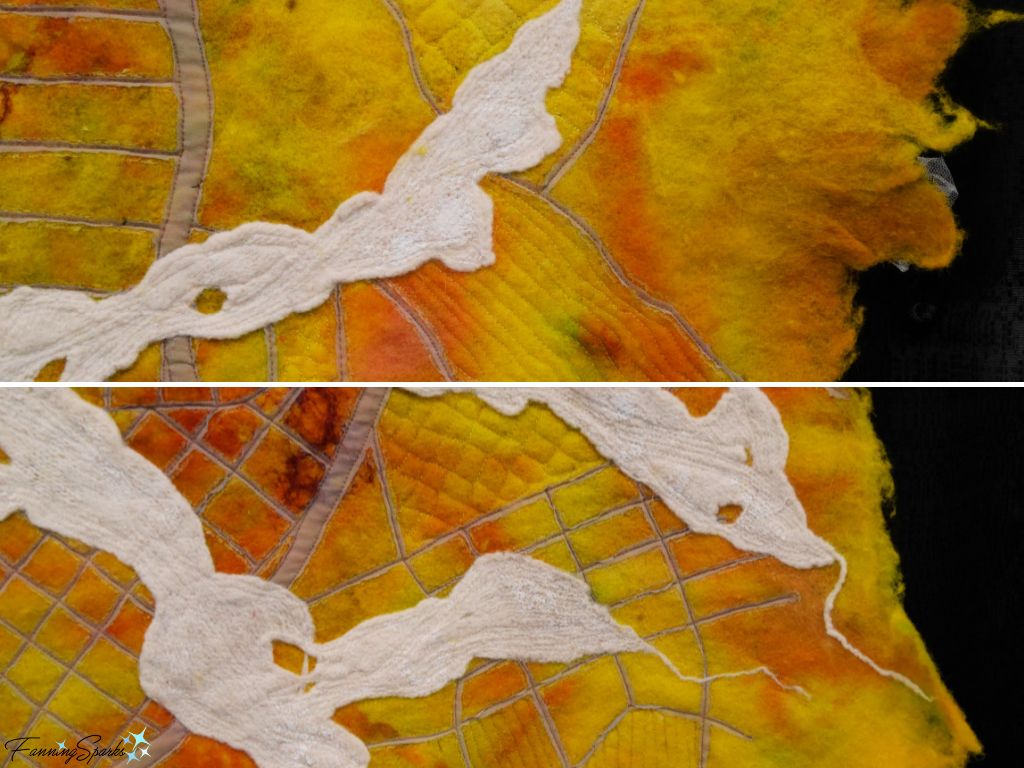
By happy coincidence, I had the pleasure of seeing several outstanding art quilts in person at the Original Sewing & Quilt Expo last year. They were part of a special, global exhibition sponsored by SAQA. The exhibition, titled Primal Forces: Earth, was the first in a three-part series focused on the primal forces of earth, wind and fire.
The art quilt shown below, Snow Bones: Climate Change by Jennifer Landau, is made of “Handspun wool, wool roving [and] silk hankie” which has been “Felted, burned and removed overlay, surface designed, machine quilted, [and] hand dyed”. It appears to me; this innovative art quilt would also be considered a textile collage.
As explained on the exhibit card, “‘Snow Bones’ is a colloquial term for snow which lingers in ditches and along ridgelines and gullies long after a thaw. In this work, the fingers of snow are in juxtaposition to the growing heat of expanding communities, an expression of the endangered snow pack in the face of a warming environment.”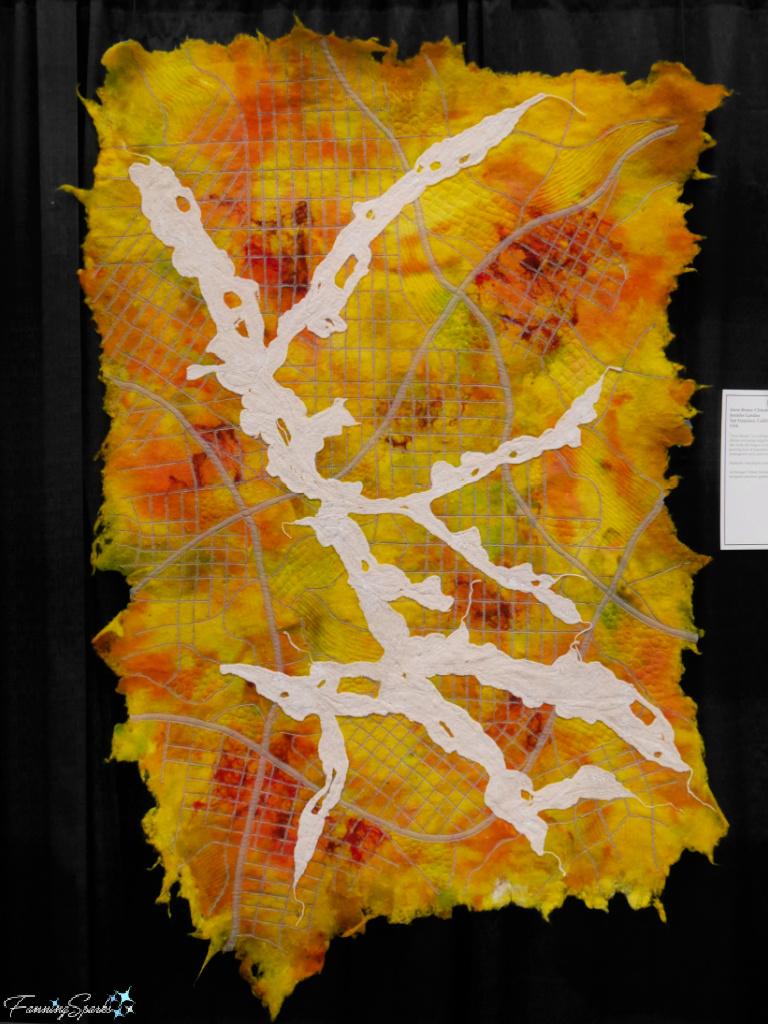
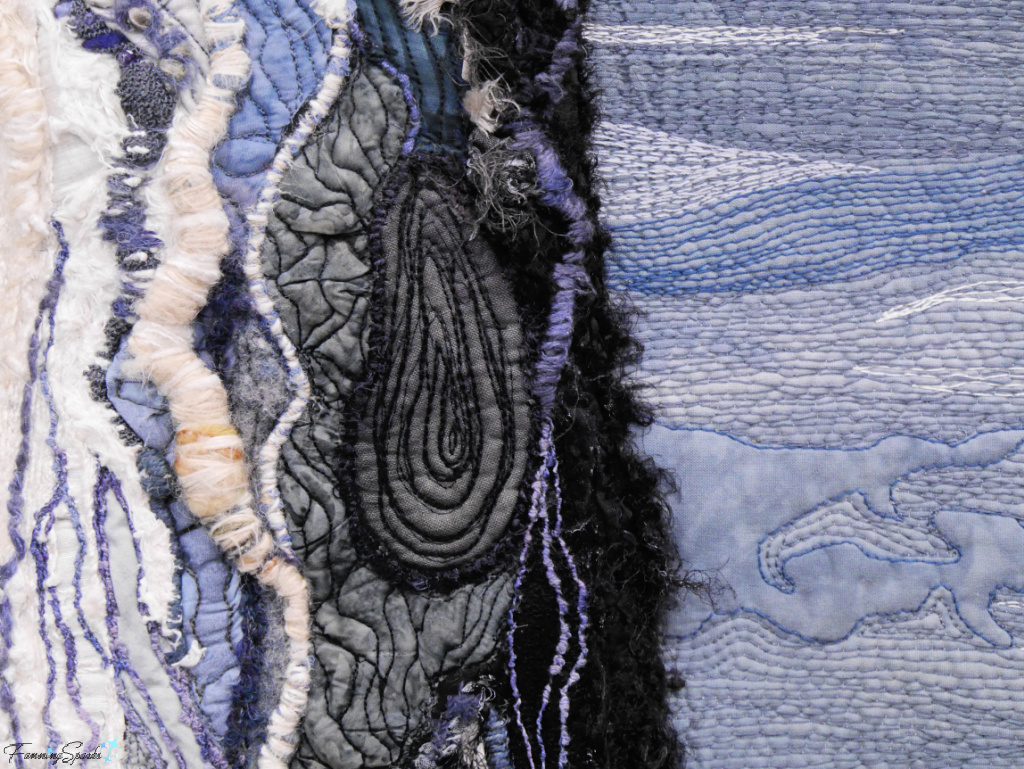
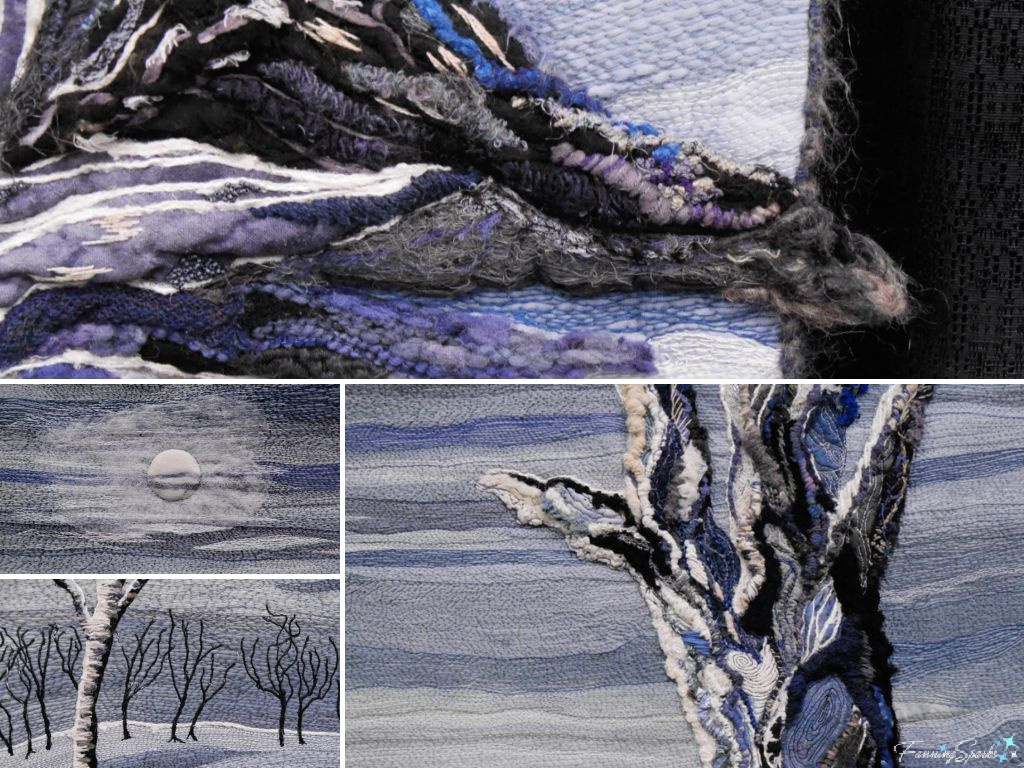
This next piece was created by fiber artist Jean Sredl. Titled After the Warming – Permanent Winter, it is made with a variety of materials including “Cotton, wool, silk, recycled wool ties, deconstructed sweaters, tencel, fabric paint, wire, hair, [and] heated activated stiffener”. These materials have been “Hand sewn, machine quilted, hand embroidered, dyed, [and] manipulated”.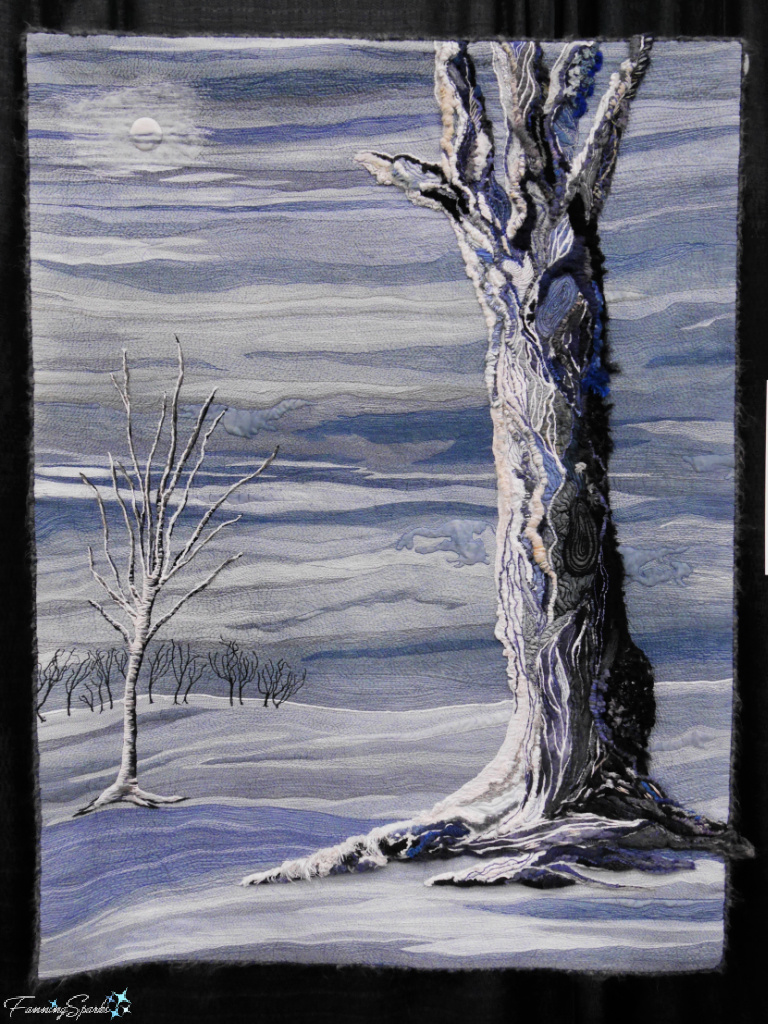
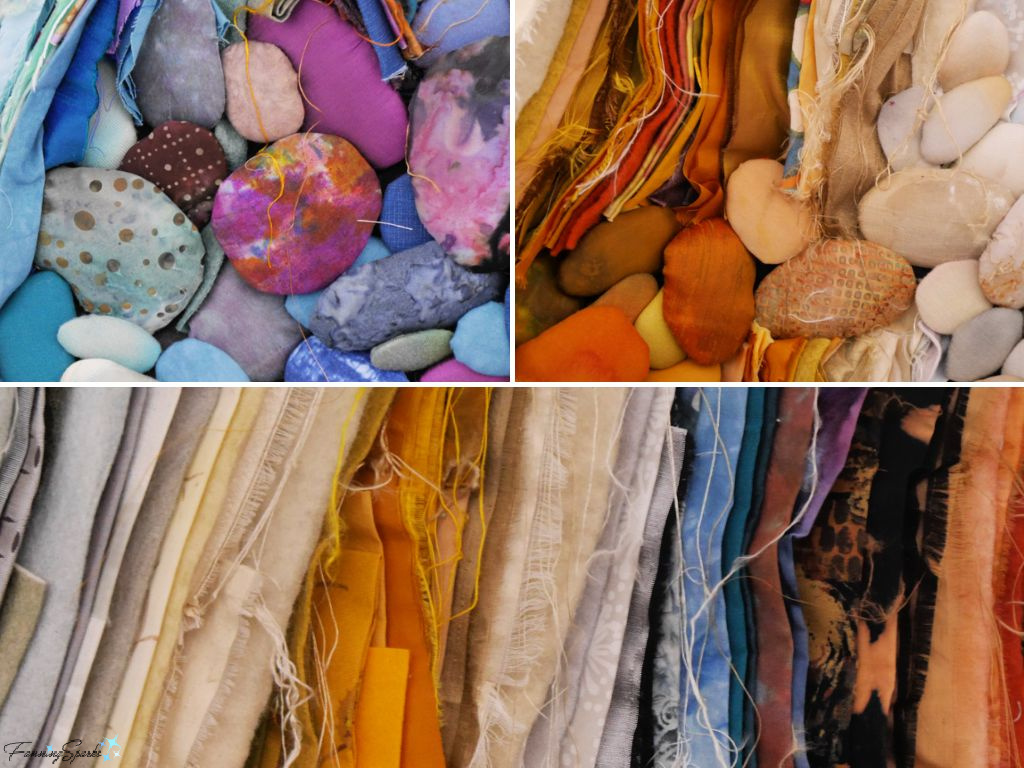
Crumbling, made by quilt artist Janet Windsor, is a fascinating collage of fabrics in various colors and forms. Windsor “appliquéd, [and] hand dyed silk, cotton, velvet, [and] wool” to create this piece. The exhibit card explains “As the edges of the cliffs tumble into the ocean, the sea tosses them about and returns them to us as beautiful pebbles”.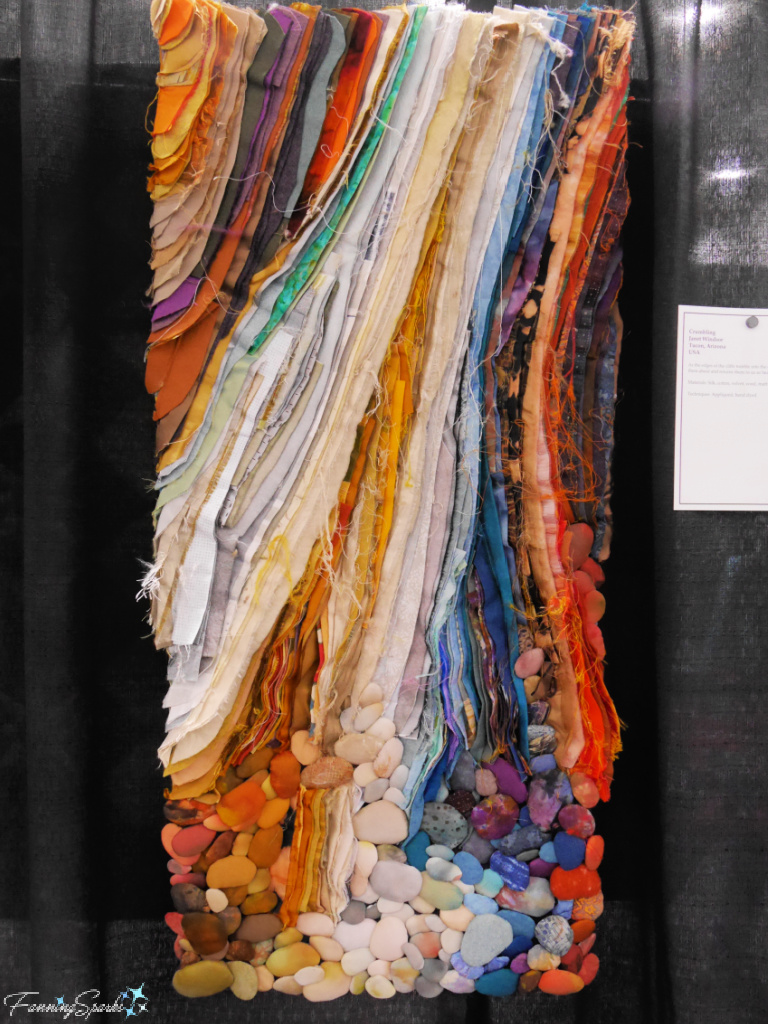
The Southeastern Quilt and Textile Museum, in Carrollton Georgia, has a mission to “promote and preserve the history of quilting and textiles in the southeastern U.S.”.
I spotted an outstanding art quilt, titled Handed Down, several years ago during one of my many visits to the museum. This textile collage/ art quilt, created by fiber and mixed-media artist Susan Lenz, features an aged tablecloth, vintage gloves and hand-stitched family names.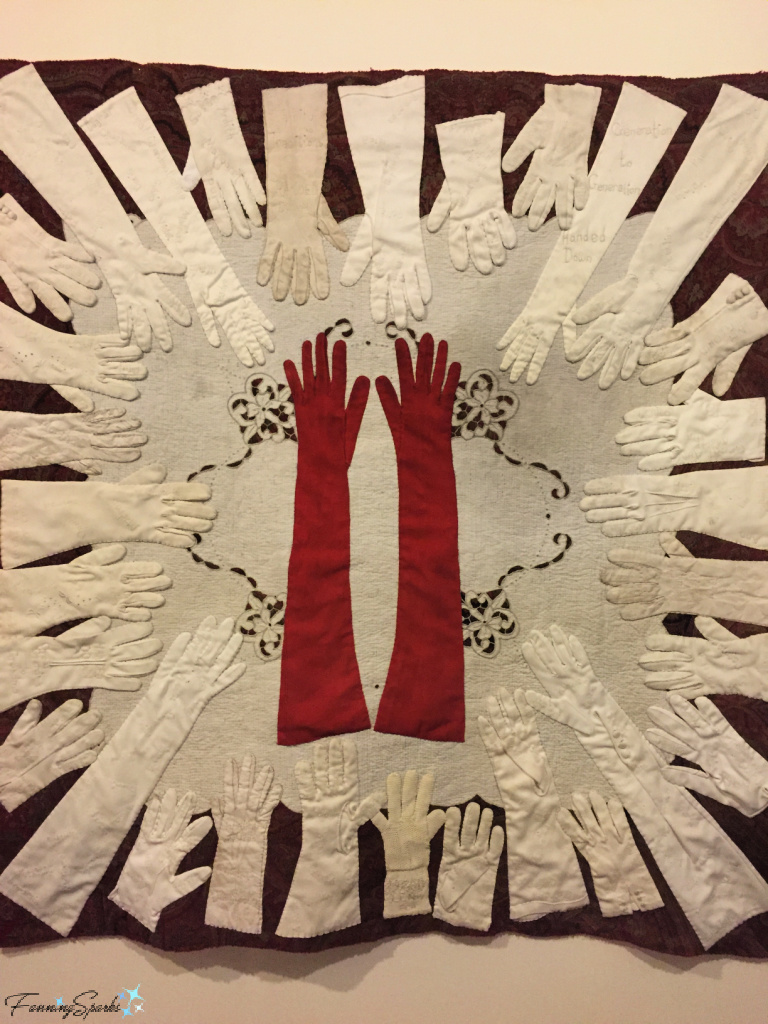
Here’s a closer look at the details of Lenz’s Handed Down.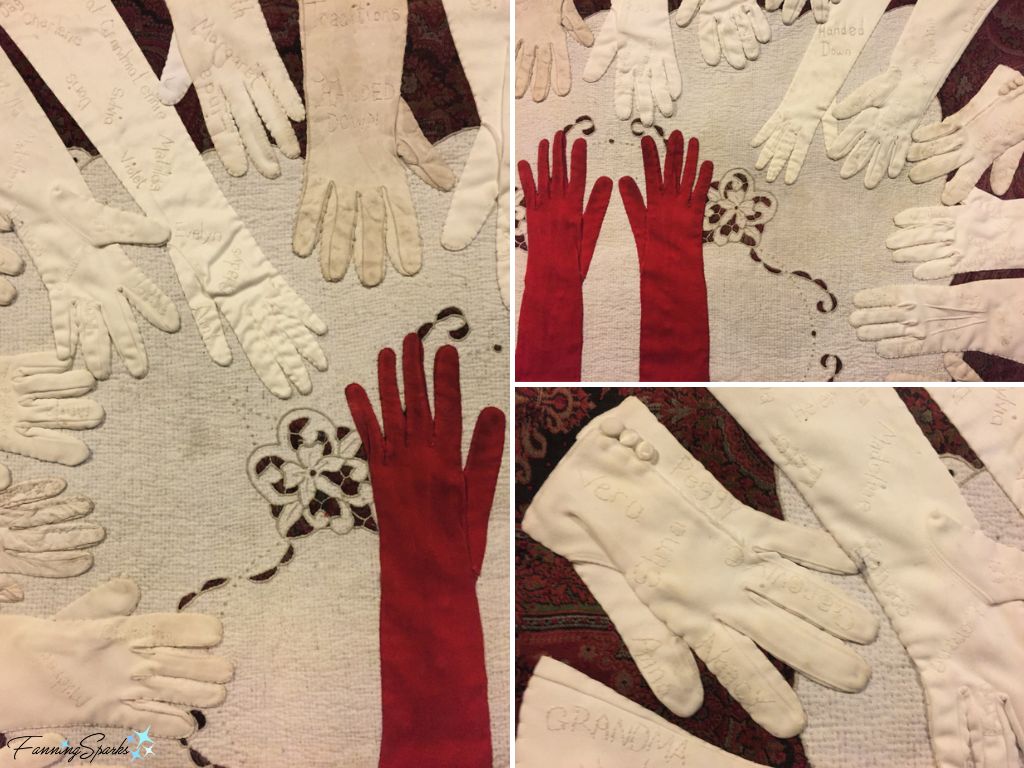
Textile collage, fabric collage, snippet art, collage quilt and art quilt―these are all terms that describe the art of creating artistic compositions―pictures or designs―from fabric, thread and other fibers.
More Info
Previous blog posts mentioned in this blog post include:
. Collage: The Original Cut-and-Paste.
. An Art Road Trip in the Georgia Mountains
. What is Soft Sculpture?
The following textile collage and art quilt artists are mentioned in this blog post:
. Silke Cliatt ― see more on her website
. Cindy Walter
. Lisa Thorpe ― see more on Instagram or her website
. Jo Morphett of Peace of Pi ― see more on Instagram or her website
. Mandy Pattullo ― see more on Instagram or her website
. Deborah Boschert ― see more on Instagram or her website
. Laura Heine of Fiberworks ― see more on Instagram or her website
. Emily Taylor of Collage Quilter ― see more on Instagram or her website
. Jennifer Landau ― see more on Instagram
. Jean Sredl ― see more on her website
. Janet Windsor ― see more on Instagram
. Susan Lenz ― see more on Instagram or her website.
The following books, articles and websites were consulted in the writing of this blog post:
. Collage Creations book by Barbara Matthiessen which is available here on Internet Archives
. Snippet Sensations book by Cindy Walter which is available here on Internet Archives
. Captivating Collage: Six Artists Show the Way article by Mary Carson on TextileArtist website
. The Quilt Show website which offers “quilting artists from around the world to teach you how to quilt”
. Studio Art Quilt Associates (SAQA) website for a nonprofit organization dedicated to promoting the art quilt.
See the Original Sewing & Quilt Expo website for information about the sewing and quilting events they host.
See the Southeastern Quilt and Textile Museum website for information about this small museum in Carrollton, Georgia.
Today’s Takeaways
1. “A collage is a piece of art composed by combining various materials … in a visually interesting manner.” Barbara Matthiessen
2. Creating a collage with fabrics and textiles is similar to creating a collage with paper.
3. Textile collagists often repurpose fiber materials, such as fabric scraps, decorating fabric samples, thrifted garments, vintage linens and waste fiber, for their textile collages.

Comments are closed.