
There’s a new trend in the crafting world ― or maybe it’s just a popular habit with a catchy new label: “Couch Stitching”. It describes the practice of hand sewing while comfortably settled on a sofa and, typically, binge-watching TV shows. I stumbled across the term while researching a classic embroidery technique called “couching”.
The wordplay is perfect: the couching stitch can be done while couch stitching but it’s not limited to that setting. Likewise, couch stitching isn’t limited to only the couching stitch. So, the answer to the question ― Is it Couch Stitching or Couching Stitch? ― is happily both.
But what is a couching stitch, exactly? It’s a gorgeous embellishment technique where yarn and other textured fibres are laid on the surface of fabric and sewn in place with tiny, neat stitches. Couching can star as the main attraction in a one-of-a-kind fibre arts piece or it can play a supporting role.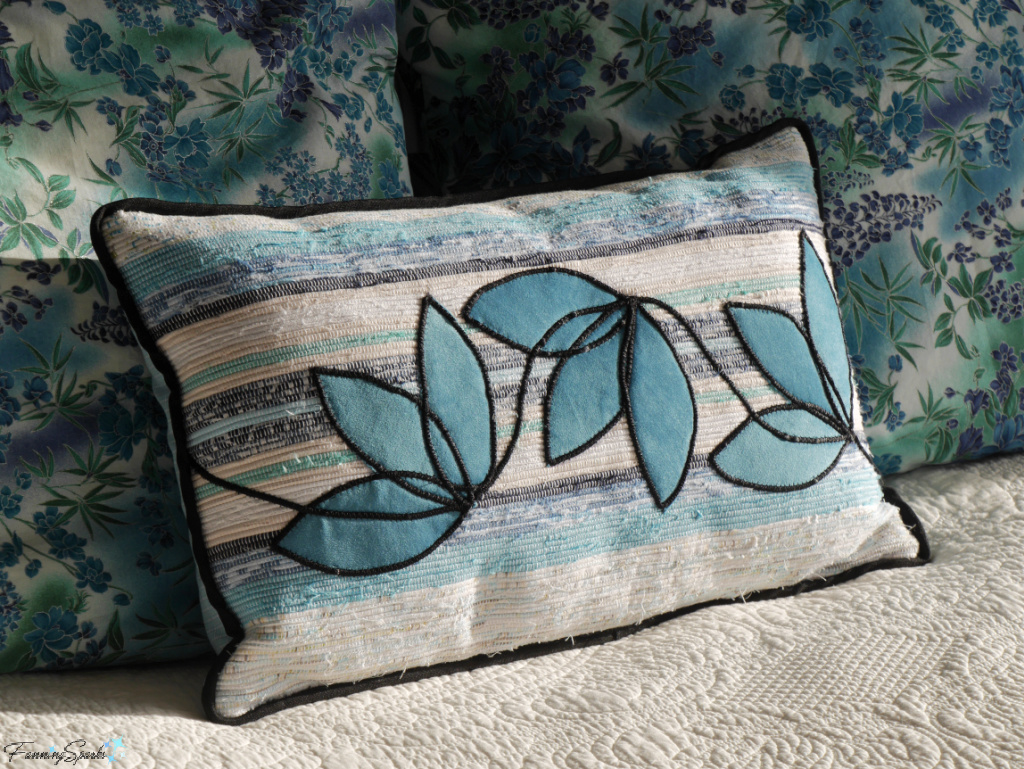
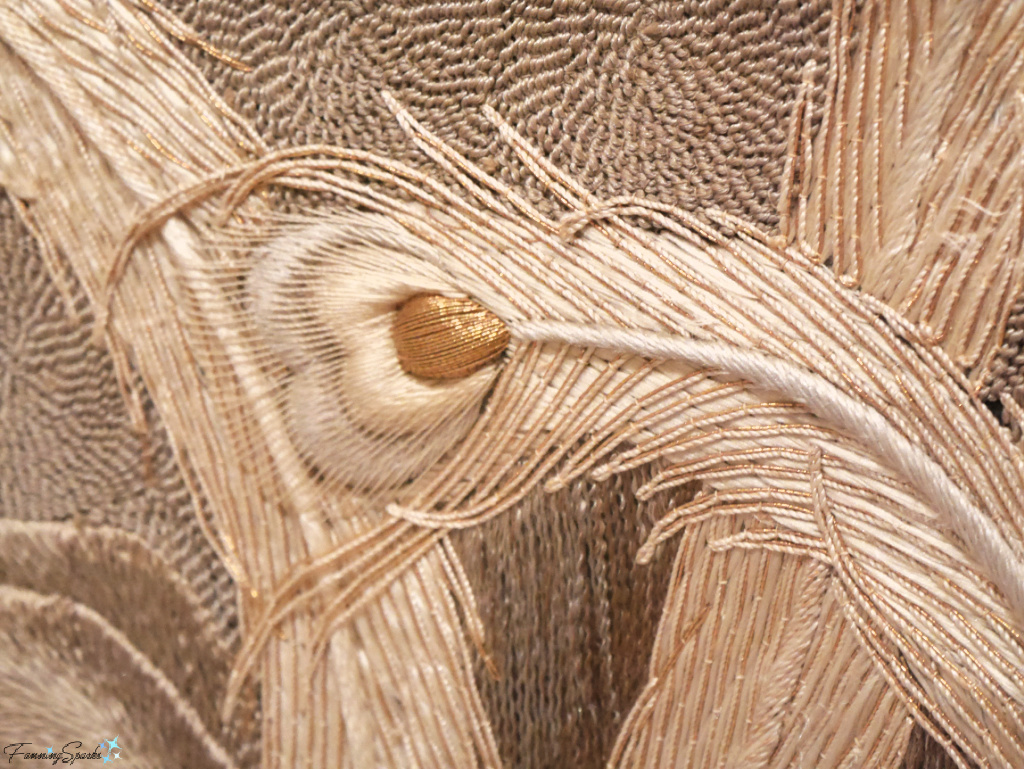
Fascinatingly, the couching stitch was traditionally used to embellish fabric with gold! This spectacular Japanese silk wall hanging, which I spotted at the Calouste Gulbenkian Museum in Lisbon Portugal, provides an example.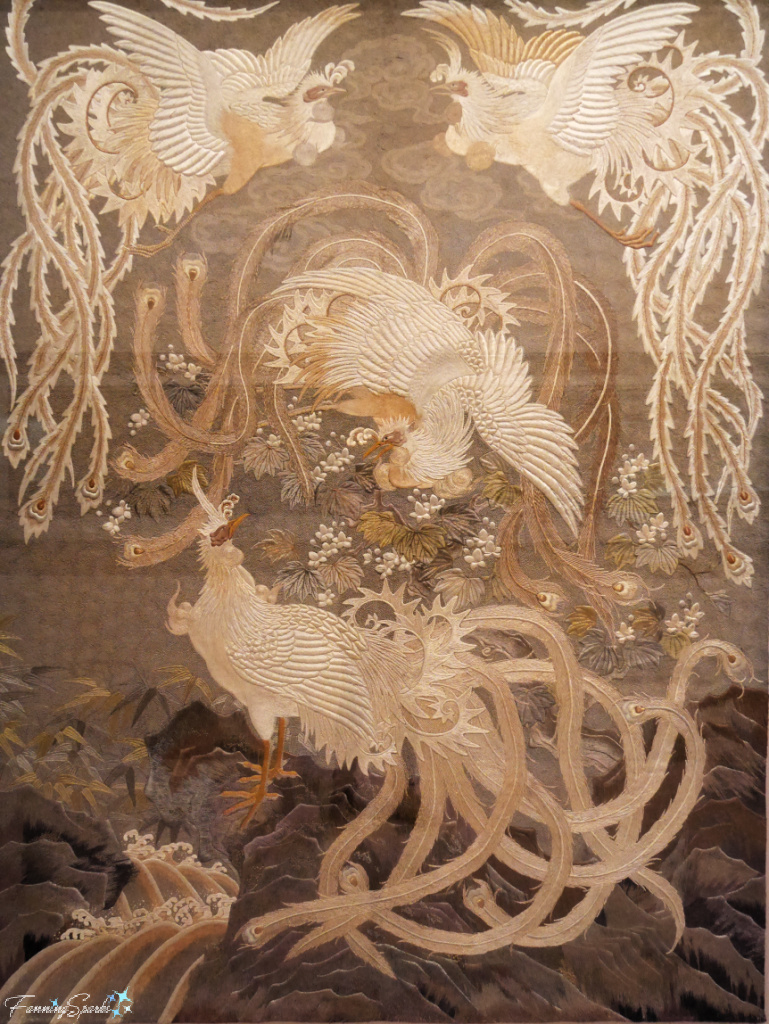
A closer look reveals a variety of hand embroidery materials and techniques including fine gold strands and ivory silk threads which have been couched in place.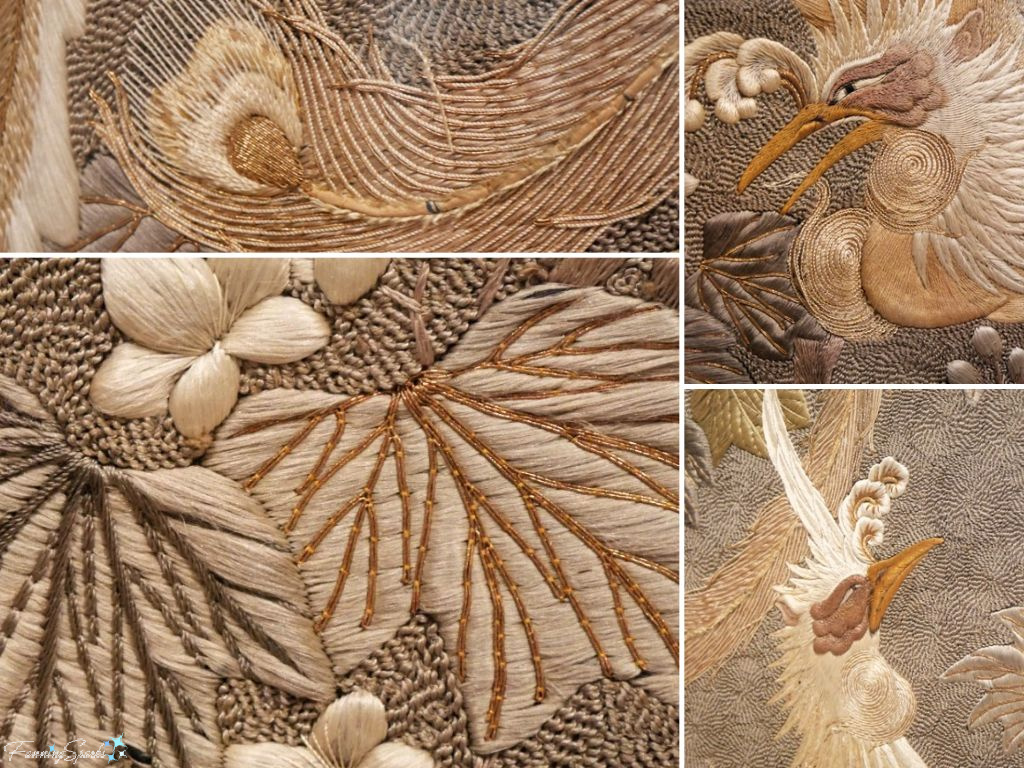
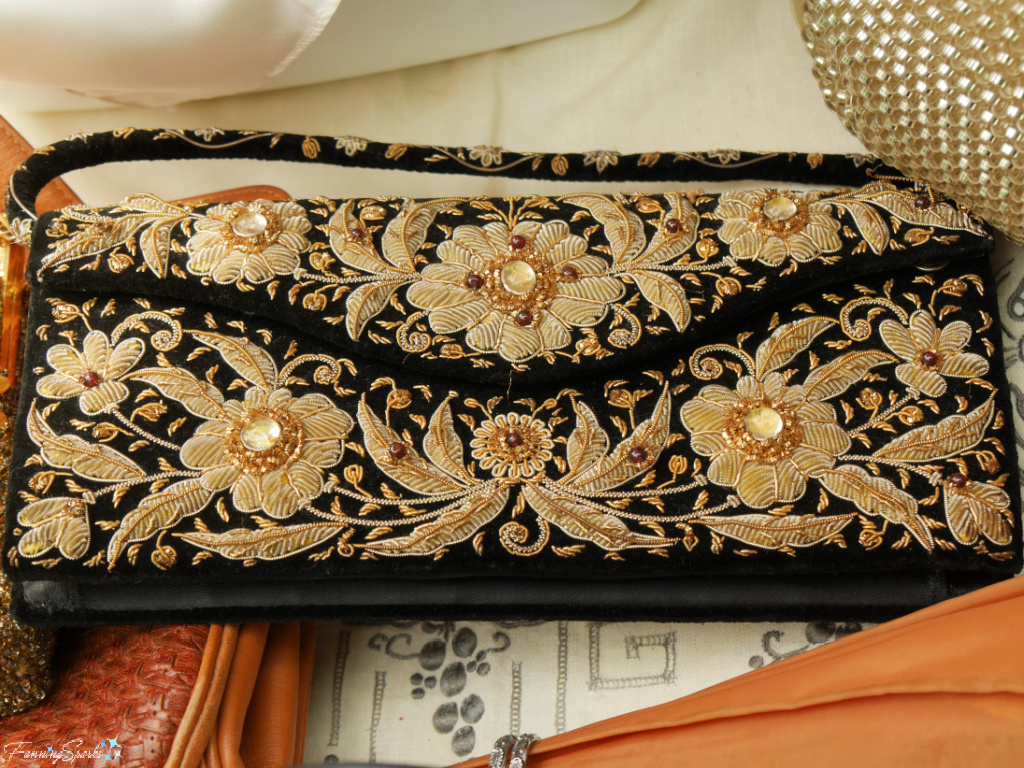
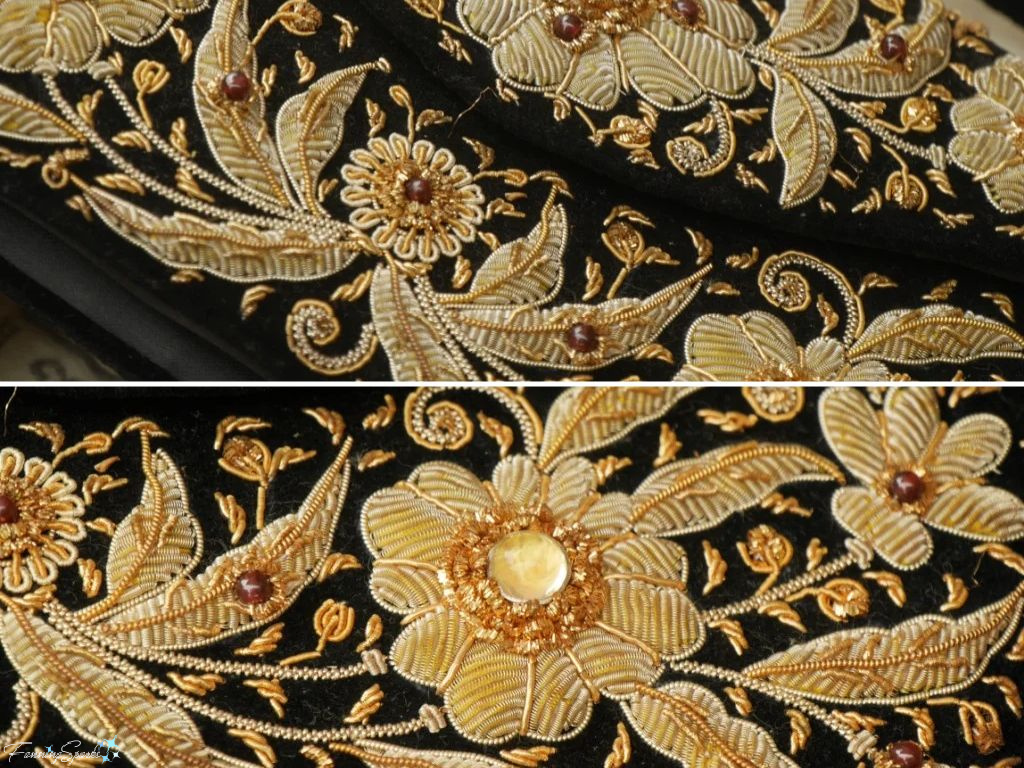
 Here’s another example of outstanding Japanese embroidery. I captured this stunning purse at a flea market in the Ueno Park area of Tokyo, Japan. The extravagant, floral embellishment appears to have been created with a technique called “goldwork embroidery” in which metallic threads, and other precious elements, are meticulously couched into elaborate designs.
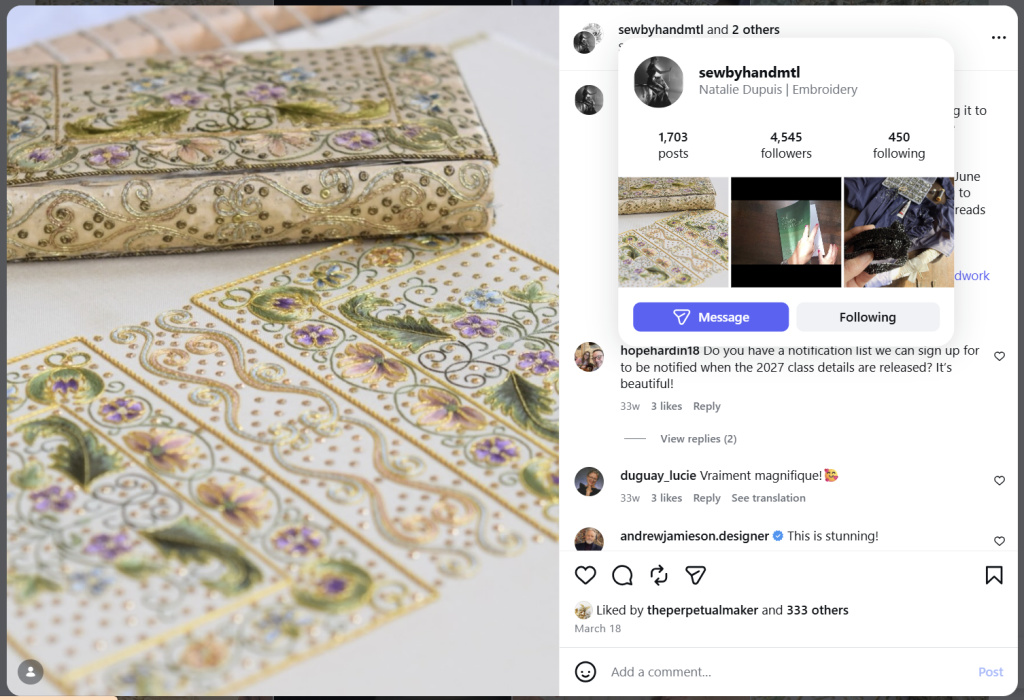
 While modern forms of goldwork embroidery are still popular today, very few artists practice the traditional, centuries-old methods. Natalie Dupuis, of Sew by Hand MTL in Montreal, Canada, is a rare exception. She is an internationally recognized educator and textile artist who specializes in couched goldwork embroidery. Shown below are a few Instagram posts showing her work in progress.
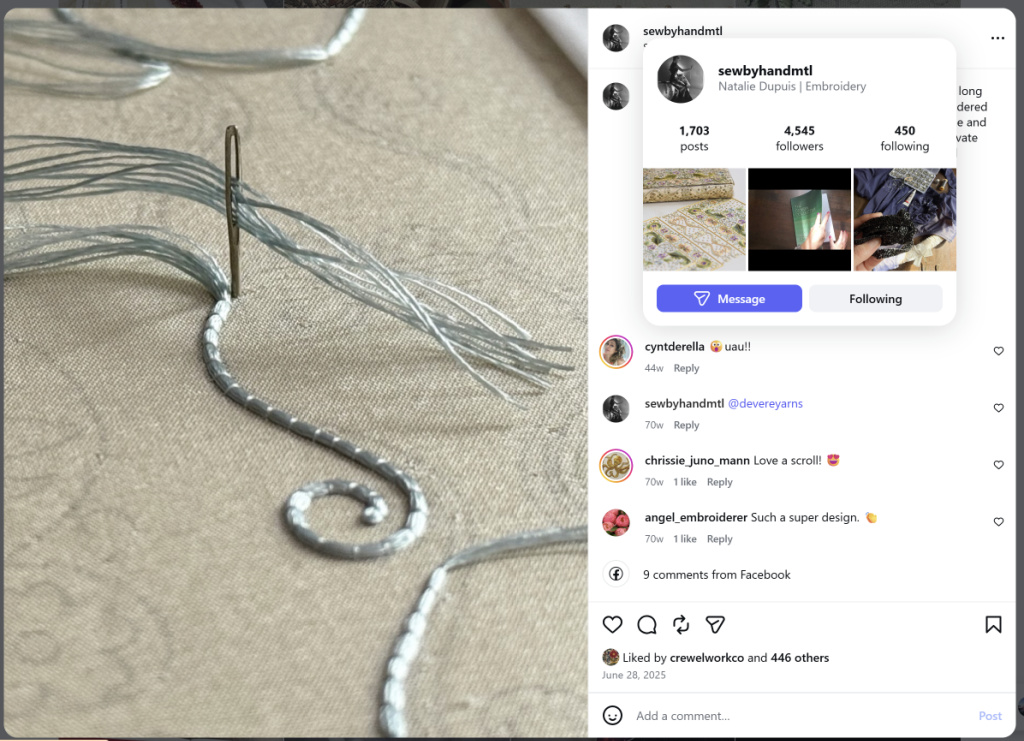
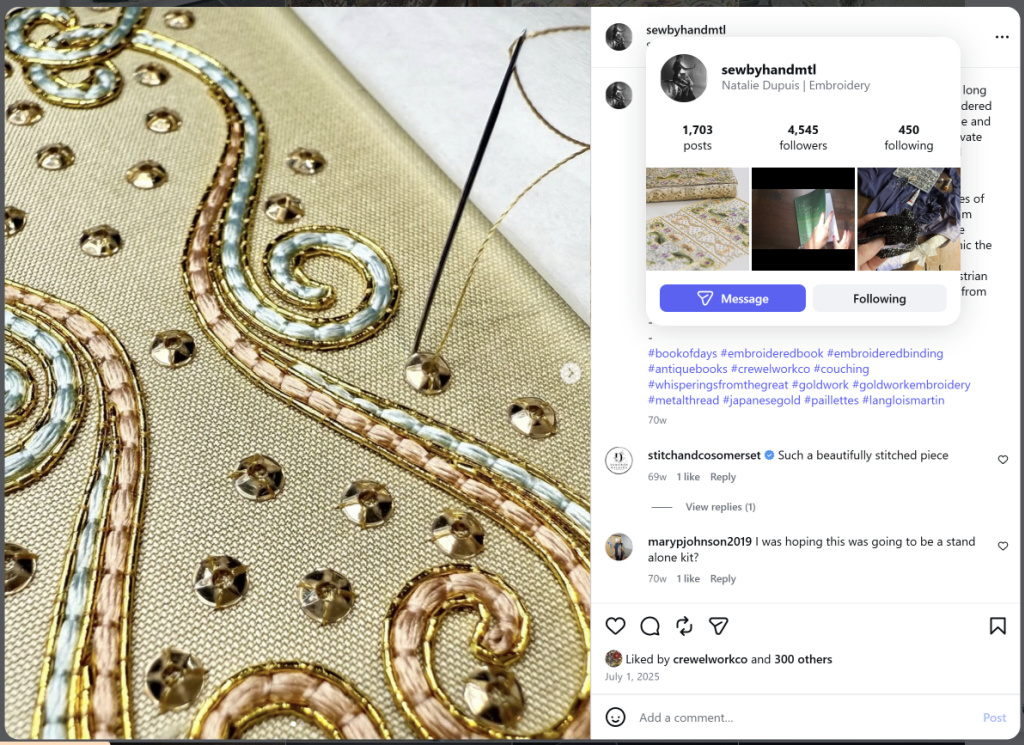 Interestingly as explained in the Piecework article, Everything You Wanted to Know About Couched Goldwork Embroidery, which highlights Dupuis’ work, “couched goldwork embroidery techniques were traditionally used in liturgical embroideries or ceremonial robes for monarchy”. These images from Dupuis’ Instagram feature her work known as The Book of Days which is a recreation of a spectacular, embroidered book binding from 1895.
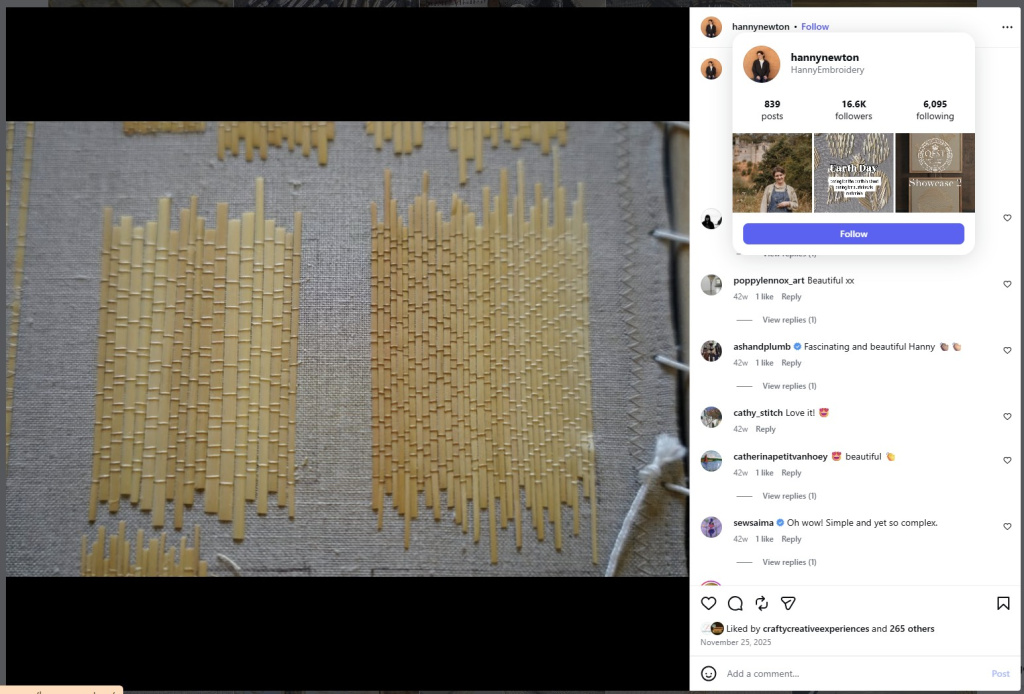
 For an extraordinary twist on the technique, award-winning, textile artist Hanny Newton from Shropshire/Powys borders UK amazingly uses the couching stitch with straw (see more in the blog post Not the Final Straw).
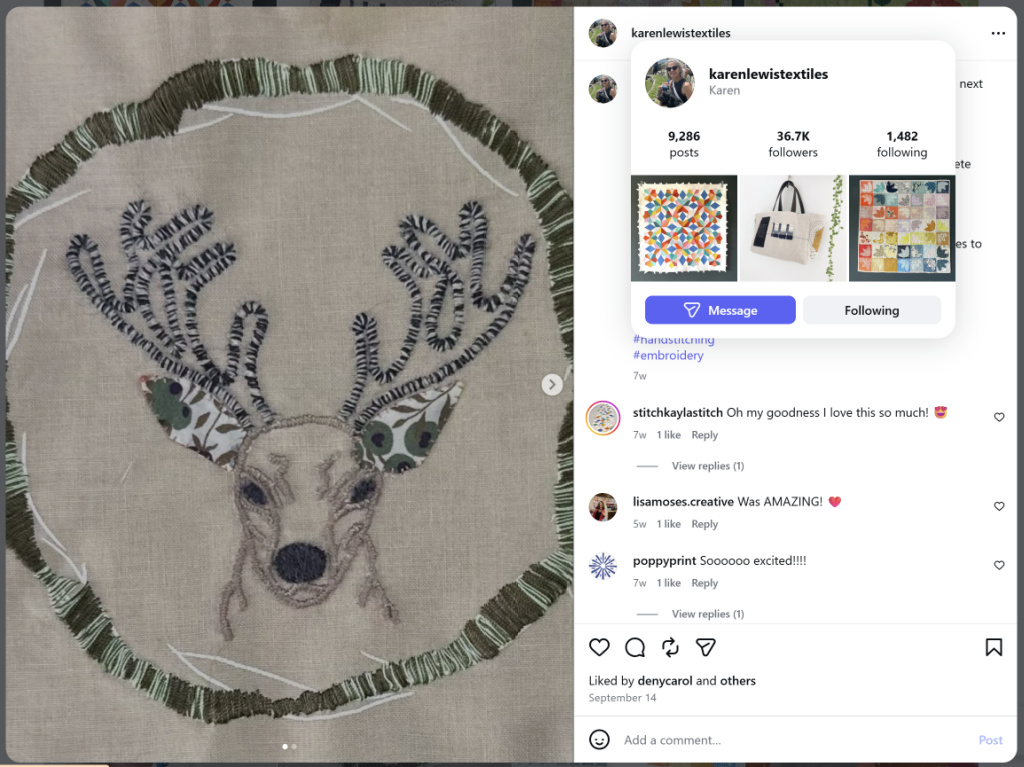
 Karen Lewis, of Karen Lewis Textiles from Yorkshire UK, is a well-known fabric artist who often incorporates couching stitches in her embroidery artwork.
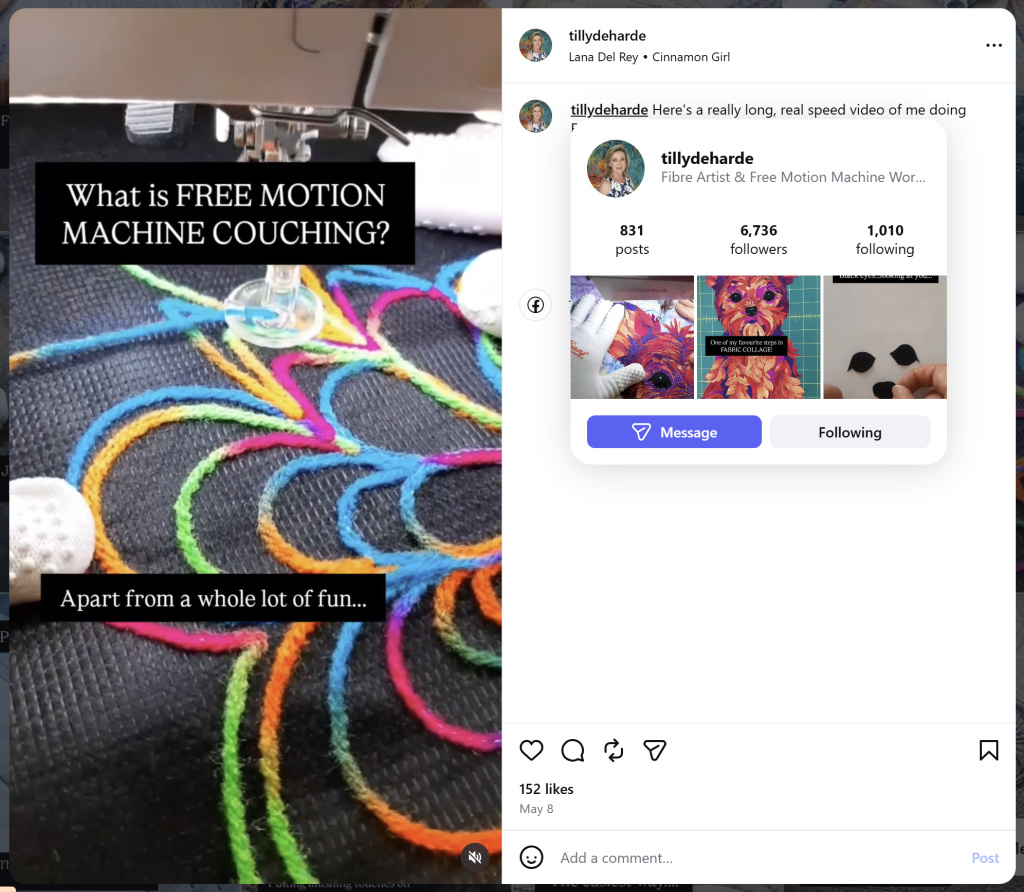
 Couching stitches can also be made with a sewing machine. In fact, the option is featured in the below Instagram post by Tilly de Harde which is captioned “What is Free Motion Machine Couching?”. De Harde is a renowned, award-winning quilter and textile artist from Johannesburg, South Africa.
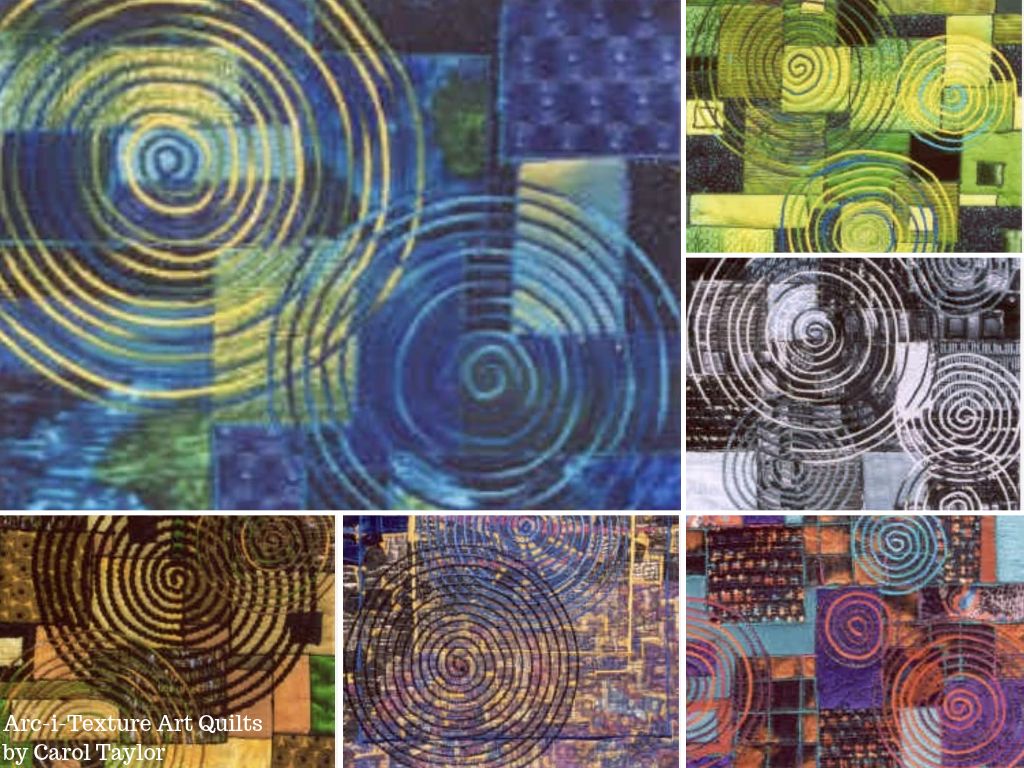
 Couching yarns and fibres onto a quilt surface is a great way to add drama, colour and texture. For instance, couched spirals were a signature mark of award-winning, art quilter Carol Taylor. Shown below are examples from Taylor’s Arc-i-Texture series copied from her now-defunct website where she also shared this insight: “This series is based on the theme of circles (“arcs”) as a design element super imposed on top of a composition of textured fabrics. Thus, the name Arc-i-Texture! … The textured fabrics include velvets, suedes, organzas, brocades, glitzy-shiny fabrics, feathers, and all kinds of other wonderful fabrics … These fabrics make lovely compositions all by themselves, but I discovered that the pieces became more interesting by adding another layer of design by couching multicolored threads and ribbons in a circular design on top of them.”
 Shifting gears, I’d like to share a much simpler example of couching. Regular readers may recognize these pieces from the fabric storage system/ mini textile art gallery I shared earlier this year (see Wrapping Up the Storage Bin Mini Gallery Project).
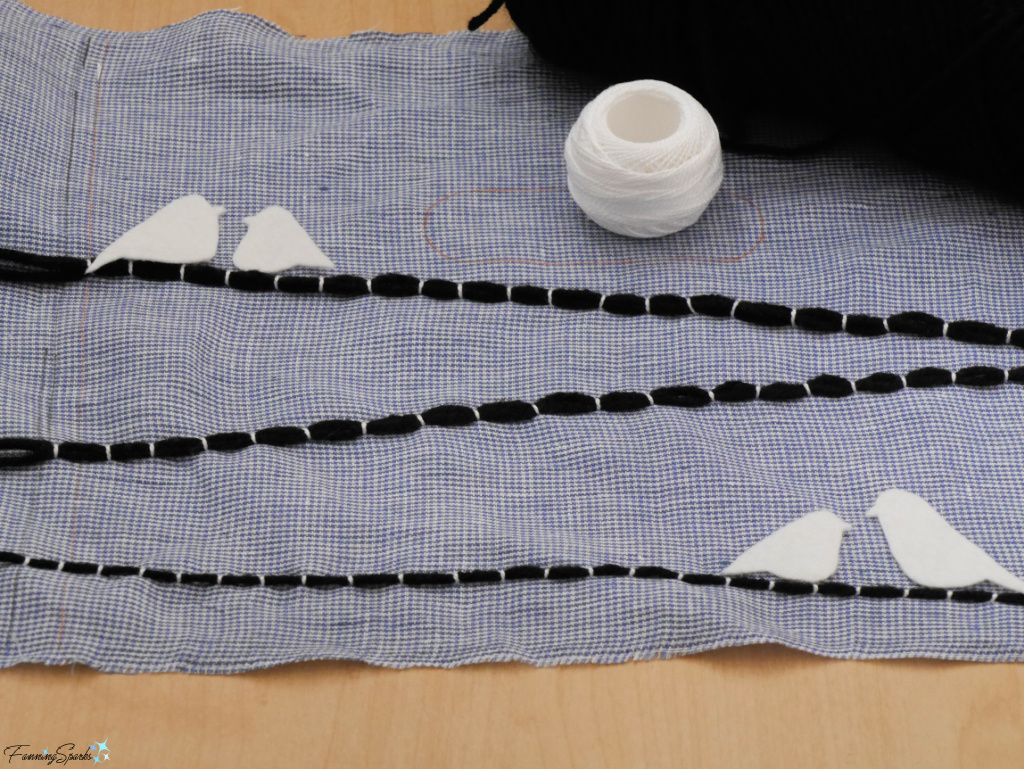
This embroidered storage bin features a flock of birds sitting on a trio of wires.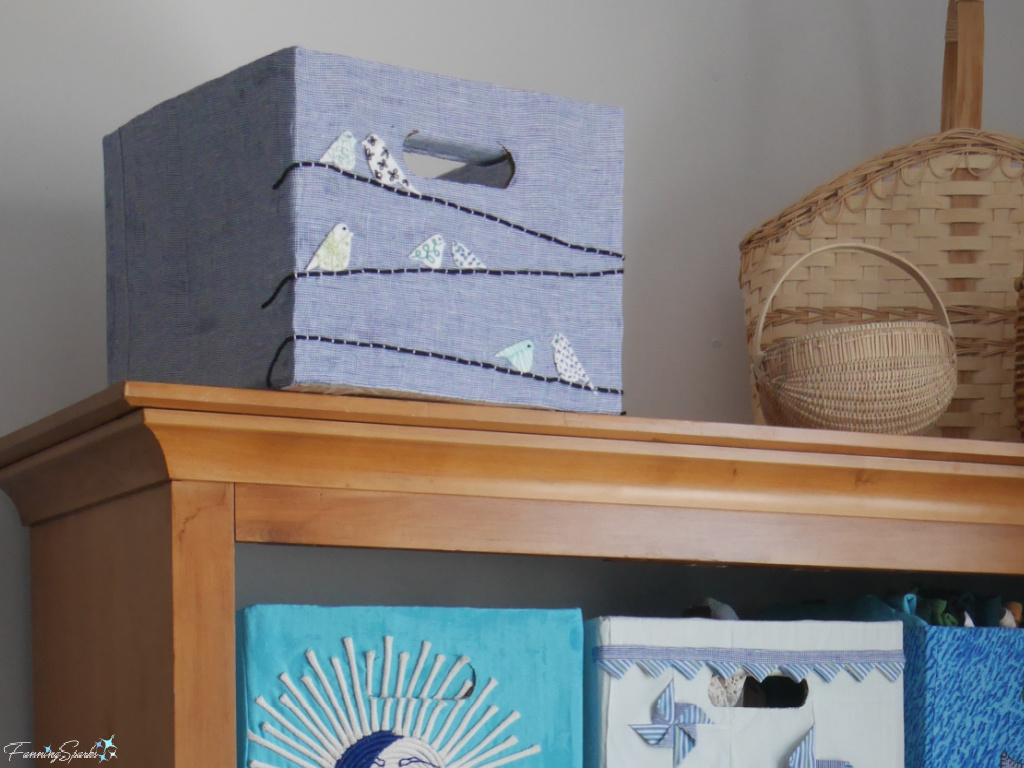 In designing this piece, I decided the wires had to be substantial enough to ground the composition without overwhelming the small birds. Shown below is my test version comparing a wire made with three strands (top line), two strands (middle line) and one strand of yarn (bottom line). I chose to use a couching stitch to attach a single strand of black yarn on the background fabric.
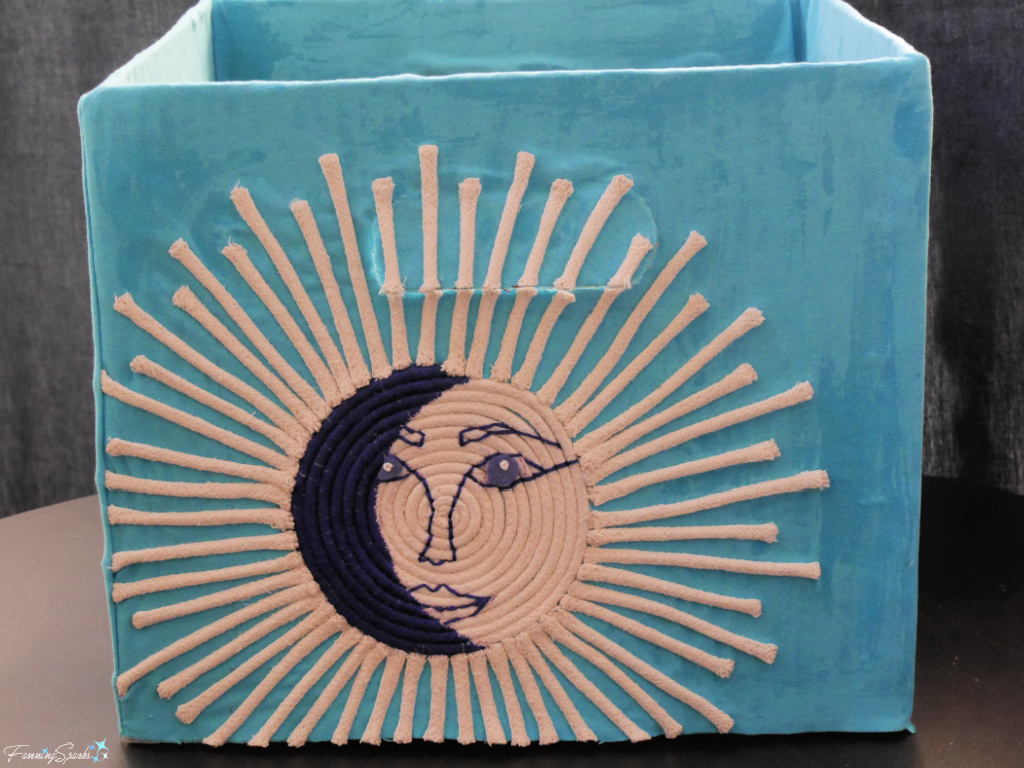
 Another one of the embellished storage bins featured a moon-sun face in cotton rope. To create it, I started by stabilizing the background fabric with a piece of tear-away stabilizer (Stitch-N-Tear from Pellon). Then, I traced the sun’s circle onto the fabric and couching stitched the rope in a spiral with my sewing machine. The sun’s rays were also couched onto the fabric. Then the crescent moon and the sun’s facial features were embroidered on top of the couched rope base.
 These early experiments provided the perfect foundation for my most recent couching project. My objective was to create a small, lumbar pillow showcasing the new fabrics I’m using to decorate the bedroom (stay tuned for more about that project in future blog posts).
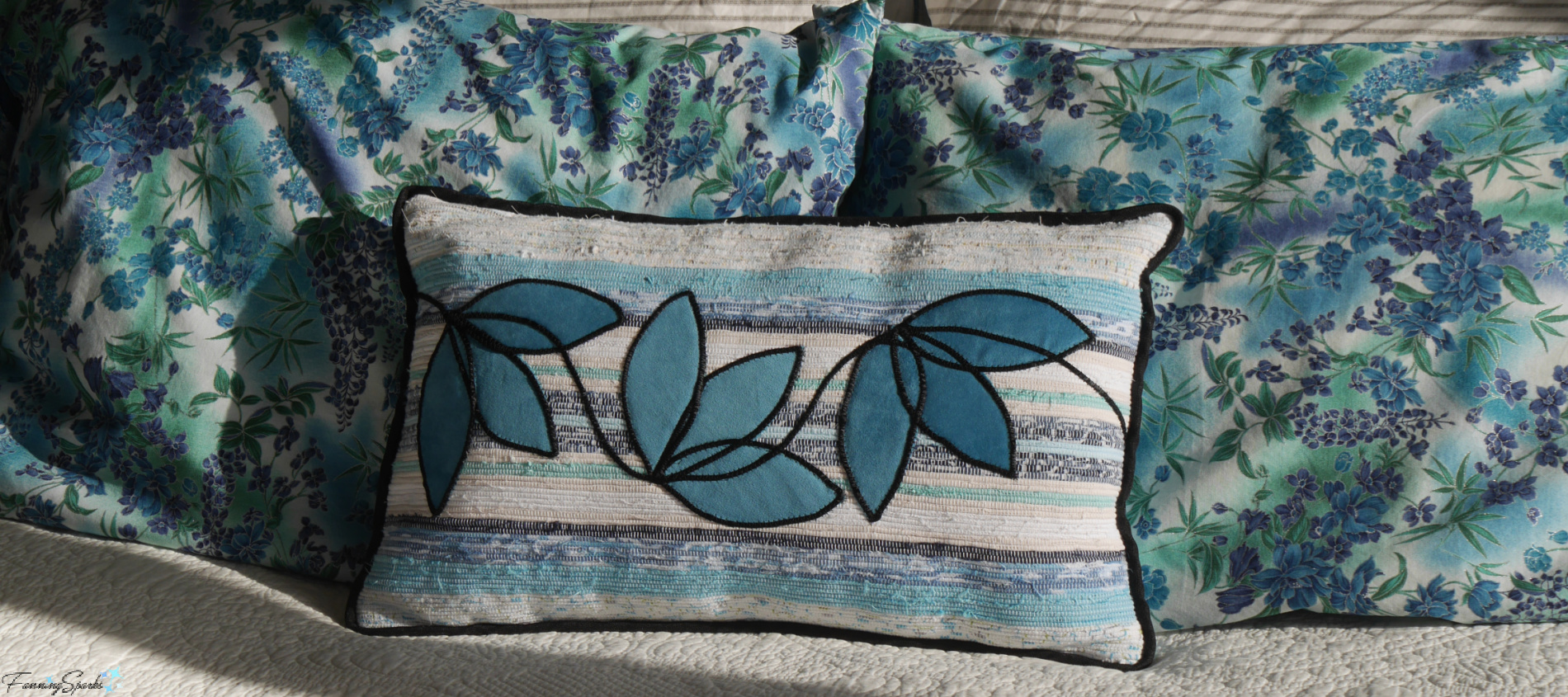
Here’s how the finished pillow looks on the bed. The beautiful hand-woven, multi-striped background repeats the fabric in my new statement headboard. The turquoise leaf motif complements the cool blue-greens of the floral pillowcases and picks up the foliage theme. Rich, black couching outlines the appliquéd leaves while black piping frames the rectangular shape.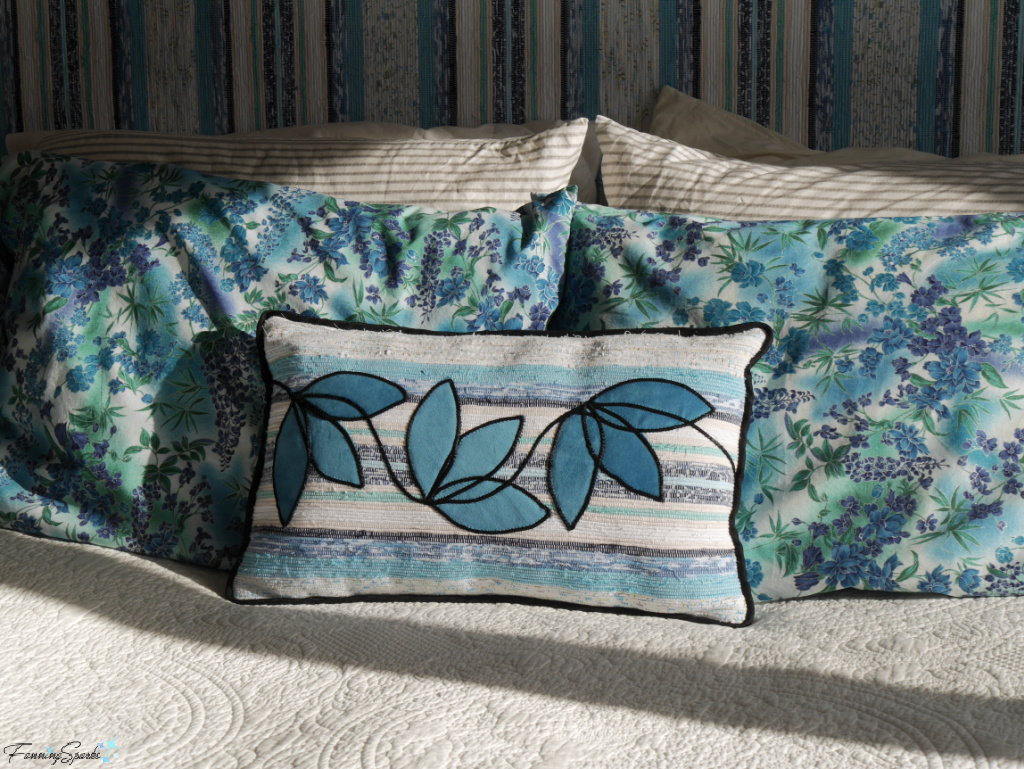
My first step in creating this new lumbar pillow was to determine the size. A quick online search revealed lumbar pillows for a queen-sized bed are typically rectangular and measure about 46-51 cm (18-20”) x 28-33 cm (11-13”).
Next, was my favourite part ― designing the embellishment. I wanted the pillow to add a little drama without taking over so I went in search of a simple, streamlined design.
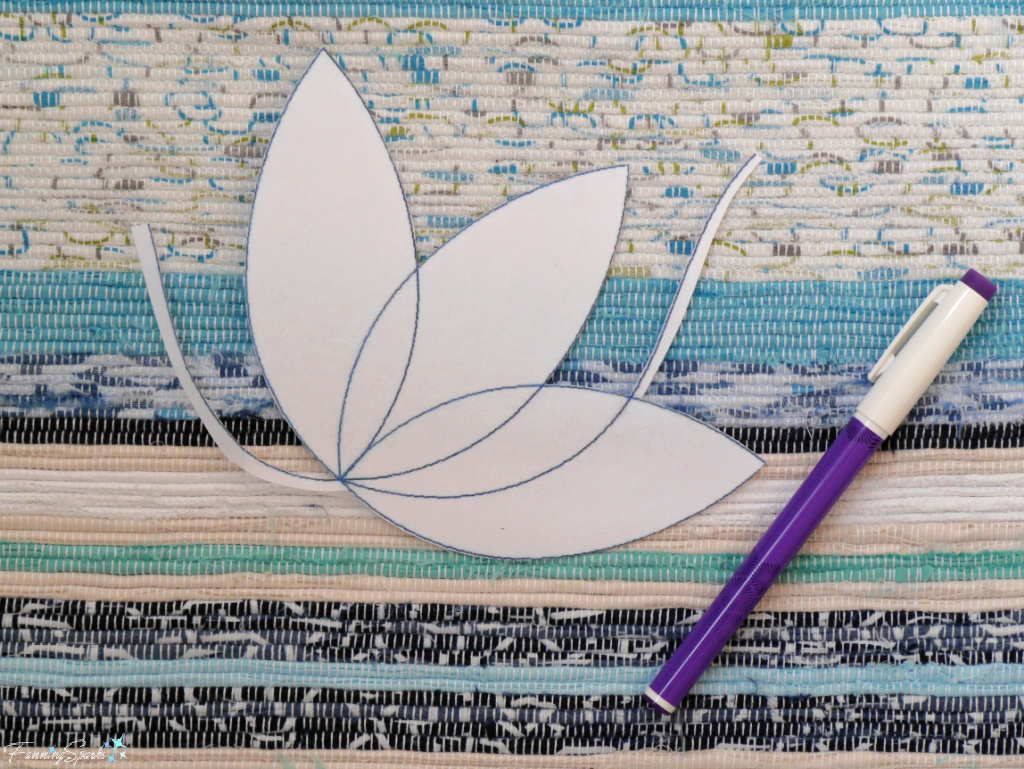
The many gorgeous quilts I’ve had the pleasure to view recently (see A Story of Churchgoing Quilts) inspired me to consider the designs used to stitch together the various layers of a quilt. These stitching templates, called pantographs or longarm quilting stitching paths, appealed to me because of their smooth, continuous lines. Here are some examples.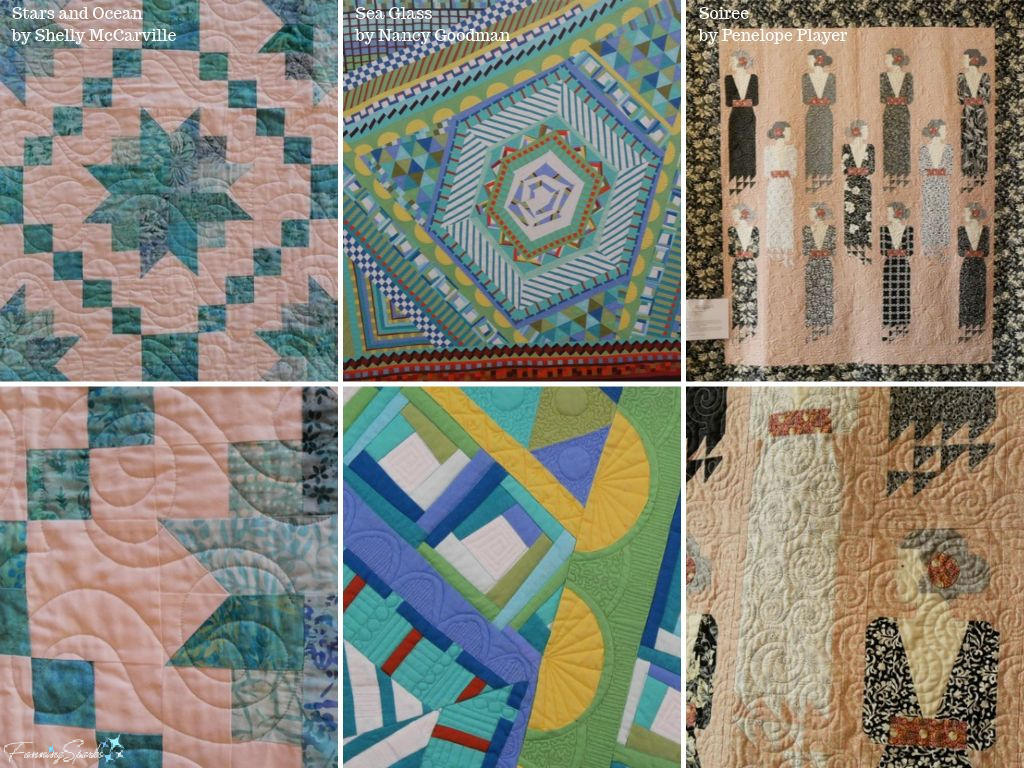 After considering several options, I chose a simple leaf motif because the leaves could be added in my matching fabric and the stitching lines flowed smoothly across the design. After resizing and repeating the leaf motif three times, it fit nicely in the rectangular format. Then I marked the design on my fabric with a Pilot Frixion erasable marker pen.
 To appliqué the leaves, I used the same raw-edge appliquéing technique I’d used on the below storage bin.
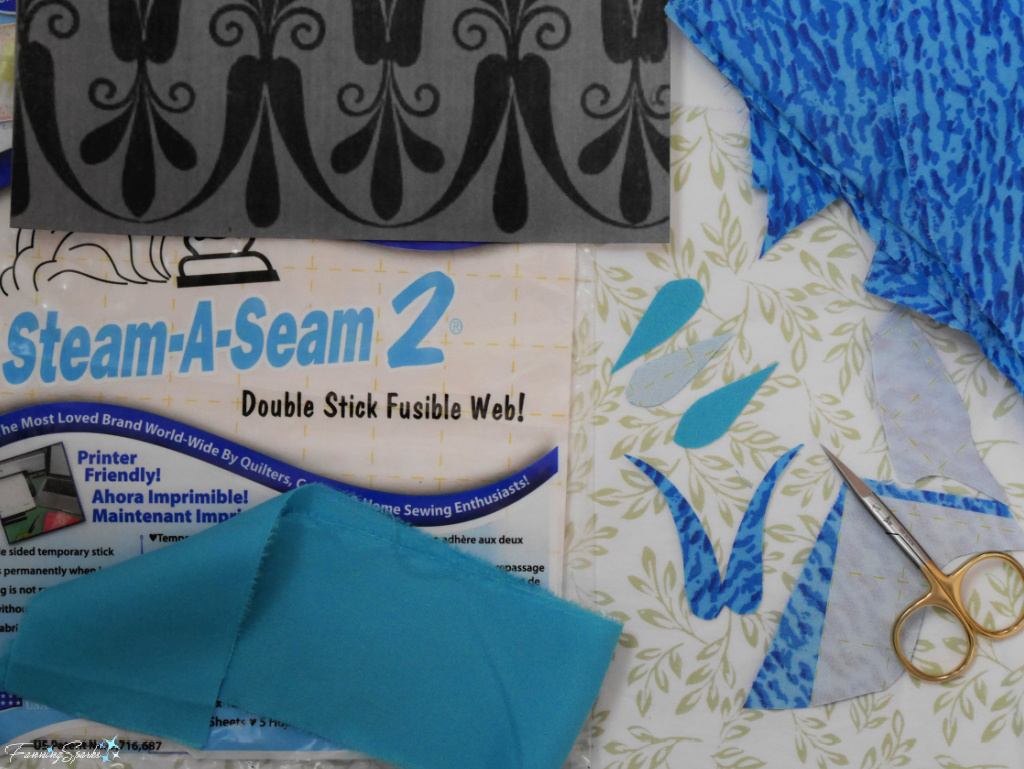
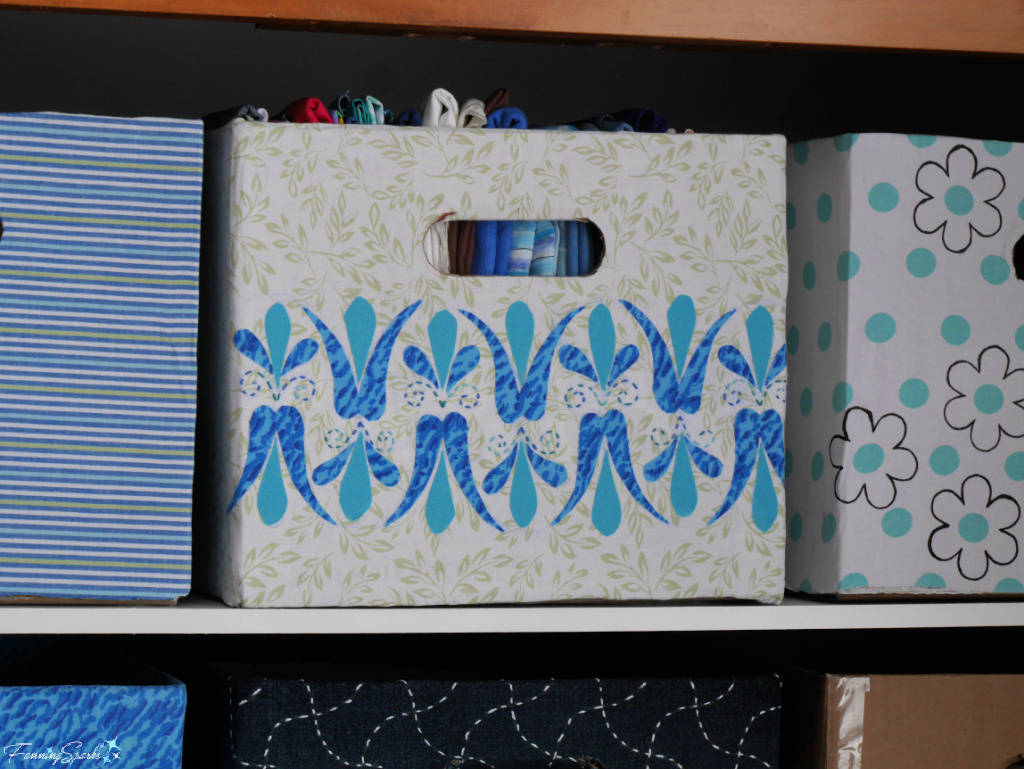 The secret to this technique, as explained in the blog post Zhuzhing Up My New Storage Bins, is a double-stick fusible web called Steam-A-Seam 2 by The Warm Company. The double-sided sticky web is repositionable until permanently fused with the heat of an iron.
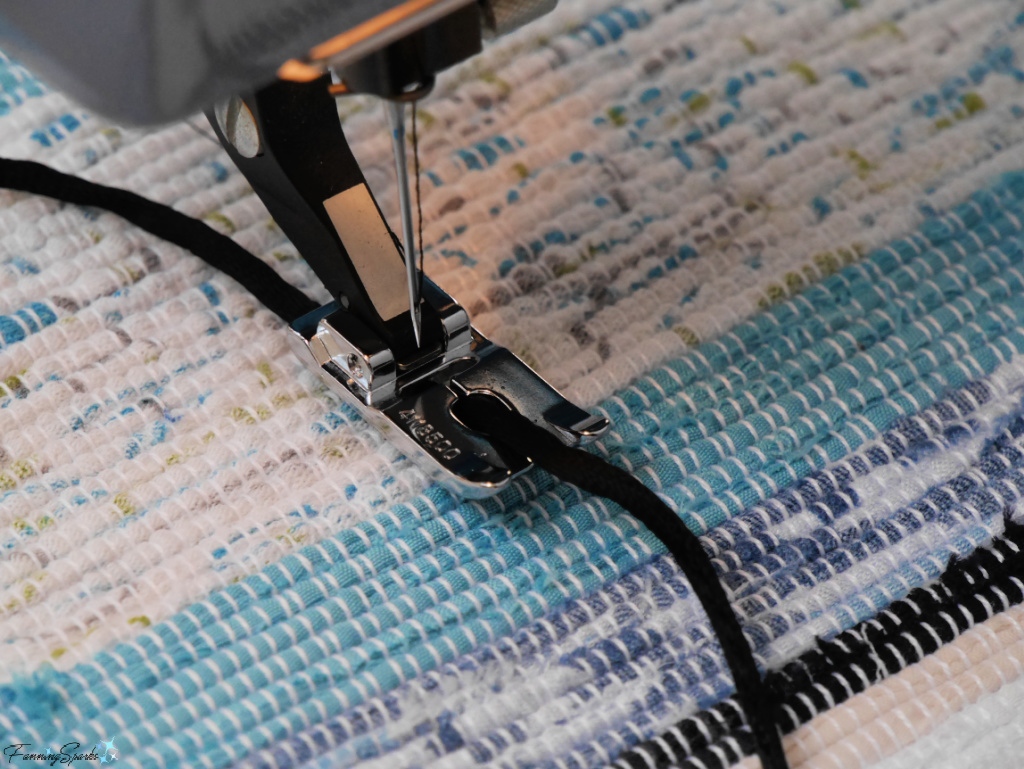
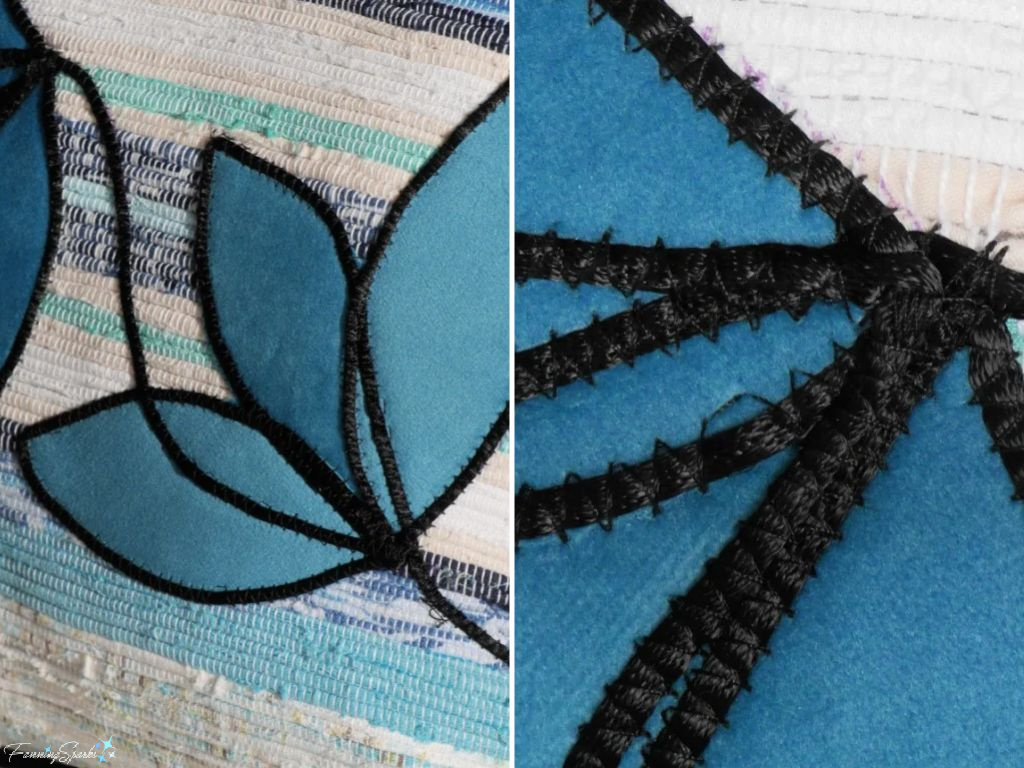
 The next step was to couch rattail cord (ie a thin, shiny cord traditionally made from silk or satin) along the continuous stitching line. I set up my sewing machine with a wide zigzag stitch and a specialized presser foot ― mine was labelled a “braiding foot” but they are also called cording or couching feet. The rattail cord fed through the hole in the braiding foot automatically as I sewed along the design lines.
 Most machine couching is done “free motion” ― as pictured in Tilly de Harde’s Instagram photo shown earlier in this blog post ― but I chose to leave the feed dogs in play and sew with a regular zigzag for this project. In free motion machine sewing, the feed dogs are lowered so the machine can’t move the fabric ― instead the sewist controls the fabric carefully moving it under the needle for every stitch. This technique is used extensively for quilting and it’s one I’m challenging myself to learn!
In the meantime, I finished up this pillow following the same process shared in my DIY Bespoke Pillows Tutorial ― skip down to “Step 7 Prepare to Sew on Piping” for the steps which are relevant to this simple, lumbar pillow.
Here’s a final look at my finished pillow with its appliquéd leaves and couched stitching lines.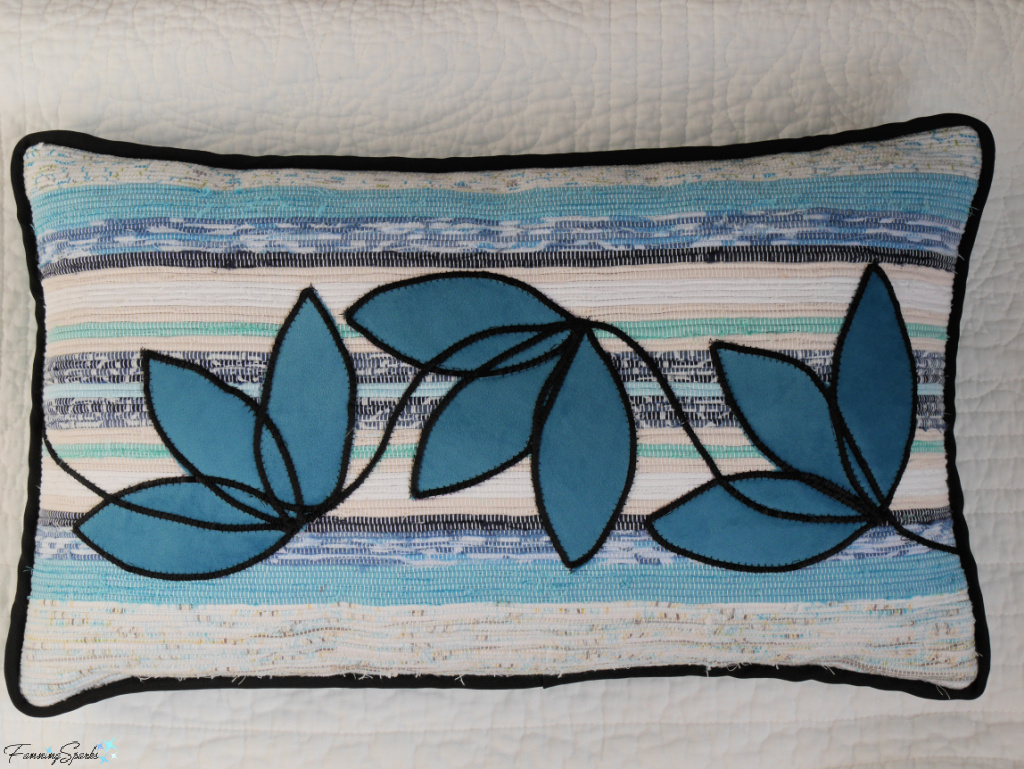
More Info
Previous blog posts mentioned in this blog post include:
. Not the Final Straw
. Wrapping Up the Storage Bin Mini Gallery Project
. A Story of Churchgoing Quilts
. Zhuzhing Up My New Storage Bins
. DIY Bespoke Pillows Tutorial.
The following talented artists are mentioned in this blog post:
. Natalie Dupuis of Sew by Hand MTL ― see more on Instagram
. Karen Lewis Textiles ― see more on Instagram or her website
. Hanny Newton ― see more on Instagram or her website
. Tilly de Harde ― see more on Instagram or her website
. Carol Taylor.
The following books and articles were consulted in the writing of this blog post:
. Everything You Wanted to Know About Couched Goldwork Embroidery article on the Piecework website
. Carol Taylor Quilts now-defunct website (www.caroltaylorquilts.com) which can be accessed via the Internet Archive Wayback Machine
. Decorating Textile Art Using Machine Couching post by Tilly de Harde on her blog
. Creative Embellishments book by Rodale’s Successful Quilting Library which is available here on Internet Archives
. Couching by Machine article on the Threads website
. Various Wikipedia entries.
Today’s Takeaways
1. Couch stitching is the practice of hand sewing while comfortably settled on a sofa and, typically, binge-watching TV shows.
2. A couching stitch is a gorgeous embellishment technique where yarn and other textured fibres are laid on the surface of fabric and sewn in place with tiny, neat stitches.
3. Couching can star as the main attraction in a one-of-a-kind fibre arts piece or it can play a supporting role.