
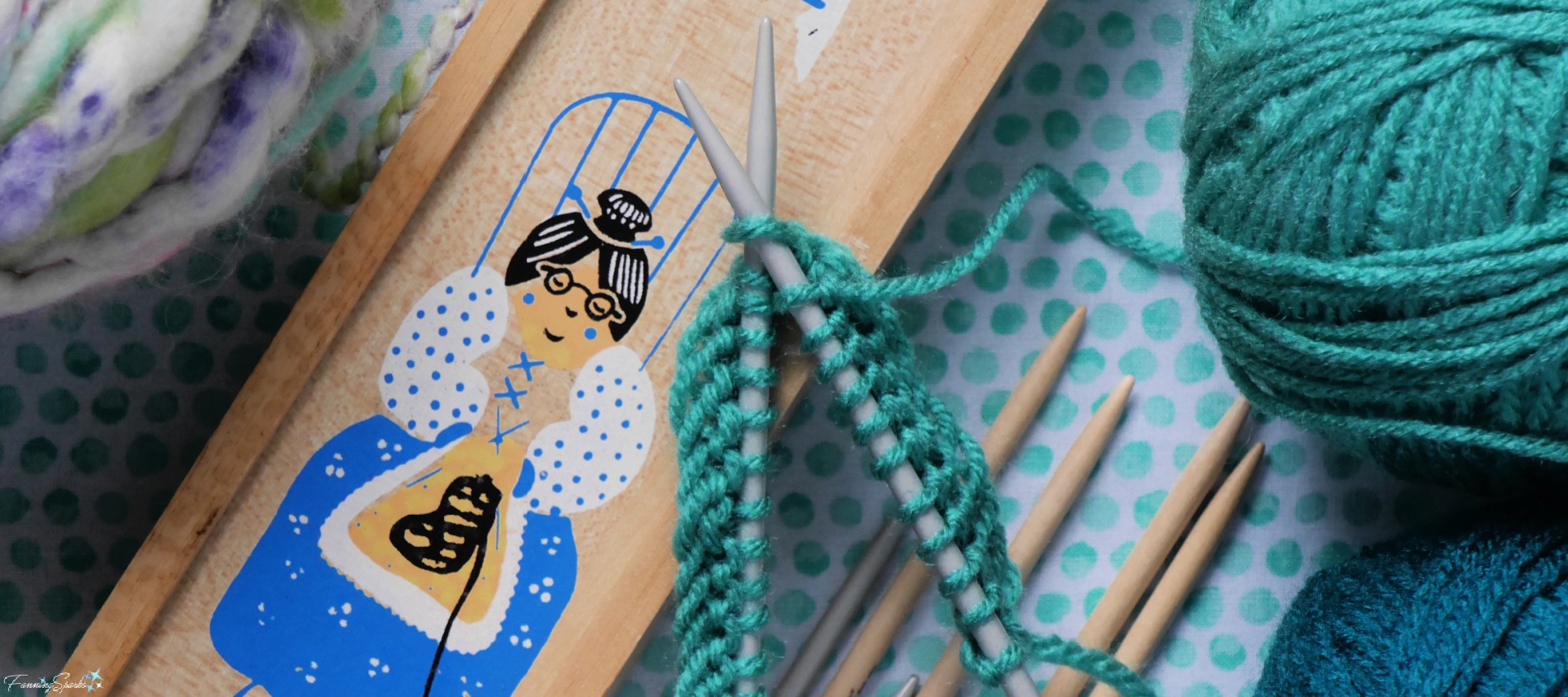
The old truism “everything old is new again” is perfectly illustrated by the current granny era trend ― grandma core decorating and grandma hobbies are having a moment.
So, what’s this all about? What is grandma core decorating? What are grandma hobbies? And why are they new again?
The group behind this movement seems to be mostly women in their 20s and 30s with a desire for calmer, simpler lives. These folks are decorating their homes in a way that reminds them of their grandparents’ homes. And in a conscious effort to fight digital fatigue, they’re replacing screen time with creative hands-on hobbies. Then, rather ironically, they’re all posting about it!
A quick Instagram search with hashtag #grandmacore reveals hundreds of thousands of posts featuring this design aesthetic.
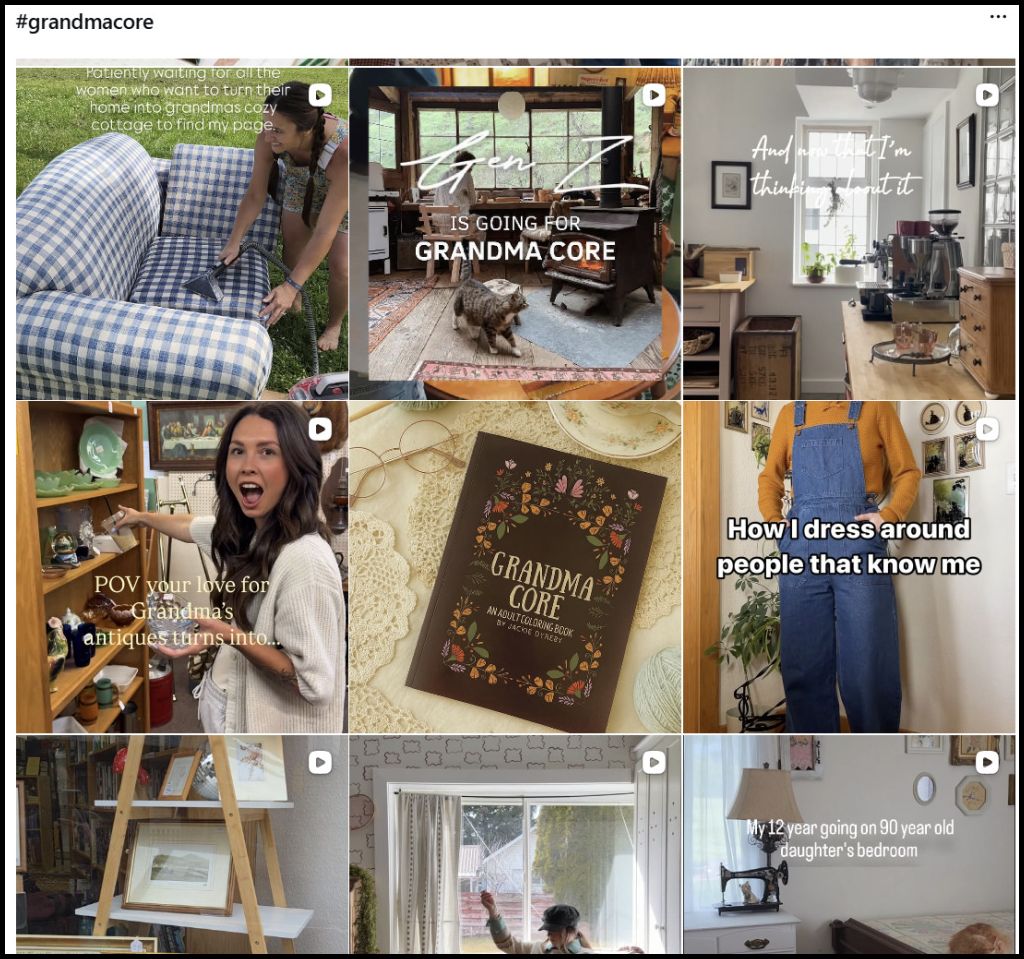
In the article, The Rise of Grandmacore, Mycah Gutierrez writes “Grandma’s home was a source of comfort. Grandmacore is a lifestyle and aesthetic trend that embraces the cozy, nostalgic, and comforting elements often associated with that home and the accompanying way of life. The aesthetic’s visual aspects focus on the idea of warmth, antiquity, and coziness. Thus, grandmacore often leans towards a maximalist approach.”
Grandmacore overlaps with other popular decorating styles including cottage décor, English country and grandmillennial.
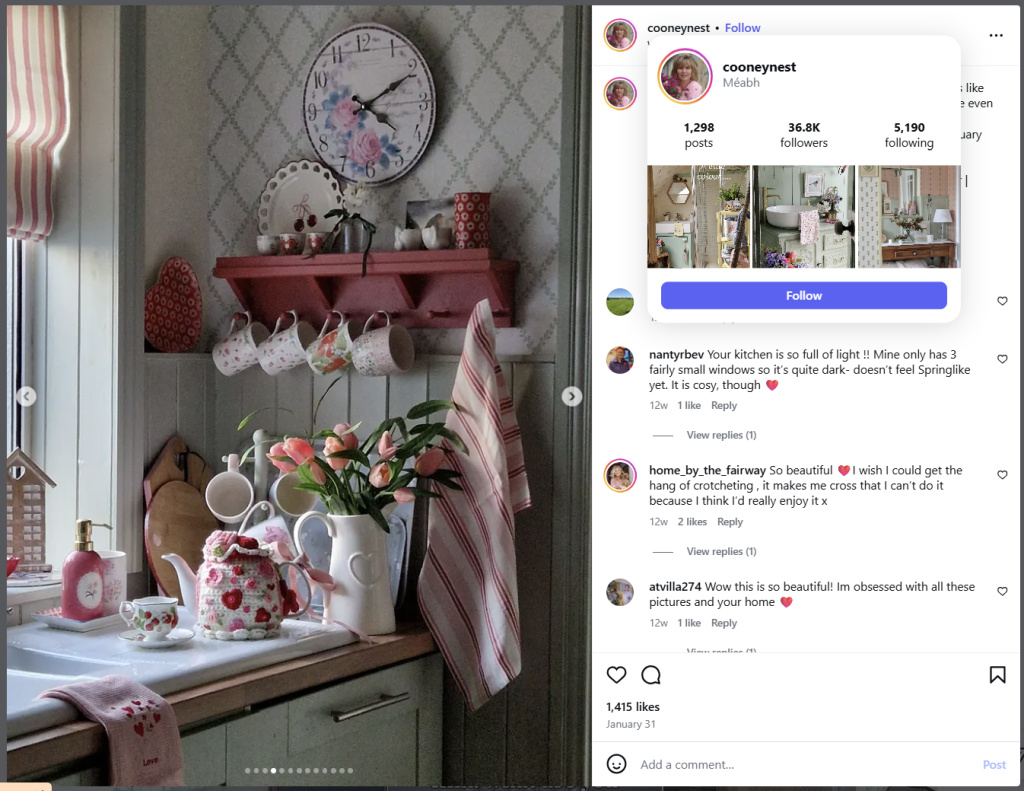
Here’s a closer look at the aesthetic from Méabh of CooneyNest on Instagram. The earthy colors, abundant florals, café curtains, wooden shelf/mug rack, analog clock and charming crocheted tea cosy all contribute to the vintage, cottage vibe.
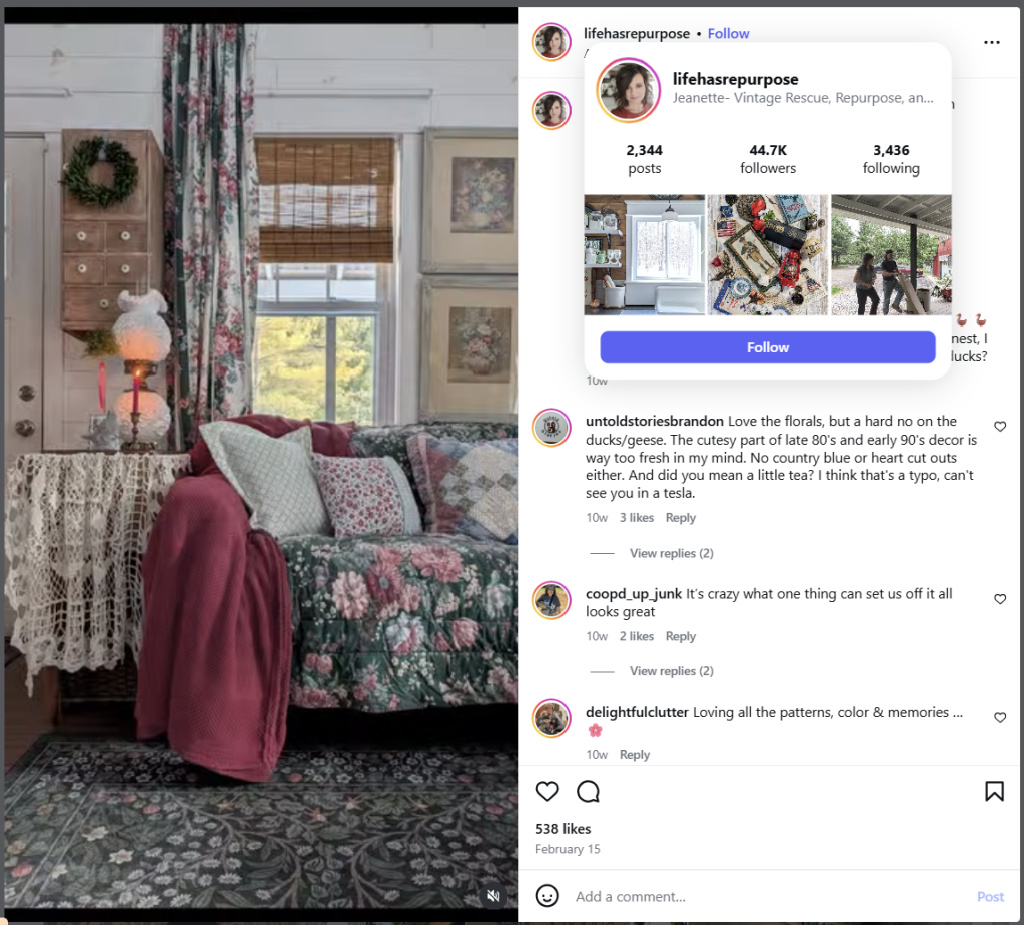
Here’s another example, this one by Life Has Repurpose, featuring lots of florals, pretty decorative pillows, a crocheted tablecloth, vintage accessories and the classic forest green and burgundy color palette.
Searching for #grandmahobbies returned similar results.
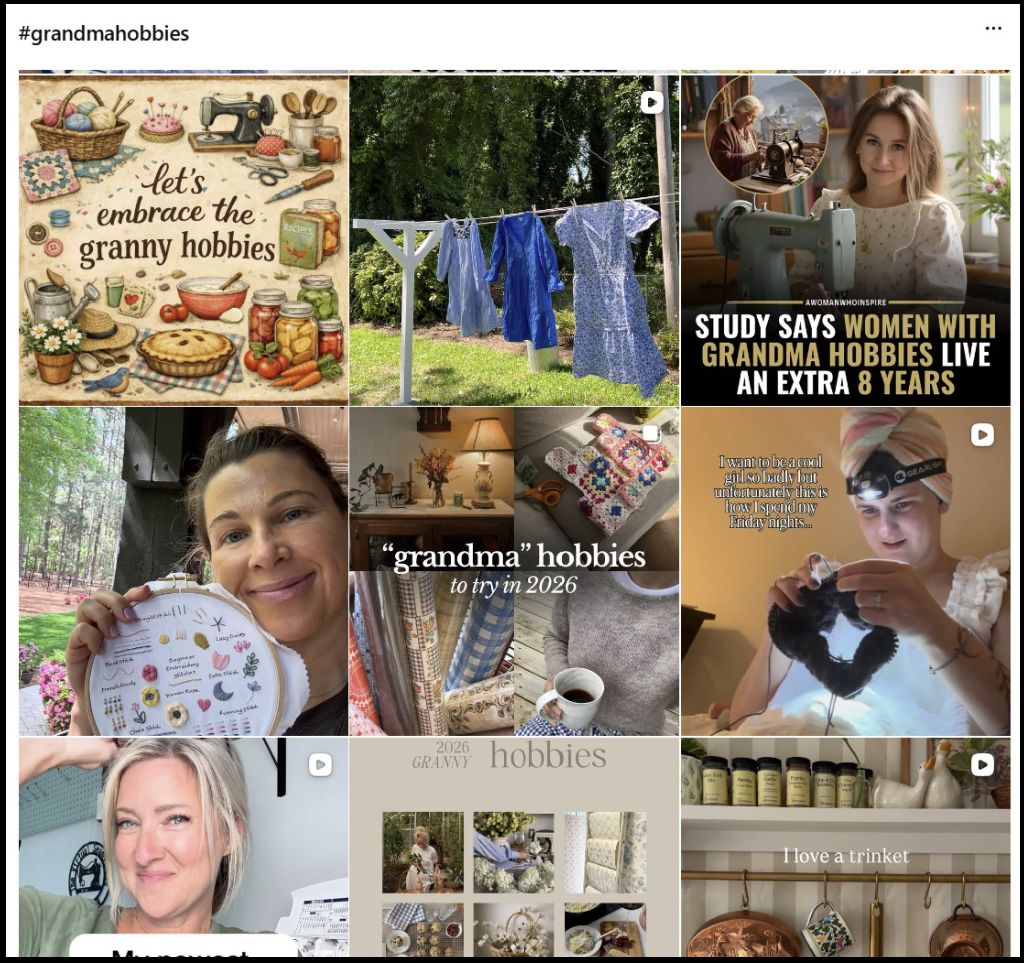
Grandma hobbies, also called cosy hobbies or analog hobbies, lean into traditional, some would say “old-fashioned”, pursuits like knitting, baking and gardening. “Generally, ‘grandmacore’ hobbies are the kinds of quiet, slow hobbies you can take your time doing. They also tend to be on the crafty and creative side—such as sewing and crocheting” writes Lisa Milbrand in the article, Cozy ‘Grandma’ Hobbies Are Trending—and They’re Surprisingly Good for Your Mental Health.
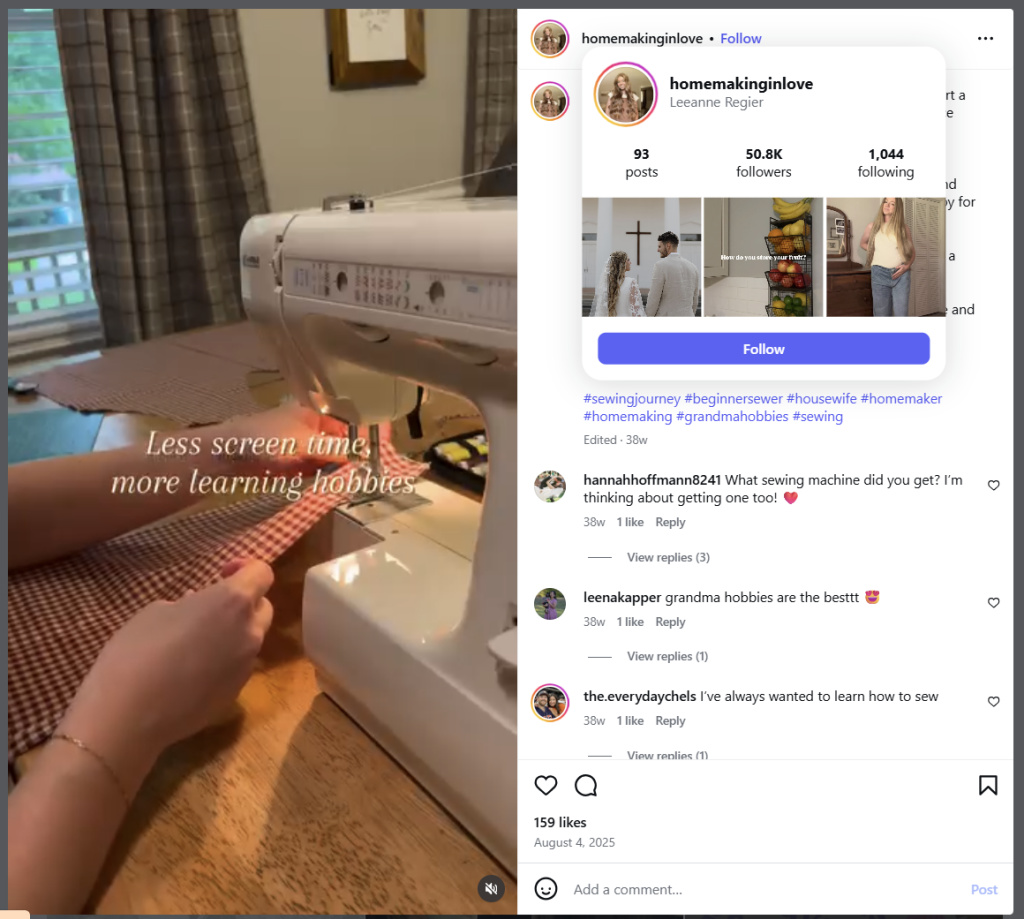
This post, by Home Making In Love, shares a popular sentiment “Less screen time, more learning hobbies”.
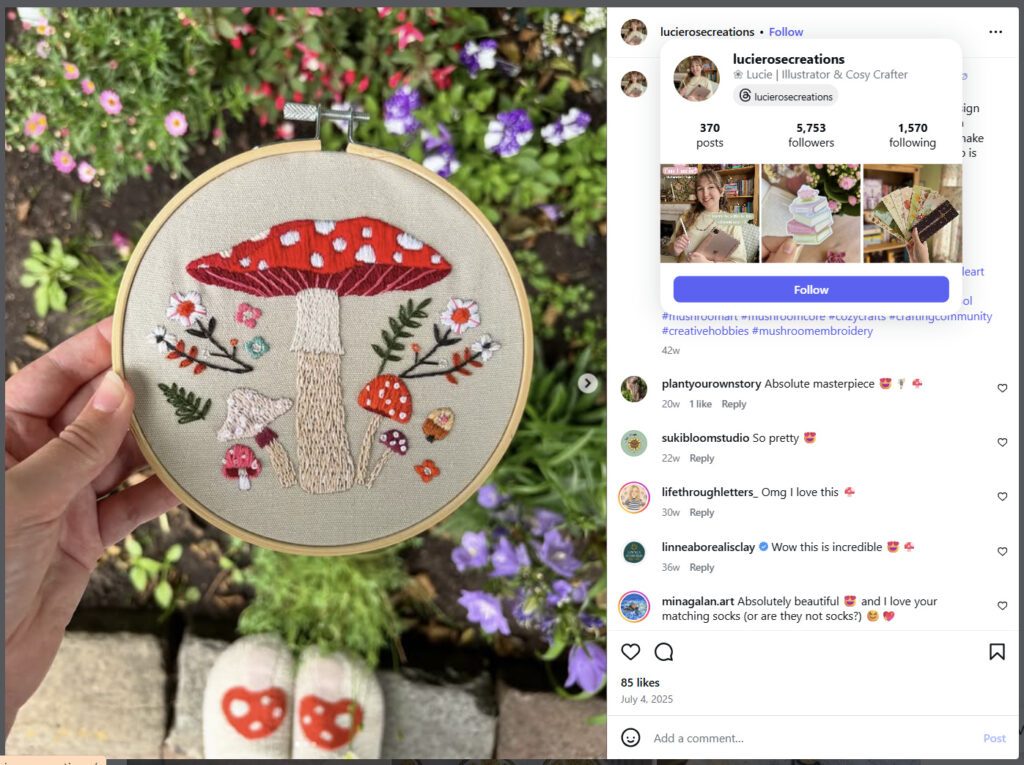
This finished embroidery piece was posted by Lucie Rose Creations under the caption “Grandma hobbies are just the best”.
During my research, I came across dozens of Instagram posts, like the one shown below, claiming that a “Study finds women with ‘grandma hobbies’ live on average 8 years longer”. Unfortunately, this seems to be an urban legend.
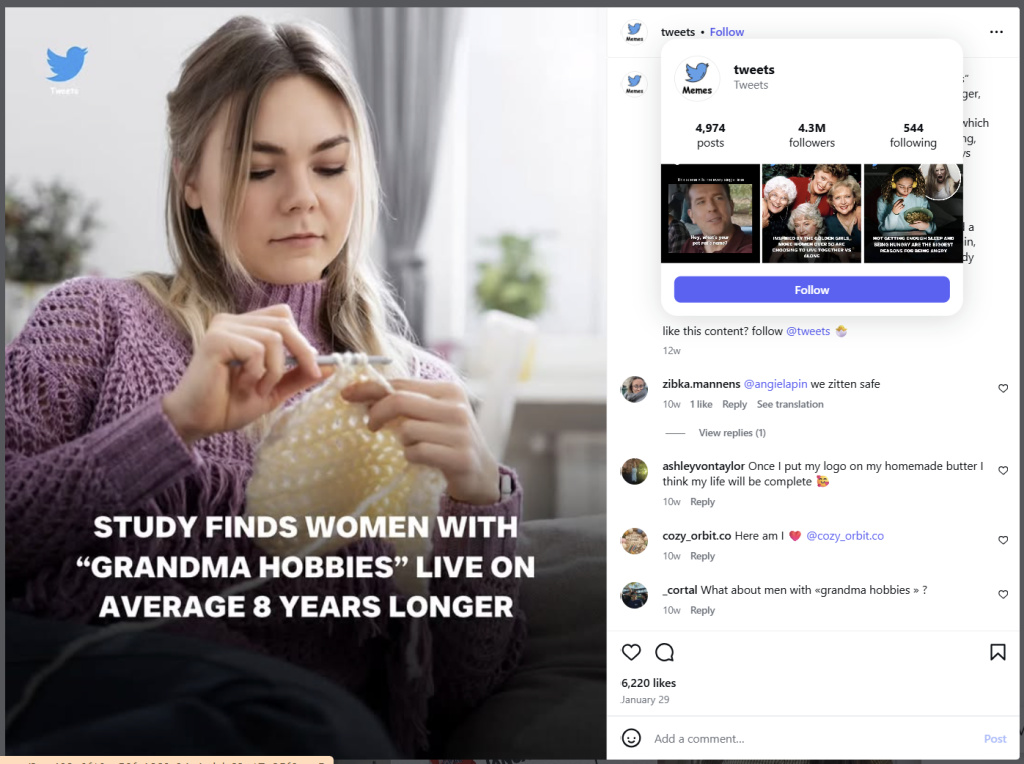
Despite my best efforts, I wasn’t able to find any studies to support the “women with grandma hobbies live longer” claim. I did, however, find several studies about hobbies and their positive effects on wellbeing (see More Info section below for a list of resources).
“Knitting—and other so-called ‘grandma hobbies’—is making a comeback, especially among younger generations” writes Tiffany Nieslanik in the National Geographic article, How Knitting May Be Rewiring Your Brain. She goes on to explain “But the benefits go beyond nostalgia. Recent studies suggest that slow, tactile tasks, such as knitting, may activate brain systems in ways that support long-term cognitive health in various ways, including engaging memory, attention, and motor function, while helping to regulate stress.”
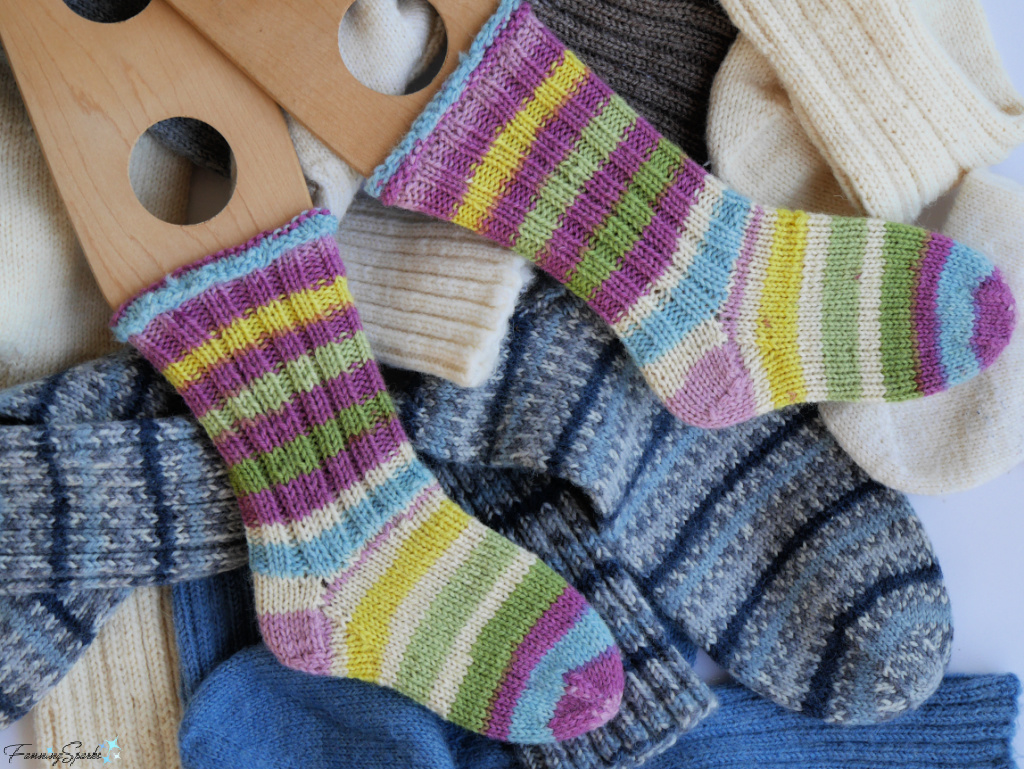
I’m a mere beginner myself but my mother was an avid, life-long knitter (see Socks by Mom). She’s no longer with us but her beautifully-made socks are a constant reminder of her care and love.
Thankfully, the good news isn’t only for knitters. Nieslanik writes “engaging in hands-on, mentally demanding hobbies—whether knitting, wood carving, or model building—may be one of the simplest ways to support brain health”.
I wouldn’t call my creative pursuits “grandma hobbies” but it’s no secret I love to create. Whether it’s sewing, embroidering, weaving, printing, wood carving, quilting, pottery making, mosaic making, glass working or some other activity ― I’m happiest when I’m making. In fact, the FanningSparks blog, which exists for the sheer purpose of sharing my love for making, is an all-consuming hobby in and of itself.
In his forward to the 2007 book Get a Hobby! 101 All-consuming Diversions for any Lifestyle by Tina Barseghian, Dr Miguel Figueroa, a neurologist who specializes in interventional pain management, writes “A hobby is any thoroughly absorbing pastime that you engage in outside your regular activities that focuses your mind on something that is not your usual worries. A good hobby requires you to learn a skill that is not part of your working life … A good, relaxing hobby is a personally pleasing occupation that brings you entirely into the moment. While you are practicing your hobby, … you are focused on accomplishing something right now, using your hands and mind in concert.”
The 101 hobbies featured in Barseghian’s book cover a broad range which I’ve mentally categorized as making, doing and observing. I’d consider the so-called granny hobbies, such as crocheting, knitting, quilting, sewing, soap making, and candle making, to be “making hobbies”. Other examples of making hobbies from Barseghian’s book would include robot building, model ships and ice sculpture. Hobbies such as birding, stargazing and, the lesser-known hobbies of storm chasing and plane spotting, could be considered “observing hobbies”. While “doing hobbies” mentioned in Barseghian’s list of 101 All-consuming Diversions for any Lifestyle include fantasy sports leagues, mushroom hunting and falconry.
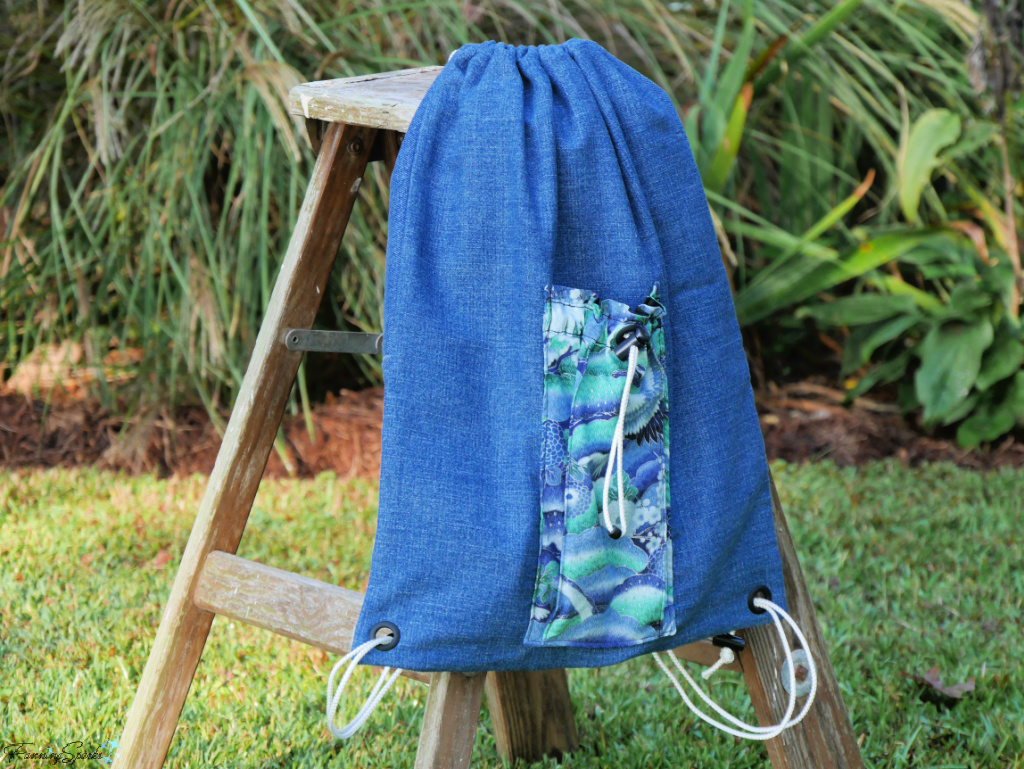
I’ve been sewing longer than I can remember. In fact, at one time I sewed my own clothes including the business suits I wore to the office ― back in the day when that was a thing! I no longer sew my own clothes but I use those sewing skills for a variety of projects. Shown below is a casual backpack I designed, sewed and featured in the blog post FanningSparks Drawstring Backpack – DIY Tutorial.
Whether you call it making or crafting, there are many hands-on, creative activities to choose from and the general consensus is these activities can reduce stress, alleviate anxiety and depression, and enhance overall well-being.
In their article, Craft Your Way to Mindfulness, the School of Stitched Textiles, which is the UK’s largest distance learning centre for textiles-based courses, makes a case for “the benefits of crafting and the impact it can have on overall mental well-being”. The article focuses on mindfulness. They explain that “activities that engage the mind and encourage relaxation can really help us get into the mindset of mindfulness: Not feeling down about the past or anxious about the future”.
They “believe crafting and needlework is the perfect choice”. The article goes on to describe the benefits of crafting including cognitive benefits, self fulfilment, progression, potential income, social connections and creativity.
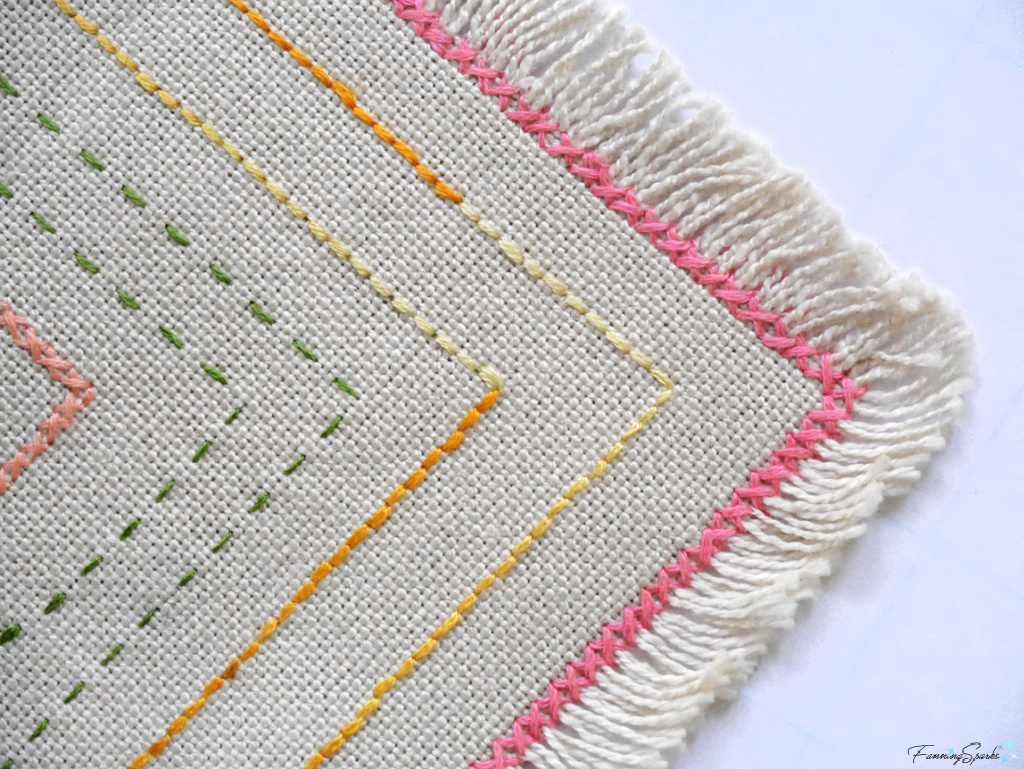
Embroidery, which is a form of needlework, is another craft I’ve enjoyed for many years. Shown below is an embroidery sampler I stitched when I was about six years old. It’s a sentimental part of my creative journey as I shared in my Welcome to FanningSparks blog post.
The School of Stitched Textiles article expands on the potential cognitive benefits: “There is nothing like switching off from the world and getting lost in a rhythmic, hypnotic, trance-like state. Hand Embroidery, knitting and crochet are particularly effective and are activities best suited towards mindfulness. Extensive studies have also found that crafting slows cognitive ageing and improves recall, memory and mental agility.”
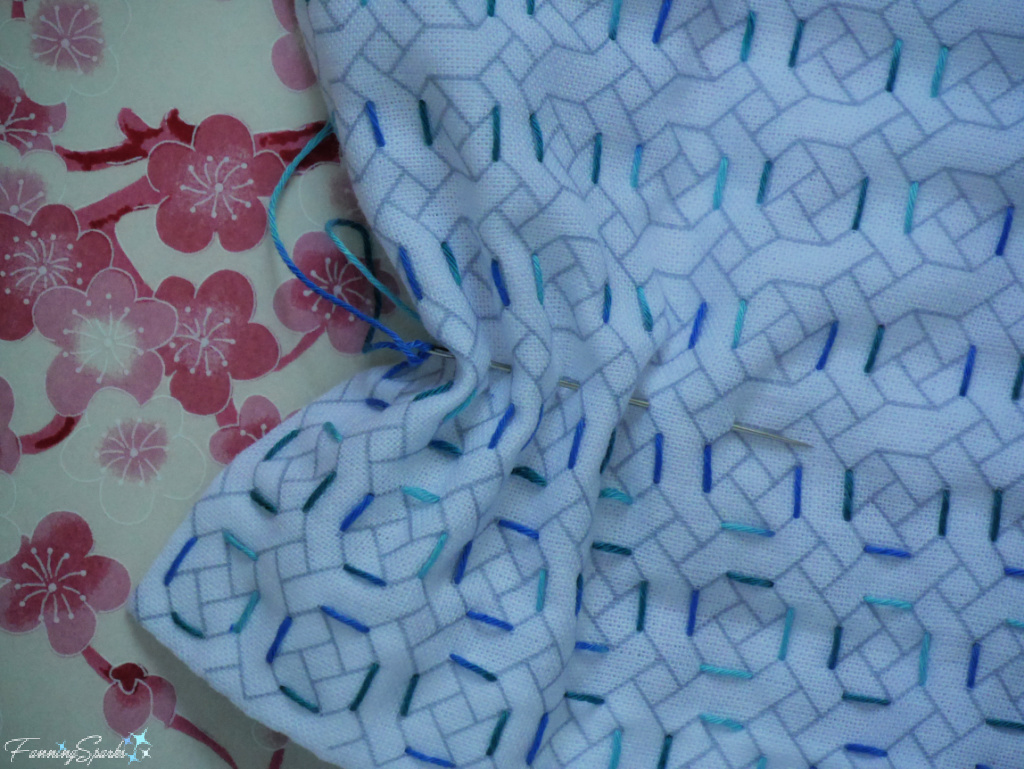
Speaking of “getting lost in a rhythmic, hypnotic, trance-like state” ― a feeling often referred to as “flow state” ― reminds me of the traditional Japanese hand-stitching technique called sashiko. The blog post, My Little Stab at Sashiko, reflects my first attempts to learn this technique. At the time, I’d taken an online Domestika course called Introduction to Japanese Sashiko Stitching. The instructor, Atsushi Futatsuya explained, “the core and essence of Sashiko as a practice is Unshin, which means stitching in the rhythm.” He used smooth, rhythmic hand movements to load up his needle with multiple stitches before pulling it through the fabric. With this technique he was able to quickly sew long, continuous lines of neat, even stitches. The rhythmical, repetitive nature of stitching in this way promotes mindfulness.
Shown below was my first attempt at using the Unshin technique. I quickly learned it would take some practice to achieve the smooth, effortless rhythm.
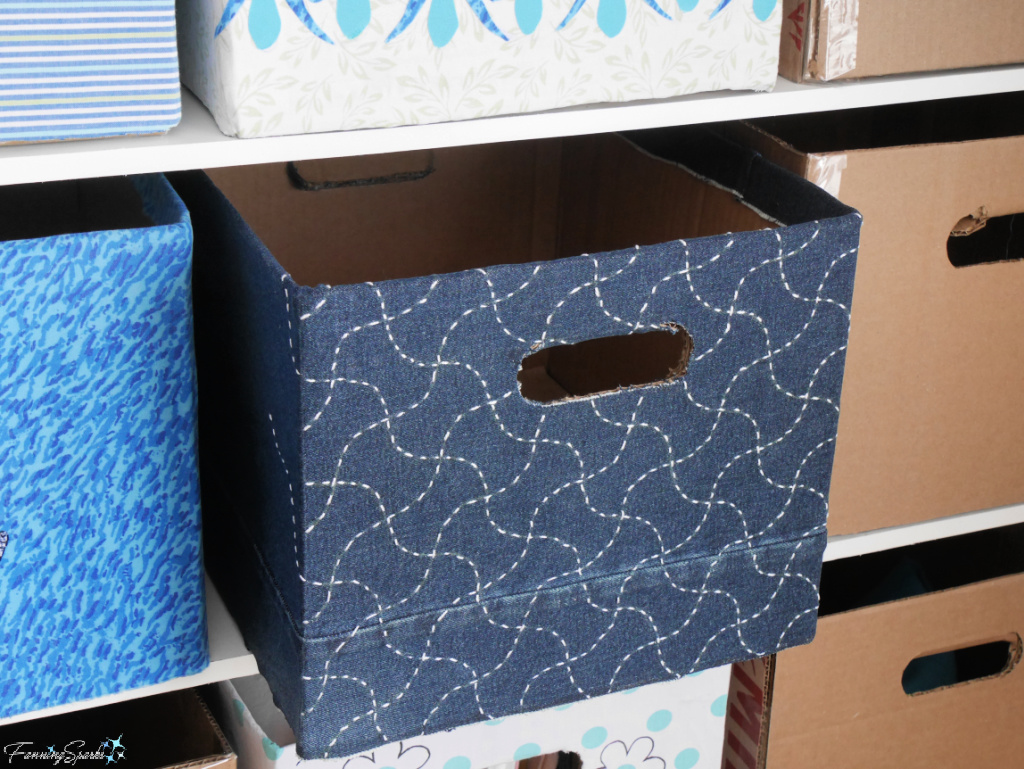
I’ve since completed a few more sashiko projects and the Unshin method is getting easier to apply. While stitching the fabric for the storage bin pictured below (see Wrapping Up the Storage Bin Mini Gallery Project for more details), I was immersed in the rhythmic, relaxing, quiet nature of the stitching and actually experienced the elusive flow state.
Returning to the National Geographic article, How Knitting May Be Rewiring Your Brain, author Nieslanik explains, “Knitting uniquely combines fine motor coordination, creative planning, and rhythmic bilateral movement—all of which engage different brain systems at once. … That bilateral stimulation—created by the alternating use of both hands—is linked to reduced cortisol levels, increased serotonin and dopamine, and improved emotional regulation. … It also engages the brain’s dopamine system in ways that can improve focus and potentially delay age-related cognitive decline. … Plus, since activities like knitting require planning, sequencing, and problem-solving, they activate executive function alongside motor and emotional systems. This full-brain engagement helps reinforce neural connectivity, a crucial tool for maintaining the brain’s flexibility and resilience as we age”. Nieslanik’s claims are supported with expert opinions and scientific studies.
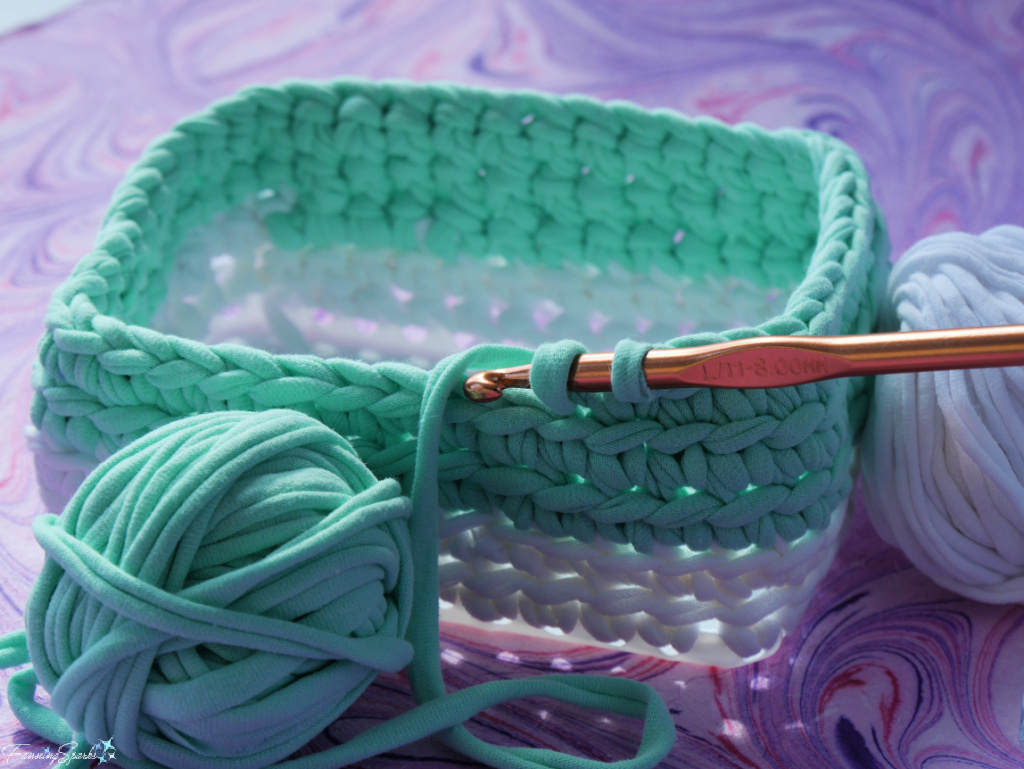
Shown below is an example of crocheting which requires fine motor coordination, creative planning and rhythmic bilateral movement in the same way knitting does. See my previous blog post T-Shirt Yarn Basket – DIY Tutorial for the details on this project.
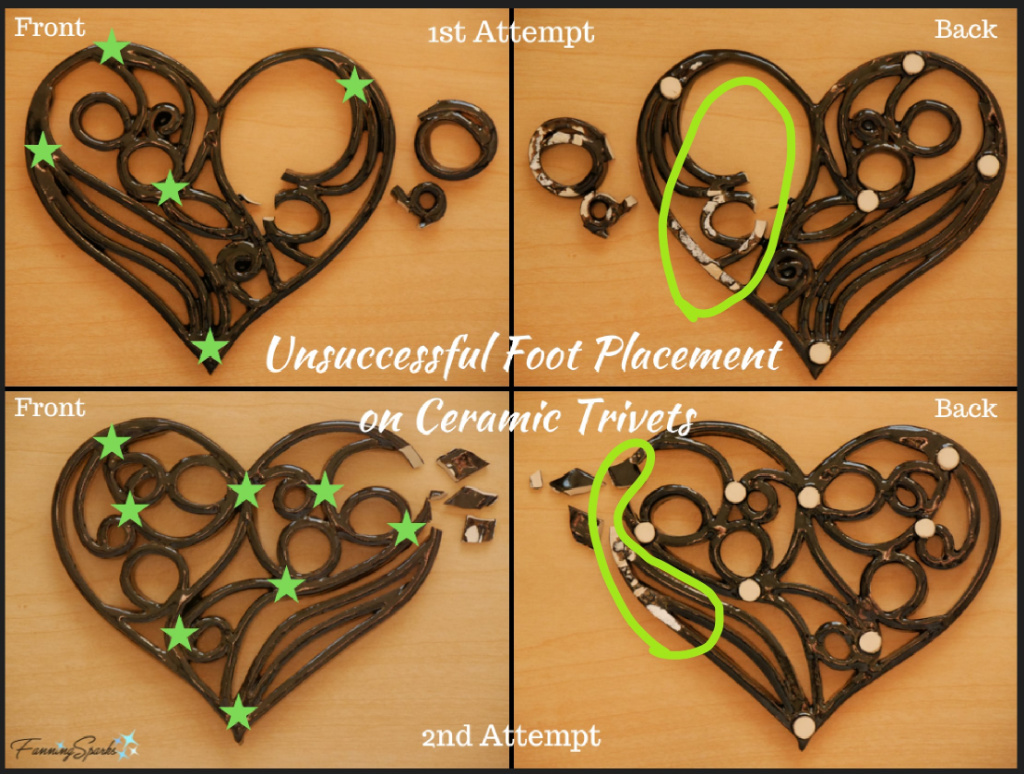
I seem to have an endless supply of photos illustrating the importance of creative problem solving! But I chose this one because it features a creative pursuit that’s not been mentioned yet – working with clay to make pottery. The photo shows a detailed analysis of what went wrong with the heart-shaped ceramic trivets I attempted to make. See Maker Heart Challenge #2: Broken Heart Trivet for the full story.
Interestingly, “the cognitive benefits of activities like knitting aren’t about the task itself—they’re about the process of learning something new” writes Nieslanik. “When you challenge the brain with unfamiliar tasks, such as learning to knit, it lights up new pathways, offering a unique neurological boost. With time and repetition, those same actions become fluent and meditative, allowing the brain to shift into a restorative flow state. This challenge-to-mastery arc helps maintain neural plasticity. However, you must continually reinvent the challenges for your brain as you master old ones.”
Upon reflection, that seems quite logical to me. The amount of mental effort needed to learn something new is noticeably more than the amount needed to complete a familiar task. I’m reminded of my recent basketry project which I shared in Ta-da ― It’s a Tatza!. At one stage in the process, we had to build out the outer circular pattern as demonstrated by our instructor in this photo.
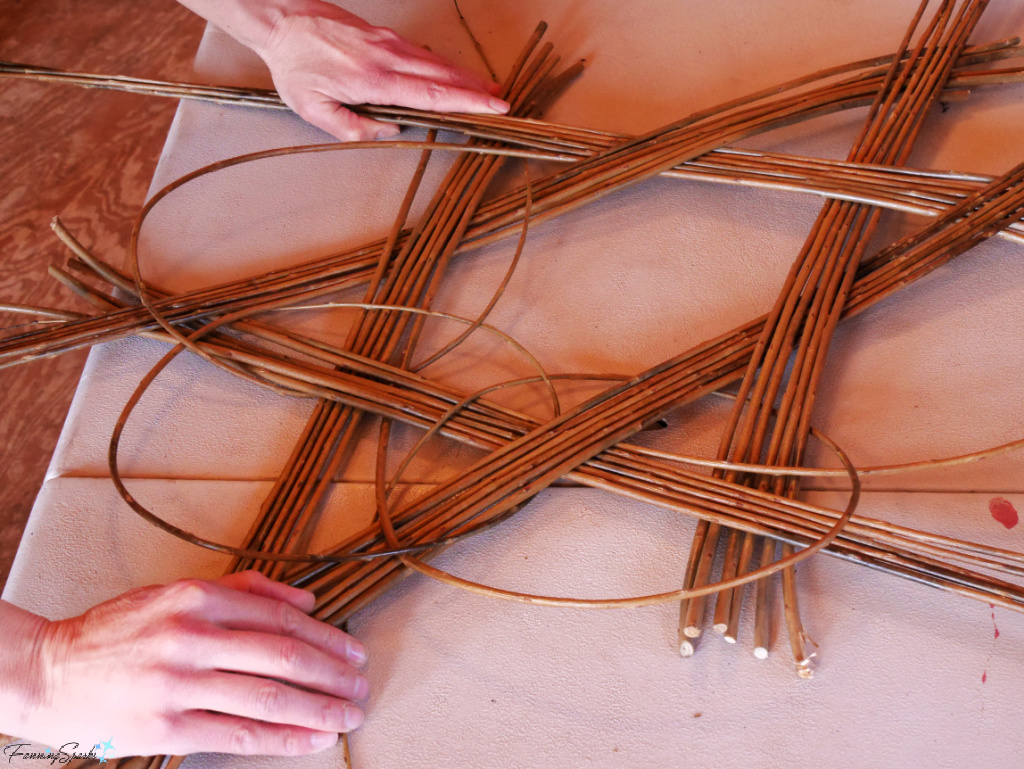
In that post, I wrote about the concentration needed to get the pattern right. One blink ― one lapse in concentration ― and we were backing up to retrace the pattern and remind ourselves which rods went where. I guess we were all lighting up new pathways and benefiting from neurological boosts that day!
The final area of focus in the How Knitting May Be Rewiring Your Brain article is “how hobbies support healthy aging”. The author reports, “For aging brains, creative hobbies can offer a form of low-stakes cognitive training—mental workouts that strengthen neural wiring and flexibility over time. … tactile hobbies create ‘greater brain connectivity that helps aging populations where neurons are naturally dying off as the aging process happens.’ Activities like quilting, cross-stitching, whittling, pottery, or even bookbinding offer similar cognitive benefits, especially when they involve both hands, sequence-based thinking, and a learning curve.”
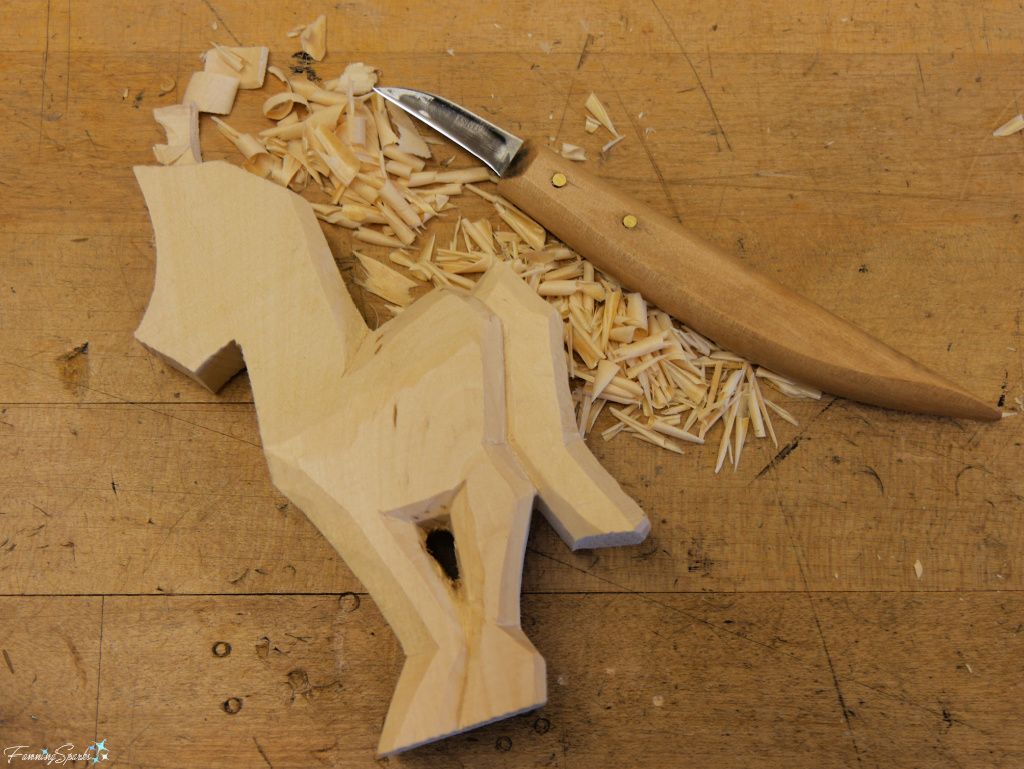
As mentioned in the quote, whittling, which is a form of wood carving similar to flat-plane carving, is an activity which involves both hands, requires sequence-based thinking and has a learning curve. Shown below is one of my first wood carvings. I originally shared this project in the blog post Flat-Plane Carving with Harley.
In another study, Exploring the Impact of Hobbies on Mental Health and Well-Being: A Scoping Review by Issues in Mental Health Nursing in 2025, a key finding was “that a balanced life, inclusive of hobbies can provide the opportunity to develop enriching and fulfilling relationships and support networks”. The study goes on to report, “In our review, social interaction and support were associated with a good quality of life, with hobbies providing a means of socialising and developing friendships and networks. Hobbyists are, therefore, more likely to be socially active and have greater social support, resulting in improved mental health”.
I’ve personally experienced the joy of bonding over shared interests and being part of an active creative community. The John C Campbell Folk School, which I’ve written about many times here on the blog, has a mission to “transform lives, bringing people together in a nurturing environment for experiences in learning and community life that spark self-discovery.” See the Folk School category for a complete list of relevant blog posts.
In fact, as I mentioned in the blog post Carving in Brasstown, there was always something happening in the evening at the Folk School. There were square, contra and circle dances, music concerts, craft demonstrations, storytelling and bingo. And those were only the scheduled activities. There were also informal get-togethers for music jams and shared making sessions. One of these informal activities was Thursday evening wood carving (I believe, this group now meets on a different schedule). A small group of regulars‒Folk School employees, work study students and members of the community‒would get-together under the cherished guidance of Richard Carter. There was a little bit of carving and a whole lot of camaraderie and laughter. That type of shared making and informal support group is the heart and soul of the Folk School.
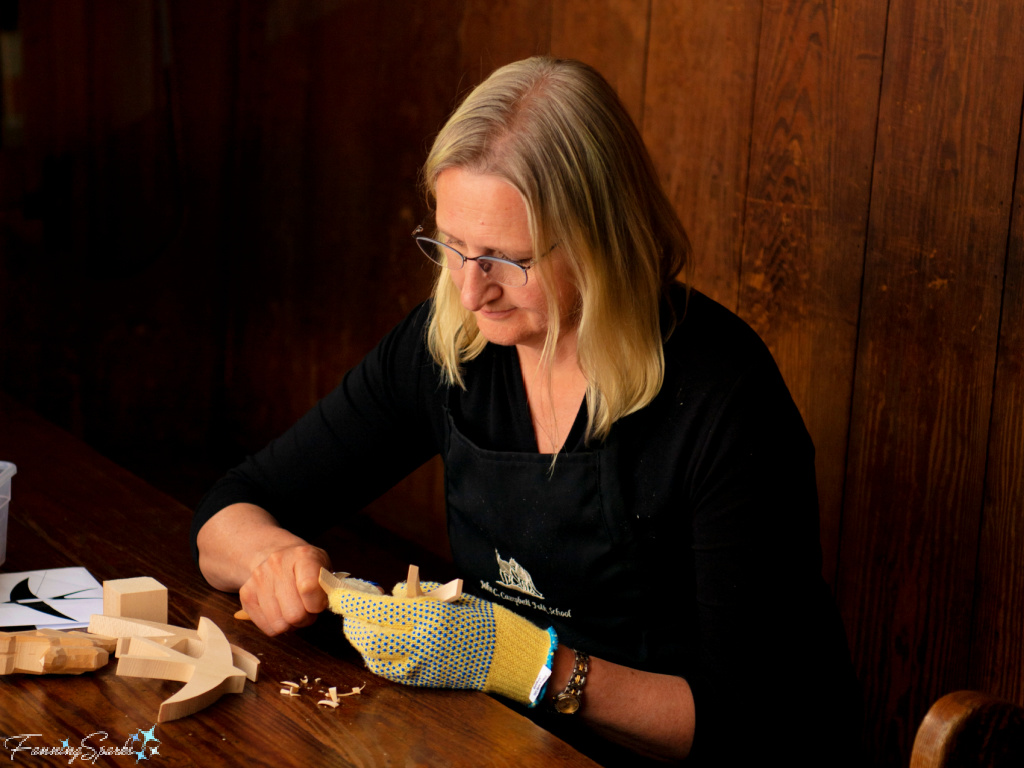
Shown below I’m carving wooden swallows at the Folk School. This was one of the many creative hobbies I learned about during my time at the Folk School. See Oh, the Things You’ll Learn! for a more complete explanation.
To recap, Gen Zs and Millennials with a love of vintage style and a desire for simpler times are popularizing grandma core decorating and grandma hobbies. Scientific studies are proving that creative hobbies can benefit the health and wellness of participants ― regardless of age or gender.
Hobbies which are experienced in real life and engage the mind and hands in concert are best. The ideal hobby has the following characteristics:
. 1) is mentally challenging (requires learning something new, requires attention, involves creative planning and sequencing, requires problem-solving, and engages memory)
. 2) requires hands-on activity (engages fine motor skills, relies on physical touch, requires coordination, and ideally involves bilateral movement)
. 3) encourages relaxation (encourages slow progress, involves repetitive rhythmic movement, and encourages mediative contemplation)
. 4) offers social connection and networking.
More Info
Previous blog posts mentioned in this blog post include:
. Socks by Mom
. FanningSparks Drawstring Backpack – DIY Tutorial
. Welcome to FanningSparks
. My Little Stab at Sashiko
. Wrapping Up the Storage Bin Mini Gallery Project
. T-Shirt Yarn Basket – DIY Tutorial
. Maker Heart Challenge #2: Broken Heart Trivet
. Ta-da ― It’s a Tatza!
. Flat-Plane Carving with Harley
. Carving in Brasstown
. Oh, the Things You’ll Learn!
The following resources were consulted in writing this blog post:
. Various Instagram postings
. The Rise of Grandmacore article by Mycah Gutierrez; Published on Conversations to Remember website in Sept 2025
. Cozy ‘Grandma’ Hobbies Are Trending—and They’re Surprisingly Good for Your Mental Health article by Lisa Milbrand; Published on Real Simple website in Feb 2026
. How Knitting May Be Rewiring Your Brain National Geographic article by Tiffany Nieslanik; Published on National Geographic website in July 2025
. Get a Hobby! 101 All-consuming Diversions for any Lifestyle book by Tina Barseghian which is available here on Internet Archives
. Craft Your Way to Mindfulness article by School of Stitched Textiles; Updated May 2023
. Exploring the Impact of Hobbies on Mental Health and Well-Being: A Scoping Review by Cleary et al; Published by Issues in Mental Health Nursing in 2025
. Craft Psychology article by Knowledge House for Craft which reviews Anne Kirketerp’s book, Craft Psychology: How Crafting Promotes Health
. Knitting in America book by Melanie Falick which is available here on Internet Archives
. The Cozy Comeback: Why Grandmacore is for Millennials, Gen Z—Everyone article by Barbara K. Stump; Published on Galvin Growth Group website in May 2025
. Why Old-Fashioned ‘Grandma’ Hobbies Are So Good for Teen Mental Health article by Erica Jackson Curran; Published on Parents website in Mar 2026
. Psychologists Reveal What’s Really Behind Your Obsession With ‘Grandma Things’ article by Meghan Shouse; Published on House Beautiful website in Sept 2025
. People With “Grandma Hobbies” Have Better Mental Health, Experts Say article by Marisa LaScala; Published on House Beautiful website in Mar 2025
. Hobby Engagement and All-Cause and Cause-Specific Mortality Risk Among People Aged 50 Years and Older in 19 Countries Study by Yujia Guo and Fan Yang; Published by Journal of Global Health in July 2025
. Knitting Brings Calmness and Structure to the Lives of People with Mental Illness article; Published by University of Gothenburg in Mar 2024
. A Life Tangled in Yarns – Leisure Knitting for Well-Being Study by Mia Porko-Hudd and Barbro Sjöberg of Åbo Akademi University in Finland; Published on Research Gate in Nov 2019
. Not Just Crocheting and Wood Turning – Finnish Craft Education Advances Project Management Skills and a Sense of Competence article; Published by University of Helsinki in Jan 2018
. How the Arts Heal: A Review of the Neural Mechanisms Behind the Therapeutic Effects of Creative Arts on Mental and Physical Health Study by Kelly Sarah Barnett and Fabian Vasiu; Published by Balance Medical Center Vancouver in Oct 2024
. Effect of Gardening Activities on Domains of Health: A Systematic Review and Meta-Analysis Study by Feifei Wang and Szilvia Boros; Published BMC Public Health in Mar 2025.
Today’s Takeaways
1. “Grandma’s home was a source of comfort. Grandmacore is a lifestyle and aesthetic trend that embraces the cozy, nostalgic, and comforting elements often associated with that home and the accompanying way of life.” Mycah Gutierrez
2. “Generally, ‘grandmacore’ hobbies are the kinds of quiet, slow hobbies you can take your time doing. They also tend to be on the crafty and creative side” Lisa Milbrand
3. “When you challenge the brain with unfamiliar tasks, such as learning to knit, it lights up new pathways, offering a unique neurological boost. With time and repetition, those same actions become fluent and meditative, allowing the brain to shift into a restorative flow state. This challenge-to-mastery arc helps maintain neural plasticity. However, you must continually reinvent the challenges for your brain as you master old ones.” Tiffany Nieslanik


Comments are closed.