
Looking back at 2025, I see wall to wall moving boxes and packing paper ― a mountain of corrugated cardboard enabled our move from Georgia USA to Nova Scotia Canada. Boxes dominated our lives from the time we started selectively packing our belongings in January, through the major milestones of Move Out Week in July and Move In Day in November, through to today as we finish unpacking. 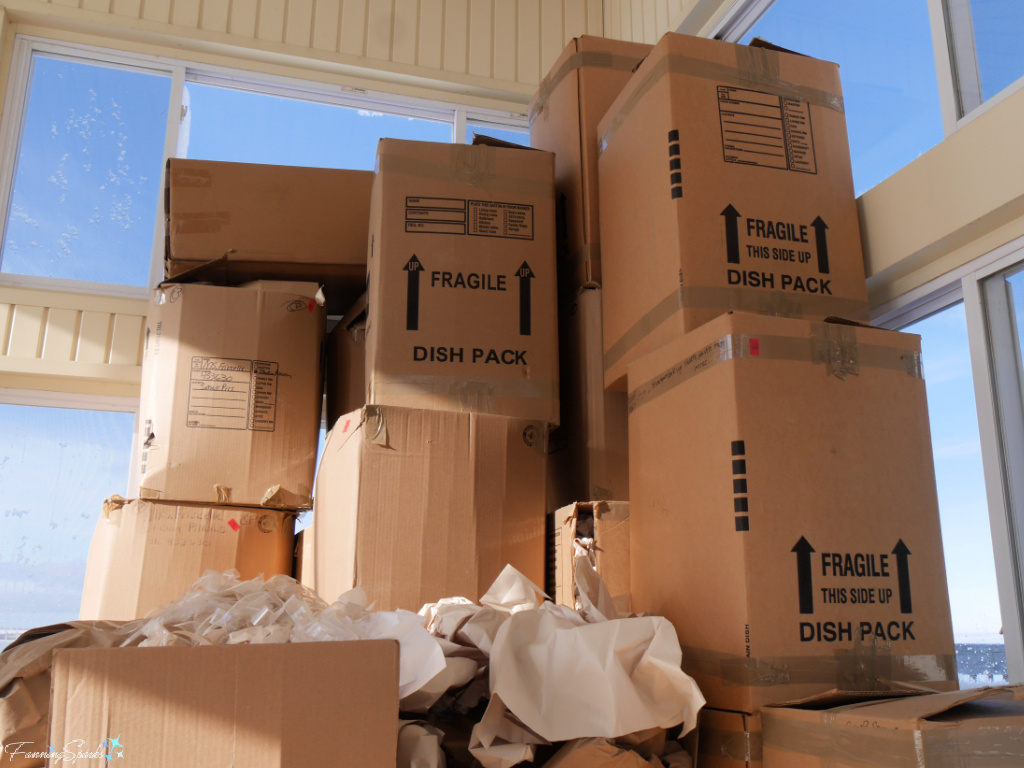
Cardboard boxes are a necessary part of moving. But I can’t help but wonder what happens to all that cardboard after the move? Typically, moving companies offer “debris removal” as part of their service meaning they’ll come pick up the used materials at a scheduled time. In preparation, we box up the used packing paper and flatten and pile the empty cartons as we unpack. It’s their responsibility to ensure the moving materials are properly recycled. 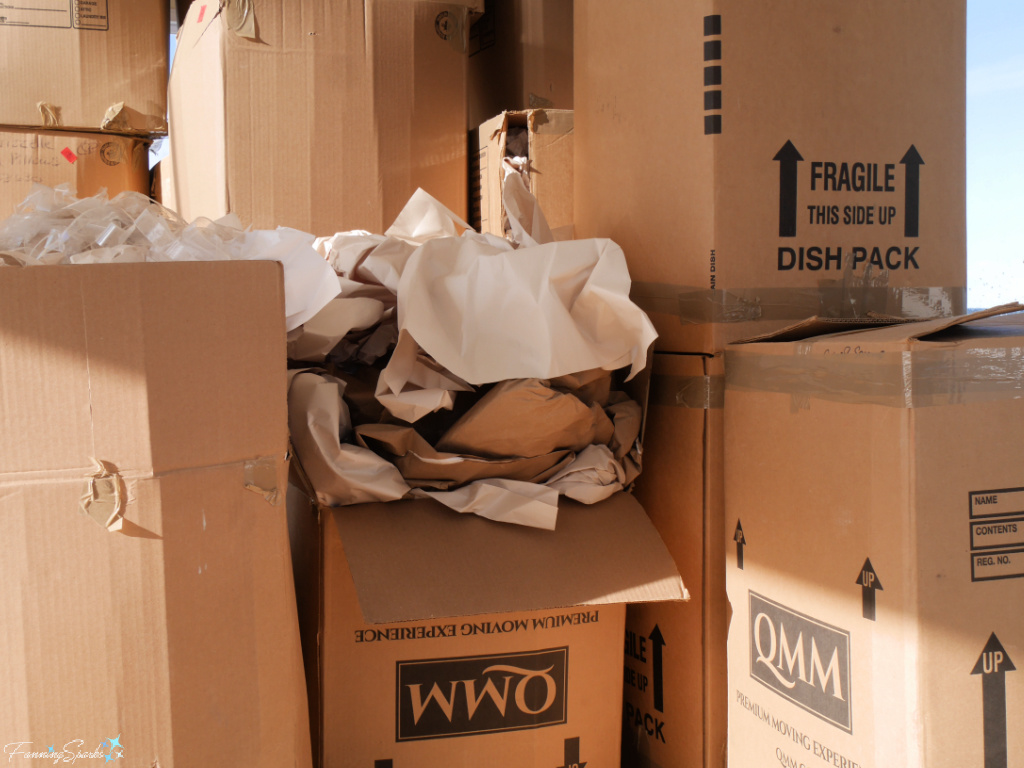
In the meantime, I’ve been delving into options for reusing and repurposing cardboard. Turns out, there are some pretty interesting possibilities ― both functional and aesthetic.
Moving boxes, shipping cartons and storage containers are obvious examples of how cardboard is functional, practical and utilitarian. But I also discovered other, rather surprising, instances of cardboard being used for functional purposes. The Wiggle Side Chair, designed and created by the award-winning, world-renowned architect and designer Frank Gehry, is an oft-cited example.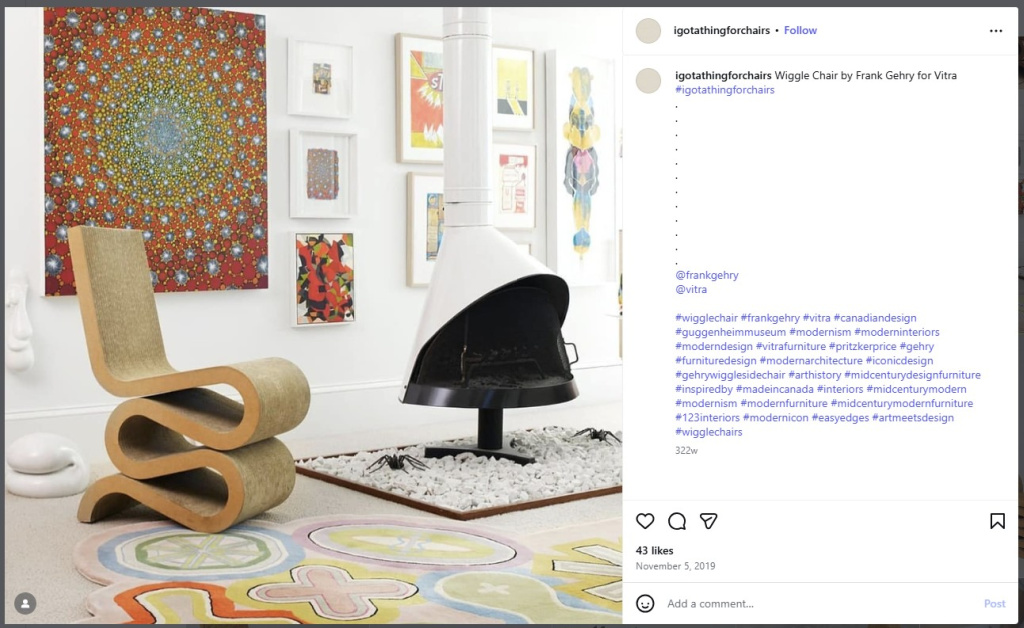
Gehry is better known for his postmodern design buildings ― most famously the Guggenheim Museum Bilbao in Spain, the Walt Disney Concert Hall in Los Angeles and the Louis Vuitton Foundation in Paris. As an aside, I’ve had the pleasure of seeing a few of Gehry’s stunning works including the Jay Pritzker Pavilion and BP Pedestrian Bridge in Chicago USA…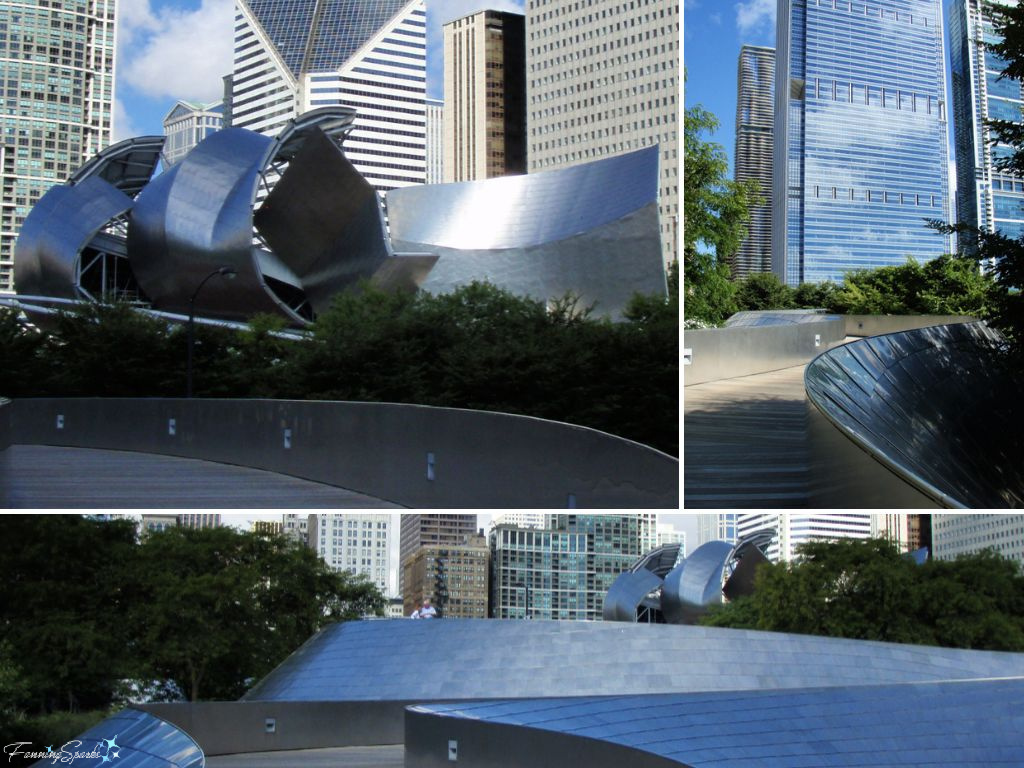
… and El Peix, a gigantic fish-shaped sculpture, in Barcelona Spain.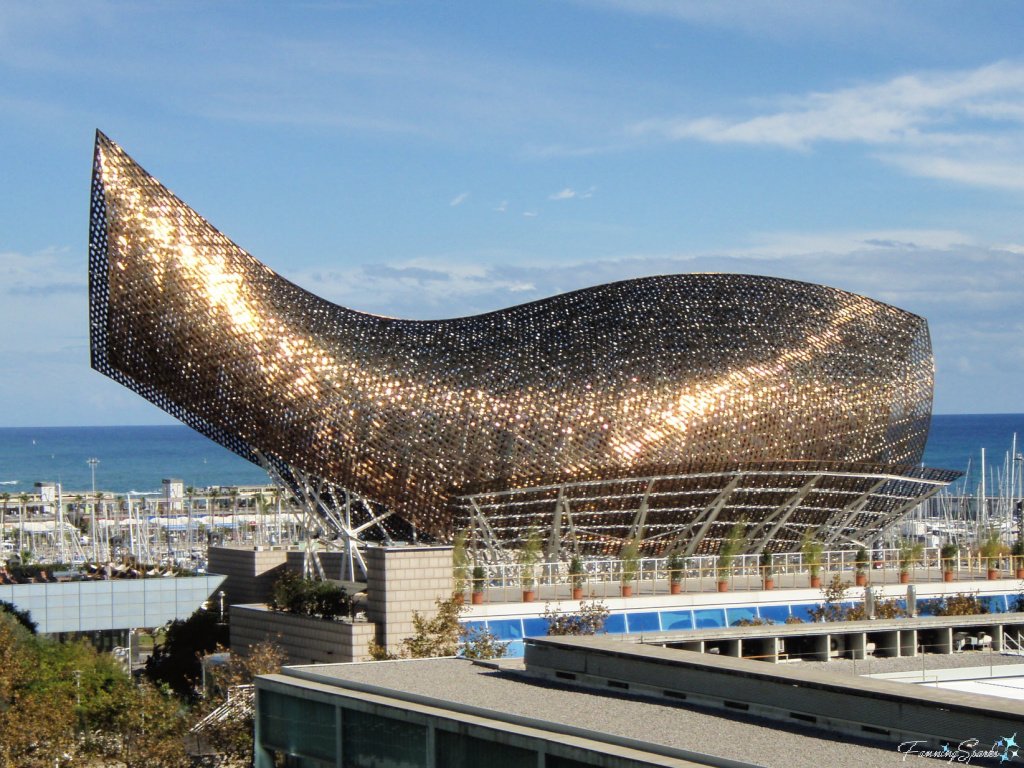
Early in his career, as the story goes, Gehry was asked to make over a famous artist’s studio on a shoestring budget. In what would become his signature style, Gehry employed unconventional forms and materials to create something totally unique. Described as “life-size squiggles rendered in laminated cardboard, … the fully functional chairs, stools, tables and one ottoman… were an instant hit” writes Karen Templer in her article for Salon titled Frank Gehry.
As noted in the below Instagram post, “The inspiration came from Gehry’s fascination with corrugated cardboard, a material he had often used to create architectural models. To him, cardboard wasn’t just disposable packaging-it was a lightweight, durable, and surprisingly strong medium with untapped potential.”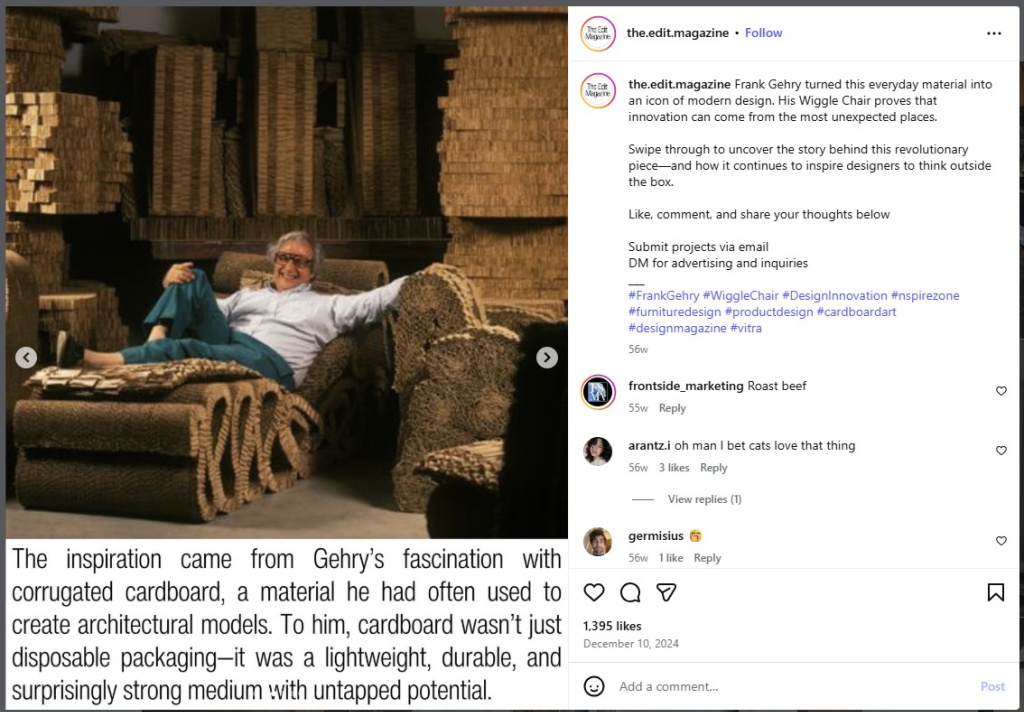
Gehry’s cardboard furniture went on to influence numerous artists and makers. Take Ann Weber, for instance. “Weber, known for her monumental and sensuous sculptures made from discarded boxes, first began working with the material in 1991 after discovering architect Frank Gehry’s groundbreaking cardboard furniture.”
Interestingly, Weber recently curated an exhibition titled Cardboard: Infinite Possibilities which just opened at the Wönzimer Gallery in Los Angeles USA. Their press release goes on to explain “this exhibition celebrates cardboard as a powerful medium for innovation, transformation, and metaphor … Gehry’s iconic Easy Edges Wiggle Chair (1972) will be featured in the exhibition, marking a full-circle moment that connects inspiration and influence across generations”.
The exhibition “highlights artists who have elevated cardboard from the everyday to the extraordinary”. Shown below is Weber’s Miracles and Wonder created by layering, fastening, and intertwining strips of cardboard.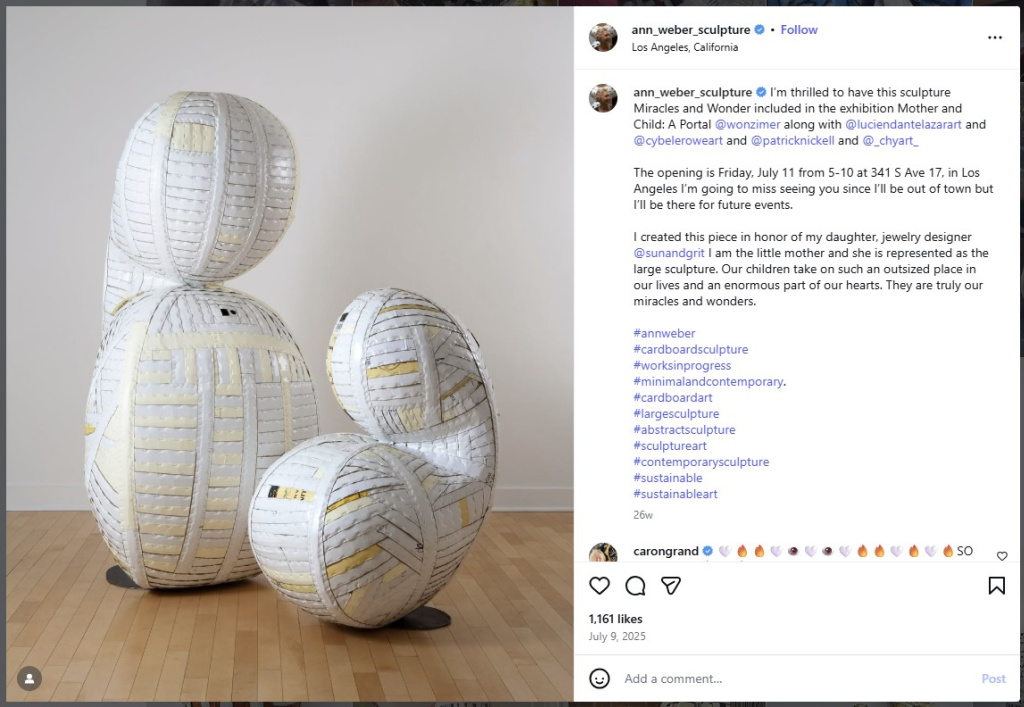
Scott Fife’s work will also be exhibited in the Cardboard: Infinite Possibilities exhibition. Shown below is one of Fife’s pieces, Leroy the Big Pup, a nearly 3-meter (10-foot) high sculpture which greets visitors at the Tacoma Art Museum in Washington USA. As noted in a post by the Museum, “Fife sculpted the portrait of his puppy from sheets of cardboard that he cut, bent, and then secured with wood glue and drywall screws. Evidence of how he worked remains on the sculpture as pencil marks and drips of dried glue on the surface. He used the marks as guides for his work as he layered pieces of cardboard to build Leroy’s form.”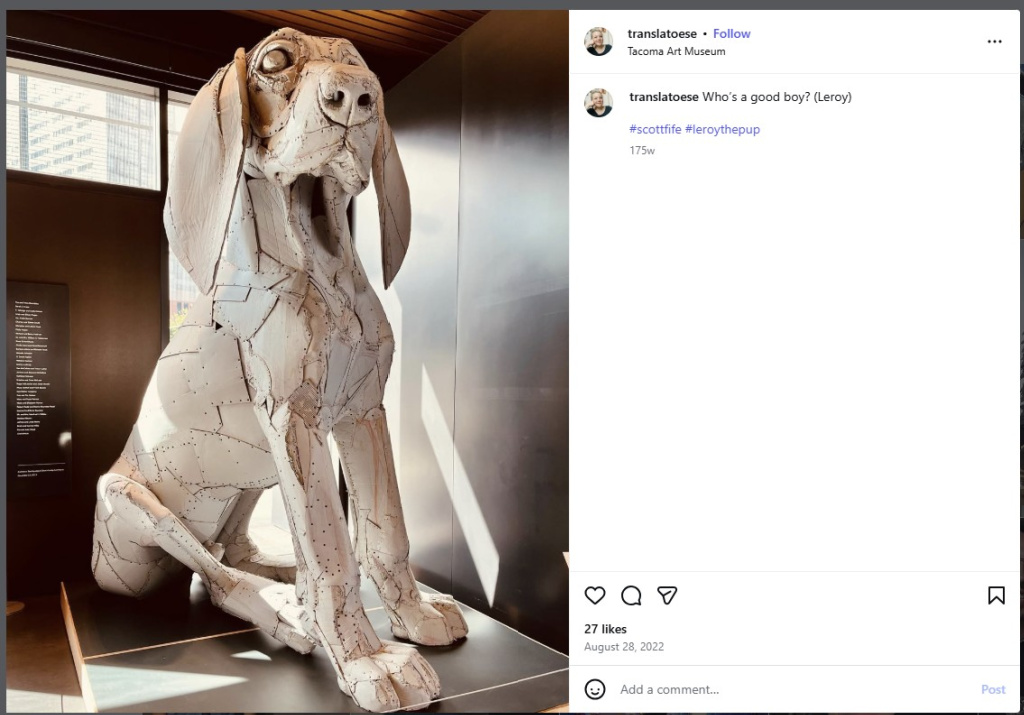
The exhibition at the Wönzimer Gallery will also include work by artist Jodi Hays. Hays is quoted as saying “I build collage surfaces from bleached and dyed cardboard… pairing art historical language with humble materials, the high with the low, to bring together contemporary and ancient notions of shelter, protection, and care”. This piece, titled Field Trip, was created with dyed cardboard and fabric.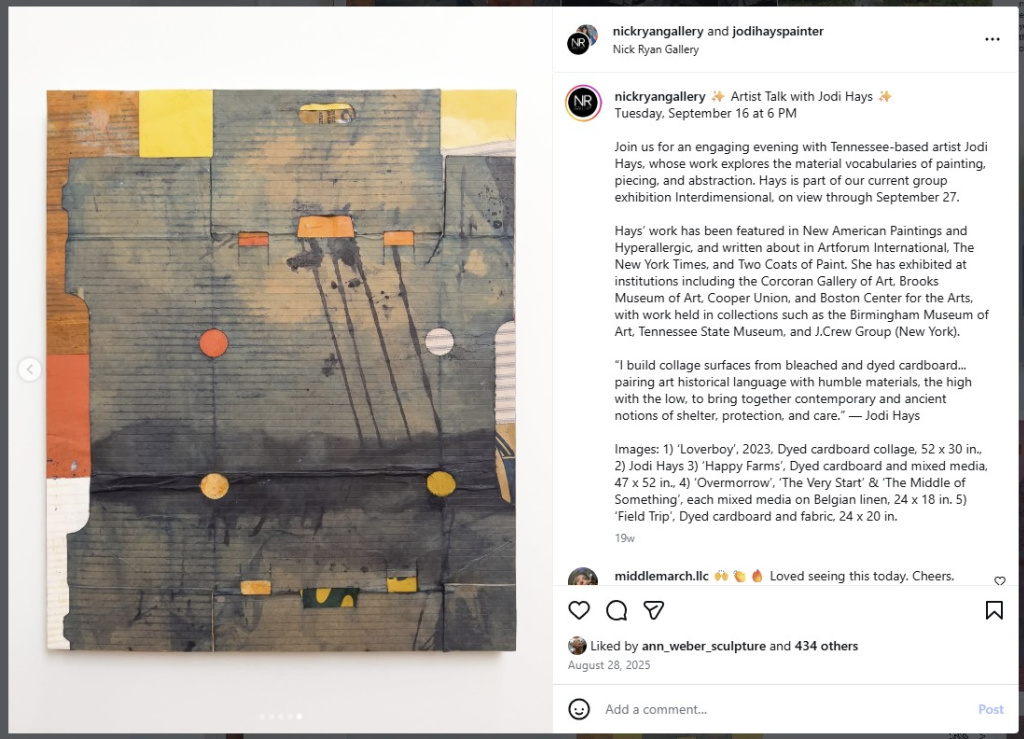
An extended internet search confirms cardboard does indeed provide infinite possibilities. In addition to the cardboard works by Gehry, Weber, Fife, and Hays, I found artwork ranging from simple illustrations to sophisticated sculptures to intricate models.
Javier Pérez, of CINTASCOTCH, is an illustrator and stop motion animator who shares his “Cardboard Experiments” on Instagram. I love the way his simple illustrations cleverly incorporate sections of peeled cardboard. 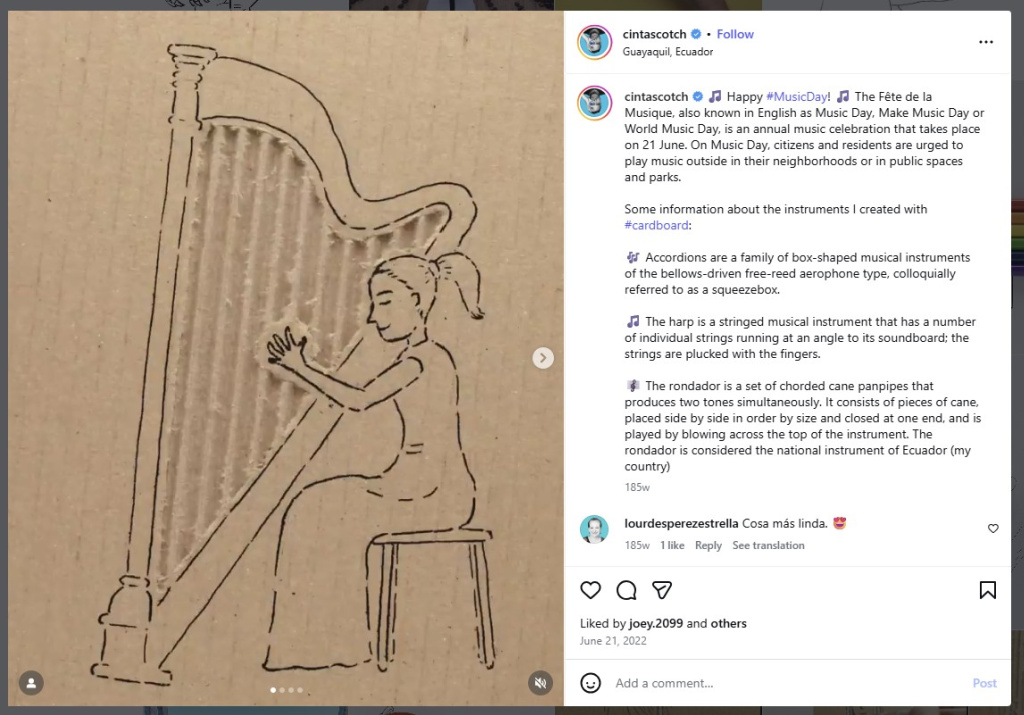
Another brilliant, but straightforward, use of cardboard appears in the creations of John Marshall. Known as Sunset Selfies, Marshall’s Instagram profile describes his work as “Cardboard Magic at Sunset”. He “uses cardboard to draw and then cut out his scene pairing it with a beautiful sunset to create an impressive impact. He then captions his scenes. He sees them as a single-panel cartoon like The Far Side.” explains Beth McEvoy in her article Sunset Selfies Creator Trying to Change the World by Educating Orphans.
This stunning piece, tagged #demonslayer, is all the more impressive…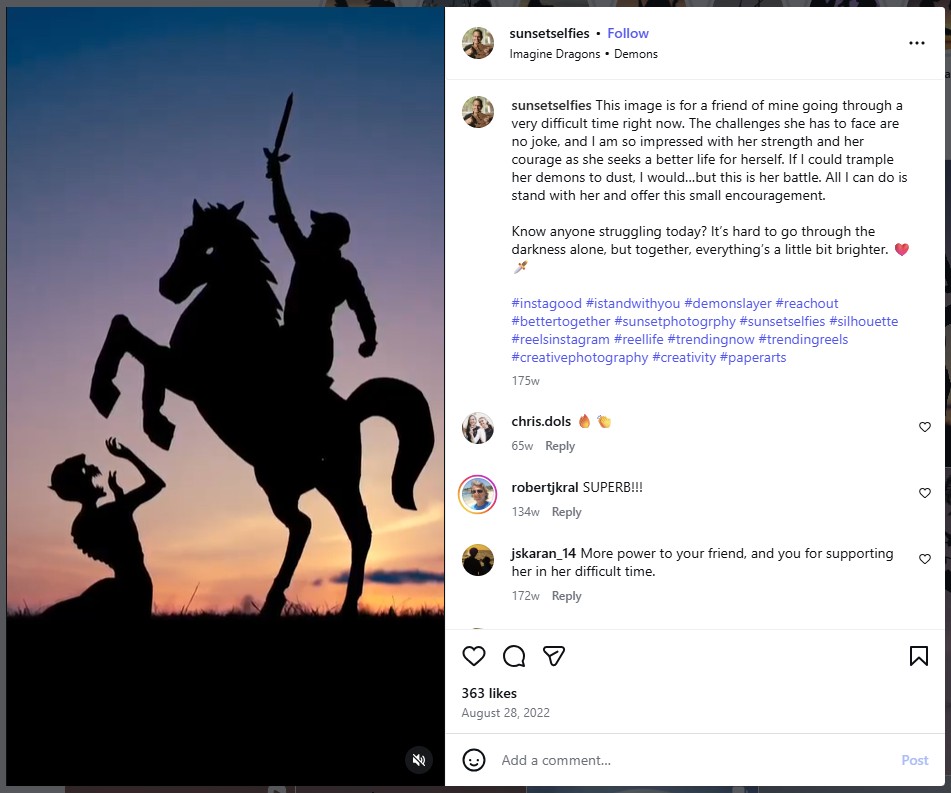
… with a peek behind the scenes. The trick as John Marshall reveals in his Instagram post is perspective.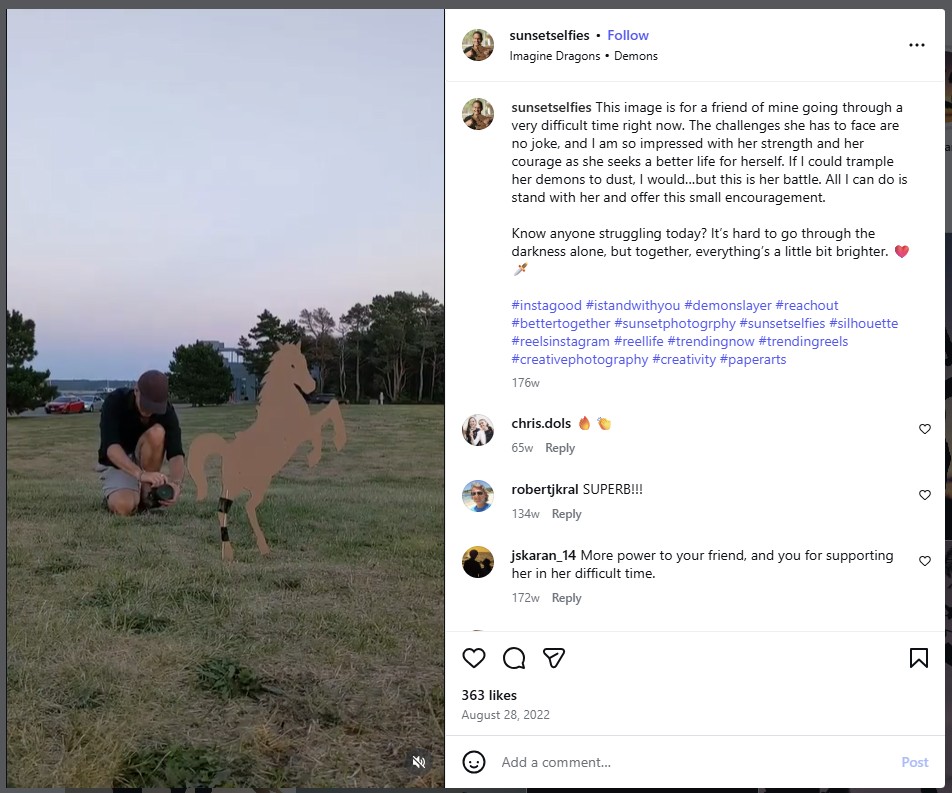
After spending 17 years as a computer software professional, Warren King came to art rather unexpectedly. “And when I did,” King explains in his 2023 acceptance speech for the National Sculpture Society (NSS)’s prestigious Alex J. Ettl Grant, “I was making … figurative sculptures using whatever I had around the house… it just happened to be corrugated cardboard”.
King generously shares his work on Instagram revealing both his completed pieces and his creative process. Shown below is his piece, The Emperor Takes Five, which honours King’s Chinese heritage and pays tribute to his grandfather. 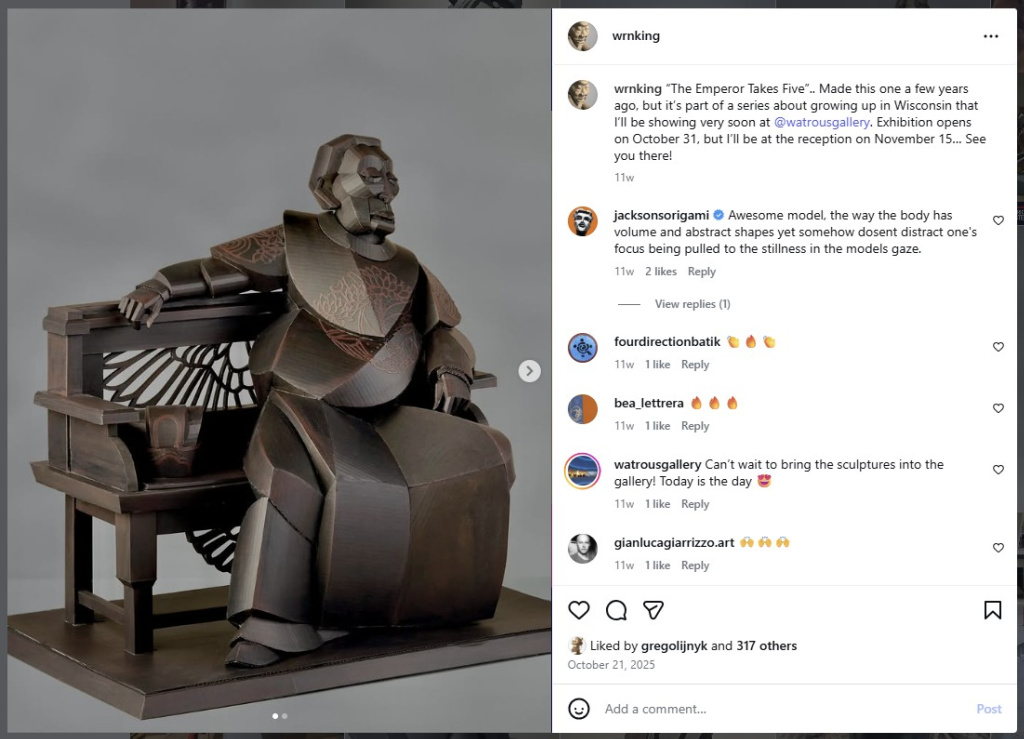
In this peek behind the scenes, King explains some of the factors he considered when creating this figure’s face. 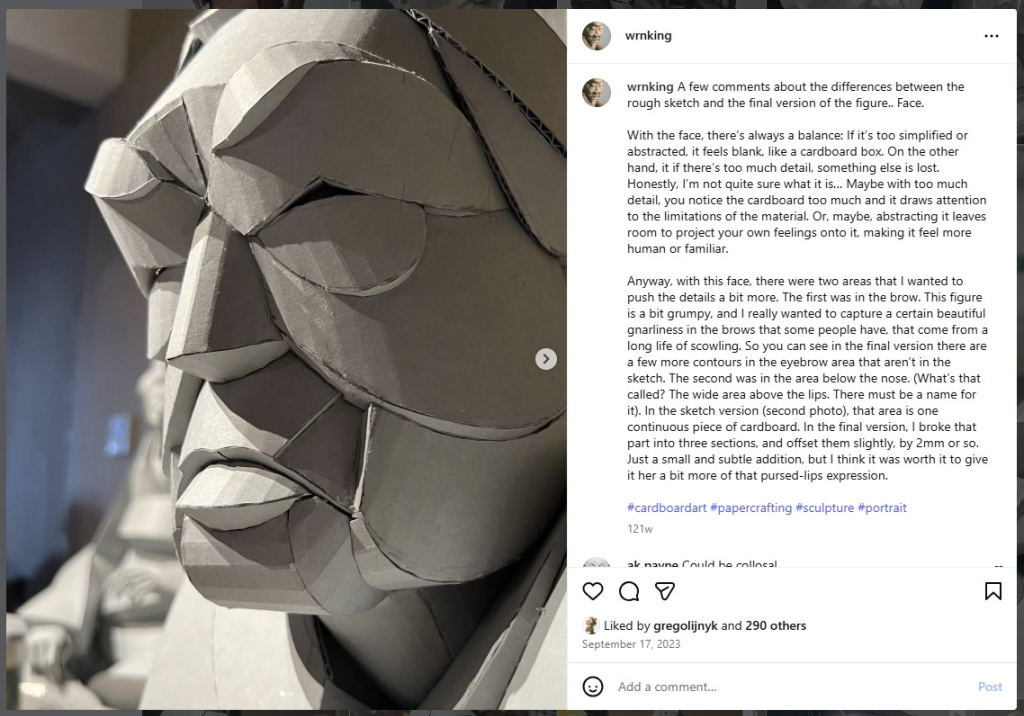 Laurence Vallières creates larger-than-life cardboard sculptures. As noted on Instagram, “A graduate of Concordia University in visual arts, Laurence furthered her studies in ceramics in Los Angeles before shifting to her signature medium, cardboard, during an artist residency in Russia. She transforms this abundant, urban material into detailed, vibrant sculptures, bringing a unique blend of visual appeal and subtle humor to her work.”
Shown below is Vallières’ giant duck sculpture on display at the 2023 Just For Laughs Festival in Montreal Canada.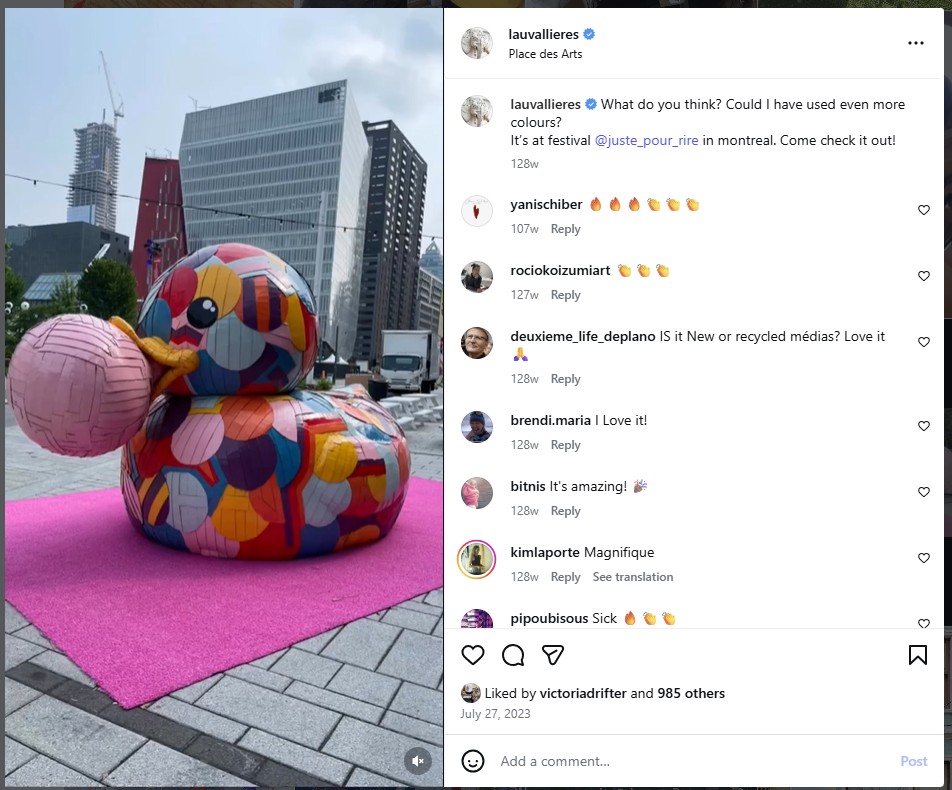
Josh Gluckstein describes himself as a “cardboard artist” on his Instagram profile. In the 2023 article Expressive Portraits Emerge from Pieces of Cardboard in Josh Gluckstein’s Wildlife Sculptures, he explains “In lockdown, at home and out of my studio, I was very keen to get to work, but didn’t have the access to the materials I would usually use … That’s when I discovered cardboard, which was readily available, and I found it to be an incredibly versatile medium”. Gluckstein’s cardboard sculptures are astonishingly life-like.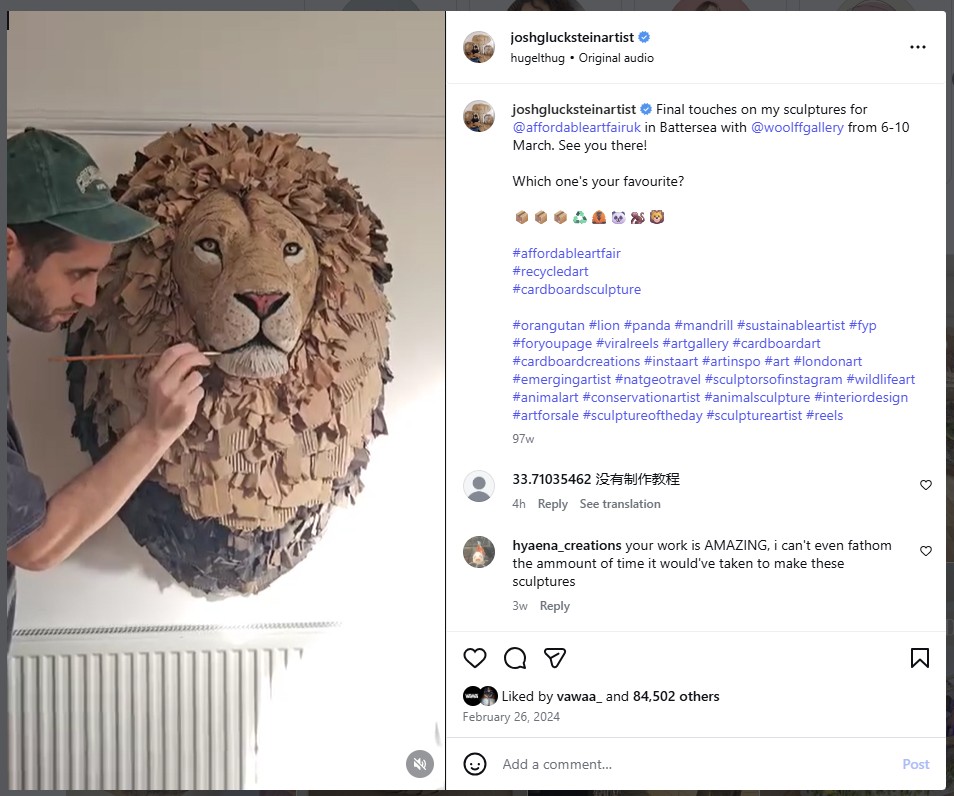
Cardboard’s simplicity and versatility also drew Greg Olijnyk to use it for his meticulous creations. Shown below, is “The Village – a cardboard community of clustered buildings, built on a black landscape, growing organically over time. A 5 week project of walls, doors, windows and walkways and stilts”. Little wonder his Instagram profile reads “Cardboard, glue, scalpel blades, coffee, whisky”!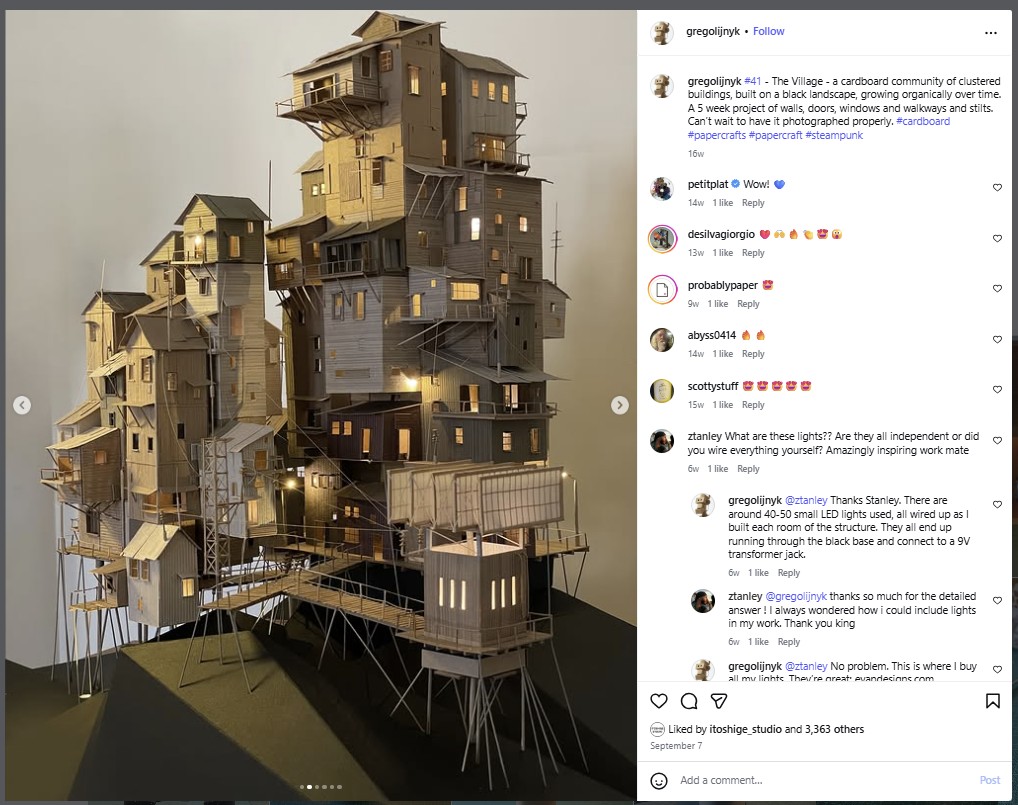
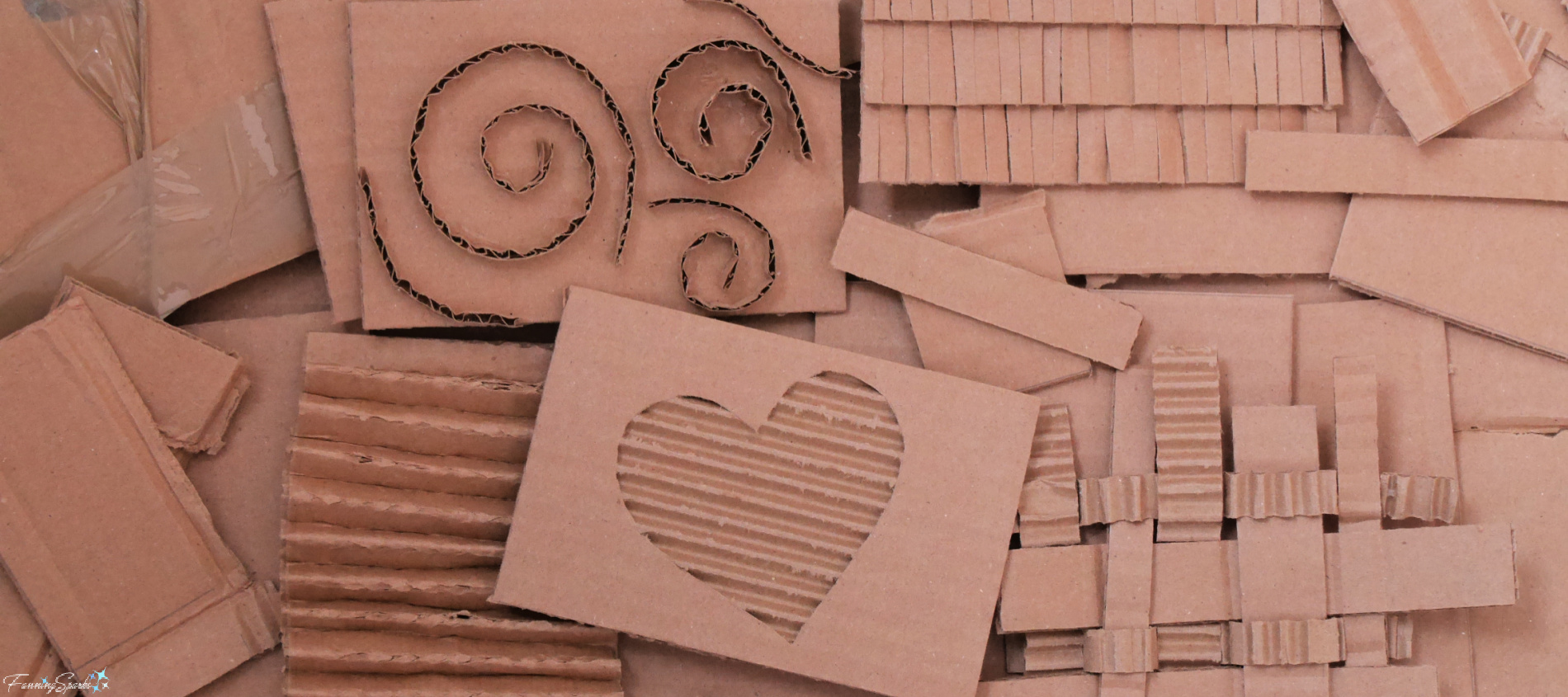
Predictably, I couldn’t resist trying out a little cardboard artmaking of my own. Shown below are my first, rudimentary attempts at a few basic decorative techniques including curl, fringe, pleat, exposed corrugation and weave.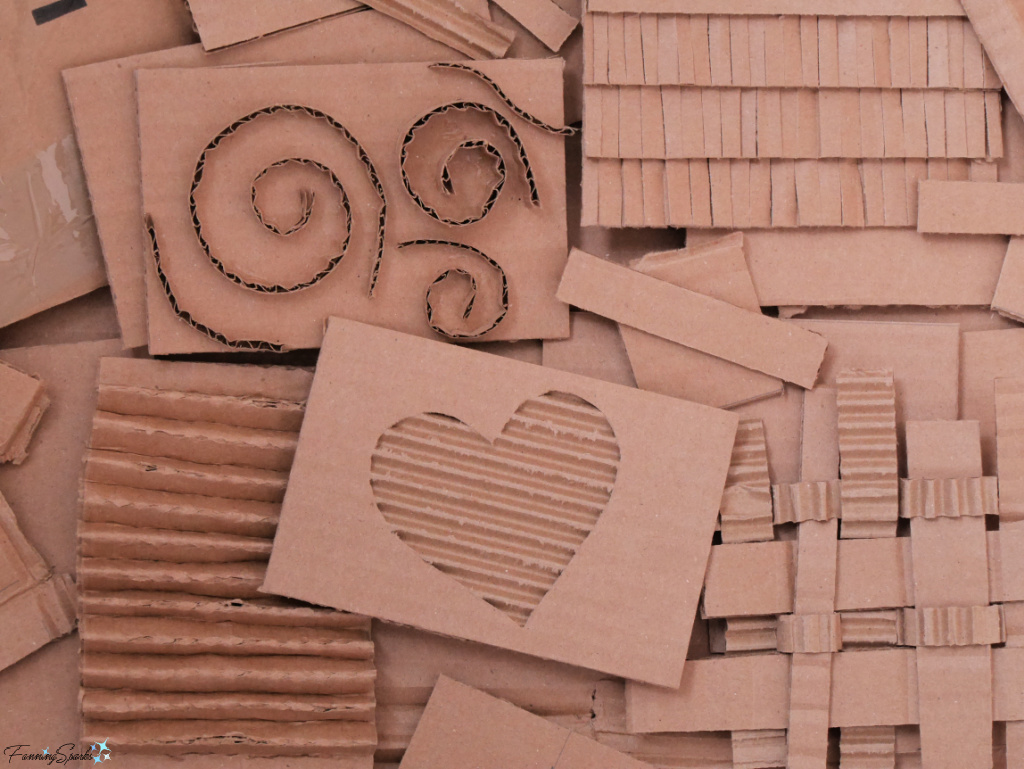
In his 2010 essay The Cardboard Story Unfolds, author Michael Czerwinski writes “For much of its life cardboard has been perceived as paper’s poor relation … Though initially designed with durability and disposability in mind, cardboard has risen from the anonymity of a utilitarian product; it is almost fair to say that it is now imbued with a desirability to rival any creative material.
This change of purpose has not been sudden and is not conclusive, but the recent proliferation of its use in design and art is asserting cardboard as a legitimate creative material.”
More Info
This is the first post in a series on repurposing cardboard. In the second post, Repurposed Cardboard Storage Bins, I share my experience making custom storage bins from used moving boxes.
The following talented makers and artisans are mentioned in this blog post:
. Frank Gehry – see more on Instagram
. Ann Weber Sculpture – see more on Instagram or their website
. Scott Fife – see more on their website
. Jodi Hays – see more on Instagram or their website
. CINTA SCOTCH by Javier Pérez – see more on Instagram or their website
. Sunset Selfies by John Marshall – see more on Instagram
. Warren King – see more on Instagram or their website
. Laurence Vallières – see more on Instagram on their website
. Josh Gluckstein – see more on Instagram or their website
. Greg Olijnyk – see more on Instagram or their website
See the Wönzimer Gallery website to learn more about the Cardboard: Infinite Possibilities exhibition scheduled to run from January 2-30, 2026.
The National Sculpture Society is an American organization dedicated to promoting “excellence in sculpture that is inspired by the natural world”, see their website for more information.
“The Just for Laughs Festival Montreal is the world’s largest comedy festival, an unmissable event that transforms the city into the international capital of laughter every summer.” To learn more, see their website at hahaha.com.
The following articles and books were consulted in the writing of this blog post:
. Frank Gehry article by Karen Templer; published 1999 on Salon website
. Layering Found Cardboard into Communing Forms, Ann Weber’s Sculptures Emphasize Togetherness article; published 2024 on This Is Colossal website
. Imposing Wild Animals Emerge from Layers of Cardboard in Scott Fife’s Sculptures article; published 2022 on This Is Colossal website
. Sunset Selfies Creator Trying to Change the World by Educating Orphans article by Beth McEvoy; published 2020 by News Center Maine
. The Cardboard Sculptures of Artist Warren King Are an Homage to His Chinese Heritage article; published 2022 on This Is Colossal website
. Expressive Portraits Emerge from Pieces of Cardboard in Josh Gluckstein’s Wildlife Sculptures article; published 2023 on This Is Colossal website
. Outside The Box: Cardboard Design Now book, including The Cardboard Story Unfolds article by Michael Czerwinski which is available here on Internet Archives
. Various Wikipedia entries
. Various Instagram entries.
Today’s Takeaways
1. Although cardboard is most commonly used for utilitarian purposes such as shipping and storage, it can also be used for artmaking.
2. Michael Czerwinski describes cardboard as “a legitimate creative material”.
3. The Cardboard: Infinite Possibilities exhibition “celebrates cardboard as a powerful medium for innovation, transformation, and metaphor.”
Comments are closed.