
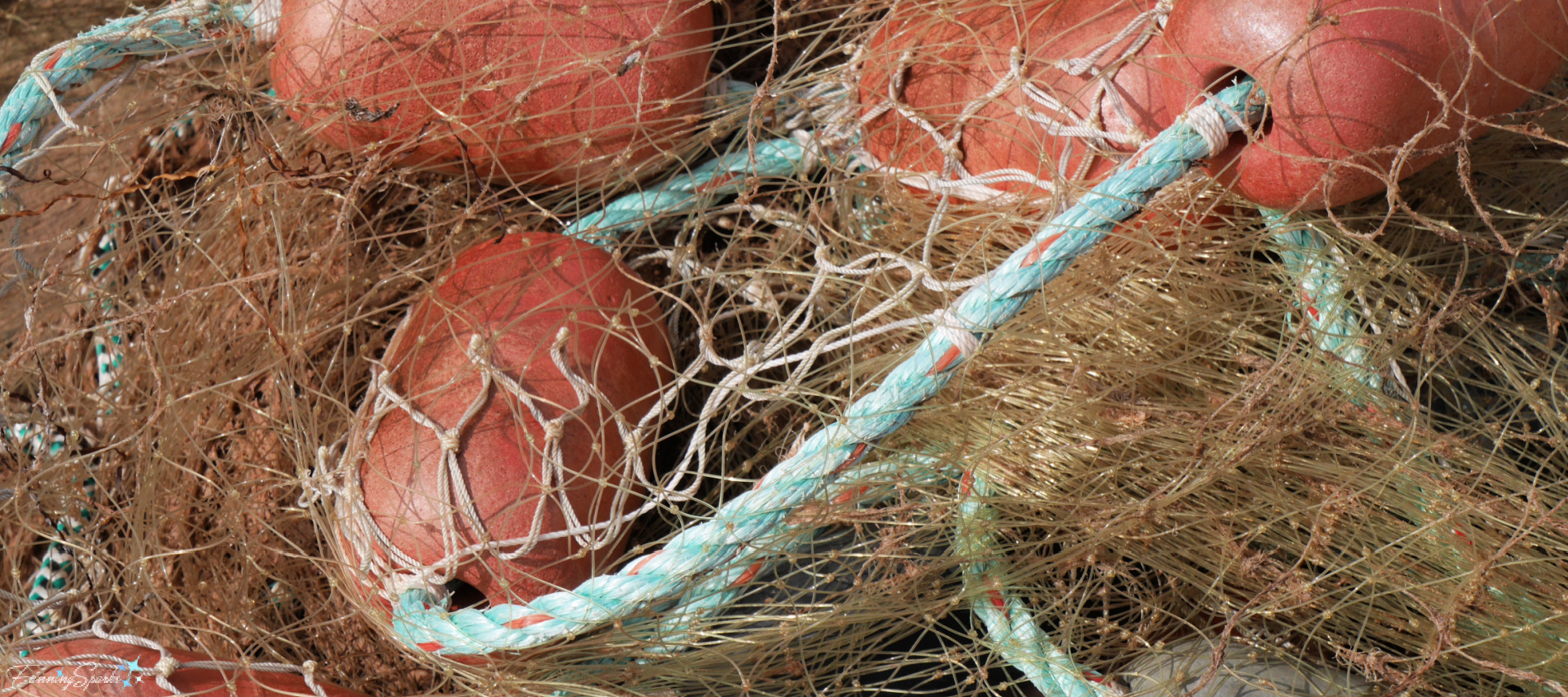
Fish and seafood are consumed by the citizens of nearly every country around the globe. In fact, “more than 3 billion people in the world rely on wild-caught and farmed seafood as a significant source of animal protein” according to the World Wildlife Organization’s report on Sustainable Seafood.
Generally, citizens of island countries and countries with extensive coastlines consume more fish per capita than those in other countries. “The island nation of Iceland leads the pack” when it comes to the amount of fish consumed per person “with 87.1 kilograms of seafood per capita per year” reports the World Population Review in their article Fish Consumption by Country 2025. They go on to note, “among the top 10 per capita fish-consuming nations, seven are islands, and five are located in the Asia-Pacific region”.
I haven’t been to Iceland (yet), but based on the time I lived in Singapore, I can attest to the popularity of fish and seafood in Southeast Asia. Shown below are a few photos I took of people fishing in China, Vietnam and Thailand.
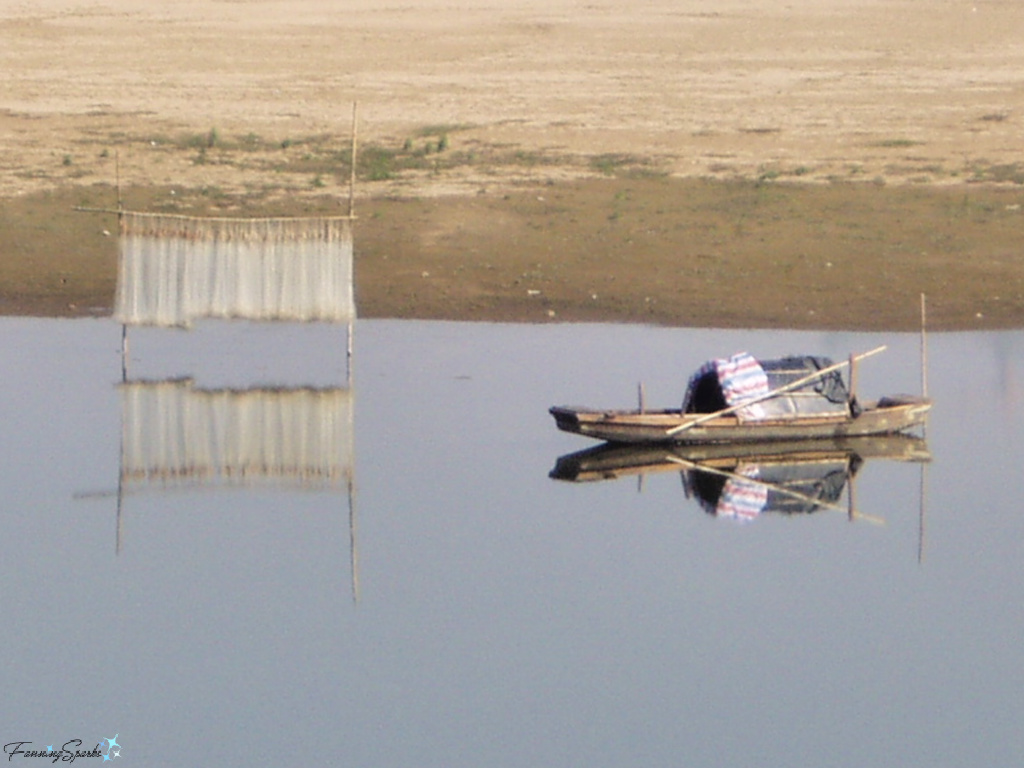
In this early morning scene in Guangzhou China, fishing nets are drying on a rack in the river.
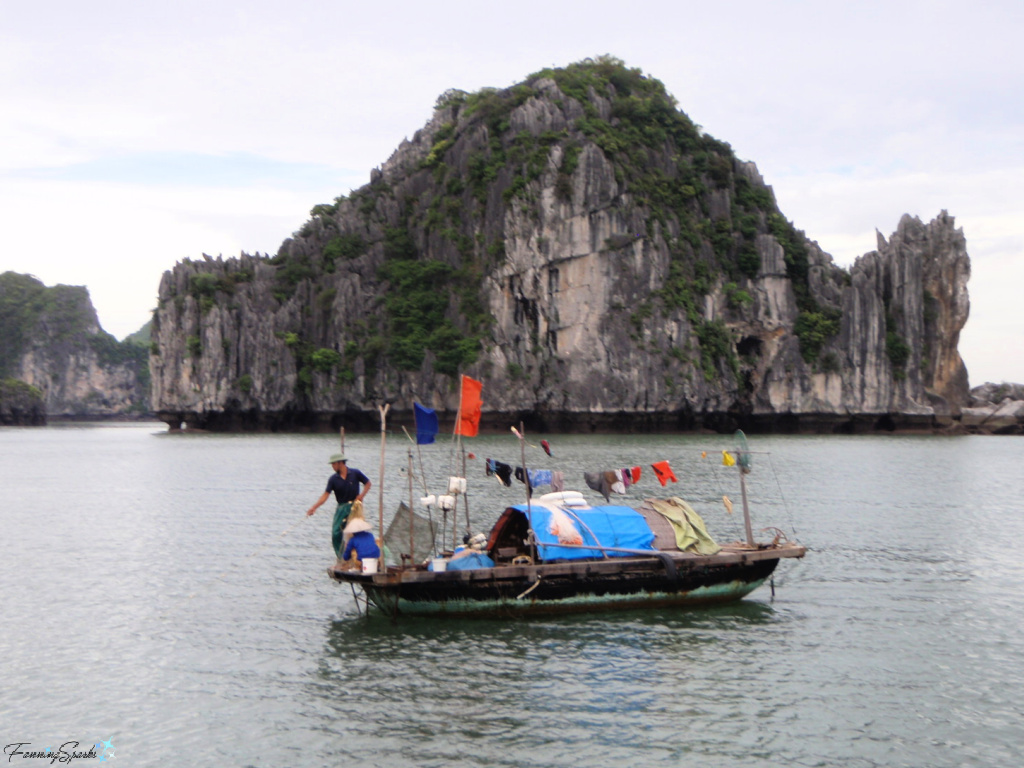
In Halong Bay Vietnam, a fisherman casts a net from the back of his houseboat.
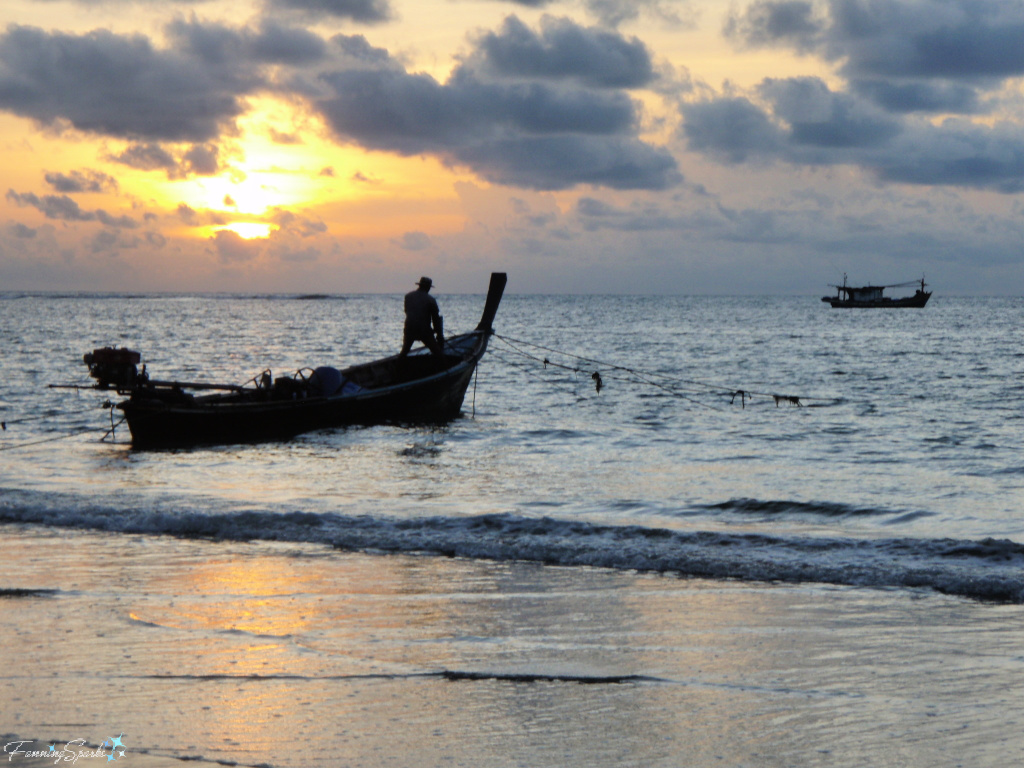
In Phuket Thailand, a fisherman in a long-tail boat pulls in his fishing nets at the end of the day.
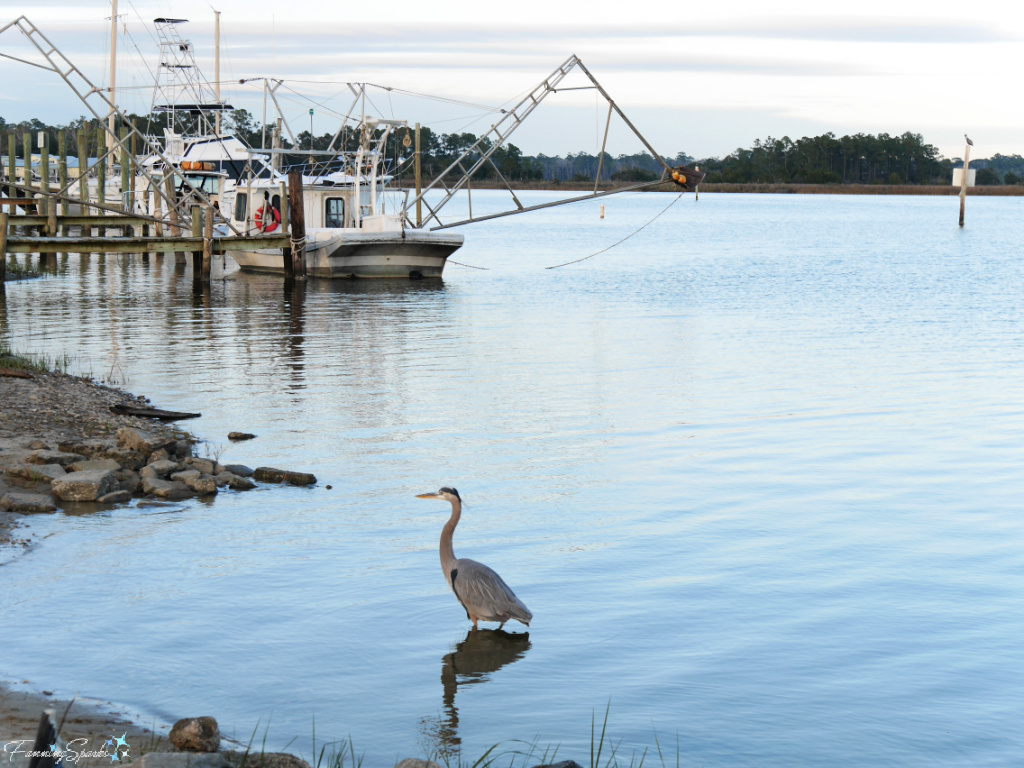
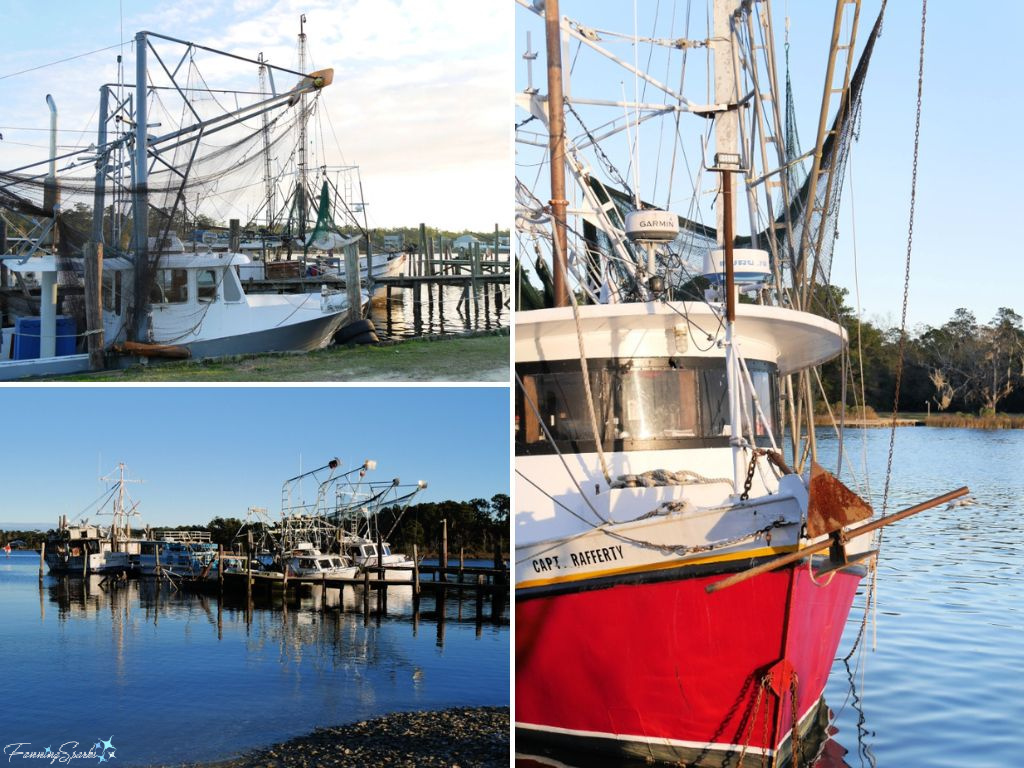
There are, of course, lots of big-scale, modern, commercial fishing operations in Asia as well ― I just didn’t take any photos of them. Here’s an example from the Bon Secour River in Alabama, USA. These shrimp boats, also known as shrimpers, are rigged with long arms on both sides. Large, wide nets, called trawling nets, are dropped into the water when the arms are extended.
 Regardless of the size of the fishing operation, they all use fishing nets of some kind.
Modern nets are typically made by machine with synthetic materials such as nylon and polyester. But it hasn’t always been that way. Traditionally, nets were made by hand from natural materials such as cotton and hemp. Netting skills were passed down from generation to generation.
The mass of modern fishing nets shown below was spotted in North Rustico, Prince Edward Island. Close examination reveals what appears to be hand-knotted netting was used to attach sections of manufactured netting. 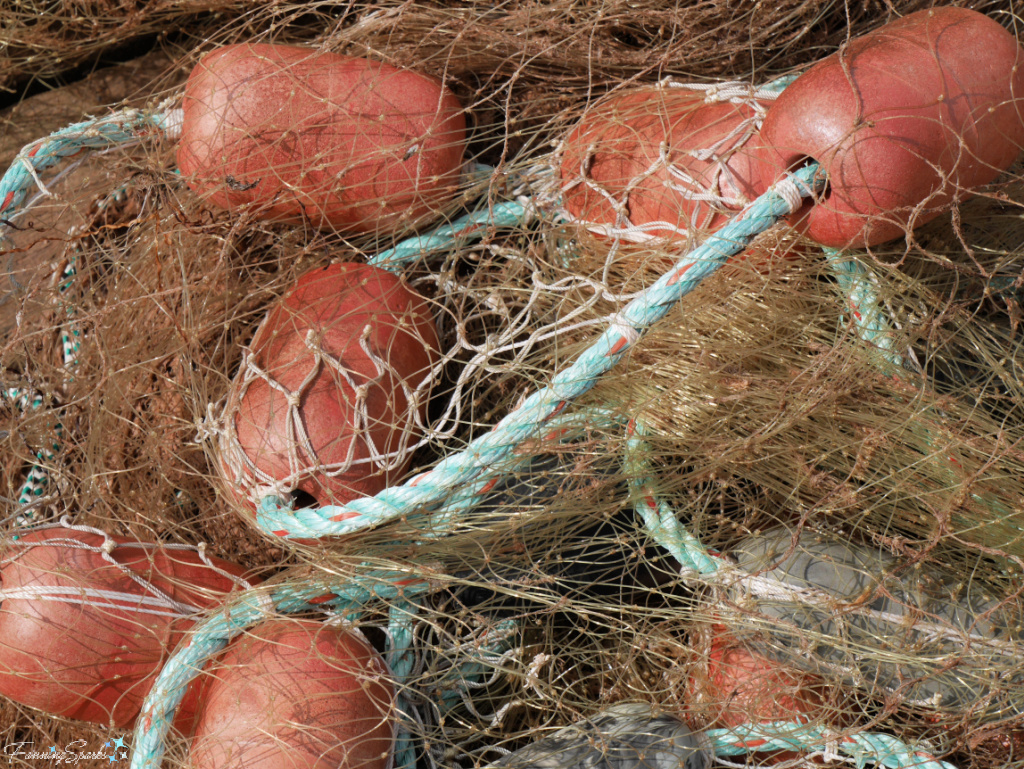
At the Fortress of Louisbourg, Nova Scotia’s phenomenal living history museum, visitors can visit the Desroches House. See my previous blog post, Travel Through Time to 1744, to learn more about the Fortress of Louisbourg.
The Desroches House is located outside the fortress near the water. It is a rustic house with simple log walls and a sodded roof as was typical of a successful cod fisherman’s dwelling in 1744. Fish flakes, wooden racks which were used to dry the cod after it was cleaned and salted, can be seen in the yard.
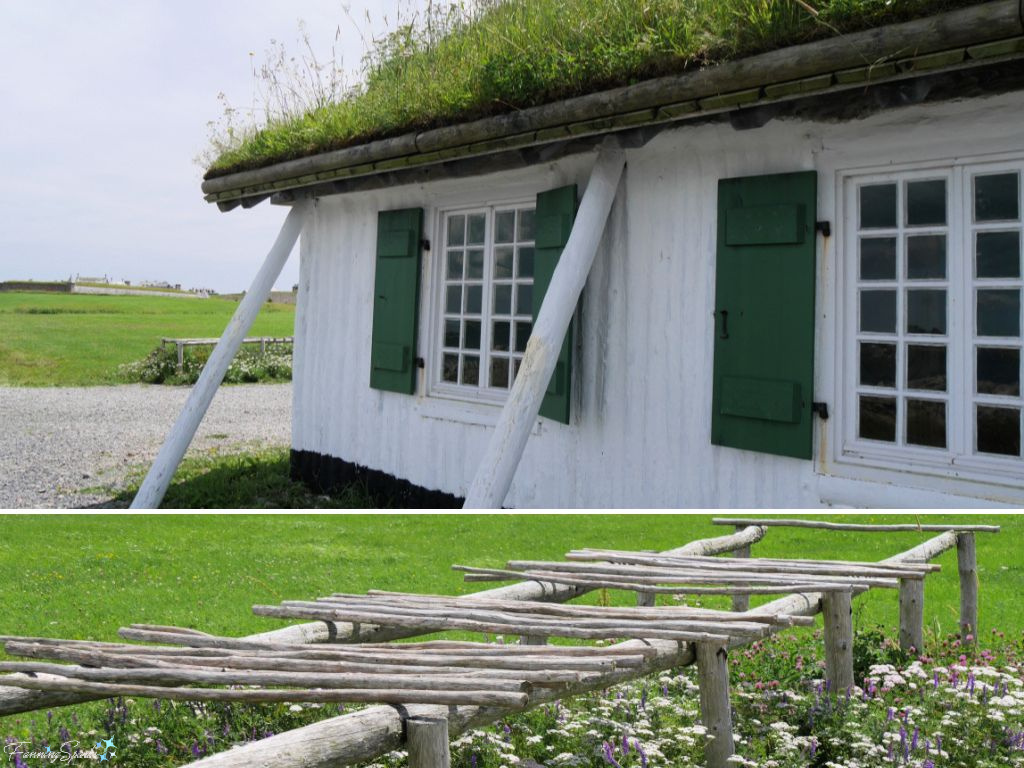
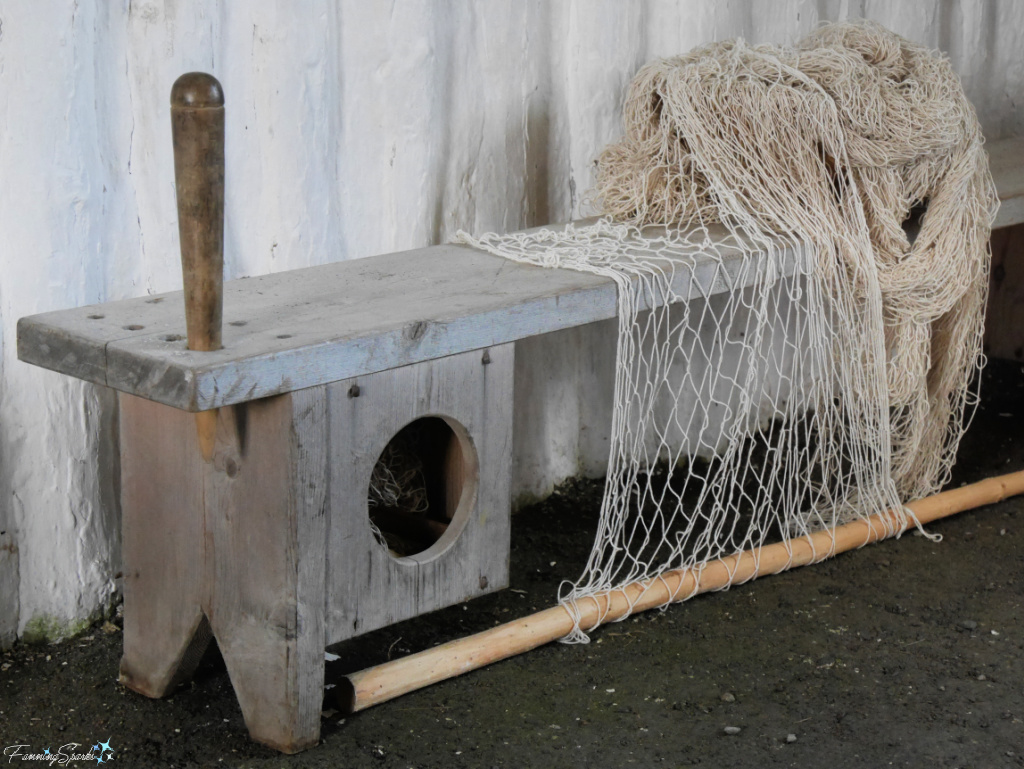
Furnishings and belongings inside the Desroches House, especially this net making bench, also reflect its fishing heritage.
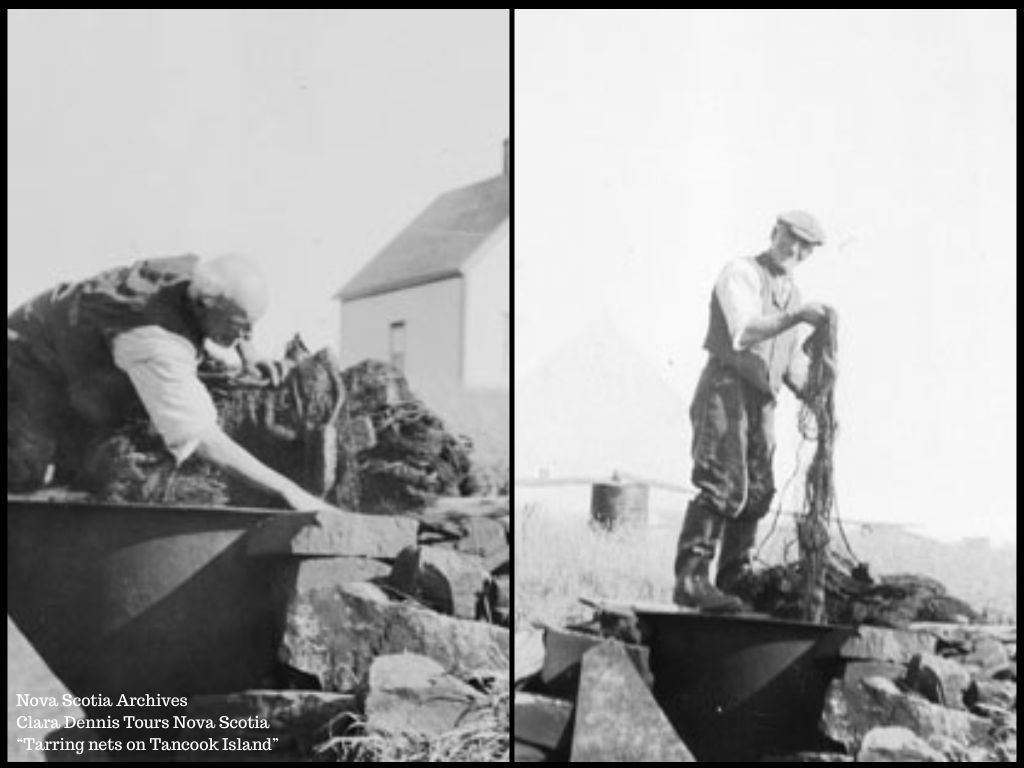
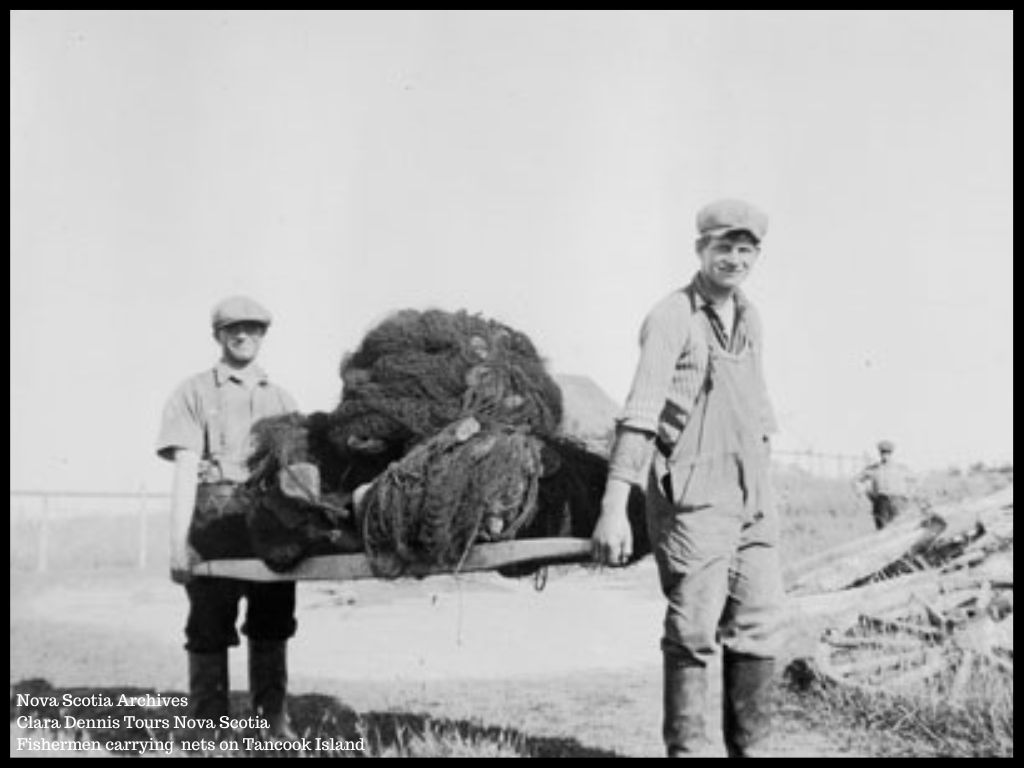
The Nova Scotia Archives have an extensive online collection which includes a series of more than 2500 photos taken by author/photographer Clara Dennis between 1930 and 1940. Dennis was “one of the province´s first native-born travel writers and the first woman to write extensively about Nova Scotia from a personal perspective” writes the Archives website. The following photos ― all depicting fishermen preparing fishing nets ― were taken by Dennis when she visited Tancook Island on Nova Scotia’s South Shore.
These photos show a fisherman “tarring” his nets. The tar, a thick black substance, was made by boiling distilled acacia bark in a large cauldron of water. Then, the nets were dipped into the tar as shown in these photos. The tar helped the natural fiber of the nets resist rot.
This next photo shows fishermen carrying nets.
This fisherman is mending his nets with a netting needle.
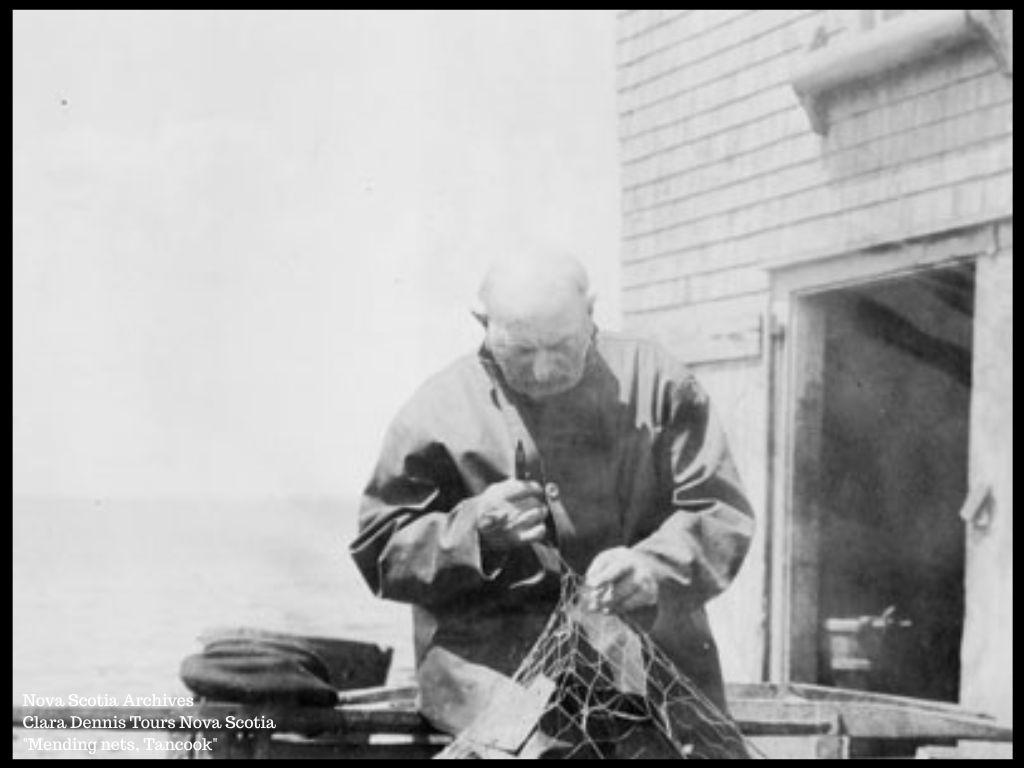
Interestingly, the shape and function of netting needles haven’t changed much in the last century. I recently participated in a Net Making Workshop at the Maritime Museum of the Atlantic and the netting needles we used looked the same as the one in the 1930s photo. Ours were, however, made of plastic and not wood or bone as they were historically.
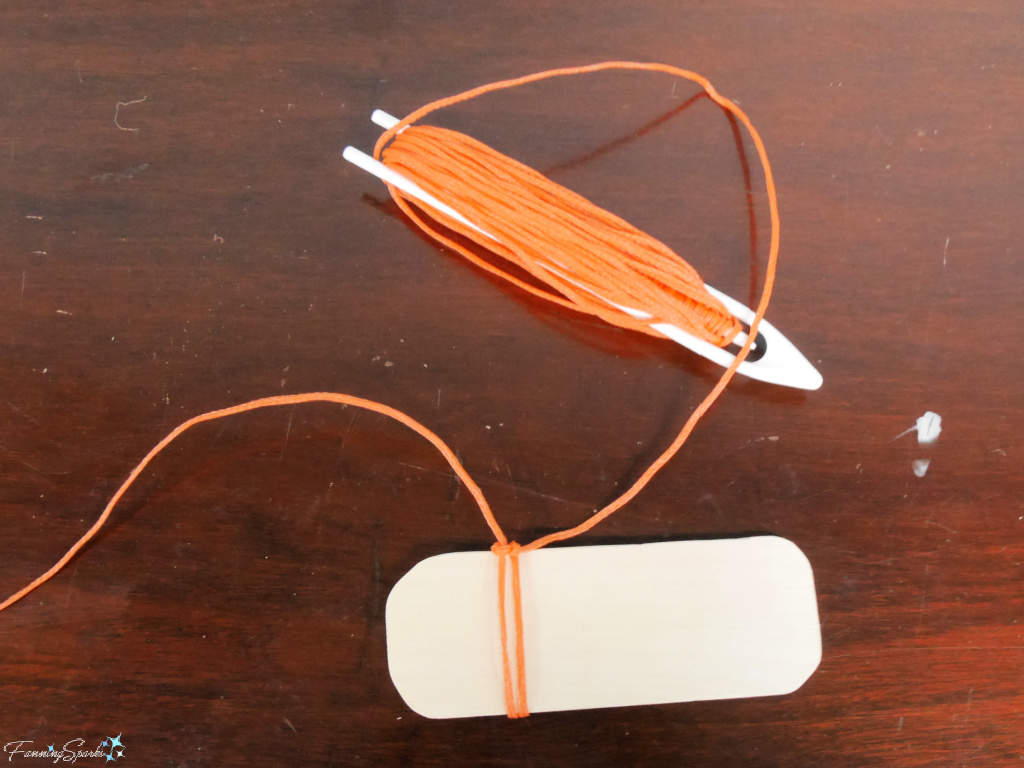
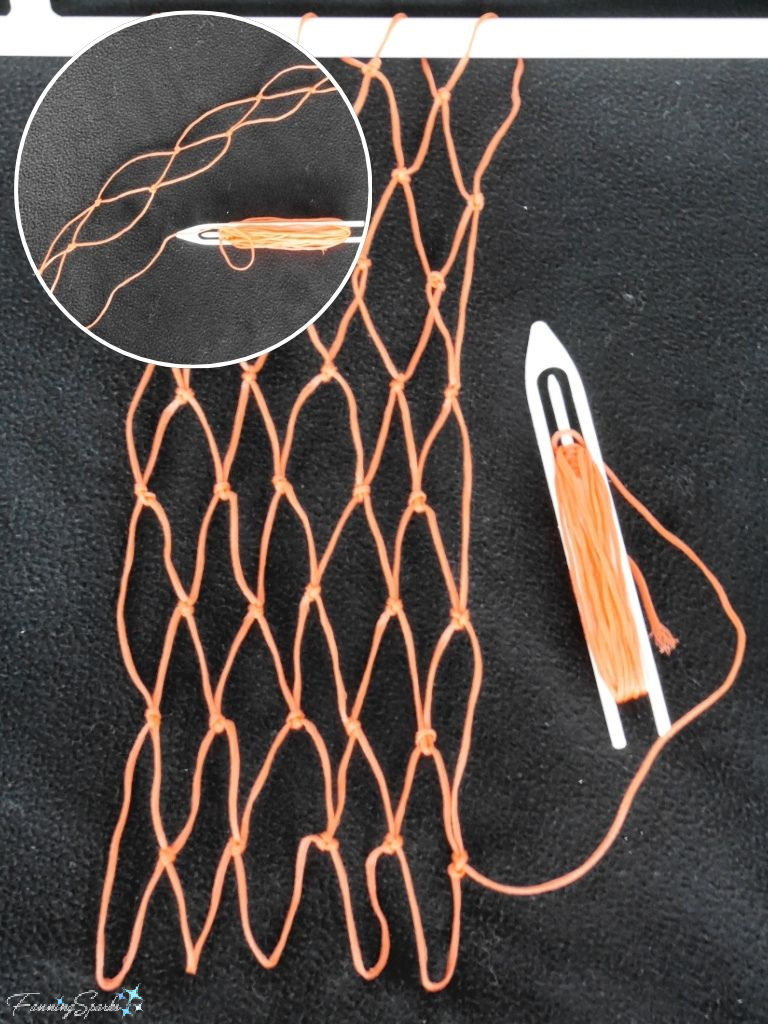
Shown below is the netting needle, also known as a shuttle, I used to load some bright orange twine. “The twine is wrapped around the shuttle in a figure 8 pattern so it feeds out smoothly without tangling” explains the History of Simple Things in their How Do Fishermen Make Their Nets video.
Also visible in this photo is a rectangular, wooden gauge (about 5.5 cm / 2⅛” tall), typically called a mesh board or mesh gauge, which is used to standardize the size of the holes in the mesh.
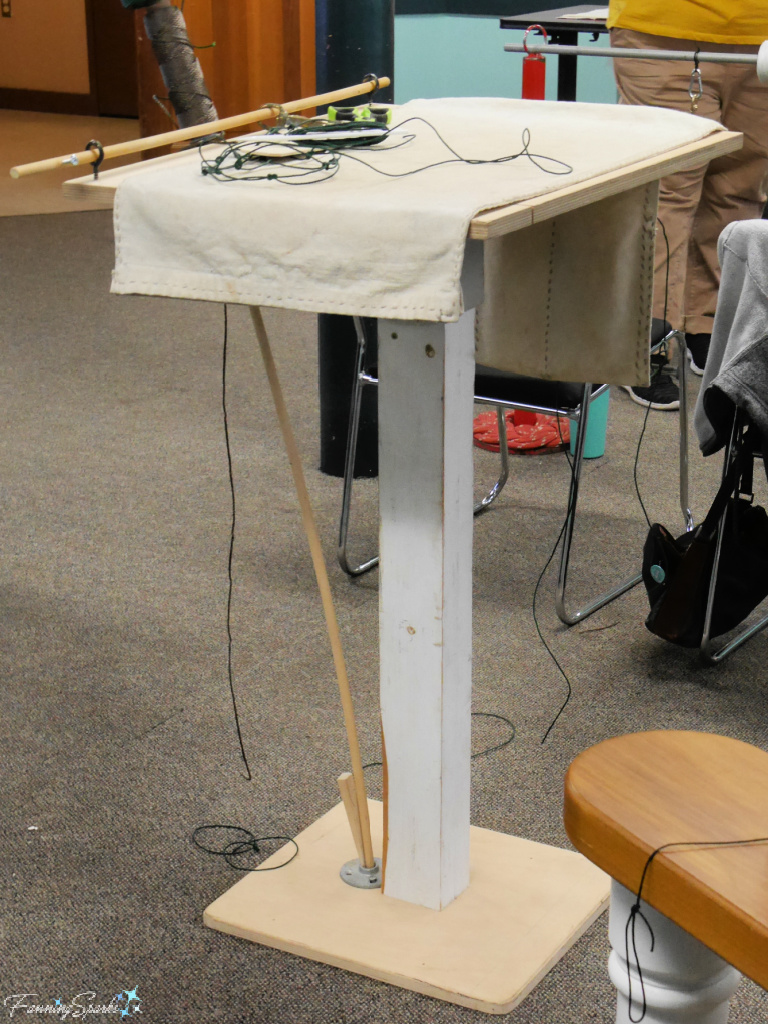
This custom-built, podium-like, netting table is ideal for making nets.
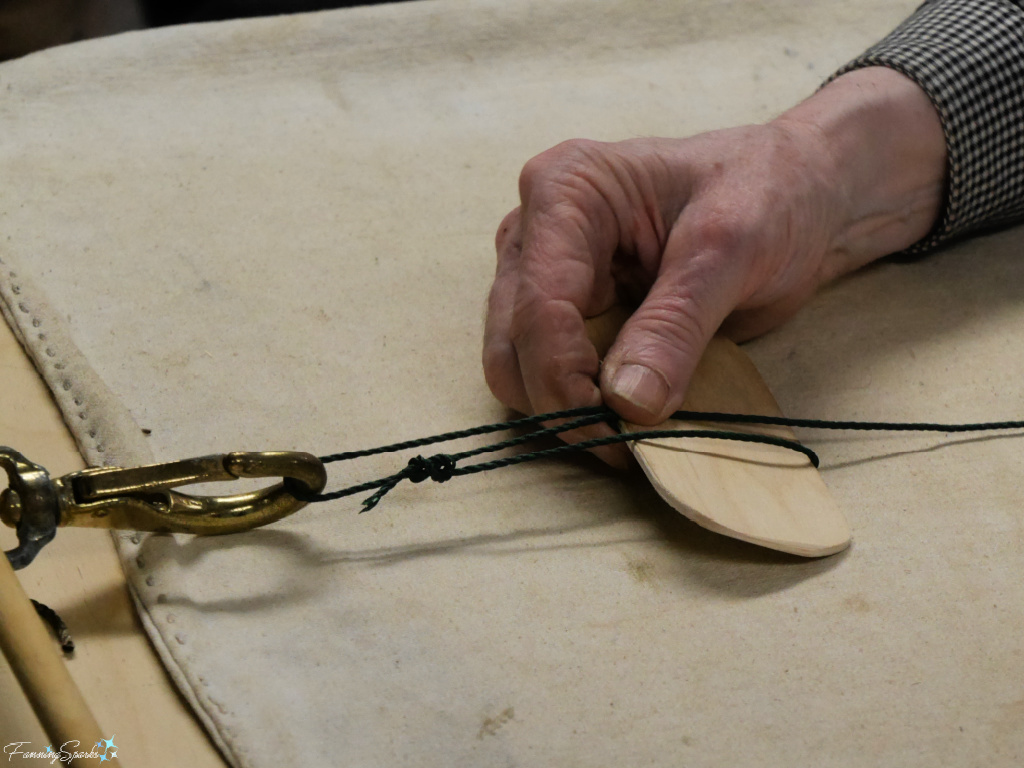
Shown below is our instructor demonstrating how to create the first row. The idea is to tie a series of loops using the mesh gauge to space them evenly. The end of the twine is securely attached to a swivel snap hook so the netter can apply significant tension while pulling each knot tight.
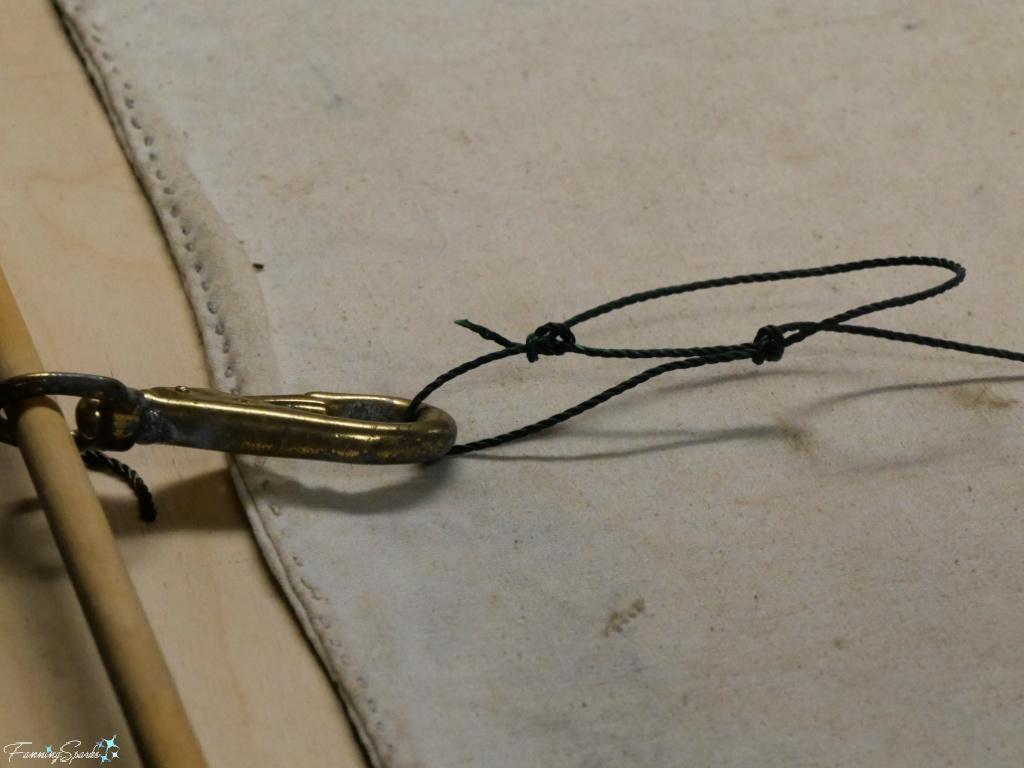
This should result in a chain of identical mesh loops.
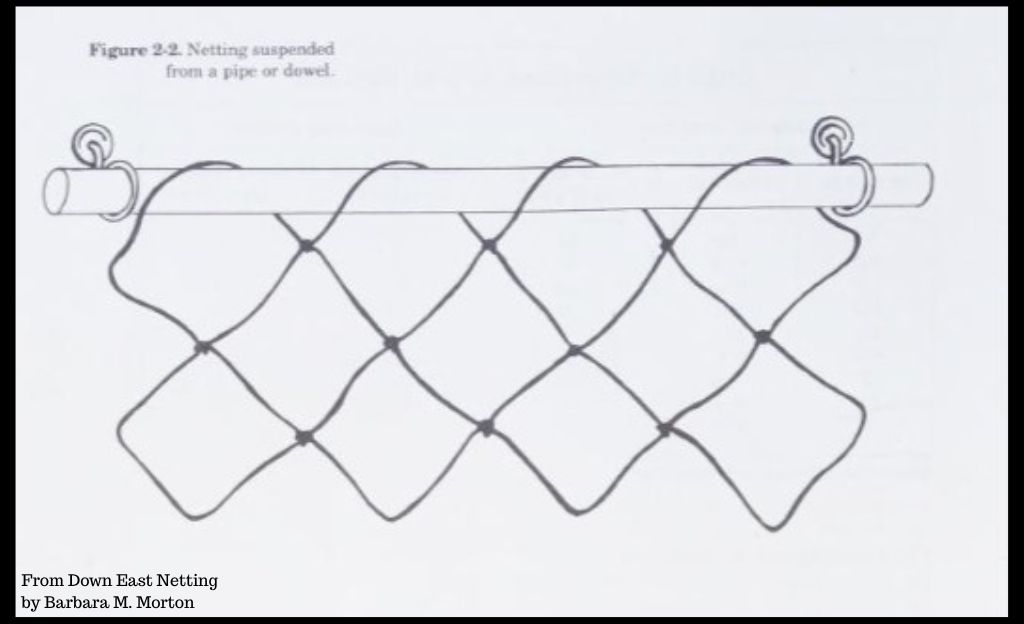
After the chain of starting loops reaches the desired length, it is removed from the swivel snap hook and spread out horizontally across the working surface. Then the knots are carefully slipped onto a rod or dowel to allow the second phase of knotting to commence. This sketch, from the book Down East Netting: A History and How-to of Netmaking by Barbara M. Morton, illustrates the point ― the chain of starting knots was strung on a dowel and then two additional rows of knots were added.
It’s also possible to string the chain of starting loops back onto the swivel snap hook and to knot the mesh from there. Regardless if the netter works from a rod or a hook, it’s important to turn the work over at the end of each row so the knots are always worked in the same direction. For instance, since I’m right-handed, I always tied from left to right which allowed my dominate hand to control the netting needle.
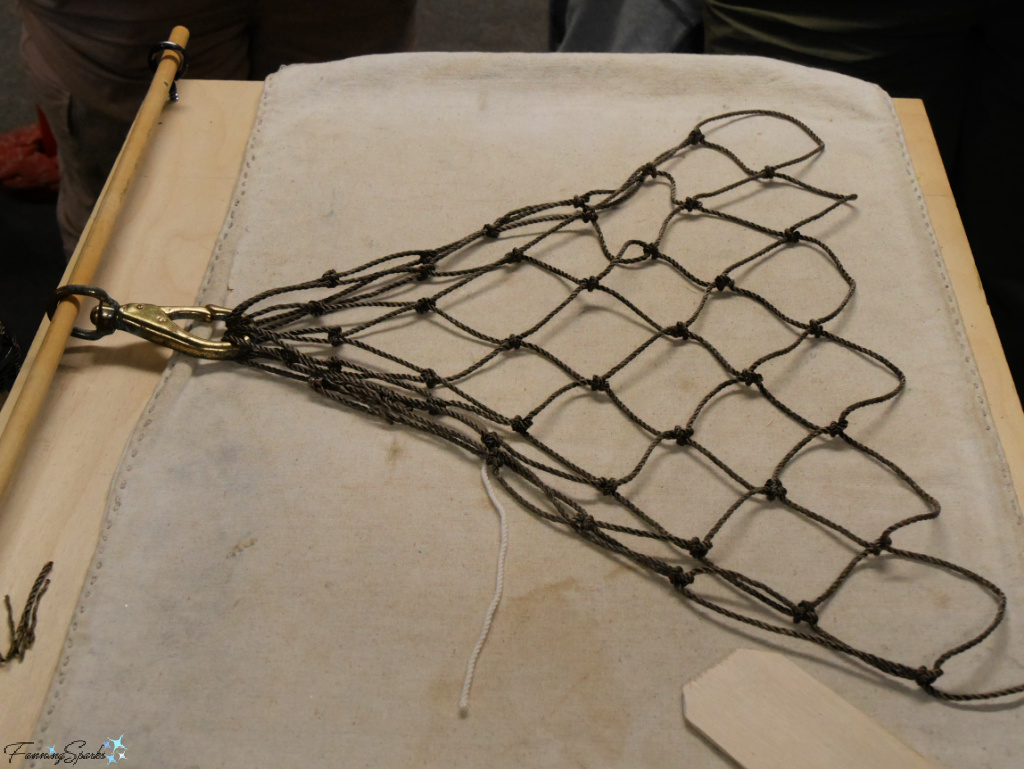
This is how the instructor’s net looked after a few rows of knotting.
Typically, once the net has reached the desired size, it is shaped and finished. Then the net is attached to a frame or rope. Floats may be added to the top edge to keep the net afloat while weights may be added to its bottom to make it sink.
Here’s my attempt at netting. As with all things worth doing, it takes patience and practice to make a good net.
 We wrapped up the workshop with a special behind-the-scenes visit to the Robertson’s Store exhibit in the Maritime Museum of the Atlantic. We saw a variety of authentic nautical gear once used by sailors and shipbuilders in Nova Scotia’s marine industry.
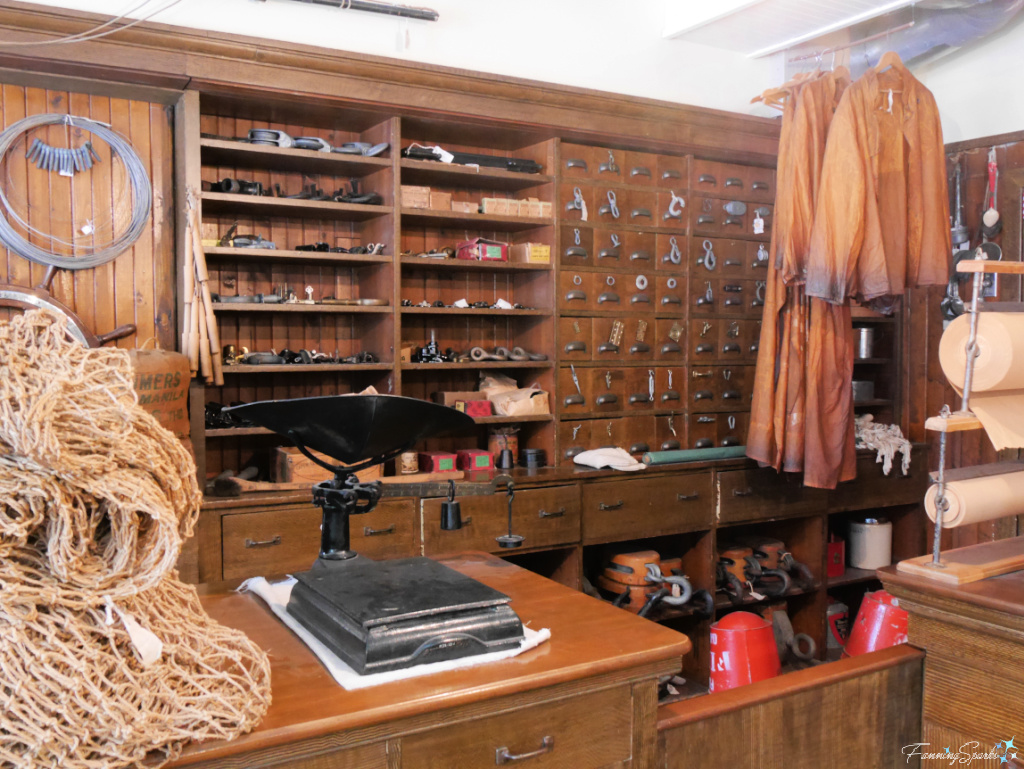
“The Robertson ship chandlery is a legacy of a time long passed, offering visitors a glimpse into a family business that remained in operation until 1976” explains the Museum’s website. “Three generations of the Robertson family worked as chandlers to provide necessities for the fishing and shipping industries that were vital to the economy of Nova Scotia during the 19th and 20th centuries. The A&M Smith fish plant was one block from the chandlery and provided regular business, in turn supporting the Nova Scotia cod-fishing industry.”
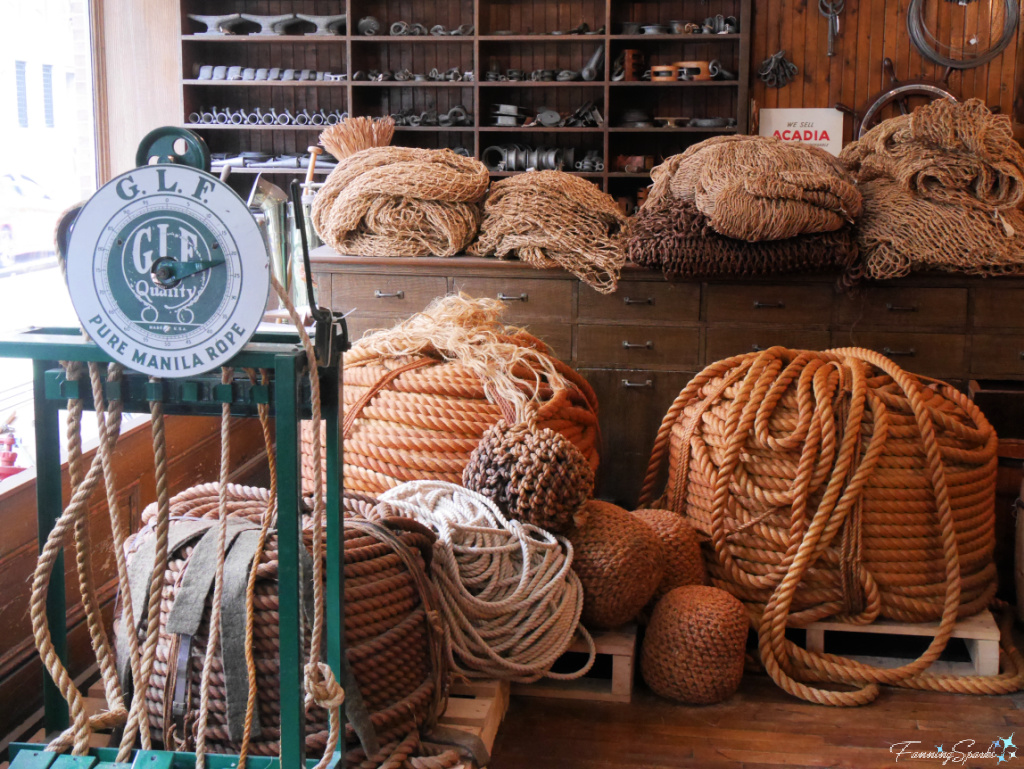
“The subtle aroma of pine tar fills the room, traditional marine and fishing supplies stock the shelves, the window displays, and even spread out onto the floor, creating an immersive impression of the past. Large coils of rope, fishing nets, and fenders give a sense of character, extending down to the well-worn wood floor, which dates to 1945.”
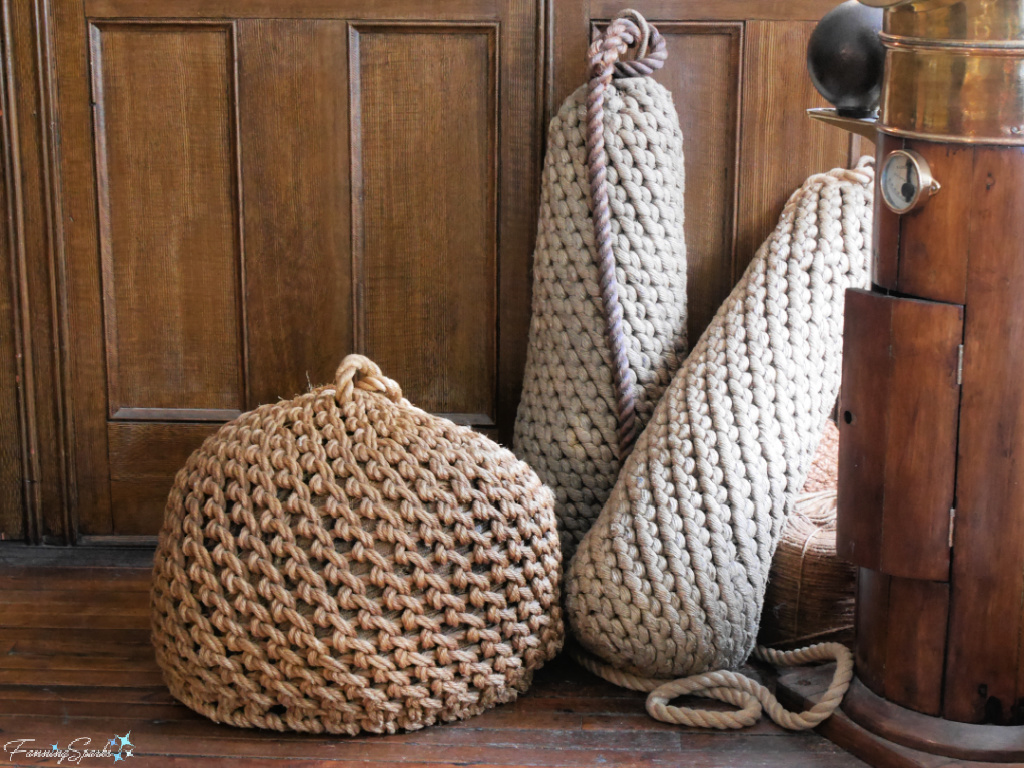
The thick, handwoven rope cushions shown below are “rope fenders”. Traditionally, they were used to protect the sides of wooden ships or boats. The shapes were specifically designed for different placements.
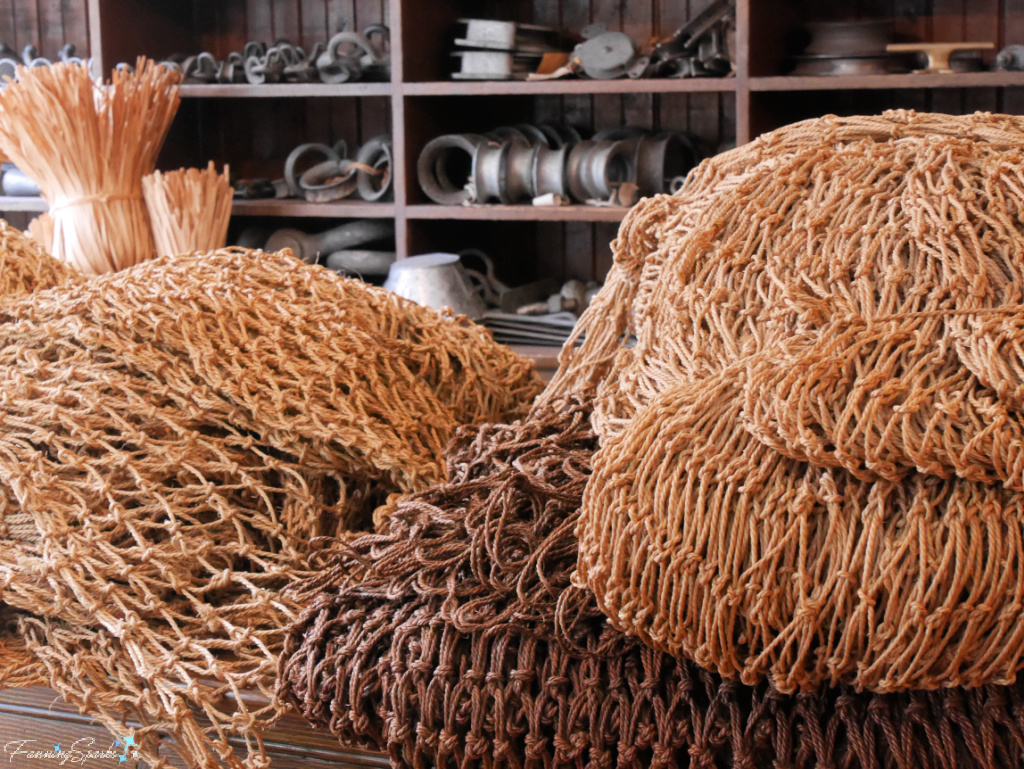
After my struggle to create a decent knotted net, I had a whole new appreciation for these fishing nets!
More Info
Previous blog posts mentioned in this blog post include:
. Travel Through Time to 1744.
The Net Making with Unconventional Materials workshop was hosted by the Maritime Museum of the Atlantic as part of Nocturne Halifax. Unfortunately, the original instructor, artist Daniel Rumbolt, fell ill and was unable to participate. But the Museum staff did a great job filling in and the workshop was both educational and entertaining.
The following resources were consulted in the writing of this blog post:
. Sustainable Seafood article by World Wildlife Organization
. Fish Consumption by Country 2025 article by World Population Review
. Down East Netting: A History and How-to of Netmaking book by Barbara M. Morton which is available here on Internet Archives
. Graded Lessons in Macramé, Knotting and Netting book by Louisa Walker which is available here on Internet Archives
. Nova Scotia Archives website including information about Clara Dennis Tours Nova Scotia
. Parks Canada Fortress of Louisbourg National Historic Site website
. Maritime Museum of the Atlantic website including information about Robertson’s Store
. Net Making – Fishing Net – How To Make Your Own Fishing Net video by Knotting Knots. This is the video the workshop instructors recommended. I have to agree ― it provides easy to follow, step-by-step instructions.
. How Do Fishermen Make Their Nets video by History of Simple Things.
Today’s Takeaways
1. “More than 3 billion people in the world rely on wild-caught and farmed seafood as a significant source of animal protein.” World Wildlife Organization.
2. Fishing nets, in a wide variety of formats and materials, are used around the world.
3. Traditionally, fishing nets were made by hand from natural materials such as cotton and hemp.



Comments are closed.