Old-timey signs wish departing visitors “Happy Motoring” as they leave the town of Mahone Bay. I’ve taken that vintage greeting straight to heart and have been happily motoring around the province all week. This is the second mini-blog post in a short series of Postcards from Nova Scotia.
This week’s destinations included a mix of hidden gems and well-known destinations. One of the off-the-beaten-path spots is a circle of standing stones located in a farmer’s field in Middleboro, Nova Scotia. The carefully-arranged circle of massive stones ― sometimes referred to as “Stonehenge Nova Scotia” ― is arguably most notable for its improbability.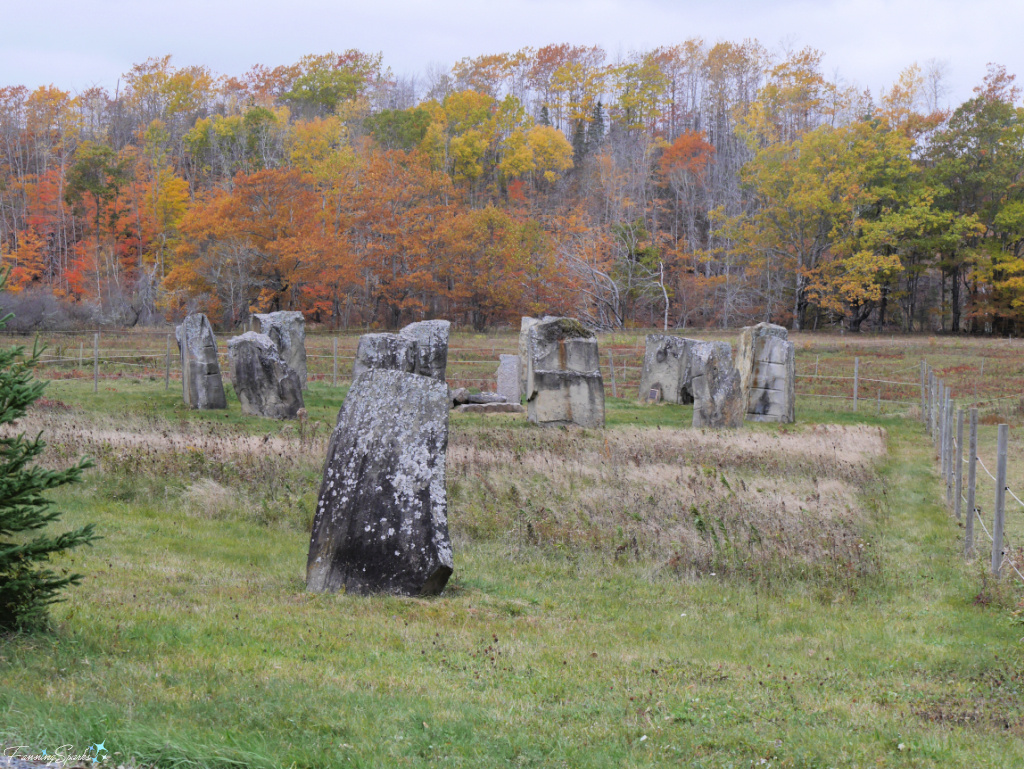
Outlander fans will be forgiven for wondering, as one Instagram commenter did, “if you show up with gemstones and touch them can you end up in Scotland with a handsome redheaded Scot, asking for a friend?”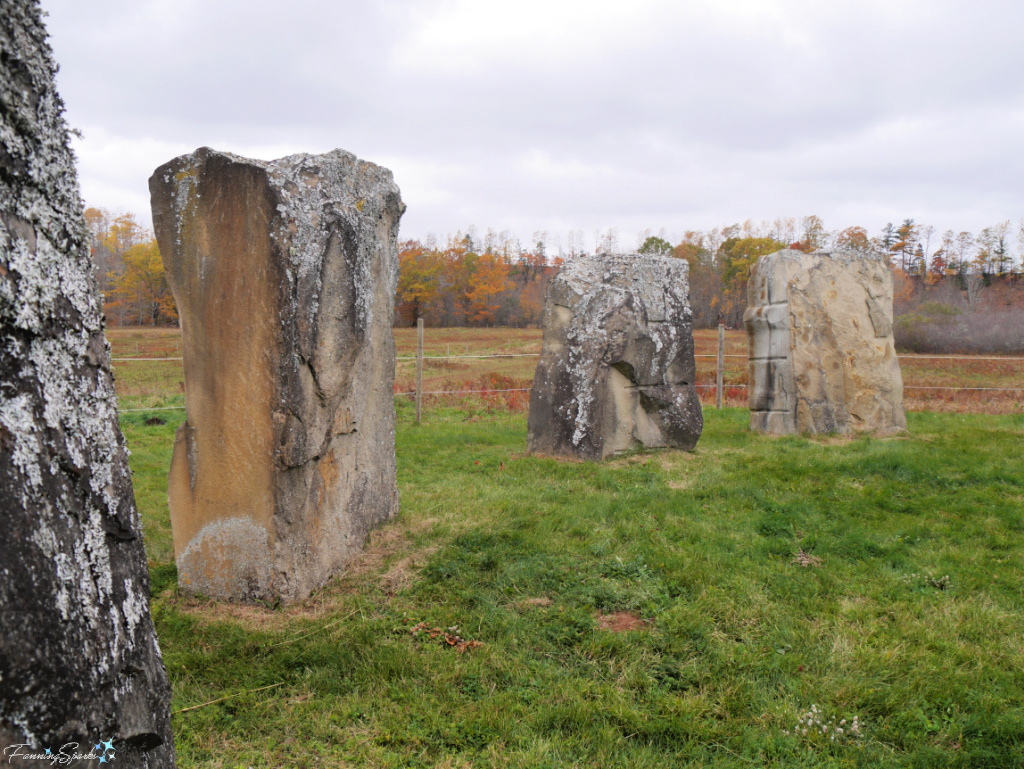
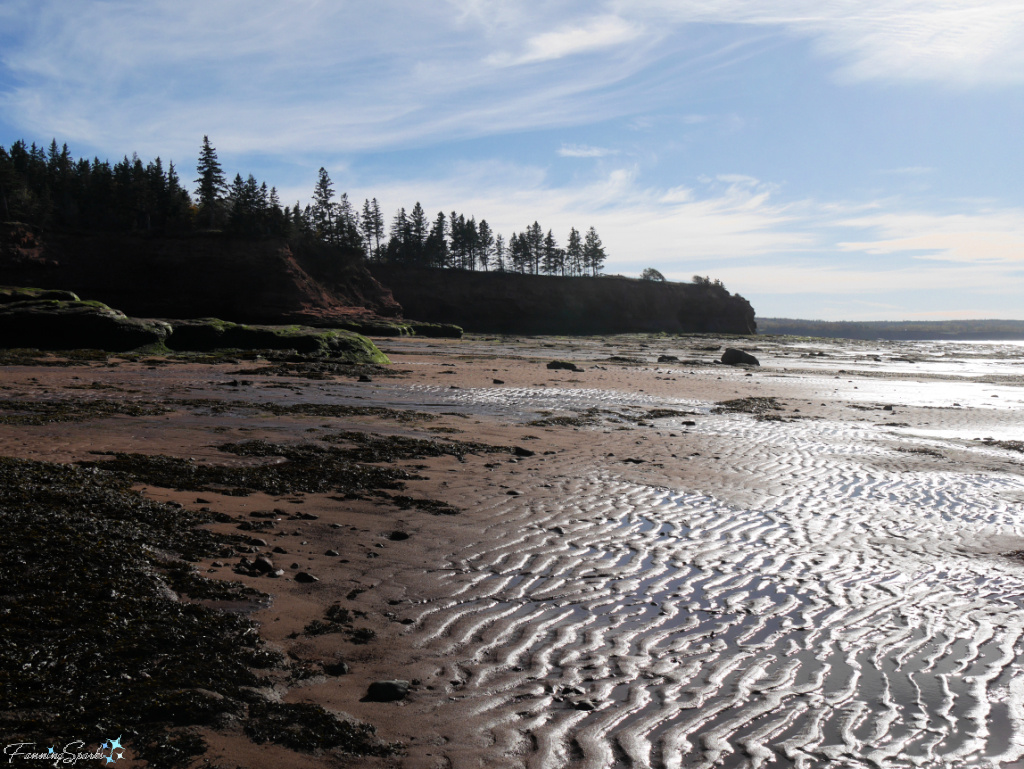
Burntcoat Head, located on the shore of the Bay of Fundy in Nova Scotia, is the site of the world’s highest tides. Globally, the average difference between high tide and low tide, called the tidal range, is about 3 feet. But in the funnel-shaped Bay of Fundy the tidal range is about 52 feet—more than 17 times the global average! It’s astonishing to learn this fact but staggering to actually witness the difference.
This is Burntcoat Head at high tide …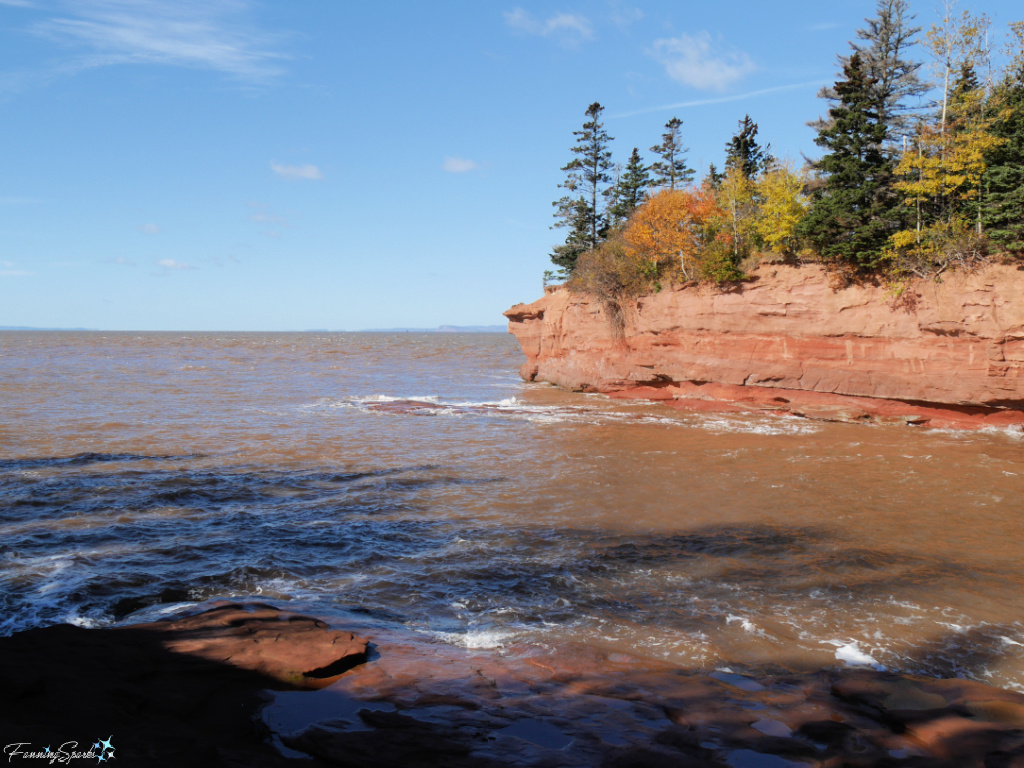
… and here it is ― only three hours later ― as the tide was going out.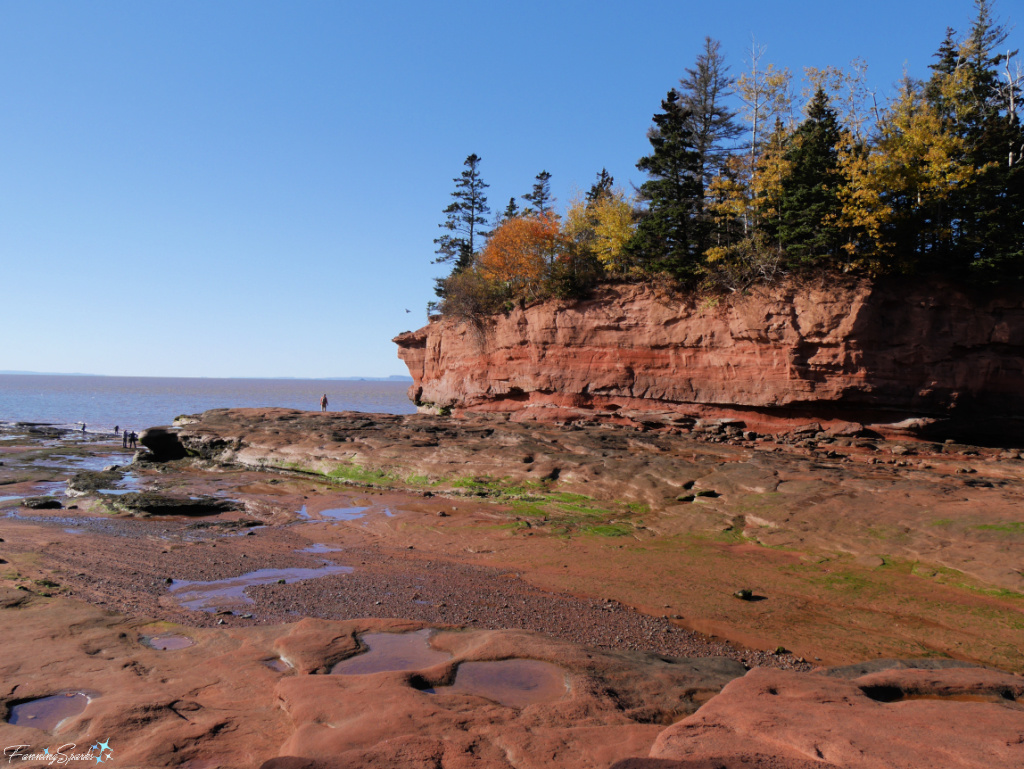
Here’s a side-by-side comparison ― these two shots were taken from nearly the same spot.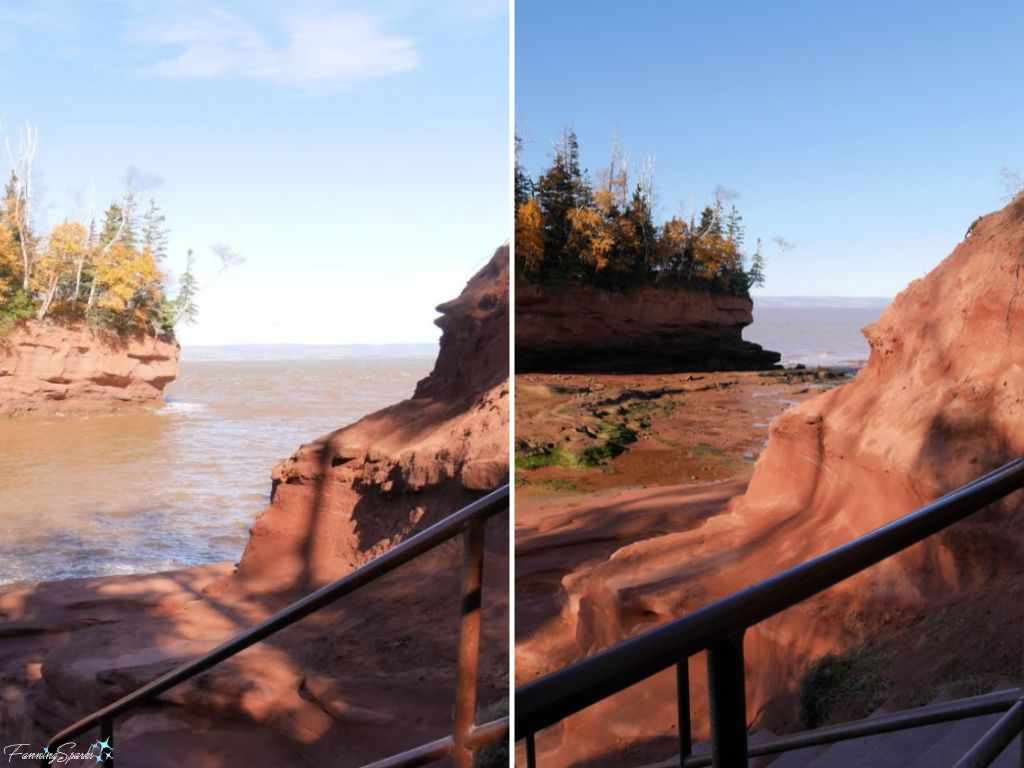
Although I’d visited this area before (see We Dined on the Ocean Floor), it was still awe-inspiring to walk around and explore the seabed knowing this same area was covered with tonnes of water only a short time ago.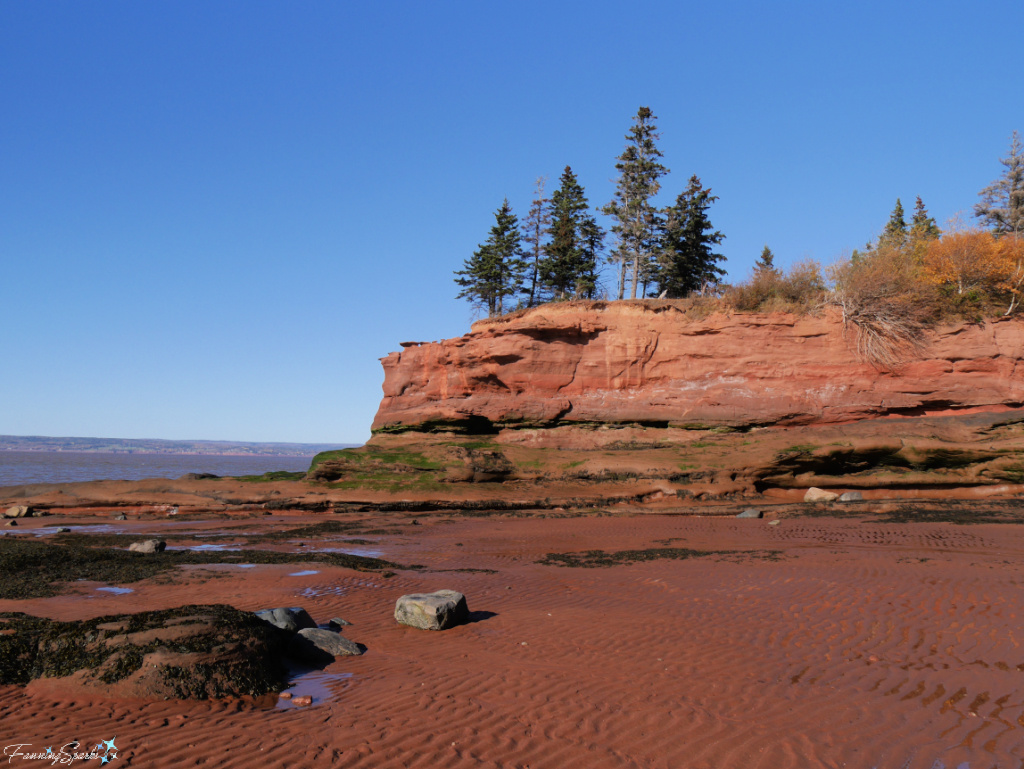
It’s hard to capture the scale of this place but fellow visitors add some perspective.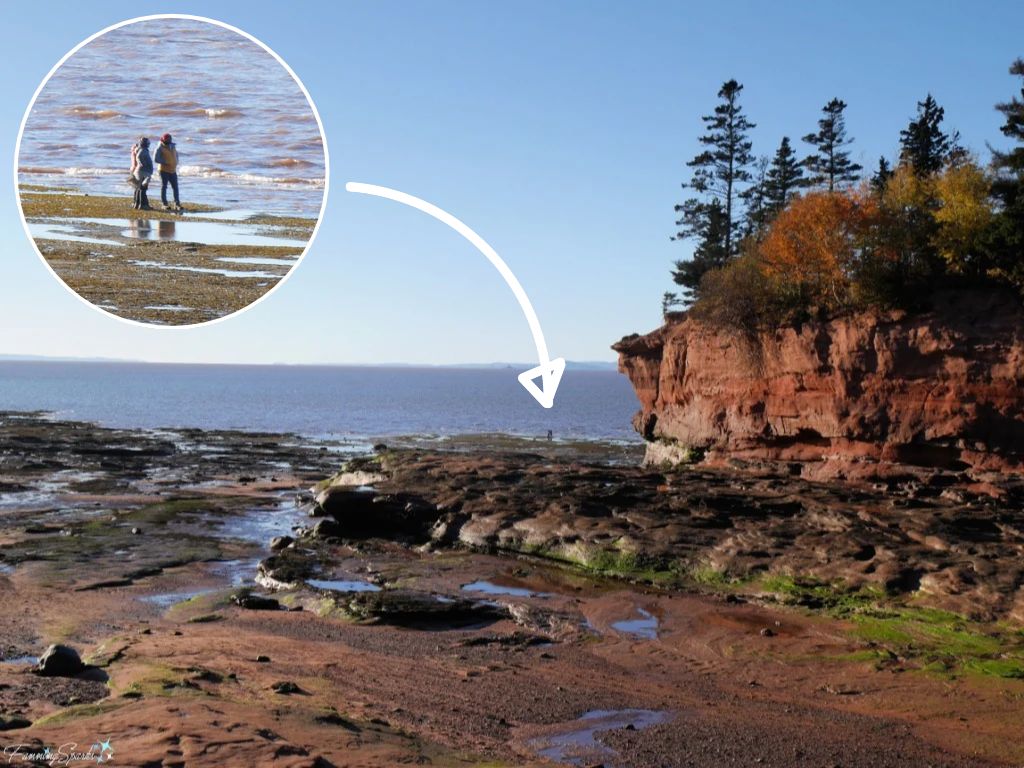
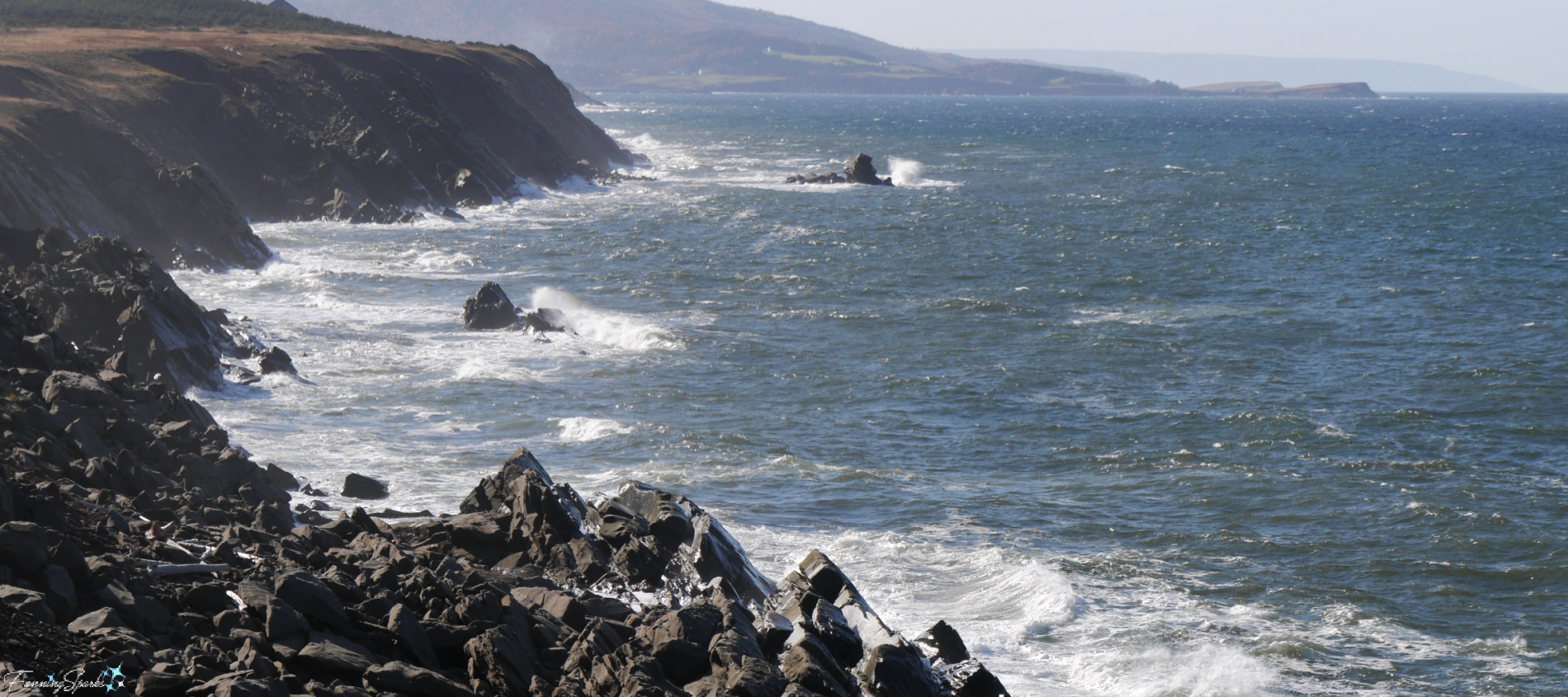
Nova Scotia’s Cabot Trail is a world-famous, scenic, driving route that circles the northern tip of Cape Breton Island. It is known for rustic natural beauty and dramatic coastal views.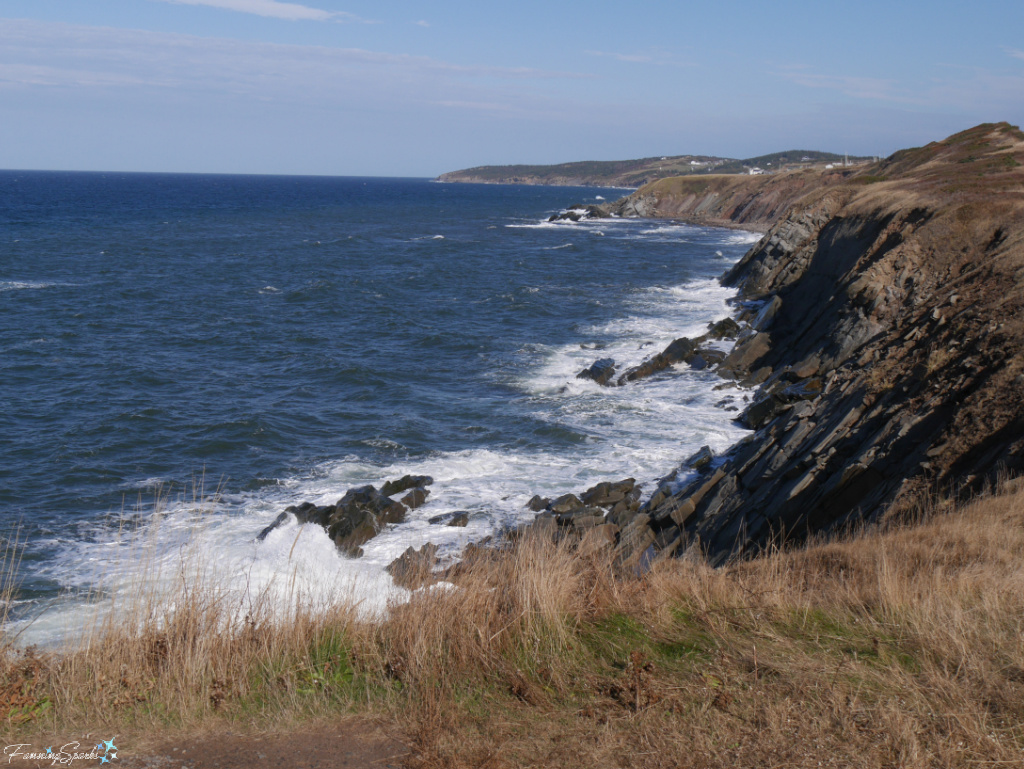
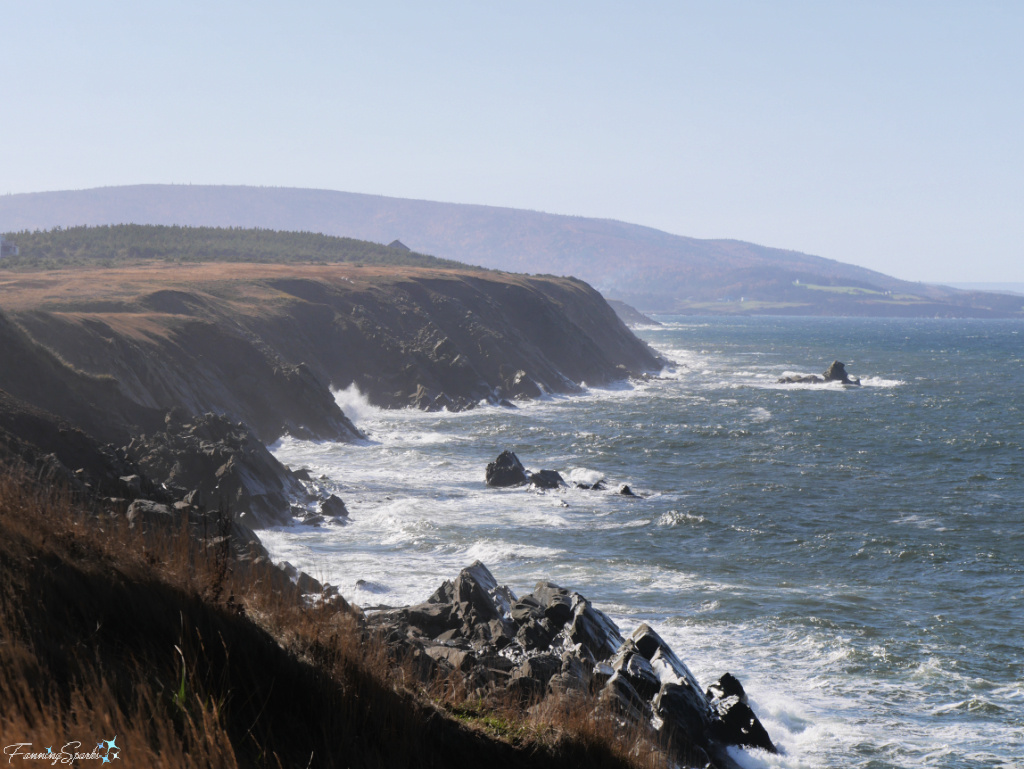
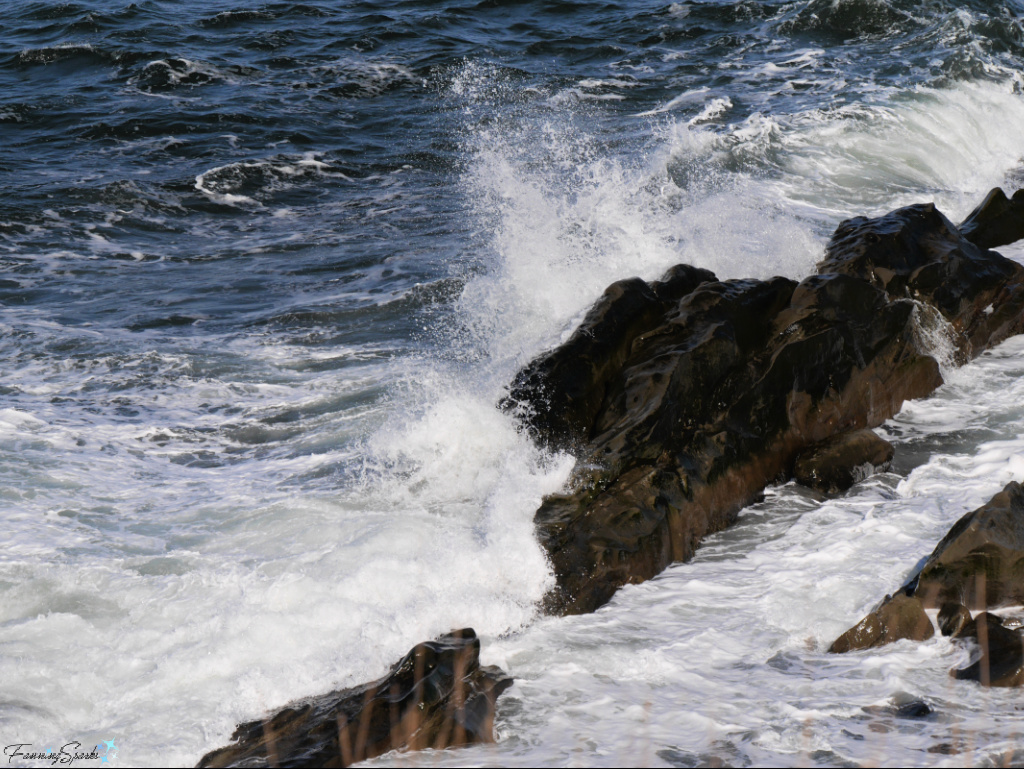
Cape Breton also boasts a variety of outdoor activities including the spectacular Skyline Hiking Trail on the top of French Mountain in the Cape Breton Highlands National Park.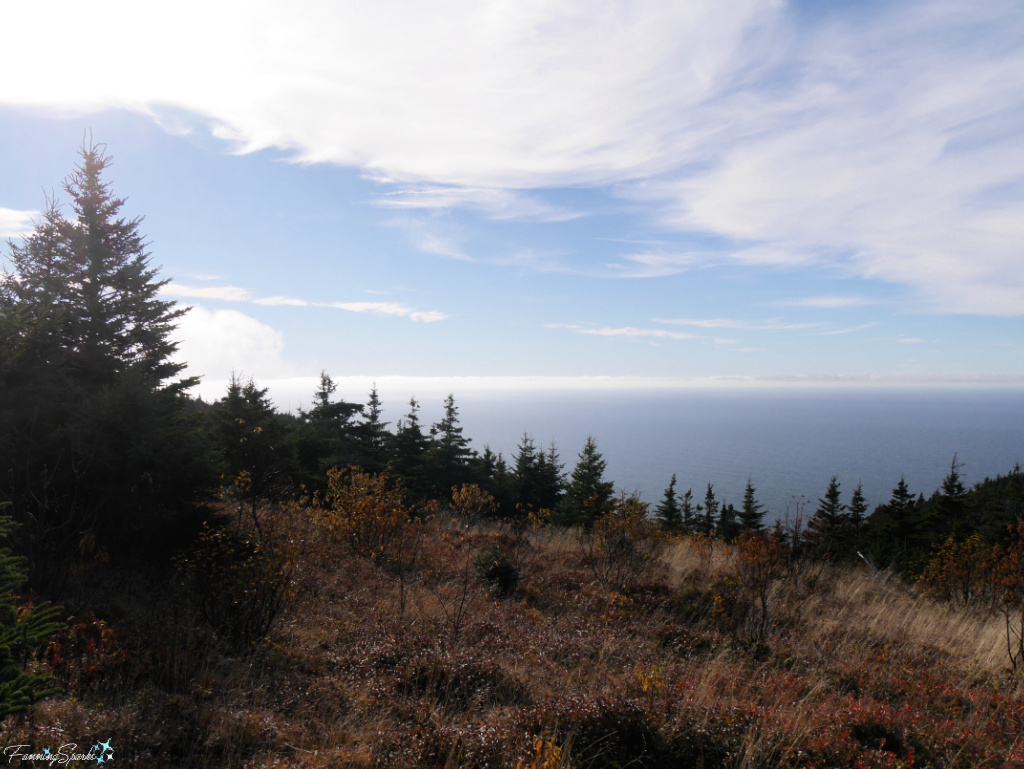 Hikers can follow the well-maintained trails through gentle forests and wild meadows to a dramatic, cliffside boardwalk and viewing deck.
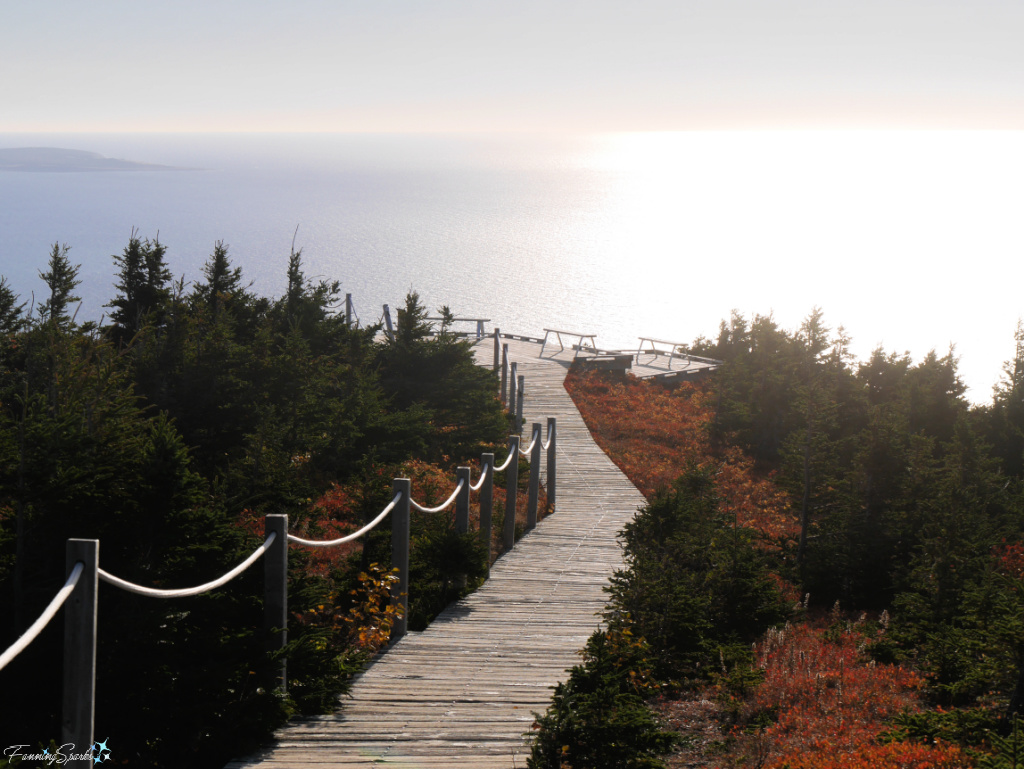
The views were breathtaking!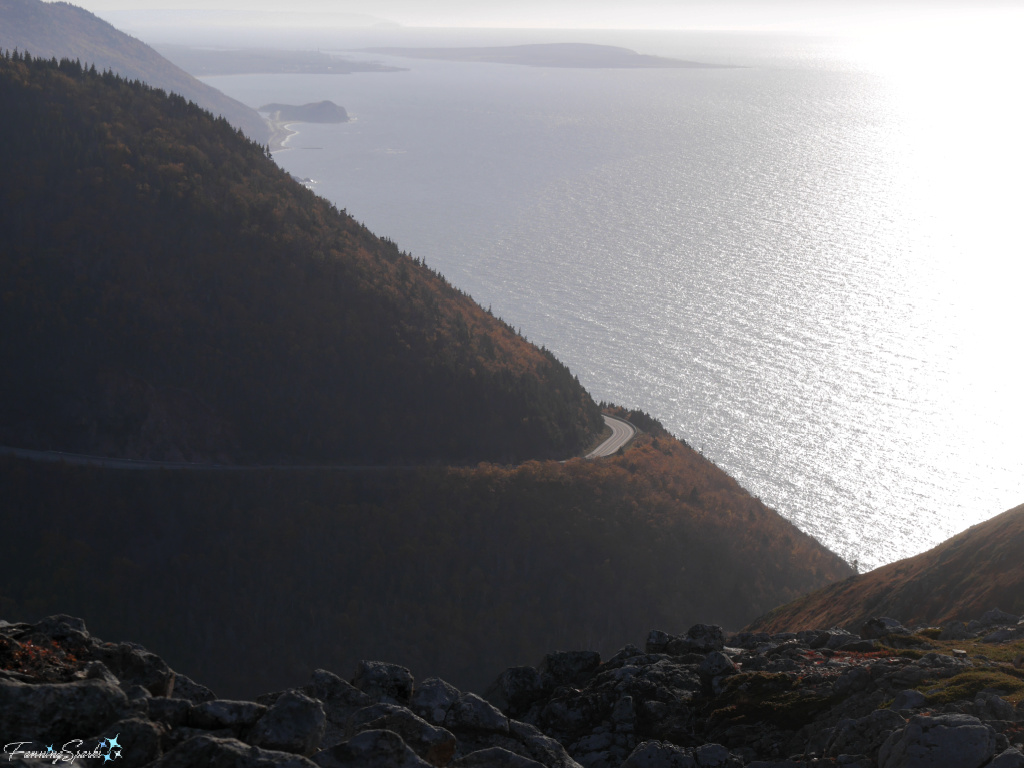
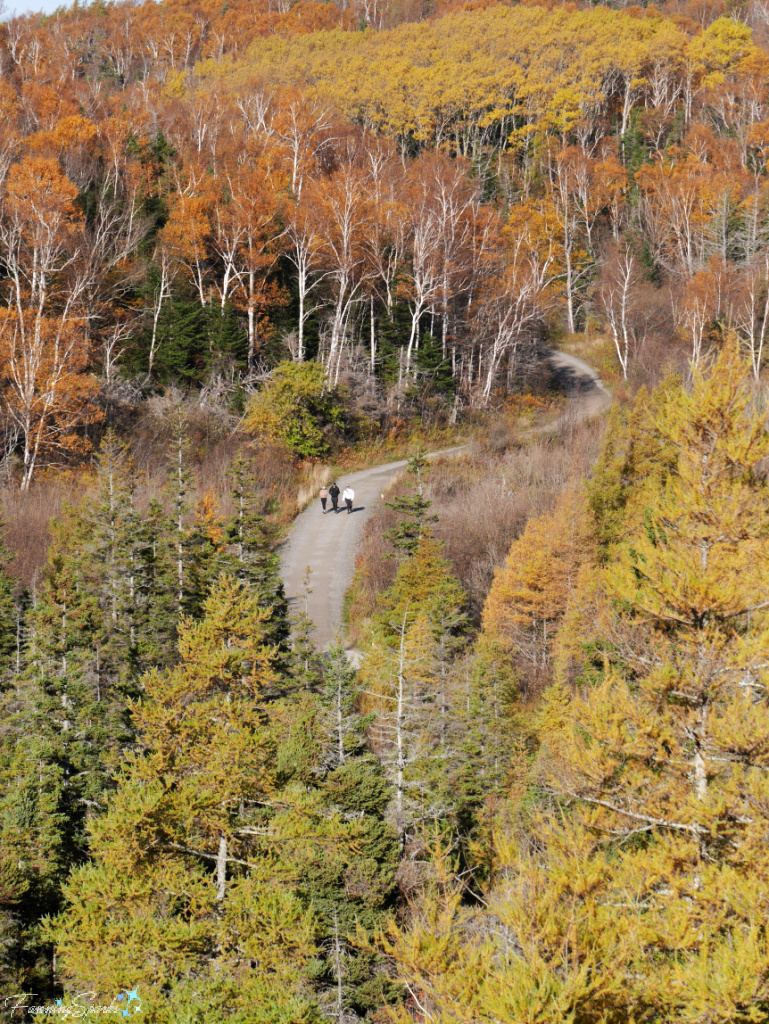
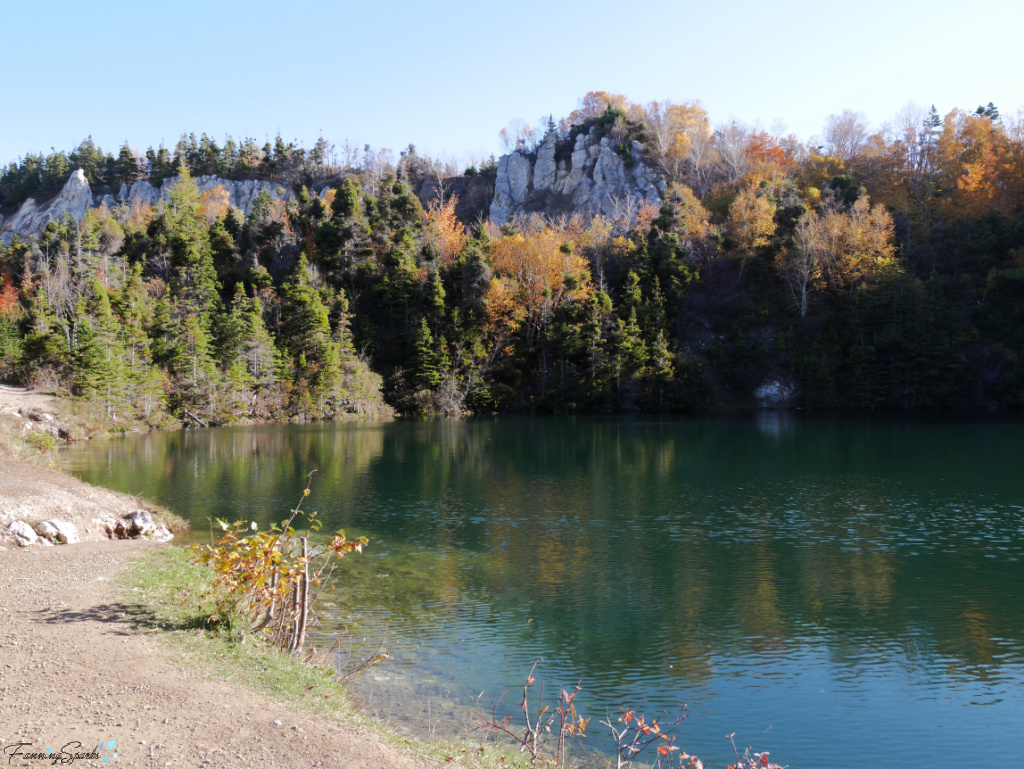
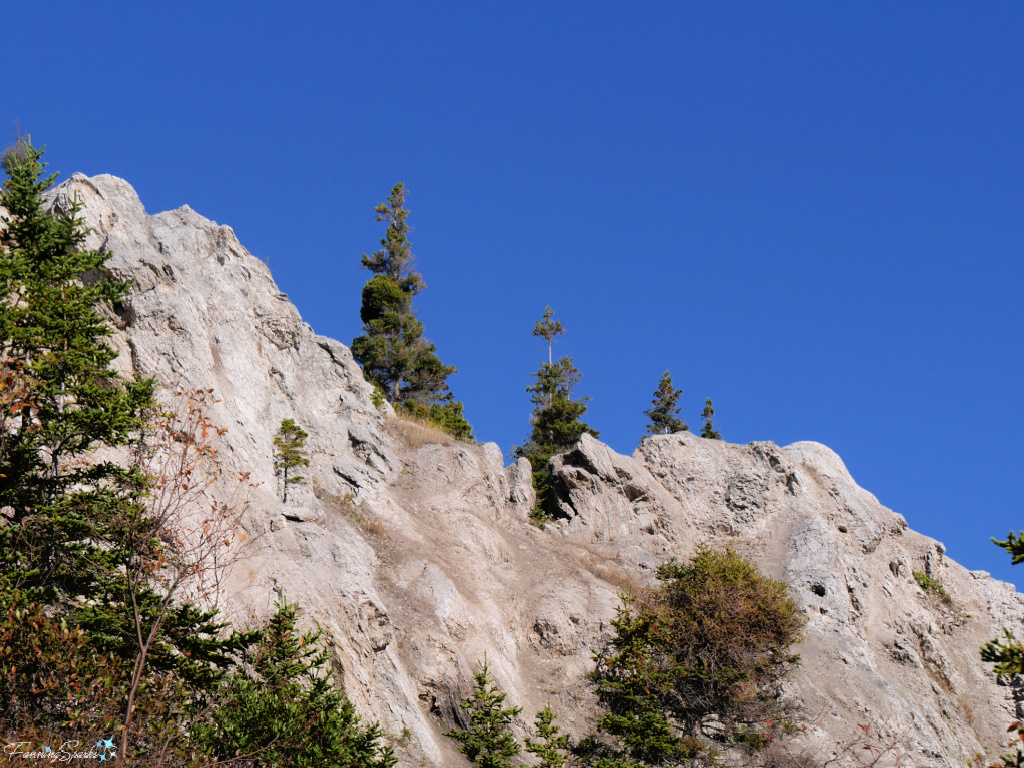
Not far from the Skyline Trail, in the traditional Acadian fishing village of Chéticamp is a hidden gem known as the Gypsum Mine Lake and Trail. An onsite sign states “This site, which includes the gypsum quarry and the old railroad bed which goes from here to the Chéticamp harbour, was donated by the National Gypsum Company of Canada. Today, the site includes this artificial lake where gypsum was mined from 1911 to 1939.”
Vibrant autumn foliage turned this wooded walk into a golden stroll.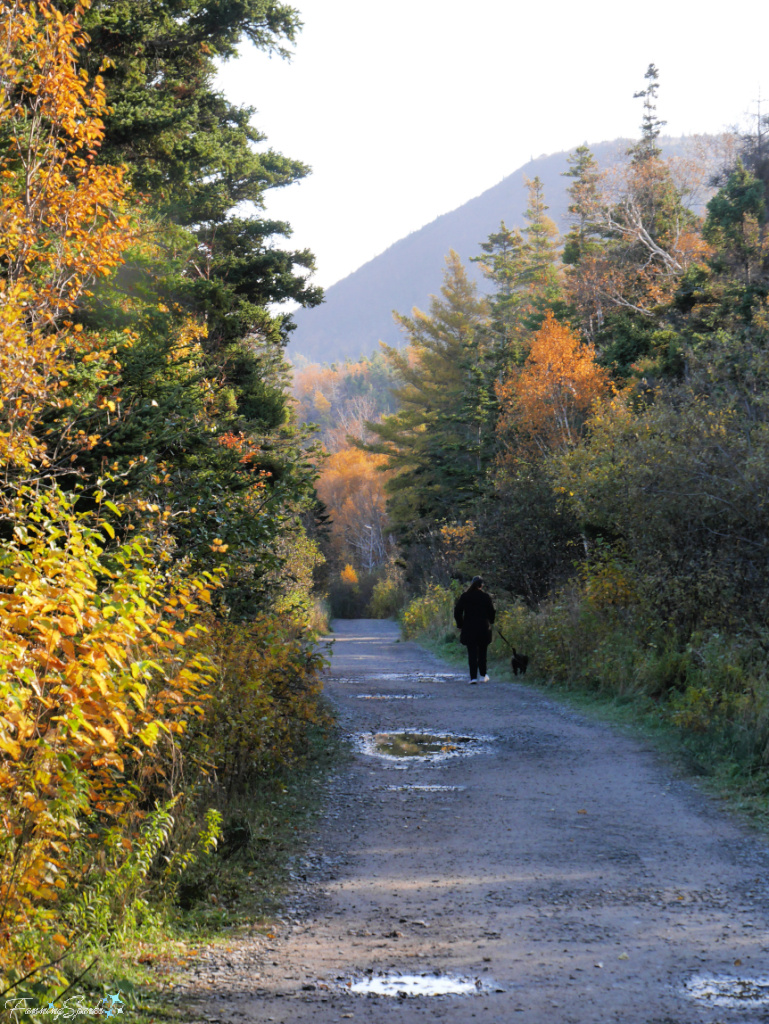
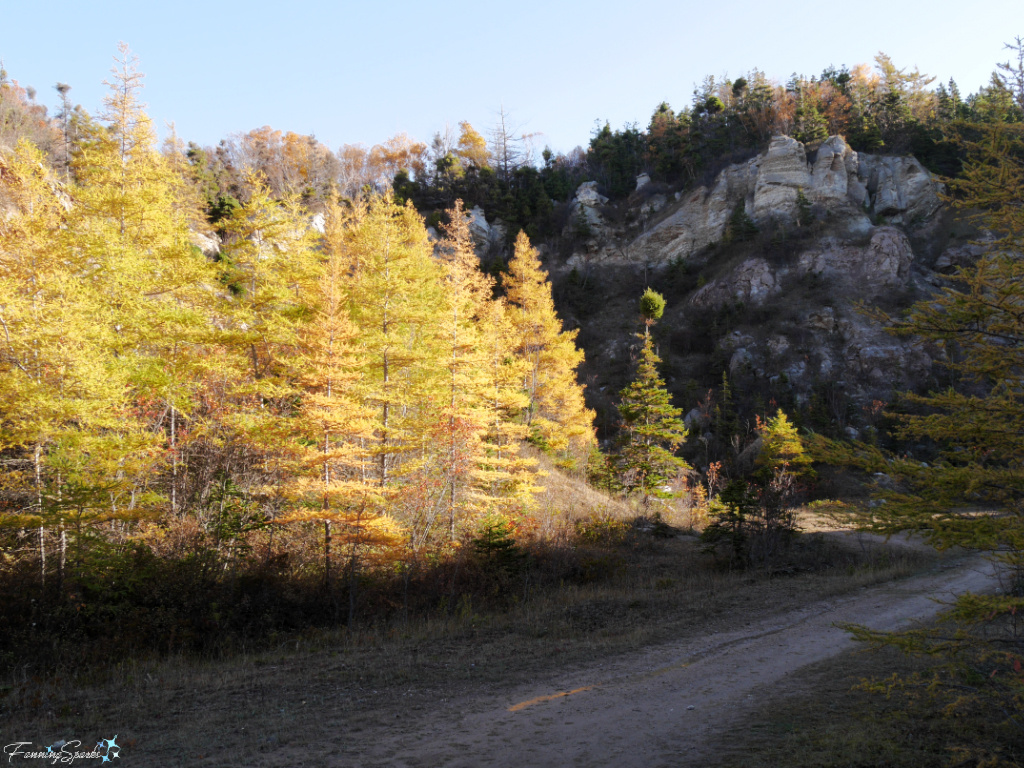
As promised in the online reviews, the crystal-clear, turquoise waters of Gypsum Lake were surrounded by dramatic white gypsum cliffs.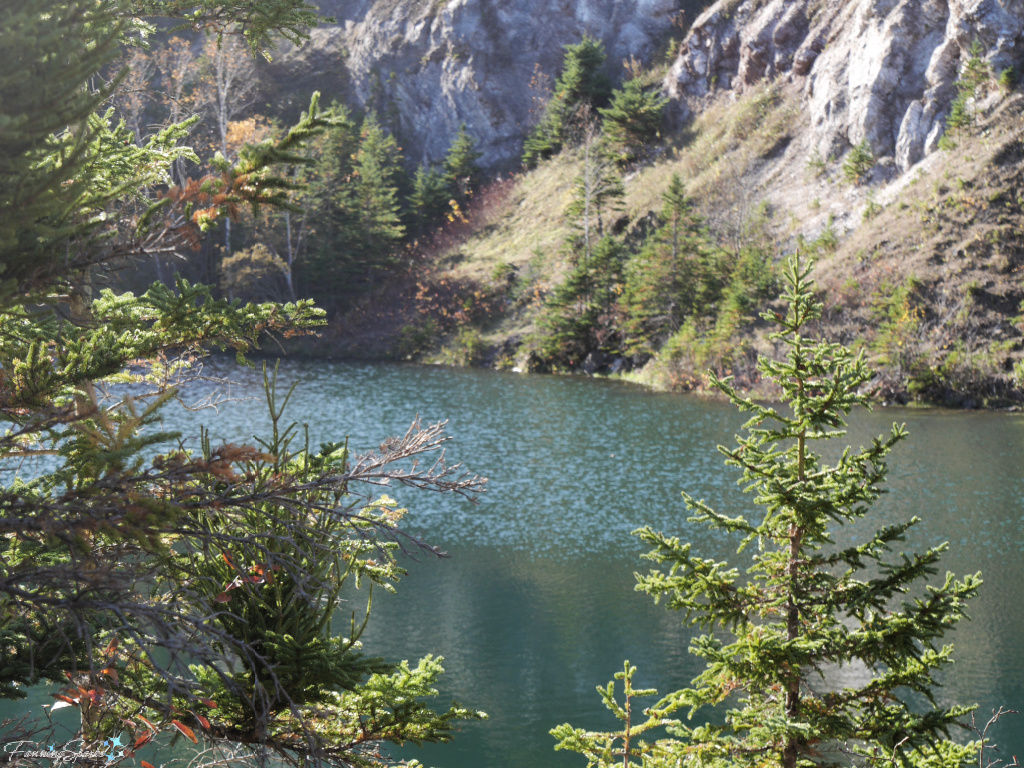
Our final stop was Inverness Beach ― a gorgeous, sandy beach with a reputation for sea glass. To learn more about the fun of collecting sea glass, see my previous blog post In Pursuit of Sea Glass. I did, indeed, find more sea glass here than on any other beach I’ve combed.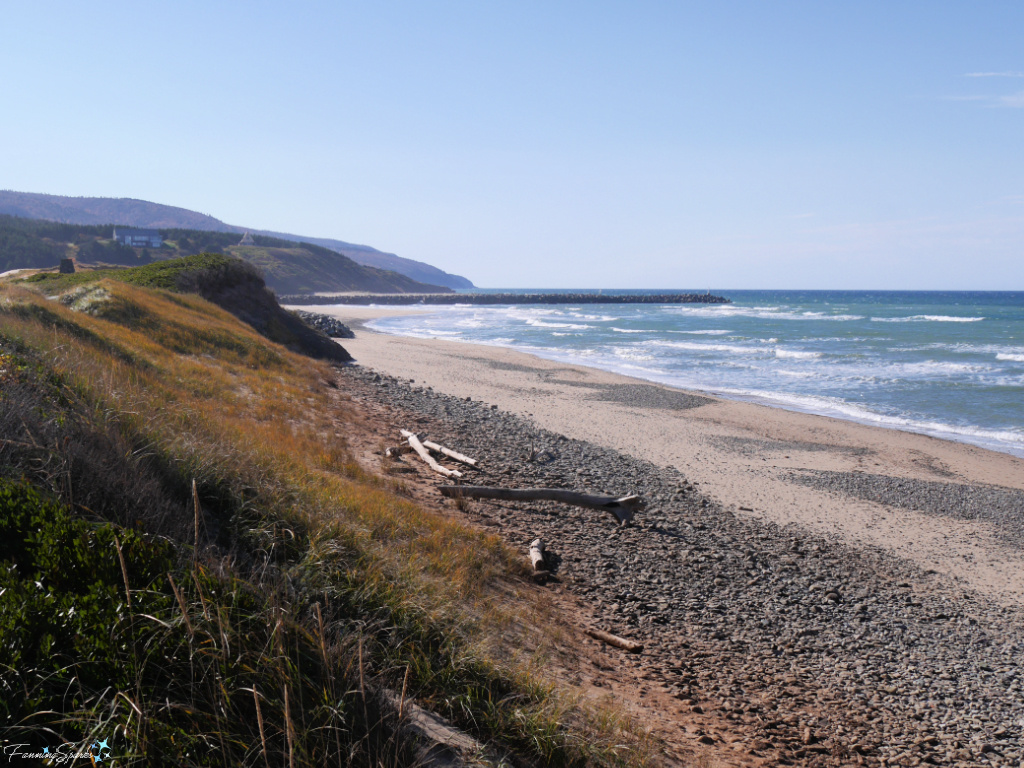
As I mentioned at the top of my last blog post, there’s nothing like an out-of-town houseguest to help you rediscover the wonders of your everyday surroundings. Special thanks to my friend Vicki for sharing these Nova Scotia road trips with me!