
Last month, one of my Folk School friends hosted her first-ever solo art exhibition titled Crafting Connections: A Serial Dabbler’s Journey. Tammy Elwell calls herself a “serial dabbler” to reflect her “unique approach to art — rather than restricting herself to a single signature style, she actively explores, masters, and bridges a vast array of traditional Appalachian and historic crafts”. Congratulations Tammy! I wish I could have attended in person to see your show!
I’m struck by how perfectly the term “serial dabbler” fits Tammy’s approach especially since I, too, am somewhat of a serial dabbler. Just looking back at the variety of fibre festival workshops I’ve joined, convinces me the term applies.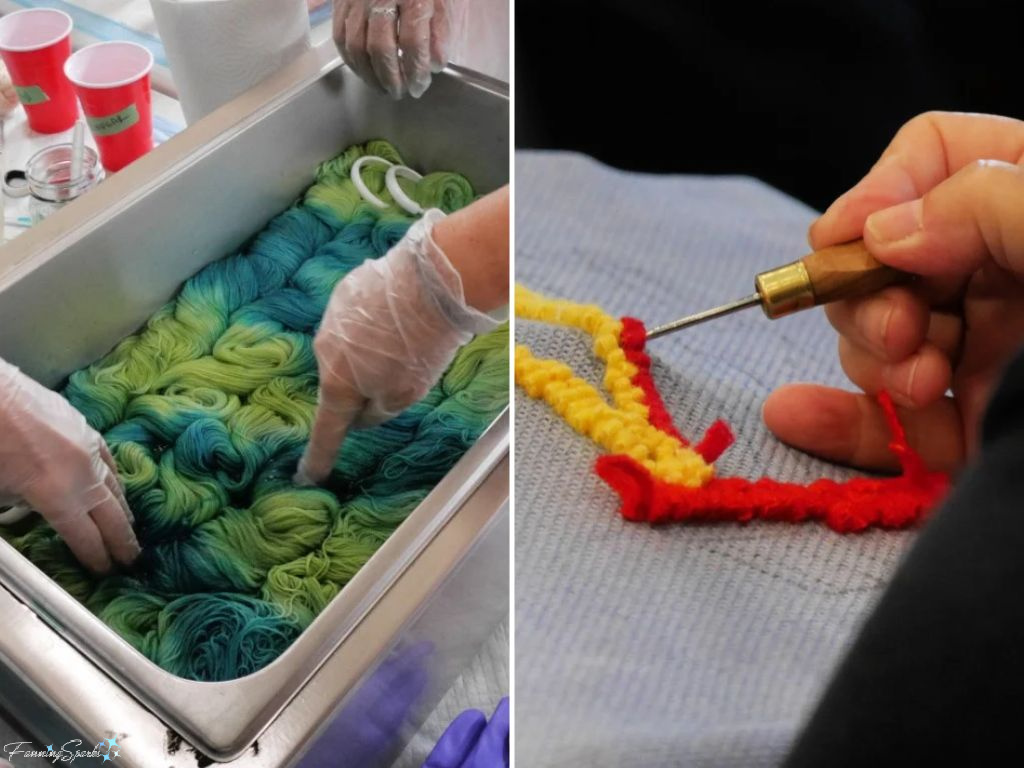
Last week’s blog post, From the Show Ring to the Weaver’s Loom, took a look at the wonderful world of fibre arts festivals. A fibre festival is a gathering of people who work with natural fibres and textiles including knitters, crocheters, spinners, weavers, felters, and rug hookers. Getting together with fellow fibre arts enthusiasts provides the perfect opportunity to build community and to learn from each other. It’s also ideal for a serial dabbler, like me, to experiment with new materials and techniques. I’d like to share a couple of my favourite workshop experiences in today’s blog post.
First up is the workshop, Still Waters: A Painterly Approach to Hooking a Dory by Charlene and Debbie Miller of Periwinkle Laine, which was part of WoolstockEAST 2025. The below photo shows some of the students (including yours truly at the far end) busy hooking.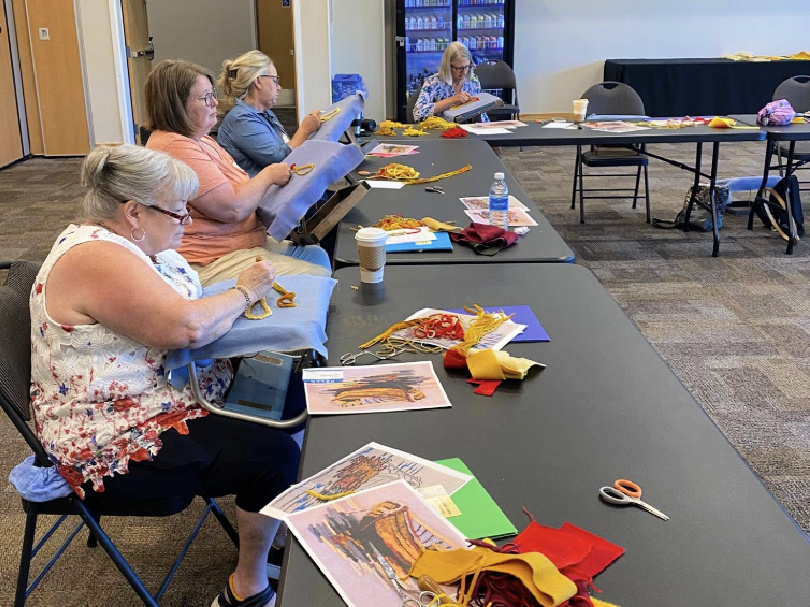
The workshop, Still Waters: A Painterly Approach to Hooking a Dory, was led by Charlene and Debbie Miller of Periwinkle Laine. I’ve been interested in rug hooking for some time as evidenced by my previous blog posts ― Rug Hooking in my Home Province and Inspired by Memories of Home ― which discuss the work of renowned Nova Scotian rug-hooking artist Deanne Fitzpatrick.
This photo, copied from the Periwinkle Laine Facebook page, shows our workshop project.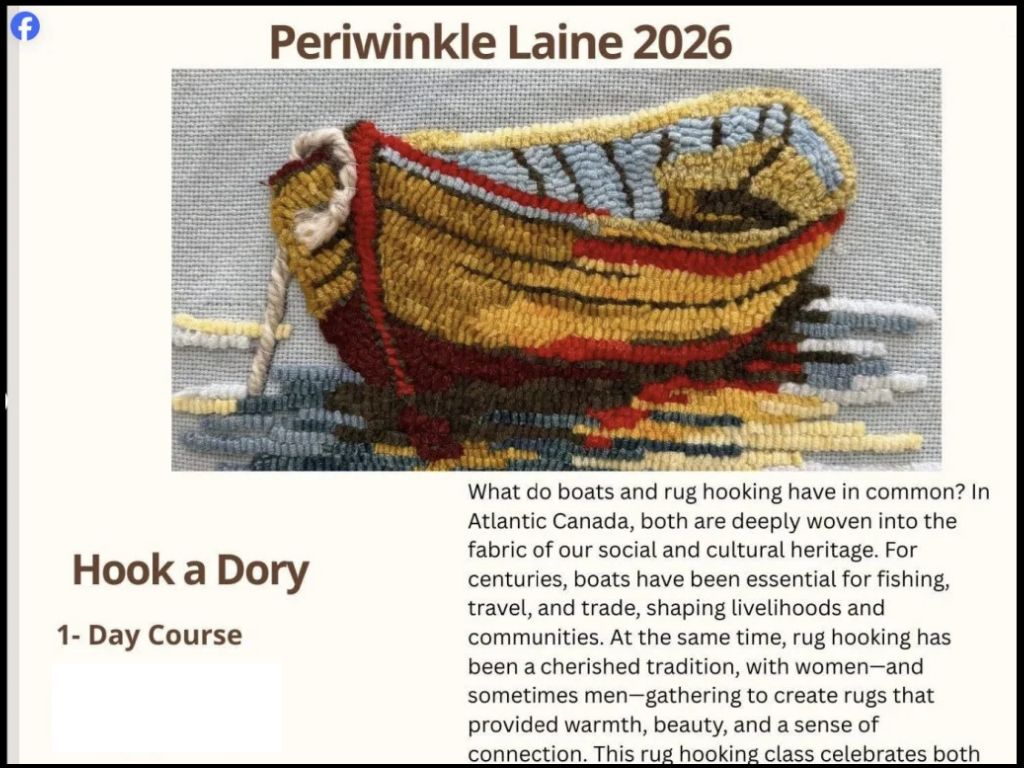 We had a nice mix of experienced and novice rug hookers in the workshop. Charlene and Debbie brought everyone up to speed by introducing the medium, sharing examples and demonstrating techniques. They had prepared our foundation cloth in advance by transferring the dory pattern onto a piece of cotton rug warp. We started by attaching the rug warp to a rug hooking frame.
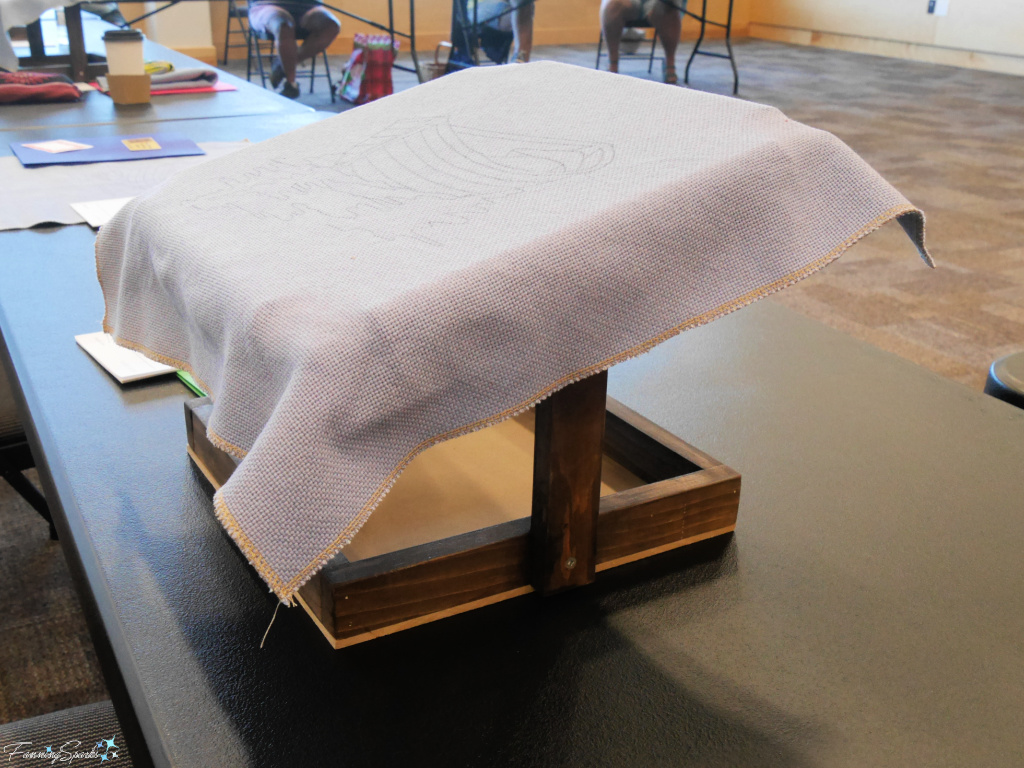
The edges of the frame are equipped with sturdy gripper strips to grab the fabric and create the ideal tension for hooking.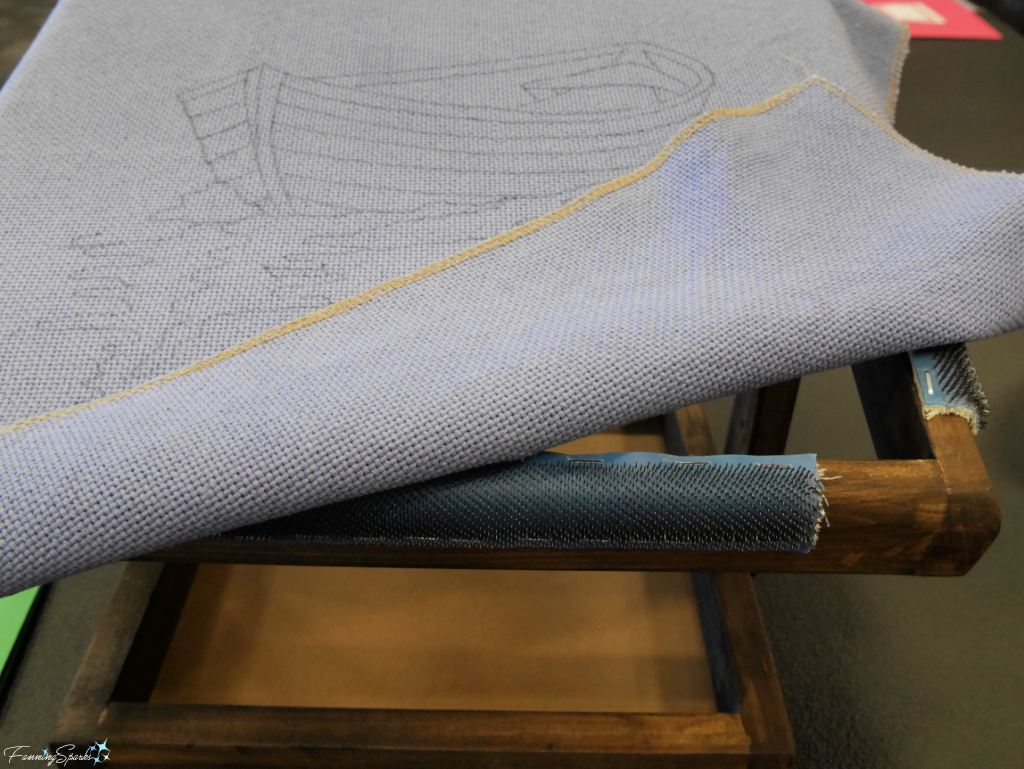
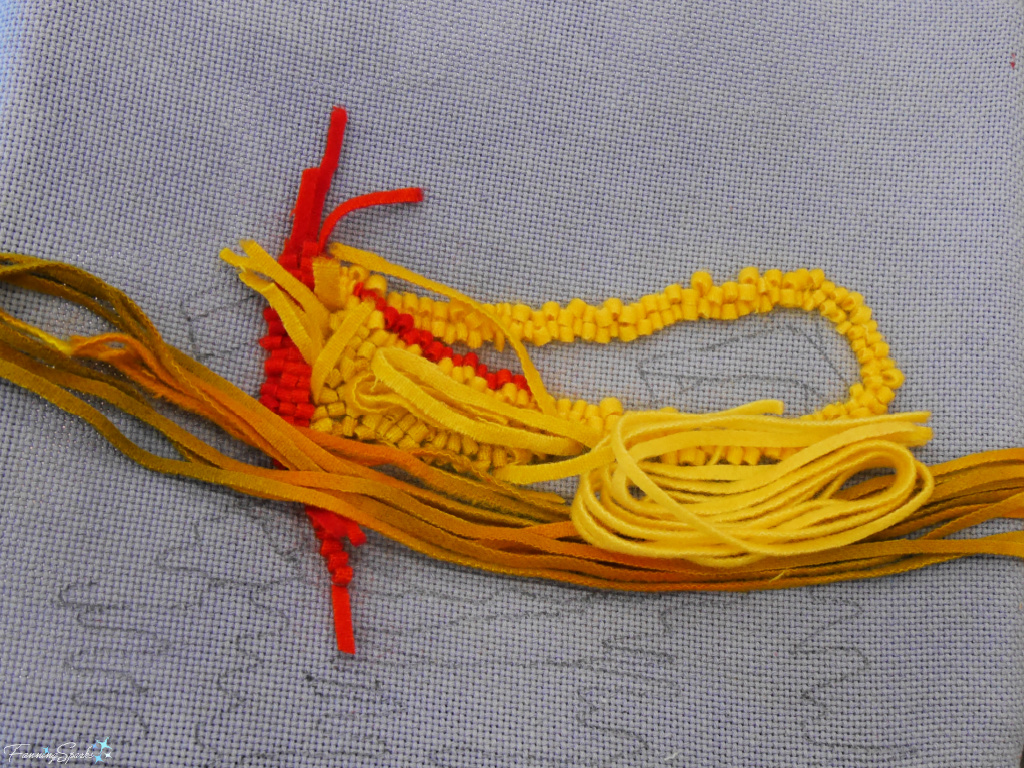
Next, we learned how to use a crochet-style hook, such as a “Joan Moshimer Primitive Hook”, to pull small loops of wool strips through the cotton rug warp.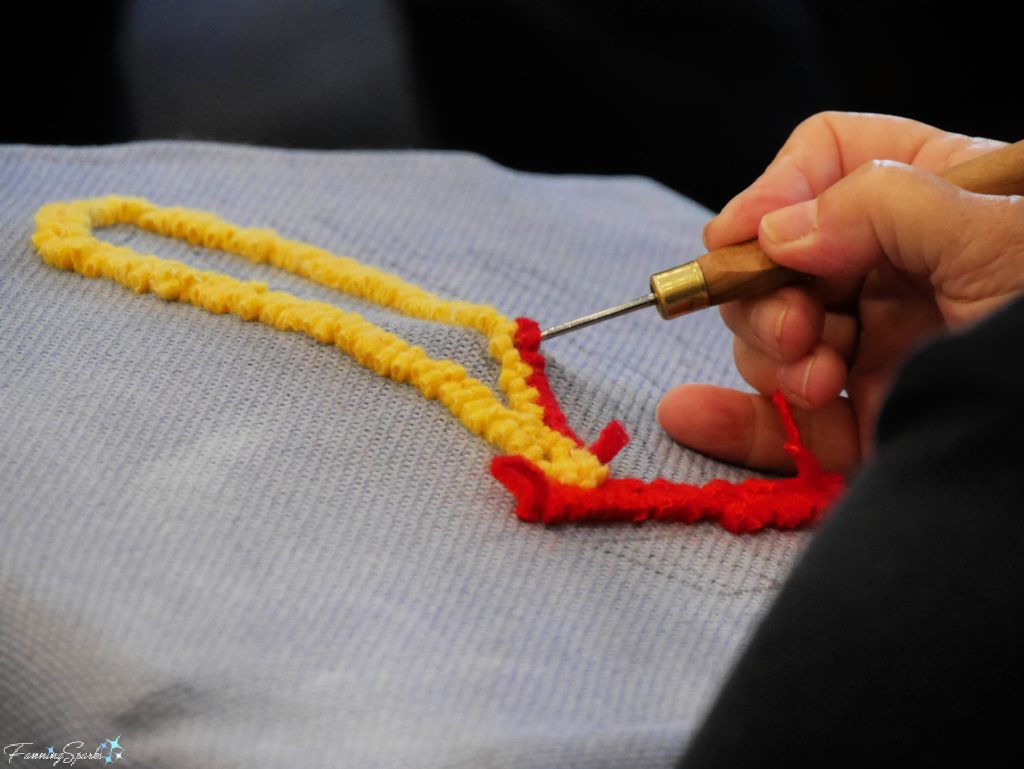
We began by hooking a “holding line” along the top edge of the dory. The holding line will frame the outside edges making it easier to fill in the sections.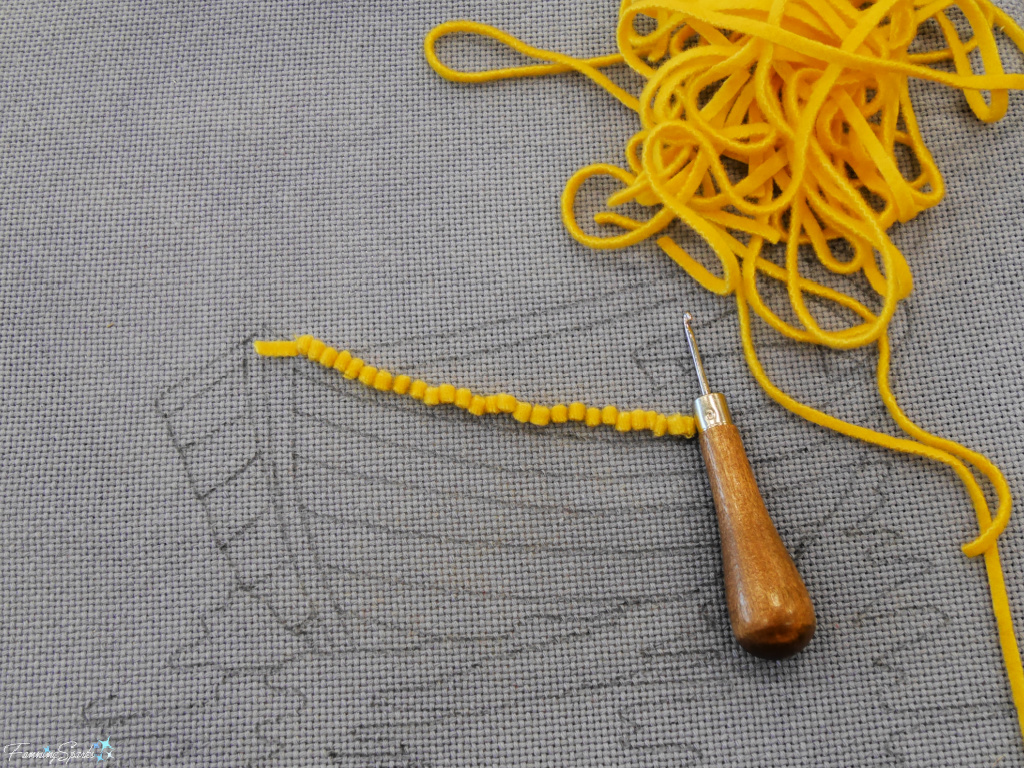
Over the course of the workshop, we learned about selecting wool fabric and custom dyeing fabric for a full range of colours.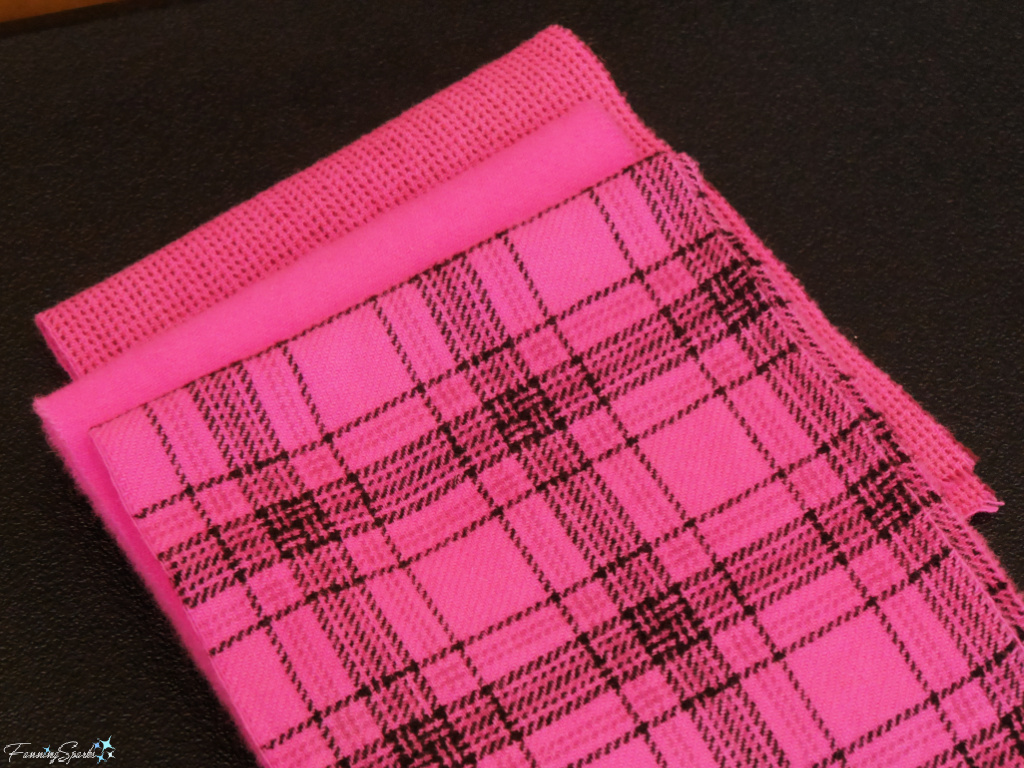
We also learned about fabric strip cutters which are specifically designed to cut narrow ribbons of fabric. We used a #5 cutting cassette to create strips that are 5/32” wide.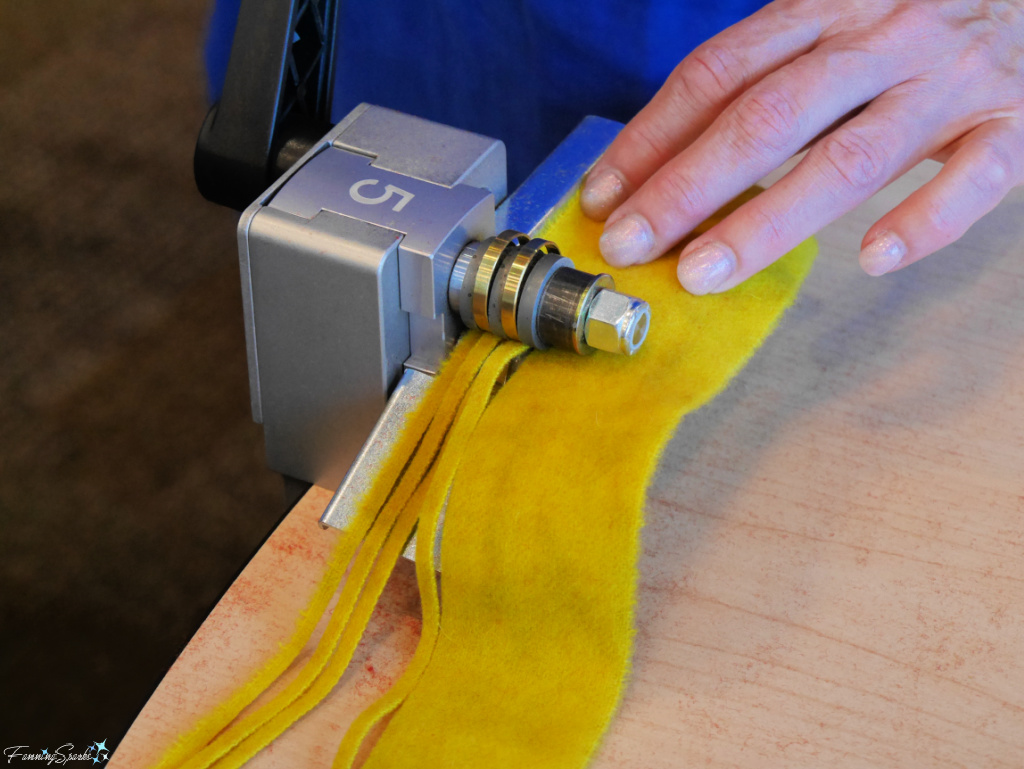
Preparing fabric strips in a spectrum of colour ― including dark shades and light tints ― allows for the gradual shading and advanced colour blending Charlene and Debbie incorporate in their “painterly approach”.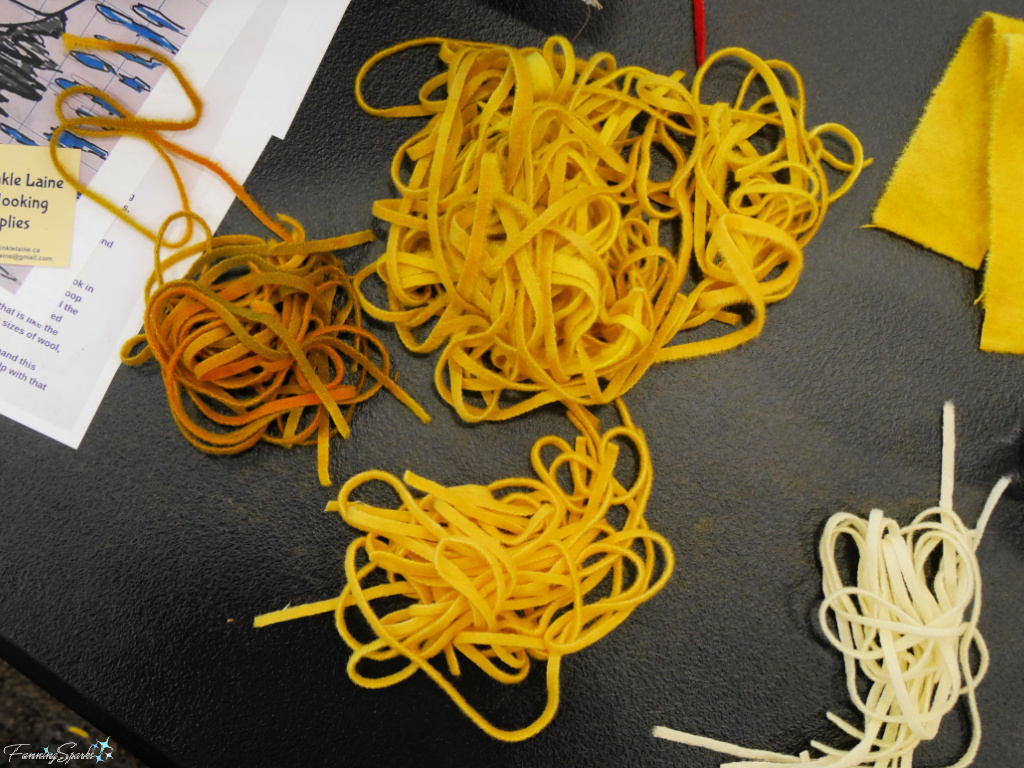
We wrapped up with an explanation and demonstration on completing our finished hooked pieces. Charlene and Debbie presented options for finishing the hooked rug edges including whipping, whipping over cording and creating a “Doris Eaton edge”.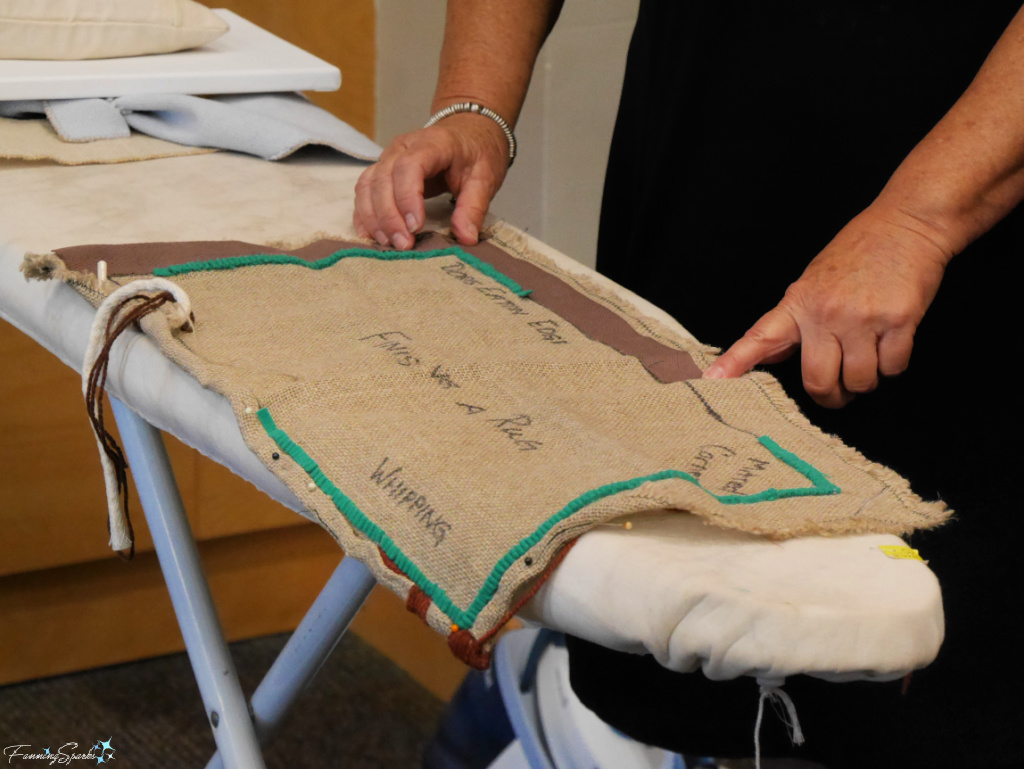
Selecting the best edge treatment depends on the purpose and use of the hooked piece. Our painterly dory scenes were meant to be hung on a wall so no special edge finish was needed. Instead, they were simply stapled to a basic canvas frame for hanging.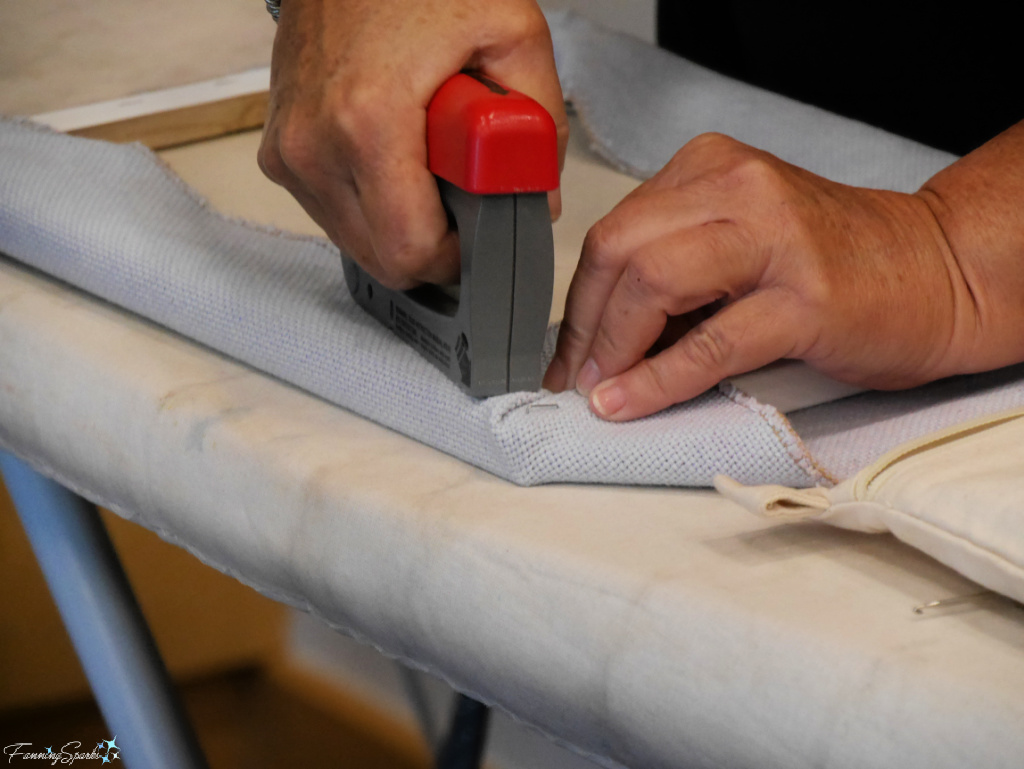
The second fibre festival workshop experience I’d like to share was a totally different vibe. The Hand-Dyeing and Behind the Scenes Farm Tour with Janet Ogilvie was part of this year’s PEI Fibre Festival. Participants had the opportunity to travel offsite to visit Janet’s alpaca farm ― Green Gable Alpacas ― in rural Prince Edward Island.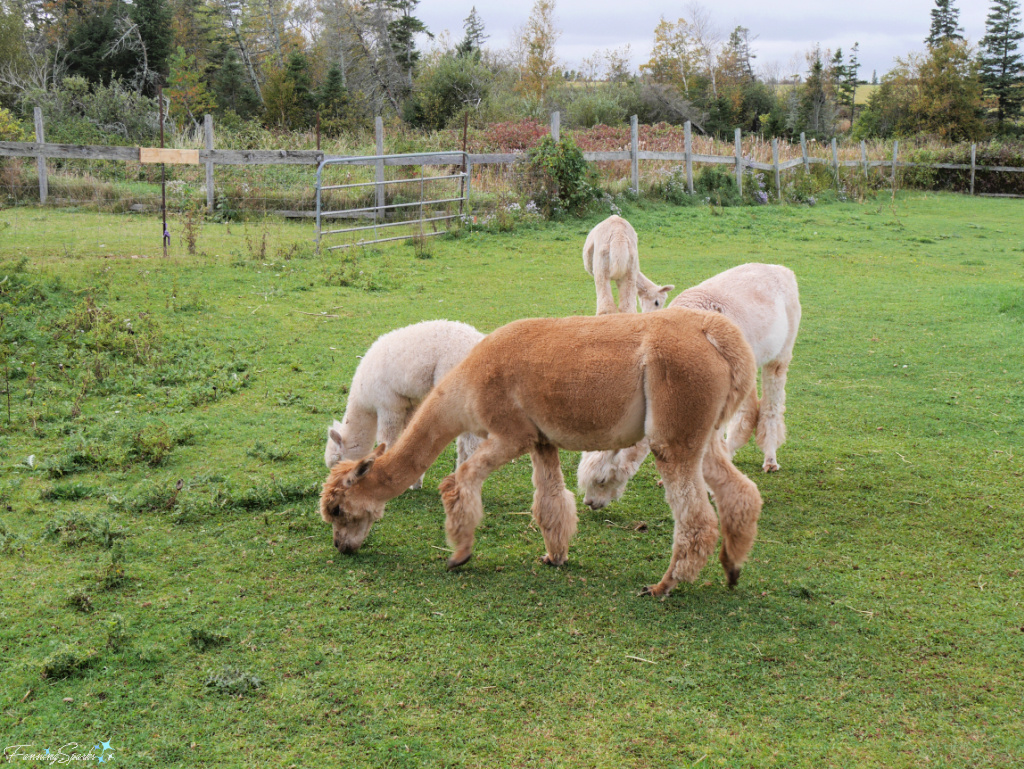
We started with the hand dyeing workshop. Janet had thoughtfully prepared five separate stations ― each designed to conduct a different dyeing technique.
I’ve dabbled in dyeing before ― both with natural materials using traditional methods (see Natural Dye Making and From Sheep to Shawl) and with Rit All-Purpose Dyes using contemporary methods (see Experimenting with Fabric Dye). This hand-dyeing workshop rounded out that experience with some new techniques and alpaca fibre. Each participant dyed a “100 g – white, 100% alpaca 291y/skein” and each group dyed an additional test yarn with different contents such as 80/20 alpaca/merino, 50/50 alpaca/silk and 100% wool.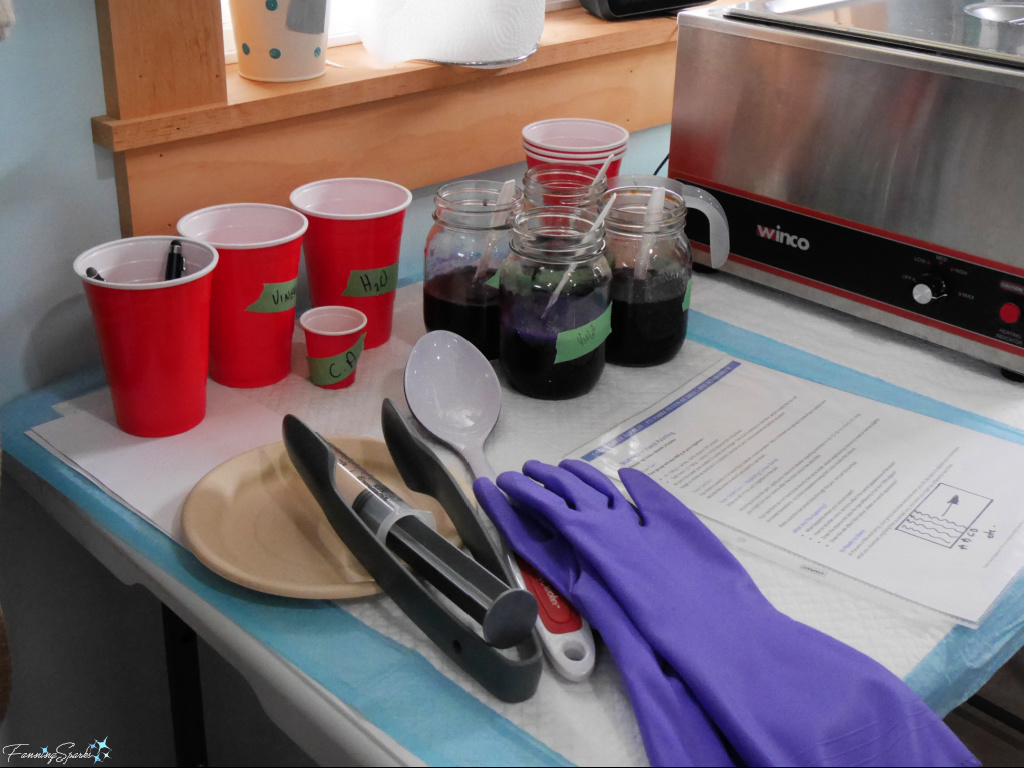
Our group split up into five teams ― one per station ― so everyone had an opportunity to get their hands into the fun! My team was assigned a geometric colour blocking technique which is a method of hand painting yarn. We used four, cool-coloured dyes as shown below.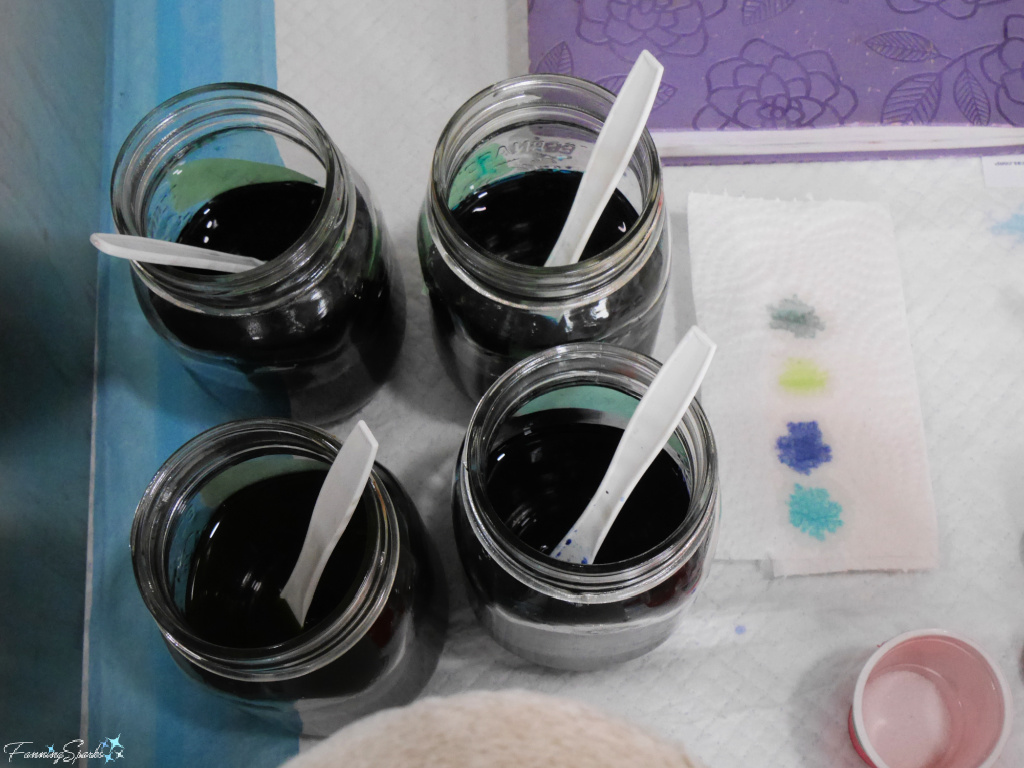
Each station was equipped with a steam table ― the same type professional kitchens use to keep food hot with controlled, gentle heat.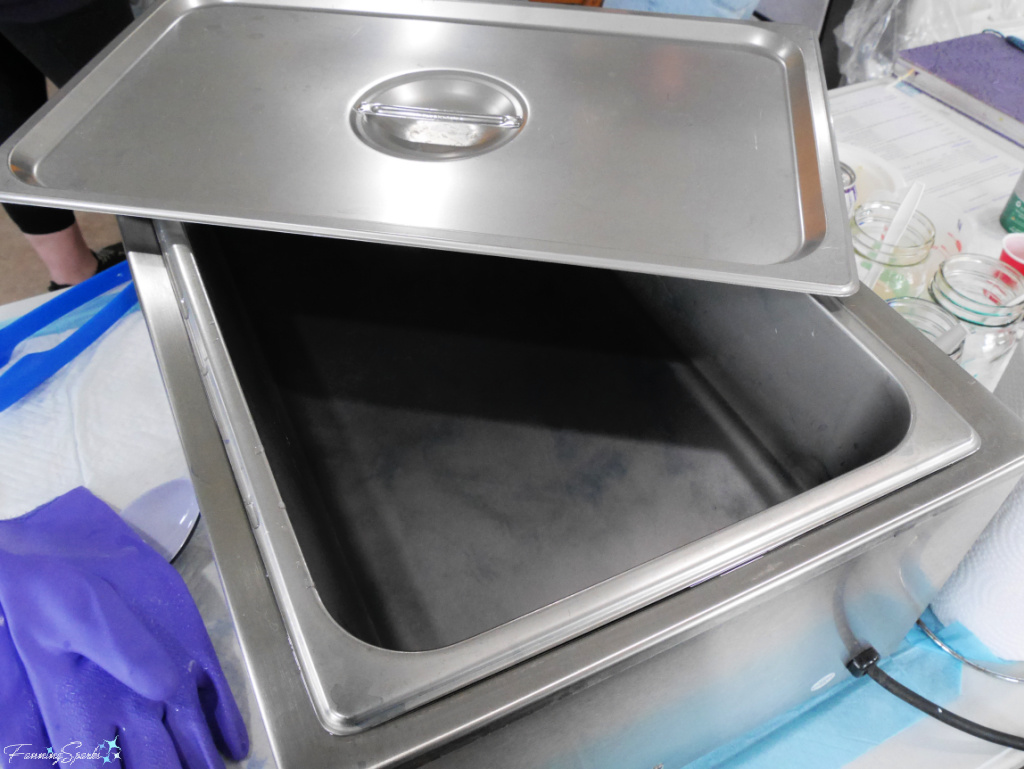
The shallow, rectangular pan was big enough to accept five skeins of yarn laid out side-by-side ― the skeins are separated with plastic shower curtain rings which are visible in the photo below.
Our geometric colour blocking technique called for us to add dye in two passes. In the first pass, we applied two colours in a chevron pattern.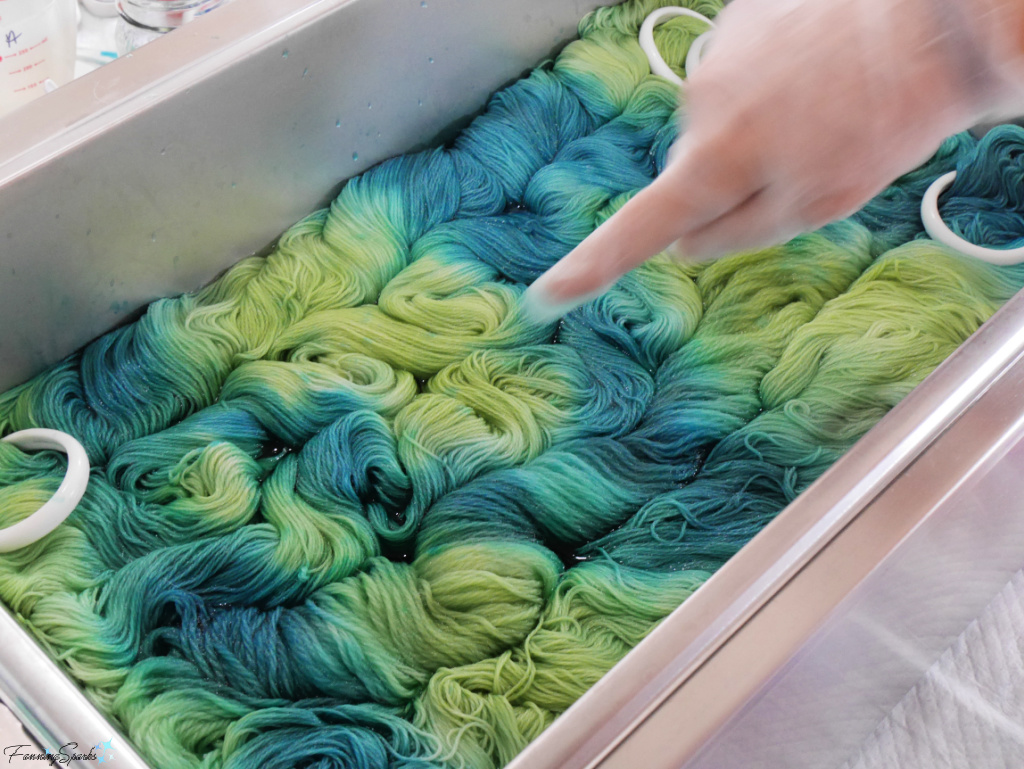
After letting the dye penetrate the yarn, we carefully turned the yarn skeins over so the bottom sides were facing up. Then we applied the other two colours in the same chevron pattern filling in the undyed areas.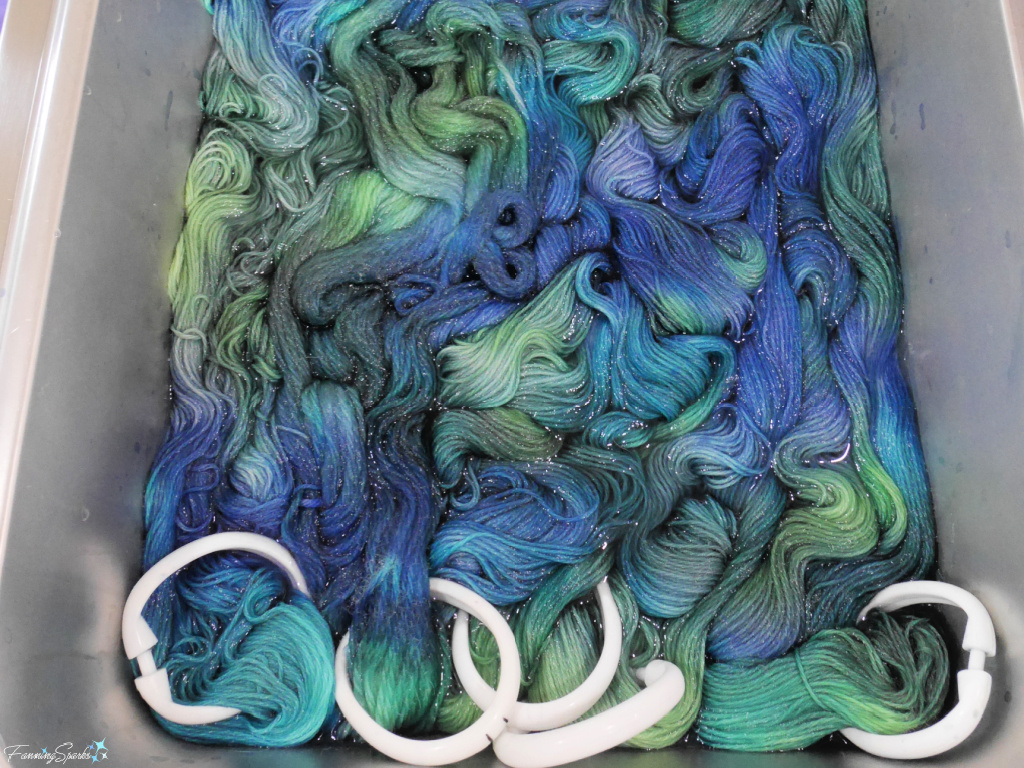
We did our best to, as stated in Janet’s instructions, “keep the main colour areas distinct, while allowing neighbouring colours to meet and interact at the edges”.
Because there’s waiting time, we each had the opportunity to walk around and observe the progress at the other dyeing stations. It was a great way to expose a rather large group of people to a variety of yarn dyeing methods and techniques.
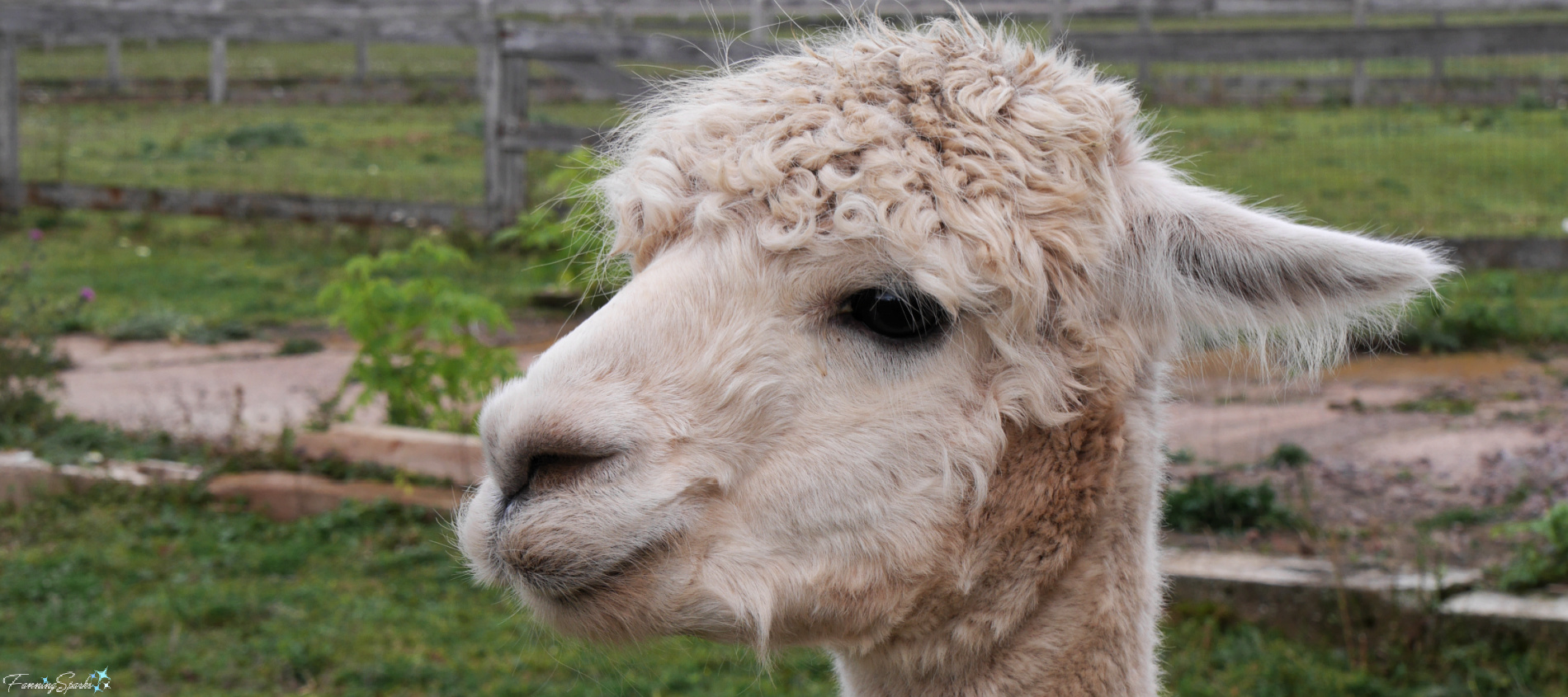
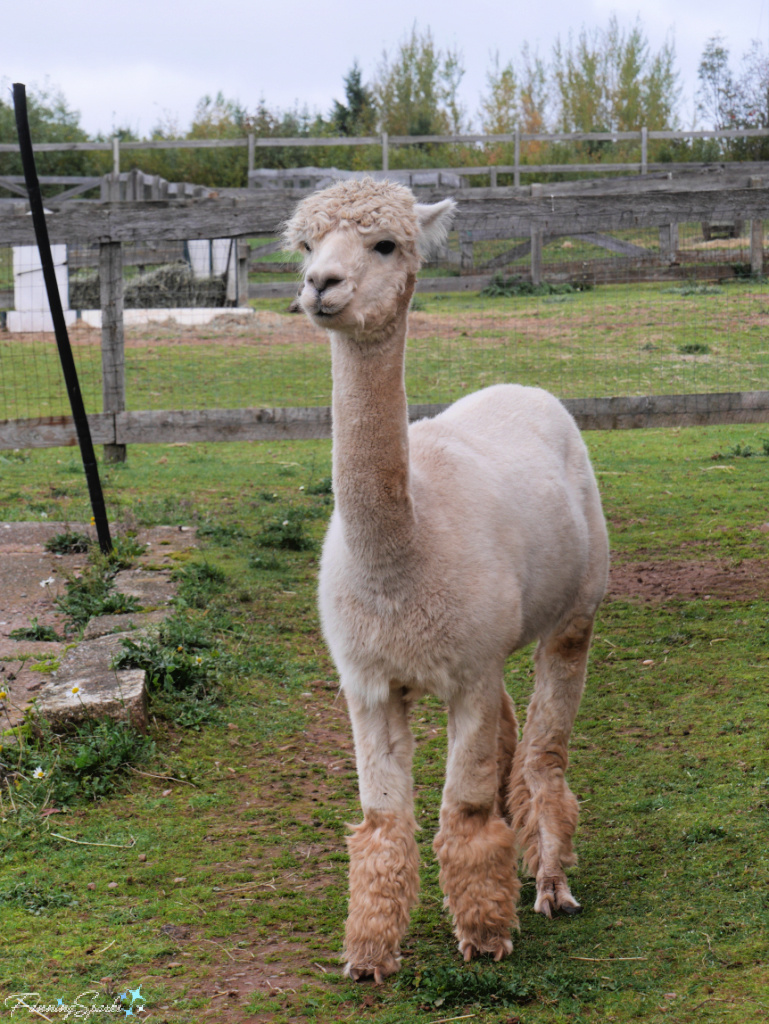
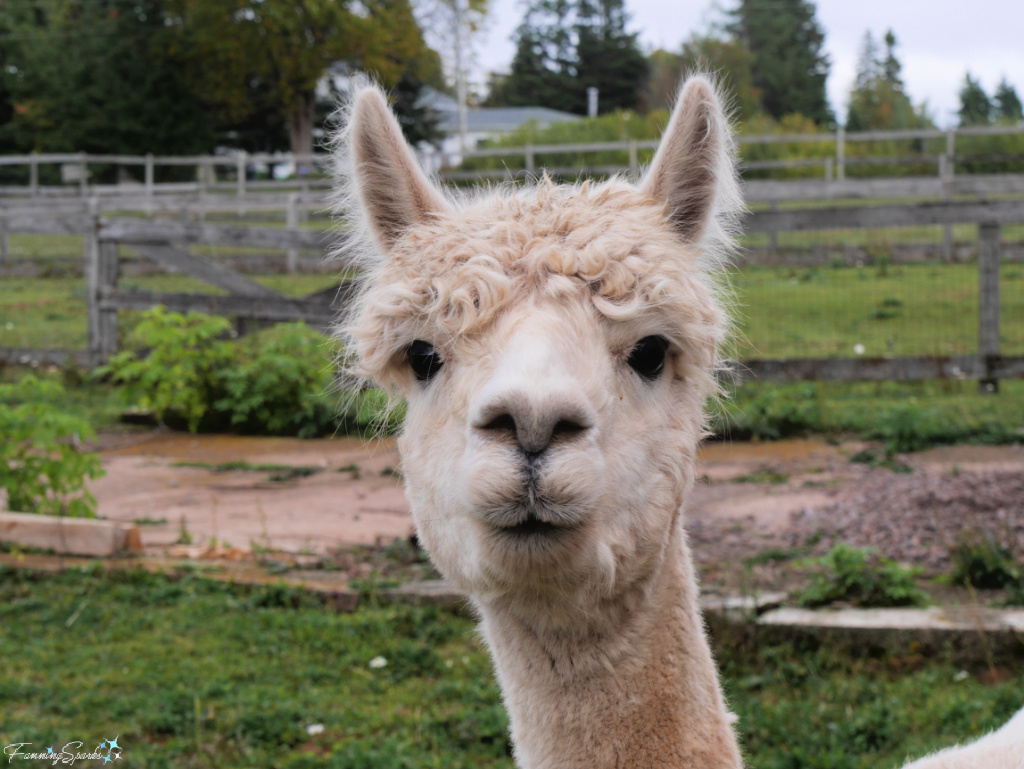
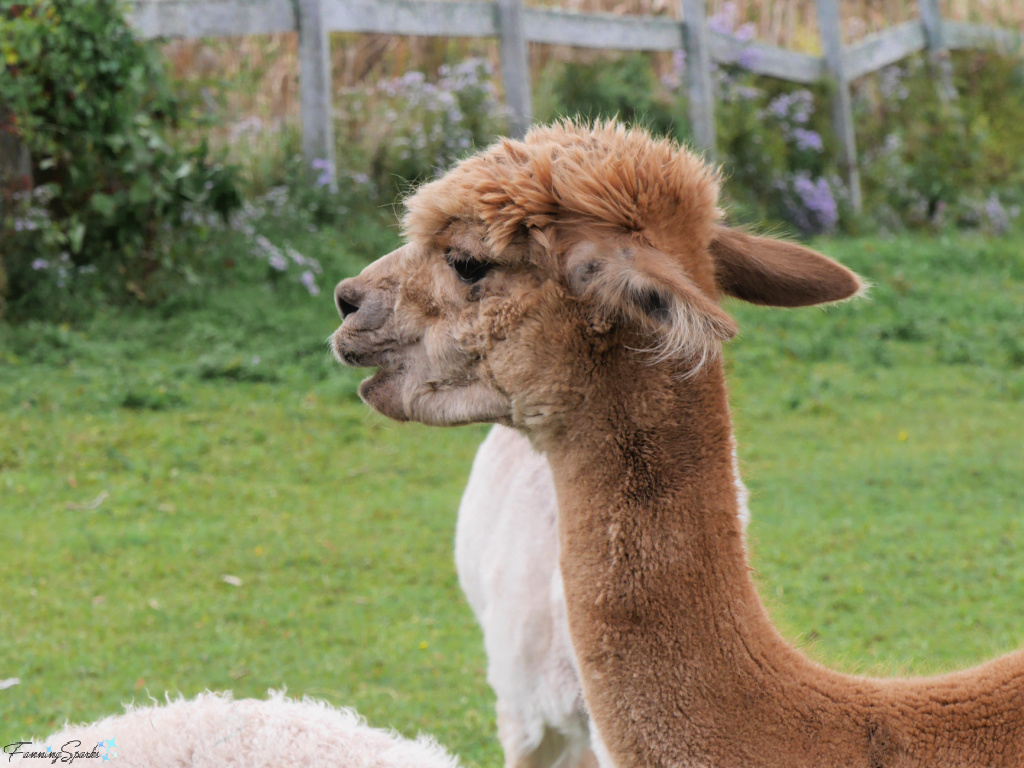
While we waited for our custom-dyed yarn to dry, we enjoyed a behind-the-scenes tour of the farm. I’ve had the pleasure of photographing and studying alpacas before as documented in my previous blog post An Alpaca Photo Shoot. But this experience took it to a whole new level! Janet’s team members shared a wealth of first-hand knowledge and experience as they guided us around the barnyard. We even had a chance to walk in the field and hand-feed the alpacas.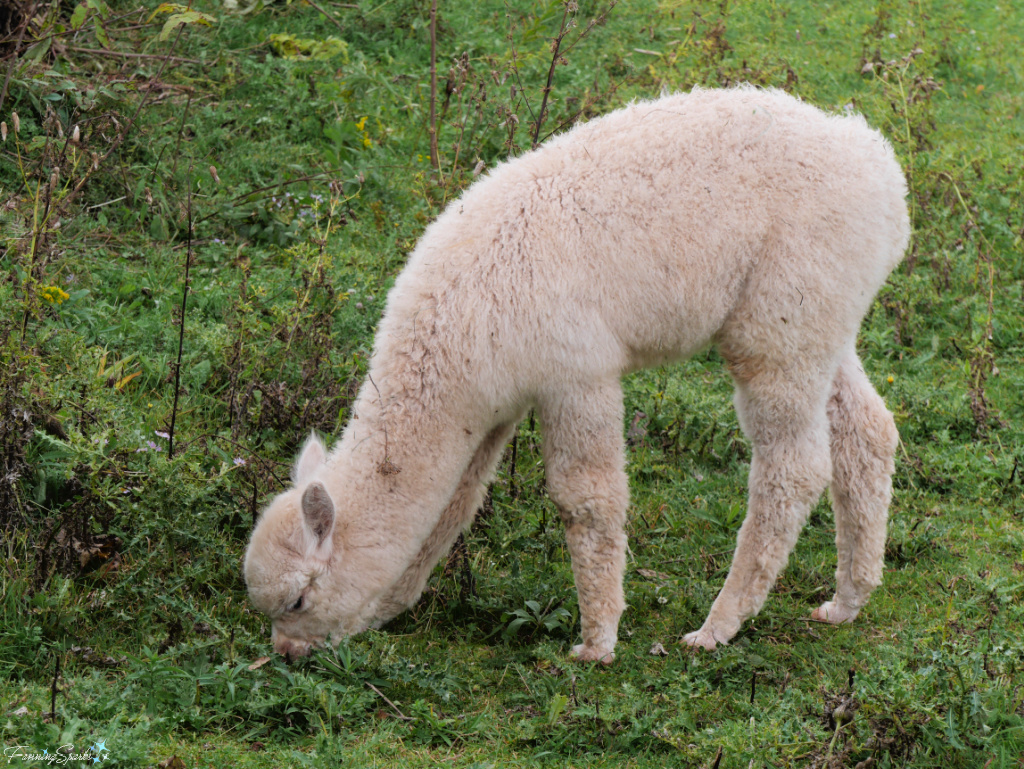
When we returned to the studio, our splendid, custom-dyed, alpaca yarn was waiting for us.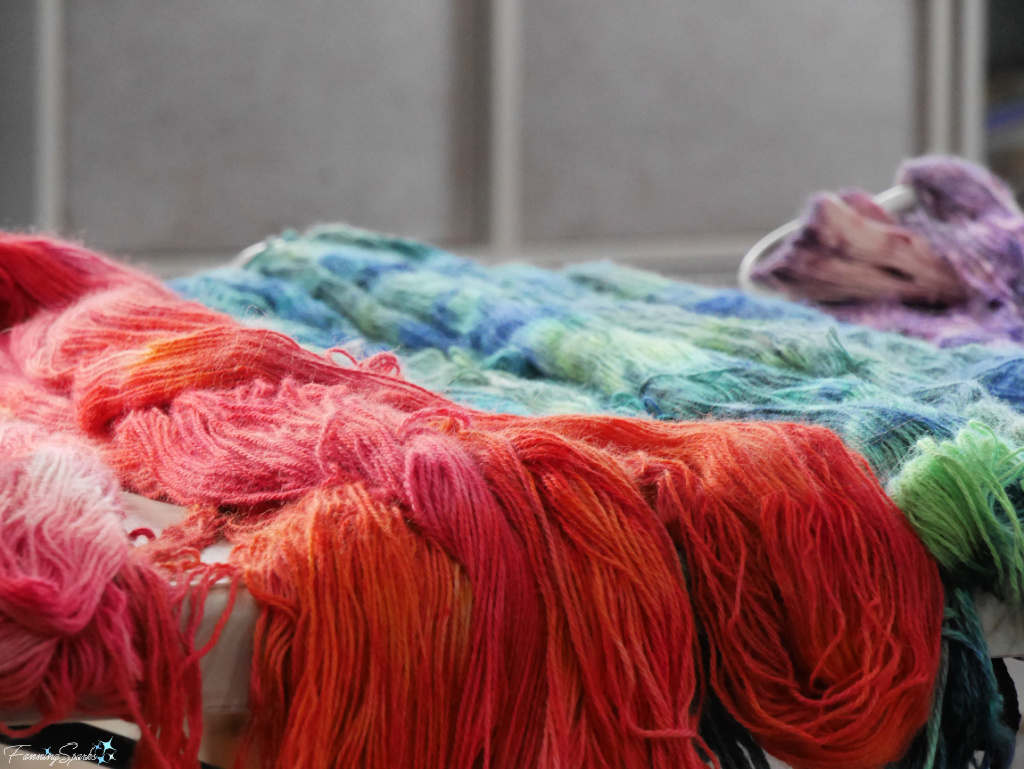
Every workshop I’ve had the good fortune to attend has led to a new skill or insight. Every material used, technique applied and inspiration sparked can be carried forward into future projects — regardless of the medium. It seems to me that the ability to work across mediums — and to cross-pollinate between disciplines — is at the heart of serial dabbling.
More Info
I highly recommend both of the fibre arts workshops mentioned in this blog post. The instructors were highly-skilled and drew upon their deep experiences to build an educational and entertaining agenda. Many thanks to Charlene and Debbie Miller of Periwinkle Laine and to Janet Ogilvie of Green Gable Alpacas! To learn more about these outstanding fibre artists, check out these links:
. Periwinkle Laine website or on Facebook
. Green Gable Alpacas website or Instagram account.
To learn more about Tammy Elwell and her recent exhibition see:
. Crafting Connections: A Serial Dabbler’s Journey article on the Cherokee Arts Council website
. this Facebook post by Cherokee County Arts
. or check out the John C Campbell Folk School or Olive’s Porch websites where she is active.
The John C Campbell Folk School’s mission is to “transform lives, bringing people together in a nurturing environment for experiences in learning and community life that spark self-discovery.” It is located in Brasstown, North Carolina, USA where I’ve spent considerable time. I’ve written about my many, wonderful Folk School experiences here on the FanningSparks blog.
Previous blog posts mentioned in this blog post include:
. From the Show Ring to the Weaver’s Loom
. Rug Hooking in my Home Province
. Inspired by Memories of Home
. Natural Dye Making
. From Sheep to Shawl
. Experimenting with Fabric Dye.
Today’s Takeaways
1. A “serial dabbler” is an artist or artisan with a “unique approach to art — rather than restricting …[themselves] to a single signature style, …[they] actively explore, master, and bridge a vast array of traditional and …[contemporary] crafts”.
2. Fibre festivals provide excellent opportunities to learn from other fibre artists.
3. The ability to work across mediums — and to cross-pollinate between disciplines — is at the heart of serial dabbling.
Comments are closed.