
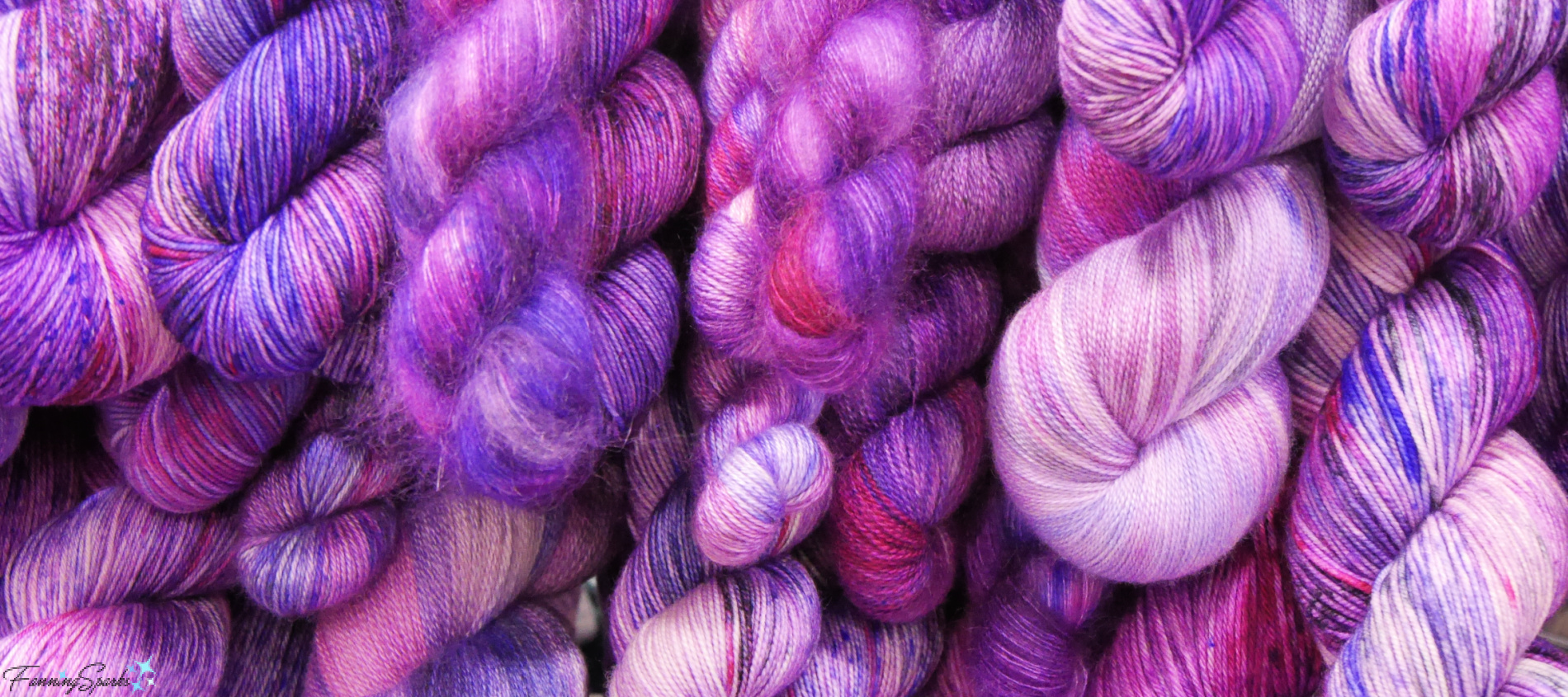
Diehard fibre arts fans are justifiably counting sheep — or at least counting down the days — until their next favourite fibre festival.
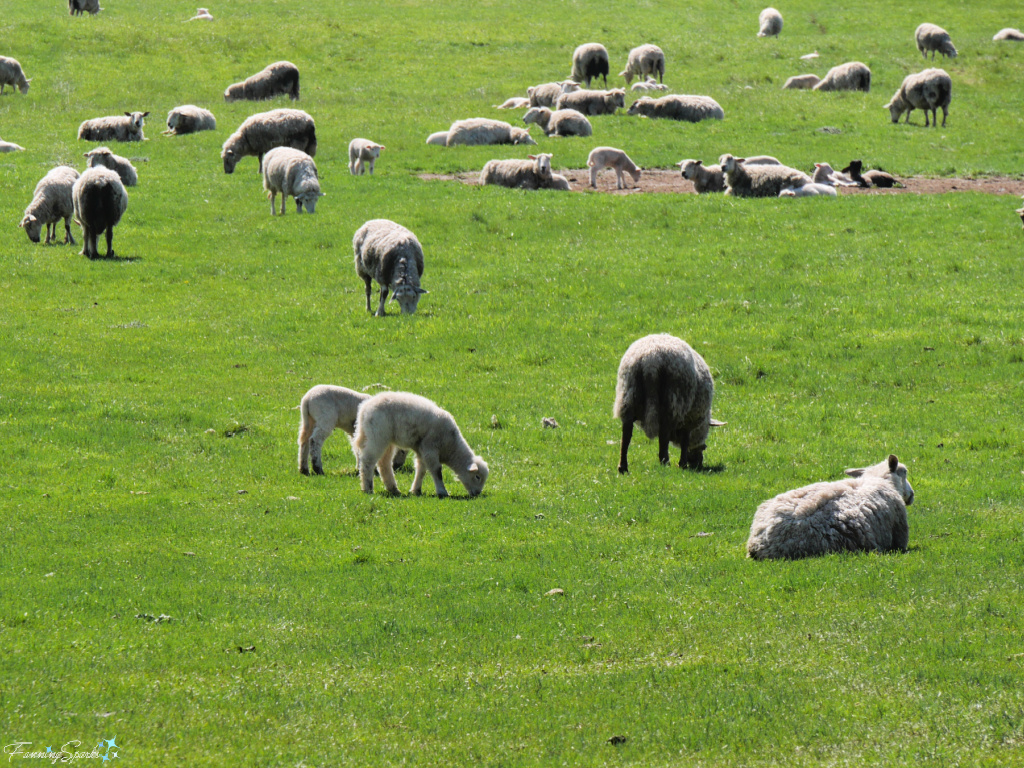
Long before I’d ever heard of a fibre festival ― let alone the American “big three” ― I had the opportunity to attend one of them. I visited the Southeastern Animal Fiber Fair (SAFF) in Fletcher, North Carolina back in 2021. Rounding out the top three, by the way, are the New York State Sheep and Wool Festival (commonly called “Rhinebeck”) and the Maryland Sheep & Wool Festival.
Sheep and wool festivals typically include livestock displays and competitions. Here’s a peek at the SAFF sheep barn.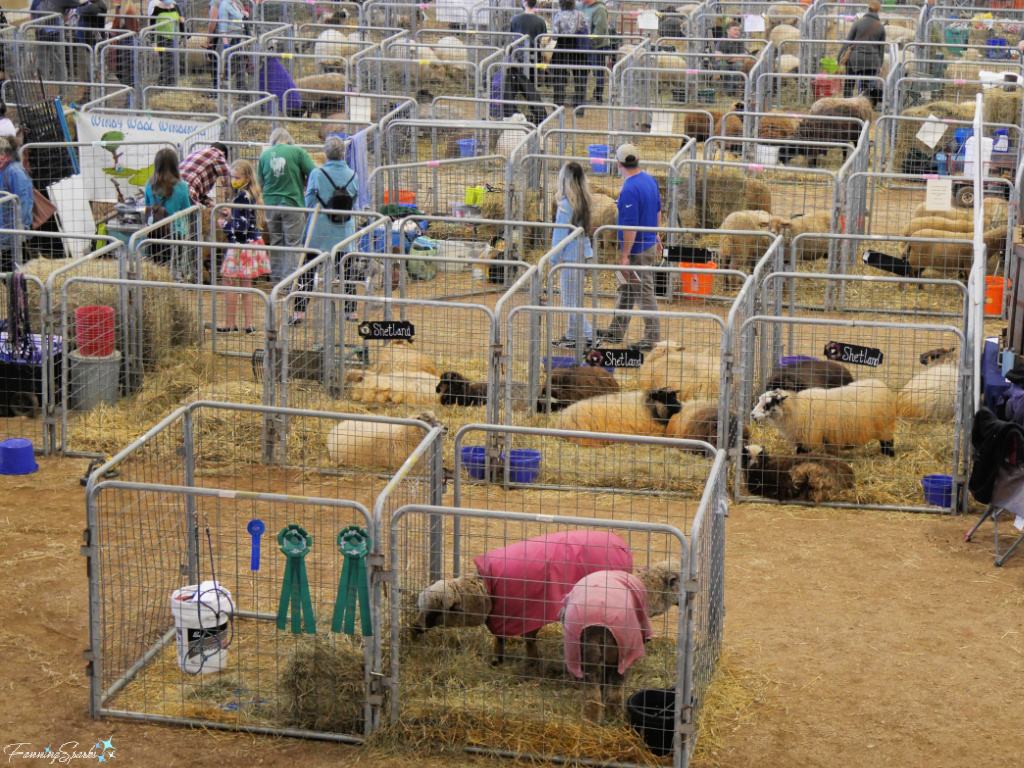
It was fascinating to stroll around the pens and put faces to names! This serene, black mug, for instance, belongs to a Shetland sheep ― a small, wool-producing breed originating from the Shetland Isles in Scotland. Shetlands’ double-coated fleeces are prized by handspinners and fibre artists for their highly textured, crimpy wool.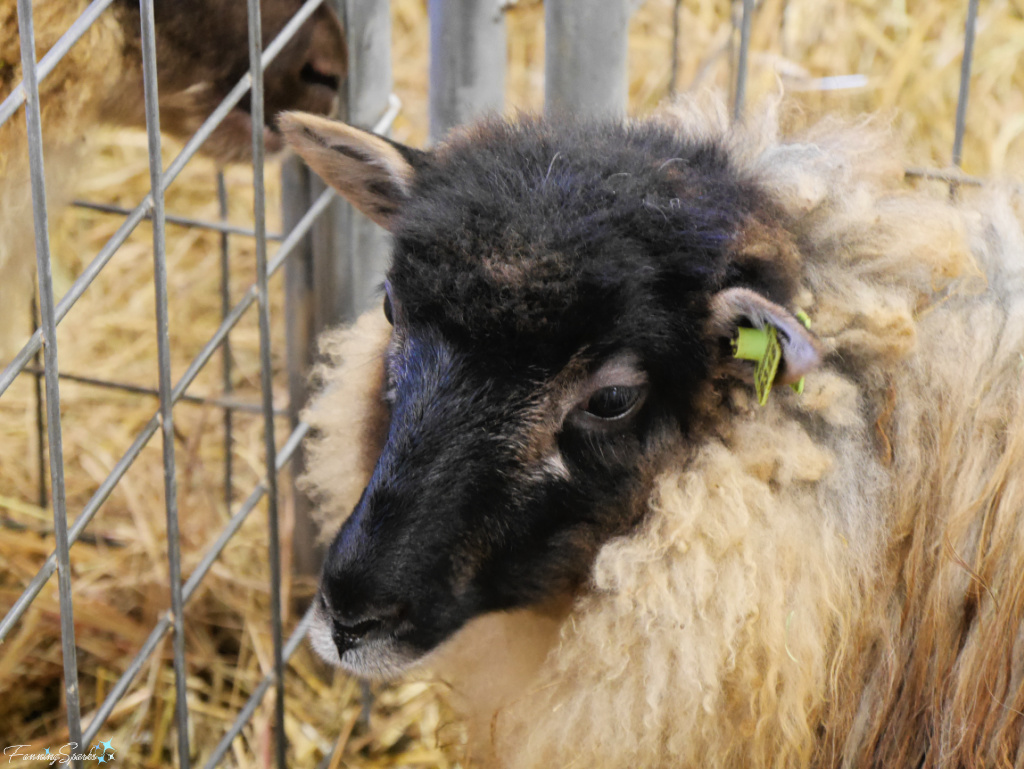
Distinctive features like messy “bangs” and long, ringlet-like, wool locks differentiate Cotswold sheep from other breeds. The rare breed is prized for their lustrous, longwool curls.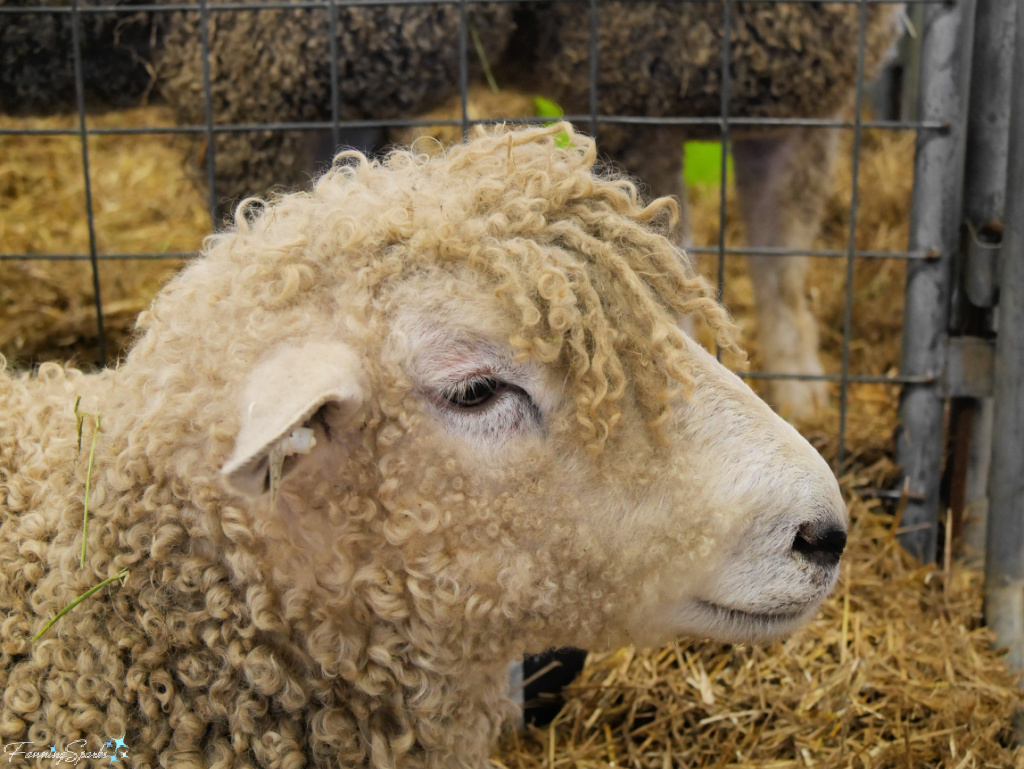
Another distinctive breed spotted at the show was this Jacob sheep. This is an ancient, domesticated breed originating from what is now the country of Syria. To my astonishment, Jacob sheep ― both rams and ewes ― can grow two, four or six horns! Their fleeces are known to delight handspinners and lovers of natural wool colour.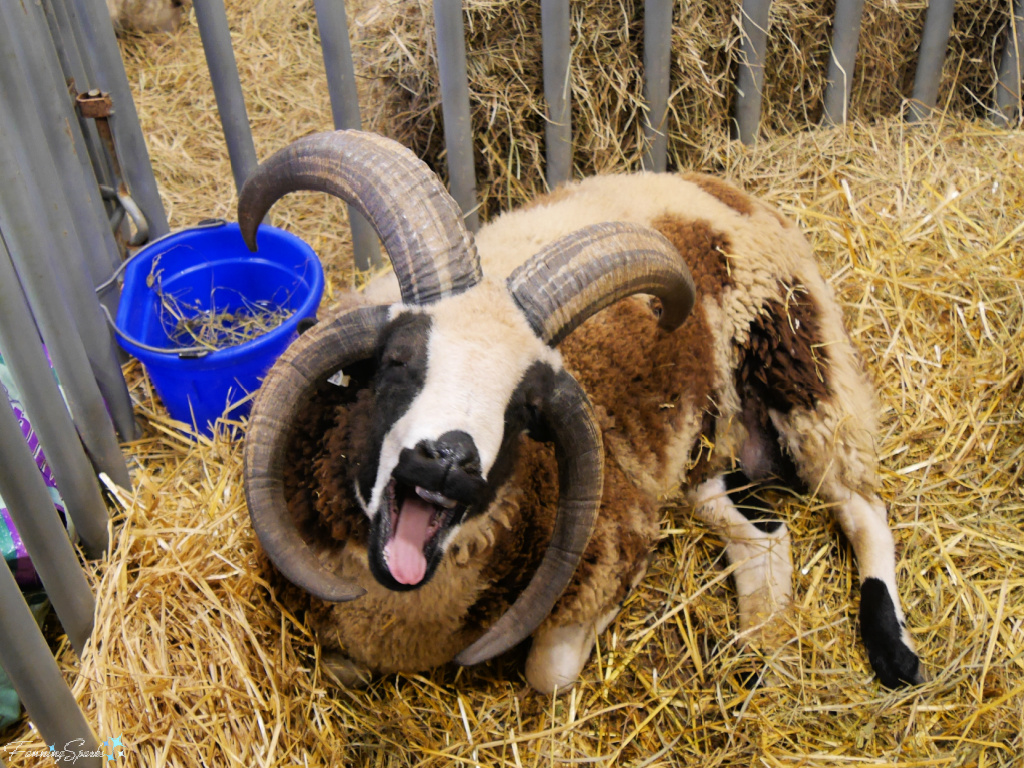
I wasn’t able to identify all of the sheep I photographed but here are few more of my favourite captures.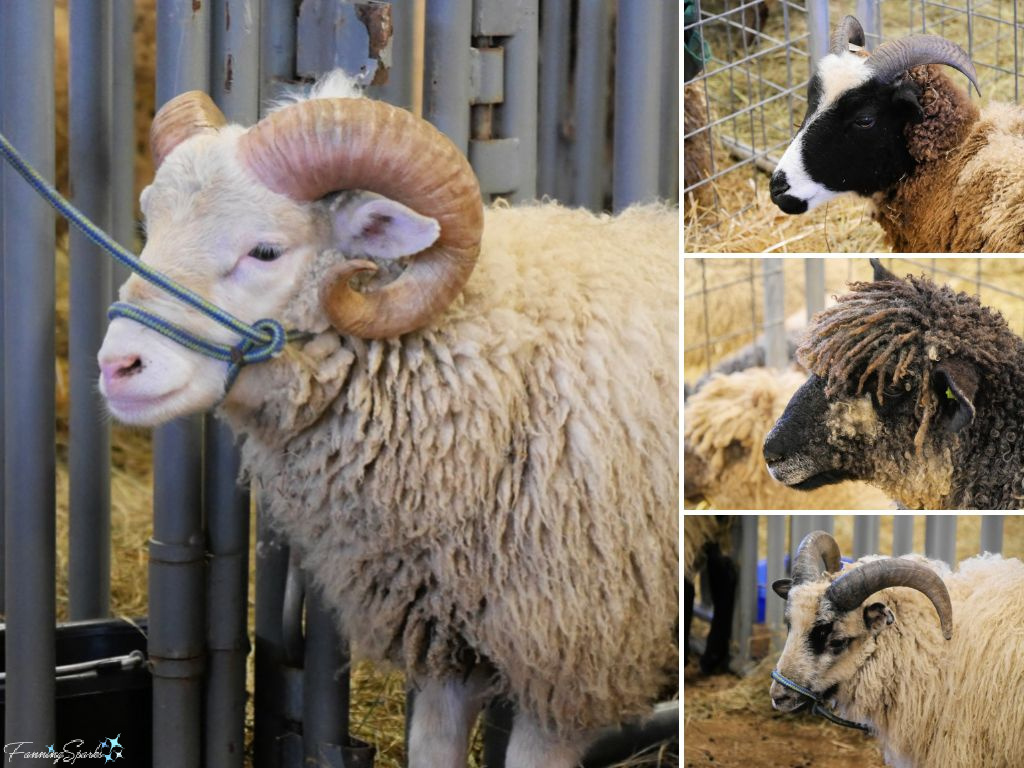
The massive Wool Fleece Show and Sale is a much-anticipated highlight of SAFF. Producers can choose to enter their fleeces as Show and Sale or as Sale Only. Clear rules for fleece preparation are published on the event’s website. The rules include, for example, that “Fleeces must be: From the current [year’s] clip. … Be properly skirted—Free of vegetable matter, chaff, burrs, bugs, manure tags, cotted or matted locks, second cuts and excessively dirty fleece. …[and] Not Washed”.
Sale Only fleeces are sold on a first-come, first-served basis meaning there’s a rush of eager buyers when the fleece sale doors open. Show and Sale fleeces, on the other hand, are typically sold through a silent auction.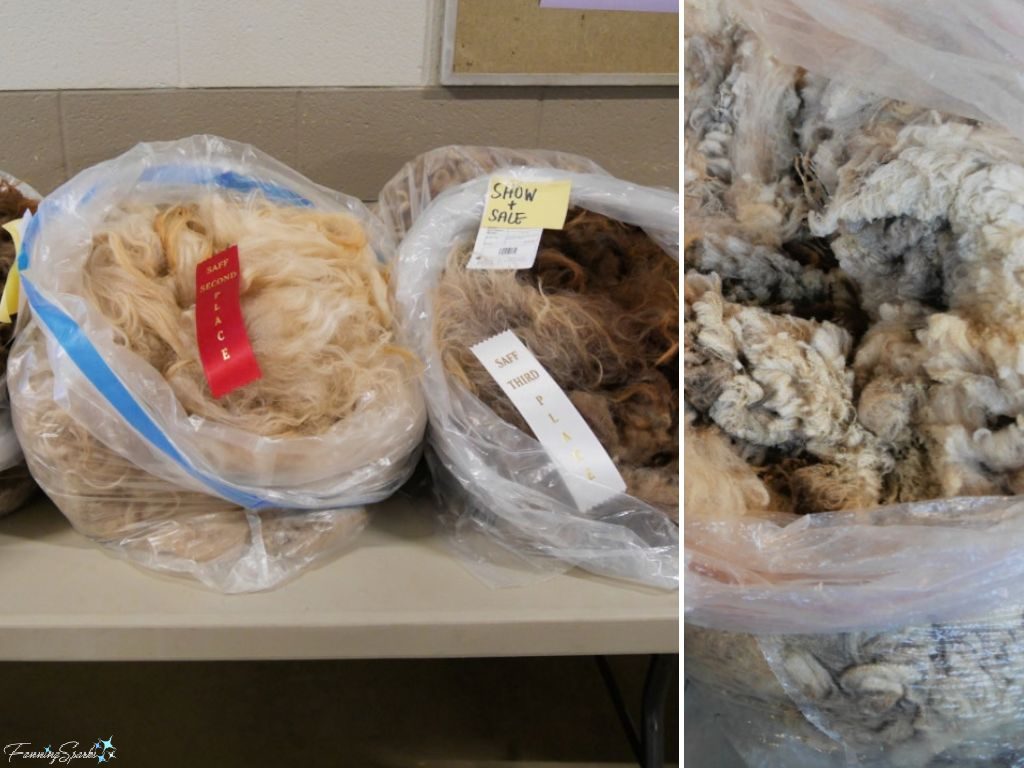
My online research shows fibre festivals are held around the world. Unsurprisingly, fibre, wool, and yarn festivals are particularly popular in the UK which boasts a thriving textile community. The largest and most famous seem to be Wonderwool Wales, Yarndale and Shetland Wool Week.
Here in Canada, we have heavy hitters like the Twist Fibre Festival in Quebec and the Mississippi Valley Textile Museum’s annual Fibrefest in Ontario. Closer to home, there’s the Nova Scotia Fibre Arts Festival, WoolstockEAST and the PEI Fibre Festival.
Please note this is not a comprehensive list ― I couldn’t possibly mention every fibre festival I read about in this blog post ― but I have linked to a few helpful festival listings in the More Info section below.
Not all fibre festivals feature live sheep and fibre-producing animals. In fact, only one of the festivals I’ve attended included livestock.
So, if it’s not about the sheep, what exactly is a fibre festival? A fibre festival is a gathering of people who work with natural fibres and textiles including knitters, crocheters, spinners, weavers, felters, and rug hookers. Every fibre festival is different but most include a marketplace, exhibits, workshops, demonstrations and community events. Some include handcraft competitions, celebrity fibre artists, event projects and fashion shows.
Marketplaces are, arguably, the main attractions at every fibre festival!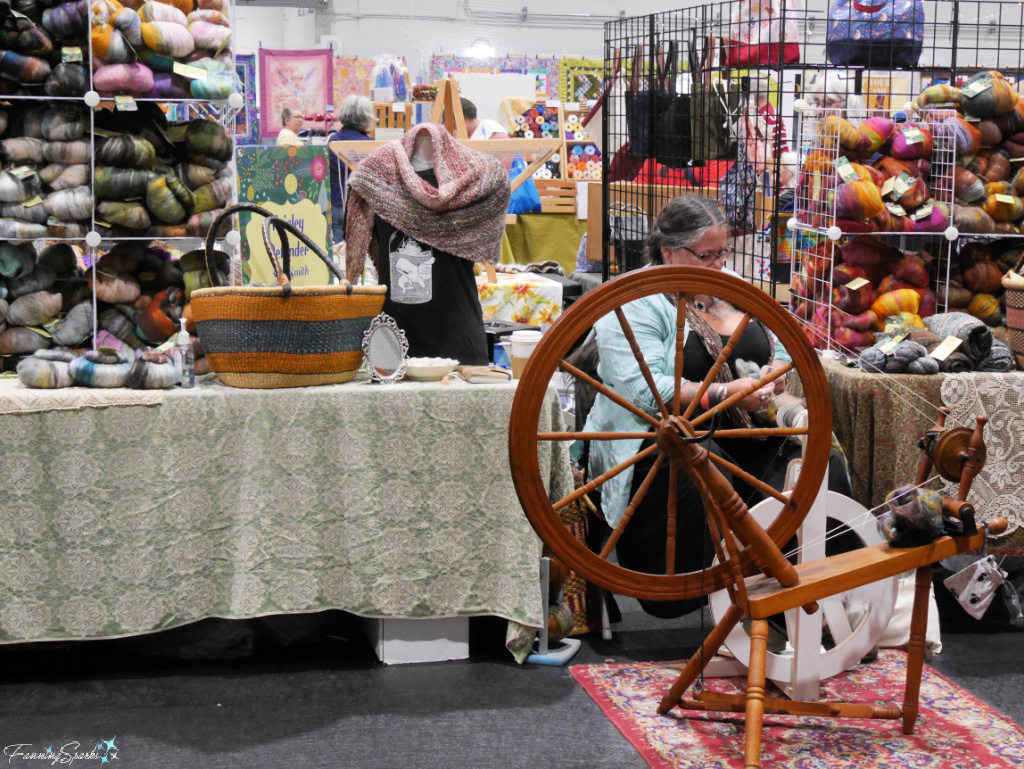
Unlike a typical craft fair which features finished fibre goods, like knit mittens or felted hats, a fibre festival market focuses on the raw materials, tools and processes used to create these items.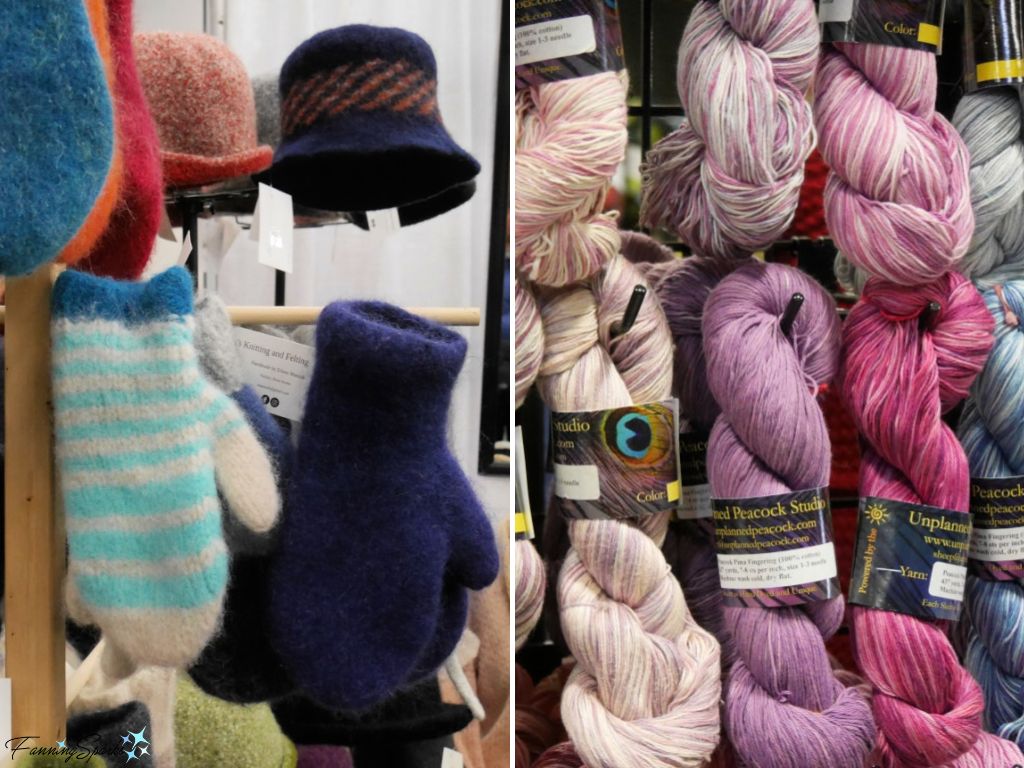
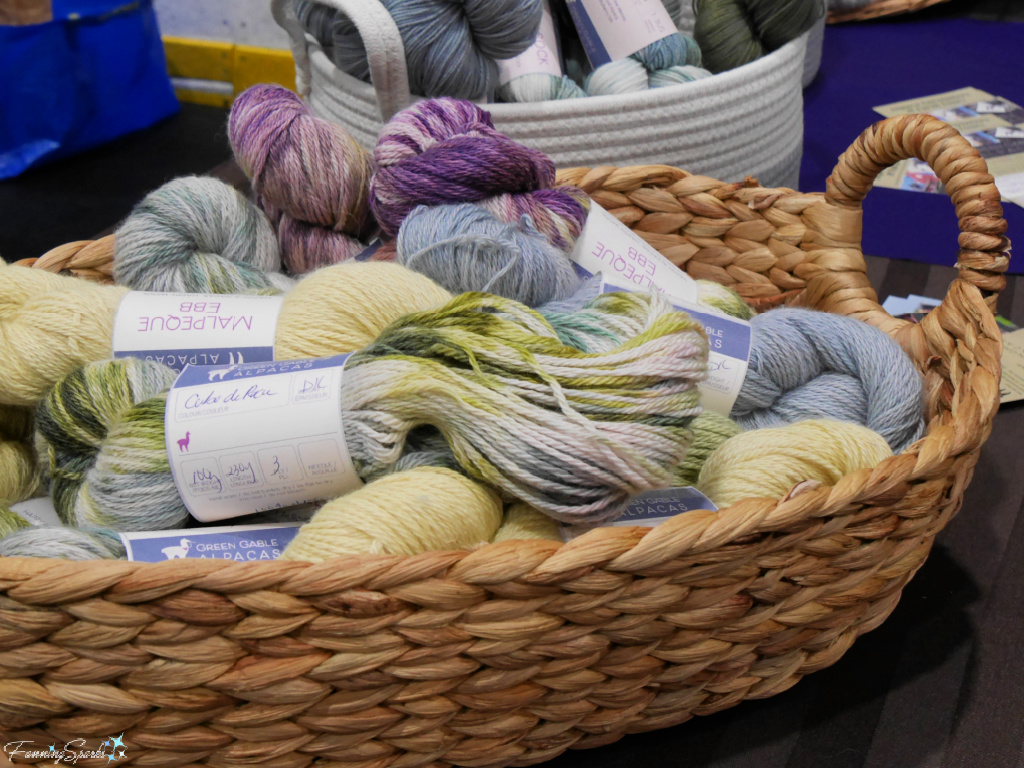
Festivalgoers anxiously await the opportunity to feast their eyes (and fingers) on the latest hand-dyed yarns and luxury fibers.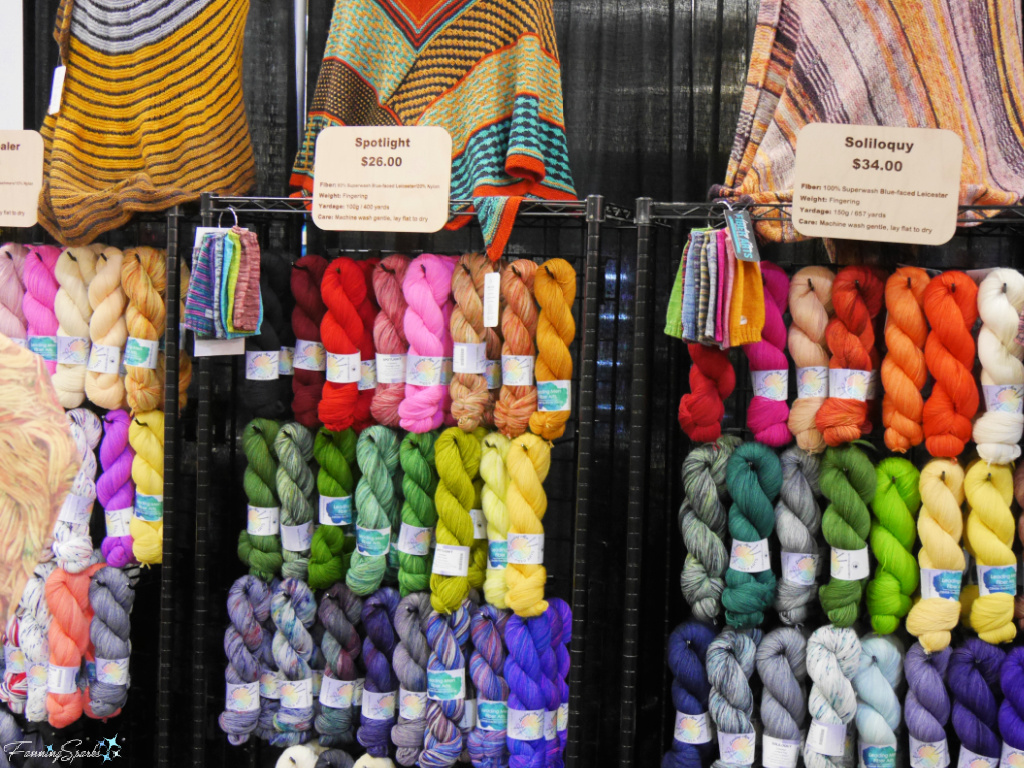
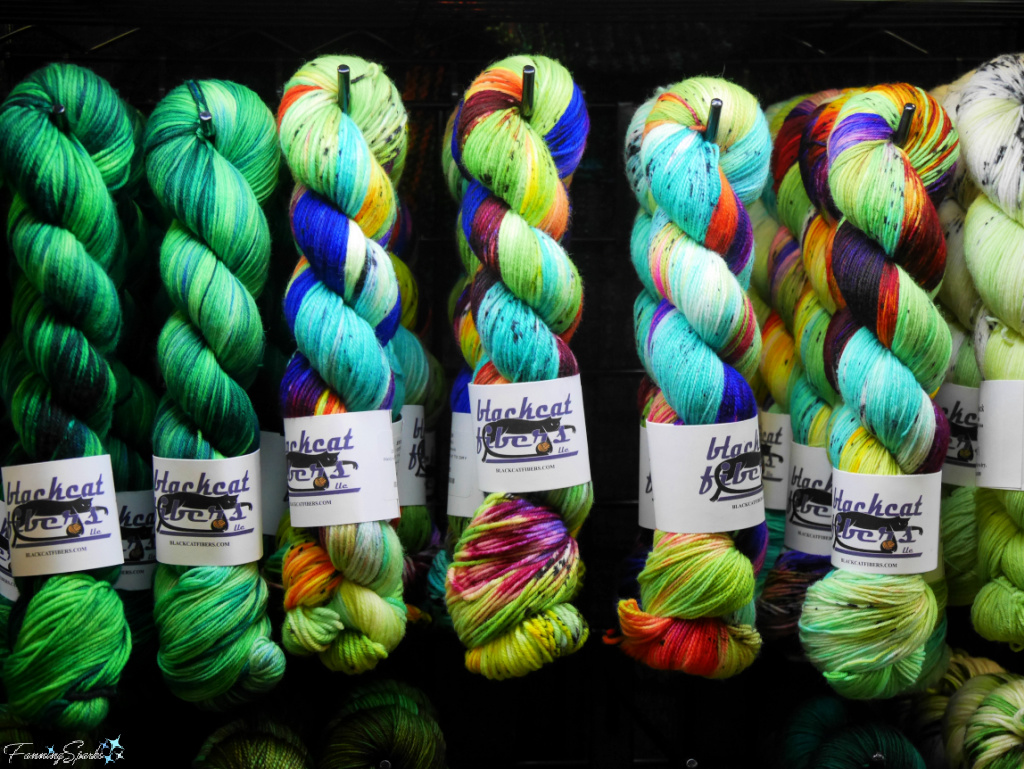
Most fibre festival markets also offer specialty tools and equipment such as these hand-crafted, birch wood knitting needles …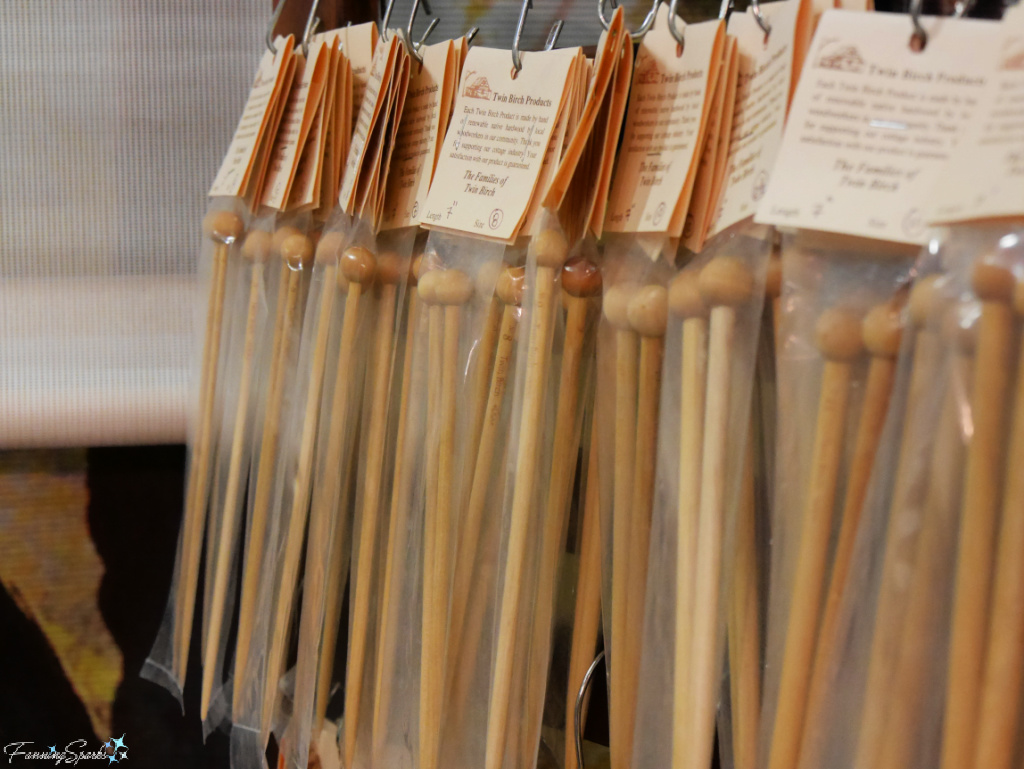
… or this high-end, drum carder which is used to brush, blend and prepare raw material such as sheep wool and alpaca fibre.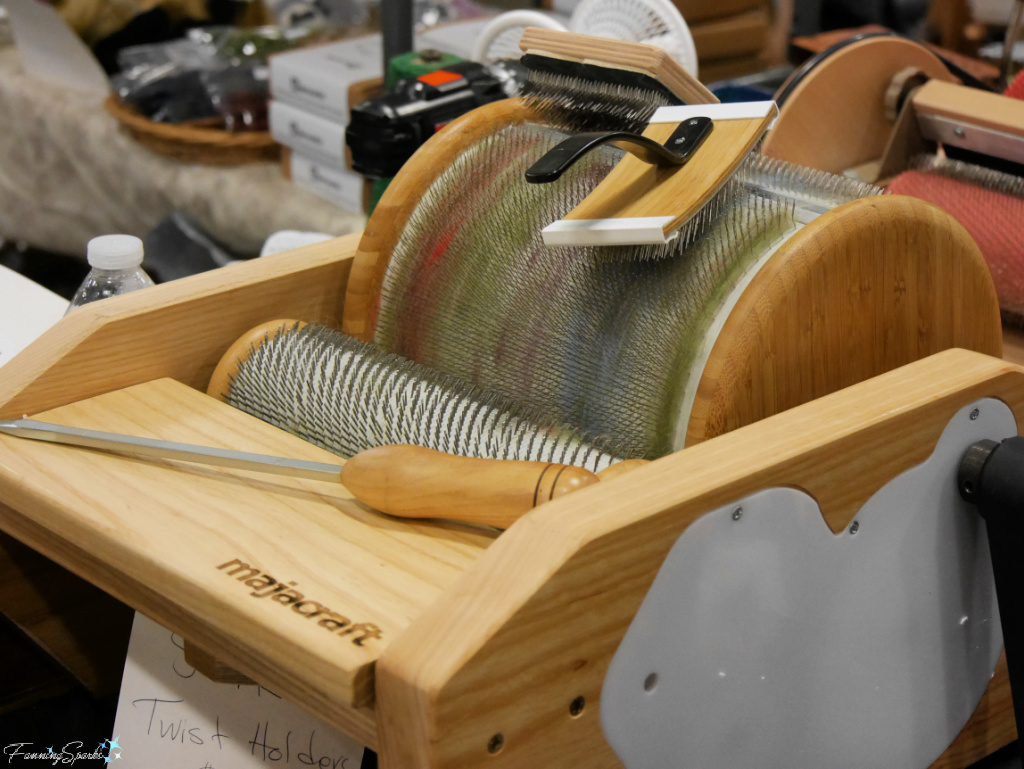
Accessories, such as themed T-shirts and project bags, can often be found at fibre festival markets.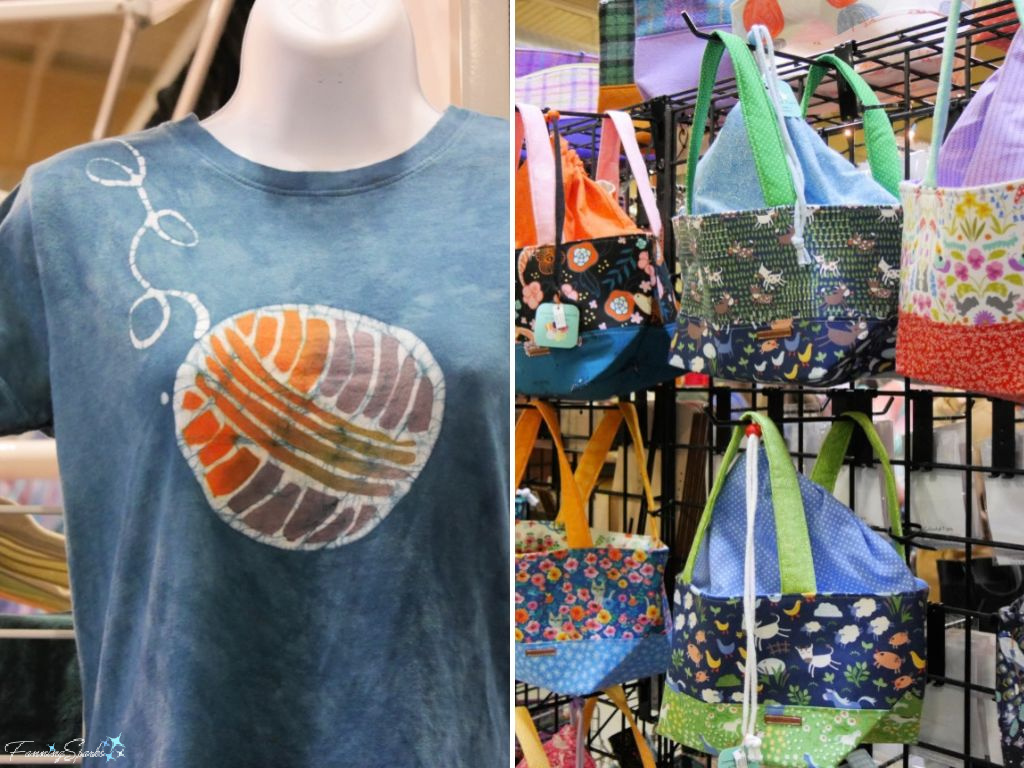
The variety of unique buttons and closures on offer at SAFF was mesmerizing.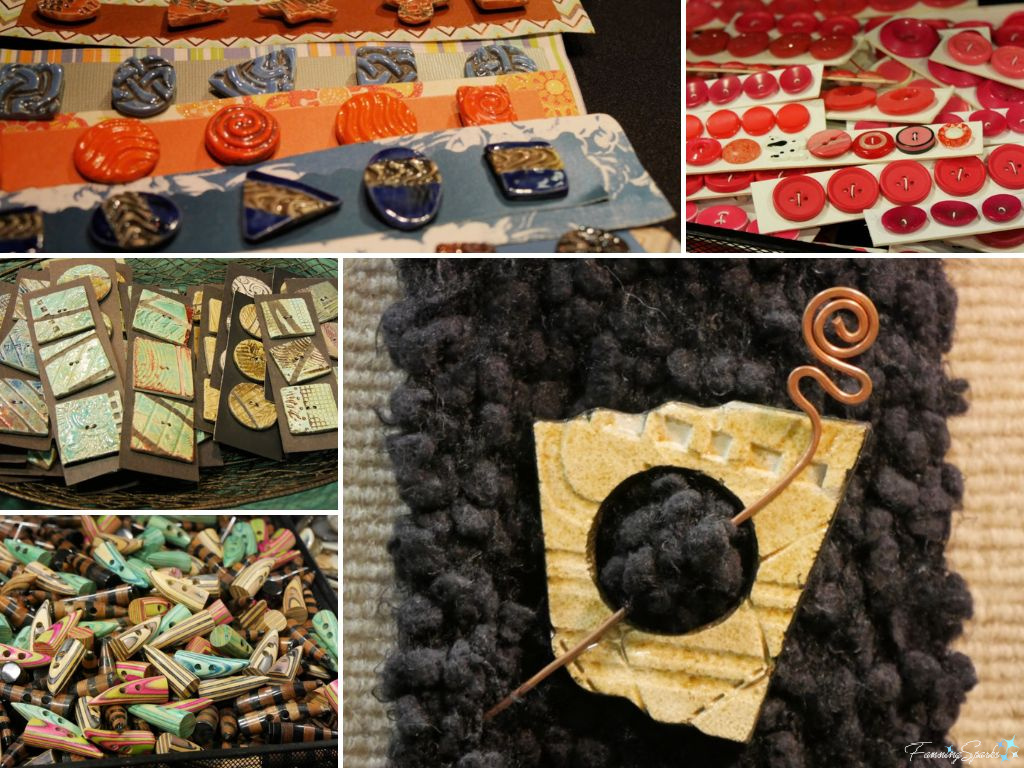
One of the best things about a fibre market is the flood of fresh inspiration on display. Check out this gorgeous hooked rug …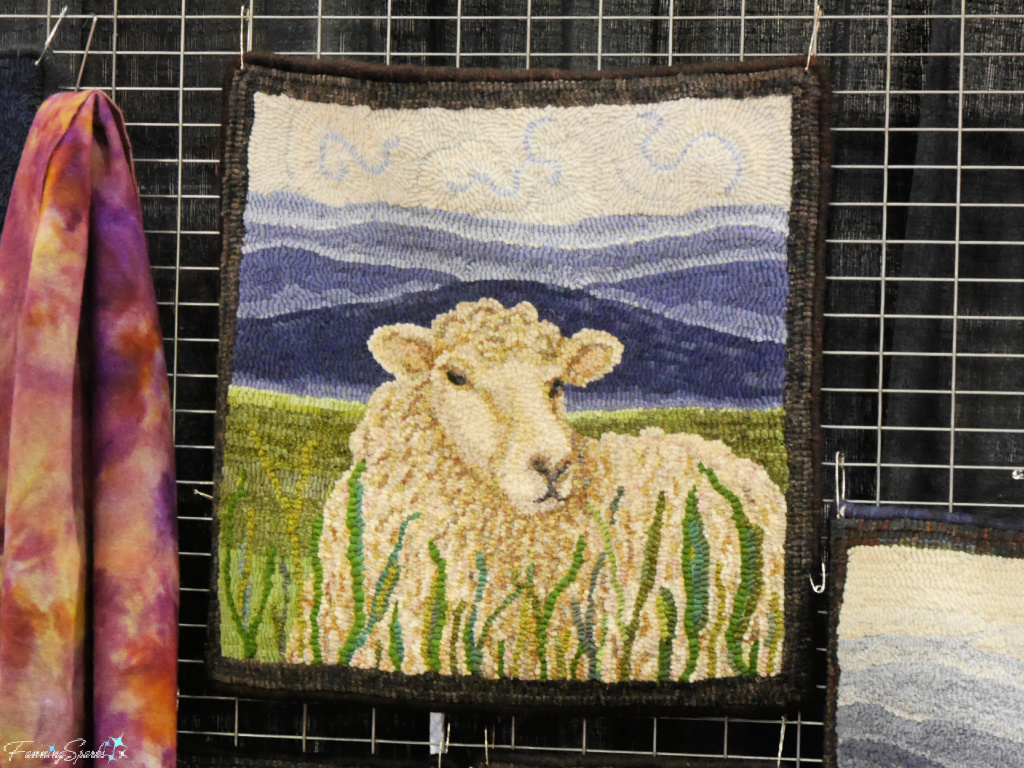
… or these adorable knit plushies complete with custom wardrobe …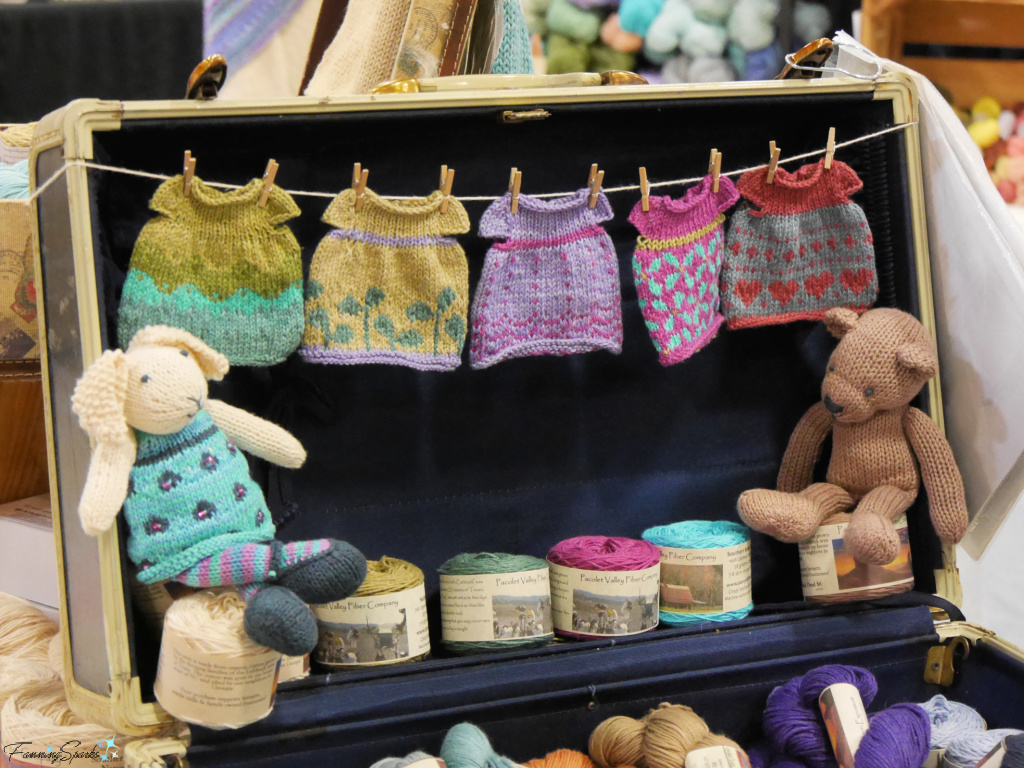
… or this splendid hand-woven scarf …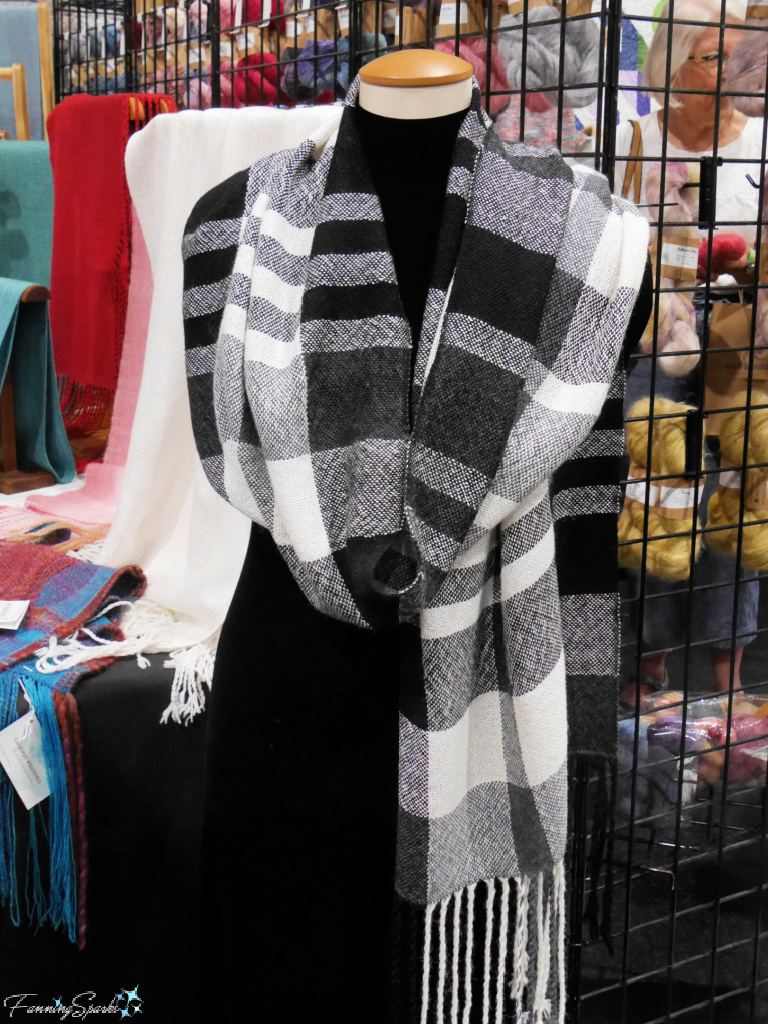
… or these outstanding hand-knit sweaters …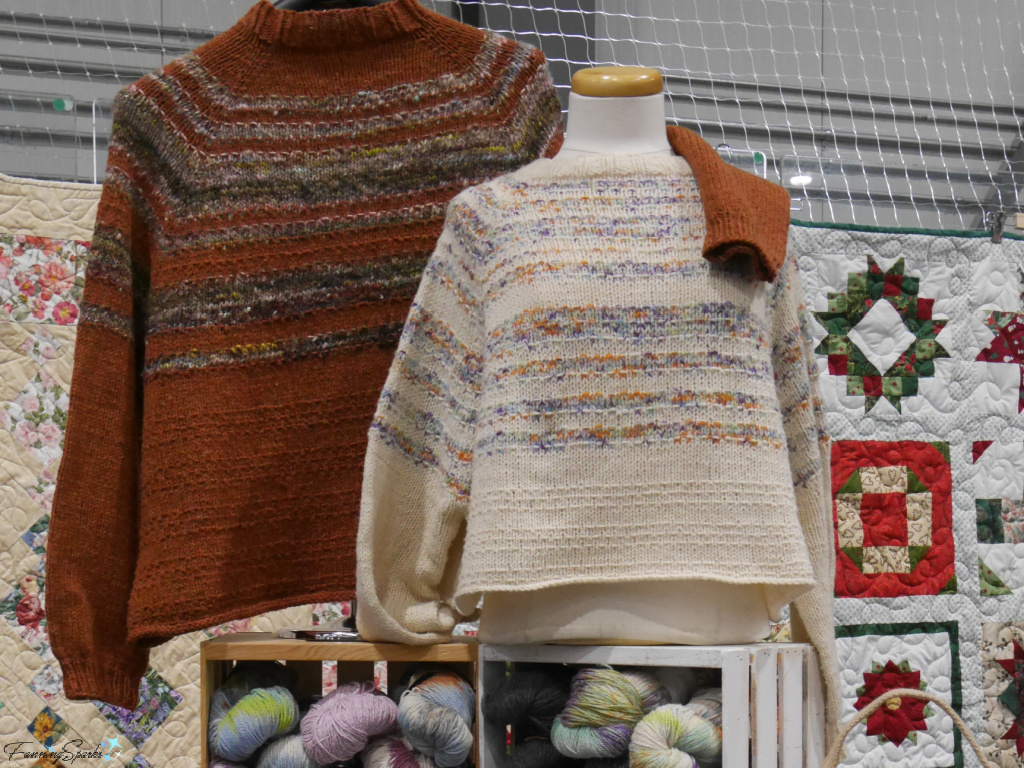
… or this striking appliqued quilt …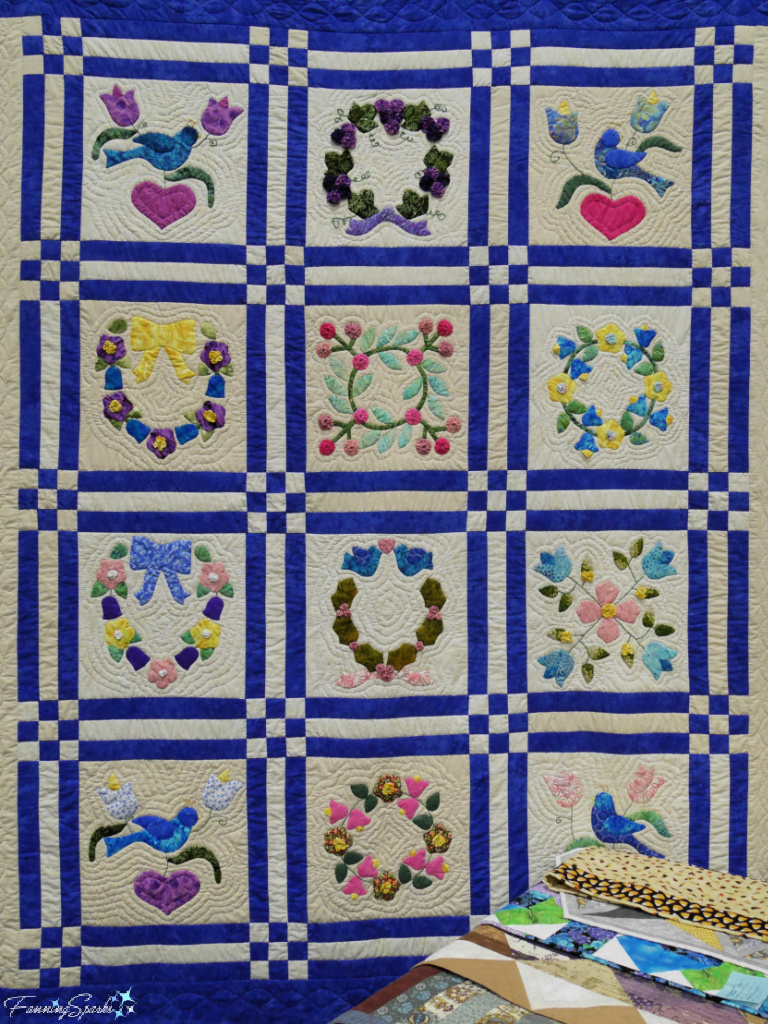
… or this spectacular felted apparel.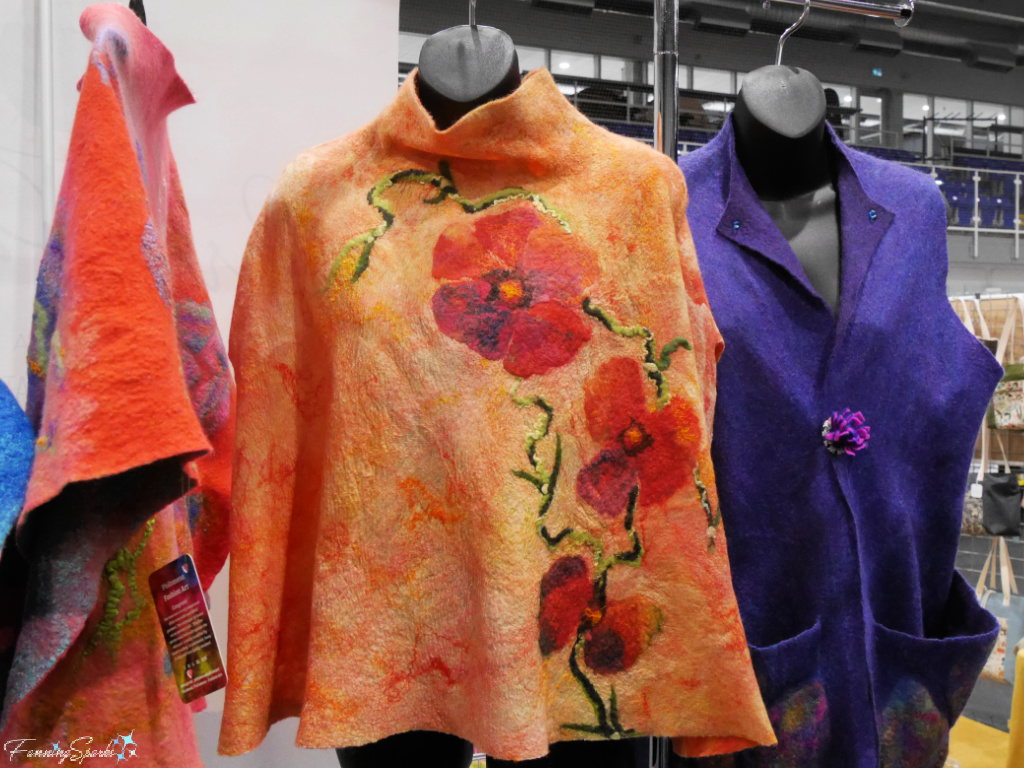
There’s even more inspiration on display when a festival hosts a fibre arts competition. Here are a few of the stunning entries I spotted at SAFF.
This splendid wall hanging was punch needle hooked by Christina Weger. It was awarded first prize in the category for “Non-Wearable Item Using at Least 80% Repurposed Wool”. The artist provided this description of the design: “Based on legends in Finland of how a Firefox twinkles at night and brings the Northern Lights to other animals and night-time hunters”. Their explanation of the techniques and processes used in construction was: “Wool clothing was deconstructed and hot washed to felt. Cut on #6 cut and punched with an Oxford #10 regular punch needle. Some fox shades and much of the Aurora were hand dyed or overdyed to get the right effects. 47 pieces of clothing were used. … This piece took approximately 18 months of work to collect and dye/over-dye all the different wool clothes needed”.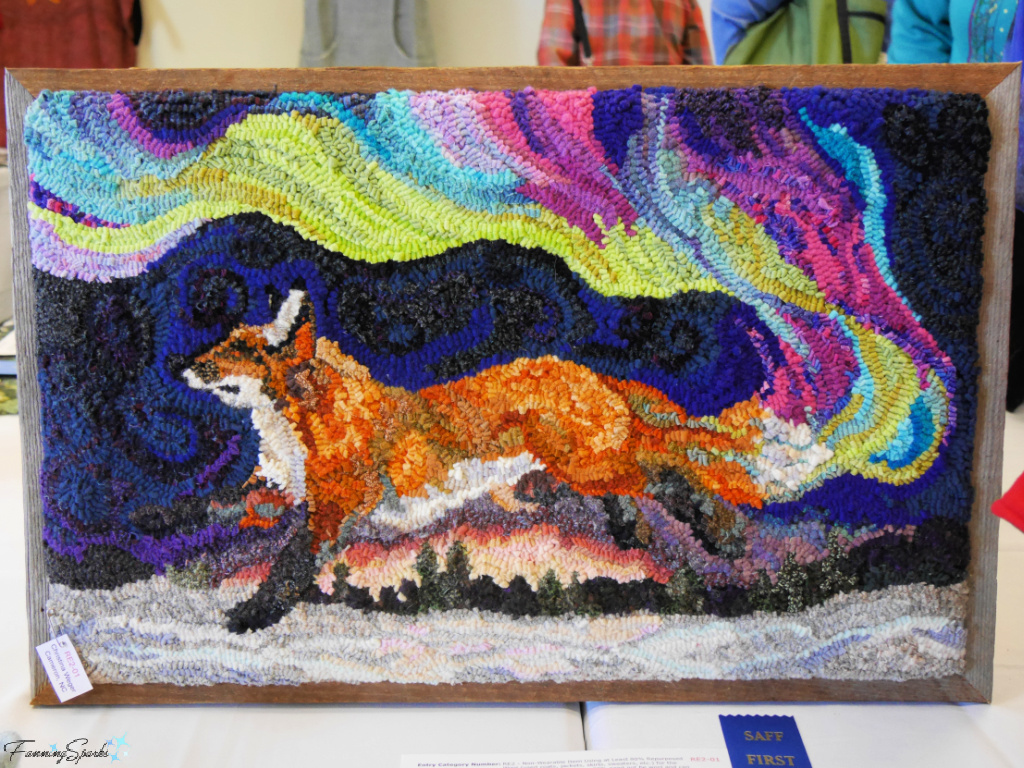
This gorgeous hand-knit shawl was also a first prize winner. Entered in the “Hand Knitted Shawl, Scarf, Wrap, etc. Using Commercial Yarn” category, it was knit by Cindy Evans. They used the Just Beachy wrap pattern, from Lisa K. Ross of Paper Daisy Creations, with Fiber Optic Yarns “Kashmir” which is 80 % super wash merino, 10 % cashmere, and 10 % nylon. As noted on the exhibit card: “Numerous stitches including lace, mock cable, garter, stockinette, twisted rib, seed stitch and others were used”.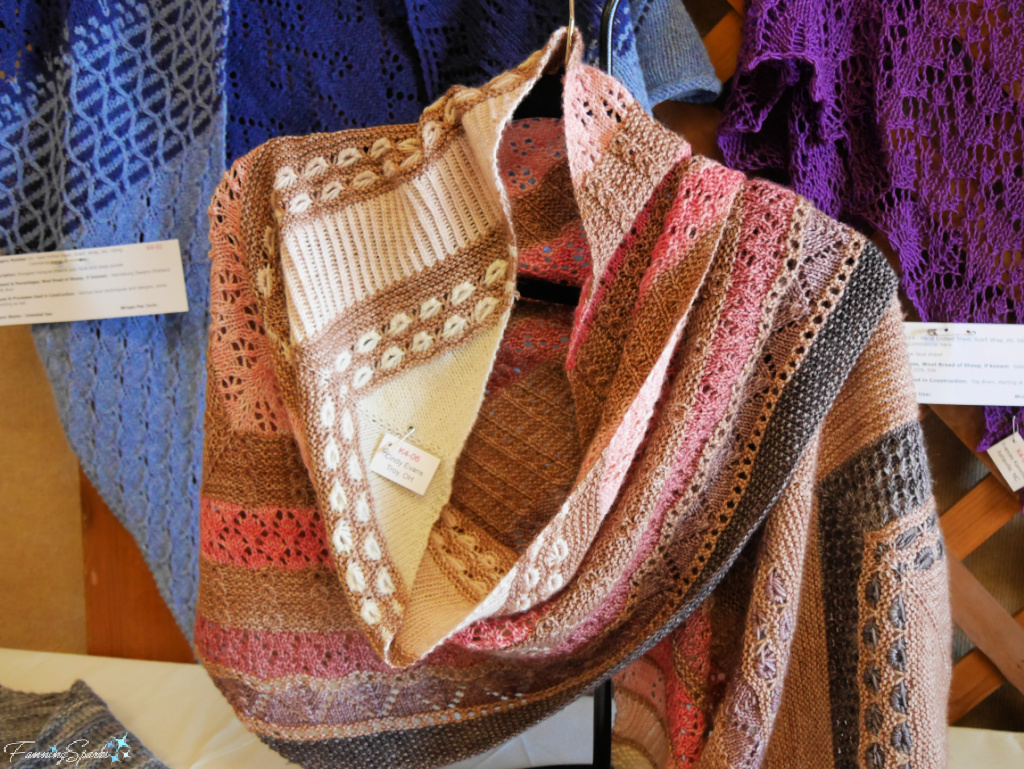
This outstanding wearable art cape was created by Norm Johnson. It placed first in the “Mixed Fiber Media” category ― a category intended for items “containing a combination of techniques [such as] knitting, crochet, weaving, felting or a technique using fiber that does not fit into the other categories”. The artist’s description states: “The cape is a one-of-a-kind wearable art product, that has great drape and wear. … [It] is constructed using silk gauze, alpaca fiber, a variety of commercially woven fabrics, yarns, viscose and mohair fibers. … The primary technique used to integrate the natural fibers with the silk gauze and commercially woven materials is Nuno/wet felting”.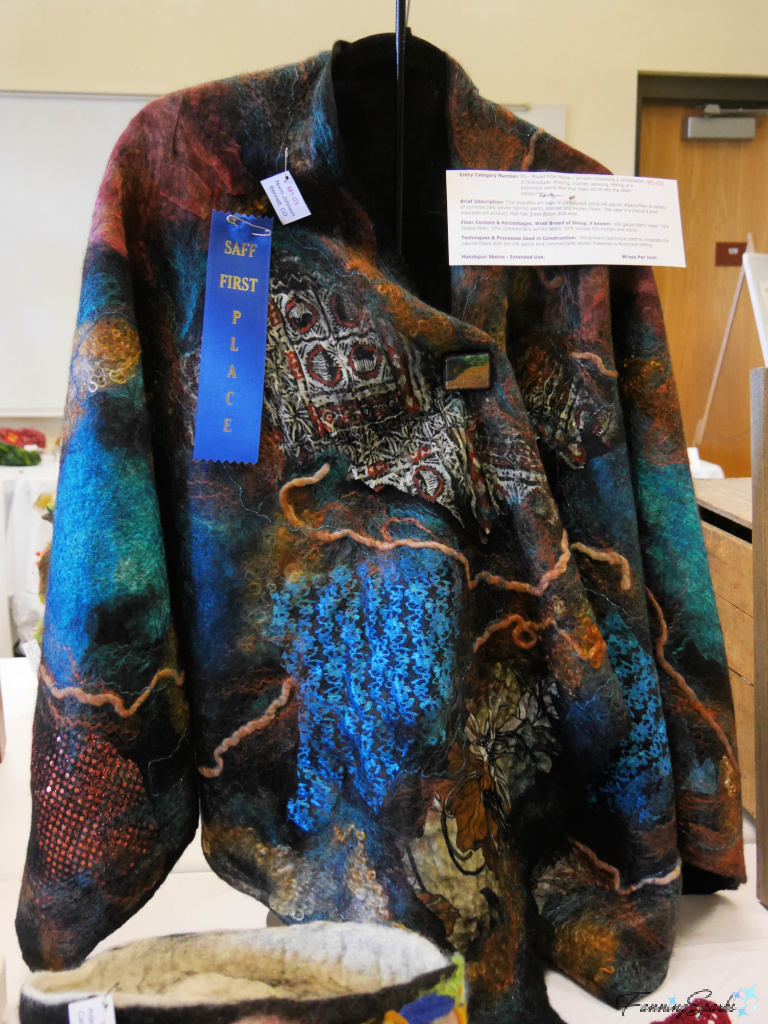
Second prize in the same category, “Mixed Fiber Media”, went to this enchanting wall hanging by Elaine Bailey. The artist’s description reads “Wet and needle felted fairy on hooked rug background, framed”. The techniques and processes used in construction included “wet felting, needle felting, rug hooking and beading”.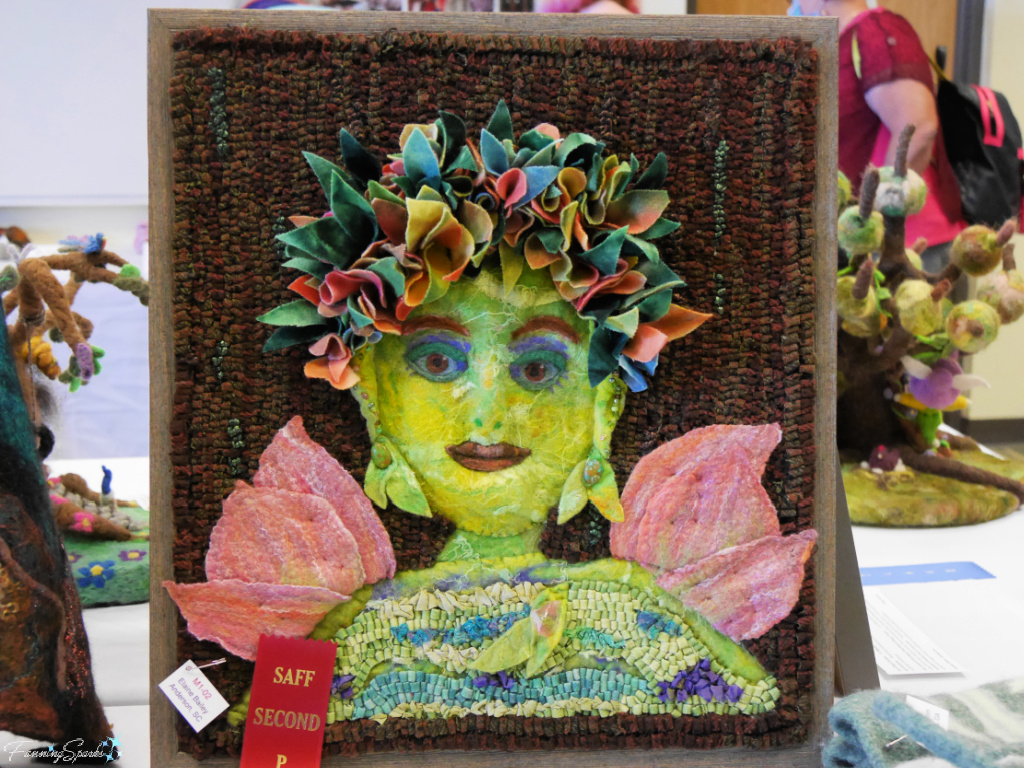
The final piece I’d like to share is this stellar Cable Coat by Debbie West which won Best of Show in the SAFF Fibre Arts Competition. It was entered in the “Hand Knitted Garment Using Commercial Yarn” category. The exhibit sign reveals the techniques used were “knitting, cables and seaming” and the fibre content was “Knit Picks Wool of the Andes, worsted weight”. The Knit Picks website describes Wool of the Andes Worsted as “An all-time bestseller … made from 100% Peruvian Highland wool … the perfect yarn for projects that will get used daily, like your favorite sweater, hat, or blanket”.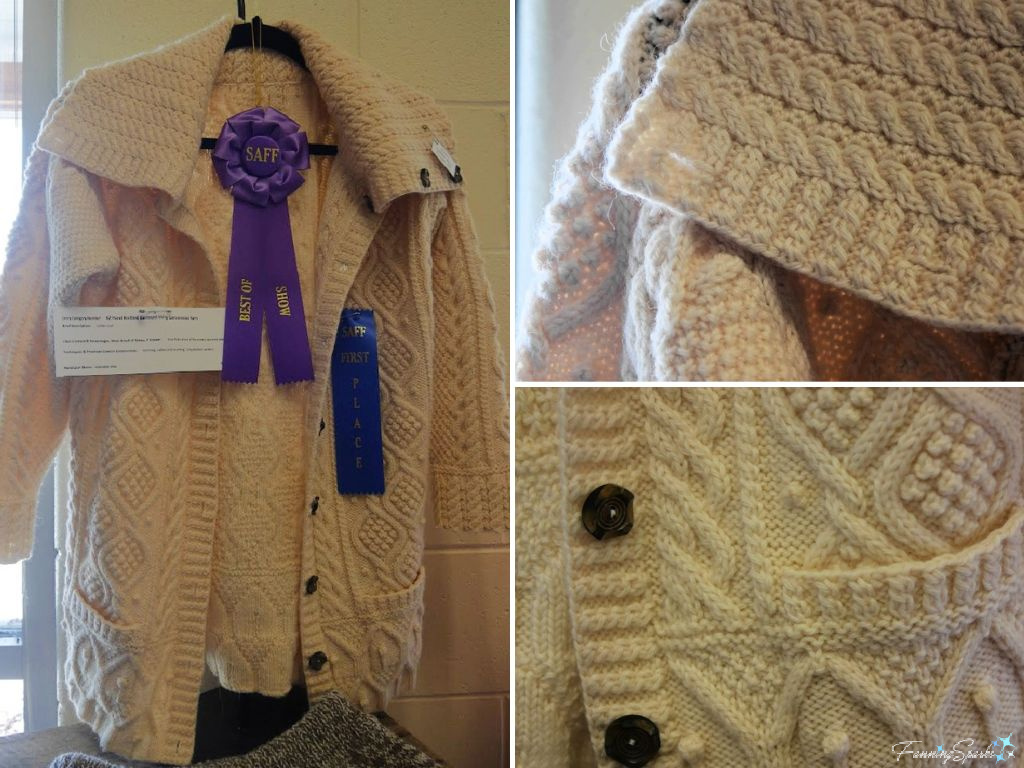
As mentioned, every fibre festival is different. But, nearly all fibre festivals offer a variety of workshops and classes. They are usually very popular and most must be booked well in advance. I’ve had the opportunity to participate in quite a few. In the interest of keeping this blog post to a reasonable length, I’ll save those experiences for another blog post.
But I’ll wrap up today’s blog post with a peek at a workshop I attended at the most recent WoolstockEAST Fibre Festival ― A Taste of Weaving on the Rigid Heddle Loom with instructor Laura MacEachern of Why Not Wool. It was a hands-on session where we learned the basics of weaving and created a simple weaving sample. Our looms were pre-warped so we could jump straight into the weaving process. Thank you, Laura! for a great workshop and excellent introduction to rigid heddle weaving!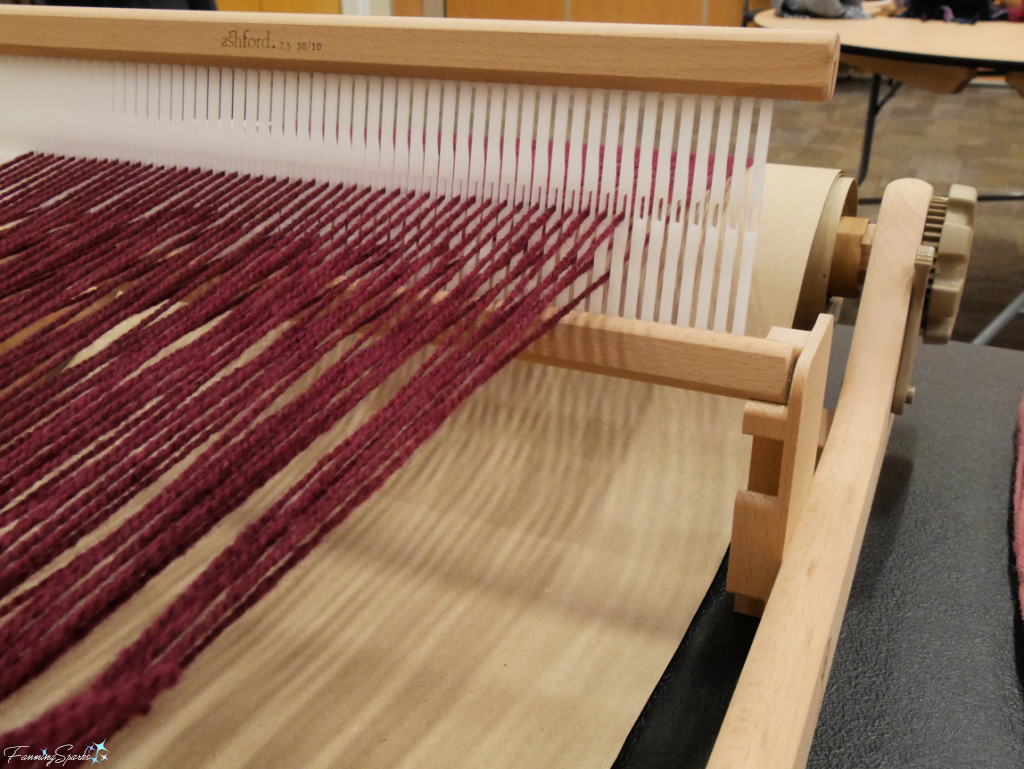
More Info
Several fibre festivals are mentioned in this blog post including:
. Southeastern Animal Fiber Fair (SAFF) in Fletcher, North Carolina, USA ― see their website or on Instagram
. New York State Sheep and Wool Festival in Rhinebeck, New York, USA ― see their website or on Instagram
. Maryland Sheep & Wool Festival in West Friendship, Maryland, USA ― see their website or on Instagram
. Wonderwool Wales in Builth Wells, Wales ― see their website or on Instagram
. Yarndale in Skipton, England ― see their website or on Instagram
. Shetland Wool Week in Shetland, Scotland ― see their website or on Instagram
. Twist Fibre Festival in Saint-André-Avellin, Quebec, Canada ― see their website or on Instagram
. Mississippi Valley Textile Museum’s annual Fibrefest in Almonte, Ontario, Canada ― see their website or on Instagram
. Nova Scotia Fibre Arts Festival in Amherst, Nova Scotia, Canada ― see their website or Facebook page for more information
. WoolstockEAST in New Glasgow, Nova Scotia, Canada ― see their website or Sisterhood Fibres on Instagram
. PEI Fibre Festival in Charlottetown, Prince Edward Island, Canada ― see their website or on Instagram.
To find additional fibre festivals beyond those listed, you may want to check one of these links:
. The 2026 Guide to Canada Fibre Festivals article by Emma Hughes on Wander and Create with Emma
. Fiber Festivals You Need to Attend in 2026 (The Needle Felter’s Guide) article by Allison Dupuis on Bacon Astro website
. 2026 dates for UK Yarn Festivals article on Being Knitterly website
. 2026 Dates for European Yarn Festivals article on Being Knitterly website.
Ravelry ― the beloved, global, online community for knitters, crocheters, spinners, weavers, and dyers ― also has an Events feature. Unfortunately, it doesn’t seem to be very well used ― there were only 25 fibre festivals listed worldwide when I checked.
Today’s Takeaways
1. A fibre festival is a gathering of people who work with natural fibres and textiles including knitters, crocheters, spinners, weavers, felters, and rug hookers.
2. Fibre festivals typically include a marketplace, exhibits, workshops and demonstrations. They may also include livestock shows, handcraft competitions, celebrity fibre artists, event projects and fashion shows.
3. Consider attending a fibre festival to get inspired for your next fibre arts project.
Comments are closed.