
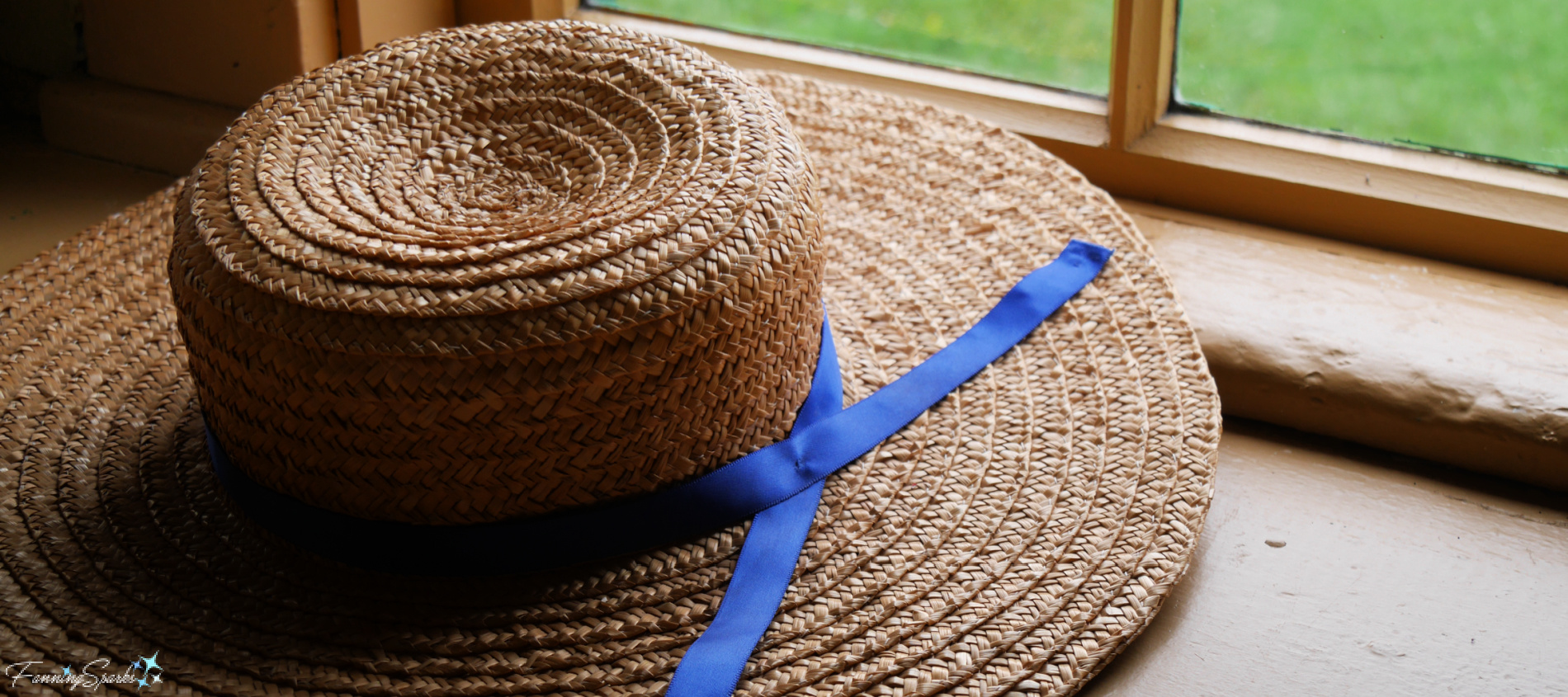
It wasn’t all that long ago a woman wouldn’t dream of leaving her home without donning a hat. Prior to the 1950s, wearing a hat was a cultural necessity for men, women, and children, serving as a key indicator of social standing and respectability.
Hats were so much a part of everyday life they became a trademark for some people. My favourite fictional character from that era – Anne Shirley ― is the perfect example. From the moment author Lucy Maud Montgomery introduced her beloved Anne of Green Gables, the humble straw hat became part of her spunky character. She wrote, “A child of about eleven, garbed in a very short, very tight, very ugly dress of yellowish-grey wincey. She wore a faded brown sailor hat and beneath the hat extending down her back, were two braids of very thick, decidedly red hair”. See my previous blog post The Perfect Reminder of Green Gables for more info about Anne.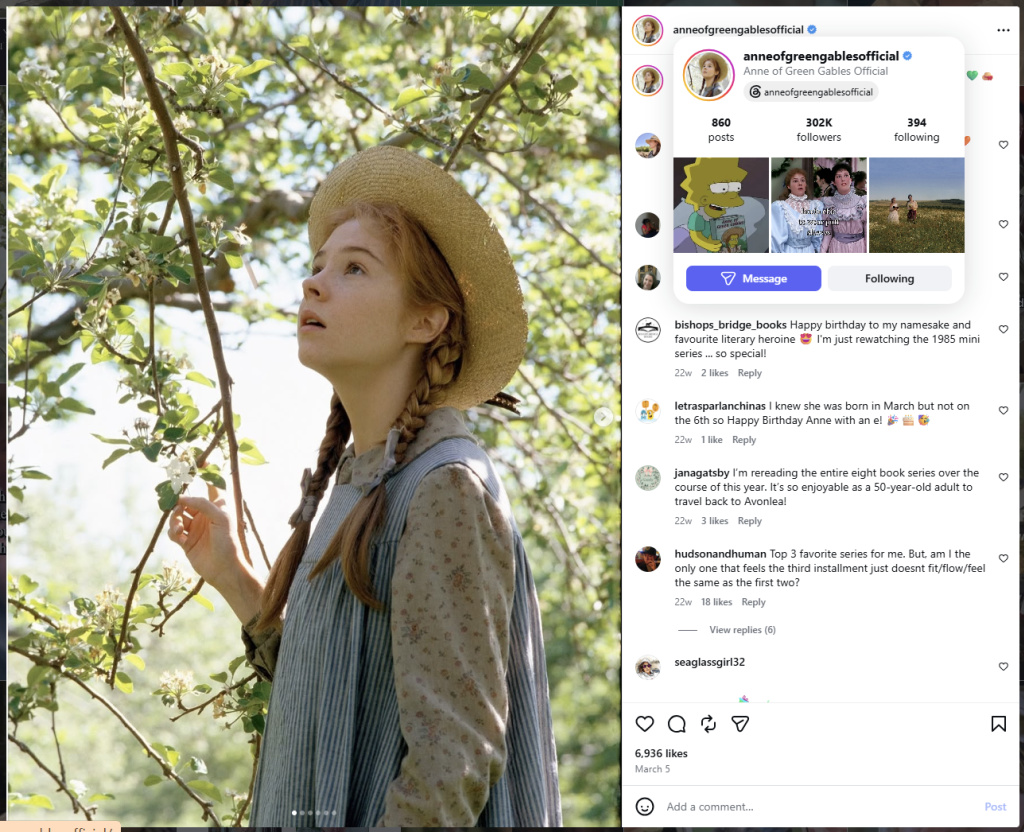 Of course, hats also serve a practical purpose and protect the wearer against sun, rain and cold. Nowadays, a broad selection of hats is available for purchase in specialty shops, discount stores or online. But that wasn’t always the case ― our ingenious foremothers made their own.
I recently had the opportunity to learn about braided straw hatmaking during Straw Hat weekend at Ross Farm Museum in New Ross, Nova Scotia. Ross Farm is a living history site depicting 150 years of agricultural life from 1816 through the early 20th century. A pretty country setting, restored farm buildings, knowledgeable costumed interpreters and entertaining livestock made for an entertaining and educational visit.
Many of the interpreters wore straw hats as they went about their daily chores. Shown below AJ sports a boater-style straw hat while petting “Pork Chop” a heritage breed Berkshire pig.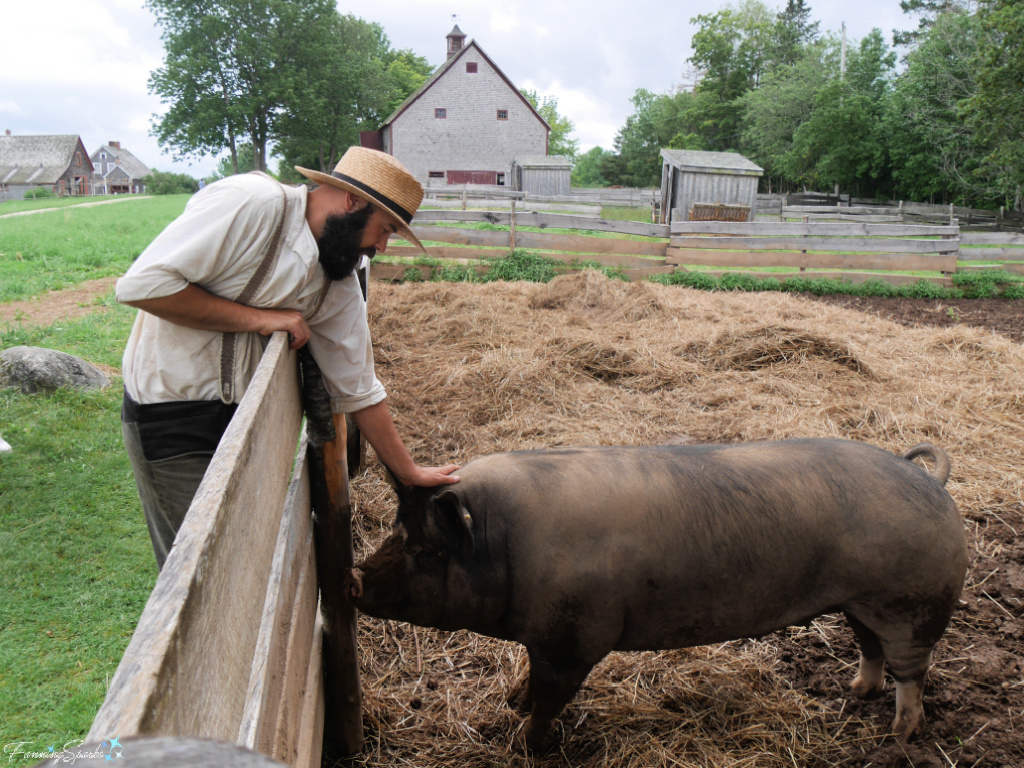 We learned a great deal about the art of straw hatmaking from the resident expert Monique. Not only was she very knowledgeable about this cultural legacy but she was incredibly adept and eager to share. Many thanks, Monique, for generously sharing your knowledge and skills!
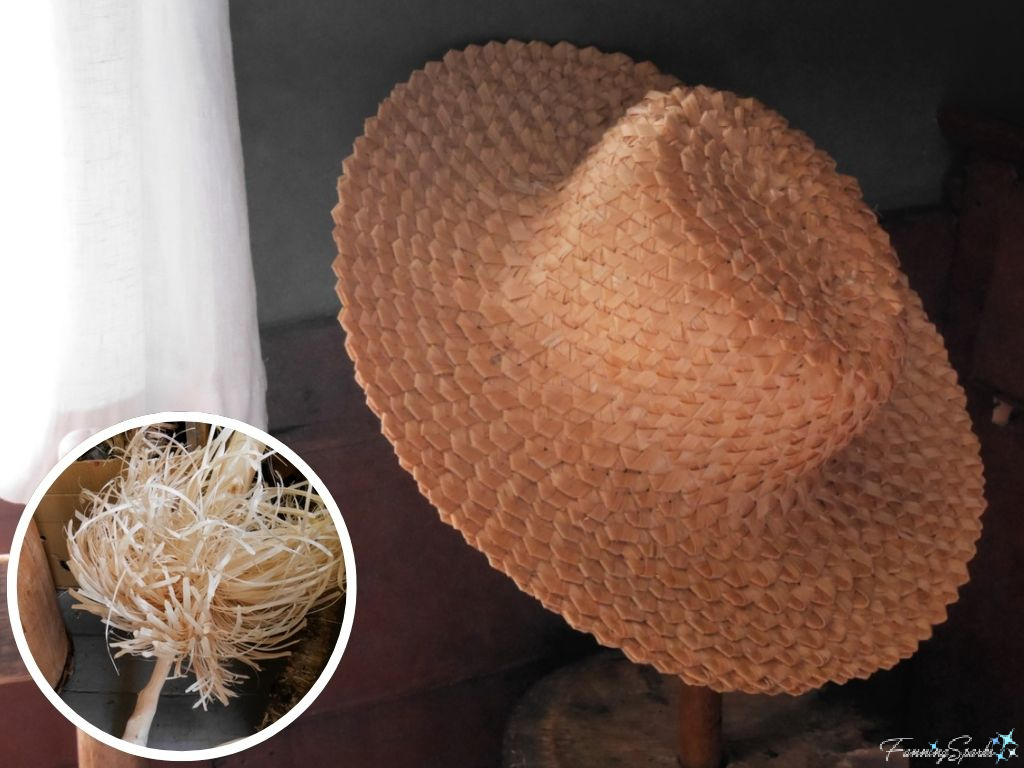
 As with all maker projects, the first step is to find and prepare the required materials. We learned a variety of natural materials can be used to weave hats including straw …
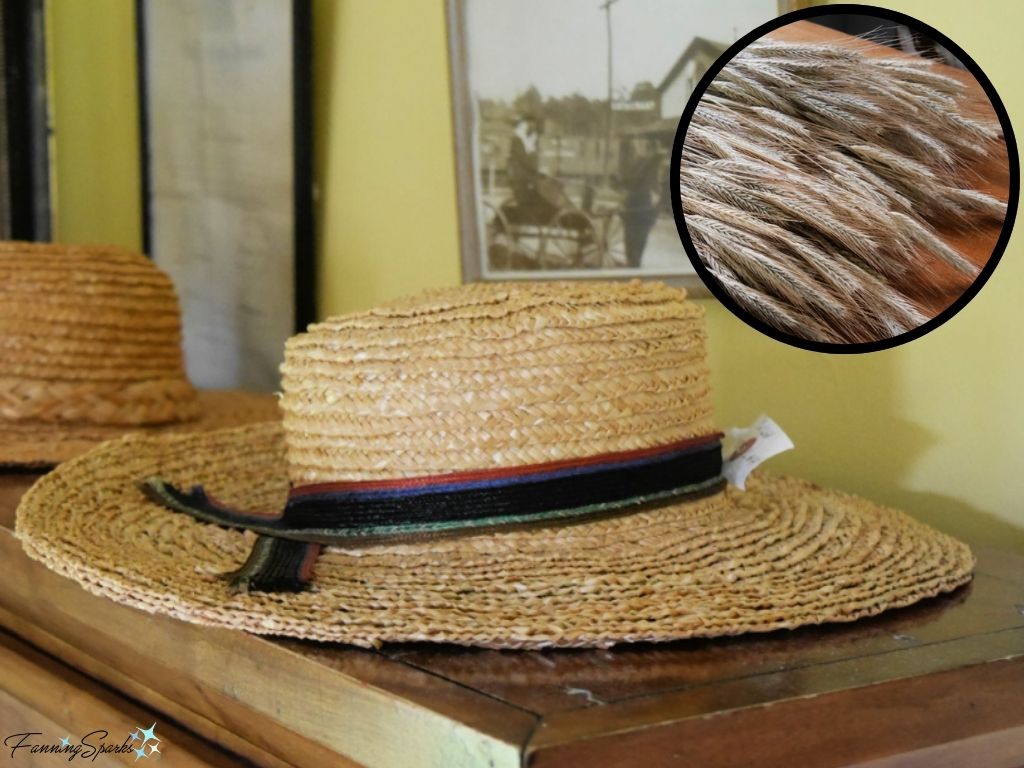 …, wild soft rush, …
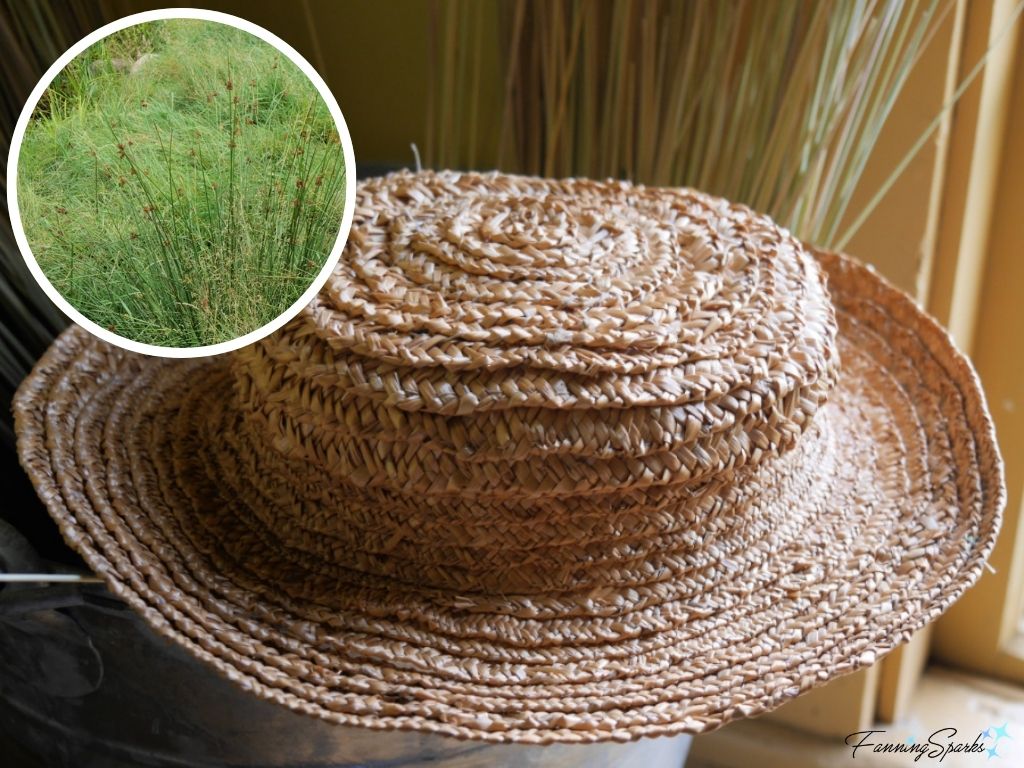 … and (amazingly) wood in the form of yellow birch “sheens”.
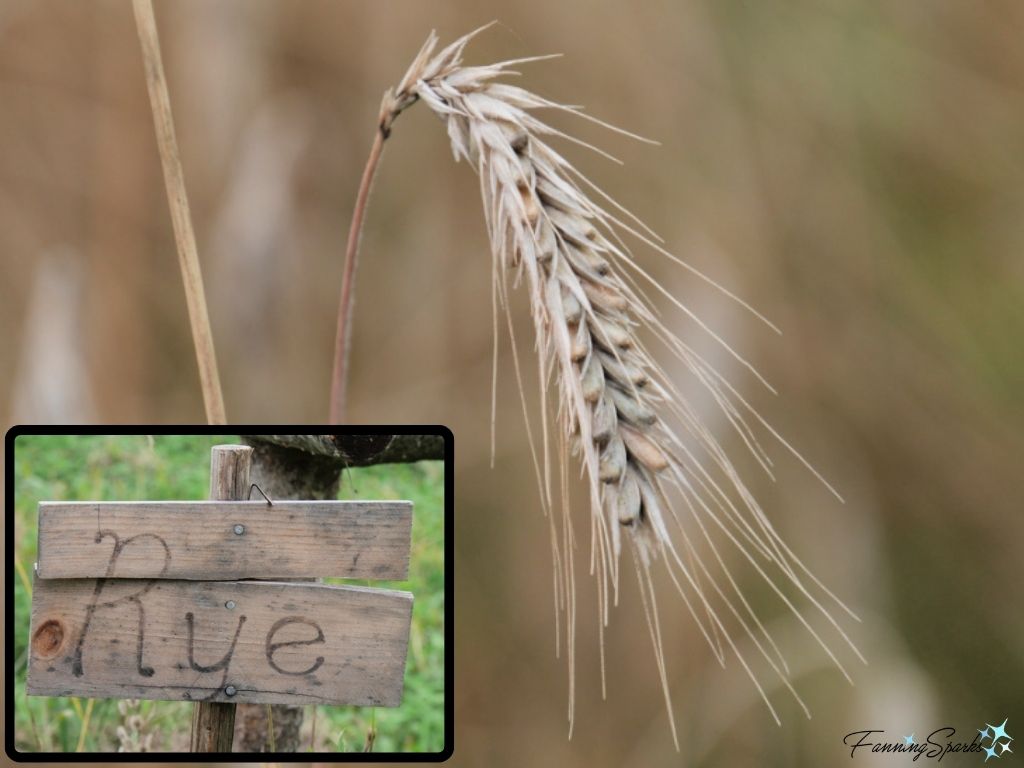
 Straw can be made from a variety of grasses including “cereal crops” such as wheat, barley, oats and rye. Monique explained rye, especially heritage varieties with their long, hollow stems, was the preferred raw material for straw hatmaking in Nova Scotia. Historically, the grass was cut with a scythe and gathered from the field by hand.
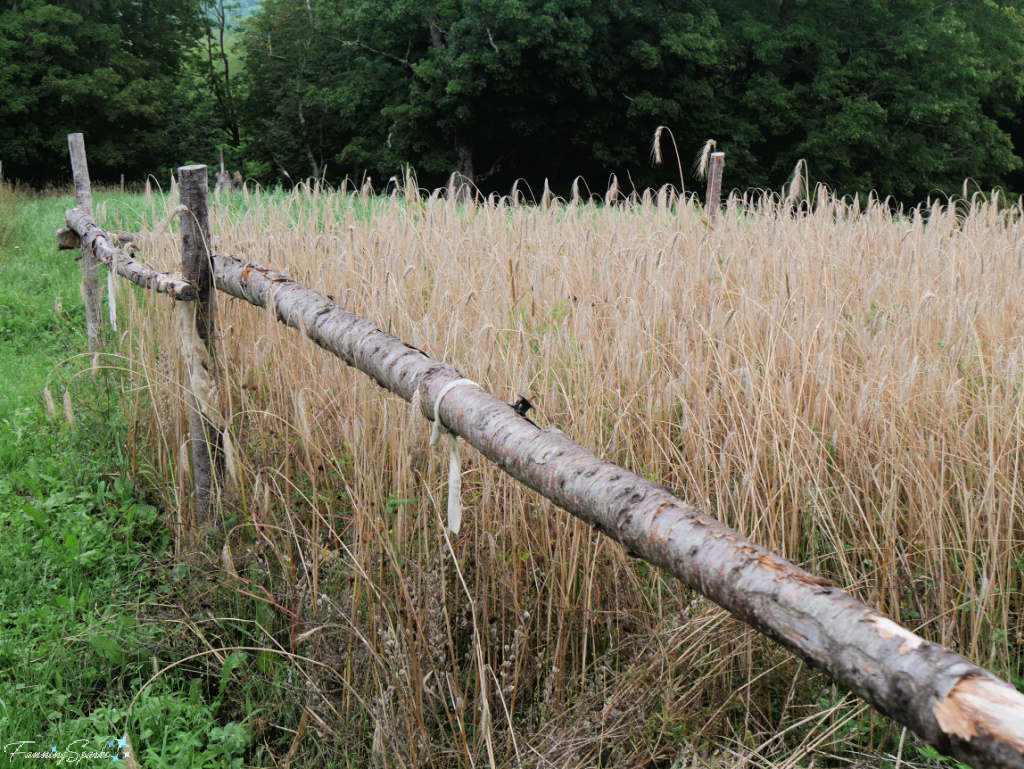 Ideally, the rye grass is cut in the “milk stage” just before the grain is ripe. The rye grain seed head shown below is ready to harvest for grain but a little past its prime for straw.
 The cut rye grass must be prepared one stem at a time. Broken, bruised or crooked stems are discarded. The grain head is removed and the stem is cut. Only the top joint, from the bottom of the grain head down to the top leaf node, is used. “Accounts tell us that the straw was cut to 9-10 inches long (23-25cm) then graded into bundles of similar diameters. This was essential in order to produce a plait of even width.” writes Veronica Main on her outstanding website Hat Plait.
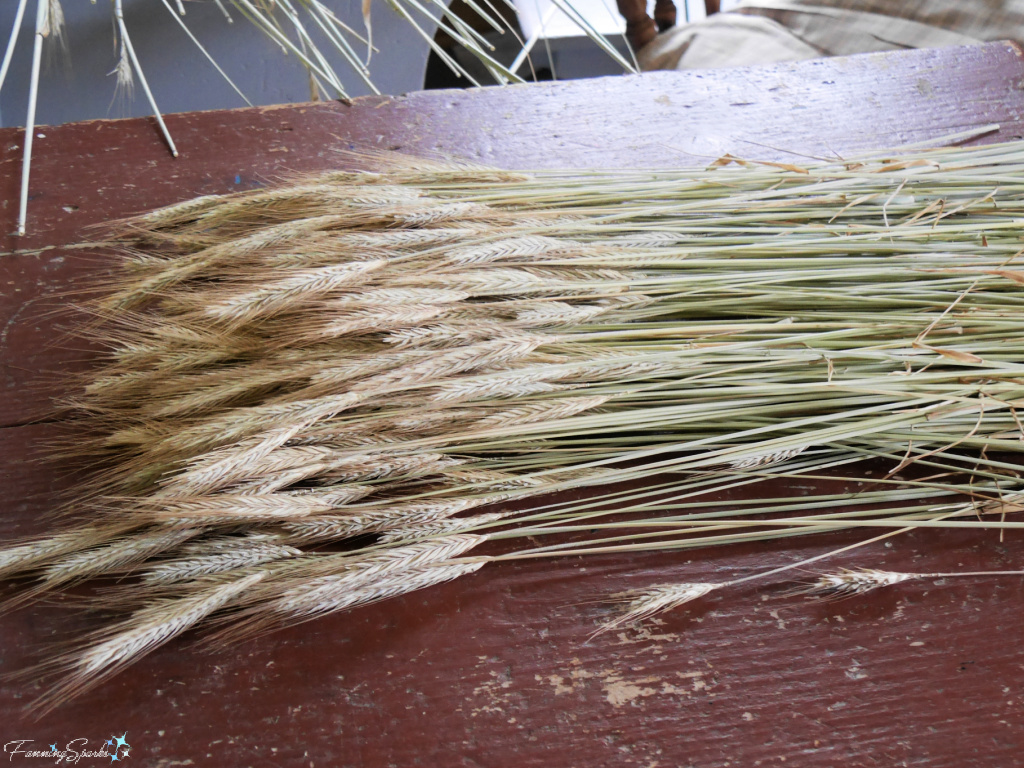 Before starting to work with the straw it must be “damped” to make it as flexible as possible. Monique did this by wrapping the rye straw in a wet towel. Other types of straw may need to be soaked in hand hot water for up to an hour. “The simple guide for knowing how long to soak the straws”, explains Main, is to “Bend the straw towards the thicker end of the stem, if it bends without cracking and springs back when released then it is ready”.
To make a hat out of straw, individual pieces of straw are first braided, or plaited, into long, narrow bands which are then coiled into a spiral and sewn into a hat shape. “A plait can be made from two to over seventeen ends and there are dozens of designs, some with patterns across the surface, some with decorative edges and some with both” writes Main.
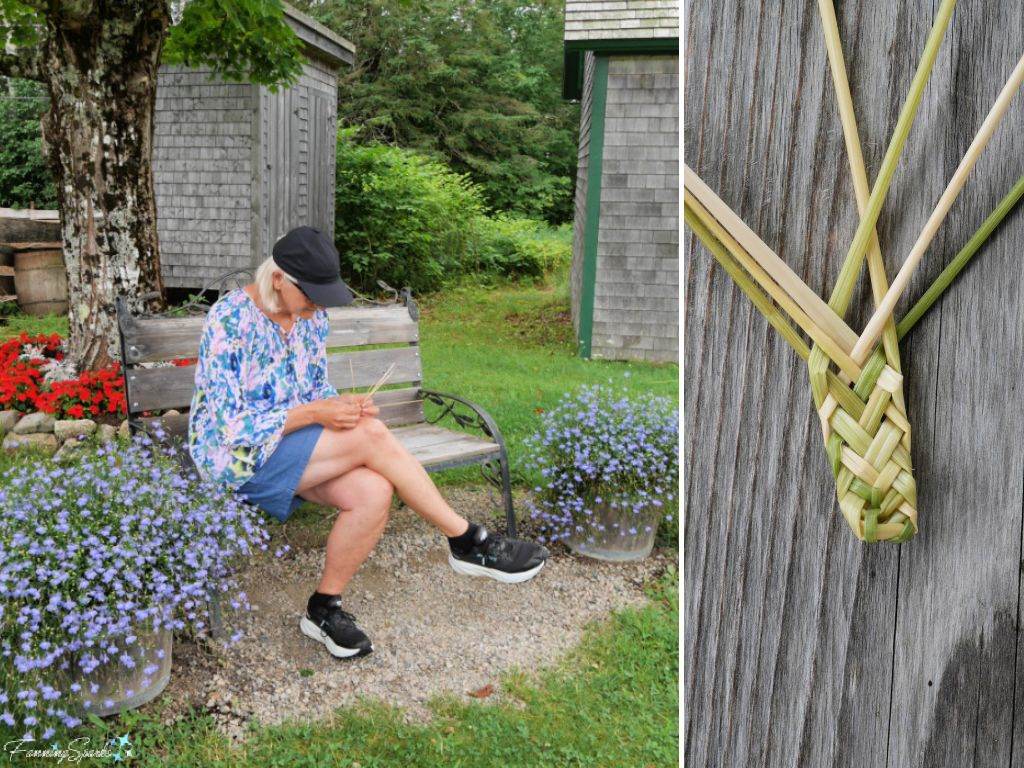
Monique demonstrated a seven-straw braid and encouraged us to try it ourselves. This age-old rhyme is commonly used as reminder of the technique:
“Over one and under two
Pull it tight and that will do.”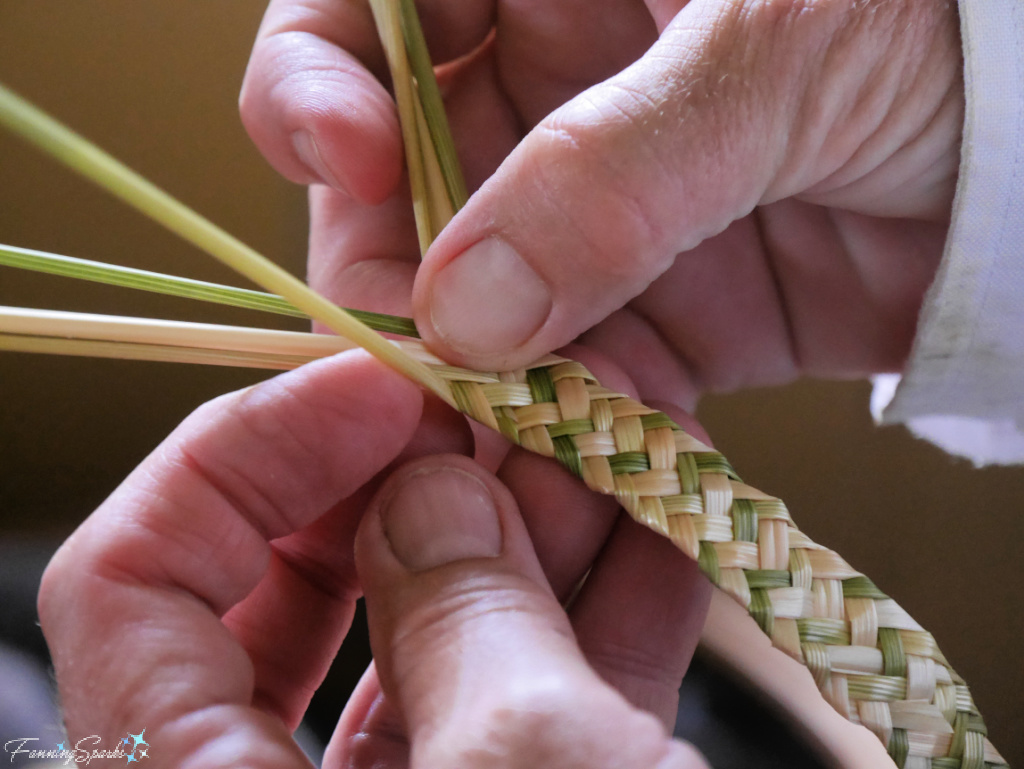 Historically, “the plaiter worked and sold plait by the score – a length of 20 yards” explains author Joleen Gordon in her book Handwoven Hats. “It took 3 to 3 ½ score to make a bonnet and a good plaiter could make half a score a day or three score a week.” So, a dedicated worker would take about one week to plait enough for one straw hat.
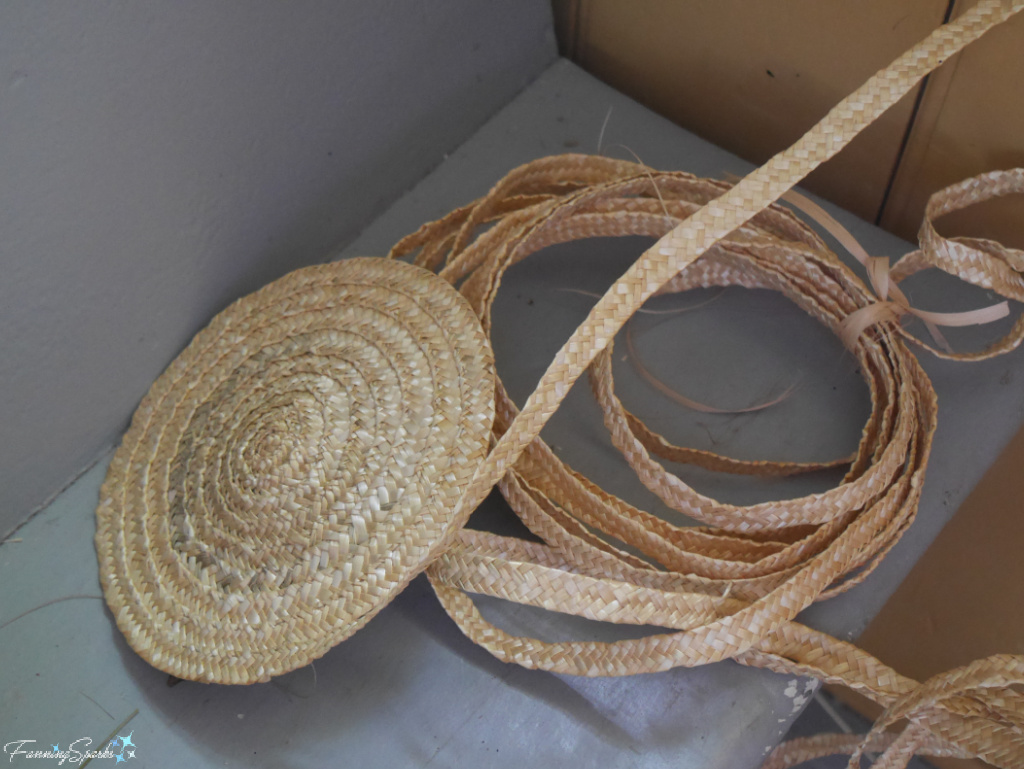 Meanwhile back at Ross Farm, I enjoyed learning the process but it’s a good thing I don’t have to plait for a living!
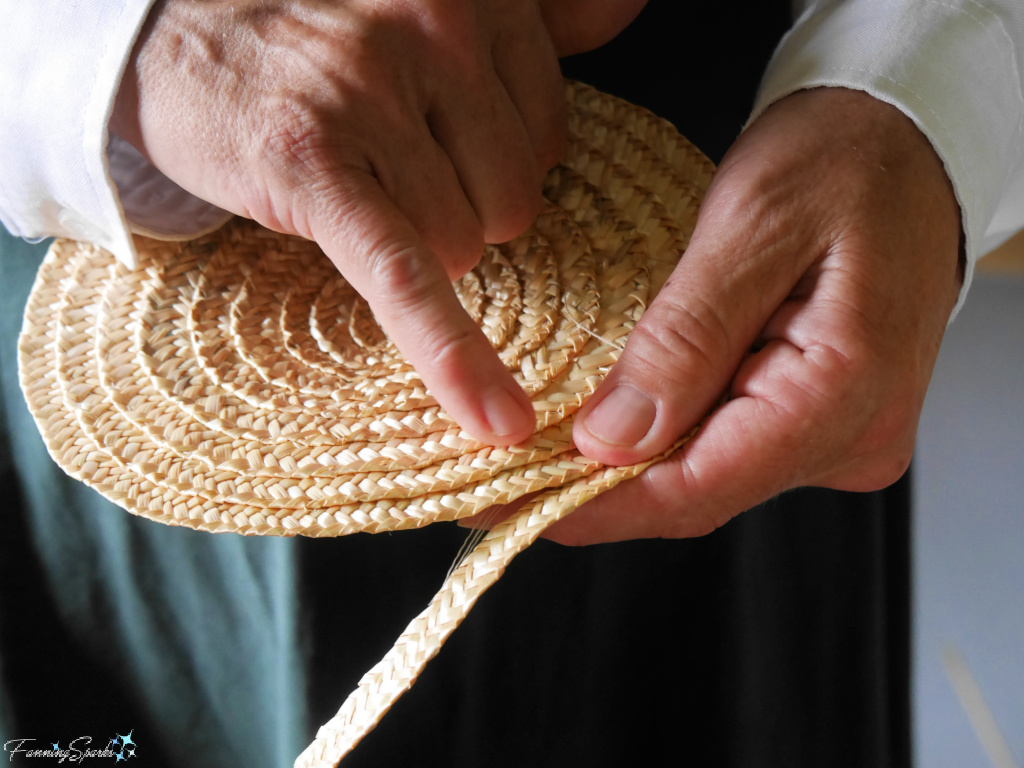
 The next step is to coil the straw plait into a hat carefully hand-sewing each round with needle and thread.
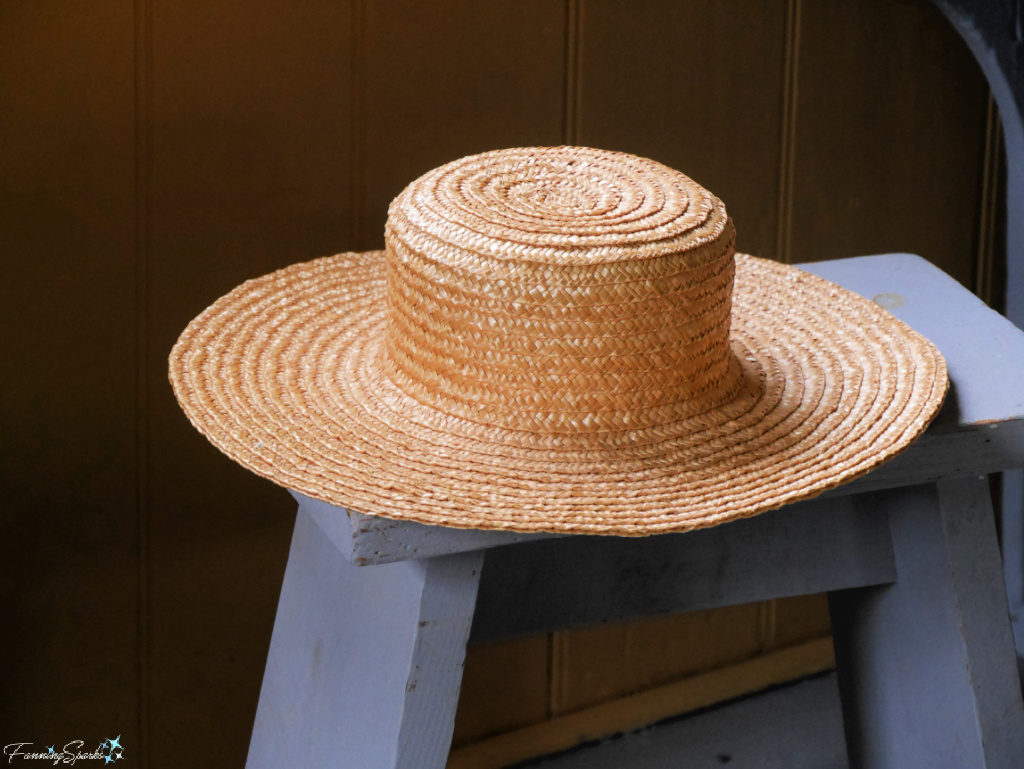
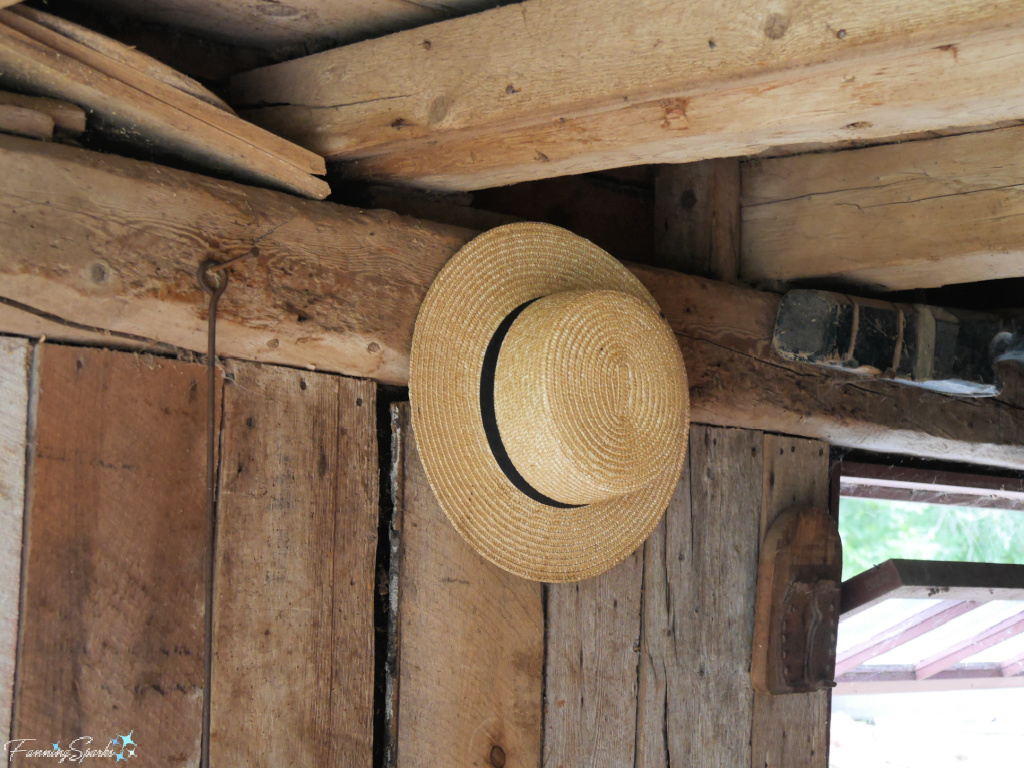
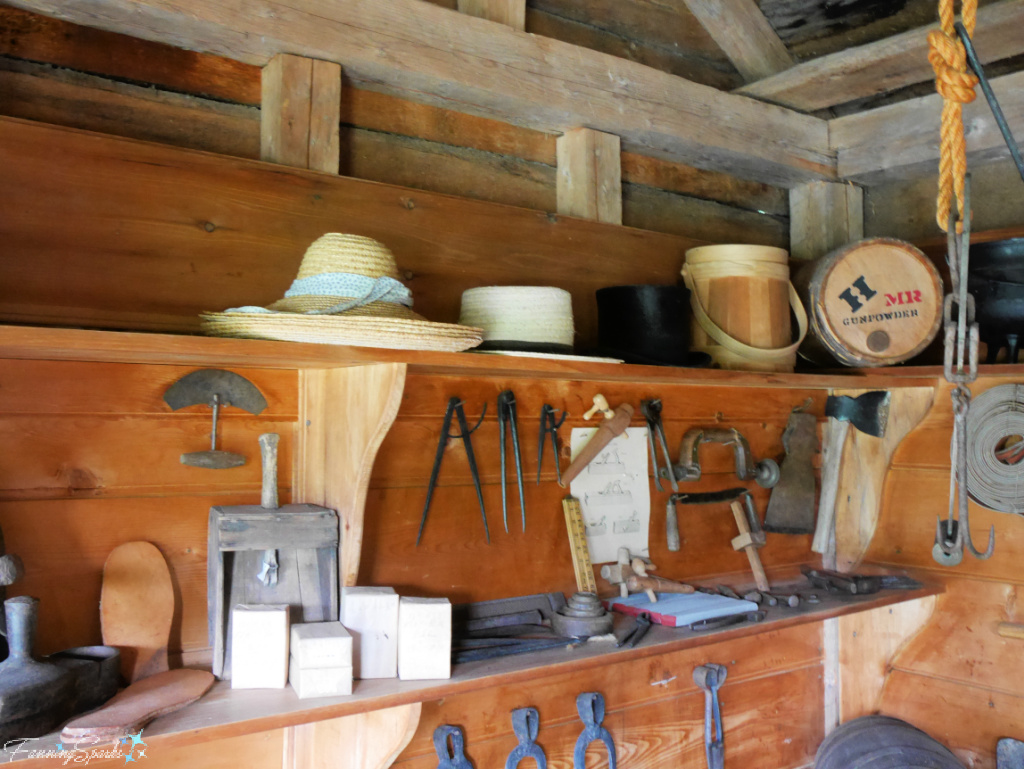
 Straw hats can be made in different styles including bonnets, boaters, wide-brimmed sun hats and sailor hats. Here are a few examples from Ross Farm.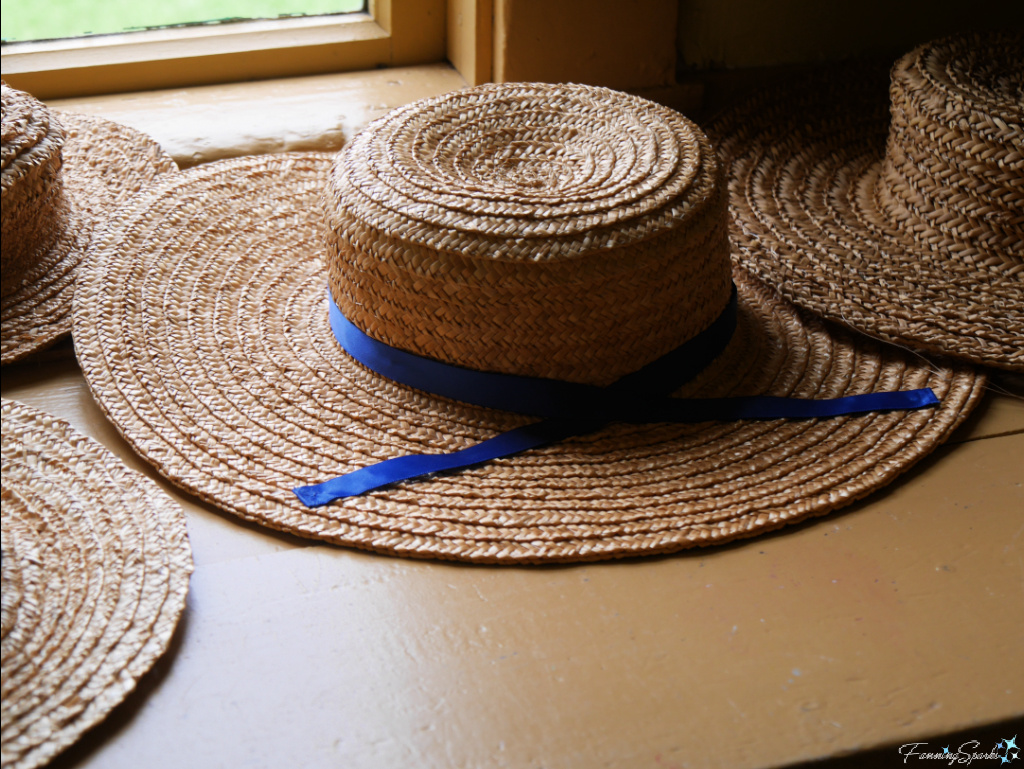
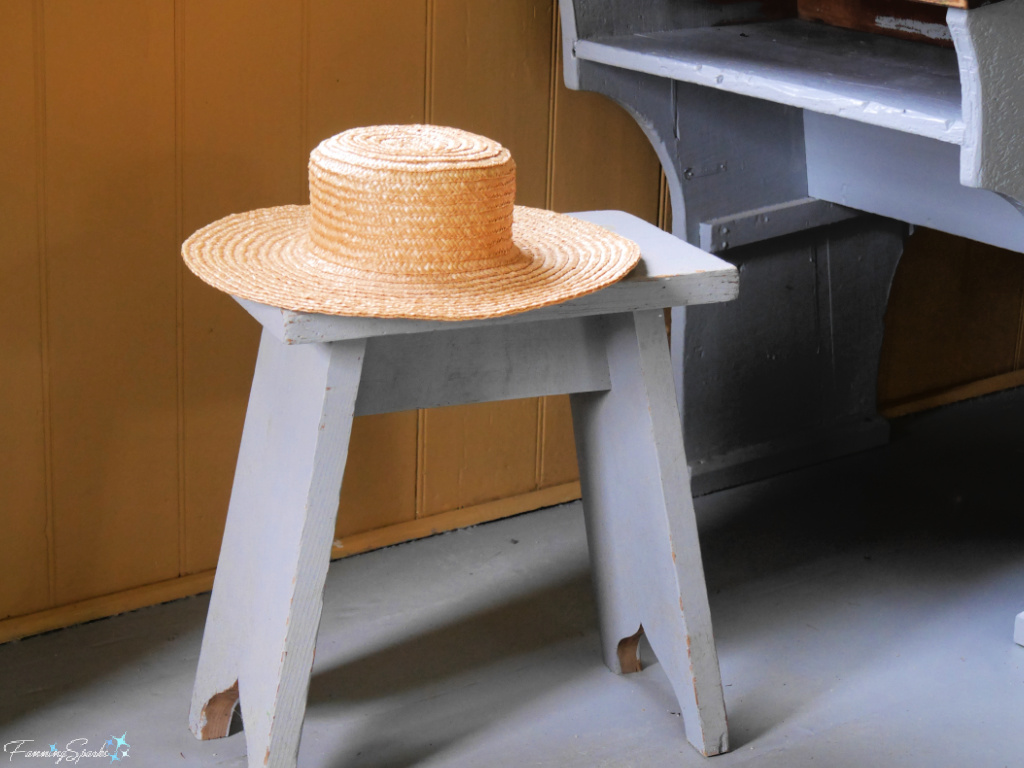
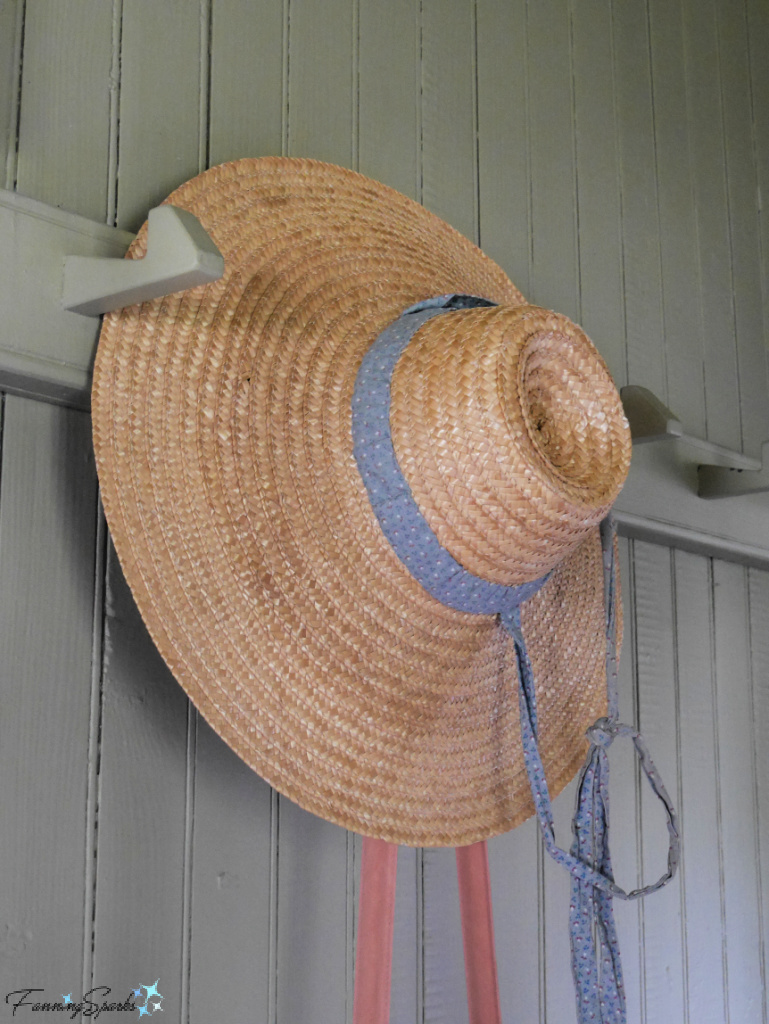
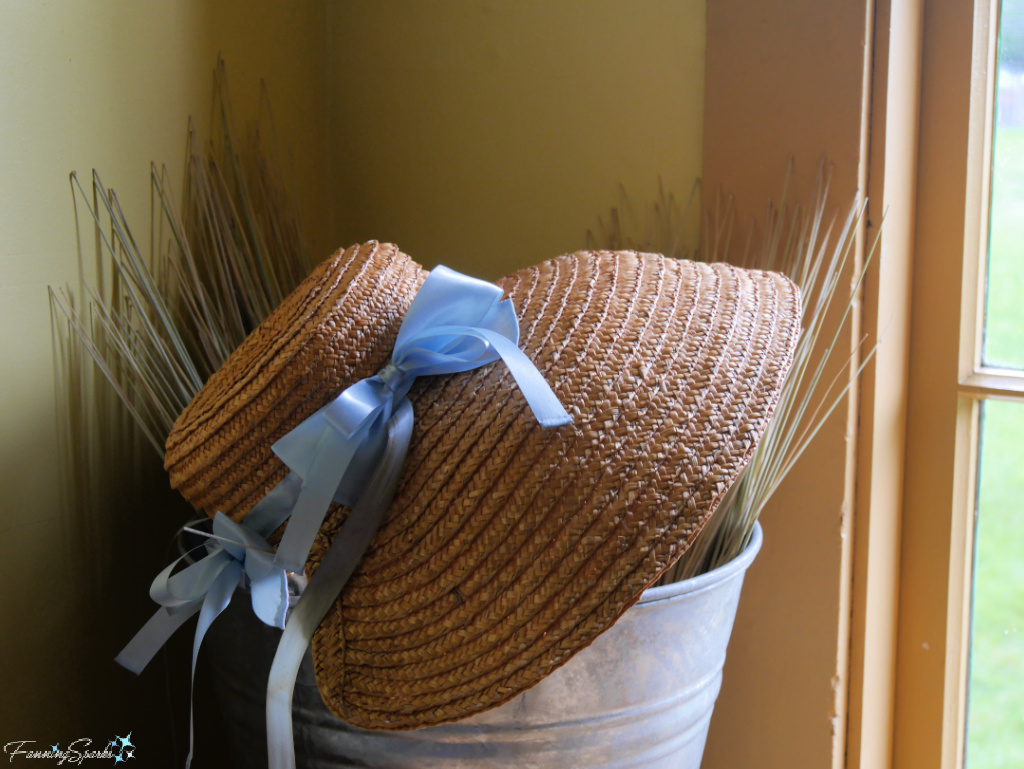 We spotted hand-woven straw hats throughout the farm and village. There was one hanging in the barn, …
 … a couple were on the shelf in Edward Ross’ small community store…
 … and, as shown at the top of this story, several were worn (or placed on a nearby fence post) by the costumed interpreters.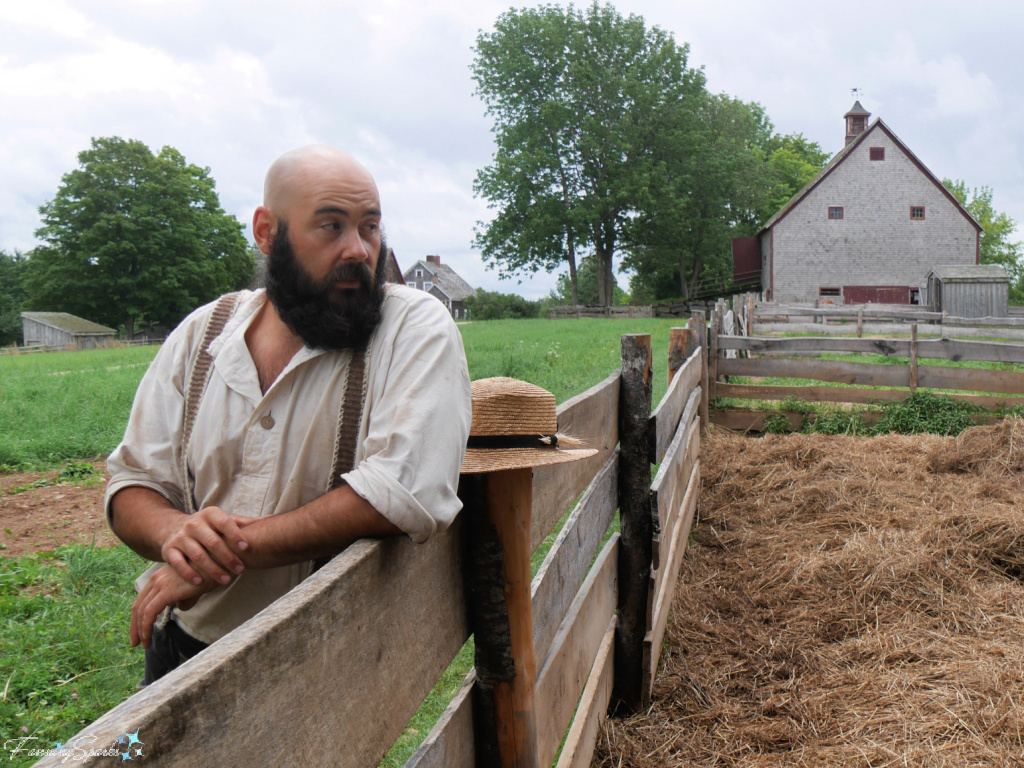
More Info
Previous blog posts mentioned in this blog post include:
. The Perfect Reminder of Green Gables.
I really enjoyed Ross Farm Museum especially chatting with the costumed interpreters. Special thanks to Monique, AJ and all the other skilled, knowledgeable guides! The Museum, located in New Ross, Nova Scotia, Canada, is an outstanding living history site depicting 150 years of agricultural life from 1816 through the early 20th century. In addition to showcasing typical farm activities, the costumed interpreters host special demonstrations and events on themed weekends throughout the season. The themes cover a variety of topics ranging from Straw Hats (featured in this post) to Pumpkin Planting to Ox Power to Sauerkraut Making. Check out the Ross Farm Museum website for more information.
The following books and articles were consulted in the writing of this blog post:
. Anne of Green Gables book by Lucy Maud Montgomery which is available here on Internet Archives
. Plaits and Braids, Types of Straw and various other articles by Veronica Main on the Hat Plait website
. Handwoven Hats: A History of Straw, Wood and Rush Hats in Nova Scotia book by Joleen Gordon
. Straw Working, Hat Plaiting and Straw Hat Making listings in the Craft Inventory of the UK-based Heritage Crafts website
. How to Make a Straw Hat from Scratch article on the Sew Historically website
. When Going Out Without a Hat Was Grounds for Scandal article by Tao Tao Holmes; Published March 2016 on Atlas Obscura website
. Grow a Hat article by Theo Wiederkehron on the Carrick Seeds website
. About Straw Art article on the US-based National Association of Wheat Weavers website
. Get Started article on the US-based Illinois Wheat Weavers Organization website
. Various Wikipedia entries.
Today’s Takeaways
1. Wearing a hat in public was a cultural necessity for men, women, and children prior to the 1950s.
2. Braided straw hatmaking is a cultural legacy at risk of no longer being practiced (UK-based Heritage Crafts organization).
3. Living history sites, especially those staffed with knowledgeable costumed interpreters, are invaluable resources we should actively seek out and treasure.



Comments are closed.