
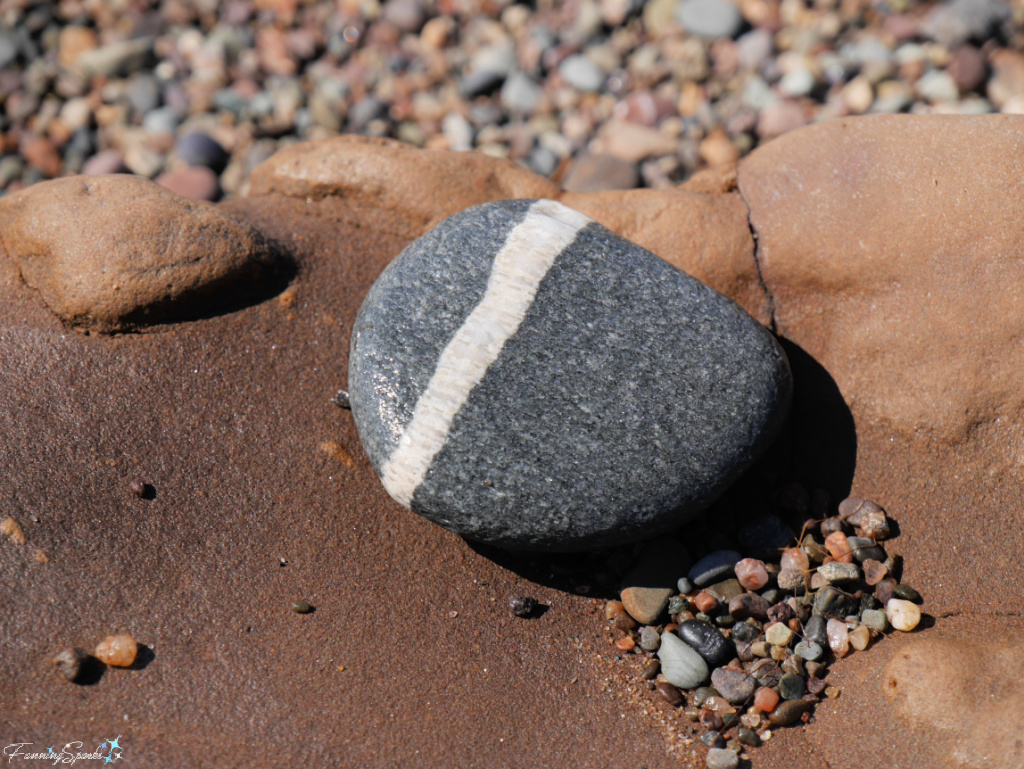
The shores of Nova Scotia offer an abundance of wishing stones. And yet, finding the perfect one never grows old!  My frequent beach walks have resulted in a small treasure trove of these lucky talismans. The typical wishing stone is a palm-sized, dark pebble ― shaped and polished by nature’s tides and sands ― with an unbroken white band around it. The white bands, called “veins”, are typically quartz. “Veins form” explains the Atlantic Geoscience Society in their brochure Nova Scotia Pebbles, “when minerals like quartz (and even gold) precipitate from hot fluids flowing through fractures in the rock”.
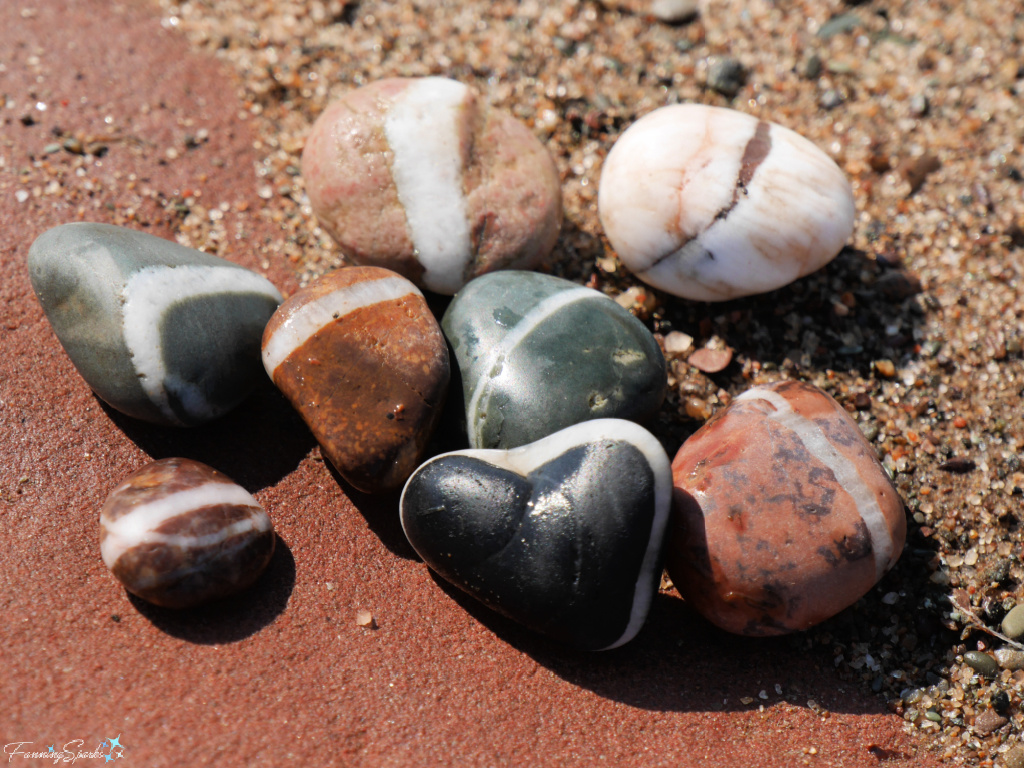
 While a dark pebble with a distinctive white stripe may be the most common, there are a surprising variety of colours, forms, sizes and versions of wishing stones. Here are few of my current favorites including my latest find ― a unique heart-shaped stone with a white band around the outside edge.
 Regardless of the wishing stone’s form, size and colour, it’s the encircling band that’s believed to hold the stone’s mysterious powers. The idea is to make a wish while tracing the band with a finger.
The specifics of the wishing stone ritual vary from one source to another. Some say the wish should be spoken out loud while tracing the band but others recommend keeping the wish secret.
There is even more variation on what to do with the wishing stone after making a wish. On the one hand, wishers are advised to dispose of the wishing stone either by throwing it into a body of water or returning it to the beach or surface where it was found. On the other hand, the advice is to keep the wishing stone ― either in a pocket or in a special place to meditate upon it while thinking about the wish. 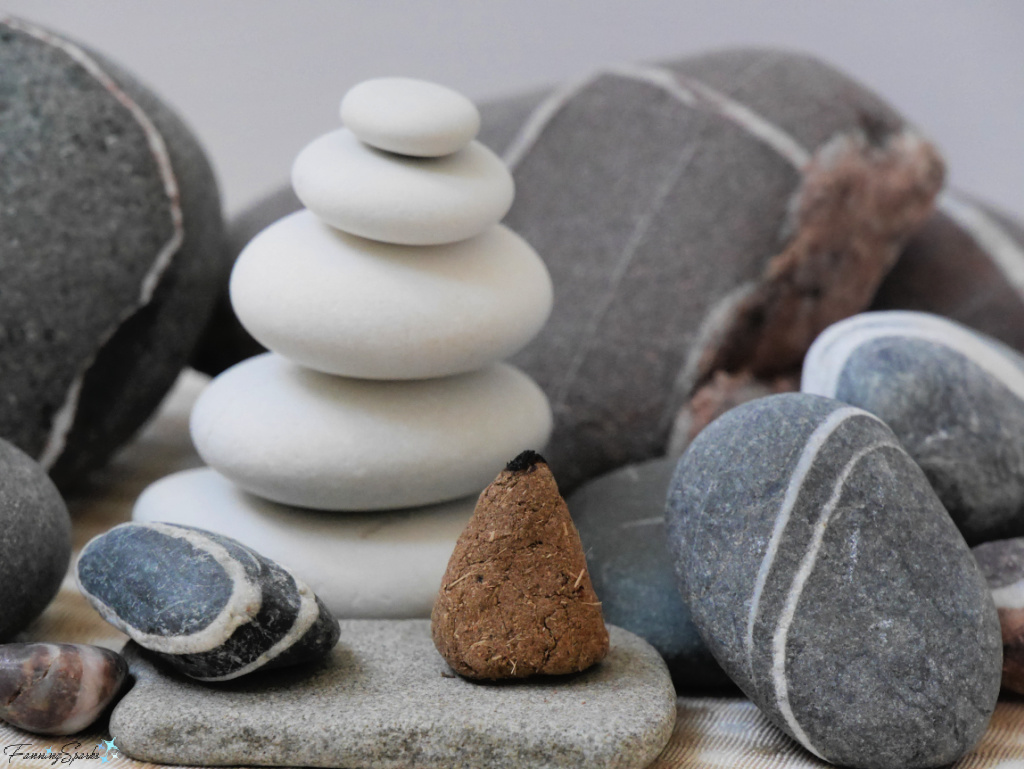 While beachcombing for wishing stones, I started thinking about other popular wishing traditions. Most of these customs seem to occur at special moments and involve performing a simple ritual while focusing on a specific hope or desire. Making a wish while blowing out the candles atop a birthday cake, for instance, is a beloved part of a traditional birthday celebration in many countries.
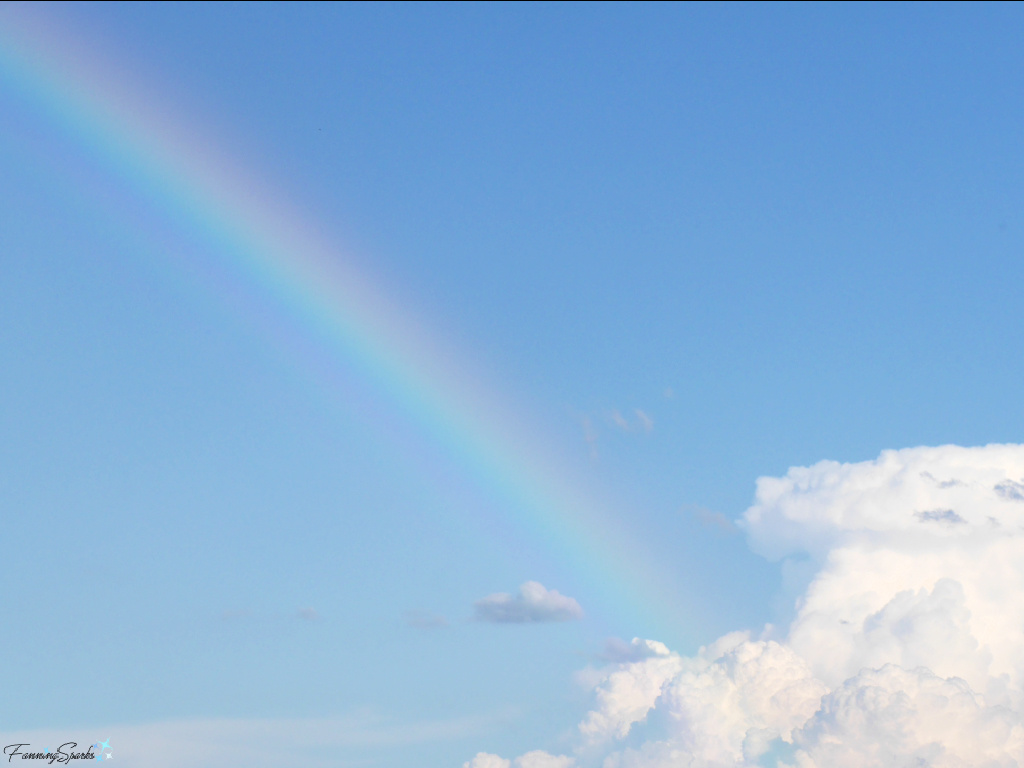
Other examples include wishing upon a star or a rainbow. 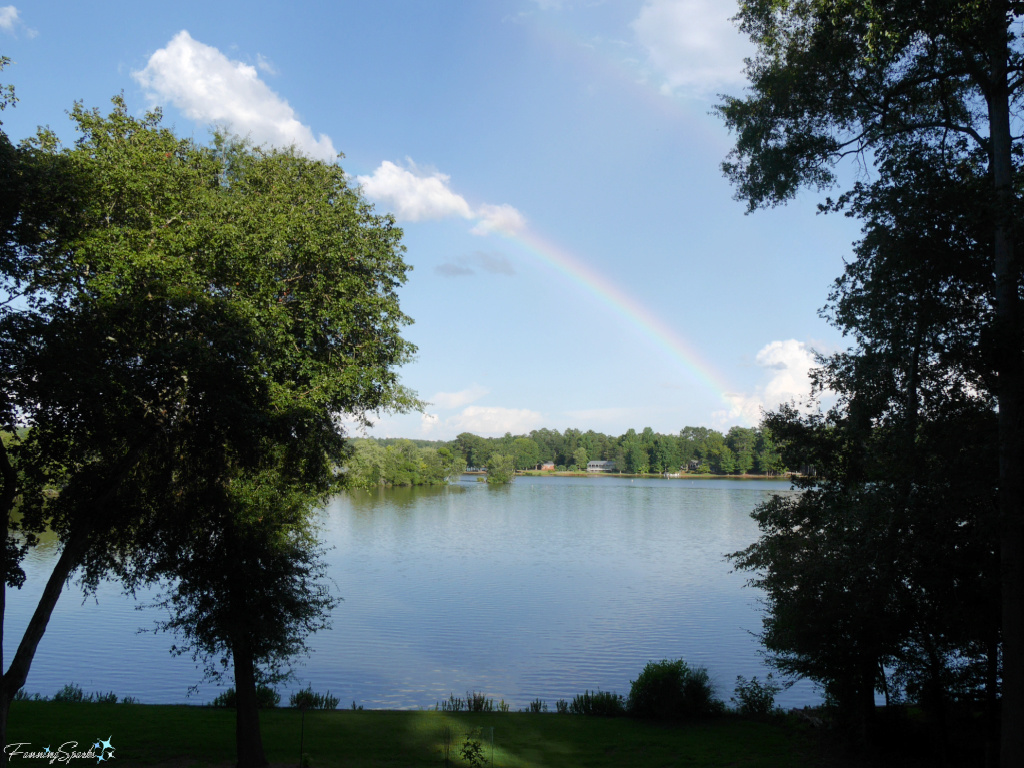 Again, the specifics of the wishing ritual seem to vary. The most straightforward way to wish on a rainbow is to simply make a wish when it’s first seen. Another version of the tradition indicates the wisher should trace the rainbow with their eyes, from one end to the other, while repeating the wish three times ― at the beginning, middle and end. Yet another version of the wishing ritual comes from Irish folklore where leprechauns were said to have hidden pots of gold at the ends of the rainbow. In this case, the wisher should wish for money as they look for the end of the rainbow.
 Another interesting wishing tradition involves dandelions in bloom. I originally shared this folklore in the blog post, Springing to Life.
“In Ireland, where dandelions carpet the hillsides, children pluck the fluffy, white seed heads and make wishes while blowing away the fluff.” explains author Roseanne Thong in her book Wish: Wishing Traditions Around the World. “If all the down comes off with one breath, it is said that the wish will be granted.”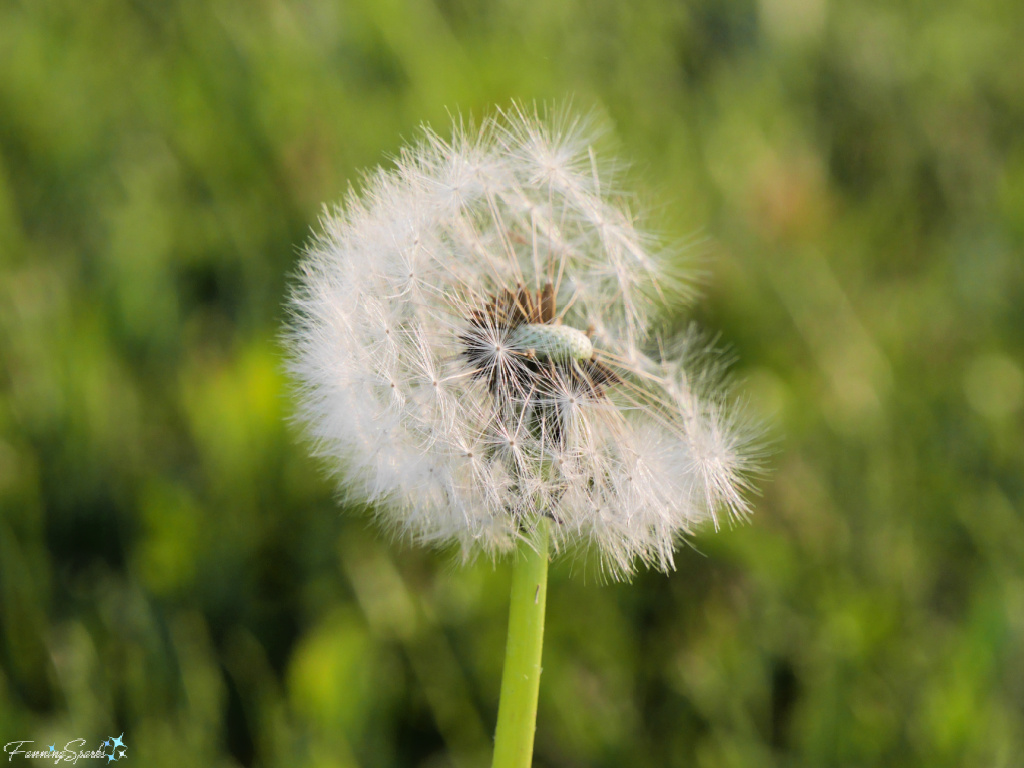
Wishing on dandelions has an intriguing backstory. It originates in Ireland where, as Thong explains, “for hundreds of years, dandelions were used as a folk remedy to cure different kinds of illness. This may have led people to believe they were magical.”
A similar thought process seems to have applied to water. “In ancient times Celtic and other cultures often believed natural springs and wells were sacred places” writes Zteve Evans in their online article Legendary Places: Wishing Wells. “In those days a permanent supply of drinking water could be difficult to find so when a source of pure, clean drinking water was found it would become a place that people visited for necessity. Water being an essential commodity for the subsistence of life the ancients believed divinities or spirits resided in such springs”.
“One of the most important parts of paying homage to a god, or goddess of a sacred spring was to make an offering of some kind.” This practice seems to have led to the ritual of making a wish while tossing a coin into a wishing well.
It’s impossible to know if anyone ever left offerings in the historic well, promoted as Evangeline’s Well, at the Grand-Pré National Historic Site of Canada (see The Enduring Tale of Evangeline). But it’s not hard to imagine that present-day visitors would be tempted to make a wish and toss a coin into this stone well. According to a sign on site, “This well, once used for watering livestock, was discovered in the late 1800s. Later excavations yielded a variety of iron artifacts.”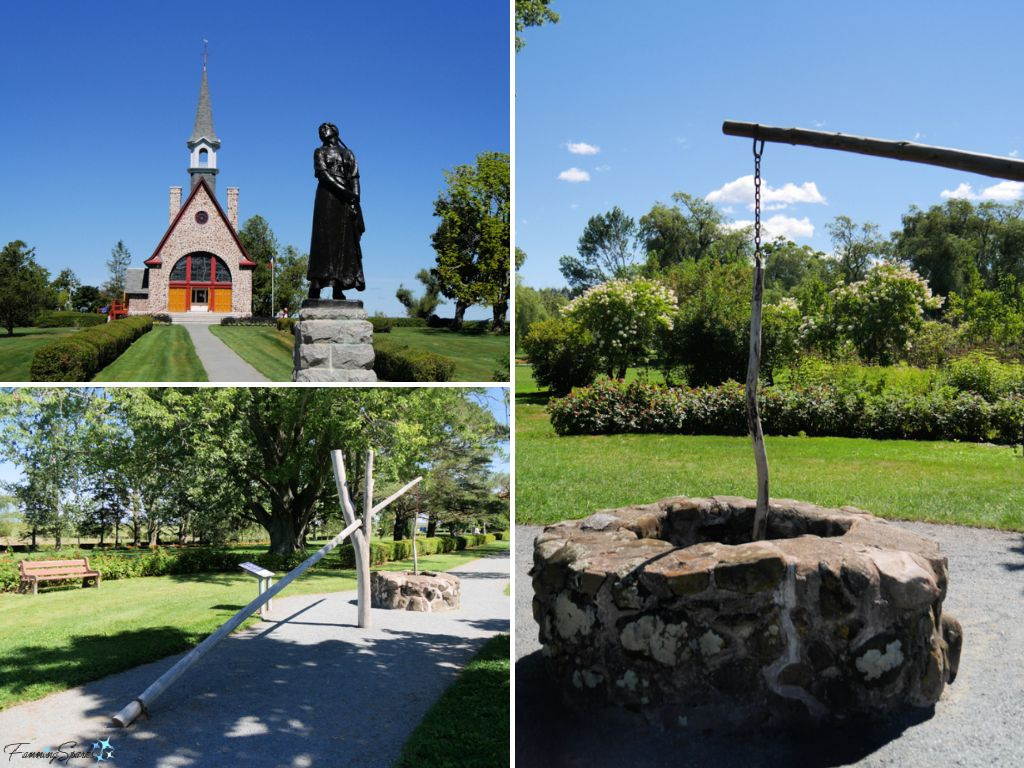 Shown below are two more historic wells which may or may not have served as wishing wells.
This beautifully restored community well was spotted in Nova Scotia’s Fortress of Louisbourg. The Fortress is an extraordinary National Historic Site and living history museum (see my previous blog post Travel Through Time to 1744 for more info). 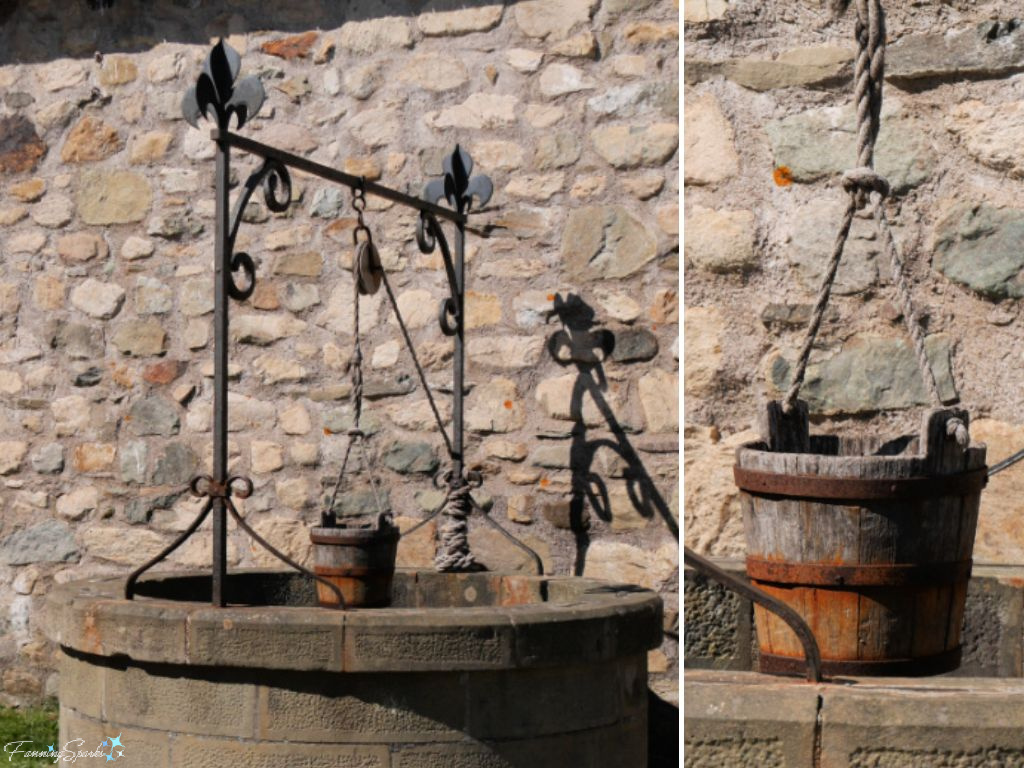
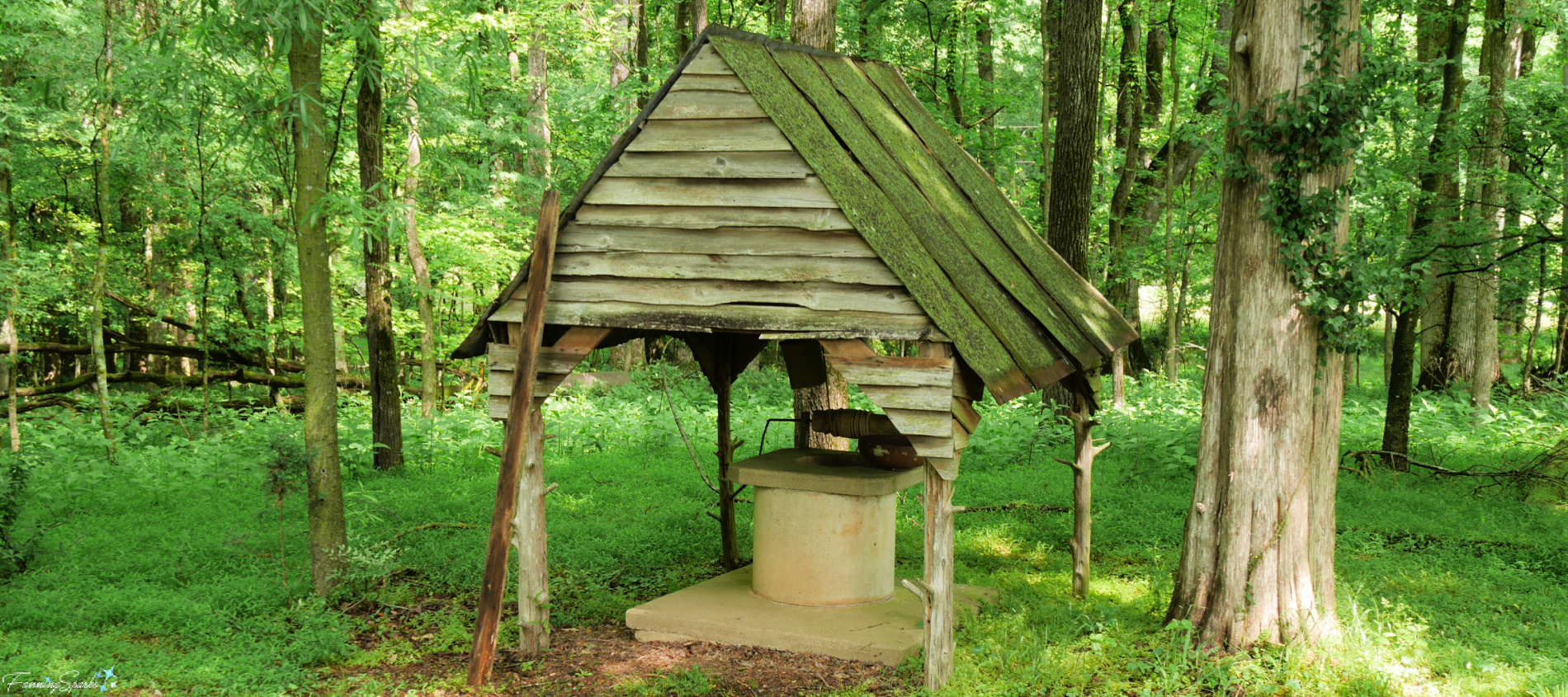
This rustic water well, with wooden well house, were spotted at Shields-Ethridge Heritage Farm near Athens, Georgia, USA.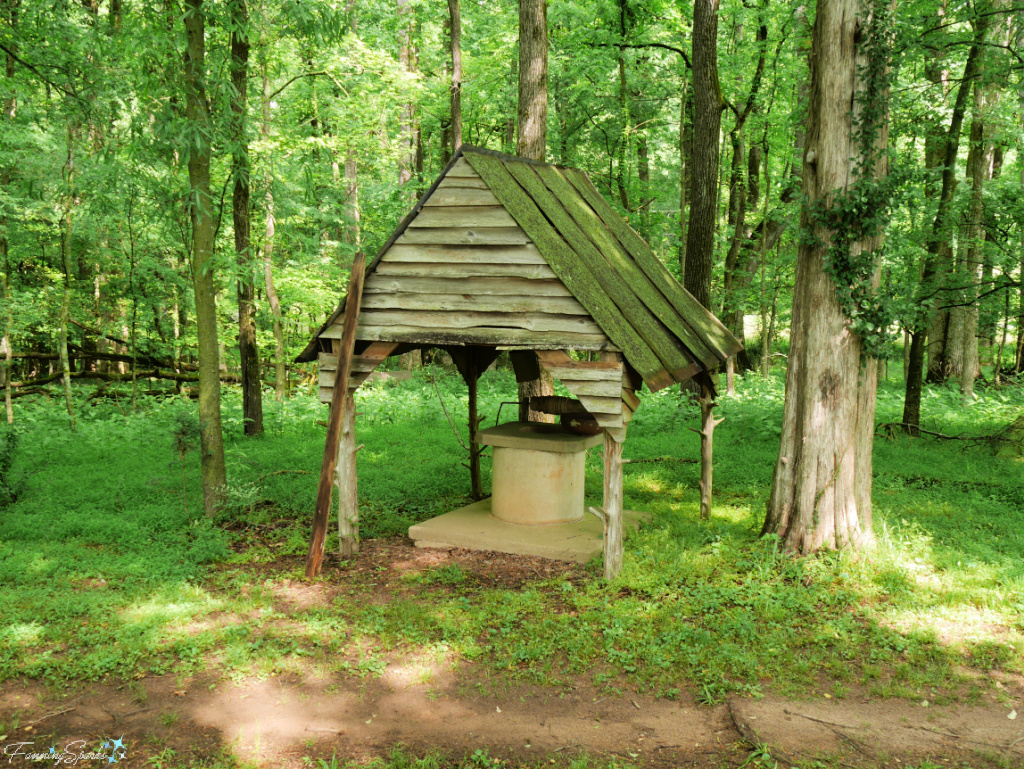 Moving on from the humble wishing well, I’d like to consider a far more elaborate wishing ritual conducted in a spectacularly grand setting on the other side of the globe ― tossing coins into Rome’s famous Trevi Fountain. Interestingly, this tradition also originates from the ancient practice of paying homage to the gods of water.
 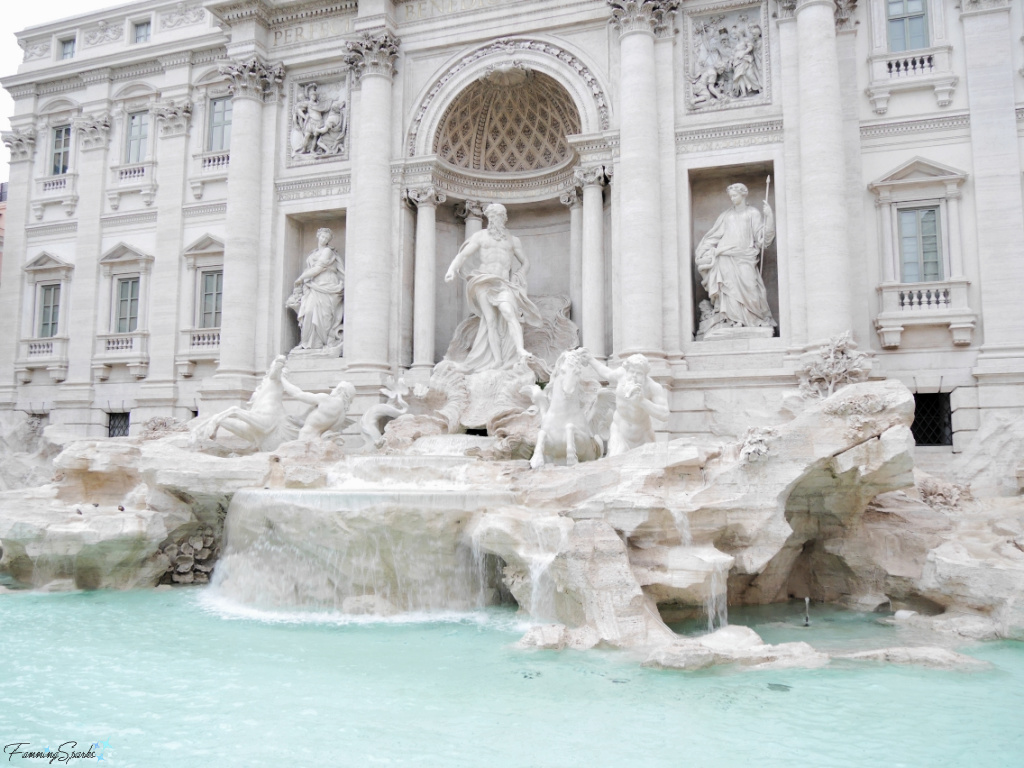 The famous Trevi Fountain wishing ritual is believed to come from an ancient tradition when “sailors threw coins into the waves to ask sea gods for a safe voyage” writes Thong. “That custom later developed into the tradition of tossing coins into fountains and wells to have wishes granted. At Trevi Fountain, people throw coins before a statue of … [the] god of the sea – following this same tradition”.
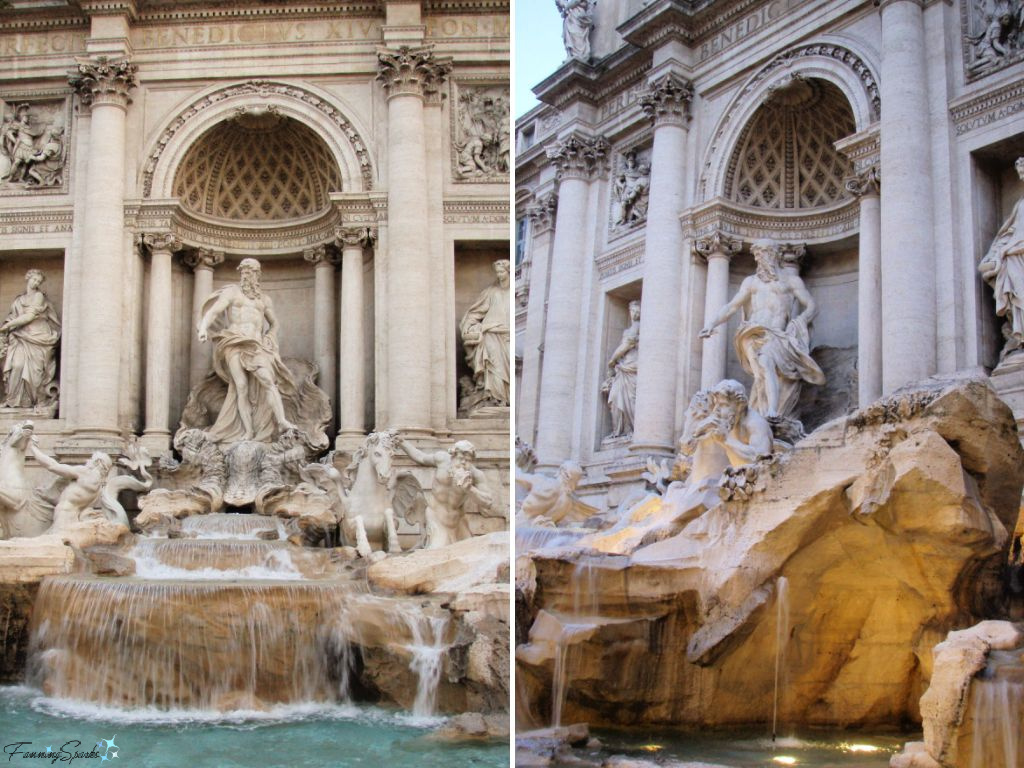 The legend seems to have morphed, though, because the present-day ritual is more complicated than simply tossing coins into the water of the fountain. “The most common practice at Trevi Fountain is tossing one coin over your left shoulder with your right hand. According to popular belief, this act ensures your return to Rome” reports the online article Tossing a Coin in Trevi Fountain: Exploring the Myths and Rituals. “For those yearning for love and romance, tossing two coins into Trevi Fountain is believed to increase the chances of finding true love in the near future” whereas “Tossing three coins into Trevi Fountain signifies a combination of the previous wishes – return to Rome, finding love in Rome, and ensuring marriage in the Eternal City”.
Please note these photos were taken on two different occasions ― in the very early hours of a December and April morning ― in a nearly-empty Piazza di Trevi before the daily chaos of the coin-tossing crowds. Being able to take in the grandeur of this spectacular Baroque work of art in peace and quiet was everything I could have wished for. 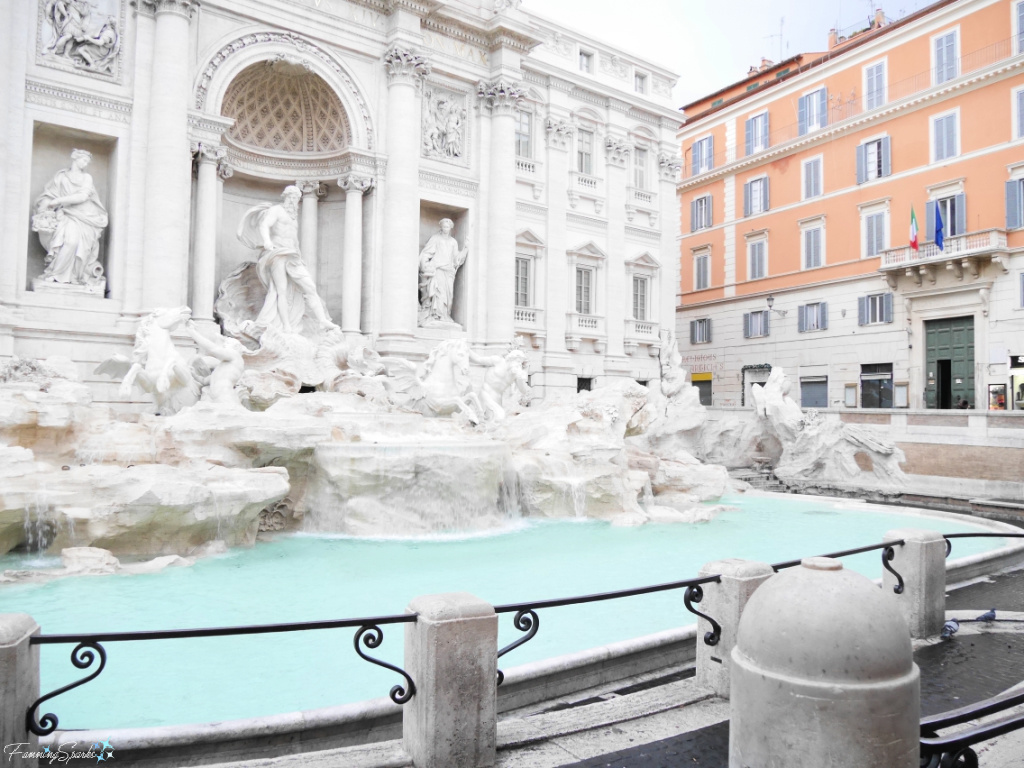 In fact, on one visit I was there early enough to capture the below photo of a worker collecting coins from the Fountain. I’ve since learned that “more than 3,000 Euros worth of coins are collected from Trevi Fountain by authorized personnel each day. … They are then donated to Rome’s Catholic Charity Caritas which uses these seemingly trivial contributions towards providing food, shelter, and essential social programs for Rome’s poverty-stricken communities. … This beautiful connection between the wishes of visitors and the support for charitable endeavors highlights the positive impact of coin tossing at Trevi Fountain.”
 Another widespread wishing custom, which also entails tossing a small object to make a wish, is the wishing tree. Arguably the most famous wishing tree, the Lam Tsuen Wishing Tree, is located in an indigenous village in the Tai Po district of Hong Kong.
“The practice of making wishes at the Lam Tsuen Wishing Tree has deep roots in local folklore and tradition” explains the Hong Kong Tourism website. The Wishing Tree, actually two banyan trees, is situated near an historic temple. “Traditionally, villagers and visitors would write their wishes on placards and throw them into the tree. The belief was that the higher the wish landed, the better the chances of it coming true.”
The article goes on to explain that the popularity of this cherished tradition grew and “every year, particularly during Chinese New Year, visitors flock to the Wishing Tree to make their wishes”. At some point, wishers started tying oranges to their wishing placards to add weight and improve the likelihood of it catching in the tree.
Unfortunately, the trees could not withstand the weight of all the thrown placards and during Lunar New Year in 2005 one of the main tree trunks collapsed injuring two people. Organizers recovered by making alternative arrangements “to allow worshippers to continue the tradition in a more sustainable manner. These include designated areas where wishes can be hung safely, preserving the cultural practice and the tree”.
I’ve never seen Hong Kong’s Lam Tsuen Wishing Tree but I have seen trees covered in red ribbons inscribed with handwritten wishes like this one in Zhouzhuang, a famous Water Town near Shanghai, China.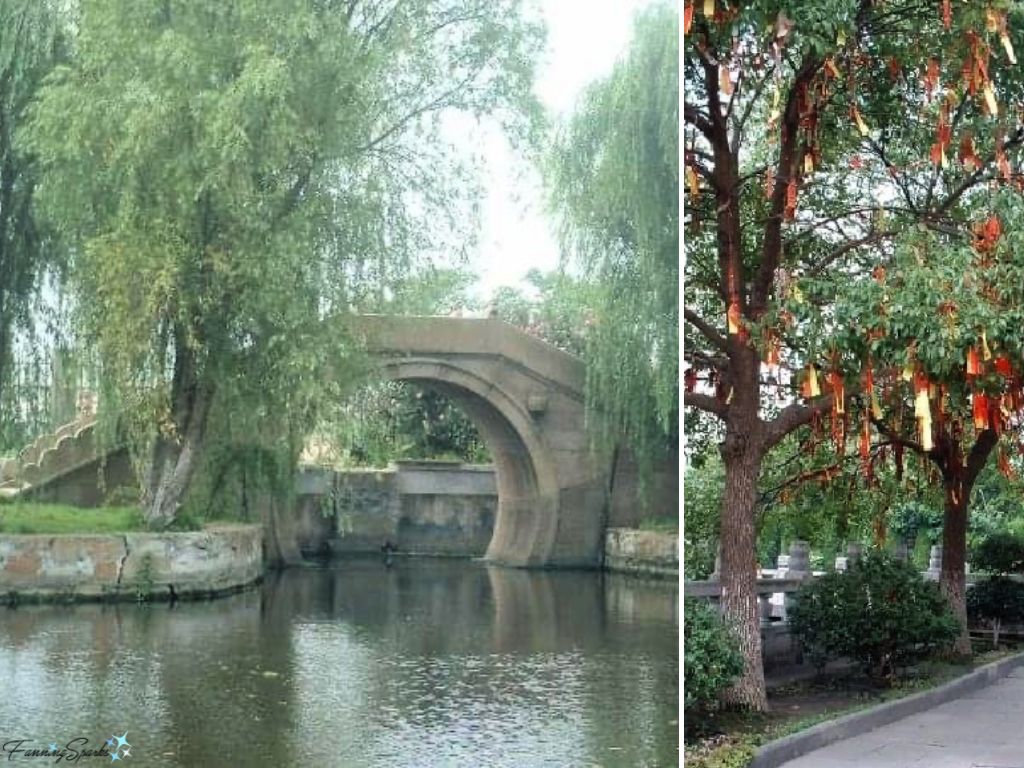 I also had the pleasure of seeing an interesting modern interpretation of the wishing tree at Cornerstone in Sonoma, California. The Wishing Garden is mentioned in a previous blog post (see A Rainbow Sky of Fluttering Ribbons) but it seems worth repeating in the context of this post.
The Wishing Garden featured beautifully-crafted, metal sculptures in a unique garden space.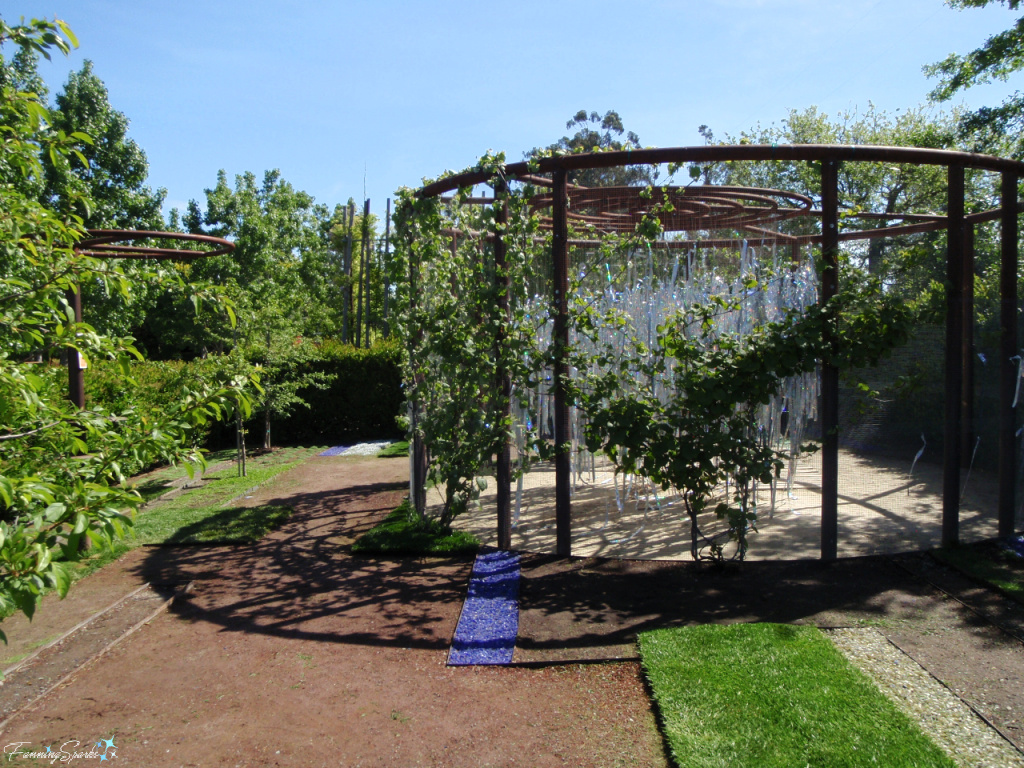 At the entrance to the garden, visitors were invited to “1) Cut a Piece of Tape 2) Grab a Pen 3) Write Your Wish and 4) Add Your Wish to the Others“. Hundreds of holographic ribbons shimmered in the California sunshine. Some messages were specific and personal while others ― like this one expressing “Love Peace Joy” ― were universal.
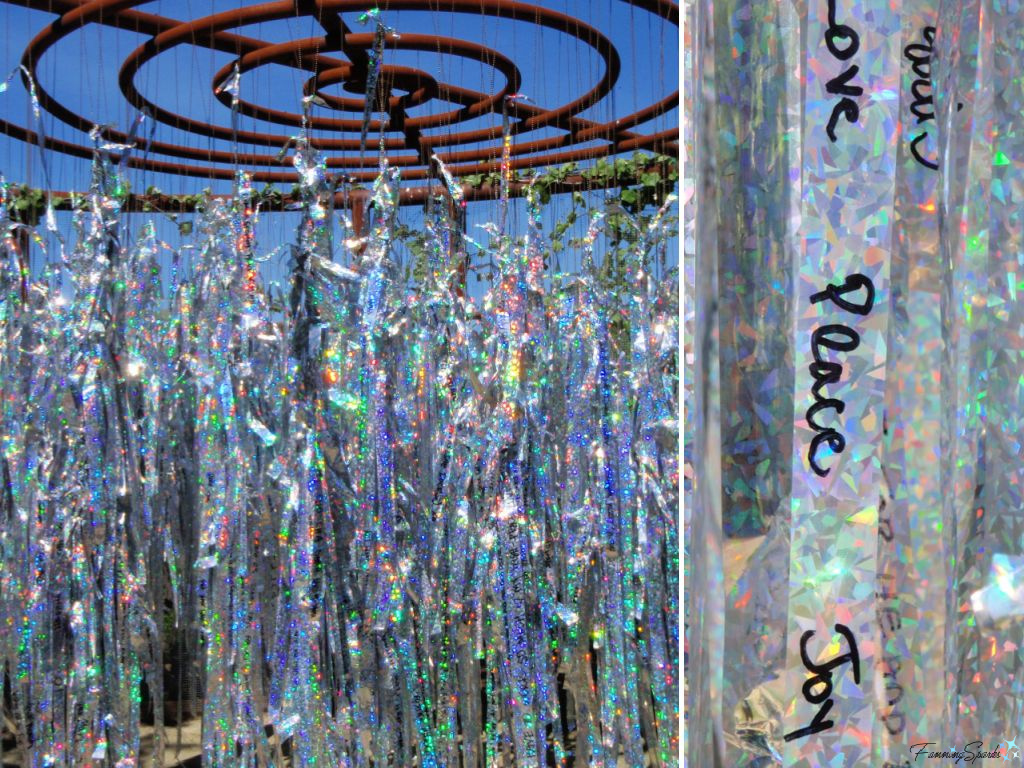 A sign at the Wishing Garden provides this thoughtful insight ― “Wishes inspire hope for what’s possible… collectively expressed they can represent the dreams of an entire community.”
It’s a sentiment worth repeating because no matter how a wish is made ― by tracing a wishing stone, blowing a dandelion bloom, tossing coins into a wishing well or fountain, throwing a placard into a tree, tying a ribbon on a structure or in some other way ― the expression of the wish demonstrates hope!
More Info
Previous blog posts mentioned in this blog post include:
. Springing to Life
. The Enduring Tale of Evangeline
. Travel Through Time to 1744
. A Rainbow Sky of Fluttering Ribbons.
The following books and articles were consulted in the writing of this blog post:
. Nova Scotia Pebbles brochure published by the Atlantic Geoscience Society
. Wish: Wishing Traditions Around the World book by Roseanne Thong which is available here on Internet Archives
. Legendary Places: Wishing Wells article by Zteve T Evans; Published February 2015 on Folkrealm Studios website
. Tossing a Coin in Trevi Fountain: Exploring the Myths and Rituals article published on Stefano’s Rome Cabs website
. Spring Festival|HK Culture of Throwing Wishing Placard for Wishes article by Huang Haoyi; Published February 2025 on Our China Story website
. Lam Tsuen Wishing Tree article published on Hong Kong Tourism website
. the Wishing Project website
. Various Wikipedia entries.
Check the Grand-Pré National Historic Site website for more information about this stellar historic site in Nova Scotia.
The Fortress of Louisbourg National Historic Site website provides a wealth of information about this living museum.
To learn more about Cornerstone Sonoma in California USA, see their website.
Today’s Takeaways
1. Most wishing customs seem to occur at special moments and involve performing a simple ritual while focusing on a specific hope or desire.
2. Many wishing rituals, like wishing stones and wishing upon rainbows, have nebulous origins, while others, like tossing coins into wishing wells or fountains, can be tied to age-old beliefs.
3. “Wishes inspire hope for what’s possible… collectively expressed they can represent the dreams of an entire community.” Wishing Garden at Cornerstone in Sonoma, California, USA

Comments are closed.