
Signs of spring are (finally) popping up here in Nova Scotia. One eagerly-awaited, seasonal sighting is the pussy willow (Salix discolor) catkin. The catkins, technically unopened flowers, have a protective coat of soft grey fur. Some sources say this native shrub earned its common name from the catkins’ resemblance to the furry paws of a small cat.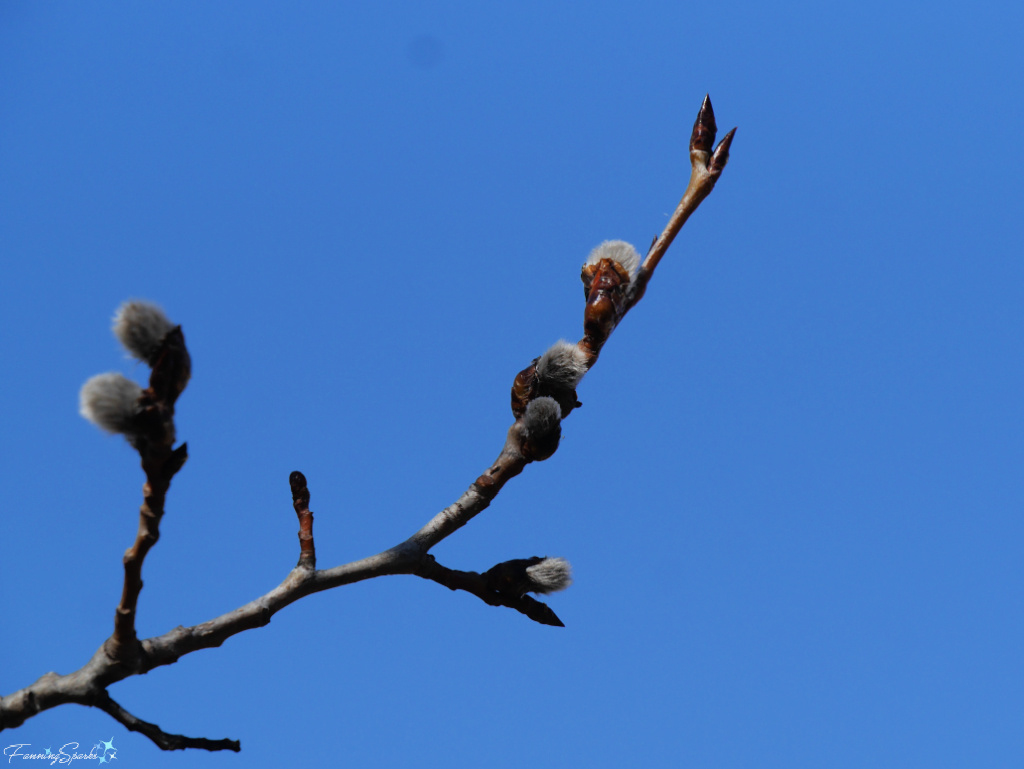
Spring’s arrival also marks the end of our first season in the Sunrise Trail house. The first time we viewed the property, in mid-September, it was wrapped in a palette of rich greens and blues.
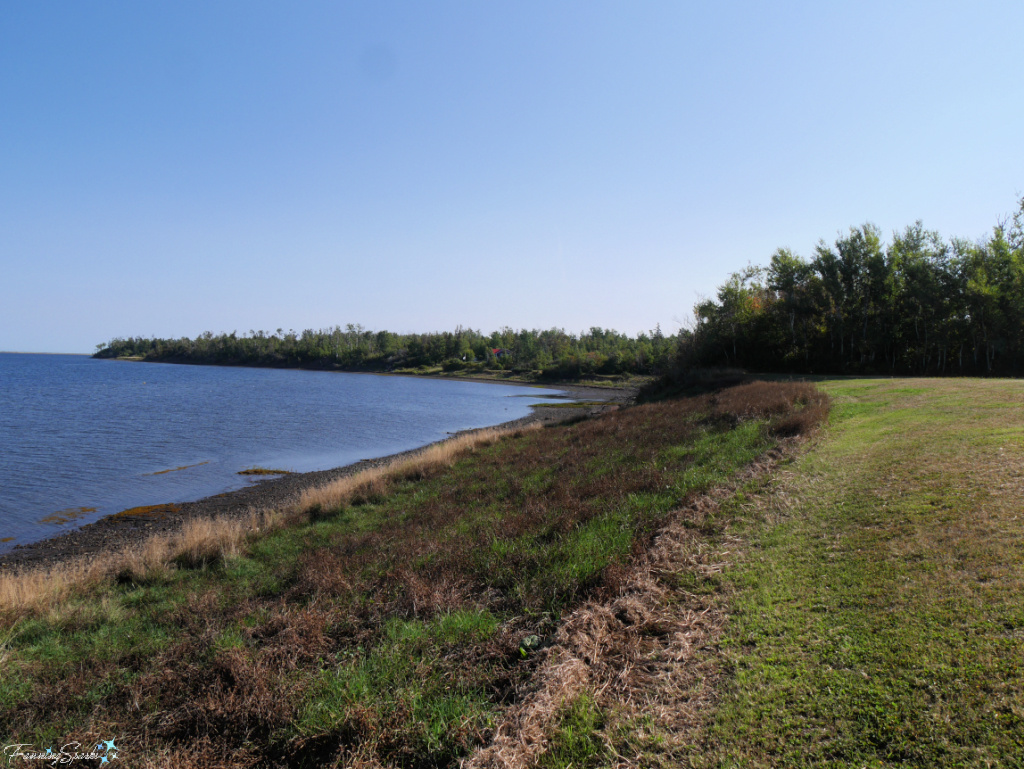
But it was nearly winter by the time we moved in (see Hello Sunrise Trail Nova Scotia! and A Moving Tip) and those gorgeous greens had already been replaced by beiges and browns. By mid-December, ice had started to form over the harbour replacing the rich ocean blues with sparkling winter whites.
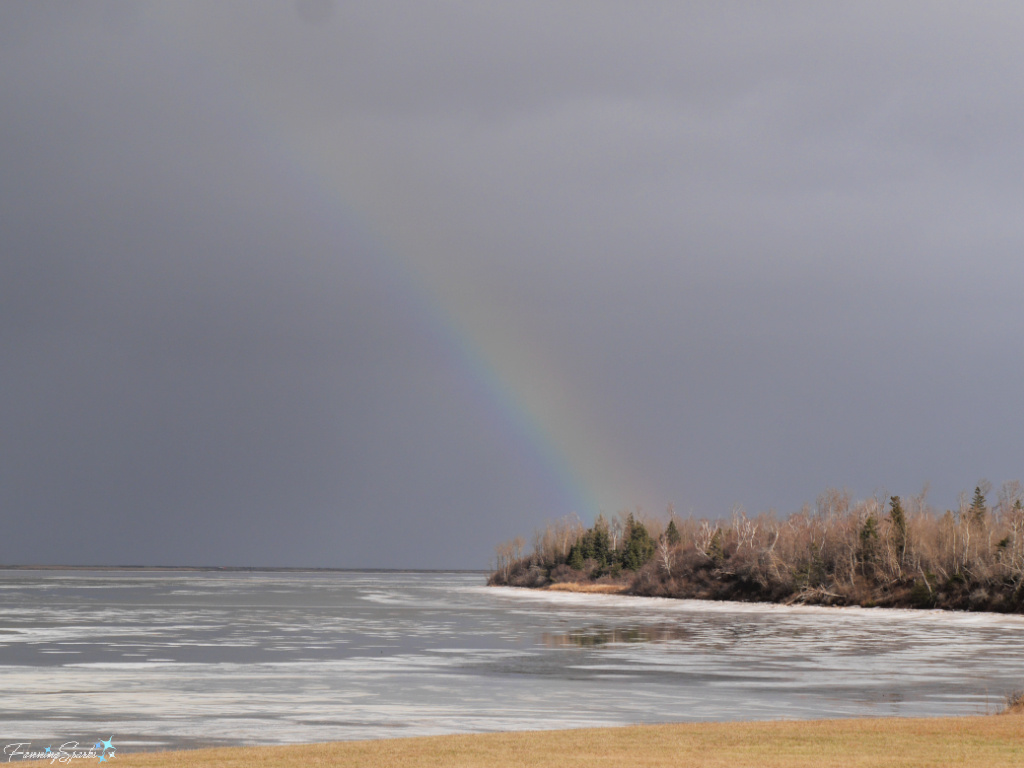
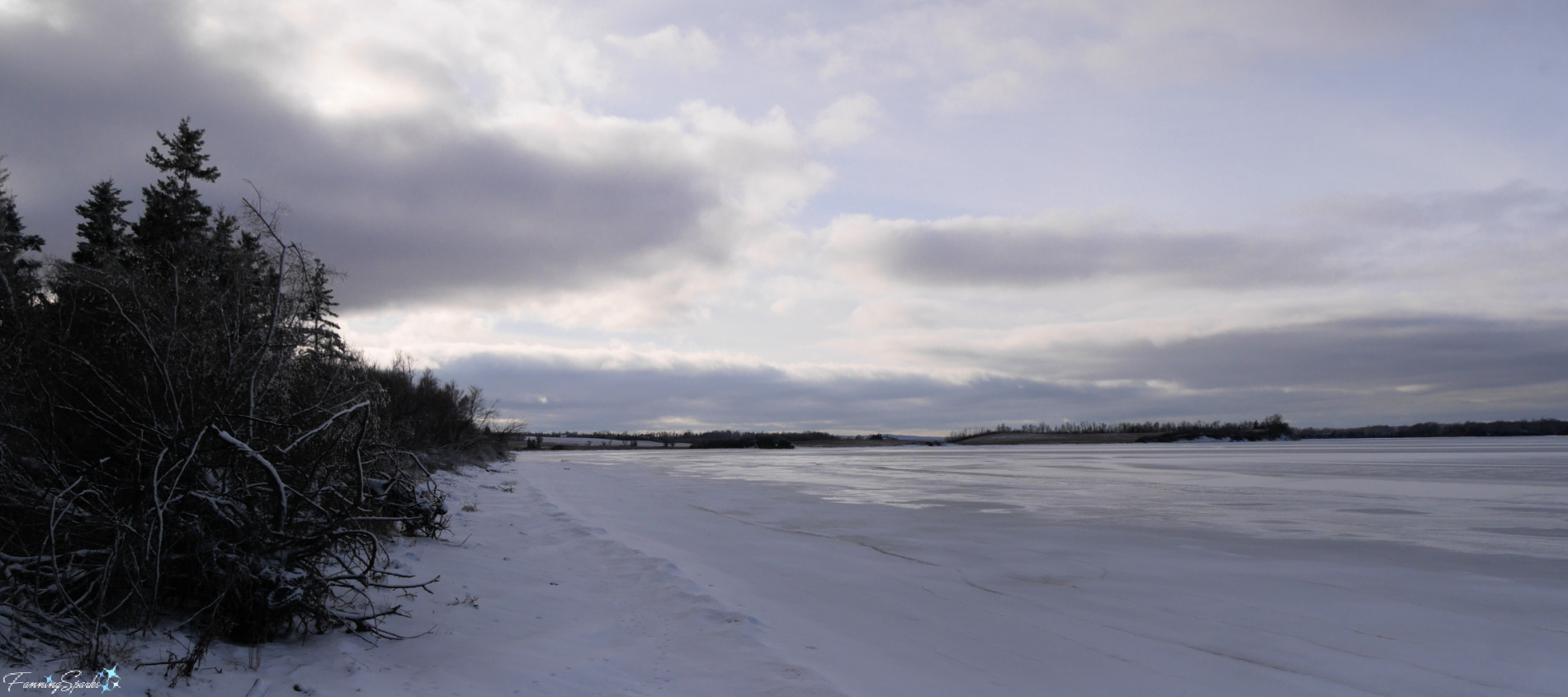
We’re deeply grateful for our panoramic view ― it has given us front-row seats for the autumn-to-spring seasonal transformation. Here’s how it looked when everything was covered in snow.
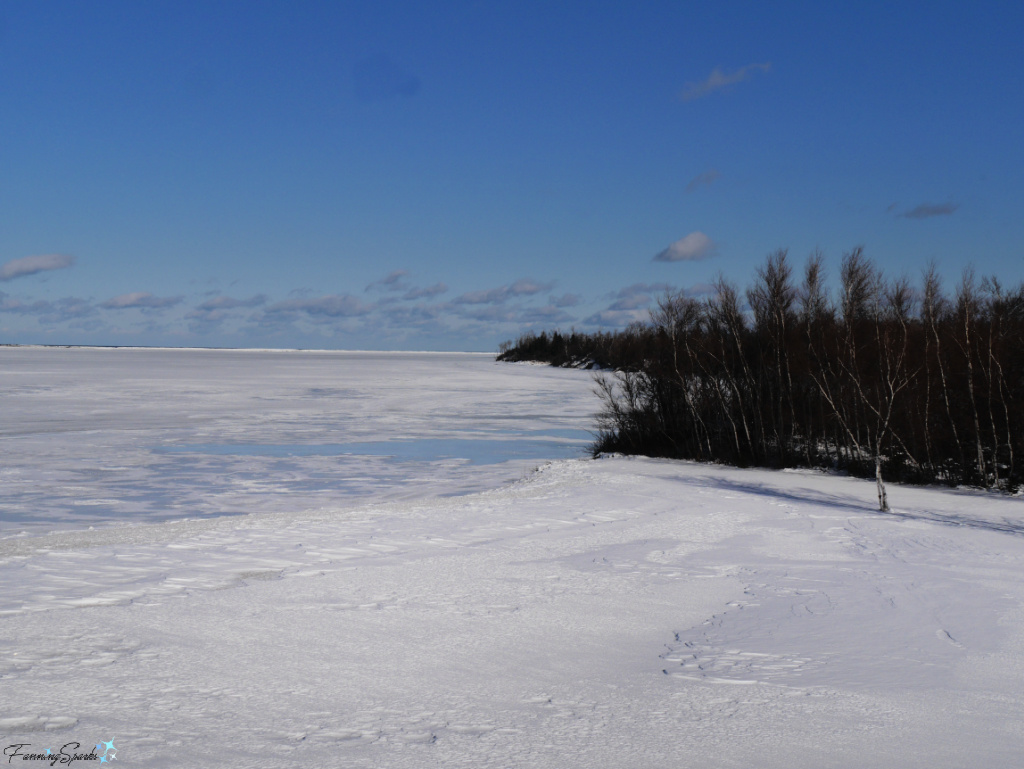
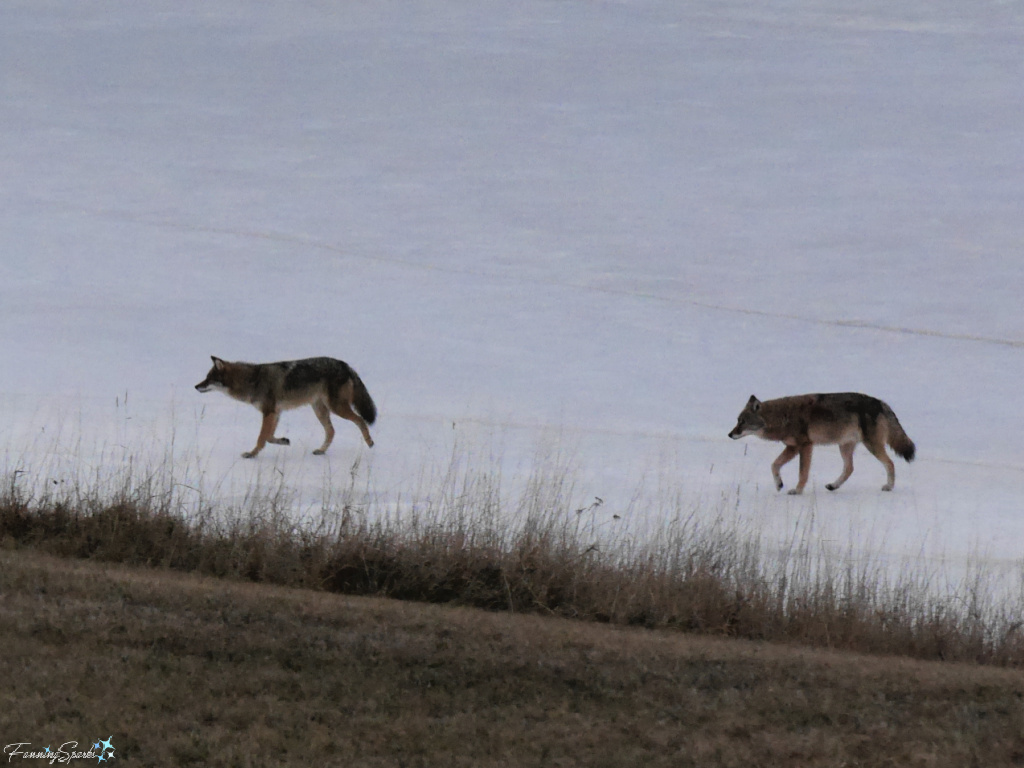
The ice and snow appeared and disappeared multiple times but, eventually, the entire harbour surface was frozen over. In fact, by mid-January, we spotted local wildlife walking across the ice-covered bay. This photo (taken from the safety of my studio) shows two coyotes (Canis latrans) prowling for prey along the frosty, gelid shoreline.
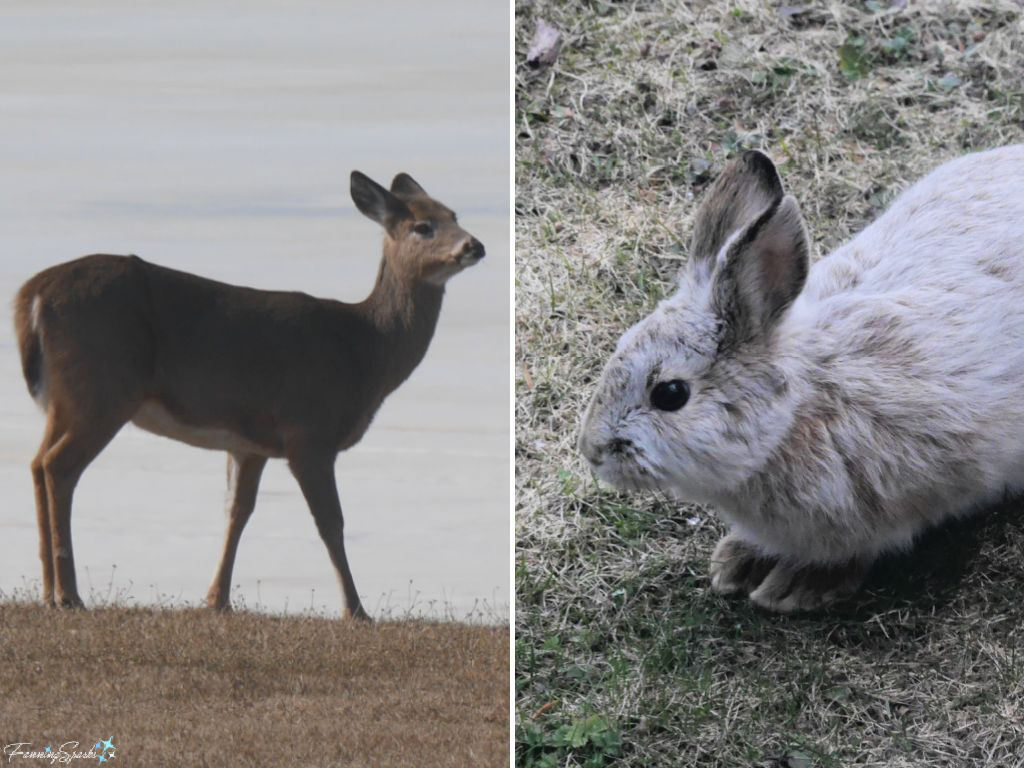
This white-tailed deer (Odocoileus virginianus) and snowshoe hare (Lepus americanus) successfully avoided becoming the coyotes’ dinner!
In last year’s blog post Frigorific and Other Cool Wintry Words, I admitted that while some people thrive in frigorific conditions, I appreciate the brumal beauty of the hibernal season but shun the cauldrife feeling. That brumal beauty was readily apparent during our first winter on Nova Scotia’s Sunrise Trail.
The chilly, white scene shown below was captured during a gentle snowfall or “snow flurry”. As explained by the USA’s National Snow and Ice Data Center in their article on the science of snow, “a snow flurry is snow that falls for short durations and with varying intensity; flurries usually produce little accumulation”.
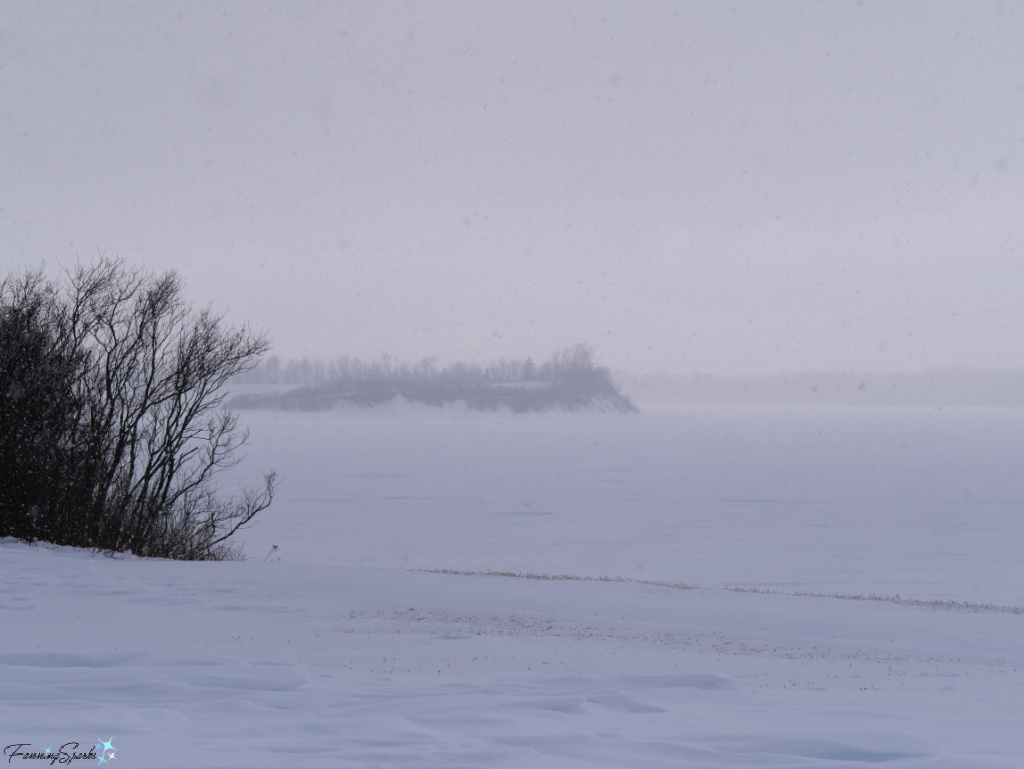
A snowstorm, on the other hand, “features large amounts of snowfall”. I don’t know which type of snowfall preceded this wintry scene but the snow-laden trees were undeniably beautiful.
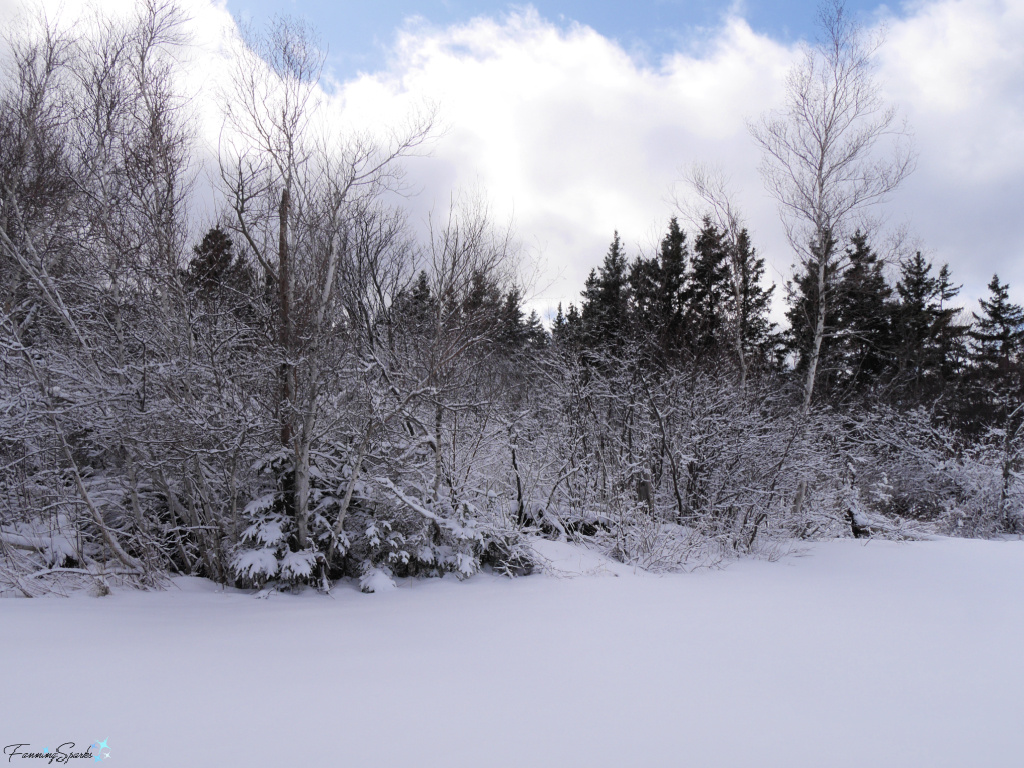
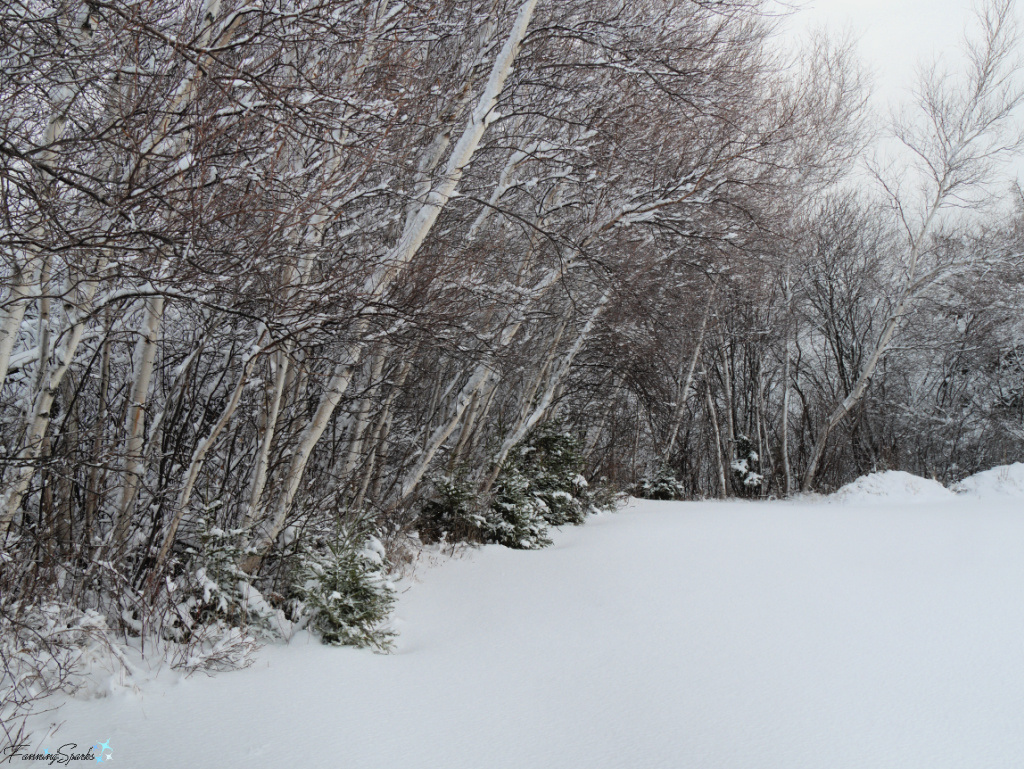
The Snow Science article also describes types of snow formations. “Once on the ground, snow is subject to various weather conditions, including blowing wind, changing temperatures, and long periods of shade or sunshine. In certain instances, these elements can literally change the shape of the snow surface.” Examples of snow formations include, for instance, crusts, penitents, sastrugi, snow barchans and snow bridges.
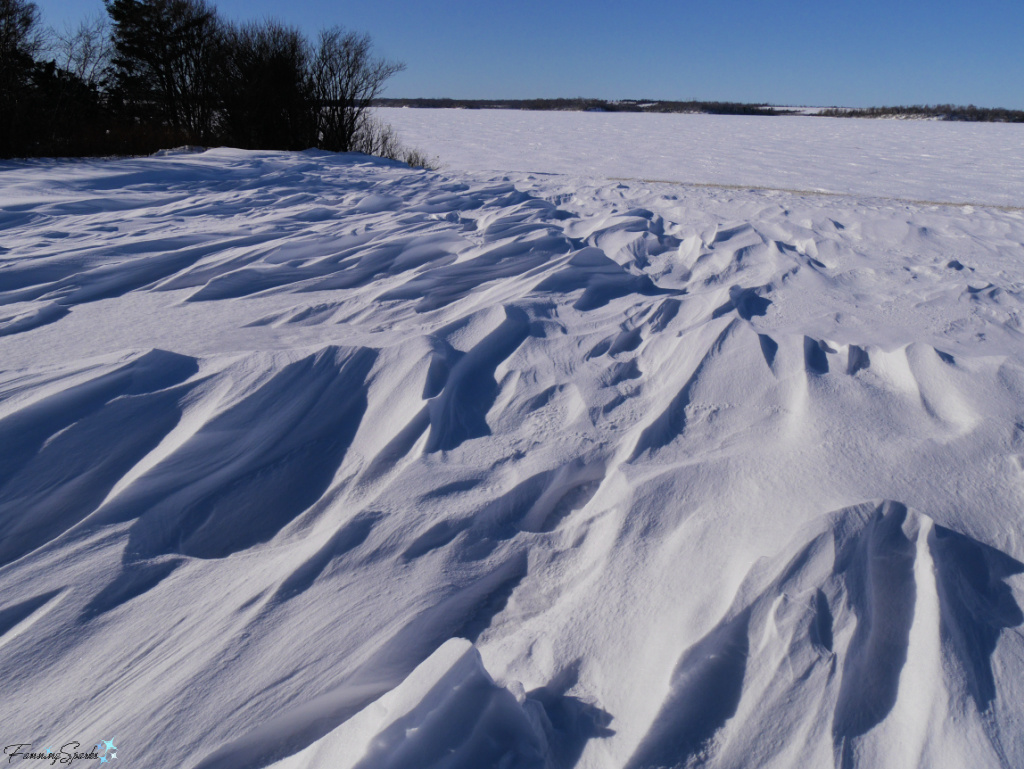
“Sastrugi occur when wind erodes or deposits snow in irregular grooves and ridges. Sastrugi sometimes result in delicate and fragile snow formations.” Strangely reminiscent of meringue, the unusual, organic forms of sastrugi were quite beautiful. This was especially true when the winter sun created a dramatic contrast between light and shadow.
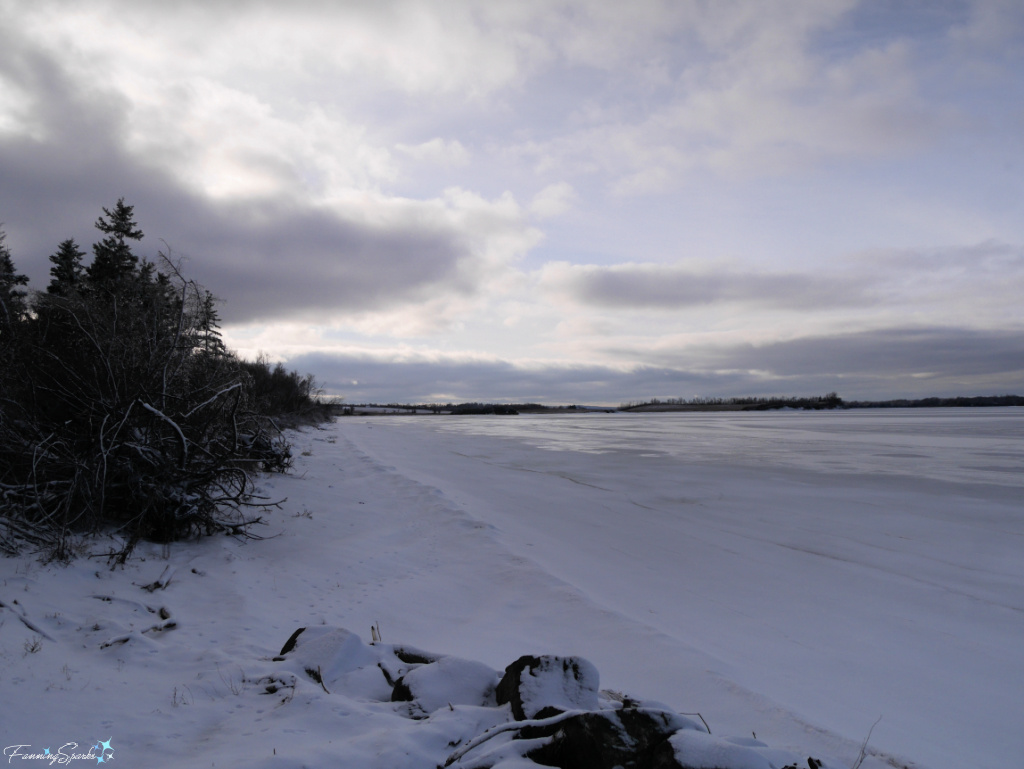
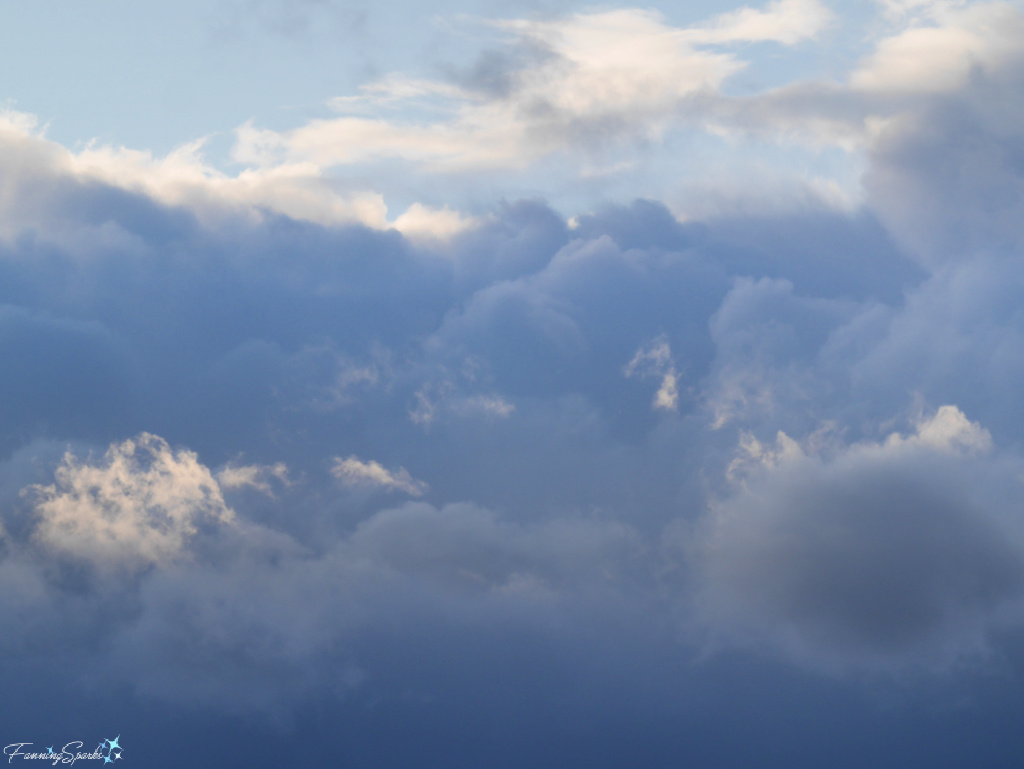
Speaking of drama, moody winter skies often stole the show.
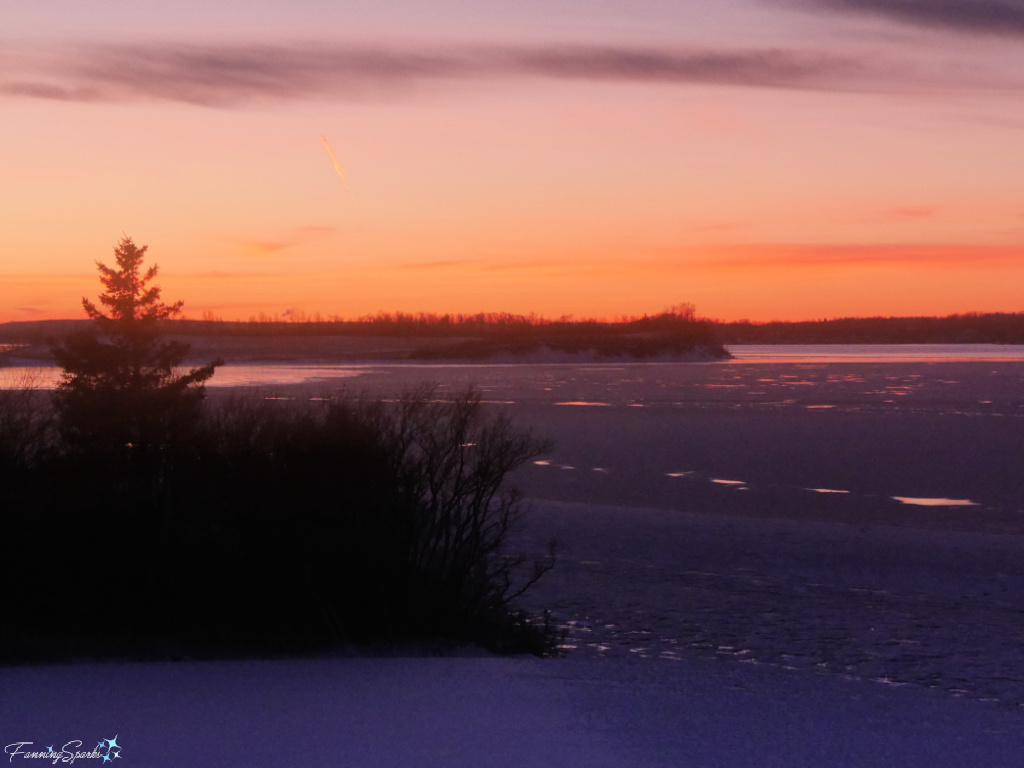
We’ve also witnessed some spectacular sunsets. The below photo was taken in mid-December, a few days prior to winter solstice. At that time of the year, the sun sets in the southwest at its most southerly point. From there, the sunset point shifts northward each day until it reaches its most northerly point, in the northwest, by summer solstice on June 21. This means the sun will be setting over the water directly in front of our main windows. We’ll be watching eagerly to see how this plays out over the next few months!
Splendid sunsets are undoubtedly some of Mother Nature’s most memorable moments. But the myriads of curious and beautiful details in the natural world is equally awe-inspiring. Ice formations, such as ice sheets, icicles, icefalls and ice pancakes, are great examples.
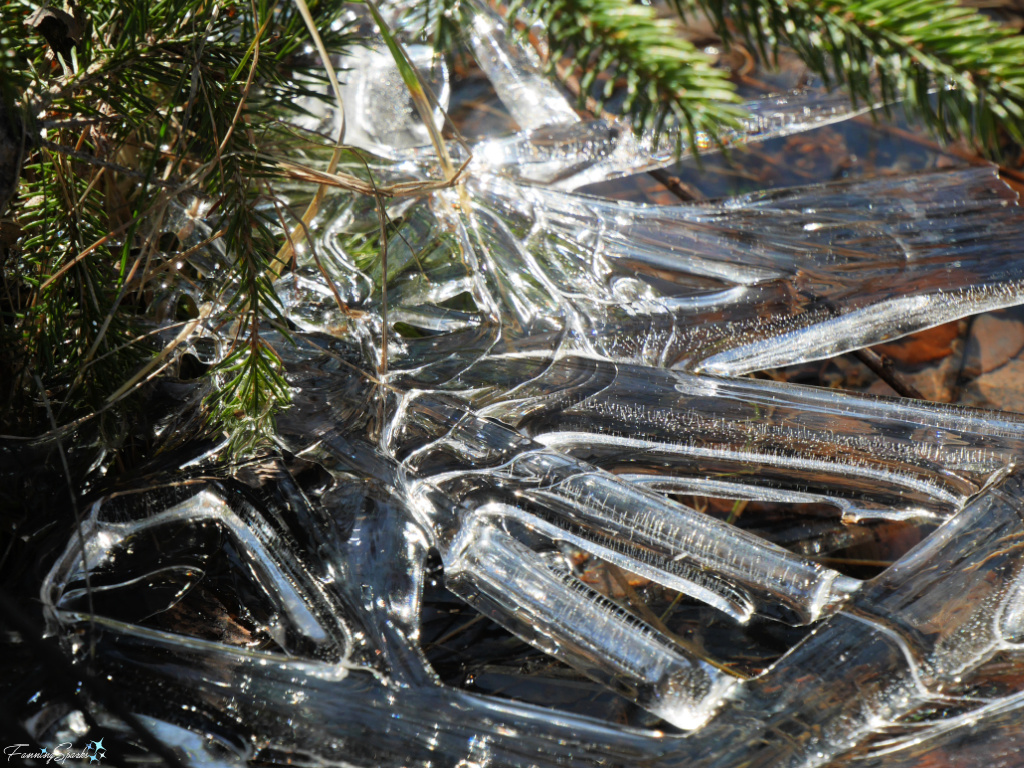
“Ice sheets” are paper-thin layers of ice which form on the surface of water pooled around the base of branches, tree trunks and other plant matter. “These intricate and delicate features form when conditions fluctuate between above freezing, below freezing, and way below freezing. The melting, thawing, and refreezing create an assortment of these ice sheets to admire.” explains the Schlitz Audubon Nature Center in their article The Beauty of Ice: Winter Seasonal Sightings.
The intricate, organic patterns of ice sheets were surprisingly beautiful especially when caught in the glitter of winter sunlight.
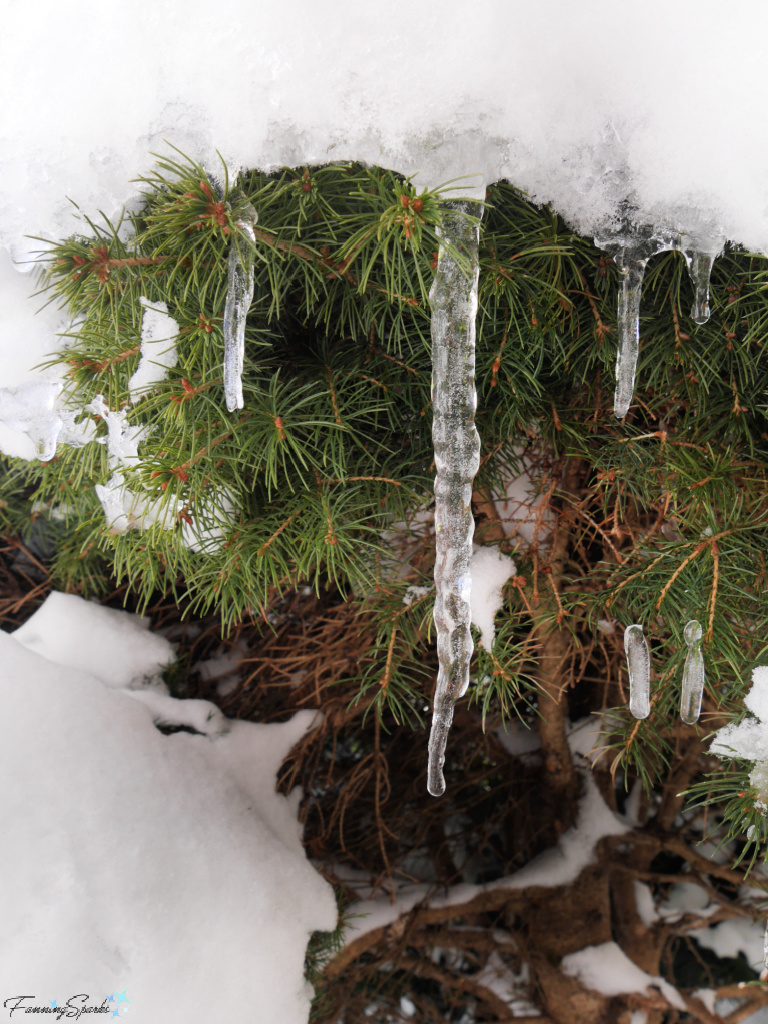
 “Icicles” ― hanging spikes of ice which form when dripping water freezes ― are a well-known ice formation.
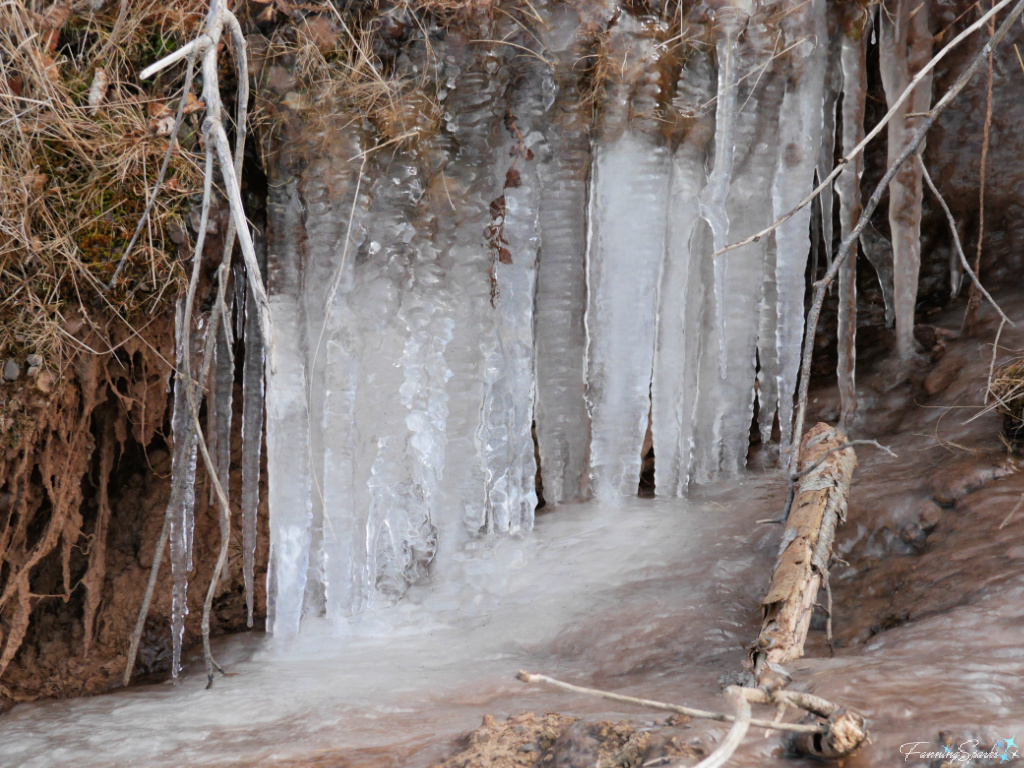
A frozen waterfall is commonly called an “icefall”. Shown below is a small icefall spotted along the shoreline.
In mid-March, the impact of rising temperatures became evident as the ice cover on the harbour started to break up. The large, flat pieces of ice visible in these photos are drifting “ice floes”.
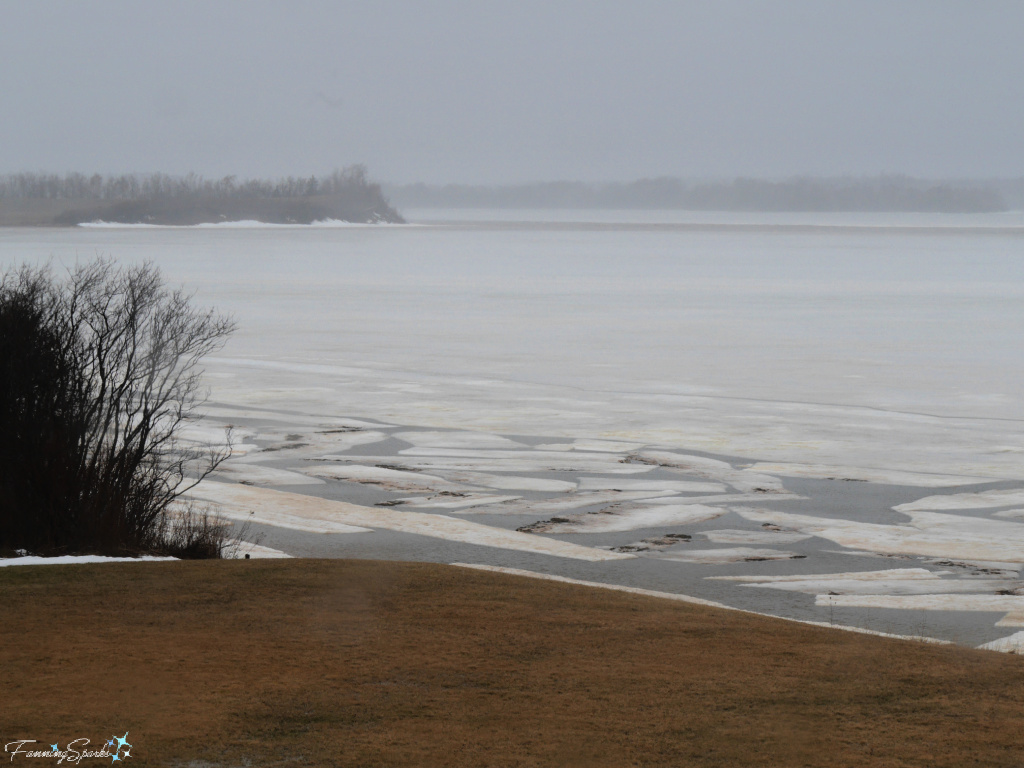
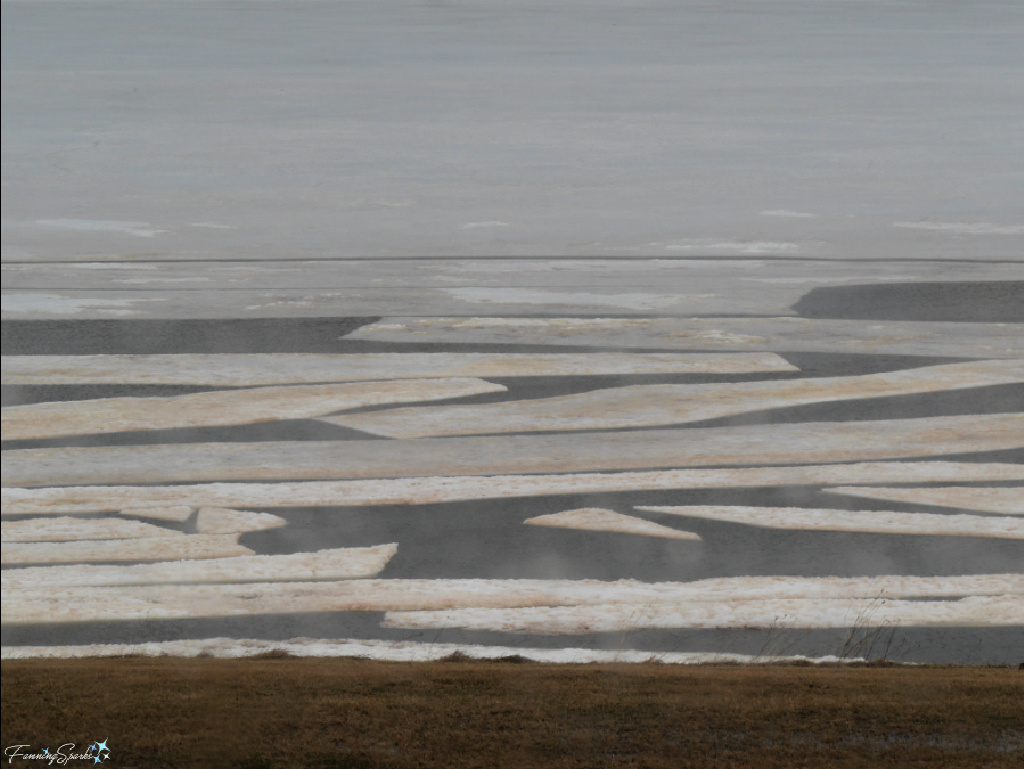
It was amazing to see how quickly the ice disappeared. One morning, this section of the harbour looked like this…
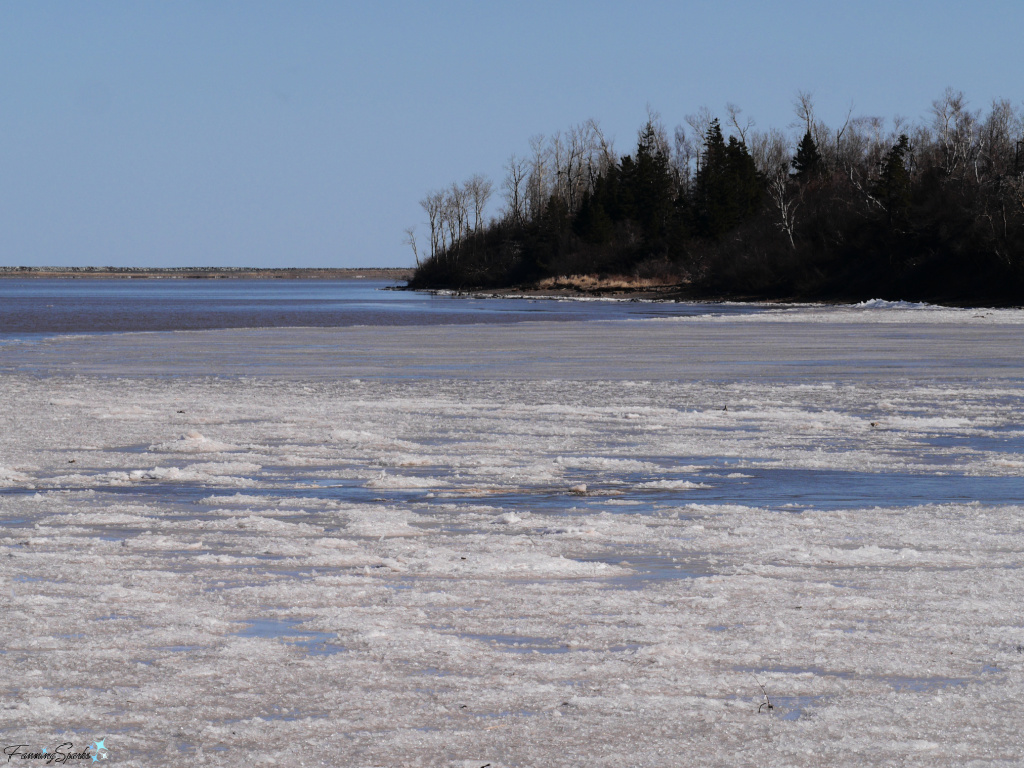
… and a few hours later the wind and tide had carried all that ice out to sea.
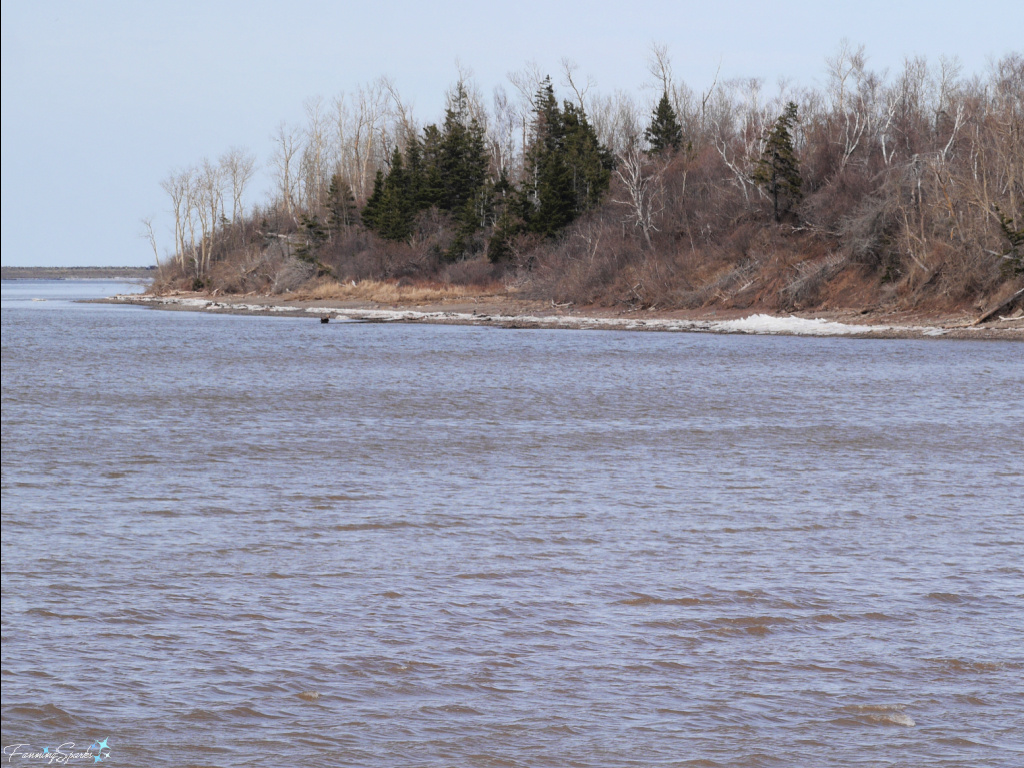
The speedy transition changed the landscape entirely. The warmer temperatures also made the shoreline more accessible.
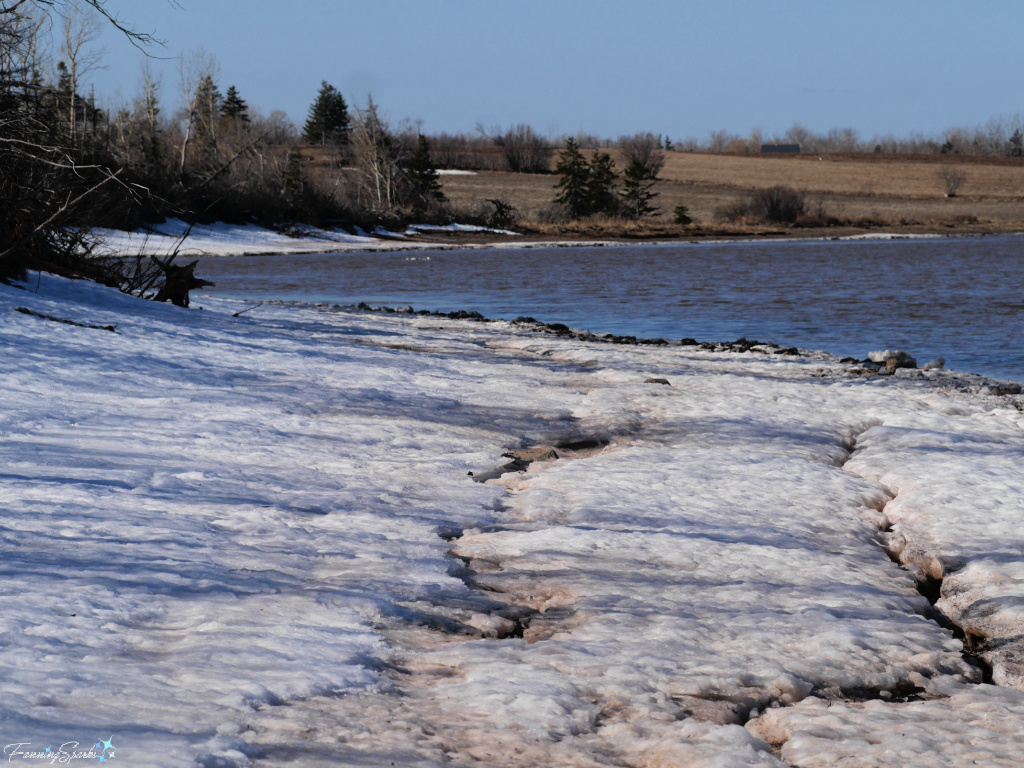
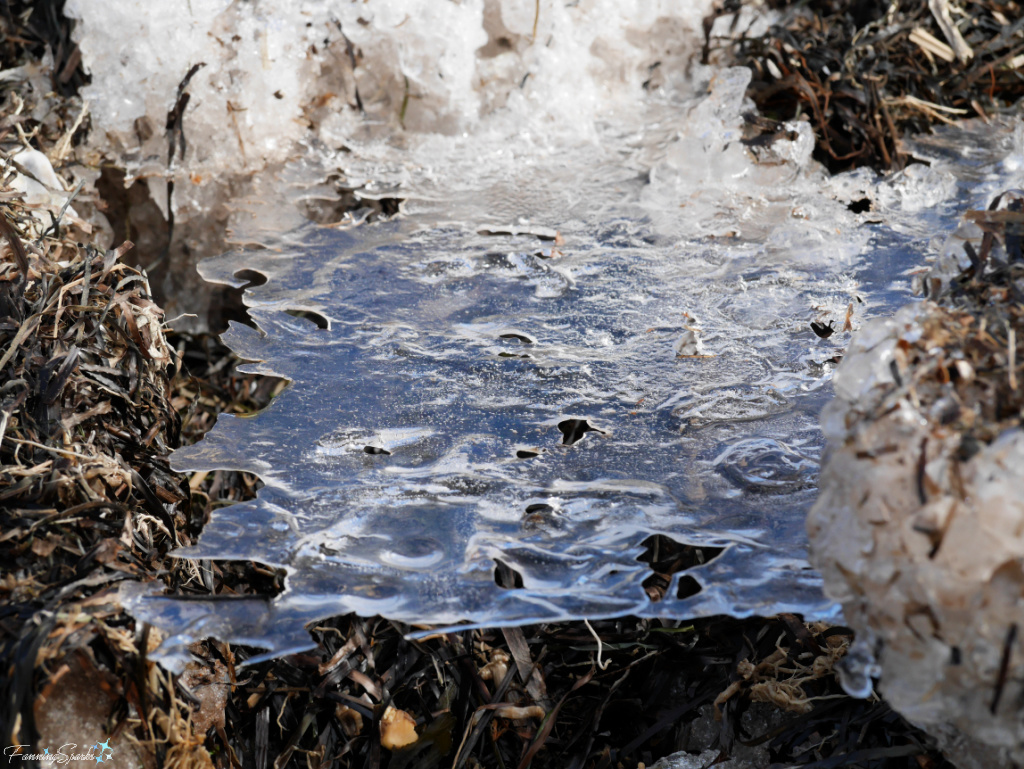
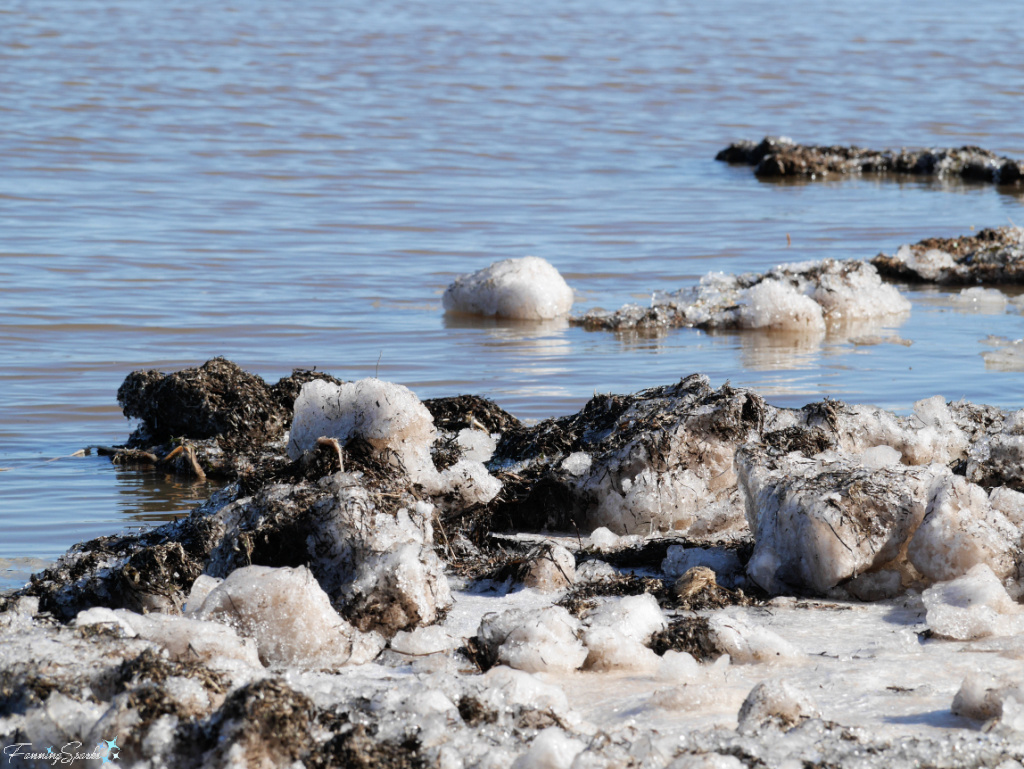
Seaweed and other organic matter mixed with the receding ice to create some interesting visual displays.
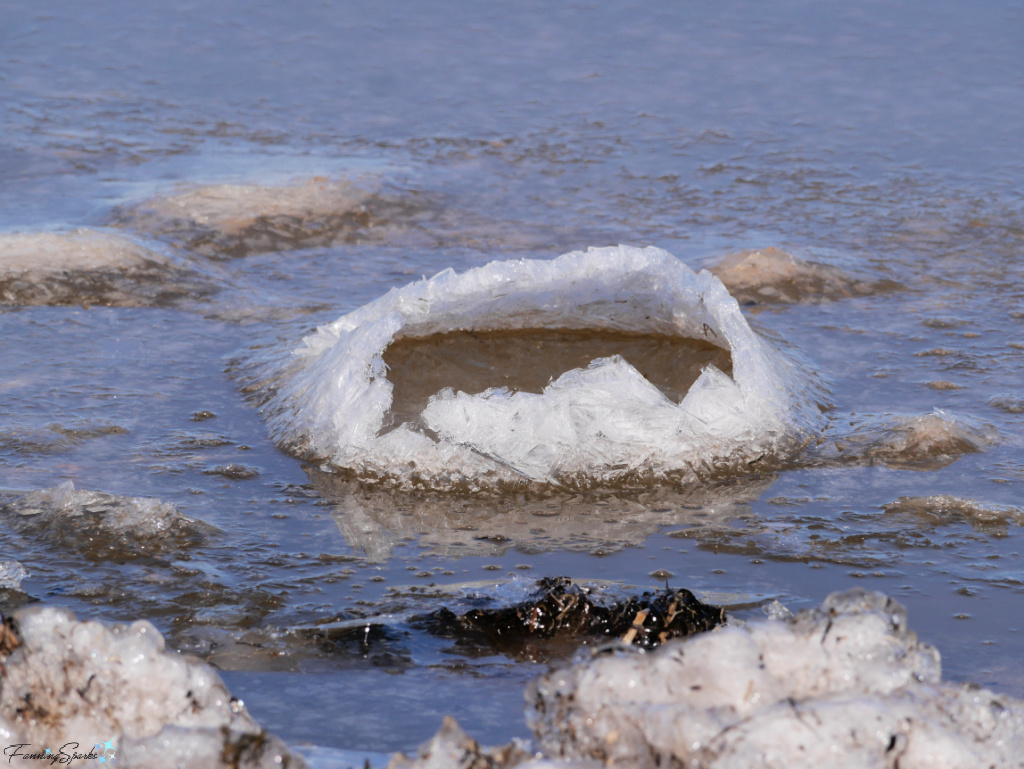
The most interesting ice structure I witnessed was the partial dome crust shown below. Measuring about a meter (3.3 ft) in diameter, it was amazingly symmetrical. Turns out, this type of ice formation is known as an “ice pancake”. As explained by The Weather Network on their video Ice Pancakes Are Popping up in Canadian Waters, Here’s Why They Happen, “Ice pancakes form in turbulent waters when frigid air begins to freeze the surface forming slush called frazil. This is what makes up the distinctly frothy edges. As the frazil slush starts to freeze into larger plates they are kept separate by a layer of lingering slush. Collisions maintain the frazil rim and cause any jagged edges to gradually smooth and become pancake shaped.”
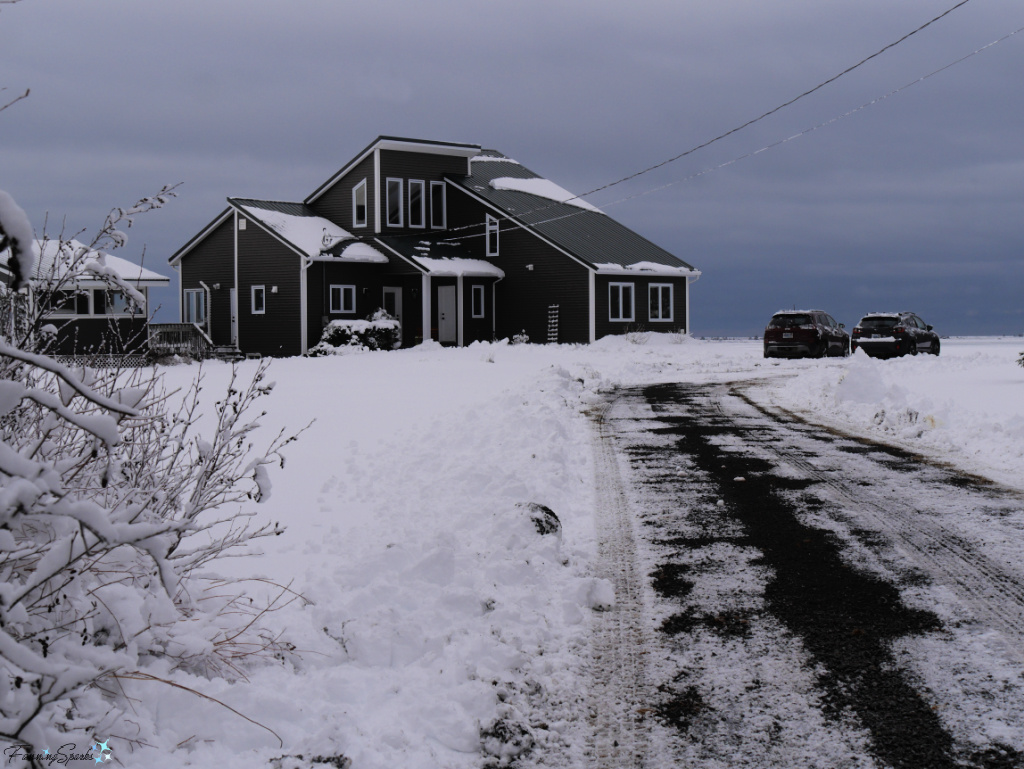
Our first winter on the Sunrise Trail has been both educational and entertaining. But this story would be incomplete without addressing the practical considerations of a northern winter. Lucky for us, we found a reliable, conscientious, local snow-plowing service to keep the driveway cleared. Thank you Pat!
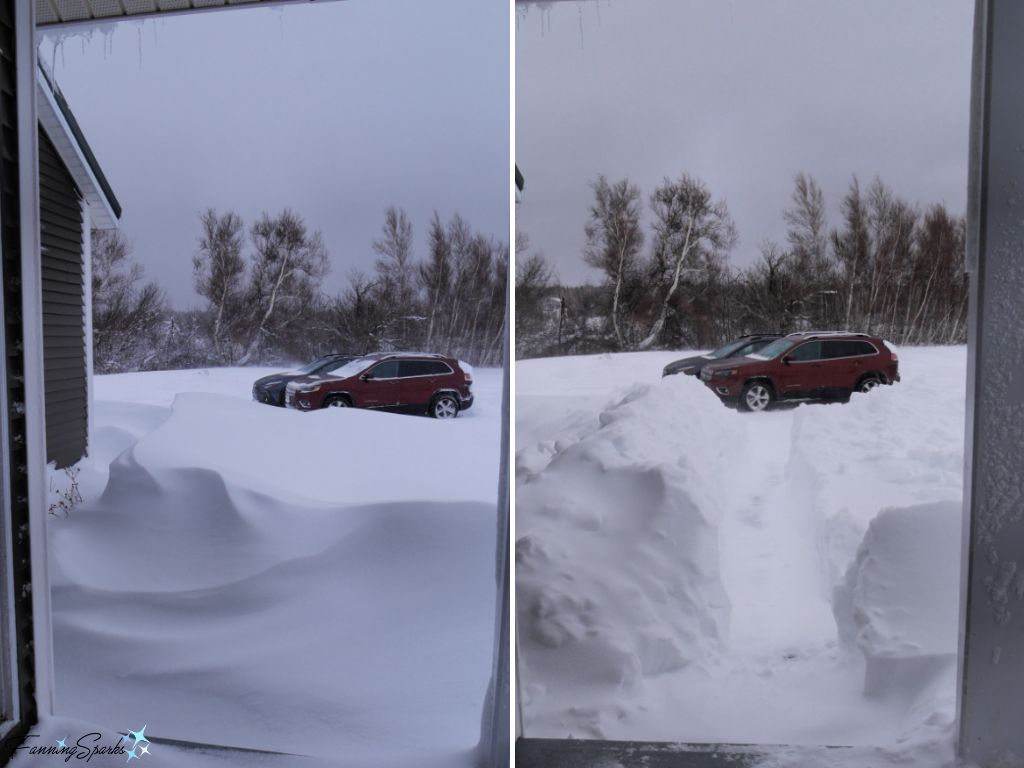
Although it seemed to be never-ending at the time, shoveling the walkways was quite manageable. The below photos were taken in mid-February after the worst snowstorm of the season. Astonishingly, that snow drift was nearly shoulder-height!
This wasn’t our first northern winter ― we lived in Nova Scotia for over 40 years, in the US Midwest for 7 years and Germany for 3.5 years ― but it was the first one in our retirement. We’re grateful for the time to notice and appreciate the seasonal rhythms, patterns and colours in this beautiful, natural place.
That being said, I’m ready for Mother Nature’s great comeback ― Come On Spring!
More Info
Previous blog posts mentioned in this blog post include:
. Hello Sunrise Trail Nova Scotia!
. A Moving Tip
. Frigorific and Other Cool Wintry Words.
The following articles were consulted in the writing of this blog post:
. Snow Science article on the National Snow and Ice Data Center (at the University of Colorado Boulder) website
. The Beauty of Ice: Winter Seasonal Sightings article on the Schlitz Audubon Nature Center website
. Ice Pancakes Are Popping up in Canadian Waters, Here’s Why They Happen video on The Weather Network
. Various Wikipedia entries.
Today’s Takeaways
1. Seasonal sightings are observations of nature, such as wildlife behavior, weather events or botanical changes, which occur during a particular time of the year.
2. The myriads of curious and beautiful details in the natural world, such as snow and ice formations, is awe-inspiring.
3. Make time to notice the rhythms, patterns and colours of the seasons.


2 Comments
Thanks for your note. I’m so glad you enjoyed the blog post!
Your writing is so fluent and engaging that I felt as if I were experiencing winter on the Sunrise Trail right there with you. The way you describe the landscape and wildlife is captivating and never dull, and it kept me reading with curiosity right to the end. Together with your beautiful photos, this post was a truly delightful reading experience. Thank you for sharing it from North America!