
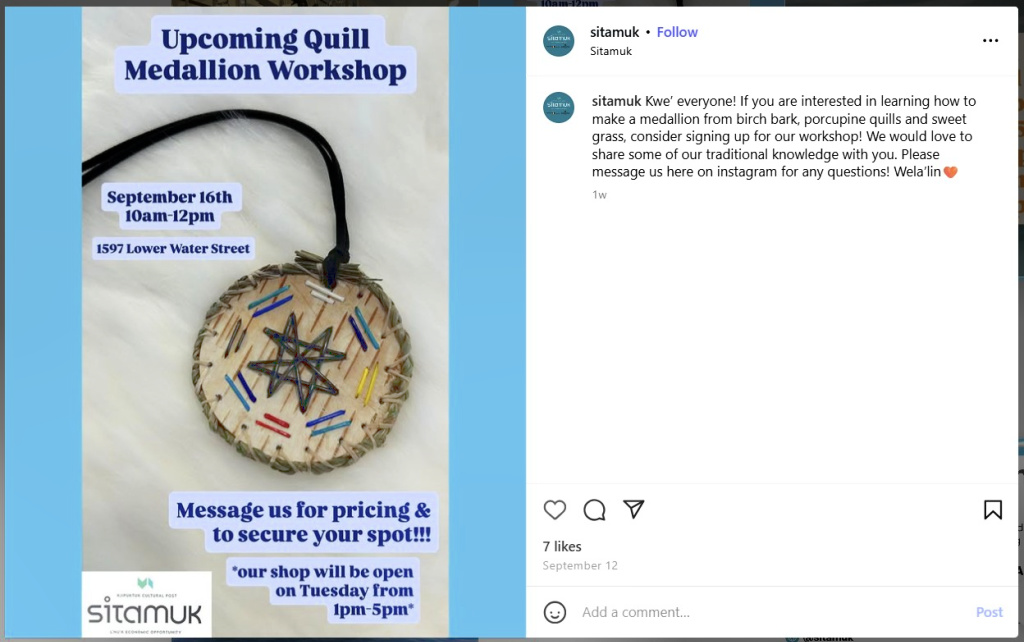
A recent walk along the Halifax waterfront revealed an exciting new maker opportunity ― a Quill Medallion Workshop at Sitamuk Kjipuktuk Cultural Post. This small storefront, sponsored by the Mi’kmaw Native Friendship Centre, showcases beautiful, “authentically-made Mi’kmaw and Indigenous arts, crafts, and merchandise” and, as noted in their 2022 press release, aims to “strengthen representation, connection, and opportunity for Indigenous communities”.
The Quill Medallion Workshop offers participants an opportunity to “make a medallion from birch bark, porcupine quills and sweet grass” while learning about the traditional Mi’kmaw art of porcupine quillwork.
I’ve wanted to try my hand at Mi’kmaw quillwork ever since meeting Cheryl Simon at Sherbrooke Village―a living museum on the Eastern Shore of Nova Scotia. See my previous blog post Printer’s Devil for a Day to learn more about Sherbrooke Village.
Cheryl was demonstrating the art of Mi’kmaw quillwork in which porcupine quills are used to embellish objects typically made of birch bark. This unique art form was also the subject of my previous blog post The Mi’kmaw Art of Porcupine Quillwork. As noted in that post, quilling has been practiced by the Indigenous peoples of North America for centuries.
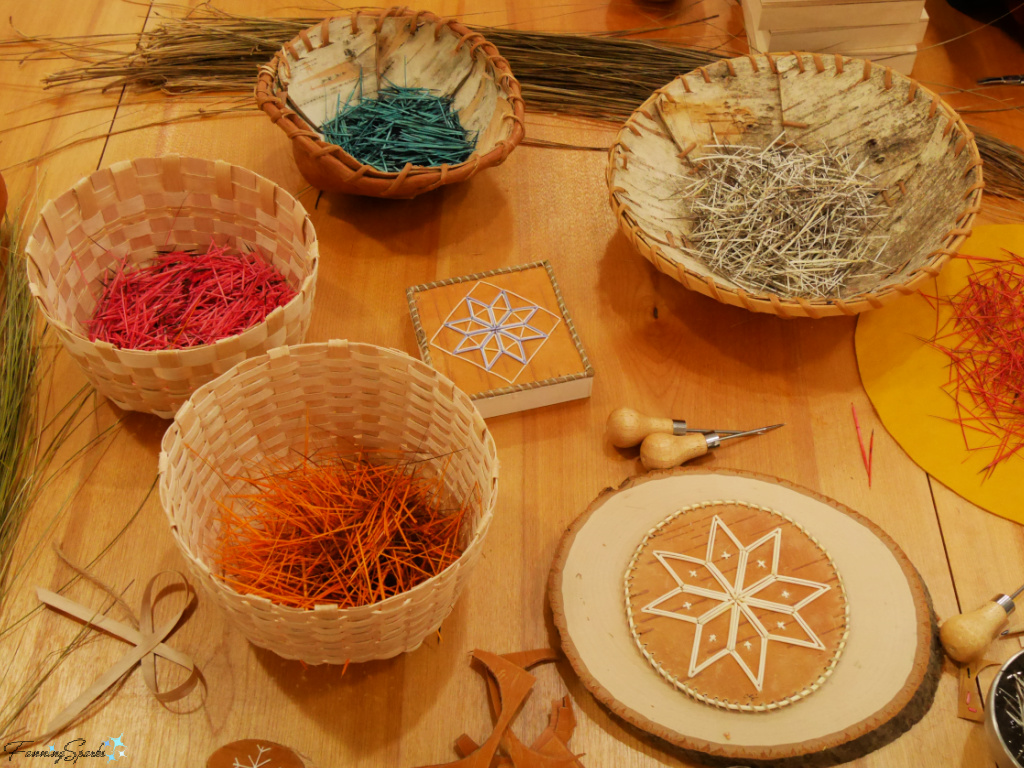
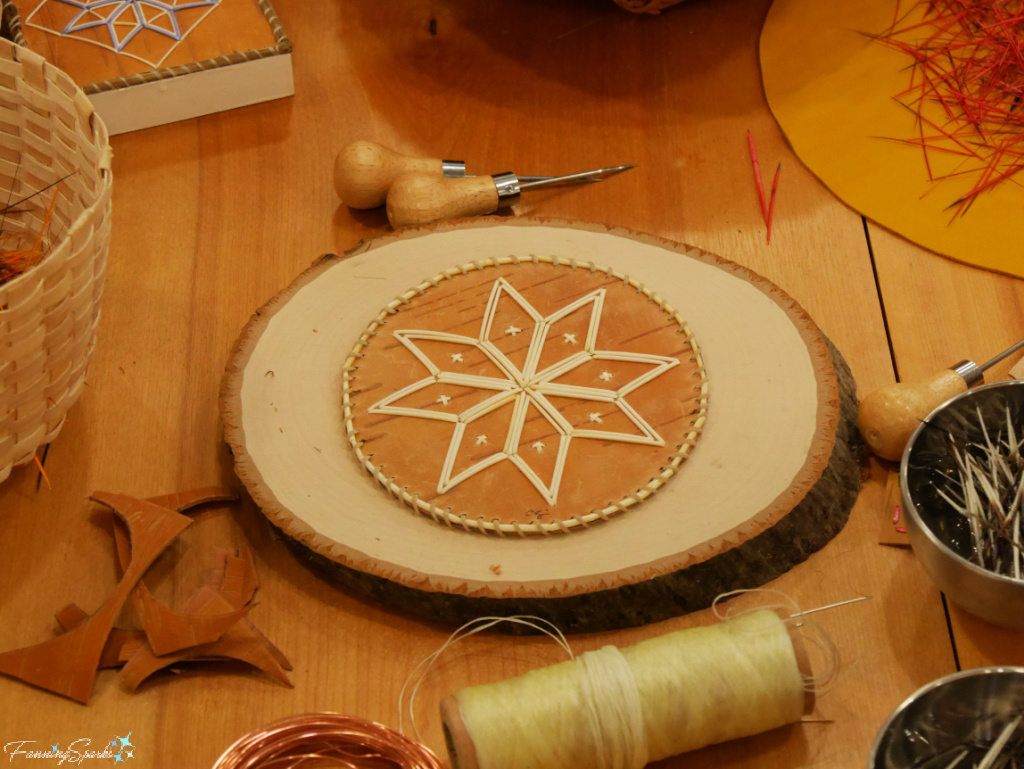
Cheryl was surrounded by supplies and completed quillwork pieces during her demonstration.
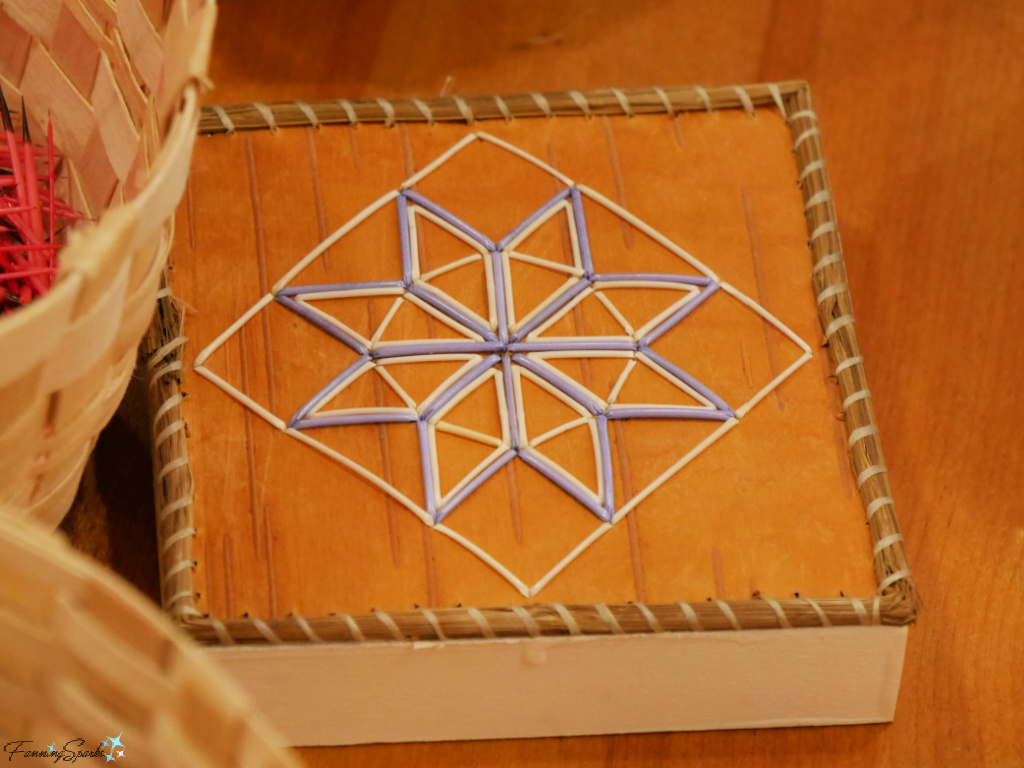
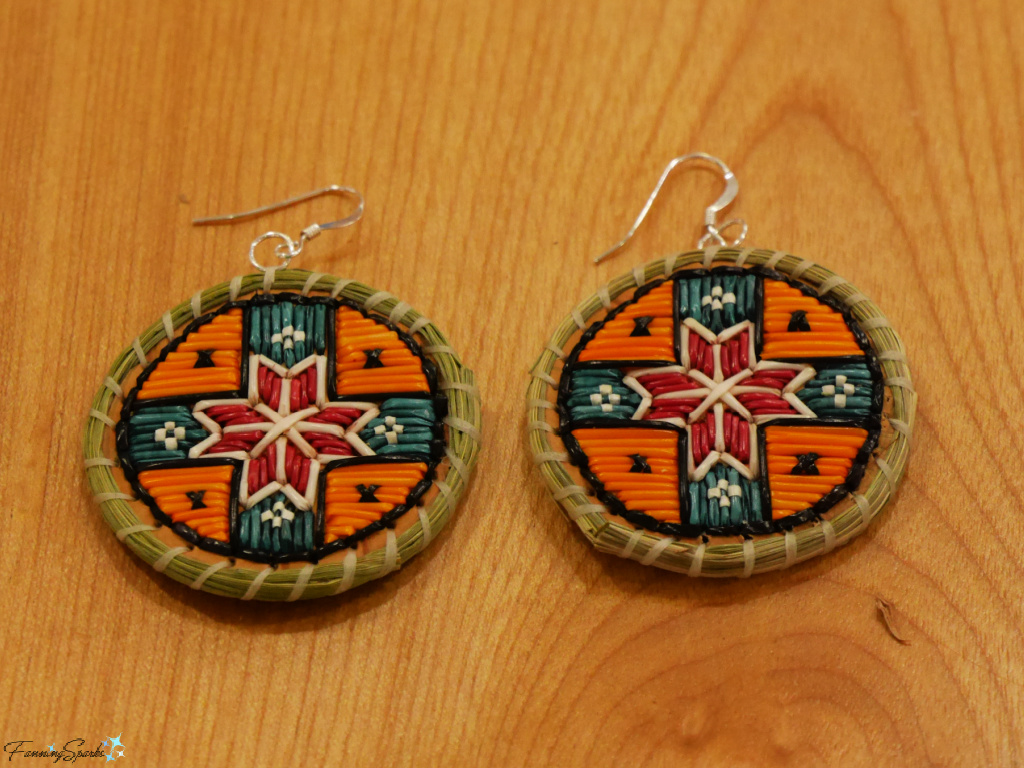
Cheryl explained the entire process of quilling from gathering materials to finishing a piece. We learned that although only a few materials are needed, a great deal of effort is required to gather and prepare them in the authentic way. Porcupine quills, birch bark, sweetgrass, spruce root and sinew are not simply purchased from the local craft store―they are harvested from nature in keeping with the Mi’kmaw concept of netukulimk. This concept “describes the use of natural bounty of land for self-sustainment, and the responsibility of maintaining the balance, well-being and mutual respect between people, plants, animals, and the environment” as described in the Ta’n a’sikatikl sipu’l | Confluence exhibition at the Art Gallery of Nova Scotia. The big, important idea behind the concept of netukulimk is that “Mi’kmaw communities have traditionally been stewards of the land, rather than owners”.
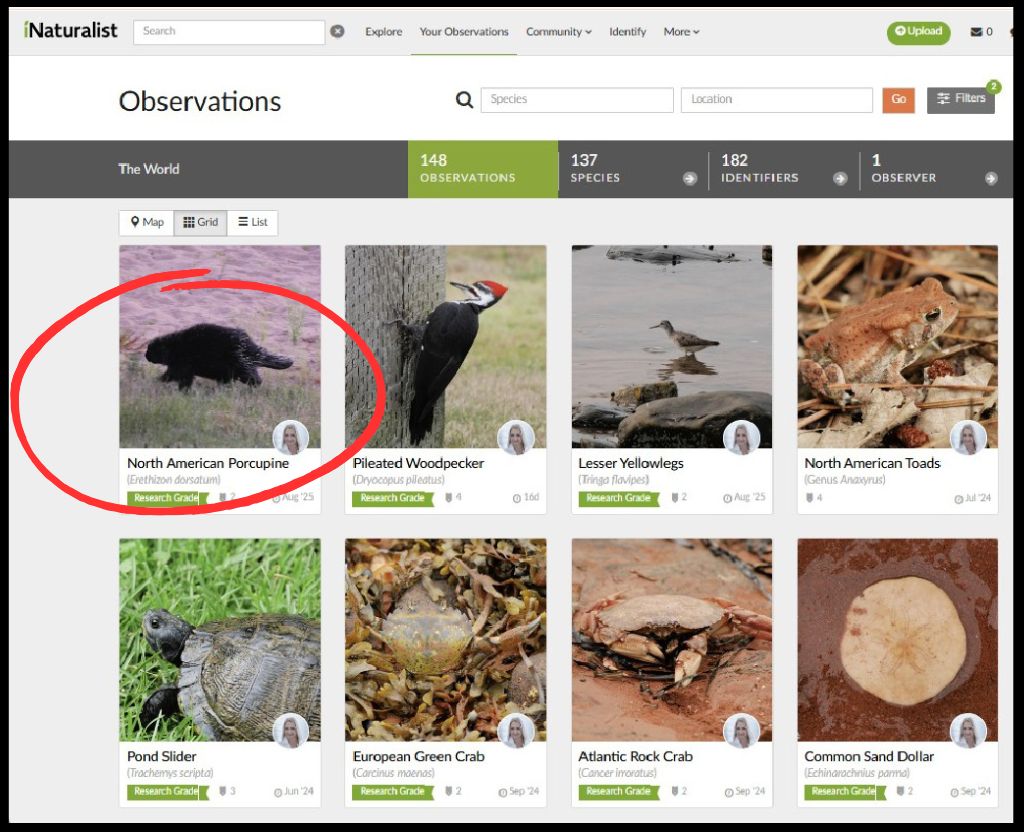
Speaking of porcupines, I spotted one running across the yard a few weeks ago. I didn’t get a great shot but here it is ― a North American Porcupine Erethizon dorsatum ― on my iNaturalist Observation dashboard. I’ve raved about iNaturalist more than once on the blog―see Seek to Identify Wildlife with this Fun App.
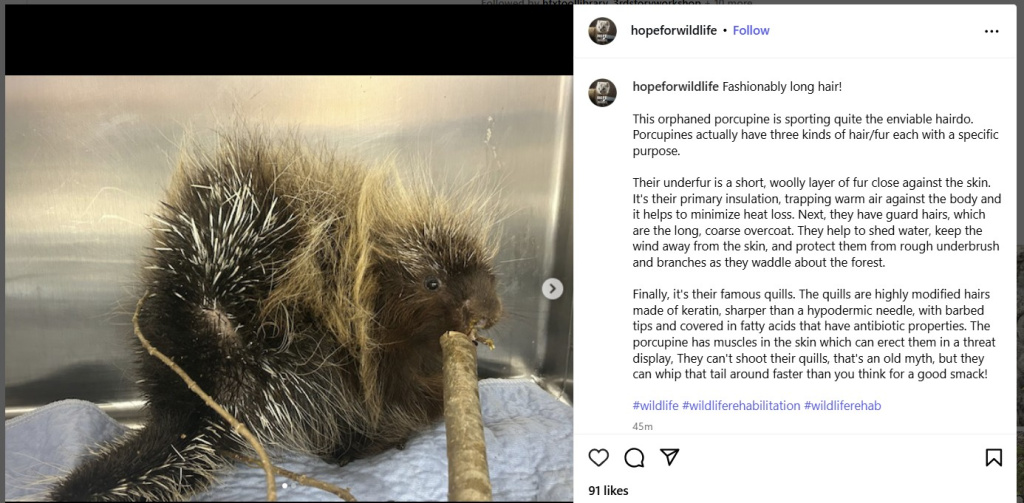
A recent Instagram post from Hope for Wildlife provides a fascinating insight into the porcupine’s quills. The caption reads “This orphaned porcupine is sporting quite the enviable hairdo. Porcupines actually have three kinds of hair/fur each with a specific purpose.
Their underfur is a short, woolly layer of fur close against the skin. It’s their primary insulation, trapping warm air against the body and it helps to minimize heat loss. Next, they have guard hairs, which are the long, coarse overcoat. They help to shed water, keep the wind away from the skin, and protect them from rough underbrush and branches as they waddle about the forest.
Finally, it’s their famous quills. The quills are highly modified hairs made of keratin, sharper than a hypodermic needle, with barbed tips and covered in fatty acids that have antibiotic properties. The porcupine has muscles in the skin which can erect them in a threat display. They can’t shoot their quills, that’s an old myth, but they can whip that tail around faster than you think for a good smack!”
It’s common practice for quillers to harvest quills from porcupines that have been killed by vehicles on the roads. Here’s proof ― an Instagram post by Quill Bill Creations asking for help in locating roadkill. The caption reads “Yep, Bozeman area fam and peoples! I need some help, please…need porcupine quills for my art. Need to harvest a lot of them buggerz for myself so that I can ensure that I have what I need for some special projects coming up. Happy to drive 30mi in either direction.
All I need is a hwy/direction and nearer mileage/mile-marker…pin drop in the general vicinity works too! Happy to come by ASAP if you throw one in the back of your truck.”
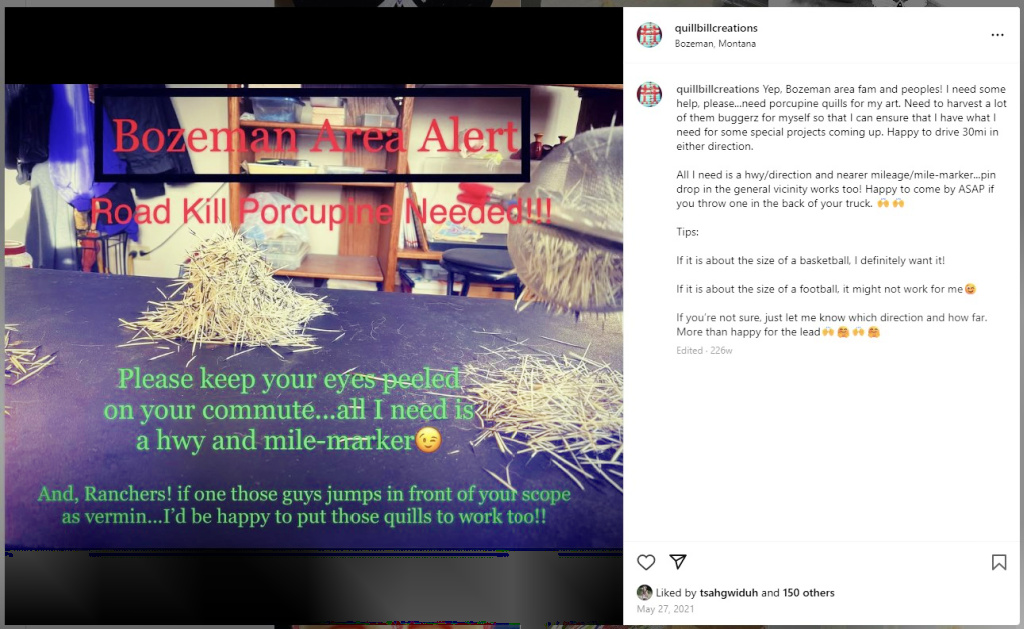
“Porcupine quill gathering takes patience and technique, to sensitively collect the quills without damaging them or hurting ourselves. The most common technique to find porcupines is to resourcefully collect quills from animals that have been hit by cars, to honour them.” states an exhibit card at the Sircle of Sisters exhibit at the Art Gallery of Nova Scotia.
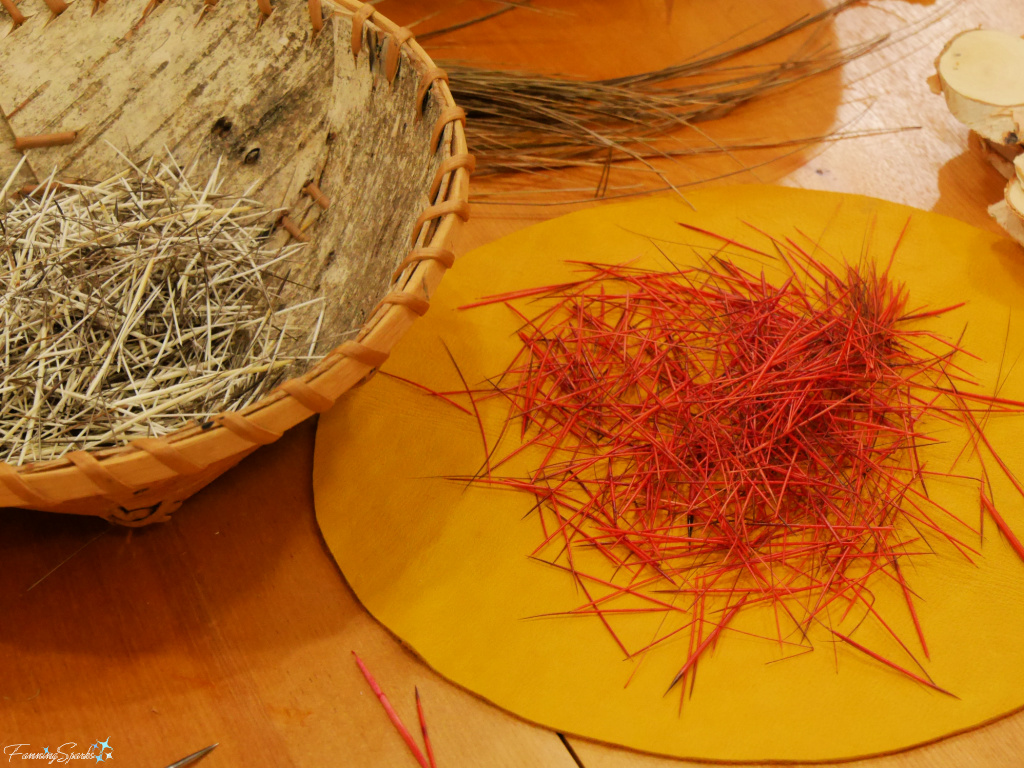
Quilling artists often dye porcupine quills in a variety of colors. Here’s a closer look at some of the natural and dyed quills Cheryl was using.
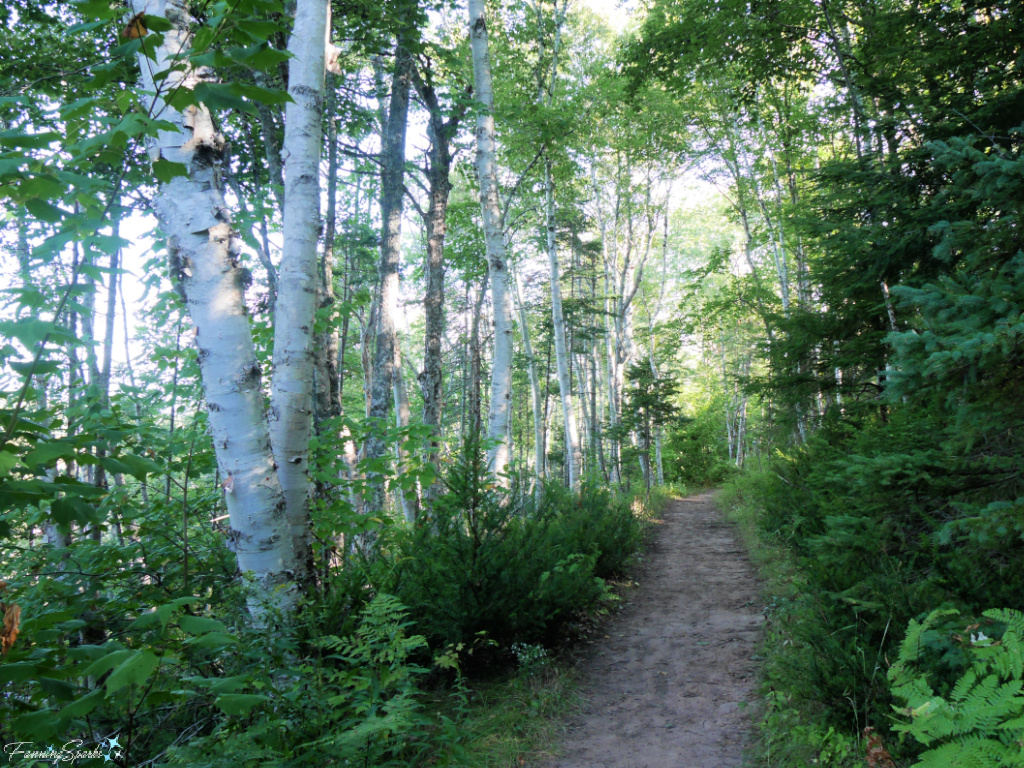
Bark from birch trees, more specifically White Birch (Betula Papyrifera), is often used as the foundation for Mi’kmaw quillwork. The White Birch, also known as “paper birch”, can be identified by its papery bark which peels off in curls and is bright white with black markings.
I recently spotted this beautiful grove of birch trees along the trail in the Bonshaw Hills Provincial Park on PEI.
“Birch bark harvesting is sustainable because the trees heal. Birch bark harvesters are well familiar with the areas they return to and make sure to never take too much from one area. Summer bark is thinner and used for the front of the quillwork, while winter bark grows thicker and is used on the back.” explains the Sircle of Sisters exhibit.
A closer look shows Cheryl used a circular piece of birch bark (sitting on top of the wood slice) as the base for the below medallion.
In her Canadian Encyclopedia article on Sweetgrass, author Nancy J. Turner writes “Sweetgrass is a fragrant grass with long, satiny leaves. Also known as vanilla grass, manna grass and holy grass, it is well known to many Indigenous people in Canada and the United States as a material for baskets, as well as a scent, medicine and smudge. Two closely related species are native Canada: common sweetgrass (Hierochloë hirta subspecies arctica) and alpine sweetgrass (H. alpina). As a widely used and revered sacred plant, sweetgrass is still harvested today, and continues to play an important role in Indigenous cultures.”
I’ve used sweetgrass, although it was a different variety, in the past. The sweetgrass wreath pictured below was made at a Sweetgrass Basketry workshop with instructor Daurus Niles, known as The Gullah Dream Weaver, at the Coastal Discovery Museum in Hilton Head, South Carolina. See my previous blog post My Sweet Sweetgrass Wreath for all the details.
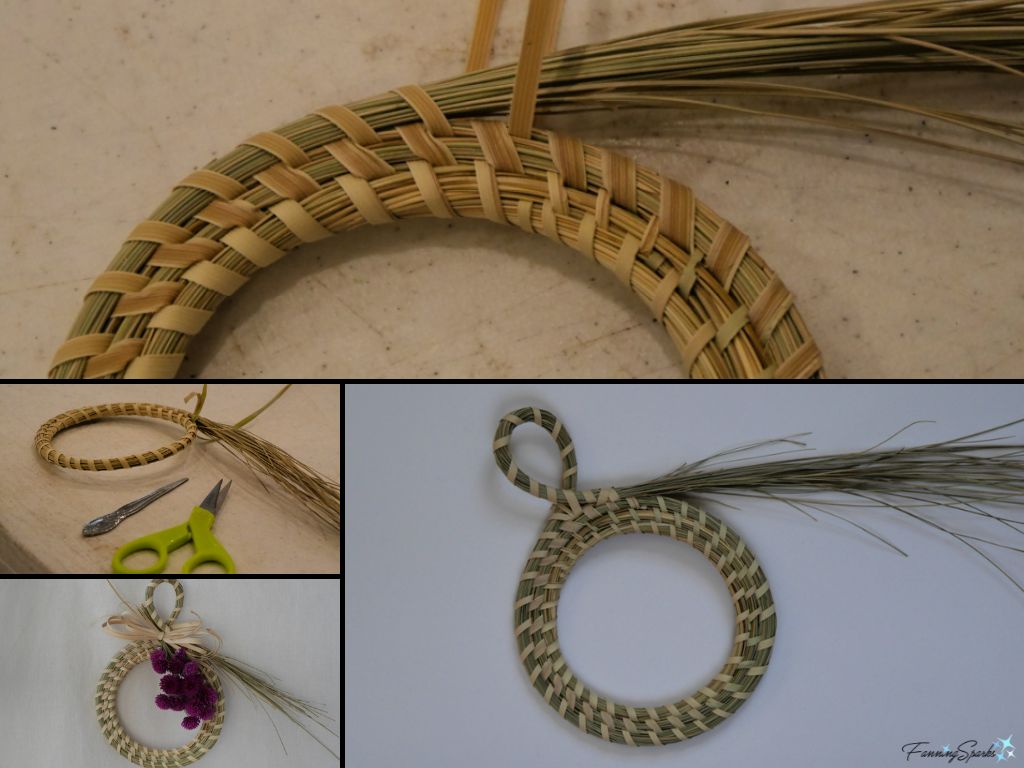
“Sweetgrass grows by the water and is picked by Mi’kmaw communities for spiritual and artistic practices. Although it is the most accessible material required for quillwork, respect in taking only what a person needs is integral to the health of sweetgrass patches; people need to space out where they are picking.” explains the Sircle of Sisters exhibit.
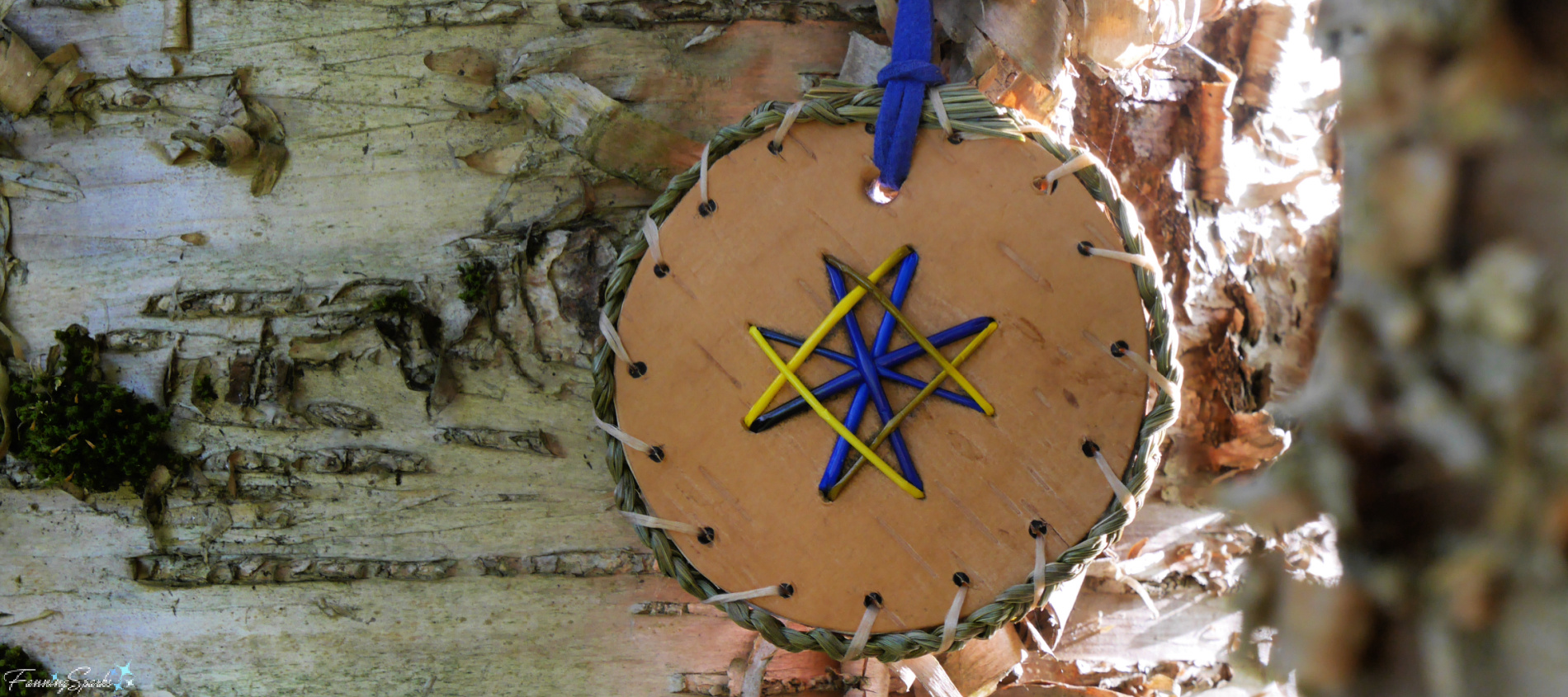
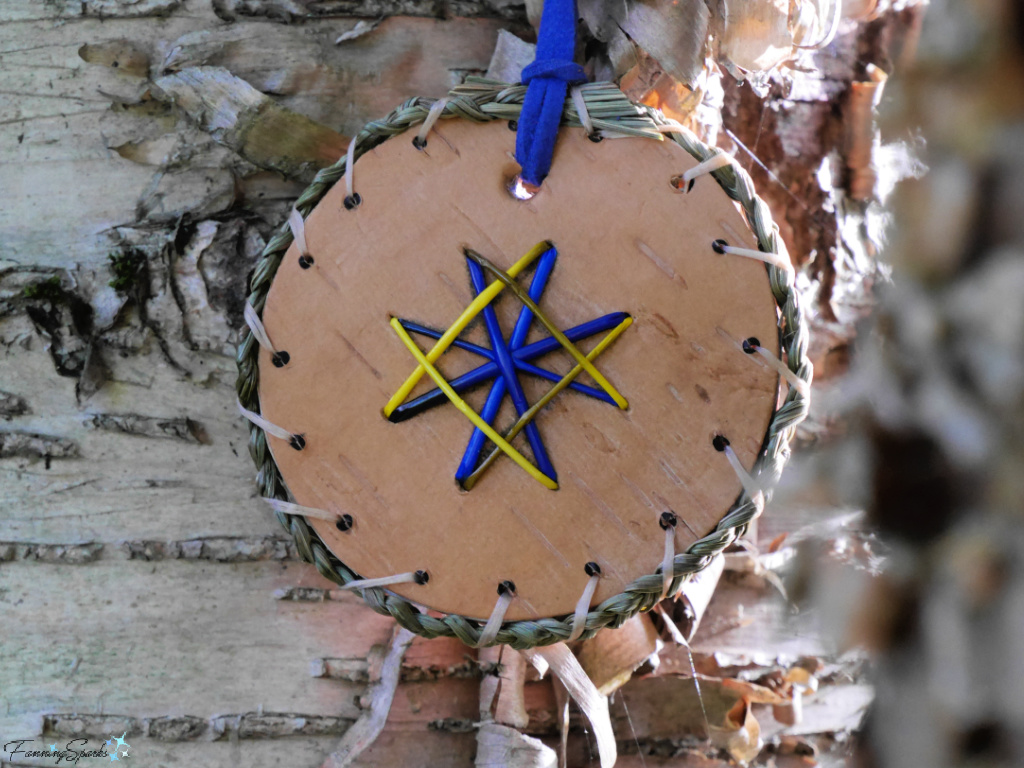
Fortunately, participants in Sitamuk’s Quill Medallion Workshop do not need to gather and prepare porcupine quills, birchbark and sweetgrass! Instead, every student is provided with a complete project kit prepared by Crystal Gloade of Birchbark Quilled Crafts. We were able to select the size, pattern and color of our medallions. I chose an 8-point star petroglyph pattern, with blue quills on a 6cm (2 ½”) birchbark circle.
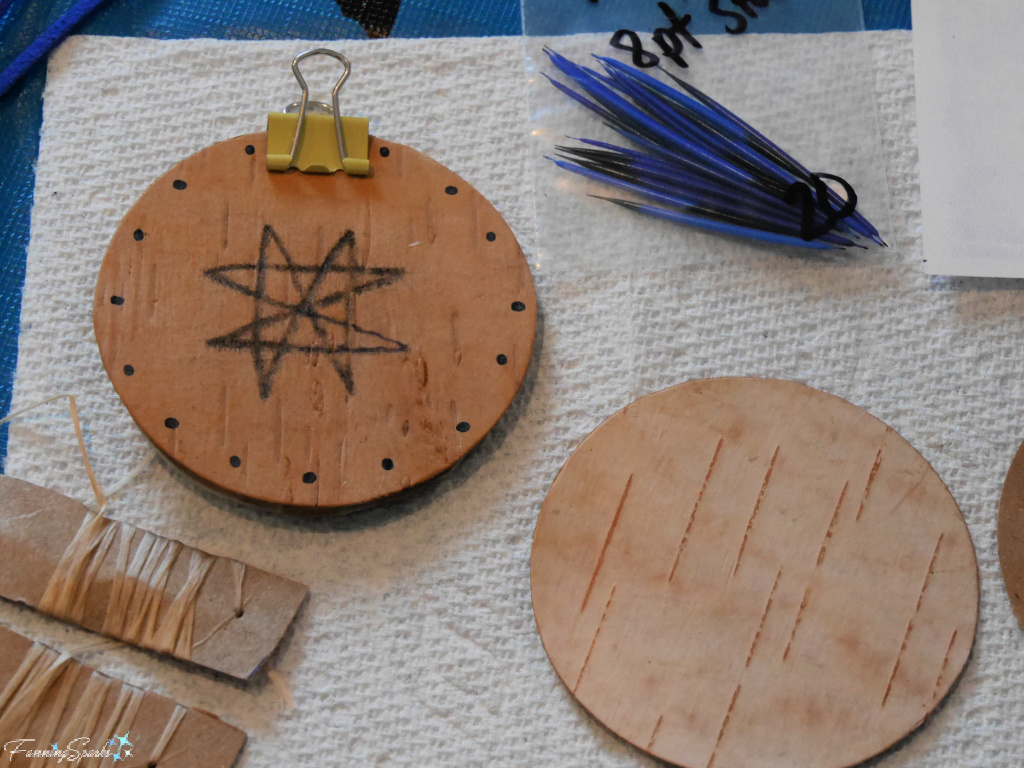
Our instructor, Jill Robinson guided us through our projects with great enthusiasm, attentiveness and care (thank you Jill!). We started by soaking the porcupine quills in warm water to make them pliable.
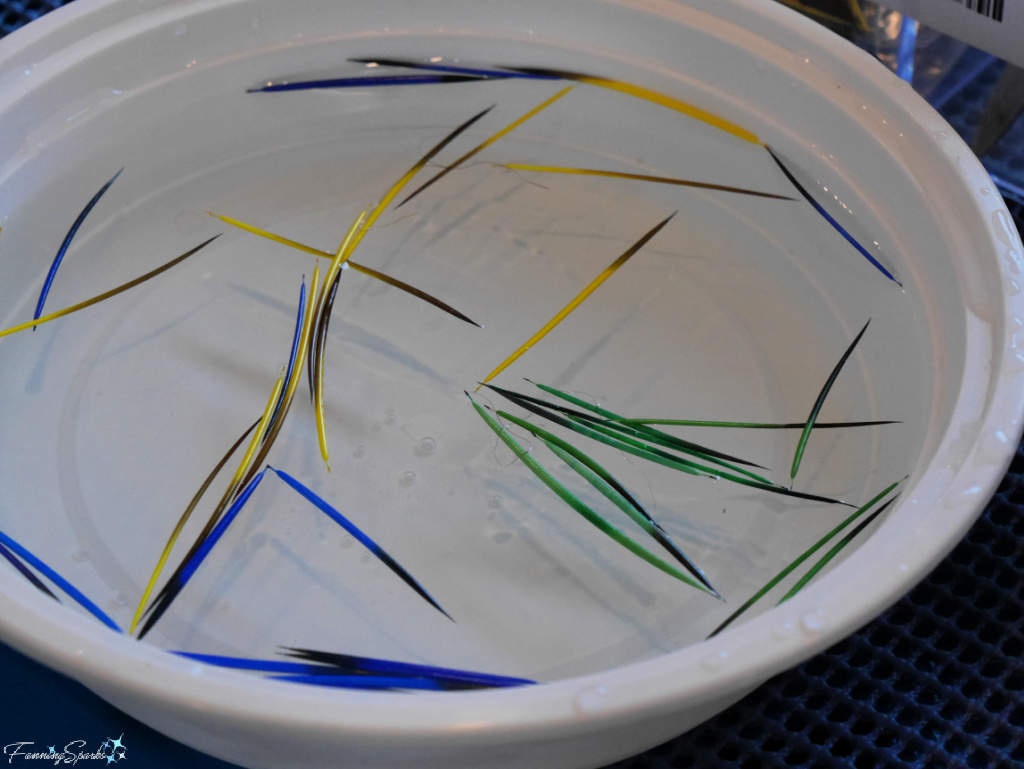 While they soaked, we poked small holes into our birchbark circles at key points of the pattern.
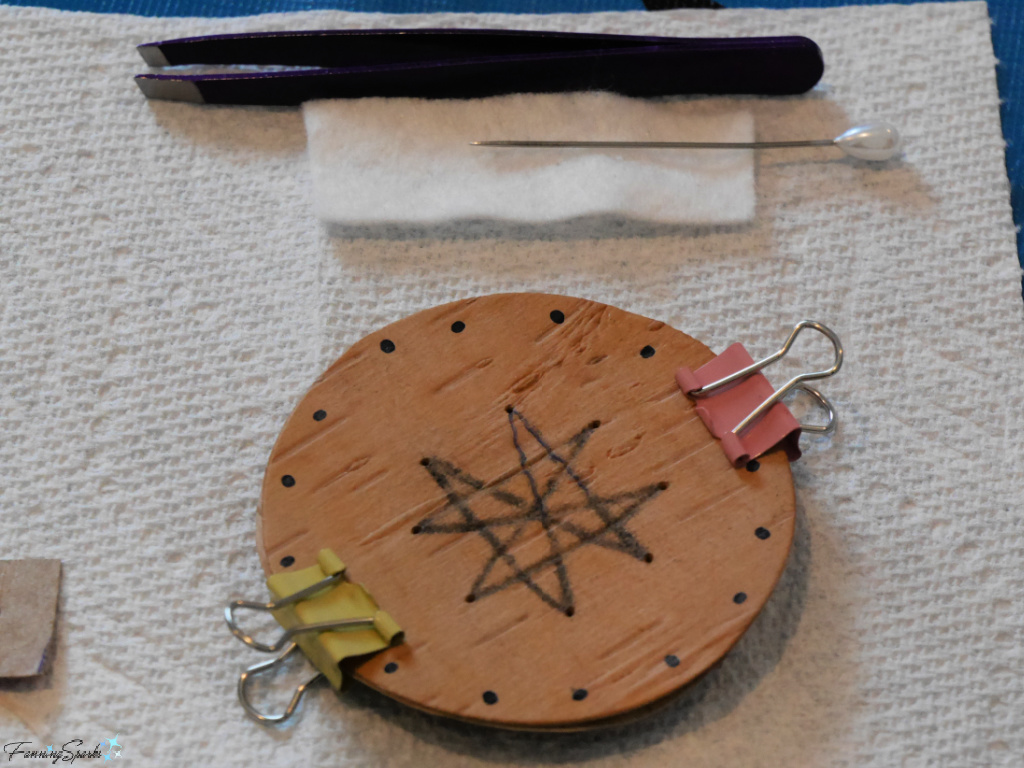
Then, taking care not to prick ourselves on the sharp, needle-like quill tips, we used tweezers to pull the quills through the holes. It was a little like doing embroidery with porcupine quills instead of thread.
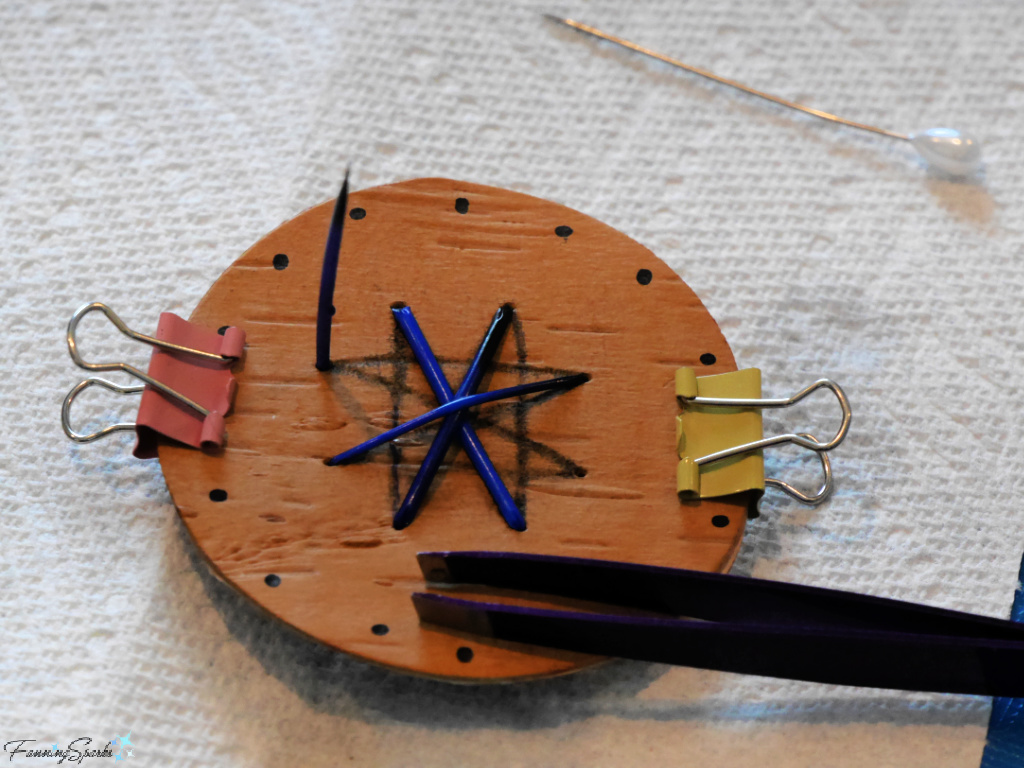
I decided to switch it up by swapping half of my blue quills for yellow ones. Here’s how the design progressed.
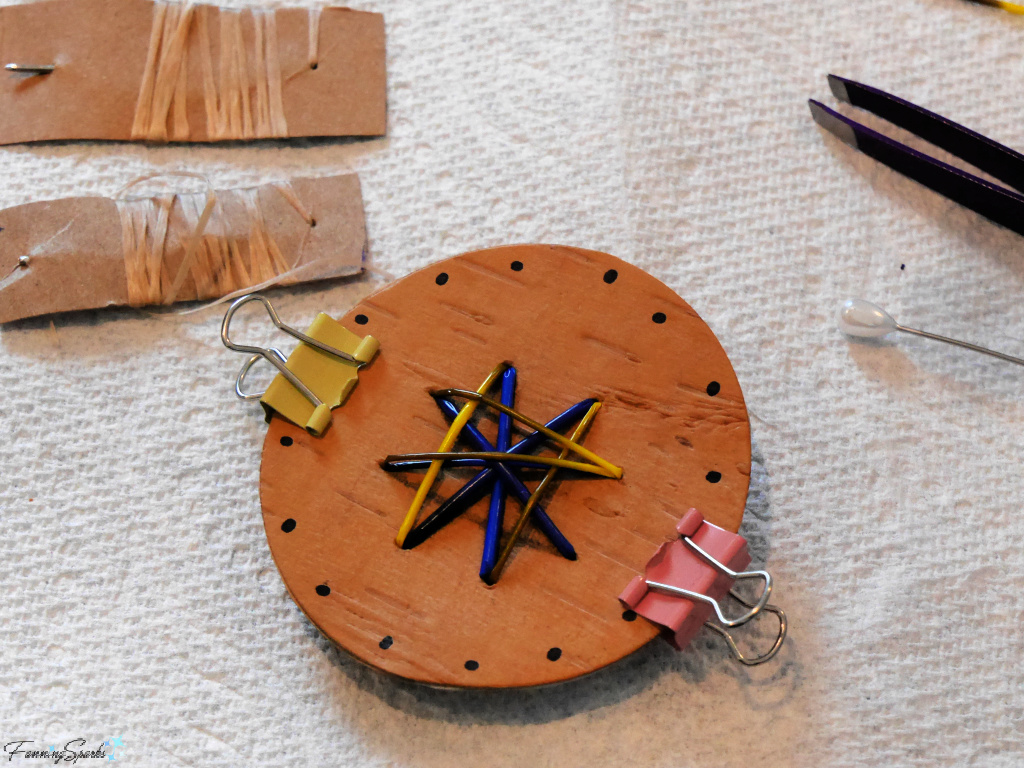
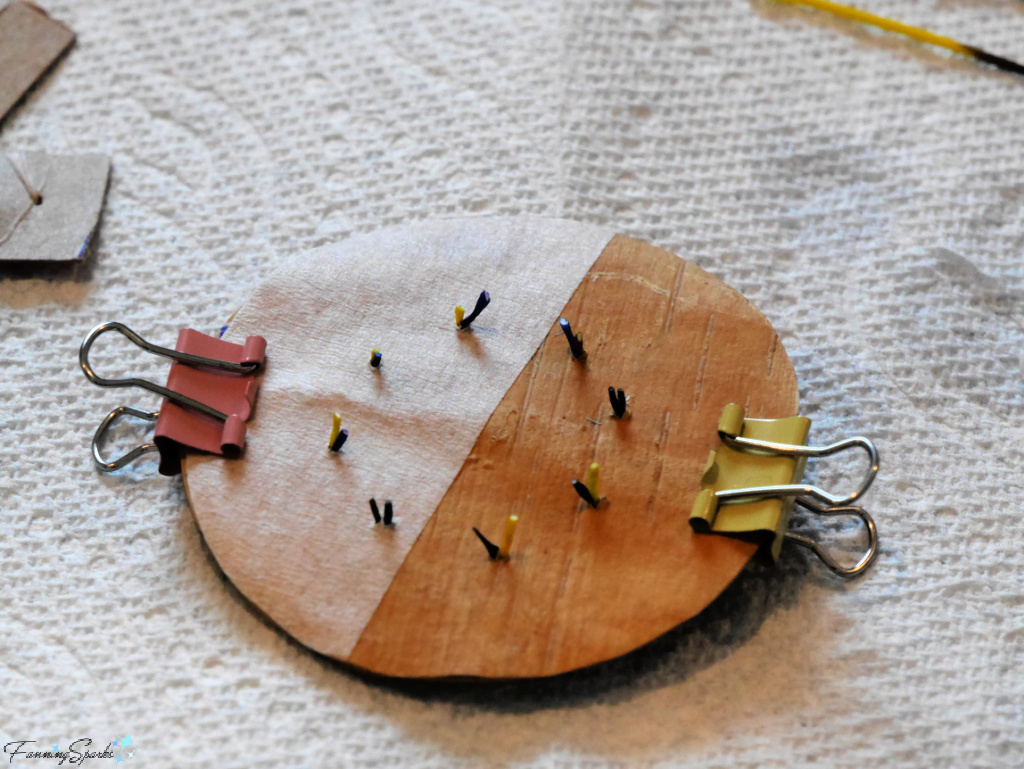
Next, we snipped off the quill tips before covering the back with another piece of birchbark.
The final step was to finish the edges of the medallion. We braided blades of sweetgrass into a sturdy cord.
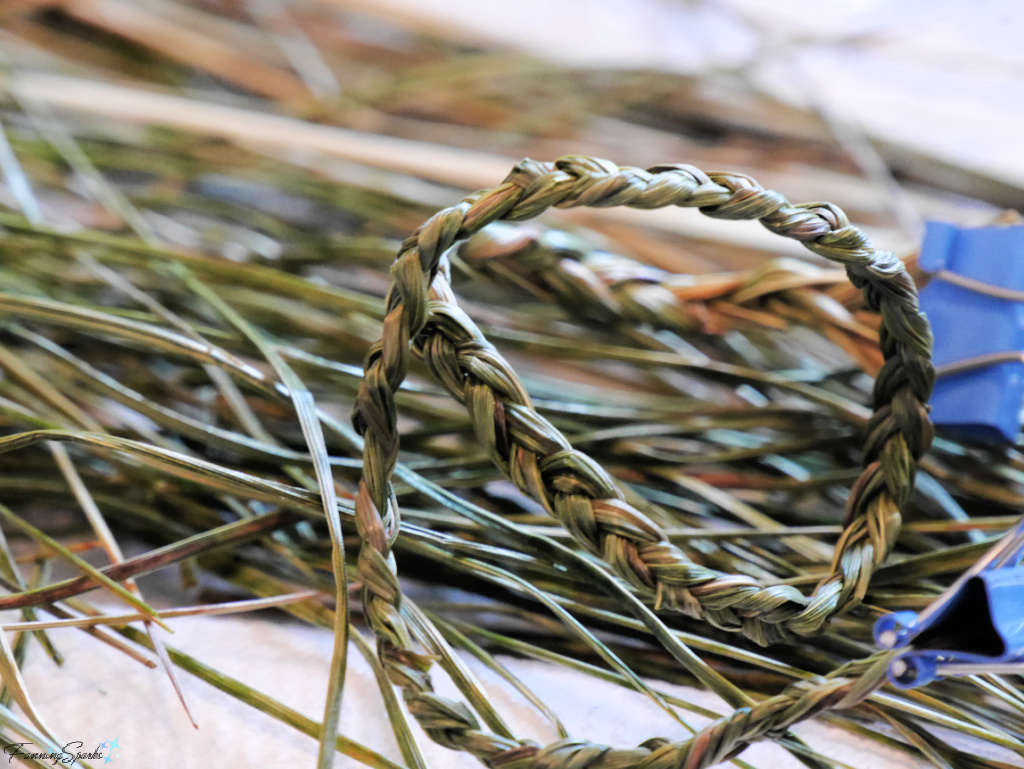
Then we used a simple whip stitch to attach the braided sweetgrass around the edge of the medallion.
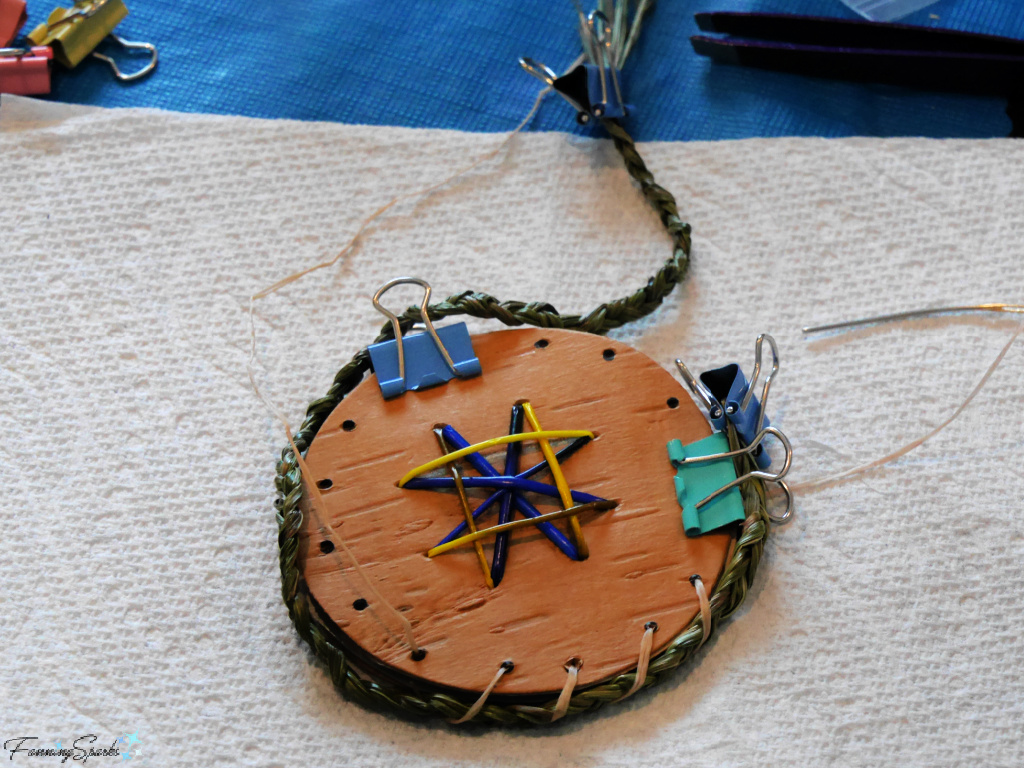
A short piece of silk cord was added as a hanger.
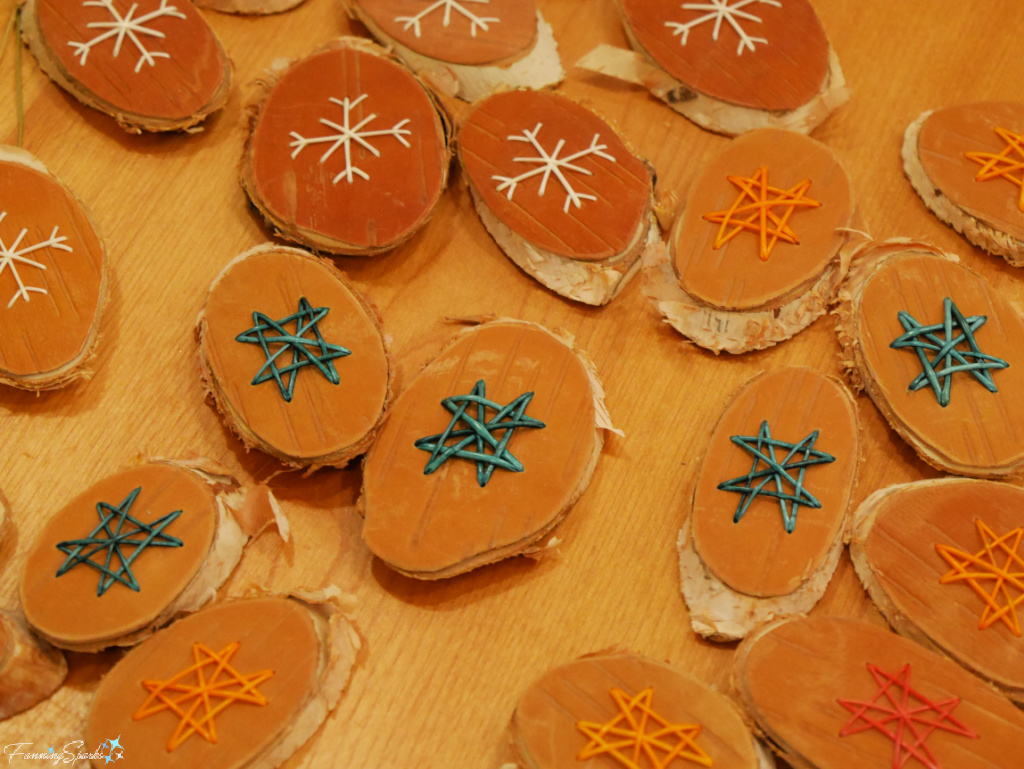
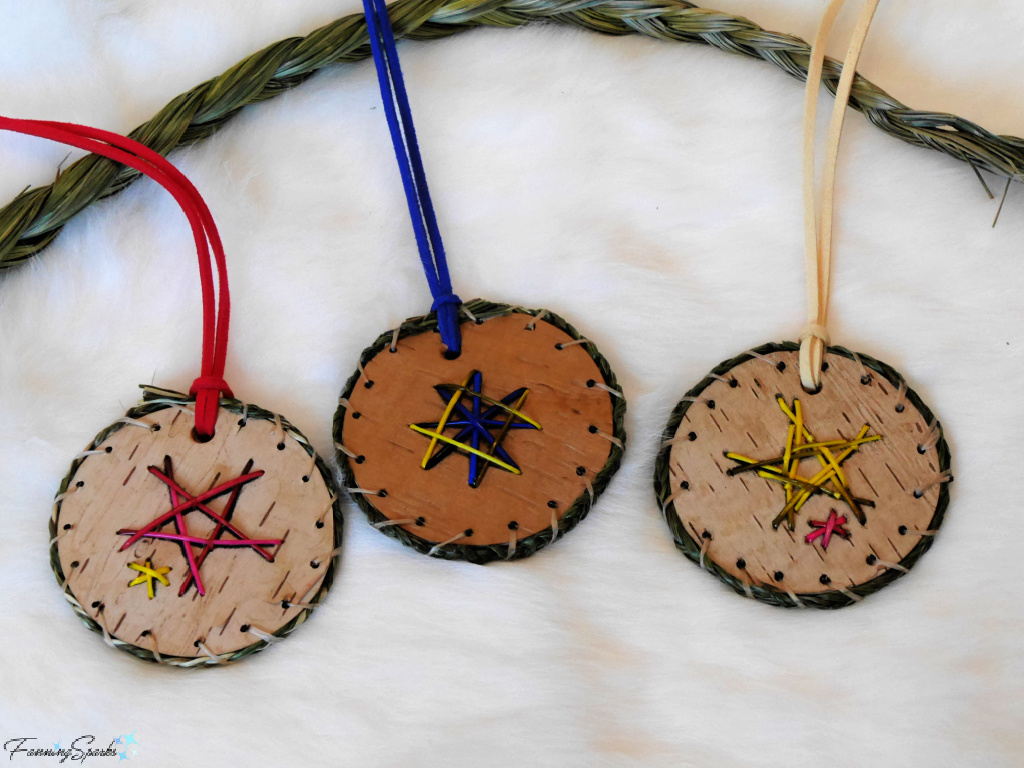
Here are the quilled medallions made during our workshop. Many thanks to my fellow students, Marian and Leona, for making it a great day!
I’ll wrap up with one final shot of my 8-point star quilled medallion.
More Info
Previous blog posts mentioned in this blog post include:
. The Mi’kmaw Art of Porcupine Quillwork
. Printer’s Devil for a Day
. Seek to Identify Wildlife with this Fun App
. My Sweet Sweetgrass Wreath.
I thoroughly enjoyed the Quill Medallion Workshop with instructor Jill Robinson at the Sitamuk Kjipuktuk Cultural Post in Halifax, Nova Scotia. It was a great opportunity to try the traditional art of quillwork in a friendly, intimate setting. Thanks again to Jill and my fellow students for making it a great experience!
Sitamuk “by the Mi’kmaw Native Friendship Centre brings authentically-made Mi’kmaw and Indigenous arts, crafts, and merchandise to the Halifax waterfront” including hands-on workshops. Check Instagram for more information.
As noted, our quill medallions kits were prepared by Crystal Gloade of Birchbark Quilled Crafts. You can learn more on Instagram.
Sherbrooke Village is a living museum depicting life as it was along the St. Mary’s River in Nova Scotia before the 1900s. You can learn more on their website or on Instagram.
Mi’kmaq quill artist Cheryl Simon was part of the Sherbrooke Village Artist in Residence program―see link for more information. Thank you Cheryl for generously sharing your knowledge with us during our visit last summer!
The Art Gallery of Nova Scotia is located in Halifax, Nova Scotia. See their website for more info including details about the Ta’n a’sikatikl sipu’l | Confluence exhibition.
The following online resources and articles were consulted in the writing of this blog post:
… Artist Known: Revitalizing Mi’kmaw Porcupine Quillwork article by Cheryl Simon published online by Meet Us Halfway
… Quillwork: A Native American Heritage article by The Mother Earth News.
… Hope for Wildlife on Instagram
… Quill Bill Creations on Instagram
… Sweetgrass article by Nancy J. Turner published online by Canadian Encyclopedia
… Handicraft: Simplified Procedure and Projects book by Lester Everett Griswold; Published in 1942 and available here on Internet Archives.
Today’s Takeaways
1. The North American Porcupine (Erethizon dorsatum) has three kinds of hair/fur including underfur, guard hairs and quills.
2. “Netukulimk is a Mi’kmaw concept that describes the use of natural bounty of land for self-sustainment, and the responsibility of maintaining the balance, well-being and mutual respect between people, plants, animals, and the environment. In this way, Mi’kmaw communities have traditionally been stewards of the land, rather than owners.” Art Gallery of Nova Scotia
3. Assuming the materials are prepared for you, a quill medallion is a very manageable porcupine quillwork project for beginners.

Comments are closed.