
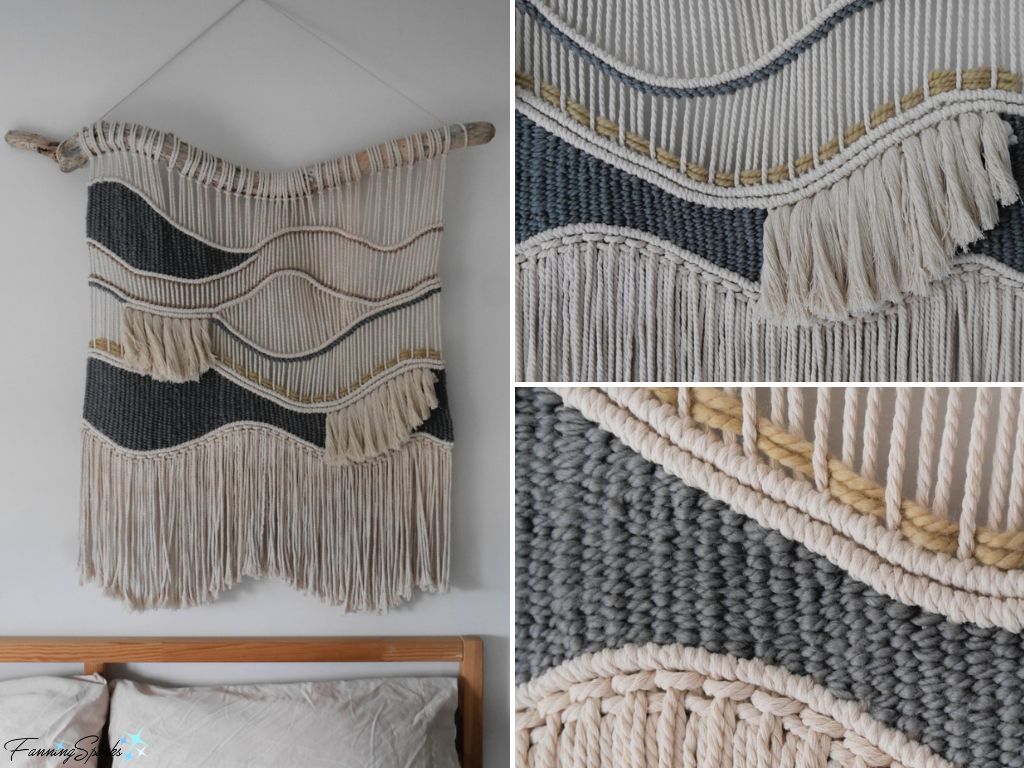
There’s a gorgeous macrame wall hanging in the seaside Airbnb where we’re spending the month. It has all the ocean vibes―a free flowing, wave-like pattern, a blue and cream color palette, and a mix of interesting textures. But it’s the curvy driftwood hanger and the way the design mimics those organic lines that caught my attention. 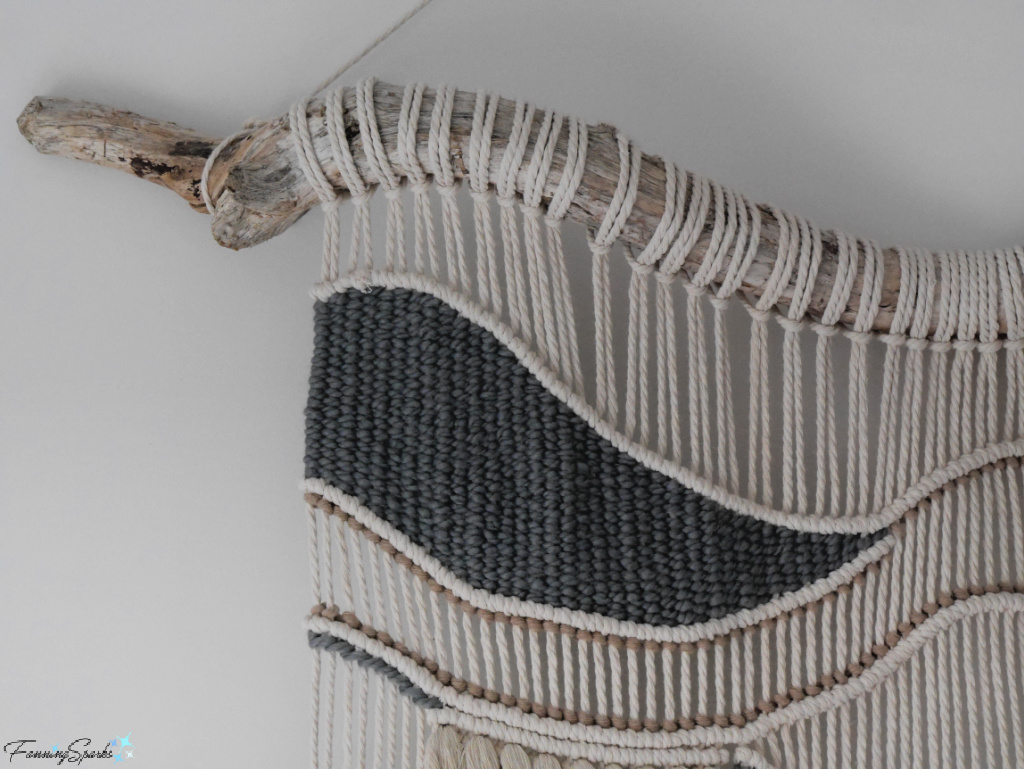 A little web sleuthing reveals this custom piece was created by Nova Scotia artist, Megan Dauphinee. Here it is on Instagram.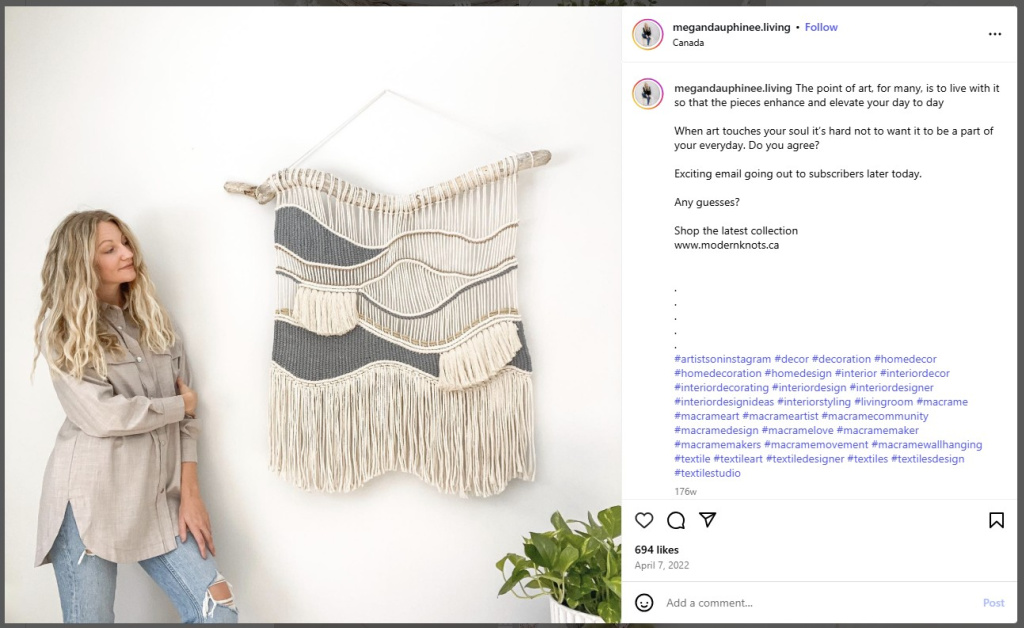
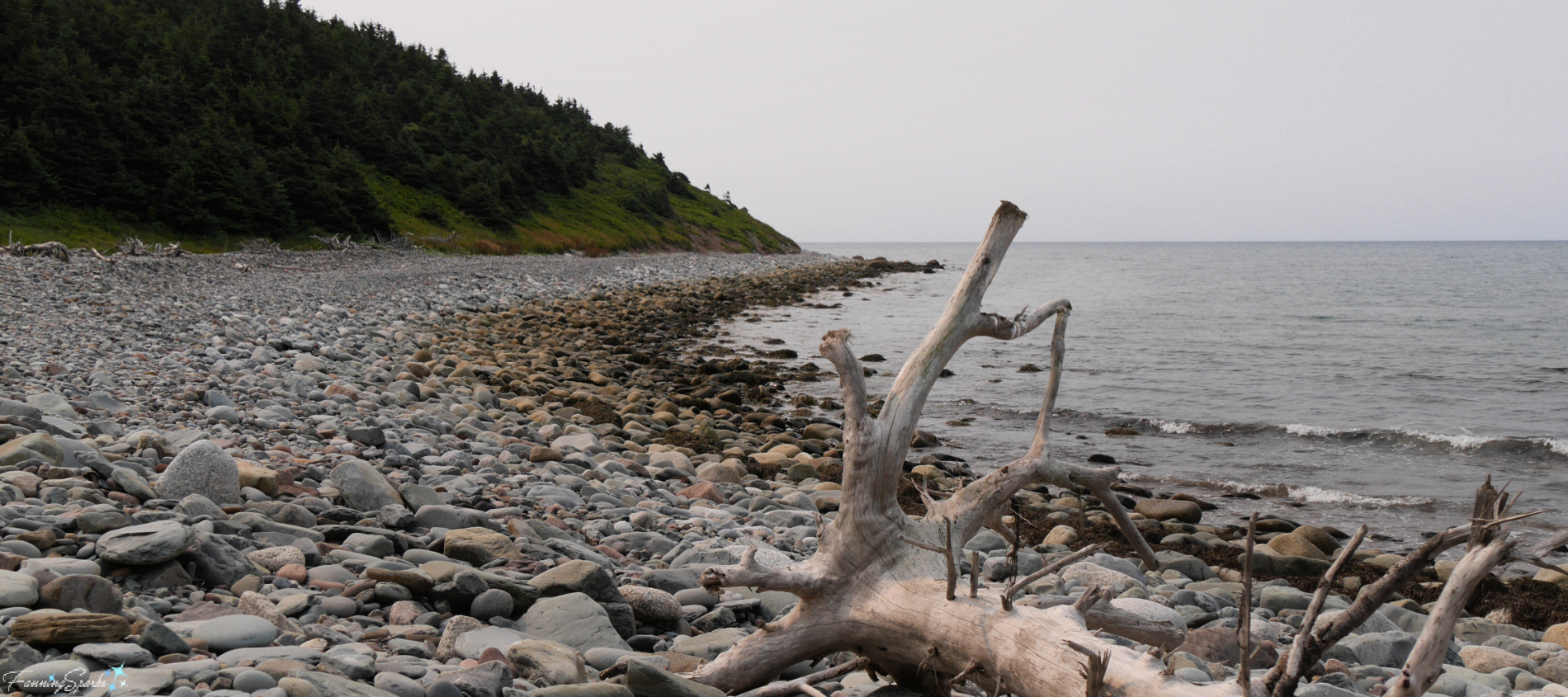
 Any piece of wood washed onto the shores of a sea, lake or river is considered driftwood. “Most driftwood is the remains of trees, in whole or part, that have been washed into the ocean, due to flooding, high winds, or other natural occurrences, or as the result of logging” writes Wikipedia.
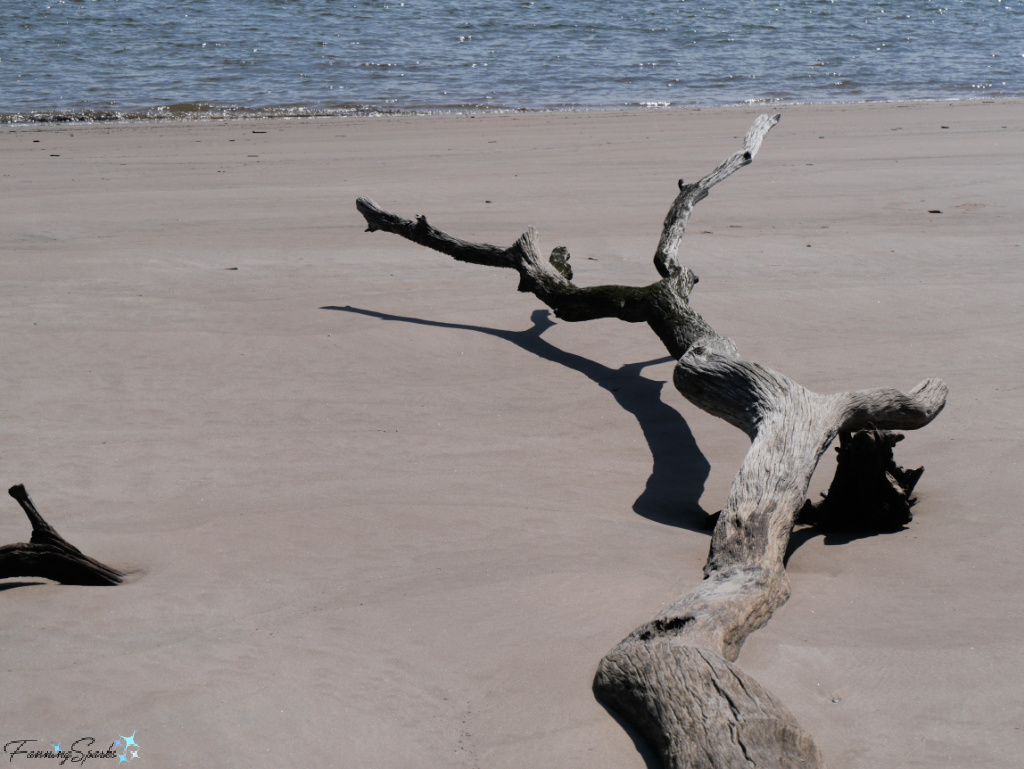
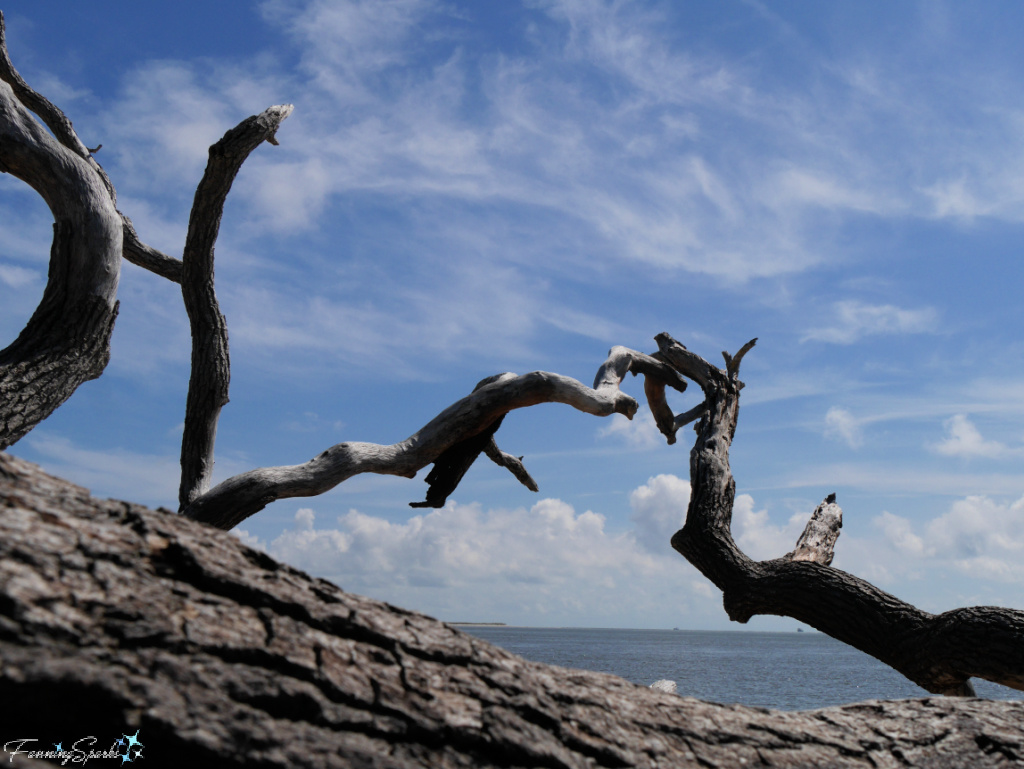
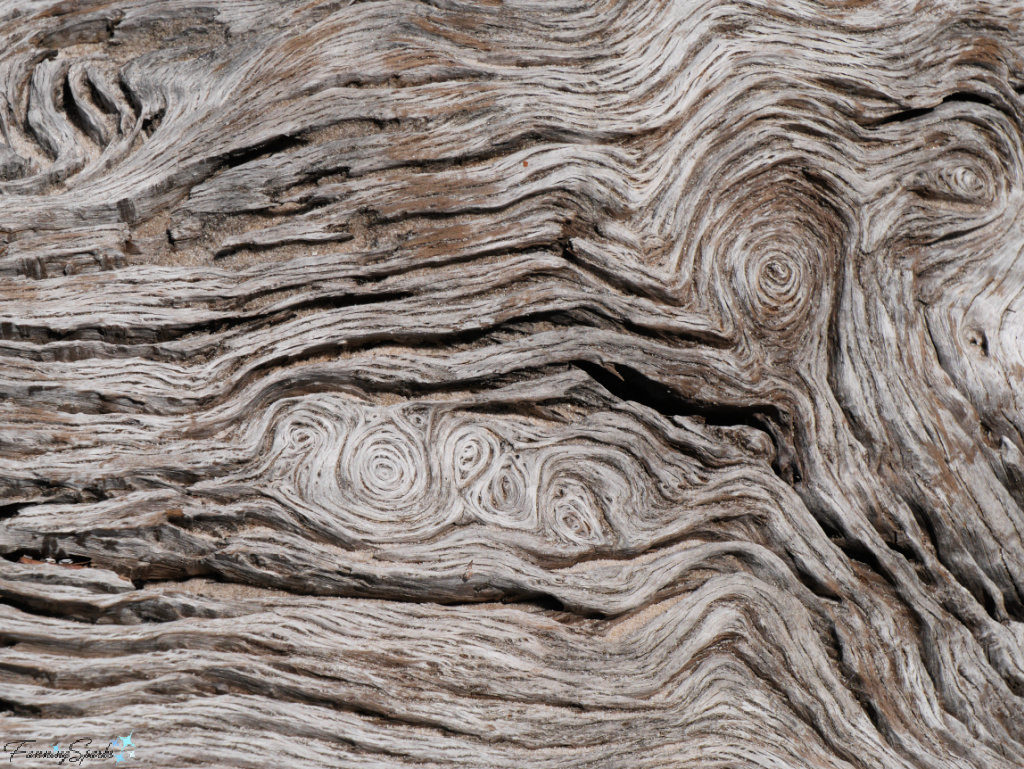
It couldn’t be more obvious than it is on Boneyard Beach―a Florida beach with an unusual collection of downed, salt-washed, live oak and cedar trees. The fallen trees, a result of shoreline erosion, are slowly but surely breaking down into smaller pieces of driftwood. 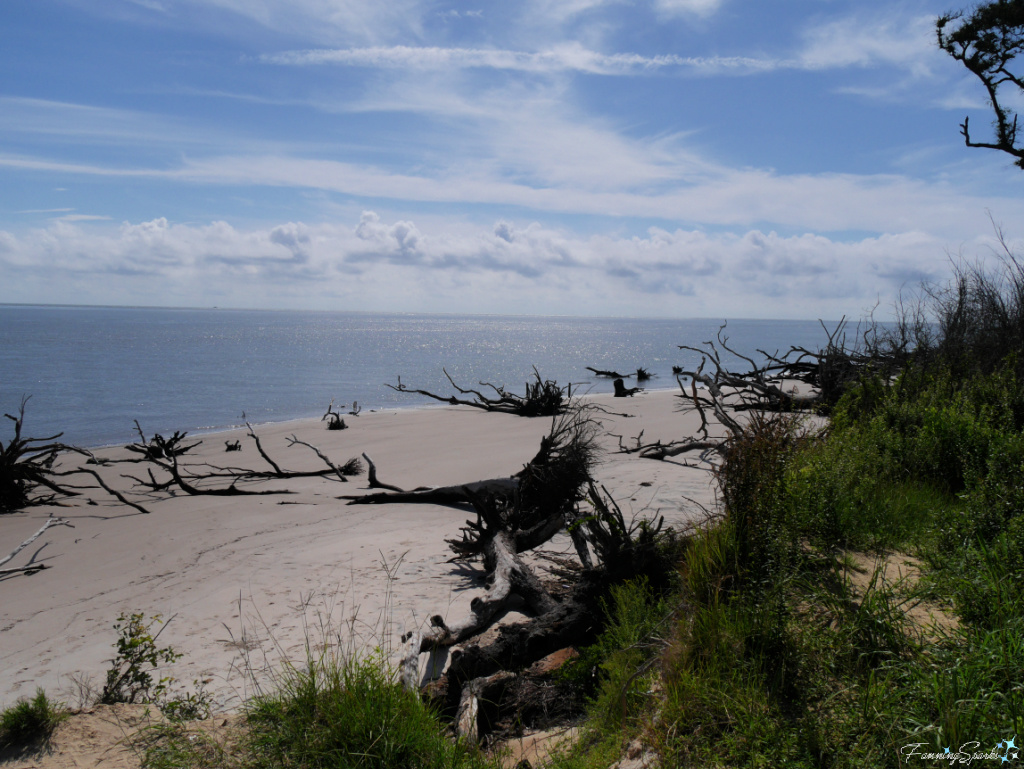
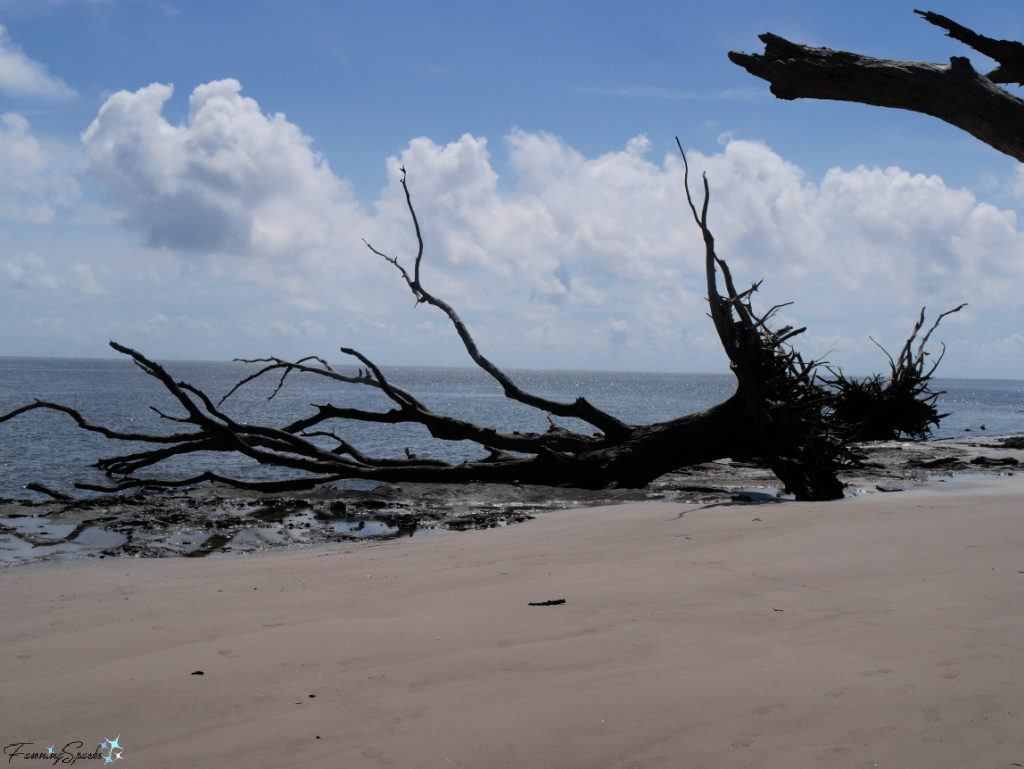
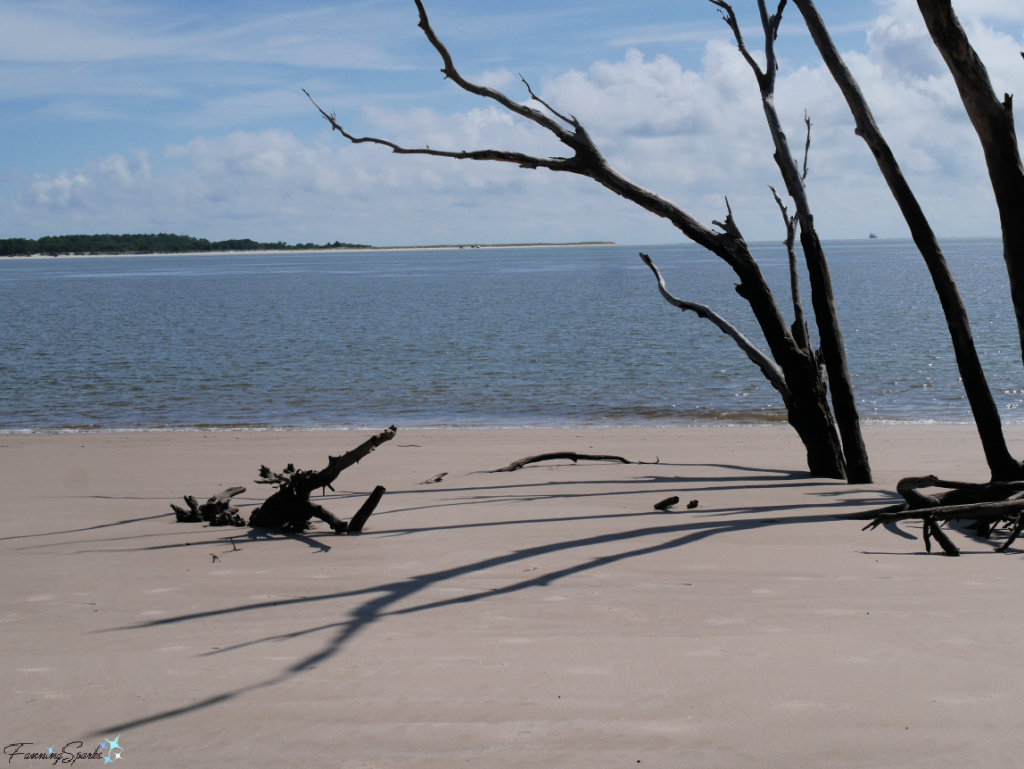
Boneyard Beach is in Big Talbot Island State Park, a natural preserve, on Big Talbot Island in northeast Florida. It’s a great place to watch birds and view wildlife while enjoying a nature hike. But the biggest draw, by far, is chasing the perfect, Instagram-worthy capture among the driftwood. Here are my attempts.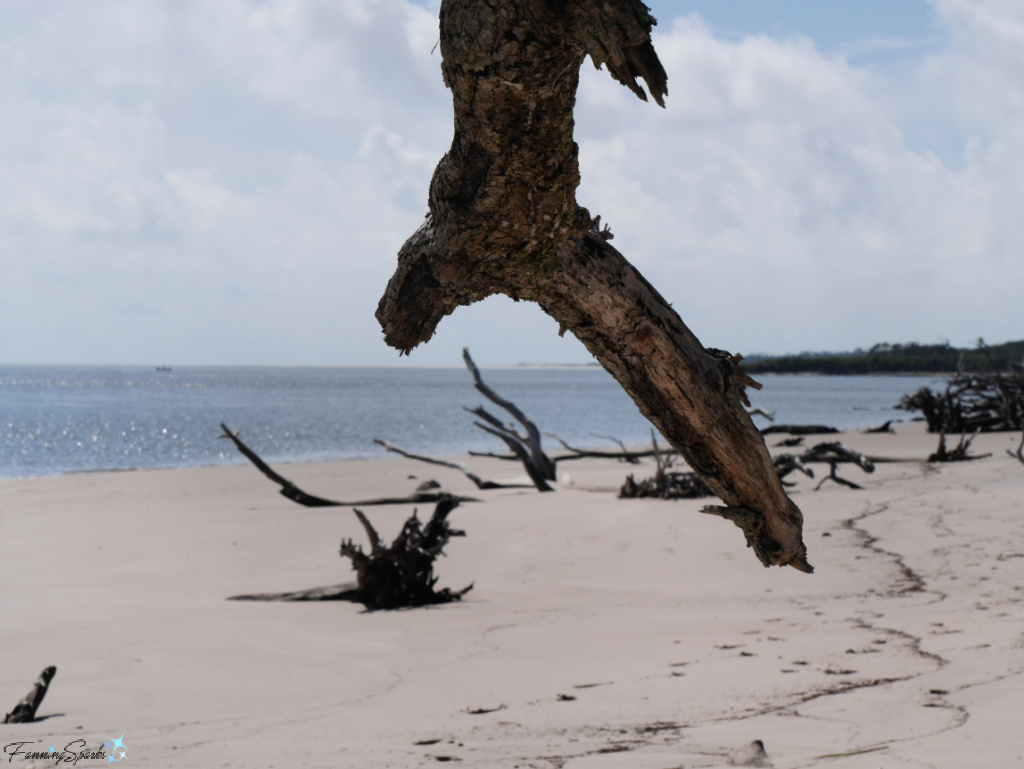
In direct contrast to the plethora of driftwood found on Big Talbot Island, there was a noticeable lack of driftwood on Sable Island―the famous “island of sand” off the shore of Nova Scotia when we visited it a few years ago (see previous blog posts 6 Fascinating Facts about Sable Island and Wild and Free on Sable Island for more about this incredible destination). 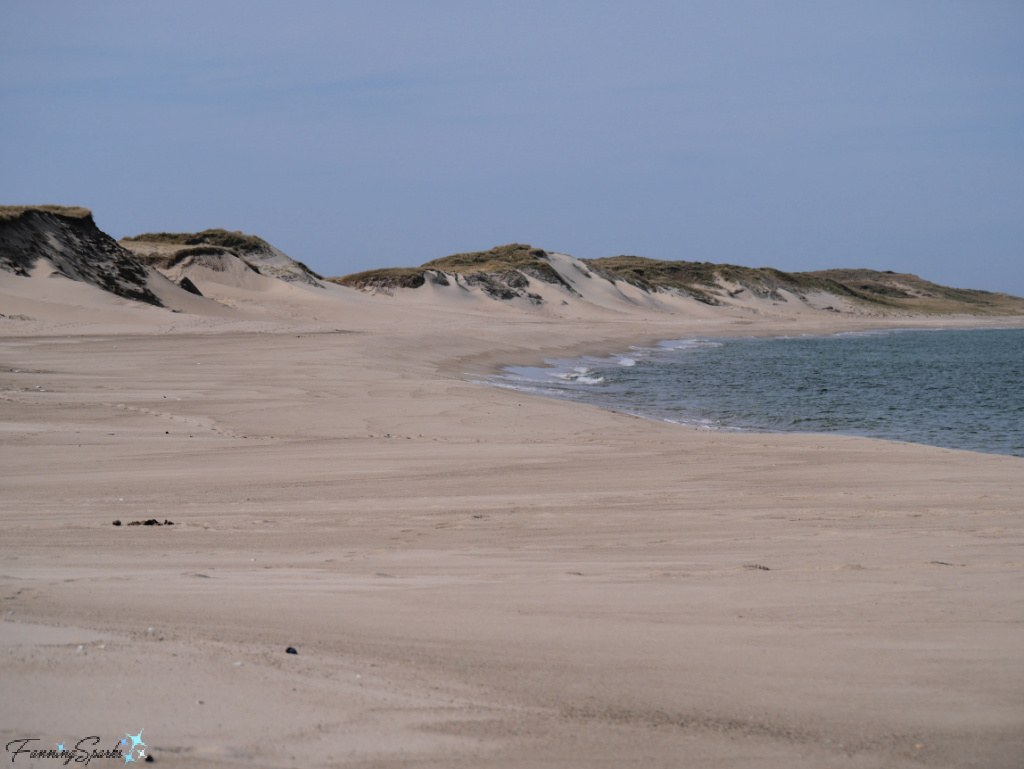
Given the nearest tree is over 161 km (100 miles) away―no trees grow on the island―this should come as no surprise. In the past, the island’s many sand bars, thick fogs and treacherous currents resulted in a large number of shipwrecks. Those shipwrecks would have resulted in substantial amounts of “flotsam”―floating debris resulting from a shipwreck or accident.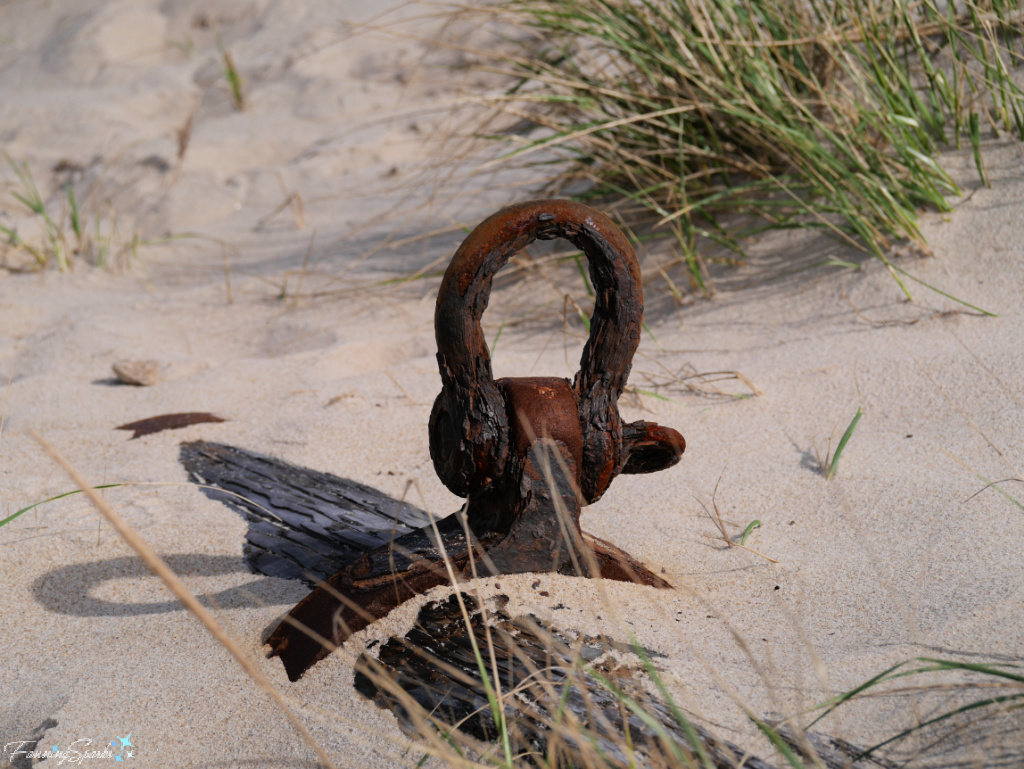
Flotsam can include “drift lumber” which is the term used to describe driftwood originating from man-made wooden objects. Drift lumber can originate from large, small or partial wooden items intentionally discarded or unintentionally lost on or near the water.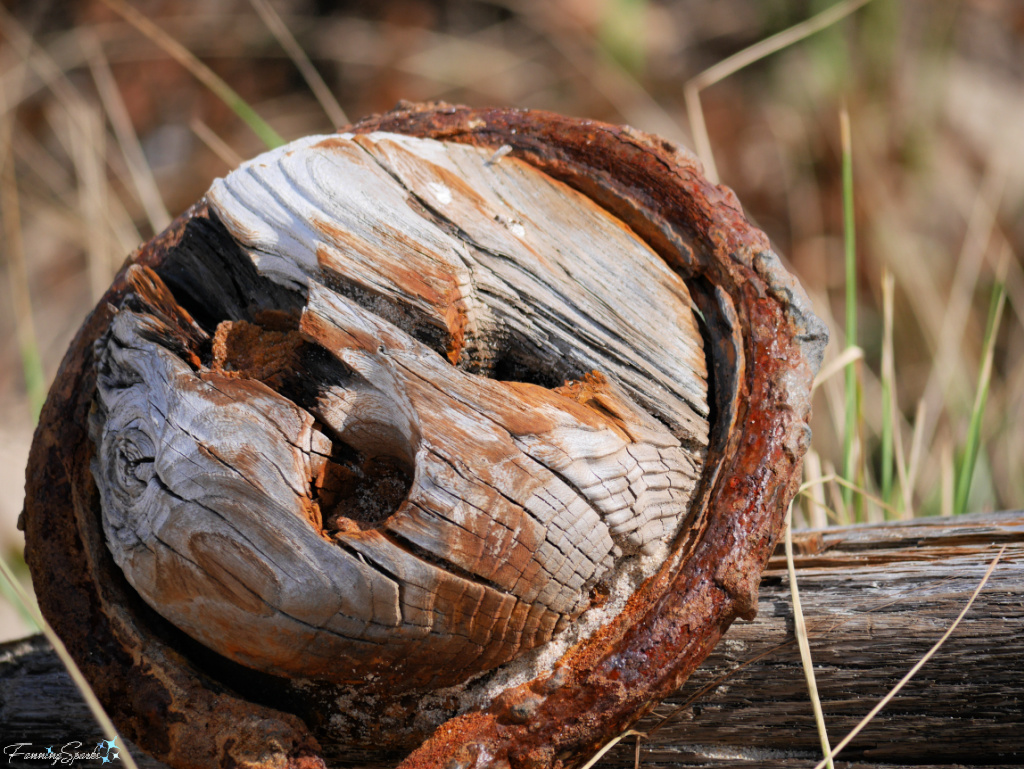
Most shorelines and beaches fall somewhere in between the extreme abundance of natural driftwood on Boneyard Beach and the rarity of drift lumber on Sable Island.
Earlier this year, I visited the beach at Cape Jourimain Nature Centre on the New Brunswick end of Prince Edward Island’s Confederation Bridge. There were only a few pieces of driftwood in the wrack zone. 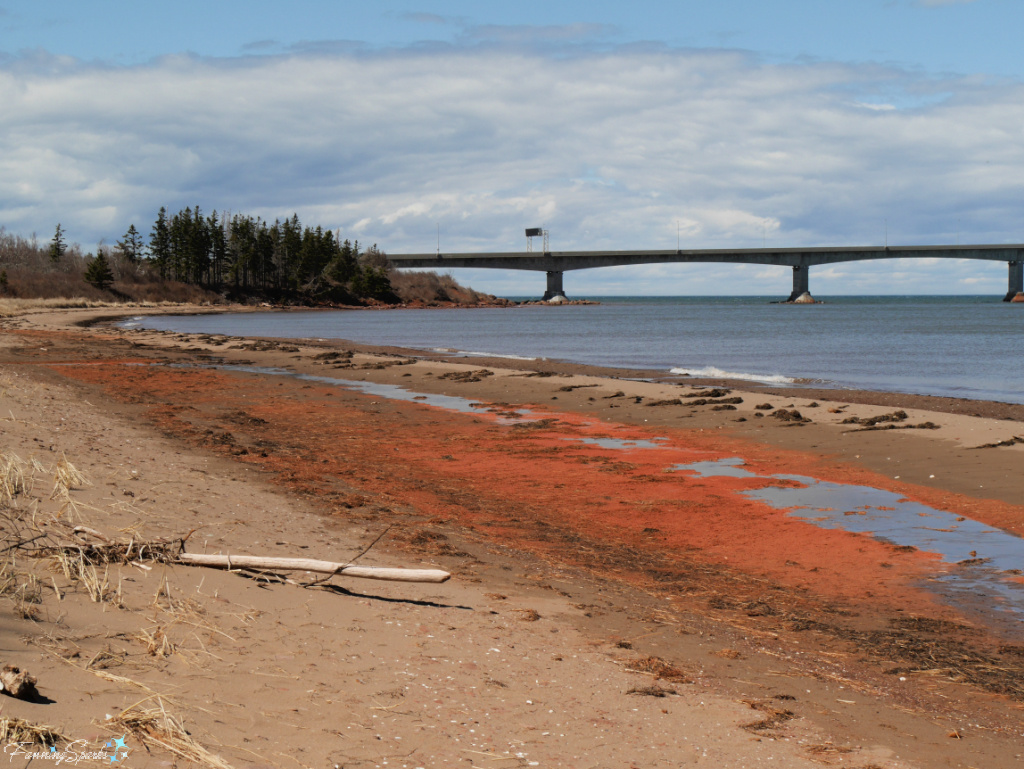
“Beach wrack” or “marine wrack”, as Wikipedia explains, “is organic material (e.g. kelp, seagrass, driftwood) and other debris deposited at high tide on beaches and other coastal areas. This material acts as a natural input of marine resources into a terrestrial system, providing food and habitat for a variety of coastal organisms. … The wrack zone can be recognized as a linear patch of debris toward the upper part of a beach running parallel to the water’s edge.”
Shown below is a view of the LaHave River near the Fort Point Museum in Nova Scotia. A few pieces of driftwood can be seen behind the wrack zone.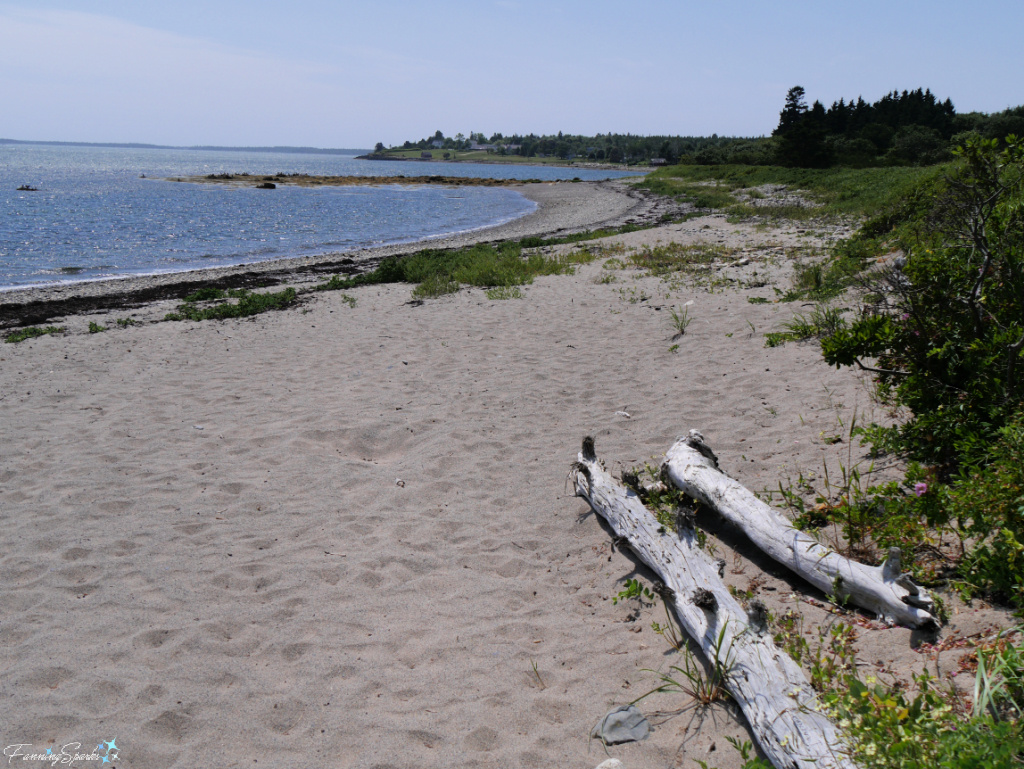
This weathered tree trunk was spotted in the same area.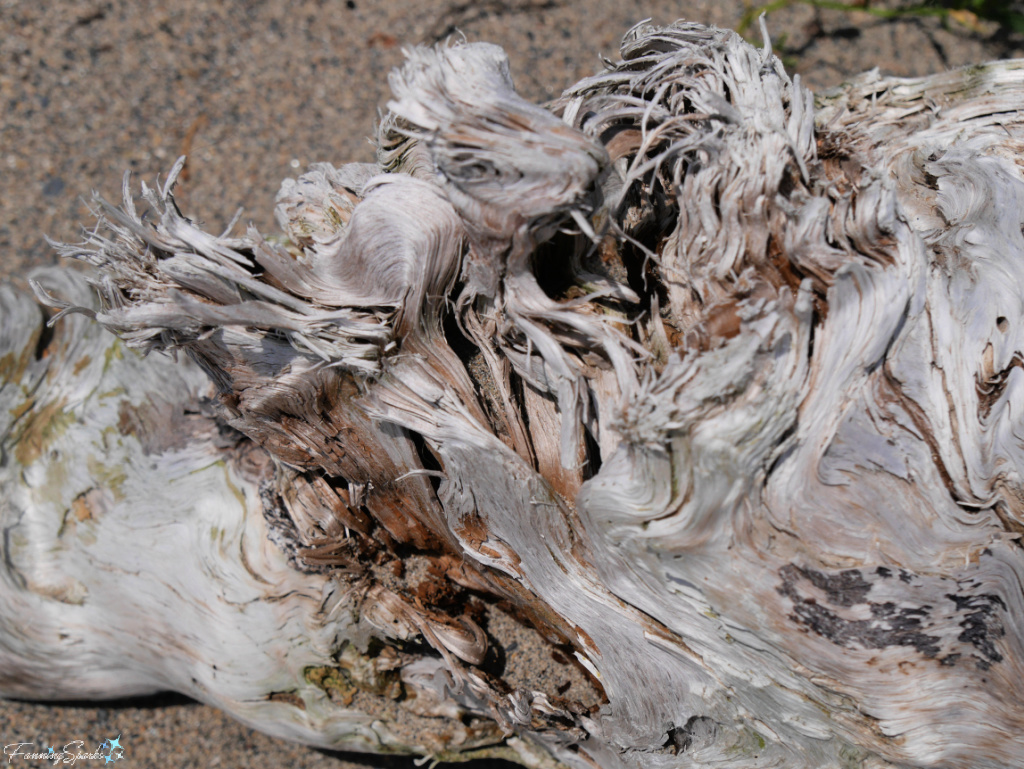
Lawrencetown Beach, which is near the Airbnb I mentioned at the top of this blog post, is described as a “sand-and-cobble” beach. 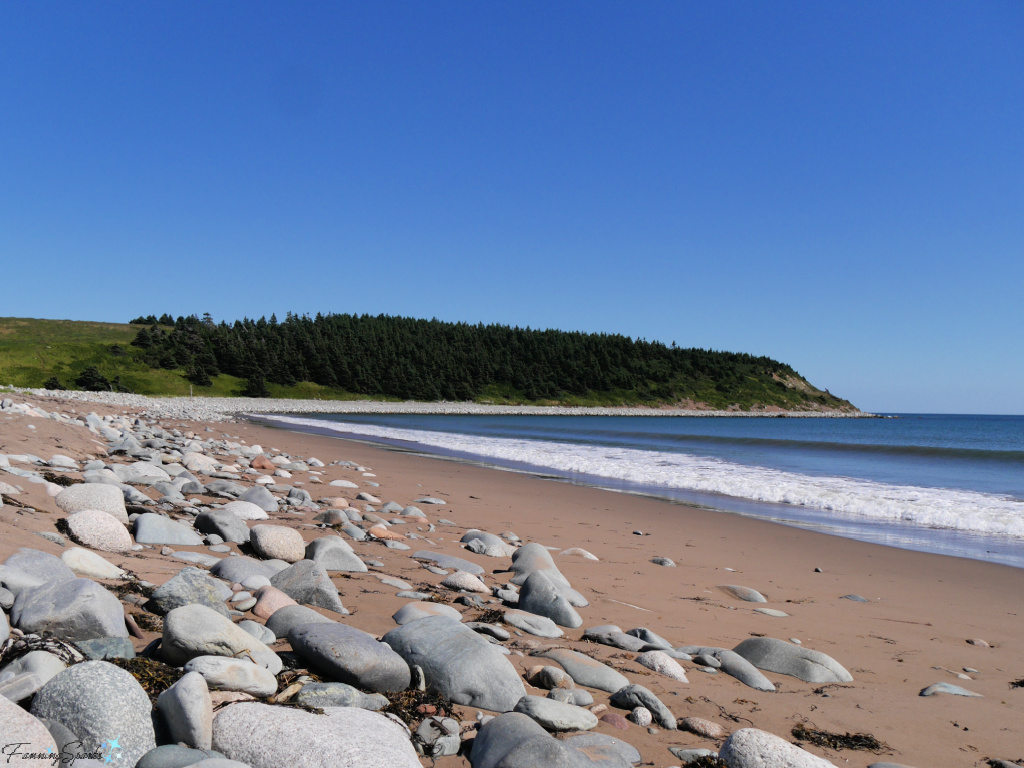
There doesn’t appear to be a lot of driftwood at this time of year.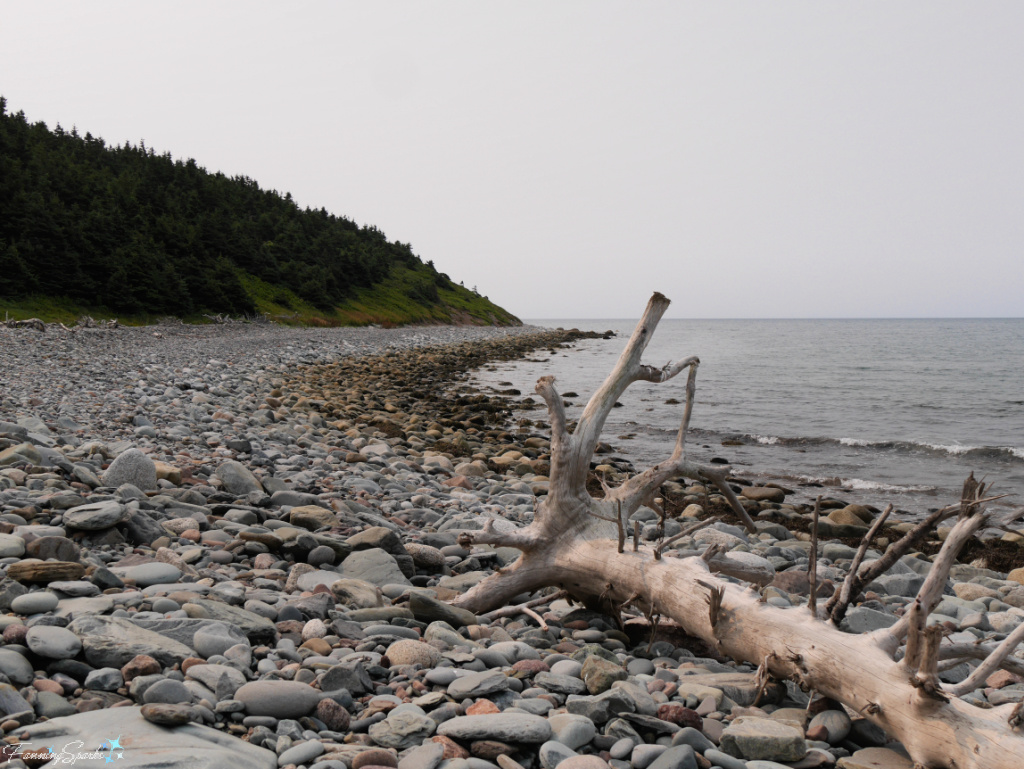
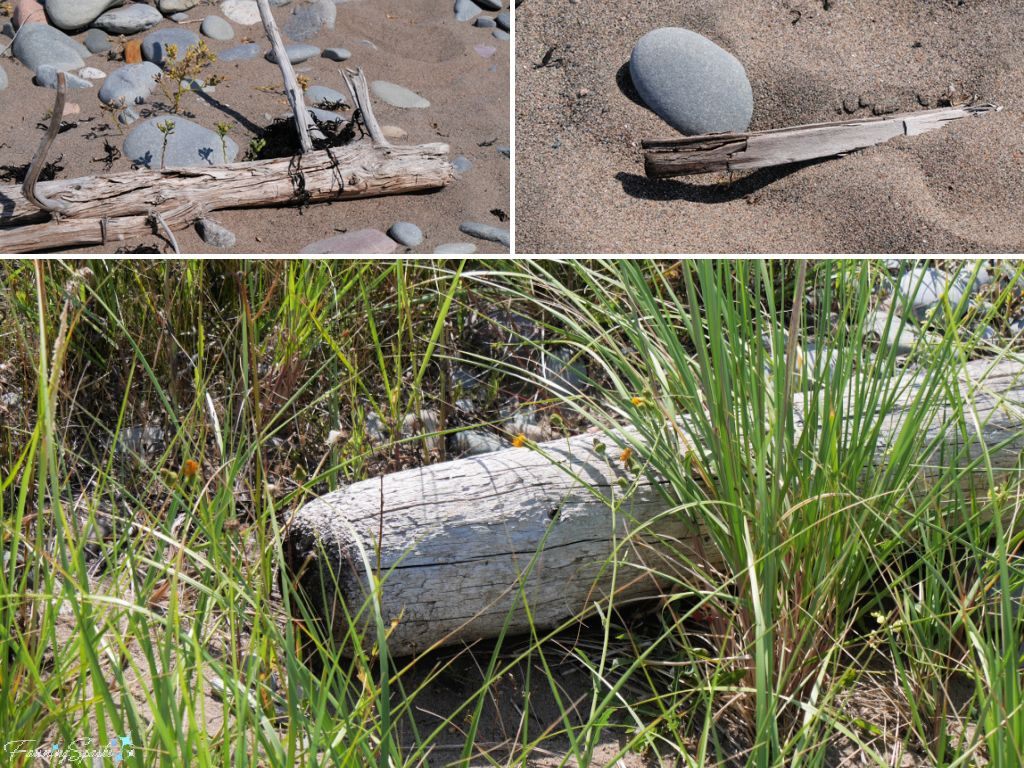
Most noticeably, a few pieces of driftwood have been propped up vertically in the wrack zone. I assume they’re markers of some kind. 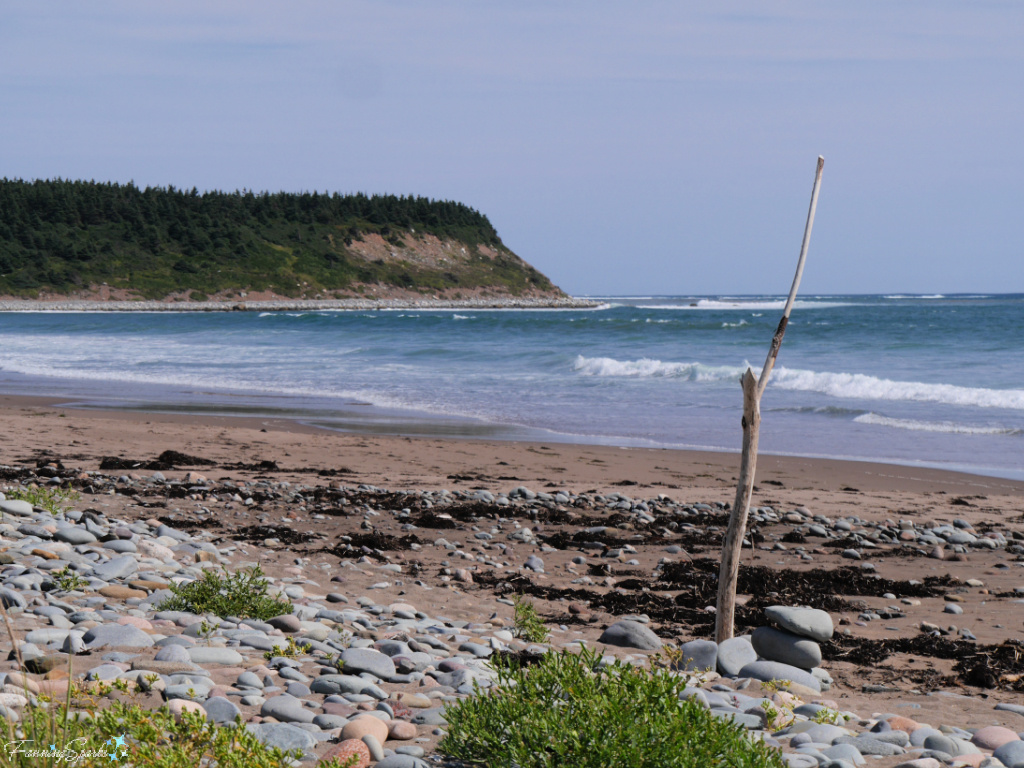
Driftwood is most commonly associated with the ocean but it can also be found along river banks and lake shores. This view of the Margaree River on Cape Breton Island is a case in point. The river bank is eroding and trees are falling down the rock face into the water.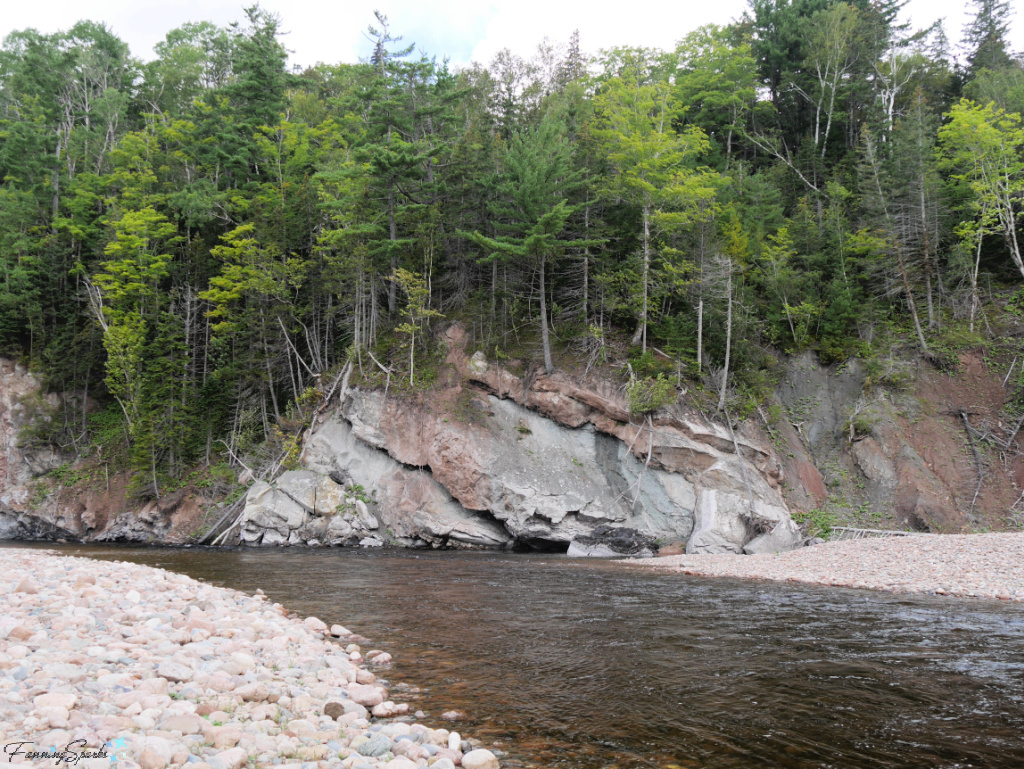
As the river’s current breaks down the trees, some beautiful structural components are left behind. The weathered tree roots pictured below obviously grew around these rocks. 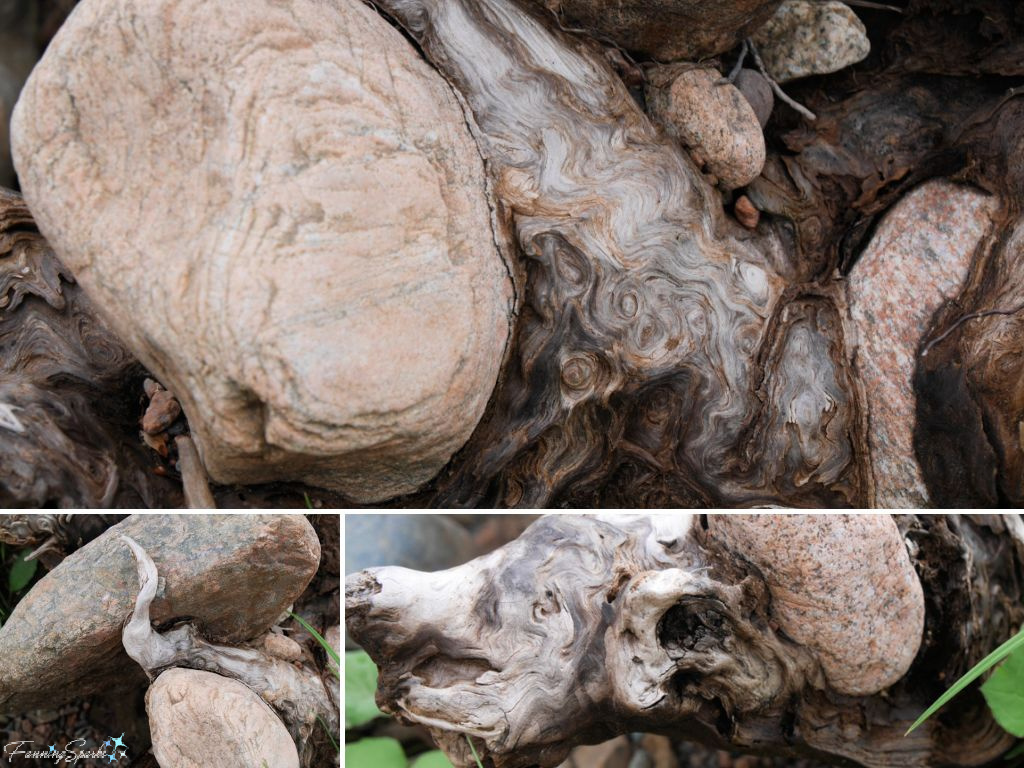
But the beauty of weathered driftwood is merely a pleasant byproduct―natural driftwood serves an important purpose. “Driftwood makes an enormous if underappreciated contribution to the food web connecting the forests and the sea. From streams to estuaries to the deep ocean floor, driftwood shapes every environment it passes through.” explains Brian Payton in his article How Driftwood Reshapes Ecosystems.
“A tree undergoes reincarnation when it lands in flowing water. Branches, bark, and heartwood … become either home to or sustenance for a range of plants and animals. In old-growth forests, up to 70 percent of the organic matter from fallen trees remains in streams long enough to nurture the organisms living there” from bacteria, fungi, and insects to flies and mayflies to salmon fry, salamanders, bats, and birds.
“Larger logs control the very shape and flow of streams, creating pools and back eddies where returning salmon rest and spawn.”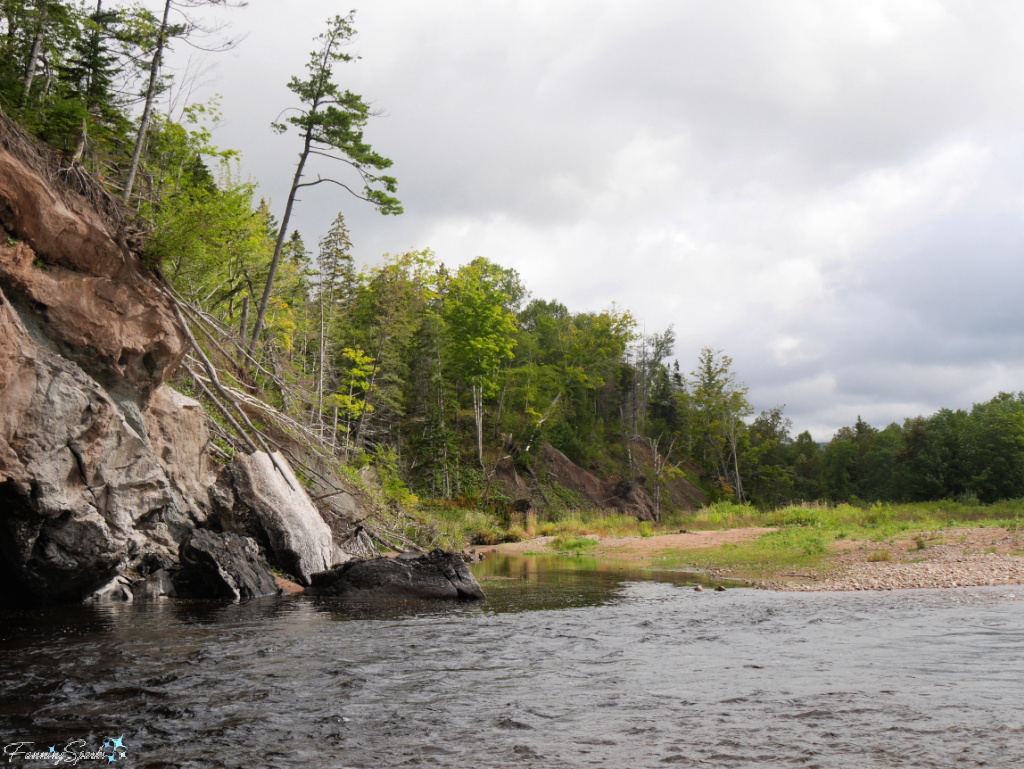
“As wood passes through the floodplain, it collides with and remakes the shore. Some becomes anchored there, trapping silt and seeds. As new vegetation takes root, deer mice, voles, shrews, and chipmunks move in for the harvest. Weasels, minks, and hawks make meals of them and fertilize the soil. Wood that drifts into estuaries becomes perches for hungry bald eagles and herons; rafts for weary cormorants, pelicans, and seals; and nurseries for herring eggs.”
Driftwood also “serves as building blocks for stable sand dunes and spits in estuaries, providing an important buffer from rising tides and waves. But shorelines around the world—especially in developed, temperate zones—are now severely wood impoverished compared to their condition before human settlement. As rivers lose driftwood, water travels through faster and there is less time for nutrient cycling”.
These findings remind me of the “living shoreline” I discovered at the Tea Hill Park in Stratford, Prince Edward Island last year. Living shorelines, I learned are a “nature-based approach to shoreline management. Living shorelines use native plants, logs and other natural materials to stabilize the shoreline, reduce shoreline erosion, maintain or restore coastal processes and habitat value, and provide storm protection”. See my previous blog post Beachcombing on the Island to learn more about Adapting to Climate Change in Coastal Communities of Atlantic Canada.
Based on these insights, I’ve kept my driftwood collecting to a minimum. I have a specific project in mind (stay tuned for that) and here’s what I’ve gathered in preparation.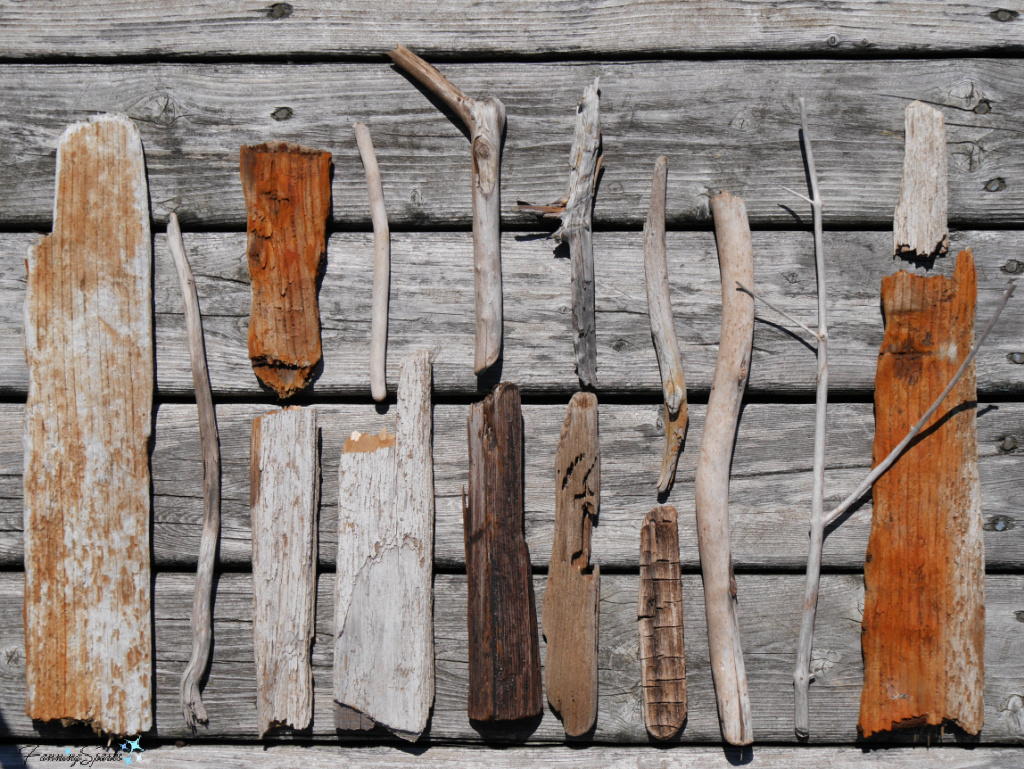
More Info
Previous blog posts mentioned in this blog post include:
. 6 Fascinating Facts about Sable Island
. Wild and Free on Sable Island
. Beachcombing on the Island.
To learn more about Megan Dauphinee and her work check out her blog or Instagram account.
To learn more about the beaches pictured in this blog post, check out these links:
. Boneyard Beach on Big Talbot Island in Florida: see the Florida State Park website
. Sable Island in Nova Scotia: see the Sable Island National Park website
. Cape Jourimain in New Brunswick: see the Cape Jourimain Nature Centre website
. LaHave River Shore in Nova Scotia: see the Fort Point Museum website
. Lawrencetown Beach in Nova Scotia: see the Nova Scotia Provincial Parks website.
The Margaree River is located on Cape Breton Island in Nova Scotia. See the Margaree community website for more info.
The following articles were consulted in the writing of this blog post:
. How Driftwood Reshapes Ecosystems 2018 Hakai Magazine article by Brian Payton
. Various Wikipedia entries.
Today’s Takeaways
1. Any piece of wood washed onto the shores of a sea, lake or river is considered driftwood.
2. “Driftwood makes an enormous if underappreciated contribution to the food web connecting the forests and the sea.” Brian Payton
3. Driftwood “serves as building blocks for stable sand dunes and spits in estuaries, providing an important buffer from rising tides and waves.” Brian Payton
Comments are closed.