

It’s easy to get lost in the fluidity of the creative process when making a collage. The artist can arrange and rearrange their picture or design until they find a composition that pleases them. And they can audition individual pieces for color, form, texture and placement until the finished collage emerges.
Despite the freedom of making art this way, it’s helpful to have a starting point and a few guardrails to guide the creative process. A successful collage surface tells a story, makes a statement or is just interesting to view. Here’s an example of a beautiful abstract landscape composition. This outstanding fabric collage, titled Little Sunrise, was created by Dot Ronaldson who is a mixed media artist in the UK. It features hand-painted silk sprinkled with delightful embroidery.
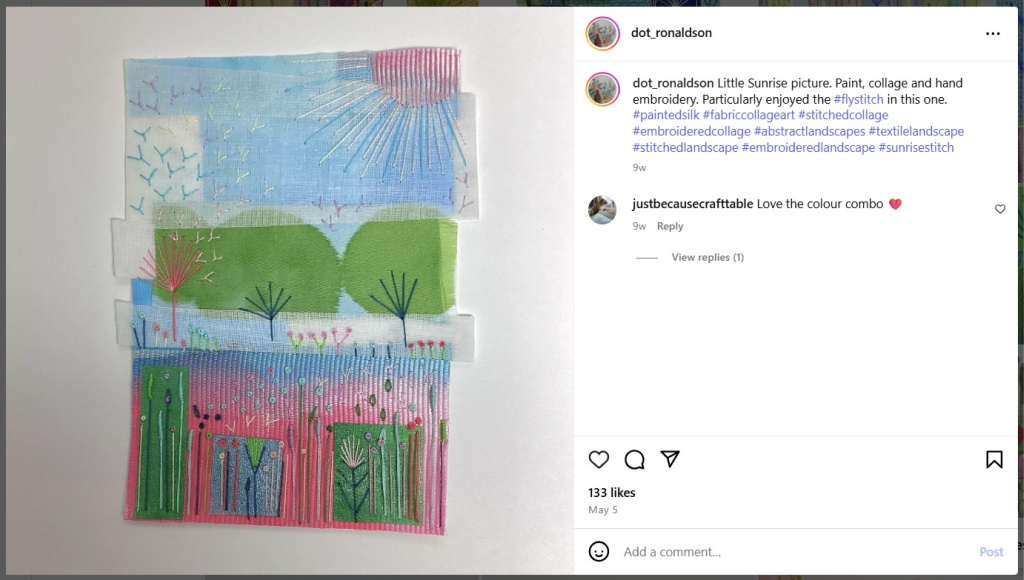 “In painting, composition and design refer to the satisfying arrangement of forms, colors, shapes, and values on the picture plane” writes author Gerald Brommer in his book Watercolor & Collage Workshop: Make Better Paintings Through Mastery of Collage Techniques. Brommer focuses on painting in this book but the guidelines for composition and design are equally relevant to other artforms such as textile collage and photography.
In his chapter “Generating Dynamic Compositions”, Brommer explains: “Although there are no rigid rules for composition, there are some principles that can help painters organize the spaces in their work. But keep in mind that design is an aspect of art, not a science. All design principles are simply guidelines; they are not meant to stand in the way of creative expression. Design principles are the grammar of visual communication; they tell us how we can use our visual vocabulary in the most effective ways.”
Shown below is another example of an outstanding contemporary composition. This one was created by Alex Waylett, a mixed media/textile artist also from the UK.
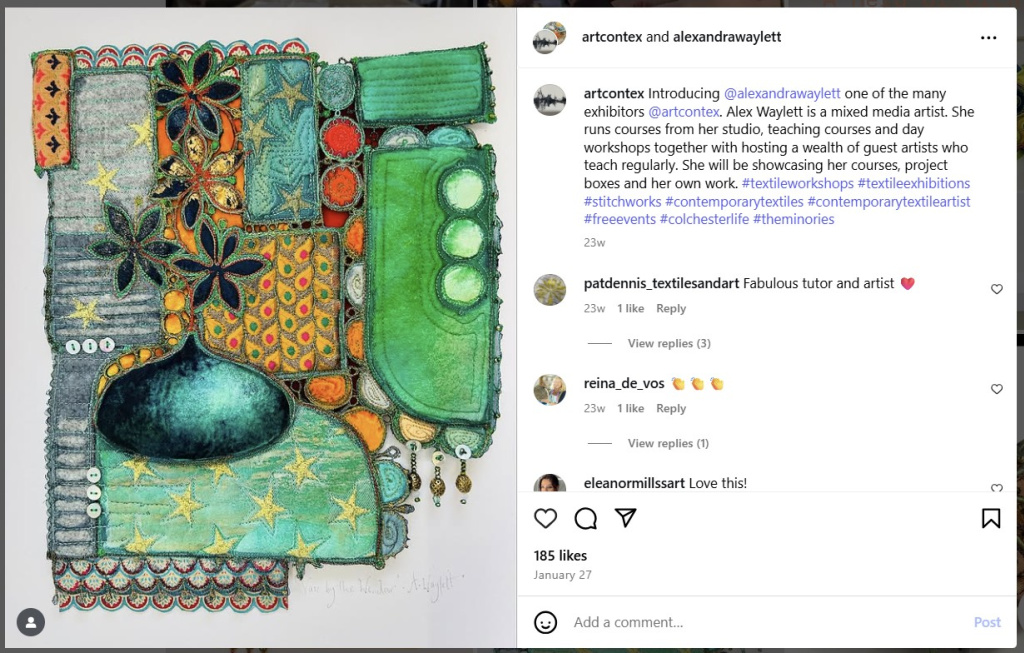 Check out my previous blog post, A Barrage of Textile Collage, for more examples of textile collage from well-known textile collagists or the blog post, Collage: The Original Cut-and-Paste, for examples of paper collage.
This next section explains how to start a collage by focusing on its composition. A collagist might also start by examining the materials they have available, by defining a theme for the artwork and/or by writing a story they wish to tell.
The following steps are derived from Brommer’s description of “The Design Process”. I pulled examples from my photos to help illustrate the concepts.
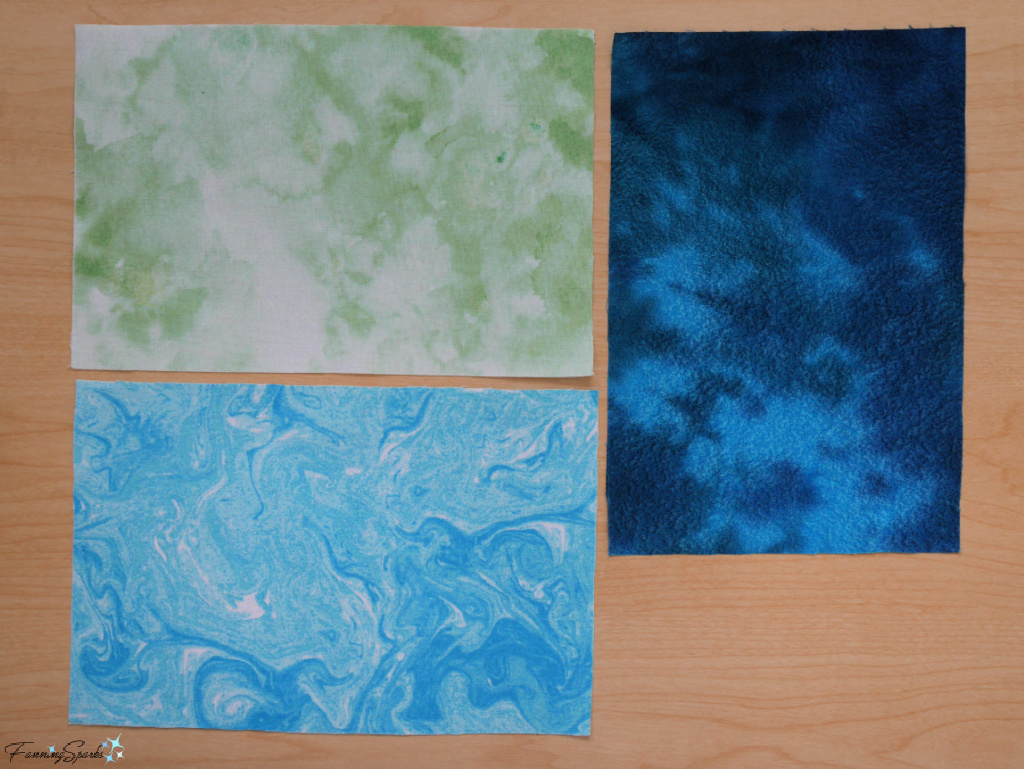
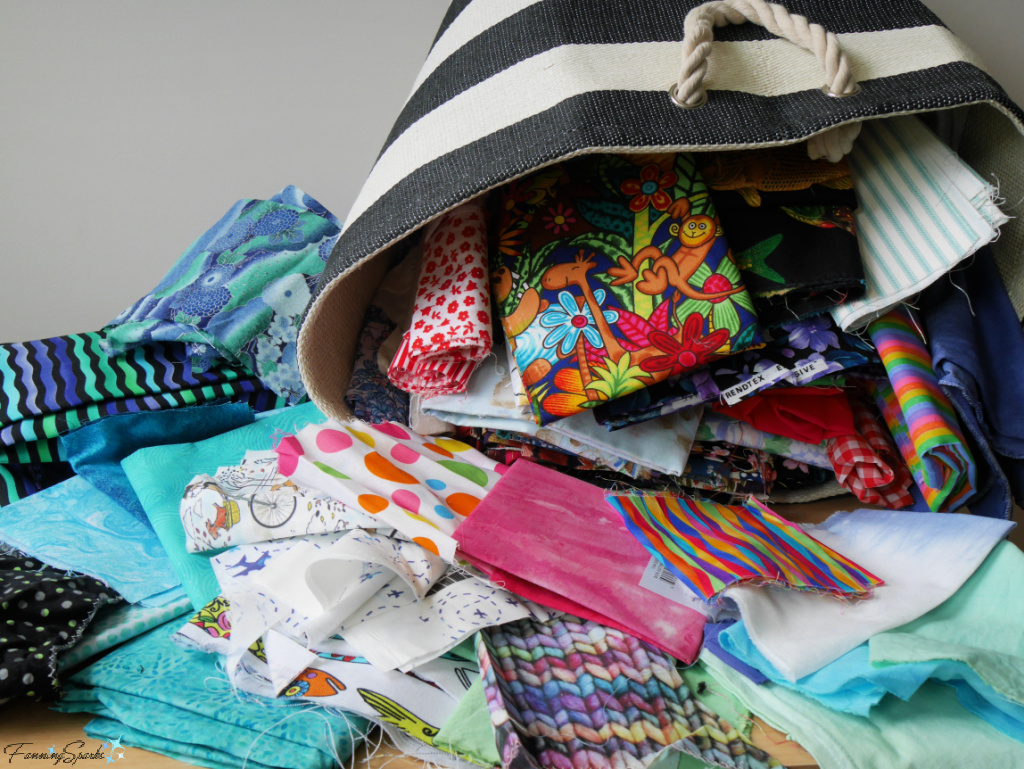
Step 1 Choose a Base “Your first major decision in making a painting”, writes Brommer, “is to choose the size, shape, and proportions that will work best with your subject”. The idea is to choose a fabric base for the collage. Rectangles with either a vertical or horizontal orientation―as illustrated with the fabric pieces below―are a common choice.
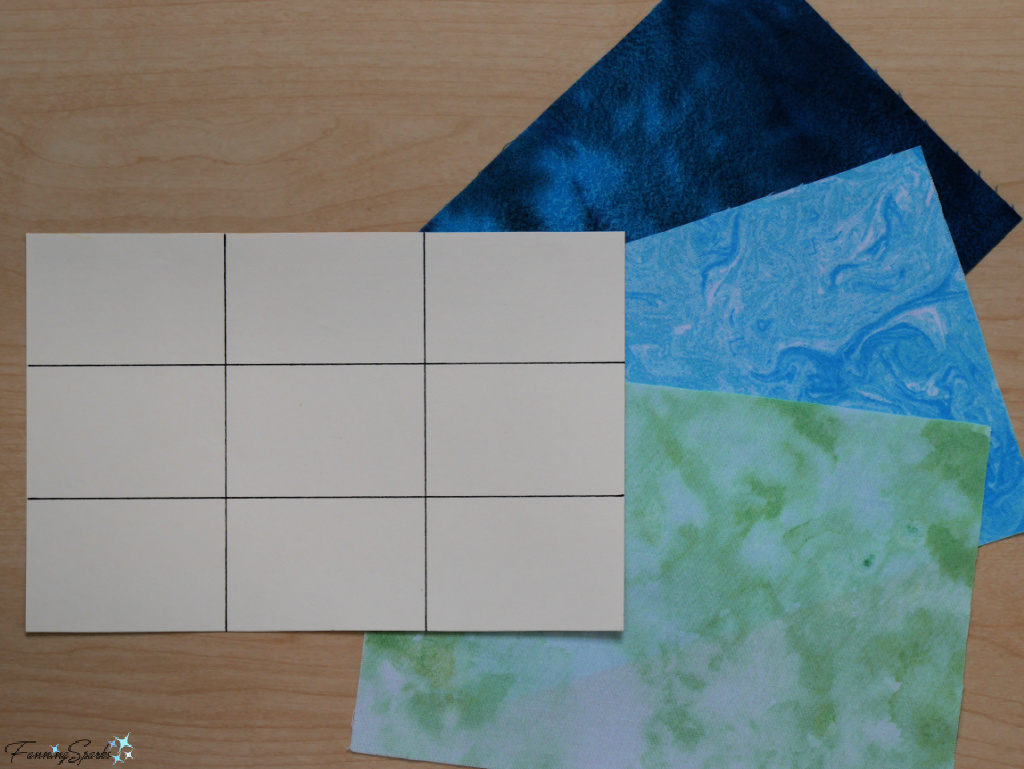
Step 2 Locate Center of Interest The next step is to locate possible centers of interest. To do this, divide the pictorial space into nine even quadrants (a grid of 3×3). This is often referred to as “the rule of thirds”. The idea is to place the focal point along one of the gridlines or at one of the intersections. Apparently, studies have shown the viewer’s eye is more comfortable looking at something off center.
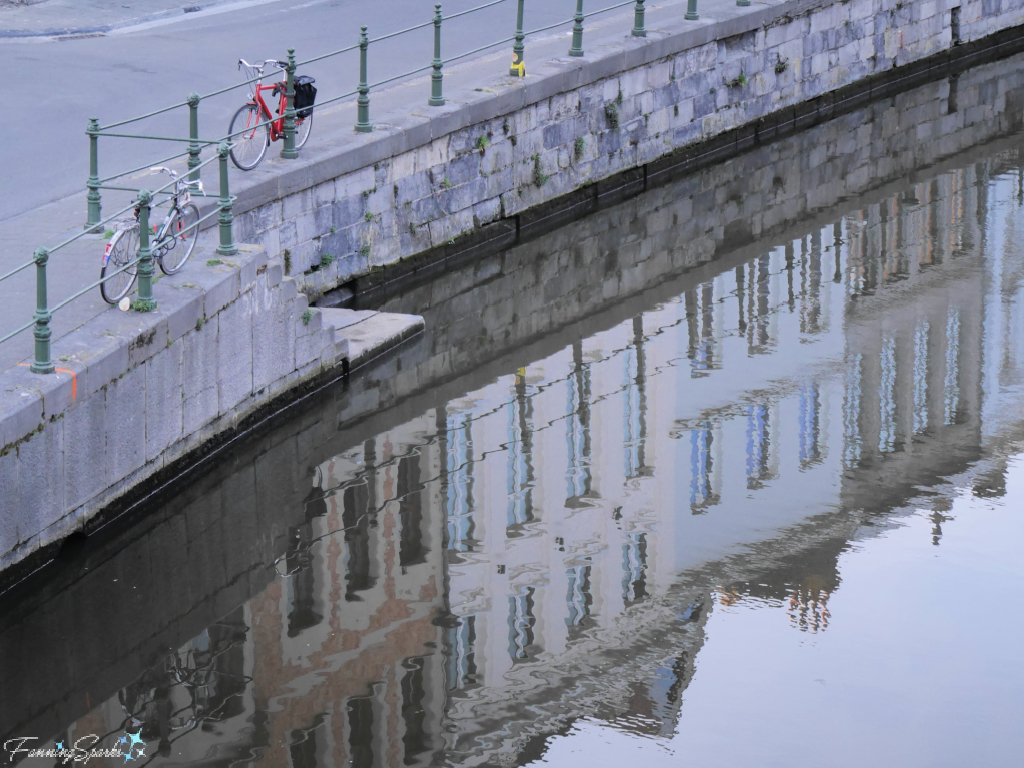
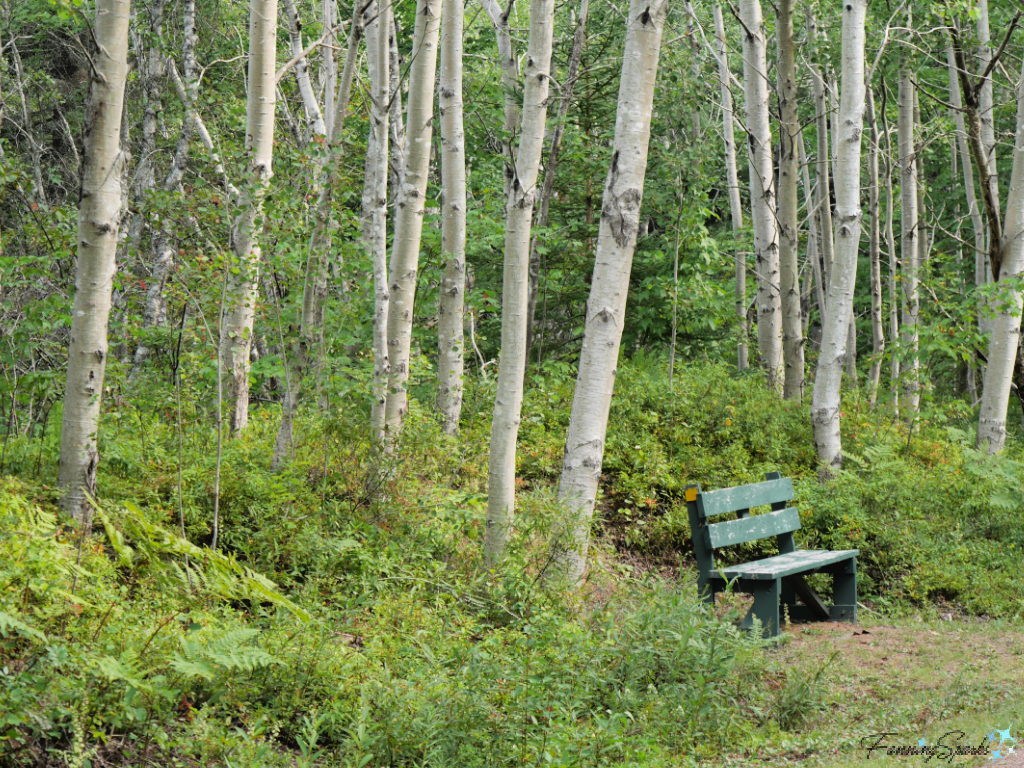
The following photos are composed with the rule of thirds in mind.
This photo captures the gorgeous facades of the Korenlei in Ghent Belgium reflected in the River Leie. But it’s the pair of bicycles in the top left quadrant which draw the viewer’s eye.
This photo shows a beautiful birch grove near Mt Stewart in Prince Edward Island. Instead of simply placing the green bench in the middle of the photo, I deliberately positioned it at the bottom right intersection point.
Step 3 Determine Underlying Structure “Several compositional possibilities” are derived from “a few … basic design formats: vertical, horizontal, cruciform (cross-shaped), diagonal, central, or combinations of these … They may appear simplistic, but they are based on observations of nature and provide a basic means of visual organization” writes Brommer.
Basic Design Format: Horizontal A few horizontal design format options are illustrated with fabric pieces below.
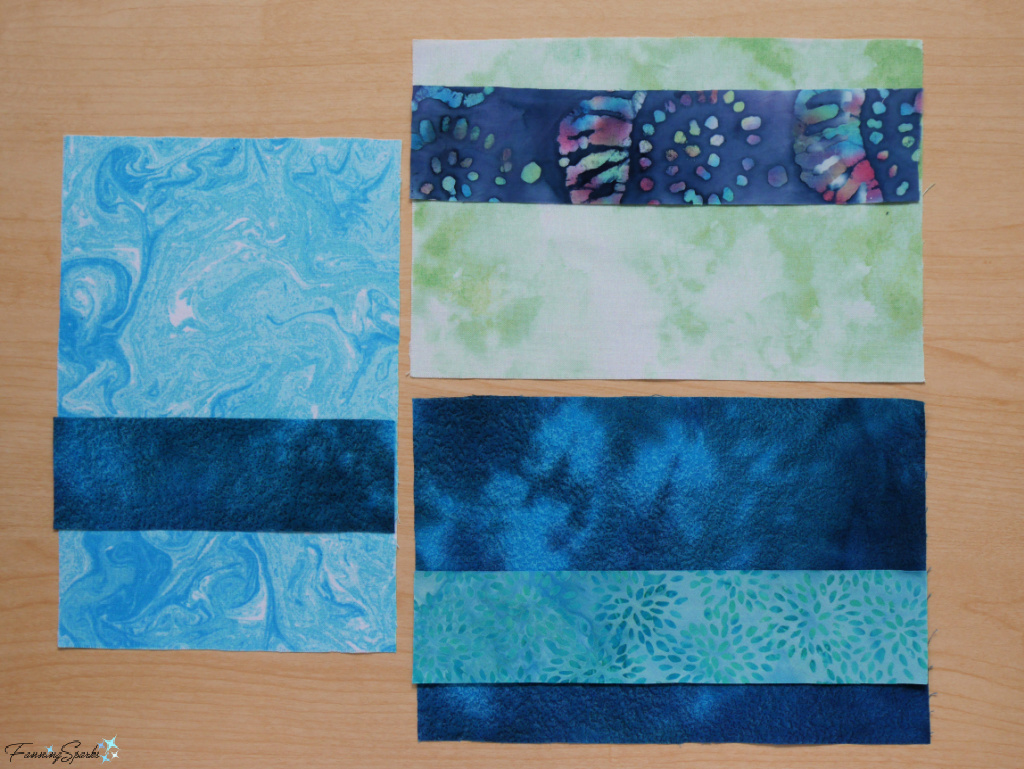
Here are two photos composed with horizontal design formats.
The horizon line and trio of floating boats in this photo, taken in Twillingate Harbour Newfoundland, give it an obvious horizontal design format.

This horizontally-formatted photo depicts the lush green fronds of a cinnamon fern.

Basic Design Format: Vertical A few vertical design format options are illustrated with the fabric pieces below.
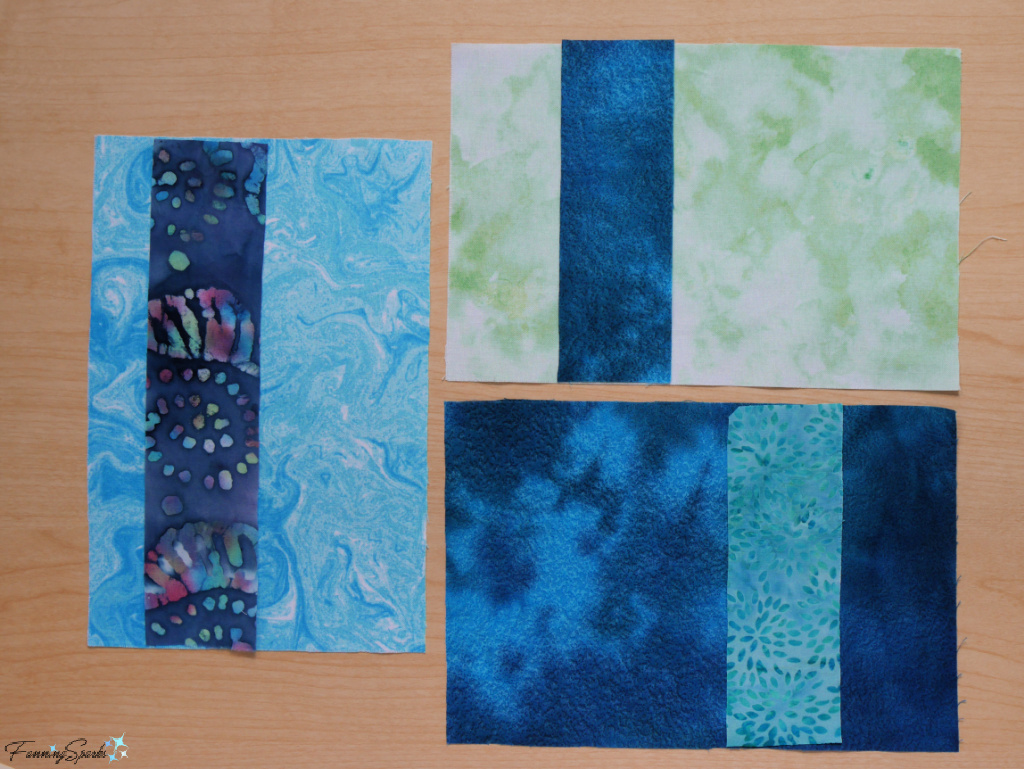
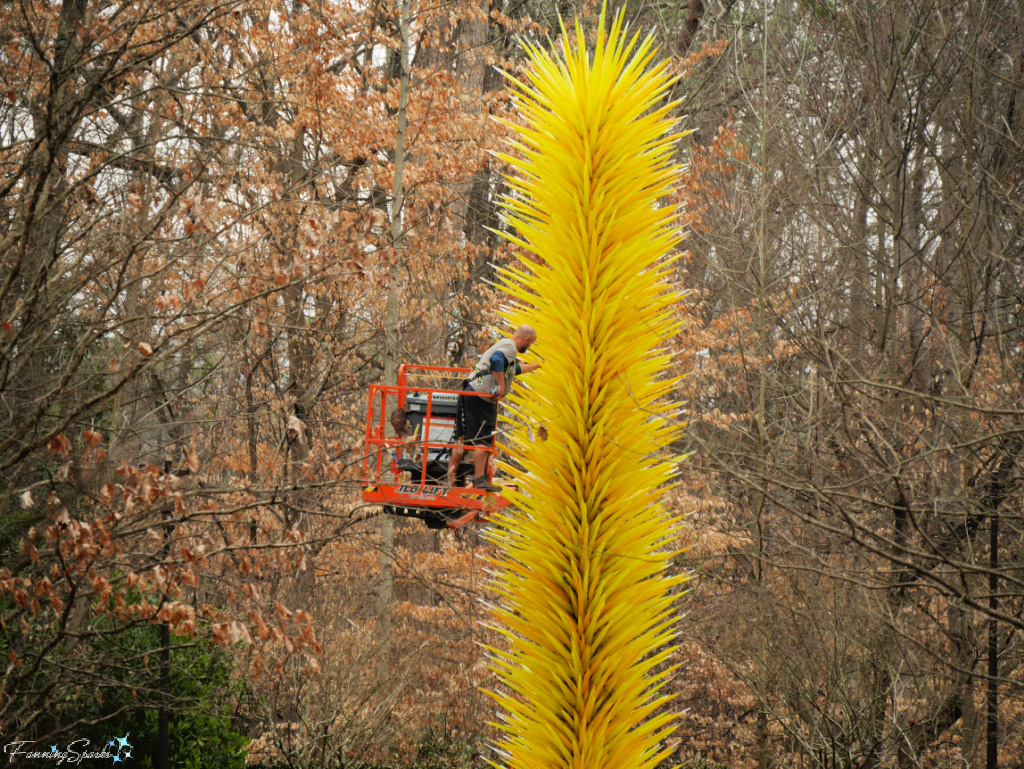
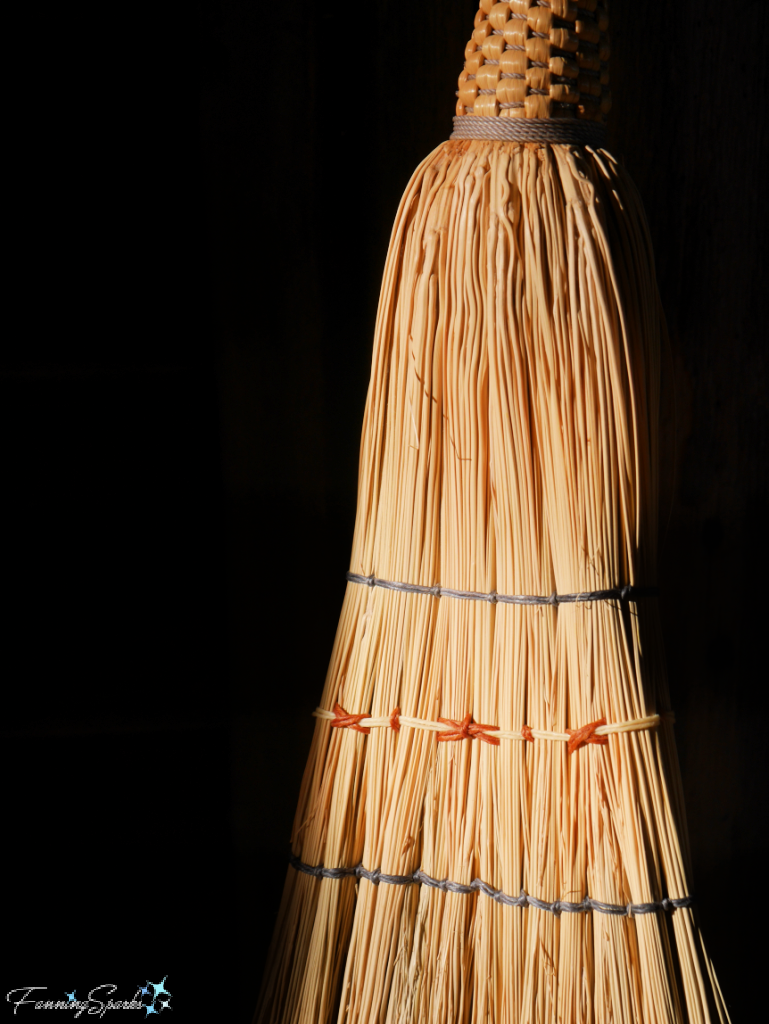
Compositions with vertical design formats are illustrated in the next two photos.
The striking Chihuly glass sculpture, titled Radiant Yellow Icicle Tower, at the Atlanta Botanical Garden gives this photo a definite vertical design format.
This photo has an obvious vertical design format. It features a hearth sweeper broom hand-crafted by artisan and instructor Mark Hendry.
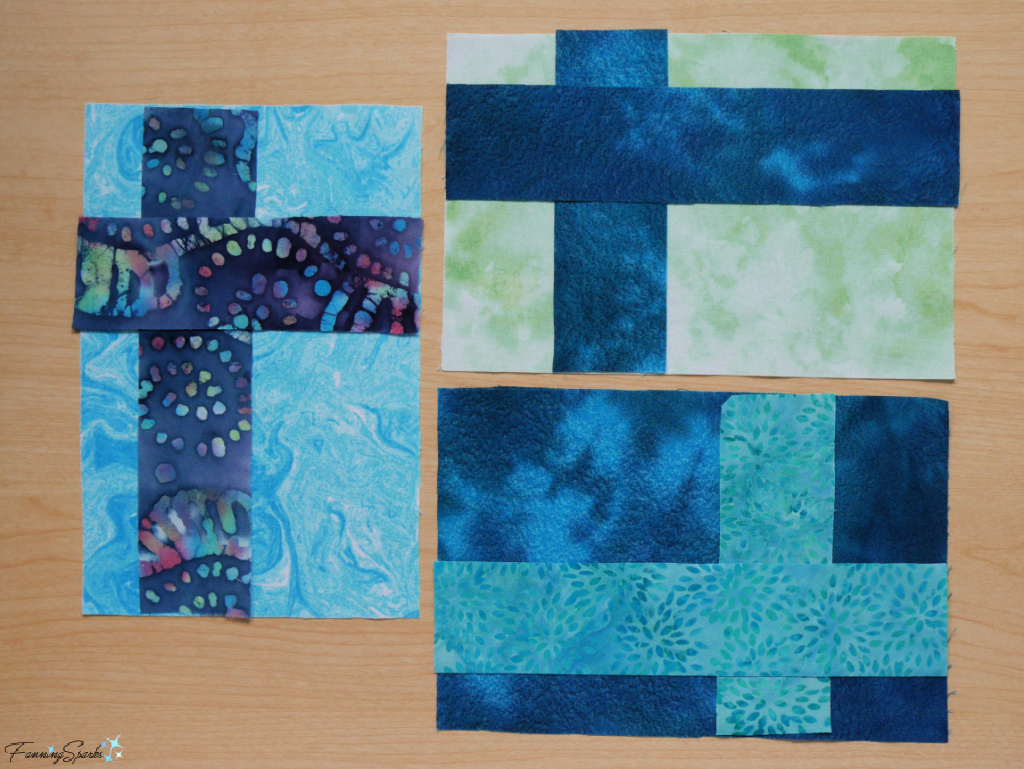
Basic Design Format: Cruciform “Cruciform designs can be offset at the crossing to provide visual excitement and variety.”
These fabric pieces illustrate a few potential compositions based on cruciform design formats.
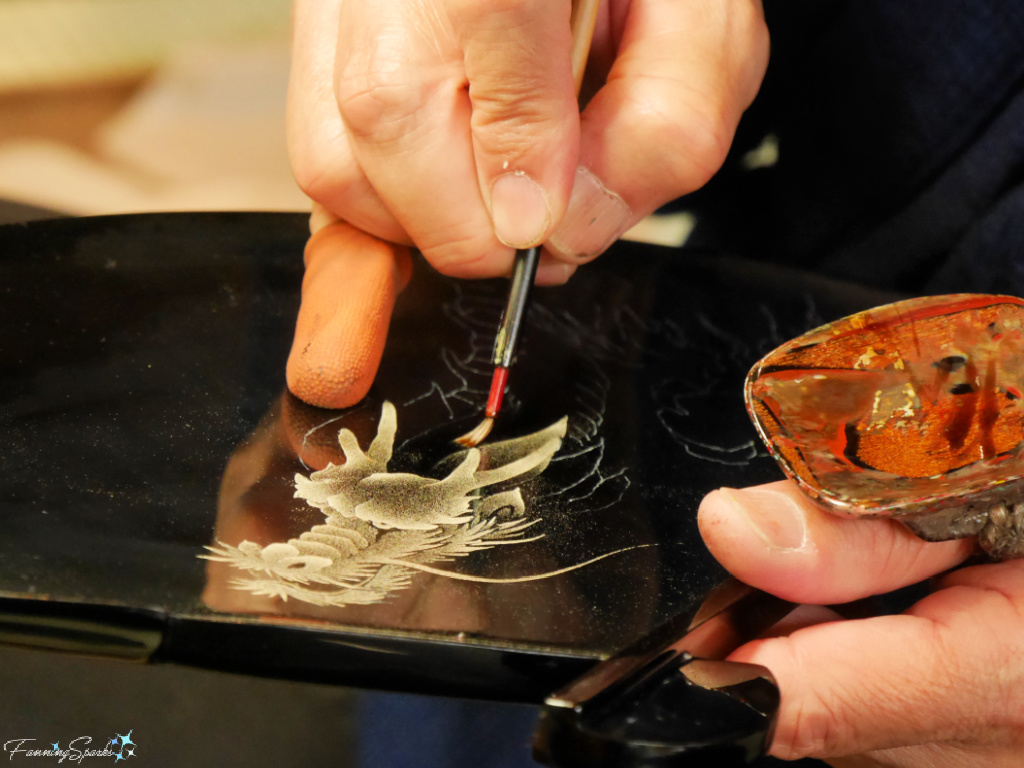
The following photos illustrate compositions with cruciform design formats although the crossover of the horizontal and vertical lines is, admittedly, quite subtle.
In this photo of an early morning over Lake Oconee Georgia, the vertical line of the rising sun and its reflection intersect with the horizontal line of trees across the lake’s surface.

Similarly, in this photo showing the hands of Kosaku Kitahama, a Nationally Designated Artisan from Japan, the viewer’s eye follows the vertical line from his right hand down the handle of the paintbrush to the painted dragon while simultaneously following the horizontal line from the mini painting palette on his left thumb across the platter’s surface to the dragon’s head.
Basic Design Format: Diagonal Diagonal compositions are another basic design format―a few possibilities are illustrated with these fabric pieces.
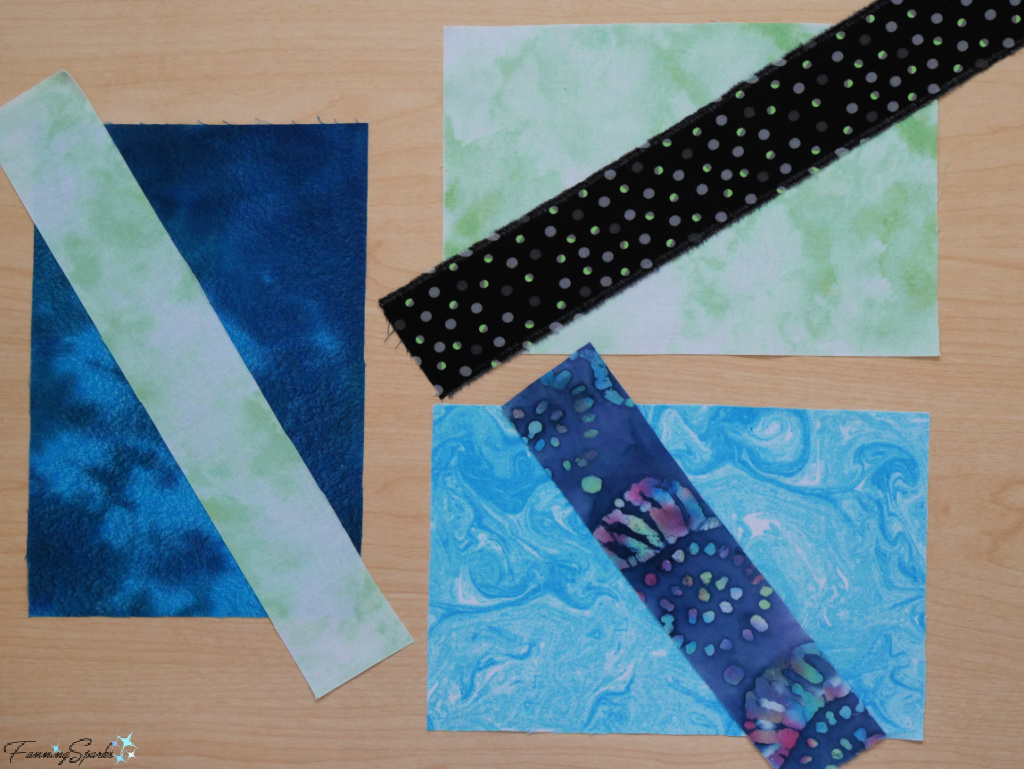
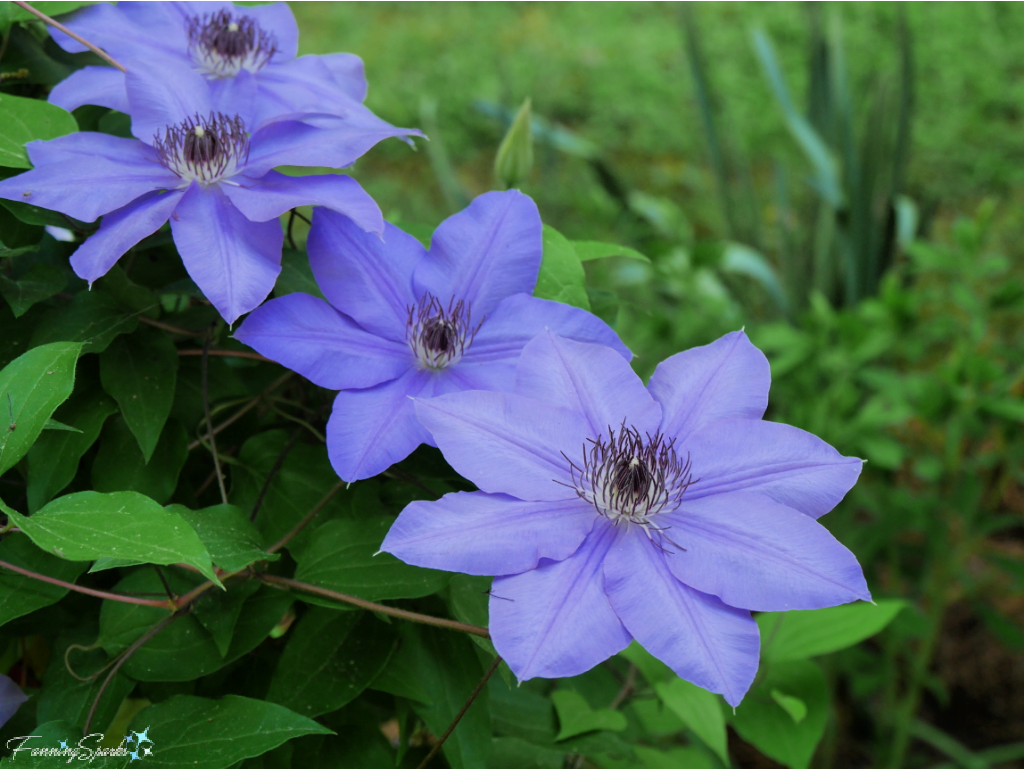
Shown below are two photos with diagonal compositions.
In this photo a row of beautiful clematis blooms forms a strong diagonal line.
The black swan’s vibrant red bill creates a dramatic diagonal sweep in this photo.

Basic Design Format: Central Another option is to build a composition around a central shape. “Central orientations may involve circular, square, or rectangular configurations”. Here are some simple examples of central design formats.
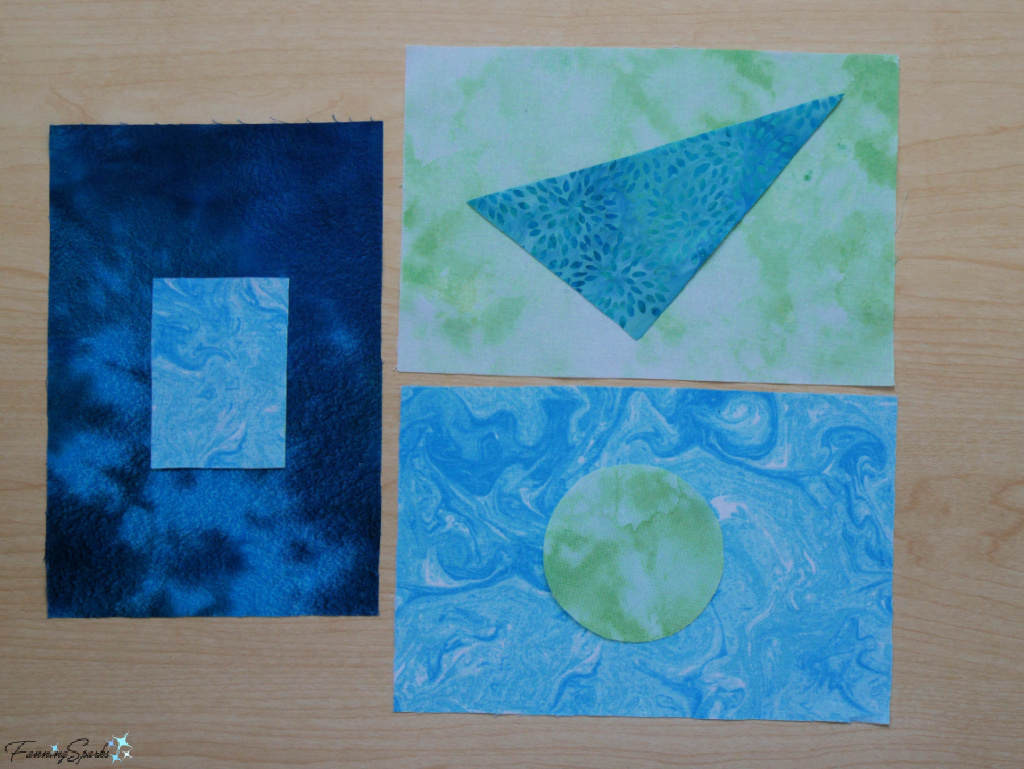
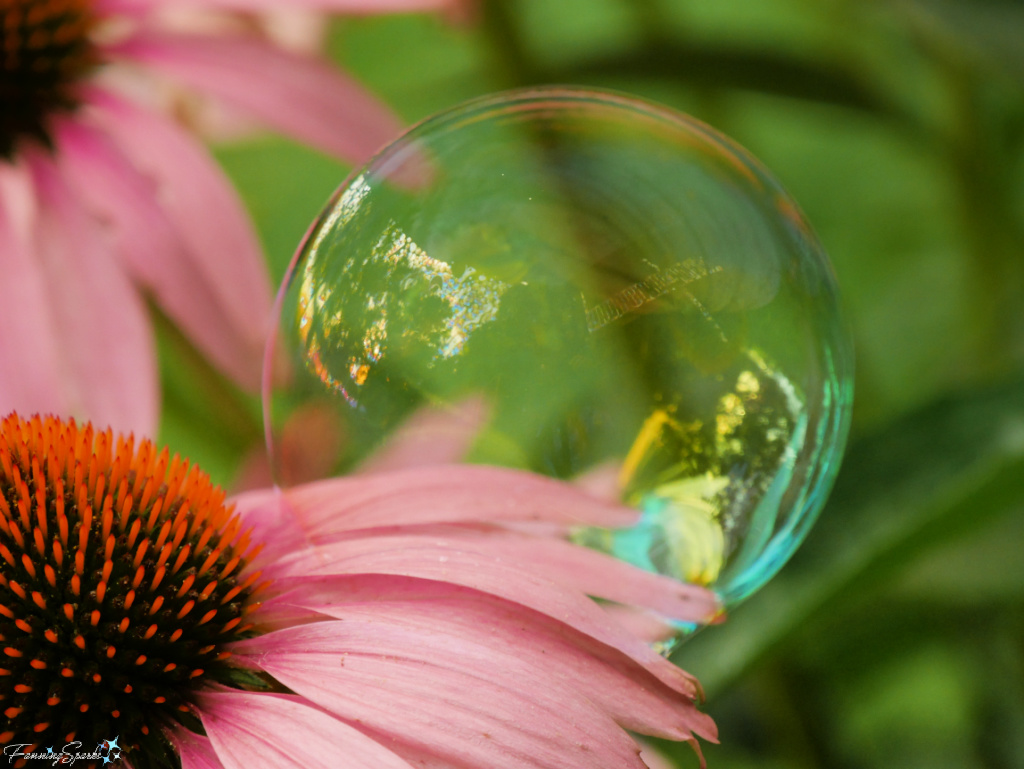
The next two photos illustrate central orientations.
The astonishing Balancing Rock in Tiverton Nova Scotia creates a strong rectangular shape in the center of this photo composition.

The circular soap bubble, positioned at the center of this image, creates the basic design format for this composition.
Step 4 Evolve the Design “Most paintings fit into one or a combination of these basic configurations … The combinations of these basic linear formats are endless. … Remember, however, that these are only guidelines and that there are numerous variations.” writes Brommer.
A few variations are illustrated below with fabric pieces.
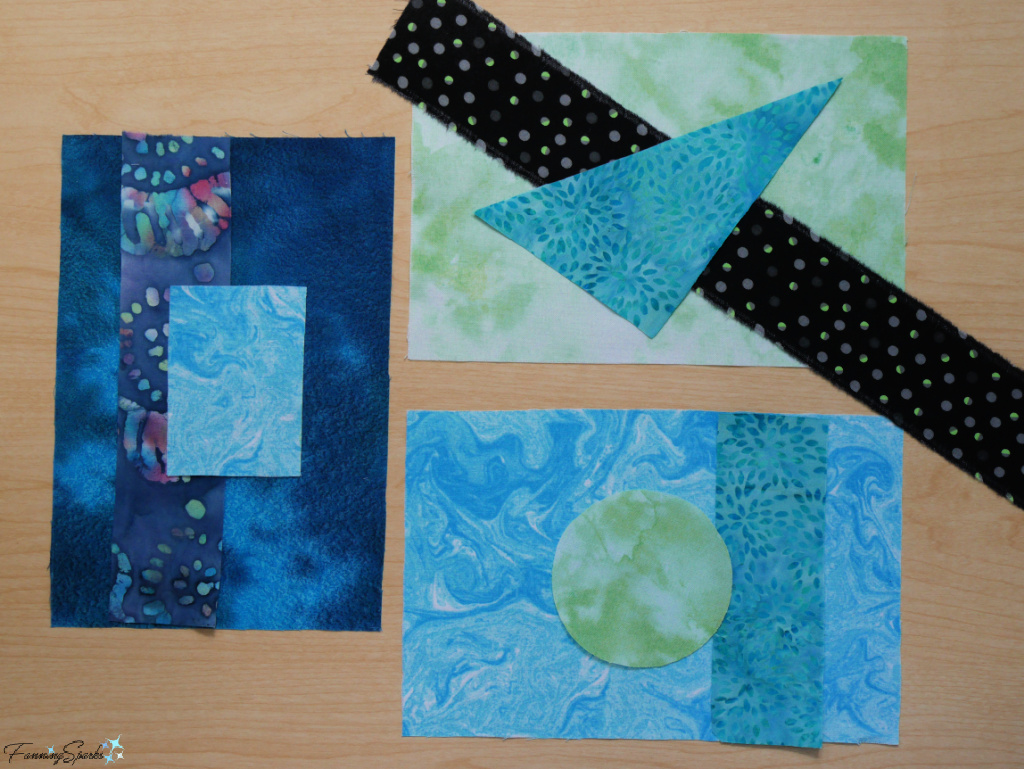
The following photos illustrate compositions combining basic configurations. It’s interesting to consider how they could be recreated in a collage.
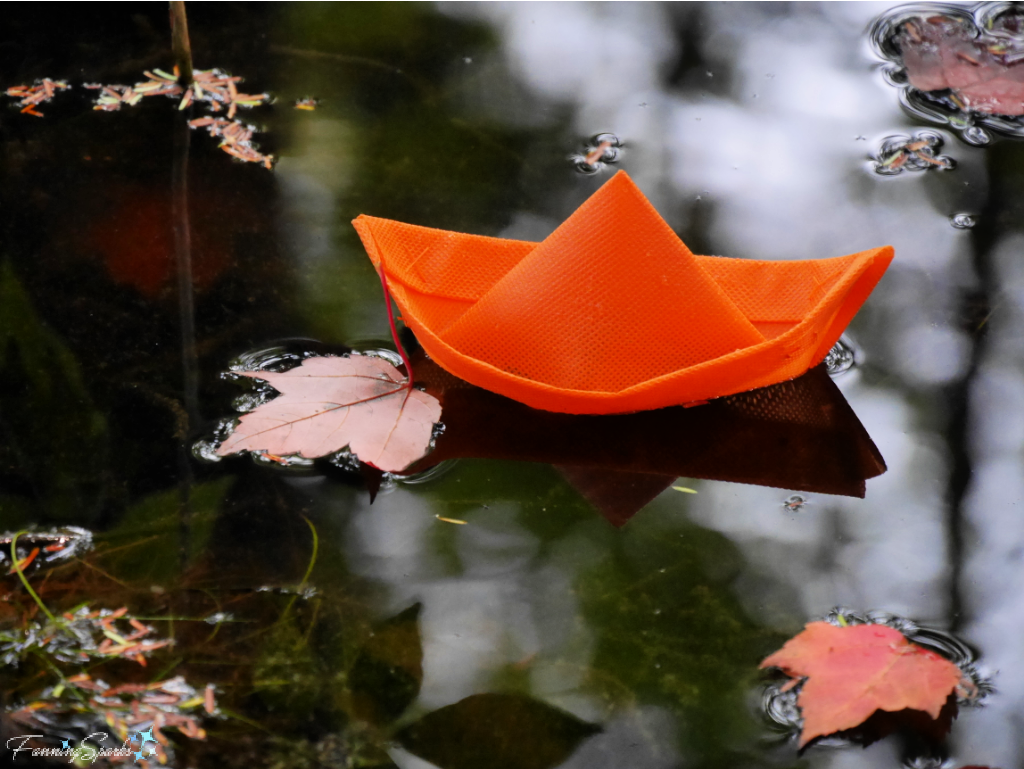
In this photo a bright, orange folded boat floats on dark, still waters. To recreate this composition, I’d choose a horizontal layout for my basic design format. Then I’d use the rule of thirds to position the focal point, the orange boat, slightly off center. I’d layer in the fallen leaves and debris to reinforce the horizontal orientation and to balance the composition.
In this next photo, a gorgeous butterfly and little bee rest on a large sunflower head. To recreate this composition, I’d choose a central orientation with a circle for my basic design format and place the sunflower head in the center of the base. Then I’d extend and soften the dominant circle with organically-shaped petals. I’d layer in the elaborate, triangular butterfly and the small, oval-shaped bee positioning them slightly off center.

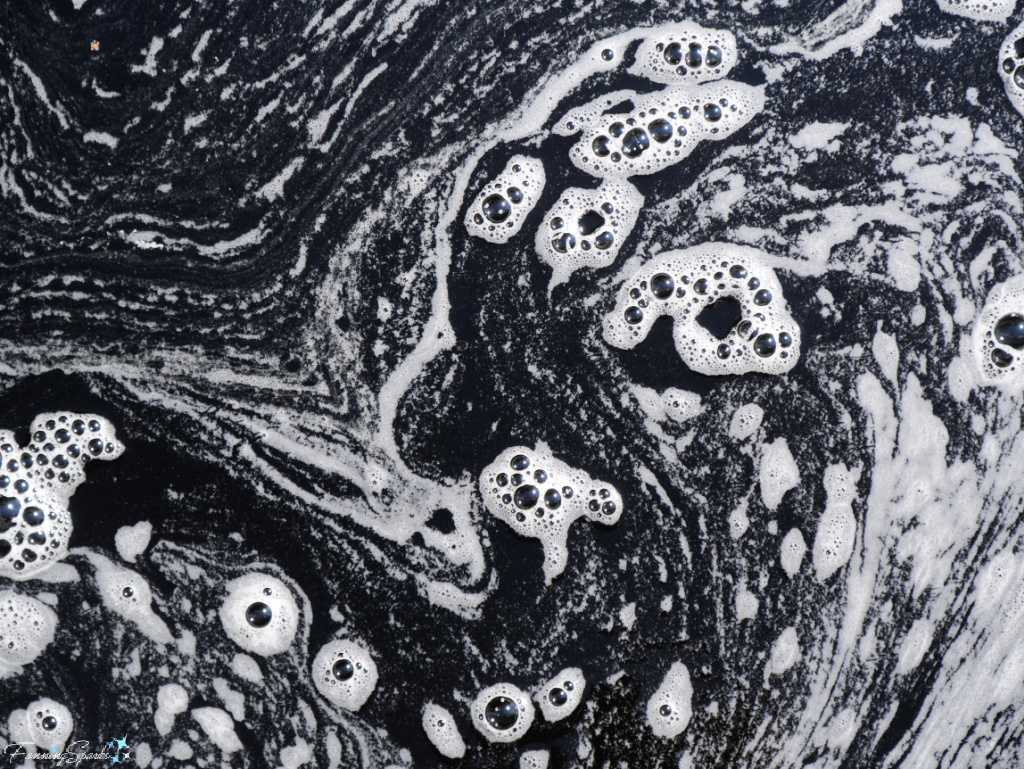
Although all the photos I’ve selected thus far picture actual places and things, the same guidelines can be applied to abstract designs. The gorgeous pattern of the lines, swirls and shapes, pictured below, is a case in point. This abstract design was formed naturally by water bubbles and river foam on the surface of a river.
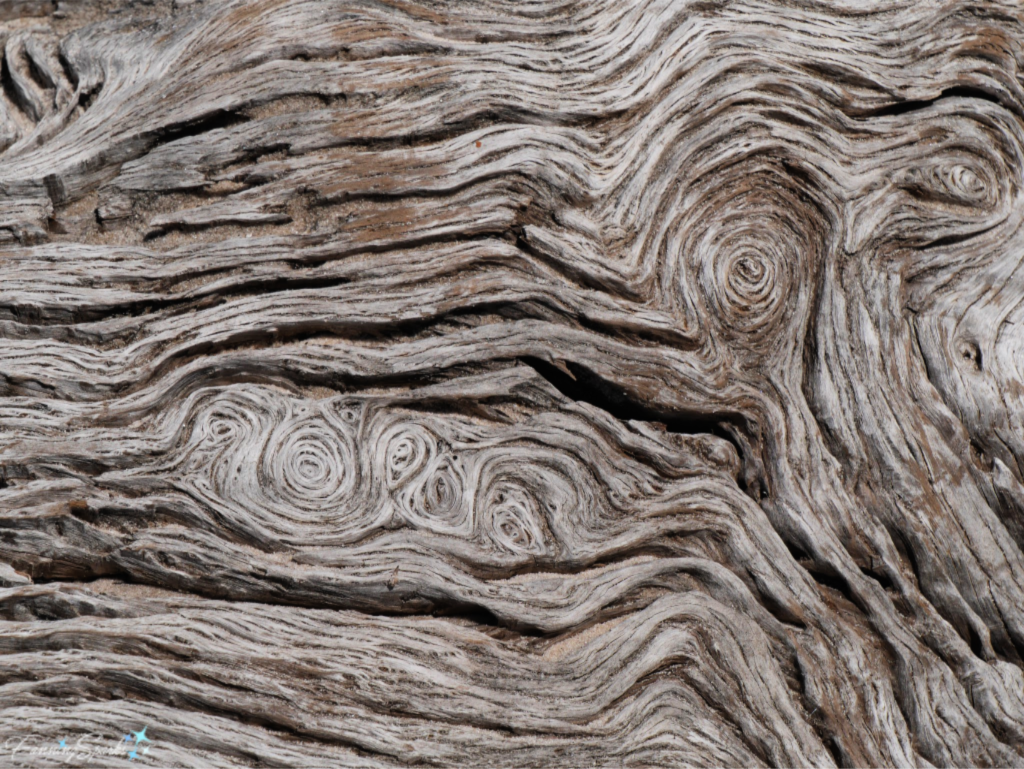
Similarly, the organic lines and patterns pictured below were formed naturally on a piece of driftwood.
To recap, one way to kick off a collage is to focus on its composition. The steps are 1) choose a base 2) locate the centers of interest 3) determine underlying structure and 4) evolve the design.
“When selecting a composition” writes Brommer, “bear in mind that there is no absolute and best choice. Instead, there are usually several good selections. Find the one that appeals to you personally.”
But these are only the first steps in the design process. “Successful collagists employ the elements of design that are essential to their work: line, shape, color, value, texture, and space. Artists utilize and arrange these elements in many specific ways. But for their compositions to be effective, collagists observe certain principles of design” explains Brommer in Collage Techniques: A Guide for Artists and Illustrators, another of the 25+ books he wrote. “The principles of design include balance, contrast, emphasis, movement, proportion, pattern, variety, and-most important-unity.”
With all this in mind, I’m ready to give it a try. Let the games begin!
More Info
Previous blog posts mentioned in this blog post include:
. A Barrage of Textile Collage
. Collage: The Original Cut-and-Paste
The following textile collage and art quilt artists are mentioned in this blog post:
. Dot Ronaldson — see more on Instagram
. Alexandra Waylett — see more on Instagram or her website
The following books, articles and websites were consulted in the writing of this blog post:
. Watercolor & Collage Workshop: Make Better Paintings Through Mastery of Collage Techniques book by Gerald Brommer which is available here on Internet Archives
. Collage Techniques: A Guide for Artists and Illustrators book by Gerald Brommer which is available here on Internet Archives.
Today’s Takeaways
1. “Composition and design refer to the satisfying arrangement of forms, colors, shapes, and values on the picture plane.” Gerald Brommer
2. “Design principles are the grammar of visual communication; they tell us how we can use our visual vocabulary in the most effective ways.” Gerald Brommer
3. “But keep in mind that design is an aspect of art, not a science. All design principles are simply guidelines; they are not meant to stand in the way of creative expression.” Gerald Brommer


Comments are closed.