
A recent announcement for a new, hands-on art class caught my attention. It was a three-day workshop to make “Cloth Art Dolls”―taught by Charlie Patricolo and hosted by the Oconee Cultural Arts Foundation. Dollmaking is not something I would normally seek out but I was curious enough to investigate.
The class description read “In this hands-on 3-day workshop, students will create their very own unique cloth art doll. Starting with machine-stitched body parts, students will learn how to hand assemble the doll, giving it personality and charm. The head and hands are crafted from knit fabric, with needle sculpting and drawn features to bring the doll to life. … each student will leave with a one-of-a-kind, fully personalized figure.” Here’s the workshop announcement from Charlie’s website. Intriguing!
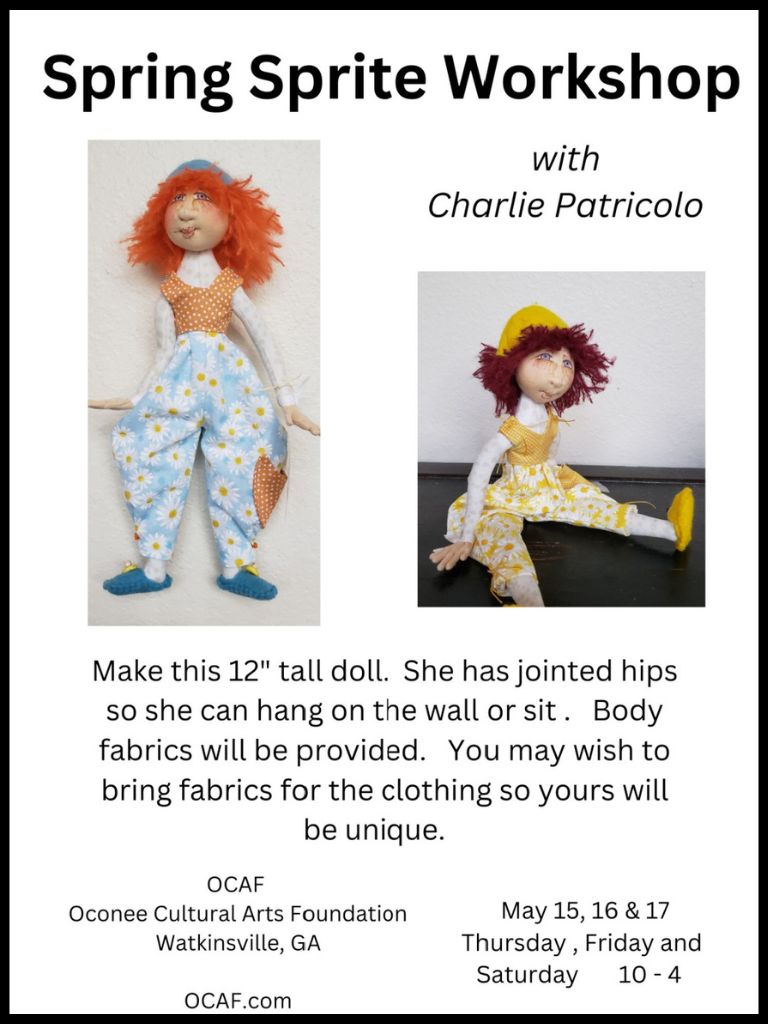
According to her website bio, Charlie has “been making cloth dolls for over 50 years.” She explains that “for the past 25 years, they are how I make my living and my life. I teach cloth dollmaking and create dolls to sell in galleries” and from her online shop. Interestingly, it was a class at the John C Campbell Folk School which pushed Charlie to take dollmaking from part-time hobby to full-time career. Having experienced the Folk School’s magic for myself, I can appreciate how that might happen (see my previous blog posts about the John C Campbell Folk School).
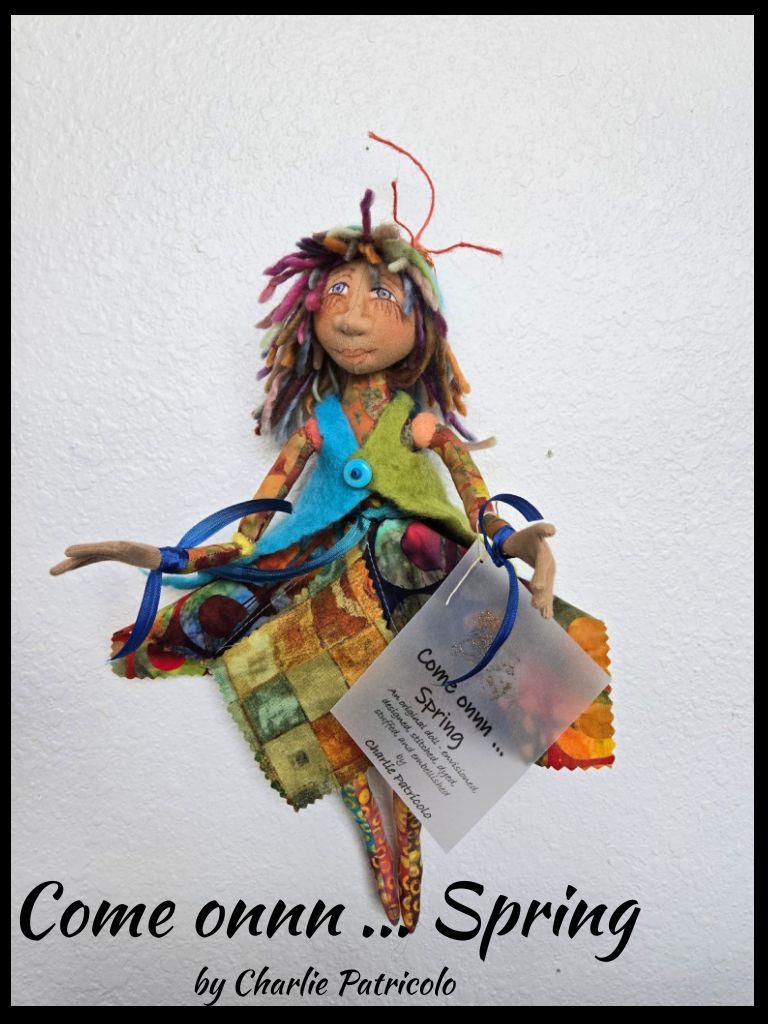
Charlie’s website showcases numerous photos of her one-of-a-kind dolls. Her distinctive style shines through in the colorful personality of her dolls. Every doll has its own special character emphasized by its clothing and accessories. Yet, all the dolls feature the artist’s signature detail―spectacular lower lashes. Those “Patricolo lashes” can be seen on Come onnn… Spring, the joyful character pictured below. The tag reads “an original doll – envisioned, designed, stitched, dyed, stuffed and embellished by Charlie Patricolo”.
Here’s a closer look at those signature lashes on Charlie’s cloth art doll titled Pasta.
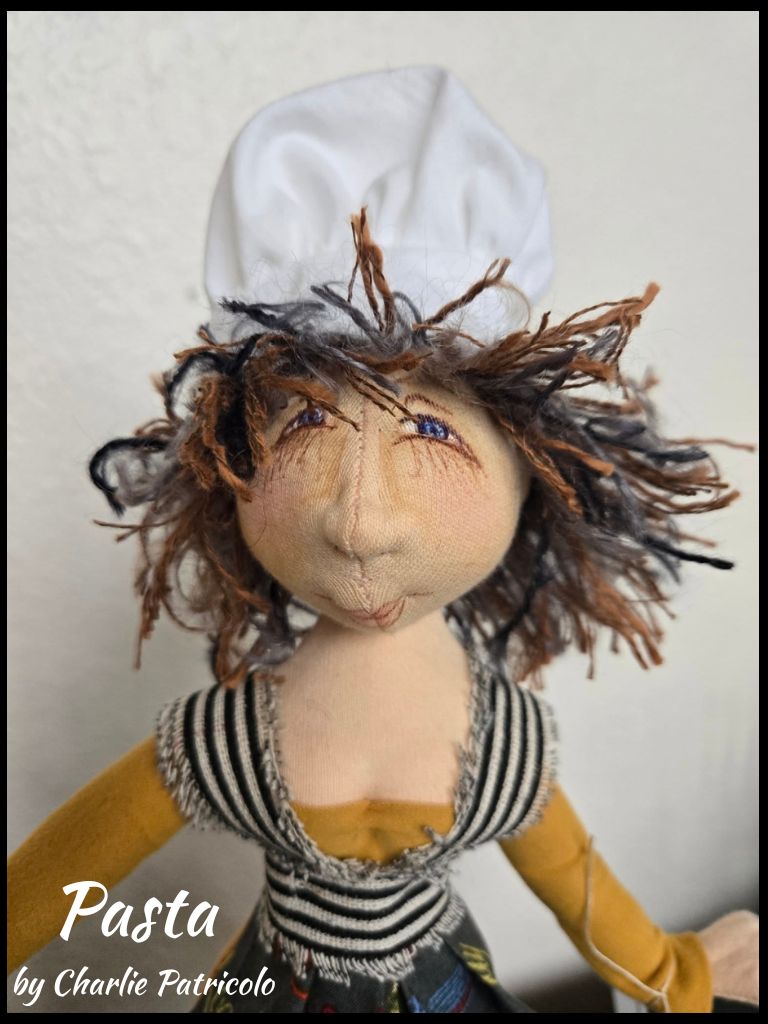
Charlie makes cloth art dolls with needle-sculpted faces. Her three-dimensional figures are made of soft materials, such as fabric, stuffing and yarn, which also qualifies them as soft sculpture (check out my previous blog post What is Soft Sculpture?).
Shown below is Charlie’s Roses and Ruffles art doll.

“Art dolls are … unique, handcrafted figures created by artists” according to author Romy Mortiz in their article 32 Facts About Art Dolls. “These dolls can be made from various materials and are usually not intended for play but for display and collection”.
Wikipedia notes “art dolls are objects of art, rather than children’s toys, created in a wide variety of styles and media”.
A little online research revealed there’s more to dollmaking than meets the eye. “Dollmaking is a multi-media construction. … The main considerations when making a doll are to understand the desired effect or impression you want to make, then to be willing to play with variations of your idea and explore any directions that are suggested. And to take into consideration the effects of a technique when you use or manipulate a certain material.” writes Susanna Oroyan in her book Anatomy of a Doll.
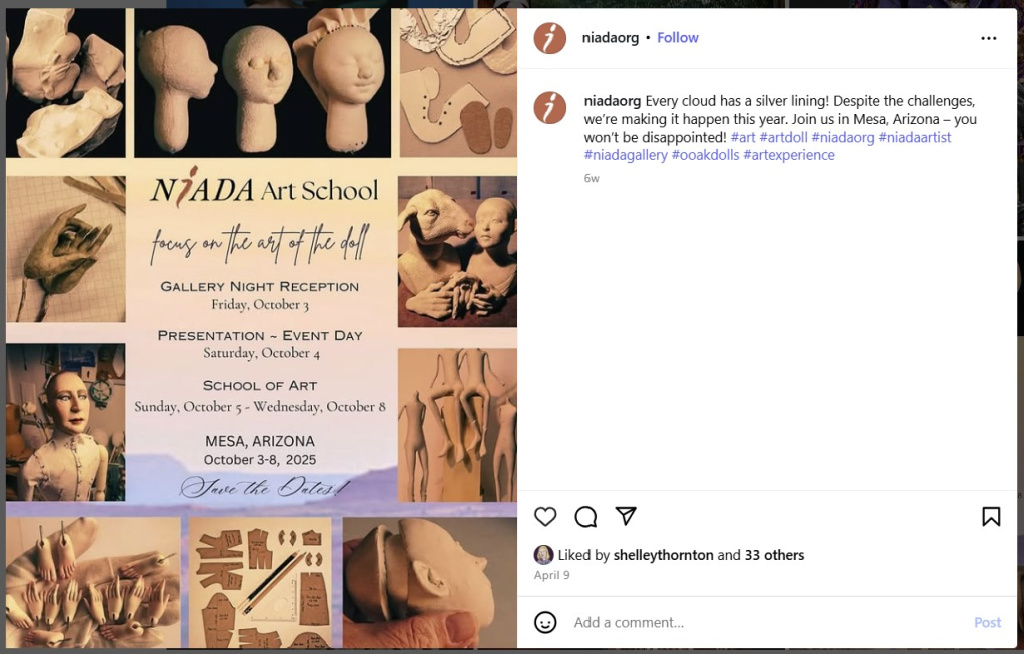
Before I knew it, I had fallen down the proverbial rabbit hole―investigating the world of dollmaking. The National Institute of American Doll Artists (NIADA) which is an international organization promoting the art of the original handmade doll was a great find. They sponsor educational opportunities for their member artists as well as conventions, competitions and special events as illustrated by this NIADA Instagram post announcing an upcoming NIADA Art School.
NIADA also showcases the work of the member artists on their website. An incredible variety of creative concepts and technical finesse is represented. Every art doll artist has their own style and technique―every art doll has their own personality and character.
“The face is an important part of doll making” writes Patti Medaris Culea in Creative Cloth Doll Faces. “It reflects what you want your doll to be. It’s who she is. … The face brings a doll to life.”
“Fairly realistic head and body proportions” are also important for the doll “to look balanced and recognizable as a human figure” explains Marina Druker in her book Enchanting Art Dolls & Soft Sculptures.
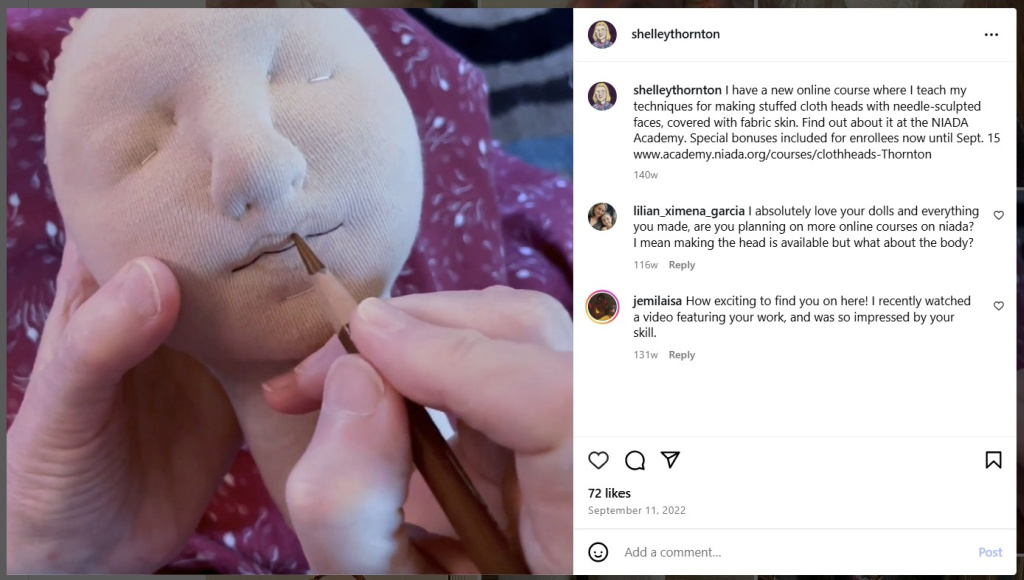
A technique, called “needle sculpting, allows the doll maker to create a three-dimensional face from fabrics” writes author Nancy Hoerner in The Complete Photo Guide to Doll Making Book. “With needle and thread and some carefully placed stitches, the face begins to take shape and develop character.”
Shelly Thornton is an accomplished dollmaker who also uses needle sculpting. The NIADA website describes Thornton as “a lifelong artist of varied endeavors [who] has worked in illustration, animation, toymaking, graphic design, quilt making, and clothing design and fabrication. … She currently creates one-of-a-kind cloth art dolls”.
This delightful cloth art doll, named Addy, was created by Shelley Thornton.
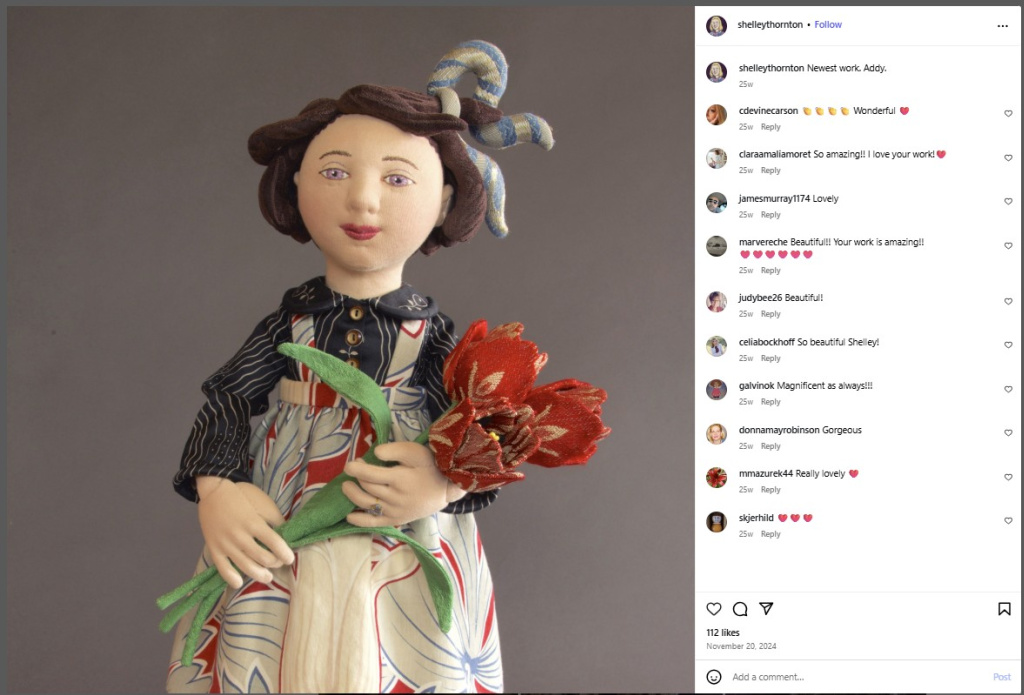
On her website, Thornton writes “I think of my dolls as collages, the juxtaposition of disparate found patterns, colors, and textures into unexpected, meaningful relationships. … My intention is to render a human shape that can serve as a familiar, approachable canvas on which to express, in the languages of form and color, the sentiments of comfort, serenity, compassion, and optimism that I aspire to contribute to a difficult world”.
Thornton’s dolls are “made of wool-stuffed cloth forms with wooden ball joints for articulation. They stand about 28 inches tall, … Their heads begin as a seamed, stuffed basic shape made of hemp and cotton knit fleece. Facial shapes are refined with needle-sculpting stitches, then covered with a cotton knit ‘skin’ fabric. Embroidery defines the eyes and lips”.
Here’s a closer look at Thornton’s needle sculpting technique as shared on her Instagram account.
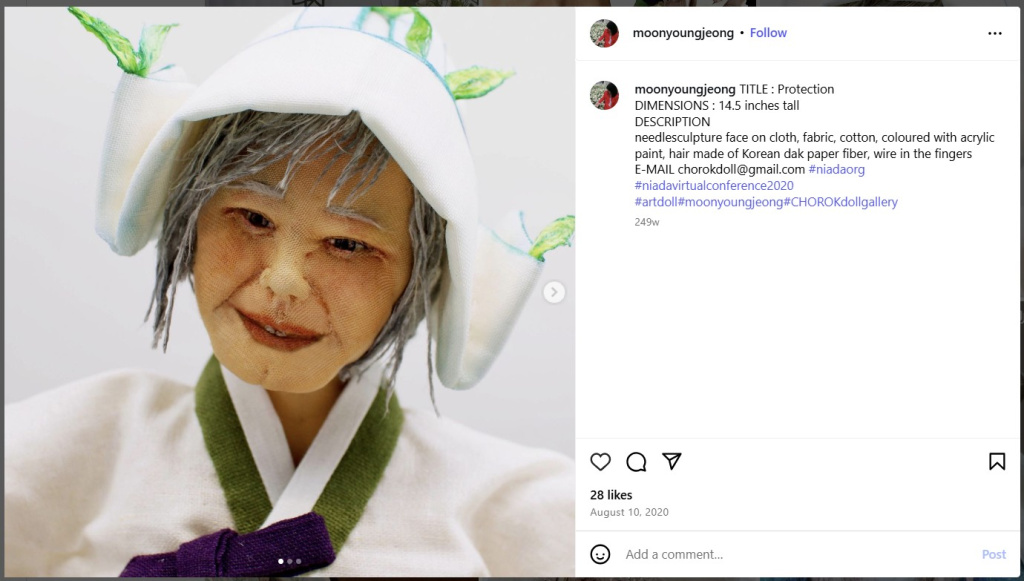
Moonyoung Jeong is another NIADA art doll artist who uses needle sculpting to make her incredible doll faces. Her NIADA bio states “I make cloth dolls under the name Chorok Doll in Korea. … The first one I made [in late 1990s] was a simple soft doll, with eyes drawn or embroidered on a flat face. I was not satisfied with it, so I experimented with many other techniques. … Today I make cloth dolls with needle-sculpted features”.
This charismatic art doll by Moonyoung Jeong is titled Protection.
The NIADA artist directory includes several incredibly talented doll artists who specialize in needle sculpture. But it appears to me, more NIADA member artists sculpt their doll faces and body parts from modeling material. Author Druker explains “With the large variety of modeling materials available to doll makers today [book published in 2012], art dolls have become very easy to produce at home. Various professional-quality air-hardening materials for sculpting include Creative Paperclay: LaDoll … and FIMOair. Air-hardening materials may contain clay or may be a mixture of extender and paper pulp with the properties of fine clay. They are easy to use, nontoxic, fast drying, and lightweight, and they do not require firing or baking. When dry, these materials can be painted, carved, stamped, and sanded.”
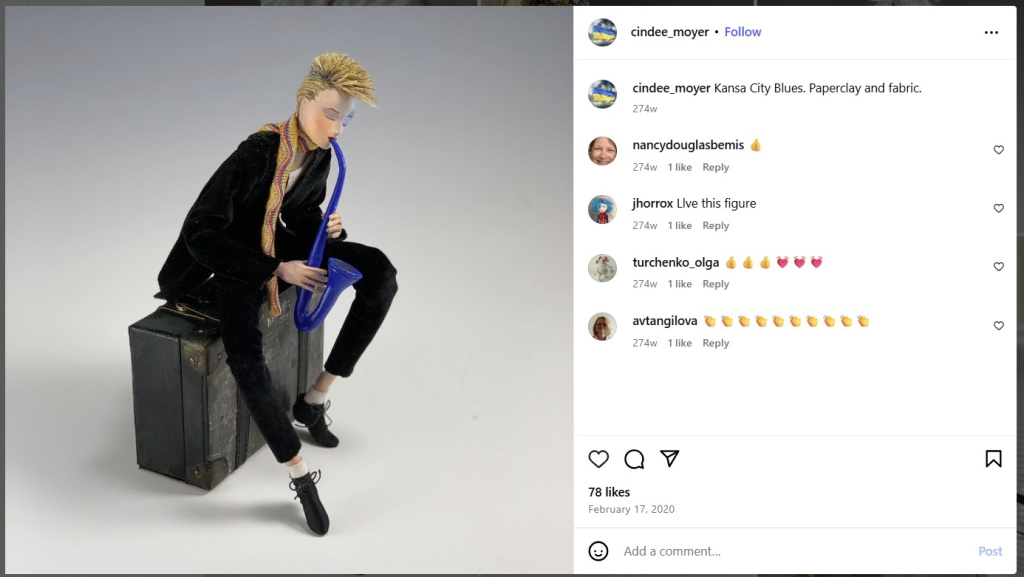
Cindee Moyer is a case in point. In her NIADA profile, Moyer explains she learned to make art dolls by needle-sculpting in fabric. Then she discovered air-dry clay. She writes, “This opened new possibilities and I started to combine cloth and clay. I would make the doll head, body and arms from fabric and add paper clay legs. Today, I work primarily in paper clay sculpted over a wire armature”.
Moyer created this splendid piece, Kansas City Blues, with paper clay and fabric.
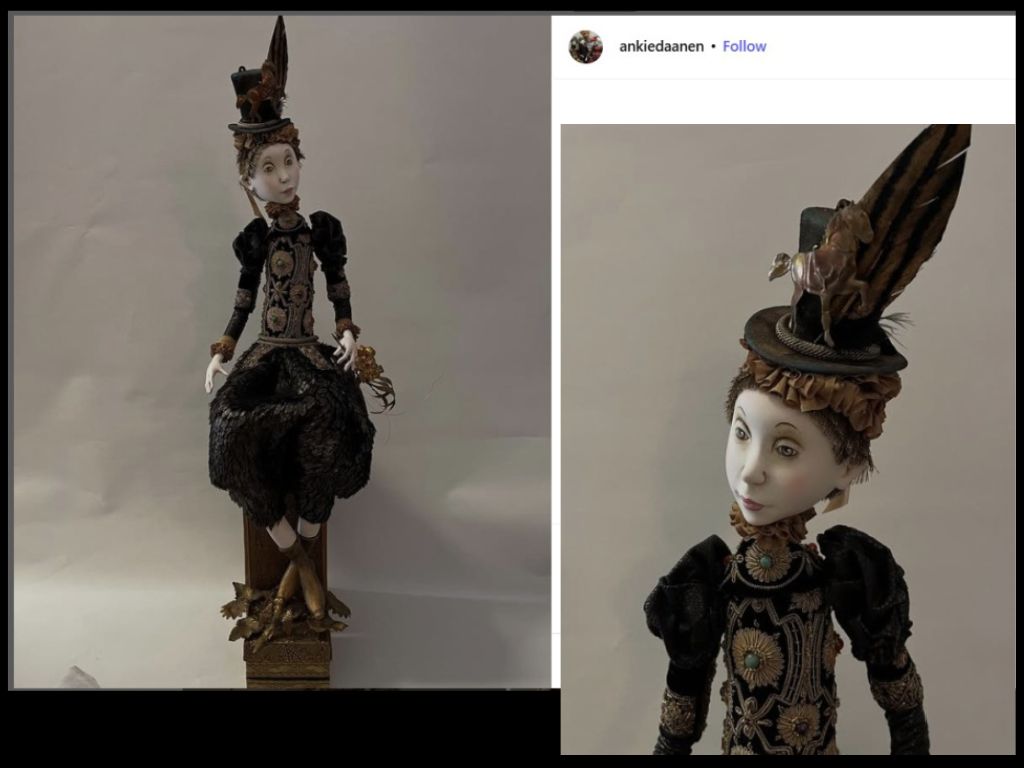
Doll artist, Ankie Daanen, also sculpts her art dolls with modeling material. On her website, Daanen states “Nowadays I like to work with Creative paperclay and porcelain. I love the charm of a very smooth skin, which I can achieve with both paperclay and porcelain.” She is based in the Netherlands but often teaches workshops around the world. On her NIADA profile, Daanen says “It’s the total impression that counts for a doll to be a good doll: a combination of high standard craftmanship, the recognition of emotional expression and the utility of high-quality materials.”
This art doll by Daanen is titled Almost on Horseback.
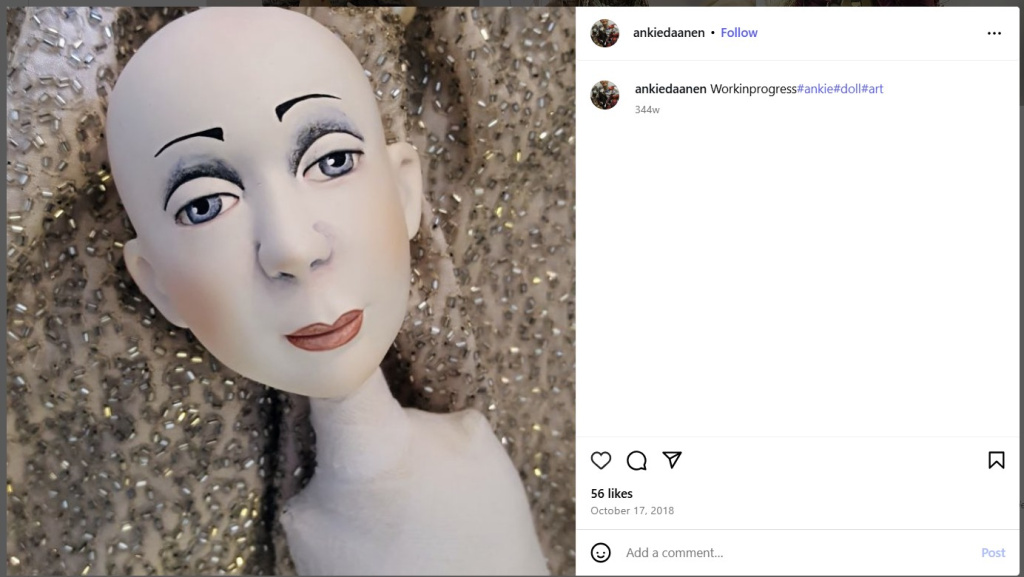
Here’s a peek at one of Daanen’s works in progress.
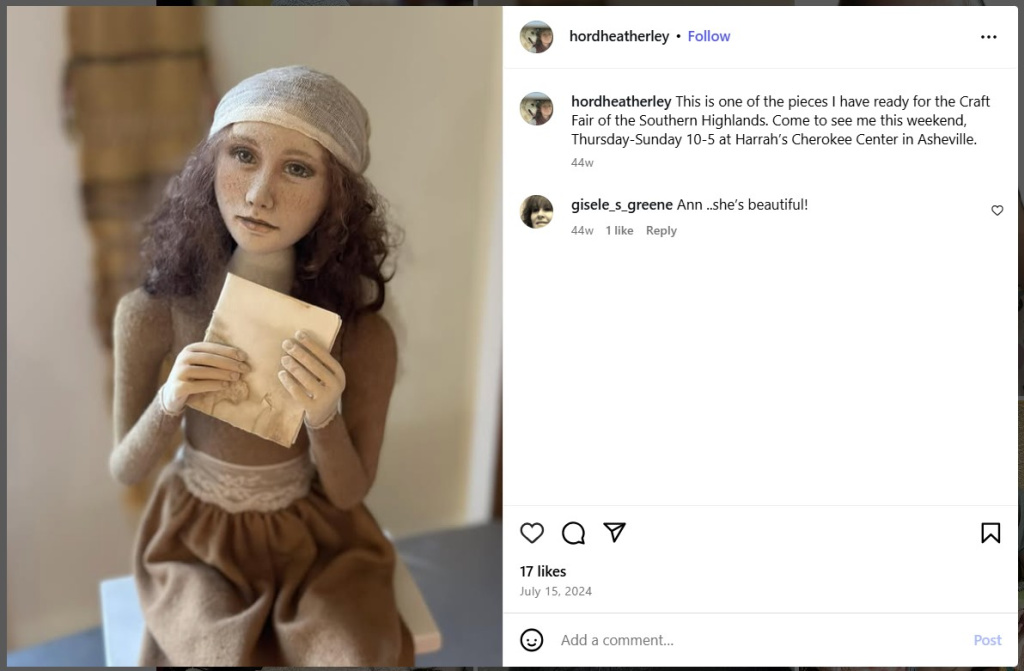
Ann Hord-Heatherley is another NIADA artist member. As stated on her website, Hord-Heatherley “is a mixed-media figurative artist. Her dolls, though usually dressed in a vintage style, have a timeless quality that connects with people on an emotional level”.
Her process is an interesting mix of sculpting air-dry clay and sewing fabric. She explains “My process is similar with each unique piece. I begin by sculpting the face in air-dry clay. As I add the features a personality begins to emerge. The piece is always more successful when I allow the figure to tell me who it is meant to be. When the face is complete and the clay is dry, I adhere a layer of tea-dyed cotton gauze. I then begin to sketch in facial features using color pencils to shade, enhance, and refine each face’s distinctive appearance. As the figure speaks to me I consider the posture that will enhance the mood the character is trying to convey. I sew the neck, trunk, hands, arms, legs and feet individually. I then hand sew the body parts in place, fitting them together like the pieces of a puzzle.”
This is Emma by Hord-Heatherley.
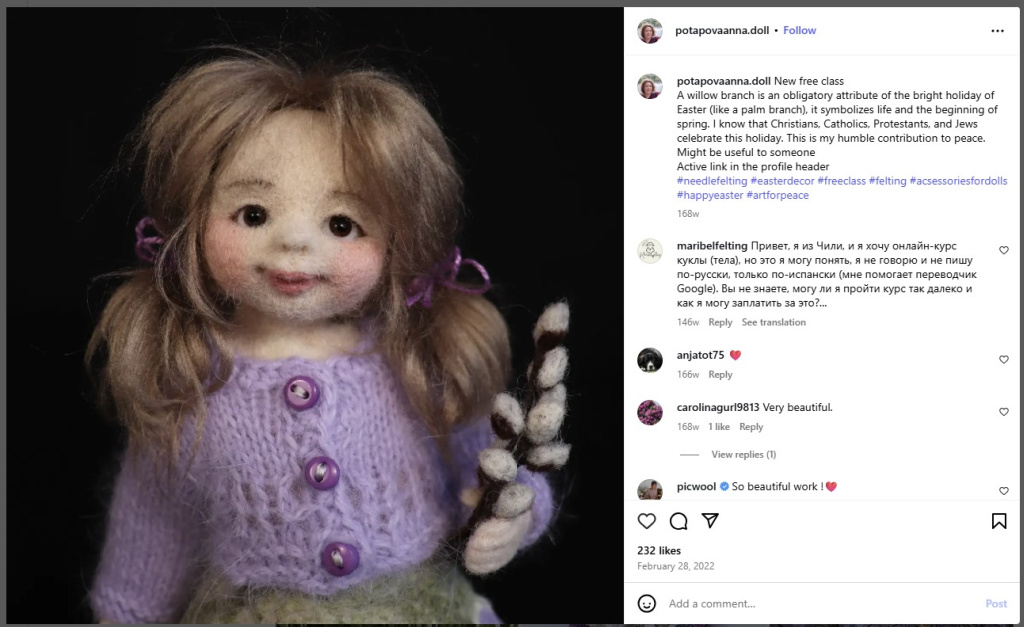
Anna Potapova is a textile artist who experimented with a variety of techniques and materials before committing to felted wool art dolls. As she states in her NIADA profile, “Now I create needle-felted sculptures and decorate them with silk and wet felt”. Potapova is based in Russia and has a global presence through teaching students from around the world and actively participating in international exhibitions.
In this Instagram post from 2022, Potapova’s caption reads “A willow branch is an obligatory attribute of the bright holiday of Easter (like a palm branch), it symbolizes life and the beginning of spring. I know that Christians, Catholics, Protestants, and Jews celebrate this holiday. This is my humble contribution to peace”.
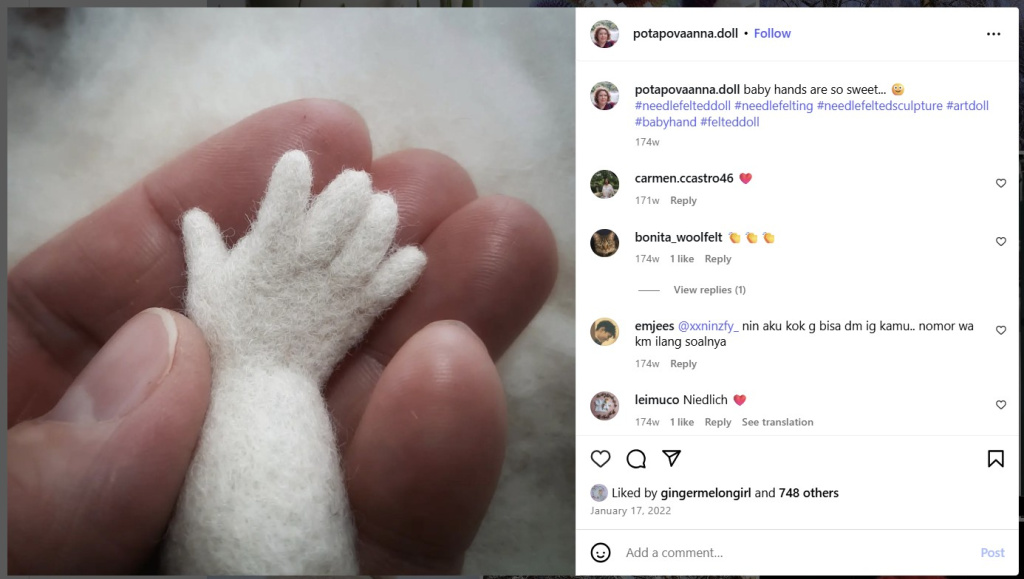
Here’s a closer look at a tiny doll hand needle-felted by Potapova. Needle felting, which I previously wrote about in Needle Felting: Makers Stabbing Wool, involves shaping wool fibers with special barbed needles through repeated stabbing.
I focused my research on one-of-a-kind art dolls but also came across a great deal of information about collectible dolls. “Doll collecting is one of the largest hobby groups in the world” according to the United Federation of Doll Clubs, a non-profit organization dedicated to “promoting the hobby of doll collecting and serving the needs of doll collectors”.
Doll enthusiasts can, of course, purchase and collect unique, one-of-a-kind dolls but the term “collectible dolls” typically refers to limited edition dolls―not mass-produced dolls―which are reproduced in limited quantities from original dolls designed and created by professional doll makers.
DOLLS magazine is another resource focused on doll collecting. They provide “impartial and expert advice on collectible dolls, including fashion dolls, BJD dolls, limited-edition dolls and art dolls” according to their website. They also sponsor the annual Dolls Awards of Excellence competition. Looking through the 2024 Industry’s Choice Winners was entertaining and educational. Winners were selected in several categories including, for example, baby/child doll, teen/adult doll, fantasy doll and doll fashion.
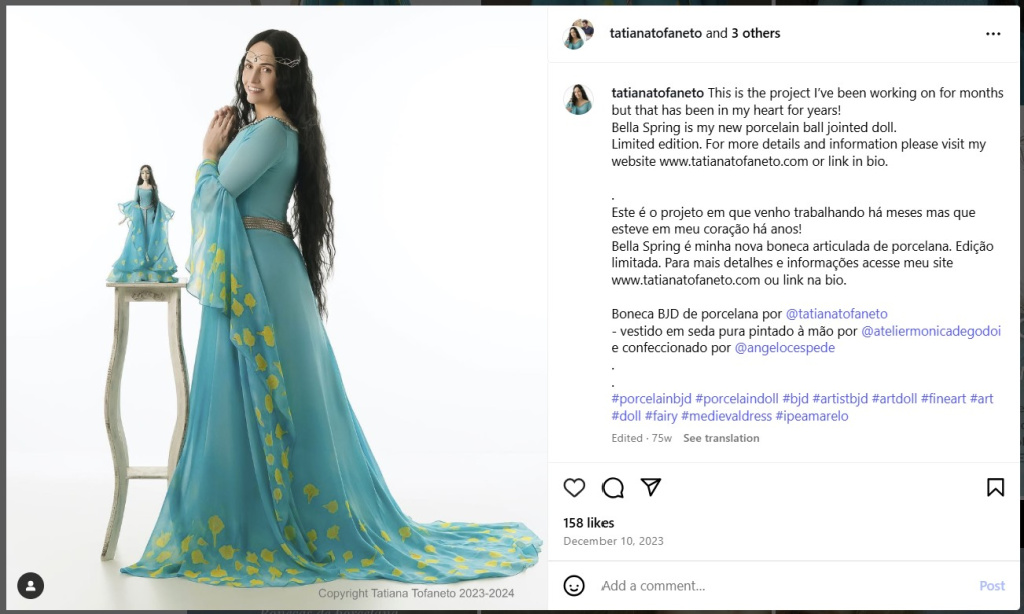
One of my favorites was Bella Spring which was a winner in the teen/adult doll category. This splendid art doll was created by Brazilian doll artist Tatiana Tofaneto.
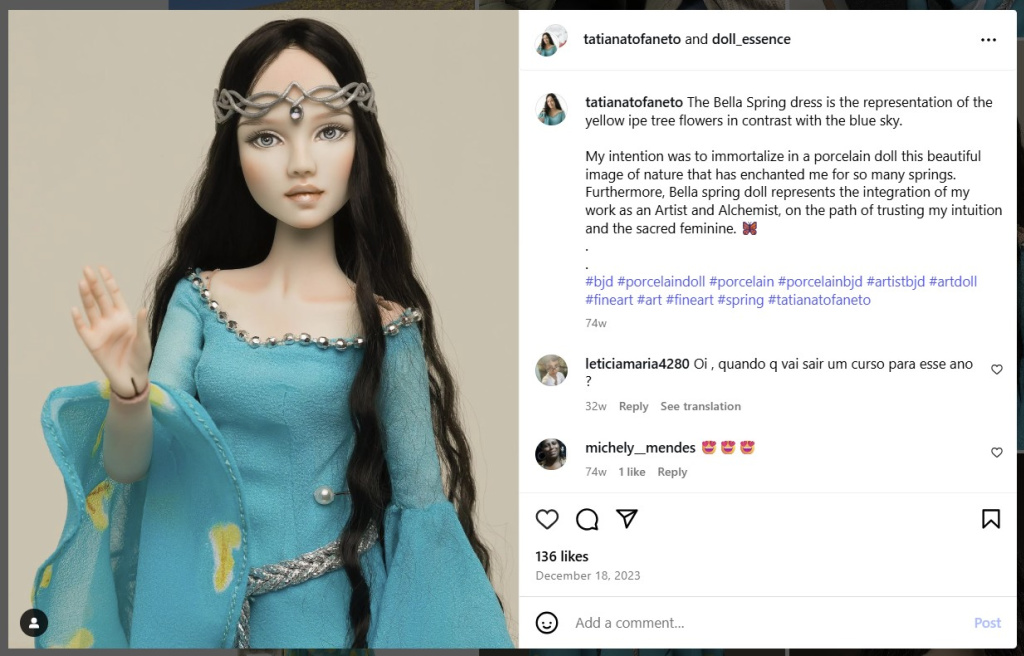
In his DOLLS magazine article, Perfectly Imperfect, Wil Peterson writes Bella Spring is “Tofaneto’s latest – and perhaps most ambitious and most personal – creation. … The 39-centimeter porcelain BJD [ball jointed doll] has 18 points of articulation and is a limited edition of six”. Tofaneto explains “‘I make my own dolls from start to finish, including the plaster molds and casting in porcelain’ … Each doll includes a handmade crown, shoes, a premium magnetic mohair wig, and a hand-painted silk dress.”
Tofaneto’s Bella Spring is beautiful but when seen with the artist dressed in an identical outfit, it’s absolutely stunning!
Speaking of collecting art dolls, I do have a small collection of one-of-a-kind paper maché figures created by Sarena Mann. These dolls made an appearance on the FanningSparks blog a few years ago for the blog’s fifth anniversary (see Time to Celebrate: FanningSparks Turns 5!). Mann creates her whimsical paper maché figures “from wire, paper, fabric, paste and patience”.
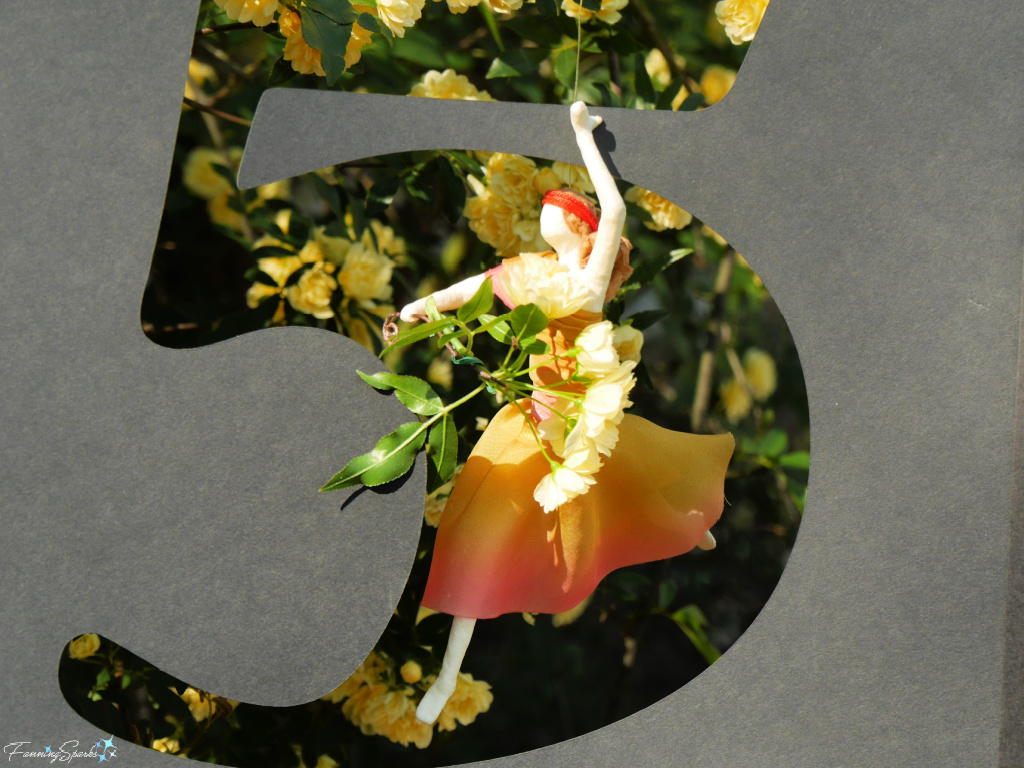
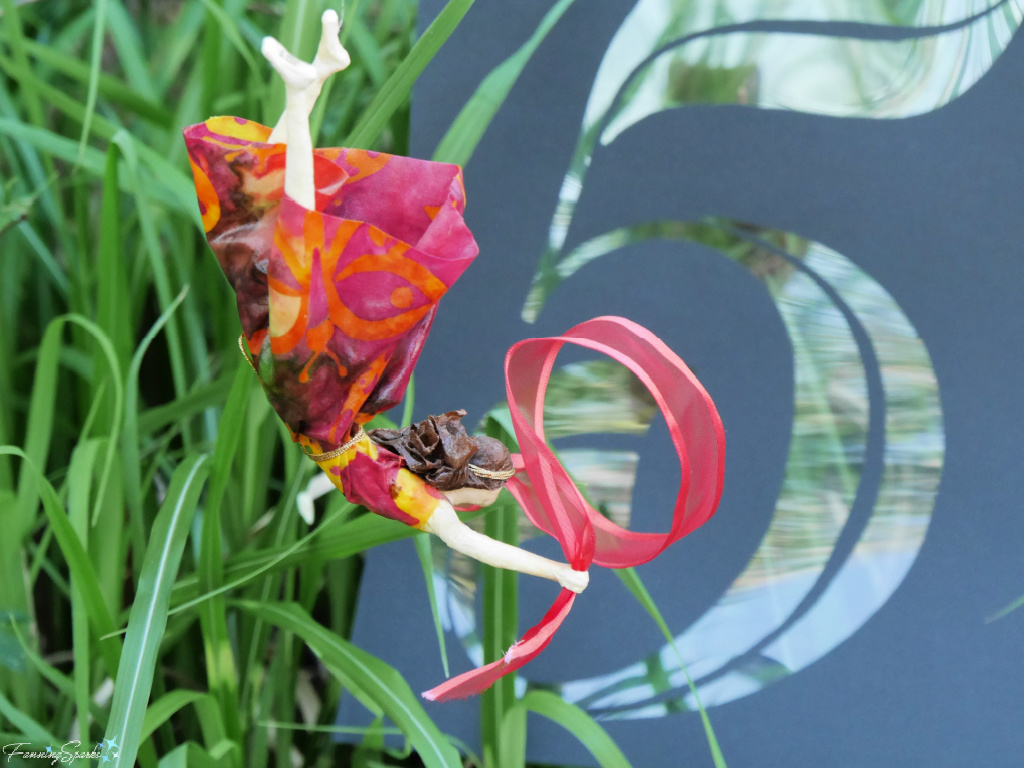
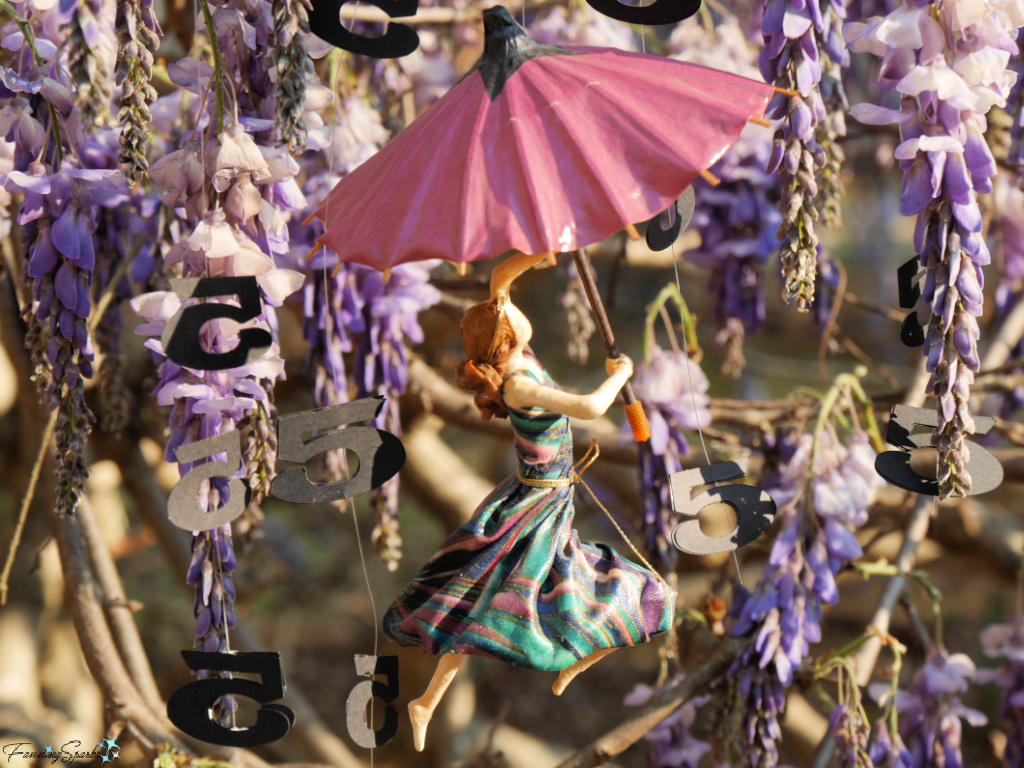
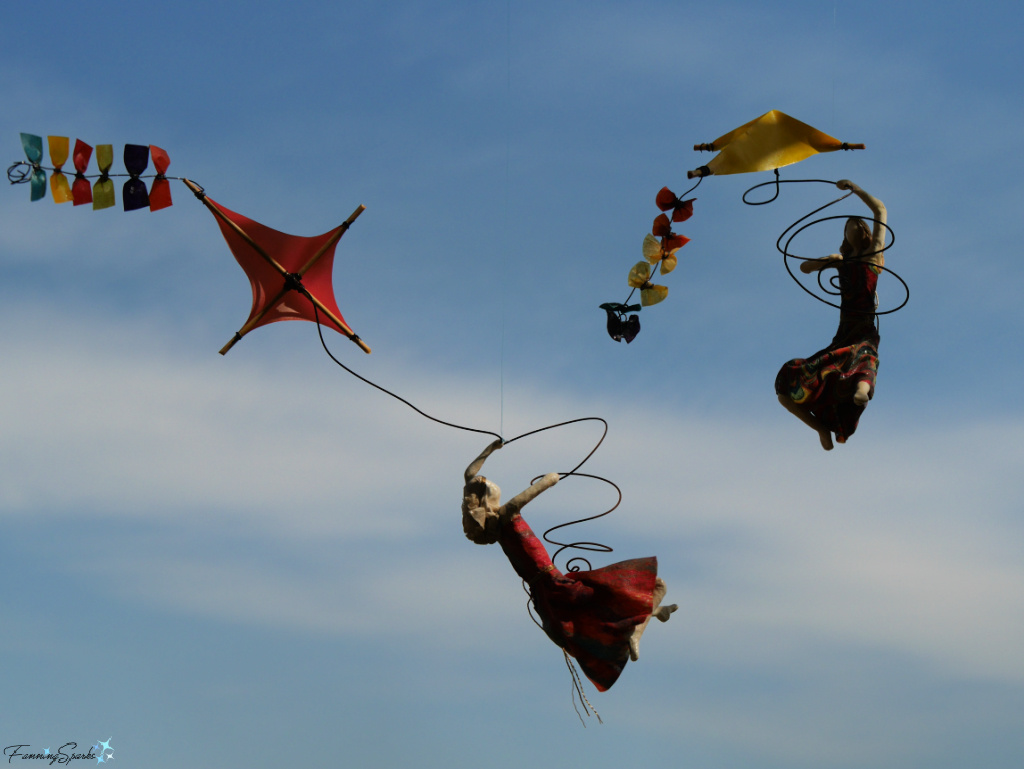
Circling back to answer my original question “What are Cloth Art Dolls?”, I’ll borrow these thoughts from author Marina Drucker―“Although dolls have long been made as toys for children, handmade art dolls have emerged as a relatively new genre of contemporary fine art. … When I discovered doll making and began to create dolls … I knew that I had found a unique way to combine all kinds of decorative art―working with three-dimensional models and with color …”.
For anyone wondering if I participated in Charlie Patricolo’s Spring Sprite Workshop, I did! I’m looking forward to sharing the details with you in my next blog post!
More Info
Previous blog posts mentioned in this blog post include:
. posts about the John C Campbell Folk School
. What is Soft Sculpture?
. Needle Felting: Makers Stabbing Wool
. Time to Celebrate: FanningSparks Turns 5!
Check out Charlie Patricolo’s website to learn more about this talented doll artist including a schedule of her upcoming workshops.
Oconee Cultural Arts Foundation (OCAF) is located in Watkinsville, Georgia. OCAF offers a variety of workshops which are listed on the OCAF website or on the OCAF Facebook page.
The following books, articles and websites were consulted in the writing of this blog post:
. 32 Facts About Art Dolls article by Romy Mortiz on Facts.Net
. Anatomy of a Doll book by Susanna Oroyan
. National Institute of American Doll Artists (NIADA) website
. Creative Cloth Doll Faces book by Patti Medaris Culea which is available here on Internet Archives
. Enchanting Art Dolls & Soft Sculptures book by Marina Druker which is available here on Internet Archives
. The Complete Photo Guide to Doll Making Book by Nancy Hoerner which is available here on Internet Archives
. Perfectly Imperfect article by Wil Peterson for DOLLS magazine May/June 2024 edition
. United Federation of Doll Clubs website
. DOLLS magazine website including the Dolls Awards of Excellence 2024 Industry’s Choice Winners
. Various Wikipedia entries.
The following doll artists are mentioned in this blog post:
. Charlie Patricolo ― see her website, Instagram account or Facebook account
. Shelley Thornton ― see her website, Instagram account or NIADA profile
. Moonyoung Jeong ― see her Instagram account or NIADA profile
. Cindee Moyer ― see her website, Instagram account or NIADA profile
. Ankie Daanen ― see her website, Instagram account or NIADA profile
. Ann Hord-Heatherley ― see her website, Instagram account or NIADA profile
. Anna Potapova ― see her website, Instagram account or NIADA profile
. Tatiana Tofaneto ― see her website or Instagram account
. Sarena Mann ― see her Facebook account.
Today’s Takeaways
1. “Art dolls are … unique, handcrafted figures created by artists … These dolls can be made from various materials and are usually not intended for play but for display and collection.” Romy Mortiz
2. “The main considerations when making a doll are to understand the desired effect or impression you want to make, then to be willing to play with variations of your idea and explore any directions that are suggested. And to take into consideration the effects of a technique when you use or manipulate a certain material.” Susanna Oroyan
3. “My intention is to render a human shape that can serve as a familiar, approachable canvas on which to express, in the languages of form and color, the sentiments of comfort, serenity, compassion, and optimism that I aspire to contribute to a difficult world.” Shelley Thornton

Comments are closed.